
16 Hotel Yield Management Software Picked for 2026

Hotel Yield Management Software Shortlist
Here’s my shortlist of hotel yield management software:


Hotel yield management software helps you set the right room rates at the right time to maximize revenue and occupancy. If you’re searching for the best hotel yield management software, you’re likely facing pressure to boost profits, respond to shifting demand, and keep your property competitive—without adding complexity for your team.
This list will help you compare leading solutions, understand which features matter most for your business, and make a confident decision about the right platform for your hotel’s needs.
Why Trust Our Software Reviews
We’ve been testing and reviewing hotel management software since 2023. As hotel managers ourselves, we know how critical and difficult it is to make the right decision when selecting software.
We invest in deep research to help our audience make better software purchasing decisions. We’ve tested more than 2,000 tools for different hotel management use cases and written over 1,000 comprehensive software reviews. Learn how we stay transparent & our software review methodology.
Best Hotel Yield Management Software Summary
This comparison chart summarizes pricing details for my top hotel yield management softwareselections to help you find the best one for your budget and business needs.
| Tool | Best For | Trial Info | Price | ||
|---|---|---|---|---|---|
| 1 | Best for all-in-one property integration | Free demo available | Pricing upon request | Website | |
| 2 | Best for advanced forecasting analytics | Free demo available | Pricing upon request | Website | |
| 3 | Best for ease of daily rate updates | Free demo + 14-day free trial available | From $148.50/property/month (billed annually) | Website | |
| 4 | Best with multi-property group management | Free demo available | Pricing upon request | Website | |
| 5 | Best with enterprise-level customization | Free demo available | Pricing upon request | Website | |
| 6 | Best for small independent properties | 14-day free trial + free demo available | From €150/month (billed annually) | Website | |
| 7 | Best for short-term rental portfolios | Free demo + free trial available | From $19.99/listing/month | Website | |
| 8 | Best for real-time price automation | Free demo available | Pricing upon request | Website | |
| 9 | Best with demand-based pricing insights | 14-day free trial + free demo available | From $189/month | Website | |
| 10 | Best for chain and brand scalability | Free demo available | Pricing upon request | Website |
-

roommaster
Visit WebsiteThis is an aggregated rating for this tool including ratings from Crozdesk users and ratings from other sites.4.3 -
Little Hotelier
Visit WebsiteThis is an aggregated rating for this tool including ratings from Crozdesk users and ratings from other sites.4 -
Roomstay Hotel Booking Engine
Visit Website


Hotel Yield Management Software Reviews
Below are my detailed summaries of hotel yield management software that made it onto my shortlist. My reviews offer a detailed look at the features, best use cases, and integrations of each platform to help you find the best one for you.

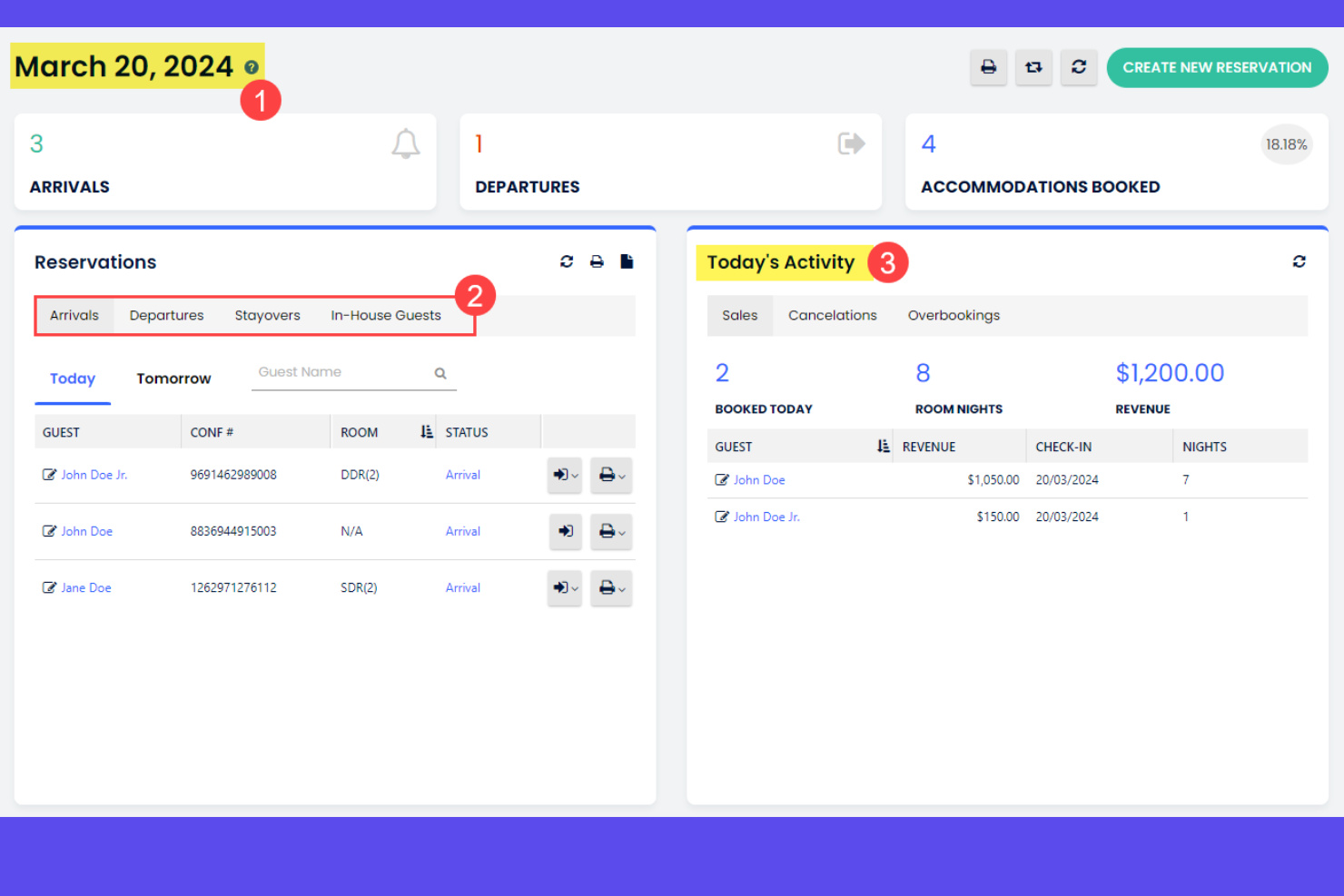
Cloudbeds is designed for hoteliers who want yield management tightly integrated with their property management and distribution systems. This platform appeals to properties looking for a unified solution that connects revenue management, reservations, and operations in one place. If you need real-time data sharing across your tech stack to support smarter pricing and inventory decisions, Cloudbeds brings these capabilities together.
Why I Picked Cloudbeds
What drew me to Cloudbeds is how it brings yield management, property management, and channel management together in a single platform. This all-in-one integration means your rates, availability, and reservations update in real time across every channel, reducing the risk of overbookings or missed revenue opportunities.
I like that Cloudbeds lets you manage pricing strategies and inventory from the same dashboard you use for daily operations. For hotels that want to simplify their tech stack and keep everything connected, this unified approach is a strong fit.
Cloudbeds Key Features
In addition to its unified approach, I also found these features worth noting:
- Automated rate recommendations: The system suggests optimal pricing based on demand and market data.
- Competitor rate tracking: Monitor competitor pricing to inform your own rate strategies.
- Customizable reporting tools: Generate detailed reports on revenue, occupancy, and performance metrics.
- Mobile management app: Access and manage key functions from your mobile device.
Cloudbeds Integrations
Integrations include Airbnb, Booking.com, Expedia, Stripe, QuickBooks, PayPal, Square, Google Analytics, TripAdvisor, and Agoda. Cloudbeds also offers a two-way interface for custom integrations.
Pros and Cons
Pros:
- Mobile app allows remote access to revenue management features
- Automated rate recommendations adjust pricing based on real-time demand
- All-in-one platform combines PMS, channel manager, and RMS functions
Cons:
- Advanced features may require additional onboarding or training
- System updates can occasionally disrupt daily operations or workflows
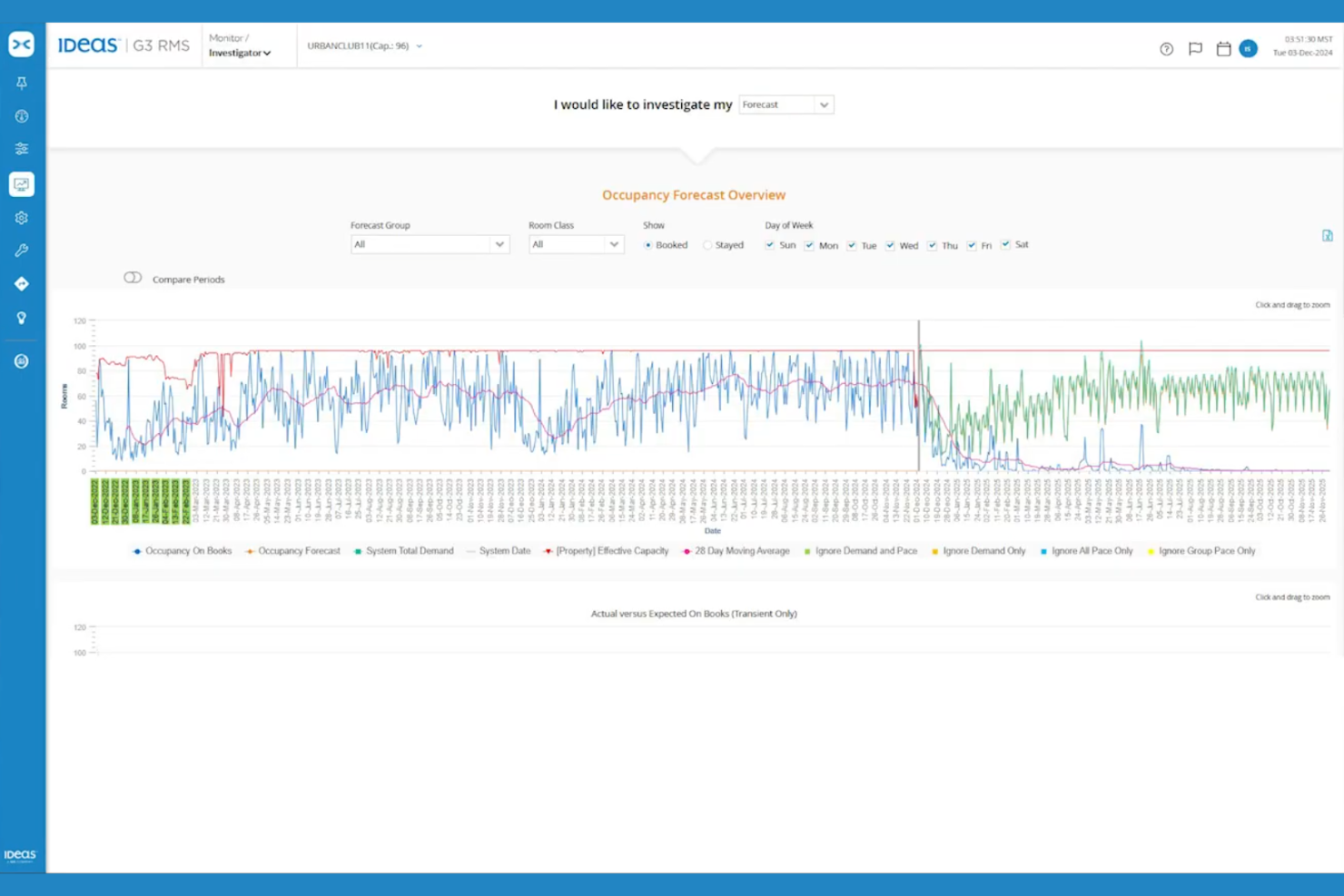
IDeaS is designed for hotels and resorts that want to take a data-driven approach to revenue management. Its advanced forecasting analytics help revenue managers and commercial teams make precise pricing and inventory decisions. The platform is especially useful for properties that need to analyze complex demand patterns and optimize rates with confidence.
Why I Picked IDeaS
What drew me to IDeaS is its focus on advanced forecasting analytics, which is a top priority for hotels looking to maximize revenue in unpredictable markets. The platform uses sophisticated algorithms and machine learning to analyze historical data, booking pace, and market trends, giving you highly accurate demand forecasts.
I appreciate how IDeaS supports scenario modeling, so you can test different pricing and inventory strategies before making decisions. These capabilities make it a strong choice for properties that need to fine-tune their yield management with data-backed confidence.
IDeaS Key Features
Some other features in IDeaS that may interest hotel revenue teams include:
- Automated pricing recommendations: The system generates daily rate suggestions based on real-time data inputs.
- Group evaluation tools: Analyze and price group business with dedicated displacement and profitability analysis.
- Multi-property management dashboard: Oversee performance and strategies across several properties from a single interface.
- Customizable reporting suite: Build and schedule detailed reports tailored to your property’s specific metrics and KPIs.
IDeaS Integrations
Integrations include Oracle Hospitality, Infor HMS, Maestro PMS, Agilysys, Mews, RMS Cloud, Opera PMS, StayNTouch, Amadeus, and Protel.
Pros and Cons
Pros:
- Automated pricing recommendations update daily based on real-time data
- Group evaluation tools help analyze displacement and profitability
- Forecasting models use machine learning for highly accurate predictions
Cons:
- Implementation process can be complex for large hotel portfolios
- Limited customization options

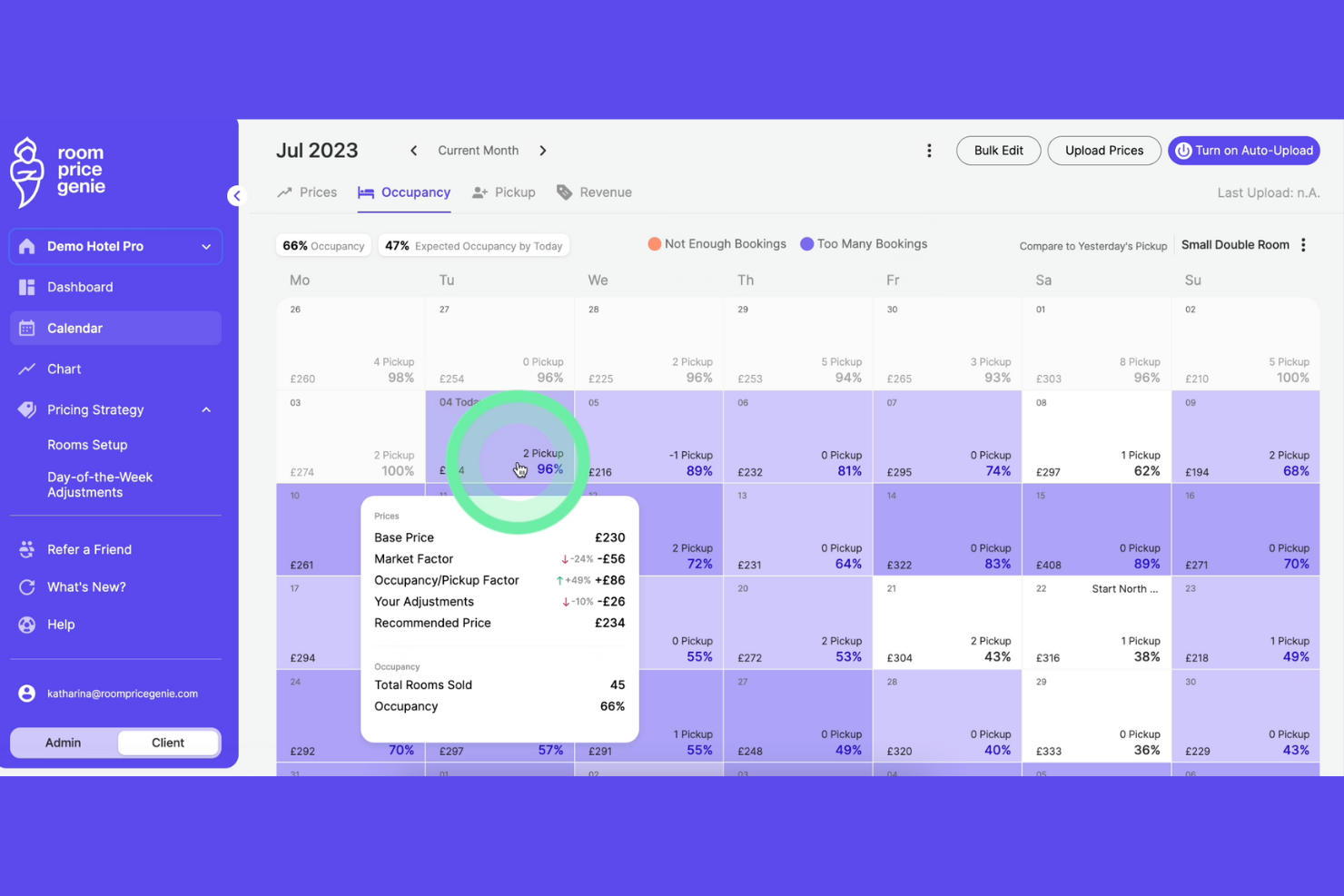
RoomPriceGenie is designed for hoteliers who want a straightforward way to update room rates daily without a highly complex setup. The platform appeals to independent hotels and small properties looking for automated pricing that’s easy to manage. It’s especially useful if you need reliable rate recommendations and want to stay competitive without spending hours on manual adjustments.
Why I Picked RoomPriceGenie
What drew me to RoomPriceGenie is how it simplifies daily rate updates for hotels that want to stay agile in changing markets. The tool automatically generates daily pricing recommendations based on real-time demand, local events, and competitor rates, so you can react quickly without manual research.
I like that you can review and approve suggested rates in just a few clicks, making it practical for busy hotel teams. This focus on fast, data-driven rate adjustments makes RoomPriceGenie a strong fit for hotels that need to keep pricing current with minimal effort.
RoomPriceGenie Key Features
Some other features that make RoomPriceGenie appealing include:
- Multi-property management: Manage pricing for several properties from a single dashboard.
- Customizable pricing rules: Set your own parameters to control how rates are adjusted.
- Automated rate publishing: Push updated rates directly to your PMS or channel manager.
- Performance reporting: Access reports that track occupancy, revenue, and pricing trends.
RoomPriceGenie Integrations
Integrations include Protel, Mews, SiteMinder, RMS, Oracle Hospitality, Cloudbeds, Guestline, NewBook, StayNTouch, and more.
Pros and Cons
Pros:
- Direct rate publishing to pms and channel management systems
- User-friendly interface for smaller hotel revenue teams
- Daily automated rate recommendations for quick price optimization
Cons:
- Customization options limited for complex pricing strategies
- Limited advanced forecasting compared with enterprise rms tools

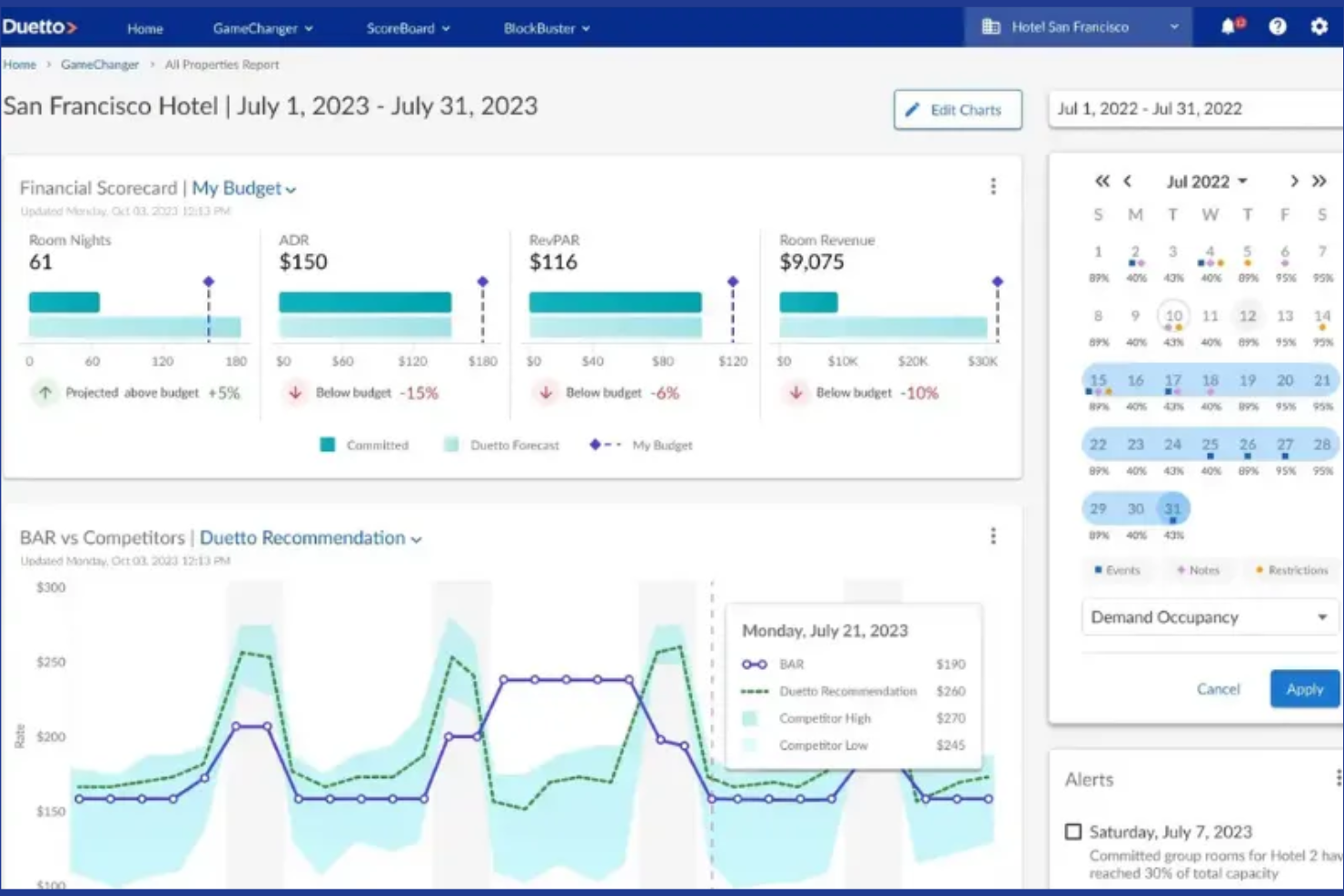
Duetto is built for hotel groups and multi-property operators who need to coordinate revenue strategies across several locations. The platform specializes in group-level yield management, helping commercial teams optimize pricing and distribution for complex portfolios. It’s especially useful for organizations that want to centralize control while still allowing for property-level flexibility.
Why I Picked Duetto
When it comes to managing yield across multiple properties, Duetto stands out for its group-level revenue optimization tools. The platform lets you set strategies at both the portfolio and individual property level, so you can balance centralized control with local flexibility.
I appreciate how Duetto’s forecasting and reporting features are designed to aggregate and compare performance across your entire group, making it easier to spot trends and opportunities. This approach is especially valuable for hotel groups that need to coordinate pricing and distribution decisions across several locations.
Duetto Key Features
Some other features in Duetto that may interest hotel groups include:
- Open Pricing engine: Adjust rates independently for each segment, channel, and room type without fixed rate fences.
- Group booking optimization: Analyze and price group business with dedicated tools for evaluating displacement and profitability.
- Automated demand forecasting: Use machine learning to predict demand patterns and optimize pricing decisions.
- Real-time data integrations: Connect with PMS, CRS, and channel managers for up-to-date inventory and rate data.
Duetto Integrations
Integrations include Oracle Hospitality OPERA, Infor HMS, Protel, Maestro PMS, Agilysys, StayNTouch, RoomKeyPMS, and Cloudbeds.
Pros and Cons
Pros:
- Automated demand forecasting uses machine learning for pricing
- Group booking tools help evaluate displacement and profitability
- The open pricing engine allows flexible rate adjustments by segment
Cons:
- Some users report delays in customer support response times
- The implementation process can be lengthy for large hotel groups

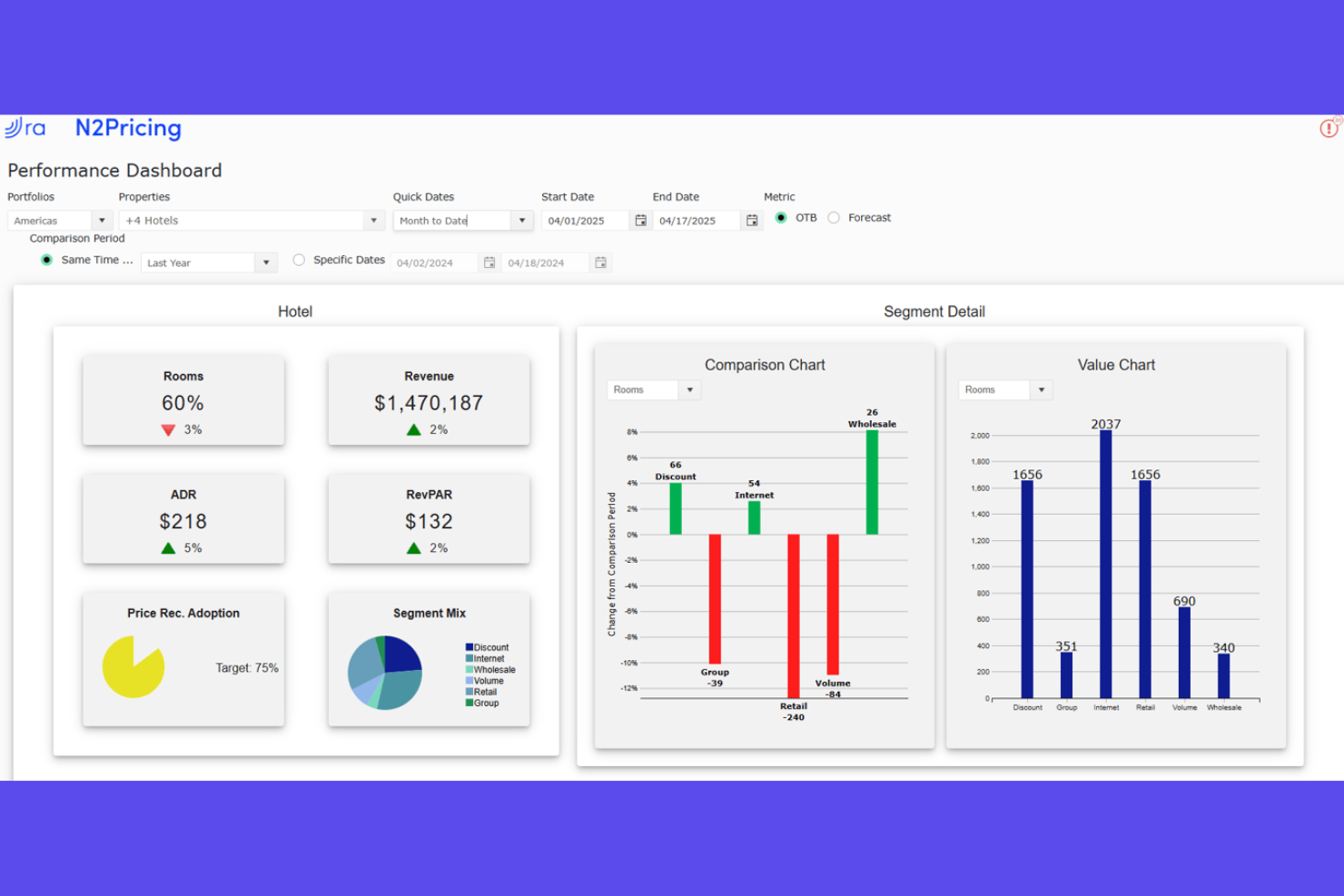
Revenue Analytics offers a tailored approach for hotel groups and enterprises that need highly customized yield management solutions. The platform is built for organizations with complex pricing structures, multiple brands, or unique business rules. If your team needs advanced analytics and flexible configuration to match your specific revenue strategies, Revenue Analytics is designed to meet those demands.
Why I Picked Revenue Analytics
What stands out about Revenue Analytics is its ability to deliver enterprise-level customization for hotel yield management. The platform supports highly tailored pricing models, letting you configure rules and strategies that match your unique business requirements.
I appreciate that it offers advanced analytics and reporting tools, so you can dig deep into performance data and make informed decisions. If your hotel group needs a solution that adapts to complex structures and evolving strategies, Revenue Analytics is built for that level of flexibility.
Revenue Analytics Key Features
Some other features that make Revenue Analytics appealing include:
- Automated demand forecasting: The system uses historical and real-time data to predict future demand patterns.
- Dynamic pricing engine: Adjusts rates automatically based on market shifts and occupancy trends.
- Multi-segment optimization: Supports pricing strategies for different guest segments and channels.
- Customizable dashboards: Let you tailor data visualizations and reporting to your team’s needs.
Revenue Analytics Integrations
Integrations include Microsoft, NLogic, Salesforce, Sqills, iHotelier, Infor HMS, Oracle Opera Cloud, Cloudbeds, SAP, and more.
Pros and Cons
Pros:
- Multi-segment optimization across distribution channels
- Advanced analytics covering ADR, RevPAR, and segment performance
- Highly customizable pricing models for complex hotel revenue strategies
Cons:
- Implementation often requires enterprise-level resources
- Limited publicly available customer review data

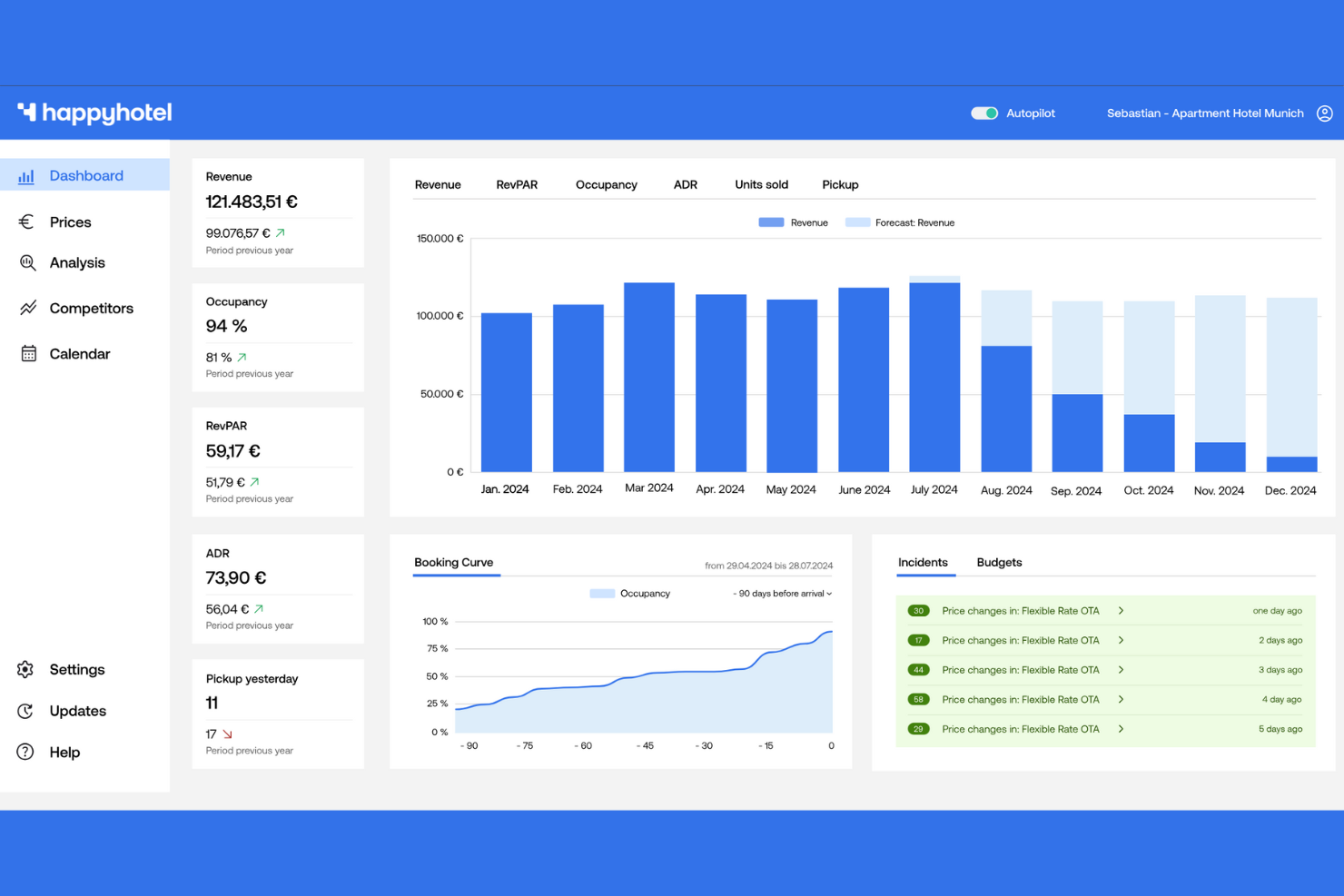
happyhotel is built for small independent hotels that want to simplify their pricing strategy without needing deep revenue management expertise. The platform focuses on making yield management accessible, helping properties automate rate adjustments and respond quickly to changes in local demand.
Why I Picked happyhotel
For small independent properties, I picked happyhotel because it offers yield management tools that don’t require a dedicated revenue manager. The platform provides automated rate recommendations based on market demand, occupancy rates, and competitor pricing, helping smaller hotels stay competitive without manual analysis.
I also like that happyhotel includes a clear dashboard for tracking performance, forecasting demand, and supporting data-driven revenue management strategies. This makes it easier for owners and managers to optimize room revenue and make informed decisions. These features are especially useful for properties with limited staff or resources dedicated to hotel revenue management.
happyhotel Key Features
Some other features in happyhotel that may interest small hotel operators include:
- Multi-property management: Manage multiple properties from a single dashboard, making it easier to oversee several locations at once.
- Customizable reporting: Generate tailored reports on revenue, occupancy, and performance metrics to support data-driven decisions.
- Mobile app access: Use the mobile app to monitor and adjust rates or view analytics on the go.
- Integration with PMS and channel managers: Connect happyhotel with your property management system and channel managers for real-time data syncing.
happyhotel Integrations
Integrations include 3RPMS, ASA Hotels, Aida, Apaleo, Casablanca, Clock PMS, Front Office Cloud, Guestline, SiteMinder, Vioma, Lighthouse, Fairmas, and more.
Pros and Cons
Pros:
- Mobile app access allows for on-the-go rate monitoring
- Multi-property management supports small hotel groups and portfolios
- Automated rate recommendations adjust to local demand and events
Cons:
- Native integrations with PMS and channel managers are not clearly listed
- Advanced forecasting tools are limited compared to enterprise platforms

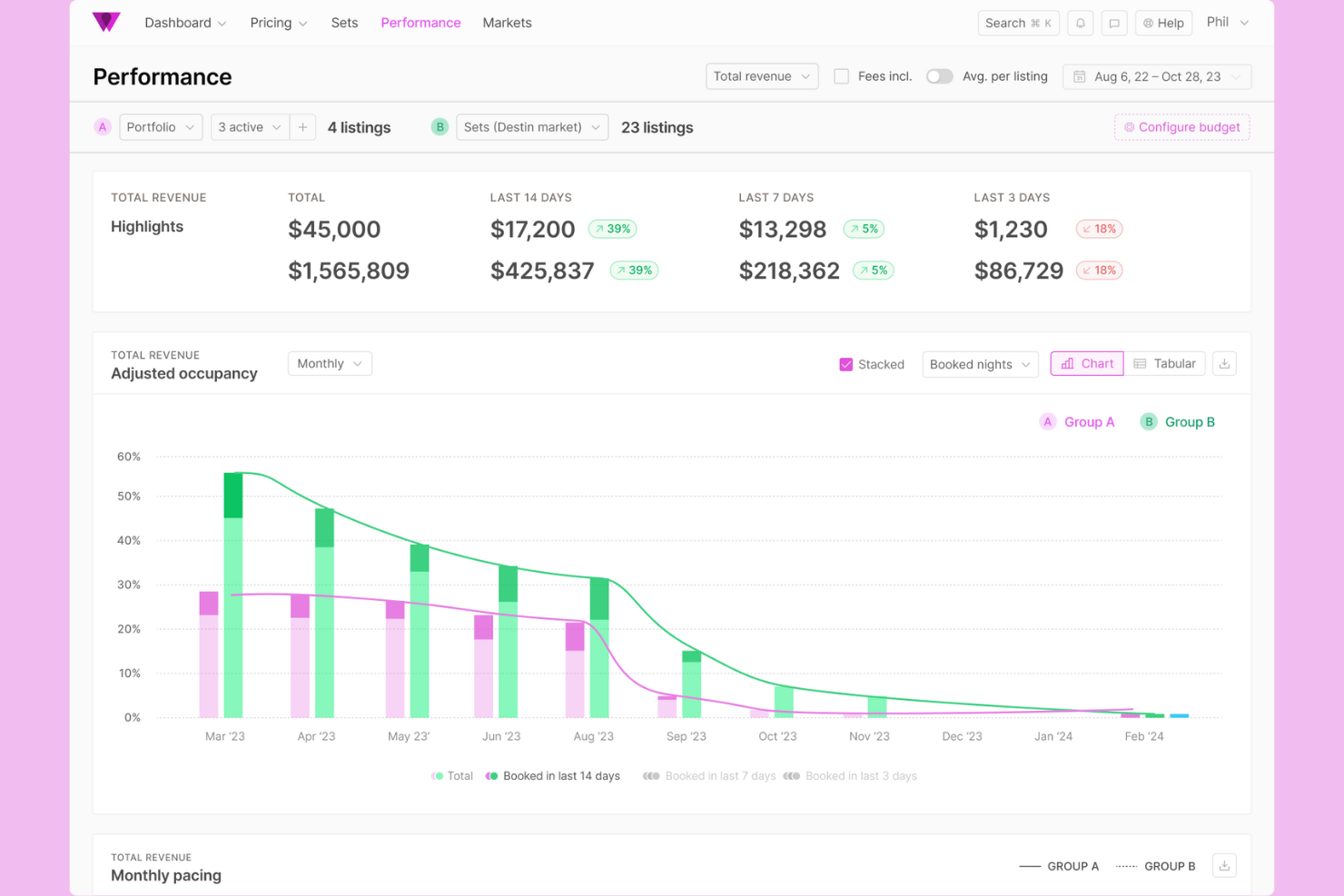
Wheelhouse is built for short-term rental operators and property managers who need dynamic pricing across multiple listings. The platform specializes in helping portfolio managers adjust rates based on real-time market data and booking trends.
It’s especially useful for those managing diverse properties who want granular control over pricing strategies to maximize occupancy and revenue.
Why I Picked Wheelhouse
What stands out about Wheelhouse is how it’s tailored for short-term rental portfolios that need flexible, data-driven pricing. The platform lets you set custom pricing rules for each property, so you can adapt to different markets and guest segments.
I appreciate that Wheelhouse analyzes local demand, competitor rates, and booking patterns to help you optimize rates across your entire portfolio. This makes it a strong choice for operators who want to maximize revenue and occupancy in the fast-moving short-term rental space.
Wheelhouse Key Features
Some other features that make Wheelhouse appealing include:
- Portfolio performance analytics: Track and compare performance metrics across all your listings in one dashboard.
- Seasonality adjustments: Automatically adjust rates based on seasonal demand patterns and local events.
- Revenue goals setting: Set specific revenue targets and monitor progress for each property.
- Bulk actions: Apply pricing changes or rules to multiple listings at once to save time.
Wheelhouse Integrations
Integrations include Guesty for Hosts, Airbnb, Escapia, Hostaway, Hospitable, OwnerRez, Smiley, Smuboo, Tripadvisor, AvantStay, Best Beach Getaways, Tempo, and more.
Pros and Cons
Pros:
- Seasonality and event pricing adjustments for market demand shifts
- Portfolio analytics across multiple listings and markets
- Dynamic pricing built for short-term rental revenue management
Cons:
- Reporting depth is limited compared with hotel RMS systems
- Not designed for traditional hotel inventory management models
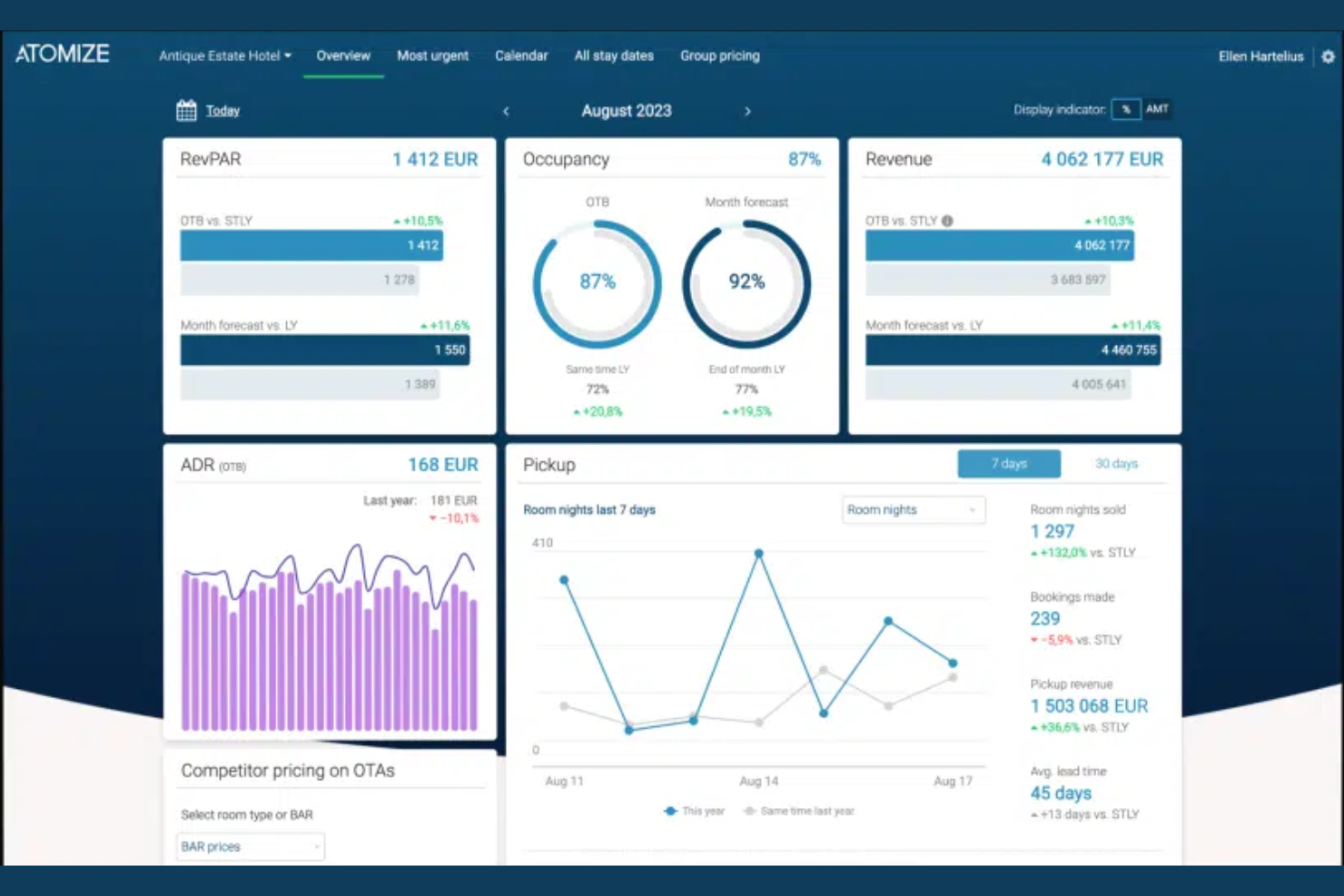
Atomize offers real-time price automation for hotels that want to react instantly to market changes. It’s built for revenue managers and hotel operators who need to keep rates competitive without constant manual updates. The platform is especially useful for properties aiming to maximize revenue by adjusting prices automatically as demand shifts throughout the day.
Why I Picked Atomize
What stands out about Atomize is its commitment to real-time price automation, which is essential for hotels operating in fast-moving markets. The platform automatically updates room rates multiple times per day based on live demand, competitor pricing, and occupancy data.
I like that Atomize uses dynamic pricing algorithms to help hotels capture incremental revenue opportunities as soon as they arise. This approach is a strong fit for properties that want to stay ahead of market shifts without manual intervention.
Atomize Key Features
In addition to its real-time price automation, I also found these features worth noting:
- Mobile management app: Access and manage pricing recommendations from any mobile device.
- Room-type level optimization: Set and adjust rates for individual room types rather than just the whole property.
- Open pricing support: Apply different pricing strategies to various segments and channels without fixed rate fences.
- Automated competitor rate shopping: Monitor and compare competitor rates automatically to inform your own pricing decisions.
Atomize Integrations
Integrations include Mes, Cloudbeds, Oracle, HotelTime Solutions, RMS, BookVisit, Nitesoft, and more.
Pros and Cons
Pros:
- Room-type level optimization supports granular revenue strategies
- Mobile app allows remote access to pricing recommendations
- Real-time price updates help capture sudden demand changes
Cons:
- Reporting features are less advanced than some competitors
- Smaller hotels may find the feature set more than they need

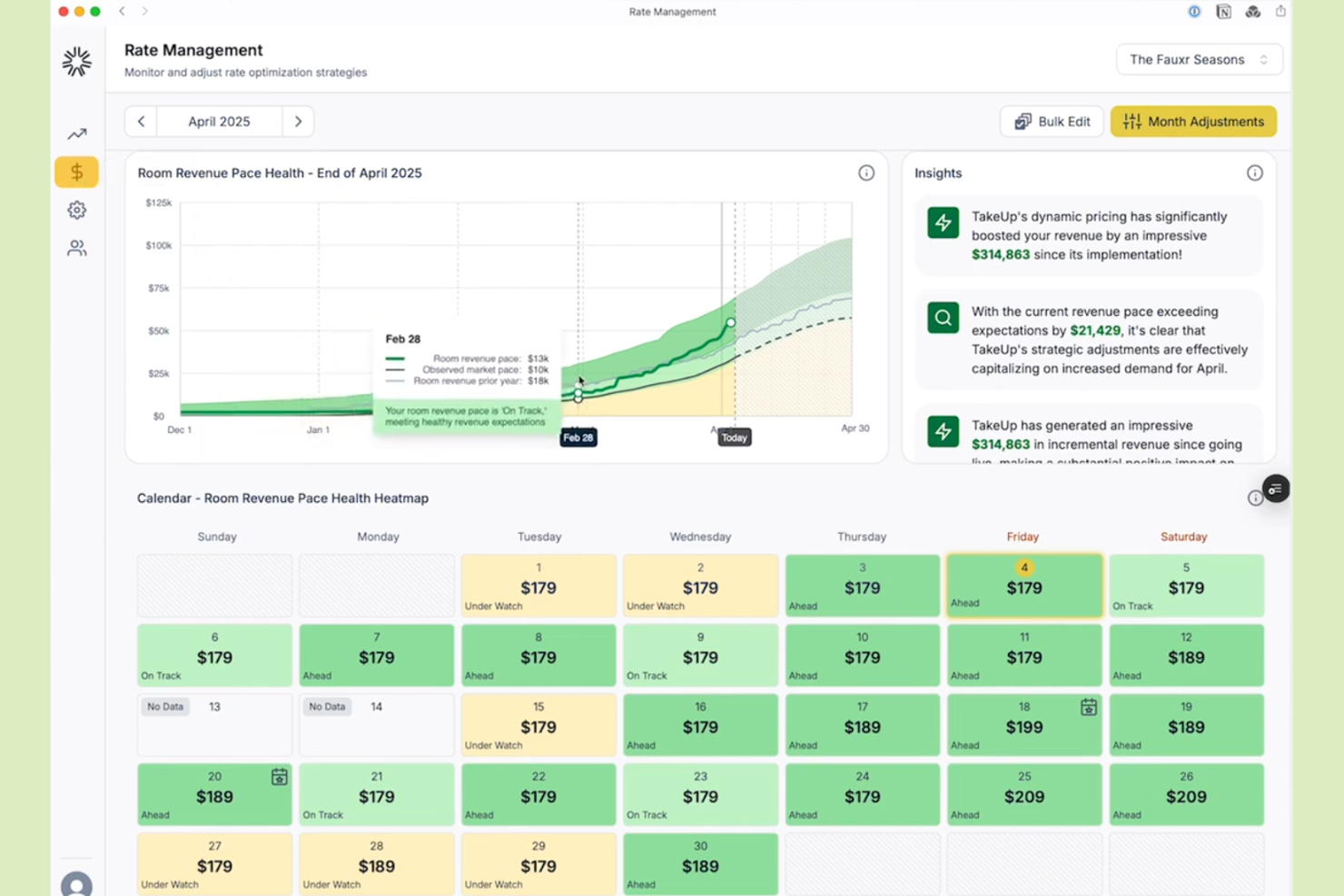
TakeUp uses AI to deliver demand-based pricing insights tailored for hotels looking to optimize revenue. It’s designed for revenue managers and operators who want to understand booking patterns and market shifts before they impact occupancy. The platform is especially useful for properties that need actionable data to adjust rates proactively and stay ahead of demand changes.
Why I Picked TakeUp
What drew me to TakeUp is its focus on delivering demand-based pricing insights that help hotels anticipate and respond to market changes. The platform uses AI-driven forecasting to analyze booking trends and identify periods of high or low demand before they happen.
I appreciate that TakeUp provides clear, actionable recommendations for rate adjustments based on real-time data. This makes it a strong fit for hotel teams that want to make informed pricing decisions and maximize revenue opportunities as demand fluctuates.
TakeUp Key Features
Some other features that set TakeUp apart include:
- Automated rate publishing: Push updated rates directly to your property management system without manual entry.
- Customizable reporting dashboards: Build and view dashboards tailored to your property’s specific performance metrics.
- Multi-property management: Oversee pricing and demand insights for multiple hotels from a single interface.
- User access controls: Assign different permission levels to team members based on their roles.
TakeUp Integrations
Integrations include Oracle Hospitality, Cloudbeds, RMS, Innkeeper's Advantage, Mews, and more.
Pros and Cons
Pros:
- Clear dashboards highlighting revenue trends and booking pace
- Automated rate publishing across distribution channels
- AI-driven insights for forecasting occupancy and market demand
Cons:
- Platform adoption may require training for smaller hotel teams
- The integration ecosystem is smaller than most major RMS vendors
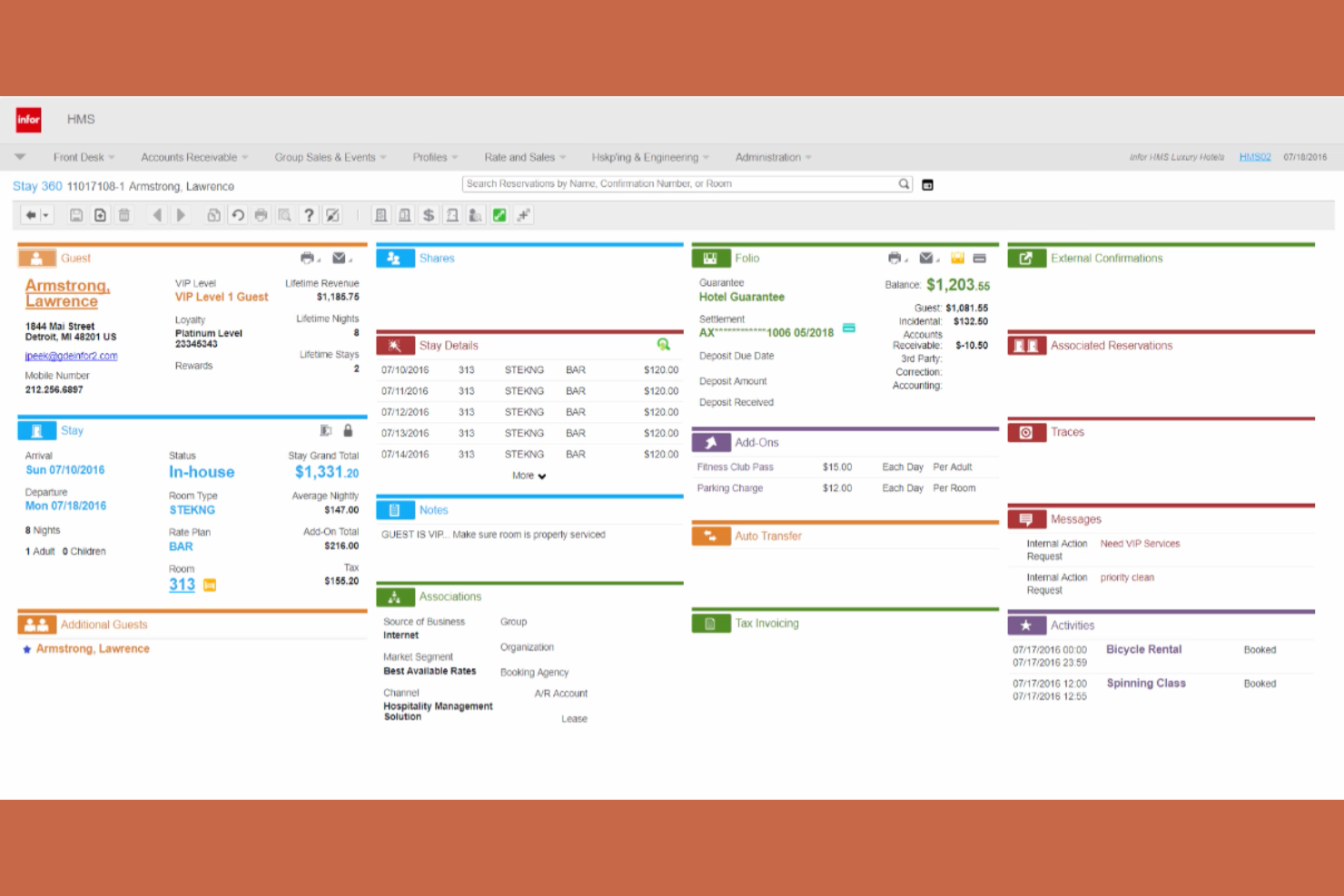
Infor HMS Revenue Management is built for hotel groups and brands that need scalable yield management across multiple properties. This revenue management software platform is a strong fit for revenue leaders in the hospitality industry managing complex portfolios who want to centralize strategy, business intelligence, and automate pricing decisions. If you’re looking to coordinate revenue management at scale while adapting to local market conditions, Infor HMS offers tools designed for that challenge.
Why I Picked Infor HMS Revenue Management
What stands out about Infor HMS Revenue Management is its ability to support large hotel groups and brands with centralized yield management. The platform is designed to handle multi-property portfolios, letting you set strategies at the brand level while still allowing for local adjustments, so you list the right price every time.
I appreciate how it automates pricing and inventory decisions across all your properties, which is essential for maintaining consistency and maximizing revenue at scale within the hotel industry. For hotel chains or online travel agencies looking to coordinate revenue management without losing flexibility at the property level, Infor HMS is built for that kind of scalability.
Infor HMS Revenue Management Key Features
In addition to its scalability for multi-property management, I also found these features worth highlighting:
- Automated demand forecasting: The system uses historical and real-time data to predict future demand patterns.
- Group and event management tools: Manage group bookings and event blocks with dedicated features for allocation and pricing.
- Customizable dashboards: Tailor dashboards to display the most relevant performance and revenue metrics for your team.
- Multi-currency and language support: Operate across regions with built-in support for different currencies and languages.
Infor HMS Revenue Management Integrations
Integrations are not currently listed by Infor HMS Revenue Management.
Pros and Cons
Pros:
- Group and event management tools help optimize block bookings
- Automated demand forecasting uses real-time and historical data sources
- Centralized revenue management supports multi-property hotel groups and brands
Cons:
- Native integrations with third-party systems are not clearly listed
- Pricing information is not transparent on the vendor’s website
Other Hotel Yield Management Software
Here are some additional hotel yield management software options that didn’t make it onto my shortlist, but are still worth checking out:
- WebRezPro
For integrated direct booking and revenue tools
- RevControl
With automated reporting tools
- Luxe Pricing
For boutique and luxury hotels
- WuBook
With channel management connectivity
- FLYR Hospitality
With AI-driven demand forecasting
- Lighthouse
For competitor rate benchmarking


Hotel Yield Management Software Selection Criteria
When selecting the best hotel yield management software to include in this list, I considered common buyer needs and pain points like optimizing room rates for maximum revenue and automating manual pricing tasks. I also used the following framework to keep my evaluation structured and fair:
Core Functionality (25% of total score) To be considered for inclusion in this list, each solution had to fulfill these common use cases:
- Manage dynamic room pricing based on demand
- Forecast occupancy and revenue trends
- Integrate with property management systems
- Generate automated performance reports
- Support multi-property management
Additional Standout Features (25% of total score) To help further narrow down the competition, I also looked for unique features, such as:
- AI-driven demand forecasting
- Competitor rate benchmarking tools
- Event calendar integration for local demand spikes
- Customizable reporting dashboards
- Automated rate recommendations
Usability (10% of total score) To get a sense of the usability of each system, I considered the following:
- Simple and intuitive user interface
- Clear navigation between modules
- Minimal manual data entry required
- Fast access to key metrics and reports
- Responsive design for mobile and desktop
Onboarding (10% of total score) To evaluate the onboarding experience for each platform, I considered the following:
- Availability of step-by-step training videos
- Access to interactive product tours
- Pre-built templates for quick setup
- Live chat or chatbot support during onboarding
- Scheduled webinars or onboarding sessions
Customer Support (10% of total score) To assess each software provider’s customer support services, I considered the following:
- 24/7 support availability
- Multiple support channels like chat, email, and phone
- Access to a searchable knowledge base
- Fast response times to inquiries
- Dedicated account management for larger clients
Value For Money (10% of total score) To evaluate the value for money of each platform, I considered the following:
- Transparent and competitive pricing
- Flexible plans for different property sizes
- No hidden fees or surprise charges
- Features included at each pricing tier
- Free trial or demo availability
Customer Reviews (10% of total score) To get a sense of overall customer satisfaction, I considered the following when reading customer reviews:
- Consistent positive feedback on core features
- Reports of reliable system uptime
- Praise for customer support responsiveness
- User comments on ease of implementation
- Feedback on integration with other hotel systems
How to Choose Hotel Yield Management Software
It’s easy to get bogged down in long feature lists and complex pricing structures. To help you stay focused as you work through your unique software selection process, here’s a checklist of factors to keep in mind:
| Factor | What to Consider |
|---|---|
| Scalability | Will the software support your property as you grow, add more rooms, or manage multiple locations? |
| Integrations | Does it connect natively with your PMS, channel manager, and booking engine without extra workarounds? |
| Customizability | Can you tailor reports, dashboards, and pricing rules to your property’s unique needs and KPIs? |
| Ease of use | Will your team be able to learn and use the system quickly, or will it require extensive training? |
| Implementation and onboarding | How long does setup take, and what resources or support does the vendor provide during onboarding? |
| Cost | Are all fees clear up front, and does the pricing model fit your budget and property size? |
| Security safeguards | Does the software meet your data privacy and security requirements, especially for guest and revenue data? |
| Support availability | Is help available when you need it, including nights, weekends, and holidays if your property operates 24/7? |
What Is Hotel Yield Management Software?
Hotel yield management software is a digital tool that helps hotels optimize room pricing and inventory to maximize revenue. It analyzes real-time demand, booking patterns, and market data to recommend or automate rate adjustments.
These systems support hotel teams in making data-driven decisions, improving occupancy, and responding quickly to market changes. Yield management software is used by revenue managers, general managers, and owners to drive profitability and efficiency.
Features
When selecting hotel yield management software, keep an eye out for the following key features:
- Dynamic pricing engine: Adjusts room rates automatically based on real-time demand, occupancy, and market conditions to help maximize revenue.
- Forecasting tools: Uses historical and current booking data to project future occupancy and revenue, supporting better planning and budgeting.
- Multi-property management: Allows you to oversee and manage pricing, inventory, and performance across several hotels from a single dashboard.
- Competitor rate tracking: Monitors competitor pricing in your market, giving you insights to stay competitive and adjust your own rates accordingly.
- Automated reporting: Generates daily, weekly, and monthly performance reports, reducing manual work and supporting data-driven decisions.
- Event calendar integration: Incorporates local events and holidays into demand forecasts and pricing strategies for more accurate rate adjustments.
- Channel management integration: Connects with your channel manager to ensure rate and inventory updates are pushed to all online booking channels in real time.
- Customizable dashboards: Lets you tailor the display of key metrics and performance indicators to match your property’s specific goals and workflows.
Common Hotel Yield Management Software AI Features
Beyond the standard hotel yield management software features listed above, many of these solutions are incorporating AI with features like:
- Automated demand forecasting: Uses AI algorithms to analyze booking patterns, market trends, and external data to predict future demand with greater accuracy than manual methods.
- Intelligent rate recommendations: Continuously learns from historical and real-time data to suggest optimal room rates that maximize revenue and occupancy.
- AI-driven anomaly detection: Identifies unusual booking activity, sudden demand spikes, or data inconsistencies, alerting teams to potential issues or opportunities in real time.
- Personalized pricing strategies: Tailors rate recommendations for specific guest segments or booking channels based on AI analysis of guest behavior and preferences.
- Dynamic competitor response: Monitors competitor pricing and automatically adjusts your rates in response to market changes, using AI to determine the best timing and amount for adjustments.
Benefits
Implementing hotel yield management software provides several benefits for your team and your business. Here are a few you can look forward to:
- Increased revenue: Automated pricing and demand forecasting help you capture higher rates during peak periods and avoid underpricing during high demand.
- Improved occupancy: Dynamic rate adjustments and competitor tracking support strategies that fill more rooms throughout the year.
- Faster decision-making: Real-time data analysis and automated reporting give your team the insights needed to act quickly in changing market conditions.
- Reduced manual workload: Automated rate updates, reporting, and integration with other systems minimize repetitive tasks for your staff.
- Better market competitiveness: Competitor rate monitoring and AI-driven recommendations help you stay ahead in your local market.
- Centralized management: Multi-property dashboards and integrations allow you to oversee multiple locations and channels from one place.
- Data-driven planning: Forecasting tools and customizable dashboards support more accurate budgeting and long-term strategy development.
Costs and Pricing
Selecting hotel yield management software requires an understanding of the various pricing models and plans available. Costs vary based on features, team size, add-ons, and more. The table below summarizes common plans, their average prices, and typical features included in hotel yield management software solutions:
Plan Comparison Table for Hotel Yield Management Software
| Plan Type | Average Price | Common Features |
|---|---|---|
| Free Plan | $0 | Basic dynamic pricing, limited reporting, and single property support. |
| Personal Plan | $30-$80/month | Dynamic pricing, forecasting tools, basic competitor tracking, and integration with one PMS. |
| Business Plan | $100-$300/month | Multi-property management, advanced reporting, event calendar integration, and channel management. |
| Enterprise Plan | $400+/month | Custom integrations, AI-powered features, dedicated account support, and advanced security controls. |
Hotel Yield Management Software FAQs
Here are some answers to common questions about hotel yield management software:
How does hotel yield management software help with revenue optimization?
Hotel yield management software helps you adjust room rates in real time based on demand, booking pace, and market trends. This approach lets you capture higher rates during busy periods and fill more rooms during slow times, leading to better overall revenue performance.
Can hotel yield management software integrate with my existing PMS and channel manager?
Yes, most hotel yield management software solutions offer integrations with popular property management systems and channel managers. This allows for automatic rate and inventory updates across all your booking channels, reducing manual work and the risk of errors.
What types of hotels benefit most from yield management software?
Hotels of all sizes can benefit, but properties with fluctuating demand, multiple room types, or complex pricing strategies see the most value. Multi-property groups and independent hotels both use these tools to stay competitive and manage rates efficiently.
How long does it take to implement hotel yield management software?
Implementation time varies, but most solutions can be set up within a few days to a few weeks. The timeline depends on the complexity of your property, the number of integrations needed, and the level of customization required.
Is training required to use hotel yield management software?
Yes, some training is usually needed, especially for teams new to automated pricing or data-driven decision-making. Many vendors provide onboarding sessions, training videos, and ongoing support to help your team get comfortable with the system.
How secure is hotel yield management software for sensitive data?
Most reputable solutions use encryption, access controls, and regular security audits to protect your data. Always check that the software meets your organization’s data privacy and security requirements before making a decision.
What’s Next:
If you're in the process of researching hotel yield management software, connect with a SoftwareSelect advisor for free recommendations.
You fill out a form and have a quick chat where they get into the specifics of your needs. Then you'll get a shortlist of software to review. They'll even support you through the entire buying process, including price negotiations.