

IDeaS Review 2026: Pros, Cons, Features and Pricing
IDeaS delivers strong revenue optimization and forecasting capabilities for hotels, though its advanced features may come with a learning curve for new users.

We review tools independently, and commissions help fund our testing. See our transparency policy, our methodology, or suggest a tool.
IDeaS is a hotel revenue management software built around automated demand forecasting and algorithmic pricing decisions. It's worth considering if your property needs a system that moves beyond manual rate adjustments—particularly at scale, across multiple room types or locations. If you're comparing IDeaS to Duetto, IDeaS tends to be the stronger choice for hotels that want deeply automated, data-driven pricing with less reliance on manual configuration to get accurate results.
IDeaS Evaluation Summary
0/5
- Pricing upon request
- Free demo available
Why Trust Our Software Recommendations
6,700+
Reviews
20
Industry experts
16+
Evaluation factors
14
Years
Our team has been testing and reviewing software since 2012. As hospitality leaders ourselves, we know how difficult—and important—it is to choose the right software.
For this guide, we evaluated tools using hands-on testing and independent research, scoring tools using our selection criteria.
Our reviews reflect our human editorial judgment, not a sales pitch.
IDeaS Overview
I think IDeaS stands out for its deep analytics, automated pricing, and flexible forecasting tools, making it a top pick for hotels with complex revenue needs. The interface is modern and the onboarding process is smoother than most, though the learning curve can be steep for smaller teams. Pricing is on the higher side, but you get responsive support and strong integration options.
If you’re judging solutions for multi-property groups or urban hotels with volatile demand, IDeaS is a smart choice. For smaller independents, the advanced features might feel overwhelming compared to simpler alternatives.
Pros
- Strong support and training resources for onboarding
- Deep analytics for granular pricing and demand insights
- AI-powered forecasting adapts to changing market conditions
Cons
- Mobile app receives poor ratings for usability and reliability
- Advanced features can overwhelm smaller hotel teams
- Pricing is higher than many other solutions
Is IDeaS Right For Your Needs?
Who Would be a Good Fit for IDeaS?
IDeaS is best for hotels and hospitality businesses that need advanced forecasting, granular pricing controls, and support for complex revenue strategies. Its AI-driven analytics and automation are especially valuable for larger operations, multi-property groups, and teams with dedicated revenue managers. If your business faces volatile demand or operates in highly competitive markets, IDeaS gives you the tools to optimize rates and occupancy with confidence.
- Conference HotelsGroup booking optimization and event forecasting are built into the platform.
- Revenue Management TeamsAdvanced analytics and automation empower specialized revenue professionals.
- Airport HotelsReal-time market data supports rapid rate adjustments for fluctuating demand.
- Casino ResortsIDeaS handles complex inventory and guest segmentation for large resorts.
- Urban HotelsDynamic pricing and demand forecasting help maximize revenue in competitive cities.
- Multi-Property GroupsIDeaS centralizes revenue management and reporting across multiple locations.
Who Would be a Bad Fit for IDeaS?
IDeaS may not suit smaller hotels, limited-service properties, or teams without dedicated revenue management staff. Its advanced features and higher price point can be excessive for businesses with simple pricing needs or limited budgets. If you need a lightweight, easy-to-learn solution, IDeaS is likely more than you require.
- General Managers OnlyWithout a dedicated revenue manager, the system’s depth can go underused.
- Limited-Service MotelsBasic rate management tools are more practical for these properties.
- Vacation RentalsIDeaS is not designed for single-unit or small portfolio management.
- Boutique InnsManual pricing and limited inventory don’t justify the investment.
- HostelsIDeaS’s advanced analytics are unnecessary for simple, low-margin operations.
- Small Independent HotelsThe platform’s complexity and cost outweigh basic revenue needs.
How We Test & Score Tools
We’ve spent years building, refining, and improving our software testing and scoring system. The rubric is designed to capture the nuances of software selection and what makes a tool effective, focusing on critical aspects of the decision-making process.
Below, you can see exactly how our testing and scoring works across seven criteria. It allows us to provide an unbiased evaluation of the software based on core functionality, standout features, ease of use, onboarding, customer support, integrations, customer reviews, and value for money.
Core Functionality (25% of final scoring)
The starting point of our evaluation is always the core functionality of the tool. Does it have the basic features and functions that a user would expect to see? Are any of those core features locked to higher-tiered pricing plans? At its core, we expect a tool to stand up against the baseline capabilities of its competitors.
Standout Features (25% of final scoring)
Next, we evaluate uncommon standout features that go above and beyond the core functionality typically found in tools of its kind. A high score reflects specialized or unique features that make the product faster, more efficient, or offer additional value to the user.
We also evaluate how easy it is to integrate with other tools typically found in the tech stack to expand the functionality and utility of the software. Tools offering plentiful native integrations, 3rd party connections, and API access to build custom integrations score best.
Ease of Use (10% of final scoring)
We consider how quick and easy it is to execute the tasks defined in the core functionality using the tool. High scoring software is well designed, intuitive to use, offers mobile apps, provides templates, and makes relatively complex tasks seem simple.
Onboarding (10% of final scoring)
We know how important rapid team adoption is for a new platform, so we evaluate how easy it is to learn and use a tool with minimal training. We evaluate how quickly a team member can get set up and start using the tool with no experience. High scoring solutions indicate little or no support is required.
Customer Support (10% of final scoring)
We review how quick and easy it is to get unstuck and find help by phone, live chat, or knowledge base. Tools and companies that provide real-time support score best, while chatbots score worst.
Customer Reviews (10% of final scoring)
Beyond our own testing and evaluation, we consider the net promoter score from current and past customers. We review their likelihood, given the option, to choose the tool again for the core functionality. A high scoring software reflects a high net promoter score from current or past customers.
Value for Money (10% of final scoring)
Lastly, in consideration of all the other criteria, we review the average price of entry level plans against the core features and consider the value of the other evaluation criteria. Software that delivers more, for less, will score higher.
Core Features
AI-Powered Forecasting
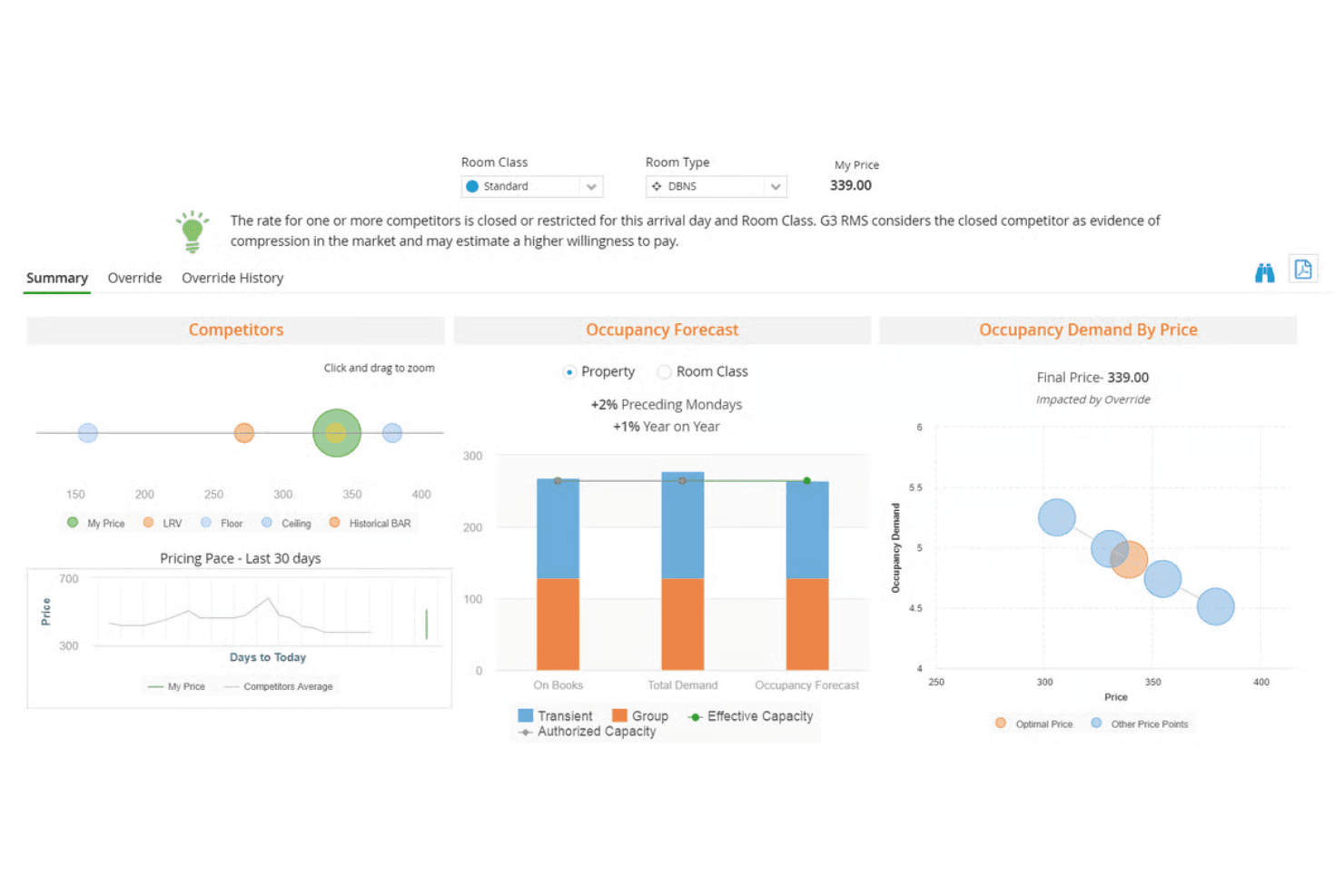
Uses machine learning to predict demand and optimize pricing in real time.
Automated Pricing Recommendations
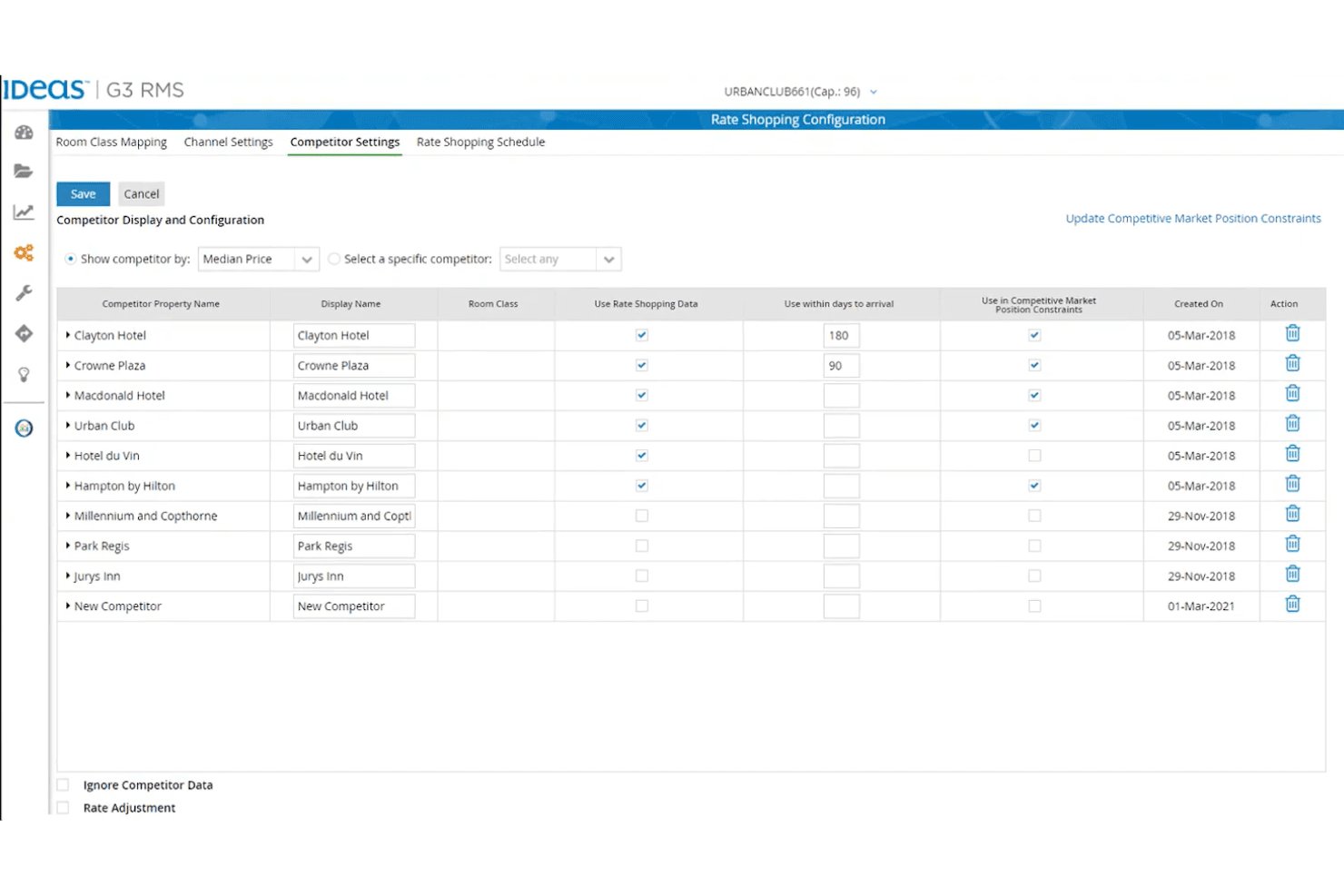
Automatically adjusts rates based on market data, booking pace, and competitor trends.
Property Performance Insights
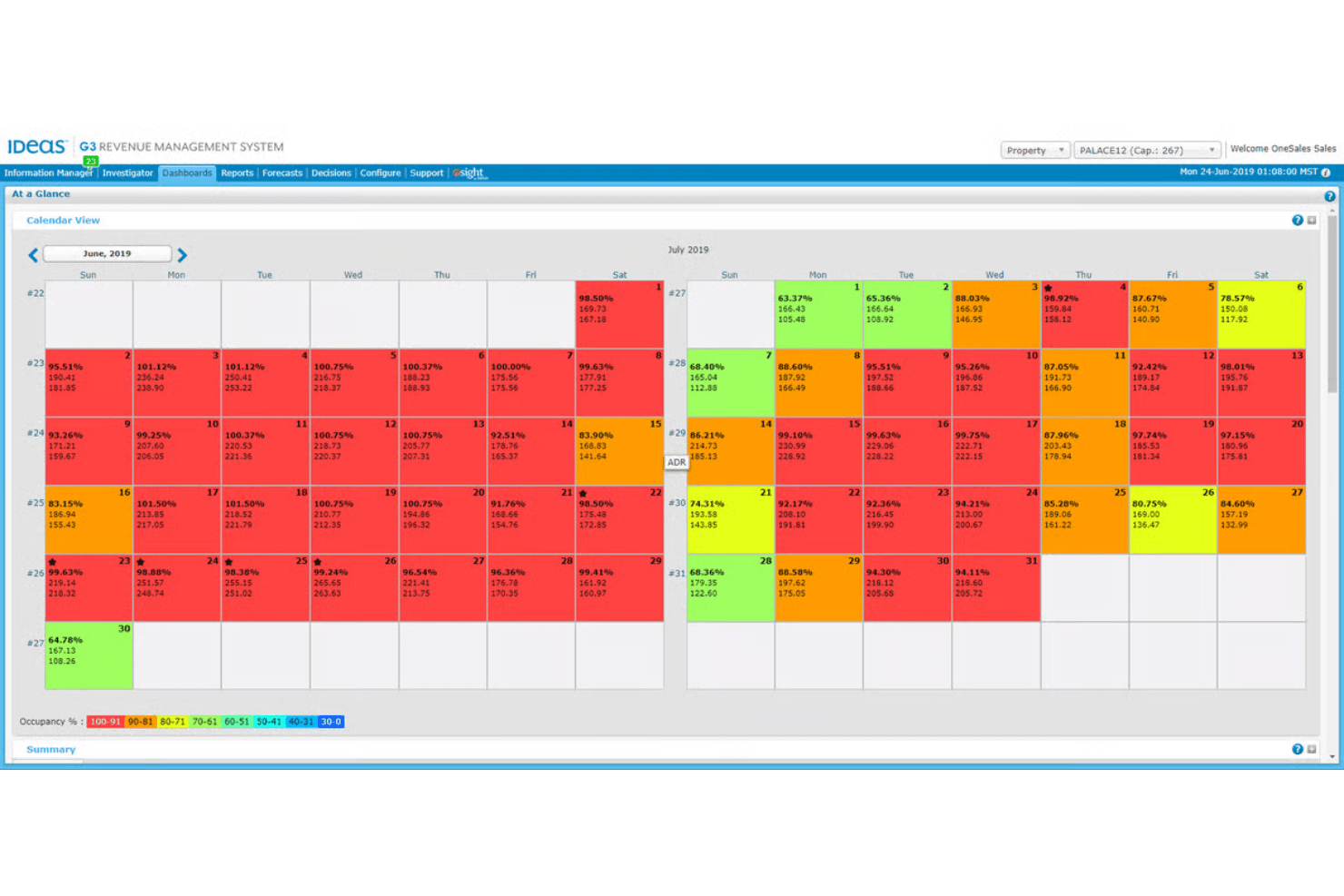
Dashboards provide instant visibility into occupancy, revenue, and guest behavior trends.
Group and Event Revenue Management
Optimizes pricing and availability for meetings, events, and group bookings.
Budgeting and Forecasting Tools
Unifies data to automate forecasting and support proactive planning across your portfolio.
Marketing Optimization
Identifies the best timing and segments for targeted marketing campaigns to drive bookings.
Standout Features
Virtual Revenue Manager
This AI-driven assistant guides users through revenue decisions and best practices. It’s like having an expert on call, offering actionable insights and recommendations tailored to your property.
Limited-Time Offer Optimization
IDeaS automatically identifies and suggests optimal times for flash sales or special offers. This helps you capture incremental revenue during low-demand periods without manual analysis.
Ease of Use
IDeaS offers a modern, intuitive interface that makes navigating dashboards and reports straightforward, even for new users. However, the platform’s depth means it takes time to master advanced features, especially for smaller teams. Many users appreciate the guided workflows and in-app tips, but some mention that initial setup and training require a significant investment.
Overall, IDeaS balances powerful capabilities with a user experience that rewards those willing to invest in learning the system.
Onboarding
IDeaS provides a structured onboarding process with dedicated implementation specialists, detailed training modules, and a comprehensive knowledge base. Users often mention that the onboarding is thorough and well-supported, but it can be time-consuming due to the platform’s complexity.
The availability of live support, webinars, and step-by-step guides helps new users get up to speed, though smaller teams may find the initial learning curve steeper than expected.
Customer Support
IDeaS is known for responsive, knowledgeable customer support, offering 24/7 assistance through phone, email, and an online portal. Users consistently highlight the expertise of support staff and the value of proactive check-ins. The platform also provides a rich library of self-service resources, including FAQs and video tutorials.
While some users wish for faster resolution on complex issues, most agree that IDeaS delivers reliable help when it matters most.
Integrations
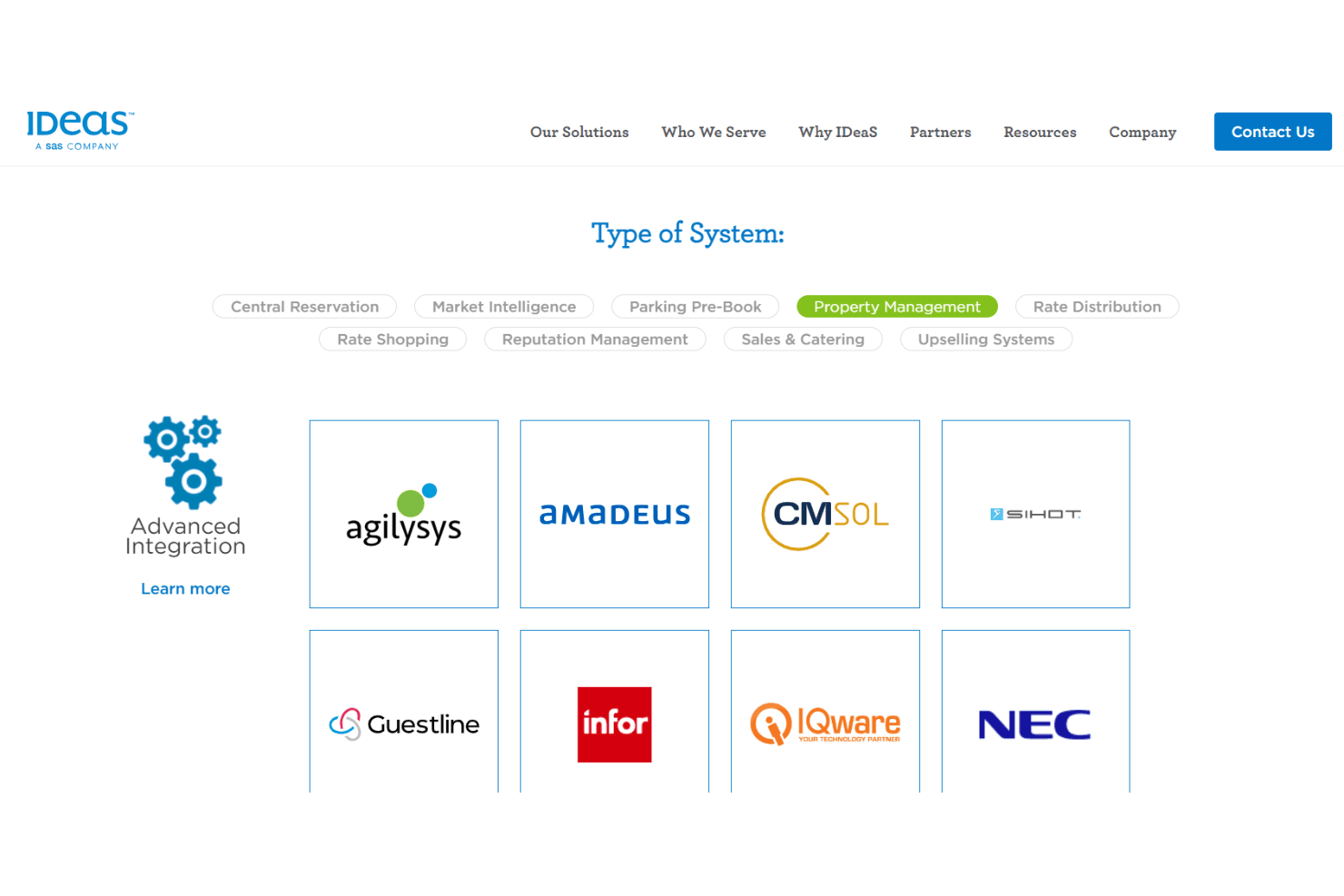
IDeaS integrates with Oracle OPERA, Amadeus IDPMS, StayNTouch Cloud PMS, Infor HMS, SIHOT PMS, Guestline Rezlynx, RMS Hotel PMS, SiteMinder Channel Manager, Pegasus RVNG, and Shiji Daylight PMS, among others.
IDeaS also offers an API and supports connections with a wide range of third-party integration tools.
Value for Money
IDeaS is positioned at the higher end of the market, but many users feel the advanced analytics, automation, and expert support justify the investment for larger or more complex properties. Pricing is not publicly disclosed, and costs may be less accessible for smaller hotels with simpler needs.
IDeaS Specs
- 2-Factor Authentication: No
- Accounts Payable: No
- Accounts Receivable: No
- API: Yes
- Balance Sheet: No
- Billing/Invoicing: No
- BitCoin: No
- Budgeting: No
- Calendar Management: No
- Contact Management: No
- CRM Integration: No
- Customer Management: Yes
- Dashboard: Yes
- Data Export: Yes
- Data Import: Yes
- Data Visualization: Yes
- Expense Tracking: No
- External Integrations: Yes
- Forecasting: Yes
- General Account Ledger: No
- Inventory Tracking: No
- Multi-Currency: No
- Multi-User: Yes
- Notifications: Yes
- P&L: No
- PayPal: No
- Payroll: No
- SAP Integration: No
- Stripe: No
- Supplier Management: No
- Tax Management: No
IDeaS FAQs
IDeaS Company Overview & History
IDeaS is a global leader in AI-powered revenue management solutions for hospitality, cruise, and parking operations, serving over 31,000 properties in 169 countries. The company is headquartered in Minneapolis, Minnesota, and has more than 35 years of experience in the industry. IDeaS is known for its innovation in automated forecasting, pricing, and analytics and is trusted by leading hospitality brands worldwide. The company maintains a high client retention rate and is recognized for its measurable impact on revenue growth.
IDeaS Major Milestones
- 1989: IDeaS was founded, pioneering automated revenue management for hospitality.
- 2001: Launched first AI-driven revenue management system for hotels.
- 2010: Expanded solutions to include parking and cruise revenue management.
- 2022: Surpassed 31,000 properties using IDeaS solutions globally.
- 2026: Celebrated over 35 years of leadership and innovation in revenue management