

10 Best Hotel Maintenance Software Reviewed for 2026

10 Best Hotel Maintenance Software Shortlist


Hotel maintenance software solves the problem of tracking, scheduling, and prioritizing repairs, which frees up your team to focus on delivering a seamless guest experience. Managing unexpected breakdowns and compliance issues can be challenging, but the proper inventory tools help prevent costly downtime and extend the life of your assets.
In this article, I compare and review the best hotel maintenance tools to support your buying decision.
Why Trust Our Software Recommendations
Our team has been testing and reviewing software since 2012. As hospitality leaders ourselves, we know how difficult—and important—it is to choose the right software.
For this guide, we evaluated tools using hands-on testing and independent research, scoring tools using our selection criteria.
Our reviews reflect our human editorial judgment, not a sales pitch.
Hotel Maintenance Software Comparison Table
This comparison table summarizes pricing details for my top hotel maintenance software selections:
| Tool | Best For | Trial Info | Price | ||
|---|---|---|---|---|---|
| 1 | Best for centralized maintenance oversight | 30-day free trial + free demo available | Single plan at $35 per user/month (billed annually) | Website | |
| 2 | Best for preventive maintenance scheduling | Free demo available | Pricing upon request | Website | |
| 3 | Best for photo-driven work orders and PMS sync | Free demo available | Pricing upon request | Website | |
| 4 | Best for hotel portfolio CapEx and asset lifecycle planning | Not available | Pricing upon request | Website | |
| 5 | Best for multilingual team task coordination | Free demo available | Pricing upon request | Website | |
| 6 | Best for offline inspections and QR asset tracking | Free demo available | Pricing upon request | Website | |
| 7 | Best for housekeeping-led safety and labor savings | Free demo available | Pricing upon request | Website | |
| 8 | Best for AI-driven asset lifecycle planning | Free demo available | Pricing upon request | Website | |
| 9 | Best for hospitality-only flat-rate maintenance | Free demo available | Pricing upon request | Website | |
| 10 | Best for guest-to-tech work order automation | 14-day free trial + free demo available | From $50/month (billed annually) | Website |

Best Hotel Maintenance Software Reviews

Best for centralized maintenance oversight
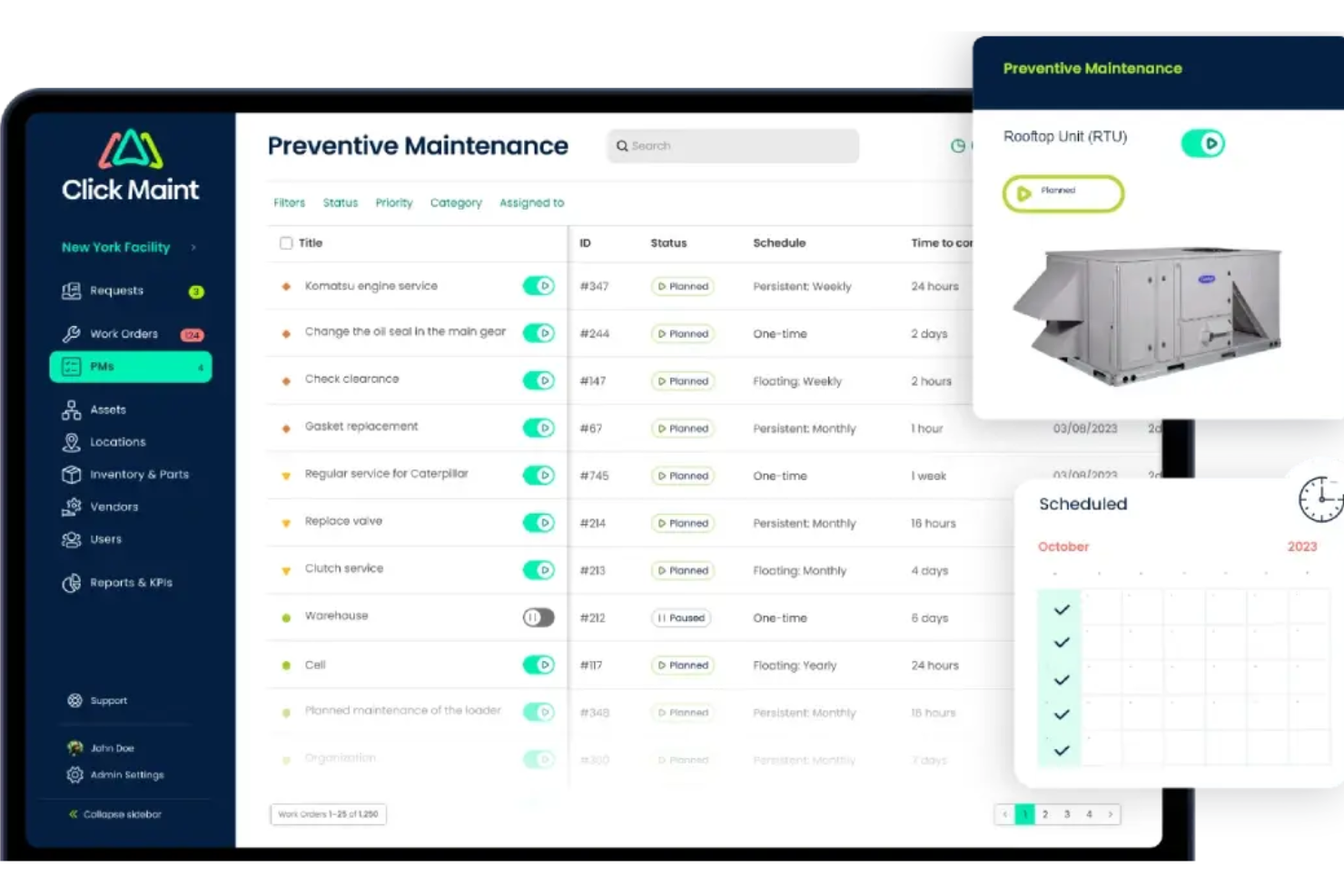
Click Maint CMMS is a hotel maintenance management platform that centralizes work orders, preventive maintenance scheduling, asset tracking, and technician task management across single and multi-property operations.
Who Is Click Maint CMMS Best For?
Click Maint CMMS suits independent hotels and small hotel groups that need a straightforward, affordable way to manage maintenance without a dedicated IT team.
Why I Picked Click Maint CMMS
I picked Click Maint CMMS because it pulls every moving part of hotel maintenance into one place, which is exactly what centralized oversight demands. I like how the PM Progression View and calendar dashboard give you a live picture of upcoming HVAC, elevator, and pool service tasks across your whole property. Guest requests submitted via QR code auto-convert into prioritized work orders, so nothing slips through the cracks between front desk and engineering.
Click Maint CMMS Key Features
- Multi-property dashboard: View and compare maintenance activity, KPIs, and open work orders across all properties from a single centralized interface.
- QR code asset scanning: Each asset gets a unique QR code that technicians can scan on mobile to pull up records, log issues, or close work orders on the spot.
- Inventory and parts management: Track stock levels, set low-quantity alerts, associate parts with work orders, and manage preferred vendors with lead times.
- Custom inspection checklists: Build digital checklists for room inspections, safety checks, and equipment calibration, with photo attachments and compliance record storage.
Click Maint CMMS Integrations
Native integrations are not clearly documented. Click Maint supports API and middleware connections for custom integrations with ERP, CRM, HRIS, accounting, IoT, BAS, and communication tools.
Pros and Cons
Pros:
- Mobile app makes on-the-go updates easy
- QR codes speed up asset management
- Centralizes work orders and preventive maintenance
Cons:
- Workflow automation and custom dashboards are limited
- No dedicated guest-facing request portal

Limble
Best for preventive maintenance scheduling
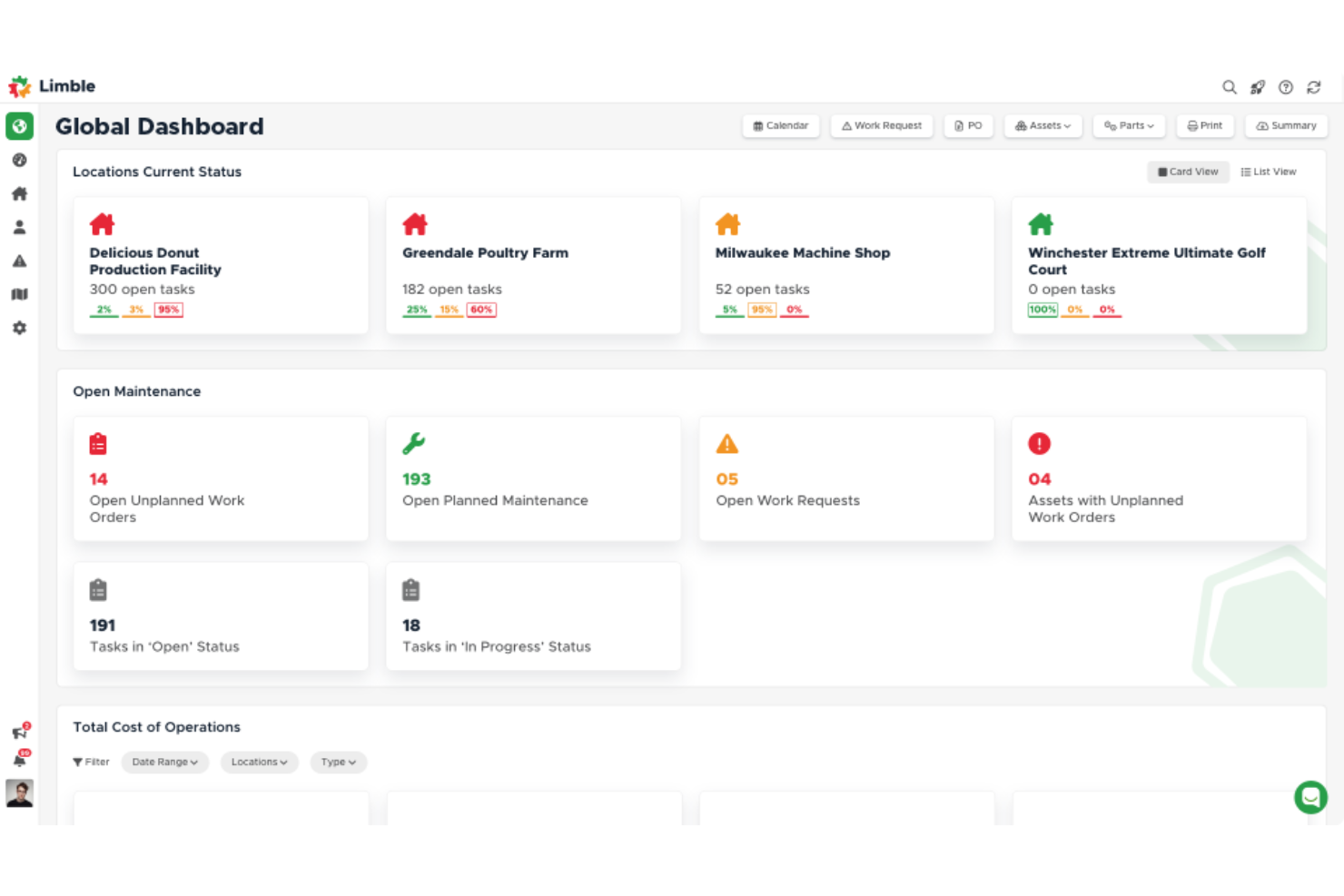
Limble is a CMMS platform built around preventive maintenance scheduling, work order management, asset tracking, and mobile technician workflows, with IoT-based condition monitoring and compliance-ready inspection tools.
Who Is Limble Best For?
Limble is a strong fit for hotel engineering and facilities teams that want a structured, schedule-driven approach to maintaining HVAC, elevators, pools, and other critical equipment across one or more properties.
Why I Picked Limble
Limble earns its spot on my shortlist because its preventive maintenance engine is genuinely best-in-class. I particularly like the AI-Powered PM Builder, which scans asset manuals and auto-generates maintenance schedules for equipment like HVAC units, pool systems, and elevators. Combined with calendar, meter, and condition-based IoT triggers, my team can keep critical hotel systems on schedule without manually building every task from scratch.
Limble Key Features
- QR code work request portal: Guests and staff can submit maintenance requests by scanning a QR code—no login needed—with support for photo attachments and geolocation.
- Vendor and contractor management: Tracks vendor certifications, manages purchase orders, and supports custom approval workflows for external maintenance partners.
- Digital inspection checklists: Customizable checklists with conditional logic automatically trigger corrective work orders when an inspection item fails.
- Multi-language mobile app: The iOS and Android app supports 12+ languages, including Spanish, French, and Arabic, for diverse hotel maintenance teams.
Limble Integrations
Documented integrations include AssetWatch, Augury, Monnit, Samsara, VibeCloud, Slack, Google Calendar, Microsoft 365 Calendar, QuickBooks Online, and ArcGIS Online. Limble’s open REST API supports custom PMS connections, since no native hotel PMS integrations are listed.
Pros and Cons
Pros:
- Multi-language mobile app supports diverse teams
- QR code requests enable in-room submissions
- Preventive maintenance schedules auto-generated from manuals
Cons:
- PMS integration requires custom development work
- No built-in housekeeping coordination features
Snapfix
Best for photo-driven work orders and PMS sync
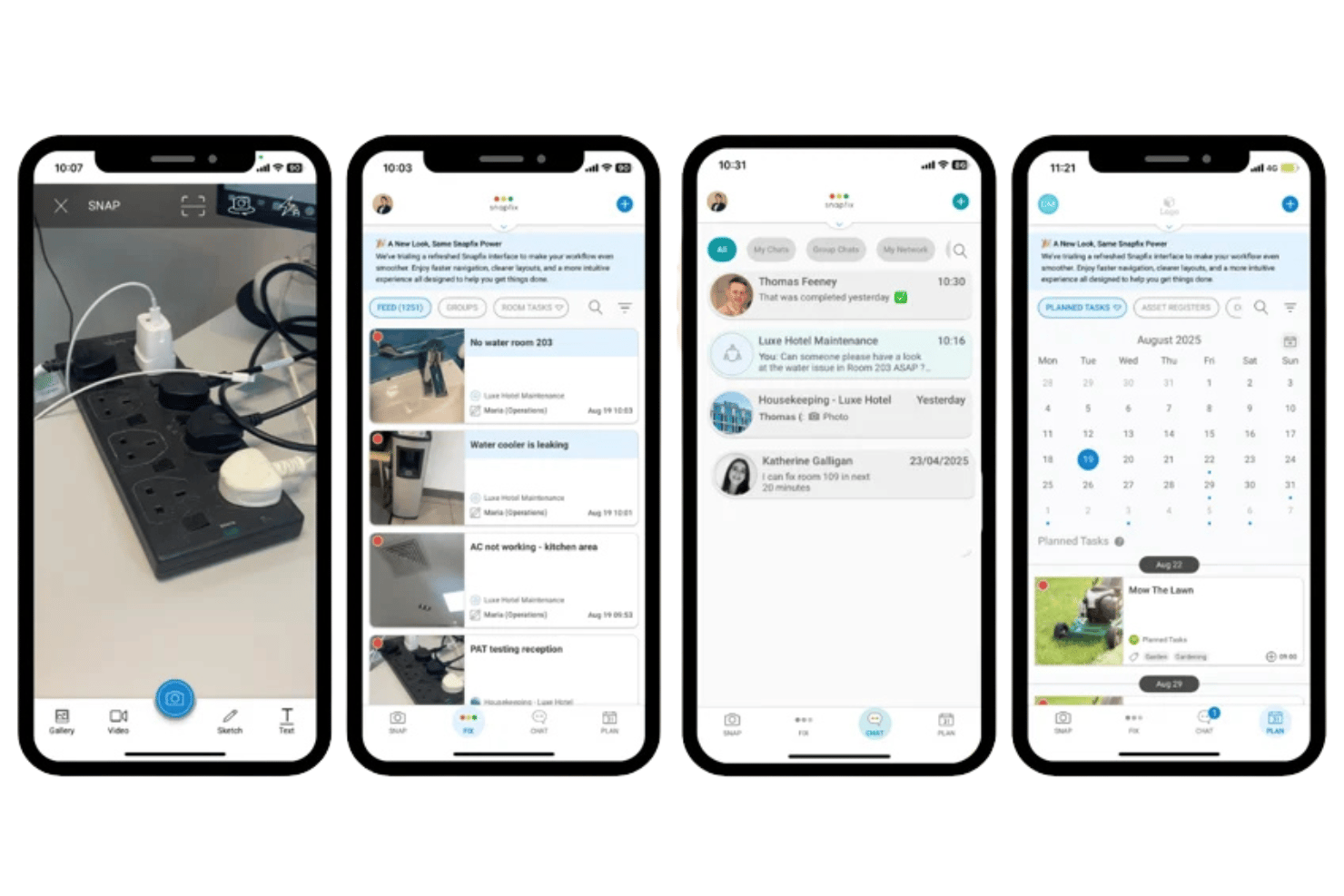
Snapfix is a hotel maintenance software built around photo- and video-based work orders, with dedicated modules for preventive maintenance scheduling, asset tracking, compliance inspections, and AI-powered housekeeping management.
Who Is Snapfix Best For?
Snapfix is a strong fit for hotel operations and engineering teams who want a mobile-first maintenance platform their frontline staff can actually use without extensive training.
Why I Picked Snapfix
Snapfix earns its spot on my shortlist because photo-driven work orders are genuinely central to how it operates, not a feature bolted on as an afterthought. Staff can log a broken fixture by snapping a photo and submitting it in three seconds, with the task routed directly to the right technician. I also like that PMS sync feeds the AI housekeeping board each morning, auto-generating departure and stayover cleans based on live reservation data so supervisors aren't manually building room lists.
Snapfix Key Features
- Traffic light task tracking: Color-coded status system (red, yellow, green) gives every department instant visibility into work order progress without opening a separate report.
- NFC smart tag verification: Staff tap NFC tags on assets or locations to confirm on-site task completion, creating a timestamped, tamper-resistant audit trail.
- Comply module for fire safety inspections: Schedule recurring fire walks with custom checklists, digital signatures, and photo evidence logged for regulatory audits.
- Multi-property portfolio dashboard: View work order volumes, completion rates, and compliance status across all properties from a single centralized dashboard.
Snapfix Integrations
Snapfix offers 17+ native PMS integrations, including Oracle Opera Cloud, Cloudbeds, Guestline, StayNTouch, Maestro PMS, RMS Cloud, Agilysys, and Hotelogix. It also connects with Acutrace, supports SSO through Microsoft Azure, Google, and Apple, and provides an open API for custom integrations.
Pros and Cons
Pros:
- Traffic light status shows real-time task progress
- PMS sync drives AI-powered housekeeping board
- Work orders created instantly using photos or video
Cons:
- App may drain battery with heavy use
- No parts or inventory tracking tools
Quore
Best for hotel portfolio CapEx and asset lifecycle planning
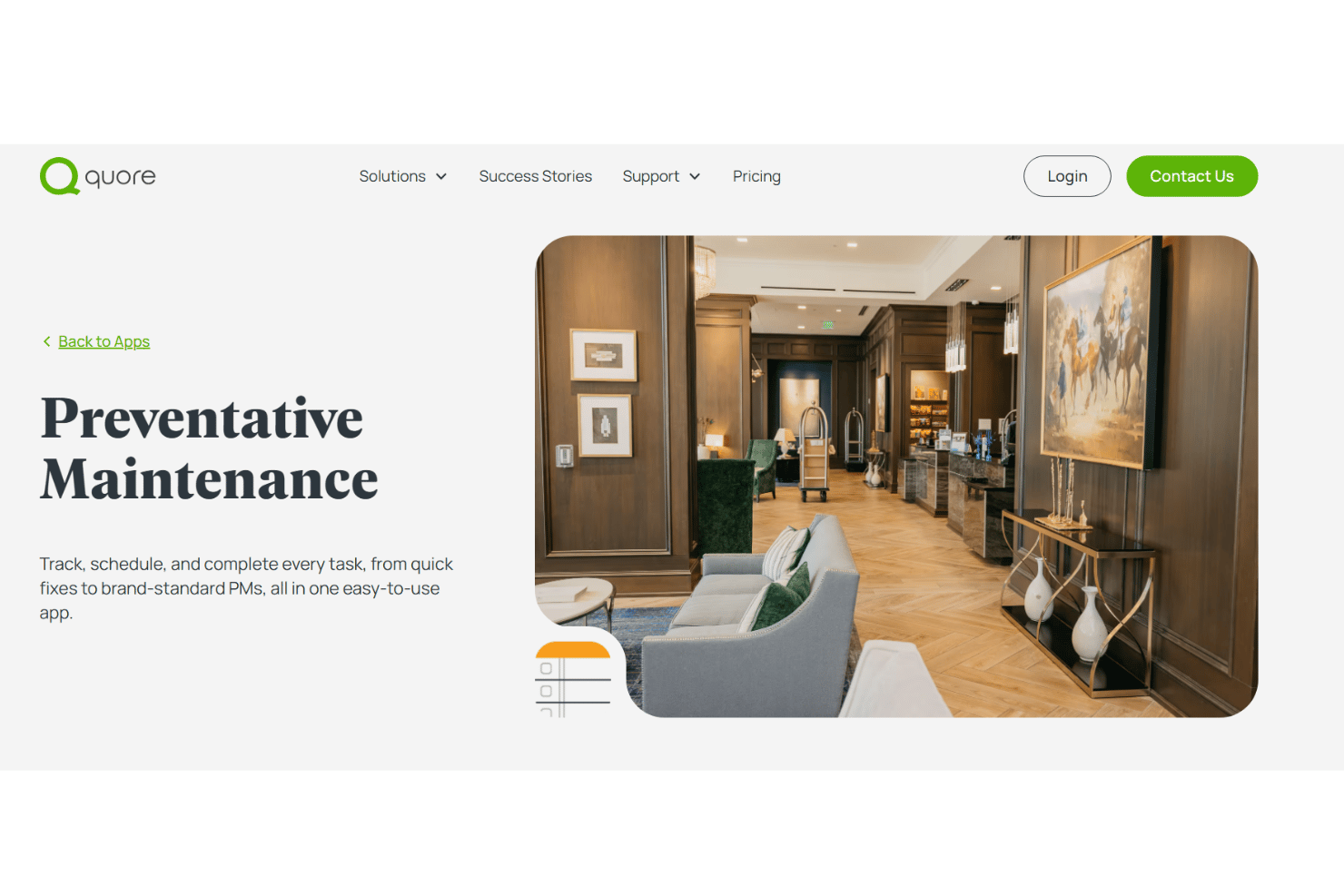
Quore is a hotel operations and maintenance platform built around engineering workflows, combining work orders, preventive maintenance scheduling, asset tracking, CapEx planning, inspections, and housekeeping coordination in a single system.
Who Is Quore Best For?
Quore is a strong fit for multi-property hotel management companies that need centralized visibility into asset lifecycles, CapEx forecasting, and engineering compliance across an entire portfolio.
Why I Picked Quore
Quore earns its spot on my shortlist because of how seriously it takes long-term asset planning, which most hotel maintenance tools treat as an afterthought. I love that the CapEx module lets engineering teams forecast equipment replacements up to 15 years out, compare bids, and track approval workflows in one place. Pair that with an inventory registry that logs warranty data, serial numbers, and full service history per asset, and you have a real lifecycle management system.
Quore Key Features
- PM calendar: A visual scheduling tool that surfaces recurring preventive maintenance tasks automatically across Life Safety, Building, Mechanical, and Guestroom categories.
- Above Property Dashboard: A portfolio-level view that tracks PM compliance, top complaints, resolution costs, and guest satisfaction response times across all properties.
- Multilingual mobile app: Native iOS and Android apps available in 22 languages, letting diverse engineering and housekeeping teams work in their preferred language.
- Daily readings log: A time-stamped tracking tool for meter, boiler, and pool chemical readings that builds historical trend data for inspections and compliance.
Quore Integrations
Quore documents 13 integrations, including IHG Concerto, choiceADVANTAGE powered by SkyTouch, HotelKey, Akia, Canary Technologies, Kipsu, Medallia Concierge, Revinate, Saba, and Whistle for Cloudbeds. Cloudbeds connectivity runs through Whistle for Cloudbeds.
Pros and Cons
Pros:
- Multilingual app supports diverse hotel teams
- Asset lifecycle and CapEx forecasting included
- All-in-one platform for hotel operations
Cons:
- Lacks direct integrations to major PMS platforms
- No guest-facing maintenance request portal

Best for multilingual team task coordination
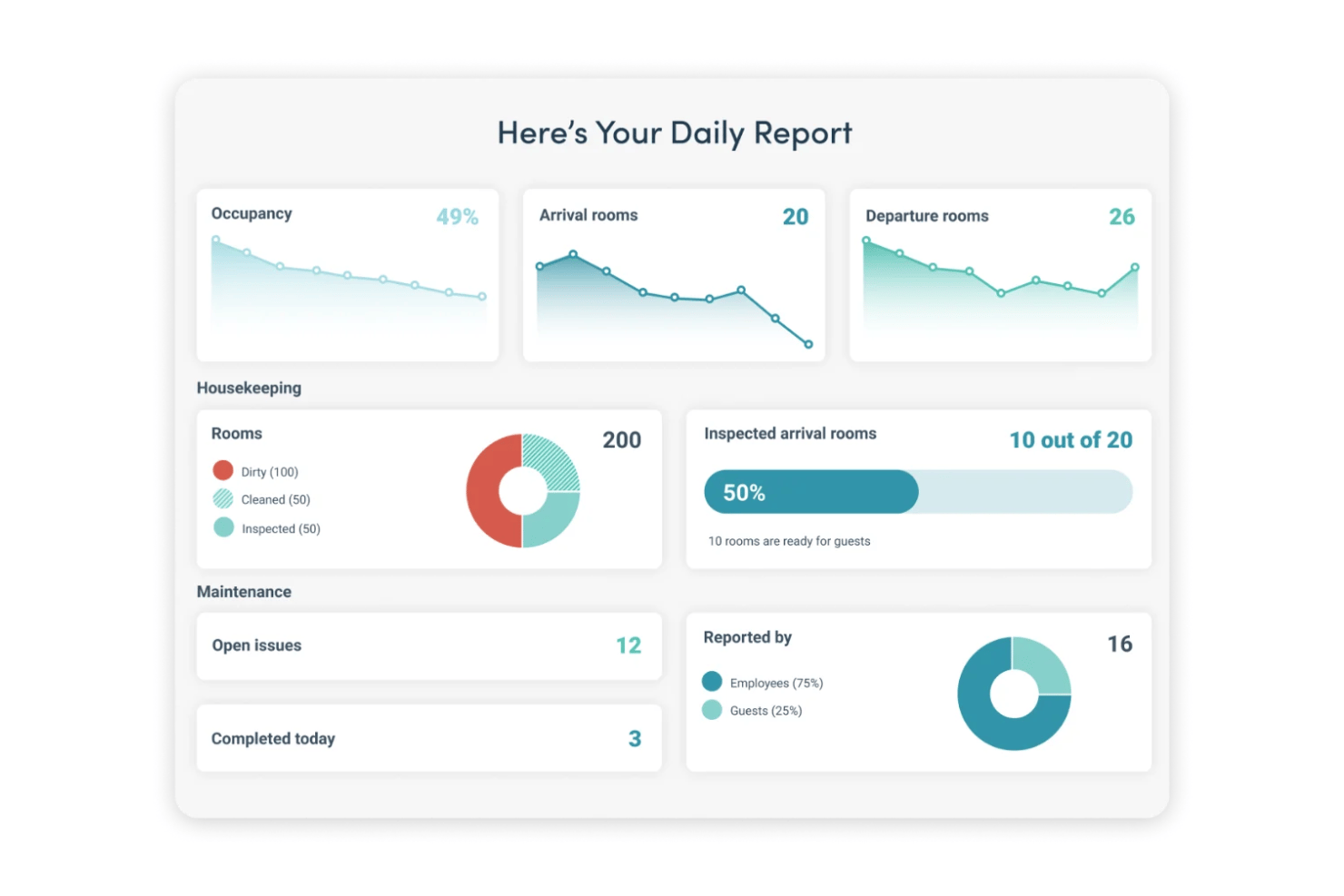
Flexkeeping is a hospitality operations platform built for hotel teams that combines maintenance work order management, housekeeping coordination, inspections, and cross-department task tracking in one mobile-first system.
Who Is Flexkeeping Best For?
Flexkeeping is a strong fit for hotel groups and mid-to-large properties with multilingual front-line teams who need maintenance and housekeeping coordination to work across language barriers without friction.
Why I Picked Flexkeeping
I picked Flexkeeping as one of the best because of how it handles multilingual task coordination in a way I haven't seen matched elsewhere in this category. Flexie AI lets any staff member create a work order by voice in their native language, then auto-translates it into 240+ languages instantly, so a housekeeper flagging a broken fixture doesn't need a supervisor to relay the request. Cross-department sync then pushes that task to maintenance in real time, closing the gap between floors without a single phone call.
Flexkeeping Key Features
- No-code workflow builder: Create automated task workflows using real-time PMS triggers like VIP status, rate code, and length of stay—no developer needed.
- Photo proof: Technicians attach photos directly when closing a work order, creating a timestamped visual record of completed work.
- QR code asset check-ins: Scan QR codes on equipment to log visits, confirm preventive maintenance completion, and pull up asset history on the spot.
- Multi-property analytics dashboard: Track housekeeping and maintenance KPIs across your entire portfolio from a single consolidated view.
Flexkeeping Integrations
Flexkeeping offers 14+ native PMS integrations, including Mews, OPERA, Cloudbeds, Apaleo, Shiji, RMS Cloud, Protel, SIHOT, and RoomRaccoon. It also integrates with Canary, Duve, Hoteza, Akia, and other guest-facing platforms.
Pros and Cons
Pros:
- Cross-department task syncing in real time
- No-code workflow automation streamlines maintenance processes
- AI-powered multilingual task creation and translation
Cons:
- No predictive maintenance or IoT triggers
- No guest-facing maintenance request portal

Hub OS
Best for offline inspections and QR asset tracking
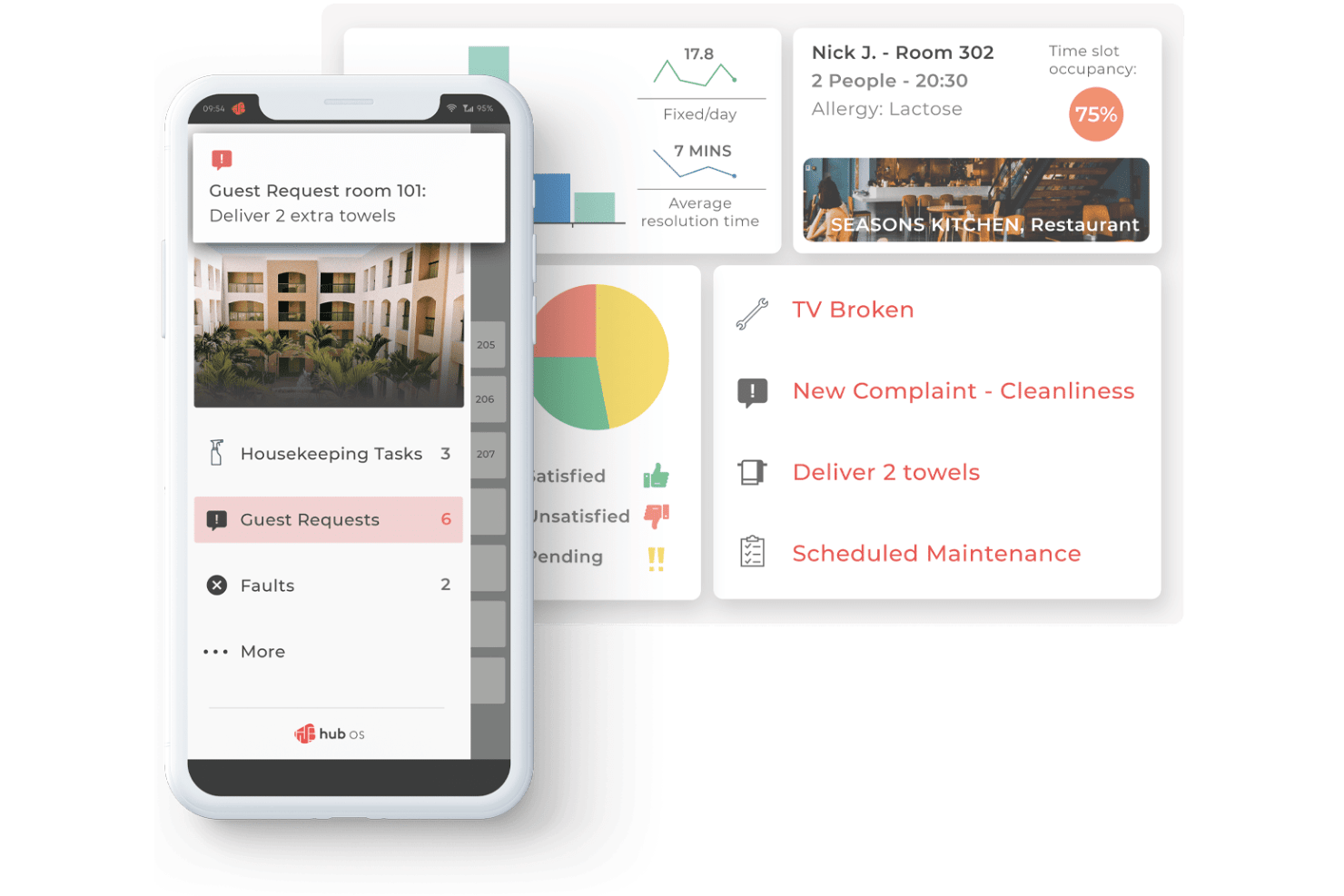
Hub OS is a hotel operations and maintenance platform that combines work order management, preventive maintenance scheduling, QR-based asset tracking, compliance inspections, and a guest request portal in a single system.
Who Is Hub OS Best For?
Hub OS is a strong fit for maintenance and facilities teams in European hotels who need offline-capable mobile inspections and QR-based asset tracking built into a single operations platform.
Why I Picked Hub OS
Hub OS earns its spot on my shortlist because of how well it handles offline inspections and QR-based asset tracking in real hotel conditions. I like that a technician can scan a QR code on any piece of equipment, pull up its full service history, and log a fault without needing a Wi-Fi signal in a basement plant room or thick-walled area. The offline mode syncs everything automatically once connectivity returns, so no inspection data gets lost.
Hub OS Key Features
- Automatic task escalation: Unresolved work orders escalate to a supervisor or manager automatically when a defined SLA timeframe is breached.
- Legal inspection scheduling: The platform tracks mandatory compliance inspections, sends auto-alerts, and generates inspection reports automatically.
- Guest request routing: Guest-submitted requests via the Guest in Touch web app or Duve flow directly into the work order queue with real-time status notifications back to guests.
- Energy consumption tracking: A dedicated module monitors energy use benchmarked against rooms, guests, and square meters to support ESG reporting.
Hub OS Integrations
Documented integrations include Mews, protel air, Oracle Hospitality, apaleo, Host PMS, HotelKey, Duve, HiJiffy, Signify, and Vouch. Hub OS also supports custom module development for additional connectivity.
Pros and Cons
Pros:
- Guest requests route directly to maintenance
- QR code scanning pulls up equipment history
- Inspection checklists work fully offline
Cons:
- Reporting exports require manual formatting
- Open work orders are hard to modify
Best for housekeeping-led safety and labor savings
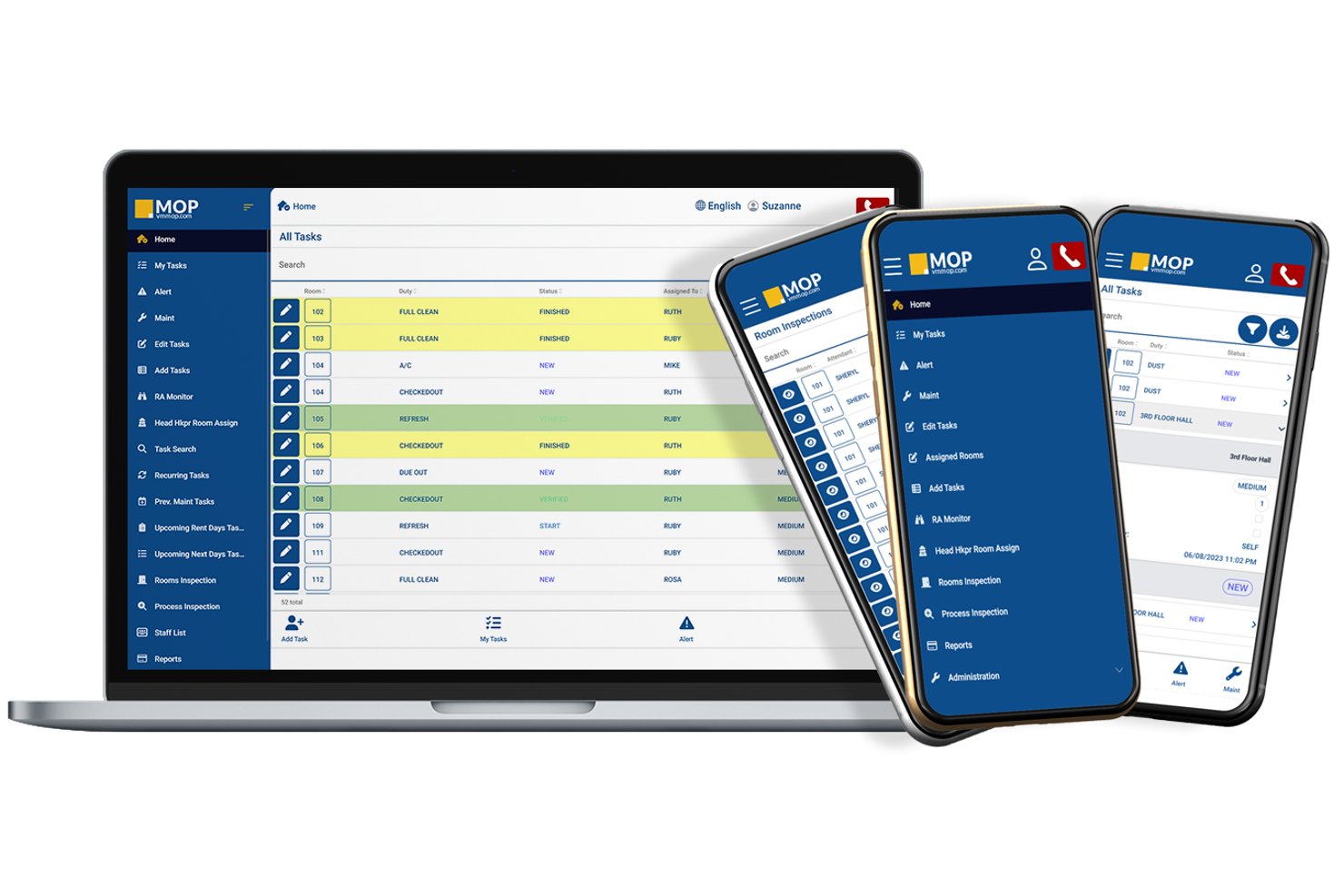
MOP by Visual Matrix is a hospitality operations platform that combines housekeeping management, preventive maintenance scheduling, work order tracking, digital inspections, and staff safety tools in a single mobile app.
Who Is MOP by Visual Matrix Best For?
MOP is a strong fit for housekeeping managers and general managers at branded limited-service and mid-scale hotels who want to cut labor costs and meet staff safety compliance requirements from a single mobile app.
Why I Picked MOP by Visual Matrix
I picked MOP by Visual Matrix because it's one of the few hotel operations tools that treats housekeeping as the engine of both safety compliance and labor cost control. The built-in panic button lives on every screen of the app, so a room attendant working alone can trigger an alert and share their GPS location with security in one tap. I also like the "Days Counter vs. Days Rented" PM scheduling, which ties preventive maintenance to actual room usage rather than a fixed calendar, so you're not running maintenance on a room that's barely been occupied.
MOP by Visual Matrix Key Features
- Digital inspection workflows: Supervisors complete structured room walkthroughs, flag issues, and assign follow-up maintenance tickets with timestamps and photo capture in real time.
- Guest texting integration: Staff send and receive messages from guests before, during, and after their stay directly within the MOP platform.
- Lost and found management: Log misplaced items with photos, track storage locations, set holding periods, and manage inventory from a single screen.
- Multilingual interface: The app supports multiple languages, letting housekeeping and maintenance teams work in their preferred language without extra setup.
MOP by Visual Matrix Integrations
MOP by Visual Matrix has six documented native integrations, including Visual Matrix PMS, OPERA Cloud, SynXis/Sabre, ASI, Choice Advantage, and MSI. Its API-based approach supports custom PMS compatibility checks.
Pros and Cons
Pros:
- Multilingual interface supports diverse teams
- Preventive maintenance based on room usage
- Built-in panic button for staff safety
Cons:
- No IoT integration for predictive maintenance
- No asset registry for equipment tracking

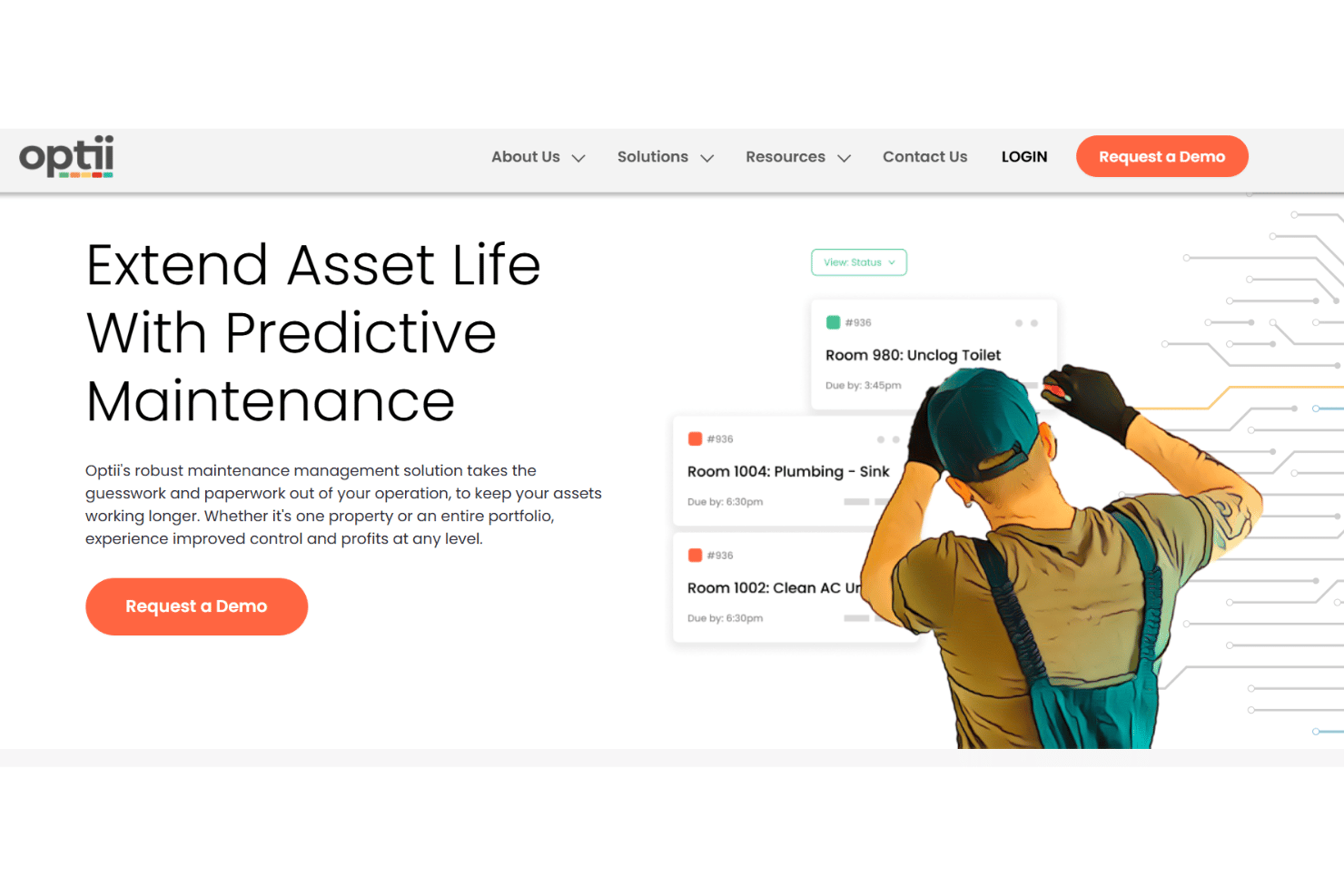
Optii Solutions is a hotel maintenance software platform built exclusively for hospitality teams, covering work order management, preventive maintenance scheduling, asset lifecycle tracking, and compliance checklists across single and multi-property portfolios.
Who Is Optii Solutions Best For?
Optii Solutions is a strong fit for mid-to-large hotel groups and multi-property operators whose engineering and facilities teams need AI-driven asset tracking and CapEx planning built into their daily maintenance workflows.
Why I Picked Optii Solutions
Optii Solutions earns its spot on my shortlist because of how seriously it treats asset lifecycle planning, which most hotel maintenance tools treat as an afterthought. I'm particularly drawn to its CapEx forecasting tied directly to asset repair history and cost-of-ownership data, so engineering teams can build budget cases from real numbers rather than gut feel. Its AI-driven preventive maintenance scheduling auto-generates recurring jobs by asset type and usage frequency, which cuts unplanned work by 47% according to Optii's own data.
Optii Solutions Key Features
- Multi-property portfolio dashboard: A single group-level view lets you benchmark maintenance KPIs and team productivity across all properties simultaneously.
- In-app multilingual chat: Built-in inline translation lets engineering and housekeeping staff communicate in their preferred language without leaving the app.
- Offline mode: Staff can start, pause, and complete jobs without an internet connection, with automatic sync and accurate timestamps once back online.
- Custom compliance checklists: Build and deploy property- or brand-specific inspection checklists with photo documentation and full audit trails attached to each job.
Optii Solutions Integrations
Optii Solutions offers 17 documented integrations, including Oracle Hospitality OPERA Cloud, Oracle OPERA On-Premises, Mews, Maestro PMS, RMS Cloud, Stayntouch, and Agilysys Hospitality Solutions. These connections sync room status, out-of-order flags, and guest requests.
Pros and Cons
Pros:
- Above-property portfolio dashboards for benchmarking
- Multilingual in-app chat with inline translation
- AI-driven preventive maintenance job scheduling
Cons:
- No IoT or live sensor monitoring
- Android app reported frequent crashes

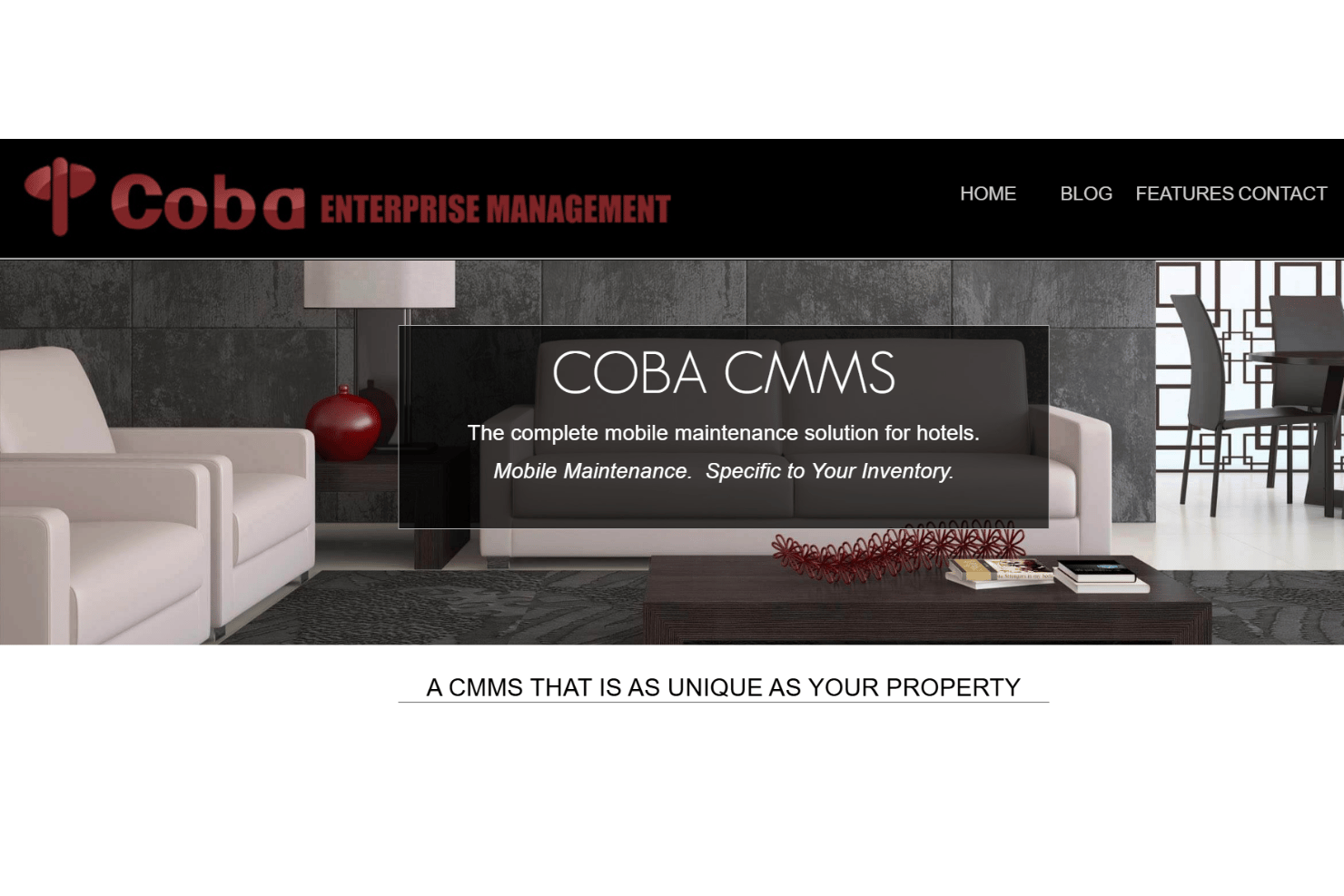
Coba CMMS is a hospitality-exclusive maintenance management platform that covers work orders, preventive maintenance scheduling, asset tracking, compliance inspections, and multi-property oversight through a native mobile app.
Who Is Coba CMMS Best For?
Coba CMMS is a strong fit for chief engineers and maintenance managers at franchise hotel properties who want a hospitality-only platform without per-user pricing complexity.
Why I Picked Coba CMMS
Coba CMMS earns its spot on my shortlist because it's built exclusively for hotels, which means every PM cadence, inspection template, and compliance module reflects how hospitality maintenance actually works. I particularly like the auto-scheduled room PMs that adjust for occupancy and the OSHA safety modules that cover lockout/tagout, bloodborne pathogens, and incident reporting without any manual setup. The flat per-property pricing with unlimited users also means a chief engineer managing a 200-room property pays the same rate whether the team has three technicians or ten.
Coba CMMS Key Features
- "Can't Fix" escalation flag: Technicians can mark an asset as irreparable directly in the app, automatically surfacing it to management for executive review.
- Five-year maintenance history: The platform stores work order and inspection records for up to five years, supporting capital planning, PIP assessments, and insurance documentation.
- Portfolio-wide inspection push: Custom inspections and projects can be deployed across all properties in your portfolio within 48 hours through Coba's customer service team.
- Utility and sustainability tracking: Engineers can log utility readings, water temperature checks, and winterization inspections to support green initiative reporting.
Coba CMMS Integrations
Coba CMMS doesn't have any native integrations. PMS, housekeeping, guest messaging, IoT, and energy platform connections aren't clearly documented, and no public API is advertised.
Pros and Cons
Pros:
- OSHA safety inspection modules are built in
- Unlimited users at every property included
- Built exclusively for hospitality operations
Cons:
- No PMS, housekeeping, or IoT integrations
- No guest maintenance request portal available

HelloShift
Best for guest-to-tech work order automation
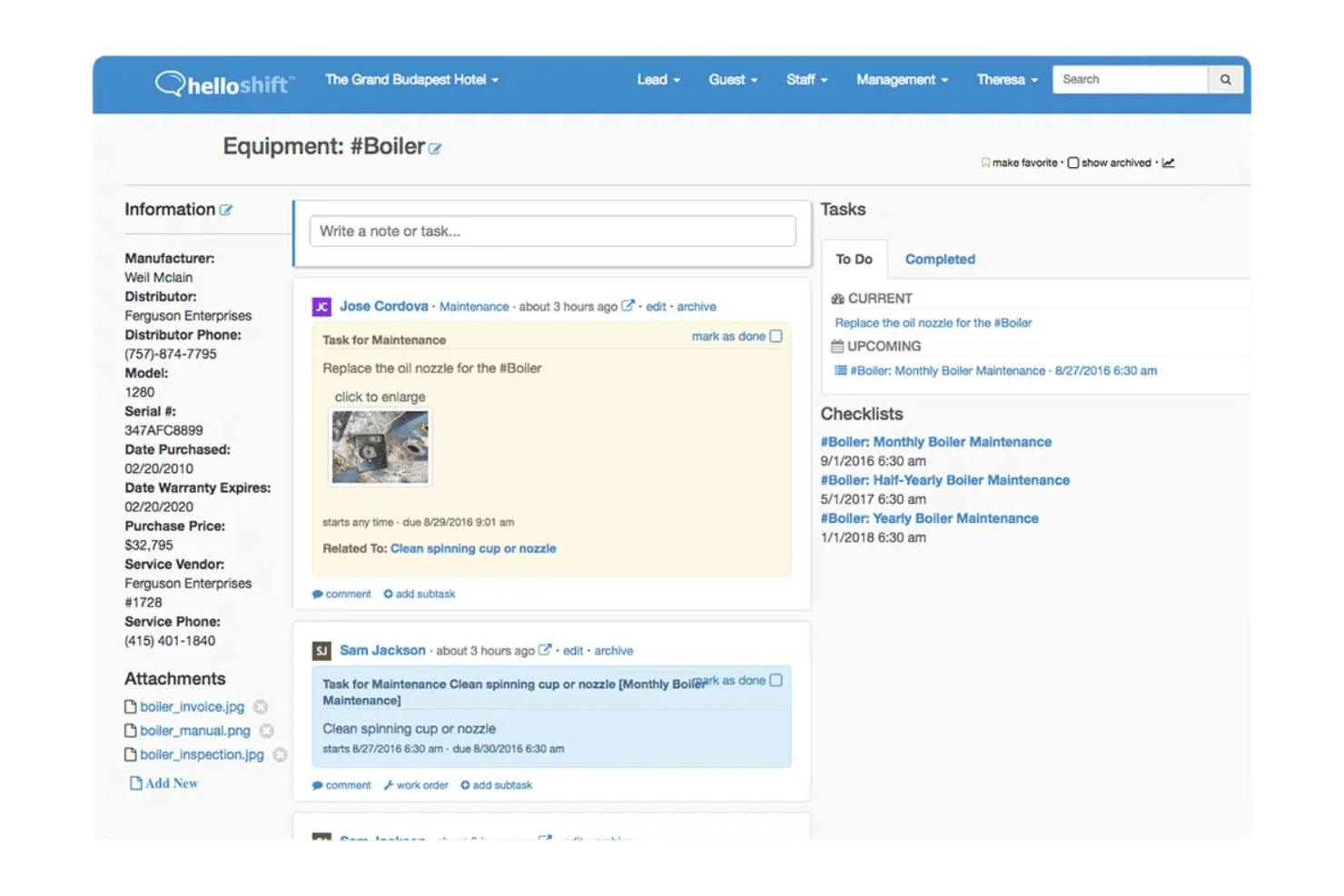
HelloShift is a hotel operations platform that combines preventive maintenance scheduling, work order management, asset tracking, housekeeping coordination, and guest messaging in a single system.
Who Is HelloShift Best For?
HelloShift is a strong fit for independent and boutique hotel operators who want maintenance, housekeeping, and guest messaging managed in one platform instead of three.
Why I Picked HelloShift
I picked HelloShift because of how it closes the gap between a guest complaint and a completed repair. When a guest texts about a broken fixture, HelloShift's AI messaging layer captures that message and auto-creates a work order, routing it to the right technician without anyone manually triaging a phone call. I also like the readings logging for pools, boilers, and HVAC systems, which keeps regulatory documentation current without extra admin lift.
HelloShift Key Features
- Asset registry: Store model numbers, warranty details, service history, and location data for every piece of equipment in a centralized inventory.
- Readings logging: Record pool chemistry, boiler pressure, HVAC metrics, and energy meter data from mobile devices with automatic timestamps and trend tracking.
- Custom inspection checklists: Build unlimited inspection templates with photo attachments, pass/fail criteria, and scheduled recurrence intervals for any asset or area.
- AI-generated shift reports: Automatically compile daily and weekly operations summaries covering maintenance, housekeeping, and guest experience for manager review.
HelloShift Integrations
HelloShift offers 40+ native PMS integrations, including Oracle Hospitality Opera, Mews, Cloudbeds, WebRezPro, StayNTouch, Shiji, and Agilysys, plus integrations with August, Yale, Schlage, Shift4, Stripe, and Authorize.Net. Enterprise plans add API access and custom integrations.
Pros and Cons
Pros:
- Combines maintenance, housekeeping, and guest messaging
- AI-generated shift reports for manager review
- Instantly creates work orders from guest texts
Cons:
- Limited mobile app reliability for some users
- No IoT sensor or energy tracking features
Other Notable Hotel Maintenance Software
Below is a list of additional hotel maintenance software that we shortlisted, but did not make it to the top 10. Definitely worth checking them out.
- hotelkit
For NFC-driven inspections and audit trails
- Mirage
For intuitive interface and ease-of-use
- CloudPM
For scalable solutions for all hotel sizes
- 360HMS
For comprehensive 360-degree hotel management
- CloudInn
For room availability management
- HotelRunner
Good for enhancing direct bookings and channel management
- Hotello
Good for multi-property management and centralized controls
- Rhapsody
Good for integrating various hotel operation functions
- SkyTouch Technology
For cloud-driven flexibility and remote accessibility
- Visual Matrix PMS
Good for intuitive UI and detailed revenue analysis


How I Evaluate Hotel Maintenance Software
I split my evaluation into core criteria—work orders, PM scheduling, and PMS integration—and the differentiators that set the right tool apart for your operation.
Core Functionality (Table Stakes For This List)
When I'm selecting tools for my list, I rank each one on a scale from 0 (does not offer the functionality) to 5 (excels in this area) for each core functionality listed below. Then, I calculate the tool's total score into a percentage. Each tool needs to achieve a minimum total score of 65% to be considered for inclusion.
- Work Order Management: I check whether guest-reported issues like a broken AC or leaking faucet can be logged, assigned, prioritized, and tracked through resolution.
- Preventive Maintenance Scheduling: Recurring tasks like HVAC filter changes and pool pump servicing should be automated with templates, calendars, and trigger options.
- Asset & Equipment Tracking: I look for centralized registries that log location, warranty, and service history for assets like elevators, boilers, and laundry equipment.
- Mobile Technician App: Engineers need to receive, update, and close tasks on the move—I evaluate whether each app supports offline mode, photos, and push alerts.
- PMS/Hotel System Integration: Room status syncs matter—I check for native connectors to platforms like Opera, Mews, or Cloudbeds to keep front desk and maintenance aligned.
- Inspections & Compliance Checklists: Each tool should support digital room inspections and safety audits with photo documentation, scoring, and corrective action tracking.
Once I have a list of tools that meet this criteria, I consider what sets each platform apart.
Differentiating Factors (What Sets Vendors Apart)
Here's how I compare and contrast different vendors:
Standout Features
Multi-property dashboards are a big deal for hotel groups—I look for portfolio-wide views that let you benchmark maintenance costs and downtime across locations. IoT and sensor integration is another separator, especially when a platform can trigger work orders from real-time HVAC or water-leak data before a guest ever notices the problem. I also evaluate whether the tool offers a guest-facing request portal with QR codes or in-room digital channels that route issues straight to the right technician.
Beyond Features
Pricing structure matters—I evaluate whether a tool charges per room, per property, or per user, since seasonal staffing swings can inflate costs on per-user models. Implementation speed is equally important because hotels operate around the clock and can't afford extended downtime during rollout. I also consider whether the platform fits the property type, from a 20-room boutique to a 500-room resort or a multi-brand management portfolio.
How to Choose Hotel Maintenance Software
Finding the right hotel maintenance software means choosing a platform that matches your property’s engineering workflows, asset requirements, and service standards rather than settling for a generic maintenance system.
| If your priority is... | Look for... |
|---|---|
| Resolving maintenance issues faster | Mobile work orders with real-time assignment and status updates |
| Preventing equipment breakdowns | Recurring preventive maintenance schedules and automated reminders |
| Managing hotel equipment and assets | Asset histories, warranties, manuals, and maintenance cost tracking |
| Coordinating maintenance across properties | Multi-property dashboards with property-level permissions |
| Responding quickly to guest-reported issues | Guest request routing connected to front desk and engineering teams |
How to Vet Your Shortlist
- Test mobile usability: Run a short maintenance task on a technician’s mobile device while moving around the property. Check load times, offline access, photo uploads, and work order updates.
- Validate integration depth: Ask for a demo of maintenance request flow across your PMS, guest messaging, and housekeeping tools.
- Review preventive maintenance reporting: Request a sample report showing overdue tasks, completed inspections, recurring equipment issues, and upcoming maintenance schedules.
- Trial the work order flow: Test the work order flow from reporting to closure.
- Tradeoff—simplicity vs. operational depth: Compare simple platforms with configurable systems offering deeper asset, compliance, and multi-property controls.
What is Hotel Maintenance Software?
Hotel maintenance software is a maintenance management system designed for managing repairs, preventive maintenance, inspections, and hotel assets across one or multiple properties.
These platforms allow engineering and maintenance teams to manage work orders, track equipment conditions, and schedule recurring maintenance tasks.
Hotel maintenance software addresses challenges like unexpected equipment failures, delayed room repairs, aging assets, and the need to coordinate maintenance work across engineering, housekeeping, and front desk teams.
Features of Hotel Maintenance Software
When selecting hotel maintenance software, keep an eye out for the following key features:
- Work order management: Enables staff to create, assign, prioritize, and track maintenance requests from initial reporting through completion. Mobile updates, photos, notes, and status tracking keep technicians informed while working around the property.
- Preventive maintenance scheduling: Provides tools to schedule recurring service for HVAC systems, boilers, elevators, pools, kitchen equipment, and other hotel assets. Automated reminders reduce the risk of missed maintenance.
- Asset and equipment management: Lets you maintain records for hotel equipment, including service histories, warranties, manuals, locations, and maintenance costs. This creates a detailed record of each asset throughout its lifecycle.
- Inspection and checklist management: Allows teams to create digital inspection forms and maintenance checklists for guest rooms, facilities, equipment, and safety procedures. Completed inspections provide a traceable record of property conditions.
- Reporting and analytics: Breaks down work orders, response times, recurring issues, maintenance costs, and equipment performance. This allows managers to identify problem assets and monitor maintenance activity across properties.
- PMS and hotel operations integrations: Connects maintenance workflows with property management, housekeeping, guest messaging, or hotel operations systems. This allows reported room or facility issues to reach the appropriate maintenance staff without duplicate entry.
- Mobile maintenance management: Gives technicians access to assigned work orders, asset information, checklists, manuals, and repair histories from phones or tablets. Offline capabilities can support teams working in areas with limited connectivity.
- Automated notifications and reminders: Sends alerts when new work orders are assigned, preventive maintenance is due, or unresolved issues require attention. This keeps technicians and managers informed about upcoming or overdue tasks.
- Role-based access controls: Customizes dashboards, permissions, and maintenance information based on job responsibilities. Engineers, technicians, supervisors, and other hotel departments can access the information relevant to their work.
Common Hotel Maintenance Software AI Features
Beyond the standard hotel maintenance software features listed above, many of these solutions are incorporating AI with features like:
- AI-powered predictive maintenance: Analyzes equipment history, usage patterns, sensor readings, and previous failures to identify assets that may require maintenance before a breakdown occurs.
- AI-assisted work order creation: Interprets maintenance requests submitted through text, voice, or guest communications and converts them into structured work orders with relevant categories, priorities, and asset details.
- AI-driven work order prioritization: Evaluates urgency, guest impact, asset importance, and technician availability to recommend which maintenance issues should be addressed first.
- AI-based equipment diagnostics: Analyzes maintenance histories, fault patterns, and equipment data to suggest possible causes of failures and recommend troubleshooting steps for technicians.
- AI scheduling and technician assignment: Matches work orders with available technicians based on skills, workload, location, and task priority to distribute maintenance work more effectively.
- AI maintenance trend analysis: Reviews work order and asset data to uncover recurring failures, high-maintenance equipment, and patterns that could indicate larger property or equipment problems.
Benefits of Hotel Maintenance Software
Implementing hotel maintenance software provides several benefits for your team and your hotel. Here are a few you can look forward to:
- Faster maintenance response times: Mobile work orders and automated assignments reduce delays between reporting an issue and getting it to the appropriate technician.
- Fewer unexpected equipment failures: Preventive maintenance schedules and recurring service reminders keep critical hotel equipment maintained before problems escalate.
- Better visibility into property conditions: Centralized work orders, inspections, and asset records give engineering teams a clearer view of outstanding repairs and equipment conditions.
- More consistent maintenance across properties: Standardized checklists, preventive maintenance schedules, and inspection procedures keep maintenance practices consistent across different hotel locations.
- Improved guest experiences: Faster responses to room and facility issues reduce the time guests spend dealing with problems such as malfunctioning HVAC systems, plumbing faults, or broken fixtures.
- Stronger asset lifecycle management: Equipment histories, maintenance costs, and recurring repair data provide managers with the information needed to decide whether assets should be repaired or replaced.
- More informed maintenance planning: Reporting and analytics surface recurring problems, technician workloads, repair costs, and asset performance trends for better maintenance and capital planning.
Costs and Pricing of Hotel Maintenance Software
Selecting hotel maintenance software requires an understanding of the various pricing models and plans available. Costs vary based on features, team size, properties, add-ons, and more. The table below summarizes common plans, their average prices, and typical features included in hotel maintenance software solutions:
Plan Comparison Table for Hotel Maintenance Software
| Plan Type | Average Price | Common Features |
|---|---|---|
| Free Plan | $0 | Basic work order management, limited users or assets, maintenance scheduling, and basic reporting. |
| Personal Plan | $20–$50/user/month | Work orders, preventive maintenance, mobile access, asset tracking, inspections, and standard reporting. |
| Business Plan | $50–$150/user/month | Multi-property management, advanced reporting, inventory tracking, automated workflows, integrations, and custom inspections. |
| Enterprise Plan | $150+/user/month | Custom integrations, portfolio-wide reporting, advanced asset management, AI-powered features, and dedicated account support. |
Hotel Maintenance Software FAQs
Here are some answers to common questions about hotel maintenance software:
How can hotel maintenance software reduce equipment downtime?
Hotel maintenance software can reduce downtime by scheduling preventive maintenance, tracking recurring faults, and alerting teams when service is due. Maintenance histories also make it easier to identify assets that require repeated repairs.
Which hotel maintenance software features matter most for multi-property operations?
Multi-property hotels should prioritize centralized dashboards, property-level permissions, standardized maintenance procedures, portfolio reporting, and asset tracking. These features make it easier to maintain consistent processes across different locations.
How should hotel maintenance software handle guest-reported maintenance issues?
Hotel maintenance software should provide a clear workflow for logging, prioritizing, assigning, and tracking guest-reported problems. Look for status updates and escalation rules that keep front desk, housekeeping, and engineering teams informed.
How can hotel maintenance software support preventive maintenance programs?
Hotel maintenance software should allow recurring schedules based on dates, usage, or equipment requirements. Digital checklists, automated reminders, service histories, and overdue task alerts can make preventive maintenance easier to manage.
How do you evaluate hotel maintenance software for mobile maintenance teams?
Test whether technicians can create and update work orders, upload photos, scan assets, access manuals, and complete checklists from mobile devices. Offline access is also worth assessing for areas with unreliable connectivity.