

10 Best Hotel AI Software Tools For 2026

Best Hotel AI Software for Hospitality Industry Shortlist


Running a hotel comes with a unique set of challenges. From managing bookings to ensuring excellent guest experiences, your tasks can feel endless. That's where hotel AI software steps in. These tools help you handle everything more efficiently by using AI to predict trends, personalize guest interactions, and optimize operations.
In my experience, choosing the right software can make a significant difference. I've tested and reviewed the top AI solutions that can help you and your team tackle daily challenges.
This article will guide you through the best options available, focusing on their AI capabilities and how they can benefit your hotel. Let's find the right fit for your needs.
Why Trust Our Software Reviews
We’ve been testing and reviewing hotel management software since 2023. As hotel managers ourselves, we know how critical and difficult it is to make the right decision when selecting software.
We invest in deep research to help our audience make better software purchasing decisions. We’ve tested more than 2,000 tools for different hotel management use cases and written over 1,000 comprehensive software reviews. Learn how we stay transparent & our software review methodology.
Best Hotel AI Software for the Hospitality Industry Summary
This comparison chart summarizes pricing details for my top hotel AI software for the hospitality industry selections to help you find the best one for your budget and business needs.
| Tool | Best For | Trial Info | Price | ||
|---|---|---|---|---|---|
| 1 | Best for automated guest communication tools | Free demo available | Pricing upon request | Website | |
| 2 | Best with multilingual AI agent support | Free plan available | From $32/month (billed annually) | Website | |
| 3 | Best for contactless check-in | Free demo available | Pricing upon request | Website | |
| 4 | Best for multi-property management | Free demo available | Pricing upon request | Website | |
| 5 | Best for property automation | Free demo available | Pricing upon request | Website | |
| 6 | Best for direct booking through AI | Free demo available | Pricing upon request | Website | |
| 7 | Best for AI-driven dynamic pricing | Free demo available | Pricing upon request | Website | |
| 8 | Best for AI-driven guest chat | Free demo available | From €49/month (billed annually) | Website | |
| 9 | Best for predictive analytics | Free trial available | Pricing upon request | Website | |
| 10 | Best for intelligent AI-based revenue management | Free demo available | Pricing upon request | Website |
-

roommaster
Visit WebsiteThis is an aggregated rating for this tool including ratings from Crozdesk users and ratings from other sites.4.3 -
Little Hotelier
Visit WebsiteThis is an aggregated rating for this tool including ratings from Crozdesk users and ratings from other sites.4 -
Roomstay Hotel Booking Engine
Visit Website



Best Hotel AI Software for the Hospitality Industry Reviews
Below are my detailed summaries of the best hotel AI software for the hospitality industry that made it onto my shortlist. My reviews offer a detailed look at the key features, pros & cons, integrations, and ideal use cases of each tool to help you find the best one for you.

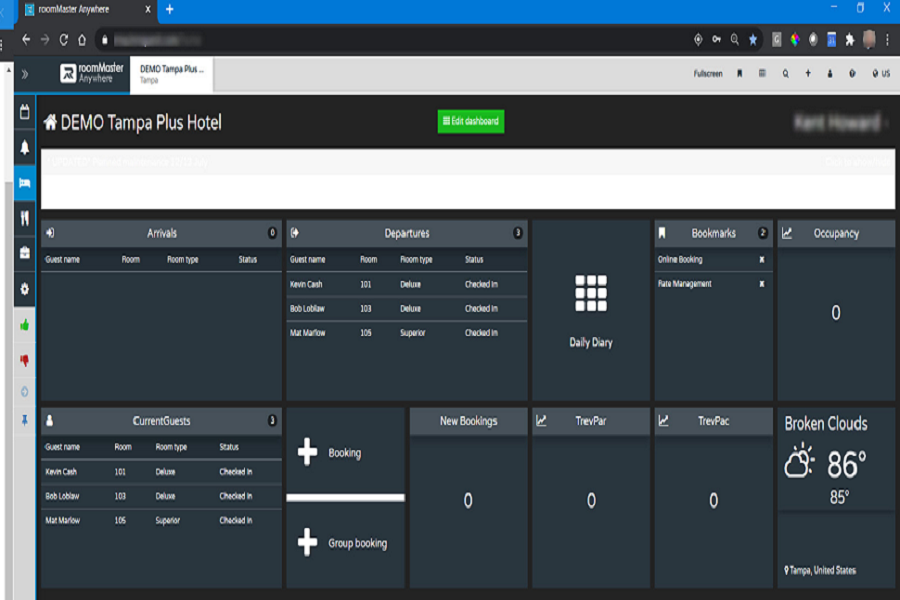
roommaster is a hotel management solution designed to meet the diverse needs of the hospitality industry. Catering to independent hotels, resorts, and bed & breakfasts, it provides tools for property management, revenue optimization, and guest engagement. This platform addresses the complexities of hotel operations by streamlining booking processes and enhancing guest communication, making it an appealing choice for general managers and revenue managers seeking to improve efficiency and elevate the guest experience.
Why I Picked roommaster
I chose RoomMaster for its ability to transform hotel management through AI-driven pricing optimization and automated guest communication tools. These features allow you to maximize revenue by adjusting rates based on demand and market trends, and they enhance guest satisfaction by facilitating personalized interactions. Additionally, the integrated booking engine supports direct reservations, reducing reliance on third-party platforms and increasing profitability. RoomMaster's focus on these key areas makes it a compelling choice for those in the hospitality industry looking to streamline operations and boost revenue.
roommaster Key Features
In addition to its impressive AI capabilities, RoomMaster offers several other valuable features for hotel management:
- Channel Manager: Synchronizes inventory across multiple online distribution channels in real-time, ensuring accurate availability and pricing.
- Reservation Management: Provides a centralized system to handle bookings, cancellations, and modifications, simplifying front desk operations.
- Reporting and Analytics: Delivers insights into business performance with customizable reports and dashboards, enabling data-driven decision-making.
- 24/7 Expert Support: Offers around-the-clock assistance to address any technical issues or questions, ensuring smooth operations.
roommaster Integrations
Integrations include Oracle Hospitality, Mews, Protel, StayNTouch, RoomRaccoon, and Hotelogix. RoomMaster also offers an API for custom integrations, allowing users to tailor their technology ecosystem.
Pros and Cons
Pros:
- Supports mobile guest check in
- Integrated multi-channel manager
- AI powered dynamic pricing
Cons:
- Onboarding can take time
- Interface feels somewhat outdated

Chatbase is an AI chatbot platform for hotels that lets you build, deploy, and manage custom conversational agents across web, messaging, and guest service channels.
Who Is Chatbase Best For?
Chatbase suits hotel operations teams and guest service managers who need AI-driven chat solutions for guest communication across multiple channels.
Why I Picked Chatbase
I picked Chatbase as one of the best because I can deploy AI chatbots that handle guest conversations in dozens of languages without extra setup. My team uses its language detection and translation features to support international guests directly on our website and messaging apps. I like that we can customize responses for each language, so guests always get accurate, culturally relevant information.
Chatbase Key Features
- Custom chatbot builder: Create and train AI chatbots using your own hotel FAQs, policies, and documents.
- Conversation analytics: Track guest interactions and review chat logs to identify common questions and service gaps.
- Web widget integration: Add chatbots directly to your hotel website for instant guest support.
- API access: Connect Chatbase with your existing hotel management systems and guest apps.
Chatbase Integrations
Chatbase offers native integrations with Zendesk, Notion, Slack, Stripe, Salesforce, Cal.com, Calendly, WhatsApp, and Messenger. It also connects with Make and Zapier, and provides an API for custom integrations.
Pros and Cons
Pros:
- Provides real-time analytics on guest interactions
- Allows custom chatbot training with hotel FAQs
- Offers GDPR-compliant data handling features
Cons:
- Lacks built-in escalation to live agents
- No built-in voice assistant functionality


Canary Technologies offers an AI-driven solution focused on contactless check-in and guest management for hotels. Its main users include hotel managers and staff aiming to augment guest experiences and automate operations through AI innovations.
Why I picked Canary Technologies: Canary Technologies provides a unique contactless check-in experience through its AI capabilities. You can use their digital registration cards for a smooth check-in process. The platform's mobile key delivery system allows guests to access their rooms without physical keys. Additionally, their remote payment processing ensures secure and efficient transactions, aligning with the USP of contactless check-in.
Standout Features & Integrations:
Features include digital registration cards that help you speed up the check-in process. Their mobile key delivery feature lets guests access rooms without physical keys. The remote payment processing ensures secure transactions, providing peace of mind for both you and your guests.
Integrations include Stripe, Booking.com, Maestro, StayNTouch, Mews, Cloudbeds, RMS Cloud, and WhatsApp.
Pros and Cons
Pros:
- Secure remote payment processing
- Convenient guest access through digital keys
- Easy to implement contactless solutions
Cons:
- May require staff training for new features
- Limited to specific hotel management systems


Cloudbeds is a hospitality management solution designed for multi-property management, catering to independent hotels, hostels, and vacation rentals. It helps users manage reservations, optimize pricing, and coordinate guest communications with AI-enhanced tools.
Why I picked Cloudbeds: Cloudbeds excels in managing multiple properties through its centralized dashboard that lets you oversee operations from a single platform. The AI-driven pricing optimization tool helps you set competitive rates based on market trends. The booking engine supports direct bookings, reducing reliance on third-party platforms. With Cloudbeds, you can streamline operations across various properties while ensuring consistent service quality.
Standout Features & Integrations:
Features include a centralized dashboard that simplifies property management tasks. The channel manager feature helps you distribute inventory across multiple platforms efficiently. Additionally, the reporting and analytics feature provides insights into your property's performance.
Integrations include Airbnb, Booking.com, Expedia, TripAdvisor, Hostelworld, Google Hotel Ads, Agoda, and Hostelbookers.
Pros and Cons
Pros:
- Supports direct bookings
- AI-driven pricing optimization
- Centralized management for multiple properties
Cons:
- May require integration setup time
- It can be complex for new users


Mews is a cloud-based property management system designed to automate operations for hotels and hostels. It’s a great software option for hotels and hostels that want modern automation, real-time visibility into operations, and smoother guest journeys from booking to checkout.
Why I picked Mews: Mews makes front-desk and back-office work easier by automating time-consuming tasks. Self-service check-in and check-out reduce queues and free up staff during peak hours, while automated billing and payments minimize errors and manual reconciliation. Real-time dashboards give managers a clear view of occupancy, arrivals, departures, and revenue, helping teams make faster, better operational decisions without pulling multiple reports.
Standout Features & Integrations:
Features include automated invoicing and payments, flexible reservation and room management, and digital guest journeys that reduce reliance on the front desk. Mews integrates with revenue management, guest messaging, housekeeping, accounting, and POS tools, making it easier to run the entire property from a connected tech stack.
Integrations include Oracle Hospitality OPERA, Protel, Mews, RMS Cloud, Maestro PMS, StayNTouch, and RoomKeyPMS.
Pros and Cons
Pros:
- Built-in payment tools
- Provides real-time operational analytics
- Automates check-ins and check-outs
Cons:
- Some AI features lack personalization in guest interactions
- Restricted to Mews’ payment processing software and fees


The Access Group provides an AI Direct Booking Engine, tailored for independent hotels to drive direct bookings and reduce reliance on online travel agencies. It focuses on optimizing pricing, managing inventory, and personalizing guest interactions to boost hotel efficiency and revenue.
Why I picked The Access Group: This tool excels in direct booking AI by integrating AI technology with digital marketing and custom website solutions. It minimizes OTA commission costs through real-time personalization and mobile responsiveness. The system supports various property management systems for seamless integration. With Booking Engine+, you can improve direct revenue and enjoy a high return on marketing investment.
Standout Features & Integrations:
Features include real-time personalization to tailor guest experiences, mobile responsiveness ensuring accessibility on all devices, and compatibility with various property management systems. These features support your team in managing bookings efficiently and enhancing guest satisfaction.
Integrations include Reslynx, RMS Cloud, Guestline, RoomMaster, Opera, Mews, and SiteMinder.
Pros and Cons
Pros:
- Reduces reliance on OTAs
- Lowers cancellation rates
- Reduces lost booking revenue to commissions
Cons:
- Best suited for independent hotels
- May require initial setup time


Duetto is a revenue management platform tailored for hotels and casinos that focuses on dynamic pricing and real-time data analysis. Its main users include revenue managers and hotel operators who want to optimize pricing strategies and maximize revenue through AI-enhanced tools.
Why I picked Duetto: Duetto offers dynamic pricing capabilities that let you adjust rates based on market demand and competitor analysis. The Open Pricing feature allows for flexible pricing strategies without relying on static rate plans. With its predictive analytics, you can forecast demand accurately and make informed pricing decisions. The platform's ability to integrate with existing systems ensures that your team can implement these strategies efficiently.
Standout Features & Integrations:
Features include open pricing, which lets you set flexible rates based on demand. The predictive analytics feature helps you forecast market trends accurately. Additionally, the platform offers an in-depth reporting tool to guide your revenue strategies.
Integrations include Oracle Hospitality OPERA, Infor HMS, Protel, Maestro PMS, Agilysys, StayNTouch, RoomKeyPMS, and Cloudbeds.
Pros and Cons
Pros:
- Integrates well with existing systems
- Accurate demand forecasting
- Offers flexible, open pricing
Cons:
- Best suited for larger operations
- May require training for optimal use


Chatlyn is an AI-powered guest communication platform built for hotels to manage conversations across channels like WhatsApp, web chat, and SMS in one place. It helps hotel teams respond faster, reduce front-desk load, and provide consistent, on-brand guest communication before, during, and after a stay.
Why I picked Chatlyn: Chatlyn offers AI-driven guest chat solutions that enable your team to engage with guests efficiently. The platform's natural language processing allows for smooth conversations, making interactions feel personalized and intuitive. It also offers automated responses to common inquiries, freeing up your staff's time for more complex tasks. With Chatlyn, you can provide 24/7 support, ensuring guests receive timely assistance whenever needed.
Standout Features & Integrations:
Features include AI-driven automated replies for FAQs, WhatsApp-first messaging, and unified inboxes that keep all guest conversations organized. Customizable chat templates help maintain brand voice, while multilingual support serves international guests with ease. The analytics dashboard gives visibility into response times, guest needs, and conversation volume, helping teams continuously improve service.
Integrations include Slack, Microsoft Teams, WhatsApp, Facebook Messenger, Salesforce, HubSpot, Zendesk, and Freshdesk.
Pros and Cons
Pros:
- Customizable chat templates
- Provides multilingual chat options
- Offers 24/7 guest support
Cons:
- Limited to digital communication channels
- May need initial setup time


Aiola is an AI-driven voice automation solution that transforms spoken language into structured data, helping hospitality teams capture accurate information without slowing down service. In hotels, restaurants, and event venues, it can be used to log maintenance issues, take internal orders, record guest requests, and document operational updates—hands-free and in real time.
Why I picked Aiola: Aiola stands out for hospitality environments where speed, accuracy, and minimal friction matter. Staff can verbally log guest requests, room issues, inventory needs, or shift notes while staying focused on guests. Its high-accuracy Speech-to-Text API (95%+) performs well in noisy settings and with industry-specific terminology. Voice-agentic workflows automate documentation and reporting, reducing errors, missed details, and after-shift admin work. Real-time speech validation ensures information is captured correctly the first time and integrates seamlessly into existing systems.
Standout Features & Integrations:
Features include Aiola’s voice-agentic workflows that eliminate manual data entry, allowing frontline staff to focus on guest experience rather than paperwork. Real-time speech validation improves accuracy for guest requests, maintenance logs, and operational notes. The multilingual, high-accuracy speech-to-text capability supports diverse hospitality teams and international guests, making it especially valuable for hotels and global brands.
Integrations include Salesforce, SAP, Oracle, Snowflake, IBM Maximo, Power BI, Tableau, Microsoft Dynamics, ServiceNow, and custom internal systems — all via APIs/SDKs.
Pros and Cons
Pros:
- Suitable for complex industry jargon
- Real-time data processing capabilities
- High accuracy in speech recognition
Cons:
- Limited to specific industries
- May require initial training for setup


IDeaS G3 RMS is a revenue management system designed to optimize pricing and inventory strategies for hotels and resorts. Its core users are revenue managers and hotel operators who want to increase profitability through AI-driven insights and automated decision-making.
Why I picked IDeaS G3 RMS: IDeaS G3 RMS offers advanced forecasting and pricing optimization tools that help your team make informed revenue decisions. The system's AI algorithms analyze market trends and customer behavior to recommend optimal pricing strategies. You can automate inventory controls and demand forecasting, ensuring timely and accurate revenue management. While IDeaS G3 RMS’s software handles complex data analysis, you can focus on strategic growth.
Standout Features & Integrations:
Features include automated pricing recommendations that adjust rates based on real-time data. The demand forecasting tool helps you predict future market trends accurately. Additionally, the platform provides detailed performance analytics to guide your revenue strategies.
Integrations include Oracle Hospitality OPERA, Infor HMS, Maestro PMS, Agilysys, StayNTouch, RoomKeyPMS, and Cloudbeds.
Pros and Cons
Pros:
- Detailed performance analytics
- Automated pricing recommendations
- Advanced demand forecasting capabilities
Cons:
- May be overly complex for smaller operations
- Limited reporting capabilities for granular segments and sources
Other Hotel AI Software for the Hospitality Industry
Here are some additional hotel AI software for the hospitality industry options that didn’t make it onto my shortlist, but are still worth checking out:
- inTouch BI
For business intelligence
- Lighthouse
For AI-generated market insights
- Tripleseat
For event management
- Oracle Hospitality
For integrated property management
- Like Magic
For guest personalization
- ProfitSword
For data integration
- Visito
For visitor engagement
- Amadeus Advisor Chatbot
For AI travel advice
- Mara Solutions
For AI-driven feedback analysis
- MeetingPackage Copilot
For meeting room management
- Upriser
For AI-driven marketing


How I Evaluate Hotel AI Software for the Hospitality Industry
I look at two layers: the baseline AI and PMS capabilities a tool needs to qualify, and the differentiators, like dynamic pricing and voice concierge, that make one platform the right fit.
Core Functionality (Table Stakes for This List)
These core capabilities serve as the acceptance criteria for inclusion on my list of hotel AI software for the hospitality industry:
- AI Guest Communication: I evaluate whether the platform offers AI chatbots or virtual concierges across channels like WhatsApp, SMS, and web, and how well they handle multilingual guest inquiries.
- Revenue & Pricing Intelligence: Dynamic rate recommendations powered by ML matter here, so I check for demand forecasting, competitor rate shopping, and automated pricing adjustments.
- Hospitality-Specific Integrations: I look for native, two-way connections with widely used PMS platforms like Opera, Mews, and Cloudbeds, plus channel managers and booking engines.
- Personalization & Upsell Engine: Pre-arrival upgrade offers and in-stay add-on suggestions should be driven by guest profile data, not generic blasts.
- Operational Workflow Automation: I check whether the tool automates hotel-specific tasks like housekeeping dispatch, maintenance routing, and digital check-in/check-out processes.
- Guest Data & Analytics: Unified guest profiles, sentiment tracking, and review analysis dashboards help teams act on patterns. I look for AI-driven insights, not just raw data exports.
I rank each vendor on a scale from 0 (does not offer the functionality) to 5 (excels in this area) for each criterion.
Vendors need to achieve a minimum average score to be considered for inclusion on my list. From there, I consider what sets each platform apart.
Differentiating Factors (What Sets Vendors Apart)
Once I've curated my list, here's how I contrast and compare different vendors offering hotel AI software for the hospitality industry:
Standout Features
Voice AI capabilities stand out for streamlining guest requests, from smart room assistants to AI phone operators handling reservations. AI-driven review and reputation management is a major plus where platforms can automatically reply to guest reviews and track sentiment across OTAs. Predictive maintenance powered by IoT is another differentiator, as it helps anticipate and resolve issues before guests notice them. I also value solutions with robust group and event intelligence, such as automating group RFP workflows or forecasting conference demand.
Beyond Features
Property type and portfolio fit matter a lot here. A platform built for independent boutiques won't necessarily scale across a 50-property chain. I evaluate whether pricing models align with hotel economics: per-room or per-property structures make more sense than per-seat licensing. Data security is another key factor. I check for PCI-DSS compliance and GDPR readiness, especially for properties hosting international guests. Finally, I consider the vendor's ecosystem presence, including certified PMS partnerships and validation on platforms like Hotel Tech Report.
How to Choose Hotel AI Software for the Hospitality Industry
It’s easy to get bogged down in long feature lists and complex pricing structures. To help you stay focused as you work through your unique software selection process, here’s a checklist of factors to keep in mind:
| Factor | What to Consider |
|---|---|
| Scalability | Consider if the software can grow with your business. Will it handle increased bookings and data as your hotel expands? Look for tools that offer flexible plans to match your growth. |
| Integrations | Check if the software integrates with your existing systems. Ensure compatibility with property management systems and booking engines to avoid operational hiccups. |
| Customizability | Evaluate how well the software adapts to your specific needs. Can you tailor dashboards or reports to fit your workflows? Customizability can enhance user experience. |
| Ease of use | Determine if your team can easily navigate the software. Is the interface intuitive? A user-friendly tool reduces training time and boosts productivity. |
| Implementation and onboarding | Assess the time and resources needed for setup. Does the provider offer support during installation? Smooth onboarding is key to quick adoption and minimizing downtime. |
| Cost | Compare pricing models to your budget. Are there hidden fees? Look for transparent pricing structures and consider the value offered against the price. |
| Security Safeguards | Ensure the software protects guest data. Are there encryption and compliance measures in place? Security is crucial for maintaining trust and protecting sensitive information. |
| Support Availability | Check the level of customer support offered. Is 24/7 support available? Reliable support can resolve issues quickly, ensuring smooth operations. |
What Is Hotel AI Software for the Hospitality Industry?
Hotel AI software for the hospitality industry is a set of digital tools that utilize artificial intelligence to enhance hotel operations and guest experiences. These tools are typically used by hotel managers, front desk staff, and marketing teams to improve efficiency and personalize guest interactions.
Automated check-ins, predictive analytics, and personalized marketing capabilities help with optimizing operations, forecasting demand, and tailoring guest experiences. Overall, these tools provide significant value by enhancing service quality and supporting data-driven decision-making.
Features
When selecting hotel AI software for the hospitality industry, keep an eye out for the following key features:
- Automated check-in and check-out: Uses AI tools and generative AI to reduce front-desk wait times, improve guest service, and support smoother operations for hospitality businesses.
- Predictive analytics: Applies machine learning and data analytics to forecast demand, analyze guest behavior, and support pricing decisions that drive hotel revenue.
- Personalized marketing: Leverages AI-powered insights to tailor marketing strategies and offers, creating personalized experiences that improve guest engagement and retention.
Dynamic pricing: Adjusts room rates in real time based on demand, competition, and booking patterns, helping hoteliers stay competitive while maximizing revenue. - Guest communication automation: Uses AI-powered chatbots and virtual assistants to respond to guest inquiries instantly across channels, including social media and messaging platforms.
- Occupancy forecasting: Predicts booking trends to help hospitality businesses plan staffing, room availability, and operational resources more effectively.
- Data integration: Connects hotel tech systems such as CRM platforms, booking engines, and guest service tools to create a unified view of operations.
- Real-time analytics: Delivers up-to-date performance insights, allowing hoteliers to monitor guest engagement, revenue metrics, and operational efficiency.
- Customizable dashboards: Enable teams to tailor dashboards based on roles and priorities, improving access to data analytics across departments.
- AI-driven recommendations: Suggests upsells, amenities, and room service options based on guest behavior and preferences, supporting personalized experiences and increased spend.
Benefits
Implementing hotel AI software for the hospitality industry provides several benefits for your team and your business. Here are a few you can look forward to:
- Improved efficiency: Automating tasks like check-ins and guest communication reduces manual work and allows staff to focus on more strategic activities.
- Enhanced guest experience: Personalized marketing and AI-driven recommendations create tailored guest interactions, boosting satisfaction and loyalty.
- Increased revenue: Dynamic pricing and predictive analytics optimize room rates and forecast demand, leading to better revenue management.
- Better decision-making: Real-time analytics provide up-to-date insights into hotel operations, enabling informed and timely decisions.
- Resource optimization: Occupancy forecasting helps with effective staff scheduling and resource allocation, ensuring smooth operations.
- Consistent service quality: Automated responses and data integration ensure consistent service delivery across all guest interactions.
- Competitive advantage: Leveraging AI capabilities keeps your hotel ahead in the market by continuously adapting to trends and guest preferences.
Costs & Pricing
Selecting hotel AI software for the hospitality industry requires an understanding of the various pricing models and plans available. Costs vary based on features, team size, add-ons, and more. The table below summarizes common plans, their average prices, and typical features included in hotel AI software for hospitality industry solutions:
Plan Comparison Table for Hotel AI Software for the Hospitality Industry
| Plan Type | Average Price | Common Features |
|---|---|---|
| Free Plan | $0 | Basic guest communication, limited analytics, and simple reservation management. |
| Personal Plan | $10-$30/user/month | Enhanced guest personalization, basic dynamic pricing, and email support. |
| Business Plan | $30-$70/user/month | Advanced analytics, automated check-in and check-out, and multi-property support. |
| Enterprise Plan | $70-$150/user/month | Custom integrations, full data integration, and dedicated account management. |
Hotel AI Software for the Hospitality Industry FAQs
Here are some answers to common questions about hotel AI software for the hospitality industry:
How do I integrate AI software with my existing hotel systems?
To integrate AI software with your existing hotel systems, start by checking compatibility with your current property management system and booking engines. Most AI solutions offer APIs and integration guides to assist you. Work closely with your IT team to ensure a smooth setup. If you face challenges, many vendors provide support services to help with integration. Make sure to test the integration thoroughly before going live to ensure all systems work together seamlessly.
Can AI software help reduce operational costs?
Yes, AI software can help reduce operational costs by automating repetitive tasks and optimizing resource allocation. For example, AI-driven dynamic pricing can adjust room rates in real-time, maximizing revenue. Automated check-in processes reduce the need for additional front desk staff. Additionally, AI analytics can identify inefficiencies in operations, allowing you to address them proactively. By streamlining these processes, your team can focus on providing a better guest experience without increasing costs.
Is data security a concern with AI software?
Yes, data security is a concern with AI software, but most reputable vendors have robust security measures in place. Ensure the software complies with data protection regulations like GDPR or CCPA. Look for features like encryption, secure data storage, and regular security audits. Ask potential vendors about their security protocols and how they handle data breaches. It’s crucial that you and your team understand these measures to maintain guest trust and protect sensitive information.
How can AI software improve guest satisfaction for my hotel?
AI software improves guest satisfaction by personalizing interactions and providing timely responses. For instance, AI chatbots can handle guest inquiries 24/7, ensuring quick resolutions. Personalized marketing campaigns can offer tailored promotions, enhancing guest experiences. AI-driven analytics provide insights into guest preferences, allowing you to tailor services accordingly. By leveraging these capabilities, your team can anticipate guest needs and exceed expectations, leading to higher satisfaction and repeat business.
How much time should I expect to spend on setup and training?
Setup times vary, but most hotel teams can get started within days if workflows are already defined. Training is usually simple, especially if the software includes templates or guided onboarding. You should expect your team to spend a few hours learning the basics. After that, the system typically becomes easier to use as you work with it.
What’s Next:
If you're in the process of researching hotel AI software for the hospitality industry, connect with a SoftwareSelect advisor for free recommendations.
You fill out a form and have a quick chat where they get into the specifics of your needs. Then you'll get a shortlist of software to review. They'll even support you through the entire buying process, including price negotiations.