

Cloudbeds software combines a property management platform, online booking, POS, hotel booking, and channel management into one interface. It's designed for hoteliers, property owners, and hospitality businesses that seek to centralize operations and enhance guest check-in experiences.
However, one size doesn't always fit all, and there are several good Cloudbeds alternative that may better aligns with your unique needs.
What is Cloudbeds?
Cloudbeds is a software platform that helps hotels, hostels, and other lodging businesses manage their operations. It offers tools for booking reservations, managing guest check-ins and check-outs, and handling payments. Cloudbeds simplifies the day-to-day tasks for hospitality property owners so they can focus more on providing a great experience for their guests.
Why Trust Our Software Recommendations
6,700+
Reviews
20
Industry experts
16+
Evaluation factors
14
Years
Our team has been testing and reviewing software since 2012. As hospitality leaders ourselves, we know how difficult—and important—it is to choose the right software.
For this guide, we evaluated tools using hands-on testing and independent research, scoring tools using our selection criteria.
Our reviews reflect our human editorial judgment, not a sales pitch.
Comparison Table: Cloudbeds Alternatives
This comparison table summarizes pricing details for my top Cloudbeds alternative selections.
| Tool | Best For | Trial Info | Price | ||
|---|---|---|---|---|---|
| 1 | Best for all-in-one hotel management | Free demo available | Pricing upon request | Website | |
| 2 | Best for powerful API integrations to unify operations | Free demo available | Pricing upon request | Website | |
| 3 | Best for no-contract, flat-fee hotel booking management | 30-day free trial | From $41/month | Website | |
| 4 | Best for automating routine tasks for vacation rentals | Free trial available | From $20/month | Website | |
| 5 | Best for direct bookings with zero booking fees | 7-day free trial | From $18/month | Website | |
| 6 | Best for built-in demand and rate automation | Free demo available | From $150/month | Website | |
| 7 | Best for multi-channel vacation rental portfolio growth | 14-day free trial | From $9/month | Website | |
| 8 | Best for small hotels needing an all-in-one platform | 30-day free trial | From $39/month | Website | |
| 9 | Best for short-term rental OTA sync and direct bookings | 14-day free trial | From $32.49/month | Website | |
| 10 | Best for optimizing occupancy rates with smart pricing | 14-day free trial | Pricing upon request | Website |


Cloudbeds Alternatives Reviews
Here are the best Cloudbeds alternatives on the market, tested and reviewed for you to easily compare features, integrations, and pricing details.
 Best for all-in-one hotel management
- Free demo available
- Pricing upon request
Visit WebsiteCustomer Rating:4.3/5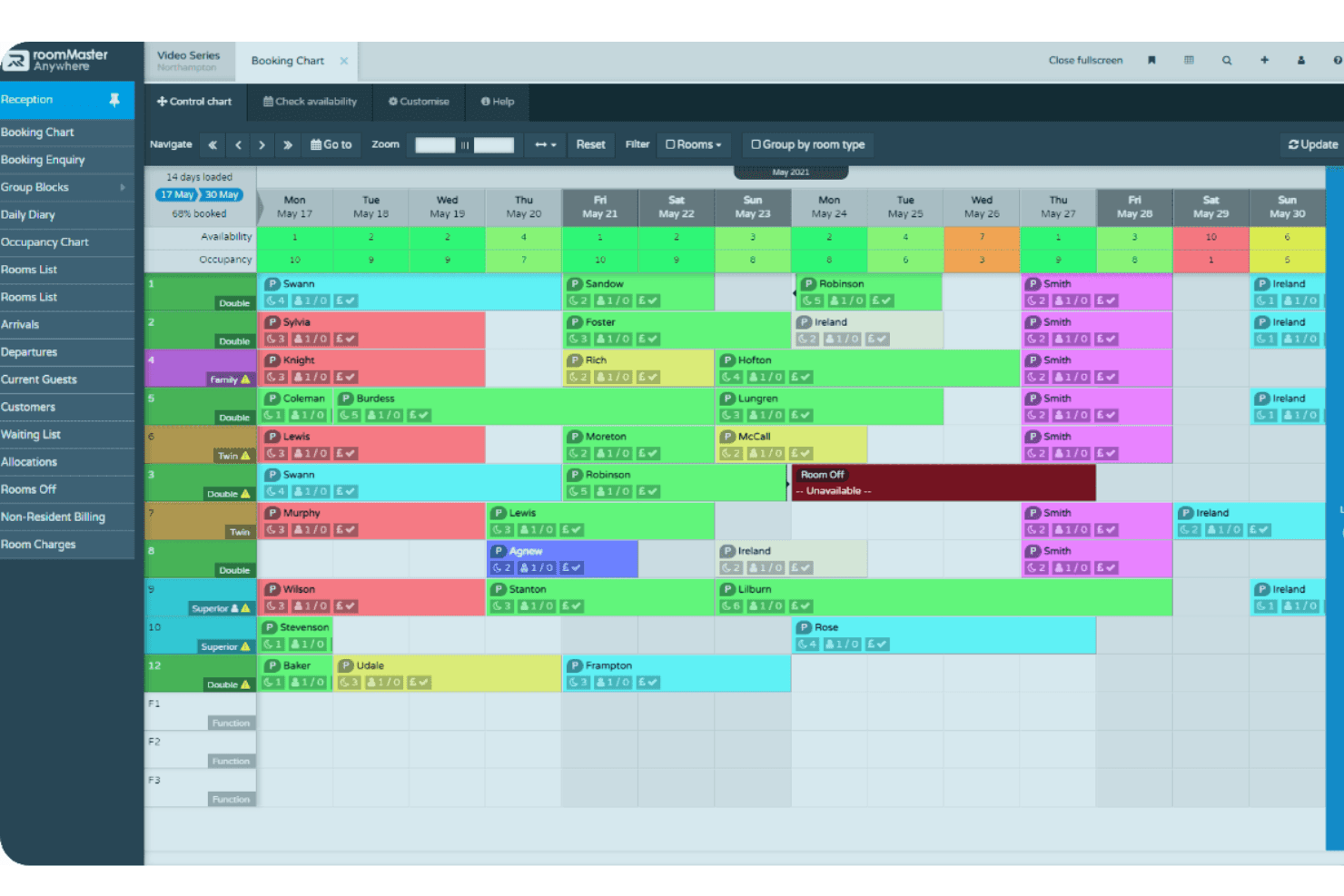
roomMaster displays a color-coded booking chart for easy reservation management. roommaster is a hotel property management system for independent hotels and resorts that connects reservations, front-desk tasks, and housekeeping to help teams coordinate daily operations and guest stays.
Who Is roommaster Best For?
Hotel operations leaders seeking an all-in-one property management system to bring core hotel workflows together.
Why I Picked roommaster
I picked roommaster as a Cloudbeds alternative because it fits “Best for all-in-one hotel management,” connecting reservations, front-desk tasks, and housekeeping. I like how teams can coordinate arrivals with room readiness, keeping daily operations and guest stays connected.
roommaster Key Features
- Revenue management: AI pricing uses market trends, competitor rates, and demand signals.
- Payment processing: Process payments, deposits, and cancellation fees with multi-currency support.
- Multi-property management: Manage group reservations, pricing, and reporting from one dashboard.
- Third-party integrations: Connect tools such as door locks, POS systems, and accounting software.
roommaster Integrations
roommaster offers 100+ marketplace integrations, including Sage, H&L POS, STAAH, Agoda, Airbnb, ASSA ABLOY, and 3CX. It also provides RESTful APIs and webhooks for custom integrations.
Pros and Cons
Pros:
- Multi-property dashboard supports portfolio-wide oversight
- AI pricing recommendations reduce rate-setting work
- Reservations, front desk, and housekeeping together
Cons:
- Rigid financial reports require export workarounds
- Dated interface can feel cluttered
Learn more about roommaster: Best for powerful API integrations to unify operations
- Free demo available
- Pricing upon request
Visit WebsiteCustomer Rating:4.8/5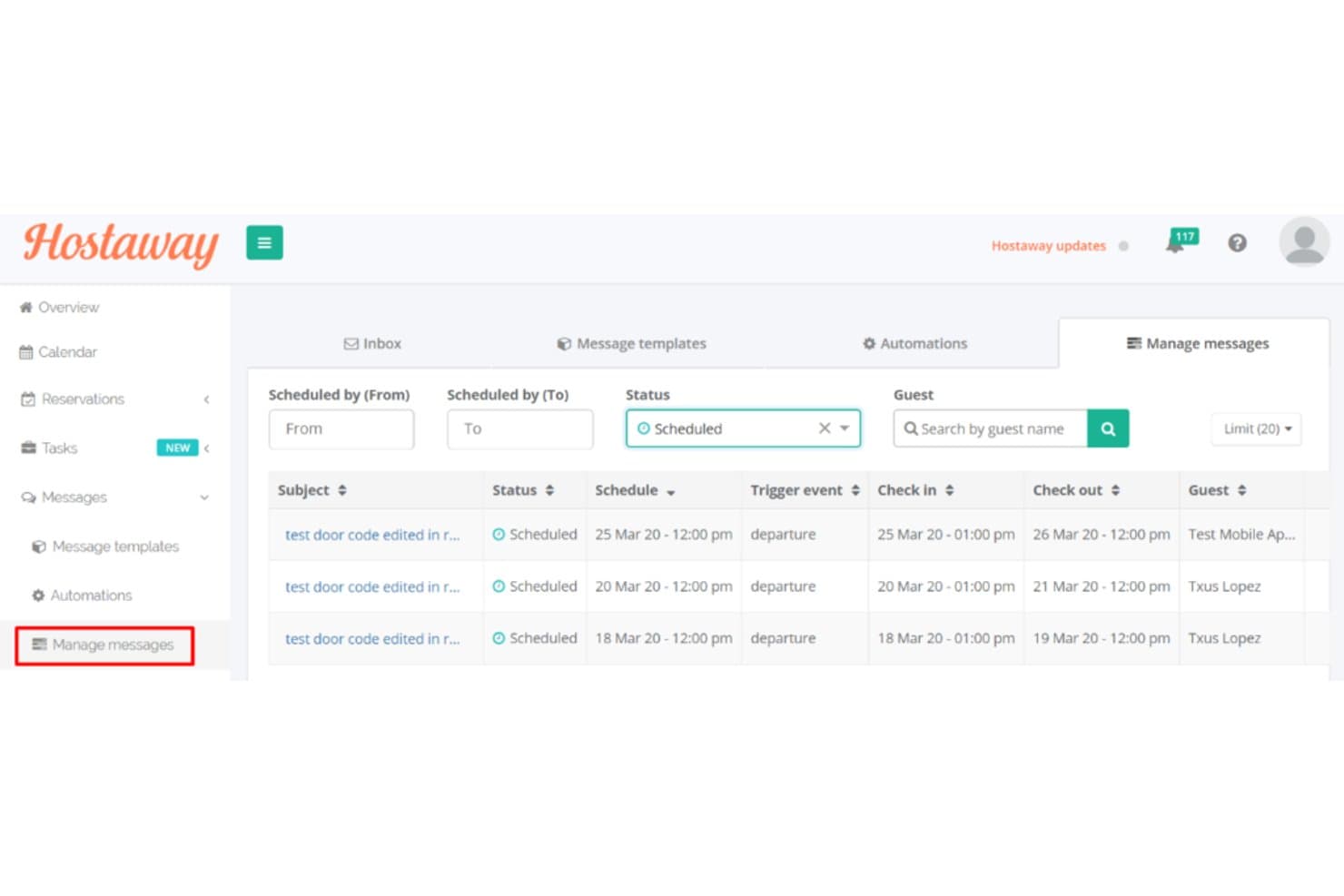
Hostaway lets users schedule and manage automated guest messages. Hostaway is a vacation rental property management platform for lodging operators who need to coordinate reservations, guest communications, and daily tasks across multiple properties and booking channels.
Who Is Hostaway Best For?
Hostaway suits vacation rental operators who need API connections to link booking, guest communication, and operations workflows.
Why I Picked Hostaway
I picked Hostaway as a Cloudbeds alternative because it’s “Best for powerful API integrations to unify operations.” Its public API lets my team manage listing and reservation records, while webhooks flag new reservations, updates, and guest messages. I can also send reservation data to reporting tools or connect external rate changes to the PMS.
Hostaway Key Features
- Channel manager: Syncs rates, availability, and listings across booking channels.
- Multi-calendar: Displays availability and bookings across properties in one calendar.
- Dynamic pricing: Adjusts nightly rates based on seasons and local events.
- Task management: Set up workflows and assign operational tasks to team members.
Hostaway Integrations
Hostaway offers 200+ partner-built integrations through its marketplace, including Airbnb, Vrbo, Booking.com, Expedia, Google Vacation Rentals, Stripe, Breezeway, PriceLabs, and Operto. It also connects with Zapier and provides a public API with webhooks for custom integrations.
Pros and Cons
Pros:
- Provides detailed reporting for property oversight
- Automates messaging, tasks, and review requests
- Centralizes reservations and guest conversations
Cons:
- Mobile app needs stronger functionality
- Initial setup can take considerable time
Learn more about Hostaway: Best for no-contract, flat-fee hotel booking management
- 30-day free trial
- From $41/month
Visit WebsiteCustomer Rating:4.9/5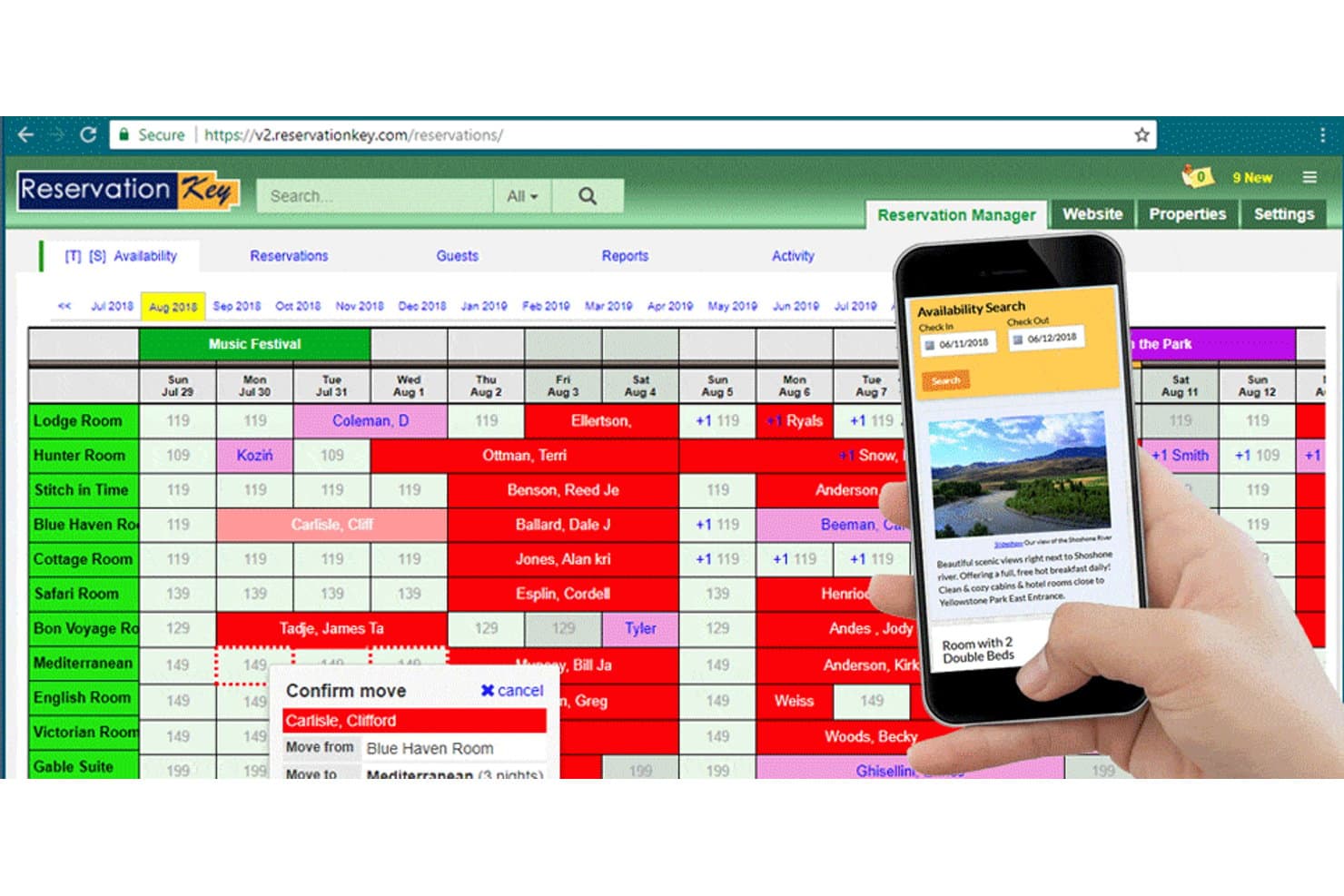
ReservationKey lets users drag and drop bookings across a visual calendar. ReservationKey is a hotel reservation platform for independent hotels and motels that brings room bookings, guest records, online reservations, and automated communication together to reduce front-desk workload.
Who Is ReservationKey Best For?
ReservationKey suits independent hotel and motel teams that need customizable booking options and detailed analytics.
Why I Picked ReservationKey
I rate ReservationKey for customizable booking solutions with detailed analytics. I can tailor booking themes, fields, and confirmation emails, then use reports on occupancy, revenue, payments, and taxes to review performance against date ranges. That gives me practical details to weigh when comparing Cloudbeds alternatives.
ReservationKey Key Features
- Drag-and-drop calendar: View color-coded reservations, OTA bookings, and owner stays.
- OTA synchronization: View OTA booking updates alongside other reservations.
- Website booking engine: Embed a reservation engine into your existing website.
- Automated messaging: Schedule guest communications around reservation events.
ReservationKey Integrations
ReservationKey supports QuickBooks, Channex, and payments through Square, Stripe, and PayPal; Channex connects with Booking.com, Expedia, Airbnb, VRBO, and Google Hotels. It also provides an API and webhooks for custom connections.
Pros and Cons
Pros:
- Responsive support from hospitality specialists
- Detailed occupancy, revenue, and tax reports
- Custom booking pages and confirmation emails
Cons:
- Booking page design can look dated
- Complex seasonal rates take extra setup
Learn more about ReservationKey: 4Best for automating routine tasks for vacation rentals
iGMS
- Free trial available
- From $20/month
Visit WebsiteCustomer Rating:4.6/5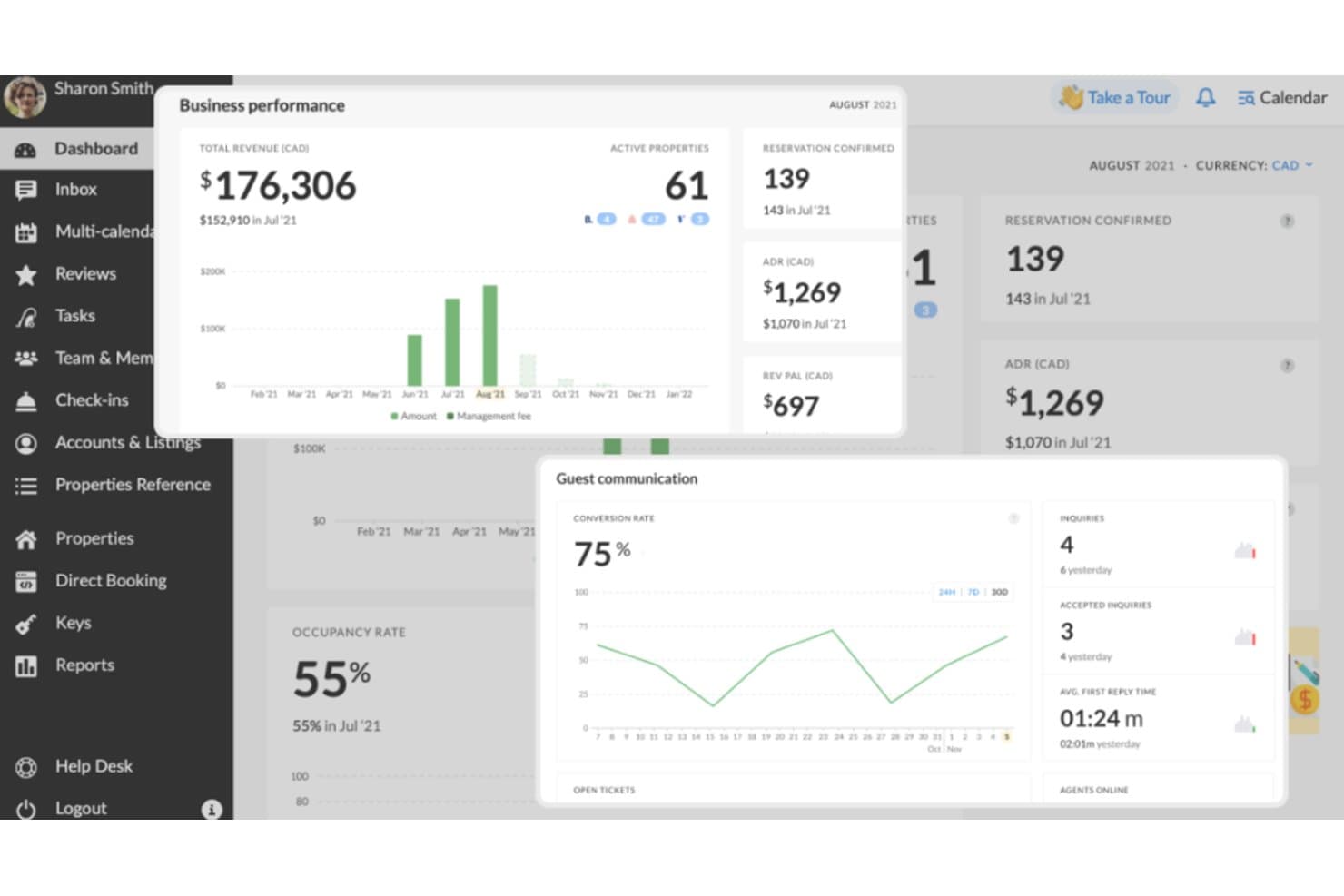
iGMS centralizes revenue, occupancy, and guest communication metrics. iGMS is a vacation rental management platform for property managers and hospitality teams that coordinates listings, reservations, guest communication, and daily operations across booking channels.
Who Is iGMS Best For?
iGMS suits vacation rental managers and hospitality teams who want to automate recurring guest communications and day-to-day property operations.
Why I Picked iGMS
I picked iGMS as a Cloudbeds alternative for operators focused on vacation rentals. Its USP is Best for automating routine tasks for vacation rentals. I like its automated guest messaging and task management for coordinating check-in instructions and cleaning turnovers after departures.
iGMS Key Features
- Channel manager: Syncs availability and rates across connected booking channels.
- Direct booking website: Lets you create a website for accepting reservations directly.
- Financial reporting: Tracks income and expenses across properties.
- Mobile app: Lets you manage reservations and property details on the go.
iGMS Integrations
iGMS has native integrations with Airbnb, Booking.com, and Vrbo, plus marketplace integrations with PriceLabs, Wheelhouse, Beyond, Stripe, Safely, and Turno. It also offers an API for custom integrations.
Pros and Cons
Pros:
- Centralizes reservations in a multi-property calendar
- Connects turnover tasks with reservation schedules
- Cuts repetitive guest communication through automation
Cons:
- Occasional channel-sync delays can disrupt updates
- Reporting offers limited analytics depth
Learn more about iGMS: Best for direct bookings with zero booking fees
- 7-day free trial
- From $18/month
Visit WebsiteCustomer Rating:4.5/5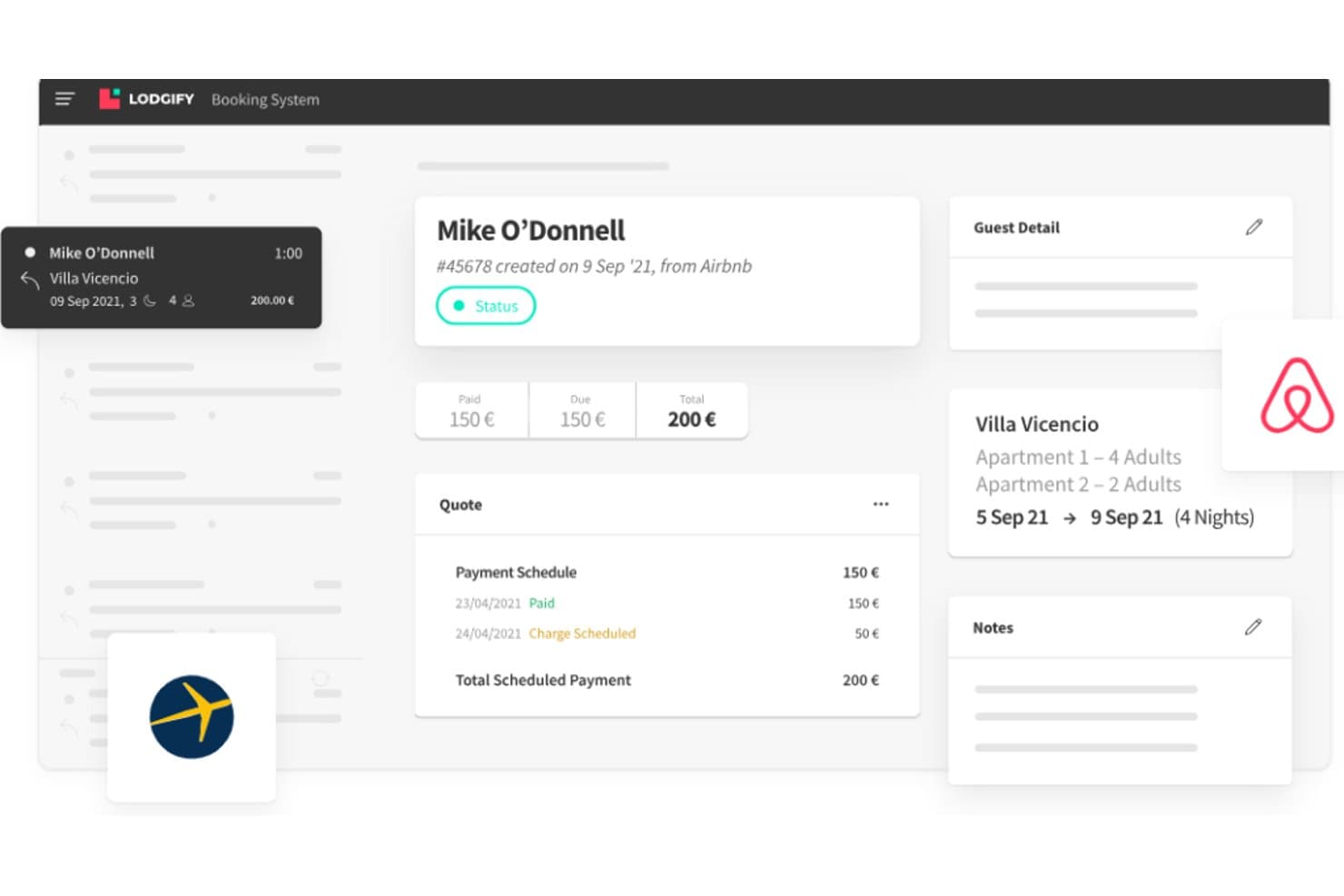
Lodgify centralizes booking details, payment schedules, and guest info in one view. For independent vacation rental operators comparing Cloudbeds alternatives, Lodgify is a property management platform that helps coordinate reservations, guest communications, and day-to-day operations across short-term rentals.
Who Is Lodgify Best For?
Lodgify suits independent vacation rental hosts who want to create a branded, bookable website without hiring a developer.
Why I Picked Lodgify
I picked Lodgify as a Cloudbeds alternative because it’s best for creating a stunning, bookable website in minutes. Its customizable templates pair with an integrated booking engine and payment processing, so guests can reserve and pay directly on your branded site. Calendar syncing with Airbnb, Vrbo, and Booking.com helps keep availability aligned as direct reservations come in.
Lodgify Key Features
- Reservation management: View booking details, guest information, and payment status in the dashboard.
- Unified inbox: Handle guest messages from connected channels in one place.
- Automated messaging: Schedule guest messages around reservation events.
- Task management: Create and assign cleaning and maintenance tasks to team members.
Lodgify Integrations
Lodgify’s channel manager connects via direct API with Airbnb, Vrbo, Booking.com, and Google Vacation Rentals. Its integrations directory includes PriceLabs, Mailchimp, and Google Analytics; it also connects with Zapier and offers an open API for custom integrations.
Pros and Cons
Pros:
- Automated guest messages cover booking milestones
- Mobile app handles reservations on the go
- Branded direct-booking sites reduce OTA dependence
Cons:
- Reporting lacks depth for portfolio analysis
- Website templates constrain complex designs
Learn more about Lodgify: Best for built-in demand and rate automation
- Free demo available
- From $150/month
Visit WebsiteCustomer Rating:4.5/5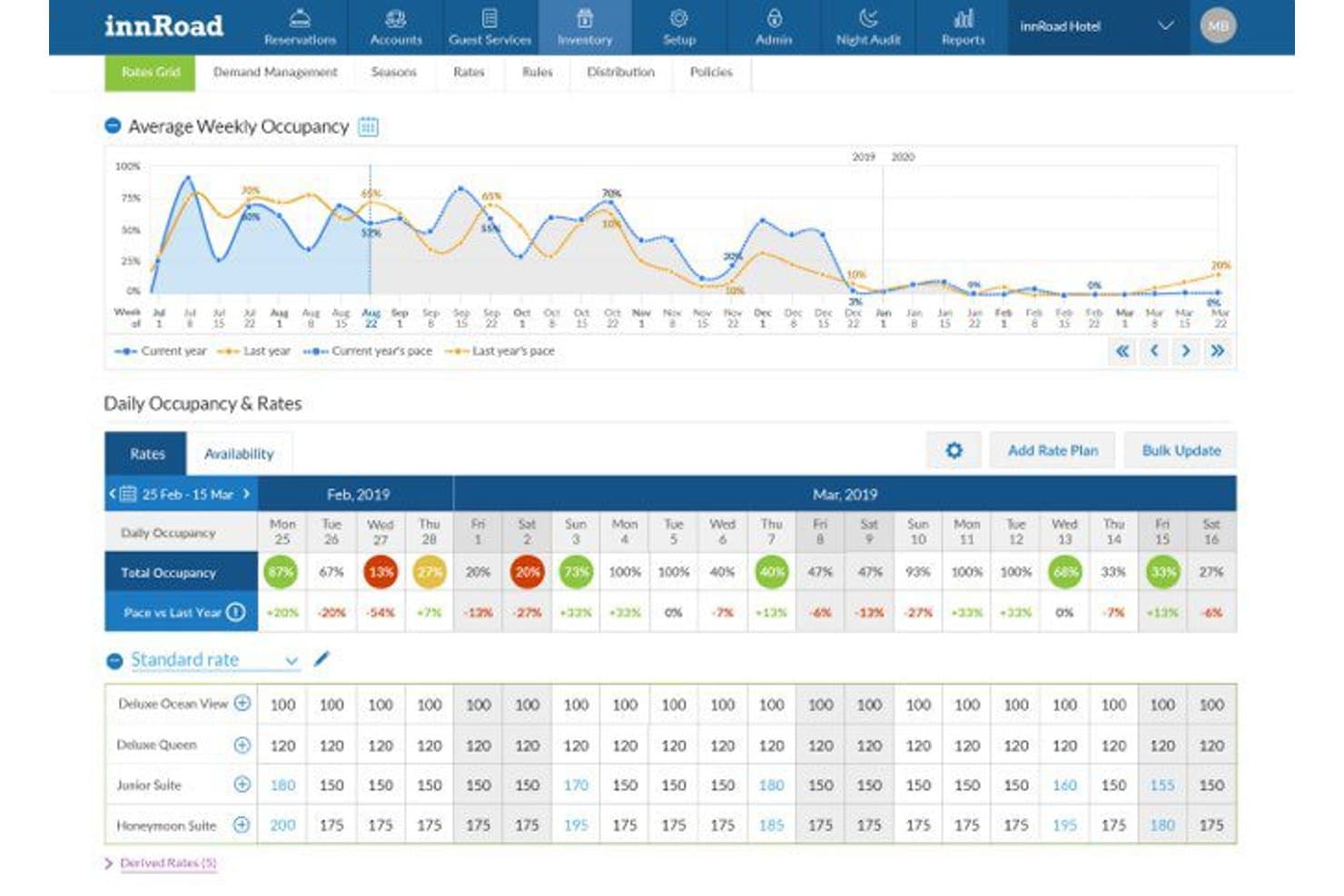
innRoad lets users monitor occupancy rates and room pricing on one screen. innRoad is a hotel PMS that helps independent properties coordinate reservations, front-desk tasks, and guest operations through a cloud-based platform.
Who Is innRoad Best For?
innRoad suits independent hotel owners and operations teams that need one system to manage reservations, front-desk work, and guest stays.
Why I Picked innRoad
I picked innRoad as a Best Cloudbeds Alternatives option because it is Best for independent hotels needing a cloud-based, all-in-one solution. Its PMS syncs rates and inventory across OTAs, while housekeeping tasks can be assigned by staff member and prioritized by guest arrival time. That helps a small team keep room availability current and prepare rooms for incoming guests.
innRoad Key Features
- Guest profiles: Store guest details and preferences for staff to reference during a stay.
- Reservation tape chart: View bookings across the property and modify them with drag-and-drop controls.
- Direct booking engine: Let guests check room availability and book through your website.
- Payment processing: Manage guest payments, deposits, and chargebacks within the PMS.
innRoad Integrations
innRoad integrates with QuickBooks Online and QuickBooks Desktop for journal-entry posting, and its channel manager connects with online travel agencies such as Expedia and Booking.com. innRoad also offers an open API for custom integrations.
Pros and Cons
Pros:
- Multi-property controls support shared operations
- Tape chart gives clear room visibility
- Responsive support helps resolve front-desk issues
Cons:
- Group reservations can take extra work
- Slowdowns and session timeouts disrupt shifts
 Best for multi-channel vacation rental portfolio growth
- 14-day free trial
- From $9/month
Visit WebsiteCustomer Rating:4.4/5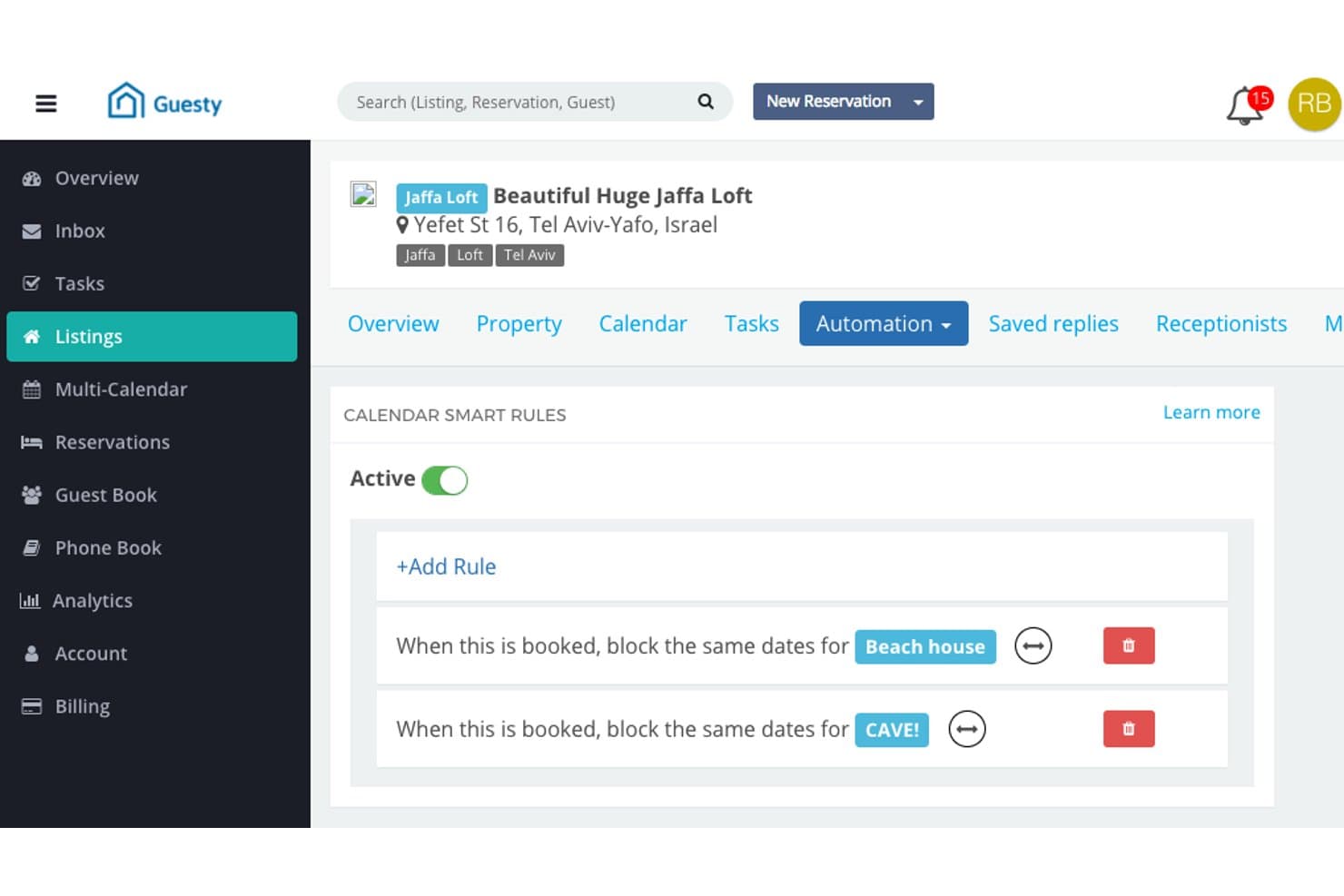
Guesty lets users sync bookings across listings with calendar smart rules. Guesty is a property management platform for vacation rental and short-term lodging operators, bringing bookings, guest communication, and property workflows together to help teams coordinate each stay.
Who Is Guesty Best For?
Guesty suits professional vacation rental managers and hospitality groups overseeing multiple properties across different locations.
Why I Picked Guesty
I picked Guesty as a Cloudbeds alternative for its focus: Best for multi-property management with streamlined operations. Its Multi-Calendar gives me a portfolio-wide view of bookings, availability, and pricing across channels, helping prevent double bookings when reservations change. I also like that its Unified Inbox brings guest messages together, so my team can coordinate replies across properties.
Guesty Key Features
- Owner portal: Owners can view property performance and financial statements.
- Task management: Assign and track cleaning and maintenance tasks.
- Direct booking website: Build a website to accept reservations directly.
- Dynamic pricing: Adjust rates with market data and pricing rules.
Guesty Integrations
Guesty’s Marketplace lists 253 integrated partners, including Airbnb, Vrbo, PriceLabs, and Breezeway. Guesty also connects with Zapier and offers an API for custom integrations.
Pros and Cons
Pros:
- Automated messaging reduces repetitive guest follow-ups
- Reliable channel sync supports growing portfolios
- Portfolio-wide calendar helps prevent booking conflicts
Cons:
- Slow resolution of technical issues frustrates teams
- Accounting tools frustrate complex financial workflows
Learn more about Guesty: Best for small hotels needing an all-in-one platform
- 30-day free trial
- From $39/month
Visit WebsiteCustomer Rating:4/5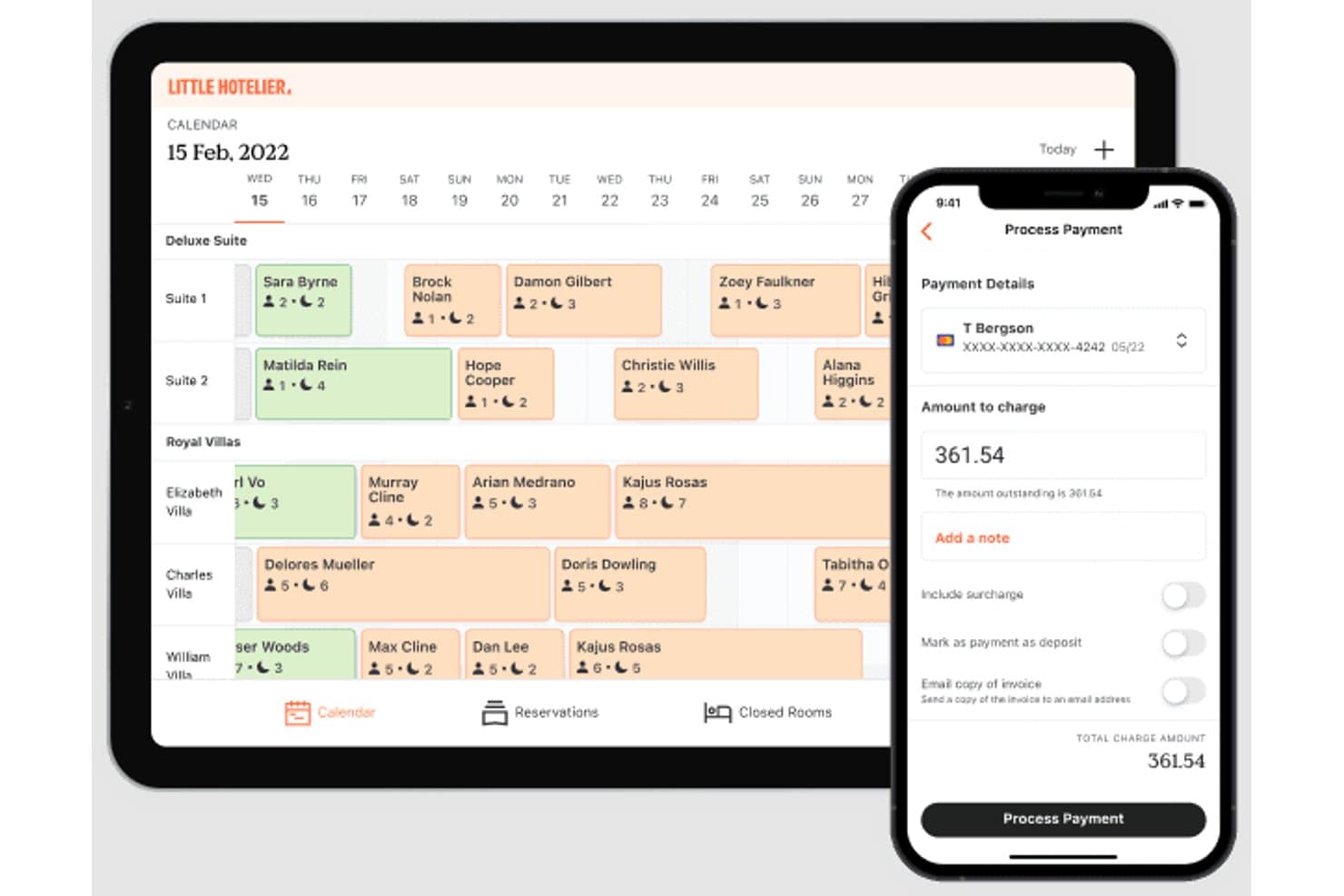
Little Hotelier lets users manage bookings and process payments seamlessly. Little Hotelier gives independent hotels and small accommodation providers a PMS for managing reservations, front-desk operations, and booking channels, helping reduce manual updates and keep availability consistent.
Who Is Little Hotelier Best For?
Little Hotelier suits owner-managers at independent inns and guesthouses who oversee reservations alongside daily property operations.
Why I Picked Little Hotelier
I picked Little Hotelier as a Cloudbeds alternative because it’s Best for small hotels needing an all-in-one platform. Its channel manager syncs availability across booking sites, and its booking engine accepts direct reservations through a property website. I like how these tools help a small front desk manage reservations and avoid manual availability updates.
Little Hotelier Key Features
- Housekeeping status tracking: View room statuses and housekeeping reports.
- Automated guest messages: Schedule personalized pre-arrival and post-stay emails.
- Payments and deposits: Record transactions from the calendar for reconciliation.
- Performance reports: Review occupancy, income, outstanding payments, and channel results.
Little Hotelier Integrations
Little Hotelier offers marketplace connections through its App Store, including Akia, Bookboost, GuestTalk, and RoomPriceGenie. Its channel manager connects to 450+ booking channels, including Airbnb and Booking.com.
Pros and Cons
Pros:
- Quick human support helps resolve setup issues
- Reliable availability sync reduces double-booking risk
- Combines front desk, booking engine, and channels
Cons:
- Reports offer limited filters and export slowly
- Group reservations require separate individual entries
Learn more about Little Hotelier: Best for short-term rental OTA sync and direct bookings
- 14-day free trial
- From $32.49/month
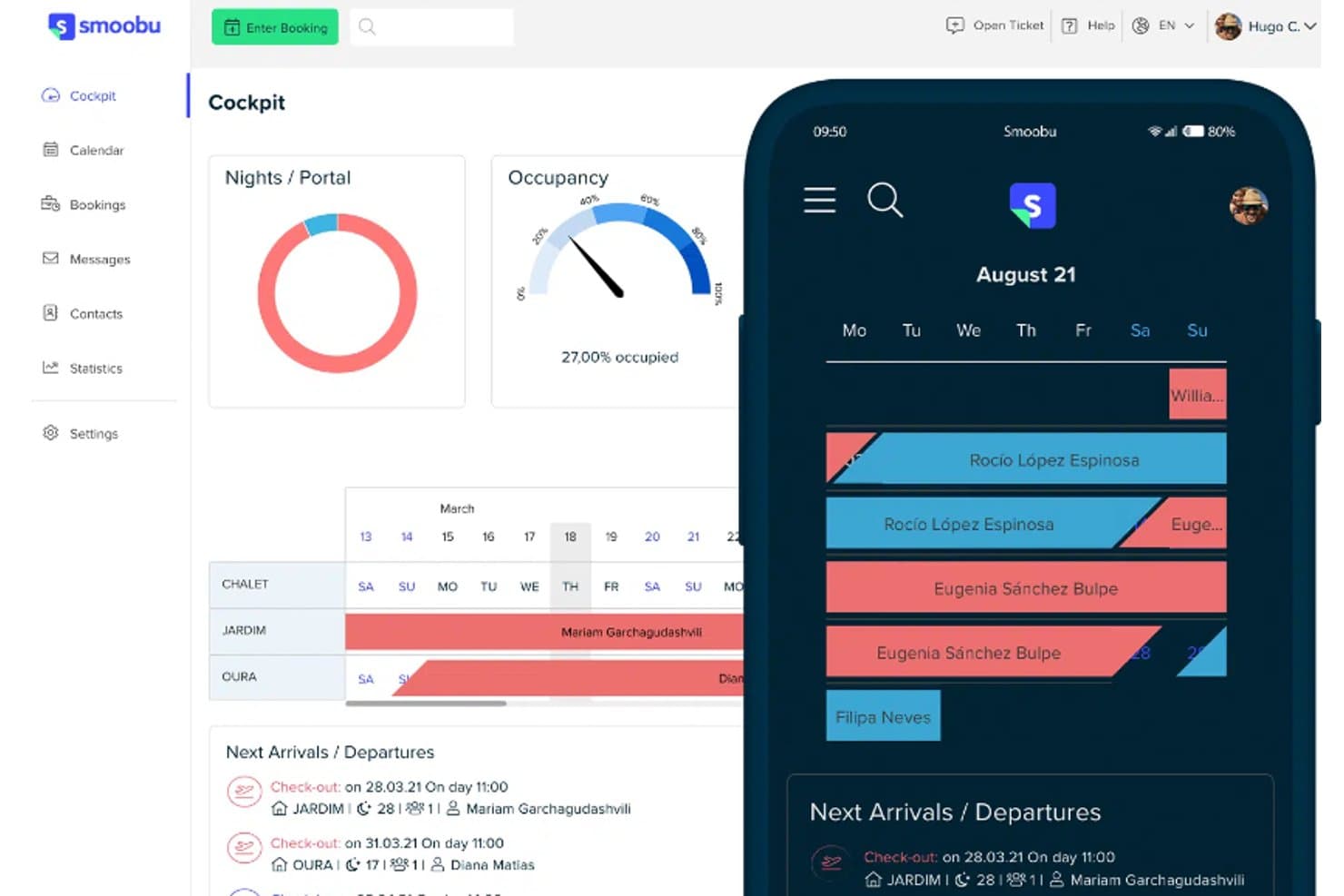
Smoobu's cockpit dashboard gives hosts a real-time booking overview. Smoobu is a vacation rental management platform for hosts and small accommodation operators who need to coordinate bookings, guest communication, and day-to-day property operations.
Who Is Smoobu Best For?
Smoobu suits independent vacation-rental owners and small property managers who need to keep availability aligned across booking channels.
Why I Picked Smoobu
I picked Smoobu as a Cloudbeds alternative because it’s “Best for intuitive vacation rental management with channel synchronization.” Its channel manager syncs rates, availability, and reservations across connected booking sites, while a central calendar shows bookings in one place. When an OTA reservation comes in, updated availability helps reduce double-booking risk across vacation rentals.
Smoobu Key Features
- Booking engine: Add a direct booking system to your website.
- Scheduled guest messages: Personalize messages and set them to send at chosen times.
- Team access: Add team members and assign access rights.
- Website builder: Create a personalized website to attract direct bookings.
Smoobu Integrations
Smoobu lists 40+ app and tool connections, including marketplace integrations with PriceLabs, Beyond, Wheelhouse, Smartpricing, Turno, Doinn, Properly, TIDY, Sali, and Stripe. It also provides a REST API and webhooks for custom integrations.
Pros and Cons
Pros:
- Built-in booking engine supports direct reservations
- Scheduled messages automate routine guest updates
- Central calendar coordinates bookings across major OTAs
Cons:
- Limited reporting and bulk controls challenge growth
- Sync failures can still create double bookings
Learn more about Smoobu: Best for optimizing occupancy rates with smart pricing
- 14-day free trial
- Pricing upon request
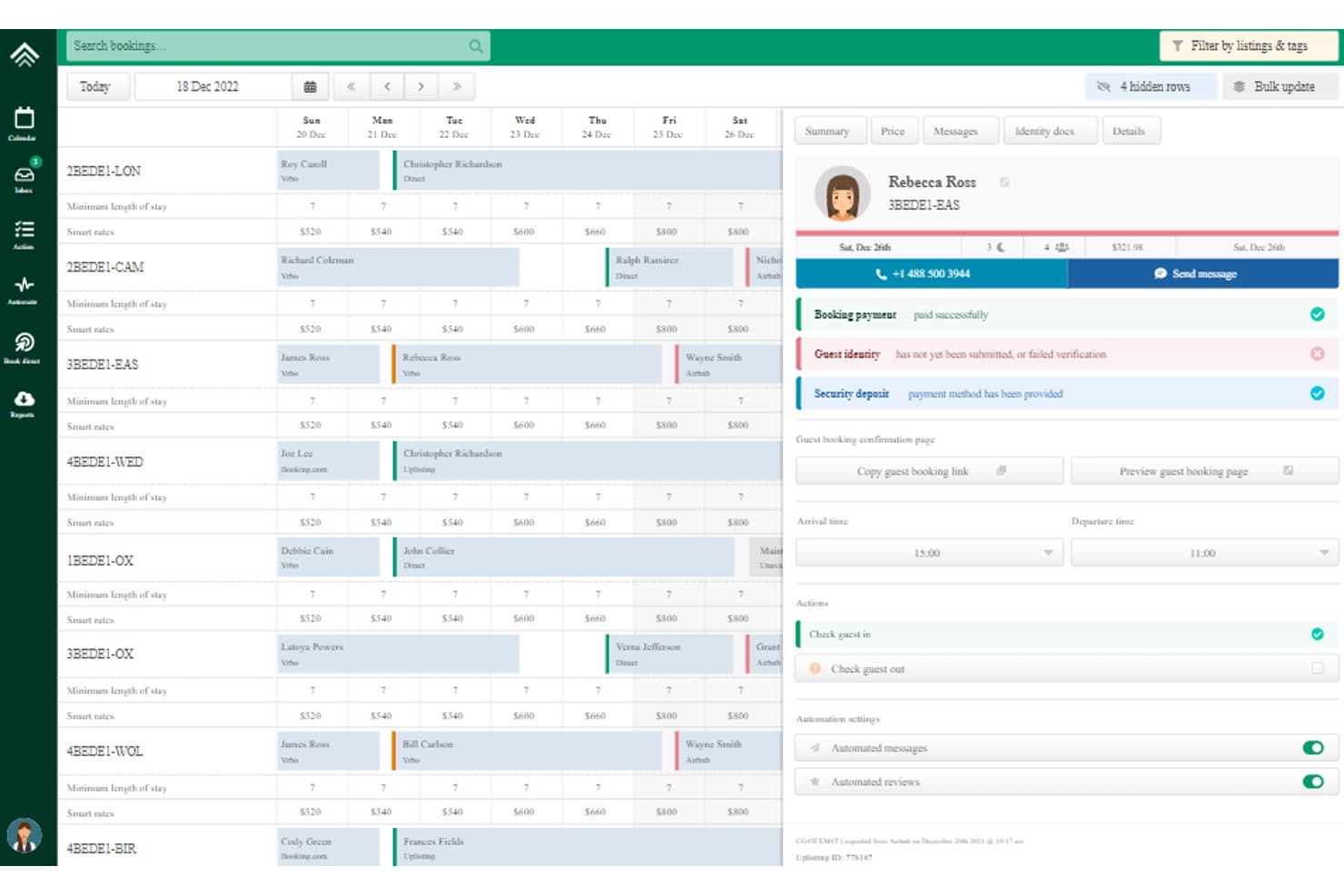
UpListing centralizes booking details, guest info, and messaging in one view. UpListing is a vacation rental management platform for independent accommodation operators who need to coordinate reservations, guest communications, and property operations across booking channels.
Who Is UpListing Best For?
UpListing suits independent vacation rental operators who want smart pricing to help improve occupancy across booking channels.
Why I Picked UpListing
I picked UpListing as a Cloudbeds alternative because it is Best for optimizing occupancy rates with smart pricing. Its vacation rental platform coordinates reservations, guest communications, and property operations across booking channels, helping me connect pricing decisions with the work behind each booking.
Uplisting Key Features
- Automated review requests: Prompts guests to review their stay after you submit your Airbnb review.
- Security deposit collection: Collects deposits for direct, Vrbo, and Booking.com reservations.
- Guest ID upload: Lets guests upload identification through their booking welcome page.
- Rental agreement e-signatures: Allows guests to sign rental agreements digitally through the welcome page.
Uplisting Integrations
Uplisting lists 45+ integrations, including direct integrations with PriceLabs and Stripe, and connections to Airbnb, Vrbo, Booking.com, and Google Vacation Rentals. It also supports Zapier and offers an API for connecting apps and building custom workflows.
Pros and Cons
Pros:
- Guest messaging and cleaning automation
- Synchronized calendars help prevent double bookings
- Smart rates account for channel commissions
Cons:
- Reporting and accounting coverage is limited
- Mobile app lacks key desktop functions
Learn more about UpListing:
Other Cloudbeds Alternatives
Below is a list of additional Cloudbeds alternatives that I shortlisted but did not make it to the top 10. Definitely worth checking them out.
- 11HotelloBest for comprehensive PMS features with integrated CRM
- 12Life HouseBest for boutique hotels seeking operational and brand expertise
- 13ViberentBest for rental businesses seeking a flexible inventory management system
- 14StayNTouchGood for hoteliers seeking mobile-oriented guest experience
- 15HotelogixBest for mid-sized hotels managing multi-property operations and group bookings.
- 16ThinkReservationsBest for boutique inns seeking advanced reporting and reservations.
- 17RoomRaccoonBest for independent hotels needing all-in-one management with built-in accounting and automation.
- 18OwnerRezGood for vacation rental owners looking for comprehensive property management
- 19RMS CloudGood for properties desiring fully cloud-based solutions
- 20freetobookBest for small B&Bs requiring a simple booking engine with OTA connectivity.
- 21SkyTouch TechnologyGood for large hotel operations seeking robust integration options
- 22SkyTouch TechnologyGood for large hotel operations seeking robust integration options
- 23VacayHome ConnectGood for vacation home rentals needing wide distribution channels
- 24RoomCloudGood for businesses wanting direct booking and channel management
How I Evaluate Cloudbeds Alternatives
I split the evaluation into two layers: core requirements every alternative must clear—native PMS, live channel sync, direct booking engine—then differentiators like pricing model and property-type fit.
Core Functionality (Table Stakes For This List)
When I'm selecting tools for my list, I rank each one on a scale from 0 (does not offer the functionality) to 5 (excels in this area) for each core functionality listed below. Then, I calculate the tool's total score into a percentage. Each tool needs to achieve a minimum total score of 65% to be considered for inclusion.
- Property Management System: I look at how the PMS handles reservations, check-in/out, folios, and guest profiles—things like drag-and-drop tape charts and housekeeping status updates.
- Channel Manager: Real-time two-way sync with major OTAs matters here. I check how many channels are supported and whether inventory pooling prevents overbookings.
- Direct Booking Engine: I evaluate whether the booking engine is commission-free, embeddable, and supports promo codes or packages to help properties convert website visitors.
- Payment Processing: Integrated payment handling should cover card storage, auto-charging, and folio posting so front desk staff aren't toggling between separate terminals.
- Rate & Revenue Management: Seasonal pricing, derived rates, and occupancy-based rules are what I look for—tools like Mews and Little Hotelier approach this differently.
- Multi-Property & Reporting: For operators running more than one site, I check whether the platform offers group-level dashboards and consolidated financial reporting.
Once I have a list of tools that meet this criteria, I consider what sets each platform apart.
Differentiating Factors (What Sets Vendors Apart)
Here's how I compare and contrast different vendors:
Standout Features
Guest messaging tools are a big differentiator—I check whether a platform can automate pre-arrival emails or WhatsApp messages with check-in details, then follow up post-stay for reviews. Upsell features tie directly into this, letting properties offer room upgrades or add-ons at booking or during the pre-arrival window. I also evaluate each vendor's API and marketplace depth, since most hotels need to connect POS, smart locks, or accounting tools like Xero and QuickBooks to keep their stack working together.
Beyond Features
Property type fit matters more than most buyers realize. A platform built for boutique hotels may lack dorm-bed or mixed-inventory support that hostels need. I also look closely at pricing structure—whether the vendor charges per room, takes a cut of direct bookings, or bundles the channel manager and booking engine into one fee. Onboarding support is another factor I weigh, especially whether the vendor helps with OTA channel remapping and data migration, since a botched cutover can mean lost reservations.
Why Cloudbeds Alternatives?
Despite its numerous benefits, Cloudbeds may not resonate with everyone's unique requirements. You might find it's features either too extensive or not sufficient, its interface challenging, or its pricing out of your budget. Here are some common reasons listed for looking for a Cloudbeds alternative:
Cloudbeds Pricing
Cloudbeds pricing ranges according to how many properties and rooms you manage. A small hotel with 10 rooms is quoted as costing ~$200/month USD, which comes with: PMS, channel manager, a booking engine, payment processing, marketplace integrations, and various levels of 24/7 support and training.
For someone just starting out, that price might be too high. For a larger, enterprise hotel chain, you might need or want additional features that aren't included above.
Mobile App
If you want a mobile app for your hotel management—with credit card processing, check-in/check-out assistance, maybe even room service—then Cloudbeds may not be for you. Cloudbeds doesn't offer a mobile app service, which means you would have to integrate with anexternal party for that purpose.
Additional Reporting Needs
Some users find that Cloudbeds' just does not offer the detailed reporting suite that they require for their growing business, particularly when it comes to revenue management data. Cloudbeds offers a series of pre-made reports, of which there are ~30 or fewer to choose from. Some hotel managers might need more options, or more customization potential.
Cloudbed Key Features
Here are some of the key hotel management features of Workday, to help you contrast and compare what alternative solutions offer:
- Operations & finance: Streamline your operations and automate workflows to keep everything running smoothly.
- Guest experience: Use digital check-in and communication tools to modernize how you interact with your guests.
- Revenue & analytics: Gain data-driven insights for better decision-making and optimize your revenue strategies.
- Distribution & marketing: Utilize the channel manager and booking engine to enhance your online presence and attract more bookings.
- Integrated solutions: Access an app marketplace and API to effortlessly integrate with other tools you use.
- Revenue management: Maximize your RevPAR by using integrated solutions like automated rate changes and market alerts.
- Digital marketing: Increase direct bookings by leveraging services such as professional website design and SEO enhancements.
- Data insights: Transform your business data into actionable insights with custom reporting and analytics capabilities.
Most Common Questions Regarding Cloudbeds Alternatives (FAQ's)
Here are some questions I wanted to cover for anyone looking to switch away from Cloudbeds hotel management software.
How much does Cloudbests cost?
Cloudbeds offers several pricing tiers, typically ranging from around $50 to $500+ per month, depending on the size of the property and features included. Here is a general outline of Cloudbeds’ monthly costs in USD:
- Basic Plan ($50 – $150/month):
- Features: Basic booking management, access to a channel manager, and limited reporting tools.
- Limitations: Fewer advanced features, limited integrations, and customer support options.
- Standard Plan ($150 – $300/month):
- Features: Everything in the Basic Plan plus advanced reporting, more integrations, and enhanced customer support.
- Limitations: Some features like payment processing may come with additional fees.
- Premium Plan ($300 – $500+/month):
- Features: Full access to all features, including automated marketing tools, extensive reporting, and dedicated account management.
- Limitations: Higher cost may not be feasible for smaller properties, and some advanced features might still incur extra charges.
Prices can vary based on property size, location, and specific needs, so it’s best to check directly with Cloudbeds for the most accurate and updated pricing.
What is Cloudbeds Payments?
Cloudbeds Payments is a service that helps hotels and other lodging businesses handle their payment processing. It allows property owners to accept credit cards and other forms of payment easily and securely. This service is integrated into the Cloudbeds platform, making it simpler for businesses to manage bookings and payments all in one place.
What is Cloudbeds PMS?
Cloudbeds PMS, or Property Management System, is a tool that helps hotels, hostels, and other lodging businesses manage their daily operations. It allows property owners to handle reservations, check-ins and check-outs, guest communications, and billing all in one system. This makes it easier to keep everything organized and provide a better experience for guests.
Who owns Cloudbeds?
Cloudbeds is a private company co-founded by Adam Harris, co-founder and CEO, along with his partners, who include Richard Harris and more. They started the company to help hotels and other lodging businesses manage their operations better with technology.
Which hotels use Cloudbeds?
According to Cloudbeds’ website, they are used by the likes of The ZERO Hotels, The Pad, Hotel Las Cortes de Cádiz, Bogentrakt, The Vaquero Motel, The Cabot Lodge, Flor Parks Hotel, and others.
Many different types of hotels and lodgings use Cloudbeds, including small boutique hotels, hostels, bed and breakfasts, and vacation rentals. It’s popular among independent properties that want an easy way to manage bookings and guest services. Some well-known hotel chains and larger properties also use Cloudbeds, but it’s especially favored by smaller, family-run businesses looking for a simple and effective management solution.
Which are the cheapest and most expensive hotel software?
Among the Cloudbeds alternatives mentioned, Viberent tends to be on the less expensive side, with pricing starting from $79/month. On the other hand, innRoad is one of the more premium options, with its pricing beginning at $200/month.
Are there any free Cloudbeds alternatives?
While there aren’t typically free alternatives to Cloudbeds available, many of these platforms, including Cloudbeds itself, do offer free trials. This allows potential users to test out the functionality of the platform before committing to a subscription.
What software do small hotels use?
Many small hotels use small hotel management solutions to handle their tasks, like managing room availability, guest check-ins, and payments. These systems are designed to make things easier for smaller properties, so they can keep everything in order without the hassle of juggling multiple tools.
Can I Outsource My Hotel Management?
Yes, many people outsource their hotel management successfully. It’s a proven strategy for those who want to grow their business, improve efficiency, or simply take a step back from hands-on involvement.