
19 Hotel Scheduling Software To Improve Operations Of 2026

10 Best Hotel Scheduling Software Shortlist
Here's my pick of the 10 best software from the 19 tools reviewed.


Running a hotel takes careful planning every day. You need to make sure the right people are working at the right time while keeping guests happy and everything running smoothly. Doing all that by hand can quickly become stressful and confusing, especially when schedules change or the hotel gets busy.
That’s why many hotels now use scheduling tools to stay organized. These tools make it easier to plan shifts, communicate with staff, and make quick changes when needed. They help prevent mix-ups and give your team more time to focus on guests instead of paperwork.
Whether you manage a small inn or a large hotel, using the right scheduling system can save time, reduce stress, and keep your team working together smoothly. In this guide, you’ll find a list of trusted options that make scheduling simpler and hotel life more efficient for everyone.
Why Trust Our Software Reviews
Best Hotel Scheduling Software Summary
| Tool | Best For | Trial Info | Price | ||
|---|---|---|---|---|---|
| 1 | Best for customizable scheduling templates | Free plan + free demo available | From $29/month | Website | |
| 2 | Best scheduling & HR platform for Canadian hotels | Free 21-day trial + free demo available | From $2.93/user/month (billed annually) | Website | |
| 3 | Best for maintenance scheduling | 30-day free trial available | From $35/user/month (billed annually) | Website | |
| 4 | Best for automated shift scheduling | 30-day free trial | From $50/month | Website | |
| 5 | Best for maximizing revenue with a hotel commerce platform | 14-day free trial | From $40/user/month | Website | |
| 6 | Best for small hotel businesses seeking comprehensive management tools | 30-day free trial available | Pricing upon request | Website | |
| 7 | Best for independent hotels requiring a full-service platform | Free demo available | From $150/user/month | Website | |
| 8 | Best for large-scale resource allocation and tracking | Not available | From $14/user/month (billed annually) | Website | |
| 9 | Best for leveraging customer data for personalized service | Not available | From $200/user/month (billed annually) | Website | |
| 10 | Best for streamlined team scheduling in hospitality | Free 14-day trial + free plan + free demo available | From $2/active member/month (billed annually) | Website |
-

Little Hotelier
Visit WebsiteThis is an aggregated rating for this tool including ratings from Crozdesk users and ratings from other sites.4.5 -
roommaster
Visit WebsiteThis is an aggregated rating for this tool including ratings from Crozdesk users and ratings from other sites.4.2 -
Roomstay Hotel Booking Engine
Visit Website


Best Hotel Scheduling Software Reviews


Connecteam is a highly effective hotel scheduling software that excels in staff management for the hospitality industry. Its comprehensive features include customizable scheduling templates, automated time tracking, and mobile access, making it easy for hotel managers to create and distribute schedules efficiently.
Why I Picked Connecteam: Connecteam stands out to me due to its advanced features designed to streamline workforce management and enhance operational efficiency. One of its key offerings is the Job Scheduler, which allows hotel managers to efficiently plan and dispatch shifts, ensuring that all roles are filled and operational needs are met. I found this feature to be particularly beneficial for hotels, where staffing needs can vary significantly based on occupancy levels and events. The software also includes Quick Tasks and Forms functionalities, helping employees to manage on-the-job tasks digitally, thereby reducing paperwork and enhancing productivity.
Standout features & integrations:
Connecteam features automated time tracking with digital timesheets for accurate payroll. It also offers customizable checklists for field reporting, a newsfeed for sharing important announcements, and accessible training modules for skill development. The software integrates with other platforms including Gusto, Paychex, Xero, and Zapier.
Pros and Cons
Pros:
- Efficient time tracking
- Strong customer support
- Mobile accessibility
Cons:
- Limited offline functionality
- Steep learning curve
- Limited advanced features


Agendrix is an employee scheduling software specifically designed to improve efficiency in workforce management. Its robust set of features facilitates the scheduling process, making it ideal for enhancing employee shift management—especially in hospitality settings like Canadian hotels.
Why I Picked Agendrix:
I selected Agendrix due to its comprehensive, yet simple approach to employee scheduling. The tool truly shines with its easy-to-use interface and broad feature set tailored specifically for employee management. In my judgment, Agendrix stands out with its well-thought-out design, combining scheduling, time-tracking, and communication tools in one platform, which justifies why it is best for enhancing employee shift management efficiency.
Standout features and integrations:
Agendrix boasts a flexible scheduling feature that allows for the smooth creation and adjustment of work schedules. Managers can track whether employees have viewed their assigned shifts, require confirmations, and add tasks to shifts to ensure accountability and monitor progress. The software also offers automated shift scheduling to streamline workforce planning and reduce manual adjustments. Additionally, it has an automated time-tracking system that provides accurate labor cost insights. Agendrix integrates with numerous payroll and HR systems like QuickBooks, Xero, and ADP, ensuring a seamless flow of information between tools.
Pros and Cons
Pros:
- Supports numerous integrations with payroll and HR systems
- Integrated time-tracking and labor cost insights
- Flexible and straightforward scheduling
Cons:
- Advanced features require higher-priced plans
- Billed annually, which might not suit all businesses
- Extra charge as a base fee each month


Click Maint CMMS is a maintenance management software designed to help businesses, including hotels, efficiently manage their assets and maintenance operations. It offers features such as work order management, preventive maintenance scheduling, and asset tracking to keep facilities and equipment running smoothly.
Why I Picked Click Maint CMMS:
I picked Click Maint CMMS because of its strong preventive maintenance and asset management features. You can schedule maintenance tasks based on usage, manufacturer guidance, or industry standards to keep hotel equipment running and avoid breakdowns. The asset management tool lets you store key info like location, warranty, and purchase dates for every asset, while QR codes help your team quickly access these details on the go. This helps keep maintenance organized and minimizes disruptions.
Standout features and integrations:
Other features include work order reports that summarize preventive maintenance activities, completed tasks, costs, and upcoming schedules, helping identify trends and potential issues. Additionally, cost management and compliance tools monitor maintenance expenses, compare budgeted versus actual costs, and maintain necessary documentation for audits and inspections. Click Maint CMMS integrates with HRIS, CRM, and ERP systems.
Pros and Cons
Pros:
- Mobile access enables technicians to manage tasks on the go
- Accommodates businesses of all sizes
- Automated preventative maintenance scheduling
Cons:
- Only for the maintenance aspect of hotel management
- Could offer more advanced reporting

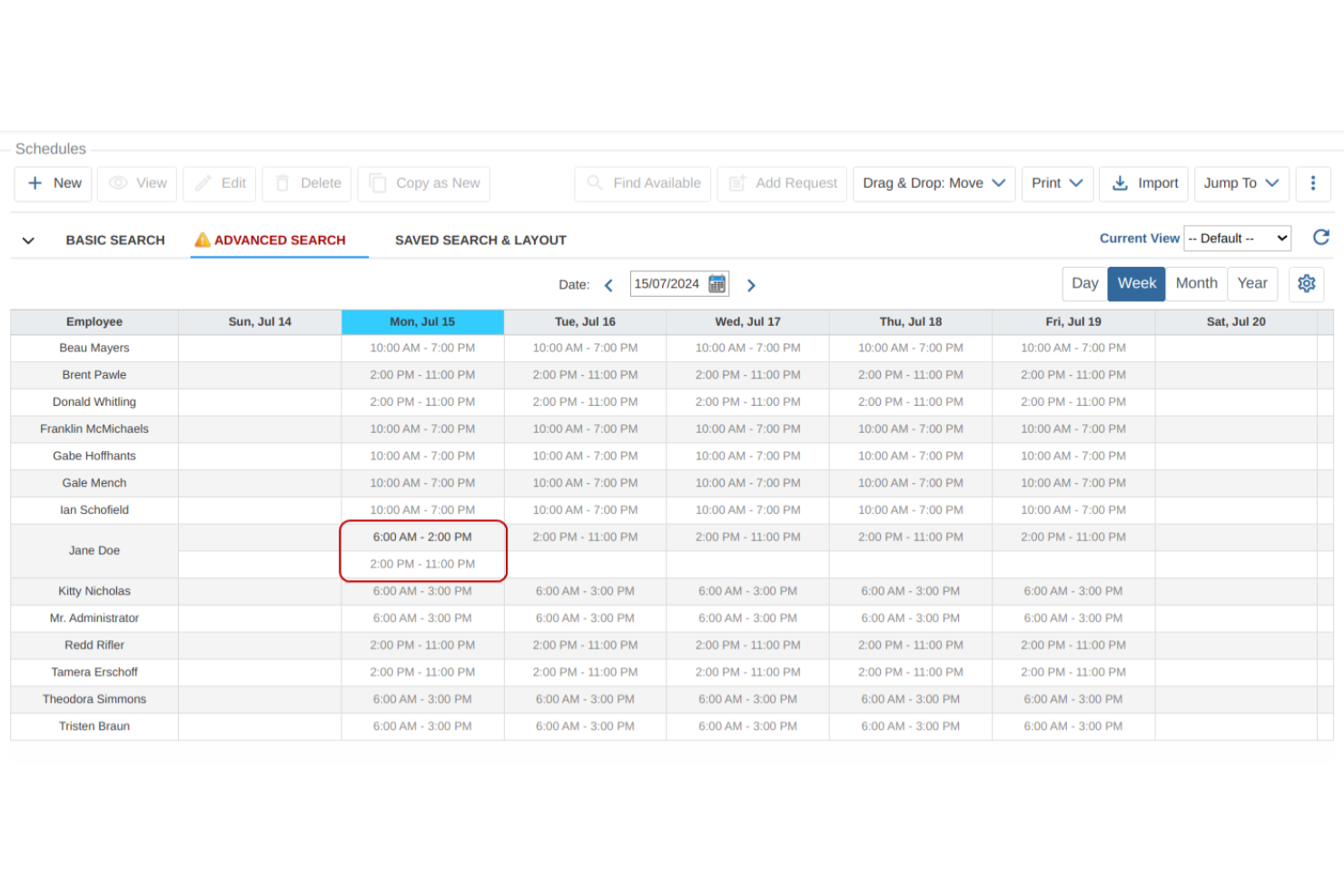
TimeTrex is a comprehensive workforce management solution that integrates various functionalities aimed at managing employee time tracking, scheduling, payroll processing, and attendance management.
Why I Picked TimeTrex: I like that TimeTrex's automated scheduling capabilities allow businesses to create optimized schedules, accommodating both simple and complex multi-week rotating schedules. In addition to scheduling, TimeTrex integrates time and attendance tracking, which is crucial for maintaining accurate payroll and compliance. The software includes advanced functionalities such as biometric time clocks and GPS tracking.
Standout features & integrations:
TimeTrex provides mobile accessibility, allowing employees to check their schedules, clock in/out, and request leave from their mobile devices. It also provides robust analytics tools that help managers understand labor costs, productivity, and other key metrics. Integrations include QuickBooks, Sage, ADP, Paychex, Ceridian, Xero, SAP, and Oracle.
Pros and Cons
Pros:
- Customization options to meet business needs
- Good automation features
- Real-time insights and reports
Cons:
- Initial setup is complex
- Could have more robust messaging features


SiteMinder is a complete hotel commerce platform that assists businesses in broadening their reach and maximizing revenue through efficient room distribution and strategic revenue management. It's particularly potent for those looking to derive the most income from their hospitality offerings.
Why I Picked SiteMinder:
I chose SiteMinder because it demonstrates an effective approach to hotel commerce management, offering the tools necessary to boost revenue and enhance operational efficiency. What sets it apart is its extensive network of distribution channels and advanced revenue management capabilities, leading me to judge it as the "Best for maximizing revenue with a hotel commerce platform.”
Standout features and integrations:
SiteMinder offers features, such as channel management, a direct booking engine, and revenue management tools that are designed to maximize profits and optimize occupancy rates. Furthermore, it integrates smoothly with a range of Property Management Systems (PMS), Global Distribution Systems (GDS), and revenue management systems, enhancing its functionality and usability within a broader hospitality management ecosystem.
Pros and Cons
Pros:
- Smooth integration with various systems
- Advanced revenue management tools
- Extensive network of distribution channels
Cons:
- Additional costs for premium features and integrations
- Not the best fit for very small establishments
- Might be more complex than some other platforms

Best for small hotel businesses seeking comprehensive management tools

Little Hotelier is a property management system and a hotel management solution specifically created for small hotels, B&B’s, inns, and other small lodging facilities. It's a complete suite of tools designed to simplify operations, making it particularly beneficial for small hotel businesses seeking comprehensive management solutions.
Why I Picked Little Hotelier:
I picked Little Hotelier because it offers a powerful blend of features tailored to the needs of small hotel businesses. Its uniqueness lies in its comprehensive solution that integrates front desk operations, reservations, channel management, and billing into a single platform. Its focus on small-scale operations is what makes it the best for small hotel businesses seeking comprehensive management tools.
Standout features and integrations:
Little Hotelier features a user-friendly front desk system that streamlines daily operations. It also includes an integrated channel manager to ensure real-time updates across all your booking channels. In addition, the platform can seamlessly integrate with popular online travel agencies and global distribution systems, increasing the visibility of your property to potential guests.
Pros and Cons
Pros:
- Streamlined front desk operations
- Integrated channel manager for wide distribution
- Comprehensive suite of management tools
Cons:
- Limited customization options
- May be too complex for very small operations
- Pricing information not readily available


InnRoad is a comprehensive hotel management system that specializes in serving independent hotels. It provides a broad range of services, including reservation management, online booking, and reporting, catering ideally to independent hotels looking for a comprehensive platform.
Why I Picked InnRoad:
I picked InnRoad for its extensive features that cater specifically to the needs of independent hotels. What makes it stand out is its all-in-one platform, which simplifies hotel management processes. Given these considerations, it seems clear to me that InnRoad is best suited for independent hotels that need a full-service platform.
Standout features and integrations:
InnRoad offers a multitude of key features, such as real-time inventory management, an integrated booking engine, and advanced reporting tools. It integrates well with various OTAs and Global Distribution Systems (GDS), further enhancing its reach and functionality.
Pros and Cons
Pros:
- Integrates with multiple OTAs and GDS
- Provides real-time inventory management
- Offers comprehensive features tailored for independent hotels
Cons:
- Some users have reported slow customer service response times
- The interface could be more intuitive
- Might not be cost-effective for very small hotels

Best for large-scale resource allocation and tracking
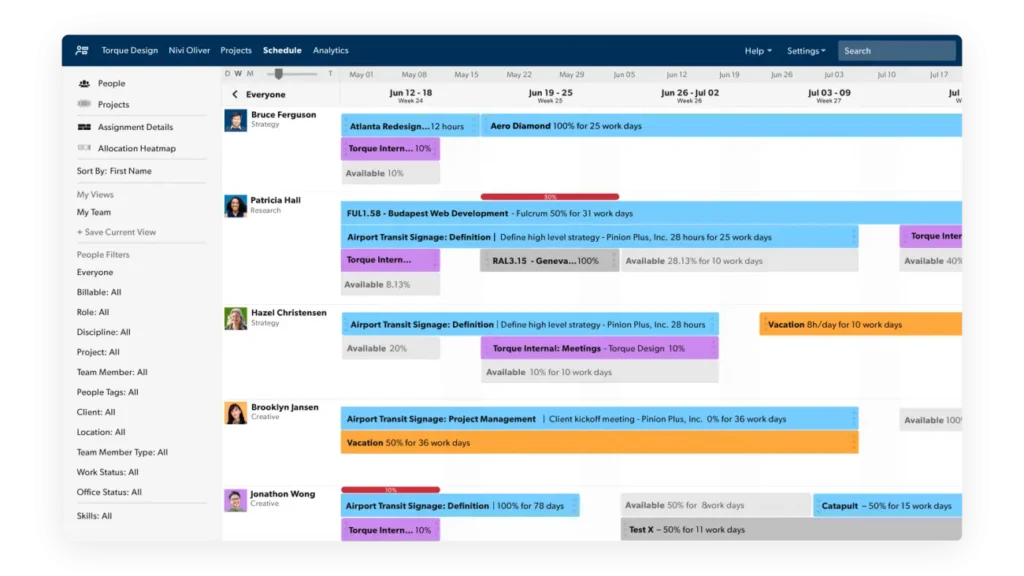
Resource Management by Smartsheet offers an extensive solution for resource allocation and tracking in large-scale projects. The software empowers managers to monitor their resources, optimize their allocation, and make data-driven decisions. Hence, it is best for large-scale resource allocation and tracking.
Why I Picked Resource Management by Smartsheet:
I selected Resource Management by Smartsheet because it offers in-depth functionality for resource management. Its ability to handle complex, large-scale projects is unique, and its flexible resource management capabilities stood out to me. It's best for large-scale resource allocation and tracking due to its comprehensive features and robust scalability.
Standout features and integrations:
Resource Management by Smartsheet comes packed with features like real-time dashboards, Gantt charts, automated workflows, and more. The software provides a consolidated view of resource allocation, helping to identify and address resource conflicts proactively. Integration-wise, it can link with various other systems, including ERP, CRM, and other project management tools, offering a unified resource management solution.
Pros and Cons
Pros:
- Extensive integration capabilities
- Good for managing large-scale projects
- Robust resource management features
Cons:
- Higher learning curve compared to simpler tools
- Can be complex to use initially
- Might be overwhelming for small businesses

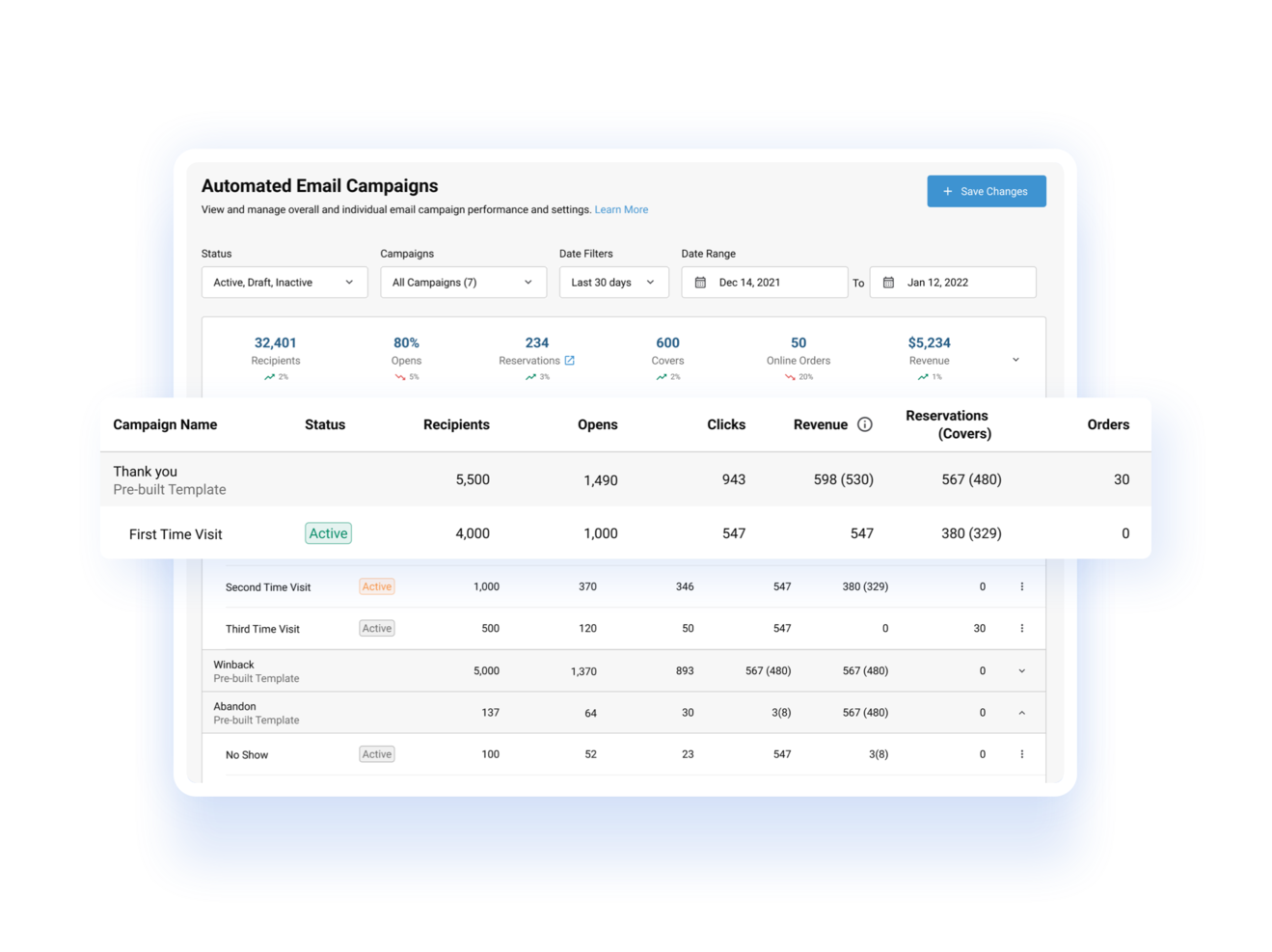
Seven Rooms is a reservation, seating, and guest management platform primarily tailored to the hospitality industry. It provides tools that aid businesses in leveraging customer data for personalized service, thus enhancing guest experiences significantly.
Why I Picked Seven Rooms:
I selected Seven Rooms primarily for its commitment to enhancing guest experience by harnessing the power of customer data. Its standout features include advanced data collection and analysis, which enable personalized customer service and engagement. This focus on personalization makes Seven Rooms an exceptional tool, and it's why I've determined it to be the "Best for leveraging customer data for personalized service.”
Standout features and integrations:
Seven Rooms boasts key features, such as comprehensive reservation management, targeted marketing campaigns, and detailed guest profiling, which allows businesses to provide unique, tailored service. It integrates effectively with a range of other hospitality tools, including major point-of-sale (POS) systems, marketing platforms, and the best hotel management software, making it an integral part of a robust hospitality management suite.
Pros and Cons
Pros:
- Advanced reservation management system
- Integration capabilities with a wide range of hospitality tools
- Effective utilization of customer data to enhance guest experience
Cons:
- Could have more options for customization within the platform
- The user interface might be challenging for less tech-savvy users
- Pricing might be on the higher end for smaller businesses

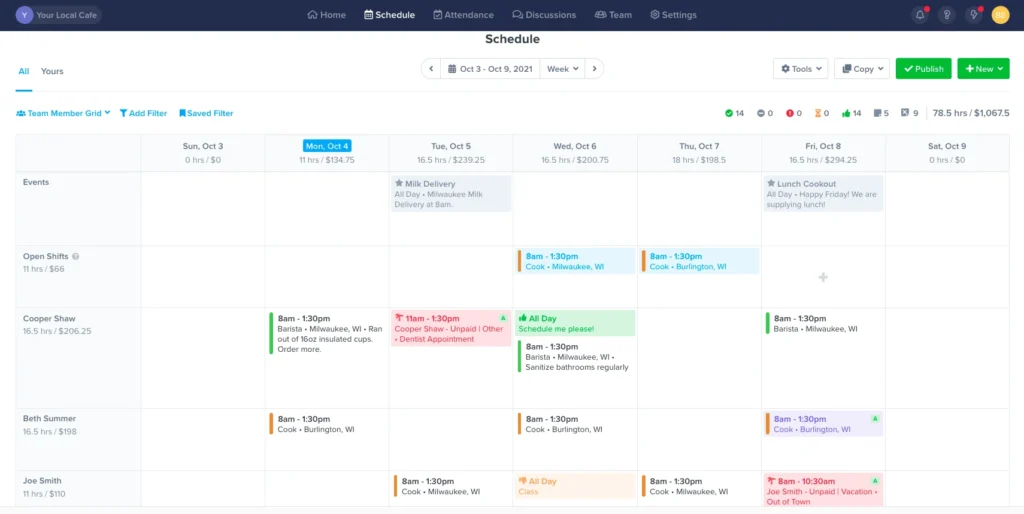
ZoomShift is a cloud-based employee scheduling and time-tracking software. It’s designed to simplify the process of creating work schedules, managing employee availability, and tracking employee hours. It provides features, such as drag-and-drop schedule creation, automatic shift reminders, and real-time reporting.
Why I Picked ZoomShift:
ZoomShift caught my eye as a reliable and robust tool designed to simplify the complexities of team scheduling within the hospitality industry. I chose it because of its ease of use and dedicated features that directly cater to the needs of a dynamic industry such as hospitality. ZoomShift stands out with its straightforward, intuitive interface, reducing the friction in the process of scheduling and managing shifts, making it best for streamlined team scheduling in hospitality.
Standout features and integrations:
ZoomShift's time clock feature allows employees to clock in and out directly from their devices, providing accurate time-tracking. The tool also includes a comprehensive shift scheduling system, enabling managers to swiftly create, update, or delete shifts, minimizing manual errors. ZoomShift integrates well with payroll systems like Gusto and ADP, making it easier to process payments based on the tracked hours.
Pros and Cons
Pros:
- Easy integration with popular payroll systems
- Accurate time-tracking
- Efficient shift scheduling and management
Cons:
- Billed annually, which might not suit all businesses
- Primarily focuses on scheduling, missing out on some advanced features
- A minimum of 15 seats is required for the 'Premium' Plan
Other Hotel Scheduling Software
Below is a list of additional hotel scheduling software that we shortlisted but did not make it to the top 10. Definitely worth checking them out.
- TCP Hospitality
For comprehensive labor-management in hospitality
- Hotel Effectiveness
For optimizing labor costs in the hotel industry
- Life House
For boutique hotels seeking tech-enabled operations
- RoomKey PMS
For improving guest experiences with personalized service
- Roomkey PMS
For improving guest experiences with personalized service
- Buddy Punch
For drag-and-drop staff scheduling
- When I Work
Good for quick and intuitive employee scheduling in hotels and resorts
- Deputy
Good for hospitality businesses seeking schedule cost calculation
- Cloudbeds
For integrating reservation and property management


Related Popular Hotel Software Reviews
Hotel Scheduling Software Selection Criteria
When selecting the best hotel scheduling software to include in this list, I considered common buyer needs and pain points like managing staff availability and reducing scheduling conflicts. I also used the following framework to keep my evaluation structured and fair:
Core Functionality (25% of total score)
To be considered for inclusion in this list, each solution had to fulfill these common use cases:
- Manage staff scheduling
- Track employee hours
- Handle shift changes
- Provide reporting and analytics
- Integrate with payroll systems
Additional Standout Features (25% of total score)
To help further narrow down the competition, I also looked for unique features, such as:
- Automated shift reminders
- Customizable scheduling templates
- Mobile app access
- Real-time schedule updates
- Multi-location management
Usability (10% of total score)
To get a sense of the usability of each system, I considered the following:
- Intuitive user interface
- Easy navigation
- Minimal learning curve
- Quick access to key features
- Aesthetic design
Onboarding (10% of total score)
To evaluate the onboarding experience for each platform, I considered the following:
- Availability of training videos
- Interactive product tours
- Access to templates
- Webinars and live sessions
- Support from chatbots
Customer Support (10% of total score)
To assess each software provider’s customer support services, I considered the following:
- 24/7 availability
- Multi-channel support options
- Response time
- Access to a knowledge base
- Personalized assistance
Value For Money (10% of total score)
To evaluate the value for money of each platform, I considered the following:
- Competitive pricing
- Features included in basic plans
- Discounts for annual billing
- Free trial availability
- Cost compared to competitors
Customer Reviews (10% of total score)
To get a sense of overall customer satisfaction, I considered the following when reading customer reviews:
- Overall satisfaction ratings
- Consistency of positive feedback
- Commonly mentioned issues
- User testimonials
- Frequency of updates and improvements
How to Choose Hotel Scheduling Software
It’s easy to get bogged down in long feature lists and complex pricing structures. To help you stay focused as you work through your unique software selection process, here’s a checklist of factors to keep in mind:
| Factor | What to Consider |
|---|---|
| Scalability | Can the software grow with your business? Consider if it supports additional locations or increased staff without a significant cost increase. |
| Integrations | Does it work with your existing systems? Check for compatibility with your current payroll, HR, and booking systems to avoid data silos. |
| Customizability | Can you tailor it to fit your workflows? Look for options to adjust schedules, reports, and notifications to match your team's needs. |
| Ease of use | Is it user-friendly for your team? Test the interface for intuitive navigation and minimal training requirements to ensure quick adoption. |
| Implementation and onboarding | How long will it take to get started? Evaluate the vendor's support for training, data migration, and initial setup to minimize disruption. |
| Cost | Is it within your budget? Compare the total cost of ownership, including subscription fees, hidden costs, and potential savings from automation. |
| Security safeguards | How does it protect your data? Ensure it complies with industry standards for data protection and offers features like encryption and access controls. |
| Support availability | What support does the vendor offer? Look for 24/7 availability, multi-channel options, and a strong knowledge base to assist you when issues arise. |
What Is Hotel Scheduling Software?
Hotel scheduling software is a tool that helps manage staff schedules and optimize operations in the hospitality industry. These tools are generally used by hotel managers and HR professionals to ensure efficient staff management and improve guest satisfaction. Automated scheduling, time tracking, and integration with payroll systems help with maintaining organized operations and reducing scheduling conflicts. Overall, these tools provide value by improving efficiency and enhancing the guest experience through better-managed staff resources.
Features
When selecting hotel scheduling software, keep an eye out for the following key features:
- Automated scheduling: Automatically generates staff schedules based on availability, reducing manual errors and saving time.
- Time tracking: Monitors employee hours worked, ensuring accurate payroll processing and compliance with labor laws.
- Integration with payroll systems: Connects with existing payroll systems to streamline salary calculations and reduce administrative workload.
- Mobile access: Allows staff to view and manage their schedules on the go, enhancing flexibility and communication.
- Real-time updates: Provides instant notifications for schedule changes, keeping everyone informed and minimizing confusion.
- Customizable templates: Offers pre-designed scheduling templates that can be tailored to fit specific operational needs.
- Reporting and analytics: Generates reports on staff performance and scheduling efficiency, aiding in decision-making and resource planning.
- Multi-location management: Supports scheduling across multiple sites, making it ideal for hotel chains or properties with various locations.
- Guest communication tools: Facilitates personalized interactions with guests, improving service quality and satisfaction.
- Compliance tracking: Ensures adherence to labor regulations by alerting managers to potential compliance issues.
Benefits
Implementing hotel scheduling software provides several benefits for your team and your business. Here are a few you can look forward to:
- Improved efficiency: Automated scheduling and integration with payroll systems reduce manual tasks, freeing up time for more important duties.
- Enhanced communication: Real-time updates and mobile access ensure everyone stays informed and can manage their schedules easily.
- Better compliance: Compliance tracking helps you adhere to labor laws, reducing the risk of violations and associated penalties.
- Increased flexibility: Customizable templates and multi-location management allow you to adapt quickly to changing needs and scale operations effortlessly.
- Data-driven decisions: Reporting and analytics provide insights into staffing and performance, enabling better resource allocation and planning.
- Elevated guest experience: Guest communication tools facilitate personalized interactions, contributing to higher satisfaction and loyalty.
- Cost savings: By optimizing staff schedules and reducing overtime, you can effectively manage labor costs and improve your bottom line.
Costs & Pricing
Selecting hotel scheduling software requires an understanding of the various pricing models and plans available. Costs vary based on features, team size, add-ons, and more. The table below summarizes common plans, their average prices, and typical features included in hotel scheduling software solutions:
Plan Comparison Table for Hotel Scheduling Software
| Plan Type | Average Price | Common Features |
|---|---|---|
| Free Plan | $0 | Basic scheduling, limited reporting, and access to mobile app. |
| Personal Plan | $5-$25/user/month | Advanced scheduling, time tracking, and email support. |
| Business Plan | $30-$50/user/month | Customizable templates, integration with payroll systems, and real-time updates. |
| Enterprise Plan | $60-$100/user/month | Multi-location management, compliance tracking, and dedicated account manager. |
Hotel Scheduling Software FAQs
Here are some answers to common questions about hotel scheduling software:
What type of hotels usually use scheduling software?
It’s used by a wide range of properties — from boutique inns to large hotel chains. Even event-based or seasonal hotels rely on it to manage rotating staff and fluctuating workloads throughout the year.
Can different departments share one scheduling system?
Yes. Most scheduling systems can handle multiple departments under one account. This allows front desk, housekeeping, kitchen, and maintenance teams to coordinate without overlapping or confusion.
How long does it take to set up a new scheduling system?
Setup time varies depending on the tool and the size of your team. Smaller hotels can usually be up and running within a few days, while larger operations may take a week or two to fully transition.
Can schedules be managed from mobile devices?
Most modern systems offer mobile access, allowing both managers and staff to view and adjust schedules on the go. This is especially useful for hotels with multiple departments or properties.
What kind of data should managers track in a scheduling tool?
Besides basic work hours, managers often track attendance, shift patterns, and staff availability. This helps identify trends like frequent absences or high-demand days for better planning.
What’s Next:
If you're in the process of researching hotel scheduling software, connect with a SoftwareSelect advisor for free recommendations.
You fill out a form and have a quick chat where they get into the specifics of your needs. Then you'll get a shortlist of software to review. They'll even support you through the entire buying process, including price negotiations.