
Managing a hotel can feel like juggling a dozen balls at once. You're coordinating events, handling bookings, and ensuring guests have a great stay. It’s no small task, and the right software can help ease the load.
In my experience, hotel sales and catering software can simplify your day-to-day operations. It lets your team focus on what really matters: providing excellent service to your guests.
I've tested and reviewed various software solutions to bring you the best options available. You’ll find insights into features, pros and cons, and what each tool can offer your business. Let's dive into the top picks and see which one fits your needs.
Why Trust Our Software Recommendations
6,700+
Reviews
20
Industry experts
16+
Evaluation factors
14
Years
Our team has been testing and reviewing software since 2012. As hospitality leaders ourselves, we know how difficult—and important—it is to choose the right software.
For this guide, we evaluated tools using hands-on testing and independent research, scoring tools using our selection criteria.
Our reviews reflect our human editorial judgment, not a sales pitch.
Hotel Sales and Catering Software Comparison Table
This comparison table summarizes pricing details for my top hotel sales and catering software selections:
| Tool | Best For | Trial Info | Price | ||
|---|---|---|---|---|---|
| 1 | Best for all-in-one event management | Free trial + free demo available | From $249/month (billed annually) | Website | |
| 2 | Best for real-time mobile management | Free demo available | Pricing upon request | Website | |
| 3 | Best for user-friendly cloud solutions | Free demo available | From $99/month | Website | |
| 4 | Best for customizable event tools | Free demo available | From $199/month | Website | |
| 5 | Best for AI-driven industry solutions | Free demo available | Pricing upon request | Website | |
| 6 | Best for enterprise-class systems | Free demo available | Pricing upon request | Website | |
| 7 | Best for integrated platform solutions | Free demo available | Pricing upon request | Website | |
| 8 | Best for integrated hospitality solutions | Free demo available | Pricing upon request | Website | |
| 9 | Best for small event management | 30-day free trial | From $10/event room/month | Website | |
| 10 | Best for cloud access anywhere | Free demo available | Pricing upon request | Website |


Best Hotel Sales and Catering Software Review
Below are my detailed summaries of the best hotel sales and catering software that made it onto my shortlist. My reviews look at each tool’s key features, pros & cons, integrations, and ideal use cases to help you find the best one.
 Best for all-in-one event management
- Free trial + free demo available
- From $249/month (billed annually)
Visit WebsiteCustomer Rating:4.9/5
Event Temple unifies event management from sales to coordination. My Evaluation Score
- BEO & Proposal Generation
- Excels
- Catering Menu & F&B Management
- Minimal
- PMS & Hospitality Integrations
- Excels
- Sales Pipeline & Lead Tracking
- Excels
- Group & Event Booking Management
- Strong
- Function Space & Diary Management
- Strong
Event Temple is trusted by venues ranging from single-room event spaces to full-scale conference centers. It unifies the entire event lifecycle with an intuitive interface, creating a centralized hub for sales, operations, account management, and event coordination.
Why I picked Event Temple: It provides an all-in-one platform that simplifies managing events from start to finish. The software features customizable proposal templates that help you create professional proposals quickly. Its built-in CRM ensures you can manage client relationships effectively. The reporting tools provide insights into sales performance, which is invaluable for strategic planning.
Standout features & integrations:
Features include a visual calendar that lets you manage bookings and events at a glance. Automated follow-up reminders keep your team proactive with client communication. The software also offers detailed revenue tracking, helping you monitor financial performance.
Integrations include Salesforce, Google Calendar, Microsoft Outlook, Mailchimp, QuickBooks, Stripe, PayPal, Eventbrite, Zoom, and Constant Contact.
Pros and Cons
Pros:
- Integrated e-proposals & e-signatures
- Automated workflows and reminders
- Effortless CRM pipeline tracking
Cons:
- Custom module learning curve
- Minor lag on large data
- Mobile lacks full features
Learn more about Event Temple: Best for real-time mobile management
- Free demo available
- Pricing upon request
Visit WebsiteCustomer Rating:4.2/5
OPERA Cloud enables mobile hotel booking, events, and catering management. My Evaluation Score
- BEO & Proposal Generation
- Strong
- Catering Menu & F&B Management
- Excels
- PMS & Hospitality Integrations
- Excels
- Sales Pipeline & Lead Tracking
- Excels
- Group & Event Booking Management
- Excels
- Function Space & Diary Management
- Strong
OPERA Cloud Sales & Event Management lets hotels manage bookings, events, and catering from anywhere. Its mobile-first design supports offsite inspections, real-time updates, and seamless PMS integration for efficient event management.
Why I picked OPERA Cloud: It provides real-time mobile management capabilities, allowing your team to stay updated on the go. The software supports complex event planning with detailed scheduling and resource allocation features. Its mobile access ensures you can manage operations from anywhere. Oracle offers comprehensive reporting tools that help analyze performance and improve decision-making.
Standout features & integrations:
Features include detailed scheduling tools that streamline event planning. The software’s mobile access allows for management from any location. Advanced reporting tools provide insights into operational performance, aiding strategic decisions.
Integrations include Salesforce, Microsoft Outlook, Google Calendar, QuickBooks, PayPal, Stripe, Zoom, Eventbrite, Mailchimp, and Constant Contact.
Pros and Cons
Pros:
- Visual function diary
- Unified lead dashboard
- Mobile event management
Cons:
- Cluttered dashboard
- Sync issues across teams
- Complex menu editing
Learn more about OPERA Cloud: Best for user-friendly cloud solutions
- Free demo available
- From $99/month
Visit WebsiteCustomer Rating:4.5/5
STS Cloud streamlines sales with fast, cloud access and PMS integration. My Evaluation Score
- BEO & Proposal Generation
- Strong
- Catering Menu & F&B Management
- Minimal
- PMS & Hospitality Integrations
- Strong
- Sales Pipeline & Lead Tracking
- Adequate
- Group & Event Booking Management
- Strong
- Function Space & Diary Management
- Adequate
STS Cloud streamlines the entire workflow while offering fast learning, flat-rate pricing, real-time updates, and PMS integration. Its cloud-native architecture ensures instant access and adoption across devices.
Why I picked STS Cloud: It offers a user-friendly interface that simplifies event management for your team. The cloud-based nature ensures accessibility from any device, making it convenient for remote management. Its customizable event templates allow you to tailor the software to your specific needs. The reporting tools provide valuable insights into operational performance, aiding in decision-making.
Standout features & integrations:
Features include customizable event templates that streamline planning processes. The software’s centralized calendar helps track bookings and schedules efficiently. Real-time reporting tools offer insights into various aspects of your operations, enhancing decision-making.
Integrations include Microsoft Outlook, Google Calendar, Salesforce, QuickBooks, PayPal, Stripe, Mailchimp, Zoom, Eventbrite, and Constant Contact.
Pros and Cons
Pros:
- Visual function diary view
- Real-time document merging
- Intuitive ProposalPath integration
Cons:
- Activity‑booking separation issue
- Event copy lacks data
- No API availability
Learn more about STS Cloud: Best for customizable event tools
- Free demo available
- From $199/month
Visit WebsiteCustomer Rating:4.2/5
Planning Pod is an all-in-one event and venue management solution for hotels. My Evaluation Score
- BEO & Proposal Generation
- Excels
- Catering Menu & F&B Management
- Strong
- PMS & Hospitality Integrations
- Does not offer
- Sales Pipeline & Lead Tracking
- Adequate
- Group & Event Booking Management
- Minimal
- Function Space & Diary Management
- Strong
Planning Pod is a comprehensive, web-based event and venue management platform that offers over 40 integrated tools. It has catering, CRM, proposals, invoicing, and client portal features that provide hotel sales and catering teams with an end-to-end solution.
Why I picked Planning Pod: It provides tools tailored for event management, including automations, CRM, and project management. These features make it ideal for customizing event planning processes. Its venue management capabilities allow you to efficiently handle bookings and schedules. It stands out with easy customization, letting hotels brand and streamline their workflows.
Standout features & integrations:
Features include over 40 integrated tools, such as CRM, project management, and budgeting features. The software offers customizable templates and branding options, letting you tailor it to your business needs. Its centralized communication tools facilitate collaboration among clients, staff, and vendors.
Integrations include QuickBooks, Salesforce, Google Calendar, Microsoft Outlook, Mailchimp, Eventbrite, Zoom, Stripe, PayPal, and Constant Contact.
Pros and Cons
Pros:
- Client fee pass-through
- Quick BEO generation
- Intuitive floor-plan drag-and-drop
Cons:
- Complicated UI navigation
- No POS integration
- Limited mobile experience
Learn more about Planning Pod: Best for AI-driven industry solutions
- Free demo available
- Pricing upon request

Infor SCS automates hotel events with AI insights and workflows. My Evaluation Score
- BEO & Proposal Generation
- Excels
- Catering Menu & F&B Management
- Excels
- PMS & Hospitality Integrations
- Adequate
- Sales Pipeline & Lead Tracking
- Strong
- Group & Event Booking Management
- Strong
- Function Space & Diary Management
- Strong
Infor Sales & Event Management (SCS) is a cloud-based, end-to-end event solution that automates the lifecycle of hotel events. It provides full visibility, streamlined workflows, and integration into Infor’s ecosystem, enabling predictive analytics and real-time insights.
Why I picked Infor: Its AI-driven analytics provide valuable insights into customer preferences and operational trends. The software's automation features help you manage bookings and catering services efficiently. Infor's customizable dashboards allow you to tailor the interface to your needs. These features make it a solid choice for businesses looking to leverage technology for better decision-making.
Standout features & integrations:
Features include predictive analytics that help forecast demand and optimize resources. The centralized booking system streamlines the reservation process. Advanced reporting tools give you detailed insights into your operations.
Integrations include Salesforce, Microsoft Dynamics, Oracle, SAP, IBM, Google Workspace, Microsoft 365, QuickBooks, PayPal, and Stripe.
Pros and Cons
Pros:
- Group room block control
- Automated lifecycle workflows
- Real-time guest histories
Cons:
- Inflexible calendar group views
- Difficulty retrieving historical BEOs
- Cluttered banquet event pages
Learn more about Infor Sales & Event Management: Best for enterprise-class systems
- Free demo available
- Pricing upon request
Visit WebsiteCustomer Rating:4.5/5
Agilysys unifies hotel events with a full ecosystem and enterprise integration. My Evaluation Score
- BEO & Proposal Generation
- Excels
- Catering Menu & F&B Management
- Strong
- PMS & Hospitality Integrations
- Excels
- Sales Pipeline & Lead Tracking
- Strong
- Group & Event Booking Management
- Strong
- Function Space & Diary Management
- Excels
Agilysys Sales & Catering is a solution built for hotels, resorts, and conference centers of any scale, from standalone venues to global chains. It fully integrates within Agilysys’s broader ecosystem and links with POS, PMS, mobile check-in, and self-service ordering modules.
Why I picked Agilysys: It provides enterprise-class capabilities, making it suitable for large-scale operations. The software supports complex event management with detailed banquet and catering functionalities. Its reporting tools offer insights into sales and operational performance. Agilysys also provides customization options to fit the specific needs of large organizations.
Standout features & integrations:
Features include advanced banquet management that allows detailed planning and coordination of events. The software's real-time inventory tracking ensures you have up-to-date information on available resources. Additionally, the customizable reporting tools help analyze business performance effectively.
Integrations include Salesforce, Microsoft Dynamics, Oracle, SAP, IBM, Google Workspace, Microsoft 365, QuickBooks, PayPal, and Stripe.
Pros and Cons
Pros:
- PMS + POS integrated
- Centralized catering operations
- Real-time dashboard insights
Cons:
- Inflexible margin controls
- Limited guest preference flags
- Manual BEO adjustments needed
Learn more about Agilysys: Best for integrated platform solutions
- Free demo available
- Pricing upon request

Amadeus unifies hotel sales, bookings, and events with full integration. My Evaluation Score
- BEO & Proposal Generation
- Excels
- Catering Menu & F&B Management
- Adequate
- PMS & Hospitality Integrations
- Strong
- Sales Pipeline & Lead Tracking
- Excels
- Group & Event Booking Management
- Strong
- Function Space & Diary Management
- Excels
Amadeus Hospitality is a comprehensive system that seamlessly sells, plans, and executes events across its entire portfolio. It unifies sales, bookings, and events with full hospitality ecosystem integration.
Why I picked Amadeus Hospitality: Its integrated platform offers a unified approach to managing sales and catering operations. The software supports detailed event planning with customizable templates that fit various needs. Its reporting features provide insights into sales performance and operational efficiency. Amadeus also allows for real-time collaboration, enhancing team productivity.
Standout features & integrations:
Features include customizable event templates that streamline the planning process. The software’s real-time collaboration tools enhance communication among team members. Advanced reporting features provide insights into sales and operational data, aiding strategic decisions.
Integrations include Salesforce, Microsoft Outlook, Google Calendar, QuickBooks, PayPal, Stripe, Zoom, Eventbrite, Mailchimp, and Constant Contact.
Pros and Cons
Pros:
- Group conversion boost
- Rapid proposal generation
- Centralized lead sharing
Cons:
- Hard-coded tax logic
- Inflexible event structure
- Complex BEO template customization
Learn more about Amadeus Hospitality: Best for integrated hospitality solutions
- Free demo available
- Pricing upon request

IDS Next is a full-stack ERP for end-to-end hotel sales and catering. My Evaluation Score
- BEO & Proposal Generation
- Adequate
- Catering Menu & F&B Management
- Adequate
- PMS & Hospitality Integrations
- Adequate
- Sales Pipeline & Lead Tracking
- Minimal
- Group & Event Booking Management
- Strong
- Function Space & Diary Management
- Adequate
IDS Next’s FX Sales & Catering is a full-stack hospitality ERP, delivering end-to-end functionality. From booking and diary management to billing, settlement, and POS integration, it is a powerful, fully-integrated solution for modern hotel sales and catering teams.
Why I picked IDS Next: It offers a comprehensive suite of features that integrate seamlessly with other hospitality functions. The software supports multi-property management, which is great for hotel chains. Its centralized database helps maintain consistency across different departments. The ability to customize reports and dashboards enhances decision-making and operational efficiency.
Standout features & integrations:
Features include a centralized reservation system that simplifies booking management. The dynamic pricing feature allows you to adjust rates based on demand. Additionally, the software offers real-time analytics for better forecasting and planning.
Integrations include Salesforce, Microsoft Dynamics, Oracle, SAP, IBM, Google Workspace, Microsoft 365, QuickBooks, PayPal, and Stripe.
Pros and Cons
Pros:
- Digital diary overview
- Centralized guest profiles
- Real-time venue visibility
Cons:
- POS sync delays
- Complex pricing setup
- Limited rate control
Learn more about IDS Next: Best for small event management
- 30-day free trial
- From $10/event room/month
Visit WebsiteCustomer Rating:1.5/5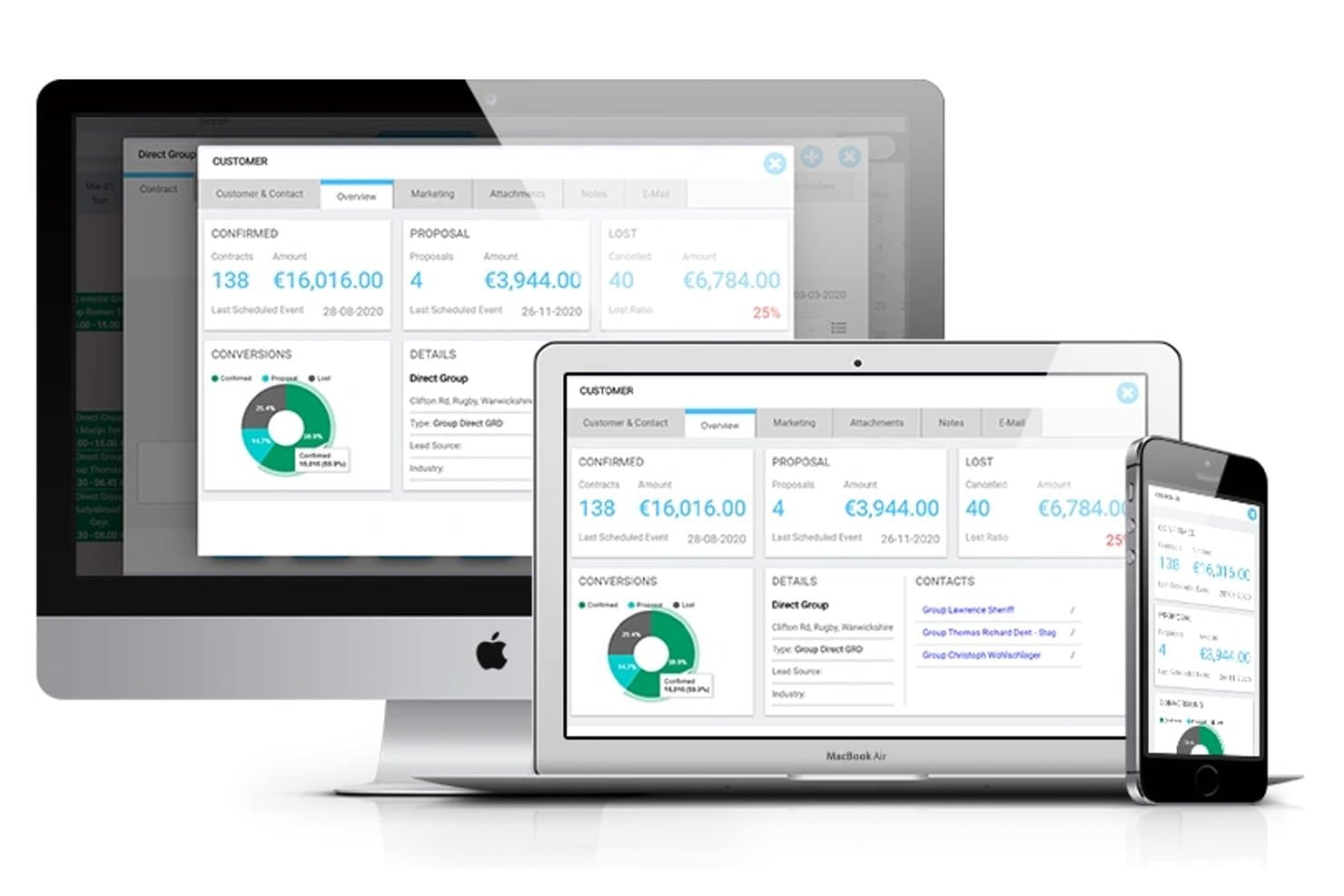
Pxier Event tracks confirmed, proposed, and lost contracts across devices. My Evaluation Score
- BEO & Proposal Generation
- Strong
- Catering Menu & F&B Management
- Adequate
- PMS & Hospitality Integrations
- Strong
- Sales Pipeline & Lead Tracking
- Adequate
- Group & Event Booking Management
- Adequate
- Function Space & Diary Management
- Strong
Pxier Event is a modular hotel sales and catering platform covering banquet and meeting room booking, BEO and proposal generation, drag-and-drop floor planning, lead tracking, and online event registration with built-in e-signatures and PMS integrations.
Who Is Pxier Event Best For?
Pxier Event is a strong fit for catering and events managers at small-to-mid-size hotels who need BEO generation, floor planning, and PMS integration without the cost of legacy enterprise platforms.
Why I Picked Pxier Event
I picked Pxier Event as one of the best because its drag-and-drop floor plan designer lets small event teams build custom room layouts, assign seating, and drop finished diagrams directly into client proposals, all without a legacy system's price tag. I also love that BEO generation is paired with built-in e-signatures, so a catering manager can move from layout to signed contract without switching tools.
Pxier Event Key Features
- Lead-to-booking conversion: Captures event enquiries from multiple sources, rates leads, and converts them to confirmed bookings in one click.
- Online event registration: Embeds branded registration pages directly on your website with integrated payments, RSVP automation, and waitlisting for overbooked dates.
- PMS two-way sync: Connects natively with Mews, Cloudbeds, Apaleo, Opera, RoomRaccoon, and Guestline to sync guest profiles and post event charges to folios.
- Digital signage integration: Displays real-time meeting room details on in-property screens, pulling data directly from the booking system.
Pxier Event Integrations
Pxier Event has seven documented native two-way PMS integrations, including Mews, Cloudbeds, Apaleo, Oracle OPERA, Lean, RoomRaccoon, and Guestline. It also offers an open API and marketplace availability through Oracle Cloud Marketplace and the Apaleo app store.
Pros and Cons
Pros:
- Support and onboarding receive strong user reviews
- BEOs include contracts and electronic signatures
- Drag-and-drop floor planning supports client proposals
Cons:
- Frequent logouts can erase unsaved work
- Reports use contract dates instead of event dates
Learn more about Pxier Event: Best for cloud access anywhere
- Free demo available
- Pricing upon request

Insta Event Management centralizes hotel sales with cloud access from any device. My Evaluation Score
- BEO & Proposal Generation
- Strong
- Catering Menu & F&B Management
- Adequate
- PMS & Hospitality Integrations
- Minimal
- Sales Pipeline & Lead Tracking
- Adequate
- Group & Event Booking Management
- Strong
- Function Space & Diary Management
- Strong
Insta Event Management centralizes sales workflows by aggregating web leads into one dashboard, letting your team easily prioritize and assign prospects. It enables complete access from any device, anywhere.
Why I picked Insta Event Management: It enables you to access the system from any device, providing flexibility for your team. Automated lead management helps prioritize and assign leads efficiently. The tool generates interactive web proposals with ease, enhancing client engagement. Electronic signature capabilities simplify contract processes, saving time for users.
Standout features & integrations:
Features include easy event management with tools for handling complex events and tracking inventory. The interactive function diary allows you to manage event schedules visually. Auto-generated banquet orders and customizable checks streamline your event planning.
Integrations include Salesforce, Google Calendar, Microsoft Outlook, QuickBooks, Eventbrite, Zoom, Stripe, PayPal, Mailchimp, and Constant Contact.
Pros and Cons
Pros:
- Lead-consolidated dashboard
- Interactive function diary
- Click-to-send BEOs
Cons:
- No deep analytics
- Proposal design might lag
- Limited third‑party integrations
Learn more about Insta Event Management:
How I Evaluate Hotel Sales and Catering Software
I split my evaluation into two layers: the core functionality every platform must have—like BEO generation, function space diaries, and PMS integration—and the factors that distinguish the best tools.
Core Functionality (Table Stakes For This List)
When I'm selecting tools for my list, I rank each one on a scale from 0 (does not offer the functionality) to 5 (excels in this area) for each core functionality listed below. Then, I calculate the tool's total score into a percentage. Each tool needs to achieve a minimum total score of 65% to be considered for inclusion.
- Group & Event Booking Management: I check whether you can build multi-day group blocks and event bookings in one record, with room pickup tracking and cutoff date management.
- Function Space & Diary Management: A visual booking diary with real-time availability and conflict detection matters here—like seeing a ballroom hold before a sales rep double-books it.
- BEO & Proposal Generation: I evaluate how each platform handles BEO creation, branded proposals, and contracts, including template flexibility and merge field support.
- Catering Menu & F&B Management: The tool should let your catering team build menus, assign packages to events, and adjust per-person pricing without jumping between modules.
- Sales Pipeline & Lead Tracking: I look for CRM-style account and opportunity tracking that follows a lead from initial RFP response through signed contract and post-event follow-up.
- PMS & Hospitality Integrations: Connectivity with your PMS is key—I evaluate whether the platform syncs room inventory and guest data with systems like Opera, Mews, or Cloudbeds.
Once I have a list of tools that meet this criteria, I consider what sets each platform apart.
Differentiating Factors (What Sets Vendors Apart)
Here's how I compare and contrast different vendors:
Standout Features
Multi-property management is a big differentiator—I look for platforms where a regional sales team can view availability, shift leads, and pull reports across an entire portfolio. Revenue and forecasting dashboards also matter. The best tools surface group pace data, lost business reasons, and catering revenue trends without custom report builds. I also evaluate how each platform handles inbound RFP automation, especially lead capture from sources like Cvent and automatic routing to the right sales manager.
Beyond Features
I consider how well a platform fits your property type—a boutique hotel has very different needs than a 500-room convention property with multiple ballrooms. Implementation timelines also weigh heavily, since migrating years of account history and traces from a legacy system like Delphi can take months with some vendors and weeks with others. Pricing structure matters too. I evaluate whether a vendor charges per property or per user, because a large sales team at a resort pays very differently under each model.
How to Choose Hotel Sales and Catering Software
It’s easy to get bogged down in long feature lists and complex pricing structures. To help you stay focused as you work through your unique software selection process, here’s a checklist of factors to keep in mind:
| Factor | What to Consider |
|---|---|
| FactorScalability | What to ConsiderWill the software grow with your business? Consider if it can handle increased bookings and events as you expand. Look for options that offer flexible plans or modules. |
| FactorIntegrations | What to ConsiderCan it connect with your existing tools like CRM or accounting software? Ensure the software supports key integrations to maintain smooth workflows. |
| FactorCustomizability | What to ConsiderDoes it allow you to tailor workflows and reports? Check if you can adjust settings to fit your specific processes without needing custom development. |
| FactorEase of use | What to ConsiderIs the interface intuitive for your team? Evaluate if minimal training is needed, and whether new users can quickly adapt to the system. |
| FactorImplementation and onboarding | What to ConsiderHow long will it take to get up and running? Look for platforms with straightforward setup processes, and consider the support available during implementation. |
| FactorCost | What to ConsiderHow does pricing align with your budget? Compare the total cost over time, including potential hidden fees or additional charges for extra features. |
| FactorSecurity safeguards | What to ConsiderAre your data and customer information protected? Investigate the software’s security measures, such as encryption and compliance with data protection regulations. |
| FactorSupport availability | What to ConsiderWhen can you access help if needed? Consider the vendor’s support hours, availability of live chat or phone support, and whether they offer dedicated account management for ongoing assistance. |
What Is Hotel Sales and Catering Software?
Hotel sales and catering software is a tool that helps manage and organize events, bookings, and catering services within the hospitality industry. It's used by hotel managers and event planners to handle operations and improve client satisfaction efficiently.
Features like booking management, event scheduling, and reporting help with organizing tasks, tracking progress, and analyzing performance. Overall, these tools enhance operational efficiency and improve guest experiences.
Features of Hotel Sales and Catering Software
When selecting hotel sales and catering software, keep an eye out for the following key features:
- Booking management: Streamlines the process of handling room and event reservations, ensuring efficient use of space and resources.
- Event scheduling: Allows you to organize and track multiple events, preventing overlaps and ensuring smooth operations.
- Customizable templates: Provides flexibility in creating reports, proposals, and other documents to match your specific needs and branding.
- Real-time analytics: Offers insights into sales and operational performance, helping you make informed decisions.
- Mobile access: Enables you to manage tasks and access information from anywhere, keeping your team connected on the go.
- Automated follow-up reminders: Ensures timely communication with clients, improving engagement and satisfaction.
- Centralized calendar: Helps track and coordinate schedules across teams, avoiding conflicts and improving efficiency.
- Integrated payment processing: Simplifies billing and payment collection, enhancing the client experience and speeding up transactions.
- Security safeguards: Protects sensitive data with encryption and compliance with data protection regulations, ensuring client trust.
- Reporting tools: Delivers detailed insights into various aspects of your operations, aiding in strategic planning and performance evaluation.
Benefits of Hotel Sales and Catering Software
Implementing hotel sales and catering software provides several benefits for your team and your business. Here are a few you can look forward to:
- Improved efficiency: Automating tasks like booking management and event scheduling saves time and reduces manual errors.
- Enhanced communication: Features like centralized calendars and automated follow-up reminders keep your team and clients informed and engaged.
- Better decision-making: Real-time analytics and reporting tools provide valuable insights into your operations, supporting strategic planning.
- Increased accessibility: Mobile access ensures you can manage tasks and access information from anywhere, keeping your operations flexible.
- Customization options: Customizable templates allow you to tailor documents and workflows to fit your specific business needs.
- Secure data handling: Security safeguards protect sensitive information, ensuring compliance with data protection regulations and building client trust.
- Faster transactions: Integrated payment processing streamlines billing and payment collection, improving cash flow and client satisfaction.
Costs and Pricing of Hotel Sales and Catering Software
Selecting hotel sales and catering software requires an understanding of the various pricing models and plans available. Costs vary based on features, team size, add-ons, and more. The table below summarizes common plans, their average prices, and typical features included in hotel sales and catering software solutions:
Plan Comparison Table for Hotel Sales and Catering Software
| Plan Type | Average Price | Common Features |
|---|---|---|
| Plan TypeFree Plan | Average Price$0 | Common FeaturesBasic booking management, limited event scheduling, and basic reporting. |
| Plan TypePersonal Plan | Average Price$10-$30/user/month | Common FeaturesEnhanced booking management, customizable templates, and mobile access. |
| Plan TypeBusiness Plan | Average Price$30-$60/user/month | Common FeaturesAdvanced event scheduling, real-time analytics, and integration with payment processing. |
| Plan TypeEnterprise Plan | Average Price$60-$100/user/month | Common FeaturesComprehensive reporting tools, advanced security safeguards, and full customization options. |
Hotel Sales and Catering Software FAQs
Here are some answers to common questions about hotel sales and catering software:
How does hotel software help with catering and event management?
Hotel sales and catering software combines catering solutions, catering systems, and event management software to handle group business and RFPs. Tools like Delphi let hoteliers manage menus, contracts, and events efficiently, improving sales and guest satisfaction.
How does hotel software improve sales and customer management?
Platforms integrate customer relationship management with the sales process, giving sales teams real-time data. Using data-driven insights, hotels can track pipelines, forecast demand, and boost conversions for events and catering.
How does hotel software connect to hotel operations?
Sales and catering platforms sync with property management systems to link bookings and guest rooms. Point of sale integration ensures catering charges flow smoothly, helping hoteliers manage events and billing without errors.
Can this software grow with my business?
Scalability is key if you expect your business to grow. Ensure the software can handle increased bookings and more complex events as your hotel expands. Check if the vendor offers scalable plans or modules that can be added as needed.
How do implementation and onboarding work?
Implementation and onboarding should be straightforward, with resources like training videos and interactive tours available. Assess the vendor’s support during this phase, including data migration assistance and live webinars, to ensure a smooth transition.
How does hotel software support revenue management?
Sales and catering platforms align revenue management with events to track profitability. Hoteliers adjust pricing, analyze demand, and ensure catering spaces boost revenue while maintaining guest satisfaction.