

10 Best Little Hotelier Alternatives for Hotel Management in 2026

Best Little Hotelier Alternatives Shortlist


The best Little Hotelier alternatives combine dependable reservation management, real-time OTA synchronization, flexible rate control, and support that matches your property’s size.
This guide compares hotel management software for independent hotels, inns, and growing groups, with attention to setup, guest workflows, revenue tools, pricing, and scalability. Use these comparisons to find a platform that fits your operation without adding unnecessary complexity.
What Is Little Hotelier?
Little Hotelier is a hotel management platform for small accommodation businesses, including inns, bed-and-breakfasts, and boutique hotels. It combines reservation management, a booking engine, channel management, and payment tools in one system.
The platform helps teams manage direct bookings, update availability across online travel agencies, and organize daily front-desk tasks. It suits properties seeking a simpler alternative to larger property management systems, while growing groups may need more advanced reporting or multi-property controls.
Compare the Best Little Hotelier Alternatives
Compare pricing and specs, side by side, for the Little Hotelier alternatives that made it onto my shortlist.
| Tool | Best For | Trial Info | Price | ||
|---|---|---|---|---|---|
| 1 | Best for AI-driven pricing at small properties | Free demo available | From $99/month | Website | |
| 2 | Best for multi-property OTA sync and rate control | 14-day free trial | Pricing upon request | Website | |
| 3 | Best for switching from a legacy PMS with no contract | Free demo available | Pricing upon request | Website | |
| 4 | Best for pay-as-you-go multi-property pricing | 14-day free trial | Pricing upon request | Website | |
| 5 | Best for budget-conscious independent hoteliers | 15-day free trial | Pricing upon request | Website | |
| 6 | Best for 24/7 US support and white-glove setup | Free demo available | Pricing upon request | Website | |
| 7 | Best for managing multiple properties at scale | Free demo available | Pricing upon request | Website | |
| 8 | Best for AI-driven revenue management | Free demo available | From $236/month | Website | |
| 9 | Best for multi-property groups and kiosk check-in | Free demo available | Pricing upon request | Website | |
| 10 | Best for GDPR-compliant multi-property groups | Free demo available | Pricing upon request | Website |
Why Trust Our Software Recommendations
Our team has been testing and reviewing software since 2012. As hospitality leaders ourselves, we know how difficult—and important—it is to choose the right software.
For this guide, we evaluated tools using hands-on testing and independent research, scoring tools using our selection criteria.
Our reviews reflect our human editorial judgment, not a sales pitch.
Little Hotelier Alternatives Reviews
Below are my summaries of the best Little Hotelier alternatives that made it onto my shortlist. My reviews cover the features, pricing, and best use cases of each hotel management platform to help you find the right one for you.
Best for AI-driven pricing at small properties
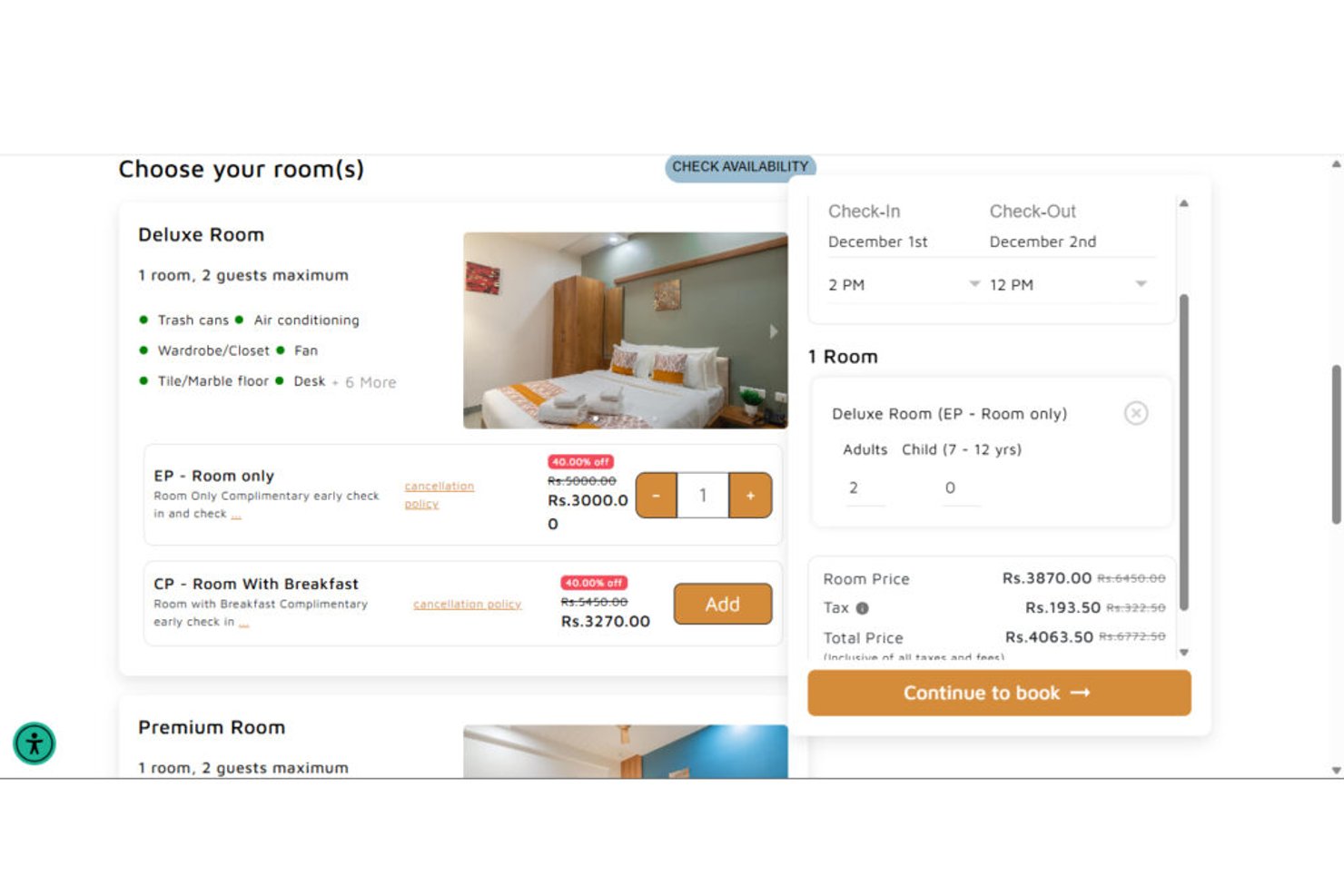
Stayflexi is an all-in-one hotel management platform for small properties that brings reservations, channel management, booking, point-of-sale, and revenue operations into one system.
Who Is Stayflexi Best For?
Stayflexi suits small hotels and independent properties that need AI-driven pricing alongside reservations, channel management, and point-of-sale tools.
Why Stayflexi Is a Good Little Hotelier Alternative
I picked Stayflexi as a Little Hotelier alternative because it’s best for AI-driven pricing at small properties. I use its AI pricing alongside reservation and channel management tools to adjust rates across connected booking channels. Its POS also keeps front-desk and on-property sales activity in the same system.
Stayflexi Key Features
- Online payment links: Send links for room charges and extras, including postpaid bookings.
- Self check-in and check-out: Issue digital keys through passwords or QR codes.
- Guest loyalty programs: Create promo codes, rewards, and discounts for returning guests.
- Multi-currency support: Accept payments in more than 50 currencies.
Stayflexi Integrations
Stayflexi offers 100+ integrations across OTAs, payment gateways, GDS and CRS platforms, guest messaging, accounting, ID verification, and door locks, including Airbnb, Booking.com, and Expedia. It also connects with Zapier.
Pros and Cons
Pros:
- Self-check-in supports lean front-desk teams
- Combines reservations, POS, and revenue tools
- AI pricing supports rate adjustments
Cons:
- Multi-calendar availability views need improvement
- Mobile app capabilities remain limited

Best for multi-property OTA sync and rate control
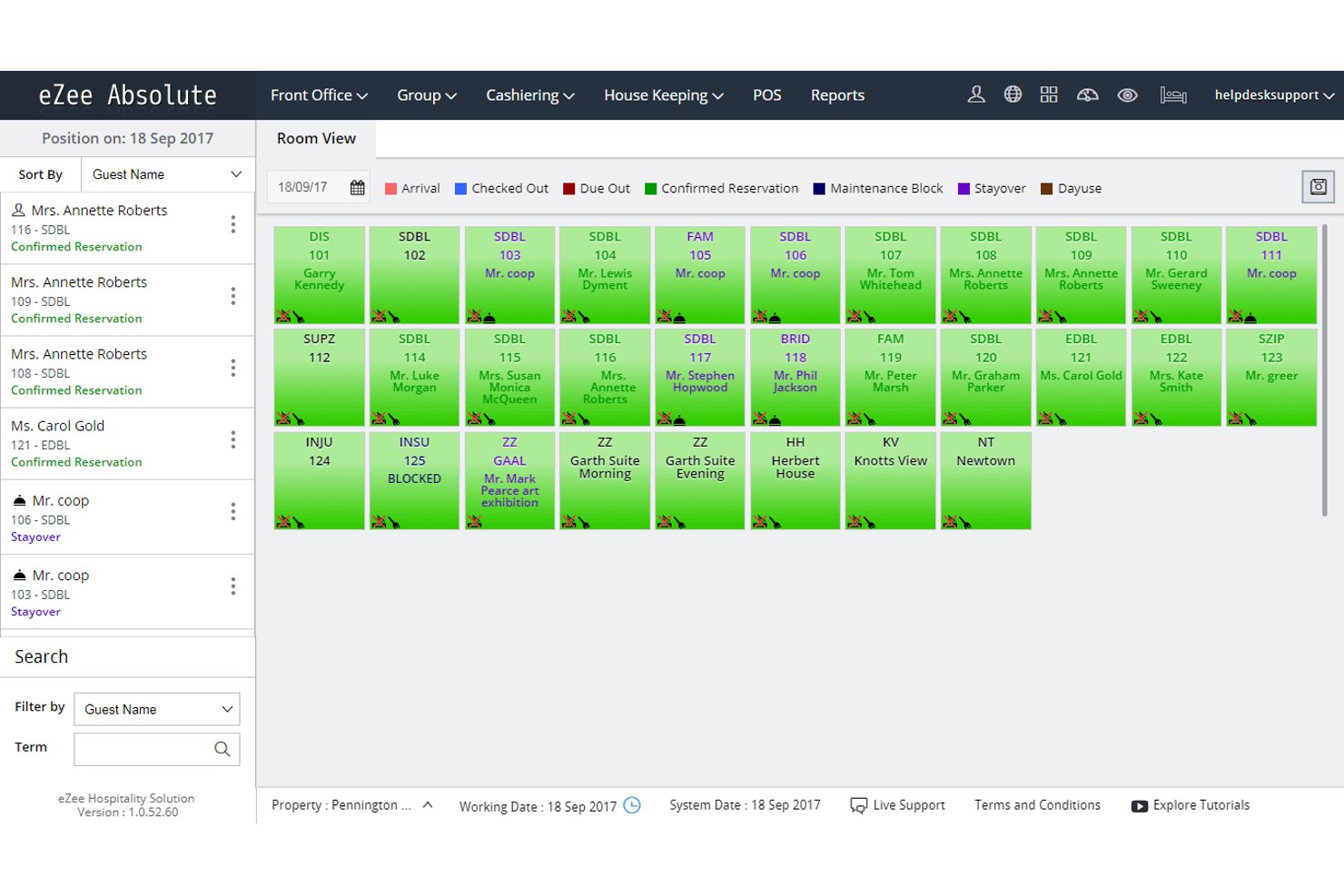
eZee Absolute is a cloud-based hotel management platform for independent properties and hotel groups that brings reservations, front-desk operations, housekeeping, and billing into one system.
Who Is eZee Absolute Best For?
eZee Absolute suits hotel groups and independent operators that need one platform to coordinate room inventory, rates, and OTA bookings across properties.
Why eZee Absolute Is a Good Little Hotelier Alternative
I picked eZee Absolute because its multi-property controls coordinate room inventory, rates, and OTA bookings across hotels. I use its reservations and front-desk modules to manage booking activity, while rate controls help keep pricing consistent as demand shifts. That makes it a strong choice for multi-property OTA sync and rate control.
eZee Absolute Key Features
- Housekeeping management: Assign room-cleaning tasks and track housekeeping status.
- Billing and invoicing: Create guest bills and record payments within the platform.
- Cloud-based access: Access hotel operations from supported devices with an internet connection.
- Operational reporting: Review property data through built-in hotel management reports.
eZee Absolute Integrations
eZee Absolute supports 130+ OTA connections through its channel manager, including native integrations with Booking.com, Expedia, and Agoda. It also provides an API for custom booking-engine integrations.
Pros and Cons
Pros:
- Front desk and housekeeping share one platform
- Responsive 24/7 support assists operational teams
- Multi-property controls coordinate shared room inventory
Cons:
- Mobile app has limited functionality
- Property switching can freeze reservations

innRoad
Best for switching from a legacy PMS with no contract
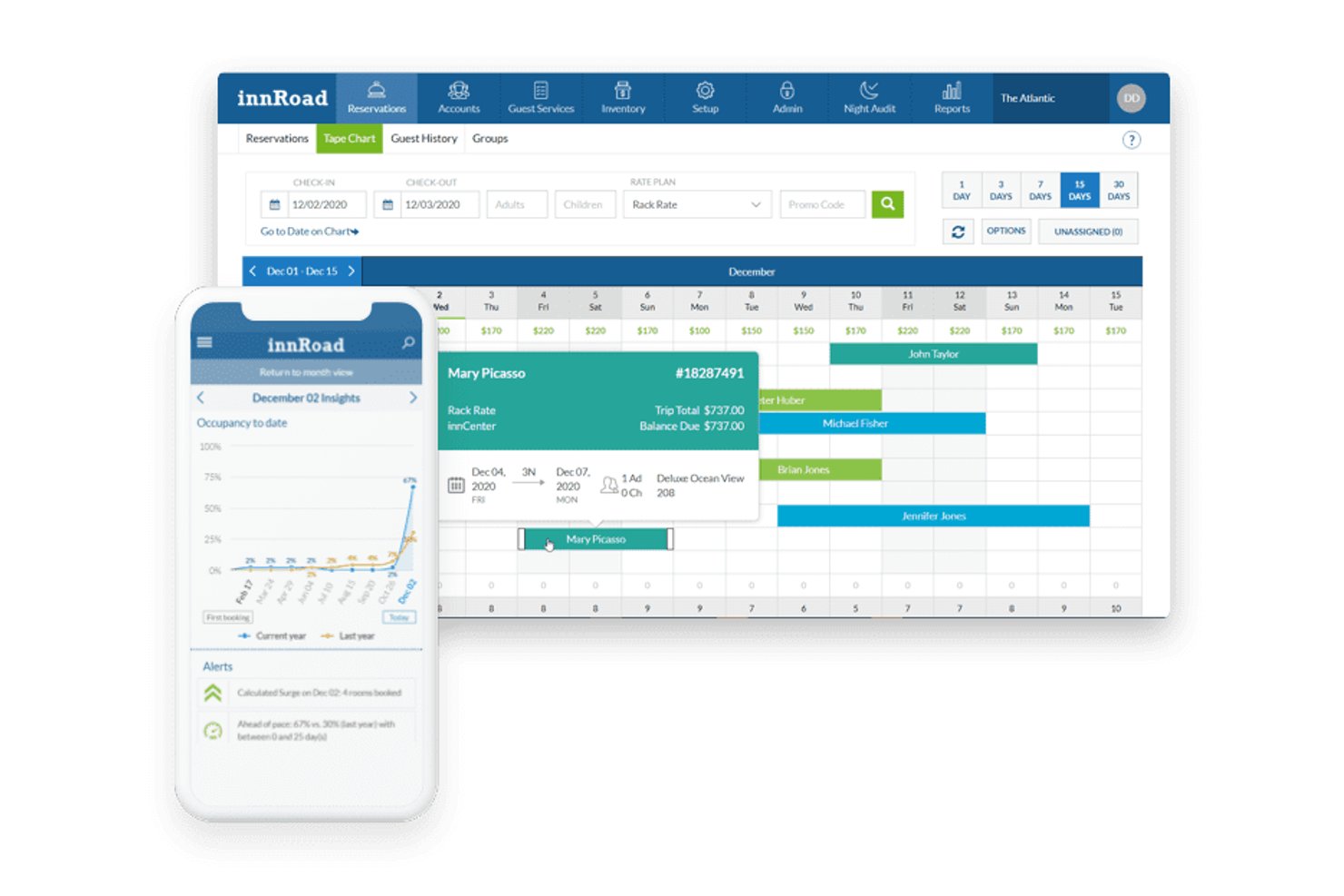
innRoad is a hotel PMS for independent properties that brings reservations, rates, inventory, housekeeping, reporting, payments, and OTA updates into one system, helping teams replace disconnected legacy tools.
Who Is innRoad Best For?
Independent hotel operators replacing a legacy PMS without committing to a long-term contract.
Why innRoad Is a Good Little Hotelier Alternative
I picked innRoad for switching from a legacy PMS with no contract. I use its reservation, rate, and inventory controls to replace disconnected tools, while housekeeping updates room status for front-desk teams. Its OTA updates and payment features keep booking and arrival information connected across daily operations.
innRoad Key Features
- Real-time reporting: Monitor revenue, occupancy, and maintenance data as it changes.
- Demand management: Set ADR, occupancy, and revenue goals for your property.
- Performance Digest: Review summarized property performance information.
- Surge Alerts: Receive alerts when demand increases.
innRoad Integrations
innRoad advertises 500+ partnerships and integrations, including Expedia and Booking.com, with connections to hundreds of OTA sites through its channel manager.
Pros and Cons
Pros:
- Demand tools track revenue targets
- Housekeeping tasks prioritize guest arrivals
- Responsive support resolves issues by phone
Cons:
- Payment processing favors Stripe setups
- Room assignment is required upfront

Beds24
Best for pay-as-you-go multi-property pricing
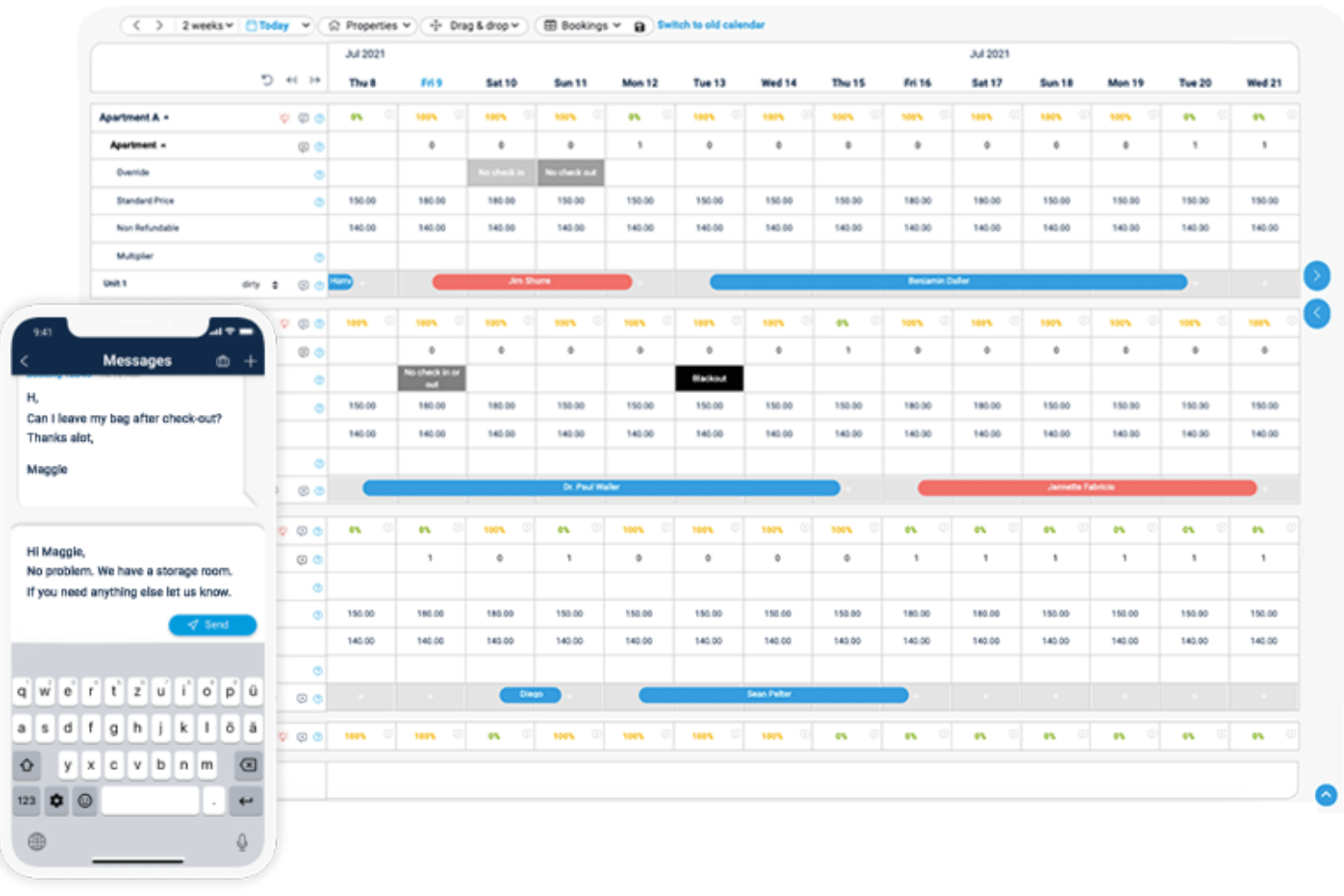
Beds24 is a cloud hospitality platform for hotels, B&Bs, hostels, vacation rentals, and property managers, combining property management, channel management, direct bookings, guest messaging, and payments.
Who Is Beds24 Best For?
Beds24 suits independent hoteliers and property managers overseeing multiple accommodations who need flexible, pay-as-you-go operations software.
Why Beds24 Is a Good Little Hotelier Alternative
I picked Beds24 because I can manage multiple properties with pay-as-you-go multi-property pricing. My team uses its property management and channel management tools to coordinate availability across accommodations. We also handle direct bookings, guest messages, and payments from the same platform.
Beds24 Key Features
- Yield optimizer: Adjusts prices based on availability.
- Smart dynamic calendar: Displays bookings with drag-and-drop scheduling.
- Invoice generation: Creates invoices for guest reservations.
- Mobile app: Shows availability, arrivals, departures, and messages.
Beds24 Integrations
Beds24 offers marketplace and channel integrations with Airbnb, Booking.com, Expedia, Vrbo, Xero, PayPal, Stripe, PriceLabs, Mailchimp, and Nuki. It provides an API for custom integrations and supports Make, including Zapier connections through Make.
Pros and Cons
Pros:
- Combines PMS, channels, and direct bookings
- Offers granular controls for complex inventory
- Handles multiple properties from one dashboard
Cons:
- Email-only support can delay urgent assistance
- Help documentation can lag interface changes

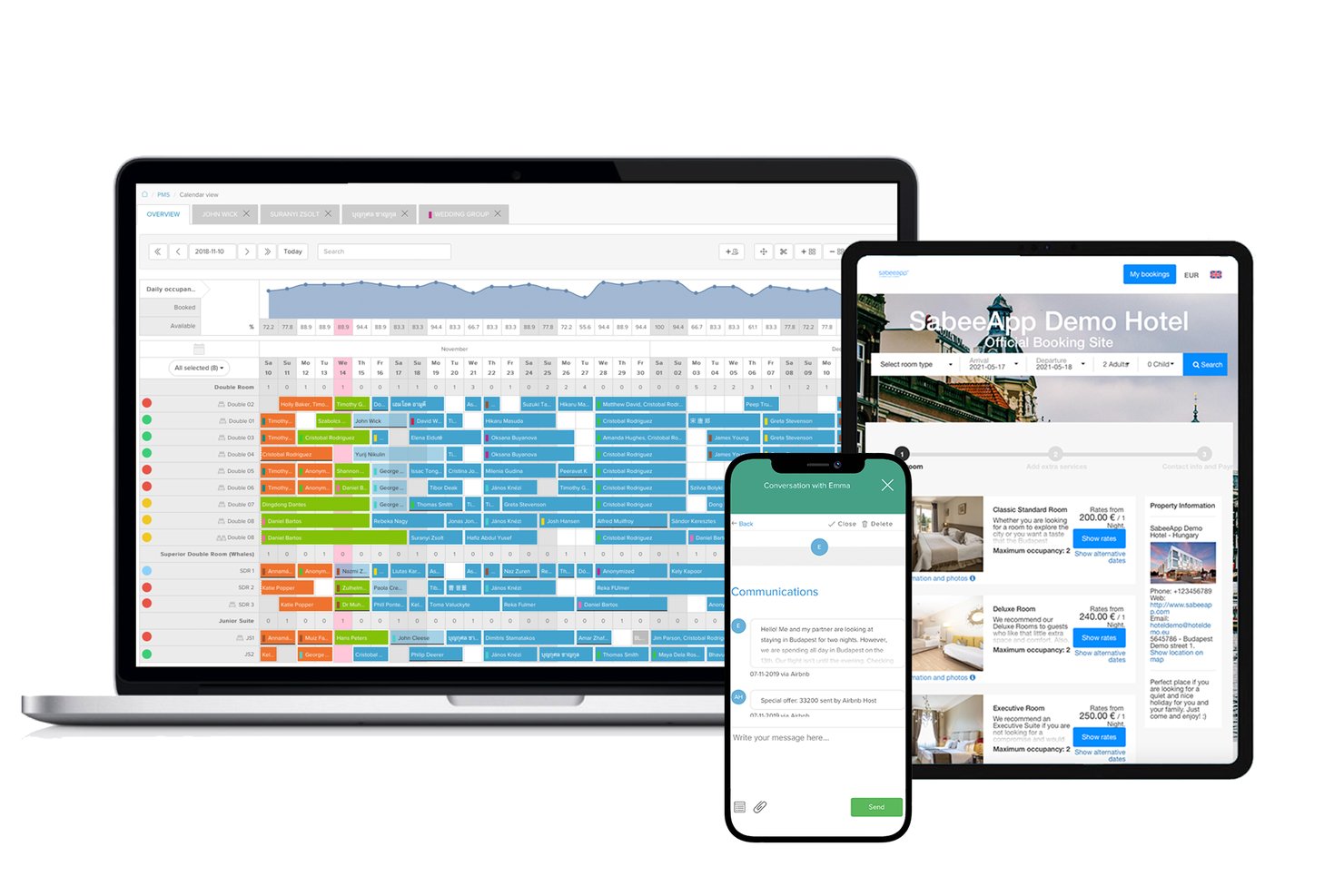
SabeeApp is an all-in-one hotel management platform for independent hotels, boutique properties, hostels, and vacation rentals, combining PMS, channel management, direct bookings, guest tools, payments, and housekeeping.
Who Is SabeeApp Best For?
SabeeApp suits independent hotel owners and operators managing boutique properties, hostels, or vacation rentals with limited software budgets.
Why SabeeApp Is a Good Little Hotelier Alternative
I picked SabeeApp for budget-conscious independent hoteliers because it combines PMS, channel management, and direct bookings in one platform. I use its booking engine for commission-free reservations and its channel manager to sync rates across Booking.com, Airbnb, Expedia, and other OTAs. Housekeeping task assignments also keep daily operations in one place.
SabeeApp Key Features
- Online check-in: Collect guest details and registration information before arrival.
- Payment handling: Process card payments, virtual cards, and pre-authorizations.
- Smart lock integrations: Connect Nuki and Salto locks for contactless entry.
- Inventory grid: Compare rate plans and adjust pricing from one view.
SabeeApp Integrations
SabeeApp offers 50+ marketplace integrations, including Stripe, Xero, RoomPrice Genie, PriceLabs, Google Free Booking Link, Mirai, Smartpricing, Nuki, Salto, and TTLock. It also provides an open API for custom integrations.
Pros and Cons
Pros:
- Housekeeping app coordinates live room statuses
- Responsive support resolves operational questions quickly
- Drag-and-drop calendar simplifies booking changes
Cons:
- Pre-payment invoices lack layout flexibility
- Custom reporting exports remain limited
- Mobile interface feels less functional
Best for 24/7 US support and white-glove setup
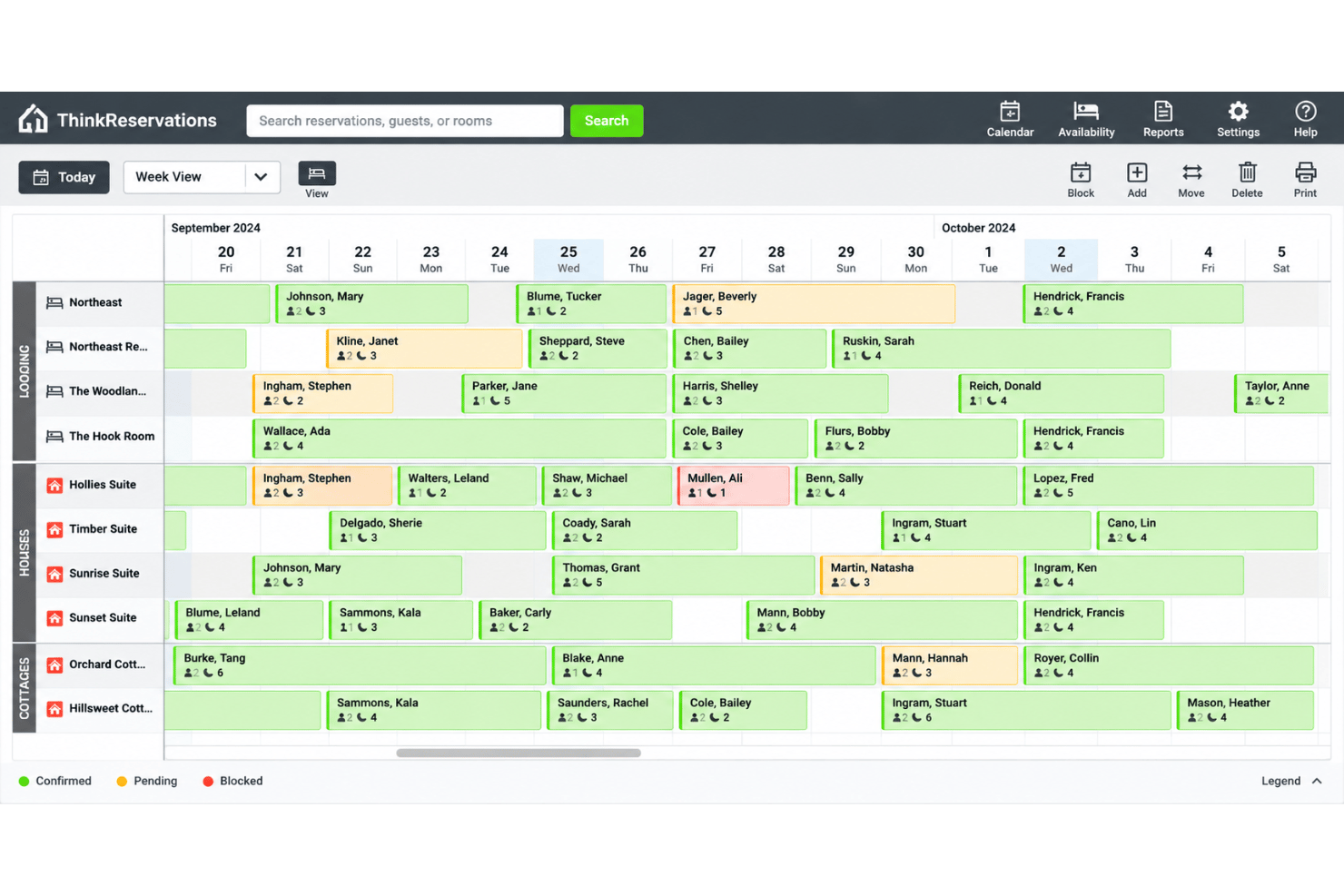
ThinkReservations is an all-in-one hotel management platform for independent inns and boutique properties, combining reservations, channel management, direct bookings, guest messaging, and operational tools in one system.
Who Is ThinkReservations Best For?
Independent inns and boutique hotels that want hands-on setup and 24/7 US support for reservations and daily operations.
Why ThinkReservations Is a Good Little Hotelier Alternative
I picked ThinkReservations because its 24/7 US support and white-glove setup give me hands-on help when configuring reservations and daily operations. I use its channel management and direct booking tools to coordinate availability across sales channels. Guest messaging keeps reservation details and pre-arrival communication in one platform.
ThinkReservations Key Features
- Property management system: Manage lodging operations and access business reports.
- Dynamic pricing: Adjust room rates based on demand and booking windows.
- Door lock integration: Connect door lock systems for automated guest access.
- Accounting tools: Run night audits and manage double-entry accounting workflows.
ThinkReservations Integrations
ThinkReservations supports 20+ booking-channel connections, including Booking.com, Expedia, Airbnb, Google Hotel Ads, and TripAdvisor. Its documented integration partners also include RemoteLock, OpenKey, PriceLabs, Revinate, and Lightspeed Restaurant.
Pros and Cons
Pros:
- Automated night audits and housekeeping tasks
- Hands-on setup and responsive issue resolution
- 24/7 live support with screen sharing
Cons:
- Mobile access has noted limitations
- Reporting lacks detailed customization

Best for managing multiple properties at scale
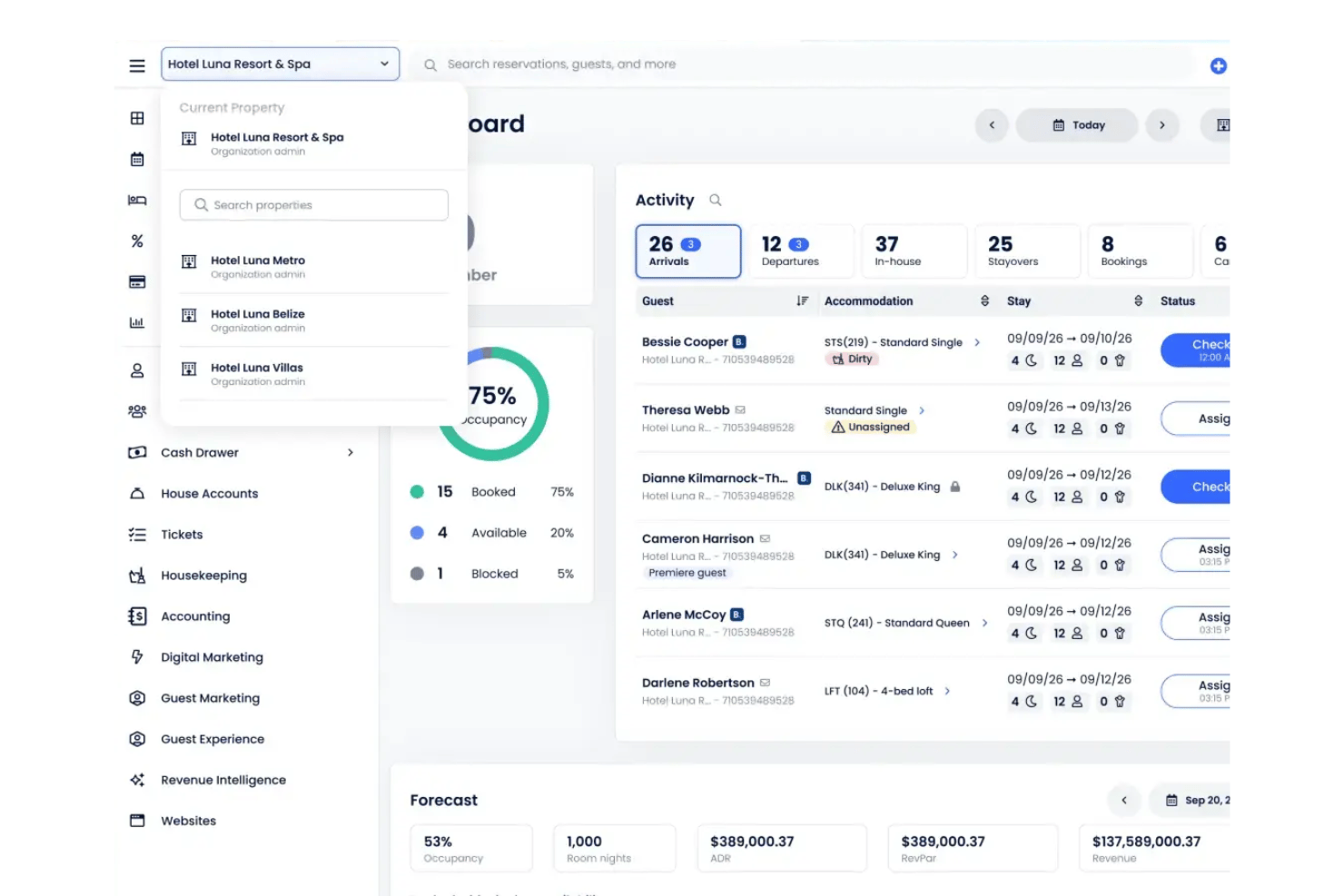
Cloudbeds is a cloud-based hotel management platform for hotels, hostels, inns, and multi-property groups that need connected reservations, distribution, guest profiles, housekeeping, and revenue operations.
Who Is Cloudbeds Best For?
Cloudbeds suits hotel groups managing multiple properties that need centralized reservations, distribution, guest profiles, and operational workflows.
Why Cloudbeds Is a Good Little Hotelier alternatives
I picked Cloudbeds because I use its centralized reservations and distribution tools to coordinate multiple properties from one platform. I can manage guest profiles across locations, assign housekeeping workflows, and review revenue operations without switching systems. That setup fits growing hotel groups better than a property-by-property approach.
Cloudbeds Key Features
- One-click check-in and check-out: Process arrivals and departures from the PMS.
- Group management: Handle room blocks, allotments, upsells, and group room lists.
- Spaces management: Manage meeting rooms, ballrooms, cabanas, and flexible booking durations.
- Payment processing: Accept cards, digital wallets, tap-to-pay, and Pay by Link.
Cloudbeds Integrations
Cloudbeds supports 450+ partner integrations through its Marketplace, including QuickBooks, Xero, Stripe, PayPal, SiteMinder, Revinate, Duve, Toast, Lightspeed, and HubSpot, plus Zapier. It also provides an open REST and GraphQL API with webhooks for custom integrations and multi-property workflows.
Pros and Cons
Pros:
- Group bookings support room blocks and allotments
- Housekeeping workflows connect front desk operations
- Centralized multi-property reservations and reporting
Cons:
- Onboarding can require substantial setup time
- Mobile app limits reservation management

Best for AI-driven revenue management
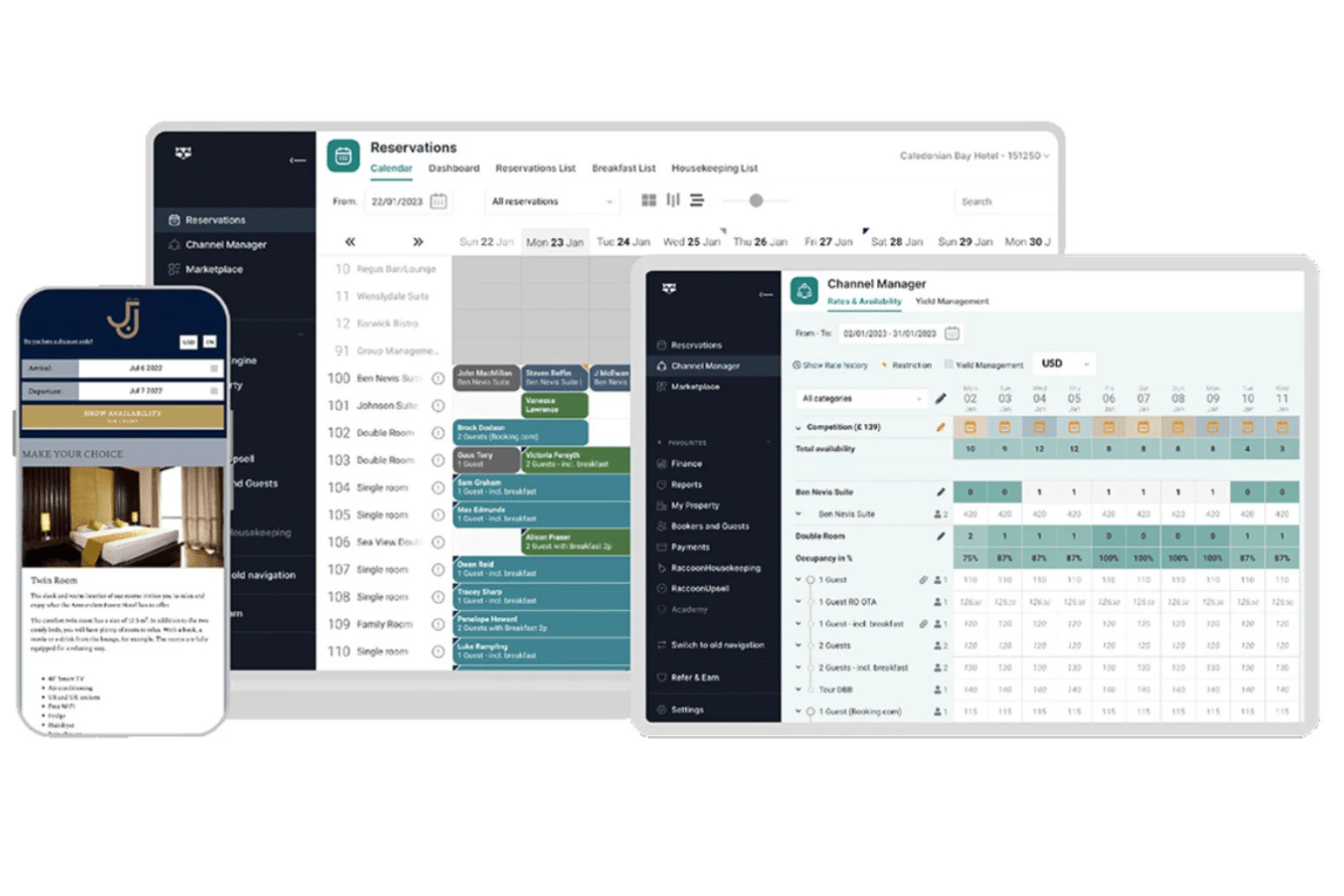
RoomRaccoon is a cloud-based hotel management platform for independent hotels, boutique properties, hostels, and multi-property groups that need one system for reservations, distribution, payments, guest experience, and daily operations.
Who Is RoomRaccoon Best For?
RoomRaccoon suits independent hotels and revenue teams that need AI-assisted pricing alongside reservations, distribution, and daily operations.
Why RoomRaccoon Is a Good Little Hotelier Alternative
I picked RoomRaccoon as one of the best Little Hotelier alternatives because it combines AI-assisted pricing with reservations and distribution tools. I use its revenue management capabilities to adjust pricing while keeping bookings and channel availability connected in one platform. That makes it a strong choice for independent properties seeking AI-driven revenue management.
RoomRaccoon Key Features
- Payment links: Send links for deposits, prepayments, and outstanding balances.
- Housekeeping workflows: Assign and track housekeeping and maintenance tasks.
- Booking engine: Add direct bookings to your hotel website.
- Digital ID scanning: Capture guest details during digital check-in.
RoomRaccoon Integrations
RoomRaccoon offers over 300 partner integrations, including Booking.com, Google Hotel Ads, and GuestRevu. It also connects with payment providers, accounting automation tools, and digital door locks.
Pros and Cons
Pros:
- Housekeeping updates appear in real time
- Unified reservations, payments, and guest communication
- AI-assisted pricing adjusts rates dynamically
Cons:
- Issue resolution varies across support cases
- Onboarding can take longer than expected

Best for multi-property groups and kiosk check-in
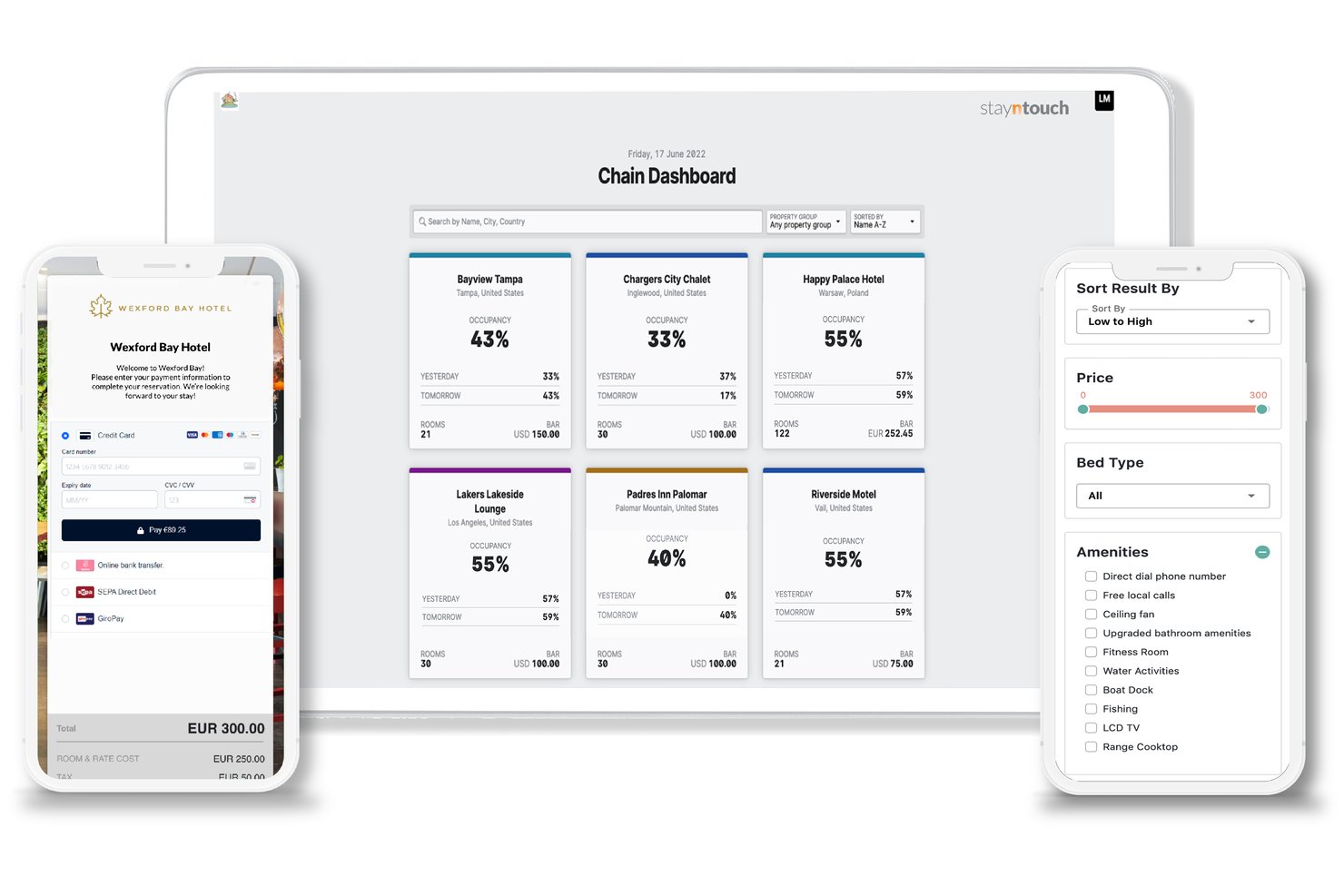
StayNTouch is a cloud-based hotel PMS for independent properties, multi-property groups, and management companies that centralizes front-desk operations, guest messaging, payments, and distribution.
Who Is StayNTouch Best For?
Hotel groups managing multiple properties can use StayNTouch to coordinate operations while offering guests self-service kiosk check-in.
Why StayNTouch Is a Good Little Hotelier Alternative
I picked StayNTouch because its cloud-based PMS supports multi-property hotel operations from one system. I use its centralized front-desk tools to coordinate reservations, payments, and guest messaging across properties. Its kiosk check-in also gives guests a self-service arrival option while staff handle exceptions and service requests.
StayNTouch Key Features
- Booking engine: Supports direct guest bookings through the hotel website.
- Channel manager: Distributes rates and availability across online travel agencies.
- Upsells and packages: Adds attribute-based offers and packages to reservations.
- Housekeeping automation: Supports automated tasks for housekeeping and accounting teams.
Stayntouch Integrations
Stayntouch supports 1,400+ direct and indirect integrations, including Toast POS, SiteMinder, Duetto, Salesforce through HAPI, Salto, and TrustYou. Its open APIs, webhooks, and sandbox environments support custom integrations and real-time data exchange.
Pros and Cons
Pros:
- Housekeeping automation connects front-desk workflows
- Centralized controls suit multi-property hotel groups
- Kiosk check-in supports guest self-service arrivals
Cons:
- Mobile workflows trail desktop functionality
- Some reports require extra configuration

HotelFriend
Best for GDPR-compliant multi-property groups
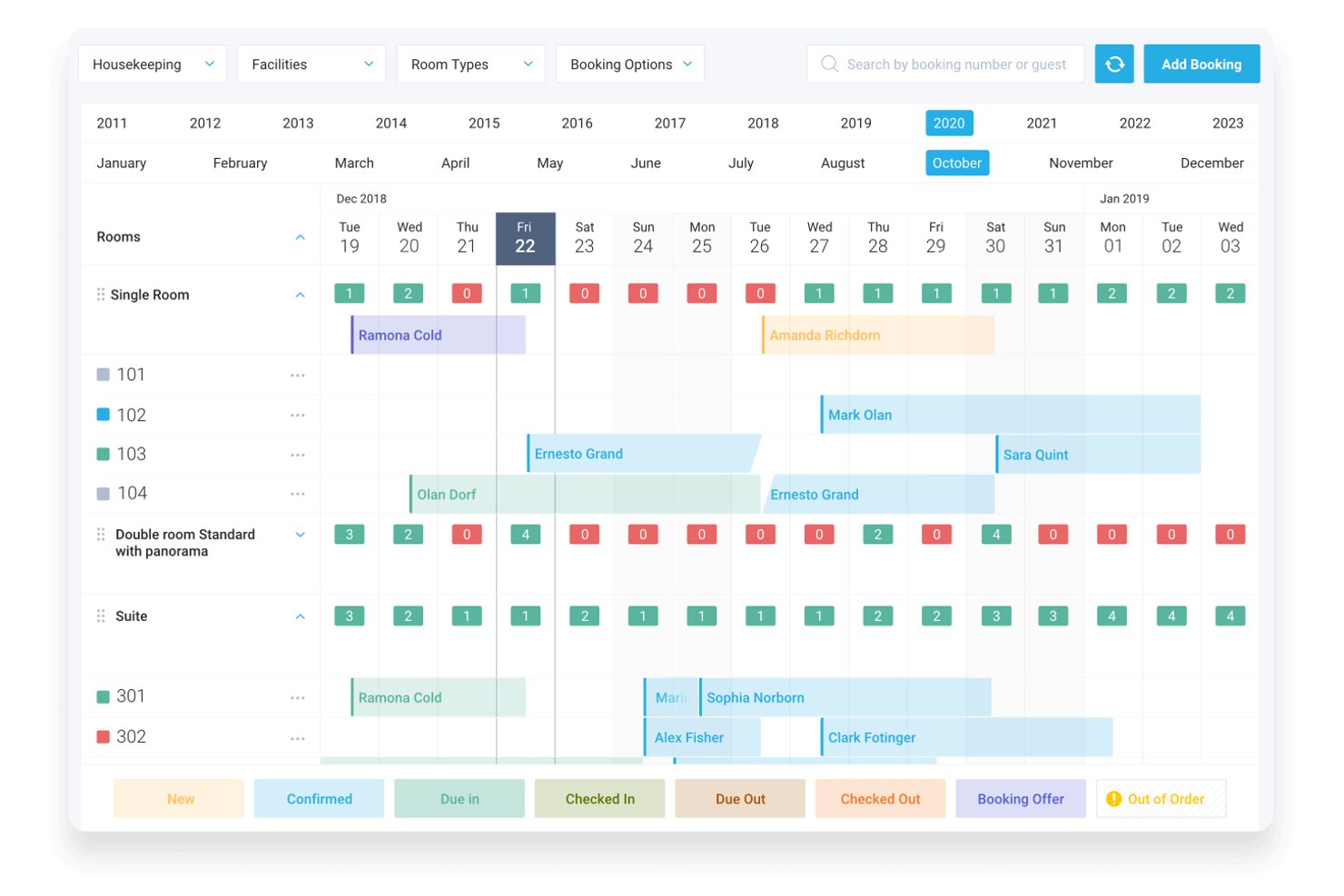
HotelFriend is a hotel management platform for independent properties and groups, combining PMS, channel management, booking, guest messaging, payments, and reporting to coordinate operations and replace disconnected systems.
Who Is HotelFriend Best For?
HotelFriend suits multi-property hotel groups that need GDPR-compliant guest, booking, and operational management in one platform.
Why HotelFriend Is a Good Little Hotelier Alternatives
I picked HotelFriend because its GDPR-compliant setup fits multi-property groups managing guest data across locations. I use its PMS and channel management tools to coordinate reservations, room availability, and operational records from one system. Guest messaging and payment features keep each property’s stay workflow connected.
HotelFriend Key Features
- Digital check-in and check-out: Guests can complete arrival and departure steps online.
- Housekeeping scheduling: Assign rooms and track housekeeping status in real time.
- Revenue management: Set dynamic pricing based on demand and room availability.
- Performance dashboards: Monitor occupancy, revenue, ADR, and RevPAR.
HotelFriend Integrations
HotelFriend documents 500+ available integrations, including Booking.com, Expedia, Airbnb, Google Hotel, DATEV, and Fiskaly TSS. It also supports legacy and third-party API integrations for custom connections.
Pros and Cons
Pros:
- Handles group and corporate bookings centrally
- Supports GDPR-focused multi-property operations
- Centralizes reservations, housekeeping, payments, and messaging
Cons:
- Initial setup takes time to configure
- Users report slow performance and bugs
Other Little Hotelier Alternatives
Here are some additional Little Hotelier alternatives that didn’t make it onto my shortlist, but are still worth checking out:
- Clock PMS+
For independent hotels managing multiple OTAs
- roommaster
For independent hoteliers scaling up
- Sirvoy
For no-contract, per-room PMS pricing
- ResNexus
For B&Bs switching from a complex PMS
- WebRezPro
For hotels with multi-property group bookings
- Hotelogix
For guest messaging and direct bookings
- Mews
For hotels outgrowing entry-level PMS tools
- Preno
For small properties with built-in dynamic pricing
- eviivo
For mixed B&B and rental portfolio sync
- Amenitiz
For direct bookings with zero OTA commission


How I Evaluate Little Hotelier Alternatives
I split evaluation into two layers: core functionality every tool must offer—like real-time OTA sync and central reservation management—and differentiators like revenue management or multi-property dashboards. Core functionality is the baseline; differentiators separate the right fit from the rest.
Core Functionality (Table Stakes for This List)
When I'm selecting tools for my list, I rank each one on a scale from 0 (does not offer the functionality) to 5 (excels in this area) for each core functionality listed below. I then calculate the tool's total score into a percentage, and use that to help me assess its overall fit for the list.
- Channel manager integration: I check how many OTAs each tool syncs with and whether two-way updates happen in real time to prevent double bookings.
- Central reservation management: Each tool should let you view, edit, and cancel bookings from every connected channel in one calendar or dashboard.
- Booking engine: I look for a brandable website widget that captures direct reservations, supports upsells, and works well on mobile devices.
- Front desk operations: The tool should cover check-in/check-out workflows and housekeeping status so your team isn't toggling between separate systems.
- Rate and inventory control: I evaluate whether you can set dynamic rate plans, minimum-stay restrictions, and room-type-level inventory adjustments by date range.
- Payment processing: I look for integrated payment collection, deposit handling, and automated folio generation rather than offline tracking workarounds.
Once I have a list of tools that meet the criteria, I consider what sets each platform apart.
Differentiating Factors (What Sets Vendors Apart)
Here's how I compare and contrast different vendors:
Standout Features
I look for a multi-property dashboard that lets hotel groups control rates, availability, and staffing from a single login. A mobile housekeeping app also matters—staff can update room status on the floor instead of radioing the front desk. I evaluate revenue management intelligence, too, checking whether demand-based pricing suggestions help smaller properties compete with chain-level yield strategies.
Beyond Features
Pricing transparency matters—I check whether a vendor charges per room, per property, or adds fees for each connected OTA channel. A small B&B testing a new system needs month-to-month flexibility, while a growing group needs volume pricing that doesn't spike with each added property. I also evaluate onboarding support, since switching from a legacy PMS mid-season can mean lost reservations if the vendor doesn't offer guided data migration. Around-the-clock support is non-negotiable; an overbooking at 2 a.m. can't wait for business hours. Finally, I look at open API access, because properties that rely on separate accounting or guest messaging tools need connections that won't break as they scale.
Why Look For Little Hotelier Alternatives?
While Little Hotelier is a good choice for small accommodation businesses, some users seek alternative solutions for specific operational needs. You might be looking for a Little Hotelier alternative because…
- You need multi-property controls from one dashboard
- Your group requires deeper reporting for commercial decisions
- You want more flexible pricing as your portfolio grows
- Your team needs open API access for connected systems
- You need workflows designed for larger front-desk teams
If any of these sound like you, you’ve come to the right place. My list contains several hotel management software options that are better suited for teams facing these challenges with Little Hotelier and looking for alternative solutions.
Little Hotelier Key Features
Here are some of the key features of Little Hotelier, to help you contrast and compare what alternative solutions offer:
Centralized reservation calendar: View bookings, room availability, and guest details in one synchronized calendar. Edit or cancel reservations from a single workspace, reducing the need to check separate OTA dashboards during daily front-desk work.
Channel manager: Connect your property with more than 450 booking channels, including major OTAs. The system updates rates, availability, and reservations across connected channels, helping prevent conflicting inventory and duplicate bookings.
Direct booking engine: Add a branded booking widget to your website or social media pages. Guests can view room details, select dates, add extras, apply promo codes, and pay online without completing an OTA reservation.
Front desk operations: Manage arrivals, departures, room assignments, and reservation changes from the front desk system. Staff can use the same workspace to review guest information and coordinate routine check-in and check-out tasks.
Housekeeping management: Track room status for check-ins, check-outs, and stayovers. Housekeeping teams can update cleaning progress, while front-desk staff can see which rooms are ready for incoming guests.
Rate and inventory controls: Adjust room rates, availability, restrictions, and inventory from a central grid. You can create date-based pricing rules and allocate rooms across channels according to demand and distribution needs.
Payment processing: Collect online payments, deposits, and refunds through the platform. Payment tools connect reservations with transaction details, giving staff a clearer record for confirming bookings and handling guest charges.
Guest communications: Personalize and automate messages related to reservations, arrivals, and departures. Scheduled emails can provide confirmation details, property information, and check-in instructions without requiring staff to send every message manually.
Mobile property management: Use the mobile app to review reservations, access guest details, receive booking notifications, and send emails. This gives owners and staff access to core property information while away from the front desk.
Costs and Pricing of Little Hotelier Alternatives
Selecting Little Hotelier alternatives requires understanding the pricing models and plans available. Costs vary based on features, property size, add-ons, and support requirements. The table below summarizes common plans, average price ranges, and typical features included in hotel management software solutions.
Plan Comparison Table for Little Hotelier Alternatives
| Plan Type | Average Price | Common Features |
|---|---|---|
| Free Plan | $0 | Basic reservation calendar, limited booking management, and self-service support. |
| Personal Plan | $50-$100/property/month | Central reservation management, booking engine, channel manager, and email support. |
| Business Plan | $100-$300/property/month | Multi-channel distribution, payment processing, housekeeping tools, and reporting. |
| Enterprise Plan | $300-$1,000+/property/month | Multi-property controls, advanced reporting, API access, and dedicated support. |