
El software de mantenimiento hotelero resuelve el problema de realizar el seguimiento, programar y priorizar las reparaciones, lo que permite a tu equipo centrarse en ofrecer una experiencia impecable a los huéspedes. Gestionar averías inesperadas y problemas de cumplimiento puede ser complicado, pero las herramientas de inventario adecuadas ayudan a prevenir costosos tiempos de inactividad y prolongar la vida útil de tus activos.
En este artículo, comparo y analizo las mejores herramientas de mantenimiento hotelero para ayudarte a tomar una decisión de compra.
Por qué confiar en nuestras recomendaciones de software
6,700+
Reviews
20
Industry experts
16+
Evaluation factors
14
Years
Nuestro equipo lleva probando y evaluando software desde 2012. Como líderes del sector hotelero, sabemos lo difícil —y lo importante— que es elegir el software adecuado.
Para esta guía, evaluamos las herramientas mediante pruebas prácticas e investigación independiente, puntuando las herramientas según nuestros criterios de selección.
Nuestras reseñas reflejan nuestro criterio editorial humano, no un discurso de ventas.
Tabla comparativa de software de mantenimiento hotelero
Esta tabla comparativa resume los detalles de precios de mis principales selecciones de software de mantenimiento hotelero:
| Tool | Best For | Trial Info | Price | ||
|---|---|---|---|---|---|
| 1 | La mejor opción para la supervisión centralizada del mantenimiento | Prueba gratuita de 30 días + demostración gratuita disponible | Un único plan a $35 por usuario/mes (facturado anualmente) | Website | |
| 2 | La mejor opción para programar el mantenimiento preventivo | Demostración gratuita disponible | Precios disponibles previa solicitud | Website | |
| 3 | Ideal para órdenes de trabajo basadas en fotos y sincronización con PMS | Prueba gratuita de 7 días + demostración gratuita disponible | Precio disponible previa solicitud | Website | |
| 4 | Ideal para la planificación de CapEx y del ciclo de vida de los activos de una cartera hotelera | No disponible | Precio previa solicitud | Website | |
| 5 | La mejor opción para coordinar tareas de equipos multilingües | Demostración gratuita disponible | Precios bajo solicitud | Website | |
| 6 | Ideal para inspecciones sin conexión y seguimiento de activos mediante códigos QR | Demostración gratuita disponible | Precio bajo solicitud | Website | |
| 7 | Ideal para la seguridad y el ahorro de costos laborales liderados por el equipo de limpieza | Demostración gratuita disponible | Precio bajo solicitud | Website | |
| 8 | Ideal para la planificación del ciclo de vida de activos impulsada por IA | Demostración gratuita disponible | Precios bajo solicitud | Website | |
| 9 | La mejor opción para el mantenimiento hotelero exclusivo con tarifa fija | Demostración gratuita disponible | Precios disponibles previa solicitud | Website | |
| 10 | La mejor opción para automatizar las órdenes de trabajo desde el huésped hasta el técnico | Demo gratuita disponible | Desde $1.25/habitación/mes (facturado anualmente) | Website |


Análisis de los mejores programas de mantenimiento hotelero
 La mejor opción para la supervisión centralizada del mantenimiento
- Prueba gratuita de 30 días + demostración gratuita disponible
- Un único plan a $35 por usuario/mes (facturado anualmente)
Visit WebsiteCustomer Rating:4.8/5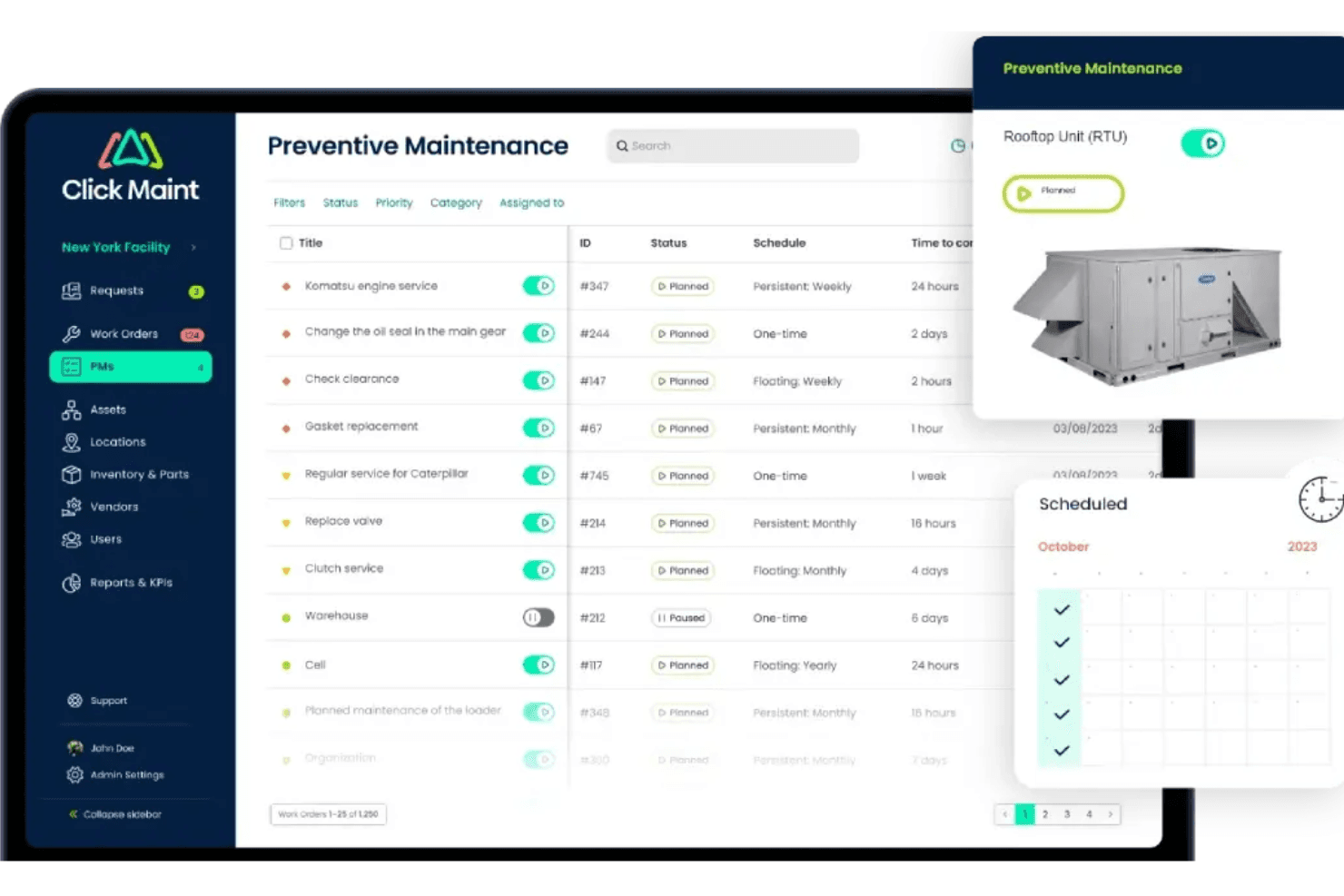
La programación del mantenimiento preventivo de Click Maint CMM garantiza revisiones y reparaciones oportunas, lo que mejora la satisfacción de los huéspedes. Click Maint CMMS es una plataforma de gestión del mantenimiento hotelero que centraliza las órdenes de trabajo, la programación del mantenimiento preventivo, el seguimiento de activos y la gestión de tareas de los técnicos en operaciones de una o varias propiedades.
¿Para quién es más adecuado Click Maint CMMS?
Click Maint CMMS es adecuado para hoteles independientes y pequeños grupos hoteleros que necesitan una forma sencilla y asequible de gestionar el mantenimiento sin contar con un equipo de TI especializado.
Por qué elegí Click Maint CMMS
Elegí Click Maint CMMS porque reúne todas las partes móviles del mantenimiento hotelero en un solo lugar, exactamente lo que requiere una supervisión centralizada. Me gusta cómo la vista de progresión del mantenimiento preventivo y el panel del calendario ofrecen una visión en tiempo real de las próximas tareas de servicio de HVAC, ascensores y piscinas en toda la propiedad. Las solicitudes de los huéspedes enviadas mediante código QR se convierten automáticamente en órdenes de trabajo priorizadas, por lo que nada se pierde entre la recepción y el departamento de ingeniería.
Características principales de Click Maint CMMS
- Panel para varias propiedades: Consulta y compara la actividad de mantenimiento, los indicadores clave de rendimiento y las órdenes de trabajo abiertas de todas las propiedades desde una única interfaz centralizada.
- Escaneo de activos mediante códigos QR: Cada activo recibe un código QR único que los técnicos pueden escanear desde el móvil para consultar registros, registrar problemas o cerrar órdenes de trabajo en el momento.
- Gestión de inventario y repuestos: Controla los niveles de existencias, configura alertas de cantidades bajas, asocia repuestos con órdenes de trabajo y gestiona proveedores preferentes con sus plazos de entrega.
- Listas de comprobación de inspección personalizadas: Crea listas de comprobación digitales para inspecciones de habitaciones, controles de seguridad y calibración de equipos, con archivos fotográficos adjuntos y almacenamiento de registros de cumplimiento.
Integraciones de Click Maint CMMS
Las integraciones nativas no están documentadas con claridad. Click Maint admite conexiones mediante API y middleware para crear integraciones personalizadas con herramientas de ERP, CRM, HRIS, contabilidad, IoT, BAS y comunicación.
Pros and Cons
Pros:
- Centraliza las órdenes de trabajo y el mantenimiento preventivo
- Los códigos QR agilizan la gestión de activos
- La aplicación móvil facilita las actualizaciones sobre la marcha
Cons:
- No cuenta con un portal específico para solicitudes de los huéspedes
- La automatización de flujos de trabajo y los paneles personalizados son limitados
Learn more about Click Maint CMMS: La mejor opción para programar el mantenimiento preventivo
- Demostración gratuita disponible
- Precios disponibles previa solicitud
Visit WebsiteCustomer Rating:4.8/5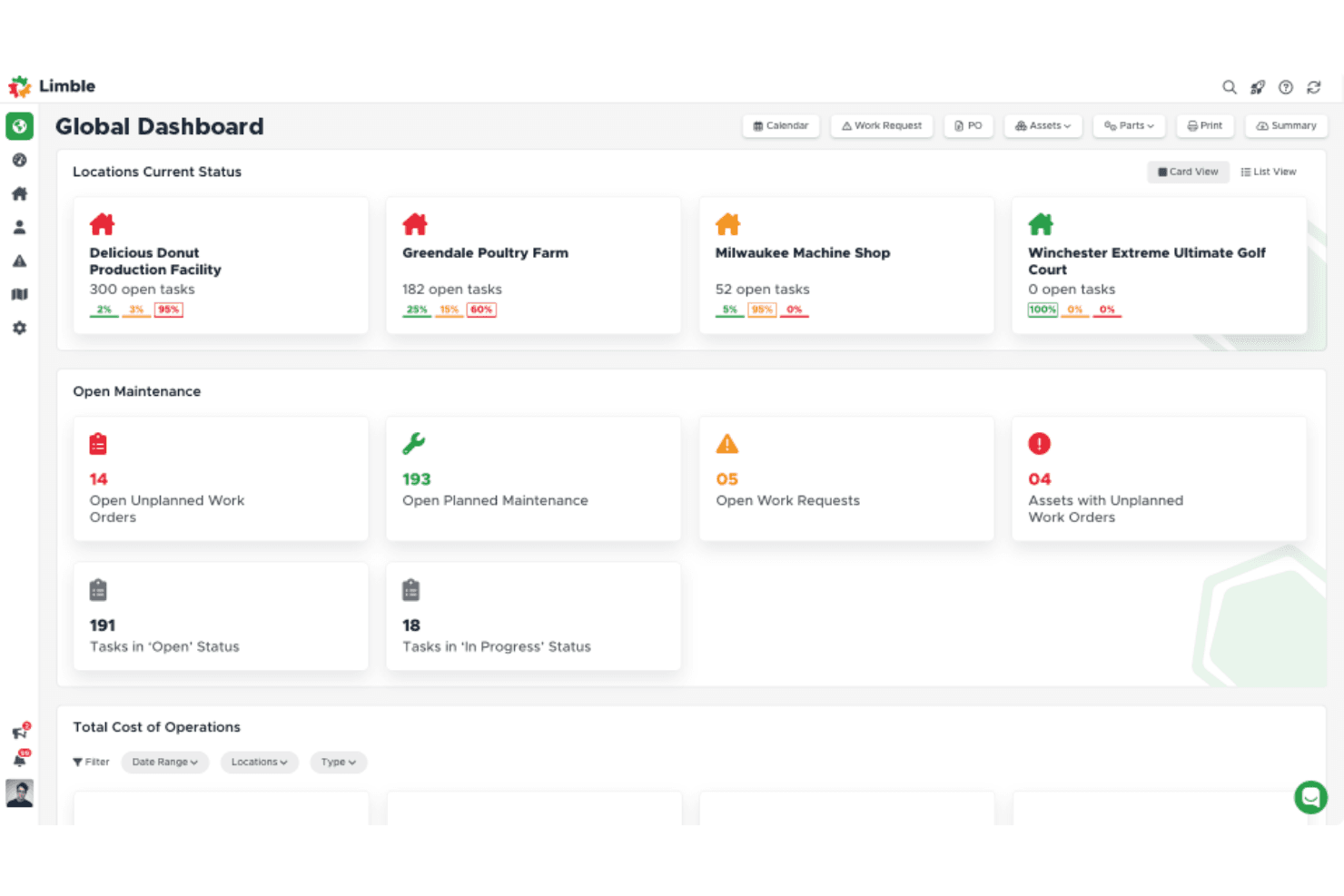
Limble proporciona operaciones de mantenimiento, incluidos datos en tiempo real sobre el estado de las órdenes de trabajo, las condiciones de los activos y las métricas de rendimiento. Limble es una plataforma de GMAO diseñada en torno a la programación del mantenimiento preventivo, la gestión de órdenes de trabajo, el seguimiento de activos y los flujos de trabajo de técnicos móviles, con supervisión del estado basada en IoT y herramientas de inspección preparadas para el cumplimiento normativo.
¿Para quién es más adecuado Limble?
Limble es una opción ideal para los equipos de ingeniería y mantenimiento de hoteles que desean un enfoque estructurado y basado en la programación para mantener los sistemas de climatización, ascensores, piscinas y otros equipos esenciales en una o varias propiedades.
Por qué elegí Limble
Limble ocupa un lugar destacado en mi lista porque su motor de mantenimiento preventivo es realmente de primera categoría. Me gusta especialmente el Generador de mantenimiento preventivo impulsado por IA, que analiza los manuales de los activos y genera automáticamente programas de mantenimiento para equipos como unidades de climatización, sistemas de piscinas y ascensores. Combinado con activadores basados en calendarios, medidores y condiciones mediante IoT, mi equipo puede mantener los sistemas hoteleros esenciales conforme a la programación sin tener que crear manualmente cada tarea desde cero.
Características principales de Limble
- Portal de solicitudes de trabajo mediante códigos QR: Los huéspedes y el personal pueden enviar solicitudes de mantenimiento escaneando un código QR, sin necesidad de iniciar sesión, con compatibilidad para adjuntar fotografías y utilizar la geolocalización.
- Gestión de proveedores y contratistas: Realiza un seguimiento de las certificaciones de los proveedores, gestiona órdenes de compra y admite flujos de trabajo de aprobación personalizados para socios externos de mantenimiento.
- Listas de comprobación digitales de inspección: Las listas personalizables con lógica condicional activan automáticamente órdenes de trabajo correctivas cuando un elemento de inspección no supera la revisión.
- Aplicación móvil multilingüe: La aplicación para iOS y Android admite más de 12 idiomas, incluidos español, francés y árabe, para equipos de mantenimiento hotelero diversos.
Integraciones de Limble
Entre las integraciones documentadas se incluyen AssetWatch, Augury, Monnit, Samsara, VibeCloud, Slack, Google Calendar, Microsoft 365 Calendar, QuickBooks Online y ArcGIS Online. La API REST abierta de Limble admite conexiones personalizadas con sistemas PMS, ya que no se indican integraciones nativas con sistemas PMS hoteleros.
Pros and Cons
Pros:
- Los programas de mantenimiento preventivo se generan automáticamente a partir de los manuales
- Las solicitudes mediante códigos QR permiten enviarlas desde las habitaciones
- La aplicación móvil multilingüe admite equipos diversos
Cons:
- No incluye funciones integradas para coordinar el servicio de limpieza
- La integración con sistemas PMS requiere trabajo de desarrollo personalizado
Learn more about Limble: Ideal para órdenes de trabajo basadas en fotos y sincronización con PMS
- Prueba gratuita de 7 días + demostración gratuita disponible
- Precio disponible previa solicitud
Visit WebsiteCustomer Rating:4.7/5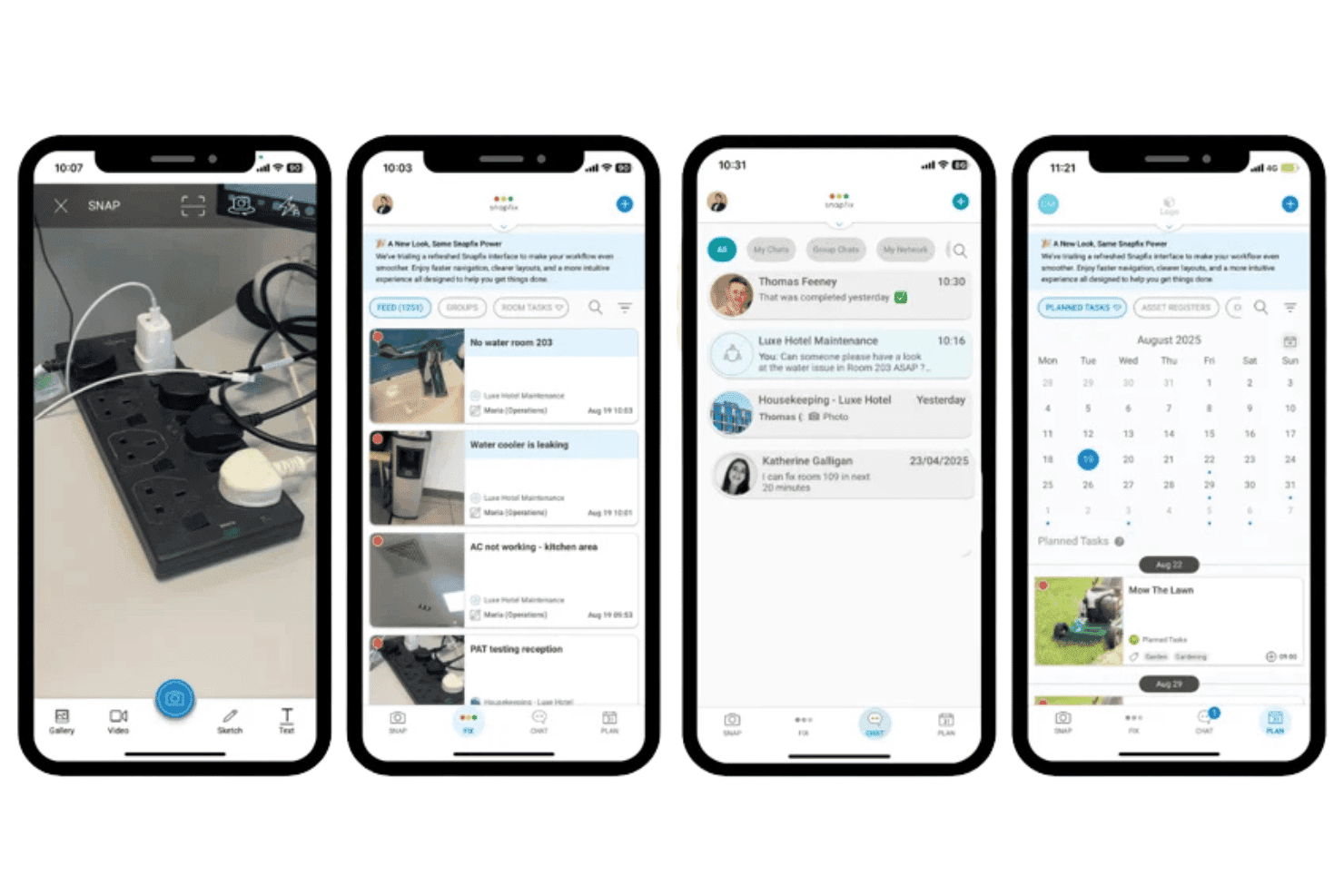
Snapfix permite a los equipos hoteleros registrar problemas de mantenimiento, asignar reparaciones, chatear y planificar tareas. Snapfix es un software de mantenimiento hotelero basado en órdenes de trabajo con fotos y vídeos, con módulos específicos para la programación del mantenimiento preventivo, el seguimiento de activos, las inspecciones de cumplimiento y la gestión del servicio de limpieza impulsada por IA.
¿Para quién es más adecuado Snapfix?
Snapfix es una opción muy adecuada para los equipos de operaciones e ingeniería hotelera que buscan una plataforma de mantenimiento centrada en dispositivos móviles y que el personal de primera línea pueda utilizar realmente sin una formación exhaustiva.
Por qué elegí Snapfix
Snapfix se ha ganado un lugar en mi lista de favoritos porque las órdenes de trabajo basadas en fotos son realmente fundamentales para su funcionamiento, no una función añadida posteriormente. El personal puede registrar un elemento averiado haciendo una foto y enviándola en tres segundos, y la tarea se asigna directamente al técnico adecuado. También me gusta que la sincronización con el PMS alimente el panel de limpieza con IA cada mañana, generando automáticamente las limpiezas de salidas y estancias prolongadas a partir de los datos de reservas en tiempo real, de modo que los supervisores no tengan que crear manualmente las listas de habitaciones.
Funciones principales de Snapfix
- Seguimiento de tareas mediante semáforo: El sistema de estados codificado por colores (rojo, amarillo y verde) ofrece a cada departamento una visibilidad instantánea del progreso de las órdenes de trabajo sin tener que abrir un informe aparte.
- Verificación mediante etiquetas inteligentes NFC: El personal toca las etiquetas NFC de los activos o las ubicaciones para confirmar la finalización de las tareas en el lugar, creando un registro de auditoría con marca de tiempo y resistente a manipulaciones.
- Módulo Comply para inspecciones de seguridad contra incendios: Programa rondas de inspección de incendios recurrentes con listas de comprobación personalizadas, firmas digitales y evidencias fotográficas registradas para auditorías normativas.
- Panel de control de cartera de múltiples propiedades: Consulta los volúmenes de órdenes de trabajo, las tasas de finalización y el estado de cumplimiento de todas las propiedades desde un único panel centralizado.
Integraciones de Snapfix
Snapfix ofrece más de 17 integraciones nativas con PMS, incluidas Oracle Opera Cloud, Cloudbeds, Guestline, StayNTouch, Maestro PMS, RMS Cloud, Agilysys y Hotelogix. También se conecta con Acutrace, admite el inicio de sesión único mediante Microsoft Azure, Google y Apple, y proporciona una API abierta para integraciones personalizadas.
Pros and Cons
Pros:
- Las órdenes de trabajo se crean al instante mediante fotos o vídeos
- La sincronización con el PMS impulsa el panel de limpieza basado en IA
- El estado mediante semáforo muestra el progreso de las tareas en tiempo real
Cons:
- No incluye herramientas de seguimiento de piezas ni de inventario
- La aplicación puede consumir mucha batería con un uso intensivo
Learn more about Snapfix: Ideal para la planificación de CapEx y del ciclo de vida de los activos de una cartera hotelera
- No disponible
- Precio previa solicitud
Visit WebsiteCustomer Rating:4.3/5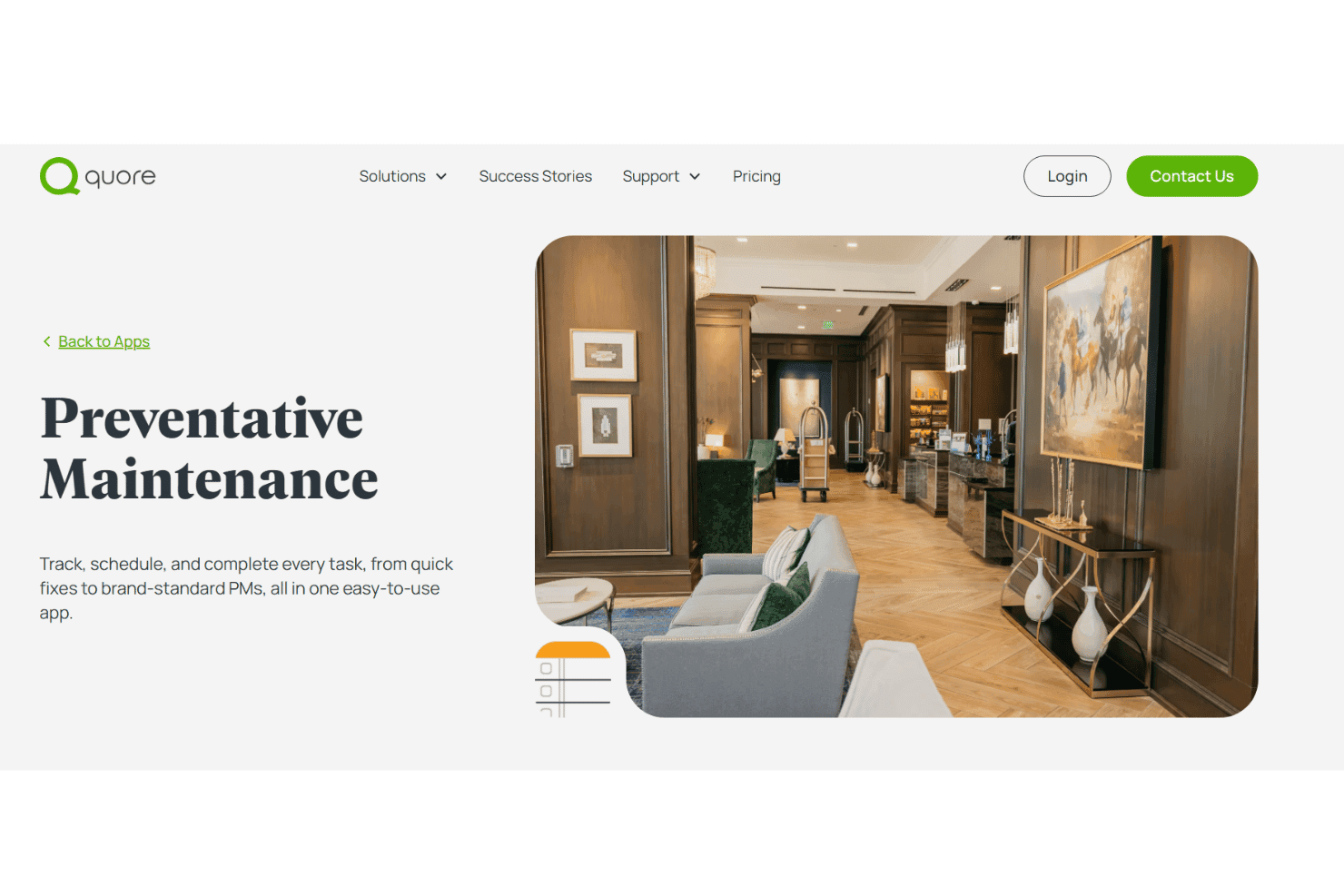
Quore gestiona las órdenes de trabajo hoteleras, el mantenimiento preventivo, los activos, las inspecciones y la planificación de CapEx. Quore es una plataforma de operaciones y mantenimiento hotelero basada en flujos de trabajo de ingeniería, que combina órdenes de trabajo, programación del mantenimiento preventivo, seguimiento de activos, planificación de CapEx, inspecciones y coordinación del servicio de limpieza en un único sistema.
¿Para quién es más adecuado Quore?
Quore es una opción ideal para empresas de gestión hotelera con múltiples propiedades que necesitan visibilidad centralizada sobre los ciclos de vida de los activos, las previsiones de CapEx y el cumplimiento de las normas de ingeniería en toda su cartera.
Por qué elegí Quore
Quore ocupa un lugar en mi lista de opciones principales por la importancia que concede a la planificación de activos a largo plazo, un aspecto que la mayoría de las herramientas de mantenimiento hotelero trata como algo secundario. Me gusta especialmente que el módulo de CapEx permita a los equipos de ingeniería prever las sustituciones de equipos con hasta 15 años de antelación, comparar ofertas y realizar el seguimiento de los flujos de aprobación en un solo lugar. Si a esto le añadimos un registro de inventario que almacena los datos de garantía, los números de serie y el historial completo de servicio de cada activo, obtenemos un verdadero sistema de gestión del ciclo de vida.
Principales funciones de Quore
- Calendario de mantenimiento preventivo: Una herramienta de programación visual que muestra automáticamente las tareas recurrentes de mantenimiento preventivo en las categorías de Seguridad de vida, Edificio, Mecánica y Habitaciones.
- Panel de nivel corporativo: Una vista a nivel de cartera que realiza el seguimiento del cumplimiento del mantenimiento preventivo, las principales quejas, los costes de resolución y los tiempos de respuesta de satisfacción de los huéspedes en todas las propiedades.
- Aplicación móvil multilingüe: Aplicaciones nativas para iOS y Android disponibles en 22 idiomas, que permiten a los diversos equipos de ingeniería y limpieza trabajar en su idioma preferido.
- Registro de lecturas diarias: Una herramienta de seguimiento con marca de tiempo para las lecturas de medidores, calderas y productos químicos de piscinas, que genera datos históricos de tendencias para inspecciones y cumplimiento.
Integraciones de Quore
Quore documenta 13 integraciones, entre ellas IHG Concerto, choiceADVANTAGE powered by SkyTouch, HotelKey, Akia, Canary Technologies, Kipsu, Medallia Concierge, Revinate, Saba y Whistle for Cloudbeds. La conectividad con Cloudbeds se realiza mediante Whistle for Cloudbeds.
Pros and Cons
Pros:
- Plataforma todo en uno para las operaciones hoteleras
- Incluye la gestión del ciclo de vida de los activos y la previsión de CapEx
- La aplicación multilingüe es compatible con diversos equipos hoteleros
Cons:
- No dispone de un portal de solicitudes de mantenimiento para huéspedes
- Carece de integraciones directas con las principales plataformas PMS
Learn more about Quore: La mejor opción para coordinar tareas de equipos multilingües
- Demostración gratuita disponible
- Precios bajo solicitud
Visit WebsiteCustomer Rating:4.5/5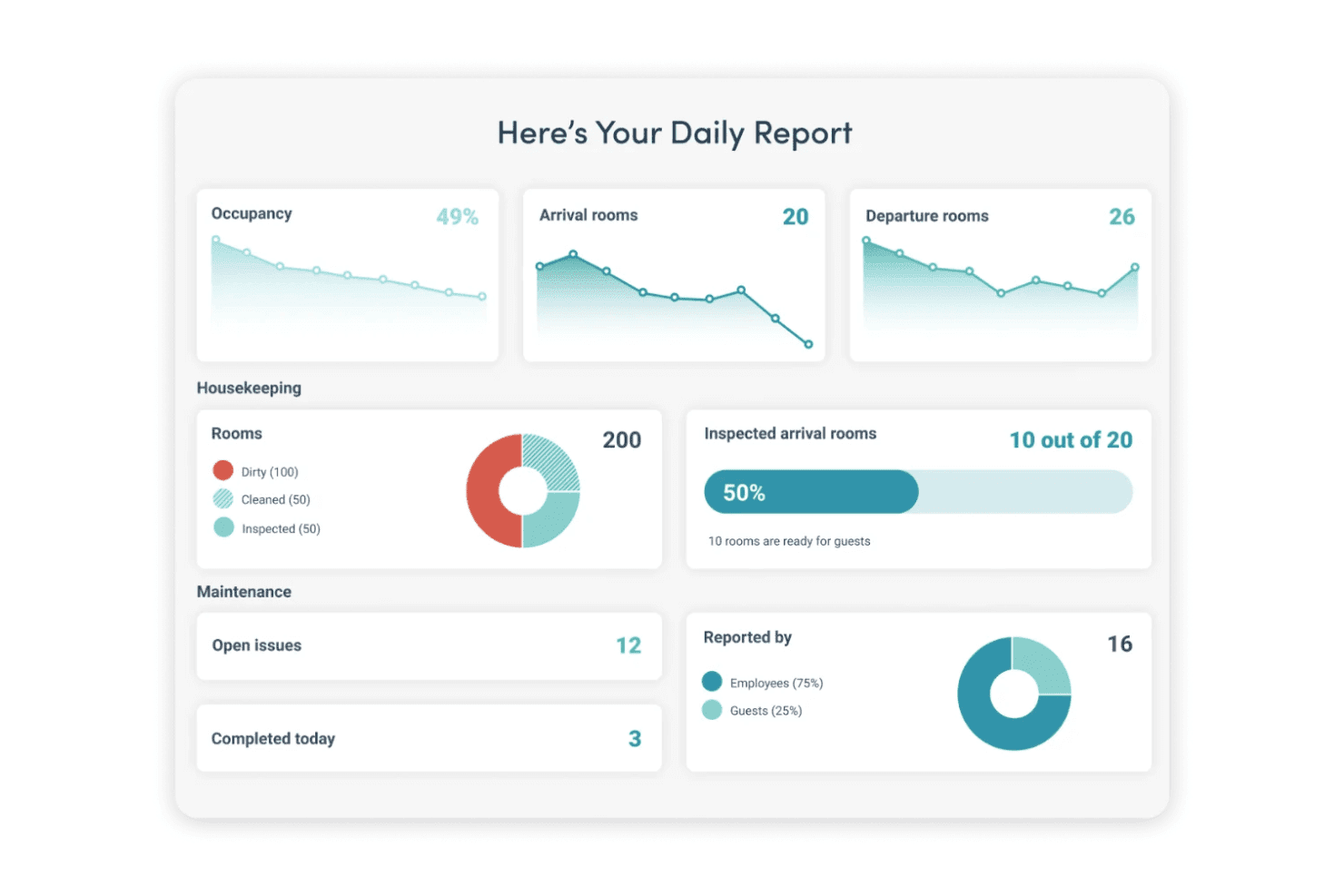
Flexkeeping coordina el mantenimiento hotelero, las inspecciones y las órdenes de trabajo de reparación. Flexkeeping es una plataforma de operaciones hoteleras diseñada para equipos de hoteles que combina la gestión de órdenes de trabajo de mantenimiento, la coordinación del servicio de limpieza, las inspecciones y el seguimiento de tareas entre departamentos en un único sistema pensado para dispositivos móviles.
¿Para quién es más adecuada Flexkeeping?
Flexkeeping es una opción excelente para grupos hoteleros y establecimientos medianos y grandes con equipos de primera línea multilingües que necesitan coordinar el mantenimiento y el servicio de limpieza entre distintas barreras lingüísticas sin complicaciones.
Por qué elegí Flexkeeping
Elegí Flexkeeping como una de las mejores opciones por la forma en que gestiona la coordinación multilingüe de tareas, algo que no he visto igualado en ningún otro producto de esta categoría. Flexie AI permite que cualquier miembro del personal cree una orden de trabajo por voz en su idioma nativo y luego la traduzca automáticamente a más de 240 idiomas al instante, de modo que un empleado de limpieza que informe sobre un elemento averiado no necesita que un supervisor transmita la solicitud. La sincronización entre departamentos envía entonces esa tarea al equipo de mantenimiento en tiempo real, cerrando la brecha entre las plantas sin una sola llamada telefónica.
Características principales de Flexkeeping
- Constructor de flujos de trabajo sin código: Crea flujos de trabajo de tareas automatizados mediante activadores del PMS en tiempo real, como el estado de huésped VIP, el código de tarifa y la duración de la estancia, sin necesidad de desarrolladores.
- Prueba fotográfica: Los técnicos adjuntan fotos directamente al cerrar una orden de trabajo, creando un registro visual con marca de tiempo del trabajo completado.
- Registros de activos mediante códigos QR: Escanea códigos QR en los equipos para registrar visitas, confirmar la finalización del mantenimiento preventivo y consultar el historial del activo en el momento.
- Panel de análisis para múltiples establecimientos: Supervisa los KPI de limpieza y mantenimiento de toda tu cartera desde una única vista consolidada.
Integraciones de Flexkeeping
Flexkeeping ofrece más de 14 integraciones nativas con PMS, incluidos Mews, OPERA, Cloudbeds, Apaleo, Shiji, RMS Cloud, Protel, SIHOT y RoomRaccoon. También se integra con Canary, Duve, Hoteza, Akia y otras plataformas orientadas a los huéspedes.
Pros and Cons
Pros:
- Creación y traducción de tareas multilingües mediante IA
- La automatización de flujos de trabajo sin código agiliza los procesos de mantenimiento
- Sincronización de tareas entre departamentos en tiempo real
Cons:
- Sin portal para que los huéspedes soliciten mantenimiento
- Sin mantenimiento predictivo ni activadores de IoT
Learn more about Flexkeeping: Ideal para inspecciones sin conexión y seguimiento de activos mediante códigos QR
- Demostración gratuita disponible
- Precio bajo solicitud
Visit WebsiteCustomer Rating:4.6/5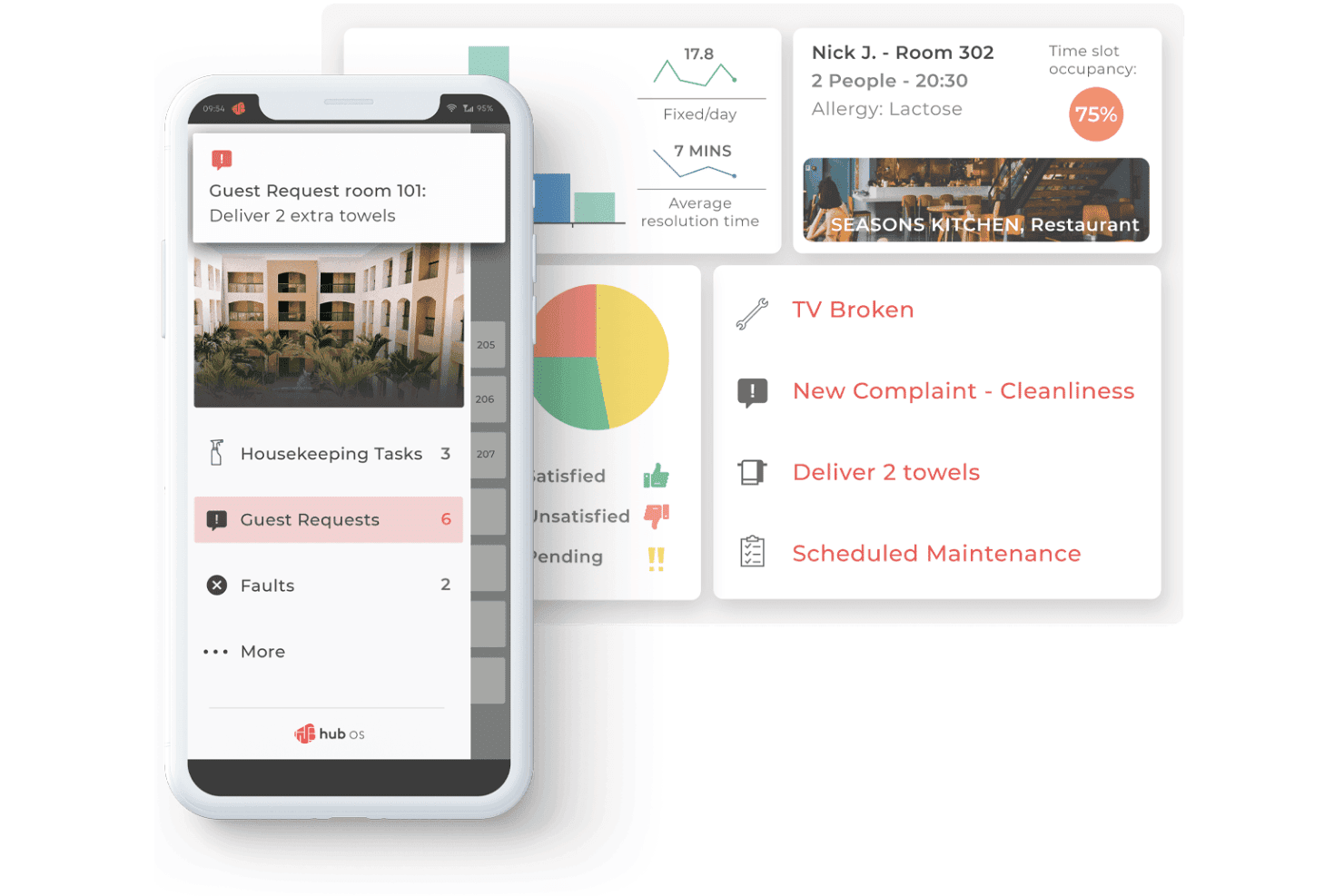
Hub OS gestiona el mantenimiento hotelero, las órdenes de trabajo, las solicitudes de huéspedes y el cumplimiento. Hub OS es una plataforma de operaciones y mantenimiento hotelero que combina la gestión de órdenes de trabajo, la programación del mantenimiento preventivo, el seguimiento de activos mediante códigos QR, las inspecciones de cumplimiento y un portal de solicitudes de huéspedes en un solo sistema.
¿Para quién es más adecuado Hub OS?
Hub OS es una opción excelente para los equipos de mantenimiento e instalaciones de hoteles europeos que necesitan inspecciones móviles con capacidad para funcionar sin conexión y seguimiento de activos mediante códigos QR integrados en una única plataforma de operaciones.
Por qué elegí Hub OS
Hub OS ocupa un lugar en mi lista de favoritos por lo bien que gestiona las inspecciones sin conexión y el seguimiento de activos mediante códigos QR en condiciones hoteleras reales. Me gusta que un técnico pueda escanear un código QR en cualquier equipo, consultar todo su historial de mantenimiento y registrar una avería sin necesitar señal Wi-Fi en una sala de instalaciones en el sótano o en una zona con paredes gruesas. El modo sin conexión sincroniza todo automáticamente cuando se restablece la conectividad, por lo que no se pierde ningún dato de inspección.
Funciones principales de Hub OS
- Escalamiento automático de tareas: Las órdenes de trabajo sin resolver se escalan automáticamente a un supervisor o gerente cuando se supera el plazo de SLA definido.
- Programación de inspecciones legales: La plataforma realiza el seguimiento de las inspecciones de cumplimiento obligatorias, envía alertas automáticas y genera informes de inspección automáticamente.
- Enrutamiento de solicitudes de huéspedes: Las solicitudes enviadas por los huéspedes mediante la aplicación web Guest in Touch o el flujo de Duve pasan directamente a la cola de órdenes de trabajo, con notificaciones de estado en tiempo real para los huéspedes.
- Seguimiento del consumo energético: Un módulo específico supervisa el uso de energía comparándolo con las habitaciones, los huéspedes y los metros cuadrados para respaldar los informes ESG.
Integraciones de Hub OS
Entre las integraciones documentadas se incluyen Mews, protel air, Oracle Hospitality, apaleo, Host PMS, HotelKey, Duve, HiJiffy, Signify y Vouch. Hub OS también admite el desarrollo de módulos personalizados para ofrecer conectividad adicional.
Pros and Cons
Pros:
- Las listas de verificación de inspección funcionan completamente sin conexión
- El escaneo de códigos QR muestra el historial del equipo
- Las solicitudes de los huéspedes se envían directamente a mantenimiento
Cons:
- Las órdenes de trabajo abiertas son difíciles de modificar
- Las exportaciones de informes requieren formato manual
Learn more about Hub OS: Ideal para la seguridad y el ahorro de costos laborales liderados por el equipo de limpieza
- Demostración gratuita disponible
- Precio bajo solicitud
Visit WebsiteCustomer Rating:4.6/5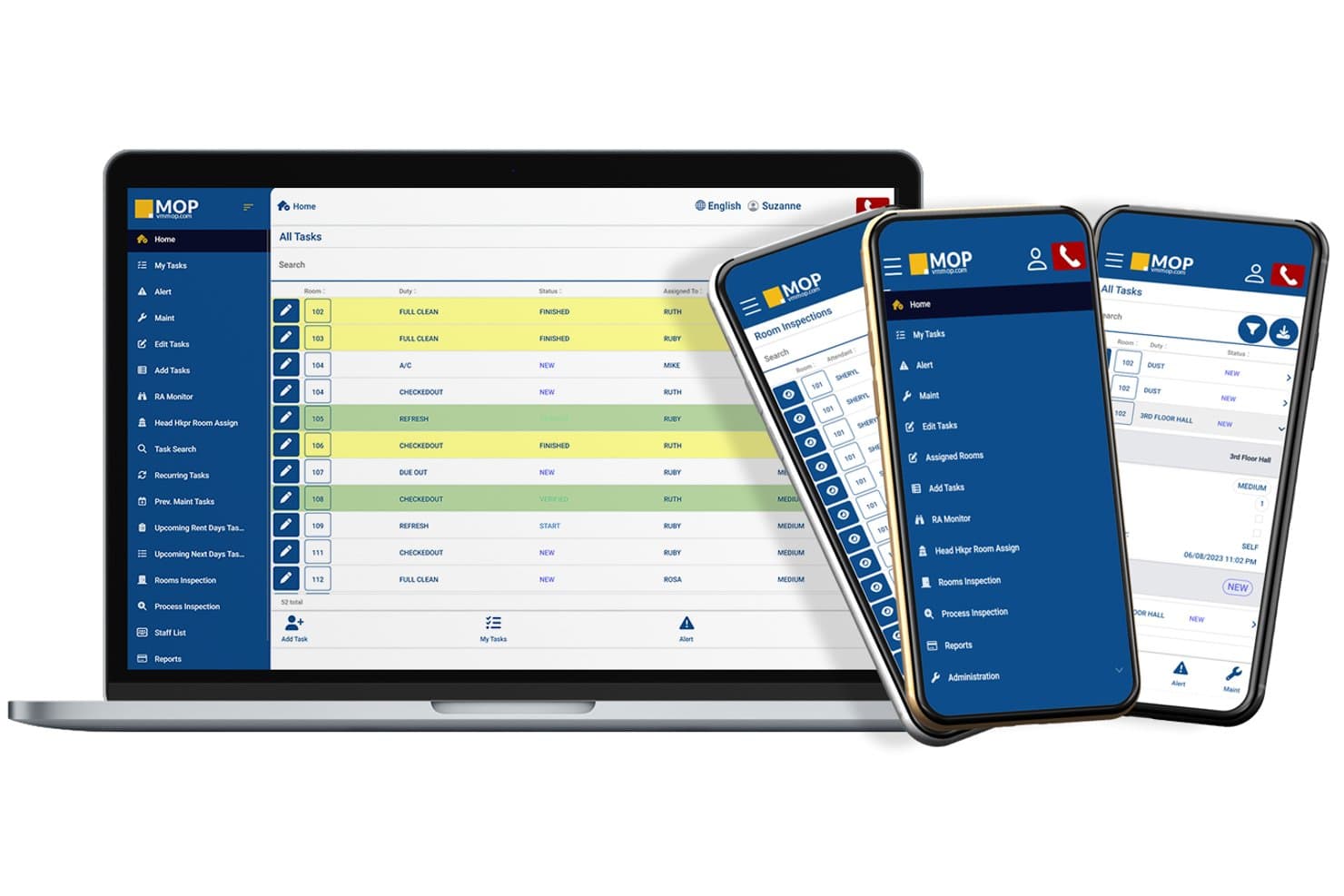
MOP de Visual Matrix centraliza las tareas de limpieza en la web y en dispositivos móviles. MOP de Visual Matrix es una plataforma de operaciones hoteleras que combina la gestión de la limpieza, la programación del mantenimiento preventivo, el seguimiento de órdenes de trabajo, las inspecciones digitales y las herramientas de seguridad del personal en una sola aplicación móvil.
¿Para quién es más adecuado MOP de Visual Matrix?
MOP es una opción excelente para los gerentes de limpieza y los gerentes generales de hoteles de marca con servicios limitados y de categoría media que desean reducir los costos laborales y cumplir los requisitos de seguridad del personal desde una sola aplicación móvil.
Por qué elegí MOP de Visual Matrix
Elegí MOP de Visual Matrix porque es una de las pocas herramientas de operaciones hoteleras que considera la limpieza como el motor tanto del cumplimiento de las normas de seguridad como del control de los costos laborales. El botón de pánico integrado está disponible en todas las pantallas de la aplicación, por lo que un asistente de habitaciones que trabaja solo puede activar una alerta y compartir su ubicación GPS con seguridad con un solo toque. También me gusta la programación del mantenimiento preventivo basada en 'Contador de días frente a días alquilados', que vincula el mantenimiento preventivo al uso real de las habitaciones en lugar de a un calendario fijo, de modo que no se realiza mantenimiento en una habitación que apenas ha estado ocupada.
Funciones principales de MOP de Visual Matrix
- Flujos de trabajo de inspección digital: Los supervisores realizan recorridos estructurados por las habitaciones, señalan problemas y asignan órdenes de mantenimiento de seguimiento con marcas de tiempo y captura de fotos en tiempo real.
- Integración de mensajería con huéspedes: El personal envía y recibe mensajes de los huéspedes antes, durante y después de su estancia directamente dentro de la plataforma MOP.
- Gestión de objetos perdidos: Registra artículos extraviados con fotos, realiza un seguimiento de las ubicaciones de almacenamiento, establece períodos de custodia y gestiona el inventario desde una sola pantalla.
- Interfaz multilingüe: La aplicación admite varios idiomas, lo que permite a los equipos de limpieza y mantenimiento trabajar en su idioma preferido sin configuración adicional.
Integraciones de MOP de Visual Matrix
MOP de Visual Matrix cuenta con seis integraciones nativas documentadas, entre ellas Visual Matrix PMS, OPERA Cloud, SynXis/Sabre, ASI, Choice Advantage y MSI. Su enfoque basado en API permite realizar comprobaciones de compatibilidad con PMS personalizados.
Pros and Cons
Pros:
- Botón de pánico integrado para la seguridad del personal
- Mantenimiento preventivo basado en el uso de las habitaciones
- La interfaz multilingüe admite equipos diversos
Cons:
- No incluye un registro de activos para el seguimiento de equipos
- No ofrece integración con IoT para el mantenimiento predictivo
Learn more about MOP by Visual Matrix: Ideal para la planificación del ciclo de vida de activos impulsada por IA
- Demostración gratuita disponible
- Precios bajo solicitud
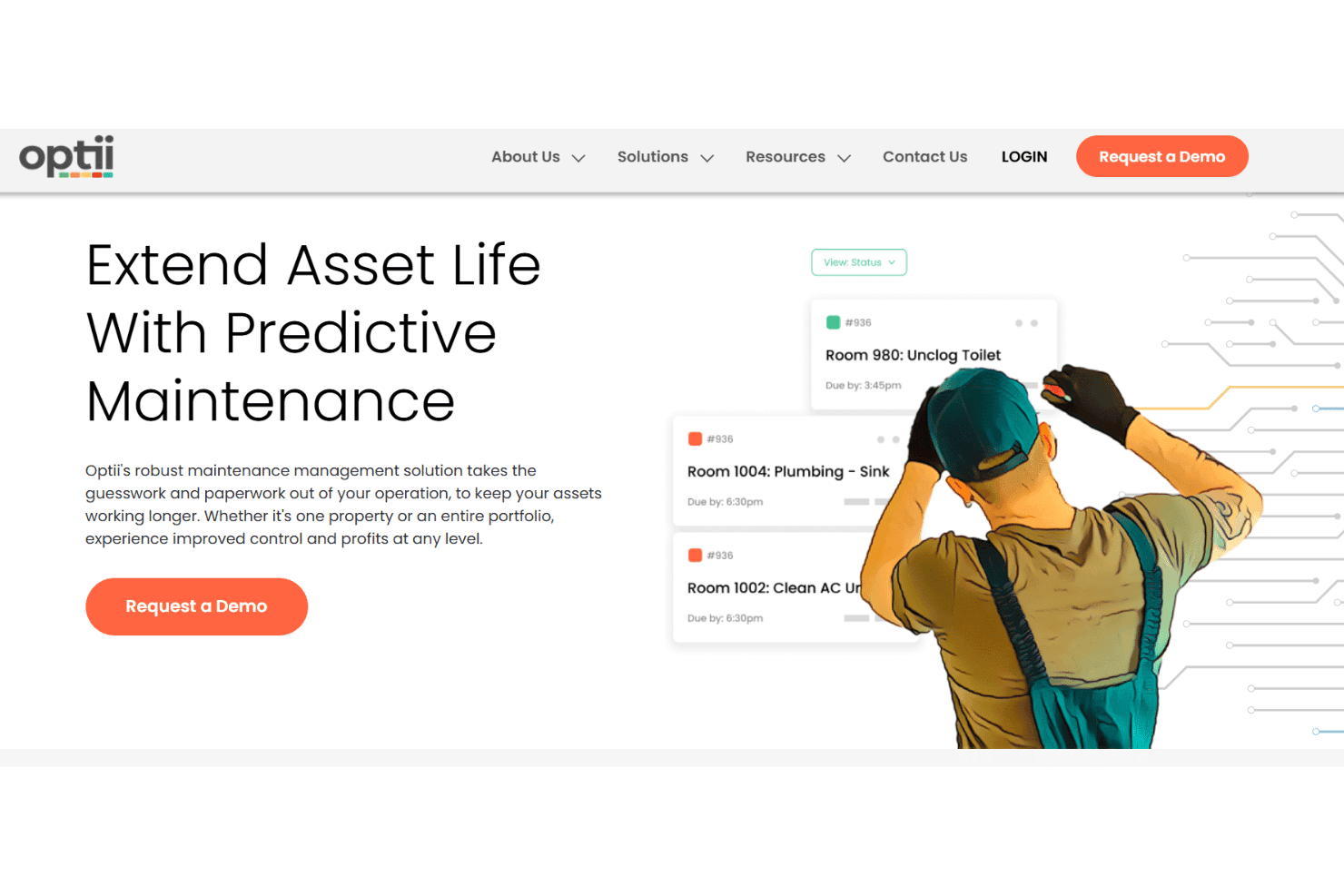
Optii gestiona las órdenes de trabajo, el mantenimiento preventivo, los activos y las inspecciones de los hoteles. Optii Solutions es una plataforma de software de mantenimiento hotelero diseñada exclusivamente para equipos de hostelería, que abarca la gestión de órdenes de trabajo, la programación del mantenimiento preventivo, el seguimiento del ciclo de vida de los activos y las listas de comprobación de cumplimiento en carteras de una o varias propiedades.
¿Para quién es más adecuada Optii Solutions?
Optii Solutions es una opción muy adecuada para grupos hoteleros medianos y grandes, así como para operadores con varias propiedades cuyos equipos de ingeniería y mantenimiento necesitan incorporar a sus flujos de trabajo diarios el seguimiento de activos y la planificación de CapEx impulsados por IA.
Por qué elegí Optii Solutions
Optii Solutions ocupa un lugar en mi lista de finalistas por la seriedad con la que aborda la planificación del ciclo de vida de los activos, un aspecto que la mayoría de las herramientas de mantenimiento hotelero trata como algo secundario. Me atrae especialmente su previsión de CapEx, vinculada directamente al historial de reparaciones de los activos y a los datos del coste total de propiedad, lo que permite a los equipos de ingeniería elaborar propuestas presupuestarias basadas en cifras reales y no en intuiciones. Su programación del mantenimiento preventivo impulsada por IA genera automáticamente trabajos recurrentes según el tipo de activo y la frecuencia de uso, lo que reduce el trabajo no planificado en un 47 %, según los propios datos de Optii.
Características principales de Optii Solutions
- Panel de control de cartera de varias propiedades: Una única vista a nivel de grupo permite comparar los KPI de mantenimiento y la productividad de los equipos en todas las propiedades simultáneamente.
- Chat multilingüe dentro de la aplicación: La traducción integrada en línea permite que el personal de ingeniería y limpieza se comunique en su idioma preferido sin salir de la aplicación.
- Modo sin conexión: El personal puede iniciar, pausar y completar trabajos sin conexión a Internet, con sincronización automática y marcas de tiempo precisas una vez que vuelve a conectarse.
- Listas de comprobación de cumplimiento personalizadas: Permite crear e implementar listas de comprobación de inspección específicas para cada propiedad o marca, con documentación fotográfica y registros de auditoría completos asociados a cada trabajo.
Integraciones de Optii Solutions
Optii Solutions ofrece 17 integraciones documentadas, entre ellas Oracle Hospitality OPERA Cloud, Oracle OPERA On-Premises, Mews, Maestro PMS, RMS Cloud, Stayntouch y Agilysys Hospitality Solutions. Estas conexiones sincronizan el estado de las habitaciones, los indicadores de fuera de servicio y las solicitudes de los huéspedes.
Pros and Cons
Pros:
- Programación de trabajos de mantenimiento preventivo impulsada por IA
- Chat multilingüe dentro de la aplicación con traducción integrada
- Paneles de cartera a nivel corporativo para realizar comparaciones
Cons:
- Se han reportado bloqueos frecuentes en la aplicación para Android
- Sin supervisión de IoT ni de sensores en tiempo real
Learn more about Optii Solutions: La mejor opción para el mantenimiento hotelero exclusivo con tarifa fija
- Demostración gratuita disponible
- Precios disponibles previa solicitud
Coba CMMS gestiona las órdenes de trabajo, los programas de mantenimiento, los activos y las comprobaciones de los hoteles. Coba CMMS es una plataforma de gestión del mantenimiento exclusiva para el sector hotelero que abarca órdenes de trabajo, programación del mantenimiento preventivo, seguimiento de activos, inspecciones de cumplimiento y supervisión de múltiples propiedades mediante una aplicación móvil nativa.
¿Para quién es más adecuada Coba CMMS?
Coba CMMS es una opción muy adecuada para ingenieros jefes y responsables de mantenimiento de hoteles franquiciados que desean una plataforma exclusiva para el sector hotelero sin la complejidad de los precios por usuario.
Por qué elegí Coba CMMS
Coba CMMS merece estar en mi lista de finalistas porque está diseñada exclusivamente para hoteles, lo que significa que cada frecuencia de mantenimiento preventivo, plantilla de inspección y módulo de cumplimiento refleja cómo funciona realmente el mantenimiento hotelero. Me gustan especialmente los mantenimientos preventivos de habitaciones programados automáticamente, que se ajustan a la ocupación, y los módulos de seguridad de OSHA, que abarcan el bloqueo y etiquetado, los patógenos transmitidos por la sangre y la notificación de incidentes sin necesidad de configuración manual. El precio fijo por propiedad con usuarios ilimitados también significa que un ingeniero jefe que gestiona una propiedad de 200 habitaciones paga la misma tarifa tanto si el equipo tiene tres técnicos como si tiene diez.
Características principales de Coba CMMS
- Indicador de escalamiento 'No se puede reparar': Los técnicos pueden marcar un activo como irreparable directamente en la aplicación, lo que lo muestra automáticamente a la dirección para su revisión ejecutiva.
- Historial de mantenimiento de cinco años: La plataforma almacena registros de órdenes de trabajo e inspecciones durante un máximo de cinco años, lo que facilita la planificación de inversiones, las evaluaciones PIP y la documentación para seguros.
- Implementación de inspecciones en toda la cartera: Las inspecciones y los proyectos personalizados pueden implementarse en todas las propiedades de la cartera en un plazo de 48 horas mediante el equipo de atención al cliente de Coba.
- Seguimiento de servicios públicos y sostenibilidad: Los ingenieros pueden registrar lecturas de servicios públicos, comprobaciones de la temperatura del agua e inspecciones de acondicionamiento para el invierno con el fin de respaldar los informes de iniciativas ecológicas.
Integraciones de Coba CMMS
Coba CMMS no cuenta con integraciones nativas. Las conexiones con sistemas PMS, de limpieza, de mensajería para huéspedes, de IoT y de gestión energética no están documentadas claramente, y no se anuncia ninguna API pública.
Pros and Cons
Pros:
- Diseñada exclusivamente para operaciones hoteleras
- Usuarios ilimitados incluidos en cada propiedad
- Incluye módulos de inspección de seguridad de OSHA
Cons:
- No hay un portal disponible para solicitudes de mantenimiento de los huéspedes
- No cuenta con integraciones con PMS, sistemas de limpieza ni IoT
Learn more about Coba CMMS: La mejor opción para automatizar las órdenes de trabajo desde el huésped hasta el técnico
- Demo gratuita disponible
- Desde $1.25/habitación/mes (facturado anualmente)
Visit WebsiteCustomer Rating:4.8/5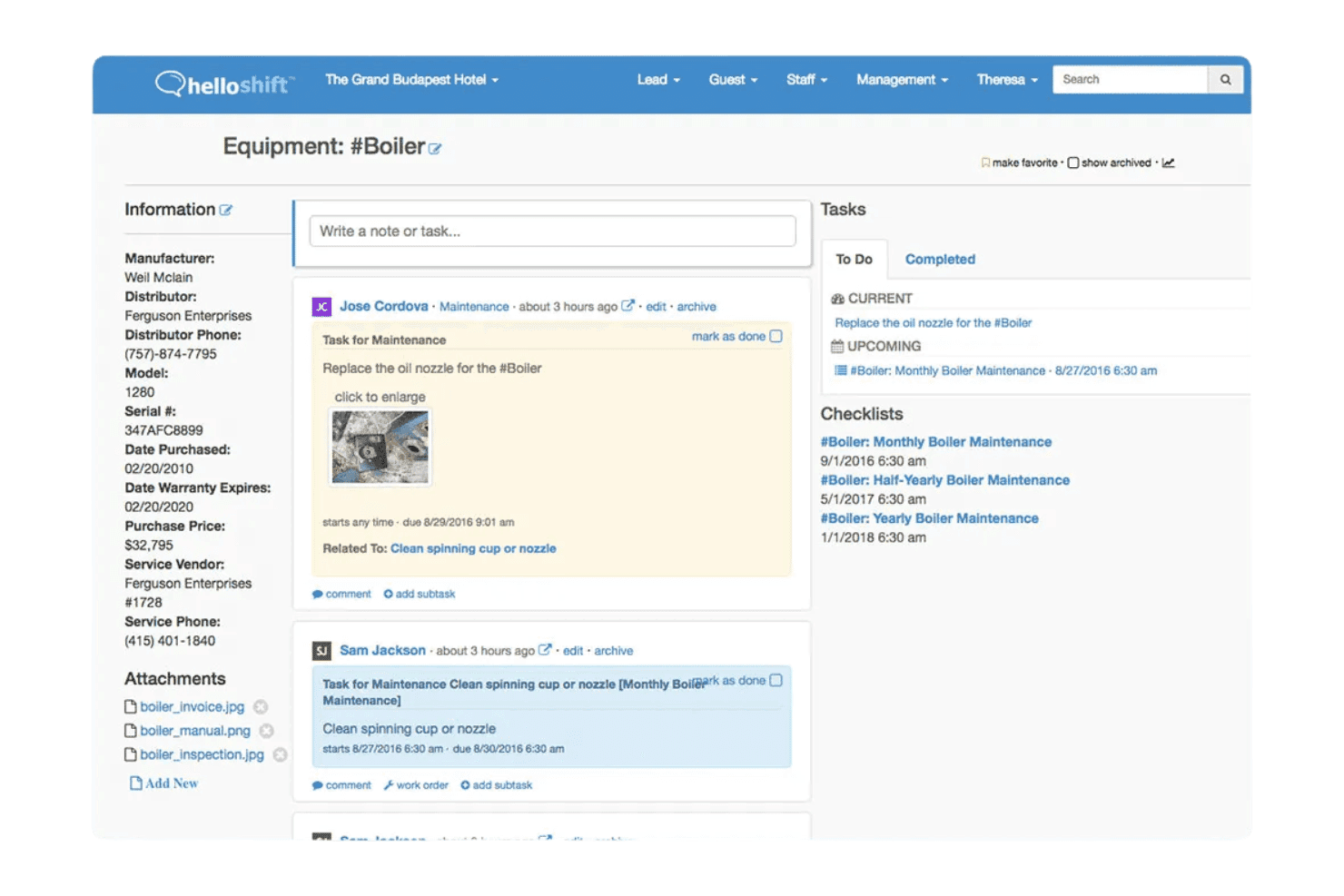
HelloShift realiza el seguimiento de las órdenes de trabajo del hotel, el mantenimiento preventivo y las tareas de conservación. HelloShift es una plataforma de operaciones hoteleras que combina la programación del mantenimiento preventivo, la gestión de órdenes de trabajo, el seguimiento de activos, la coordinación del servicio de limpieza y la mensajería con huéspedes en un solo sistema.
¿Para quién es más adecuado HelloShift?
HelloShift es una opción excelente para operadores de hoteles independientes y boutique que quieren gestionar el mantenimiento, el servicio de limpieza y la mensajería con huéspedes en una sola plataforma en lugar de utilizar tres.
Por qué elegí HelloShift
Elegí HelloShift por cómo cierra la brecha entre la queja de un huésped y la reparación completada. Cuando un huésped envía un mensaje sobre un accesorio averiado, la capa de mensajería con IA de HelloShift captura ese mensaje y crea automáticamente una orden de trabajo, asignándola al técnico adecuado sin que nadie tenga que clasificar manualmente una llamada telefónica. También me gusta el registro de lecturas de piscinas, calderas y sistemas de climatización, que mantiene actualizada la documentación reglamentaria sin añadir trabajo administrativo.
Características principales de HelloShift
- Registro de activos: Almacena números de modelo, detalles de garantía, historial de servicio y datos de ubicación de cada equipo en un inventario centralizado.
- Registro de lecturas: Registra la composición química de la piscina, la presión de la caldera, las métricas de climatización y los datos de los medidores de energía desde dispositivos móviles, con marcas de tiempo automáticas y seguimiento de tendencias.
- Listas de comprobación de inspección personalizadas: Crea plantillas de inspección ilimitadas con archivos adjuntos de fotos, criterios de aprobado/no aprobado e intervalos de recurrencia programados para cualquier activo o área.
- Informes de turno generados por IA: Recopila automáticamente resúmenes diarios y semanales de las operaciones, que abarcan el mantenimiento, el servicio de limpieza y la experiencia del huésped, para que los revise el gerente.
Integraciones de HelloShift
HelloShift ofrece más de 40 integraciones nativas con sistemas de gestión hotelera, incluidas Oracle Hospitality Opera, Mews, Cloudbeds, WebRezPro, StayNTouch, Shiji y Agilysys, además de integraciones con August, Yale, Schlage, Shift4, Stripe y Authorize.Net. Los planes empresariales añaden acceso a la API e integraciones personalizadas.
Pros and Cons
Pros:
- Crea órdenes de trabajo al instante a partir de los mensajes de los huéspedes
- Informes de turno generados por IA para que los revise el gerente
- Combina el mantenimiento, el servicio de limpieza y la mensajería con huéspedes
Cons:
- No incluye funciones de seguimiento de sensores IoT ni de energía
- Fiabilidad limitada de la aplicación móvil para algunos usuarios
Learn more about HelloShift:
Otros programas de mantenimiento hotelero destacados
A continuación se incluye una lista de programas de mantenimiento hotelero adicionales que preseleccionamos, pero que no llegaron a estar entre los 10 mejores. Sin duda, merece la pena echarles un vistazo.
- 11hotelkitIdeal para inspecciones y registros de auditoría basados en NFC
- 12MirageMejor por su interfaz intuitiva y facilidad de uso
- 13CloudPMLa mejor opción para soluciones escalables para hoteles de todos los tamaños
- 14360HMSIdeal para gestión hotelera integral y de 360 grados
- 15CloudInnIdeal para la gestión de la disponibilidad de habitaciones
- 16SkyTouch TechnologyLa mejor opción para la flexibilidad impulsada por la nube y la accesibilidad remota
- 17Visual Matrix PMSIdeal para una interfaz de usuario intuitiva y un análisis detallado de los ingresos
Cómo Evalúo el Software de Mantenimiento Hotelero
Divido mi evaluación en criterios principales—órdenes de trabajo, programación de mantenimiento preventivo e integración con el PMS—y los diferenciadores que marcan la diferencia para tu operación.
Funcionalidad Principal (Requisitos Básicos Para Esta Lista)
Al seleccionar herramientas para mi lista, califico cada una en una escala del 0 (no ofrece la funcionalidad) al 5 (sobresale en esta área) para cada una de las funcionalidades esenciales que se detallan a continuación. Luego, calculo la puntuación total de la herramienta en porcentaje. Cada herramienta necesita alcanzar una puntuación mínima total del 65% para ser considerada.
- Gestión de Órdenes de Trabajo: Verifico si los problemas reportados por huéspedes, como aire acondicionado roto o un grifo que gotea, pueden registrarse, asignarse, priorizarse y seguirse hasta su resolución.
- Programación de Mantenimiento Preventivo: Tareas recurrentes como el cambio de filtros de HVAC y el servicio de bombas de piscina deben automatizarse con plantillas, calendarios y opciones de activación.
- Seguimiento de Activos y Equipos: Busco registros centralizados que incluyan ubicación, garantía e historial de servicio para activos como ascensores, calderas y equipos de lavandería.
- Aplicación Móvil para Técnicos: Los ingenieros necesitan recibir, actualizar y cerrar tareas en movimiento—evalúo si la aplicación permite modo sin conexión, fotos y notificaciones push.
- Integración con PMS/Sistema Hotelero: La sincronización del estado de la habitación es clave—reviso si hay conectores nativos con plataformas como Opera, Mews o Cloudbeds para mantener coordinación entre recepción y mantenimiento.
- Inspecciones y Listas de Verificación de Cumplimiento: Cada herramienta debe permitir inspecciones digitales de habitaciones y auditorías de seguridad, con documentación fotográfica, puntuaciones y seguimiento de acciones correctivas.
Una vez que tengo una lista de herramientas que cumplen con estos criterios, considero qué diferencia a cada plataforma.
Factores Diferenciadores (Qué Distingue a los Proveedores)
Así es como comparo y contrasto diferentes proveedores:
Características Destacadas
Los paneles de control multipropiedad son clave para grupos hoteleros—busco vistas de cartera completa que permitan comparar costos de mantenimiento y tiempos de inactividad entre ubicaciones. La integración de IoT y sensores es otro elemento diferenciador, especialmente cuando una plataforma puede generar órdenes de trabajo por datos en tiempo real de HVAC o fugas de agua antes de que el huésped note el problema. También evalúo si la herramienta ofrece un portal para solicitudes de huéspedes con códigos QR o canales digitales en la habitación que envían incidencias directamente al técnico correcto.
Más Allá de las Características
La estructura de precios importa—analizo si la herramienta cobra por habitación, propiedad o usuario, ya que las variaciones estacionales de personal pueden aumentar los costos en los modelos por usuario. La velocidad de implementación es igualmente importante porque los hoteles operan sin detenerse y no pueden permitirse tiempos de inactividad durante el despliegue. También considero si la plataforma se adapta al tipo de propiedad, ya sea un hotel boutique de 20 habitaciones, un resort de 500 habitaciones o una cartera de gestión multimarcas.
Cómo elegir un software de mantenimiento hotelero
Encontrar el software de mantenimiento hotelero adecuado significa elegir una plataforma que se adapte a los flujos de trabajo de ingeniería de tu establecimiento, a los requisitos de tus activos y a tus estándares de servicio, en lugar de conformarte con un sistema de mantenimiento genérico.
| Si tu prioridad es... | Busca... |
|---|---|
| Si tu prioridad es...Resolver los problemas de mantenimiento más rápido | Busca...Órdenes de trabajo móviles con asignación y actualizaciones de estado en tiempo real |
| Si tu prioridad es...Prevenir averías de los equipos | Busca...Programas recurrentes de mantenimiento preventivo y recordatorios automatizados |
| Si tu prioridad es...Gestionar los equipos y activos del hotel | Busca...Historiales de activos, garantías, manuales y seguimiento de los costes de mantenimiento |
| Si tu prioridad es...Coordinar el mantenimiento en varios establecimientos | Busca...Paneles para varios establecimientos con permisos a nivel de establecimiento |
| Si tu prioridad es...Responder rápidamente a los problemas comunicados por los huéspedes | Busca...Enrutamiento de solicitudes de los huéspedes conectado con los equipos de recepción e ingeniería |
Cómo evaluar tu lista de candidatos
- Prueba la usabilidad móvil: Realiza una tarea de mantenimiento breve en el dispositivo móvil de un técnico mientras se desplaza por el establecimiento. Comprueba los tiempos de carga, el acceso sin conexión, la carga de fotos y las actualizaciones de las órdenes de trabajo.
- Valida el nivel de integración: Solicita una demostración del flujo de solicitudes de mantenimiento entre tu PMS, las herramientas de mensajería para huéspedes y las herramientas de limpieza.
- Revisa los informes de mantenimiento preventivo: Solicita un informe de muestra que muestre las tareas atrasadas, las inspecciones completadas, los problemas recurrentes de los equipos y los próximos programas de mantenimiento.
- Prueba el flujo de órdenes de trabajo: Comprueba el flujo de las órdenes de trabajo desde la comunicación del problema hasta su cierre.
- Equilibrio entre simplicidad y profundidad operativa: Compara plataformas sencillas con sistemas configurables que ofrezcan controles más avanzados de activos, cumplimiento y varios establecimientos.
¿Qué es el software de mantenimiento hotelero?
El software de mantenimiento hotelero es un sistema de gestión del mantenimiento diseñado para gestionar reparaciones, mantenimiento preventivo, inspecciones y activos hoteleros en uno o varios establecimientos.
Estas plataformas permiten a los equipos de ingeniería y mantenimiento gestionar órdenes de trabajo, supervisar el estado de los equipos y programar tareas de mantenimiento recurrentes.
El software de mantenimiento hotelero aborda problemas como fallos inesperados de los equipos, reparaciones de habitaciones retrasadas, activos antiguos y la necesidad de coordinar el trabajo de mantenimiento entre los equipos de ingeniería, limpieza y recepción.
Funciones del software de mantenimiento hotelero
Al seleccionar un software de mantenimiento hotelero, presta atención a las siguientes funciones clave:
- Gestión de órdenes de trabajo: Permite al personal crear, asignar, priorizar y realizar un seguimiento de las solicitudes de mantenimiento desde el informe inicial hasta su finalización. Las actualizaciones móviles, las fotos, las notas y el seguimiento del estado mantienen informados a los técnicos mientras trabajan por todo el establecimiento.
- Programación del mantenimiento preventivo: Proporciona herramientas para programar el servicio recurrente de sistemas de climatización, calderas, ascensores, piscinas, equipos de cocina y otros activos hoteleros. Los recordatorios automáticos reducen el riesgo de que se omita el mantenimiento.
- Gestión de activos y equipos: Permite mantener registros de los equipos del hotel, incluidos historiales de servicio, garantías, manuales, ubicaciones y costes de mantenimiento. Esto crea un registro detallado de cada activo durante todo su ciclo de vida.
- Gestión de inspecciones y listas de comprobación: Permite a los equipos crear formularios digitales de inspección y listas de comprobación de mantenimiento para habitaciones, instalaciones, equipos y procedimientos de seguridad. Las inspecciones completadas proporcionan un registro trazable del estado del establecimiento.
- Informes y análisis: Desglosa las órdenes de trabajo, los tiempos de respuesta, los problemas recurrentes, los costes de mantenimiento y el rendimiento de los equipos. Esto permite a los responsables identificar los activos problemáticos y supervisar la actividad de mantenimiento en varios establecimientos.
- Integraciones con PMS y sistemas de operaciones hoteleras: Conecta los flujos de trabajo de mantenimiento con sistemas de gestión de establecimientos, limpieza, mensajería para huéspedes u operaciones hoteleras. Esto permite que los problemas notificados en habitaciones o instalaciones lleguen al personal de mantenimiento adecuado sin necesidad de introducir los datos dos veces.
- Gestión móvil del mantenimiento: Proporciona a los técnicos acceso a las órdenes de trabajo asignadas, la información de los activos, las listas de comprobación, los manuales y los historiales de reparaciones desde teléfonos o tabletas. Las funciones sin conexión pueden ayudar a los equipos que trabajan en zonas con conectividad limitada.
- Notificaciones y recordatorios automáticos: Envía alertas cuando se asignan nuevas órdenes de trabajo, vence el mantenimiento preventivo o los problemas sin resolver requieren atención. Esto mantiene informados a técnicos y responsables sobre las próximas tareas o las que están pendientes.
- Controles de acceso basados en roles: Personaliza los paneles, los permisos y la información de mantenimiento en función de las responsabilidades laborales. Ingenieros, técnicos, supervisores y otros departamentos del hotel pueden acceder a la información relevante para su trabajo.
Funciones habituales de IA en el software de mantenimiento hotelero
Además de las funciones estándar del software de mantenimiento hotelero mencionadas anteriormente, muchas de estas soluciones están incorporando IA con funciones como:
- Mantenimiento predictivo basado en IA: Analiza el historial de los equipos, los patrones de uso, las lecturas de los sensores y los fallos anteriores para identificar los activos que pueden requerir mantenimiento antes de que se produzca una avería.
- Creación de órdenes de trabajo asistida por IA: Interpreta las solicitudes de mantenimiento enviadas por texto, voz o comunicaciones de los huéspedes y las convierte en órdenes de trabajo estructuradas con categorías, prioridades y detalles de los activos relevantes.
- Priorización de órdenes de trabajo mediante IA: Evalúa la urgencia, el impacto en los huéspedes, la importancia de los activos y la disponibilidad de los técnicos para recomendar qué problemas de mantenimiento deben abordarse primero.
- Diagnóstico de equipos basado en IA: Analiza los historiales de mantenimiento, los patrones de fallos y los datos de los equipos para sugerir posibles causas de las averías y recomendar pasos de solución de problemas a los técnicos.
- Programación y asignación de técnicos mediante IA: Asocia las órdenes de trabajo con los técnicos disponibles en función de sus habilidades, carga de trabajo, ubicación y prioridad de las tareas para distribuir el trabajo de mantenimiento de forma más eficaz.
- Análisis de tendencias de mantenimiento mediante IA: Revisa los datos de las órdenes de trabajo y los activos para descubrir fallos recurrentes, equipos que requieren mucho mantenimiento y patrones que podrían indicar problemas mayores en el establecimiento o los equipos.
Ventajas del software de mantenimiento hotelero
La implementación de un software de mantenimiento hotelero ofrece varias ventajas para tu equipo y tu hotel. Estas son algunas de las que puedes esperar:
- Menores tiempos de respuesta del mantenimiento: Las órdenes de trabajo móviles y las asignaciones automatizadas reducen los retrasos entre la notificación de un problema y su asignación al técnico adecuado.
- Menos fallos inesperados de los equipos: Los calendarios de mantenimiento preventivo y los recordatorios de servicio recurrentes garantizan el mantenimiento de los equipos hoteleros críticos antes de que los problemas se agraven.
- Mayor visibilidad del estado de las instalaciones: Las órdenes de trabajo, las inspecciones y los registros de activos centralizados ofrecen a los equipos de ingeniería una visión más clara de las reparaciones pendientes y del estado de los equipos.
- Mantenimiento más uniforme en las distintas propiedades: Las listas de comprobación estandarizadas, los calendarios de mantenimiento preventivo y los procedimientos de inspección mantienen uniformes las prácticas de mantenimiento en las diferentes ubicaciones hoteleras.
- Mejores experiencias para los huéspedes: Las respuestas más rápidas a los problemas de las habitaciones y las instalaciones reducen el tiempo que los huéspedes pasan enfrentándose a problemas como sistemas de climatización averiados, fallos de fontanería o accesorios rotos.
- Una gestión más sólida del ciclo de vida de los activos: Los historiales de los equipos, los costes de mantenimiento y los datos sobre reparaciones recurrentes proporcionan a los responsables la información necesaria para decidir si los activos deben repararse o sustituirse.
- Una planificación del mantenimiento más fundamentada: Los informes y los análisis ponen de manifiesto los problemas recurrentes, la carga de trabajo de los técnicos, los costes de reparación y las tendencias de rendimiento de los activos para mejorar la planificación del mantenimiento y de las inversiones.
Costes y precios del software de mantenimiento hotelero
Para seleccionar un software de mantenimiento hotelero es necesario comprender los distintos modelos de precios y planes disponibles. Los costes varían en función de las funciones, el tamaño del equipo, el número de propiedades, los complementos y otros factores. La siguiente tabla resume los planes habituales, sus precios medios y las funciones que suelen incluir las soluciones de software de mantenimiento hotelero:
Tabla comparativa de planes de software de mantenimiento hotelero
| Tipo de plan | Precio medio | Funciones habituales |
|---|---|---|
| Tipo de planPlan gratuito | Precio medio$0 | Funciones habitualesGestión básica de órdenes de trabajo, número limitado de usuarios o activos, programación del mantenimiento e informes básicos. |
| Tipo de planPlan personal | Precio medio$20–$50/usuario/mes | Funciones habitualesÓrdenes de trabajo, mantenimiento preventivo, acceso móvil, seguimiento de activos, inspecciones e informes estándar. |
| Tipo de planPlan empresarial | Precio medio$50–$150/usuario/mes | Funciones habitualesGestión de varias propiedades, informes avanzados, seguimiento del inventario, flujos de trabajo automatizados, integraciones e inspecciones personalizadas. |
| Tipo de planPlan corporativo | Precio medio$150+/usuario/mes | Funciones habitualesIntegraciones personalizadas, informes de toda la cartera, gestión avanzada de activos, funciones basadas en IA y asistencia personalizada para la cuenta. |
Preguntas frecuentes sobre el software de mantenimiento hotelero
Estas son algunas respuestas a preguntas habituales sobre el software de mantenimiento hotelero:
¿Cómo puede el software de mantenimiento hotelero reducir el tiempo de inactividad de los equipos?
El software de mantenimiento hotelero puede reducir el tiempo de inactividad mediante la programación del mantenimiento preventivo, el seguimiento de fallos recurrentes y el envío de alertas a los equipos cuando vence un servicio. Los historiales de mantenimiento también facilitan la identificación de los activos que requieren reparaciones repetidas.
¿Qué funciones del software de mantenimiento hotelero son más importantes para las operaciones con varias propiedades?
Los hoteles con varias propiedades deben priorizar los paneles centralizados, los permisos por propiedad, los procedimientos de mantenimiento estandarizados, los informes de toda la cartera y el seguimiento de activos. Estas funciones facilitan el mantenimiento de procesos uniformes en diferentes ubicaciones.
¿Cómo debe gestionar el software de mantenimiento hotelero los problemas de mantenimiento comunicados por los huéspedes?
El software de mantenimiento hotelero debe proporcionar un flujo de trabajo claro para registrar, priorizar, asignar y hacer seguimiento de los problemas comunicados por los huéspedes. Busca actualizaciones de estado y reglas de escalado que mantengan informados a los equipos de recepción, limpieza e ingeniería.
¿Cómo puede el software de mantenimiento hotelero ayudar a los programas de mantenimiento preventivo?
El software de mantenimiento hotelero debe permitir programaciones recurrentes basadas en fechas, uso o requisitos de los equipos. Las listas de comprobación digitales, los recordatorios automatizados, los historiales de servicio y las alertas de tareas atrasadas pueden facilitar la gestión del mantenimiento preventivo.
¿Cómo se evalúa el software de mantenimiento hotelero para equipos de mantenimiento móviles?
Comprueba si los técnicos pueden crear y actualizar órdenes de trabajo, subir fotos, escanear activos, acceder a manuales y completar listas de comprobación desde dispositivos móviles. También conviene evaluar el acceso sin conexión en zonas con conectividad poco fiable.