

10 Best Hotel Management App in 2026

Best Hotel Management Apps Shortlist


A hotel management app is software that lets you handle bookings, rooms, payments, guest details, and daily operations from a single dashboard. If you’re searching for the best hotel management app, you want a solution that takes work off your plate—so you can keep your front desk moving, adapt rates in real time, and deliver the modern, contactless experiences guests expect.
This guide covers the top picks, highlighting options that support everything from small boutique hotels to global chains. I’ll help you find a solution that fits your tech stack and your service standards, no matter how complex your operation gets.
Why Trust Our Software Recommendations
Our team has been testing and reviewing software since 2012. As hospitality leaders ourselves, we know how difficult—and important—it is to choose the right software.
For this guide, we evaluated tools using hands-on testing and independent research, scoring tools using our selection criteria.
Our reviews reflect our human editorial judgment, not a sales pitch.
Hotel Management Apps Comparison Table
This comparison table summarizes pricing details for my hotel management apps.
| Tool | Best For | Trial Info | Price | ||
|---|---|---|---|---|---|
| 1 | Best for contactless check-in via kiosk or mobile | Free demo available | Pricing upon request | Website | |
| 2 | Best for contactless guest arrival workflows | Free demo available | Pricing upon request | Website | |
| 3 | Best for global chain and multi-property ops | Free demo available | Pricing upon request | Website | |
| 4 | Best for casino and resort multi-amenity ops | Free demo available | Pricing upon request | Website | |
| 5 | Best for AI-driven on-the-go KPI visibility | Free demo available | Pricing upon request | Website | |
| 6 | Best for AI-driven revenue and rate management | Free demo available | Pricing upon request | Website | |
| 7 | Best for built-in AI rate pricing | Free demo available | From $236/month | Website | |
| 8 | Best for independent multi-property operators | Free demo available | Pricing upon request | Website | |
| 9 | Best for scaling from boutique to enterprise | Not available | Pricing upon request | Website | |
| 10 | Best for OTA sync beyond rates and availability | Free demo available | Pricing upon request | Website |
Hotel Management Apps Reviews
Below are my detailed summaries of the best hotel management apps that made it onto my shortlist. My reviews offer a detailed look at the features, best use cases, and capabilities of each platform to help you find the best one for you.

Best for contactless check-in via kiosk or mobile
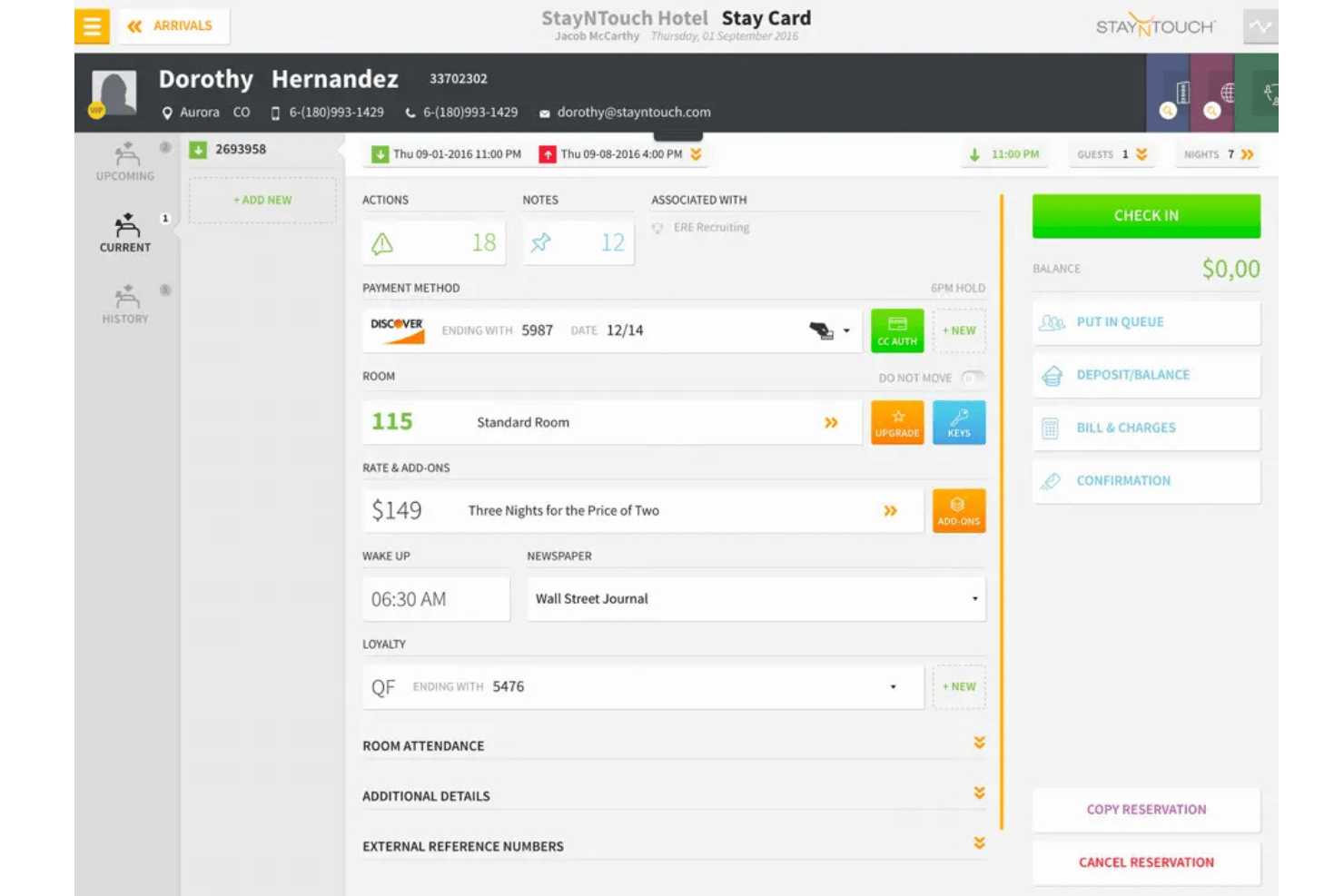
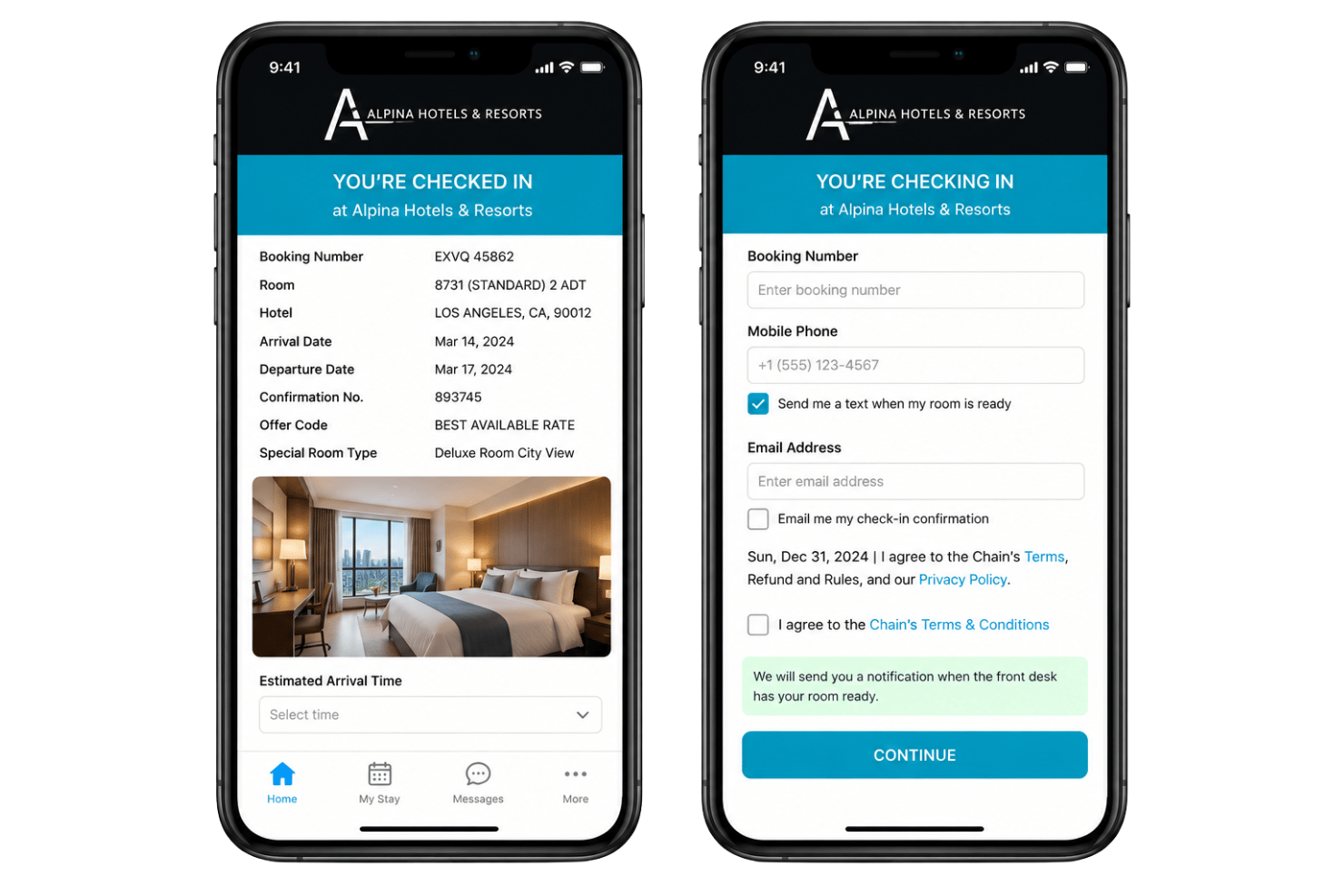
StayNTouch is a cloud-native, mobile-first hotel management app that covers property management, front desk operations, reservations, housekeeping, a built-in booking engine, channel management, and integrated payment processing.
Who Is StayNTouch Best For?
StayNTouch is a strong fit for independent hotels and boutique properties that want to reduce front desk load through self-service kiosk and mobile check-in workflows.
Why I Picked StayNTouch
StayNTouch earns its spot on my shortlist because of how far it pushes contactless check-in beyond basic mobile check-in links. The self-service kiosk handles ID scanning, room key pickup, and upsell offers in under 30 seconds, with no app download required from the guest. I also like that digital registration cards come pre-filled and support signature capture and marketing consent collection, cutting lobby wait times without sacrificing compliance.
StayNTouch Key Features
- Rate Strategy tool: Set dynamic pricing rules based on occupancy thresholds directly within the PMS, without a separate revenue management system.
- Multi-property dashboard: Manage guest profiles, rates, and reporting across an entire portfolio from one centralized interface.
- Stayntouch Pay: A PCI DSS Level 1-certified, Adyen-backed payment processing layer that handles in-person, online, and alternative payment methods including Apple Pay, Google Pay, and regional options.
- Native housekeeping app: Assign tasks by floor automatically, track real-time room status, and manage out-of-order rooms from any mobile device.
StayNTouch Integrations
StayNTouch offers 1,400+ pre-built integrations, including Booking.com, Expedia, SiteMinder, Duetto, PriceLabs, Breezeway, HotSOS, Toast POS, Salesforce, and Microsoft Power BI. Its REST API, webhooks, developer portal, and sandbox support custom integrations.
Pros and Cons
Pros:
- Occupancy-based dynamic pricing tool included
- Native mobile app for housekeeping tasks
- Self-service kiosk with facial recognition support
Cons:
- Manager approval required for error corrections
- No published pricing or free trial

Best for contactless guest arrival workflows
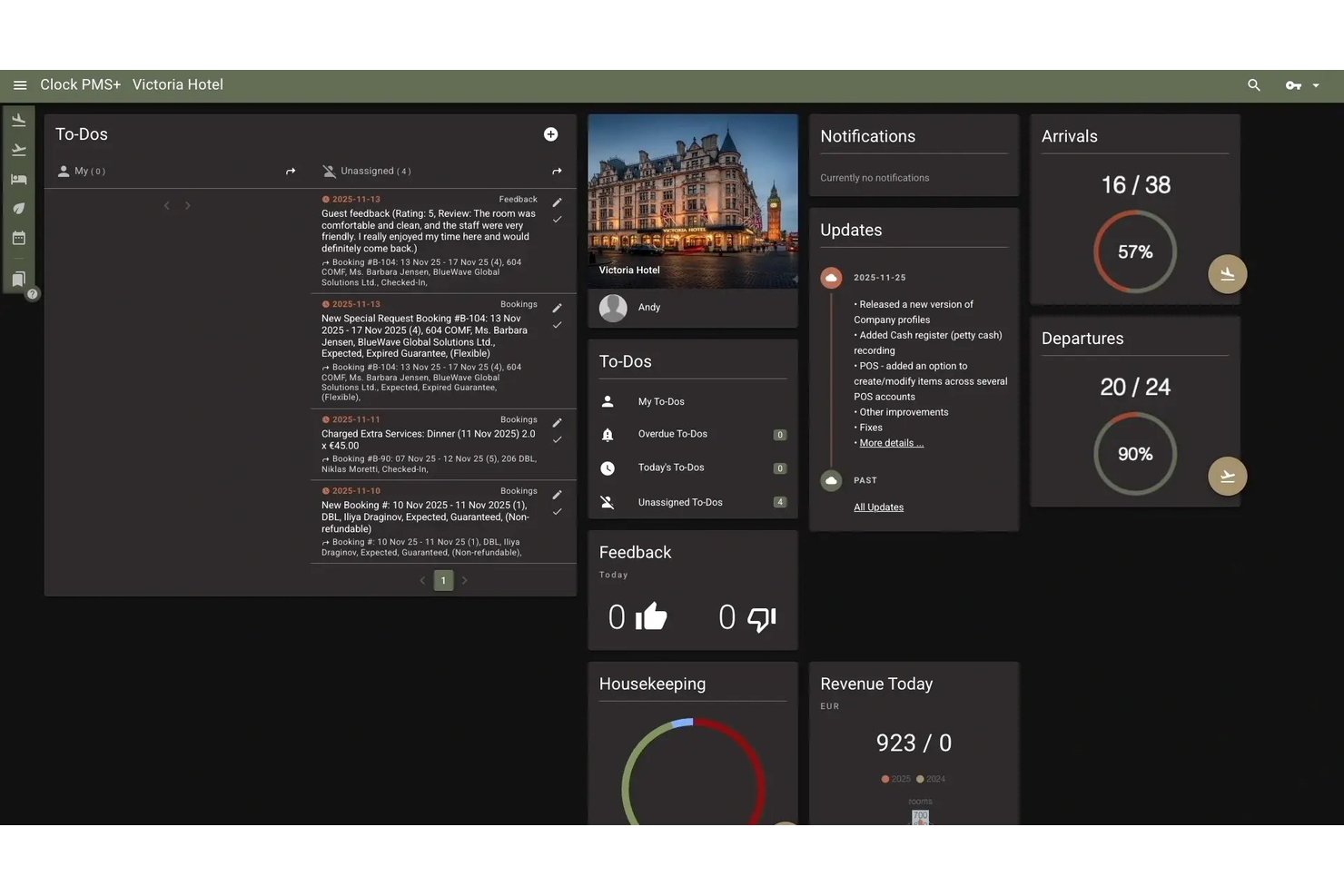
Clock PMS+ is a cloud-based hotel management platform covering the full guest lifecycle, with a native PMS, commission-free booking engine, housekeeping module, channel management, contactless check-in and kiosk tools, and integrated payment automation under one flat subscription.
Who Is Clock PMS+ Best For?
Clock PMS+ is a strong fit for independent hotels and small hotel groups that want a single subscription covering every core operation—from front desk and housekeeping to payments and guest self-service—without paying extra for each module.
Why I Picked Clock PMS+
Clock PMS+ earns its spot on my shortlist because of how completely it handles contactless guest arrival without requiring third-party bolt-ons. I love that online check-in, ID scanning, digital registration card signing, and payment collection all happen before guests even reach the front desk. At the property, guests scan a QR Hotel Pass at the kiosk or go straight to their room using a PIN code or Apple/Google Wallet digital key, with every status update syncing natively in the PMS.
Clock PMS+ Key Features
- Payment Autopilot: Automatically handles deposits, pre-authorizations, OTA virtual card charging, cancellation fees, and refunds based on booking rules—without manual intervention.
- Native housekeeping module: Generates daily task plans from arrival and departure data, assigns work by zone or shift, and syncs room status to the front desk in real time via a mobile staff app.
- Direct Booking.com integration: A native, two-way sync with Booking.com pushes rate and availability updates instantly, and automatically reports no-shows to waive commission directly from Clock.
- BI Analytics add-on: Exports a daily-refreshed, analysis-ready copy of all PMS data for use in Looker Studio, Power BI, or Tableau, with up to eight hours of custom report development per year included.
Clock PMS+ Integrations
Clock PMS+ offers 200+ documented integrations, including Booking.com, RoomCloud, SiteMinder, SynXis, Adyen, Stripe, QuickBooks, IDeaS, Revinate, and Lightspeed. Its open API and sandbox support custom integrations.
Pros and Cons
Pros:
- Fully integrated payment automation and folios
- Contactless guest arrival flows built in
- Direct Booking.com connection without third-party layer
Cons:
- No native mobile app for management
- OTA channel connections capped at ten
Best for global chain and multi-property ops
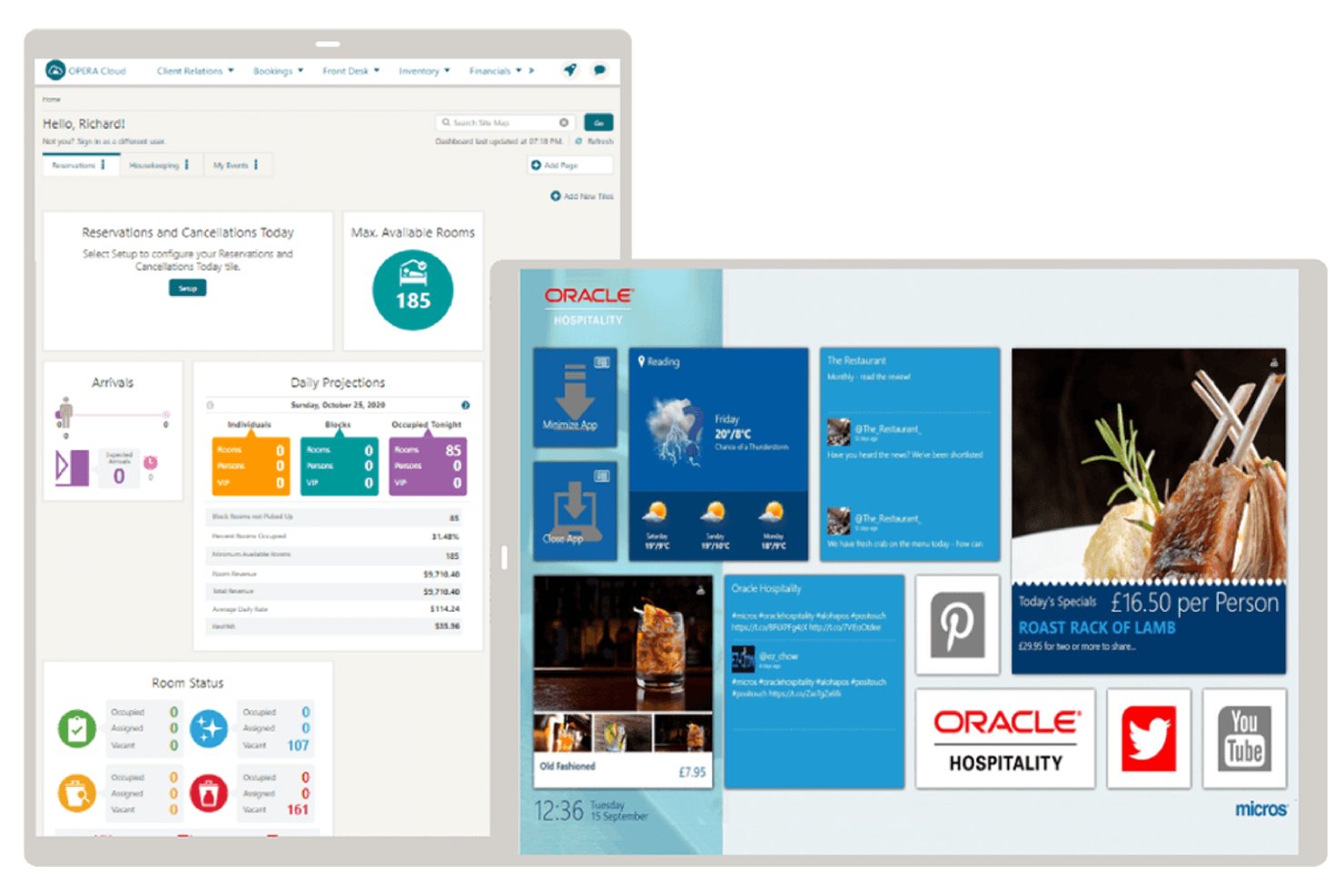
Oracle OPERA Cloud is a cloud-native hotel management platform covering reservations, front desk operations, housekeeping, multi-property management, channel distribution, and payment processing across a single, centralized system.
Who Is Oracle OPERA Cloud Best For?
Oracle OPERA Cloud is built for upper-midscale hotels, full-service chains, and multi-property groups that need centralized control across a large portfolio.
Why I Picked Oracle OPERA Cloud
Oracle OPERA Cloud earns its spot on my shortlist because no other hotel PMS comes close for managing large, multi-property portfolios from a single platform. I'm particularly impressed by OPERA Cloud Central, which unifies guest profiles, rates, inventory, and reporting across every property in your portfolio simultaneously. The real-time two-way ARI sync through OPERA Cloud Distribution pushes availability and rate changes across OTAs, GDS channels, and channel managers at once, which is exactly what a global chain needs to avoid overbookings across dozens of properties.
Oracle OPERA Cloud Key Features
- OPERA Cloud Digital Assistant: An AI-powered chatbot that lets staff complete tasks and get operational guidance through natural language, including automated room assignments.
- Mobile staff app: A progressive web app for housekeeping attendants, porters, and maintenance staff to update room statuses and task progress from any mobile device in 12 languages.
- Nor1 guest engagement and merchandising: An upsell engine embedded directly in the check-in workflow that surfaces AI-driven upgrade and add-on offers at the point of arrival.
- Oracle Payments Cloud Service: A native, PCI DSS-compliant payment processing system supporting credit and debit cards, Apple Pay, Google Pay, and Samsung Pay with end-to-end encryption and automated pre-authorization rules.
Oracle OPERA Cloud Integrations
Oracle OPERA Cloud natively connects with MICROS Simphony, Nor1, OPERA Cloud Distribution, and Oracle Payments. OHIP provides 650+ live marketplace integrations, including SiteMinder, Duetto, IDeaS, Sabre, Amadeus, and P3Hotels, plus REST APIs for custom connections.
Pros and Cons
Pros:
- Extensive analytics and operational dashboards
- AI-driven assistant improves staff productivity
- Centralizes multi-property and chain operations
Cons:
- Onboarding and data migration require significant time
- No native booking engine included

Agilysys
Best for casino and resort multi-amenity ops
Agilysys is a hospitality management platform built for multi-amenity properties, combining PMS, booking engine, housekeeping, payment processing, loyalty, and analytics across rooms, spa, golf, dining, and gaming in one system.
Who Is Agilysys Best For?
Agilysys is built for enterprise resorts, casino hotels, and multi-amenity properties that need to manage rooms, dining, spa, golf, and gaming under one platform.
Why I Picked Agilysys
Agilysys earns its spot on my shortlist because no other platform handles the complexity of casino and resort operations quite like this. I love how Agilysys Book lets guests bundle rooms, spa, golf, and dining into one transaction, which is genuinely rare and valuable for multi-amenity properties. The guestsense.ai upsell engine pushes personalized upgrade prompts across the front desk, kiosk, and mobile check-in, turning every guest touchpoint into a revenue moment.
Agilysys Key Features
- Agilysys Loyalty & Promotions: Supports tier-based, points-based, or hybrid loyalty programs with real-time earn and redeem across PMS and POS transactions.
- Express Kiosk: A lobby self-service kiosk that handles check-in, payment, and digital key delivery without staff involvement.
- Agilysys Analyze: Role-specific dashboards tracking occupancy, ADR, RevPAR, and RevPAG across rooms, F&B, spa, golf, and events in real time.
- Agilysys Central Reservations: Centralizes rate and inventory management across all booking channels for multi-property portfolios, with overbooking controls and single sign-on for agents.
Agilysys Integrations
Agilysys has 23 verified integration partners, including SiteMinder, IDeaS, Dormakaba, and ASSA ABLOY, plus native connections across its PMS, POS, booking, payment, spa, golf, and analytics products. An Azure-based developer API supports custom integrations.
Pros and Cons
Pros:
- Mobile check-in and self-service kiosk included
- Best-in-class analytics and custom guest profiles
- Handles casino, spa, golf, and dining in one system
Cons:
- Customer support can be inconsistent
- Not suited for small or boutique hotels

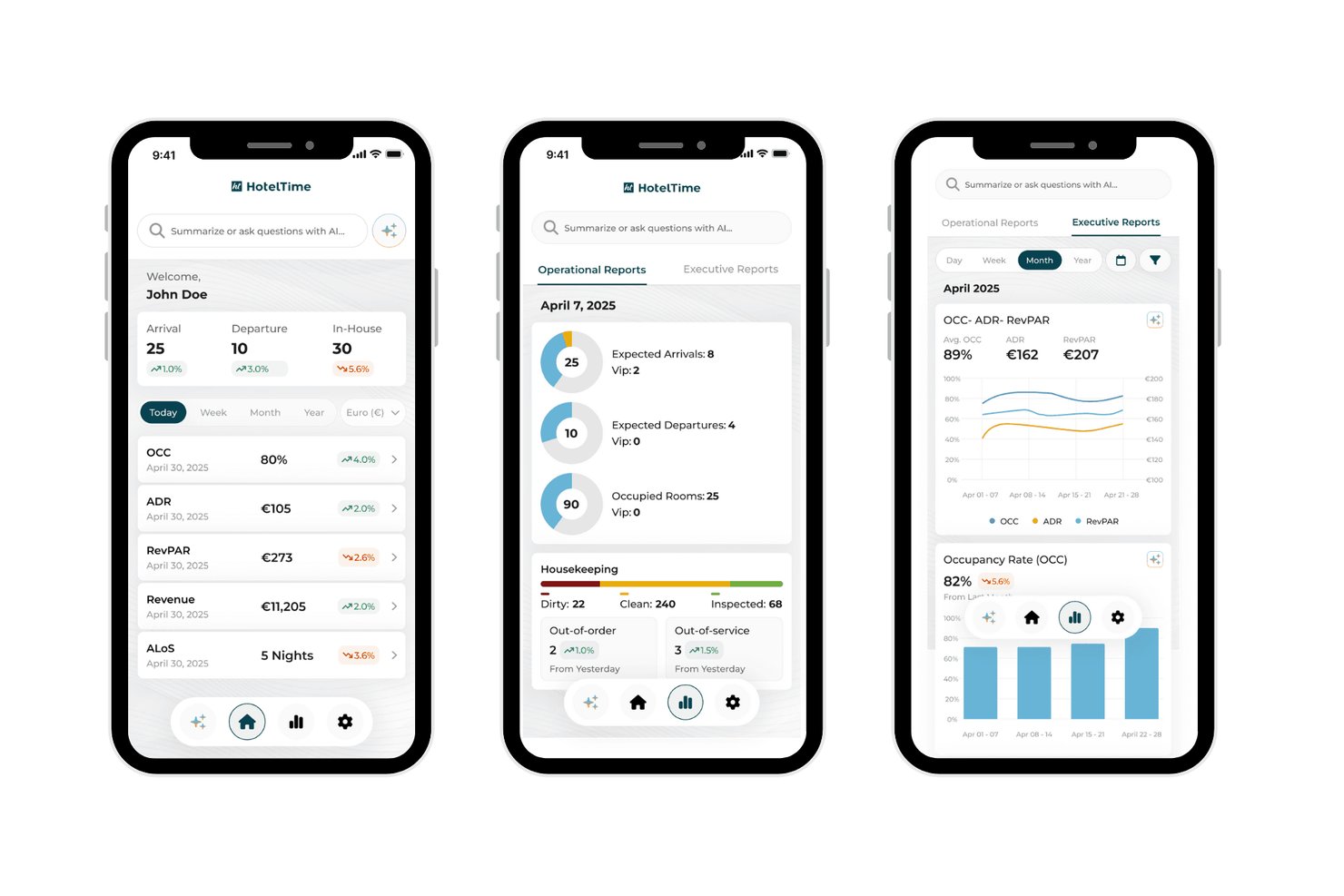
HOTELTIME is a cloud-based hotel management platform combining a PMS, native channel manager, commission-free booking engine, housekeeping app, Adyen-powered payments, and modular add-ons for F&B, spa, and events.
Who Is HOTELTIME Best For?
HOTELTIME is a strong fit for independent hotel owners and general managers who need real-time KPI visibility and an all-in-one platform covering PMS, housekeeping, and payments without relying on multiple vendors.
Why I Picked HOTELTIME
HOTELTIME earns its spot on my shortlist because of its AI-Powered Manager App, which gives owners and general managers real-time KPI visibility from any device. I love that you can ask natural-language questions and get instant answers on occupancy, ADR, RevPAR, and pick-up forecasts without pulling a single report. The Libero Concierge module layers on top of that by automating pre-arrival, in-stay, and post-stay guest communications, so your front desk isn't buried in routine touchpoints while you're monitoring performance on the go.
HOTELTIME Key Features
- Native channel manager: Syncs rates, availability, and inventory with major OTAs in real time, feeding reservations directly into the PMS.
- Lobby self-service kiosk: Supports contactless check-in and check-out with integrated card readers and door lock connectivity.
- Modular F&B and spa add-ons: Vento POS and Libero Spa connect restaurant, bar, and wellness operations directly to guest folios in the PMS.
- Adyen-powered payment processing: Handles pre-authorization, deposits, multi-currency transactions, and direct billing from a single PCI-compliant system.
HOTELTIME Integrations
HOTELTIME offers 60+ verified integrations, including SiteMinder, STAAH, RateGain, Profitroom, Atomize, IDeaS, Duetto, SALTO, ASSA ABLOY, and Adyen. Its public API supports custom integrations.
Pros and Cons
Pros:
- Native self-service kiosk supports contactless check-in
- Built-in concierge automates guest messaging workflows
- AI Manager App answers natural-language KPI queries
Cons:
- Mobile user experience needs further optimization
- Custom reporting and dashboards are limited

Best for AI-driven revenue and rate management
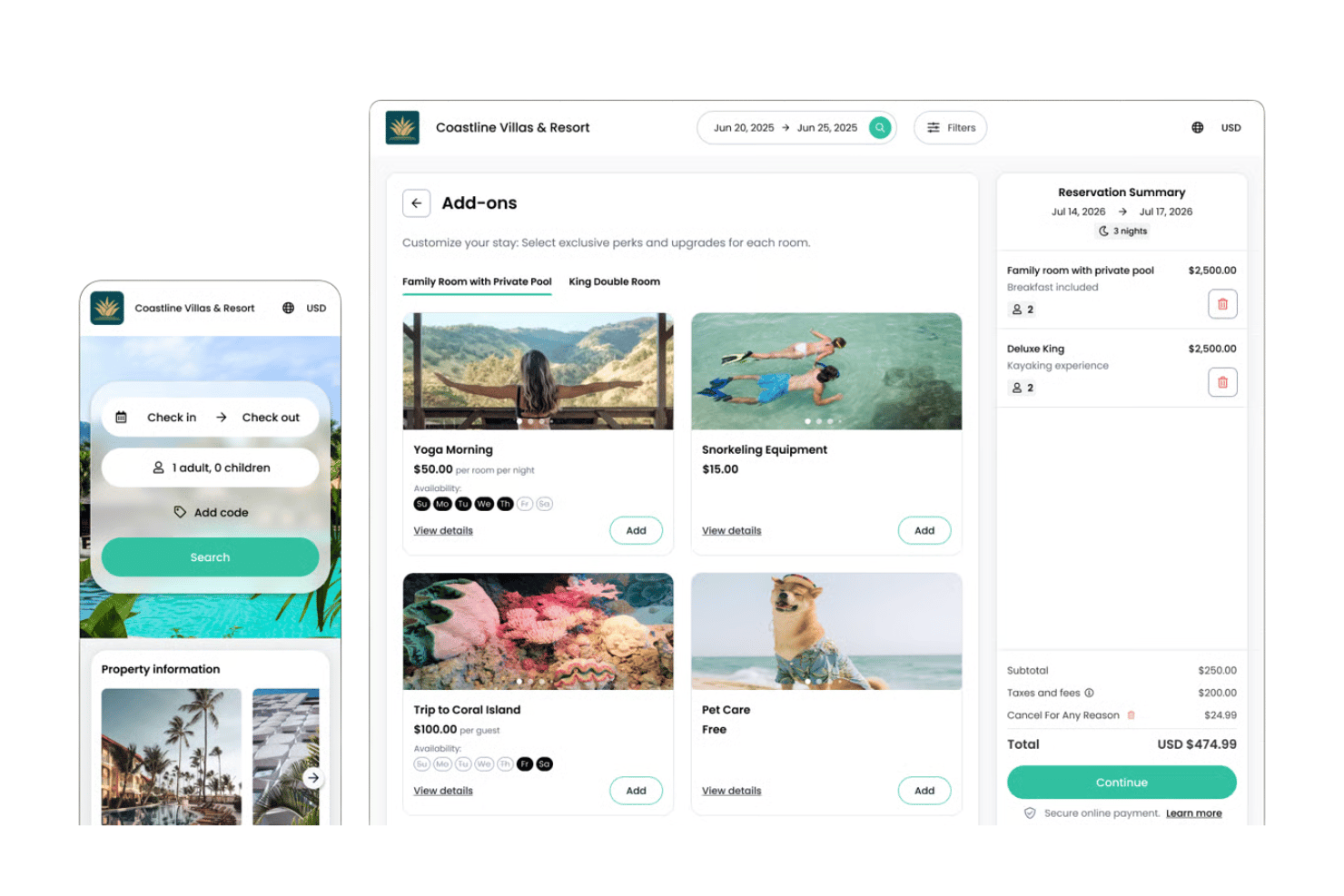
Cloudbeds is an all-in-one hotel management platform that unifies a PMS, channel manager, booking engine, housekeeping tools, guest messaging, and payment processing into a single cloud-based system.
Who Is Cloudbeds Best For?
Cloudbeds is a strong fit for independent hoteliers and boutique property managers who want PMS, channel management, and AI-driven revenue tools in one platform.
Why I Picked Cloudbeds
I picked Cloudbeds as one of the best because its Signals AI model does something most hotel management platforms still can't: it pulls live PMS, distribution, and market data into a single engine to generate 90-day demand forecasts and automated rate recommendations with plain-language explanations for why each change is suggested. I love that revenue managers can see competitor rate tracking and dynamic pricing updates without toggling between separate tools. That alone saves my team hours each week that would otherwise go toward manual rate shopping and spreadsheet reconciliation.
Cloudbeds Key Features
- Drag-and-drop reservation calendar: Manage room assignments and reservation edits visually across a calendar view that supports 4,000+ rooms and 30 concurrent users.
- Unified guest messaging inbox: Consolidates SMS, email, WhatsApp, and OTA message threads from Booking.com, Expedia, Airbnb, and more into a single interface with auto-translation.
- Contactless digital check-in: Guests complete registration cards, ID scanning, and digital signatures online via a web-based Guest Portal—no app download required.
- 450+ OTA channel sync: Rates and availability update in real time across 450+ distribution partners from one central inventory pool, with no added commission from Cloudbeds.
Cloudbeds Integrations
Cloudbeds offers 450+ Marketplace integrations, including Booking.com, Expedia, Airbnb, Vrbo, Agoda, QuickBooks, Xero, ASSA ABLOY, and Salto. Its REST API and webhooks support custom integrations.
Pros and Cons
Pros:
- Real-time OTA sync prevents overbookings
- Unified platform for PMS, revenue, messaging
- AI-driven rate recommendations with plain-language explanations
Cons:
- Reporting customization and accuracy are limited
- Customer support is inconsistent and slow

Best for built-in AI rate pricing
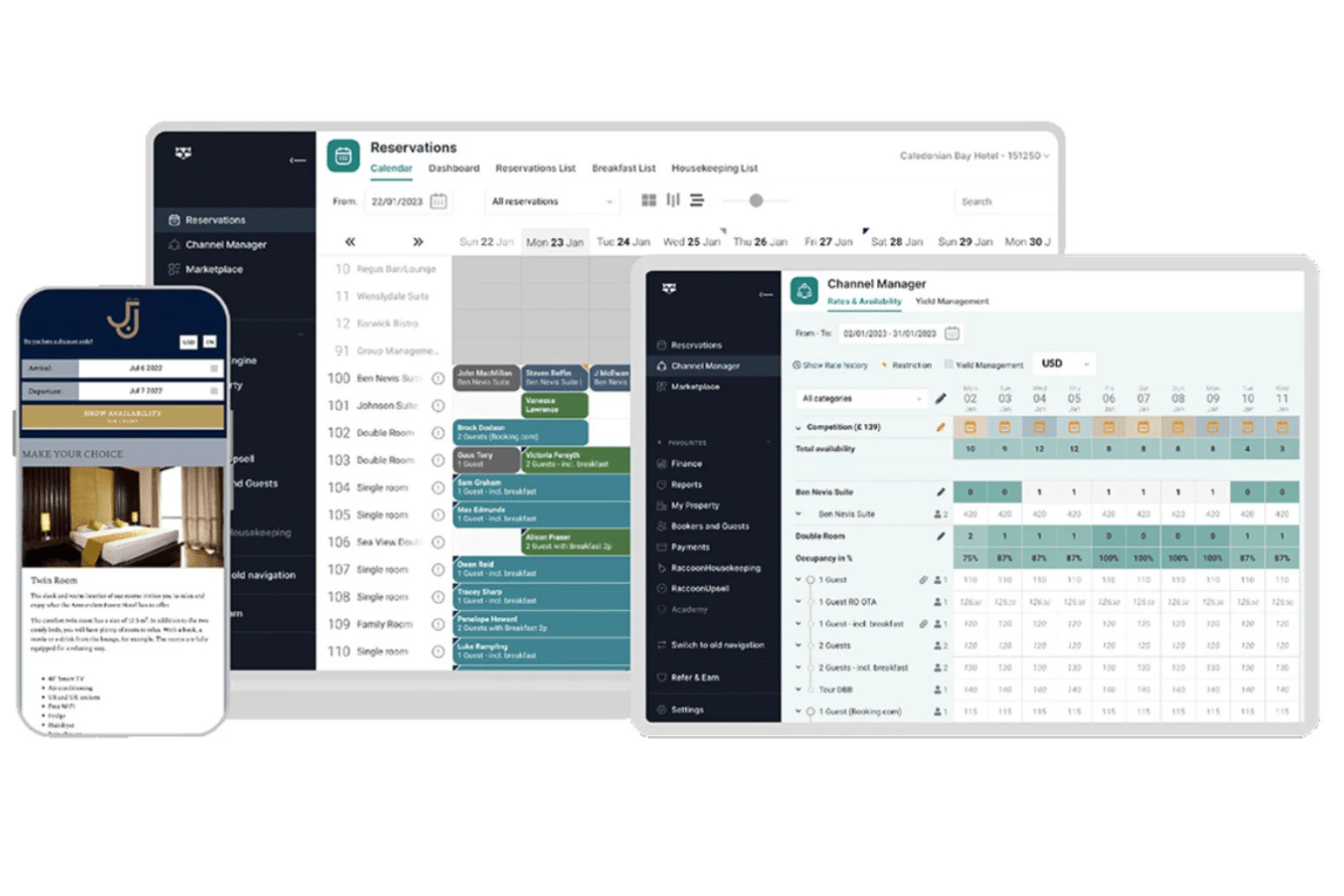
RoomRaccoon is an all-in-one hotel management platform for independent properties that brings together a PMS, channel manager, booking engine, payment processing, housekeeping tools, and AI-driven revenue management in a single system.
Who Is RoomRaccoon Best For?
RoomRaccoon is a strong fit for independent hotels, B&Bs, and small-to-mid-sized properties that want a single platform to manage reservations, distribution, payments, and pricing without stitching together separate tools.
Why I Picked RoomRaccoon
RoomRaccoon earns its spot on my shortlist because of RaccoonRev Plus, its built-in AI pricing engine that adjusts rates based on competitor data, booking pace, local events, and weather forecasts up to 365 days out. I like that it runs in Autopilot Mode for fully automated rate-setting or Manual Mode when I want to review suggestions before they go live. That's a level of native revenue intelligence most independent hotels would otherwise need a separate RMS subscription to access.
RoomRaccoon Key Features
- Drag-and-drop tapechart: A visual reservations calendar where you can manage room assignments, mid-stay moves, and occupancy at a glance.
- RaccoonHousekeeping mobile app: Staff view task assignments, update room statuses, and log minibar or maintenance issues directly from their smartphones.
- Commission-free booking engine: A direct booking engine embedded on your hotel website that processes reservations without OTA commission fees.
- 200+ channel connections with 5-second sync: Two-way rate, availability, and inventory updates push across all connected OTAs and distribution channels in approximately five seconds.
RoomRaccoon Integrations
RoomRaccoon’s integrations hub lists 300+ integrations, including Booking.com, Expedia, Airbnb, Vrbo, Google Hotel Ads, Lightspeed, QuickBooks, Stripe, PriceLabs, and Akia. Its open API supports custom integrations.
Pros and Cons
Pros:
- Native contactless check-in with ID scanning
- 5-second sync across 200+ booking channels
- Built-in AI dynamically sets future room rates
Cons:
- Guest messaging requires third-party integrations
- Reporting customization limited versus enterprise systems

Best for independent multi-property operators
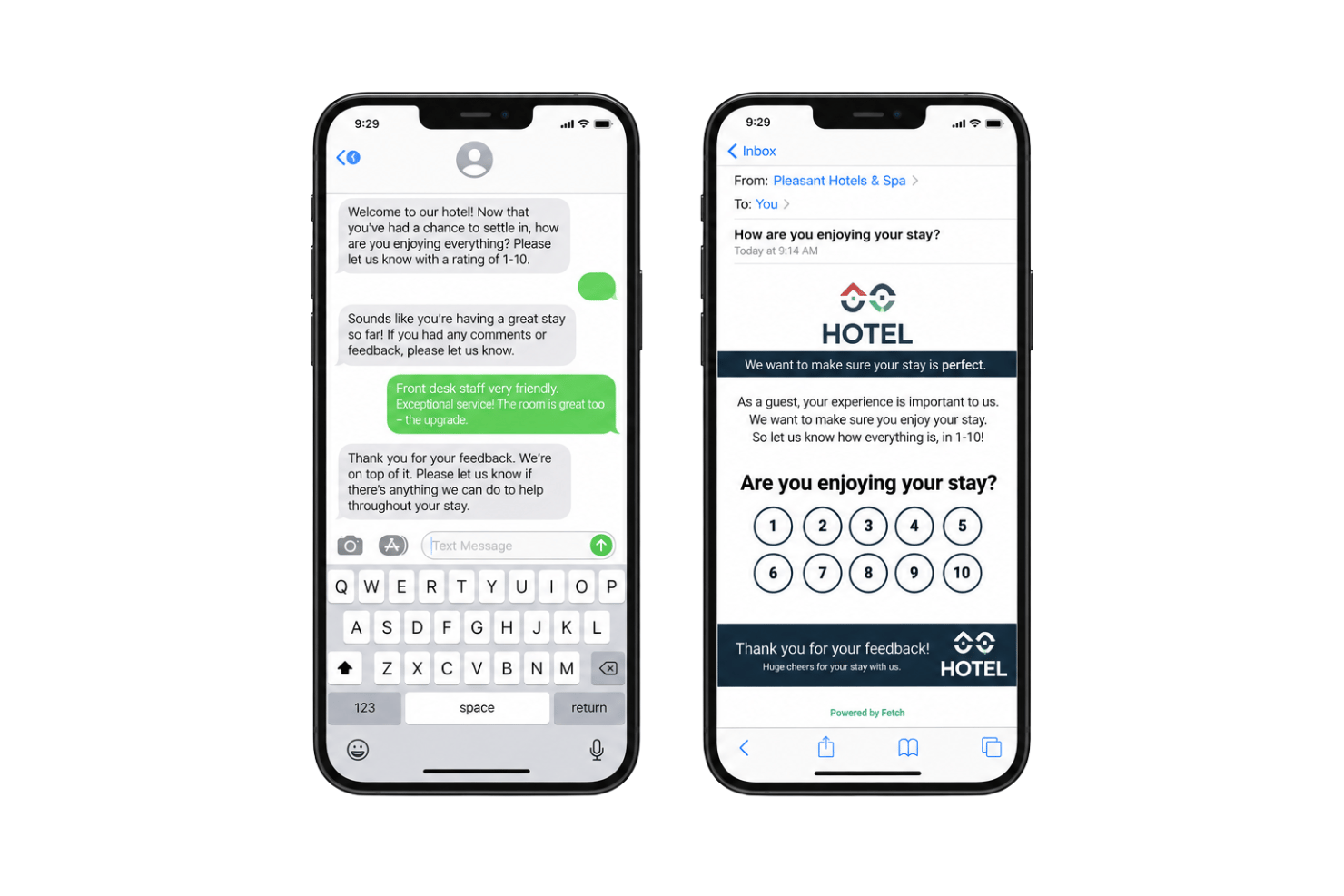
Maestro PMS is an all-in-one hotel management platform built on a single unified database, covering front office operations, reservations, housekeeping, work orders, payments, analytics, and guest engagement across single and multi-property portfolios.
Who Is Maestro PMS Best For?
Maestro PMS is a strong fit for independent hotels, resorts, and multi-property groups that need a single platform to manage every aspect of operations—from front desk and housekeeping to spa, activities, and loyalty.
Why I Picked Maestro PMS
Maestro PMS earns its spot on my shortlist because of how it handles multi-property operations on a single unified database—every guest profile, reservation, and folio is shared across all locations without syncing between separate systems. I particularly like the cross-property guest history and consolidated accounts receivable, which matter most when you're managing more than one independent property. The Maestro Touch tablet interface lets front desk staff serve guests anywhere on property with live PMS access, which is a genuinely practical feature for resort-style operations.
Maestro PMS Key Features
- GuestXMS two-way SMS messaging: Send and receive text messages with guests before arrival, during their stay, and after check-out directly within the PMS.
- MezzoPay embedded payments: Process contactless payments, tokenize card data, and manage pre-authorizations without a third-party payment gateway.
- Mobile housekeeping app: Room attendants update room statuses in real time from their mobile devices, triggering automatic SMS notifications to guests when rooms are ready.
- Analytics & BI dashboard: Track ADR, RevPAR, booking pace, cancellations, and revenue segmentation across single or multiple properties from one reporting interface.
Maestro PMS Integrations
Maestro PMS supports 800+ third-party integrations through its open API, including SiteMinder, Silverware POS, Fetch, Zaplox, Tripleseat, Canary Technologies, and b4checkin TransForm.
Pros and Cons
Pros:
- Tablet-based front desk interface for staff
- GuestXMS offers SMS guest messaging hub
- Multi-property operations managed in one database
Cons:
- Group rate configuration is complicated for users
- Interface is text-heavy and visually dated

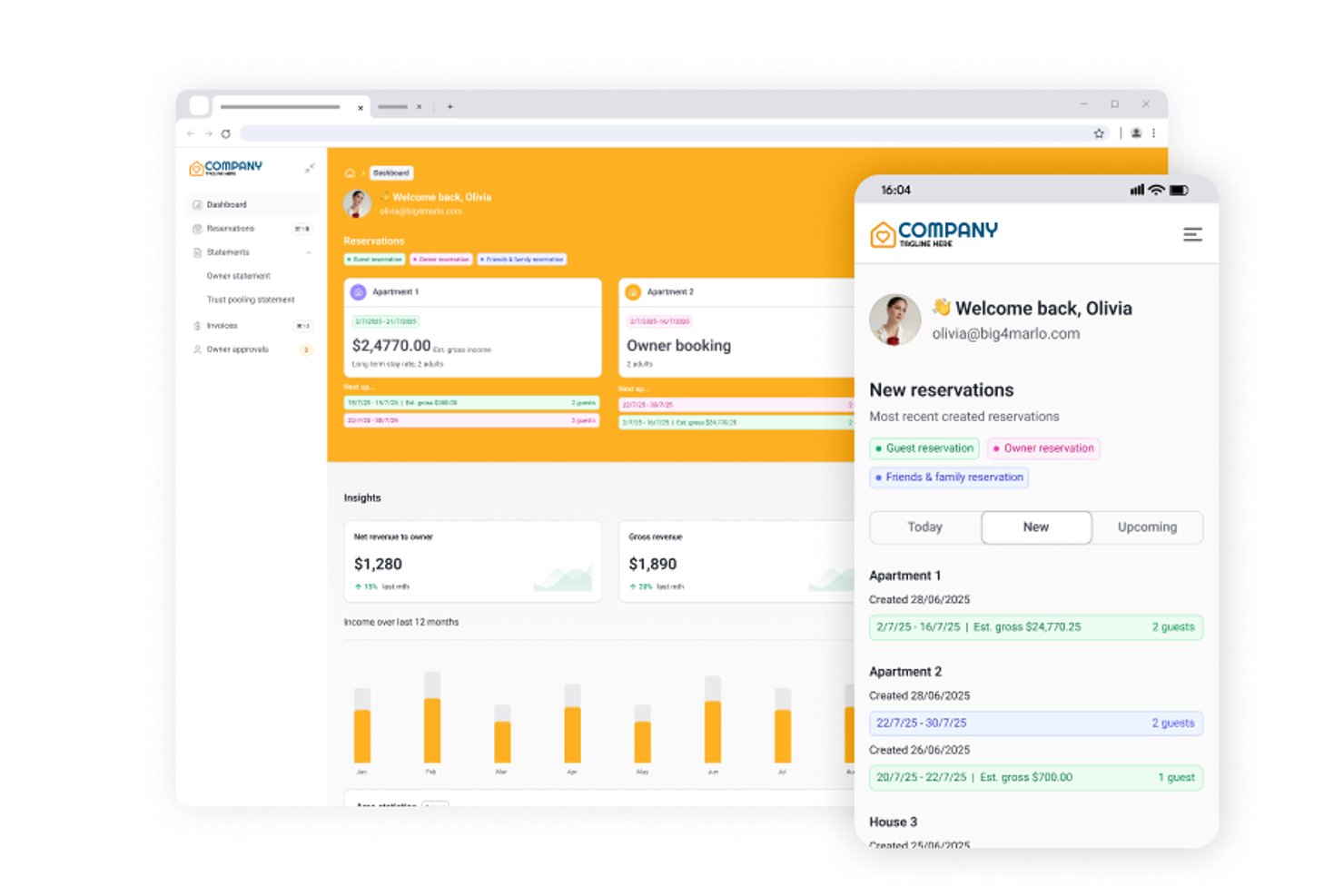
RMS Cloud is a cloud-native hotel management platform that combines a full PMS, built-in channel manager, direct booking engine, housekeeping, payment processing, and reporting in one system.
Who Is RMS Cloud Best For?
RMS Cloud is a strong fit for hotel operators who need a single platform to run everything from a small independent property to a multi-site portfolio.
Why I Picked RMS Cloud
RMS Cloud earns its spot on my shortlist because it's genuinely built to grow with you, running the same platform whether you're managing a 12-room boutique or a 700-property enterprise chain. I like that the built-in channel manager connects to 100+ OTAs with real-time two-way sync at no extra cost, which is rare at this price point. The MultiBAR dynamic pricing engine automatically adjusts rates based on occupancy triggers, so revenue management isn't a separate tool you have to bolt on.
RMS Cloud Key Features
- Guest Portal: Guests can complete pre-check-in, sign registration cards, and manage their own bookings online without front desk involvement.
- RMS Guest Rewards: A built-in loyalty program with customizable points, redemptions, and promotions tied directly to guest profiles.
- Communications Hub: Sends automated SMS and email correspondence triggered by arrival, in-stay, and post-departure events.
- Business Intelligence module: Generates 150+ report types covering occupancy, ADR, RevPAR, and multi-property financial performance.
RMS Cloud Integrations
RMS Cloud offers marketplace integrations with Booking.com, Expedia, Airbnb, Vrbo, Agoda, IDeaS, Duetto, RateGain, Xero, and QuickBooks. Its open REST API includes 530+ endpoints for custom integrations.
Pros and Cons
Pros:
- Flexible for single or multi-property groups
- Open API with 530+ endpoints available
- Built-in channel manager covers 100+ OTAs
Cons:
- Dynamic rate setup can require vendor support
- System freezes and slow performance reported
eviivo
Best for OTA sync beyond rates and availability
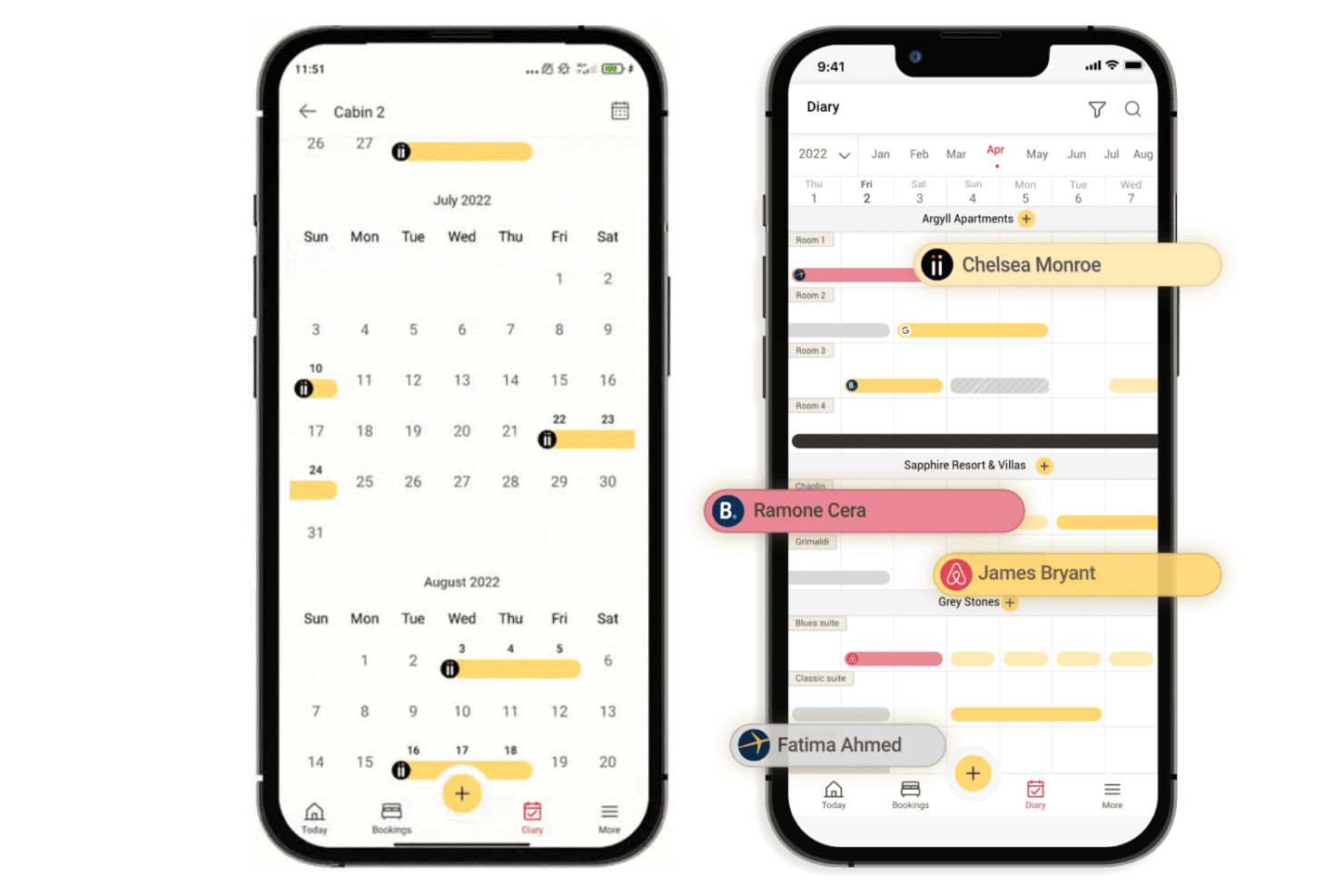
eviivo is a cloud-based hotel management suite that combines a PMS, channel manager, direct booking engine, housekeeping tools, guest messaging, and payment processing in one platform built for independent hotels, B&Bs, and multi-property portfolios.
Who Is eviivo Best For?
eviivo is a strong fit for independent hoteliers, B&B owners, and multi-property portfolio managers who distribute across multiple OTAs and want to manage that presence from one place.
Why I Picked eviivo
eviivo earns its spot on my shortlist because its channel manager syncs far more than just rates and availability across 100+ OTAs. I'm talking photos, policies, promotions, taxes, guest messages, and reviews, all pushed out from one place without touching individual extranets. I also like the unified Guest Messaging Hub, which pulls Booking.com, Airbnb, Expedia, and WhatsApp conversations into a single inbox with AI-suggested replies.
eviivo Key Features
- Contactless check-in: Guests complete digital registration cards with ID/passport scanning, and the system delivers time-limited door codes via smart lock integrations automatically.
- AI dynamic pricing: A built-in pricing engine draws on 100+ data signals, including competitor rates and local events, to adjust rates automatically with manual override available.
- Multi-property booking calendar: A color-coded, drag-and-drop calendar consolidates reservations across all properties and room types into a single view.
- Commission-free booking engine: A direct booking engine embeds on your website with upsell options, promo codes, multi-currency support, and no revenue share on confirmed bookings.
eviivo Integrations
eviivo offers 200+ marketplace integrations, including Booking.com, Airbnb, Vrbo, Expedia, Agoda, Tripadvisor, Google Hotel Ads, Amadeus, QuickBooks, and Xero. Its open APIs support custom connections, and Zapier is available.
Pros and Cons
Pros:
- Built-in dynamic pricing and AI suggestions
- Unified guest messaging across email and WhatsApp
- Syncs photos, policies, and promos to OTAs
Cons:
- Some U.S. users find workflows confusing
- Key features require multiple paid add-ons
Other Hotel Management Apps
Here are some additional hotel management app options that didn’t make it onto my shortlist, but are still worth checking out:
- Yanolja Cloud Solution
For built-in dynamic pricing and compset tracking
- Mews
For AI-driven rate and revenue automation
- Little Hotelier
For small properties managing their own bookings
- roommaster
For commission-free direct booking growth
- Hotelogix
For SMB hotels needing all-in-one cloud ops
- HotelRunner
For distribution across 150+ OTA channels
- Beds24
For direct bookings across 100+ OTA channels
- HotelKey
For enterprise brand-approved PMS deployment
- Preno
For Xero-native indie property management
- Guestline
For EU hotel groups needing one platform


How I Evaluate Hotel Management Apps
I split my evaluation into core operational must-haves—like reservation management and OTA sync—and the differentiators that separate a workhorse PMS from a tool that actually fits how your property runs.
Core Functionality (Table Stakes for This List)
When I'm selecting tools for my list, I rank each one on a scale from 0 (does not offer the functionality) to 5 (excels in this area) for each core functionality listed below. I then calculate the tool's total score into a percentage, using 75% as a benchmark to help assess its overall fit for the list.
- Property management system: I evaluate how each app handles reservations, guest profiles, room inventory, and folios—checking whether it supports group bookings and multi-property setups.
- Channel manager: Real-time two-way sync with major OTAs like Booking.com and Expedia is the baseline. I look at how many channels each tool connects to and whether pooled inventory prevents double bookings.
- Booking engine: Every hotel needs a commission-free way to capture direct reservations. I check for website widget integration, payment capture, and extras like promo codes, upsells, and multi-currency support.
- Housekeeping and operations: I look at whether staff can update room status from a mobile device and receive task assignments in real time, since delays between housekeeping and the front desk directly affect guest wait times.
- Payment processing: Pre-authorizations, deposit handling, and folio posting all need to work without manual workarounds. Tools like Mews and Cloudbeds offer integrated payment flows, so I compare how each app handles tokenization and multi-currency transactions.
- Reporting and analytics: I check for standard KPIs—occupancy, ADR, RevPAR—and whether the platform offers custom dashboards, forecasting, or automated report scheduling that managers can access on the go.
Once I have a list of tools that meet the criteria, I consider what sets each platform apart.
Differentiating Factors (What Sets Vendors Apart)
Here's how I compare and contrast different vendors:
Standout Features
I check whether each app includes built-in revenue management tools—dynamic pricing rules, competitor rate shopping, and demand-based yield adjustments—so you don't need a separate RMS to protect your ADR. A guest CRM with unified stay history and loyalty tracking is equally important; platforms like Cloudbeds and RoomRaccoon let you segment past guests and trigger personalized upsell offers that drive direct rebookings. I also evaluate contactless check-in depth, from ID scanning to mobile key delivery, since a half-built workflow still leaves guests waiting at the desk.
Beyond Features
I look at how each platform handles PCI DSS compliance and guest data privacy, since a breach at even a small property can be devastating. Integration depth matters just as much—I check whether a tool offers certified two-way OTA connections plus pre-built links to POS, door locks, and accounting systems like Xero or QuickBooks. A thin integration layer means more manual work for your team. I also evaluate onboarding support, especially data migration from a legacy PMS and whether you get a dedicated setup manager or just a help article library.
How to Choose a Hotel Management App
How can you tell which hotel management app will actually match your operational needs, compliance demands, and service expectations?
| If your priority is... | Look for... |
|---|---|
| Managing bookings, housekeeping, and payments | A unified dashboard with real-time staff updates |
| Optimizing pricing and revenue automatically | Built-in AI yield, compset, and dynamic rates |
| Providing contactless guest journeys | Deep mobile check-in, kiosk, and e-key support |
| Growing across multiple or complex properties | Verified multi-property, chain, or casino-ready setup |
| Direct booking and OTA integration | Two-way channel manager plus commission-free booking engine |
How to Vet Your Shortlist
- Test daily workflows: Run a 7-day trial by queuing housekeeping tasks, front desk check-ins, and group reservations with your real team.
- Prove revenue automation: Request a demo scenario showing AI rate changes based on a local event or compset data within 24 hours.
- Check contactless capabilities: Complete a mobile check-in flow—ID scan through mobile key—for three staff profiles in under one hour.
- Audit integration depth: Ask for a certified partner list for OTAs, POS, payments, and door lock vendors specific to your region.
- Make the core tradeoff: Prioritize rapid onboarding for small teams, or long-term fit if you need deep configuration, property group controls, or extended compliance.
What Are Hotel Management Apps?
Hotel management apps are software platforms that let you oversee bookings, guest profiles, payments, room status, and daily hotel operations from a unified dashboard. These tools support efficient front desk management, real-time housekeeping coordination, and automated rate updates.
By centralizing critical workflows, hotel management apps help you adapt quickly to guest needs and market demands while maintaining service standards across different property types or multiple locations.
Features of Hotel Management App
When selecting a hotel management app, keep an eye out for the following key features:
- Property management system: Lets you manage reservations, guest profiles, room assignments, and folios through a central dashboard. Supports daily front desk tasks and group or multi-property needs.
- Channel manager: Connects your inventory to online travel agencies and global distribution systems for real-time updates. Helps prevent double bookings and simplifies rate parity across channels.
- Booking engine: Captures direct reservations through your website with capabilities for payment collection, discounts, upsells, and extras. Enables hotels to drive commission-free bookings and customize the guest journey.
- Housekeeping management: Tracks room status, schedules cleaning tasks, and updates staff assignments in real time. Allows for speedy communication between housekeeping and the front desk, reducing wait times for guests.
- Payment processing: Handles deposits, pre-authorizations, and multi-currency payments securely. Supports automated folio posting and compliance standards so staff do not need to use manual workarounds.
- Reporting and analytics: Provides dashboards and automated reports for occupancy, ADR, RevPAR, and other performance metrics. Supports forecasting and informed business decisions for hotel managers.
- Contactless guest experience: Enables pre-arrival check-in, ID verification, mobile keys, and digital payments. Reduces in-person waits and aligns with current guest expectations for self-service.
- Integrated guest CRM: Stores guest history, preferences, and loyalty status to support personalized service and targeted marketing campaigns. Helps foster repeat stays and drive direct rebookings.
- Automated revenue management: Adjusts pricing dynamically based on demand, local events, or competitor rates. Protects your average daily rate and maximizes revenue opportunities without needing a separate tool.
- Third-party integrations: Connects easily with POS systems, accounting software, keycard systems, and other hospitality tools. Reduces manual work and ensures your tech stack operates as a unified system.
Benefits of Hotel Management Apps
Implementing hotel management apps provides several benefits for your team and your business. Here are a few you can look forward to:
- Centralized operations: Manage bookings, guest details, payments, and room status from one dashboard, reducing the need for manual data entry across multiple systems.
- Real-time staff coordination: Use mobile access and task assignments to keep front desk and housekeeping teams in sync, which speeds up room turnover and minimizes guest wait times.
- Automated revenue management: Adjust rates dynamically based on demand, competitor pricing, or local events, protecting your average daily rate without extra software.
- Boosted direct bookings: Capture commission-free reservations with integrated booking engines and website widgets, letting you control the guest journey and reduce reliance on OTAs.
- Contactless guest experiences: Enable digital check-in, ID scanning, mobile key delivery, and online payments, aligning with guest expectations for convenience and self-service.
- Integrated reporting and analytics: Access dashboards for occupancy, ADR, RevPAR, and forecasting, helping managers make timely, informed business decisions.
- Secure payment and data handling: Ensure PCI DSS compliance and reliable payment processing flows, reducing liability risks and protecting sensitive guest information.
Costs and Pricing of Hotel Management Apps
Selecting hotel management apps requires an understanding of the various pricing models and plans available. Costs vary based on features, team size, add-ons, and more. The table below summarizes common plans, their average prices, and typical features included in hotel management app solutions:
Plan Comparison Table for Hotel Management Apps
| Plan Type | Average Price | Common Features |
|---|---|---|
| Free Plan | $0 | Basic reservation management, limited channel connections, entry-level reporting, and email support. |
| Personal Plan | $30-$60/property/month | Reservation management, guest profiles, direct booking engine, limited OTA sync, and mobile access. |
| Business Plan | $80-$200/property/month | Multi-channel manager, direct booking engine, payment processing, reporting and analytics, housekeeping tools, and standard integrations. |
| Enterprise Plan | $250-$600+/property/month | Advanced operations, revenue management, multi-property setup, custom integrations, priority support, and compliance features. |
Hotel Management App FAQs
Here are some answers to common questions about hotel management apps:
What integrations should I look for in a hotel management app?
You should look for integrations that directly support your core operations and guest journey. These usually include OTA (online travel agency) channel managers, accounting tools like Xero or QuickBooks, payment gateways, POS (point-of-sale) systems, and door lock/guest key integrations. The right integrations save your team manual work and keep your tech stack running smoothly as you grow.
Can hotel management apps help small properties or independent hotels?
Yes, many hotel management apps are designed for small hotels, B&Bs, and independents. Options like Little Hotelier and Preno cater specifically to properties with leaner teams. You’ll find simple reservation management, direct booking, and essential integrations without the bulk or price of tools aimed at large chains.
How do hotel management apps improve housekeeping efficiency?
Hotel management apps let your housekeeping team update room status, receive task assignments, and report issues directly from mobile devices. This minimizes communication gaps with the front desk, speeds up room turnover, and reduces guest wait times during peak check-in periods.
Are these apps secure for handling guest payment data?
Yes, top hotel management apps use PCI DSS-compliant payment processing and offer features for secure, tokenized transactions. Always confirm the app’s compliance certifications and look for clear controls limiting staff access to sensitive data—this is key to minimizing risks and meeting industry standards.
What’s the difference between a channel manager and a booking engine?
A channel manager syncs your room availability and rates across OTAs (like Booking.com, Expedia, Airbnb), preventing double bookings. A booking engine is the tool that lets guests book directly from your own website, usually with payment and upsell options. Both are crucial if you want flexible distribution and more commission-free bookings.
How can I compare hotel management apps before buying?
Start a trial using your real team and workflows for at least a week. Test daily tasks like front desk check-ins, group bookings, and housekeeping updates. Ask providers for a demo of automated rate changes based on local events, and request integration partner lists for your region to confirm the depth of third-party connections.