

10 mejores programas de ventas y catering para hoteles de 2026

10 Lista de los mejores programas de ventas y catering para hoteles


Gestionar un hotel puede parecer como hacer malabarismos con una docena de pelotas a la vez. Coordinas eventos, gestionas reservas y te aseguras de que los huéspedes disfruten de una excelente estancia. No es una tarea sencilla, y el software adecuado puede ayudarte a aligerar la carga.
Según mi experiencia, el software de ventas y catering para hoteles puede simplificar tus operaciones diarias. Permite que tu equipo se concentre en lo que realmente importa: ofrecer un servicio excelente a tus huéspedes.
He probado y analizado diversas soluciones de software para ofrecerte las mejores opciones disponibles. Encontrarás información sobre las funciones, las ventajas y desventajas, y lo que cada herramienta puede aportar a tu negocio. Analicemos las mejores opciones y veamos cuál se adapta a tus necesidades.
Por qué confiar en nuestras recomendaciones de software
Nuestro equipo lleva probando y evaluando software desde 2012. Como líderes del sector hotelero, sabemos lo difícil —y lo importante— que es elegir el software adecuado.
Para esta guía, evaluamos las herramientas mediante pruebas prácticas e investigación independiente, puntuando las herramientas según nuestros criterios de selección.
Nuestras reseñas reflejan nuestro criterio editorial humano, no un discurso de ventas.
Resumen de los mejores programas de ventas y catering para hoteles
Esta tabla comparativa resume los detalles de precios de mis principales selecciones de software de ventas y catering para hoteles para ayudarte a encontrar la mejor opción para tu presupuesto y las necesidades de tu negocio.
| Tool | Best For | Trial Info | Price | ||
|---|---|---|---|---|---|
| 1 | Ideal para la gestión de eventos todo en uno | Demo gratuita disponible | Desde $249/mes | Website | |
| 2 | La mejor opción para la gestión móvil en tiempo real | Demostración gratuita disponible | Precio bajo petición | Website | |
| 3 | Ideal para soluciones en la nube fáciles de usar | Demostración gratuita disponible | Desde $159/mes | Website | |
| 4 | Ideal para herramientas de eventos personalizables | Demostración gratuita disponible | Precio a consultar | Website | |
| 5 | Ideal para soluciones de industria impulsadas por IA | Demostración gratuita disponible | Precio bajo solicitud | Website | |
| 6 | Mejor para sistemas de nivel empresarial | Demostración gratuita disponible | Precio bajo petición | Website | |
| 7 | La mejor opción para soluciones de plataforma integrada | Demostración gratuita disponible | Precios bajo solicitud | Website | |
| 8 | Ideal para soluciones hoteleras integradas | Demostración gratuita disponible | Precios bajo consulta | Website | |
| 9 | Ideal para la gestión de eventos pequeños | Prueba gratuita de 30 días | Desde $10/sala de eventos/mes | Website | |
| 10 | Ideal para acceso a la nube desde cualquier lugar | Demostración gratuita disponible | Precio bajo solicitud | Website |
Análisis de los mejores programas de ventas y catering para hoteles
A continuación se incluyen mis resúmenes detallados de los mejores programas de ventas y catering para hoteles que llegaron a mi lista. Mis análisis examinan las funciones principales, las ventajas y desventajas, las integraciones y los casos de uso ideales de cada herramienta para ayudarte a encontrar la mejor opción.

Ideal para la gestión de eventos todo en uno
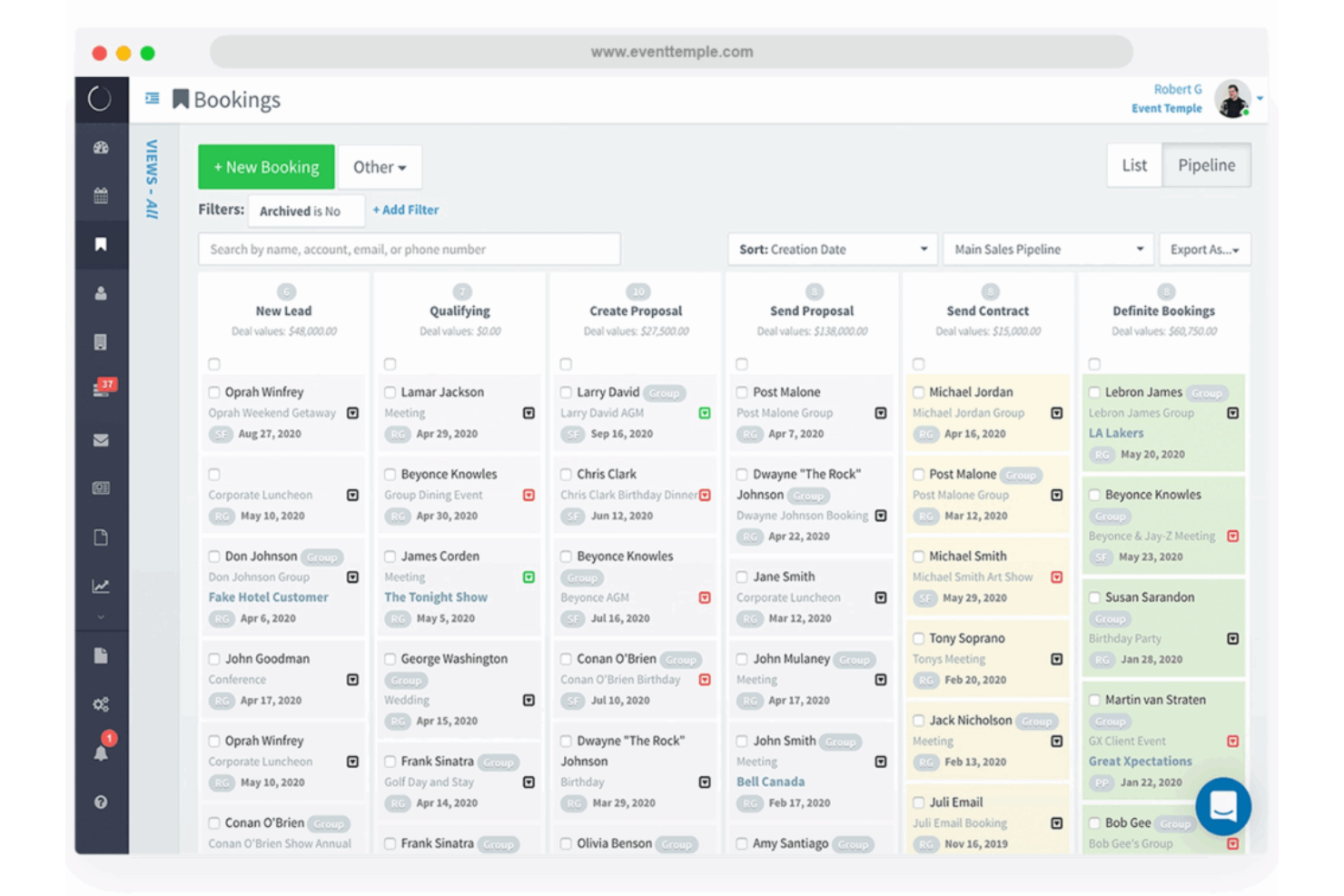
Event Temple es la solución de confianza para lugares que van desde espacios para eventos de una sola sala hasta centros de conferencias de gran escala. Unifica todo el ciclo de vida del evento con una interfaz intuitiva, creando un centro centralizado para ventas, operaciones, gestión de cuentas y coordinación de eventos.
Por qué elegí Event Temple: Ofrece una plataforma todo en uno que simplifica la gestión de eventos de principio a fin. El software cuenta con plantillas de propuestas personalizables que te ayudan a crear propuestas profesionales rápidamente. Su CRM incorporado asegura que puedas gestionar las relaciones con los clientes de manera efectiva. Las herramientas de informes proporcionan información sobre el desempeño en ventas, lo cual es invaluable para la planificación estratégica.
Funciones y conectores destacados:
Funciones incluyen un calendario visual que te permite gestionar reservas y eventos de un vistazo. Los recordatorios automáticos de seguimiento mantienen a tu equipo proactivo en la comunicación con los clientes. El software también ofrece un detallado seguimiento de ingresos, ayudándote a monitorear el desempeño financiero.
Las integraciones incluyen Salesforce, Google Calendar, Microsoft Outlook, Mailchimp, QuickBooks, Stripe, PayPal, Eventbrite, Zoom y Constant Contact.
Pros and Cons
Pros:
- Seguimiento de pipeline de CRM sin esfuerzo
- Flujos de trabajo y recordatorios automatizados
- Propuestas electrónicas integradas y firmas digitales
Cons:
- La aplicación móvil carece de funciones completas
- Pequeñas demoras con grandes volúmenes de datos
- Curva de aprendizaje de módulos personalizados

La mejor opción para la gestión móvil en tiempo real
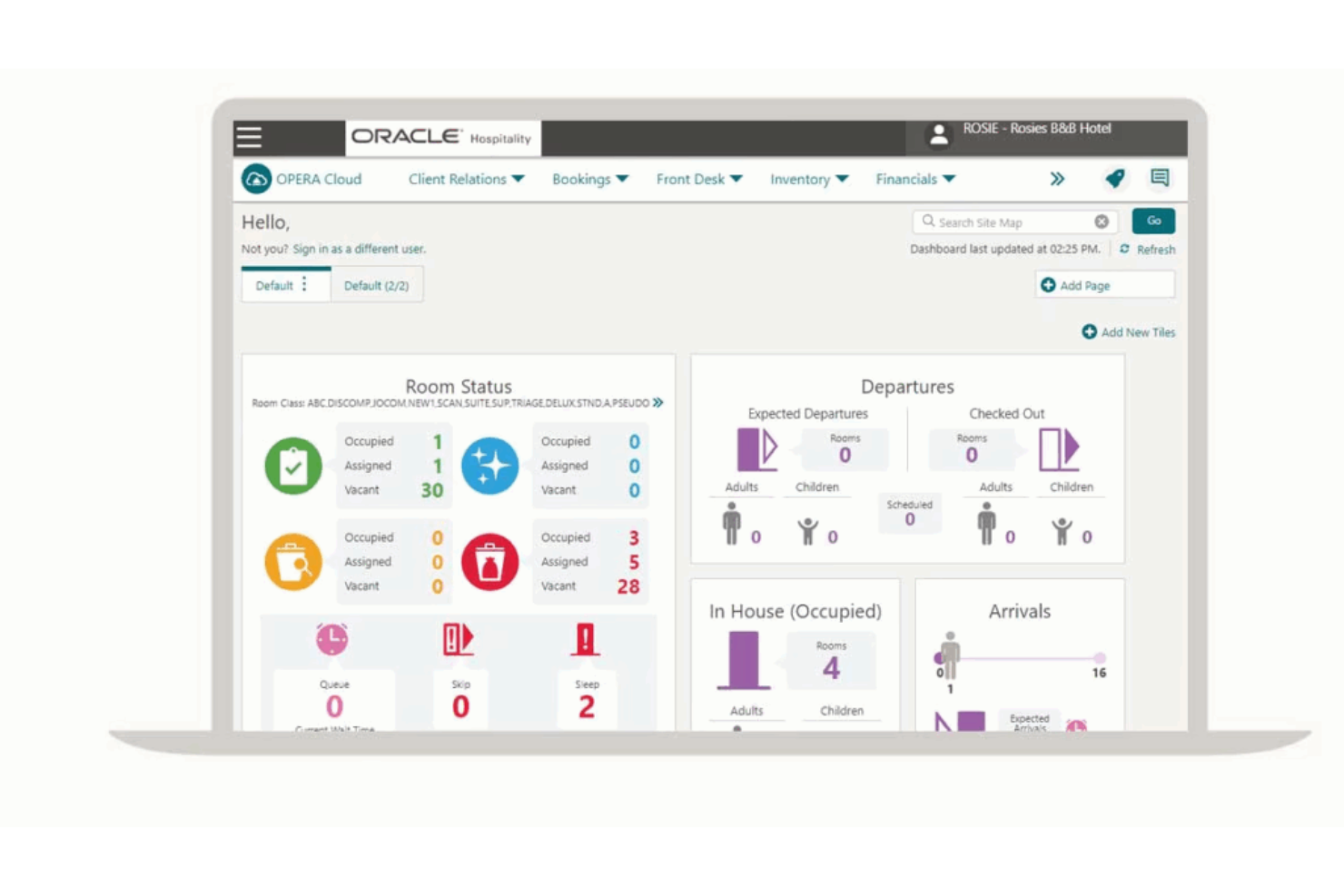
Ventas y gestión de eventos de OPERA Cloud permite a los hoteles gestionar reservas, eventos y servicios de catering desde cualquier lugar. Su diseño pensado para dispositivos móviles facilita las inspecciones fuera de las instalaciones, las actualizaciones en tiempo real y una integración fluida con el PMS para una gestión eficiente de eventos.
Por qué elegí OPERA Cloud: Ofrece capacidades de gestión móvil en tiempo real, lo que permite a tu equipo mantenerse actualizado mientras está en movimiento. El software admite una planificación compleja de eventos con funciones detalladas de programación y asignación de recursos. Su acceso móvil garantiza que puedas gestionar las operaciones desde cualquier lugar. Oracle ofrece herramientas completas de generación de informes que ayudan a analizar el rendimiento y mejorar la toma de decisiones.
Funciones e integraciones destacadas:
Las funciones incluyen herramientas detalladas de programación que agilizan la planificación de eventos. El acceso móvil del software permite gestionar desde cualquier ubicación. Las herramientas avanzadas de generación de informes ofrecen información sobre el rendimiento operativo y ayudan a tomar decisiones estratégicas.
Las integraciones incluyen Salesforce, Microsoft Outlook, Google Calendar, QuickBooks, PayPal, Stripe, Zoom, Eventbrite, Mailchimp y Constant Contact.
Pros and Cons
Pros:
- Gestión móvil de eventos
- Panel unificado de clientes potenciales
- Registro visual de funciones
Cons:
- Edición compleja de menús
- Problemas de sincronización entre equipos
- Panel desordenado

Ideal para soluciones en la nube fáciles de usar
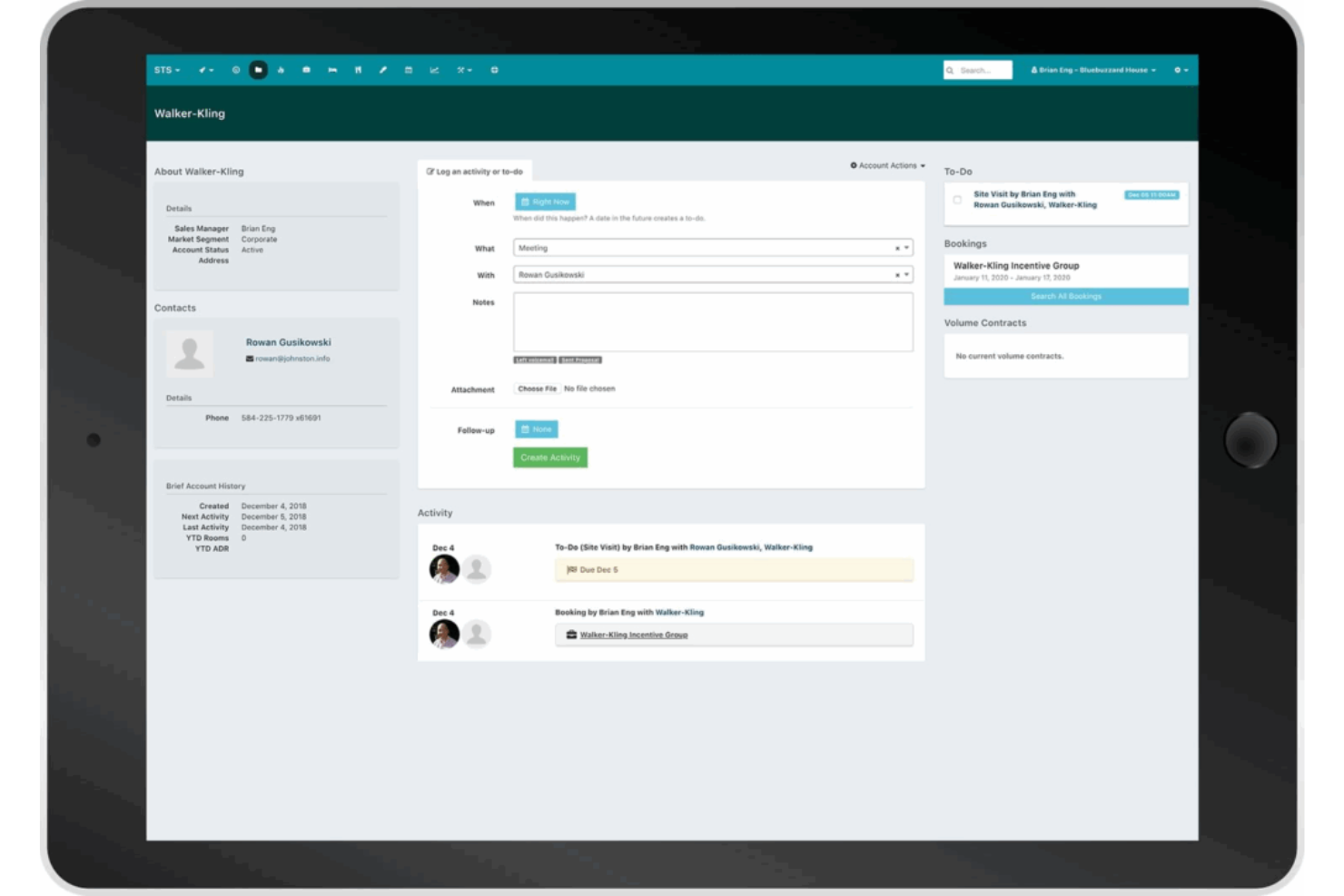
STS Cloud agiliza todo el flujo de trabajo al ofrecer aprendizaje rápido, precios fijos, actualizaciones en tiempo real e integración con PMS. Su arquitectura nativa en la nube garantiza acceso instantáneo y adopción en todos los dispositivos.
Por qué elegí STS Cloud: Ofrece una interfaz fácil de usar que simplifica la gestión de eventos para tu equipo. Su naturaleza basada en la nube garantiza accesibilidad desde cualquier dispositivo, lo que facilita la gestión remota. Sus plantillas de eventos personalizables te permiten adaptar el software a tus necesidades específicas. Las herramientas de informes proporcionan información valiosa sobre el desempeño operativo, ayudando en la toma de decisiones.
Funciones destacadas e integraciones:
Funciones incluyen plantillas de eventos personalizables que agilizan los procesos de planificación. El calendario centralizado del software ayuda a gestionar reservas y horarios de manera eficiente. Las herramientas de informes en tiempo real ofrecen información sobre varios aspectos de tus operaciones, mejorando la toma de decisiones.
Integraciones incluyen Microsoft Outlook, Google Calendar, Salesforce, QuickBooks, PayPal, Stripe, Mailchimp, Zoom, Eventbrite y Constant Contact.
Pros and Cons
Pros:
- Integración intuitiva con ProposalPath
- Fusión de documentos en tiempo real
- Vista visual del diario de funciones
Cons:
- No hay disponibilidad de API
- Al copiar eventos falta información
- Problema de separación entre reservas de actividades

Ideal para herramientas de eventos personalizables
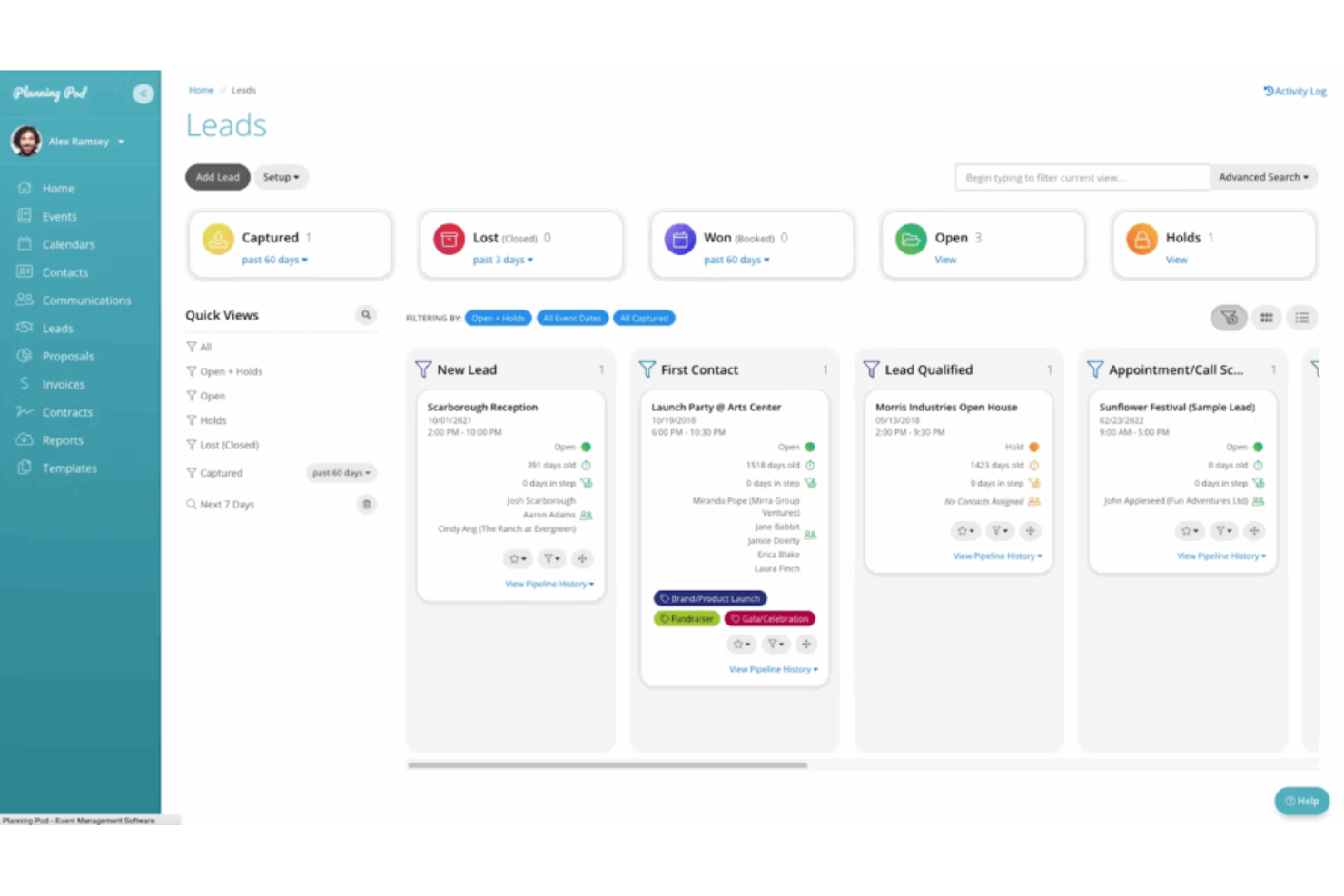
Planning Pod es una plataforma integral basada en la web para la gestión de eventos y recintos que ofrece más de 40 herramientas integradas. Cuenta con funciones de catering, CRM, propuestas, facturación y portal para clientes, proporcionando así una solución completa para los equipos de ventas y catering de hoteles.
Por qué elegí Planning Pod: Ofrece herramientas diseñadas específicamente para la gestión de eventos, incluyendo automatizaciones, CRM y gestión de proyectos. Estas funciones lo hacen ideal para personalizar los procesos de planificación de eventos. Sus capacidades para la gestión de recintos permiten administrar reservas y horarios de forma eficiente. Destaca por su fácil personalización, lo que permite a los hoteles adaptar su imagen y optimizar sus flujos de trabajo.
Funciones y integraciones destacadas:
Funciones incluyen más de 40 herramientas integradas, como CRM, gestión de proyectos y funciones de presupuestación. El software ofrece plantillas y opciones de marca personalizables, lo que permite adaptarlo a las necesidades de tu negocio. Sus herramientas centralizadas de comunicación facilitan la colaboración entre clientes, personal y proveedores.
Integraciones incluyen QuickBooks, Salesforce, Google Calendar, Microsoft Outlook, Mailchimp, Eventbrite, Zoom, Stripe, PayPal y Constant Contact.
Pros and Cons
Pros:
- Plano intuitivo de arrastrar y soltar
- Generación rápida de BEO
- Transferencia de tarifas al cliente
Cons:
- Experiencia móvil limitada
- Sin integración con POS
- Navegación de la interfaz complicada

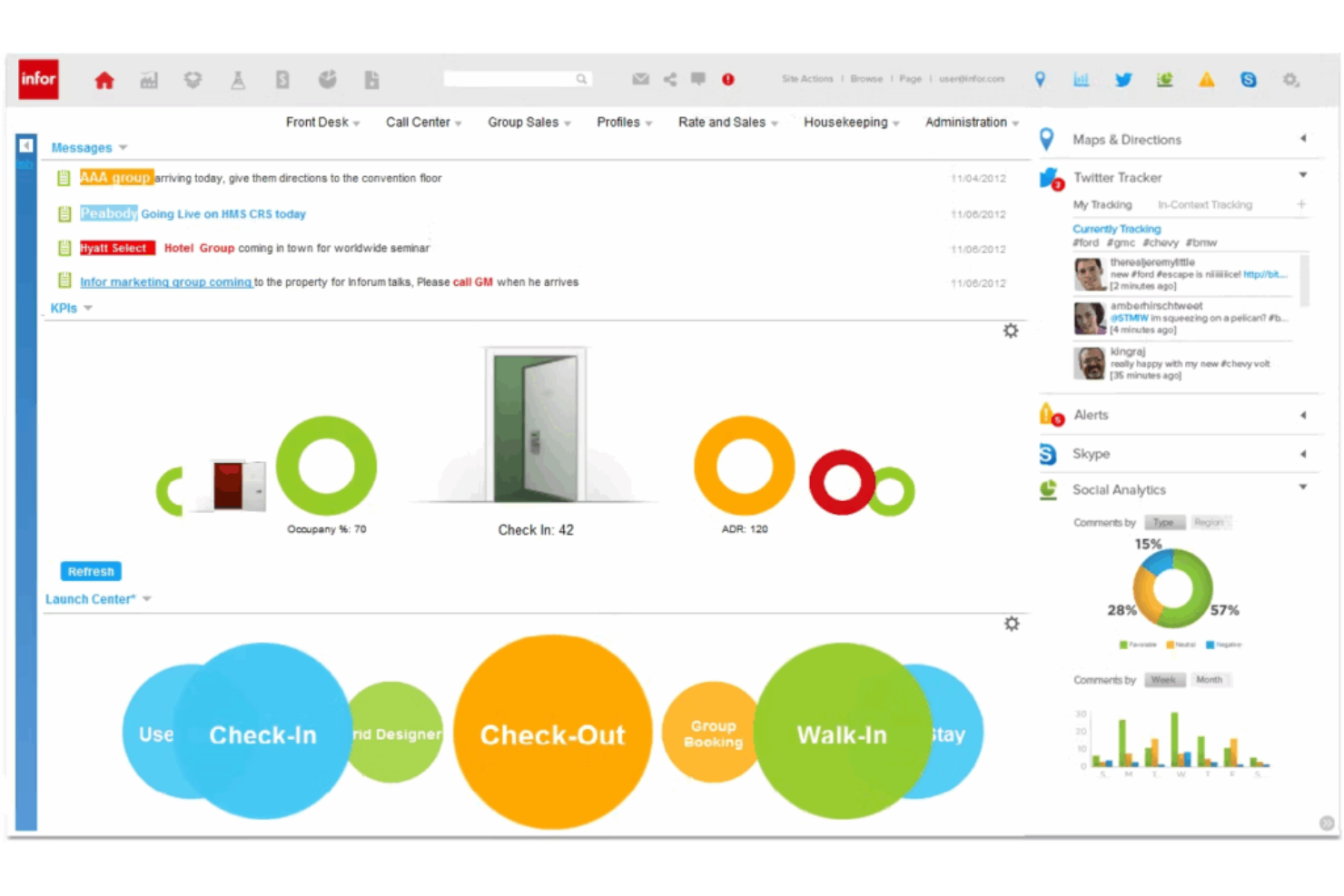
Infor Sales & Event Management (SCS) es una solución integral basada en la nube que automatiza el ciclo de vida de los eventos hoteleros. Ofrece visión total, flujos de trabajo optimizados e integración con el ecosistema de Infor, posibilitando análisis predictivos e información en tiempo real.
Por qué elegí Infor: Sus análisis impulsados por IA proporcionan información valiosa sobre las preferencias de los clientes y tendencias operativas. Las funciones de automatización del software te ayudan a gestionar eficientes reservas y servicios de catering. Los paneles personalizables de Infor te permiten adaptar la interfaz a tus necesidades. Estas características lo convierten en una opción sólida para empresas que buscan aprovechar la tecnología para una mejor toma de decisiones.
Características y conectores destacados:
Características incluyen análisis predictivos que ayudan a pronosticar la demanda y optimizar recursos. El sistema centralizado de reservas simplifica el proceso de reservación. Las herramientas avanzadas de informes te brindan información detallada sobre tus operaciones.
Conectores incluyen Salesforce, Microsoft Dynamics, Oracle, SAP, IBM, Google Workspace, Microsoft 365, QuickBooks, PayPal y Stripe.
Pros and Cons
Pros:
- Historiales de huéspedes en tiempo real
- Flujos de trabajo automáticos en todo el ciclo de vida
- Control de bloques de habitaciones para grupos
Cons:
- Páginas de eventos banquete sobrecargadas
- Dificultad para recuperar BEOs históricos
- Vistas de calendario grupal inflexibles

Agilysys
Mejor para sistemas de nivel empresarial
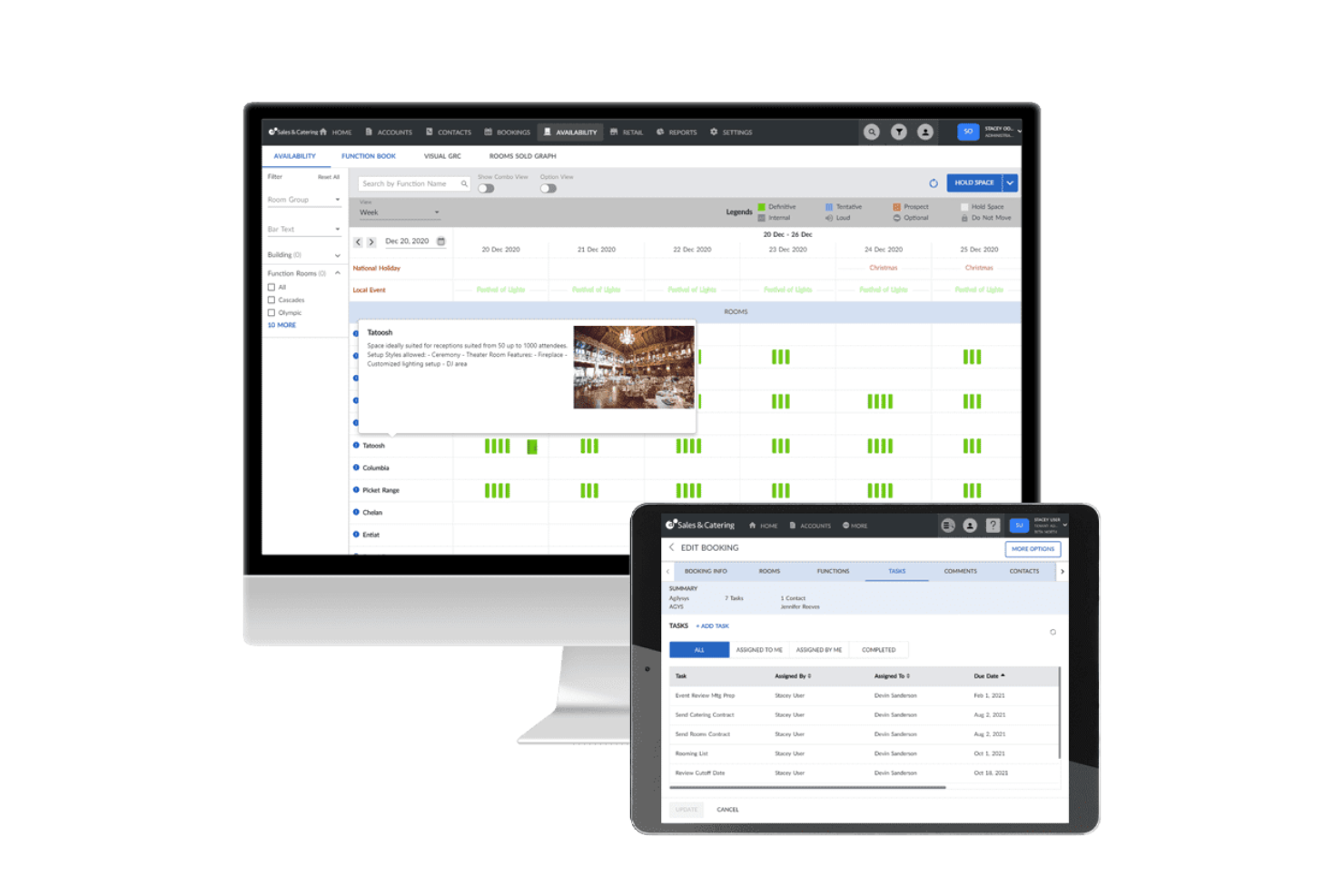
Agilysys Sales & Catering es una solución diseñada para hoteles, resorts y centros de conferencias de cualquier escala, desde lugares independientes hasta cadenas globales. Se integra completamente dentro del ecosistema más amplio de Agilysys y se conecta con módulos de punto de venta (POS), sistema de gestión de propiedades (PMS), registro móvil y pedidos de autoservicio.
Por qué elegí Agilysys: Ofrece capacidades de nivel empresarial, lo que lo hace adecuado para operaciones a gran escala. El software soporta la gestión de eventos complejos con funcionalidades detalladas de banquetes y catering. Sus herramientas de informes brindan perspectivas sobre las ventas y el rendimiento operativo. Agilysys también ofrece opciones de personalización para adaptarse a las necesidades específicas de grandes organizaciones.
Características destacadas e integraciones:
Características incluyen una gestión avanzada de banquetes que permite la planificación y coordinación detallada de eventos. El seguimiento de inventario en tiempo real del software asegura que siempre cuente con información actualizada sobre los recursos disponibles. Además, las herramientas de informes personalizables ayudan a analizar el desempeño del negocio de manera efectiva.
Integraciones incluyen Salesforce, Microsoft Dynamics, Oracle, SAP, IBM, Google Workspace, Microsoft 365, QuickBooks, PayPal y Stripe.
Pros and Cons
Pros:
- Información en tiempo real en el panel de control
- Operaciones de catering centralizadas
- PMS + POS integrados
Cons:
- Se requieren ajustes manuales en la BEO
- Banderas de preferencias de huéspedes limitadas
- Controles de margen poco flexibles

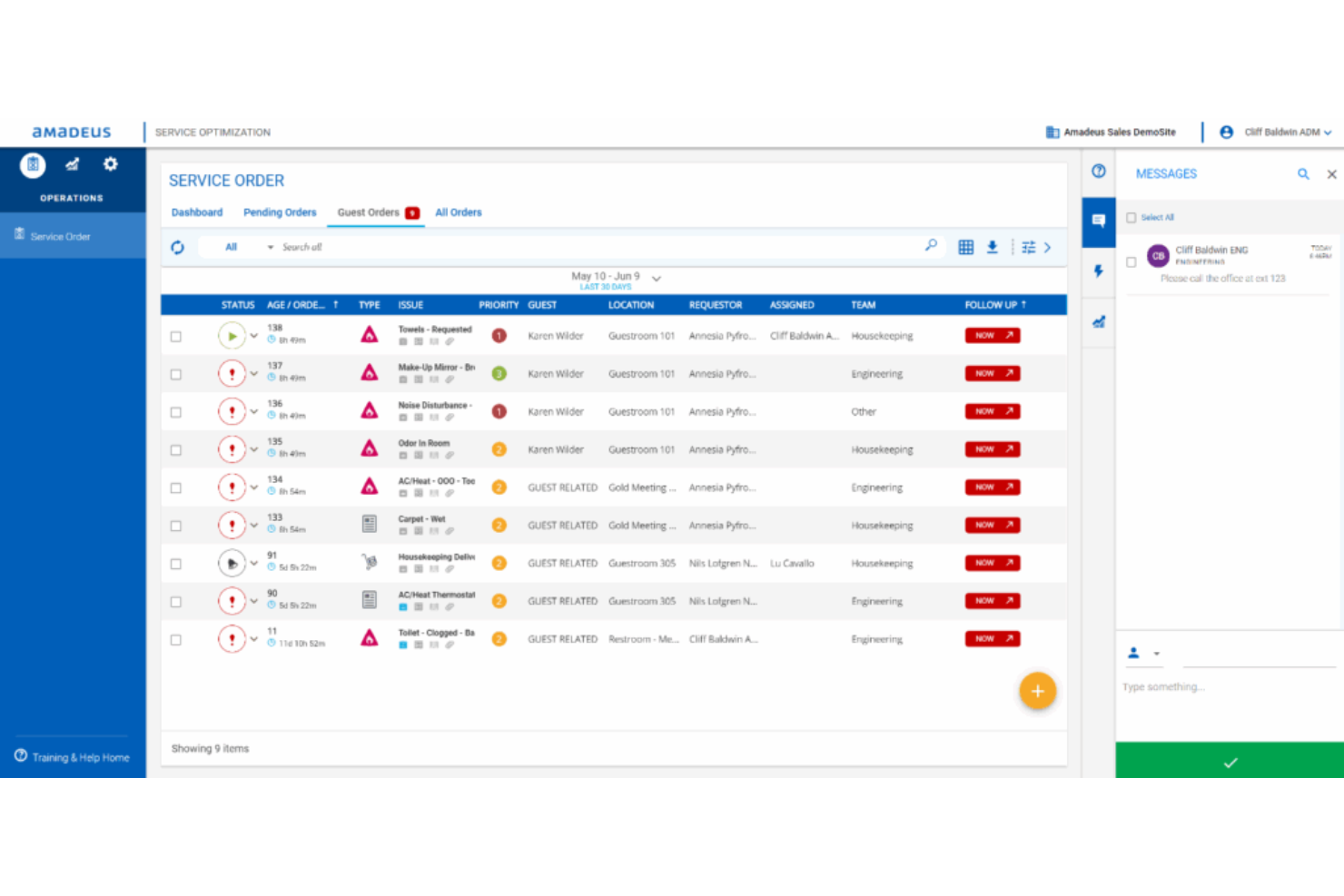
Amadeus Hospitality es un sistema integral que vende, planifica y ejecuta eventos sin inconvenientes en toda su cartera. Unifica las ventas, las reservas y los eventos con una integración completa del ecosistema hotelero.
Por qué elegí Amadeus Hospitality: Su plataforma integrada ofrece un enfoque unificado para gestionar las operaciones de ventas y catering. El software admite una planificación detallada de eventos con plantillas personalizables que se adaptan a diversas necesidades. Sus funciones de generación de informes proporcionan información sobre el rendimiento de las ventas y la eficiencia operativa. Amadeus también permite la colaboración en tiempo real, lo que mejora la productividad del equipo.
Funciones e integraciones destacadas:
Las funciones incluyen plantillas de eventos personalizables que agilizan el proceso de planificación. Las herramientas de colaboración en tiempo real del software mejoran la comunicación entre los miembros del equipo. Las funciones avanzadas de generación de informes proporcionan información sobre los datos de ventas y operaciones, lo que ayuda a tomar decisiones estratégicas.
Las integraciones incluyen Salesforce, Microsoft Outlook, Google Calendar, QuickBooks, PayPal, Stripe, Zoom, Eventbrite, Mailchimp y Constant Contact.
Pros and Cons
Pros:
- Intercambio centralizado de clientes potenciales
- Generación rápida de propuestas
- Impulso de conversión de grupos
Cons:
- Personalización compleja de plantillas BEO
- Estructura de eventos inflexible
- Lógica fiscal codificada

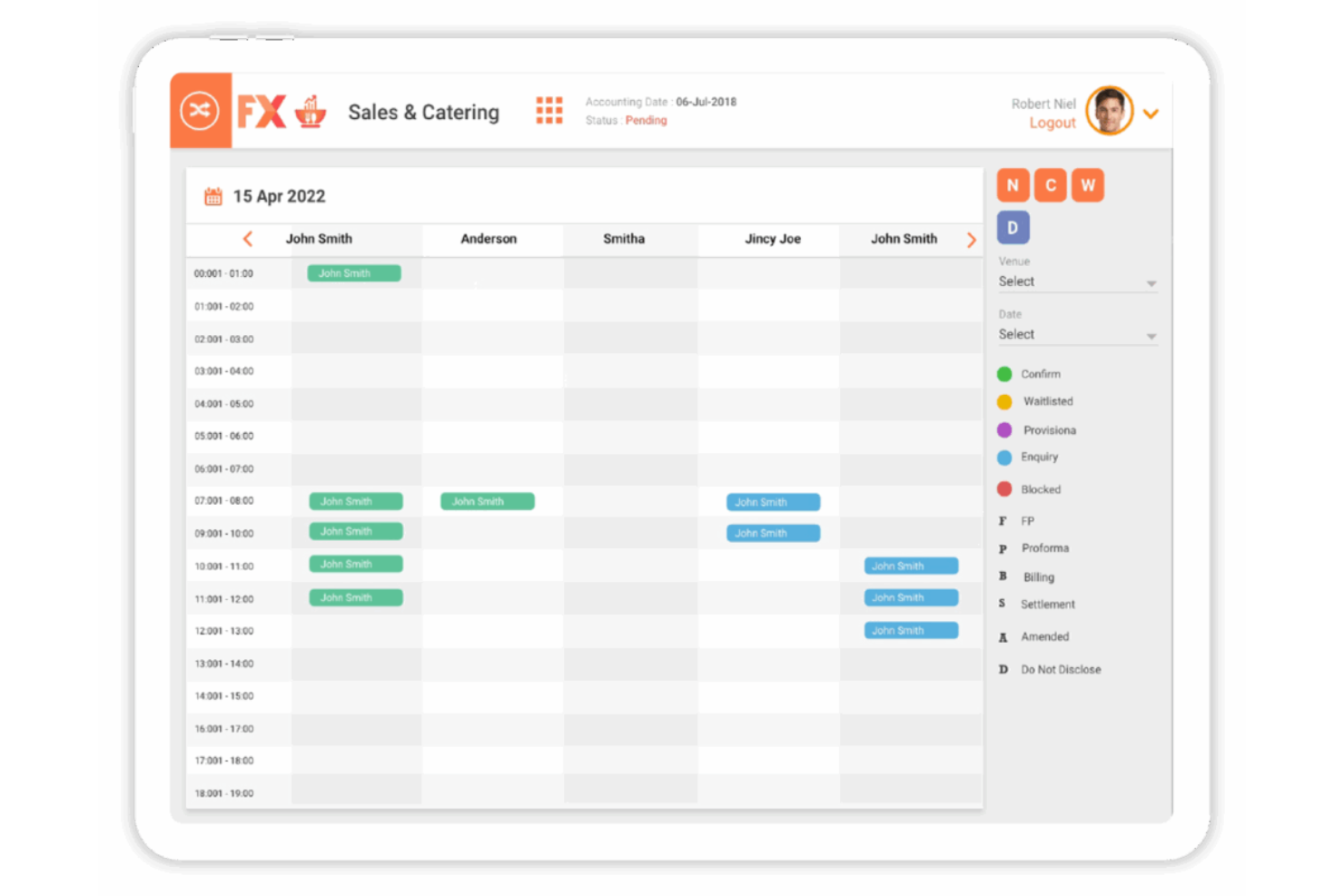
Ventas y catering de IDS Next es un ERP hotelero integral que ofrece funcionalidad de principio a fin. Desde la gestión de reservas y agendas hasta la facturación, liquidación e integración con el sistema POS, es una solución potente y totalmente integrada para los equipos modernos de ventas y catering de hoteles.
Por qué elegí IDS Next: Ofrece un conjunto completo de funciones que se integran perfectamente con otras funciones hoteleras. El software admite la gestión de múltiples propiedades, lo cual es ideal para cadenas hoteleras. Su base de datos centralizada ayuda a mantener la coherencia entre los distintos departamentos. La posibilidad de personalizar informes y paneles mejora la toma de decisiones y la eficiencia operativa.
Características e integraciones destacadas:
Las características incluyen un sistema de reservas centralizado que simplifica la gestión de reservas. La función de precios dinámicos permite ajustar las tarifas según la demanda. Además, el software ofrece análisis en tiempo real para mejorar las previsiones y la planificación.
Las integraciones incluyen Salesforce, Microsoft Dynamics, Oracle, SAP, IBM, Google Workspace, Microsoft 365, QuickBooks, PayPal y Stripe.
Pros and Cons
Pros:
- Visibilidad de las instalaciones en tiempo real
- Perfiles de huéspedes centralizados
- Resumen de la agenda digital
Cons:
- Control limitado de las tarifas
- Configuración de precios compleja
- Retrasos en la sincronización del POS
Ideal para la gestión de eventos pequeños
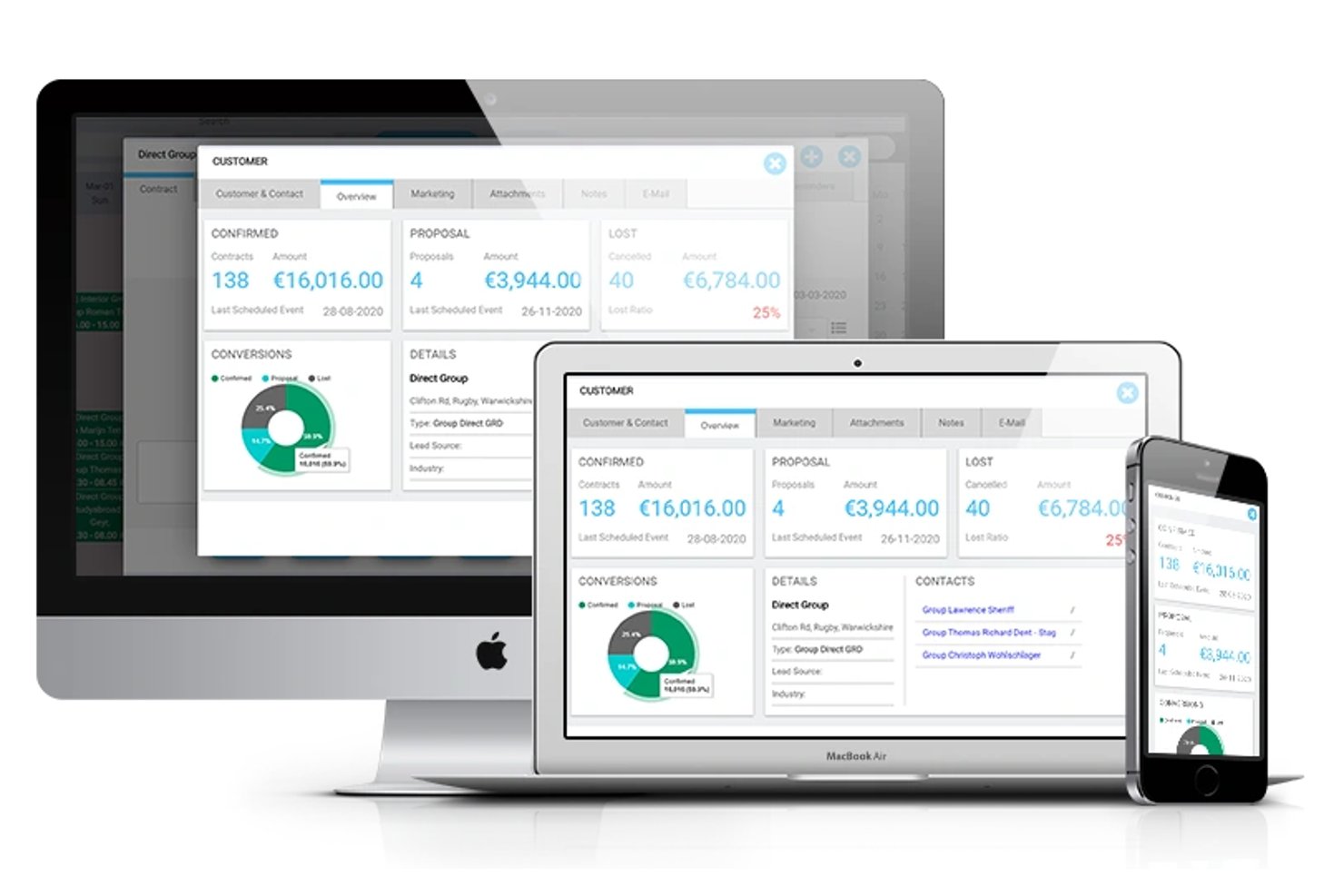
Pxier Event es una plataforma modular de ventas y catering para hoteles que abarca la reserva de banquetes y salas de reuniones, la generación de BEO y propuestas, la planificación de espacios mediante arrastrar y soltar, el seguimiento de clientes potenciales y el registro de eventos en línea con firmas electrónicas integradas e integraciones con PMS.
¿Para quién es más adecuado Pxier Event?
Pxier Event es una opción excelente para los responsables de catering y eventos de hoteles pequeños y medianos que necesitan generar BEO, planificar espacios e integrar el PMS sin asumir el coste de las plataformas empresariales tradicionales.
Por qué elegí Pxier Event
Elegí Pxier Event como una de las mejores opciones porque su diseñador de planos mediante arrastrar y soltar permite a los equipos pequeños de eventos crear distribuciones personalizadas de las salas, asignar asientos e insertar directamente los diagramas terminados en las propuestas para clientes, todo sin el precio de un sistema tradicional. También me gusta que la generación de BEO esté combinada con firmas electrónicas integradas, de modo que un responsable de catering puede pasar de la distribución al contrato firmado sin cambiar de herramienta.
Características principales de Pxier Event
- Conversión de clientes potenciales en reservas: Captura consultas de eventos procedentes de varias fuentes, clasifica los clientes potenciales y los convierte en reservas confirmadas con un solo clic.
- Registro de eventos en línea: Inserta páginas de registro con la imagen de marca directamente en tu sitio web, con pagos integrados, automatización de confirmaciones de asistencia y listas de espera para fechas con exceso de reservas.
- Sincronización bidireccional con PMS: Se conecta de forma nativa con Mews, Cloudbeds, Apaleo, Opera, RoomRaccoon y Guestline para sincronizar perfiles de huéspedes y registrar los cargos de eventos en las cuentas.
- Integración de señalización digital: Muestra en tiempo real los detalles de las salas de reuniones en las pantallas del establecimiento, extrayendo los datos directamente del sistema de reservas.
Integraciones de Pxier Event
Pxier Event cuenta con siete integraciones bidireccionales nativas documentadas con PMS, incluidas Mews, Cloudbeds, Apaleo, Oracle OPERA, Lean, RoomRaccoon y Guestline. También ofrece una API abierta y disponibilidad en los mercados de Oracle Cloud Marketplace y la tienda de aplicaciones de Apaleo.
Pros and Cons
Pros:
- La planificación de espacios mediante arrastrar y soltar permite crear propuestas para clientes
- Los BEO incluyen contratos y firmas electrónicas
- La asistencia y la incorporación reciben excelentes valoraciones de los usuarios
Cons:
- Los informes utilizan las fechas de los contratos en lugar de las fechas de los eventos
- Los cierres de sesión frecuentes pueden borrar el trabajo no guardado

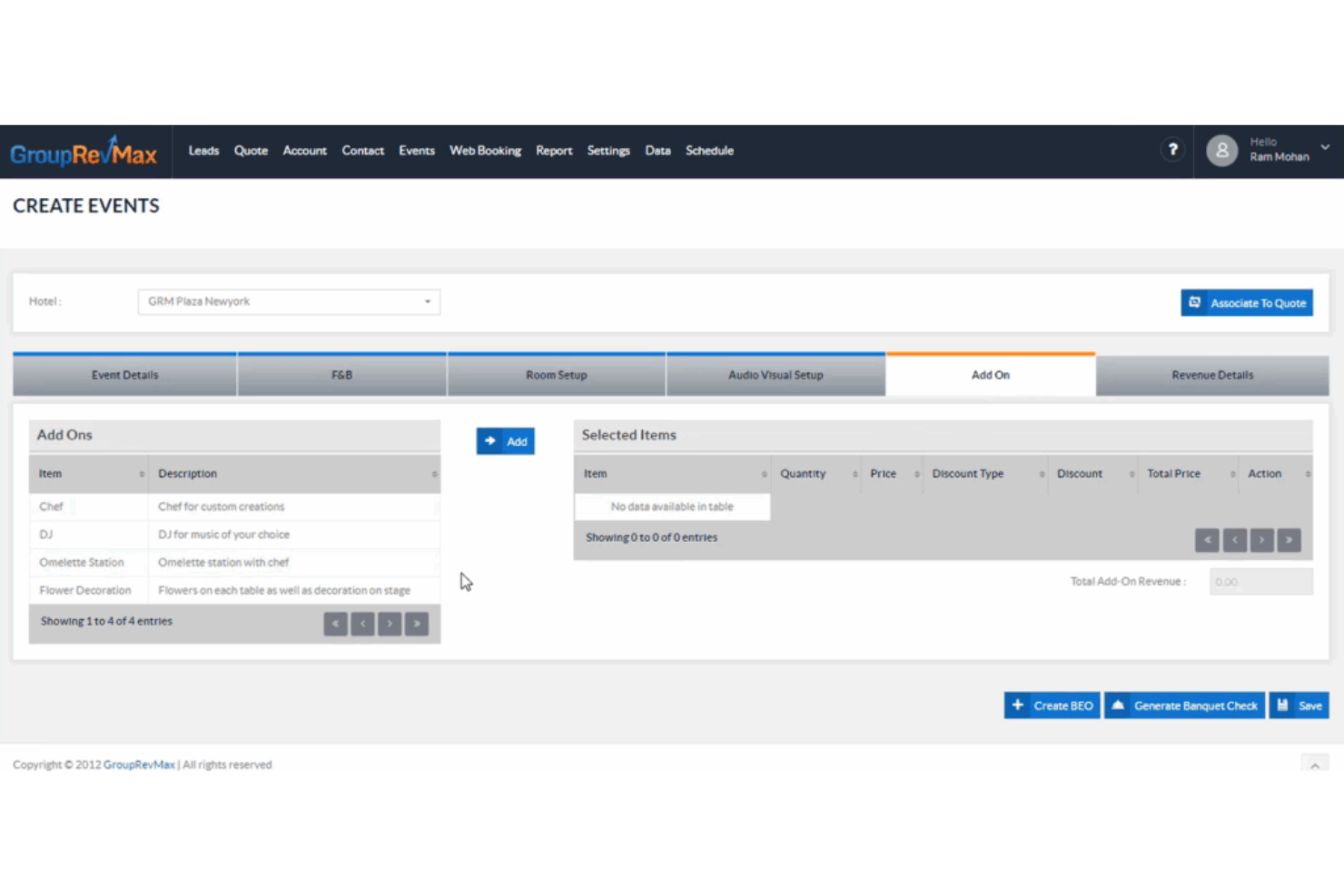
Insta Event Management centraliza los flujos de trabajo de ventas al agrupar los contactos web en un solo panel, lo que permite a tu equipo priorizar y asignar prospectos fácilmente. Permite acceso completo desde cualquier dispositivo, en cualquier lugar.
Por qué elegí Insta Event Management: Permite acceder al sistema desde cualquier dispositivo, brindando flexibilidad a tu equipo. La gestión automatizada de leads ayuda a priorizar y asignar contactos de manera eficiente. La herramienta genera propuestas web interactivas fácilmente, mejorando el compromiso del cliente. Las capacidades de firma electrónica simplifican los procesos contractuales, ahorrando tiempo a los usuarios.
Características destacadas e integraciones:
Características incluyen una gestión de eventos sencilla con herramientas para manejar eventos complejos y seguimiento de inventario. El diario de funciones interactivo te permite gestionar visualmente los horarios de los eventos. Las órdenes de banquete generadas automáticamente y los comprobantes personalizables agilizan tu planificación de eventos.
Integraciones incluyen Salesforce, Google Calendar, Microsoft Outlook, QuickBooks, Eventbrite, Zoom, Stripe, PayPal, Mailchimp y Constant Contact.
Pros and Cons
Pros:
- BEOs con envío instantáneo
- Diario de funciones interactivo
- Panel de leads consolidado
Cons:
- Integraciones de terceros limitadas
- El diseño de propuestas puede ser lento
- Sin análisis en profundidad
Otros programas de ventas y catering para hoteles
Estas son algunas opciones adicionales de software de ventas y catering para hoteles que no llegaron a mi lista, pero que aun así vale la pena conocer:


Cómo evalúo el software de ventas y catering hotelero
Divido mi evaluación en dos capas: la funcionalidad principal que toda plataforma debe tener—como la generación de BEO, los diarios de espacios para eventos y la integración con el PMS—y los factores que distinguen a las mejores herramientas.
Funcionalidad principal (requisitos básicos para esta lista)
Al seleccionar herramientas para mi lista, clasifico cada una en una escala de 0 (no ofrece la funcionalidad) a 5 (sobresale en esta área) para cada una de las funcionalidades principales que se indican a continuación. Después, calculo la puntuación total de la herramienta como porcentaje. Cada herramienta debe alcanzar una puntuación total mínima del 65% para ser considerada para su inclusión.
- Gestión de reservas de grupos y eventos: Compruebo si se pueden crear bloques de grupos de varios días y reservas de eventos en un solo registro, con seguimiento de la recogida de habitaciones y gestión de las fechas límite.
- Gestión de espacios para eventos y diarios: Aquí es importante contar con un diario visual de reservas con disponibilidad en tiempo real y detección de conflictos, como poder ver una reserva provisional de un salón de baile antes de que un representante de ventas lo reserve dos veces.
- Generación de BEO y propuestas: Evalúo cómo gestiona cada plataforma la creación de BEO, las propuestas con marca y los contratos, incluida la flexibilidad de las plantillas y la compatibilidad con campos de combinación.
- Gestión de menús de catering y alimentos y bebidas: La herramienta debe permitir que el equipo de catering cree menús, asigne paquetes a eventos y ajuste los precios por persona sin tener que cambiar de módulo.
- Seguimiento del embudo de ventas y de clientes potenciales: Busco un seguimiento de cuentas y oportunidades al estilo de un CRM que acompañe a un cliente potencial desde la respuesta inicial a la solicitud de propuesta hasta la firma del contrato y el seguimiento posterior al evento.
- Integraciones con PMS y sistemas de hostelería: La conectividad con el PMS es fundamental: evalúo si la plataforma sincroniza el inventario de habitaciones y los datos de los huéspedes con sistemas como Opera, Mews o Cloudbeds.
Una vez que tengo una lista de herramientas que cumplen estos criterios, considero qué distingue a cada plataforma.
Factores diferenciadores (qué distingue a los proveedores)
Así es como comparo y contrasto los distintos proveedores:
Características destacadas
La gestión de varias propiedades es un gran factor diferenciador: busco plataformas en las que un equipo de ventas regional pueda consultar la disponibilidad, reasignar clientes potenciales y obtener informes de toda una cartera. Los paneles de ingresos y previsiones también son importantes. Las mejores herramientas muestran datos sobre el ritmo de los grupos, los motivos de la pérdida de negocio y las tendencias de ingresos de catering sin necesidad de crear informes personalizados. También evalúo cómo gestiona cada plataforma la automatización de las solicitudes de propuesta entrantes, especialmente la captación de clientes potenciales desde fuentes como Cvent y su asignación automática al gerente de ventas adecuado.
Más allá de las características
Considero hasta qué punto una plataforma se adapta al tipo de propiedad: un hotel boutique tiene necesidades muy distintas a las de una propiedad para convenciones de 500 habitaciones con varios salones de baile. Los plazos de implementación también tienen mucho peso, ya que migrar años de historial de cuentas y registros de un sistema heredado como Delphi puede llevar meses con algunos proveedores y semanas con otros. La estructura de precios también es importante. Evalúo si un proveedor cobra por propiedad o por usuario, porque un equipo de ventas grande en un complejo turístico paga de forma muy distinta según el modelo.
Cómo elegir un software de ventas y catering para hoteles
Es fácil perderse entre largas listas de funciones y estructuras de precios complejas. Para ayudarte a mantener la concentración mientras avanzas en tu proceso único de selección de software, aquí tienes una lista de factores que debes tener en cuenta:
| Factor | Qué debes considerar |
|---|---|
| Escalabilidad | ¿El software crecerá junto con tu negocio? Considera si puede gestionar un aumento de las reservas y los eventos a medida que te expandes. Busca opciones que ofrezcan planes o módulos flexibles. |
| Integraciones | ¿Puede conectarse con tus herramientas actuales, como el software de CRM o contabilidad? Asegúrate de que el software sea compatible con las integraciones clave para mantener flujos de trabajo fluidos. |
| Personalización | ¿Te permite adaptar los flujos de trabajo y los informes? Comprueba si puedes ajustar la configuración para adaptarla a tus procesos específicos sin necesidad de desarrollo personalizado. |
| Facilidad de uso | ¿La interfaz es intuitiva para tu equipo? Evalúa si se necesita una formación mínima y si los nuevos usuarios pueden adaptarse rápidamente al sistema. |
| Implementación e incorporación | ¿Cuánto tiempo llevará ponerlo en marcha? Busca plataformas con procesos de configuración sencillos y considera el soporte disponible durante la implementación. |
| Coste | ¿Cómo se ajusta el precio a tu presupuesto? Compara el coste total a lo largo del tiempo, incluidas las posibles tarifas ocultas o los cargos adicionales por funciones extra. |
| Medidas de seguridad | ¿Están protegidos tus datos y la información de tus clientes? Investiga las medidas de seguridad del software, como el cifrado y el cumplimiento de las normativas de protección de datos. |
| Disponibilidad del soporte | ¿Cuándo puedes acceder a ayuda si la necesitas? Considera el horario de soporte del proveedor, la disponibilidad de chat en directo o asistencia telefónica, y si ofrece gestión de cuentas personalizada para recibir asistencia continua. |
¿Qué es el software de ventas y catering para hoteles?
El software de ventas y catering para hoteles es una herramienta que ayuda a gestionar y organizar eventos, reservas y servicios de catering dentro de la industria hotelera. Los gerentes de hoteles y organizadores de eventos lo utilizan para gestionar las operaciones y mejorar la satisfacción de los clientes de manera eficiente.
Funciones como la gestión de reservas, la programación de eventos y la elaboración de informes ayudan a organizar tareas, hacer un seguimiento del progreso y analizar el rendimiento. En general, estas herramientas mejoran la eficiencia operativa y las experiencias de los huéspedes.
Funciones del software de ventas y catering para hoteles
Al seleccionar un software de ventas y catering para hoteles, presta atención a las siguientes funciones clave:
- Gestión de reservas: Agiliza el proceso de gestionar reservas de habitaciones y eventos, garantizando un uso eficiente del espacio y los recursos.
- Programación de eventos: Permite organizar y hacer un seguimiento de varios eventos, evitando coincidencias y garantizando operaciones fluidas.
- Plantillas personalizables: Ofrece flexibilidad para crear informes, propuestas y otros documentos que se adapten a tus necesidades específicas y a la identidad de tu marca.
- Análisis en tiempo real: Proporciona información sobre las ventas y el rendimiento operativo, lo que te ayuda a tomar decisiones fundamentadas.
- Acceso móvil: Te permite gestionar tareas y acceder a información desde cualquier lugar, manteniendo a tu equipo conectado mientras se desplaza.
- Recordatorios automatizados de seguimiento: Garantiza una comunicación oportuna con los clientes, mejorando la interacción y la satisfacción.
- Calendario centralizado: Ayuda a realizar un seguimiento y coordinar los horarios entre equipos, evitando conflictos y mejorando la eficiencia.
- Procesamiento de pagos integrado: Simplifica la facturación y el cobro de pagos, mejorando la experiencia del cliente y agilizando las transacciones.
- Medidas de seguridad: Protege los datos confidenciales mediante cifrado y el cumplimiento de las normativas de protección de datos, garantizando la confianza de los clientes.
- Herramientas de elaboración de informes: Proporciona información detallada sobre diversos aspectos de tus operaciones, ayudando en la planificación estratégica y la evaluación del rendimiento.
Beneficios del software de ventas y catering para hoteles
La implementación de un software de ventas y catering para hoteles ofrece varios beneficios para tu equipo y tu negocio. Estos son algunos de los que puedes esperar:
- Mayor eficiencia: Automatizar tareas como la gestión de reservas y la programación de eventos ahorra tiempo y reduce los errores manuales.
- Comunicación mejorada: Funciones como los calendarios centralizados y los recordatorios automatizados de seguimiento mantienen informados y comprometidos a tu equipo y a tus clientes.
- Mejor toma de decisiones: Los análisis en tiempo real y las herramientas de elaboración de informes proporcionan información valiosa sobre tus operaciones y respaldan la planificación estratégica.
- Mayor accesibilidad: El acceso móvil garantiza que puedas gestionar tareas y acceder a información desde cualquier lugar, manteniendo tus operaciones flexibles.
- Opciones de personalización: Las plantillas personalizables te permiten adaptar documentos y flujos de trabajo para ajustarlos a las necesidades específicas de tu negocio.
- Gestión segura de datos: Las medidas de seguridad protegen la información confidencial, garantizan el cumplimiento de las normativas de protección de datos y generan confianza en los clientes.
- Transacciones más rápidas: El procesamiento de pagos integrado agiliza la facturación y el cobro de pagos, mejorando el flujo de efectivo y la satisfacción de los clientes.
Costes y precios del software de ventas y catering para hoteles
Seleccionar un software de ventas y catering para hoteles requiere comprender los distintos modelos de precios y planes disponibles. Los costes varían según las funciones, el tamaño del equipo, los complementos y otros factores. La tabla siguiente resume los planes habituales, sus precios medios y las funciones típicas incluidas en las soluciones de software de ventas y catering para hoteles:
Tabla comparativa de planes de software de ventas y catering para hoteles
| Tipo de plan | Precio medio | Funciones habituales |
|---|---|---|
| Plan gratuito | $0 | Gestión básica de reservas, programación limitada de eventos y elaboración básica de informes. |
| Plan personal | $10-$30/usuario/mes | Gestión mejorada de reservas, plantillas personalizables y acceso móvil. |
| Plan empresarial | $30-$60/usuario/mes | Programación avanzada de eventos, análisis en tiempo real e integración con el procesamiento de pagos. |
| Plan corporativo | $60-$100/usuario/mes | Herramientas completas de elaboración de informes, medidas de seguridad avanzadas y opciones de personalización completas. |
Preguntas frecuentes sobre el software de ventas y catering para hoteles
Estas son algunas respuestas a preguntas frecuentes sobre el software de ventas y catering para hoteles:
¿Cómo ayuda el software hotelero con el catering y la gestión de eventos?
El software de ventas y catering para hoteles combina soluciones de catering, sistemas de catering y software de gestión de eventos para gestionar los negocios de grupos y las RFP. Herramientas como Delphi permiten a los hoteleros gestionar menús, contratos y eventos de manera eficiente, mejorando las ventas y la satisfacción de los huéspedes.
¿Cómo mejora el software hotelero las ventas y la gestión de clientes?
Las plataformas integran la gestión de relaciones con los clientes en el proceso de ventas, proporcionando datos en tiempo real a los equipos de ventas. Mediante información basada en datos, los hoteles pueden hacer un seguimiento de los embudos de ventas, prever la demanda y aumentar las conversiones para eventos y catering.
¿Cómo se conecta el software hotelero con las operaciones del hotel?
Las plataformas de ventas y catering se sincronizan con los sistemas de gestión de propiedades para vincular las reservas y las habitaciones de los huéspedes. La integración con el punto de venta garantiza que los cargos de catering se registren correctamente, lo que ayuda a los hoteleros a gestionar eventos y facturación sin errores.
¿Puede este software crecer con mi negocio?
La escalabilidad es fundamental si espera que su negocio crezca. Asegúrese de que el software pueda gestionar un aumento de las reservas y eventos más complejos a medida que su hotel se expanda. Compruebe si el proveedor ofrece planes o módulos escalables que puedan añadirse según sea necesario.
¿Cómo funcionan la implementación y la incorporación?
La implementación y la incorporación deben ser sencillas, con recursos disponibles como vídeos de formación y recorridos interactivos. Evalúe el soporte del proveedor durante esta fase, incluida la asistencia para la migración de datos y los seminarios web en directo, para garantizar una transición fluida.
¿Cómo ayuda el software hotelero a gestionar los ingresos?
Las plataformas de ventas y catering alinean la gestión de ingresos con los eventos para hacer un seguimiento de la rentabilidad. Los hoteleros ajustan los precios, analizan la demanda y garantizan que los espacios de catering aumenten los ingresos mientras mantienen la satisfacción de los huéspedes.
Qué sigue:
Si está investigando software de ventas y catering para hoteles, póngase en contacto de forma gratuita con un asesor de SoftwareSelect para recibir recomendaciones.
Rellena un formulario y mantén una breve conversación en la que conocerán los detalles específicos de tus necesidades. Después recibirás una lista breve de programas que podrás revisar. Incluso te acompañarán durante todo el proceso de compra, incluidas las negociaciones de precios.