

15 soluciones de WiFi para hoteles para 2026

Lista de soluciones WiFi para hoteles
- 1. Hoteza
- 6. Purple
- 10. Fourteen IP


Las soluciones WiFi para hoteles te permiten controlar, supervisar y personalizar el acceso a internet de los huéspedes de tu establecimiento desde una sola plataforma. Si estás buscando el mejor software de gestión de WiFi para hoteles, probablemente te enfrentes a la presión de ofrecer una conectividad rápida y fiable, al tiempo que mantienes la seguridad, el cumplimiento normativo y la satisfacción de los huéspedes. La solución adecuada puede ayudarte a gestionar el ancho de banda, automatizar los inicios de sesión de los huéspedes e integrarse con tu PMS o tus herramientas de marketing, sin añadir complejidad a tu equipo. En esta guía encontrarás una comparación clara de las principales opciones para 2026, para que puedas elegir la que mejor se adapte a las necesidades de tu establecimiento y a las expectativas de tus huéspedes.
Por qué confiar en nuestras recomendaciones de software
Nuestro equipo lleva probando y evaluando software desde 2012. Como líderes del sector hotelero, sabemos lo difícil —y lo importante— que es elegir el software adecuado.
Para esta guía, evaluamos las herramientas mediante pruebas prácticas e investigación independiente, puntuando las herramientas según nuestros criterios de selección.
Nuestras reseñas reflejan nuestro criterio editorial humano, no un discurso de ventas.
Resumen de las mejores soluciones WiFi para hoteles
Esta tabla comparativa resume los detalles de precios de mis principales soluciones WiFi para hoteles para ayudarte a encontrar la mejor opción para tu presupuesto y las necesidades de tu negocio.
| Tool | Best For | Trial Info | Price | ||
|---|---|---|---|---|---|
| 1 | Demostración gratuita disponible | Precio disponible previa solicitud | Website | ||
| 2 | La mejor opción para la supervisión empresarial de redes en múltiples sitios | Prueba gratuita de 90 días | Precio bajo solicitud | Website | |
| 3 | La mejor opción para IoT hotelero y Wi-Fi 7 de nivel empresarial | Prueba gratuita de 90 días | Desde $150/AP/año (facturado anualmente) | Website | |
| 4 | Ideal para equipos de TI con múltiples propiedades y grandes exigencias de cumplimiento normativo | Prueba gratuita de 14 días | Desde $13/punto de acceso/mes | Website | |
| 5 | Ideal para monetizar planes de WiFi para huéspedes por niveles | No disponible | Desde $59/AP/año | Website | |
| 6 | Plan gratuito disponible y prueba gratuita de 30 días | Precios bajo consulta | Website | ||
| 7 | Ideal para la itinerancia Wi-Fi sin fricciones mediante Passpoint | No disponible | Precios bajo solicitud | Website | |
| 8 | Mejor para el aprovisionamiento de Wi-Fi vinculado al PMS | No disponible | Precios bajo solicitud | Website | |
| 9 | La mejor opción para la segmentación de redes privadas por habitación | Demostración gratuita disponible | Precio bajo solicitud | Website | |
| 10 | Demostración gratuita disponible | Precios bajo consulta | Website |
Opiniones sobre soluciones WiFi para hoteles
A continuación se muestran mis resúmenes detallados de las soluciones WiFi para hoteles que llegaron a mi lista. Mis opiniones ofrecen un análisis detallado de las funciones, integraciones y casos de uso más adecuados de cada plataforma para ayudarte a encontrar la mejor opción para ti.

Hoteza
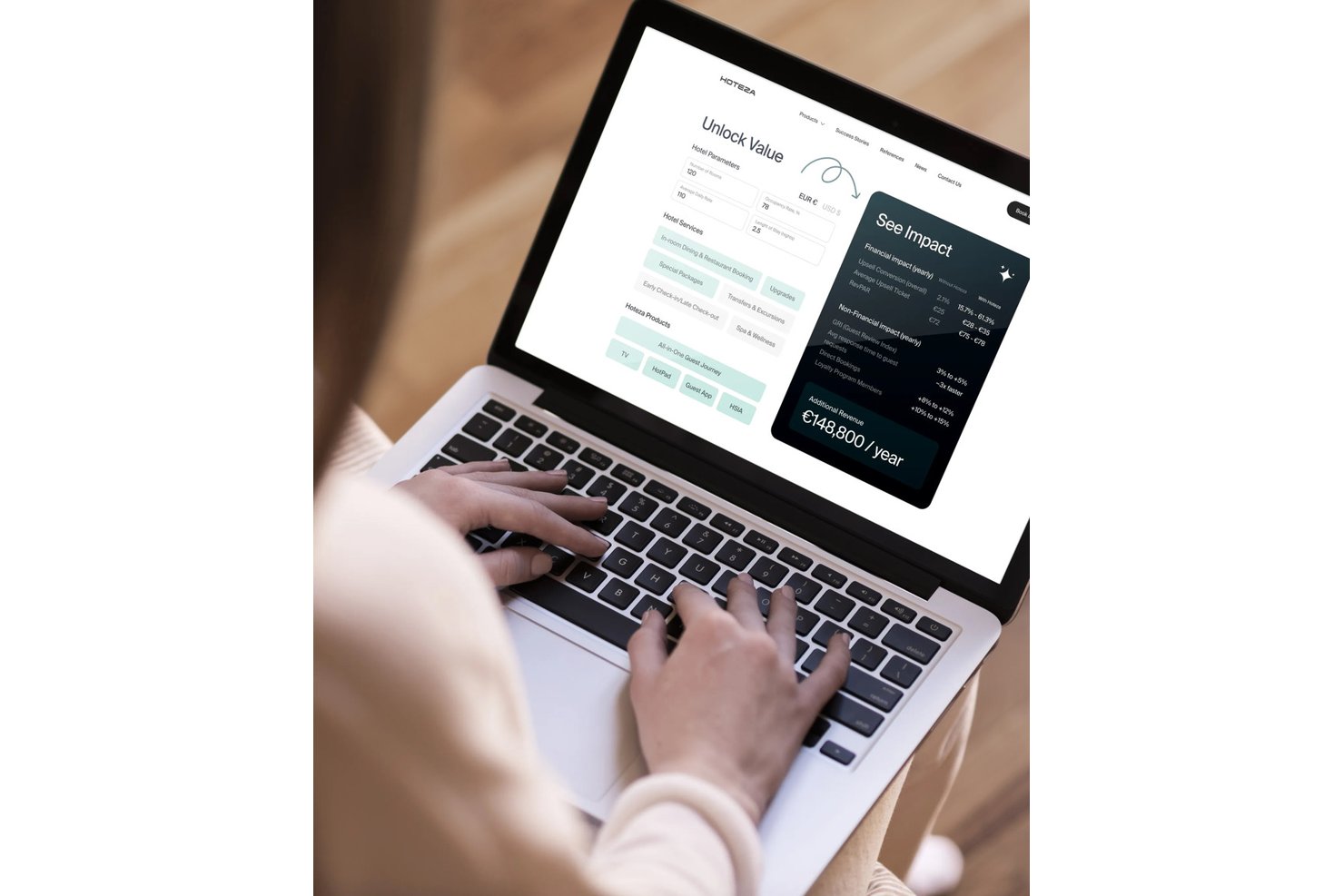
Hoteza es una plataforma de gestión de Wi-Fi nativa para el sector hotelero que combina un portal cautivo de marca, control del ancho de banda por niveles, autenticación de huéspedes integrada con el PMS y supervisión de redes en múltiples propiedades, con compatibilidad con la transmisión de contenido y una capa integrada de marketing para huéspedes.
¿Para quién es más adecuada Hoteza?
Hoteza es una opción excelente para hoteles medianos y grandes, así como para grupos con múltiples propiedades que quieren convertir el Wi-Fi para huéspedes en un canal activo de ingresos y marketing, en lugar de una simple prestación.
Por qué elegí Hoteza
Hoteza ocupa un lugar en mi lista de finalistas porque el portal cautivo está realmente diseñado para hacer marketing, no solo para autenticar. Me encanta que, durante el inicio de sesión, el portal pueda mostrar ofertas de venta adicional, recopilar los correos electrónicos de los huéspedes con su consentimiento y sincronizar esos datos directamente con un CRM, todo en un mismo flujo. Los huéspedes que regresan reciben automáticamente un mensaje personalizado de bienvenida, lo que convierte un inicio de sesión rutinario en un punto de contacto que impulsa la inscripción en programas de fidelización y los ingresos durante la estancia.
Funciones principales de Hoteza
- Inicio de sesión familiar: Permite que una sola sesión de autenticación de huésped cubra varios dispositivos a la vez, para que los grupos que viajan juntos no tengan que iniciar sesión por separado.
- Priorización inteligente del tráfico: Asigna dinámicamente el ancho de banda en tiempo real para evitar la congestión durante los periodos de mayor uso.
- Registro de cargos en el folio del PMS: Cobra automáticamente las tarifas de Internet por niveles directamente en la cuenta de la habitación del huésped mediante una integración bidireccional con el PMS.
- Panel de control de grupos con múltiples propiedades: Proporciona a los responsables de operaciones un único portal para supervisar simultáneamente el estado de la red y las alertas de todas las propiedades.
Integraciones de Hoteza
Hoteza documenta más de 200 integraciones, entre ellas Oracle OPERA, Mews, Protel, Shiji PMS, StayNTouch, Micros Simphony, Stripe, HPE Networking Instant On, Aruba Central, Google Cast y Apple AirPlay. Su API REST admite integraciones personalizadas.
Pros and Cons
Pros:
- Portal cautivo de marca diseñado para el marketing dirigido a huéspedes
- Autenticación automatizada mediante el PMS y registro de cargos en el folio
- El inicio de sesión familiar cubre los dispositivos del grupo a la vez
Cons:
- No documenta el cumplimiento de PCI-DSS para HSIA
- No ofrece funciones de itinerancia rápida PAN ni Passpoint

La mejor opción para la supervisión empresarial de redes en múltiples sitios
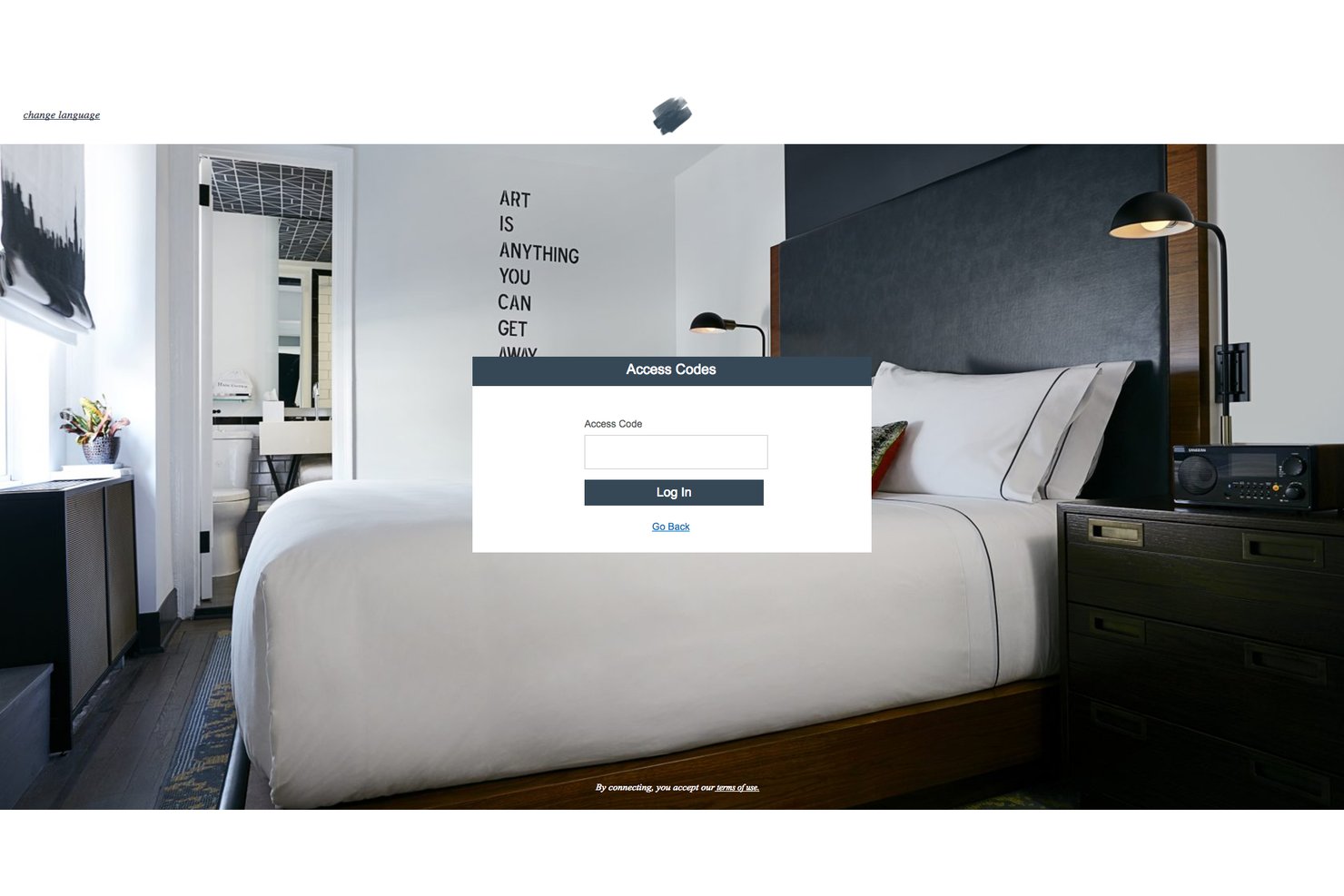
Cisco Meraki es una plataforma de gestión de redes empresariales que ofrece infraestructura Wi-Fi basada en la nube, supervisión centralizada de múltiples sitios mediante el panel de Meraki, controles de ancho de banda y gestión del tráfico, autenticación de invitados mediante una página de inicio de sesión y herramientas de seguridad de red, incluida la segmentación mediante VLAN y la gestión del firewall.
¿Para quién es más adecuado Cisco Meraki?
Cisco Meraki es la opción adecuada para grupos hoteleros con múltiples propiedades y operadores de hostelería a gran escala cuyos equipos de TI necesitan visibilidad y control centralizados en docenas o cientos de sitios desde un único panel.
Por qué elegí Cisco Meraki
Cisco Meraki ocupa un lugar en mi lista de opciones porque ninguna otra plataforma se acerca a su visibilidad de múltiples sitios a escala empresarial. Me encanta cómo el panel de Meraki permite a los equipos de TI supervisar cada propiedad desde un único panel, con Meraki Insight añadiendo supervisión del estado de la WAN, calidad de VoIP y seguimiento del rendimiento de las aplicaciones web. La función de Red personal de Wi-Fi (WPN) también es realmente impresionante, ya que proporciona a cada huésped su propio segmento de red privado en un SSID compartido, para que pueda usar AirPlay o transmitir contenido a sus dispositivos sin exponer nada a otros huéspedes.
Funciones principales de Cisco Meraki
- Compatibilidad con Hotspot 2.0 / Passpoint: Autentica automáticamente a los miembros del programa de fidelización en la red mediante certificados de dispositivo, evitando por completo la página de inicio de sesión.
- Gestión del tráfico de capa 7: Permite limitar, priorizar o bloquear el tráfico por categoría de aplicación —como P2P, transmisión de vídeo o redes sociales— en cualquier SSID.
- Captura remota de paquetes: Captura el tráfico de red en directo desde cualquier AP de cualquier propiedad directamente a través del panel, sin necesidad de que haya nadie en el sitio.
- Aplicación móvil de Meraki: Proporciona a los equipos de TI acceso desde cualquier lugar al estado de los dispositivos, el número de clientes y el estado de la red de todas las propiedades desde sus teléfonos.
Integraciones de Cisco Meraki
Las integraciones incluyen Cisco ISE, Mews mediante la API de Cisco Developer Hub y Opera Micros a través de Splash Access. Cloud4Wi está disponible mediante Meraki Marketplace, mientras que la API de Meraki admite PMS personalizados y flujos de trabajo para el sector hotelero.
Pros and Cons
Pros:
- Sobresale en la supervisión centralizada de redes de múltiples propiedades
- La Red personal de Wi-Fi garantiza la privacidad de los dispositivos de los huéspedes
- Panel integral en la nube para la supervisión en tiempo real
Cons:
- La integración con PMS requiere soluciones de terceros
- El portal cautivo nativo carece de funciones de marketing para huéspedes

La mejor opción para IoT hotelero y Wi-Fi 7 de nivel empresarial
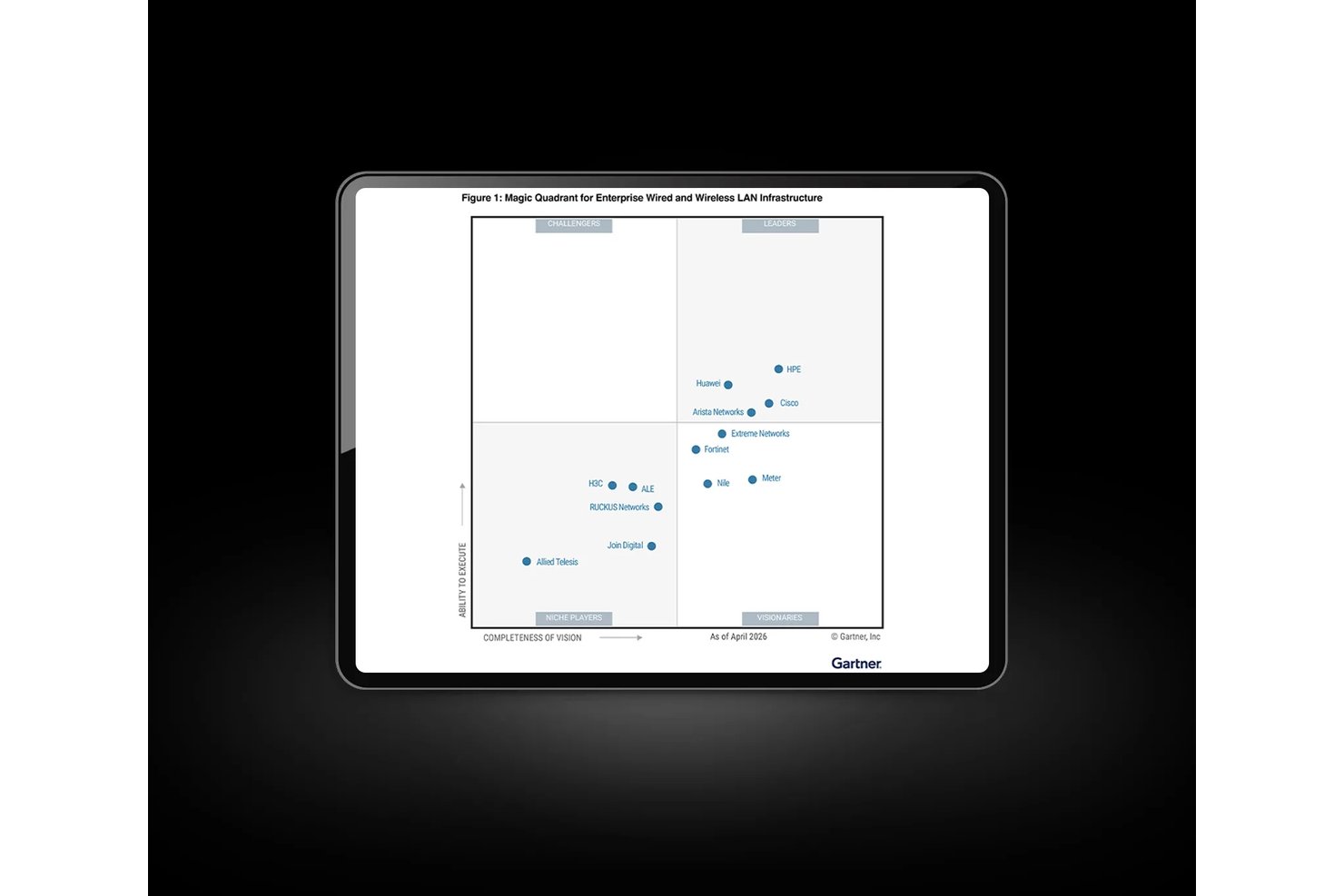
HPE Aruba Networking es una plataforma de redes empresariales diseñada para entornos hoteleros, que ofrece Wi-Fi gestionado en la nube, conectividad para dispositivos IoT, seguridad de red y supervisión de múltiples propiedades mediante su conjunto de gestión Aruba Central y puntos de acceso hoteleros diseñados específicamente para este fin.
¿Para quién es más adecuada HPE Aruba Networking?
HPE Aruba Networking es la opción adecuada para grupos hoteleros con múltiples propiedades y cadenas hoteleras empresariales con equipos de TI dedicados que gestionan infraestructuras de red a gran escala en decenas o cientos de ubicaciones.
Por qué elegí HPE Aruba Networking
HPE Aruba Networking ocupa un lugar en mi lista de favoritos porque sus puntos de acceso Wi-Fi 7 720H están diseñados específicamente para habitaciones de hotel, con radios BLE y Zigbee integradas que conectan cerraduras inteligentes, termostatos e iluminación desde el mismo AP que proporciona el Wi-Fi a los huéspedes. También me gusta el motor AIOps para múltiples propiedades de Aruba Central, que detecta de forma proactiva los problemas en cada ubicación antes de que los huéspedes los noten. El despliegue global de Nobu Hotels demuestra que esta infraestructura funciona de manera fiable a gran escala.
Características principales de HPE Aruba Networking
- Portal para huéspedes ClearPass: Ofrece páginas de inicio de sesión personalizables y con marca, con múltiples opciones de autenticación, incluida la verificación por SMS, el inicio de sesión mediante redes sociales y el autorregistro con nombre de usuario y contraseña.
- QoS Air Slice: Permite priorizar el tráfico de las aplicaciones según políticas y establecer contratos de ancho de banda por usuario para diferenciar entre los niveles de Internet gratuito y premium para huéspedes.
- Detección de AP no autorizados RAPIDS: Analiza continuamente el entorno de radiofrecuencia para identificar y alertar sobre puntos de acceso no autorizados que podrían comprometer la seguridad de la red de huéspedes.
- Compatibilidad con roaming 802.11r/k/v: Permite una transferencia rápida de clientes, basada en estándares, entre puntos de acceso para que los dispositivos de los huéspedes permanezcan conectados mientras se desplazan por la propiedad.
Integraciones de HPE Aruba Networking
Las integraciones incluyen Nevotek, Xpossible, Purple, MyWiFi Networks, Cloudi-Fi, AWS, Azure, Zscaler y Palo Alto Networks. HPE Aruba Networking también admite API REST, Active Directory, plataformas MDM y sistemas SIEM para lograr una conectividad personalizada.
Pros and Cons
Pros:
- Diseñada para la gestión de redes en la nube con múltiples propiedades
- Puntos de acceso Wi-Fi 7 con radios IoT
- Arquitectura de seguridad de confianza cero avanzada
Cons:
- No incluye un módulo integrado de integración con PMS
- Requiere socios para la comercialización del Wi-Fi para huéspedes
IronWiFi
Ideal para equipos de TI con múltiples propiedades y grandes exigencias de cumplimiento normativo
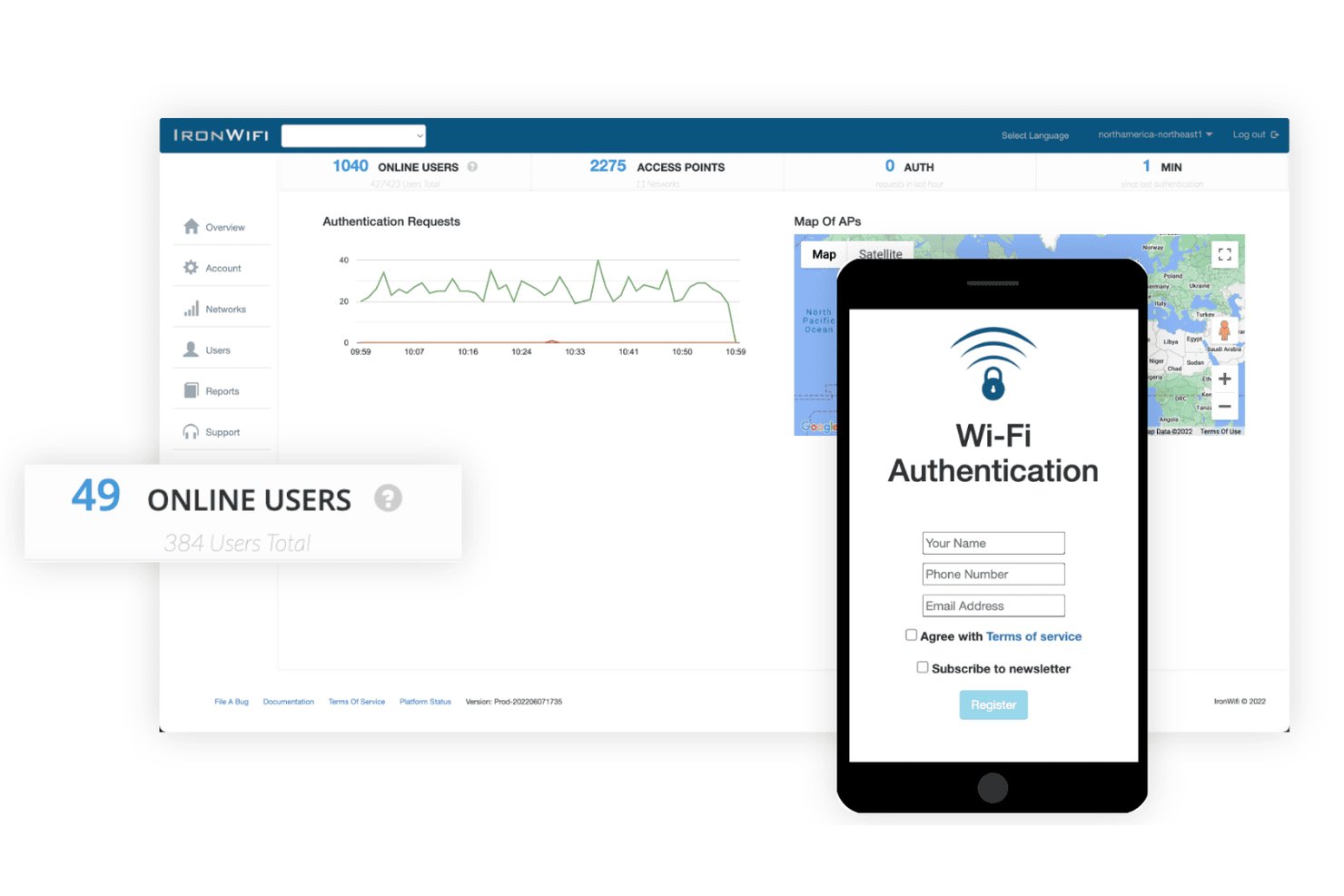
IronWiFi es una plataforma de identidad WiFi gestionada en la nube que combina autenticación de invitados basada en RADIUS, portales cautivos personalizados, inicio de sesión con número de habitación vinculado al PMS, segmentación por niveles de ancho de banda y seguridad de nivel de cumplimiento normativo en redes hoteleras con múltiples propiedades.
¿Para quién es más adecuado IronWiFi?
IronWiFi es adecuado para directores de TI y administradores de redes que gestionan carteras hoteleras con múltiples propiedades, donde el cumplimiento normativo, la seguridad y la autenticación de nivel empresarial tienen prioridad sobre las herramientas de marketing orientadas a los huéspedes.
Por qué elegí IronWiFi
IronWiFi ocupa un lugar en mi lista de favoritos porque ninguna otra herramienta de esta lista iguala su profundidad de cumplimiento normativo para redes hoteleras con múltiples propiedades. Lo elegí específicamente para equipos dirigidos por TI que gestionan cadenas empresariales donde la preparación para SOC 2 Tipo II, GDPR y PCI DSS no es opcional. En la práctica, esto significa que el administrador de red puede aplicar autenticación 802.1X/WPA3-Enterprise y cifrado RadSec en más de 50 marcas de AP sin reemplazar el hardware existente. También me gusta que el inicio de sesión con número de habitación y apellido se conecte directamente con Oracle Opera, Mews o Cloudbeds para aprovisionar y desaprovisionar automáticamente el acceso de los huéspedes durante el registro de entrada y la salida.
Características principales de IronWiFi
- Compatibilidad con Passpoint (Hotspot 2.0): Permite que los dispositivos se conecten automáticamente a la red WiFi sin una pantalla de inicio de sesión, utilizando cifrado WPA3-Enterprise durante toda la estancia del huésped.
- Métodos de inicio de sesión mediante redes sociales y SMS: Los huéspedes pueden autenticarse mediante Facebook, Google, Instagram, Apple ID o verificación por SMS a través de Twilio o Clickatell en el portal cautivo.
- Niveles de WiFi protegidos por pago: Se integra con Stripe, PayPal, Square y Shift4 para que los huéspedes puedan comprar paquetes de ancho de banda premium directamente a través del portal cautivo.
- Exportación a SIEM y syslog: Envía registros de autenticación a Splunk, Datadog, Microsoft Sentinel o cualquier plataforma compatible con CEF para una supervisión de seguridad centralizada.
Integraciones de IronWiFi
IronWiFi ofrece integraciones nativas con Oracle Opera, Mews, Cloudbeds, Protel, RMS Cloud, RoomRaccoon, Apaleo, Stripe, PayPal y Square. También admite la API REST, webhooks, Syslog/CEF y Zapier para conectividad personalizada.
Pros and Cons
Pros:
- Passpoint y OpenRoaming permiten una itinerancia fluida de los dispositivos
- Los estándares de cumplimiento normativo se ajustan a las operaciones hoteleras globales
- El inicio de sesión de huéspedes vinculado al PMS automatiza el acceso durante el registro de entrada
Cons:
- No incluye herramientas integradas de automatización de marketing
- No ofrece compatibilidad con redes de área personal ni con funciones de transmisión de contenido

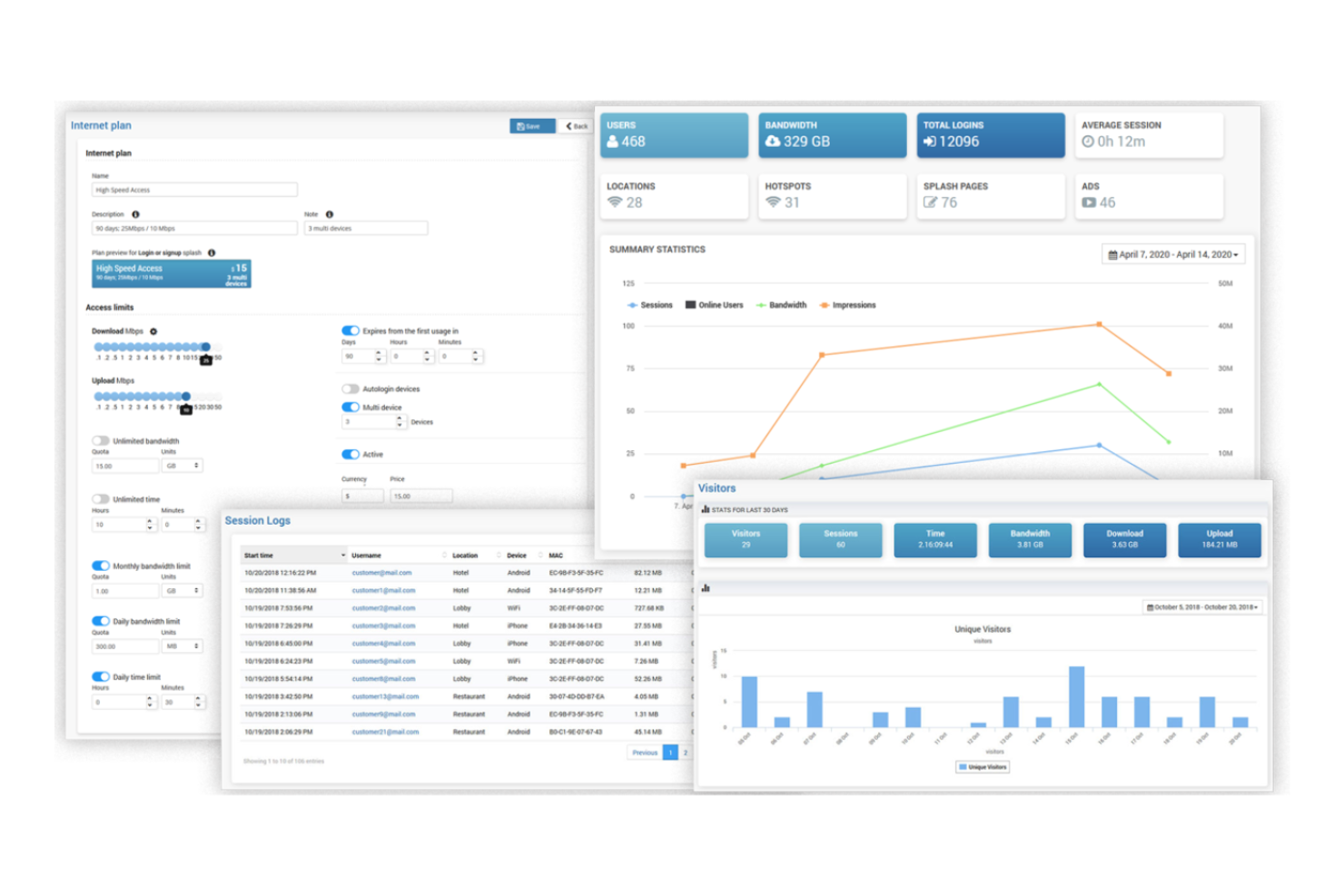
Antamedia ofrece un software de gestión de WiFi para hoteles diseñado para establecimientos que necesitan un control detallado del acceso de los huéspedes a Internet. Es una opción adecuada para hoteles, resorts y establecimientos boutique que desean personalizar los métodos de inicio de sesión, los límites de ancho de banda y la autenticación de usuarios. Si buscas adaptar el acceso de los huéspedes y gestionar las políticas de uso de la red en detalle, Antamedia ofrece una solución flexible.
Por qué elegí Antamedia
Elegí Antamedia para esta lista porque sus controles personalizables de acceso de los huéspedes lo distinguen de otras opciones de gestión de WiFi para hoteles. La plataforma te permite definir métodos de inicio de sesión únicos, como códigos, redes sociales o integración con el PMS, para que puedas adaptar el acceso a las necesidades de tu establecimiento. También puedes establecer límites de ancho de banda y duraciones de sesión para distintos tipos de huéspedes, lo que ayuda a gestionar la carga de la red y garantizar un uso equitativo. Estas funciones convierten a Antamedia en una opción sólida para hoteles que desean un control preciso sobre cómo se conectan los huéspedes y utilizan el WiFi.
Funciones principales de Antamedia
Otras funciones de Antamedia que resultan útiles para la gestión del WiFi de hoteles incluyen:
- Integración de facturación automatizada: Se conecta con sistemas de gestión de establecimientos para automatizar la facturación de los huéspedes por el uso de Internet.
- Páginas de bienvenida personalizables: Permite diseñar pantallas de inicio de sesión y bienvenida con la imagen de marca para los huéspedes que acceden a la red WiFi.
- Supervisión remota de la red: Permite supervisar el estado de la red y la actividad de los usuarios desde un panel centralizado.
- Filtrado de contenido: Permite bloquear el acceso a sitios web o categorías específicos para mantener un entorno de navegación seguro para los huéspedes.
Integraciones de Antamedia
Las integraciones no se enumeran públicamente.
Pros and Cons
Pros:
- Ofrece límites detallados de acceso y ancho de banda para los huéspedes
- Proporciona páginas de bienvenida personalizables para la identidad de marca
- Permite la gestión remota mediante Omada Cloud
Cons:
- Requiere una configuración de hardware local
- Automatización limitada para las opciones de autoservicio de los huéspedes

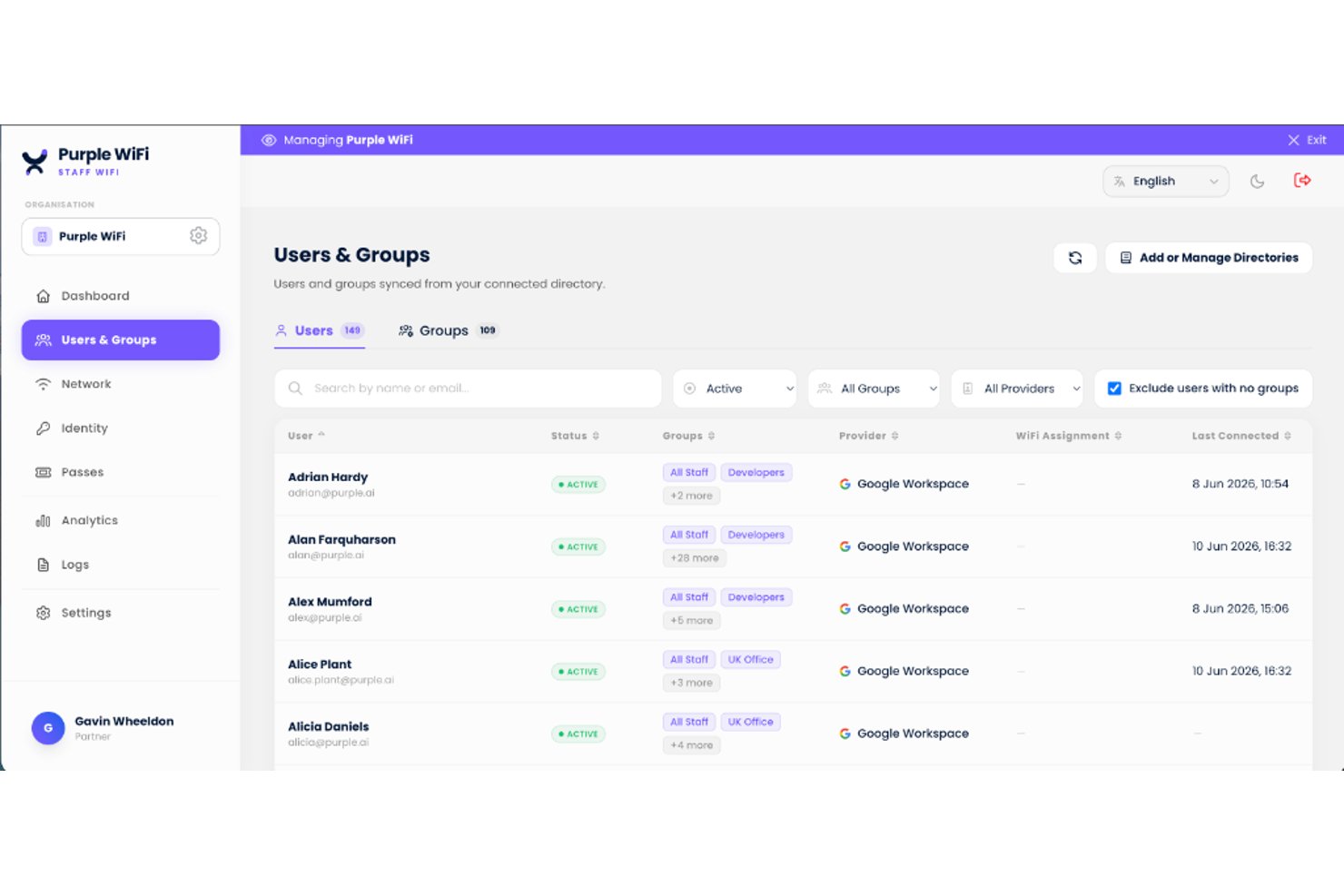
Purple es una plataforma de gestión de WiFi hotelero basada en la nube que combina la creación de portales cautivos con la marca del hotel, redes de área personal impulsadas por iPSK, recopilación de datos de huéspedes y análisis de red para múltiples propiedades en infraestructuras inalámbricas independientes del proveedor.
¿Para quién es Purple más adecuado?
Purple es una opción excelente para grupos hoteleros con varias propiedades que quieren ofrecer a sus huéspedes una conectividad privada, similar a la de casa, para transmitir contenido desde sus propios dispositivos.
Por qué elegí Purple
Purple ocupa un lugar en mi lista de favoritos porque sus redes de área personal impulsadas por iPSK resuelven uno de los problemas de conectividad más frustrantes de los hoteles: los huéspedes no pueden transmitir contenido a dispositivos Chromecast o Apple TV en las habitaciones porque los portales cautivos bloquean la autenticación de dispositivos sin interfaz. Con Purple, cada reserva recibe una frase de contraseña WPA2/WPA3 única que coloca todos los dispositivos del huésped en una micro-VLAN aislada, por lo que la transmisión funciona exactamente igual que en casa. Las integraciones de PMS con OPERA Cloud, Mews y Cloudbeds automatizan la provisión de frases de contraseña durante el registro y su revocación al momento de la salida.
Características principales de Purple
- Creador de portales cautivos con la marca del hotel: Un editor de portales de arrastrar y soltar admite más de 25 idiomas con detección automática, múltiples flujos de autenticación y recopilación de consentimientos conforme al RGPD durante el inicio de sesión.
- RADIUS empresarial en la nube como servicio: Purple ofrece autenticación empresarial 802.1X sin necesidad de ningún servidor local, sincronizándose con Microsoft Entra ID, Okta y Google Workspace para el WiFi del personal.
- Solicitudes automatizadas de reseñas posteriores a la estancia: Al realizarse la salida, Purple envía solicitudes de reseñas a TripAdvisor y Google, mientras que la exportación al CRM envía los datos de los huéspedes a más de 400 herramientas, incluidas Salesforce y Mailchimp.
- Segmentación de VLAN para IoT: La separación de red dedicada para IoT mantiene los televisores inteligentes, termostatos y cerraduras de puertas en una VLAN independiente con reglas de firewall restringidas para evitar el movimiento lateral.
Integraciones de Purple
Purple cuenta con cinco integraciones nativas de PMS documentadas: Oracle Hospitality OPERA Cloud, Mews, Cloudbeds, Stayntouch y Apaleo. También se conecta con Cisco Meraki, HPE Aruba, Ruckus, Ubiquiti UniFi, Juniper Mist y más de 400 herramientas de CRM mediante API REST y webhooks.
Pros and Cons
Pros:
- Permite transmitir contenido desde los dispositivos de los huéspedes mediante redes privadas
- Las redes de área personal aíslan los dispositivos de cada huésped
- Sólida automatización de credenciales WiFi basada en el PMS
Cons:
- El editor de la página de inicio requiere HTML para su personalización
- La calidad del soporte varía según el plan y la región
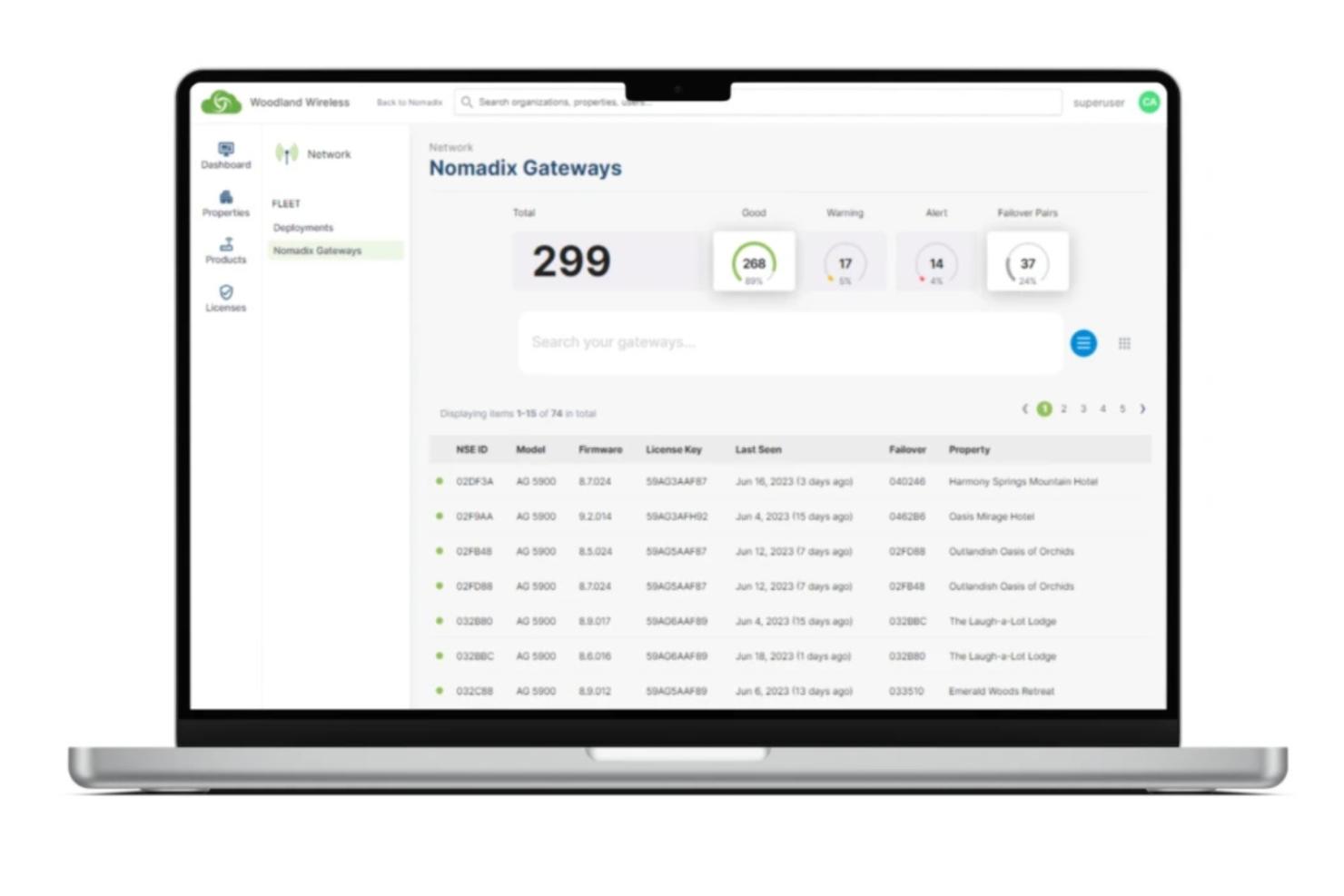
Nomadix es una plataforma de gestión de Wi-Fi para hostelería basada en hardware de pasarela de internet, que ofrece gestión de portales cautivos, control patentado del ancho de banda, autenticación de huéspedes basada en Passpoint, supervisión de redes en múltiples propiedades e integraciones con servicios de transmisión, telefonía en la nube y gestión energética.
¿Para quién es más adecuado Nomadix?
Nomadix está diseñado para hoteles y complejos turísticos medianos y grandes, así como para grupos con múltiples propiedades que necesitan una infraestructura de red de nivel empresarial con itinerancia Wi-Fi para huéspedes sin fricciones y a gran escala.
Por qué elegí Nomadix
Nomadix ocupa un lugar en mi lista de favoritos porque ayudó a definir el estándar Passpoint/Hotspot 2.0, y esa base se refleja en su implementación. Una vez que un huésped se autentica, Passpoint gestiona automáticamente cada reconexión futura, en habitaciones, vestíbulos y zonas exteriores, del mismo modo que funciona la itinerancia móvil. El SDK de Passpoint de 2025 va un paso más allá y permite a los hoteles integrar ese registro sin fricciones directamente en sus aplicaciones de fidelización.
Características principales de Nomadix
- Creador de portales cautivos: Un portal basado en plantillas y sin código, con compatibilidad multilingüe y múltiples opciones de autenticación, incluidos SMS, inicio de sesión mediante redes sociales, vales y búsqueda de habitación en el PMS.
- Redistribución dinámica del ancho de banda: Tecnología de pasarela patentada que reasigna en tiempo real el ancho de banda no utilizado de los usuarios de menor prioridad a los niveles de mayor prioridad.
- Panel de flota: Una interfaz de supervisión basada en la nube que muestra el estado de conectividad en tiempo real, las versiones del firmware y los detalles de las licencias en todas las propiedades de su cartera.
- Programador de salas de conferencias: Un módulo dedicado que permite a los administradores de TI establecer límites de ancho de banda por evento, límites de dispositivos y páginas de destino personalizadas para salas de reuniones o eventos individuales.
Integraciones de Nomadix
Nomadix ofrece nueve integraciones de PMS documentadas, incluidas Oracle Hospitality (OPERA), Maestro PMS, Stayntouch, WebRezPro, SkyTouch Technology, RoomKey PMS, roommaster, Priority Software y Planet. También proporciona API para integraciones personalizadas y es compatible con CAPPORT API, SIP, Zigbee y BLE.
Pros and Cons
Pros:
- Itinerancia basada en Passpoint en grandes carteras hoteleras
- Ancho de banda priorizado dinámicamente para conferencias y clientes VIP
- La pasarela independiente del proveedor funciona con cualquier punto de acceso
Cons:
- Las funciones avanzadas requieren hardware de pasarela instalado en las instalaciones
- No incluye una suite integrada de marketing o análisis para huéspedes

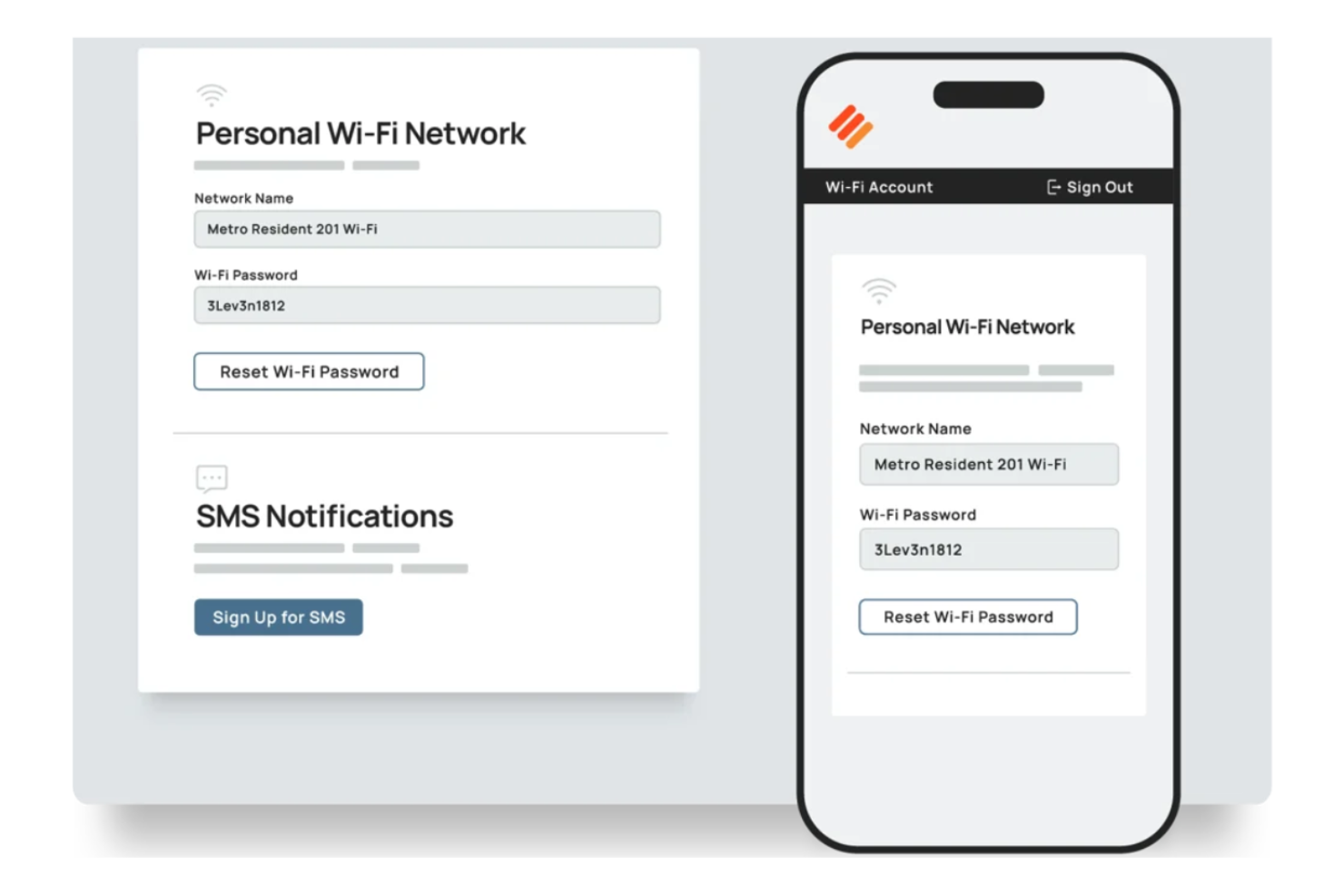
Eleven Software destaca para los hoteles que necesitan una gestión de WiFi estrechamente integrada con su sistema de gestión de propiedades. Está diseñado para empresas del sector hotelero que desean automatizar la autenticación de los huéspedes y simplificar el acceso a la red mediante conexiones con el PMS. Si buscas conectar el acceso WiFi directamente con las reservas y los perfiles de los huéspedes, Eleven Software ofrece una solución diseñada específicamente para ello.
Por qué elegí Eleven Software
Lo que me atrajo de Eleven Software es su enfoque en la integración con el PMS, una prioridad para muchos hoteles que buscan conectar el acceso WiFi con la gestión de huéspedes. La plataforma se conecta directamente con los principales sistemas de gestión de propiedades, por lo que puedes automatizar la autenticación de los huéspedes y vincular el acceso WiFi con los datos de las reservas. Aprecio que Eleven Software admita la sincronización en tiempo real, lo que ayuda a garantizar que solo los huéspedes actuales puedan iniciar sesión y que el acceso se revoque al momento de la salida. Este nivel de integración es especialmente útil para las propiedades que desean reducir el trabajo manual y ofrecer una experiencia más personalizada a los huéspedes.
Funciones principales de Eleven Software
Otras funciones de Eleven Software que son útiles para la gestión del WiFi hotelero incluyen:
- Gestión centralizada de redes: Permite supervisar varias propiedades y redes desde un único panel.
- Portales personalizables para huéspedes: Permite diseñar páginas de inicio de sesión y experiencias para huéspedes con la imagen de marca.
- Herramientas de gestión del ancho de banda: Permiten establecer límites de uso y priorizar el tráfico para diferentes grupos de usuarios.
- Reconocimiento automatizado de dispositivos: Detecta los dispositivos de los huéspedes que regresan y simplifica el proceso de inicio de sesión para los visitantes habituales.
Integraciones de Eleven Software
Las integraciones no se indican públicamente.
Pros and Cons
Pros:
- Se sincroniza con los sistemas hoteleros para el registro de entrada de los huéspedes
- Recuerda los dispositivos habituales para iniciar sesión más rápidamente
- Prioriza el ancho de banda de alta velocidad para los huéspedes VIP
Cons:
- Requiere equipos físicos en lugar de una configuración en la nube
- Necesita asistencia de TI especializada para la implementación inicial
La mejor opción para la segmentación de redes privadas por habitación
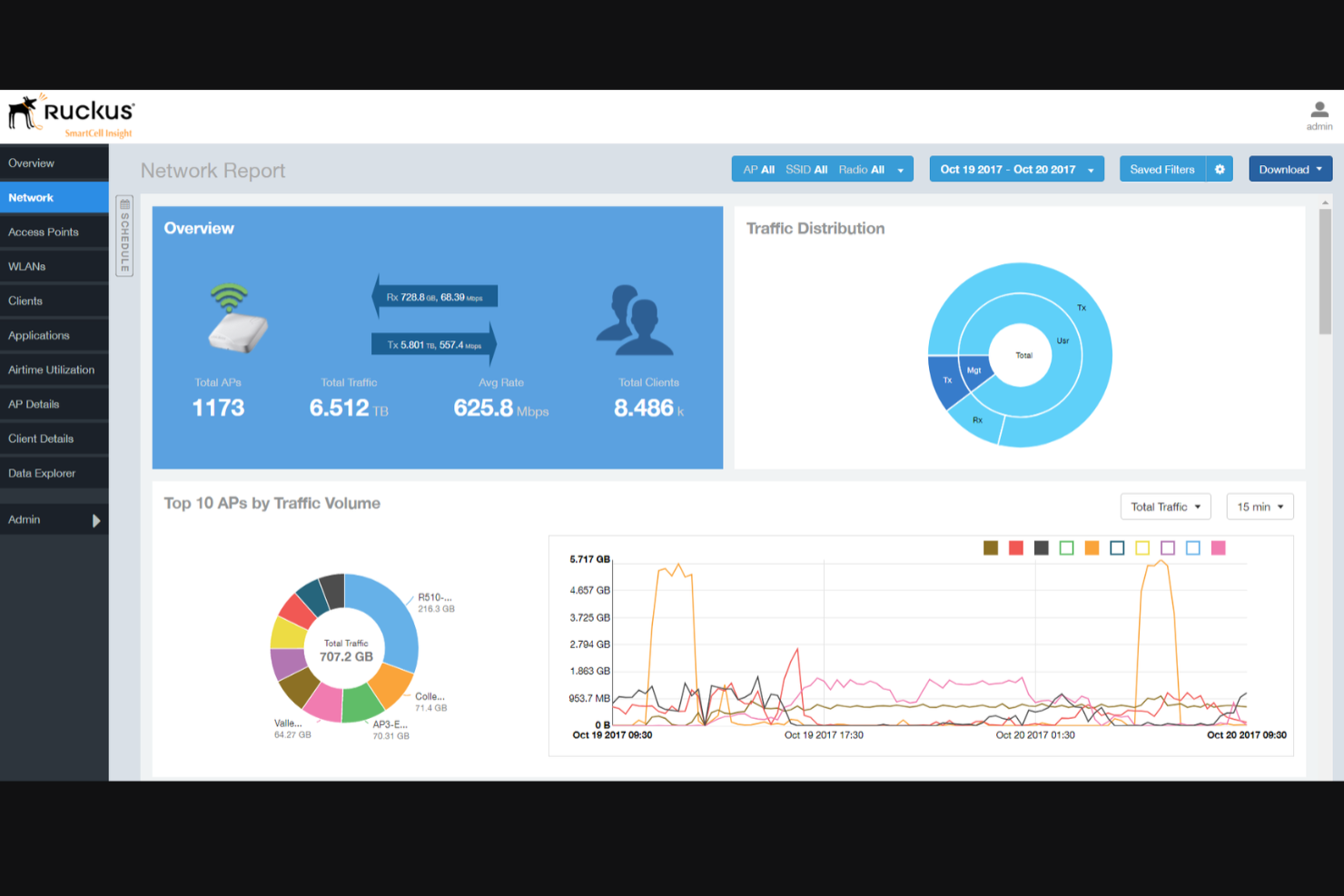
Ruckus Networks está diseñado para hoteles y complejos turísticos que necesitan un sistema WiFi fiable en áreas de mucho tráfico, como vestíbulos, espacios para conferencias y habitaciones de huéspedes. Sus soluciones de hardware y software —incluidos routers y puntos de acceso de nivel empresarial— están diseñadas para gestionar un gran número de conexiones simultáneas sin sacrificar la velocidad ni la estabilidad. La plataforma también admite la implementación segura de puntos de acceso WiFi y trabaja estrechamente con proveedores de servicios para ofrecer una conectividad escalable. Esto la convierte en una opción ideal para establecimientos que organizan eventos, atienden a viajeros de negocios o desean garantizar una conectividad constante en toda la propiedad.
Por qué elegí Ruckus Networks
Para los hoteles que necesitan admitir cientos o incluso miles de dispositivos a la vez, Ruckus Networks destaca por sus capacidades de red de alta densidad. La plataforma utiliza tecnología de antenas patentada y una gestión avanzada del tráfico para mantener conexiones sólidas y estables incluso en espacios concurridos. Elegí Ruckus Networks porque está diseñada para satisfacer las necesidades de grandes establecimientos, lugares con eventos concurridos y áreas para huéspedes donde la congestión de WiFi es una preocupación real. Su enfoque en un rendimiento fiable en entornos exigentes la convierte en una de las mejores opciones para los hoteles que no pueden permitirse problemas de conectividad.
Funciones clave de Ruckus Networks
Otras funciones que hacen que Ruckus Networks resulte atractiva para la gestión del WiFi hotelero incluyen:
- Gestión de red basada en la nube: Permite supervisar y configurar toda la red desde un único panel de control en línea.
- Portales de acceso para huéspedes: Ofrece páginas de inicio de sesión personalizables para los huéspedes, incluidas opciones de marca y autenticación.
- Controles de acceso basados en roles: Permite establecer diferentes permisos de red para el personal, los huéspedes y los proveedores.
- Actualizaciones de seguridad automatizadas: Proporciona periódicamente actualizaciones de firmware y parches de seguridad a todos los dispositivos conectados sin intervención manual.
Integraciones de Ruckus Networks
Las integraciones no se enumeran públicamente.
Pros and Cons
Pros:
- Gestiona muchas conexiones simultáneas de huéspedes
- Las antenas patentadas mejoran la cobertura en entornos complejos
- El panel de control en la nube simplifica la gestión de varias propiedades
Cons:
- Documentación limitada para la resolución de problemas en el sector hotelero
- La personalización del portal para huéspedes es menos flexible

Fourteen IP es una plataforma de WiFi para hoteles totalmente gestionada que abarca el diseño de redes, la implementación, la gestión del portal cautivo, el control del ancho de banda por niveles, la supervisión de múltiples establecimientos y la conexión en red de los dispositivos de los huéspedes mediante sus herramientas Evolution Gateway y Evolution Monitoring.
¿Para quién es más adecuada Fourteen IP?
Fourteen IP es una opción especialmente adecuada para operadores y empresas de gestión de hoteles con múltiples establecimientos que desean un servicio de WiFi totalmente gestionado, desde el estudio del sitio hasta la supervisión ininterrumpida, sin sobrecargar a los equipos internos de TI.
Por qué elegí Fourteen IP
Elegí Fourteen IP como una de las mejores opciones porque su función Red de área personal (PAN) realmente la diferencia para los hoteles cuyos huéspedes esperan que sus dispositivos se comuniquen entre sí. Un huésped puede conectar su teléfono, portátil y dispositivo de streaming a un SSID privado con su propia PSK, manteniendo intacto su ecosistema personal de dispositivos. Fourteen IP también permite a los hoteles ofrecer acceso a la PAN como incentivo para completar una encuesta, convirtiendo los comentarios de los huéspedes en un intercambio de valor.
Características principales de Fourteen IP
- Panel de control de Evolution Monitoring: Un panel de control centralizado en la nube que supervisa el estado de los puntos de acceso, las versiones del firmware, el uso del ancho de banda y los eventos de red en todos los establecimientos sin coste adicional.
- Actualizaciones de nivel activadas por encuestas: Los huéspedes que completan una encuesta pueden recibir automáticamente acceso a un nivel de servicio superior, vinculando la recopilación de comentarios de los huéspedes con un incentivo de acceso WiFi.
- Incorporación mediante 802.1X: Los huéspedes se registran automáticamente con perfiles WiFi seguros en sus dispositivos, con compatibilidad nativa para la instalación automática de perfiles en productos Apple.
- Infraestructura de puntos de acceso preparada para IoT: Los puntos de acceso de nueva generación incluyen radios integradas compatibles con el seguimiento de activos, la entrada sin llave, la geovalla y la gestión de sensores inteligentes de las habitaciones en una red convergente.
Integraciones de Fourteen IP
Fourteen IP se conecta con más de 100 sistemas PMS a través de TigerTMS y Comtrol Lodging Link, incluidos Opera, Mews, Cloudbeds, Amadeus, Agilysys, Infor HMS, Maestro, Hilton OnQ y Fosse. También es compatible con equipos HPE Aruba y Ruckus Wireless.
Pros and Cons
Pros:
- Redes de área personal para la privacidad de los dispositivos de los huéspedes
- El panel de control centralizado es compatible con carteras de múltiples establecimientos
- Supervisión proactiva y asistencia del NOC las 24 horas, los 7 días de la semana
Cons:
- No hay precios públicos ni prueba de autoservicio
- El inicio de sesión social del portal para huéspedes no está documentado
Otras soluciones WiFi para hoteles
Estas son algunas soluciones WiFi adicionales para hoteles que no llegaron a mi lista, pero que siguen siendo dignas de consideración:
- Datavalet
Ideal para redes privadas de dispositivos individuales por huésped
- Hotel Internet Services
Mejor para integración de entretenimiento en la habitación
- Cloud4Wi
Ideal para recopilar datos de marketing mediante el WiFi para huéspedes


Cómo evalúo las soluciones de WiFi para hoteles
Divido mi evaluación en criterios básicos—como portales cautivos autenticados mediante PMS y segmentación del ancho de banda—y factores diferenciadores que separan las mejores opciones del resto.
Funcionalidad principal (requisitos esenciales para esta lista)
Al seleccionar herramientas para mi lista, clasifico cada una en una escala de 0 (no ofrece la funcionalidad) a 5 (sobresale en esta área) para cada funcionalidad principal que se indica a continuación. Después, calculo la puntuación total de la herramienta como porcentaje. Cada herramienta debe alcanzar una puntuación total mínima del 55% para ser considerada para su inclusión.
- Gestión del portal cautivo: Analizo cuánto control se obtiene sobre la experiencia de inicio de sesión de los huéspedes: páginas de bienvenida con la marca del hotel, múltiples métodos de autenticación, como SMS o número de habitación, y compatibilidad con varios idiomas.
- Control del ancho de banda y del acceso por niveles: Cada plataforma debería permitir establecer límites por dispositivo o por habitación y ofrecer planes por niveles, como Wi-Fi básico gratuito más un nivel premium de pago para streaming.
- Integración con PMS: Compruebo si la herramienta se conecta con las principales plataformas PMS, como Opera, Mews o Cloudbeds, para autenticar automáticamente a los huéspedes mediante el número de habitación y el apellido durante el registro.
- Supervisión de redes para múltiples propiedades: Para los operadores que gestionan más de una ubicación, evalúo si disponen de un panel centralizado con disponibilidad en tiempo real, número de dispositivos y alertas en todas las propiedades.
- Seguridad de los datos de los huéspedes y cumplimiento normativo: Toda herramienta debería admitir el aislamiento de la red de huéspedes, sesiones cifradas y marcos de cumplimiento como PCI-DSS y GDPR, aplicables a las redes hoteleras públicas.
- Roaming y transferencia entre dispositivos: Busco compatibilidad con roaming rápido (802.11r/k/v) para que los huéspedes sigan conectados al desplazarse entre su habitación, el vestíbulo y las zonas de piscina sin cortes ni necesidad de volver a autenticarse.
Una vez que tengo una lista de herramientas que cumplen estos criterios, considero qué diferencia a cada plataforma.
Factores diferenciadores (lo que distingue a los proveedores)
Así es como comparo y contrasto a los distintos proveedores:
Funciones destacadas
Las capacidades de marketing y análisis para huéspedes convierten el portal cautivo en un canal de ingresos. Evalúo si las plataformas pueden recopilar los correos electrónicos de los huéspedes, promocionar ofertas adicionales para el spa o el restaurante e introducir los datos en programas de fidelización. La compatibilidad con la transmisión y el streaming también es importante, ya que los huéspedes esperan ver su propio contenido en los televisores de las habitaciones sin problemas de emparejamiento. También considero la compatibilidad con IoT y habitaciones inteligentes, donde la plataforma segmenta el tráfico de cerraduras inteligentes, termostatos y asistentes de voz en VLAN dedicadas.
Más allá de las funciones
El modelo de implementación es muy importante en este caso: compruebo si una plataforma se gestiona desde la nube, requiere controladores locales o te vincula a puntos de acceso propietarios de proveedores como Ruckus o Aruba. El tipo de propiedad y su adecuación a la cartera también son igual de importantes, ya que un hotel boutique de 30 habitaciones tiene necesidades muy diferentes a las de un resort de 500 habitaciones con salas de conferencias y zonas de piscina. También evalúo el soporte para la implementación, incluido si el proveedor ofrece estudios del sitio, instalación de puntos de acceso y garantías de disponibilidad respaldadas por acuerdos de nivel de servicio, con supervisión de un NOC las 24 horas, los 7 días de la semana.
Cómo elegir soluciones WiFi para hoteles
Es fácil perderse entre largas listas de funciones y complejas estructuras de precios. Para ayudarte a mantener la concentración mientras avanzas en tu proceso de selección de software, aquí tienes una lista de factores que debes tener en cuenta:
| Factor | Qué debes considerar |
|---|---|
| Escalabilidad | ¿El software será compatible con tu establecimiento a medida que añadas habitaciones, ubicaciones o nuevo hardware de red? |
| Integraciones | ¿Se conecta de forma nativa con tu PMS, CRM u otros sistemas hoteleros principales sin necesidad de un desarrollo personalizado? |
| Personalización | ¿Puedes adaptar los flujos de inicio de sesión de los huéspedes, la imagen de marca y las políticas de acceso a las necesidades de tu establecimiento? |
| Facilidad de uso | ¿Podrán el personal de recepción y el equipo de TI gestionar el sistema con una formación mínima? |
| Implementación e incorporación | ¿Cuánto tiempo llevará implementarlo y qué recursos o conocimientos necesitarás para empezar? |
| Coste | ¿Todas las tarifas se indican claramente de antemano y el modelo de precios se adapta a tus patrones de ocupación y presupuesto? |
| Medidas de seguridad | ¿La plataforma ofrece aislamiento de los datos de los huéspedes, cifrado y cumplimiento de la normativa local? |
| Disponibilidad del soporte | ¿Puedes ponerte rápidamente en contacto con el soporte durante las interrupciones del servicio o las horas punta de los huéspedes, y a través de tu canal preferido? |
¿Qué son las soluciones WiFi para hoteles?
Las soluciones WiFi para hoteles son plataformas que permiten a los hoteles controlar, supervisar y proteger sus redes inalámbricas para huéspedes y empleados. Ofrecen herramientas para gestionar el acceso de los usuarios, personalizar los portales de inicio de sesión, establecer límites de ancho de banda y realizar un seguimiento del uso de la red. Estos sistemas ayudan a los equipos de los hoteles a ofrecer un servicio de internet fiable, proteger los datos de los huéspedes y adaptar las políticas de red a los cambios en la ocupación y las necesidades operativas.
Características de las soluciones WiFi para hoteles
Al seleccionar soluciones WiFi para hoteles, presta atención a las siguientes características clave:
- Controles de acceso de huéspedes: Permiten gestionar cómo se conectan los huéspedes al WiFi, incluidos los métodos de autenticación, los límites de tiempo de las sesiones y las restricciones de dispositivos.
- Portales cautivos personalizables: Permiten diseñar páginas de inicio de sesión de marca con opciones de inicio de sesión mediante redes sociales, códigos de vales o autenticación con el número de habitación.
- Gestión del ancho de banda: Permite establecer límites de ancho de banda y priorizar el tráfico para diferentes grupos de usuarios, lo que ayuda a garantizar un acceso a Internet justo y fiable.
- Panel de supervisión de la red: Proporciona visibilidad en tiempo real del estado de la red, el estado de los dispositivos y los patrones de uso para que puedas identificar y solucionar rápidamente los problemas.
- Análisis y generación de informes de uso: Ofrece informes detallados sobre las sesiones de los huéspedes, el consumo de datos y el rendimiento de la red para fundamentar las decisiones operativas.
- Compatibilidad con múltiples dispositivos: Admite conexiones simultáneas desde varios dispositivos por huésped, atendiendo a las expectativas de los viajeros modernos.
- Acceso basado en roles: Permite asignar diferentes permisos al personal, al equipo de TI y a la dirección, garantizando un acceso seguro y adecuado al sistema.
- Gestión de vales y cupones: Permite generar, distribuir y realizar un seguimiento de los códigos de acceso WiFi para huéspedes, eventos o promociones.
- Gestión remota: Permite configurar, supervisar y solucionar problemas de la red desde cualquier lugar, lo que resulta especialmente útil para operaciones con varias propiedades.
- Medidas de seguridad: Incluye funciones como el aislamiento de la red de huéspedes, el cifrado y herramientas de cumplimiento para proteger los datos de los huéspedes y cumplir los requisitos normativos.
Las soluciones de software de gestión WiFi para hoteles normalmente no incluyen IA como parte de su oferta de funcionalidades.
Ventajas de las soluciones WiFi para hoteles
La implementación de soluciones WiFi para hoteles proporciona varias ventajas para tu equipo y tu negocio. Estas son algunas de las que puedes esperar:
- Conectividad constante para los huéspedes: Los controles de acceso fiables y la gestión del ancho de banda ayudan a garantizar que cada huésped disfrute de un acceso a Internet estable y de alta calidad durante toda su estancia.
- Mayor seguridad de los datos: Las medidas de protección integradas, como el aislamiento de la red de huéspedes y el cifrado, protegen la información confidencial de los huéspedes y del negocio.
- Supervisión simplificada de la red: Los paneles centralizados y la supervisión en tiempo real facilitan al personal la gestión, la resolución de problemas y la optimización del WiFi en toda la propiedad.
- Experiencias personalizables para los huéspedes: Los portales cautivos de marca y las opciones flexibles de autenticación permiten adaptar el proceso de inicio de sesión a los estándares de la propiedad y a las expectativas de los huéspedes.
- Información útil sobre el uso: Los análisis y los informes detallados proporcionan visibilidad sobre los patrones de uso de la red, lo que ayuda a tomar decisiones operativas y de inversión fundamentadas.
- Compatibilidad eficiente con múltiples dispositivos: La compatibilidad con varios dispositivos por huésped satisface las necesidades de los viajeros actuales sin sobrecargar la red.
- Gestión flexible del acceso: Los sistemas de vales y cupones permiten controlar y realizar un seguimiento del acceso WiFi de los huéspedes, los eventos o las promociones con facilidad.
Costes y precios
Seleccionar un software de gestión WiFi para hoteles requiere comprender los distintos modelos de precios y planes disponibles. Los costes varían según las funcionalidades, el tamaño del equipo, los complementos y otros factores. La tabla siguiente resume los planes habituales, sus precios medios y las funcionalidades que suelen incluir las soluciones de software de gestión WiFi para hoteles:
Tabla comparativa de planes para soluciones WiFi de hoteles
| Tipo de plan | Precio medio | Funcionalidades habituales |
|---|---|---|
| Plan gratuito | $0 | Controles básicos de acceso de huéspedes, gestión limitada del ancho de banda, portal cautivo sencillo e informes básicos. |
| Plan personal | $10–$30/mes | Páginas de inicio de sesión personalizables, compatibilidad con múltiples dispositivos, análisis de uso y asistencia por correo electrónico. |
| Plan empresarial | $50–$150/mes | Supervisión avanzada de la red, acceso basado en roles, integraciones con PMS y gestión de vales. |
| Plan empresarial avanzado | $200–$500/mes | Gestión de varias propiedades, acceso a la API, SLA personalizados, medidas de seguridad avanzadas y asistencia las 24 horas, los 7 días de la semana. |
Preguntas frecuentes sobre soluciones wifi para hoteles
Estas son algunas respuestas a preguntas frecuentes sobre el software de gestión de wifi para hoteles:
¿Cómo mejora la satisfacción de los huéspedes el software de gestión de wifi para hoteles?
El software de gestión de wifi para hoteles mejora la satisfacción de los huéspedes al proporcionar un acceso a internet fiable y de alta velocidad, así como experiencias de inicio de sesión sencillas. Funciones como los portales cautivos personalizables y la gestión del ancho de banda ayudan a garantizar que los huéspedes puedan conectarse rápidamente y disfrutar de un servicio constante durante toda su estancia.
¿Puede el software de gestión de wifi para hoteles integrarse con mi sistema de gestión de la propiedad?
Sí, muchas soluciones de software de gestión de wifi para hoteles ofrecen integraciones con sistemas de gestión de propiedades populares. Esto permite automatizar la autenticación de los huéspedes, personalizar las experiencias de inicio de sesión y simplificar el acceso a la red según los datos de las reservas.
¿Qué medidas de seguridad debo buscar en un software de gestión de wifi para hoteles?
Busca funciones como el aislamiento de la red de huéspedes, el cifrado de datos y el cumplimiento de las normativas locales de privacidad. Estas medidas de protección ayudan a salvaguardar la información de los huéspedes y a reducir el riesgo de accesos no autorizados o filtraciones de datos.
¿Es posible gestionar varias propiedades desde un único panel?
Sí, muchas soluciones permiten gestionar varias propiedades desde un panel centralizado. Esto permite supervisar, configurar y solucionar problemas de las redes en varias ubicaciones sin necesidad de utilizar inicios de sesión o sistemas independientes.
¿Qué tipo de asistencia está disponible si tengo problemas con el software de gestión de wifi de mi hotel?
La mayoría de los proveedores ofrecen asistencia a través de canales como chat en directo, correo electrónico y teléfono. Algunos también proporcionan asistencia las 24 horas del día, los 7 días de la semana, gestores de cuentas exclusivos y acceso a bases de conocimientos o centros de ayuda para la resolución de problemas y la formación.