

Multi-property hotel operations software gives hotel groups a shared platform to manage reservations, rates, guest records, and operations across locations. The right system lets you coordinate central processes while accounting for each property’s needs, existing integrations, and rollout requirements. This guide compares options for groups at different scales so you can find a fit for your portfolio.
Why Trust Our Software Recommendations
6,700+
Reviews
20
Industry experts
16+
Evaluation factors
14
Years reviewing software
Our team has been testing and reviewing software since 2012. As hospitality leaders ourselves, we know how difficult—and important—it is to choose the right software.
For this guide, we evaluated tools using hands-on testing and independent research, scoring tools using our selection criteria.
Our reviews reflect our human editorial judgment, not a sales pitch.
Comparison Table: Multi-Property Hotel Operations Software
Compare pricing and specs, side by side, for the multi-property hotel operations software that made it onto my shortlist.
Score legend (out of 5)
- Excellent4.5–5
- Good4–4.4
- Average3–3.9
- Below average2–2.9
- Poor1–1.9
Sorted by: Default
| Tool | Starting Price | Website | |||||||
|---|---|---|---|---|---|---|---|---|---|
Best for mobile portfolio oversight on the go | 3.2 out of 5 | 1 | 4 | 4 | 4 | 2 | 4 | Pricing upon request Free demo available | Website |
Best for scaling hotel groups on one login | 3.8 out of 5 | 4 | 3 | 4 | 4 | 4 | 4 | Pricing upon request Free demo + 14-day free trial available | Website |
Best for multi-property rate and channel sync | 3.3 out of 5 | 2 | 4 | 3 | 3 | 4 | 4 | $9/month Free demo + 14-day free trial available | Website |
Best for channel-synced multi-property rate control | 3.7 out of 5 | 4 | 3 | 4 | 3 | 4 | 4 | Pricing upon request Free demo available | Website |
Best for scaling hotel groups with a central CRO | 3.3 out of 5 | 3 | 3 | 4 | 4 | 3 | 3 | Pricing upon request Free demo + 15-day free trial available | Website |
Best for portfolio setup in days, not months | 3.5 out of 5 | 3 | 3 | 4 | 3 | 4 | 4 | Pricing upon request Free demo available | Website |
Best for chain-wide guest data and portfolio ops | 3.5 out of 5 | 4 | 4 | 4 | 3 | 3 | 3 | Pricing upon request Free demo available | Website |
Best for cross-property reservations at scale | 3.5 out of 5 | 3 | 3 | 4 | 4 | 4 | 3 | Pricing upon request Free demo available | Website |
Best for IT-led portfolio integration management | 2.7 out of 5 | 2 | 3 | 4 | 2 | 3 | 2 | Pricing upon request Not available | Website |
Best for portfolios spanning 80-plus sites | 3.0 out of 5 | 2 | 3 | 4 | 3 | 3 | 3 | Pricing upon request Free demo available | Website |


Multi-Property Hotel Operations Software Reviews
Below are my summaries of the best multi-property hotel operations software on my shortlist. My reviews cover each platform’s features, integrations, and pricing to help you find the right fit.
 Best for mobile portfolio oversight on the go
- Free demo available
- Pricing upon request
Visit WebsiteCustomer Rating:4.7/5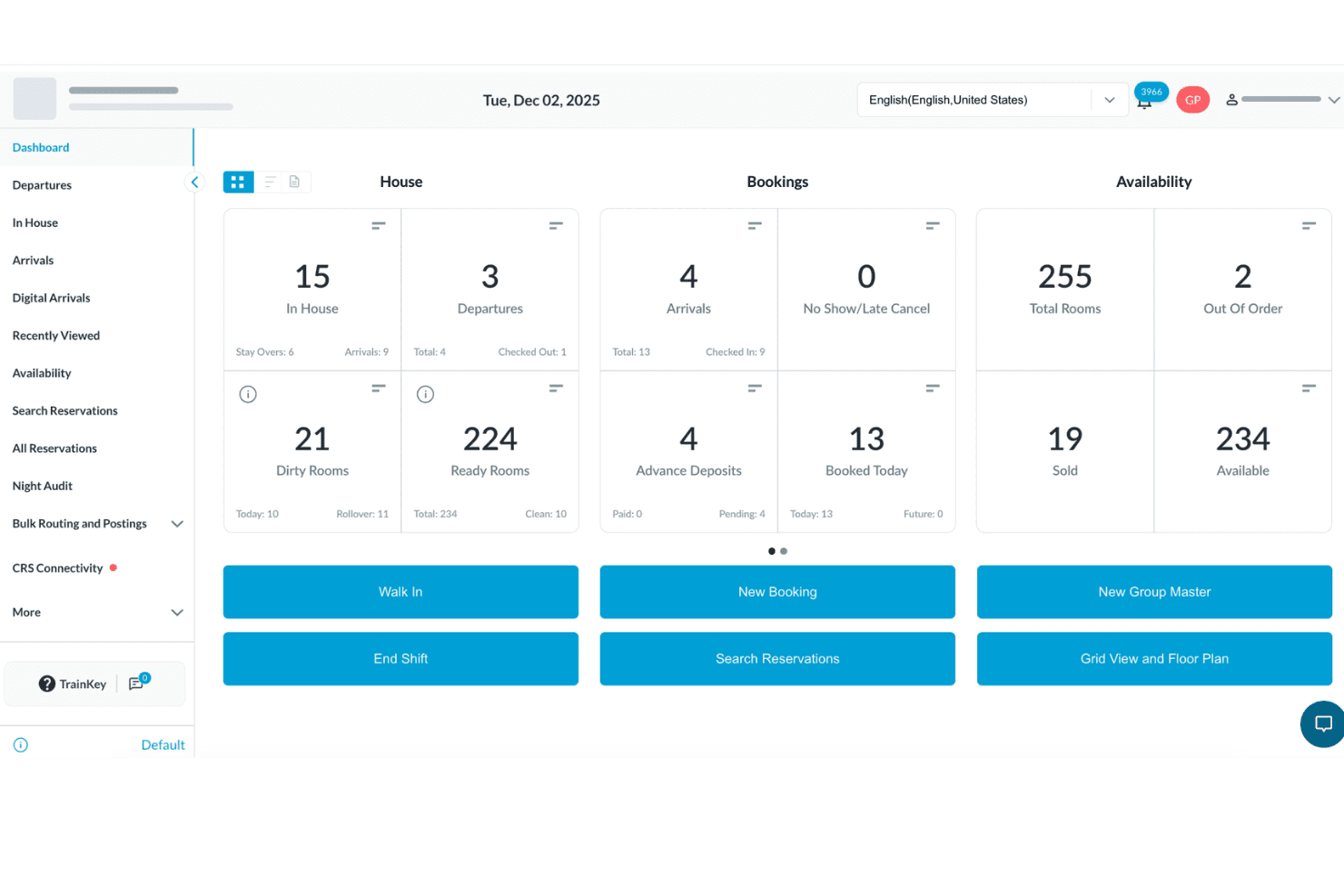
HotelKey supports front desk operations across multiple properties. HotelKey is a cloud-based property management system that centralizes reservations, front-desk operations, housekeeping, rate and inventory control, and cross-property reporting across hotel portfolios.
Who Is HotelKey Best For?
HotelKey is a strong fit for multi-property hotel operators and regional managers who need mobile access to portfolio performance, rates, and occupancy data across locations.
Why I Picked HotelKey
I picked HotelKey as one of the best because the Manager App gives you genuine portfolio oversight from your phone, showing average daily rate (ADR), revenue per available room (RevPAR), occupancy, and revenue trends across all your properties with daily, monthly, and yearly comparisons in one view. I also like that you can manage rate calendars and room availability directly from the app, with competitor pricing insights alongside your own numbers. It's the kind of mobile access that actually matters when you're moving between sites.
HotelKey Key Features
- Centralized reservation system: Search real-time availability and book multi-property itineraries across GDS, OTAs, and direct channels from one interface.
- Housekeeping task automation: Auto-assign rooms to housekeeping staff, configure schedules by rate plan, and track room status with mobile updates in real time.
- Corporate rate and billing management: Set negotiated rates, configure direct-bill accounts, and automate invoice generation and delivery for company accounts.
- Cross-property rate calendar: View inventory, occupancy, ADR, and RevPAR in one calendar with year-over-year and budget comparisons across your portfolio.
HotelKey Integrations
Marketplace integrations include Booking.com, Expedia, Amadeus, SiteMinder, IDeaS, Duetto, M3, NetSuite, Stripe, and QuickBooks. HotelKey also offers private APIs for rate updates on external platforms.
Pros and Cons
Pros:
- OTA bookings sync with availability and rates
- Rate calendar compares performance against budget
- Mobile dashboards show portfolio occupancy and ADR
Cons:
- Multi-property access and coordination can be restricted
- Group bookings can complicate rooming-list changes
Learn more about HotelKey: Best for scaling hotel groups on one login
- Free demo + 14-day free trial available
- Pricing upon request
Visit WebsiteCustomer Rating:4.6/5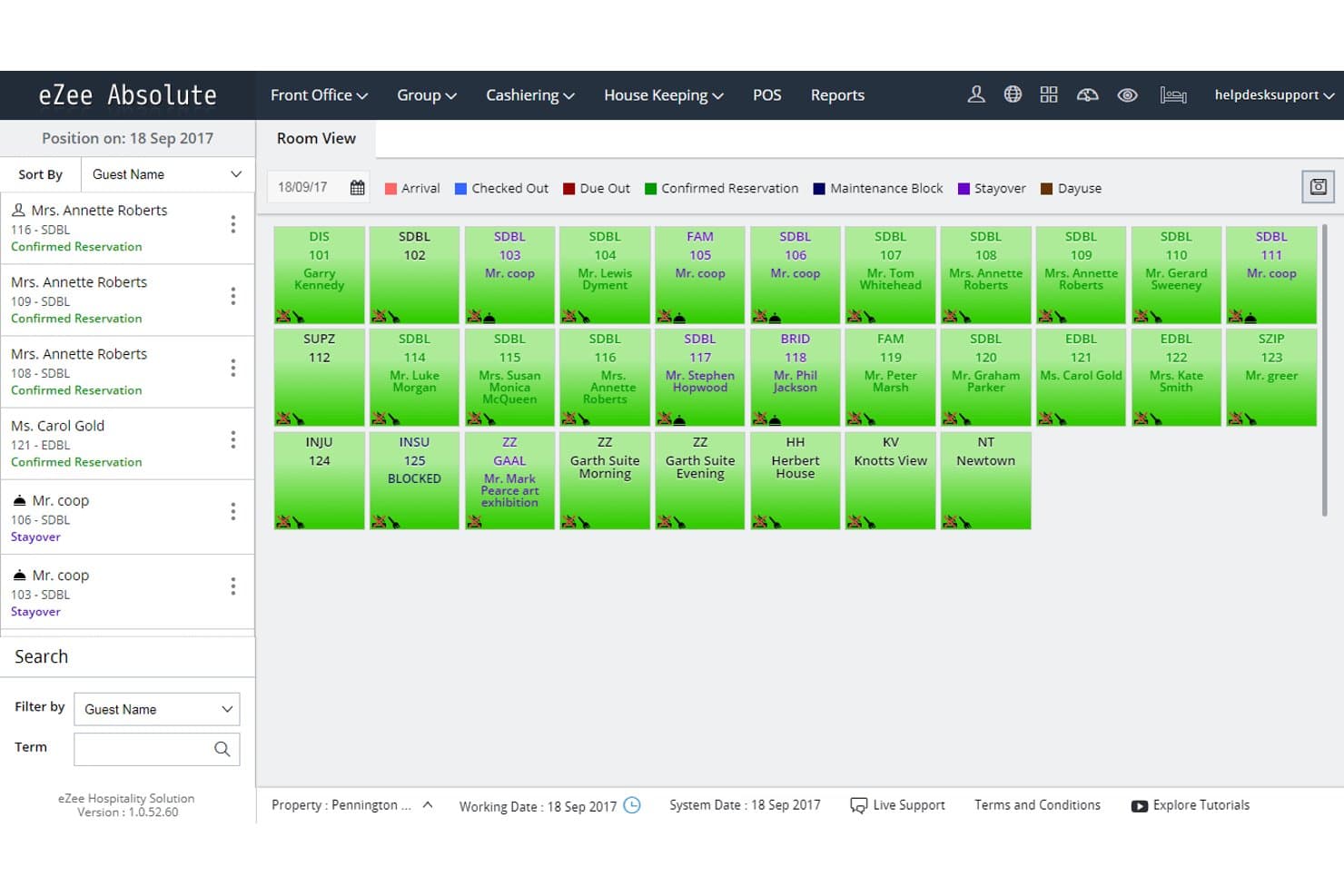
eZee Absolute displays real-time room status across all hotel rooms. eZee Absolute is a cloud-based property management platform that covers reservations, front desk, housekeeping, channel management, dynamic pricing, and multi-property reporting across a hotel group's portfolio.
Who Is eZee Absolute Best For?
Hotel groups managing between 5 and 50 properties will get the most from eZee Absolute, particularly those scaling up and needing one login to oversee reservations, rates, and operations across every location.
Why I Picked eZee Absolute
I picked eZee Absolute as one of the best because it genuinely solves the multi-property login problem that plagues growing hotel groups. One account gives you a consolidated view of revenue, occupancy, and operations across every property, and you can switch locations in the mobile app without signing back in. I also like that the centralized rate and inventory controls push updates to 130+ OTA channels in under 10 seconds, so your rates stay consistent portfolio-wide without manual property-by-property edits.
eZee Absolute Key Features
- Unified guest profiles: Guest stay history, lifetime value, and loyalty data are deduplicated across all properties in your portfolio automatically.
- Role-based access controls: Set staff permissions by property, function, and brand, with distinct roles for headquarters, general managers, and auditors.
- Night audit automation: End-of-day reconciliation runs overnight and generates regional revenue, arrival, departure, and statutory reports for review.
- Self check-in and checkout: Guests upload ID, complete digital registration, pay, and receive an e-folio directly on their phone.
eZee Absolute Integrations
eZee Absolute lists 650+ integration partners and native integrations with Booking.com, Expedia, and Agoda for two-way rate, inventory, and restriction sync. It also offers an industry-standard REST API for custom integrations.
Pros and Cons
Pros:
- Guest profiles and history sync across properties
- Centralized rates retain local property control
- One login covers portfolio operations
Cons:
- Mobile workflows feel limited during property visits
- Cross-property reports can be hard to interpret
Learn more about eZee Absolute: Best for multi-property rate and channel sync
- Free demo + 14-day free trial available
- From $9/month
Visit WebsiteCustomer Rating:4.4/5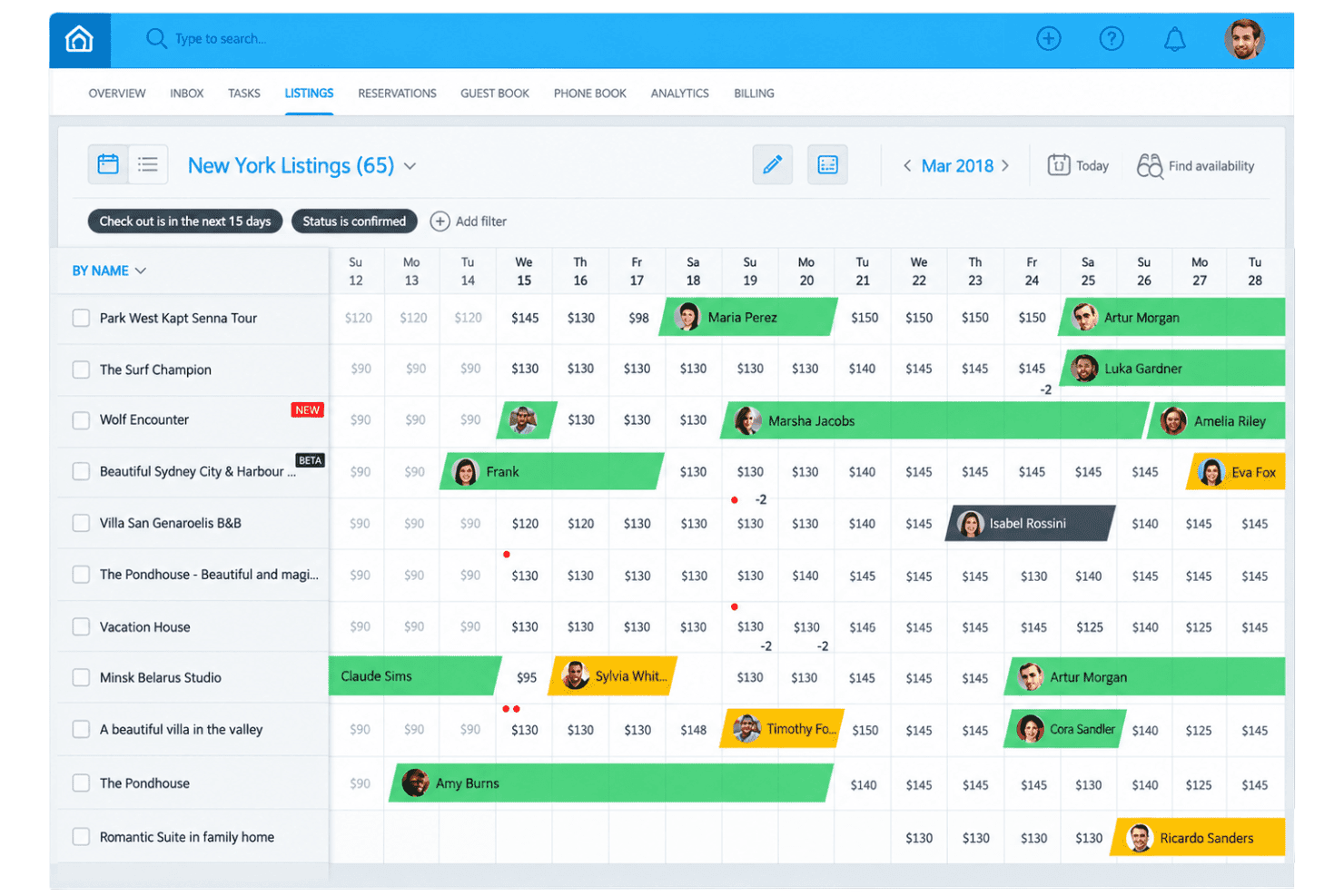
Guesty multi-calendar with property rates, availability, and reservations. Guesty is a property management platform that centralizes reservations, channel distribution, guest communications, rate management, and operational task coordination across multi-unit and multi-property portfolios.
Who Is Guesty Best For?
Guesty is a strong fit for revenue and reservations managers overseeing short-term rental portfolios who need bulk rate controls and real-time channel sync across dozens to hundreds of listings.
Why I Picked Guesty
I picked Guesty as one of the best because of how well its multi-calendar handles bulk rate and inventory updates across a large portfolio. I can apply nightly-rate overrides, minimum-night changes, and availability blocks across multiple listings in a single action, which is exactly what revenue managers need when adjusting strategy ahead of peak periods. Guesty's real-time channel sync pushes those changes to 60+ booking channels simultaneously, so rates stay consistent across Airbnb, Booking.com, Vrbo, and beyond without manual updates per channel.
Guesty Key Features
- Unified inbox: Centralizes guest messages from all connected booking channels in one view alongside reservation details.
- Automation workflows: Triggers guest messages and operational tasks—like cleaning assignments—based on reservation events such as checkout.
- Advanced analytics: Delivers portfolio-wide dashboards covering occupancy, ADR, revenue, and pace reports with year-over-year comparisons.
- Guesty PriceOptimizer™: Applies AI-driven dynamic pricing to adjust nightly rates based on market data and demand signals.
Guesty Integrations
Guesty lists 351 marketplace partners, including SiteMinder, TallOrder POS, PriceLabs, Lighthouse, and Breezeway, plus native Airbnb, Booking.com, and Vrbo connections. Its Open API supports REST, webhooks, OAuth 2.0, and custom integrations.
Pros and Cons
Pros:
- Reservation-triggered tasks coordinate cleaning and maintenance
- Portfolio dashboards track occupancy, revenue, and pace
- Bulk rate and inventory edits span properties
Cons:
- Reviewers report occasional booking-channel synchronization delays
- Hotel-style invoicing and reporting need improvement
Learn more about Guesty: Best for channel-synced multi-property rate control
- Free demo available
- Pricing upon request
Visit WebsiteCustomer Rating:4.3/5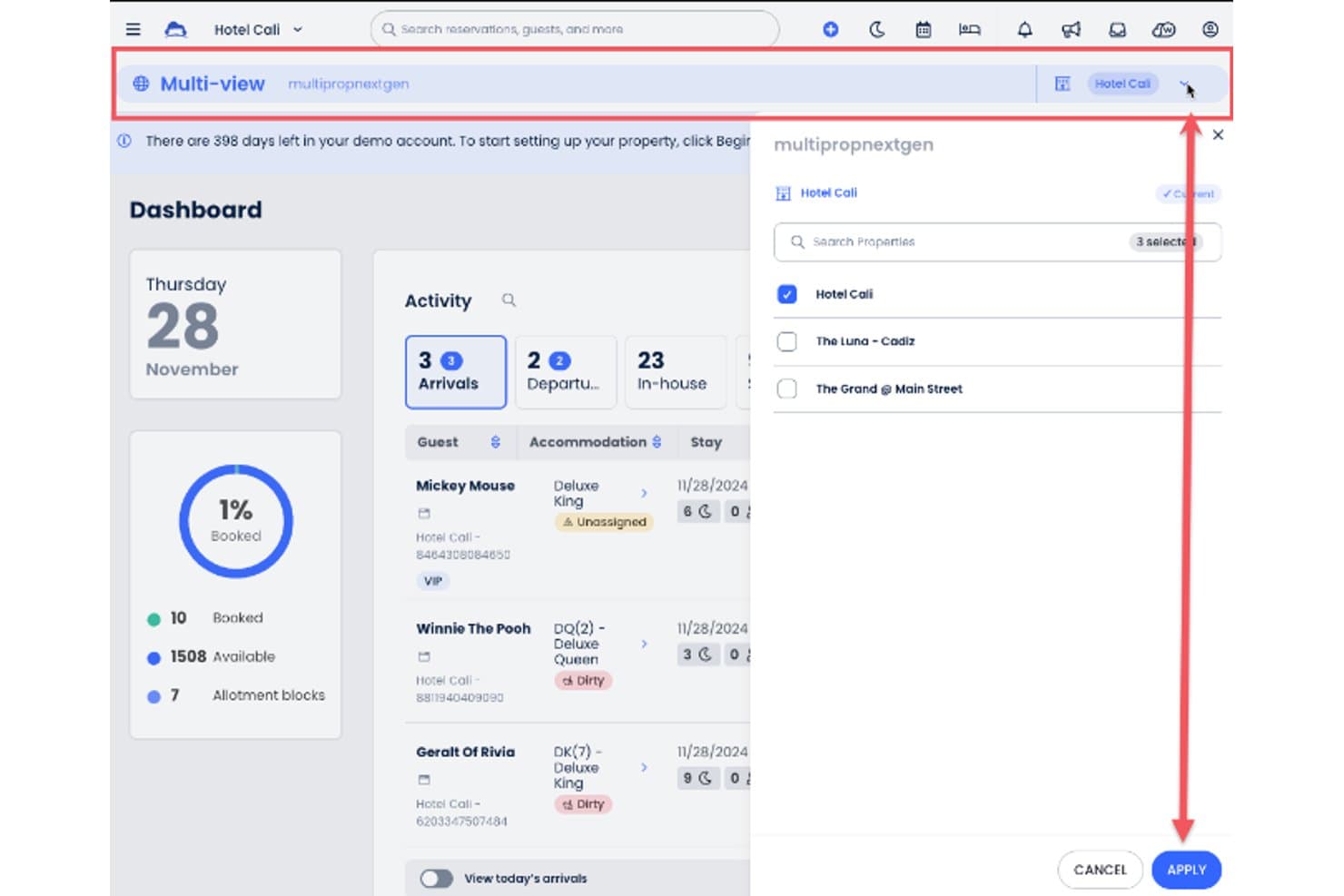
Cloudbeds multi-view lets staff switch between properties from one dashboard. Cloudbeds is a hospitality management platform that unifies property management, channel distribution, reservations, guest experience, and revenue management across multi-property portfolios from a single account.
Who Is Cloudbeds Best For?
Cloudbeds suits hotel group owners and revenue managers who need to control rates and sync inventory across multiple properties from a single platform.
Why I Picked Cloudbeds
Cloudbeds earns its spot on my shortlist because of how it handles rate control across a portfolio: the availability matrix lets you update rates, set price differentials, and manage long-term intervals across every property you have access to from a single page. I also like that the channel manager syncs rates, availability, and restrictions with OTAs in real time, so a rate change doesn't need to be replicated manually across channels. For groups running five or more properties, that combination of cross-property rate editing and live channel sync is where Cloudbeds genuinely pulls ahead.
Cloudbeds Key Features
- Unified guest profiles: Aggregates guest stay history, preferences, and lifetime value across all properties in an organization, with manual merge and deduplication tools.
- Revenue management module: Generates AI-driven rate recommendations and demand forecasts using booking pace, competitor rates, and market trends.
- Multi-property role-based access: Lets you assign users different roles across different properties within an organization, with granular permission controls.
- Cloudbeds Insights reporting: Filters performance data by one or more properties and assembles cross-property dashboards in configurable Insights Hubs.
Cloudbeds Integrations
Cloudbeds lists 450+ integration partners or integrations, including Booking.com, Expedia, Airbnb, QuickBooks, Xero, M3, Duetto, IDeaS, Toast, and Lightspeed. It offers REST, GraphQL, webhooks, OAuth 2.0, organization-wide API access, and Zapier.
Pros and Cons
Pros:
- Guest records consolidate stays across properties
- OTA sync reduces manual rate updates
- Portfolio-wide rate edits from one matrix
Cons:
- Reviewers report confusing, unreliable reporting
- Shared workflow templates aren’t documented
 Best for scaling hotel groups with a central CRO
- Free demo + 15-day free trial available
- Pricing upon request
Visit WebsiteCustomer Rating:4.4/5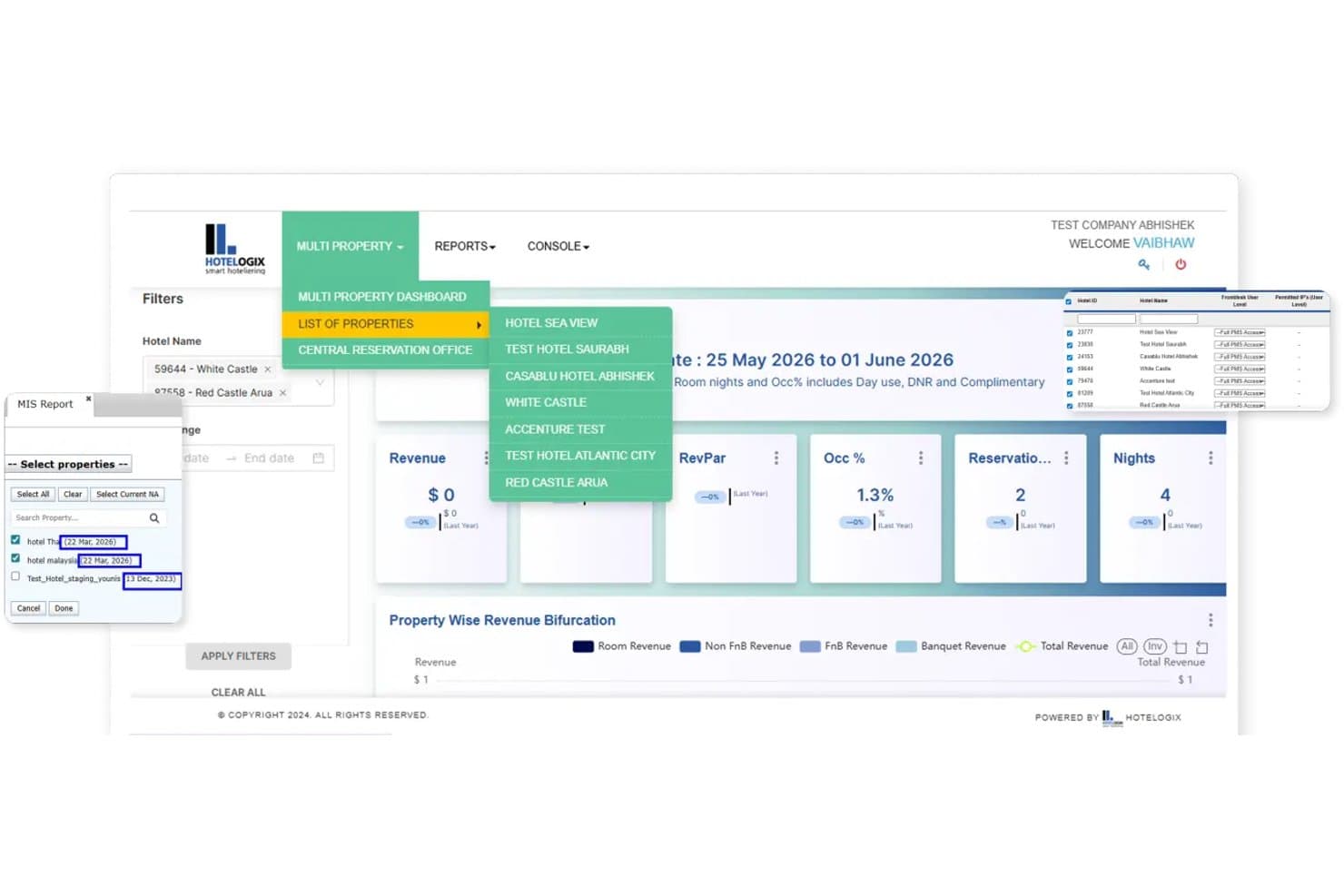
Hotelogix lets users manage and switch between multiple hotel properties seamlessly. Hotelogix HLXE is a cloud-based multi-property management system for hotel chains and groups that covers centralized reservations, front desk, housekeeping, rate and inventory control, and group-level reporting across member properties.
Who Is Hotelogix Best For?
Hotelogix HLXE is a strong fit for growing hotel groups that need a central reservations office to coordinate bookings and inventory across a dispersed portfolio of properties.
Why I Picked Hotelogix
I picked Hotelogix as one of the best because its central reservation office is the clearest expression of what a multi-property setup actually needs: agents get a live, shared view of availability across every property and can book FIT, corporate, or travel-agent itineraries spanning multiple hotels in a single reservation. Those CRO bookings sync to each property's front desk in real time, so there's no manual handoff between the group office and individual sites. The super admin console ties it together, letting you switch between properties on one login and manage rates and room inventory across the portfolio from one place.
Hotelogix Key Features
- Advanced group booking tools: Automatically assign rooms based on group and guest preferences, and route transactions to a guest or group folio with stop-posting controls.
- Revenue management solution: Receive rate recommendations across properties alongside local demand data, occupancy forecasts, and competitor rate intelligence.
- Mobile PMS access: Create and modify reservations, manage check-in and check-out, and update room statuses from the iOS or Android app while away from the property.
- Online reputation management: Monitor guest reviews from multiple platforms, assess sentiment, and send post-checkout feedback requests from within the system.
Hotelogix Integrations
Hotelogix lists 100+ marketplace integrations, including STAAH, RateGain, SiteMinder, NetSuite, SAP, POSist, and Restroworks. Its API supports custom connections for distribution, payment, POS, and other hospitality tools.
Pros and Cons
Pros:
- Reviewers praise quick reservation and check-in tasks
- Central console switches between properties
- Cross-property itineraries sync to front desks
Cons:
- Offline operations require manual workarounds
- Back-office configurations require desktop access
 Best for portfolio setup in days, not months
- Free demo available
- Pricing upon request
Visit WebsiteCustomer Rating:4.4/5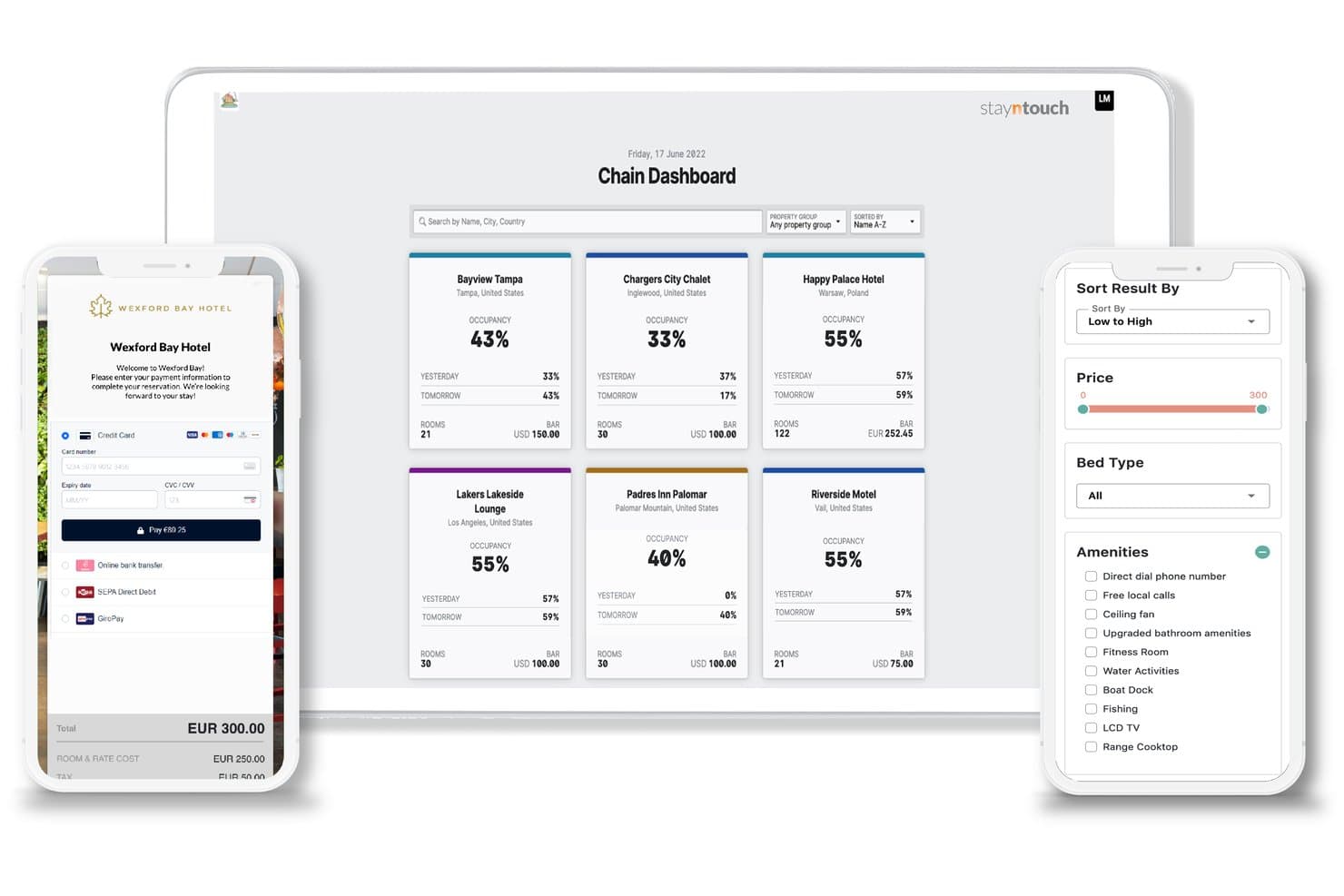
StayNTouch provides a chain overview with occupancy and room rates by hotel. StayNTouch PMS is a cloud-based property management system for hotel groups that covers front desk, housekeeping, reservations, rate management, and guest profiles across portfolios of up to 100+ properties from a single login.
Who Is StayNTouch Best For?
StayNTouch is a strong fit for independent hotel groups and boutique brands that need to bring multiple properties under one PMS without a lengthy, resource-heavy rollout.
Why I Picked StayNTouch
I picked StayNTouch as one of the best because its auto-configuration tool cuts manual property setup from roughly 30 hours down to 4–5 hours, which means adding a new property to your portfolio doesn't become a multi-week project. I also like that central templates for rates, charge codes, and housekeeping task lists can be pushed to every subscribing property at once, so a policy change doesn't require logging into each location separately. The Dataloader handles bulk migration of guest, company, and travel-agent profiles in 1–2 hours, keeping your existing data intact from day one.
StayNTouch Key Features
- Role-based multi-property access: Executives, regional managers, and property staff each get tailored permission levels, with SSO and centralized provisioning across the portfolio.
- Mobile housekeeping management: Staff receive automated task assignments and customized mobile task lists, and can update room status, flag out-of-service rooms, and post minibar charges from a mobile device.
- Rate strategy tool: A built-in occupancy-based pricing tool automatically raises or lowers rates against configurable thresholds, and can be applied to selected rate types or date ranges.
- 1,400+ integrations at no extra charge: Open APIs and webhooks connect to accounting, CRM, POS, analytics, and guest-communication platforms, with no added integration fees from StayNTouch.
StayNTouch Integrations
StayNTouch documents 1,400+ integrations, including SiteMinder, Toast POS, Lightspeed, QuickBooks Online, Cendyn, Revinate, Duetto, and IDeaS G2 & G3. Open APIs, webhooks, and sandbox environments support custom integrations.
Pros and Cons
Pros:
- Responsive support helps multi-property rollouts
- Shared templates support consistent property workflows
- Portfolio setup cuts repeat configuration
Cons:
- Portfolio reports can limit filters and exports
- Group bookings need extra setup steps
Learn more about StayNTouch: Best for chain-wide guest data and portfolio ops
- Free demo available
- Pricing upon request
Visit WebsiteCustomer Rating:3.9/5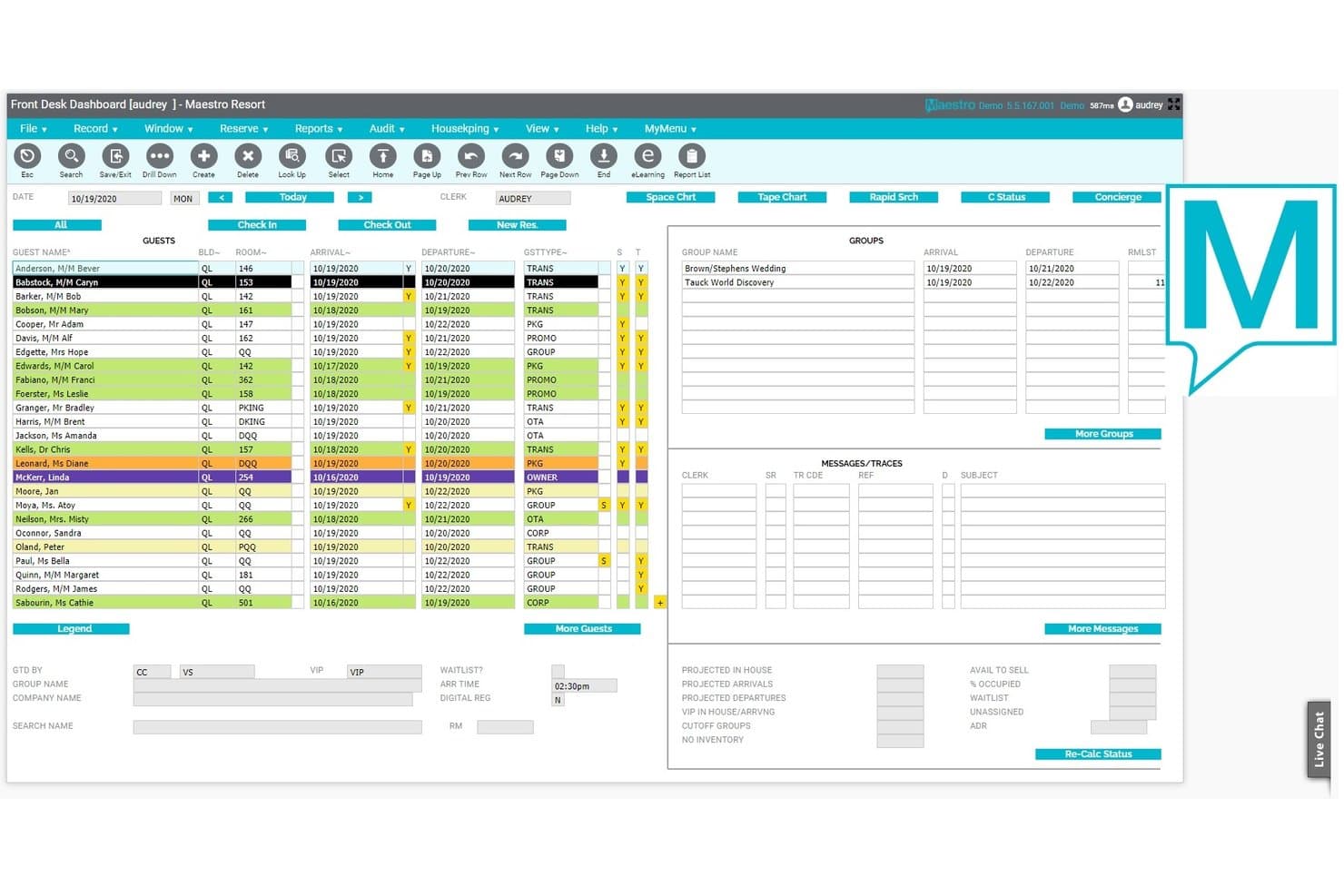
Maestro PMS front desk overview with guest arrivals, departures, room assignments, and group bookings. Maestro PMS is a browser-based property management platform for hotels, resorts, and multi-property groups that brings together front office, reservations, housekeeping, sales and catering, spa, activities, and analytics across more than 20 integrated modules on a shared database.
Who Is Maestro PMS Best For?
Maestro PMS is a strong fit for multi-property hotel groups and resorts that need a single, shared guest database and centralized reporting across their entire portfolio.
Why I Picked Maestro PMS
I've included Maestro PMS in my top picks because its chain-wide guest database is one of the most practical features I've seen for multi-property groups. Every property shares a single client profile, so a guest's stay history, preferences, and itinerary follow them across your entire portfolio without manual syncing. I also like that corporate and property-level performance reports pull from one central data repository, so you're comparing real numbers across locations in the same dashboard.
Maestro PMS Key Features
- Chain-wide guest database: A single shared client profile stores each guest's stay history, preferences, and reservation data across every property in your portfolio.
- Built-in yield and channel management: The front office module includes rate, yield, and hurdle controls with GDS/OTA interface uploads to manage availability and pricing across distribution channels.
- MezzoPay embedded payment processing: Credit card processing is built directly into the PMS, with support for multiple payment methods and currencies across single or multiple properties.
- Online eLearning portal: Module-specific self-paced courses let your team train on features, functions, and reports, while managers can assign lessons and track completion progress.
Maestro PMS Integrations
Maestro PMS reports over 800 established vendor integrations, including SiteMinder, Sabre SynXis, Duetto, IDeaS, QuickBooks, Shift4, Lightspeed, Revinate, and HotSOS/REX. It supports Genomi and open APIs, plus HTNG and OTA standards for custom connectivity.
Pros and Cons
Pros:
- Users value linked hotel operations
- Central reports show property-level performance
- Shared guest histories support portfolio recognition
Cons:
- Front-desk training and navigation take effort
- Reservation screens remain property-specific
Learn more about Maestro PMS: Best for cross-property reservations at scale
- Free demo available
- Pricing upon request
Visit WebsiteCustomer Rating:4.2/5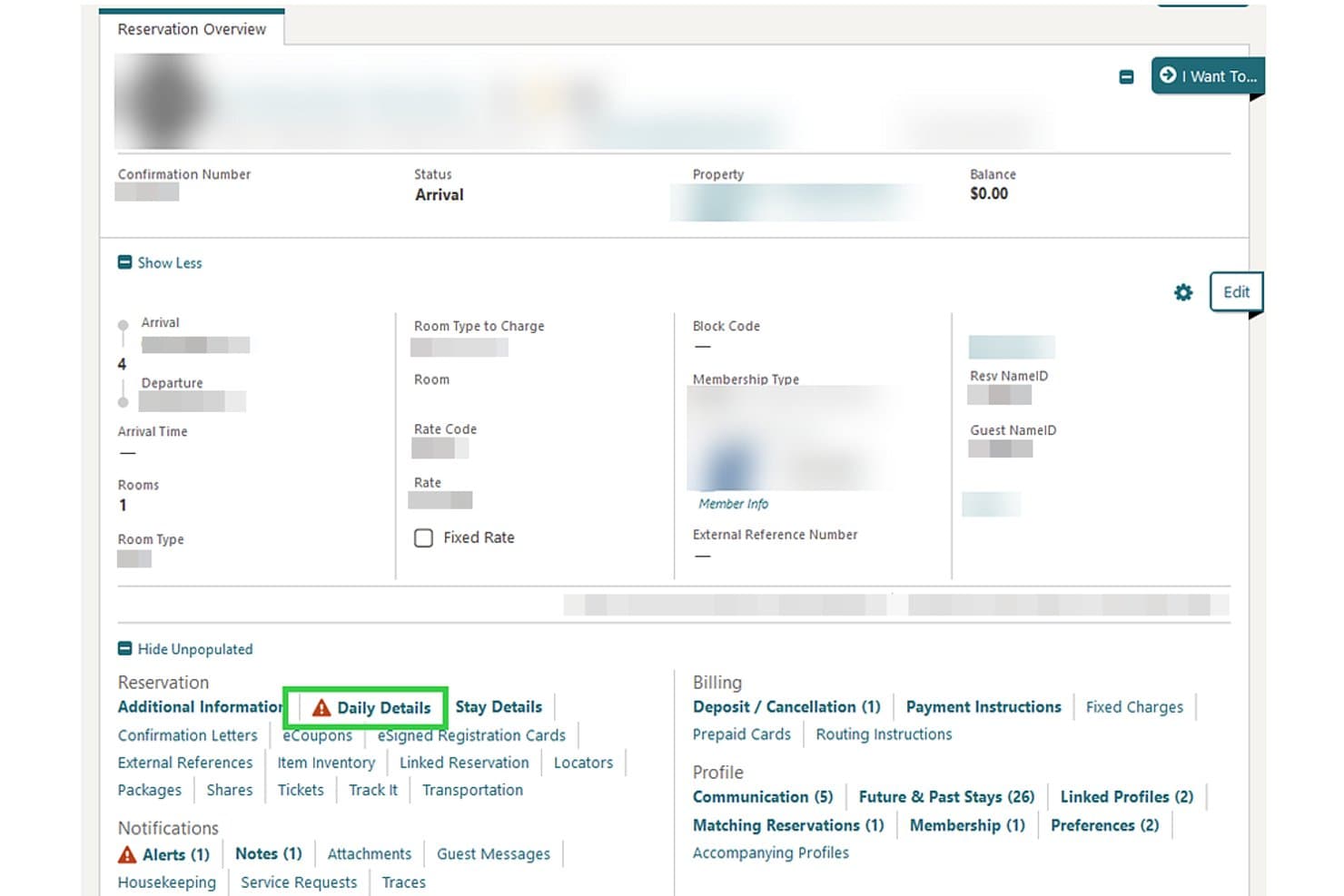
Oracle OPERA Cloud reservation overview with room, rate, and booking details. Oracle OPERA Cloud is a cloud-based hotel property management system that handles reservations, guest profiles, front desk operations, housekeeping, group bookings, billing, and multi-property configuration from a single platform.
Who Is Oracle OPERA Cloud Best For?
Oracle OPERA Cloud is a strong fit for revenue and reservations managers at hotel groups who need to handle cross-property availability searches, multi-segment bookings, and rate distribution from one platform.
Why I Picked Oracle OPERA Cloud
I picked Oracle OPERA Cloud because the reservation sales screen genuinely sets it apart for hotel groups managing bookings at scale. From a single hub, your reservations team can search availability across multiple properties simultaneously and build multi-segment itineraries spanning different locations, room types, and rate codes in one session. I also like that negotiated rates can be distributed from a hub directly to selected properties, with the negotiated rates panel filterable by one or multiple properties at once.
Oracle OPERA Cloud Key Features
- Customizable operations dashboard: Configure over 30 tiles covering front desk, revenue, inventory, and housekeeping, with control set at chain, property, or user level.
- Group room block management: Manage group blocks, dates, rates, billing requirements, and sales ownership, with rooming list uploads directly from Excel.
- Loyalty membership configuration: Set up membership tiers, points earned by stay or spend, promotional rates, and points redemption for rooms, upgrades, and packages.
- Profile sharing across properties: When enabled at the chain level, guest preferences, notes, and loyalty membership become visible to staff at all participating properties.
Oracle OPERA Cloud Integrations
Oracle OPERA Cloud has documented native integrations with Oracle MICROS Simphony POS, Oracle Hospitality Nor1, Oracle Payment Interface, and Oracle Payment Cloud Service. Its Oracle Hospitality Integration Platform and GraphQL Data API support custom integrations.
Pros and Cons
Pros:
- Copy configuration templates between properties
- Build itineraries across properties and room types
- Search availability across properties in one session
Cons:
- Reviewers report slow performance during routine work
- Daily workflows can require extra clicks
Learn more about Oracle OPERA Cloud: Best for IT-led portfolio integration management
- Not available
- Pricing upon request
Visit WebsiteCustomer Rating:3.5/5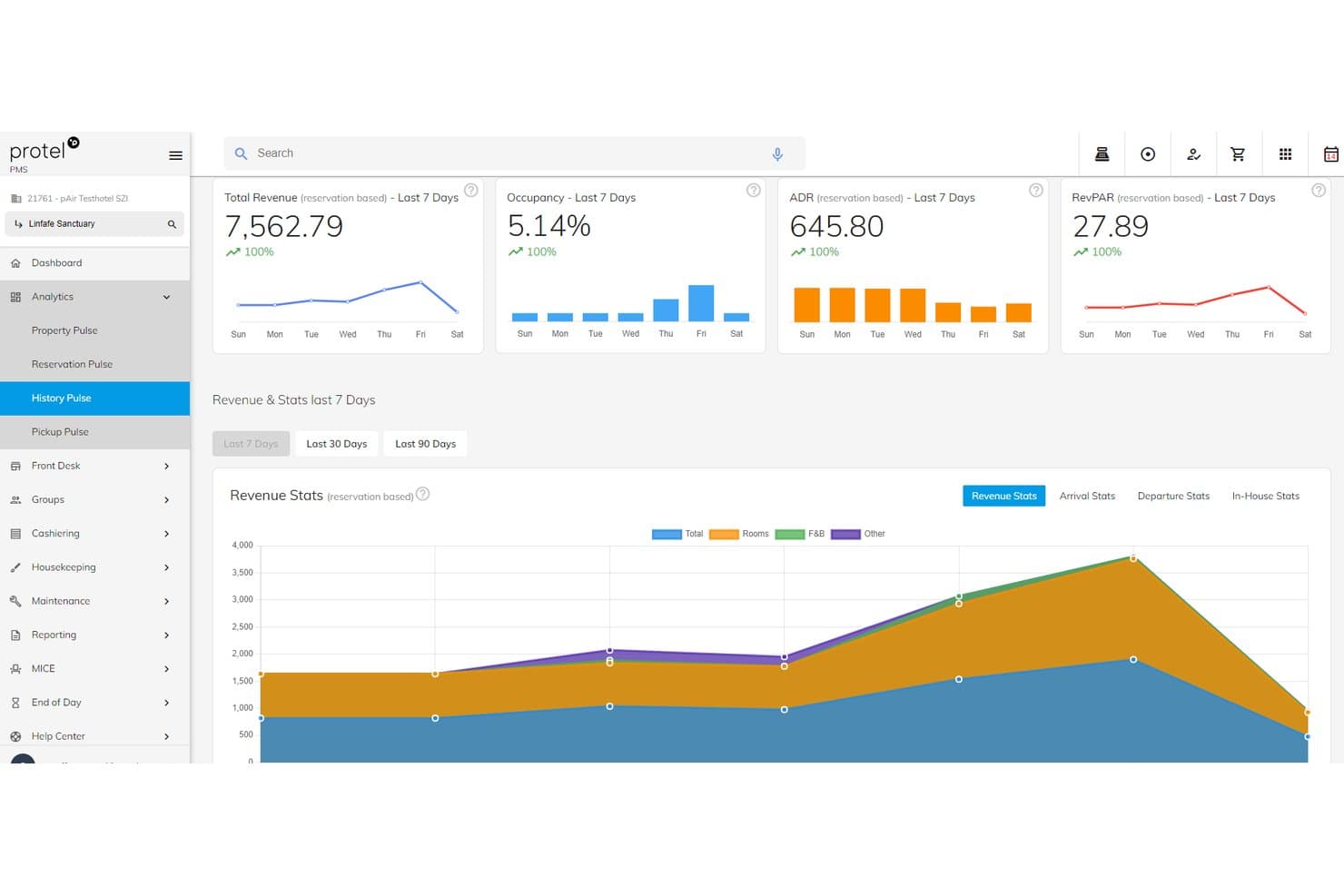
Protel PMS History Pulse includes weekly revenue, occupancy, ADR, and RevPAR. Protel Cloud PMS is a hotel property management system from Planet that covers reservations, front-desk operations, billing, housekeeping, reporting, and multi-property configuration across hotel portfolios through a centralized environment and 1,100+ marketplace integrations.
Who Is Protel Best For?
Protel Cloud PMS is a strong fit for hotel group IT directors who need a well-documented API, sandbox environments, and a vetted marketplace of 1,000+ integration partners to manage a multi-property tech stack.
Why I Picked Protel
I've included Protel in my top picks because it's built specifically around what hotel group IT directors actually need: a documented Cloud API with sandbox environments, backward compatibility, and a vetted marketplace of 1,000+ certified integration partners. In practice, that means my team can vet, test, and connect third-party tools across a portfolio without worrying about breaking existing integrations when new ones go live. The multi-property environment's central app also lets my team configure system data and manage property onboarding from one place, which cuts down on duplicated setup work across locations.
Protel Key Features
- Consolidated portfolio dashboard: View real-time revenue and occupancy metrics across all properties from a single dashboard in the multi-property environment.
- Mobile-responsive PMS interface: Check guests in, update room status, post minibar charges, and create repair orders directly from a smartphone browser.
- Role-based access controls with 2FA and SSO: Manage staff permissions across the portfolio with mandatory two-factor authentication and single sign-on support.
- Hybrid cloud and on-premise support: Run cloud and on-premise properties simultaneously under a single integration partner setup.
Protel Integrations
Protel Cloud PMS offers 1,100+ marketplace integrations and documented payment-terminal compatibility with Worldline, Ingenico, Verifone, and PAX. Its Cloud API supports custom integrations with developer documentation and sandbox environments.
Pros and Cons
Pros:
- Mobile PMS supports front-desk and room updates
- Portfolio dashboards show revenue and occupancy
- Central app simplifies portfolio setup
Cons:
- System performance can lag
- Group bookings can take extra steps
Learn more about Protel: Best for portfolios spanning 80-plus sites
- Free demo available
- Pricing upon request
Visit WebsiteCustomer Rating:4.2/5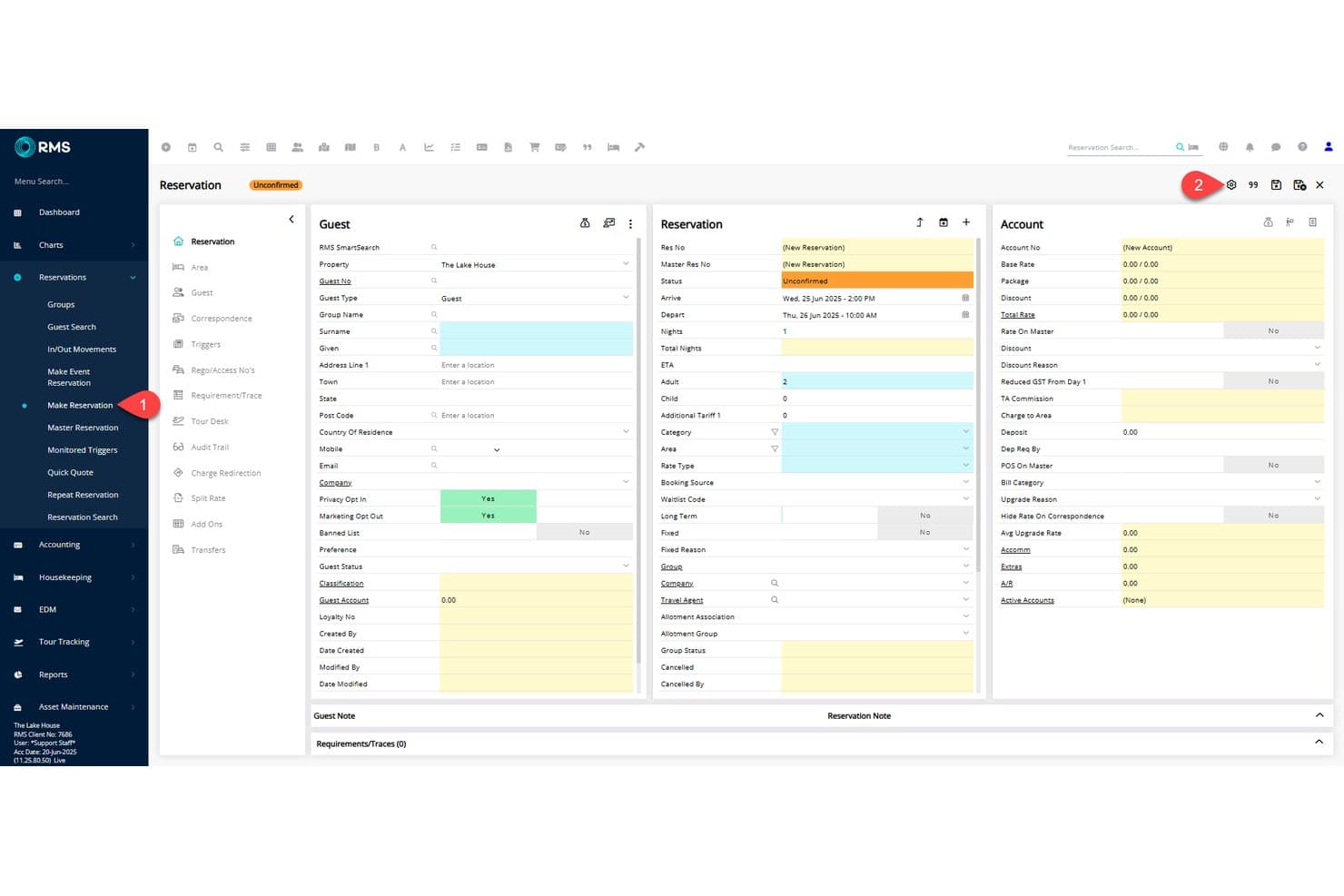
RMS Cloud provides a reservation view with guest, stay, and account details. RMS Cloud is a cloud-based property management platform that covers reservations, front desk, housekeeping, rate management, channel distribution, guest communications, and portfolio-level reporting across multiple properties.
Who Is RMS Cloud Best For?
RMS Cloud suits hotel group operators managing large, multi-property portfolios who need a single system to handle reservations, rate management, and reporting across dozens of sites.
Why I Picked RMS Cloud
I picked RMS Cloud as one of the best because it's genuinely built for scale, with documented real-world use across portfolios of 80-plus sites and hundreds of staff. I particularly like the enterprise database structure, which lets you assign each user a tailored security profile per property, controlling exactly what they can see and do across the group. The portfolio dashboards let me pull occupancy, RevPAR, and revenue data across multiple properties at once, then drill into a single site when something needs attention.
RMS Cloud Key Features
- Built-in channel manager: Manage OTA distribution and control how inventory is sold across connected channels, with connections to travel agents and GDS channels.
- Open REST API: Access 530+ endpoints with real-time, two-way data exchange, a developer sandbox, and API-specialist support for custom integrations.
- Guest communications hub: Automate pre-stay and post-stay emails, triggered confirmations, scheduled payment reminders, and post-stay feedback surveys.
- Role-based security profiles: Assign each staff member Allow, Read Only, or no-access permissions for specific functions—reservations, reporting, setup, and administration—on a per-property basis.
RMS Cloud Integrations
RMS lists hundreds of marketplace partners, including IDeaS, Airbnb, Agoda, and Avar AI. Its open API supports 530+ endpoints, webhooks, real-time two-way data exchange, and connections with 100+ technology partners.
Pros and Cons
Pros:
- Documented 80-property deployments support portfolio scale
- Per-property permissions separate staff access
- Cross-property dashboards drill into individual sites
Cons:
- Rate views stop at 60 days
- Group bookings can require manual folio handling
Learn more about RMS Cloud:
Other Multi-Property Hotel Operations Software
Here are a few additional options that didn’t make my shortlist but are still worth checking out:
- 11Shiji Enterprise PlatformBest for enterprise hotel groups scaling globally
- 12MewsBest for portfolio ops with 1,000+ integrations
- 13WebRezProBest for cross-property reporting and owner oversight
- 14innRoadBest for cross-property revenue reporting
- 15HostawayBest for OTA-first multi-listing portfolio ops
- 16Clock PMS+Best for shared guest profiles across properties
- 17Infor HMSBest for single-database multi-property operations
- 18RoomKeyPMSBest for small chains sharing guest profiles
How I Evaluate Multi-Property Hotel Operations Software
I split my evaluation into three parts: core functionality first (and it carries the most weight), where I check that a platform can run multiple properties under one login and manage reservations centrally. Then I look for standout features like a mobile multi-property dashboard. Finally, I consider onboarding and pricing scalability.
Core Functionality (Table Stakes For This List)
When I'm selecting tools for my list, I score each one on a scale from 0 (does not offer the functionality) to 5 (excels in this area) for each core functionality listed below. I then convert the total into a percentage to help assess each tool's overall fit, with extra weight on any functionalities I've deemed essential.
- Multi-Property Management (Essential): I check whether you can configure and run all your properties from one account, with shared templates or property-specific overrides as needed.
- Centralized Reservations (Essential): I look for a single reservation engine where you can create, modify, and manage bookings across every property without switching between systems.
- Cross-Property Reporting: Consolidated dashboards that let you compare occupancy, RevPAR, and performance side by side across locations are what I evaluate here.
- Unified Guest Profiles: I check whether guest records and stay histories sync across properties so returning guests are recognized at any location in the portfolio.
- Rate and Inventory Control: The ability to push rate and availability updates across properties in bulk, while still allowing property-level adjustments, is what I look for.
- Role-Based Multi-Property Access: Permissions should let you scope staff access by property, region, or corporate level so a front desk agent only sees their site while an area manager sees several.
Once I have a list of tools that meet the criteria, I consider what sets each platform apart.
Differentiating Factors (What Sets Vendors Apart)
Here's how I compare and contrast different vendors:
Standout Features
I look for a mobile multi-property dashboard that lets regional managers check occupancy and approve rate changes between site visits. A channel manager with native two-way OTA sync is equally important—without it, a rate update at one property can lag across channels and cause overbookings. I also evaluate each platform's API ecosystem, since groups running mixed property types need reliable connections to their existing revenue management, POS, and payment tools.
Beyond Features
I check whether a platform's pricing scales predictably per property or room count, since surprise costs after adding a new acquisition can stall a rollout. Implementation support matters just as much—vendors like Oracle and Maestro PMS offer phased go-live plans, which let you migrate one property at a time instead of risking portfolio-wide disruption. I also evaluate uptime SLAs and PCI-DSS compliance, because a single outage or data breach ripples across every property on the platform.
How to Choose Multi-Property Hotel Operations Software
Choose a system by deciding where your group needs consistent processes and where each property needs room to operate differently.
| If your priority is | Look for |
|---|---|
| If your priority isPreserving local operating differences | Look forA written process for documenting property-level exceptions |
| If your priority isPredicting costs as your portfolio grows | Look forA quote that separates recurring, setup, migration, and training charges |
| If your priority isMoving booking and guest records | Look forA migration plan with sample field mappings and reconciliation steps |
| If your priority isLimiting disruption during rollout | Look forA phased launch plan with sign-off criteria for each property |
How to Vet Your Shortlist
- Review the migration plan: Request a sample runbook that names the records to be moved, field mappings, and how your team will resolve exceptions.
- Test the operating model: Schedule a 45-minute workshop using two properties with different procedures, then document which decisions apply portfolio-wide and which stay local.
- Compare total costs: Ask for a 12-month quote showing per-property or per-room fees, setup, migration, training, and renewal assumptions.
- Set pilot terms: Request a written plan for launching one property first, including data sign-off, acceptance criteria, and a rollback date.
- Choose your tradeoff: Favor centralized consistency if shared processes matter most; favor local autonomy if properties need distinct operating rules.
What Is Multi-Property Hotel Operations Software?
Multi-property hotel operations software is a platform that lets hotel groups manage reservations, rates, guest records, and property operations across multiple locations. It can give central teams shared controls and reporting while allowing individual properties to follow local procedures. This helps groups coordinate daily work without requiring every hotel to operate identically.
Features
Here are the main features I look for in multi-property hotel operations software:
- Multi-property management: Manage several hotels from one account, with shared settings for portfolio-wide processes and property-level controls for local needs. This lets central teams coordinate operations without forcing every location to follow identical procedures.
- Centralized reservations: View and manage bookings across properties from a shared reservation system. Staff can create or update a reservation and check availability across locations without switching between separate property accounts.
- Cross-property reporting: Compare metrics such as occupancy, RevPAR, and booking pace across locations. Consolidated reports help corporate and regional teams spot differences and assess property performance.
- Unified guest profiles: Keep guest details and stay histories available across the portfolio. When a returning guest books at another property, staff can refer to relevant preferences and records, subject to access rules and data policies.
- Rate and inventory control: Update room rates and availability across selected properties from a central interface, while retaining options for property-specific adjustments. This supports coordinated pricing changes and helps teams keep room inventory current.
- Role-based access: Assign permissions by property, region, or corporate responsibility. Front desk staff can access the information needed at their location, while regional managers can oversee multiple hotels.
- Channel management: Connect room rates and availability with online travel agencies and other booking channels. Two-way updates help keep channel listings aligned with the property system when availability or prices change.
Benefits
Here are a few common benefits you can expect from multi-property hotel operations software:
- Centralized oversight: Manage several properties from one account, with shared settings and property-level controls for local procedures.
- Coordinated reservations: View and update bookings across locations in one system without switching between separate property accounts.
- Portfolio performance visibility: Compare occupancy, RevPAR, and booking pace across properties through consolidated reporting.
- Consistent guest recognition: Shared guest profiles and stay histories help staff recognize returning guests at different properties.
- Coordinated rate and inventory control: Update rates and availability across selected properties while retaining property-specific adjustments.
- Scoped staff access: Role-based permissions let front desk staff focus on their property while regional managers oversee multiple locations.
- Aligned channel listings: Two-way channel updates help keep rates and availability consistent between the property system and booking channels.
Costs and Pricing of Multi-Property Hotel Operations Software
Costs vary by property count, room count, features, and add-ons. Here are typical pricing ranges for multi-property hotel operations software.
Plan Comparison Table for Multi-Property Hotel Operations Software
| Plan Type | Average Price | Common Features |
|---|---|---|
| Plan TypeFree Plan | Average Price$0 | Common FeaturesLimited property setup, basic reservation tools, trial access, and help documentation. |
| Plan TypePersonal Plan | Average Price$50–$200 per property/month | Common FeaturesCentral reservations, basic rate and inventory controls, property-level reporting, and email support. |
| Plan TypeBusiness Plan | Average Price$200–$750 per property/month | Common FeaturesMulti-property management, centralized reservations, cross-property reporting, role-based access, and channel management. |
| Plan TypeEnterprise Plan | Average Price$750–$2,000+ per property/month | Common FeaturesPortfolio-wide controls, advanced reporting, custom integrations, dedicated implementation support, and negotiated service terms. |
Free plans are uncommon, and enterprise pricing is often quote-based. Confirm whether the quote includes setup, migration, training, and add-on fees.
FAQs
Here are answers to common questions about multi-property hotel operations software.
Can multi-property hotel software work with hotels that use different PMS platforms?
Yes, if the platform supports the PMS or property-level setup each hotel already uses. Some groups standardize on one system; others connect different systems through integrations or an API. Ask vendors to demonstrate what remains centralized when systems differ: availability, reservations, guest records, rates, and reporting. Confirm update timing and which system owns each record. Test a real booking change and cancellation, since a connection that only passes basic booking data may not support the shared workflows your team expects.
What should we check before adding a newly acquired hotel?
Check whether the vendor can configure the new property without changing portfolio-wide rules. Ask how it will import room types, rate plans, reservations, guest records, and user permissions, and how exceptions will be reviewed. Confirm whether the site needs separate setup or integration fees, plus staff training. Before signing, run a sample migration with representative records. That can reveal mismatched fields or operating rules before they affect live bookings.
Can staff see guest profiles across every property?
It depends on the platform’s profile-sharing controls and your group’s data policies. Ask whether permissions can limit access by property or role, and whether staff can see only the guest details they need. Check how the system handles profile updates, duplicate records, and data-retention rules. Test a returning guest scenario across two locations during evaluation. This helps you confirm that staff can find relevant history without giving every employee unrestricted access to portfolio-wide guest data.
Can one system support resorts and city hotels in the same portfolio?
Yes, if the software lets you configure property-specific room types, workflows, and reporting while keeping portfolio views consistent. Ask the vendor to walk through one resort and one city hotel scenario, including inventory, package rates, and reservation changes. Check whether each location can use different connected systems, such as POS or revenue tools. A shared login alone doesn’t prove the platform can handle different operating models; test the actual tasks your teams need.