

A hotel booking engine is an online tool that lets your guests reserve rooms directly through your website or social channels—giving you more control over bookings and revenue. If you’re looking for the best hotel booking engine, you’re probably tired of high OTA commissions, inconsistent integrations, or booking processes that frustrate guests and leave revenue on the table.
In this guide, I’ll help you compare the top solutions for direct online bookings, focusing on what matters most—tight integrations, competitive features, and guests who come back. You’ll find clear options to fit your property’s budget, tech stack, and direct booking goals.
Why Trust Our Software Recommendations
6,700+
Reviews
20
Industry experts
16+
Evaluation factors
14
Years
Our team has been testing and reviewing software since 2012. As hospitality leaders ourselves, we know how difficult—and important—it is to choose the right software.
For this guide, we evaluated tools using hands-on testing and independent research, scoring tools using our selection criteria.
Our reviews reflect our human editorial judgment, not a sales pitch.
Hotel Booking Engine Comparison Table
The table below compares pricing details for my top hotel booking engine selections.
| Tool | Best For | Trial Info | Price | ||
|---|---|---|---|---|---|
| 1 | Best for all-in-one direct booking with PMS sync | Free demo available | Pricing upon request | Website | |
| 2 | Best for commission-free direct booking growth | Free demo available | From $80/month | Website | |
| 3 | Best for direct bookings across 84 languages | Free demo available | From $19.95/month | Website | |
| 4 | Best for native loyalty-tied direct booking | Free demo available | Pricing upon request | Website | |
| 5 | Best for AI-driven direct booking conversion | Free demo available | Pricing upon request | Website | |
| 6 | Best for AI-led direct booking personalization | Free demo available | Pricing upon request | Website | |
| 7 | Best for rate parity with live OTA price matching | Free demo available | Pricing upon request | Website | |
| 8 | Best for driving direct bookings over OTAs | Free trial + free demo available | Pricing upon request | Website | |
| 9 | Best for AI-driven direct booking funnels | Free demo available | Pricing upon request | Website | |
| 10 | Best for direct bookings via OTA rate comparison | Free demo available | Pricing upon request | Website |


Hotel Booking Engine Reviews
Below are my detailed summaries of the best hotel booking engines that made it onto my shortlist. My reviews offer a detailed look at the features, best use cases, and integrations of each platform to help you find the best one for you.
 Best for all-in-one direct booking with PMS sync
- Free demo available
- Pricing upon request
Visit WebsiteCustomer Rating:4.3/5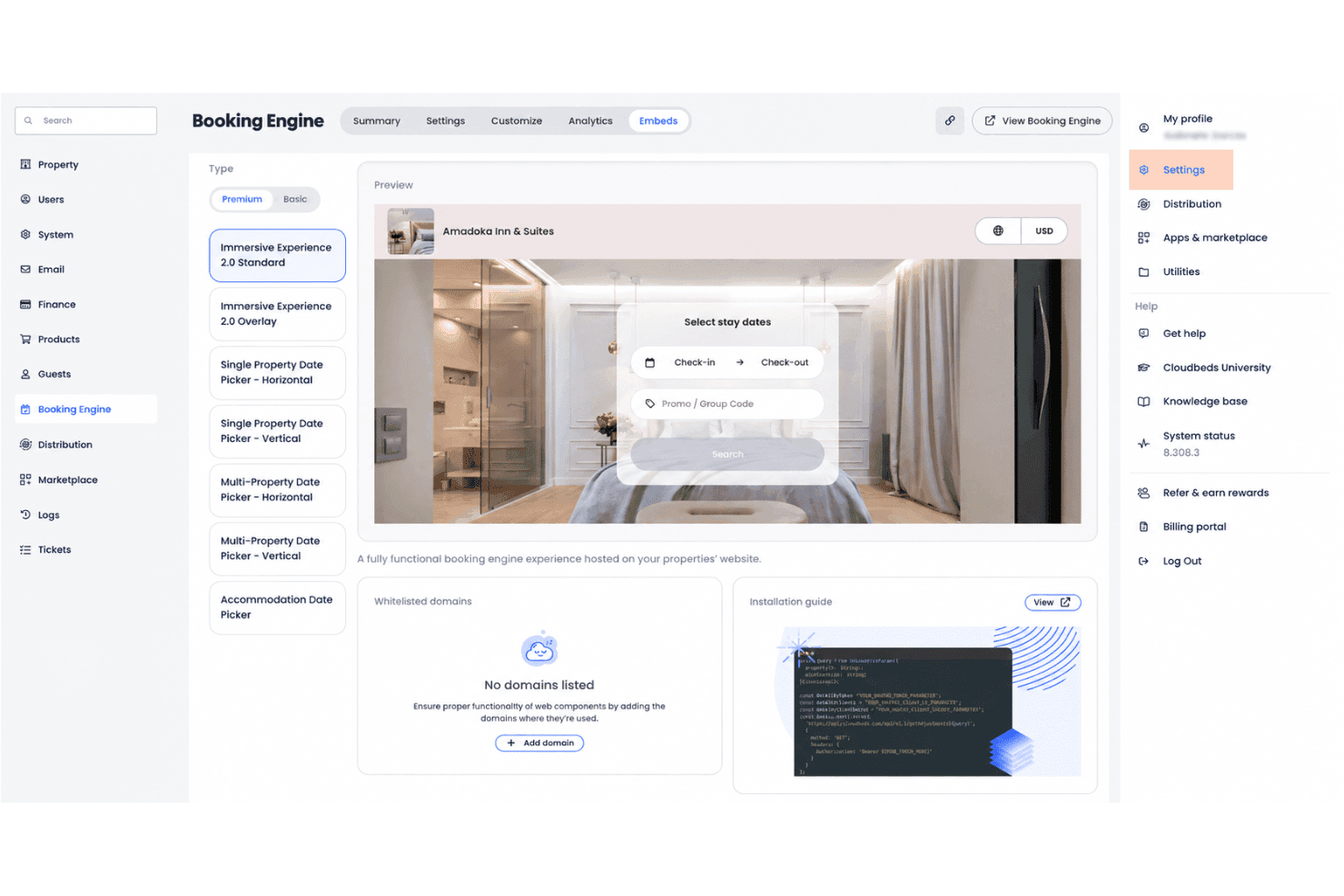
Cloudbeds connects direct hotel bookings with PMS operations, channel management, and payment processing. Cloudbeds is a unified hotel management platform that combines a direct booking engine, PMS, channel manager, and payment processing in a single system.
Who Is Cloudbeds Best For?
Cloudbeds is a strong fit for independent hoteliers who want a single platform handling their PMS, channel manager, booking engine, and payments without stitching together separate tools.
Why I Picked Cloudbeds
I picked Cloudbeds as one of the best because its booking engine isn't bolted onto the PMS—it's built into the same platform, so rates and availability update instantly across your website and every connected OTA. I love how the Rate Checker widget shows guests a live side-by-side comparison of your direct rate against OTA prices without them ever leaving your site. Signals AI adds 90-day demand forecasting and dynamic pricing recommendations on top of that, so you're not just capturing direct bookings—you're capturing them at the right price.
Cloudbeds Key Features
- PCI DSS Level 1 payment processing: Cloudbeds Payments handles transactions with the highest tier of payment security compliance, supporting 3D Secure, tokenization, and two pricing models—Cost+ and Blended Rate.
- Group booking engine: Guests can search availability and book across multiple properties in a portfolio from a single booking flow.
- One-click upsells and add-ons: The booking engine presents room upgrades, packages, and experiences (such as tours or local activities) that guests can add to their reservation in a single click.
- Google Analytics, Google Tag Manager, and Facebook Pixel integration: Connect tracking tools to the booking engine without coding to measure full-funnel campaign performance and attribution.
Cloudbeds Integrations
Cloudbeds has 450+ marketplace integrations, including Booking.com, Expedia, Airbnb, Vrbo, Google Hotel Ads, TripAdvisor, The Guestbook, Google Analytics, Google Tag Manager, and Facebook Pixel. It also offers an Open API and a Sabre Hospitality partnership for custom and GDS connectivity.
Pros and Cons
Pros:
- AI demand forecasting and dynamic pricing
- Rate parity widget shown in booking flow
- Unified PMS, channel manager, and booking engine
Cons:
- Abandoned cart recovery relies on paid ads
- No built-in loyalty program features
 Best for commission-free direct booking growth
- Free demo available
- From $80/month
Visit WebsiteCustomer Rating:4.5/5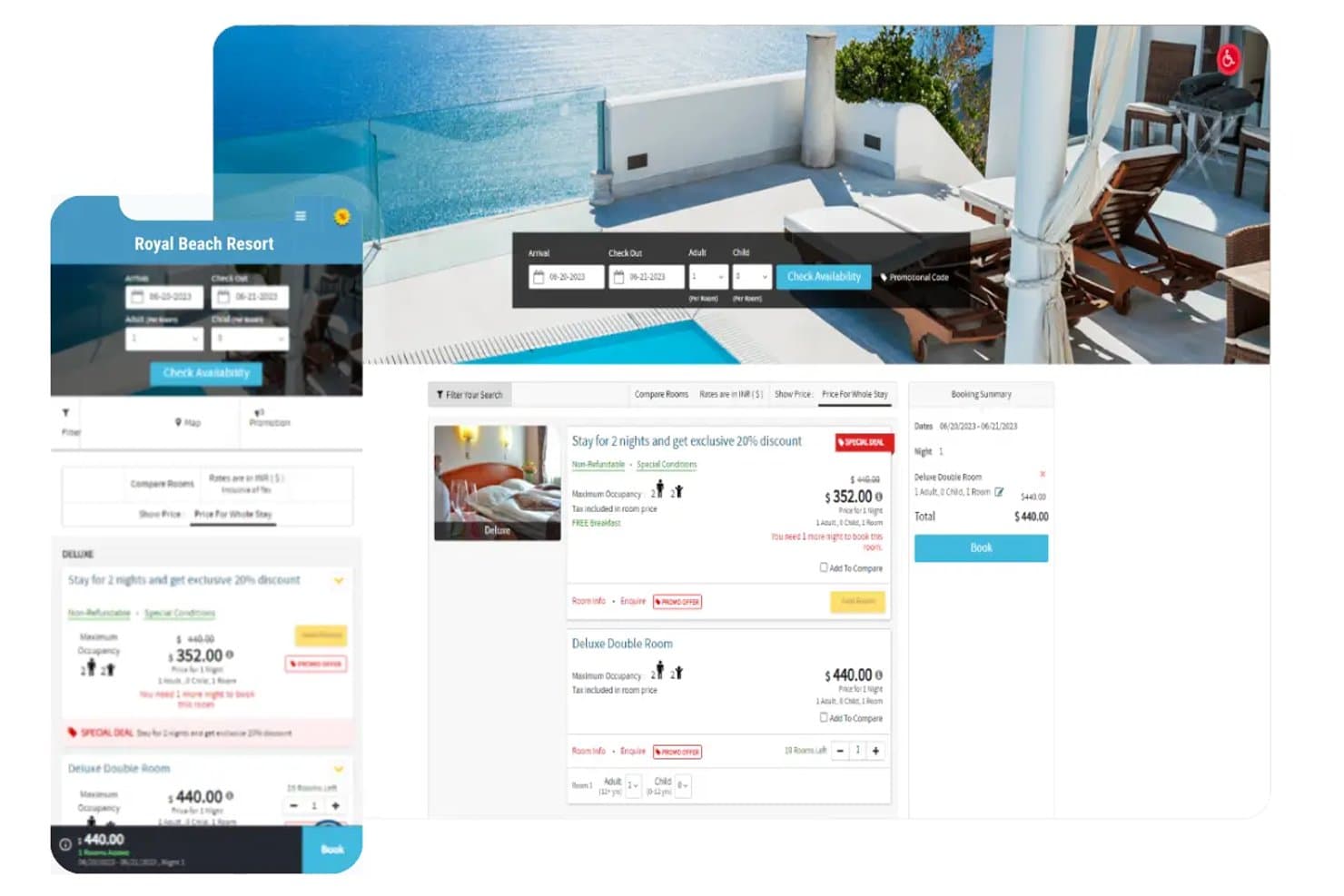
eZee Reservation manages direct bookings, upsells, and abandoned booking recovery. eZee Reservation is a cloud-based hotel booking engine that lets properties accept direct bookings through their website, Facebook page, and metasearch channels, with built-in yield management, upsell tools, and abandoned booking recovery.
Who Is eZee Reservation Best For?
eZee Reservation is a strong fit for independent hotels, B&Bs, and small-to-mid-sized properties that want to grow direct bookings without paying OTA commissions.
Why I Picked eZee Reservation
I picked eZee Reservation because its zero-commission model means every direct booking your property captures stays entirely in your pocket, with no revenue share trimming your margins. What makes it work in practice are the seven built-in conversion widgets, including exit-intent modals and urgency messaging, that turn hesitant browsers into confirmed guests. I also like the abandoned booking recapture emails, which automatically re-engage guests who dropped off mid-reservation without any manual follow-up on your end.
eZee Reservation Key Features
- Real-time rate plan comparison: Guests can view and compare available rate options side-by-side within the booking flow before confirming their reservation.
- Metasearch connectivity: Direct rate listings on Google Hotel Ads, TripAdvisor, and Trivago put your property in front of guests already comparison shopping on major platforms.
- Add-on upsells at checkout: Present guests with extras like breakfast, transfers, room upgrades, and late checkout during the booking process.
- RESTful open API: A JSON-based API covers property data, rates, availability, and reservation management for custom integrations.
eZee Reservation Integrations
Integrations include Mews, Oracle Hospitality OPERA, SiteMinder, STAAH, Stripe, PayPal, Google Hotel Ads, TripAdvisor, Trivago, and Google Analytics 4. A RESTful JSON API supports custom integrations.
Pros and Cons
Pros:
- Metasearch and Facebook direct booking widget
- Abandoned booking recovery emails built in
- No per-booking commission or revenue share
Cons:
- Booking page UI customization options are limited
- No in-widget OTA rate comparison
Learn more about eZee Reservation: Best for direct bookings across 84 languages
- Free demo available
- From $19.95/month
Visit WebsiteCustomer Rating:4.6/5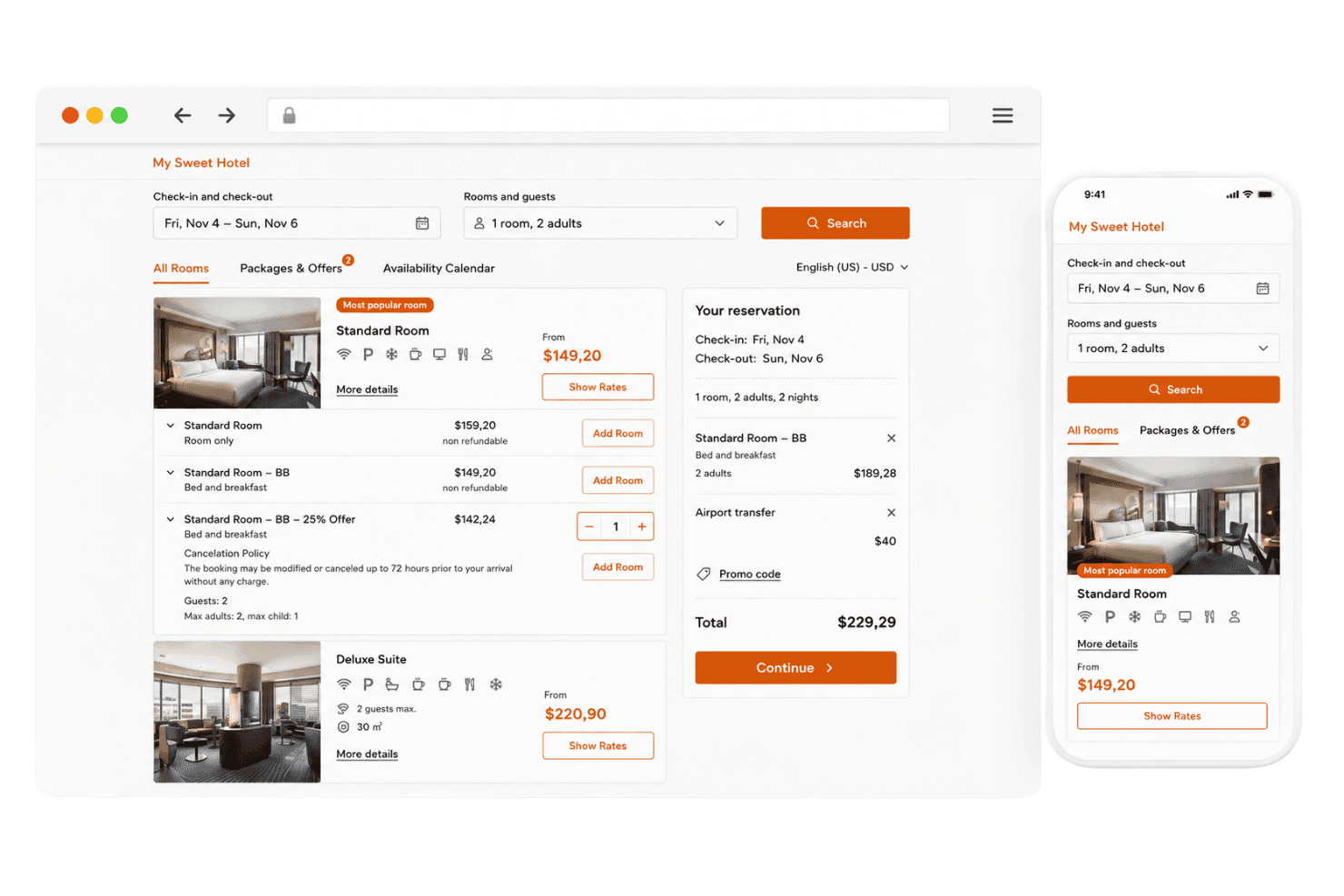
HotelRunner handles direct hotel bookings with channel management and website creation across 84 languages and 159 currencies. HotelRunner is an all-in-one hotel booking engine platform that combines direct booking tools, a channel manager, website builder, and guest relationship management across 84 languages and 159 currencies.
Who Is HotelRunner Best For?
HotelRunner is a strong fit for independent hoteliers and small-to-mid-size properties that need to manage direct bookings, OTA distribution, and guest communications in multiple languages from one platform.
Why I Picked HotelRunner
HotelRunner earns its spot on my shortlist because its booking engine runs natively in up to 84 languages and processes payments in 159 currencies, which is genuinely rare at this price point. I also like the built-in price comparison widget, which displays live OTA rates directly inside the booking flow, giving guests a clear reason to book direct. Pair that with abandoned booking recovery via exit-intent capture, and you have a real direct-channel toolkit.
HotelRunner Key Features
- Promotion engine: Build early bird deals, last-minute offers, long-stay discounts, and configurable coupon codes with validity dates, minimum spend rules, and room type restrictions.
- Guest relationship management: Automate pre-arrival, in-stay, and post-stay email workflows in guests' preferred languages to drive repeat direct bookings.
- Competition analysis: Monitor live competitor rates across OTAs and tour operator platforms to inform your pricing decisions in real time.
- Open API suite: Access a full set of APIs—including Inventory, Instant Booking, Payment, Reporting, and Promo—to build custom integrations and data workflows.
HotelRunner Integrations
HotelRunner lists 150+ OTA and distribution connections, including Booking.com, Expedia, Airbnb, Agoda, Trip.com, Vrbo, Google Hotel Ads, Oracle OPERA, Stripe, and PayPal. It also provides Inventory, Instant Booking, Payment, Reporting, and Promo APIs for custom integrations.
Pros and Cons
Pros:
- Price comparison widget for direct booking upsell
- Abandoned booking recovery via exit-intent capture
- Booking engine supports 84 languages and 159 currencies
Cons:
- Customer support quality and speed reported inconsistent
- Advanced features locked behind higher-tier plans
Learn more about HotelRunner: Best for native loyalty-tied direct booking
- Free demo available
- Pricing upon request
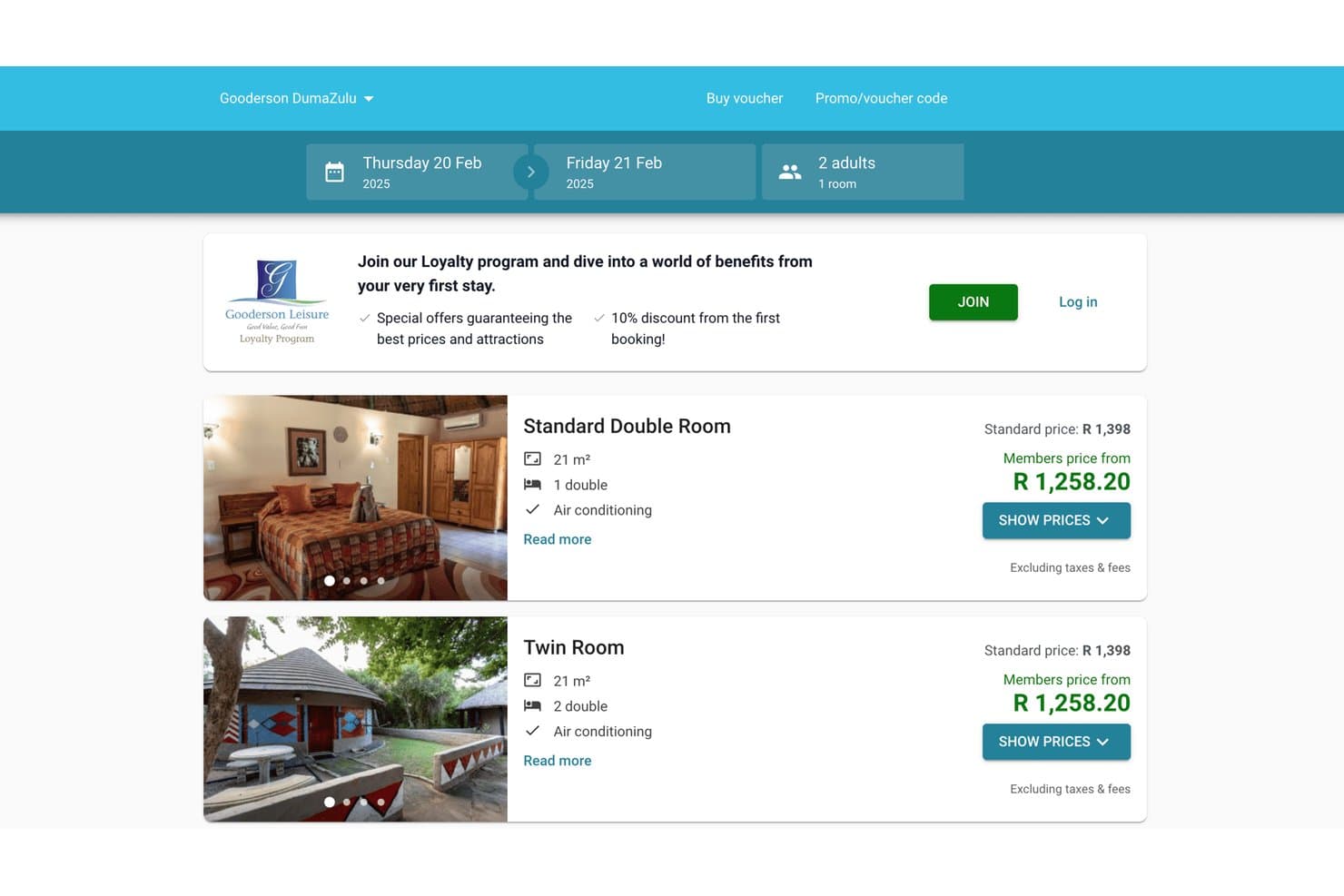
Profitroom drives direct hotel bookings with conversion tools, a native loyalty program, CRM automation, channel management, and metasearch advertising. Profitroom is a hotel booking engine that combines direct booking conversion tools, a native loyalty program, CRM and marketing automation, channel management, and metasearch advertising in one suite.
Who Is Profitroom Best For?
Profitroom is a strong fit for independent hotels that want to run a loyalty program, direct booking engine, and marketing automation from a single platform.
Why I Picked Profitroom
I picked Profitroom as one of the best because its native loyalty program lives inside the same platform as the booking engine, not bolted on via a third-party integration. That means member-only rates, tiered discounts, and loyalty-triggered email campaigns all fire automatically without any middleware. I also like the abandoned booking recovery feature, which Profitroom reports drives around 6% of confirmed bookings by re-engaging guests who dropped off mid-flow.
Profitroom Key Features
- Pay-Per-Stay metasearch advertising: Run commission-only campaigns on Google Hotel Ads, Trivago, and TripAdvisor, paying only on completed stays with no upfront media budget.
- "Direct Only" OTA toggle: Temporarily close availability on connected OTA channels to redirect booking demand through your direct website.
- Post-booking upsell portal: The Guest Panel lets guests add extras, upgrades, and packages after booking, which Profitroom reports performs 5–10x better than upselling at reception.
- AI copywriter for email campaigns: The built-in CRM generates personalized guest emails using AI, with automated segmentation based on guest behavior, demographics, and booking history.
Profitroom Integrations
Profitroom advertises 1,000+ hotel-system integrations, including Oracle OPERA, Mews, Guestline, SiteMinder, Booking.com, Expedia, Sabre SynXis, Amadeus, Stripe, and Adyen. It also supports open API and XML connections for custom PMS and workflow integrations.
Pros and Cons
Pros:
- Pay-per-stay metasearch reduces risk
- Post-booking upsells outperform front desk offers
- Native loyalty program drives direct bookings
Cons:
- Implementation timelines can be lengthy
- Reporting options not fully customizable
Learn more about Profitroom: Best for AI-driven direct booking conversion
- Free demo available
- Pricing upon request
Visit WebsiteCustomer Rating:4.5/5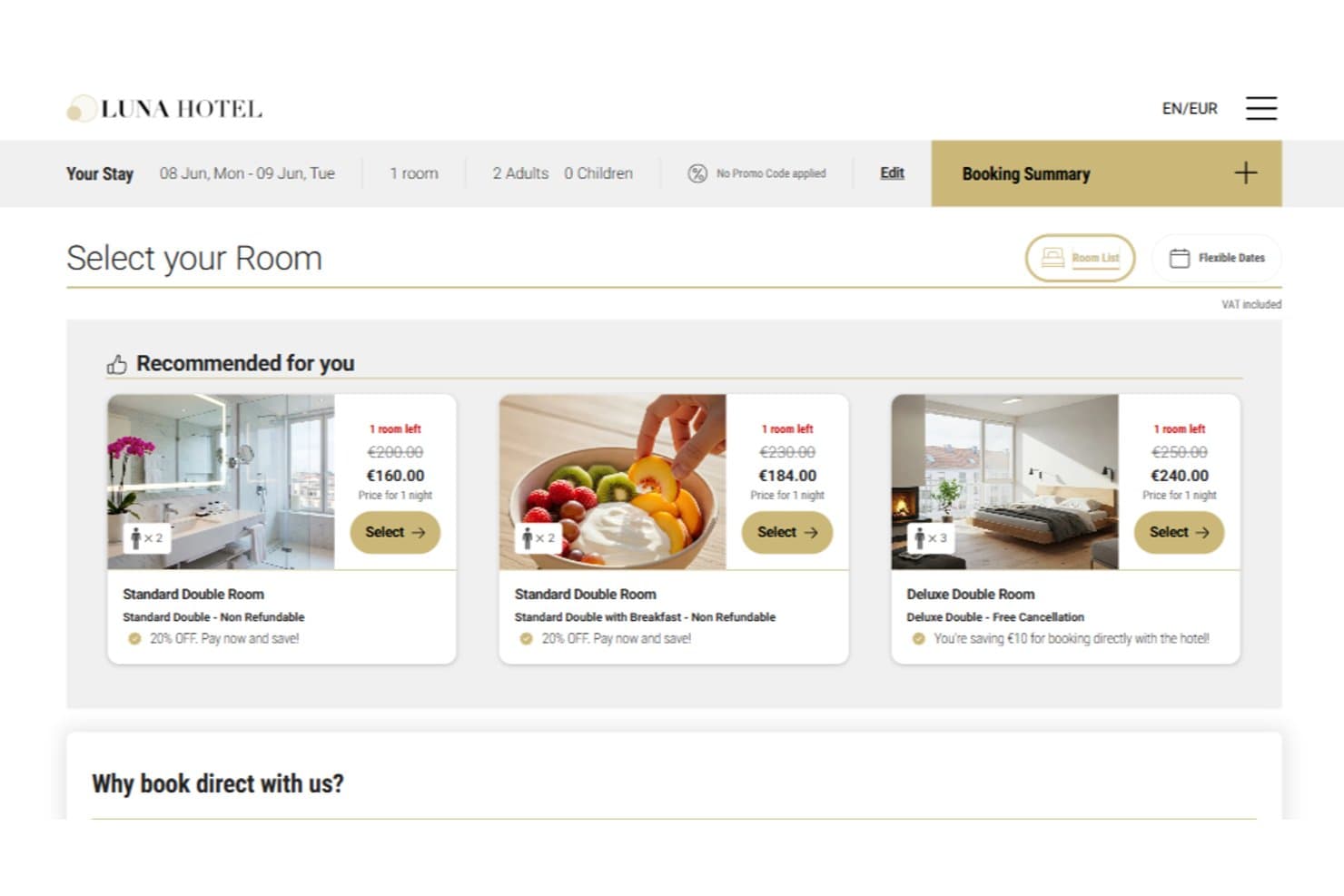
Bookassist lets users compare room types and rates side by side. Bookassist is a hotel booking engine that combines AI-driven rate recommendations, a price comparison widget, multi-language support, abandoned booking recovery, and an integrated digital media and analytics layer.
Who Is Bookassist Best For?
Bookassist is a strong fit for independent hotels and smaller hotel groups that want to manage their entire direct booking strategy—from digital marketing to conversion—under one vendor.
Why I Picked Bookassist
I picked Bookassist as one of the best because its AI-driven conversion tools are genuinely built into the booking flow, not bolted on. The Rate Recommender surfaces the three most relevant rates per guest based on behavioral signals, delivering a reported 20% uplift in booking conversion. I also love the Intelligent Room Substitution feature, which silently swaps sold-out rooms for superior alternatives, capturing bookings that would otherwise fall through.
Bookassist Key Features
- Price comparison widget: Displays your direct rates alongside OTA rates from Booking.com and Expedia within the booking engine to reinforce book-direct value.
- Flexible Dates View: An interactive calendar that lets guests browse and compare live rates across a range of dates in a single view.
- Abandoned booking recovery: Automatically sends branded reminder emails to guests who started but didn't complete a reservation.
- Voucher platform: A standalone tool for selling and redeeming monetary, package, and promotional vouchers, with mobile redemption and built-in analytics.
Bookassist Integrations
Bookassist offers documented integrations with Mews, Oracle Hospitality OPERA, Maestro, RoomKey, SiteMinder, YieldPlanet, D-Edge, Duetto, IDeaS, and RateGain. It also connects with Sabre, Amadeus, and Travelport for GDS distribution.
Pros and Cons
Pros:
- Branded voucher platform increases upsell revenue
- Integrated price comparison for direct bookings
- AI-driven rate recommender boosts conversion
Cons:
- Limited PMS integrations versus some alternatives
- Opaque, custom-quoted pricing structure
Learn more about Bookassist: Best for AI-led direct booking personalization
- Free demo available
- Pricing upon request
Visit WebsiteCustomer Rating:5/5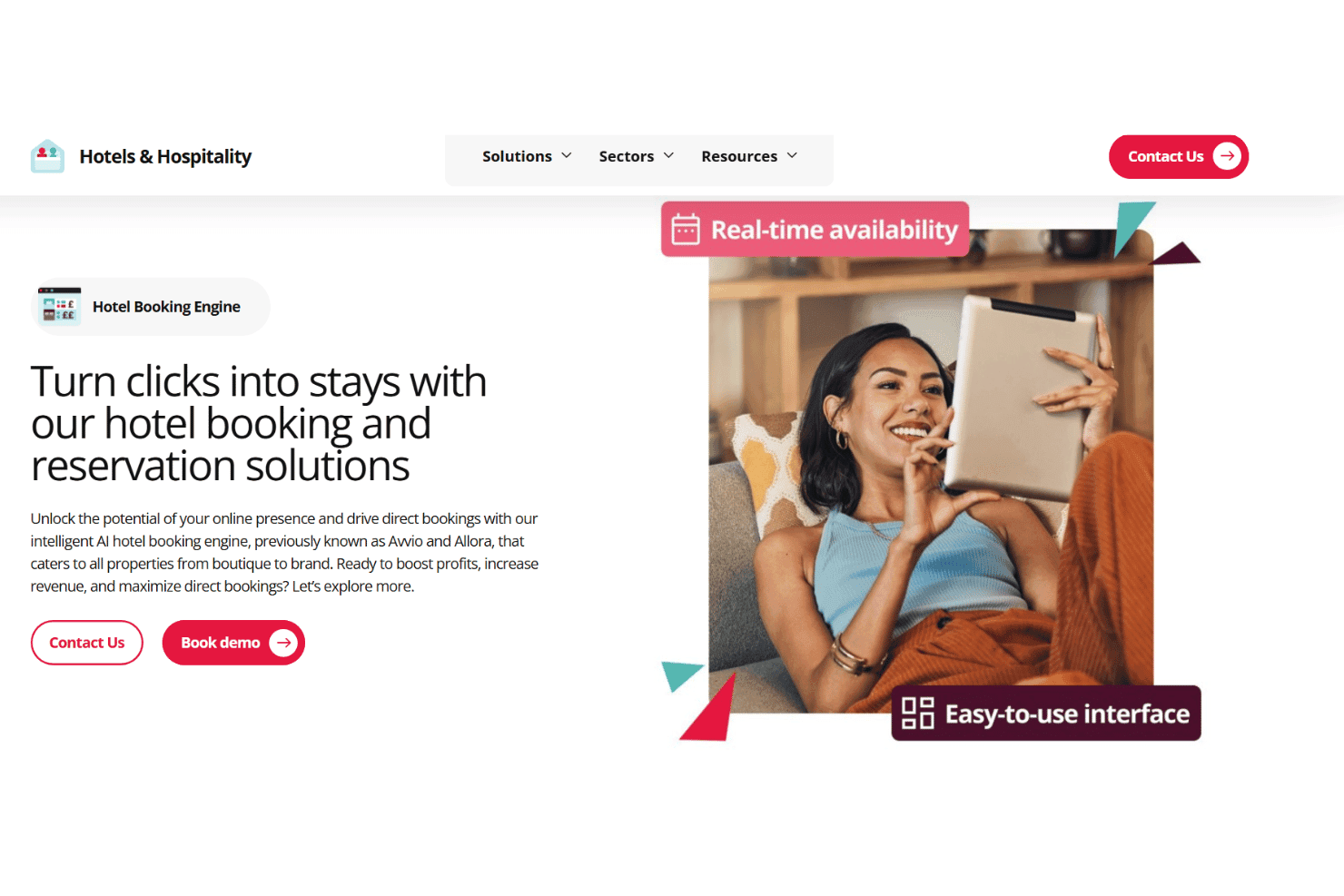
Access combines AI-personalized hotel bookings, dynamic pricing, live rates, abandoned booking recovery, and merchandising for packages, upsells, and promotions. Access is a hotel booking engine that combines AI-driven personalization, dynamic pricing, abandoned booking recovery, and real-time rate display with a merchandising suite for packages, upsells, and promotions.
Who Is Access Best For?
Access is a strong fit for independent hotels and small-to-mid-sized hotel groups that want to shift more bookings away from OTAs using AI-driven personalization and a built-in conversion toolkit.
Why I Picked Access
Access earns its spot on my shortlist because of the Allora AI engine, which has been powering personalized direct bookings since 2017, making it one of the longest-running AI booking systems in hospitality. I especially like how it tailors room recommendations and package offers in real time based on guest source, device, and booking history. The abandoned booking recovery workflows, which automatically re-engage guests who dropped off mid-booking, add a meaningful conversion layer that most standalone booking engines don't include.
Access Key Features
- Price comparison widget: Displays live OTA rates (Booking.com, Expedia) alongside your direct rate inside the booking flow to reinforce book-direct value.
- Loyalty and member rate access: Supports closed user group pricing, letting you surface member-only rates to authenticated guests during the booking process.
- Conversion analytics dashboard: Tracks real-time conversion rates, look-to-book ratios, and traffic sources, with native Google Analytics and Google Tag Manager integration.
- Group booking module: Handles weddings, corporate events, and other group reservations with availability blocks and multi-package checkout built into the booking flow.
Access Integrations
Access lists 36 compatible integrations, including Oracle OPERA Cloud, Guestline, Mews, Cloudbeds, STAAH, eZee Centrix, RateTiger, IDeaS, Duetto, and Google Hotel Ads. An open API supports custom integrations, while SHR CRS connects with 2,000+ OTA and metasearch channels.
Pros and Cons
Pros:
- Abandoned booking recovery re-engages dropped guests
- Built-in price comparison vs. OTAs increases conversions
- AI engine personalizes offers in real time
Cons:
- No transparent pricing available upfront
- Backend setup for packages can be finicky
Learn more about Access: Best for rate parity with live OTA price matching
- Free demo available
- Pricing upon request
Visit WebsiteCustomer Rating:4.8/5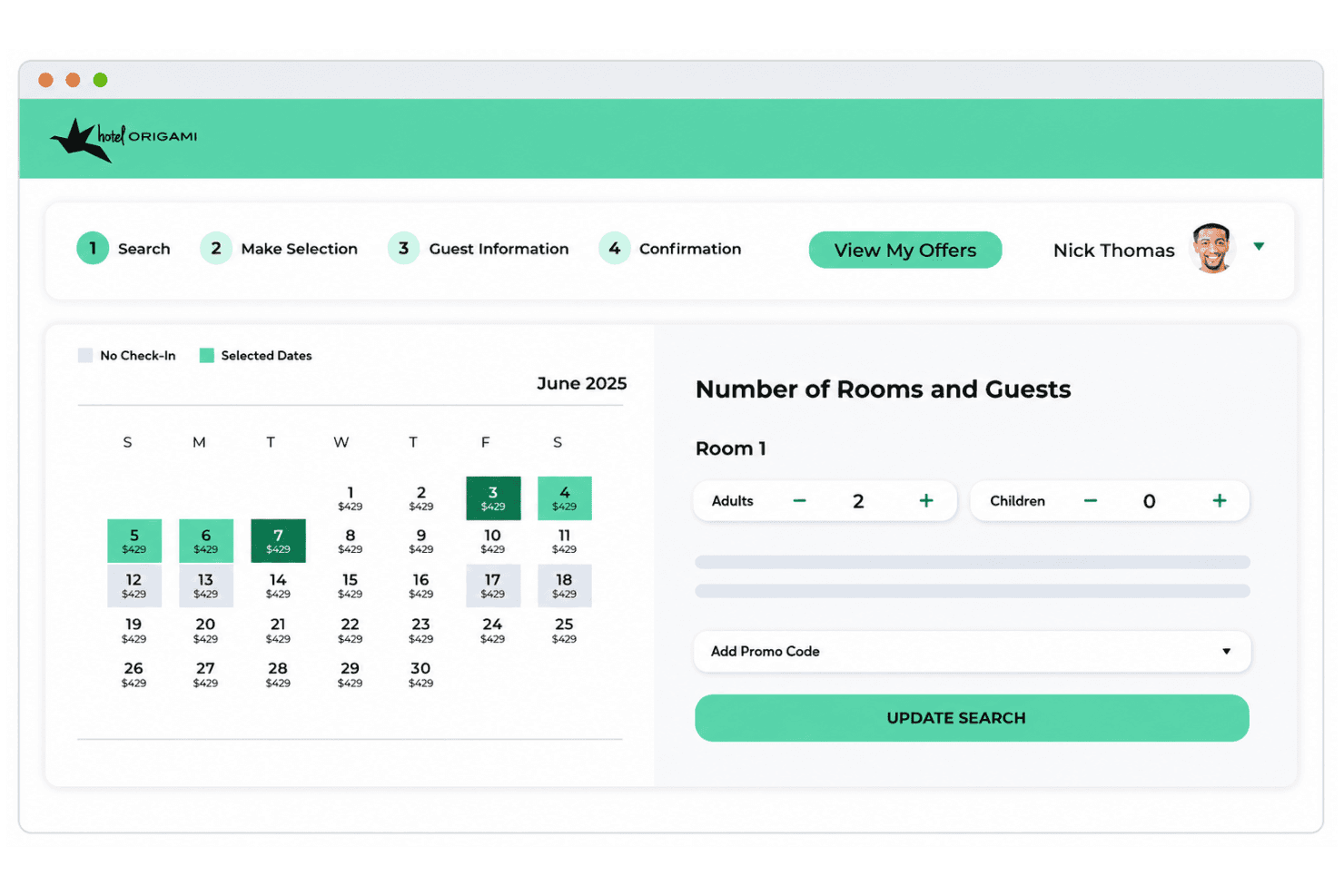
Cendyn combines live OTA rate shopping, dynamic pricing, loyalty integration, abandoned booking recovery, and A/B testing for direct hotel bookings. Cendyn is a hotel booking engine built around a cloud-native CRS, with live OTA rate shopping, multi-layered dynamic pricing, loyalty program integration, and a full suite of conversion tools including abandoned booking recovery and A/B testing.
Who Is Cendyn Best For?
Cendyn is a strong fit for mid-scale to enterprise hotels and multi-property groups with dedicated revenue management or digital marketing teams.
Why I Picked Cendyn
I picked Cendyn as one of the best because Rate Match® is unlike anything else I've seen built natively into a booking engine. It automatically shops live OTA prices from Booking.com and Expedia in real time, then matches or beats those rates directly inside the booking flow, so guests see the price comparison before they ever leave your site. Pair that with behavioral abandoned-booking recovery and multi-layered dynamic pricing rules, and you have a direct booking engine built specifically to close the gap between OTA pricing and your own rates.
Cendyn Key Features
- Loyalty program integration: Supports hotel and casino loyalty tiers, member-only rates, comp-cash redemption, and loyalty sign-up within the booking flow.
- Call center booking engine: A dedicated agent-facing interface with multilingual support, multi-room bookings, rate overrides, and group reservation handling.
- Dynamic pricing rules: Applies multi-layered promotions based on booking window, stay dates, and geo-targeted point-of-sale criteria without creating new rate plans.
- Urgency messaging tools: Displays scarcity alerts, popularity tags, strike-through pricing, and time-bound promotional taglines directly in the booking flow.
Cendyn Integrations
Cendyn integrates with PMS platforms including Oracle Hospitality OPERA, Mews, Cloudbeds, Stayntouch, and Shiji, plus SiteMinder, RateTiger, and DerbySoft. It also connects with IDeaS G3, Duetto GameChanger, Google Hotel Ads, and 1,000+ distribution partners through its CRS.
Pros and Cons
Pros:
- Built-in abandoned booking recovery workflows
- Deep loyalty and casino program integration
- Real-time OTA rate matching and comparison
Cons:
- Reporting dashboard lacks granular custom filtering
- Pricing requires direct consultation with vendor
Learn more about Cendyn: Best for driving direct bookings over OTAs
- Free trial + free demo available
- Pricing upon request
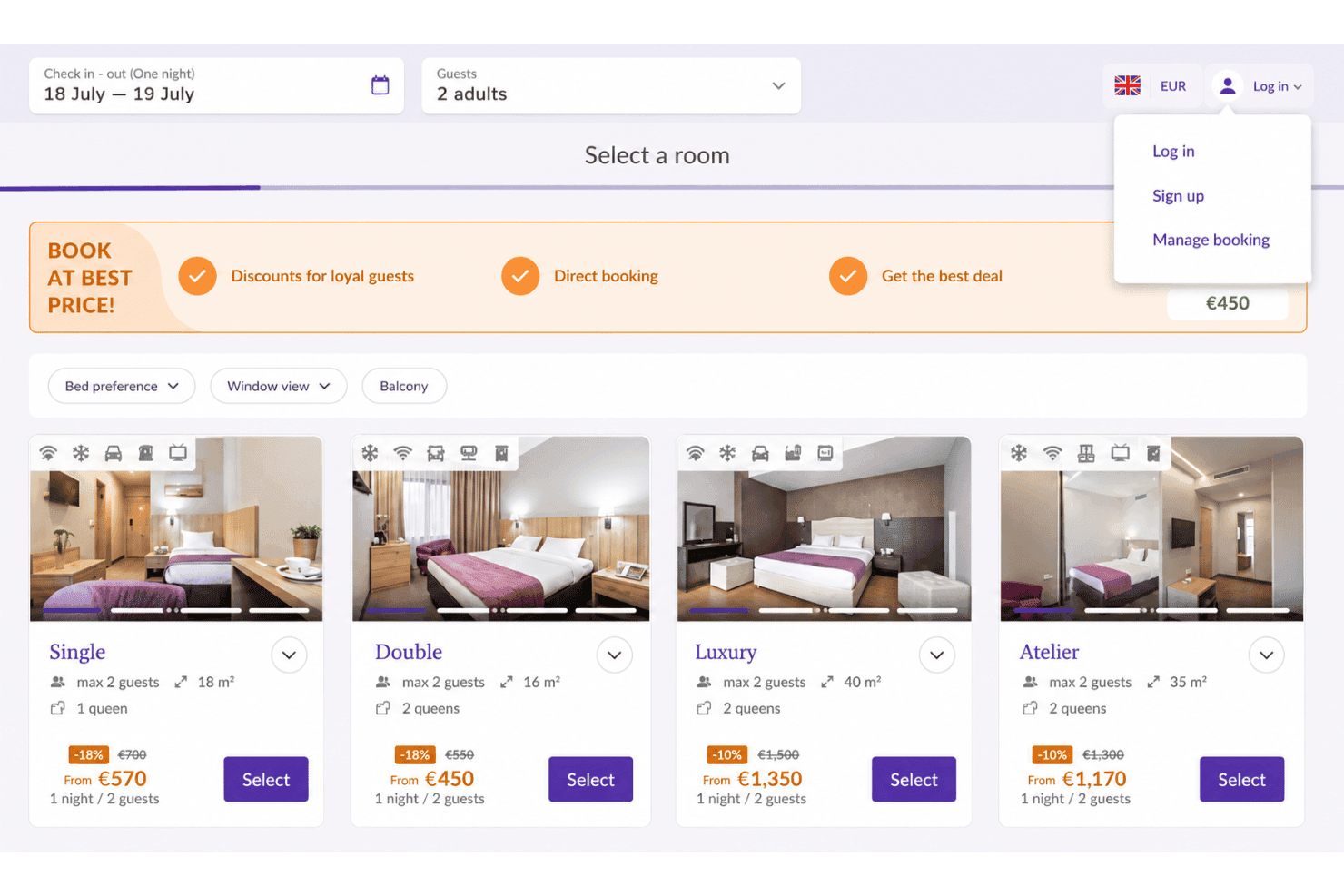
Exely pairs real-time hotel rates with a white-labeled booking widget, abandoned booking recovery, exit-intent offers, and loyalty rewards. Exely is a hotel booking engine that combines real-time rate and availability display, a white-labeled booking widget, conversion tools like abandoned booking recovery and exit-intent offers, and a built-in loyalty program for driving direct reservations.
Who Is Exely Best For?
Exely is a strong fit for independent and boutique hotels that want to grow direct bookings without paying high OTA commissions.
Why I Picked Exely
Exely earns its spot on my shortlist because of how directly it targets OTA dependency, specifically through its Rate Match widget, which displays your direct rate alongside live OTA prices so guests can see they're getting the best deal by booking with you. I also love the abandoned booking recovery emails, which automatically re-engage guests who dropped off mid-reservation with a personalized link back to their exact search. Layer in a native loyalty program with member-only rates, and you've got a full direct-booking stack without stitching together separate tools.
Exely Key Features
- Multi-language and multi-currency support: The booking engine runs in 40 languages and 50 currencies, with automatic geo-detection to match each guest's location.
- Rate Mix: Combines different rate types across multiple pricing periods to build a single seamless rate for longer or complex stays.
- Automated waitlist: Captures guest details when preferred dates are sold out and notifies them automatically if availability opens up.
- Native loyalty program: Guests enroll directly on your website and access member-only rates, supporting repeat bookings without a third-party loyalty tool.
Exely Integrations
Exely documents integrations with Mews, Oracle Hospitality OPERA, Hotelogix, Clock PMS, Booking.com, Expedia Group, Google, TripAdvisor, IDeaS, and Stripe. Its website references 100+ software integrations overall, plus 50+ payment gateways.
Pros and Cons
Pros:
- Native loyalty program for direct booking rewards
- Automated abandoned booking recovery emails
- Real-time OTA price comparison with Rate Match
Cons:
- Group and corporate booking features still developing
- Limited certified PMS integration options
Learn more about Exely: Best for AI-driven direct booking funnels
- Free demo available
- Pricing upon request
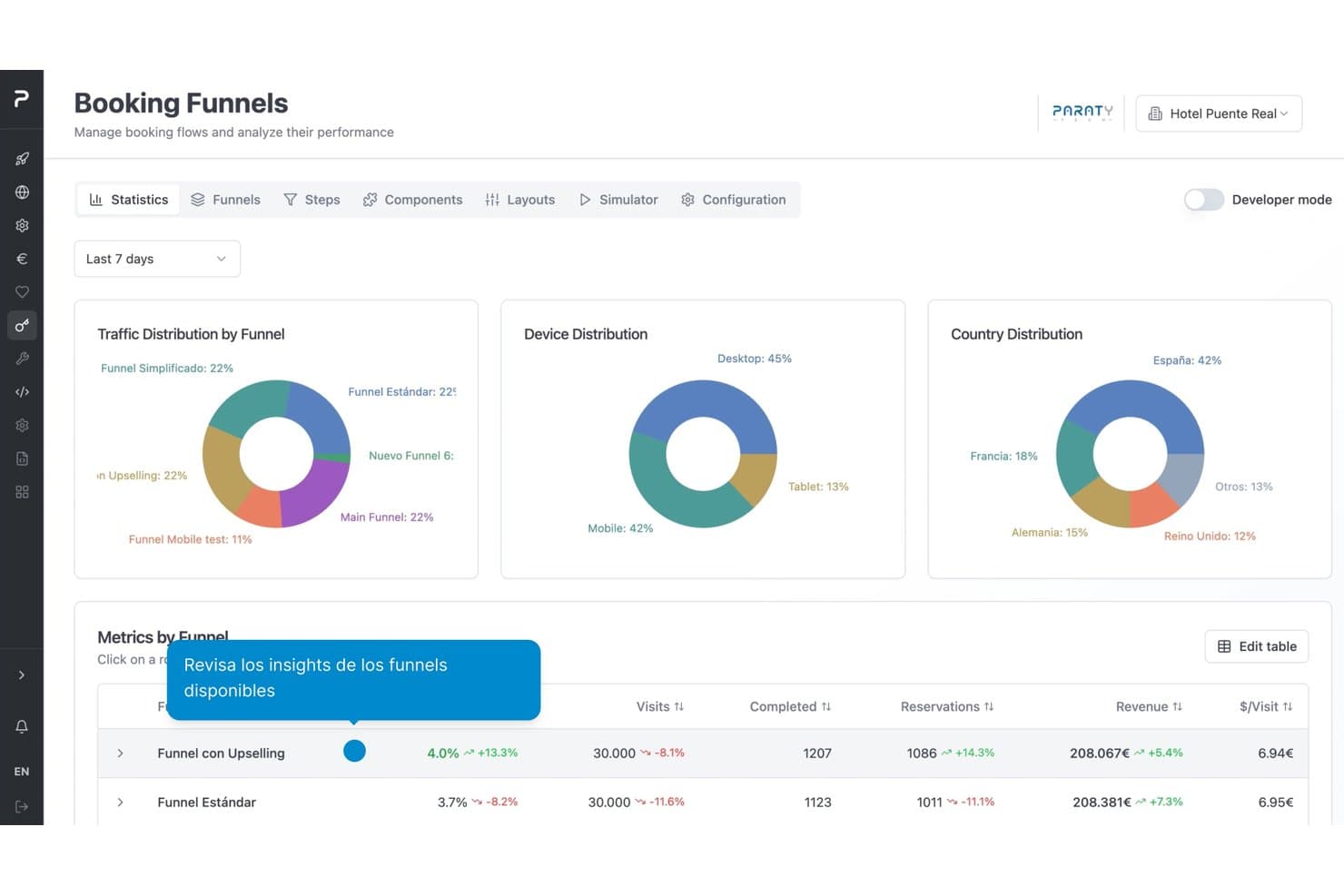
Paraty Tech tracks funnel performance with traffic, device, and country stats. Paraty Tech is a hotel booking engine that bundles AI-driven booking funnels, rate parity monitoring, abandoned booking recovery, and attribute-based upselling into a single direct-booking platform.
Who Is Paraty Tech Best For?
Paraty Tech is a strong fit for independent hotels and small-to-mid-size hotel groups that want to grow direct bookings through AI-driven personalization, rate parity enforcement, and built-in revenue management tools.
Why I Picked Paraty Tech
I picked Paraty Tech as one of the best because its AI Smart Funnels genuinely set it apart from standard booking engines. Rather than serving every guest the same checkout flow, it builds unlimited adaptive workflows that shift in real time based on traffic source, device, country, and loyalty status. Layered on top, the in-engine Parity Triangle displays live OTA rates alongside your direct rate, giving guests a concrete reason to book direct at exactly the right moment.
Paraty Tech Key Features
- Rescue Seeker abandoned booking recovery: Automatically sends personalized re-engagement emails with autofill forms that return guests to their exact drop-off point in the booking flow.
- Micro-Upgrades upselling module: Lets guests purchase attribute-based room upgrades—such as view, floor, or orientation—directly within the booking engine.
- Google Hotel Ads and TripAdvisor metasearch integration: Connects your direct rates to metasearch channels so guests can book directly from search results.
- Online check-in module: Enables contactless, post-booking digital check-in, reducing front desk workload and automating pre-arrival guest communication.
Paraty Tech Integrations
Paraty Tech offers 30+ channel manager integrations, including SiteMinder, D-Edge, Octorate, Omnibees, and RateGain. It also connects with Cloudbeds, Mews, Host Hotel Systems, Duetto, Stripe, PayPal, Adyen, Google Hotel Ads, and TripAdvisor through documented integrations and an API.
Pros and Cons
Pros:
- Attribute-based upselling drives higher average booking value
- Direct vs. OTA rates shown at checkout
- AI Smart Funnels personalize guest booking flows
Cons:
- Some users report slow website change requests
- No transparent, public-facing pricing listed
Learn more about Paraty Tech: Best for direct bookings via OTA rate comparison
- Free demo available
- Pricing upon request
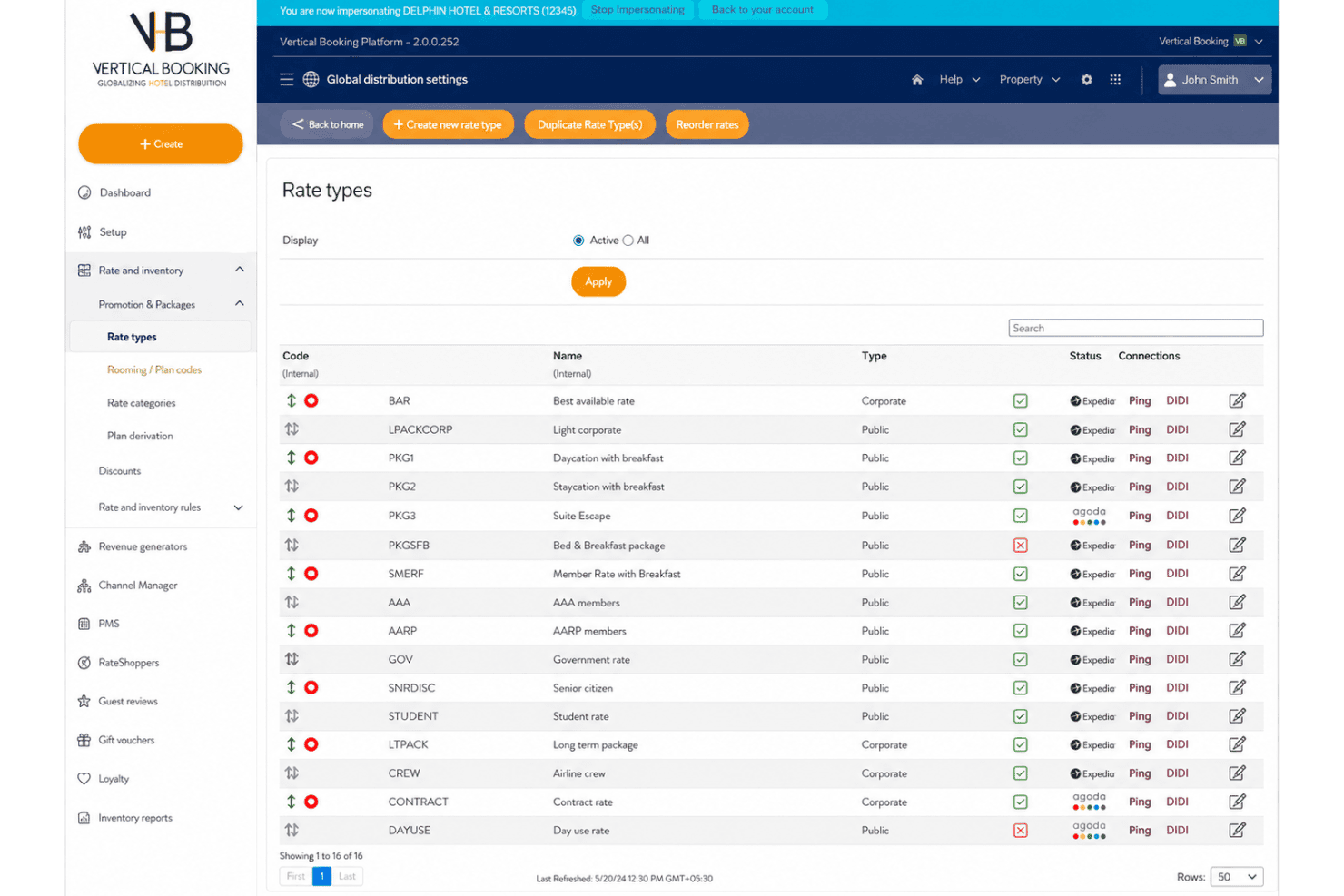
Vertical Booking combines direct booking tools with channel management, GDS connectivity, metasearch integration, and conversion optimization. Vertical Booking is a hotel booking engine and central reservation system that combines direct booking tools, a channel manager, GDS connectivity, metasearch integration, and a conversion optimization module.
Who Is Vertical Booking Best For?
Vertical Booking is a strong fit for independent hotels, boutiques, and hotel groups that want to grow direct bookings without sacrificing global distribution reach.
Why I Picked Vertical Booking
I picked Vertical Booking as one of the best because of how it handles the OTA-versus-direct comparison problem that costs hotels real revenue. Its built-in Competitive Rate Checker shows guests your direct rate alongside live OTA prices right in the booking flow, removing the guesswork that pushes travelers to book elsewhere. Pair that with abandoned booking recovery emails and exit intent modals, and you've got a conversion toolkit that actively recaptures guests who were on the fence.
Vertical Booking Key Features
- Metasearch connectivity: Connect your direct booking engine to Google Hotel Ads, TripAdvisor, Trivago, and WIHP with campaign-level reporting for CPC and commission-based models.
- Experience and gift voucher booking engine: Sell spa services, activities, tastings, and rentals directly through your website, with time-slot or daily pricing configuration alongside room bookings.
- A/B testing tools: Run split tests on your booking engine to compare interface variations and identify which layouts or offers convert more direct bookings.
- GDS connectivity: Access all four major GDS platforms—Amadeus, Sabre, Galileo, and Worldspan—under a native "OK" chain code, reaching 600,000+ travel agents worldwide.
Vertical Booking Integrations
Vertical Booking offers 125+ PMS integrations, 390–450+ distribution channels, 35+ payment gateways, four GDS connections, and RMS integrations with Duetto, IDeaS, and RoomPriceGenie. It also connects with Google Hotel Ads, TripAdvisor, Trivago, and WIHP, with an open API-XML for custom integrations.
Pros and Cons
Pros:
- Supports 29 languages and all world currencies
- Abandoned booking recovery captures lost reservations
- Rate checker compares live OTA and direct prices
Cons:
- Mobile engine has children’s age input issues
- Guest profile search options are limited
Learn more about Vertical Booking:
Other Hotel Booking Engines
Here are some additional hotel booking engine options that didn’t make it onto my shortlist, but are still worth checking out:
- 11BlastnessBest for direct bookings via dual-channel pricing
- 12STAAHBest for commission-free direct booking uplift
- 13roommasterBest for all-in-one direct booking with built-in RMS
- 14SiteMinderBest for award-winning direct booking at scale
- 15ThinkReservationsBest for boutique hotels cutting OTA dependency
- 16MewsBest for all-in-one upsells within direct booking
- 17Aven HospitalityBest for enterprise direct booking at scale
- 18SynXis Booking EngineBest for enterprise-scale GDS and direct booking reach
- 19iHotelierBest for Amadeus ecosystem-backed direct booking
- 20GuestCentricBest for boutique hotels with RezLock rate hold
How I Evaluate Hotel Booking Engines
I split my evaluation into two layers: baseline functionality every engine must deliver to make this list, and the differentiators that separate a genuinely useful direct-booking tool from one that just checks boxes.
Core Functionality (Table Stakes For This List)
When I'm selecting tools for my list, I rank each one on a scale from 0 (does not offer the functionality) to 5 (excels in this area) for each core functionality listed below. I then calculate the tool's total score into a percentage, using 65% as a benchmark to help assess its overall fit for the list.
- Real-time availability & rates: I check whether inventory and pricing sync instantly across connected systems, including dynamic pricing rules and rate parity monitoring.
- Secure payment processing: PCI-DSS compliance is the baseline, and I evaluate gateway variety, tokenization, deposit handling, and 3D Secure 2.0 support.
- PMS & channel manager integration: The engine should connect with major PMS platforms and channel managers via two-way sync—I look for certified partnerships and open API access.
- Website & mobile booking widget: I evaluate how well the embeddable widget performs on mobile, whether it supports brand-level customization, and if it includes conversion features like A/B testing.
- Multi-language & multi-currency support: Hotels serving international guests need geo-detection and real-time FX conversion, so I check language and currency breadth beyond a handful of defaults.
- Promotions, packages & upsells: Promo codes and basic discounts are table stakes—I look for pre-arrival upsell prompts, dynamic packages, and loyalty-based offer support built into the booking flow.
Once I have a list of tools that meet the criteria, I consider what sets each platform apart.
Differentiating Factors (What Sets Vendors Apart)
Here's how I compare and contrast different vendors:
Standout Features
I look for a rate parity widget that shows live OTA prices right inside the booking flow—when a guest sees your direct rate next to Booking.com or Expedia in real time, it removes hesitation. Abandoned booking recovery matters just as much; I check whether the engine automatically sends personalized re-engagement emails with a direct link back to the guest's exact search. AI-driven personalization is where I see the biggest gaps between vendors—some tailor room and package displays by device, geography, or return-visit behavior, while others treat every guest identically.
Beyond Features
I evaluate each vendor's commission structure and total cost of ownership, since a per-booking fee that looks small can erode margins fast at high occupancy. Onboarding speed matters too—switching engines mid-season with a vendor that needs three months to go live risks lost reservations. I also check ecosystem depth, looking for certified integrations with CRM, RMS, Google Hotel Ads, and metasearch platforms that extend your direct channel's reach.
How to Choose a Hotel Booking Engine
Choosing the right hotel booking engine comes down to matching your needs with features that actually help you control bookings, revenue, and guest experience. Here’s how to stay focused as you decide:
| If your priority is... | Look for... |
|---|---|
| If your priority is...Reducing OTA dependency | Look for...Direct booking tools with OTA rate comparison |
| If your priority is...Faster guest conversion | Look for...In-widget price parity and mobile-first UX |
| If your priority is...Repeat guests and higher loyalty | Look for...Built-in member rates and loyalty program support |
| If your priority is...Fitting into your existing tech stack | Look for...Certified 2-way integration with your PMS |
| If your priority is...Global guest reach | Look for...Multi-language, geo-detected content, and FX options |
How to Vet Your Shortlist
- Test live OTA rate comparisons: Run a trial booking and check if OTA pricing displays accurately beside your direct rate—verify with 3 different dates.
- Assess direct integration: Request evidence of certified 2-way sync with your PMS (integration certification or implementation document).
- Trial loyalty flow: Create a demo member account and confirm member rates or perks trigger automatically in the booking engine during test checkouts.
- Review guest mobile UX: Book a room from your phone and note how many taps it takes to confirm a reservation—aim for 4 or fewer.
- Tradeoff: Ownership vs. conversion—all-in-one platforms can speed onboarding but may be less flexible than standalone engines with deeper control over guest experience.
What Is a Hotel Booking Engine?
A hotel booking engine is software that lets guests book rooms directly through your website, mobile site, or social channels. These tools display live room availability, rates, and promotions while handling payments and confirmations securely.
Hotel booking engines are essential for maximizing direct reservations, reducing third-party commissions, and keeping you in control of guest relationships and revenue flow. They integrate with property management and channel manager systems for real-time updates.
Features of Hotel Booking Engine
When selecting a hotel booking engine, keep an eye out for the following key features:
Real-time availability and rates: Instantly displays up-to-date room inventory and pricing, drawing live information from your property management system. This avoids double-bookings and ensures guests always see accurate options before booking.
Secure payment processing: Supports PCI-DSS compliant gateways, tokenization, and 3D Secure for credit cards. This assures guests their payment data is safe and helps your property reduce fraud and chargebacks.
PMS and channel manager integration: Syncs directly with your property management system and channel manager through certified two-way connections. This keeps rates and availability consistent everywhere guests might find your hotel online.
Mobile and website booking widget: Provides an embeddable, mobile-responsive booking tool that fits your website’s design. A good widget shortens the path from search to booking and boosts conversions from both desktop and smartphones.
Multi-language and multi-currency support: Offers guests the option to book in their preferred language and currency. This makes your hotel accessible to international travelers and can increase direct bookings from new markets.
Promotions, packages, and upsells: Lets you create promo codes, bundles, or upsell add-ons like breakfast or late checkout right in the booking flow. This feature drives higher spend per guest and encourages direct booking over OTAs.
Rate parity and price comparison: Displays your direct rate alongside live prices from OTAs, encouraging guests to book directly by showing the best deal. This builds trust and supports your strategy to reduce OTA commissions.
Abandoned booking recovery: Detects when a guest leaves during the booking process and automatically sends reminders or personalized links to bring them back. This helps recapture lost reservations and improves your conversion rate.
Conversion analytics dashboard: Tracks booking funnel performance, drop-off points, device usage, and campaign impact with actionable reports. These analytics help you identify where to make improvements in your direct booking process.
AI-driven personalization: Uses machine learning to tailor room offers, rates, or packages based on guest behavior, device, or past stays. This creates a more tailored user experience and can improve direct booking conversion.
Benefits of Hotel Booking Engines
Implementing hotel booking engines provides several benefits for your team and your business. Here are a few you can look forward to:
- Increased direct bookings: Displaying real-time availability and dynamic pricing on your website encourages guests to book directly and helps you reduce reliance on OTAs.
- Improved booking conversion: Mobile-first booking widgets and in-widget rate comparison make it faster and easier for guests to complete reservations.
- Enhanced payment security: PCI-DSS compliant payment processing, tokenization, and support for advanced card security reassure guests and help reduce fraud.
- Greater international reach: Multi-language and multi-currency support, along with geo-detected pricing, open your property to a broader guest market.
- Higher upsell and package revenue: Built-in tools for promotions, dynamic packages, and targeted upsells help you increase average spend per guest.
- Better guest retention: Loyalty program integration and member-rate support drive repeat stays and deepen your direct guest relationships.
- Valuable performance insights: Conversion analytics dashboards reveal booking patterns, drop-off points, and campaign results, giving you actionable data to optimize bookings.
Costs and Pricing of Hotel Booking Engines
Selecting hotel booking engines requires an understanding of the various pricing models and plans available. Costs vary based on features, team size, add-ons, and more. The table below summarizes common plans, their average prices, and typical features included in hotel booking engine solutions:
Plan Comparison Table for Hotel Booking Engines
| Plan Type | Average Price | Common Features |
|---|---|---|
| Plan TypeFree Plan | Average Price$0 | Common FeaturesBasic booking form, limited support, single property support, and no integrations. |
| Plan TypePersonal Plan | Average Price$30-$75/month | Common FeaturesWebsite widget, basic payment processing, standard reporting, and basic multi-language support. |
| Plan TypeBusiness Plan | Average Price$90-$250/month | Common FeaturesPMS integration, mobile booking, rate management tools, promotions and packages support, and channel manager sync. |
| Plan TypeEnterprise Plan | Average Price$300-$800/month | Common FeaturesMultiple property management, advanced analytics, AI personalization, abandoned booking recovery, and custom integrations. |
Hotel Booking Engine FAQs
Here are some answers to common questions about hotel booking engines:
How do I compare different hotel booking engines?
Start by looking at the core features like real-time rate sync, secure payment options, and integration with your property management system. Then, weigh differentiators such as OTA price comparison, loyalty perks, upselling capabilities, analytics, and AI-driven personalization. Always request a live demo and verify integration with your current tech stack before making a decision.
Can I switch to a new hotel booking engine without losing reservations?
Yes, you can switch to a new booking engine while preserving existing reservations if you plan ahead. Choose a vendor with proven data migration experience and strong onboarding support. Schedule the cutover during a low-occupancy period and make sure your staff are trained on the new system.
What integrations should I prioritize with a hotel booking engine?
Prioritize direct two-way integration with your property management system (PMS) and channel manager. Certified connections with key partners like CRM, revenue management systems, and Google Hotel Ads will save your team manual work and reduce errors. Ask vendors for a list of certified integrations and case studies from hotels using your stack.
How do abandoned booking recovery features work?
Abandoned booking recovery features automatically detect when a guest leaves the booking flow before completing payment. The engine sends a personalized email or notification with a direct link back to the exact booking step, helping recapture lost reservations and boost conversion rates.
Is it possible to offer member or loyalty rates in a hotel booking engine?
Yes, most modern booking engines support member or loyalty-only rates. Some do this natively within the booking flow, triggering perks or discounts when a guest logs in. Others require third-party plugins or manual setup. Look for solutions that make loyalty integration seamless and don’t add friction for repeat guests.