

10 Types of Hotel Property Management Software

Hotel property management software isn't one thing—it's a category that spans everything from front office and reservations management to revenue management systems. Choosing the wrong type means gaps in your operations, disconnected data, and a guest experience that suffers for it. The right fit depends on your property size, service model, and where your team actually loses time. This article breaks down 10 types so you can identify what your stack is missing and make a more informed decision.
What Is Hotel Property Management Software?
Hotel property management software is a platform that helps you manage reservations, room inventory, guest profiles, payments, and daily property operations. A hotel PMS gives front desk, housekeeping, and management teams shared access to current booking and room-status information. Depending on the system, it may also connect with channel managers, point-of-sale tools, revenue management systems, and guest communication platforms. Different PMS types serve different property sizes and operating models.
10 Key Types of Hotel Property Management Software
Each category supports different workflows, from room assignments and rate controls to guest messaging, payments, housekeeping, and financial reporting:

1. Front Office & Reservations Management Systems
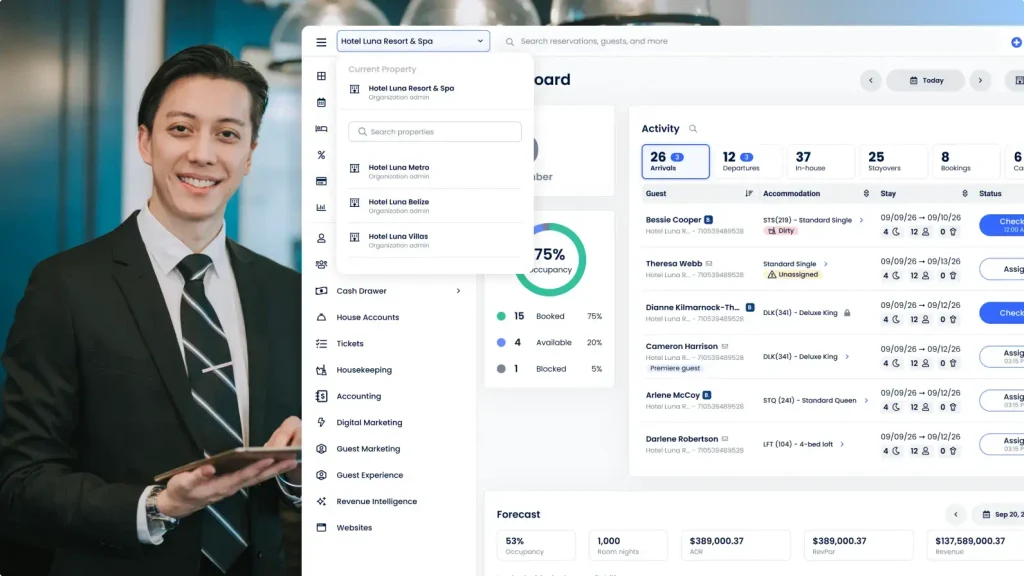
The front desk runs on this type of hotel PMS—it handles room assignments, check-in and check-out, reservation tracking, and live inventory updates across your property. In my experience, front office teams rely on it most heavily during peak arrivals, where having a single, accurate view of room status and guest details makes the difference between a smooth operation and a chaotic one.
Benefits
Having a single, live view of room inventory and guest data cuts down on the double-bookings and manual errors that plague front desk teams during high-volume check-in windows. Systems like Cloudbeds and Oracle OPERA Cloud give your staff instant access to reservation history, room status, and guest preferences—so every interaction feels informed rather than reactive. In my experience, that real-time visibility is what keeps arrivals moving and prevents the kind of front-desk bottlenecks that ripple into guest complaints.
Features
Front office and reservations management systems tend to have the densest feature sets of any PMS type—here's what to look for when evaluating them:
- Real-time room inventory management: The system updates room availability the moment a booking is confirmed, modified, or cancelled. This prevents double-bookings and gives your front desk an accurate picture at all times.
- Check-in and check-out processing: Staff can process arrivals and departures directly from the dashboard, including room key assignment and folio settlement. Systems like Oracle OPERA Cloud handle high-volume check-in queues without slowing down.
- Reservation creation and modification: Create, edit, or cancel reservations manually from the front desk, with automatic updates pushed across connected channels. I've found this especially valuable when handling walk-ins or last-minute room changes.
- Guest profile management: Store contact details, stay history, preferences, and special requests against each guest record. Cloudbeds does this well, pulling profile data into every new booking automatically.
- Room assignment and housekeeping status: Assign rooms based on guest preferences and live housekeeping status, so you're never placing a guest in a room that isn't ready.
- Rate and package management: Set room rates, promotional packages, and length-of-stay rules directly within the system, with controls for date ranges and room types.
- Reporting and occupancy dashboards: Front office managers can pull daily occupancy, arrivals, departures, and no-show reports without leaving the PMS—which keeps shift handoffs clean and informed.
2. Channel Management Software
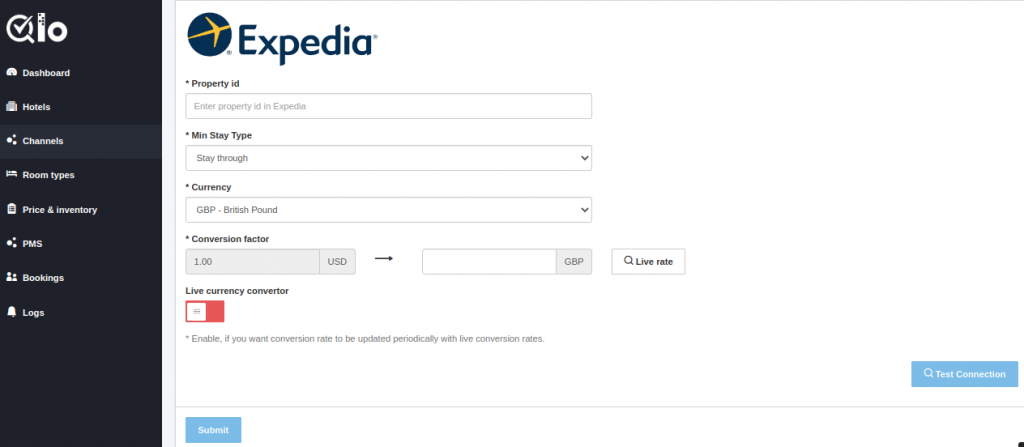
Keeping rates and availability consistent across OTAs, direct booking engines, and GDS platforms is where most multi-channel properties leak revenue—and channel management software solves that by syncing inventory updates across every connected distribution channel in real time. In my experience, this PMS sub-category is indispensable for properties running more than two or three booking channels simultaneously.
Benefits
Running rates and availability manually across Booking.com, Expedia, and your own booking engine is where revenue quietly slips away—channel management software closes that gap by pushing inventory updates across every connected platform the moment something changes. In my experience, tools like Cloudbeds Channel Manager eliminate the overbooking risk that comes with managing multiple OTAs by hand, while also giving you a centralized view of your distribution performance. That visibility means you're making rate decisions based on real demand data, not gut instinct.
Features
Channel management software has a tighter, more focused feature set than a full front office PMS—here's what actually moves the needle for multi-channel distribution:
- Two-way inventory sync: The system pushes availability updates to every connected OTA, GDS, and direct booking engine the moment a reservation comes in or a room is released. I've found this is the single feature that eliminates overbooking risk at scale.
- Centralized rate management: Set and adjust rates across all channels from one interface, rather than logging into each platform separately. SiteMinder does this well, letting you apply bulk rate changes across dozens of channels in one action.
- Channel performance reporting: Track bookings, revenue, and cancellations by channel so you can see which platforms are actually delivering and which are just eating commission. That data shapes smarter distribution decisions over time.
- Direct booking engine integration: Channel managers connect with your own booking engine to keep parity between direct and OTA rates, giving guests a reason to book with you instead of through a third party.
- OTA and GDS connectivity: Look for breadth of channel connections—Cloudbeds Channel Manager, for example, connects with hundreds of OTAs globally, which matters if your property draws international guests.
- Overbooking controls and stop-sell rules: Set thresholds that automatically close availability on specific channels when inventory drops below a certain level, preventing accidental overbookings during high-demand periods.
- Reservation delivery and modification sync: When a guest modifies or cancels through an OTA, the channel manager pushes that update back into your PMS automatically, keeping your front desk working from accurate data at all times.
3. Revenue Management Systems
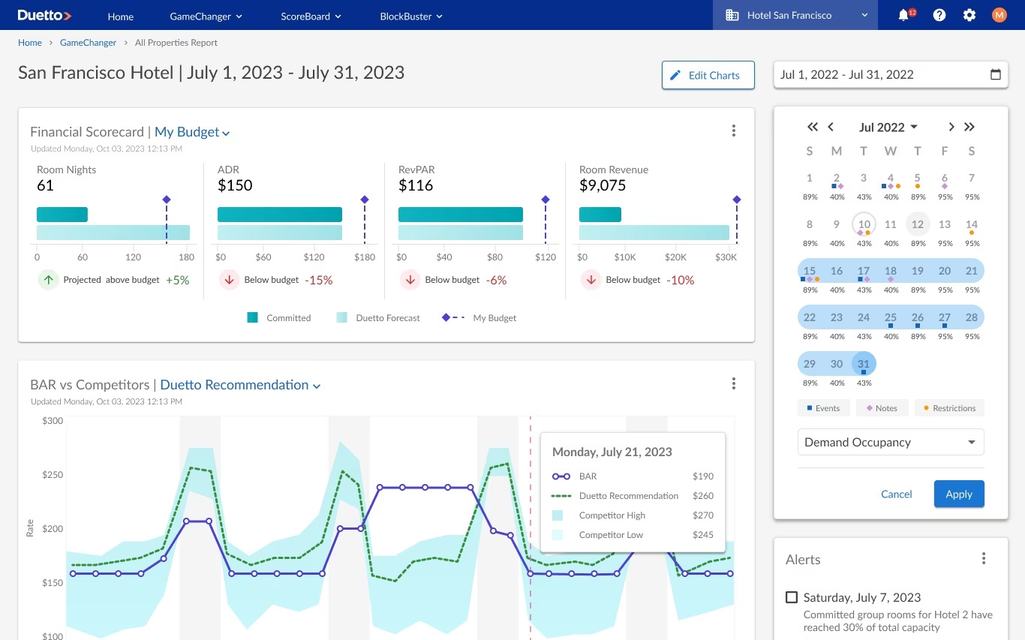
Pricing hotel rooms on gut instinct leaves money on the table—revenue management systems use demand forecasting, competitor rate data, and occupancy trends to help you set the right rate at the right time. I've found these tools most valuable for properties with variable demand patterns, where dynamic pricing rules can meaningfully lift RevPAR without requiring constant manual intervention from your team.
Benefits
Dynamic pricing rules are where revenue management systems pay for themselves—and I've seen properties leave meaningful RevPAR gains on the table simply because they were still setting rates manually. Systems like IDeaS use demand forecasting, competitor rate tracking, occupancy, and booking pace to adjust room pricing automatically, which means your rates are always anchored to actual market conditions rather than last year's rate card. Hotels new to a revenue management system can see RevPAR gains of up to 15–20% in my experience, that lift comes directly from the system catching demand signals that a revenue manager working manually would simply miss.
Features
Revenue management systems pack a lot of analytical firepower into a focused feature set—here's what to look for when you're evaluating them for your property:
- Demand forecasting: The system analyzes historical occupancy, booking pace, and market trends to predict future demand by date and room type. I've found this is what separates data-driven pricing from educated guessing.
- Dynamic rate automation: Pricing rules adjust room rates automatically based on occupancy thresholds, lead time, and demand signals—without requiring manual intervention from your revenue manager. IDeaS does this well at scale.
- Competitor rate tracking: The system pulls live rate data from competing properties so you can see where you sit in the market and adjust accordingly.
- RevPAR and performance reporting: Track revenue per available room, average daily rate, and occupancy side by side so you can measure the actual impact of pricing decisions over time.
- Booking pace analysis: Monitor how quickly reservations are accumulating for a given date relative to historical patterns—this is one of the clearest early signals that you should be adjusting rates up or down.
- Segmentation-based pricing: Set different rate strategies by guest segment, room type, or distribution channel, so your pricing reflects actual demand behavior rather than a blanket rate card.
- PMS and channel manager integration: Revenue management systems pull live occupancy and reservation data directly from your PMS and push rate recommendations back through your channel manager, keeping everything in sync without manual re-entry.
My Top Hotel Property Management Software Picks
Here’s my list of the top 10 hotel property management software you should check out:
Clicks on the links below may earn a commission, which supports our independent testing and review of software and services. Learn more about how we stay transparent.


4. Central Reservation Systems
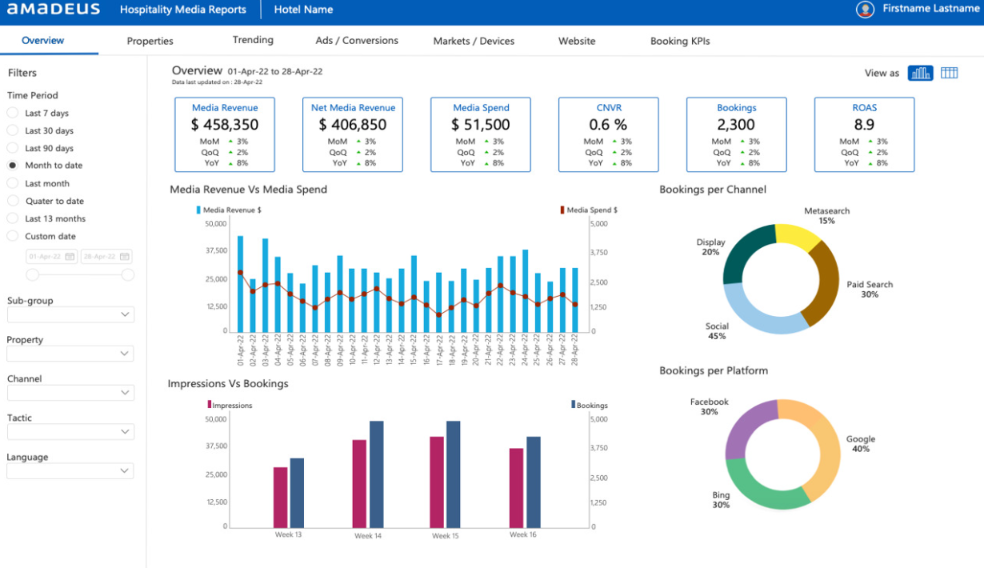
Designed for hotel groups and multi-property operators, central reservation systems consolidate inventory, rates, and reservations across every location into a single platform—so your sales and reservations teams are always working from the same data. In my experience, the real value shows up when you need to move availability between properties or apply rate strategies across an entire portfolio without logging into each PMS separately.
Benefits
For hotel groups, a CRS removes the need to log into each property's PMS separately to manage rates or availability. In my experience, tools like Amadeus CRS make portfolio-wide pricing strategy executable by giving your reservations team one live view of inventory across all locations. That consolidated data also makes moving availability between properties fast when demand shifts unexpectedly.
Features
A CRS earns its keep when you need to manage inventory, rates, and reservations across a portfolio without jumping between systems—here are the features that make that possible:
- Centralized inventory management: The system holds a single live inventory pool across all properties, so your reservations team is always selling from accurate availability data. I've found this eliminates the duplicate bookings that happen when each property manages its own inventory in isolation.
- Portfolio-wide rate management: Apply rate strategies across every location from one interface, rather than updating each property's PMS separately. Amadeus CRS does this well, letting you push rate changes portfolio-wide in a single action.
- Reservation routing and handling: The system receives, processes, and delivers reservations from every distribution channel—OTAs, GDS, voice, and direct—into a unified queue, so nothing falls through the gaps between properties.
- GDS and OTA connectivity: A CRS connects your entire portfolio to global distribution systems and OTA channels simultaneously, giving travel agents and online bookers a single, accurate view of your available inventory across all locations.
- Cross-property availability switching: When one property sells out, the system can redirect demand to nearby locations within the portfolio—this is one of the clearest revenue-recovery features I've seen CRS platforms handle well.
- Reporting and performance dashboards: Track reservations, revenue, and channel contribution across every property from one reporting view, so you can compare performance and identify gaps without pulling data from multiple systems.
- PMS integration: The CRS syncs reservation data bidirectionally with each property's PMS, keeping your front desk teams working from up-to-date information without manual re-entry between platforms.
5. Online Booking Engine Software
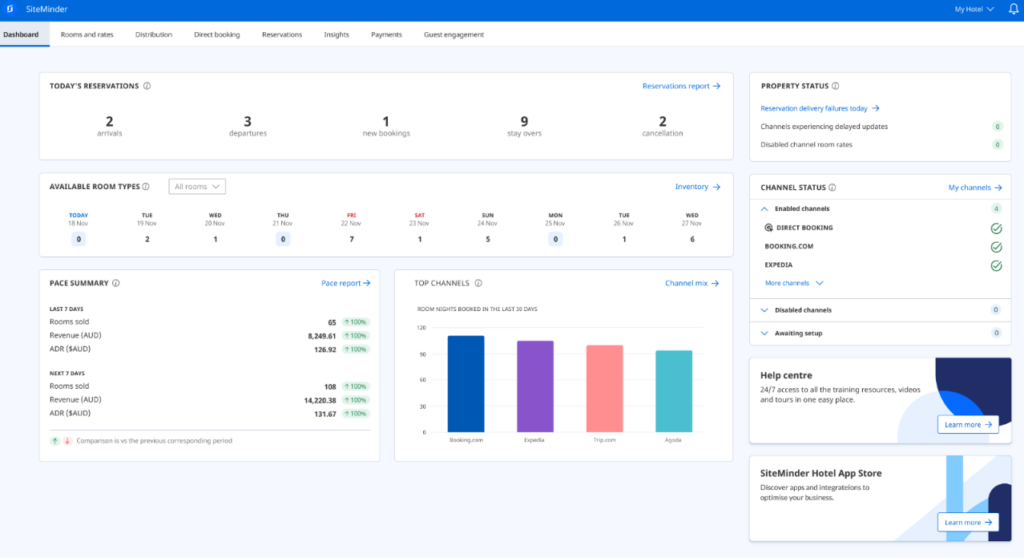
Built into your hotel's website, a booking engine lets guests check availability and complete reservations directly—without routing them through an OTA. In my experience, it's one of the most underutilized tools in a property's tech stack, yet it directly reduces commission costs by converting web traffic into commission-free direct bookings.
Benefits
A booking engine built into your hotel website converts site visitors into direct reservations without the OTA commission cutting into your margin—and in my experience, that alone justifies the investment for most properties. Tools like Cloudbeds Booking Engine or SiteMinder's booking engine let guests check live availability and book in real time, which removes the friction that typically sends them back to a third-party channel. I've seen properties meaningfully reduce their OTA dependency once the booking engine is properly integrated and promoted.
Features
A good booking engine does more than display availability—it's built to convert browsers into confirmed guests without sending them to an OTA to finish the job:
- Real-time availability display: Guests see live room availability and rates as they search, pulled directly from your PMS. I've found that any lag between what's shown and what's actually available creates trust issues that kill the booking.
- Rate and package presentation: The engine surfaces room types, rates, and add-on packages in a single view, so guests can compare options and customize their stay before checkout. Cloudbeds Booking Engine handles this well for independent properties.
- Direct payment processing: Guests complete payment securely within the booking engine, keeping the entire transaction on your domain rather than routing through a third-party checkout.
- Promo code and discount support: Apply promotional rates or member discounts at checkout, which lets you run direct-channel incentives that reward guests who book without going through an OTA.
- Multi-room and multi-rate booking: Guests can book more than one room type or rate plan in a single session—a feature I think is often overlooked but matters significantly for group inquiries and family travel.
- Mobile-optimized interface: The booking flow is designed to work on smartphones and tablets, which is where a growing share of direct bookings actually happen. SiteMinder's booking engine prioritizes this well.
- PMS and channel manager sync: The booking engine writes confirmed reservations directly into your PMS and updates inventory across connected channels in real time, eliminating the manual re-entry that leads to overbookings.
6. Point-of-Sale (POS) Systems
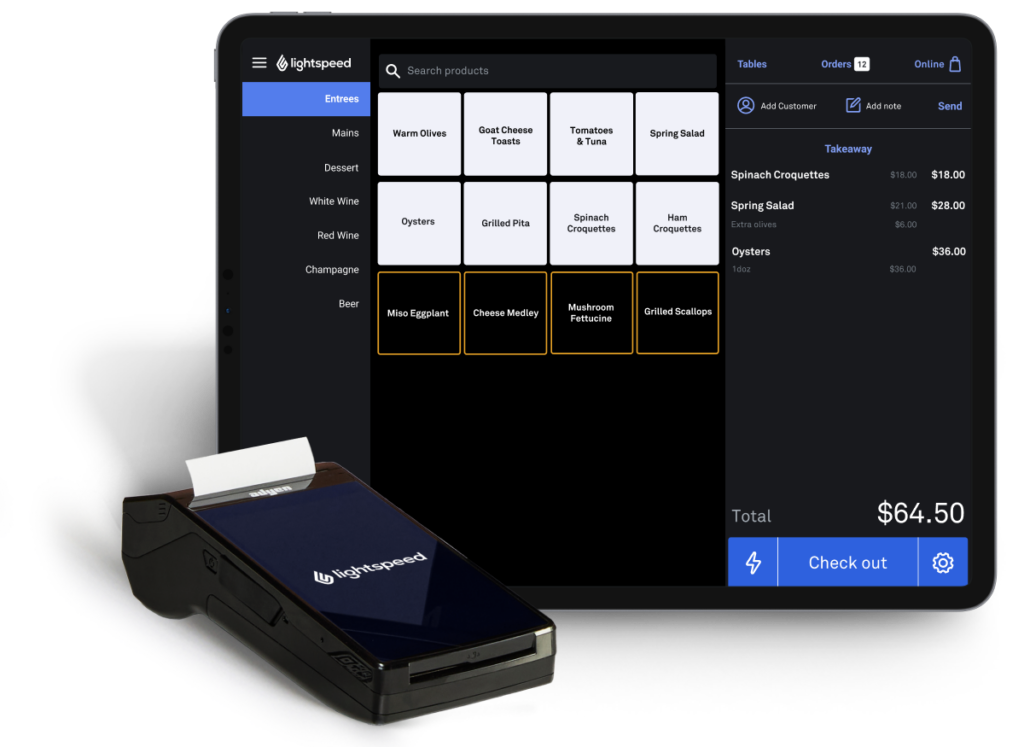
Built into hotel operations to handle transactions across restaurants, bars, spas, and retail outlets, POS systems give your team a single tool for processing payments and tracking outlet revenue. In my experience, the real value comes from PMS integration—every charge posts directly to the guest's folio without manual re-entry at the front desk.
Benefits
The biggest win with a hotel POS system is direct PMS integration—every outlet charge posts to the guest's folio automatically, which eliminates the manual re-entry that causes posting errors at checkout. I've found that systems like Oracle MICROS or Lightspeed Restaurant also give your F&B and spa teams real-time transaction tracking, so outlet revenue is visible across the property without waiting on end-of-day reports. That live data makes it much easier to spot underperforming outlets and act on it before the shift ends.
Features
A hotel POS system has to handle more than just payments—it needs to connect every outlet back to a single guest record without requiring staff to manually transfer charges:
- PMS folio integration: Every transaction posted at a restaurant, spa, or retail outlet routes directly to the guest's open folio in the PMS. Oracle MICROS handles this well, and I've found it eliminates the posting errors that tend to surface at checkout when charges are entered manually.
- Multi-outlet support: The system manages separate menus, pricing, and workflows for each outlet—F&B, spa, retail—from one platform. This matters more than it sounds when your team is switching between a bar and a full-service restaurant mid-shift.
- Table and order management: Staff can split bills, transfer tables, and modify orders in real time, which keeps service moving without requiring a manager to intervene on every adjustment.
- Real-time transaction reporting: Outlet revenue is visible as transactions happen, not just at end of day. I think this is where tools like Lightspeed Restaurant earn their place—you can see underperforming outlets and respond within the same shift.
- Inventory and stock tracking: The system deducts ingredients or items from inventory as orders are placed, giving your kitchen and outlet managers a live view of what's running low before it becomes a service issue.
- Payment method flexibility: Guests can pay by card, room charge, cash, or digital wallet in a single transaction flow. Splitting payments across methods is standard in most modern hotel POS platforms.
- Staff permissions and shift management: Different access levels for servers, managers, and supervisors mean your team can only perform actions appropriate to their role, which reduces errors and keeps your audit trail clean.
7. Guest Experience & CRM Platforms
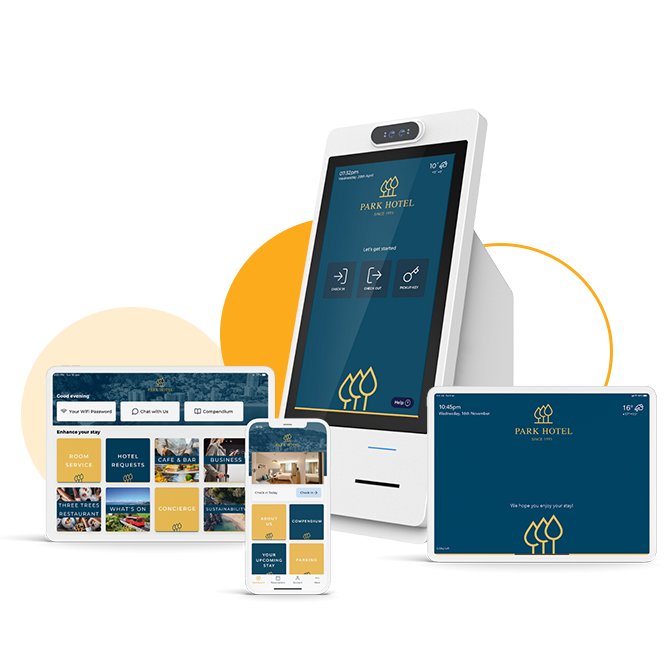
Designed to centralize guest data and personalize communication across the stay lifecycle, these platforms sit between your PMS and your guest-facing touchpoints. In my experience, they're what turns a one-time booking into a repeat relationship—by giving your team a single profile view that informs everything from pre-arrival messaging to post-stay follow-up.
Benefits
Centralizing guest data into a single profile is where these platforms earn their keep—tools like Revinate and dailypoint pull information from your PMS, booking engine, and past stays into one view, so your team can personalize communication from pre-arrival to post-checkout without manually piecing together guest history. In my experience, that profile continuity is what turns a guest's second visit into something that actually feels recognized rather than generic. The direct result is stronger repeat booking rates, because guests who feel known are far more likely to book direct the next time rather than starting fresh on an OTA.
Features
Guest experience and CRM platforms do their best work when they pull data from across your stack into a single guest profile that your team can actually act on—here's what to look for:
- Unified guest profiles: The platform consolidates booking history, stay preferences, and communication records from your PMS and booking engine into one record per guest. Revinate does this well, and I've found it's the foundation everything else depends on.
- Pre-arrival messaging automation: Automated emails or SMS messages go out before check-in with personalized content—upgrade offers, arrival instructions, or add-on options—triggered by reservation data rather than manual staff action.
- Segmentation and targeted campaigns: You can group guests by behavior, stay frequency, or spend level and send targeted offers to each segment. I think this is where CRM platforms earn their keep for driving direct repeat bookings.
- Post-stay survey collection: Automated surveys go out after checkout and route responses into the platform, giving you structured feedback you can act on before a complaint ends up on a review site.
- Loyalty and recognition tracking: Guest preferences, milestones, and visit counts are stored in the profile so your team can acknowledge returning guests at check-in without relying on staff memory.
- PMS data sync: The platform stays current with your PMS in real time, so guest profiles reflect new reservations, folios, and stay details as they're created—not just at batch export. Dailypoint handles this integration well across multi-property setups.
- Review and reputation monitoring: Some platforms aggregate reviews from OTAs and review sites into a single dashboard, so your team can track sentiment trends and respond without switching between platforms.
8. Housekeeping & Operations Management Software
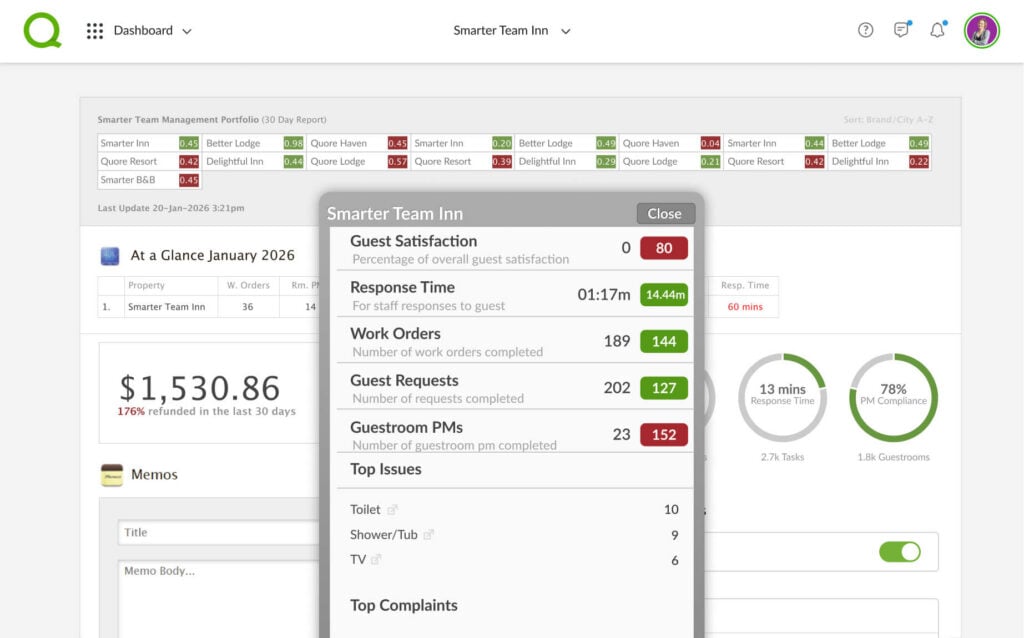
Built into your hotel tech stack as a layer that connects directly with your PMS, housekeeping and operations management software gives housekeeping supervisors, front desk teams, and maintenance staff a shared, real-time view of room status, task assignments, and service requests. In my experience, it's what closes the gap between a room being vacated and your front desk knowing it's ready to assign—without a single phone call.
Benefits
The biggest operational win I've seen from tools like Optii or Quore is closing the gap between room vacancy and front desk visibility—real-time room status updates mean your team can assign rooms the moment they're ready, without a phone chain between housekeeping and the front desk. That direct PMS connection also means your supervisors can track task progress, flag maintenance issues, and reassign staff on the fly from a single dashboard. In my experience, that kind of visibility doesn't just cut down on guest wait times at check-in—it also reduces the scramble that happens when turnover demand spikes during peak arrivals.
Features
Housekeeping and operations management software earns its place in your stack by giving every department a shared view of what's happening on the floor in real time—here's what that looks like in practice:
- Real-time room status updates: Room status changes the moment housekeeping marks a room complete, and that update reflects immediately in your PMS. I've found this is what actually closes the gap between vacancy and front desk assignment—no phone calls, no lag.
- Task assignment and tracking: Supervisors can assign rooms and tasks to specific staff members, track completion progress, and reassign on the fly from a single dashboard. Optii handles this well across larger properties with complex room rotation schedules.
- Maintenance request logging: Staff can flag maintenance issues directly from the floor—broken fixtures, HVAC problems, missing items—and route them to the right team instantly. This keeps issues from slipping through the cracks between shifts.
- PMS integration: The platform syncs with your PMS so room status, arrivals, and departures are always current. Your housekeeping team sees exactly which rooms need priority turnover without a separate briefing.
- Mobile staff access: Housekeeping attendants and supervisors work from mobile devices, so task lists, updates, and communications follow them across the property. Quore does this well, and it removes the need for printed room sheets entirely.
- Inspection and quality checklists: Supervisors can run room inspections against a digital checklist and log pass or fail results per item. That audit trail is useful when a guest raises a complaint and you need to verify what was checked and when.
- Shift and workload reporting: End-of-shift reports show task completion rates, average room turn times, and any outstanding issues. In my experience, that data is what helps you spot where staffing adjustments are needed before the next peak arrival period hits.
9. Vacation Rental Property Management Systems
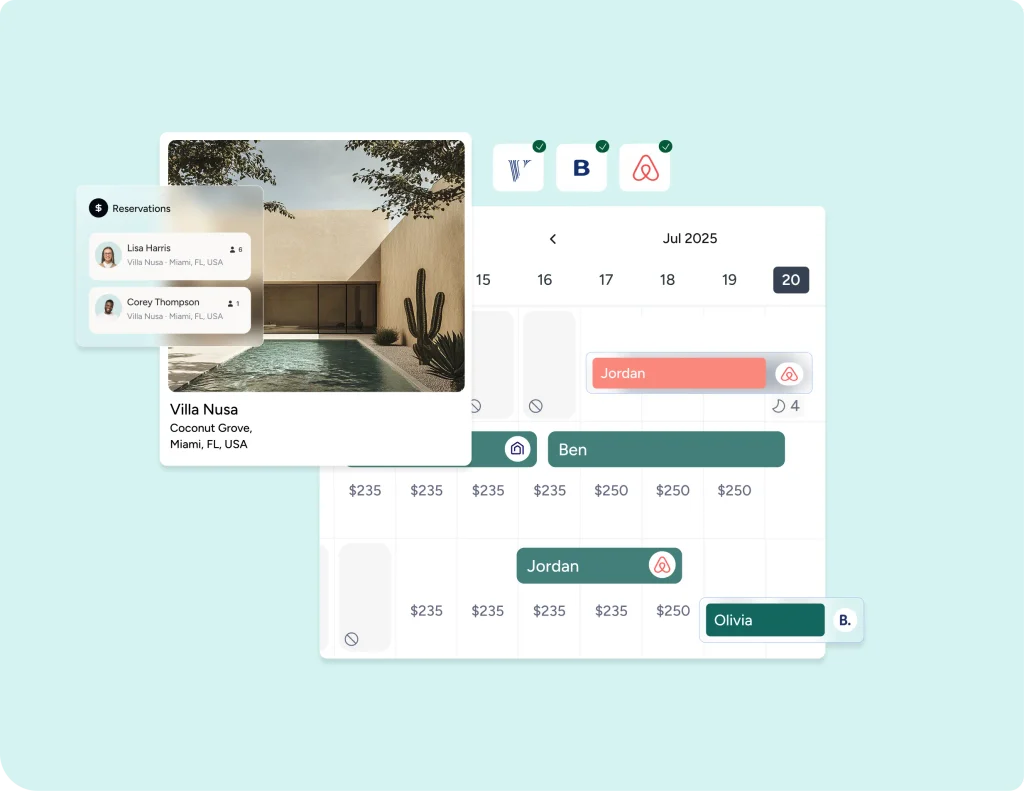
Vacation rental property management systems are increasingly becoming a core part of short-term rental operations. According to Guesty’s 2025 industry report, 76% of surveyed operators use a PMS to support automation, multi-channel listing management, and connected operations. Platforms like Guesty bring reservations, guest communication, payments, pricing, owner reporting, and channel management into one system, helping operators manage growing portfolios without relying on disconnected tools.
Benefits
Vacation rental property management systems works well for properties managing both hotel rooms and vacation rentals, while Guesty is built specifically for short-term rental operations. Guesty reports that property managers moving from a single-channel approach to its multi-channel platform saw 25.9% higher occupancy and 28.5% higher revenue per listing. Because these figures come from Guesty’s own analysis, they should be treated as vendor-reported results rather than guaranteed outcomes.
Features
Vacation rental PMS platforms handle a different operational mix than a traditional hotel PMS—here's what sets them apart and where that difference shows up in day-to-day management:
- Multi-channel listing sync: The platform pushes your inventory and rates to Airbnb, Vrbo, Booking.com, and other OTAs simultaneously, and pulls reservations back in real time. Guesty handles this well, and it removes the manual update cycle that creates double-booking risk.
- Unified inbox for guest communication: Messages from every channel feed into a single inbox, so your team responds without switching between OTA portals. I've found this is where response time improves most noticeably once you move off manual channel management.
- Owner reporting and payout management: The platform tracks revenue by unit, calculates owner splits, and generates payout statements per period. For properties managing third-party owner units, this replaces a spreadsheet process that gets messy fast.
- Dynamic pricing and rate management: Rates update across channels based on demand signals, lead time, and competitor pricing. Cloudbeds handles this for mixed hotel and vacation rental inventory, which matters when you're managing both room types under one roof.
- Reservation and availability management: A central calendar shows availability across all units and channels, with holds, blocks, and turnovers visible in one view. In my experience, this is the feature that makes managing 20-plus units actually workable for a small team.
- Automated guest messaging: Pre-arrival instructions, door codes, and post-stay follow-ups go out automatically based on reservation triggers, without staff intervention for each booking.
- Cleaning and turnover scheduling: Housekeeping tasks generate automatically from checkout and check-in times, so your cleaning team always has an up-to-date schedule tied directly to the reservation calendar.
10. Back-Office & Accounting Management Software
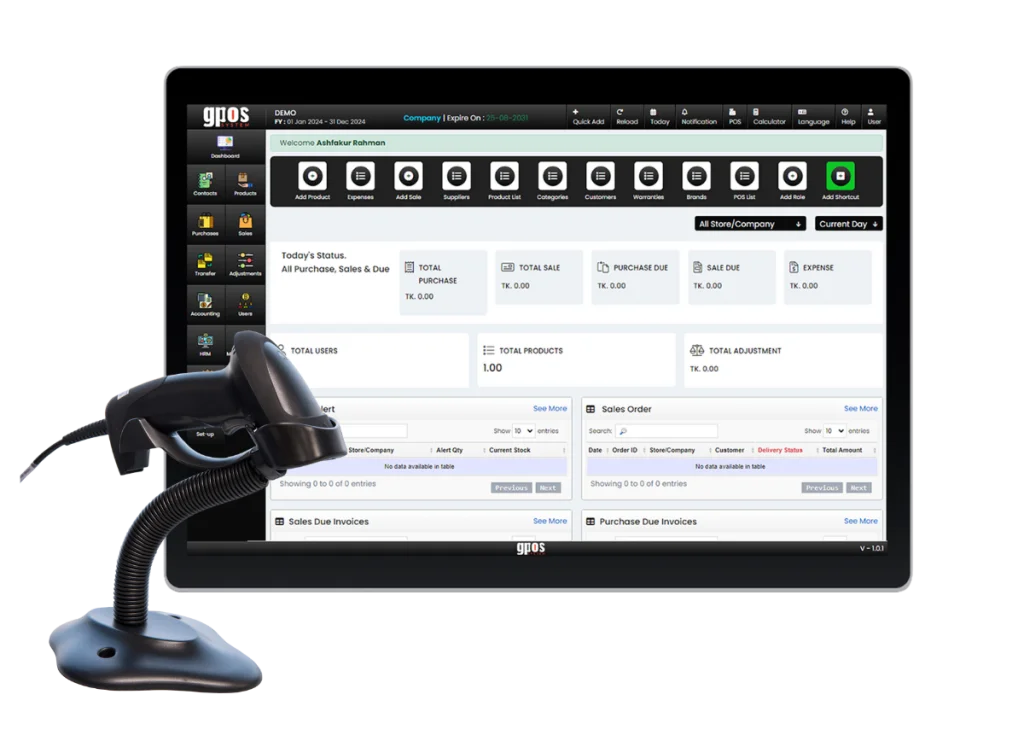
Integrated directly with your PMS, back-office and accounting tools handle the financial operations that run beneath the surface of every stay—general ledger management, accounts payable, bank reconciliation, and financial reporting. In my experience, finance teams at mid-size and larger properties use platforms like M3 to replace disconnected spreadsheet workflows with a single system that keeps hotel financials tied directly to reservation and folio data.
Benefits
Replacing a generic accounting platform with a hotel-specific tool like M3 is where I've seen finance teams get the most immediate relief—your general ledger, bank reconciliation, and financial reporting all pull from the same PMS-connected data source, so there's no manual bridging between folio records and your books. M3 integrates with popular PMS solutions, reducing the errors and labor costs that come from managing payroll and accounting through disconnected systems. For properties managing multiple owners or growing portfolios, that single source of truth also makes period-end reporting and owner statements far less painful to produce.
Features
Back-office and accounting tools built for hospitality handle a different scope than generic accounting platforms—here's what you actually get when you connect one directly to your PMS:
- General ledger management: The platform maintains your full chart of accounts with hotel-specific coding, so revenue from rooms, F&B, and ancillary services posts to the right buckets automatically. M3 handles this well, and it removes the manual reclassification that tends to pile up at period-end.
- Bank reconciliation: Daily reconciliation runs against your PMS revenue data, flagging discrepancies between what was collected and what posted to your accounts. In my experience, this is where finance teams reclaim the most time each week.
- Accounts payable management: Invoice entry, approval workflows, and vendor payment tracking all live in one place. That matters when you're managing purchasing across multiple departments without a centralized procurement system.
- Payroll integration: Labor costs post directly from your scheduling and time-tracking tools into the general ledger, so your payroll figures stay tied to actual shift and department data rather than a manual import.
- Financial reporting: P&L statements, balance sheets, and departmental performance reports pull from live PMS-connected data. M3 generates these in hotel-standard formats, which saves time when ownership or asset managers request period-end packages.
- Multi-property consolidation: If you manage more than one property, the platform rolls up financials across locations into a single view. I've found this is what makes portfolio-level reporting actually workable for a lean finance team.
- Owner statement generation: For properties with third-party ownership structures, the platform calculates revenue splits and produces formatted statements per owner per period, replacing the spreadsheet process that otherwise takes days to reconcile.
Find the Right Hotel Software for Your Property
Once you know which types of hotel software fit your operation, the next step is understanding what they cost. Explore our hotel management software pricing guide to compare common pricing models, typical costs, and features before choosing a platform.

