

Programvare for hotellrestauranter er en kategori digitale verktøy som er utviklet for å hjelpe hoteller med å administrere restaurant- og serveringsdrift, fra reservasjoner og bestillinger til lagerstyring og bemanningsplanlegging.
Hvis du leter etter den beste programvaren for restaurantdrift i hotell- og serveringsbransjen, ønsker du sannsynligvis å samordne serveringstjenestene med eiendommens øvrige drift, møte gjestenes forventninger og redusere manuelt arbeid for teamet ditt.
Mange plattformer støtter den daglige driften med funksjoner som CRM, administrasjon av administrasjonskontoret og forretningsanalyse, ofte forbedret med AI-drevne funksjoner. Disse verktøyene hjelper virksomheter innen hotell- og serveringsbransjen med å øke effektiviteten, samtidig som de opprettholder en brukervennlig opplevelse for de ansatte.
Denne listen hjelper deg med å sammenligne ledende alternativer, forstå hva hvert system er best på, og velge løsningen som passer hotellets unike behov, samtidig som mange team også ser på casestudier for å vurdere ytelse og resultater.
Why Trust Our Software Recommendations
6,700+
Reviews
20
Industry experts
16+
Evaluation factors
14
Years
Our team has been testing and reviewing software since 2012. As hospitality leaders ourselves, we know how difficult—and important—it is to choose the right software.
For this guide, we evaluated tools using hands-on testing and independent research, scoring tools using our selection criteria.
Our reviews reflect our human editorial judgment, not a sales pitch.
Sammenligningstabell for programvare til hotellrestauranter
Denne sammenligningstabellen oppsummerer prisdetaljene for mine beste utvalgte programvareløsninger for hotellrestauranter:
| Tool | Best For | Trial Info | Price | ||
|---|---|---|---|---|---|
| 1 | Best for food cost tracking in F&B ops | 90-day free trial | From $100/month | Website | |
| 2 | Best for managing group dining events | Free demo available | Pricing upon request | Website | |
| 3 | Best for menu engineering tools | Expert consultation available | Pricing upon request | Website | |
| 4 | Best for tableside ordering features | Free demo available | From $69/month | Website | |
| 5 | Best for accounting integration | Free demo available | Pricing upon request | Website | |
| 6 | Best for cloud-based property integration | Free demo available | Pricing upon request | Website | |
| 7 | Best for multi-outlet coordination | Free demo available | Pricing upon request | Website | |
| 8 | Best for mobile-first operations | Free demo available | Pricing upon request | Website | |
| 9 | Best for inventory and procurement tracking | Free demo available | Pricing upon request | Website | |
| 10 | Best for enterprise-level analytics | Free demo available | Pricing upon request | Website |


Anmeldelser av den beste programvaren for hotellrestauranter
Nedenfor finner du mine detaljerte sammendrag av programvare for hotellrestauranter som kom med på kortlisten. Anmeldelsene mine gir en grundig gjennomgang av funksjonene, integrasjonene og de beste bruksområdene for hver plattform, slik at du kan finne den beste løsningen for deg.
 Best for food cost tracking in F&B ops
- 90-day free trial
- From $100/month
Visit WebsiteCustomer Rating:4.3/5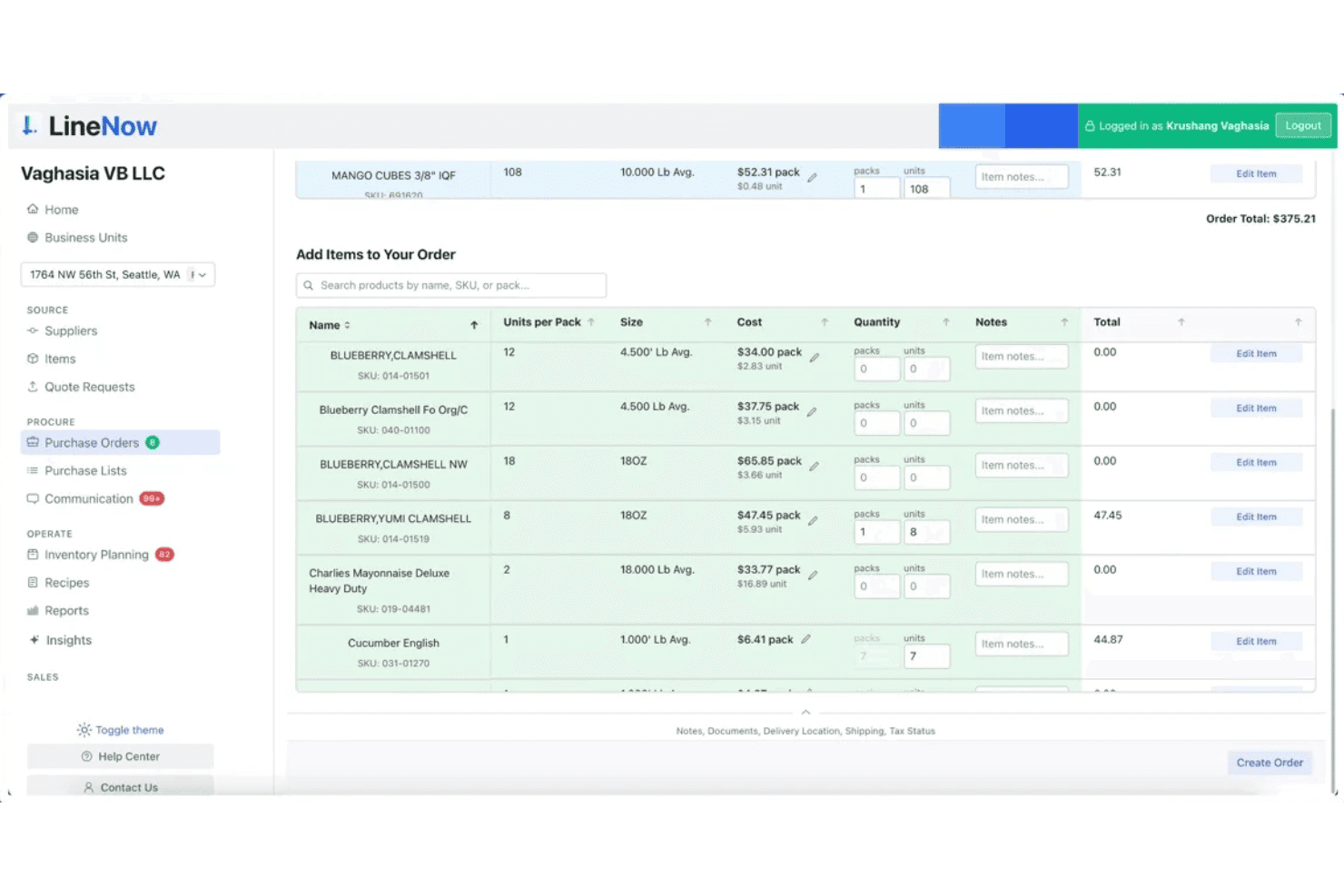
LineNow lets users build and manage purchase orders with item search and pricing. LineNow is a procurement and inventory management platform built for food & beverage operators, covering purchase order creation, supplier communication, recipe costing, and POS-linked food cost tracking across single and multi-location setups.
Who Is LineNow Best For?
LineNow suits F&B operators who need tighter control over food costs, procurement, and recipe costing as a back-of-house add-on to their existing POS setup.
Why I Picked LineNow
I've included LineNow in my top picks because it's one of the few tools that directly ties recipe costing to live POS sales data, giving F&B operators a real-time read on which menu items are actually making money. I like how its decay-aware PAR level math accounts for perishable ingredients, so you're not over-ordering proteins that expire before service. Its AI-powered procurement loop, from auto-building purchase orders to parsing supplier replies from WhatsApp or email, keeps back-of-house costs in check without manual chasing.
LineNow Key Features
- Supplier reply parsing: Automatically converts supplier responses from WhatsApp and email into structured order updates, including substitutions and backorders.
- Multi-location PAR management: Sets and tracks reorder levels per location, with decay-aware math built for perishable ingredients.
- Receiving workflow: Updates inventory counts based on actual delivered quantities, not just what was ordered, keeping stock records accurate.
- QuickBooks and Xero sync: Pushes confirmed receiving data to your accounting software so invoices reflect what was actually received.
LineNow Integrations
Integration includes Toast, Square, Clover, Lightspeed X-Series and R-Series, Shopify POS, QuickBooks, and Xero.
Pros and Cons
Pros:
- Multi-location PAR levels for perishables
- AI parses supplier replies into orders
- Real-time food cost and margin tracking
Cons:
- Lacks reservations and in-room dining features
- No hotel PMS or guest folio links
Learn more about LineNow: Best for managing group dining events
- Free demo available
- Pricing upon request
Visit WebsiteCustomer Rating:4.5/5
Tripleseat manages events with booking, space layouts, and insights. Tripleseat is designed for hotels and venues that need to manage group dining events and private bookings with less manual coordination. This platform helps sales and event teams centralize communication, track leads, and automate event details. If your property hosts frequent banquets, meetings, or special occasions, Tripleseat can help you keep every detail organized from inquiry to execution.
Why I Picked Tripleseat
Managing group dining events in a hotel setting requires tools built for complex coordination, and that’s where Tripleseat stands out. I picked Tripleseat because it offers event-specific features like customizable booking forms and automated proposal generation, which help hotel teams handle everything from initial inquiry to final billing. The platform also includes a centralized calendar and task management system, making it easier to track multiple events and avoid scheduling conflicts. These capabilities make Tripleseat a strong choice for hotels that regularly host banquets, conferences, or private dining experiences.
Tripleseat Key Features
Some other features in Tripleseat that are useful for hotel restaurant teams include:
- Document Templates: Create and reuse branded contracts, BEOs, and invoices for consistent event documentation.
- Guest List Management: Track RSVPs, dietary preferences, and seating arrangements directly within each event file.
- Task Reminders: Set automated reminders for follow-ups, deadlines, and event milestones to keep teams on track.
- Reporting Dashboard: Access real-time analytics on event sales, booking trends, and team performance.
Tripleseat Integrations
Integrations include OpenTable, SevenRooms, Mailchimp, Constant Contact, Stripe, Square, Oracle Hospitality, Infor, Mews, Maestro, and more.
Pros and Cons
Pros:
- Provides real-time reporting on event sales
- Supports multi-venue and multi-space management
- Tracks guest dietary needs and preferences
Cons:
- Limited menu engineering or costing tools
- No built-in table management for daily dining
Learn more about Tripleseat: Best for menu engineering tools
- Expert consultation available
- Pricing upon request
Visit WebsiteCustomer Rating:4.5/5
Apicbase tracks inventory and recipe costs with real-time insights. Apicbase is designed for hospitality teams that want to take control of menu engineering and food cost management. This platform gives chefs and F&B managers detailed tools for recipe costing, allergen tracking, and menu performance analysis. If you need to optimize profitability and consistency across your hotel’s food outlets, Apicbase brings data-driven insights to every menu decision.
Why I Picked Apicbase
When it comes to menu engineering, Apicbase stands out for its depth and focus on data-driven decision-making. I picked Apicbase because it gives hotel restaurant teams granular control over recipe costing, ingredient tracking, and menu profitability analysis. The platform’s menu performance dashboards and allergen management tools help you refine offerings and ensure compliance across all outlets. For hotels looking to maximize margins and maintain consistency, Apicbase offers specialized features that go beyond basic inventory or POS systems.
Apicbase Key Features
Some other features that make Apicbase valuable for hotel restaurant teams include:
- Supplier Management: Lets you track supplier details, pricing, and order histories in one place.
- Inventory Forecasting: Uses historical data to predict future stock needs and reduce waste.
- Multi-Outlet Management: Supports centralized control and reporting for multiple restaurant locations.
- Production Planning: Helps kitchen teams schedule and organize prep work based on real-time demand.
Apicbase Integrations
Integrations include Lightspeed, Revel, Deliverect, Foodics, Trivec, Square, Mews, Planday, Tenzo, and more.
Pros and Cons
Pros:
- Inventory forecasting uses historical consumption data
- Supplier price updates sync directly to recipes
- Centralized dashboard for multi-outlet management
Cons:
- Reporting exports limited to certain formats
- Menu photo management can be cumbersome
Learn more about Apicbase: Best for tableside ordering features
- Free demo available
- From $69/month
Visit WebsiteCustomer Rating:4.2/5
Toast runs restaurant POS, orders, and payments in one system. If your hotel restaurant needs fast, flexible tableside ordering, Toast is built for you. This point-of-sale platform is designed for hospitality teams that want to speed up service and reduce order errors. Toast’s handheld devices and digital ordering tools help servers take and send orders directly from the table, keeping operations moving during busy shifts.
Why I Picked Toast
For hotel restaurants that want to speed up service and improve order accuracy, Toast’s tableside ordering features are a strong fit. I picked Toast because its handheld POS devices let servers take orders and process payments right at the table, which helps reduce wait times and mistakes. The platform also supports digital menus and guest self-ordering, so you can offer flexible service options during peak hours. These features make Toast especially useful for busy hotel dining rooms that need to keep guests happy and tables turning quickly.
Toast Key Features
Some other features that make Toast useful for hotel restaurant teams include:
- Inventory Tracking: Monitors ingredient levels and alerts you when it’s time to reorder.
- Kitchen Display System: Sends orders directly to kitchen screens for faster prep and fewer errors.
- Loyalty Program Management: Lets you create and manage guest rewards and promotions.
- Multi-Location Reporting: Consolidates sales and performance data across all your hotel restaurant outlets.
Toast Integrations
Integrations include Grubhub, Uber Eats, DoorDash, xtraCHEF, QuickBooks, 7shifts, Compeat, BevSpot, PeachWorks, and Ctuit.
Pros and Cons
Pros:
- Detailed shift reports for restaurant managers
- Menu updates sync instantly across all terminals
- Handheld POS devices support tableside payments
Cons:
- Limited support for international currencies
- Hardware replacement can be expensive
Learn more about Toast: Best for accounting integration
- Free demo available
- Pricing upon request
Visit WebsiteCustomer Rating:4.2/5
Restaurant365 runs restaurant accounting, inventory, and cost tracking. Restaurant365 is designed for hospitality teams that want to connect restaurant operations with accounting in one platform. This tool appeals to hotel F&B managers and finance leads who need real-time visibility into costs, invoices, and financial performance. If you’re looking to automate accounting tasks while managing restaurant operations, Restaurant365 brings both together in a single system.
Why I Picked Restaurant365
When hotel restaurants need to bridge the gap between daily operations and accounting, Restaurant365 stands out for its direct accounting integration. I picked Restaurant365 because it lets you automate invoice processing and sync sales data straight into your general ledger, which is a major advantage for finance teams. The platform’s real-time financial reporting and bank reconciliation tools help hotel F&B leaders keep a close eye on profitability. If you want to reduce manual data entry and connect restaurant performance with financial outcomes, Restaurant365 is purpose-built for that need.
Restaurant365 Key Features
Some other features that make Restaurant365 valuable for hotel restaurant teams include:
- Recipe Costing Module: Tracks ingredient costs and calculates plate costs for menu items.
- Inventory Management Tools: Monitors stock levels and automates reorder points for supplies.
- Labor Scheduling: Builds staff schedules and tracks labor costs against sales.
- Vendor Management: Centralizes supplier information and manages purchase orders in one place.
Restaurant365 Integrations
Integrations include Square, Aloha, Clover, Micros, POSitouch, Upserve, QuickBooks, ADP, and more.
Pros and Cons
Pros:
- Consolidated financial reporting for multiple outlets
- Built-in recipe costing and menu analysis
- Real-time food and labor cost tracking
Cons:
- Occasional delays in syncing POS data
- Limited support for non-U.S. tax compliance
Learn more about Restaurant365:

Mews runs hotel operations with bookings, check-ins, and payments. Mews brings cloud-based property management and restaurant operations together for hotels looking to unify guest and dining experiences. This platform is a fit for properties that want to connect reservations, POS, and guest profiles across rooms and restaurants in real time. If you need a system that helps your teams coordinate service and data between the front desk and F&B outlets, Mews offers a single platform to bridge those gaps.
Why I Picked Mews
For hotels that want to connect their property management and restaurant operations in the cloud, Mews offers a unified approach. I picked Mews because it lets you manage guest profiles, room bookings, and restaurant reservations all in one system, which helps teams deliver a more coordinated guest experience. The platform’s real-time data sharing between the front desk and F&B outlets means staff can see guest preferences and charges instantly, reducing manual handoffs. This level of integration is especially valuable for properties aiming to simplify operations and personalize service across every touchpoint.
Mews Key Features
Some other features in Mews that hotel restaurant teams may find useful include:
- Integrated POS System: Connects restaurant sales directly to guest folios and property accounts.
- Mobile Ordering: Lets guests place F&B orders from their own devices, whether in-room or on property.
- Automated Billing: Consolidates charges from rooms, restaurants, and amenities into a single invoice.
- Customizable Reporting: Offers detailed analytics on restaurant revenue, covers, and guest spend patterns.
Mews Integrations
Integrations include Booking.com, SiteMinder, Expedia, Tripadvisor, profitize, BEONX, 1CHECK, 20Tabs, 24SevenOffice, Abacus, and more.
Pros and Cons
Pros:
- Includes customizable reporting for F&B outlets
- Provides automated charge posting to folios
- Offers real-time syncing of guest profiles
Cons:
- Guest-facing ordering interface is not branded
- No built-in table reservation management
Learn more about Mews: Best for multi-outlet coordination
- Free demo available
- Pricing upon request
Visit WebsiteCustomer Rating:4.5/5
Agilysys unifies hotel PMS, POS, and payments in one platform. Agilysys is built for hotels and resorts that operate multiple restaurants, bars, and outlets under one roof. This platform helps food and beverage managers coordinate menus, inventory, and service across several venues from a single system. If your property needs to unify operations and reporting for diverse outlets, Agilysys brings centralized control to complex hospitality environments.
Why I Picked Agilysys
Coordinating multiple outlets within a single hotel or resort can be challenging, and Agilysys is purpose-built to address this complexity. I picked Agilysys because it lets you manage menus, inventory, and staffing across several restaurants, bars, and service points from one centralized dashboard. The platform also supports shared guest profiles and unified reporting, so you can track performance and guest preferences across all outlets. This level of coordination is especially valuable for properties that want to deliver consistent service and optimize operations across diverse food and beverage venues.
Agilysys Key Features
Some other features that make Agilysys useful for hotel restaurant teams include:
- Mobile Ordering: Allows guests to place orders from their smartphones or tablets.
- Table Management: Lets staff assign, track, and optimize table usage in real time.
- Loyalty Program Integration: Connects guest purchases to loyalty rewards and promotions.
- Kitchen Display System (KDS): Sends orders directly to kitchen screens for faster preparation and tracking.
Agilysys Integrations
Integrations include Book4Time, Oracle, Infor, Amadeus, Sabre, Springer-Miller, Shift4, FreedomPay, Elavon, and more.
Pros and Cons
Pros:
- Detailed reporting for each outlet and property
- Mobile ordering and payment for guests
- Built-in loyalty and guest profile management
Cons:
- Menu updates require manual sync across outlets
- Hardware compatibility varies by location
Learn more about Agilysys:

HotelKey manages hotel tasks, housekeeping, and guest operations. HotelKey brings a mobile-first approach to hotel restaurant operations, making it a strong fit for teams that need flexibility on the go. This platform is designed for properties that want to manage reservations, orders, and guest requests from any device, anywhere on the property. With its cloud-based tools, HotelKey helps hotel restaurants keep service moving smoothly without being tied to a front desk or fixed terminal.
Why I Picked HotelKey
When mobile flexibility is a top priority for hotel restaurant teams, HotelKey stands out for its mobile-first design. I picked HotelKey because it lets staff manage reservations, orders, and guest requests directly from smartphones or tablets, so service isn’t limited to a fixed workstation. The platform’s cloud-based dashboard gives managers real-time visibility into restaurant operations from anywhere on the property. This approach is especially useful for hotels that want to keep staff moving and responsive throughout the guest experience.
HotelKey Key Features
Some other features that make HotelKey useful for hotel restaurant operations include:
- Menu Management: Lets you update menu items, pricing, and availability in real time.
- Table Assignment Tools: Helps staff assign and track tables for efficient seating and service.
- Integrated Payment Processing: Supports multiple payment types directly through the platform.
- Customizable Reporting: Generates detailed sales and performance reports tailored to your restaurant’s needs.
HotelKey Integrations
Integrations include QuickBooks, M3, Revinate, GuestTek, Dormakaba, FreedomPay, Stripe, Virdee, Adyen, Sage, and more.
Pros and Cons
Pros:
- Table assignment tools for busy dining rooms
- Real-time menu updates from any device
- Mobile app supports full restaurant operations
Cons:
- No built-in inventory management for restaurants
- Menu design options are basic
Learn more about HotelKey: Best for inventory and procurement tracking
- Free demo available
- Pricing upon request

Craftable manages inventory, purchasing, and costs with real-time insights. If your hotel restaurant needs tighter control over inventory and purchasing, Craftable is built for you. This platform is designed for hospitality teams that want to track stock, manage procurement, and monitor costs across multiple outlets. With Craftable, you can automate order management and gain real-time visibility into food and beverage usage, helping you reduce waste and improve margins.
Why I Picked Craftable
Inventory and procurement tracking are often the biggest challenges for hotel restaurants with multiple outlets or high-volume operations. I picked Craftable because it gives you detailed control over stock levels, purchasing, and vendor management in one place. The platform’s automated order tracking and real-time inventory updates help prevent over-ordering and stockouts, which are crucial for busy kitchens. If you want to keep a close eye on food and beverage costs while simplifying procurement, Craftable is purpose-built for that need.
Craftable Key Features
Some other features that make Craftable useful for hotel restaurant teams include:
- Recipe Management: Lets you build, cost, and update recipes with live pricing from your inventory.
- Vendor Price Tracking: Monitors price changes from suppliers and flags cost fluctuations.
- Invoice Capture: Digitizes and stores invoices for easy access and reconciliation.
- Multi-Location Support: Manages inventory and procurement across several outlets from a single dashboard.
Craftable Integrations
Native integrations are not currently listed.
Pros and Cons
Pros:
- Offers detailed food and beverage cost analytics
- Monitors supplier price changes over time
- Tracks inventory depletion by recipe usage
Cons:
- Lacks a guest-facing menu or ordering tools
- No built-in POS or PMS integration
Learn more about Craftable: Best for enterprise-level analytics
- Free demo available
- Pricing upon request

Infor Hospitality runs hotel operations with cloud PMS & guest services. Designed for large hotel groups and resorts, Infor Hospitality brings advanced analytics and data-driven decision-making to hospitality operations. This platform is a fit for executives and managers who need to unify property, restaurant, and guest data across multiple locations. With Infor Hospitality, you can analyze performance trends, optimize revenue, and coordinate operations at scale.
Why I Picked Infor Hospitality
When you need to manage complex operations and analyze performance across multiple properties, Infor Hospitality stands out for its enterprise-level analytics. I picked this platform because it brings together data from your hotel, restaurant, and event spaces, giving you a unified view of your business. Its analytics tools let you track revenue, costs, and guest trends in real time, which is essential for making informed decisions at scale. For hotel groups that want to optimize operations and drive profitability with data, Infor Hospitality offers the depth and flexibility needed.
Infor Hospitality Key Features
Some other features that make Infor Hospitality valuable for hotel restaurant teams include:
- Menu Engineering Tools: Lets you analyze menu performance and adjust offerings based on sales and profitability data.
- Centralized Procurement Management: Supports purchasing and supplier management across multiple properties from one platform.
- Labor Scheduling Module: Helps you plan and track staff schedules for both front and back of house.
- Mobile Management App: Gives managers access to operational data and approvals from any location.
Infor Hospitality Integrations
Native integrations are not currently listed.
Pros and Cons
Pros:
- Provides mobile access for on-the-go managers
- Offers advanced menu engineering capabilities
- Consolidates multi-property data for analytics
Cons:
- Customization often needs vendor involvement
- Implementation can require significant IT resources
Learn more about Infor Hospitality:
Annen programvare for hotellrestauranter
Her er noen flere alternativer for programvare til hotellrestauranter som ikke kom med på kortlisten min, men som likevel er verdt å se nærmere på:
- 11Kitchen CUTBest for recipe and allergen management
- 12AveroBest for sales and labor reporting
- 13Focus e-RMSBest for customizable reporting options
- 147shiftsBest for staff scheduling tools
- 15CloudbedsBest for unified reservations and POS
- 16SevenRoomsBest for guest profile management
- 17PetpoojaBest for multilingual interface support
- 18SquareBest for flexible payment processing
- 19SkyTouch TechnologyBest for automated guest billing
- 20OpenTableBest for real-time table reservations
- 21OwnerBest for direct online ordering
- 22IRISBest for in-room dining automation
- 23SupyBest for supplier order tracking
- 24OloBest for digital ordering integration
How I Evaluate Hotel Restaurant Software
I split my evaluation into baseline criteria—like PMS room charge posting and multi-outlet POS—and the differentiators that separate a genuinely hotel-native platform from a repurposed restaurant tool.
Core Functionality (Table Stakes For This List)
When I'm selecting tools for my list, I rank each one on a scale from 0 (does not offer the functionality) to 5 (excels in this area) for each core functionality listed below. Then, I calculate the tool's total score into a percentage. Each tool needs to achieve a minimum total score of 65% to be considered for inclusion.
- PMS Integration & Room Charging: I check whether guest dinner charges post directly to room folios through native PMS connections, so front desk staff aren't reconciling manually at night audit.
- Multi-Outlet POS Capabilities: Each outlet—lobby bar, poolside grill, rooftop lounge—should run its own menus and tax rules under one unified POS system with centralized control.
- Table & Reservation Management: I evaluate floor plan tools, waitlist handling, and reservation features to see how well the system manages covers during a busy brunch or prix fixe event.
- Room Service & In-Room Dining: The platform should support in-room dining workflows like order routing to the kitchen, delivery tracking, and direct folio posting without duplicate data entry.
- F&B Inventory & Menu Management: I look at recipe costing, real-time stock depletion across outlets, and menu engineering tools that help F&B directors track dish-level profitability.
- F&B Reporting & Analytics: Revenue, covers, average check, and cost reports should consolidate across all outlets and roll up into hotel-wide performance dashboards for GM-level visibility.
Once I have a list of tools that meet this criteria, I consider what sets each platform apart.
Differentiating Factors (What Sets Vendors Apart)
Here's how I compare and contrast different vendors:
Standout Features
Banquet and catering management is a major differentiator. I look for tools that handle BEOs, group menus, and function space coordination so your events team isn't juggling spreadsheets alongside the POS. Multi-property management matters for hotel groups that need centralized menu control and consolidated reporting across locations. I also evaluate contactless guest ordering, where guests scan a QR code at the pool bar or in-room to place orders directly, reducing wait times during peak service periods.
Beyond Features
The integration ecosystem is where I focus first. A platform with certified PMS connections to systems like Opera, Mews, or Cloudbeds saves weeks of implementation headaches compared to one relying on generic API workarounds. I also evaluate deployment flexibility—hotels need offline POS mode so a Wi-Fi outage during dinner service doesn't shut down ordering. Implementation support matters too, especially hospitality-specific onboarding that includes menu build-out and PMS configuration, since F&B teams with high staff turnover need role-based training resources from day one.
Slik velger du programvare for hotellrestauranter
Det er lett å gå seg vill i lange funksjonslister og kompliserte prisstrukturer. For å hjelpe deg med å holde fokus mens du går gjennom den unike prosessen med å velge programvare, har vi laget en sjekkliste over faktorer du bør ha i bakhodet:
| Faktor | Hva bør du vurdere? |
|---|---|
| FaktorSkalerbarhet | Hva bør du vurdere?Vil programvaren støtte eiendommen din når du legger til serveringssteder, utvider menyene eller får flere gjester? |
| FaktorIntegrasjoner | Hva bør du vurdere?Kan den kobles direkte til PMS-, regnskaps- og betalingssystemene dine, eller må du finne alternative løsninger? |
| FaktorTilpasningsmuligheter | Hva bør du vurdere?Kan du tilpasse rapporter, menyer og arbeidsflyter slik at de samsvarer med den unike F&B-driften og merkevaren din? |
| FaktorBrukervennlighet | Hva bør du vurdere?Vil de ansatte – både i front- og administrasjonskontoret – lære seg systemet raskt, eller krever det omfattende opplæring? |
| FaktorImplementering og oppstart | Hva bør du vurdere?Hvor lang tid tar det å komme i gang, og hvilke ressurser eller hvilken støtte trenger du under utrullingen? |
| FaktorKostnad | Hva bør du vurdere?Er alle avgifter tydelige, inkludert oppsett, kundestøtte og tilleggstjenester? Passer prisen budsjettet og forretningsmodellen din? |
| FaktorSikkerhetstiltak | Hva bør du vurdere?Tilbyr programvaren brukertillatelser, datakryptering og samsvar med standarder for betalingssikkerhet? |
| FaktorTilgjengelig kundestøtte | Hva bør du vurdere?Kan du få kontakt med kundestøtte når du trenger det, spesielt i travle serveringstider eller ved systemavbrudd? |
Hva er programvare for hotellrestauranter?
Programvare for hotellrestauranter er en digital plattform utviklet for å administrere mat- og drikkevirksomhet på hoteller. Den samler oppgaver som bordreservasjoner, ordrebehandling, lagerstyring og salgsrapportering på ett sted.
Disse systemene hjelper hotellteam med å koordinere servicen på tvers av serveringssteder, opprettholde nøyaktige registre og integrere med andre hotelladministrasjonsverktøy for å gi gjestene en konsekvent opplevelse.
Funksjoner
Når du velger programvare for hotellrestauranter, bør du se etter følgende viktige funksjoner:
- Bordhåndtering: Organiserer reservasjoner, bordplasseringer og ventelister for å optimalisere flyten i restauranten og gjennomstrømningen av gjester.
- Ordrebehandling: Registrerer gjestenes bestillinger ved bordet eller i disken, sender dem til kjøkkenet og følger ordrestatus i sanntid.
- Lagerstyring: Overvåker lagerbeholdningen av mat, drikkevarer og forsyninger, og varsler personalet når varer må bestilles på nytt.
- Menyhåndtering: Lar deg opprette, oppdatere og tilpasse digitale menyer, inkludert priser, beskrivelser og dagens retter.
- Salgsrapportering: Genererer detaljerte rapporter om salg, inntekter og varenes resultater for å støtte datadrevne beslutninger.
- Støtte for flere serveringssteder: Administrerer driften på tvers av flere restauranter, barer eller serveringssteder innenfor samme hotell.
- Betalingsbehandling: Godtar en rekke betalingsmetoder, inkludert kredittkort, mobilbetalinger og belastning på rommet, med sikker håndtering av transaksjoner.
- Integrasjon med PMS: Kobler direkte til eiendomsforvaltningssystemet ditt for å synkronisere gjesteprofiler, rombelastninger og faktureringsinformasjon.
- Oppskrifts- og kalkulasjonsverktøy: Følger med på ingrediensbruken og beregner kostnaden for hver menyrett for å bidra til å kontrollere marginene og redusere svinn.
- Brukertillatelser: Angir tilgangsnivåer for ulike personalroller og sørger for at sensitive data og funksjoner bare er tilgjengelige for autoriserte brukere.
Programvareløsninger for hotellrestauranter inkluderer vanligvis ikke kunstig intelligens som en del av funksjonstilbudet.
Fordeler
Implementering av programvare for hotellrestauranter gir flere fordeler for teamet og virksomheten din. Her er noen av fordelene du kan se frem til:
- Sentralisert drift: Administrer reservasjoner, bestillinger og lager fra én plattform, slik at behovet for manuell koordinering på tvers av serveringssteder reduseres.
- Forbedret gjesteopplevelse: Koordiner servicen og tilpass samhandlingen ved å integrere gjesteprofiler og preferanser med ordre- og borddata.
- Nøyaktig salgs- og lagerstyring: Generer rapporter i sanntid og overvåk lagerbeholdningen for å støtte bedre innkjøp og redusere svinn.
- Raskere ordrebehandling: Send bestillinger direkte til kjøkkenet og behandle betalinger raskt, slik at gjestenes ventetid blir kortere.
- Forbedret datasikkerhet: Kontroller brukertilgang og beskytt sensitiv informasjon med innebygde tillatelser og sikkerhetstiltak for etterlevelse.
- Forenklet administrasjon av flere serveringssteder: Få oversikt over flere restauranter, barer eller servicepunkter på hotellet fra ett system.
- Handlingsrettet forretningsinnsikt: Få tilgang til detaljerte analyser og tilpassbare rapporter som kan danne grunnlag for beslutninger om menyplanlegging, bemanning og priser.
Kostnader og priser
Valg av programvare for hotellrestauranter krever en forståelse av de ulike prismodellene og abonnementene som er tilgjengelige, fra gratis programvare for restaurantadministrasjon til mer avanserte betalingsalternativer. Kostnadene varierer basert på funksjoner, teamstørrelse, tillegg og mer. Tabellen nedenfor oppsummerer vanlige abonnementer, gjennomsnittsprisene deres og typiske funksjoner som er inkludert i programvareløsninger for hotellrestauranter:
Sammenligningstabell for planer for programvare for hotellrestauranter
| Plantype | Gjennomsnittspris | Vanlige funksjoner |
|---|---|---|
| PlantypeGratisplan | Gjennomsnittspris$0 | Vanlige funksjonerGrunnleggende ordreinnlegging, begrenset menyadministrasjon, enkel rapportering og e-poststøtte. |
| PlantypePersonlig plan | Gjennomsnittspris$20-$50/bruker/måned | Vanlige funksjonerBordadministrasjon, menytilpasning, grunnleggende lagerstyring, betalingsbehandling og chatstøtte. |
| PlantypeBedriftsplan | Gjennomsnittspris$60-$150/bruker/måned | Vanlige funksjonerStøtte for flere utsalgssteder, avansert rapportering, PMS-integrasjon, brukertillatelser og telefonstøtte. |
| PlantypeForetaksplan | Gjennomsnittspris$200+/bruker/måned | Vanlige funksjonerTilpassede integrasjoner, dedikert kundeansvarlig, avansert analyse, hjelp med oppstart og prioritert støtte. |
Vanlige spørsmål om programvare for hotellrestauranter
Her er svar på noen vanlige spørsmål om programvare for hotellrestauranter:
Hvordan integreres programvare for hotellrestauranter med et eiendomsadministrasjonssystem?
Programvare for hotellrestauranter kobles vanligvis til eiendomsadministrasjonssystemet (PMS) gjennom direkte integrasjoner eller API-er. Dette gjør det mulig å belaste restaurantkostnader på gjesterom, synkronisere gjesteprofiler og samle faktureringen, slik at det blir enklere å administrere gjestekontoer og effektivisere driften.
Kan programvare for hotellrestauranter håndtere flere utsalgssteder eller lokasjoner?
Ja, de fleste programvareløsninger for hotellrestauranter støtter administrasjon av flere utsalgssteder. Du kan føre tilsyn med flere restauranter, barer eller servicesteder på én eiendom eller på tvers av flere lokasjoner, med sentralisert rapportering og lagerstyring for hvert utsalgssted.
Hva bør jeg tenke på når jeg går over fra et eldre POS-system til programvare for hotellrestauranter?
Planlegg datamigrering, opplæring av ansatte og integrasjon med eksisterende hotellsystemer. Kontroller om den nye programvaren kan importere historiske salgs- og menydata, og sørg for at teamet har tilgang til ressurser for oppstart, for eksempel opplæringsvideoer eller direktestøtte under overgangen.
Er det mulig å tilpasse menyer og priser for ulike utsalgssteder?
Ja, mange programvareløsninger for hotellrestauranter lar deg opprette unike menyer og priser for hvert utsalgssted. Denne fleksibiliteten gjør det enklere å tilpasse tilbudene til ulike gjestesegmenter eller servicestiler på hotellet.
Hvilke typer støtte er tilgjengelige for brukere av programvare for hotellrestauranter?
Støttealternativene omfatter ofte direktechat, telefon, e-post og søkbare kunnskapsbaser. Noen leverandører tilbyr også hjelp med oppstart, webinarer og dedikerte kundeansvarlige, særlig for bedrifts- og foretaksplaner.