
moonstride Review: Pros, Cons, Features and Pricing
moonstride stands out as a travel CRM software built for hotels, agencies, and tour operators. See how it helps teams manage customers, bookings, and travel operations.

We review tools independently, and commissions help fund our testing. See our transparency policy, our methodology, or suggest a tool.
moonstride is a hotel CRM software built for hospitality businesses that need to manage guest relationships, bookings, and sales pipelines in one place. It's worth a close look if your team handles complex group bookings or multi-leg itineraries and needs more than a generic CRM can offer without heavy customization. I'd point you toward moonstride over something like HubSpot if you want a platform purpose-built for travel and hospitality—one that fits how hotels actually operate without requiring you to engineer that fit yourself.
moonstride Evaluation Summary
0/5
- From $645/month (5 users)
- Free demo available
Why Trust Our Software Recommendations
6,700+
Reviews
20
Industry experts
16+
Evaluation factors
14
Years
Our team has been testing and reviewing software since 2012. As hospitality leaders ourselves, we know how difficult—and important—it is to choose the right software.
For this guide, we evaluated tools using hands-on testing and independent research, scoring tools using our selection criteria.
Our reviews reflect our human editorial judgment, not a sales pitch.
moonstride Overview
From my perspective, moonstride stands out for its travel-focused CRM, booking management, and automation features. I find its quotation tools, itinerary management, and customer workflows especially useful for travel agencies, tour operators, and hospitality teams managing complex bookings.
While it may not replace a dedicated hotel CRM or property management system, it’s a strong choice for businesses that need better control over enquiries, customer communication, and travel operations without adding unnecessary complexity.
Pros
- Centralizes customer profiles, travel inquiries, communications, and booking details.
- Helps hospitality and travel teams manage quotes, itineraries, and customer workflows.
- Supports automation for follow-ups and personalized customer engagement.
Cons
- Not a traditional hotel CRM focused on property management or room operations.
- Advanced customization may require setup time for complex travel workflows.
- Best suited for travel-focused businesses rather than general hospitality teams.
Is moonstride Right For Your Needs?
Who Would be a Good Fit for moonstride?
moonstride is a good fit for travel businesses that need CRM, booking management, sales automation, and operational tools. It’s ideal for travel agencies, tour operators, DMCs, and hospitality teams managing customer enquiries, itineraries, suppliers, and reservations. Its automation, reporting, and document management features help teams streamline travel workflows and improve customer experiences.
- Travel AgenciesCRM, quotation tools, and booking workflows help agencies manage customer enquiries and travel sales.
- Tour OperatorsItinerary builders, supplier management, and booking tools help operators organize travel packages and services.
- Destination Management Companies (DMCs)B2B agent management, supplier tools, and transfer management support destination-based operations.
- Group Travel TeamsGroup booking features help teams manage private tours, scheduled departures, and passenger details.
- Hospitality Sales TeamsCustomer management and communication tools help hospitality teams manage travel-related enquiries and relationships.
- Multi-Location Travel BusinessesReporting and centralized customer data help teams manage operations across different branches.
Who Would be a Bad Fit for moonstride?
moonstride may not be the best fit for businesses looking for a traditional hotel CRM focused only on guest stays, loyalty programs, or property operations. Companies outside the travel industry or teams that only need simple contact management may find its travel-specific features more than they need.
- Independent Hotels Needing Only Guest CRMHotels focused only on guest profiles, loyalty, and stay history may prefer a dedicated hotel CRM.
- Vacation Rental ManagersProperty-focused tools with owner management and rental operations may be a better fit.
- General Sales TeamsBusinesses outside travel may not need moonstride’s booking, itinerary, and supplier features.
- Small Teams With Basic CRM NeedsSimple contact management workflows may not require its full travel management capabilities.
- Event Management TeamsTeams focused on conferences and events may need dedicated event management software.
- Property Management TeamsTeams needing housekeeping, room inventory, or front desk operations should use a dedicated PMS instead.
How We Test & Score Tools
We’ve spent years building, refining, and improving our software testing and scoring system. The rubric is designed to capture the nuances of software selection and what makes a tool effective, focusing on critical aspects of the decision-making process.
Below, you can see exactly how our testing and scoring works across seven criteria. It allows us to provide an unbiased evaluation of the software based on core functionality, standout features, ease of use, onboarding, customer support, integrations, customer reviews, and value for money.
Core Functionality (25% of final scoring)
The starting point of our evaluation is always the core functionality of the tool. Does it have the basic features and functions that a user would expect to see? Are any of those core features locked to higher-tiered pricing plans? At its core, we expect a tool to stand up against the baseline capabilities of its competitors.
Standout Features (25% of final scoring)
Next, we evaluate uncommon standout features that go above and beyond the core functionality typically found in tools of its kind. A high score reflects specialized or unique features that make the product faster, more efficient, or offer additional value to the user.
We also evaluate how easy it is to integrate with other tools typically found in the tech stack to expand the functionality and utility of the software. Tools offering plentiful native integrations, 3rd party connections, and API access to build custom integrations score best.
Ease of Use (10% of final scoring)
We consider how quick and easy it is to execute the tasks defined in the core functionality using the tool. High scoring software is well designed, intuitive to use, offers mobile apps, provides templates, and makes relatively complex tasks seem simple.
Onboarding (10% of final scoring)
We know how important rapid team adoption is for a new platform, so we evaluate how easy it is to learn and use a tool with minimal training. We evaluate how quickly a team member can get set up and start using the tool with no experience. High scoring solutions indicate little or no support is required.
Customer Support (10% of final scoring)
We review how quick and easy it is to get unstuck and find help by phone, live chat, or knowledge base. Tools and companies that provide real-time support score best, while chatbots score worst.
Customer Reviews (10% of final scoring)
Beyond our own testing and evaluation, we consider the net promoter score from current and past customers. We review their likelihood, given the option, to choose the tool again for the core functionality. A high scoring software reflects a high net promoter score from current or past customers.
Value for Money (10% of final scoring)
Lastly, in consideration of all the other criteria, we review the average price of entry level plans against the core features and consider the value of the other evaluation criteria. Software that delivers more, for less, will score higher.
Core Features
Customer Profile Management
Store customer details, preferences, booking history, and communications. Teams can personalize travel experiences and manage relationships more effectively.
Sales and Marketing Automation
Automate follow-ups, customer communications, and sales activities. Teams can manage leads and nurture travelers throughout the booking journey.
Quotation and Booking Management
Create customized quotes, manage reservations, and organize travel services. Teams can handle customer requests from inquiry to confirmation.
Itinerary Builder
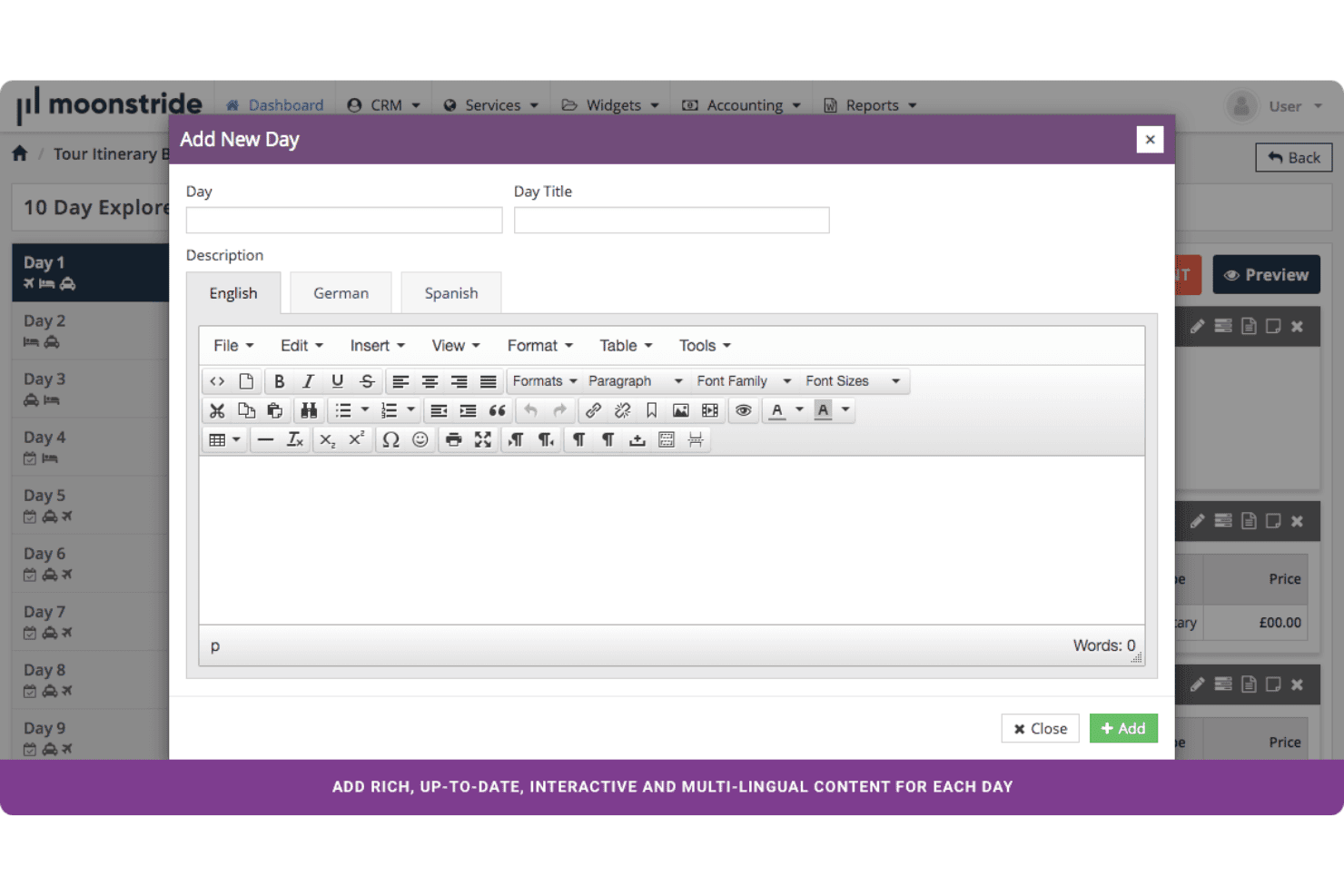
Build and manage detailed travel itineraries with services, activities, and booking details. This helps teams deliver organized customer experiences.
Task and Workflow Automation
Assign tasks, track activities, and automate internal workflows. Teams can improve coordination across sales and operations.
Analytics and Reporting Dashboards
Track sales performance, customer activity, and operational insights. Teams can use reporting tools to make informed business decisions.
Standout Features
Travel Document Automation
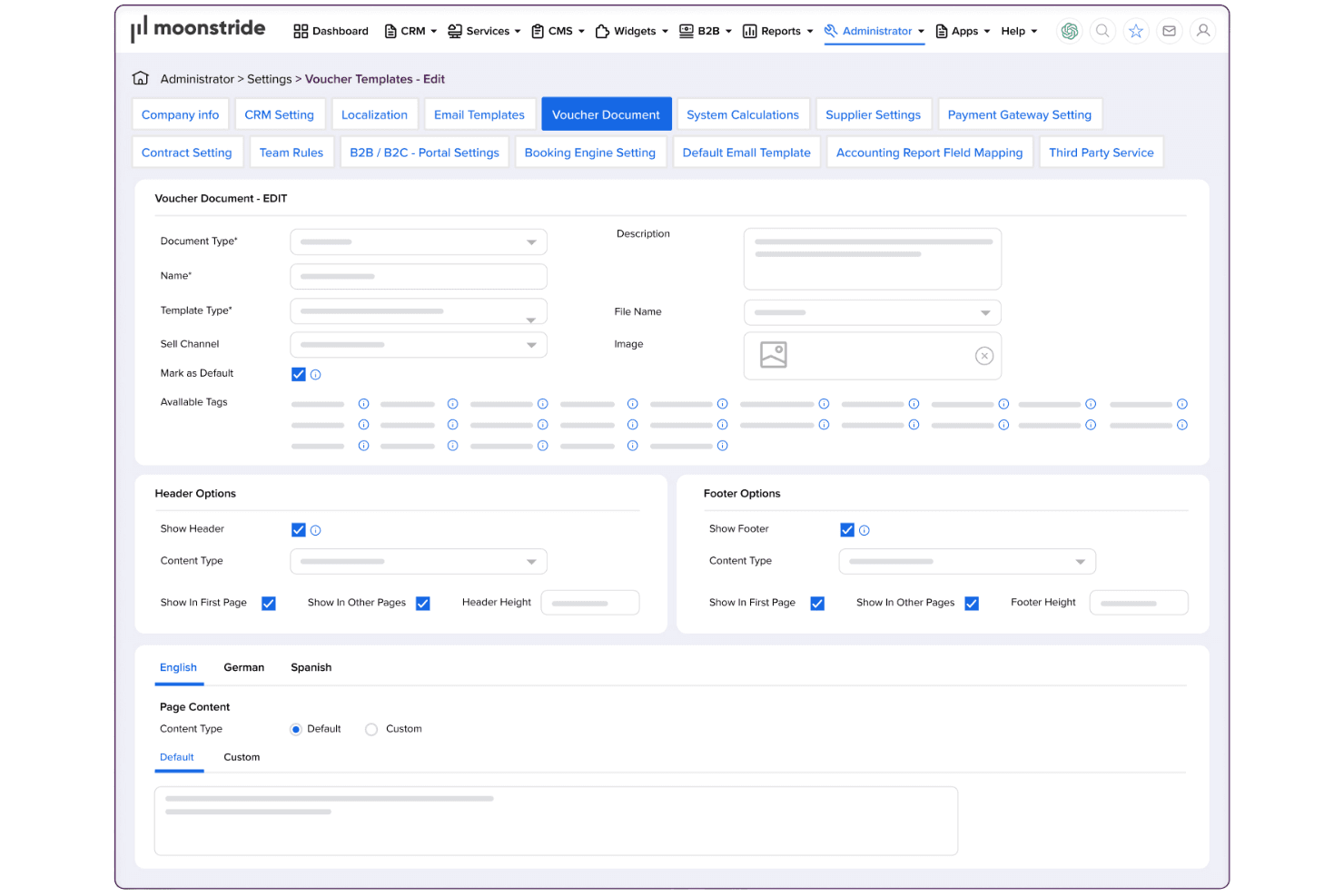
Create branded itineraries, quotes, vouchers, and travel documents using booking information. Teams can deliver consistent customer experiences while reducing manual document work.
Sales Pipeline and Lead Management
Track inquiries, manage opportunities, and move leads through the travel sales process. Teams can prioritize customers and convert more bookings efficiently.
Ease of Use
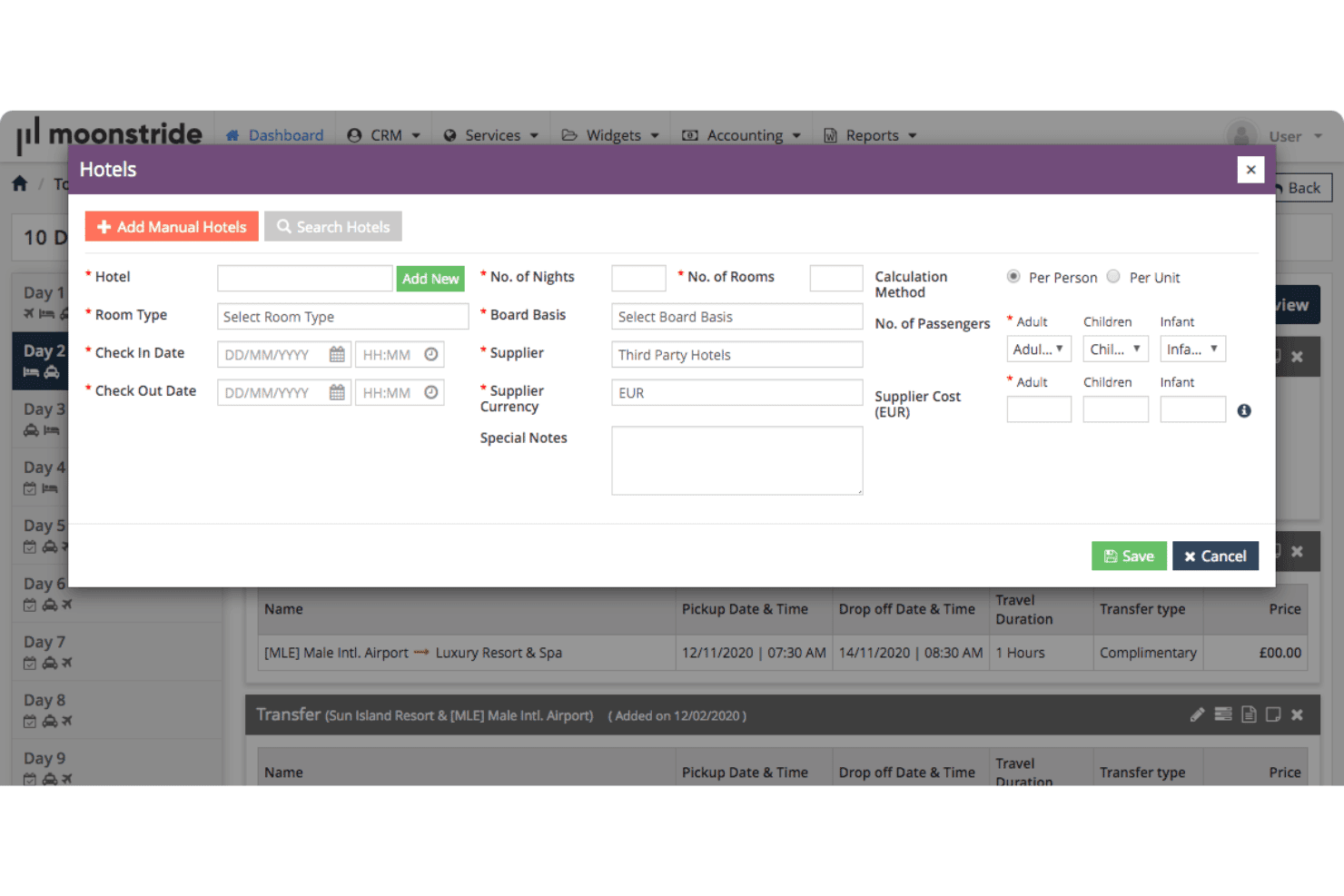
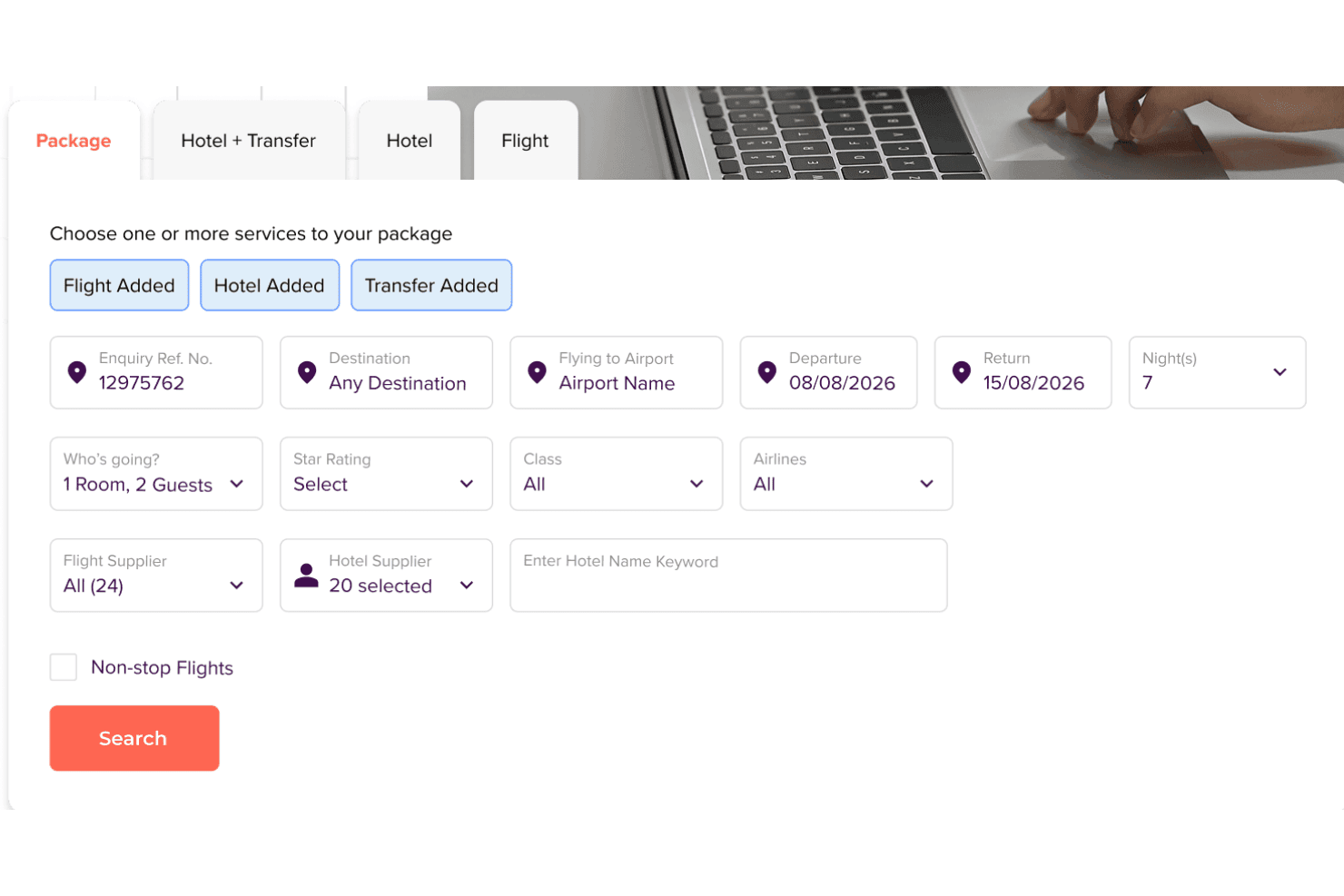
moonstride is designed with a structured interface that helps travel teams manage customers, quotes, bookings, and operations without switching between disconnected processes. Users can access customer details, track enquiries, build itineraries, and manage daily tasks through organized workflows. I find its layout especially useful for agencies and travel businesses that need to coordinate sales and operations while keeping customer information easy to find.
Onboarding
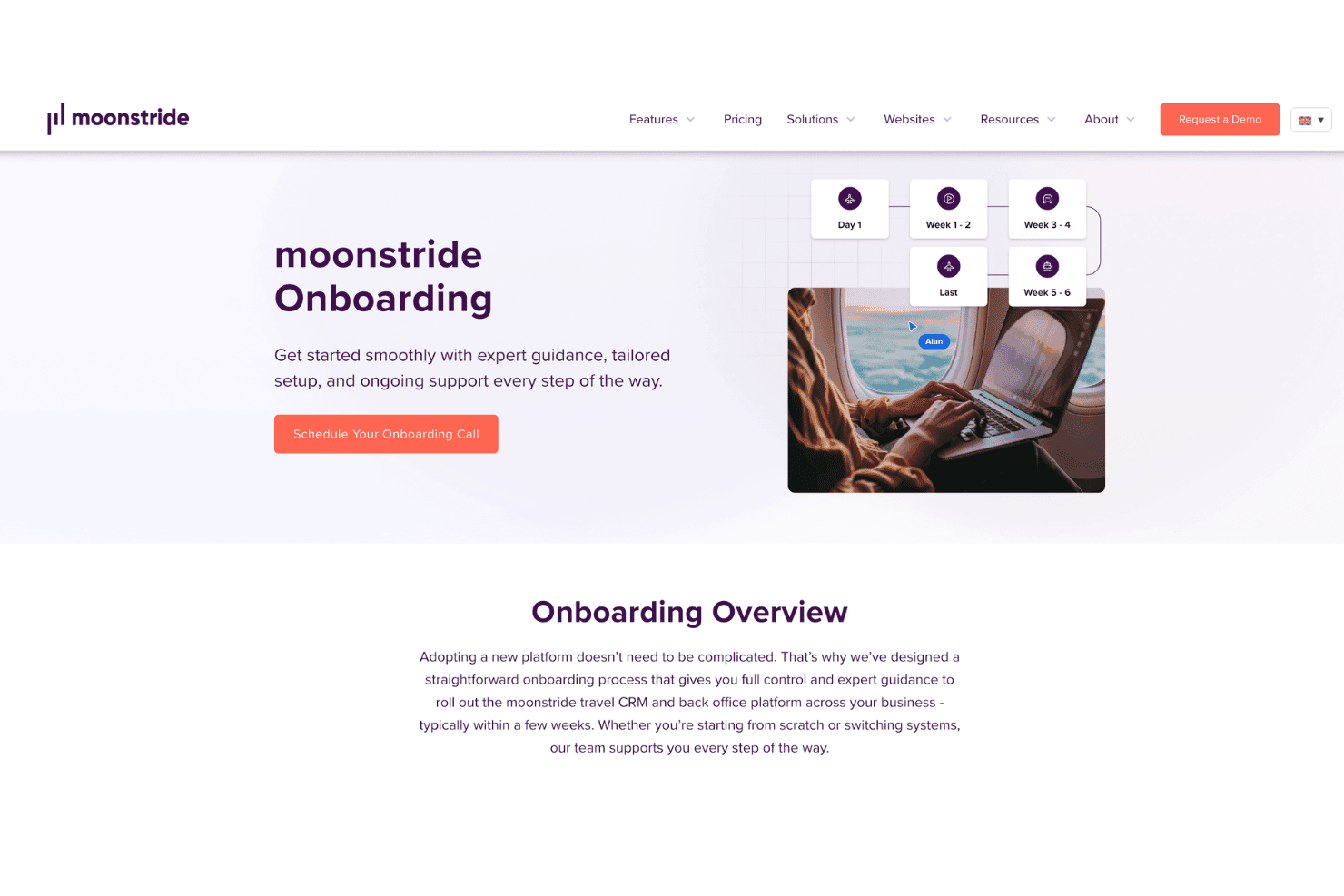
moonstride’s onboarding is guided and structured, with expert support from setup through launch. Teams work with an onboarding specialist to gather requirements, configure accounts, customize templates, receive training, and test customer and booking workflows. The standard onboarding process typically takes a few weeks and can include API integrations, system configuration, and ongoing support based on each hospitality or travel business’s needs.
Customer Support
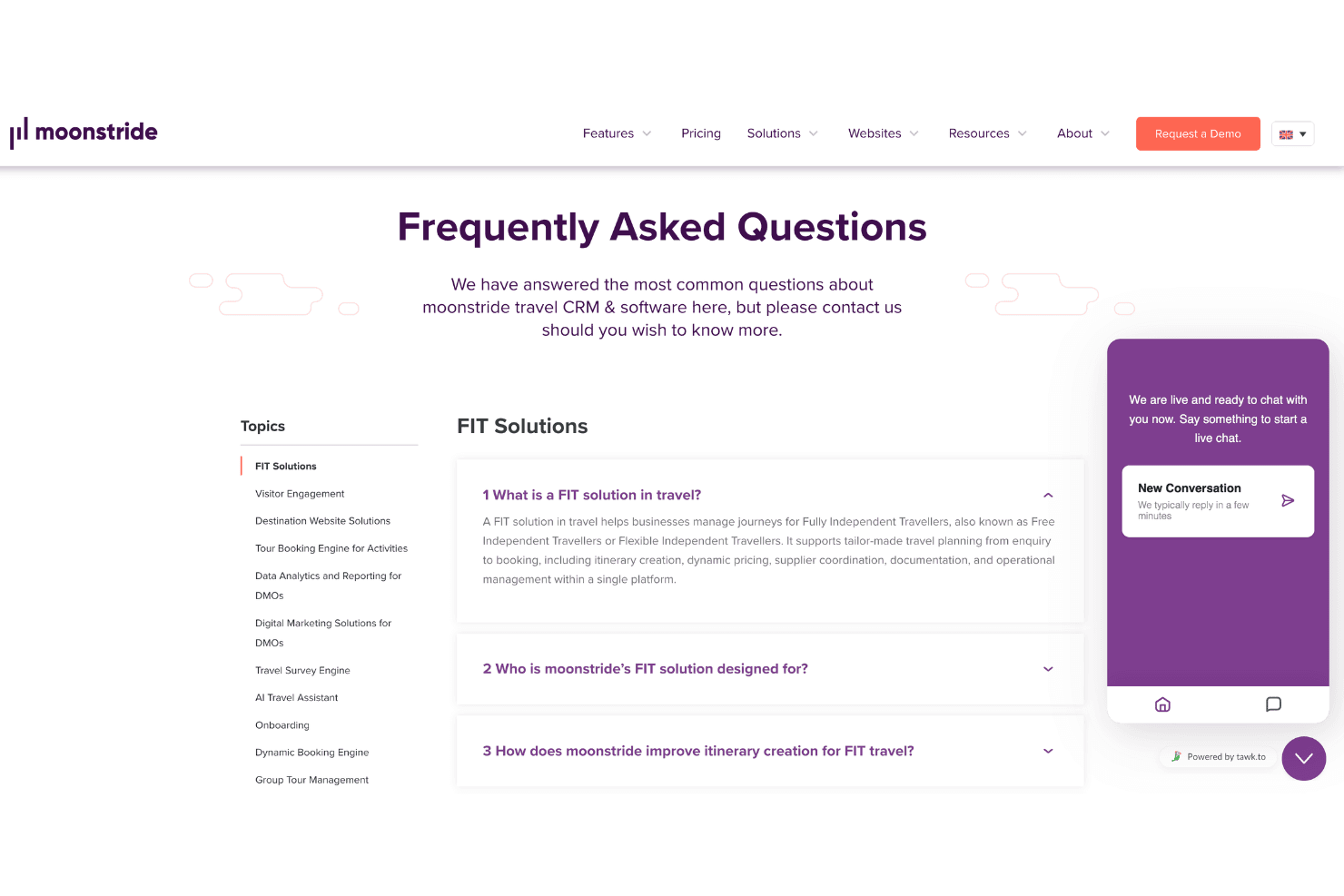
I’ve seen moonstride earn high marks for responsive, personal support across live chat, email, and scheduled calls. Users often mention quick turnaround on tickets and knowledgeable staff who actually solve problems, not just pass them on. The help center covers most topics clearly, but it’s the direct, human touch that really stands out. If you value getting fast, clear answers from real people, moonstride won’t leave you stranded.
Integrations
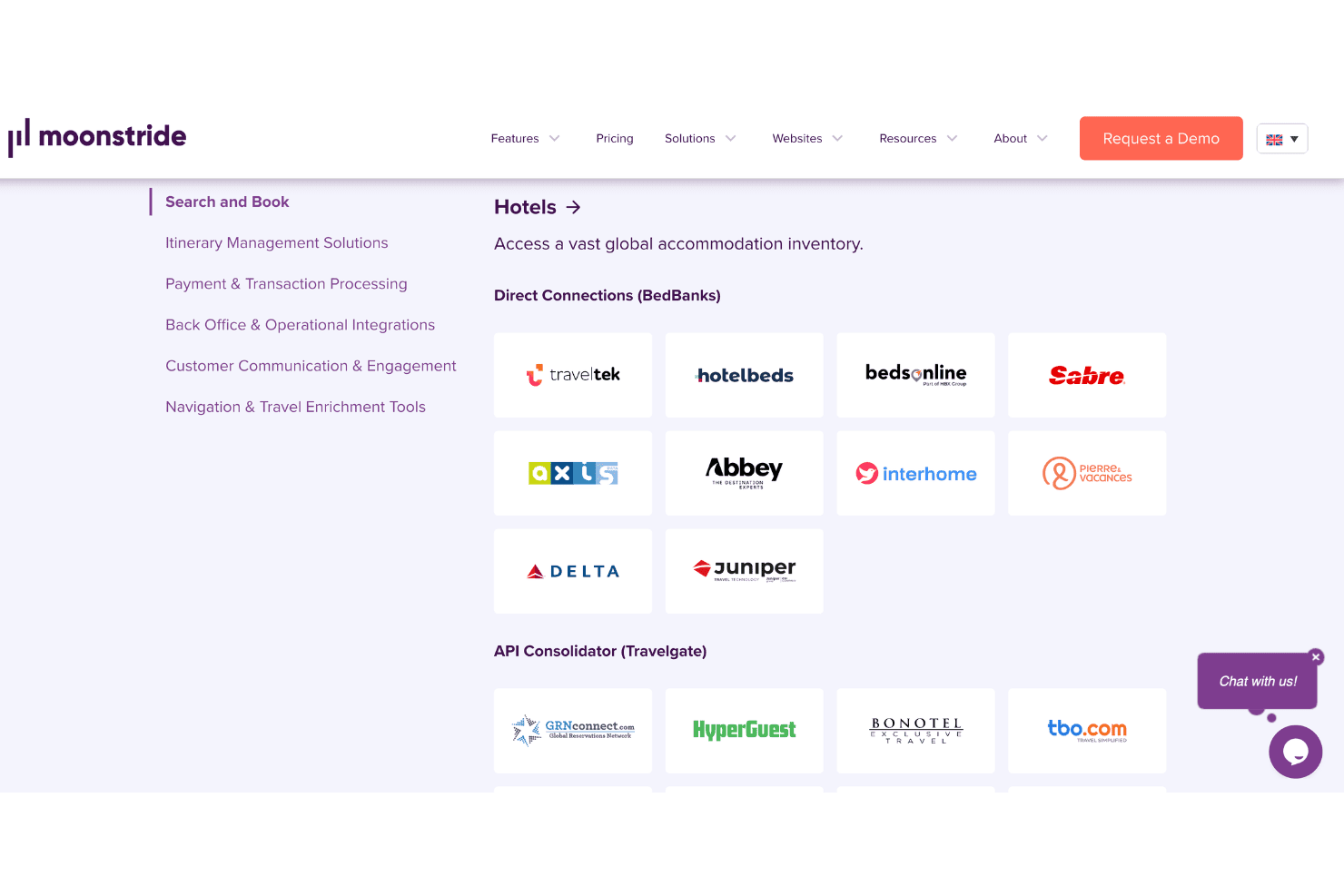
moonstride integrates with travel, payment, and service providers such as Twilio, Trust Payments, Authorize.Net, GDS connections, Travelgate, iVector, GIATA, Google Maps, Open Exchange Rates, and Bonotel, among others.
moonstride also offers API capabilities and supplier integrations to help travel businesses connect their existing systems and extend platform functionality.
Value for Money
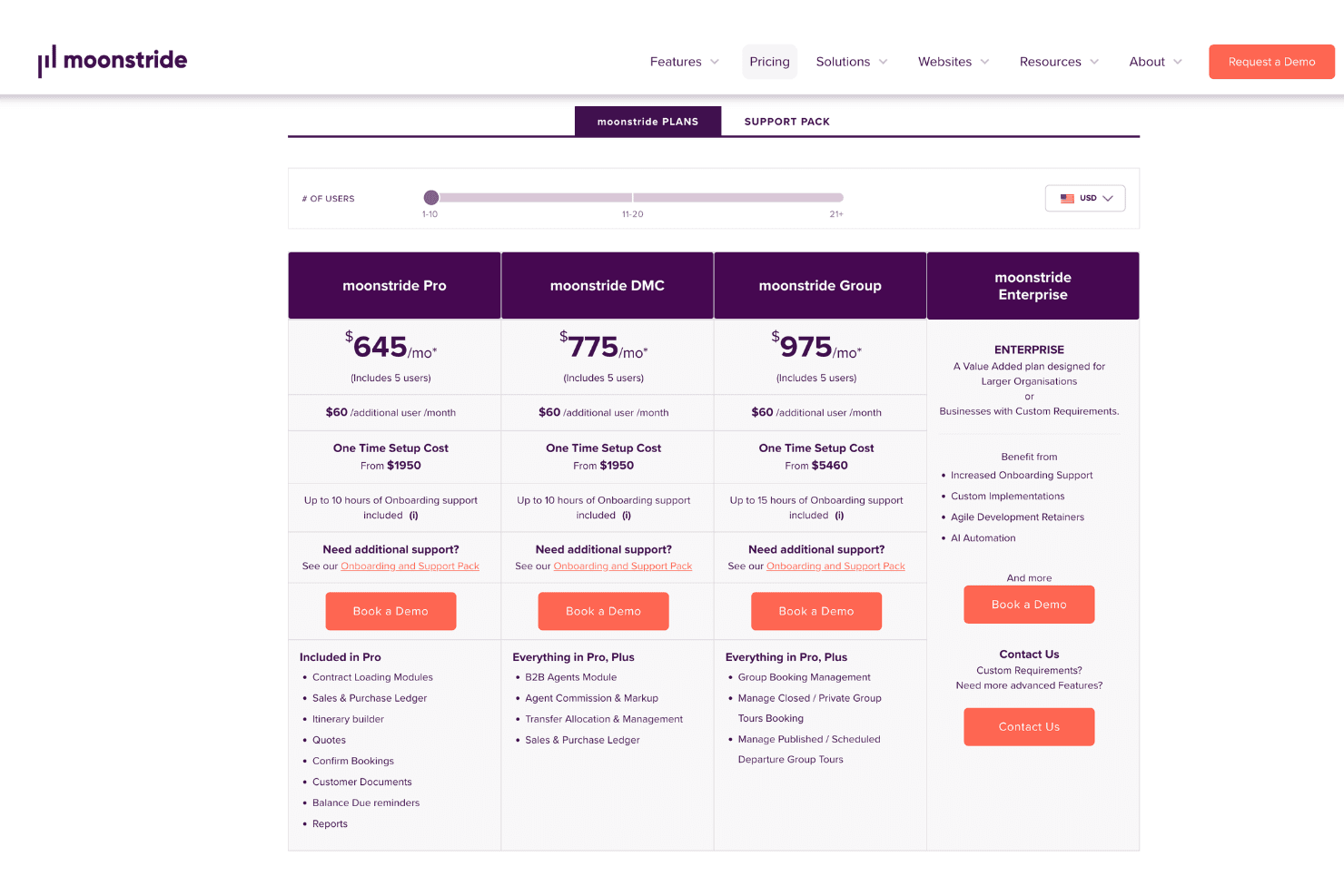
moonstride offers flexible pricing based on business size, users, and travel management needs. Its plans include CRM, booking management, itinerary tools, reporting, and automation features, with options to expand into DMC operations, group travel management, and enterprise requirements.
- moonstride Pro: Includes CRM, sales pipeline, enquiry management, quotation builder, bookings, customer documents, reports, itinerary tools, and core travel management features.
- moonstride DMC: Adds destination management features, including B2B agent tools, commissions, transfer allocation, and expanded supplier management.
- moonstride Group: Adds group travel features for managing private tours, scheduled departures, passenger allocation, and group bookings.
- moonstride Enterprise: Offers custom implementations, additional onboarding support, AI automation, agile development retainers, and advanced business requirements.
moonstride Specs
- API: Yes
- Budgeting: No
- Calendar Management: No
- Compliance Tracking: No
- Contact Management: Yes
- Customer Management: Yes
- Dashboard: Yes
- Data Export: Yes
- Data Import: Yes
- Data Visualization: Yes
- Document Management: Yes
- Expense Tracking: No
- External Integrations: No
- Forecasting: No
- Inventory Tracking: No
- Multi-Currency: Yes
- Multi-User: No
- Notifications: Yes
- Organization Management: Yes
- Payment Processor: Yes
- Payroll: No
- Scheduling: No
- Supplier Management: Yes
- Tax Management: No
- Workflow Management: Yes
moonstride FAQs
moonstride Company Overview & History
moonstride is a travel technology platform developed by ANMsoft Technologies Limited, headquartered in London, UK. The company provides CRM, booking management, itinerary creation, and automation solutions for travel agencies, tour operators, DMCs, and travel businesses. moonstride is known for helping travel companies manage enquiries, quotations, supplier relationships, customer communication, and end-to-end travel operations.
moonstride Major Milestones
- 2003: ANMsoft Technologies Limited was founded, later developing technology solutions for the travel industry.
- 2016: moonstride was launched as a travel CRM and booking management platform for travel businesses.
- 2020: moonstride expanded its travel management capabilities with enhanced CRM, automation, and operational tools.
- 2024: moonstride continued developing AI-powered features and automation capabilities for travel companies.