

10 Software per il Yield Management Alberghiero Selezionati per 2026

Shortlist di software per il yield management alberghiero


Il software per il yield management alberghiero ti aiuta a impostare le tariffe giuste al momento giusto per massimizzare i ricavi e l’occupazione. Se cerchi il miglior software per il yield management, probabilmente stai affrontando la pressione di aumentare i profitti, rispondere a una domanda fluttuante e mantenere la competitività della tua struttura—senza aggiungere complessità per il tuo team.
Questa lista ti aiuterà a confrontare le soluzioni principali, comprendere quali funzionalità sono più importanti per la tua attività e prendere una decisione consapevole sulla piattaforma più adatta alle esigenze del tuo hotel.
Perché fidarsi dei nostri consigli sui software
Il nostro team testa e recensisce software dal 2012. In quanto leader del settore alberghiero noi stessi, sappiamo quanto sia difficile — e importante — scegliere il software giusto.
Per questa guida, abbiamo valutato gli strumenti attraverso test pratici e ricerche indipendenti, assegnando un punteggio agli strumenti in base ai nostri criteri di selezione.
Le nostre recensioni riflettono il nostro giudizio editoriale umano, non un discorso di vendita.
Riepilogo dei migliori software per il yield management alberghiero
Questa tabella comparativa riassume i dettagli sui prezzi delle mie migliori scelte di software per il yield management alberghiero per aiutarti a trovare quella più adatta al tuo budget e alle necessità della tua attività.
| Tool | Best For | Trial Info | Price | ||
|---|---|---|---|---|---|
| 1 | Ideale per l'integrazione completa della proprietà | Demo gratuita disponibile | Prezzo su richiesta | Website | |
| 2 | Ideale per analisi previsionali avanzate | Demo gratuita disponibile | Prezzo su richiesta | Website | |
| 3 | Ideale per la facilità di aggiornamento quotidiano delle tariffe | Demo gratuita + prova gratuita di 14 giorni disponibile | A partire da $148.50/struttura/mese (fatturato annualmente) | Website | |
| 4 | Ideale per la gestione di gruppi multi-proprietà | Demo gratuita disponibile | Prezzo su richiesta | Website | |
| 5 | Ideale per personalizzazione a livello enterprise | Demo gratuita disponibile | Prezzi su richiesta | Website | |
| 6 | Ideale per piccole strutture indipendenti | Prova gratuita di 14 giorni + demo gratuita disponibile | Da €150/mese (fatturazione annuale) | Website | |
| 7 | Ideale per portafogli di affitti a breve termine | Demo gratuita + prova gratuita disponibile | Da $19.99/annuncio/mese | Website | |
| 8 | Ideale per l'automazione dei prezzi in tempo reale | Demo gratuita disponibile | Prezzo su richiesta | Website | |
| 9 | Il migliore per analisi di prezzo basate sulla domanda | Prova gratuita di 14 giorni + demo gratuita disponibile | Da $189/mese | Website | |
| 10 | Meglio per la scalabilità di catene e brand | Demo gratuita disponibile | Prezzo su richiesta | Website |
Recensioni sui software per il yield management alberghiero
Qui sotto trovi i miei riepiloghi dettagliati dei software per il yield management alberghiero che sono entrati nella mia shortlist. Le mie recensioni offrono una panoramica dettagliata su funzionalità, casi d’uso consigliati e integrazioni di ogni piattaforma per aiutarti a trovare quella migliore per te.

Ideale per l'integrazione completa della proprietà

Cloudbeds è pensato per gli albergatori che desiderano una gestione dei ricavi strettamente integrata con i loro sistemi di gestione della proprietà e di distribuzione. Questa piattaforma è ideale per le strutture che cercano una soluzione unificata, in grado di collegare gestione delle entrate, prenotazioni e attività operative in un unico posto. Se hai bisogno di una condivisione dati in tempo reale in tutto il tuo sistema tecnologico per supportare decisioni più intelligenti su prezzi e disponibilità, Cloudbeds racchiude tutte queste funzionalità in un'unica soluzione.
Perché ho scelto Cloudbeds
Ciò che mi ha colpito di Cloudbeds è il modo in cui unisce gestione dei ricavi, gestione della proprietà e gestione dei canali su un'unica piattaforma. Questa integrazione 'tutto in uno' significa che tariffe, disponibilità e prenotazioni vengono aggiornate in tempo reale su ogni canale, riducendo così il rischio di overbooking o di perdere opportunità di guadagno.
Mi piace che Cloudbeds permetta di gestire strategie tariffarie e disponibilità dallo stesso pannello che utilizzi per le operazioni quotidiane. Per gli hotel che vogliono semplificare l'ecosistema tecnologico e mantenere tutto connesso, questo approccio unificato è la soluzione ideale.
Caratteristiche principali di Cloudbeds
Oltre all'approccio unificato, ho trovato anche queste funzionalità degne di nota:
- Raccomandazioni tariffarie automatizzate: il sistema suggerisce i prezzi ottimali in base alla domanda e ai dati di mercato.
- Monitoraggio delle tariffe dei concorrenti: monitora i prezzi dei concorrenti per aiutarti a definire le tue strategie tariffarie.
- Strumenti di reportistica personalizzabili: genera report dettagliati su ricavi, occupazione e indicatori di performance.
- App di gestione mobile: accesso e gestione delle funzionalità principali dal tuo dispositivo mobile.
Integrazioni di Cloudbeds
Le integrazioni comprendono Airbnb, Booking.com, Expedia, Stripe, QuickBooks, PayPal, Square, Google Analytics, TripAdvisor e Agoda. Cloudbeds offre anche un'interfaccia bidirezionale per integrazioni personalizzate.
Pros and Cons
Pros:
- La piattaforma integrata concentra le funzioni PMS, channel manager e RMS
- Le raccomandazioni tariffarie automatizzate adattano i prezzi sulla base della domanda in tempo reale
- L'app mobile consente l'accesso remoto alle funzionalità di revenue management
Cons:
- Gli aggiornamenti di sistema possono occasionalmente interrompere le operazioni o i flussi di lavoro quotidiani
- Le funzionalità avanzate possono richiedere formazione o onboarding aggiuntivi
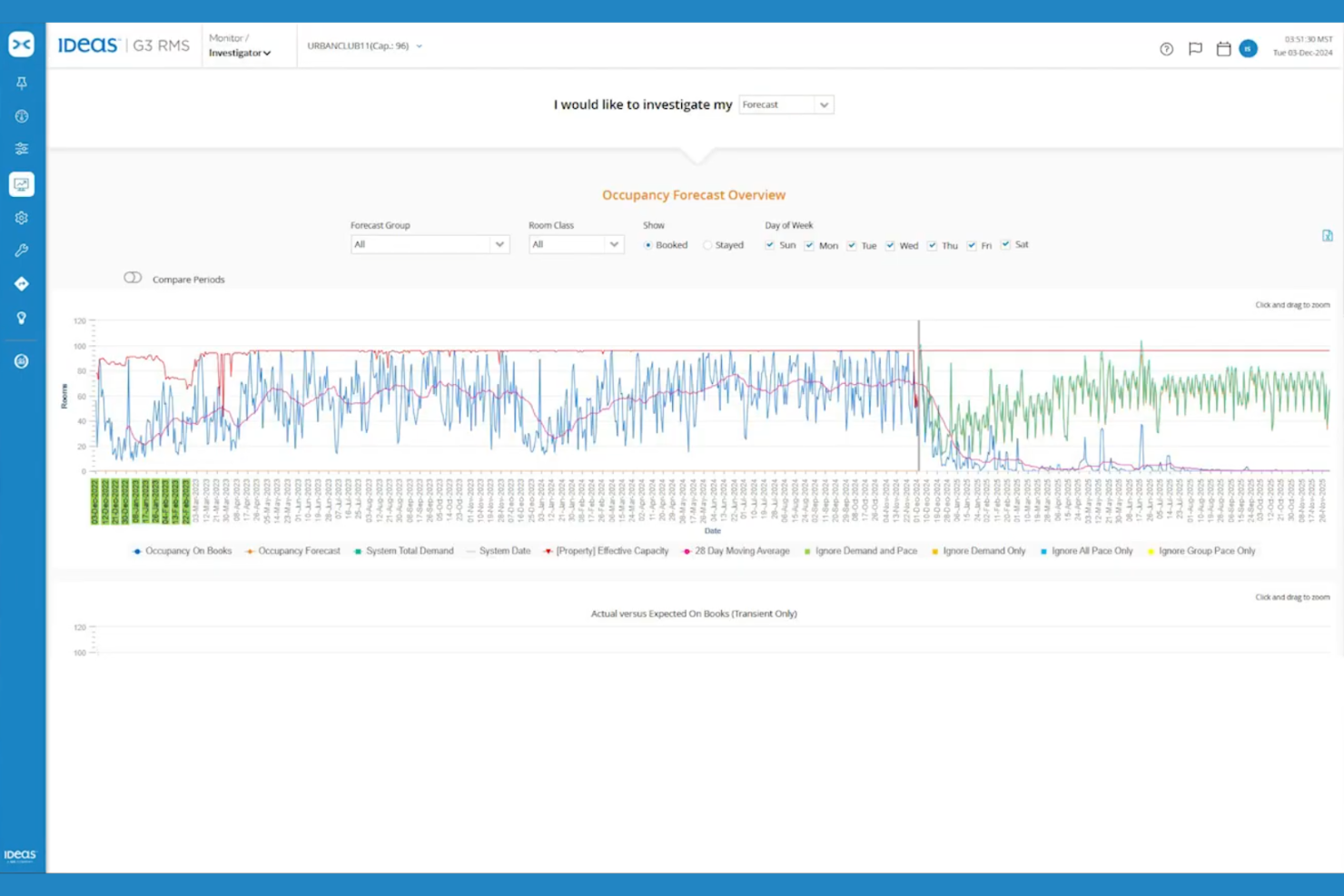
IDeaS è progettato per hotel e resort che desiderano adottare un approccio basato sui dati per la gestione dei ricavi. Le sue avanzate analisi previsionali aiutano i revenue manager e i team commerciali a prendere decisioni precise su prezzi e inventario. La piattaforma è particolarmente utile per le strutture che devono analizzare modelli di domanda complessi e ottimizzare le tariffe con sicurezza.
Perché ho scelto IDeaS
Ciò che mi ha attirato verso IDeaS è la sua attenzione alle analisi previsionali avanzate, una priorità assoluta per gli hotel che vogliono massimizzare i ricavi in mercati imprevedibili. La piattaforma utilizza algoritmi sofisticati e apprendimento automatico per analizzare dati storici, andamento delle prenotazioni e tendenze di mercato, offrendo previsioni di domanda estremamente accurate.
Apprezzo il modo in cui IDeaS supporta la modellazione di scenari, consentendo di testare diverse strategie di prezzo e di gestione dell'inventario prima di prendere decisioni. Queste funzionalità la rendono una scelta solida per le strutture che devono perfezionare la gestione del rendimento con la sicurezza dei dati.
Funzionalità principali di IDeaS
Altre funzionalità di IDeaS che potrebbero interessare ai team di revenue hotel includono:
- Raccomandazioni di prezzo automatizzate: Il sistema genera suggerimenti giornalieri sulle tariffe sulla base di dati in tempo reale.
- Strumenti di valutazione gruppi: Analizza e valuta i gruppi di prenotazioni con analisi dedicate a sostituzione e redditività.
- Dashboard di gestione multi-struttura: Supervisiona performance e strategie di diverse strutture da un'unica interfaccia.
- Suite di report personalizzabili: Crea e pianifica report dettagliati su misura per le metriche e i KPI specifici della tua struttura.
Integrazioni di IDeaS
Le integrazioni includono Oracle Hospitality, Infor HMS, Maestro PMS, Agilysys, Mews, RMS Cloud, Opera PMS, StayNTouch, Amadeus e Protel.
Pros and Cons
Pros:
- I modelli previsionali utilizzano il machine learning per previsioni estremamente accurate
- Gli strumenti di valutazione gruppi aiutano ad analizzare sostituzione e redditività
- Le raccomandazioni sui prezzi automatizzate si aggiornano ogni giorno sulla base di dati in tempo reale
Cons:
- Opzioni di personalizzazione limitate
- Il processo di implementazione può essere complesso per portfolio di hotel di grandi dimensioni

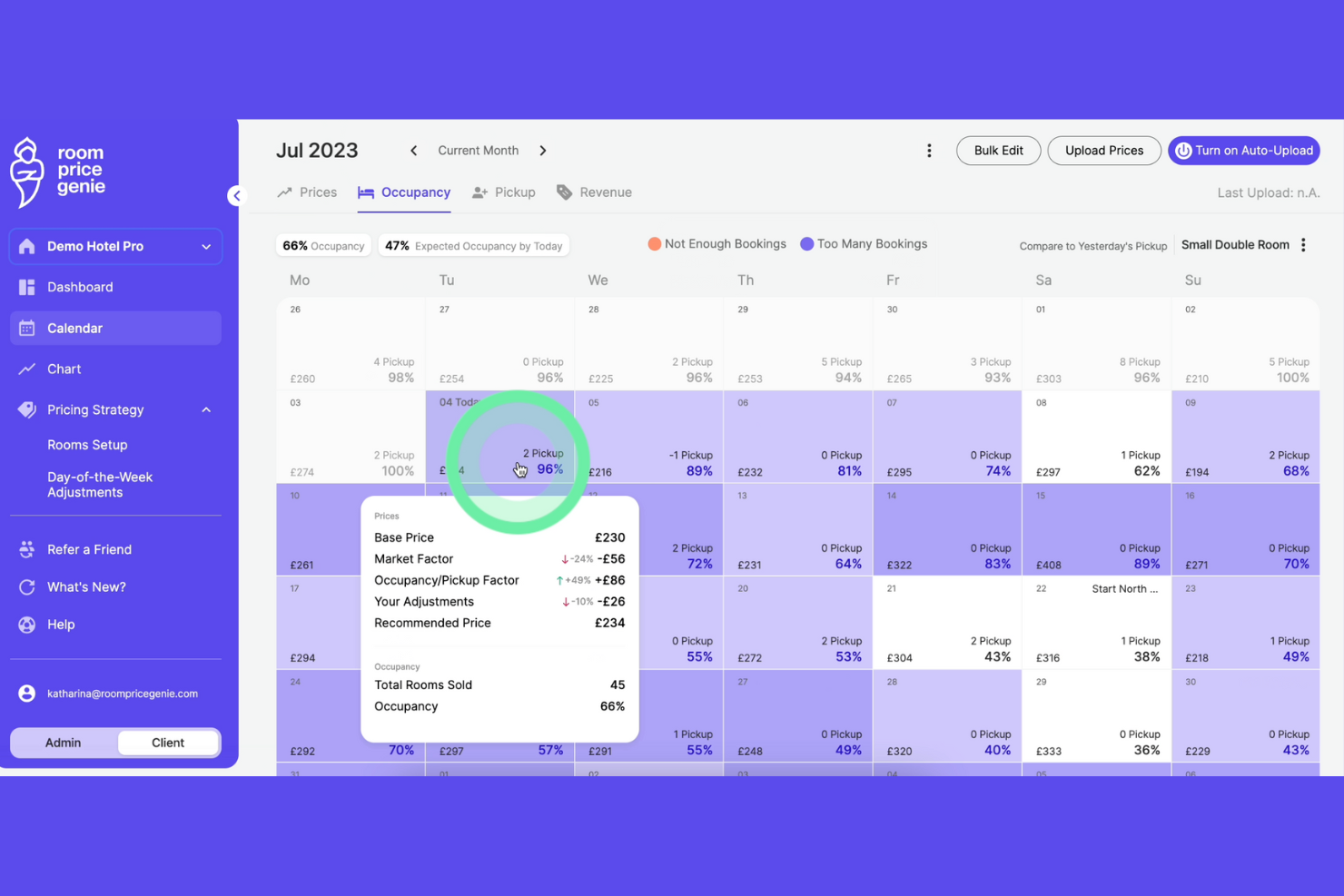
RoomPriceGenie è pensato per albergatori che desiderano un modo semplice per aggiornare quotidianamente le tariffe delle camere senza dover impostare procedure complesse. La piattaforma si rivolge a hotel indipendenti e piccole strutture in cerca di una gestione automatica dei prezzi facile da amministrare. È particolarmente utile se hai bisogno di raccomandazioni affidabili sulle tariffe e vuoi restare competitivo senza perdere ore ad apportare modifiche manuali.
Perché ho scelto RoomPriceGenie
Ciò che mi ha colpito di RoomPriceGenie è il modo in cui semplifica l’aggiornamento quotidiano delle tariffe per gli hotel che vogliono restare agili in mercati in continuo cambiamento. Lo strumento genera automaticamente suggerimenti di prezzo giornalieri basati sulla domanda in tempo reale, eventi locali e tariffe della concorrenza, consentendo di reagire rapidamente senza dover effettuare ricerche manuali.
Mi piace che sia possibile revisionare e approvare le tariffe suggerite con pochi clic, il che lo rende pratico per i team alberghieri impegnati. Questa attenzione sull’adeguamento veloce e basato sui dati rende RoomPriceGenie ideale per hotel che devono mantenere tariffe sempre aggiornate con il minimo sforzo.
Funzionalità principali di RoomPriceGenie
Altre caratteristiche che rendono RoomPriceGenie interessante includono:
- Gestione multi-struttura: Gestisci i prezzi di più strutture da un’unica dashboard.
- Regole di pricing personalizzabili: Imposta parametri personalizzati per controllare la modalità di modifica delle tariffe.
- Pubblicazione automatica delle tariffe: Invia direttamente le tariffe aggiornate al tuo PMS o channel manager.
- Report sulle performance: Accedi a report che monitorano l’occupazione, i ricavi e l’andamento delle tariffe.
Integrazioni RoomPriceGenie
Le integrazioni includono Protel, Mews, SiteMinder, RMS, Oracle Hospitality, Cloudbeds, Guestline, NewBook, StayNTouch e altri.
Pros and Cons
Pros:
- Raccomandazioni tariffarie giornaliere automatizzate per una rapida ottimizzazione dei prezzi
- Interfaccia intuitiva per i team revenue di hotel di piccole dimensioni
- Pubblicazione diretta delle tariffe su pms e sistemi di channel management
Cons:
- Previsioni avanzate limitate rispetto agli strumenti rms enterprise
- Opzioni di personalizzazione limitate per strategie di tariffazione complesse

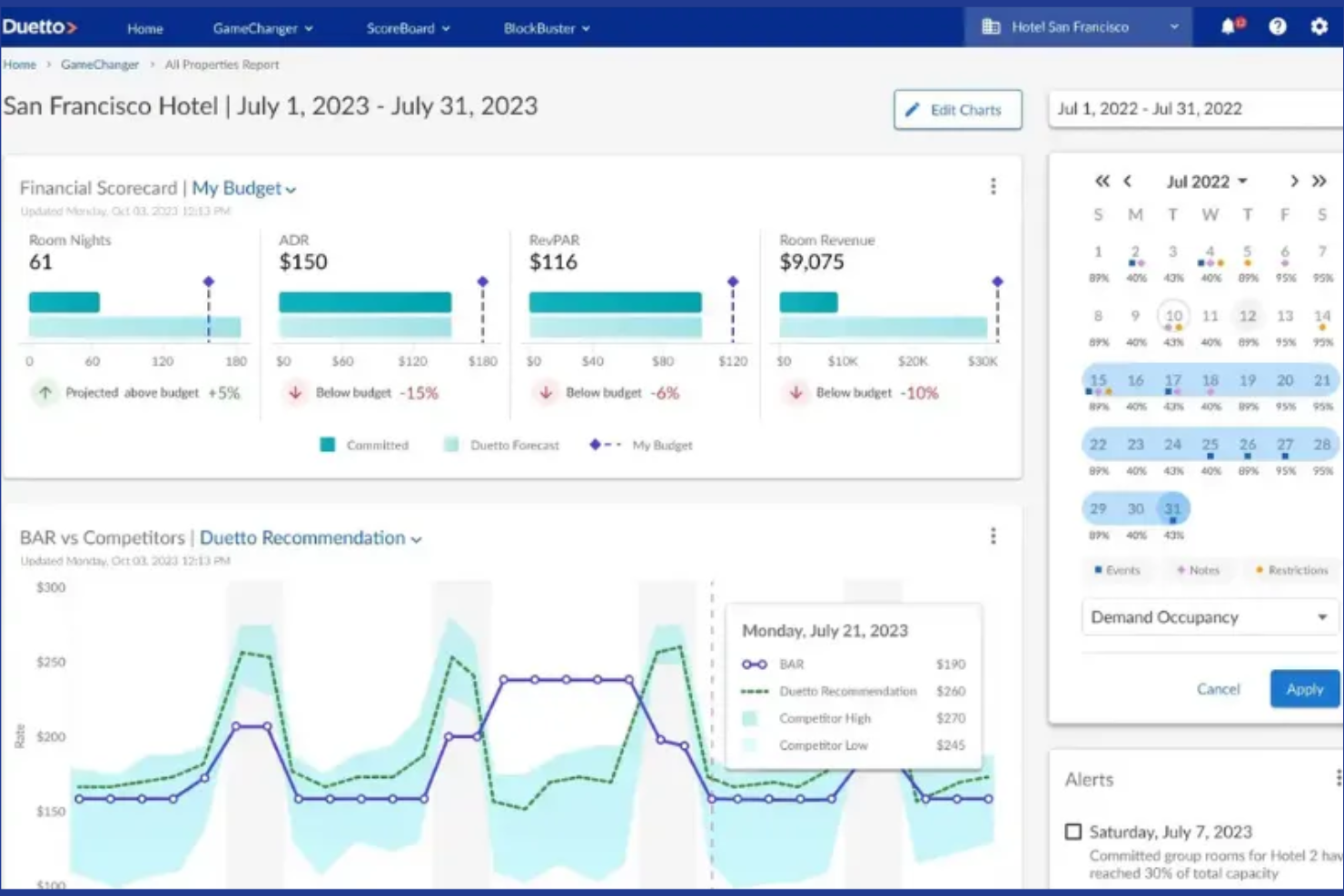
Duetto è progettato per gruppi alberghieri e operatori multi-proprietà che necessitano di coordinare le strategie di revenue su più sedi. La piattaforma è specializzata nella gestione dei ricavi a livello di gruppo, aiutando i team commerciali a ottimizzare prezzi e distribuzione per portafogli complessi. È particolarmente utile per le organizzazioni che desiderano centralizzare il controllo mantenendo comunque flessibilità a livello di singola struttura.
Perché ho scelto Duetto
Quando si tratta di gestire i ricavi su più strutture, Duetto si distingue per i suoi strumenti di ottimizzazione delle entrate a livello di gruppo. La piattaforma consente di impostare strategie sia a livello di portafoglio che di singola proprietà, così da bilanciare il controllo centralizzato con la flessibilità locale.
Apprezzo il modo in cui le funzionalità di forecasting e reporting di Duetto sono progettate per aggregare e confrontare le performance di tutto il gruppo, rendendo più facile individuare trend e opportunità. Questo approccio è particolarmente prezioso per i gruppi alberghieri che devono coordinare le decisioni di prezzo e distribuzione su diverse sedi.
Funzionalità principali di Duetto
Altre funzionalità di Duetto che possono interessare ai gruppi alberghieri includono:
- Motore di Open Pricing: Regola le tariffe in modo indipendente per ciascun segmento, canale e tipologia di camera senza barriere di prezzo fisse.
- Ottimizzazione delle prenotazioni di gruppo: Analizza e prezza i gruppi con strumenti dedicati per valutare la sostituzione e la redditività.
- Previsioni di domanda automatizzate: Utilizza l'apprendimento automatico per prevedere i modelli di domanda e ottimizzare le decisioni di pricing.
- Integrazioni dati in tempo reale: Collega PMS, CRS e channel manager per dati sempre aggiornati su inventario e tariffe.
Integrazioni Duetto
Le integrazioni includono Oracle Hospitality OPERA, Infor HMS, Protel, Maestro PMS, Agilysys, StayNTouch, RoomKeyPMS e Cloudbeds.
Pros and Cons
Pros:
- Il motore di open pricing consente regolazioni flessibili delle tariffe per segmento
- Gli strumenti per prenotazioni di gruppo aiutano a valutare sostituzione e redditività
- Le previsioni di domanda automatizzate utilizzano l'apprendimento automatico per il pricing
Cons:
- Il processo di implementazione può essere lungo per i grandi gruppi alberghieri
- Alcuni utenti segnalano ritardi nei tempi di risposta dell'assistenza clienti

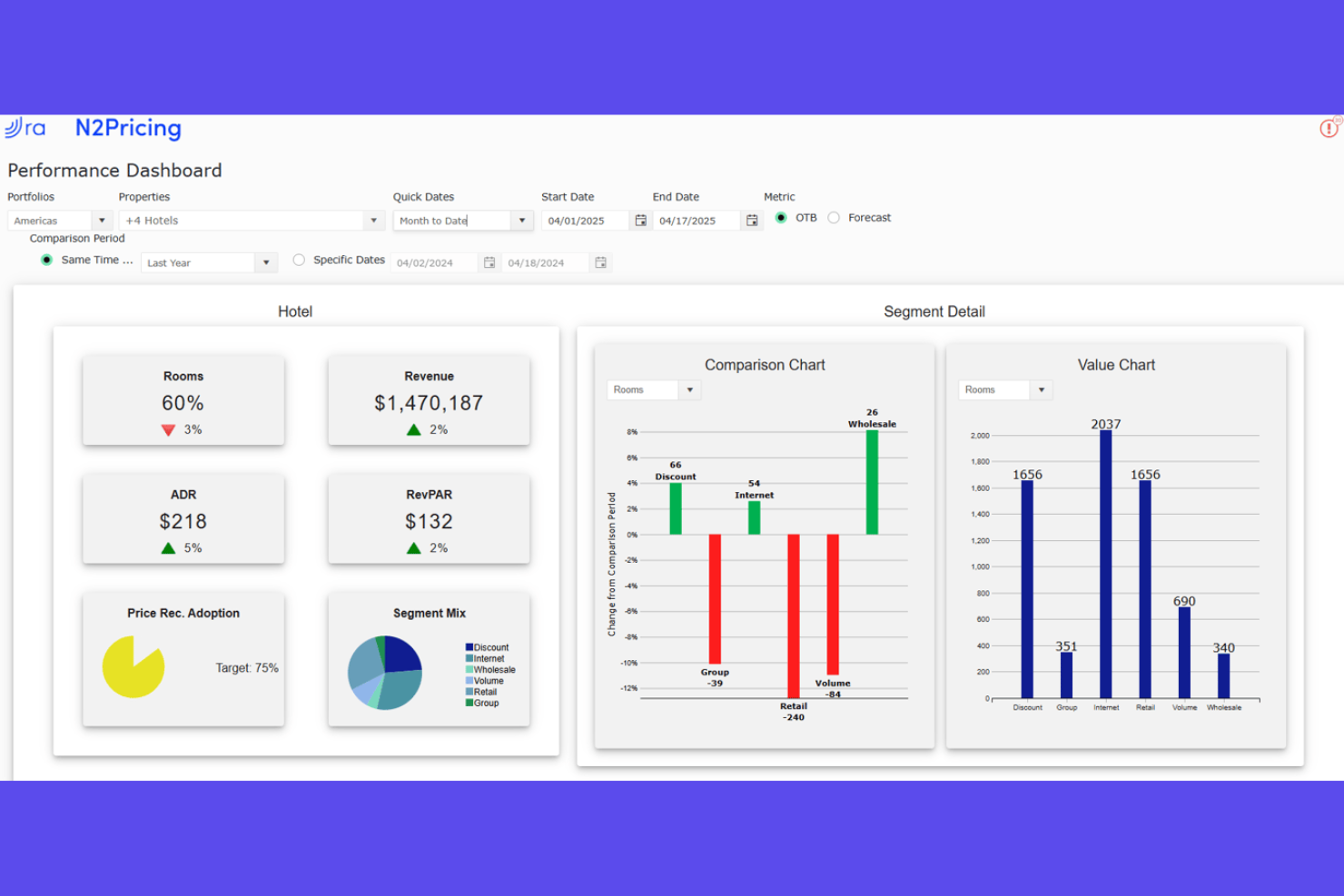
Revenue Analytics offre un approccio su misura per gruppi alberghieri e aziende che necessitano di soluzioni di yield management altamente personalizzate. La piattaforma è pensata per organizzazioni con strutture tariffarie complesse, più marchi o regole aziendali uniche. Se il vostro team ha bisogno di analisi avanzate e di una configurazione flessibile per adattarsi a strategie di ricavo specifiche, Revenue Analytics è progettata per soddisfare queste esigenze.
Perché ho scelto Revenue Analytics
Ciò che distingue Revenue Analytics è la sua capacità di offrire un livello di personalizzazione adatto alle esigenze delle grandi aziende per la gestione dei ricavi alberghieri. La piattaforma supporta modelli tariffari altamente personalizzabili, permettendovi di configurare regole e strategie in linea con le esigenze specifiche del vostro business.
Apprezzo il fatto che offra strumenti avanzati di analisi e reportistica, così da poter approfondire i dati sulle performance e prendere decisioni informate. Se il vostro gruppo alberghiero necessita di una soluzione che si adatti a strutture complesse e strategie in evoluzione, Revenue Analytics è realizzata per offrire questo livello di flessibilità.
Caratteristiche chiave di Revenue Analytics
Altre caratteristiche che rendono attraente Revenue Analytics includono:
- Previsione automatizzata della domanda: il sistema utilizza dati storici e in tempo reale per prevedere i modelli futuri della domanda.
- Motore di prezzo dinamico: adatta automaticamente le tariffe in base alle variazioni del mercato e alle tendenze di occupazione.
- Ottimizzazione multi-segmento: supporta strategie di prezzo per diversi segmenti di clientela e canali di vendita.
- Dashboard personalizzabili: vi consentono di adattare visualizzazioni dei dati e reportistica alle esigenze del vostro team.
Integrazioni Revenue Analytics
Le integrazioni includono Microsoft, NLogic, Salesforce, Sqills, iHotelier, Infor HMS, Oracle Opera Cloud, Cloudbeds, SAP e altri ancora.
Pros and Cons
Pros:
- Modelli di prezzo altamente personalizzabili per strategie di ricavo alberghiere complesse
- Analisi avanzate che coprono ADR, RevPAR e performance per segmento
- Ottimizzazione multi-segmento su diversi canali di distribuzione
Cons:
- Pochi dati pubblici disponibili sulle recensioni dei clienti
- L'implementazione spesso richiede risorse di livello enterprise


happyhotel è pensato per i piccoli hotel indipendenti che desiderano semplificare la propria strategia di pricing senza la necessità di avere una profonda esperienza nella gestione dei ricavi. La piattaforma si concentra nel rendere accessibile il yield management, aiutando le strutture ad automatizzare gli aggiustamenti tariffari e a rispondere rapidamente ai cambiamenti della domanda locale.
Perché ho scelto happyhotel
Per le strutture indipendenti di piccole dimensioni, ho scelto happyhotel perché offre strumenti di yield management che non richiedono la presenza di un revenue manager dedicato. La piattaforma fornisce raccomandazioni tariffarie automatiche basate sulla domanda di mercato, sui tassi di occupazione e sui prezzi della concorrenza, aiutando i piccoli hotel a rimanere competitivi senza l’analisi manuale.
Mi piace anche il fatto che happyhotel includa una dashboard chiara per monitorare le performance, prevedere la domanda e supportare strategie di revenue management basate sui dati. Questo rende più facile per i proprietari e i gestori ottimizzare i ricavi delle camere e prendere decisioni informate. Queste funzionalità sono particolarmente utili per le strutture che dispongono di uno staff limitato o di risorse dedicate alla gestione dei ricavi alberghieri.
Funzionalità principali di happyhotel
Altre funzionalità di happyhotel che possono essere interessanti per i gestori di piccoli hotel includono:
- Gestione multi-struttura: Gestisci più strutture da un'unica dashboard, rendendo più semplice supervisionare diverse località contemporaneamente.
- Report personalizzabili: Genera report su misura su ricavi, occupazione e metriche di performance per supportare decisioni basate sui dati.
- Accesso tramite app mobile: Usa l'app mobile per monitorare e modificare le tariffe o visualizzare le analisi anche in mobilità.
- Integrazione con PMS e channel manager: Collega happyhotel al tuo sistema di gestione della proprietà e ai channel manager per una sincronizzazione dei dati in tempo reale.
Integrazioni di happyhotel
Le integrazioni includono 3RPMS, ASA Hotels, Aida, Apaleo, Casablanca, Clock PMS, Front Office Cloud, Guestline, SiteMinder, Vioma, Lighthouse, Fairmas e altre ancora.
Pros and Cons
Pros:
- Le raccomandazioni tariffarie automatiche si adattano alla domanda locale e agli eventi
- La gestione multi-struttura supporta piccoli gruppi alberghieri e portafogli
- L'accesso tramite app mobile permette di monitorare i prezzi ovunque
Cons:
- Gli strumenti avanzati di previsione sono limitati rispetto alle piattaforme enterprise
- Le integrazioni native con PMS e channel manager non sono elencate chiaramente

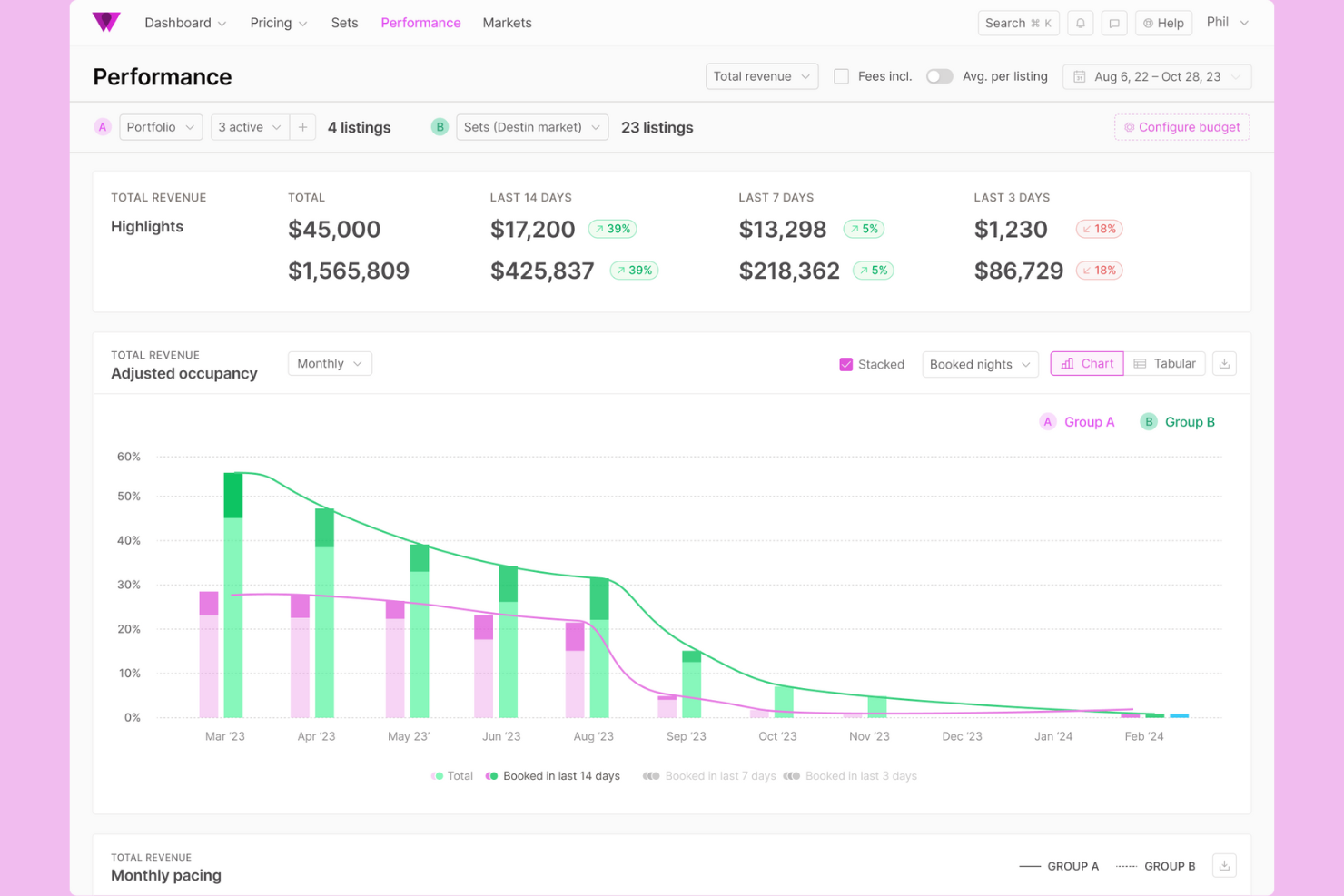
Wheelhouse è progettato per operatori di affitti a breve termine e property manager che necessitano di una tariffazione dinamica su più annunci. La piattaforma è specializzata nell’aiutare i gestori di portafogli a regolare i prezzi in base ai dati di mercato in tempo reale e alle tendenze delle prenotazioni.
È particolarmente utile per chi gestisce proprietà diverse e desidera un controllo dettagliato sulle strategie di prezzo per massimizzare l’occupazione e il fatturato.
Perché ho scelto Wheelhouse
Ciò che distingue Wheelhouse è il modo in cui è pensato per i portafogli di affitti a breve termine che richiedono una tariffazione flessibile e guidata dai dati. La piattaforma permette di impostare regole di prezzo personalizzate per ogni proprietà, così da adattarsi a diversi mercati e segmenti di ospiti.
Apprezzo che Wheelhouse analizzi la domanda locale, le tariffe dei concorrenti e i modelli di prenotazione per aiutarti a ottimizzare i prezzi su tutto il tuo portafoglio. Questo la rende una scelta solida per gli operatori che vogliono massimizzare ricavi e occupazione nel settore degli affitti a breve termine in rapida evoluzione.
Funzionalità principali di Wheelhouse
Altre caratteristiche che rendono Wheelhouse interessante includono:
- Analisi delle prestazioni del portafoglio: monitora e confronta le metriche di performance di tutti i tuoi annunci su un'unica dashboard.
- Regolazioni stagionali: modifica automaticamente i prezzi in base ai modelli di domanda stagionale e agli eventi locali.
- Obiettivi di fatturato: imposta obiettivi di ricavo specifici e monitora i progressi per ciascuna proprietà.
- Azioni massive: applica cambi di prezzo o regole a più annunci simultaneamente per risparmiare tempo.
Integrazioni di Wheelhouse
Le integrazioni includono Guesty for Hosts, Airbnb, Escapia, Hostaway, Hospitable, OwnerRez, Smiley, Smuboo, Tripadvisor, AvantStay, Best Beach Getaways, Tempo e altri.
Pros and Cons
Pros:
- Prezzi dinamici creati per la gestione dei ricavi negli affitti a breve termine
- Analisi del portafoglio su più annunci e mercati
- Regolazioni di prezzo per stagionalità ed eventi per variazioni nella domanda di mercato
Cons:
- Non progettato per la gestione dell’inventario di hotel tradizionali
- La profondità dei report è limitata rispetto ai sistemi RMS per hotel
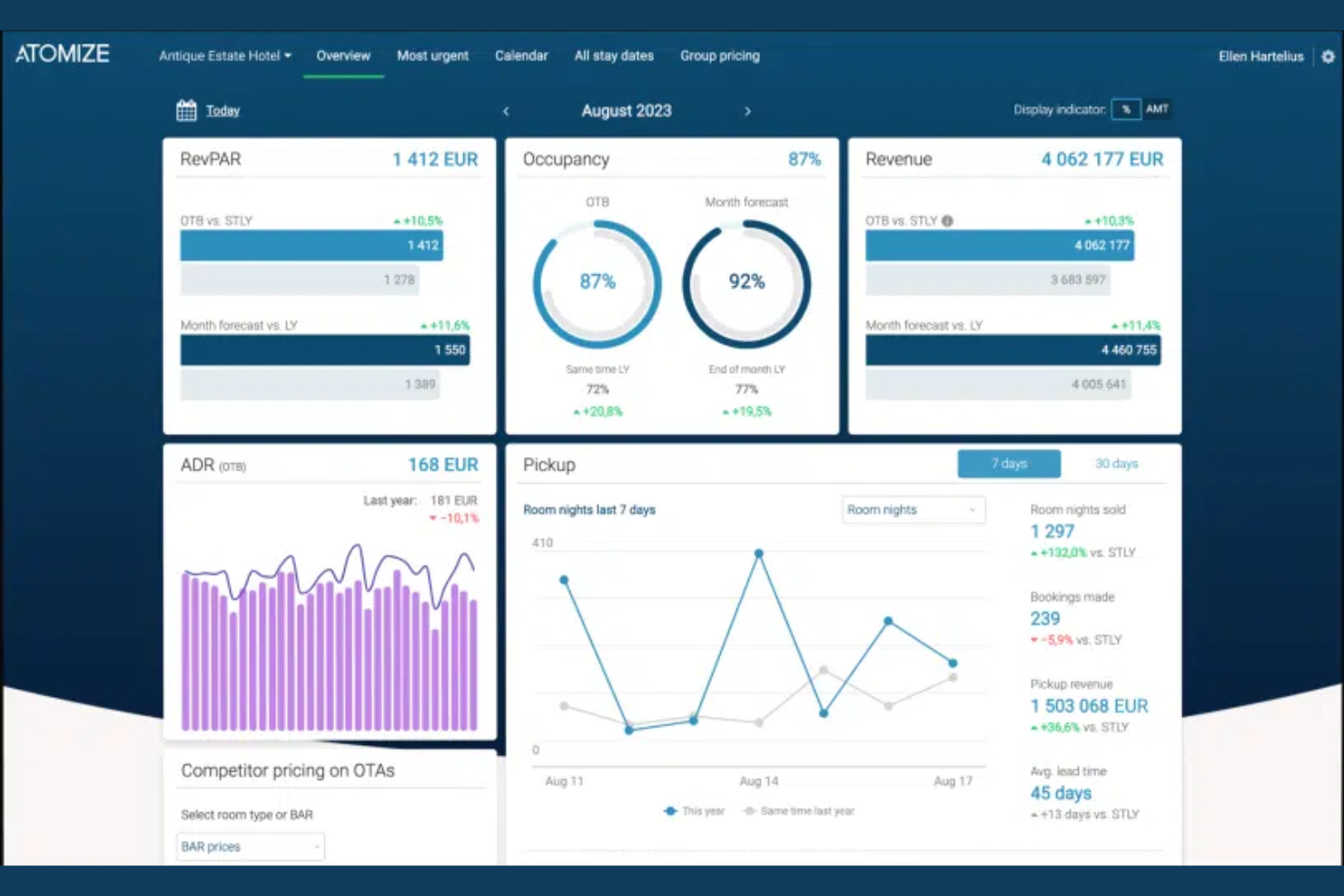
Atomize offre automazione dei prezzi in tempo reale per hotel che desiderano reagire istantaneamente ai cambiamenti del mercato. È pensato per revenue manager e operatori alberghieri che hanno bisogno di mantenere le tariffe competitive senza aggiornamenti manuali costanti. La piattaforma è particolarmente utile per le strutture che mirano a massimizzare i ricavi regolando automaticamente i prezzi man mano che la domanda varia durante la giornata.
Perché ho scelto Atomize
Ciò che distingue Atomize è il suo impegno nell'automazione dei prezzi in tempo reale, fondamentale per gli hotel che operano in mercati dinamici. La piattaforma aggiorna automaticamente le tariffe delle camere più volte al giorno, basandosi sulla domanda in tempo reale, sui prezzi dei concorrenti e sui dati di occupazione.
Apprezzo il fatto che Atomize utilizzi algoritmi di prezzi dinamici per aiutare gli hotel a cogliere opportunità di ricavo aggiuntive non appena si presentano. Questo approccio è perfetto per le strutture che vogliono anticipare i cambiamenti di mercato senza interventi manuali.
Funzionalità principali di Atomize
Oltre all'automazione dei prezzi in tempo reale, ho trovato degne di nota anche queste funzionalità:
- App di gestione mobile: Accedi e gestisci le raccomandazioni di prezzo da qualsiasi dispositivo mobile.
- Ottimizzazione a livello di tipologia di camera: Imposta e modifica le tariffe per le singole tipologie di camera invece che solo per l'intera struttura.
- Supporto per open pricing: Applica strategie di prezzo differenti a vari segmenti e canali senza barriere tariffarie fisse.
- Monitoraggio automatico delle tariffe dei concorrenti: Monitora e confronta automaticamente le tariffe dei concorrenti per guidare le tue decisioni di pricing.
Integrazioni di Atomize
Le integrazioni includono Mes, Cloudbeds, Oracle, HotelTime Solutions, RMS, BookVisit, Nitesoft e altro ancora.
Pros and Cons
Pros:
- Gli aggiornamenti dei prezzi in tempo reale aiutano a cogliere improvvisi cambiamenti nella domanda
- L'app mobile consente l'accesso remoto alle raccomandazioni di prezzo
- L'ottimizzazione a livello di tipologia di camera supporta strategie di ricavo granulari
Cons:
- Gli hotel più piccoli potrebbero trovare il set di funzionalità superiore alle loro necessità
- Le funzionalità di reportistica sono meno avanzate rispetto ad alcuni concorrenti


TakeUp utilizza l’intelligenza artificiale per fornire analisi di prezzo basate sulla domanda, pensate per gli hotel che vogliono ottimizzare i ricavi. È progettato per i revenue manager e gli operatori che desiderano comprendere i modelli di prenotazione e i cambiamenti di mercato prima che abbiano un impatto sull’occupazione. La piattaforma è particolarmente utile per le strutture che necessitano di dati operativi per adeguare proattivamente le tariffe e restare un passo avanti rispetto ai cambiamenti della domanda.
Perché ho scelto TakeUp
Quello che mi ha colpito di TakeUp è la sua attenzione nel fornire analisi di prezzo basate sulla domanda per aiutare gli hotel ad anticipare e reagire ai cambiamenti di mercato. La piattaforma utilizza previsioni basate sull’IA per analizzare le tendenze di prenotazione e individuare i periodi di alta o bassa domanda prima che si verifichino.
Apprezzo il fatto che TakeUp fornisca raccomandazioni chiare e attuabili per l’adeguamento delle tariffe basate su dati in tempo reale. Questo lo rende una soluzione ideale per i team alberghieri che vogliono prendere decisioni informate sui prezzi e massimizzare le opportunità di ricavo al variare della domanda.
Principali Caratteristiche di TakeUp
Altre funzionalità che distinguono TakeUp includono:
- Pubblicazione automatica delle tariffe: Invia le tariffe aggiornate direttamente al tuo sistema di gestione della struttura senza inserimento manuale.
- Dashboard dei report personalizzabili: Crea e visualizza dashboard su misura in base agli indicatori di performance specifici della tua struttura.
- Gestione multi-struttura: Supervisiona prezzi e dati sulla domanda per più hotel da un’unica interfaccia.
- Controlli di accesso utente: Assegna diversi livelli di permessi ai membri del team in base ai loro ruoli.
Integrazioni di TakeUp
Le integrazioni includono Oracle Hospitality, Cloudbeds, RMS, Innkeeper's Advantage, Mews e altri.
Pros and Cons
Pros:
- Analisi guidate dall’IA per la previsione dell’occupazione e della domanda di mercato
- Pubblicazione automatica delle tariffe su tutti i canali di distribuzione
- Dashboard chiare che mettono in evidenza tendenze di ricavo e andamento delle prenotazioni
Cons:
- L’ecosistema di integrazione è più ristretto rispetto alla maggior parte dei principali fornitori RMS
- L’adozione della piattaforma può richiedere formazione per i team alberghieri più piccoli

Infor HMS Revenue Management è pensato per gruppi e catene alberghiere che necessitano di un sistema di gestione del rendimento scalabile su più strutture. Questa piattaforma software di revenue management si adatta perfettamente ai responsabili del ricavo nel settore dell’ospitalità che gestiscono portafogli complessi e vogliono centralizzare la strategia, l’intelligence aziendale e automatizzare le decisioni di prezzo. Se desideri coordinare la gestione dei ricavi su vasta scala, adattandoti alle condizioni di mercato locali, Infor HMS offre strumenti progettati per questa esigenza.
Perché ho scelto Infor HMS Revenue Management
Ciò che distingue Infor HMS Revenue Management è la sua capacità di supportare grandi gruppi e catene alberghiere con una gestione del rendimento centralizzata. La piattaforma è progettata per gestire portafogli multi-struttura, permettendoti di impostare strategie a livello di brand consentendo allo stesso tempo regolazioni locali, così puoi sempre proporre il prezzo giusto.
Apprezzo come automatizza le decisioni su prezzi e inventario in tutte le strutture, fondamentale per mantenere coerenza e massimizzare i ricavi su larga scala all’interno dell’industria alberghiera. Per catene o agenzie di viaggio online che intendono coordinare il revenue management senza perdere flessibilità a livello di struttura, Infor HMS è realizzato proprio per questa scalabilità.
Funzionalità principali di Infor HMS Revenue Management
Oltre alla sua scalabilità nella gestione multi-struttura, ho trovato queste funzionalità particolarmente rilevanti:
- Previsioni di domanda automatizzate: il sistema utilizza dati storici e in tempo reale per prevedere i modelli di domanda futura.
- Strumenti di gestione per gruppi ed eventi: gestisci prenotazioni di gruppo e blocchi per eventi con funzionalità dedicate per l’allocazione e la tariffazione.
- Dashboard personalizzabili: personalizza le dashboard per visualizzare le metriche di performance e di ricavo più rilevanti per il tuo team.
- Supporto multi-valuta e multilingue: opera in diverse regioni con il supporto integrato per più valute e lingue.
Integrazioni Infor HMS Revenue Management
Attualmente le integrazioni non sono elencate da Infor HMS Revenue Management.
Pros and Cons
Pros:
- La gestione centralizzata dei ricavi supporta gruppi e catene alberghiere multi-struttura
- Le previsioni di domanda automatizzate utilizzano fonti di dati storiche e in tempo reale
- Gli strumenti per la gestione di gruppi ed eventi ottimizzano le prenotazioni di blocchi
Cons:
- Le informazioni sui prezzi non sono trasparenti sul sito del fornitore
- Le integrazioni native con sistemi di terze parti non sono chiaramente indicate
Altri software per il yield management alberghiero
Ecco alcune ulteriori opzioni di software per il yield management alberghiero che non sono entrate nella mia shortlist, ma che meritano comunque di essere considerate:
- WuBook
Il migliore per la gestione dei canali
- FLYR Hospitality
Il migliore con previsione della domanda basata su IA
- Lighthouse
Ideale per il benchmarking delle tariffe dei concorrenti


Come valuto i software di yield management per hotel
Divido ogni valutazione in due livelli: le capacità di base — come l’automazione dei prezzi dinamici e l’integrazione con il PMS — che qualificano uno strumento, e i fattori differenzianti che determinano la scelta giusta.
Funzionalità principali (requisiti minimi per questa lista)
Quando seleziono gli strumenti per la mia lista, assegno a ciascuno un punteggio da 0 (non offre la funzionalità) a 5 (eccelle in quest’area) per ogni funzionalità principale elencata di seguito. Poi, calcolo il punteggio totale dello strumento in percentuale. Ogni strumento deve ottenere un punteggio minimo totale del 65% per essere considerato per l’inclusione.
- Automazione dei prezzi dinamici: Cerco strumenti che aggiornino automaticamente le tariffe quando cambia la domanda — ad esempio, aumentando il BAR durante un fine settimana al completo o diminuendo le tariffe infrasettimanali quando il ritmo rallenta.
- Previsione della domanda: Le previsioni devono tener conto sia dei modelli storici di prenotazione sia del ritmo attuale, così i revenue manager possono anticipare i periodi deboli e intervenire prima che sia troppo tardi.
- Analisi delle tariffe dei competitor: Verifico se la piattaforma estrae regolarmente le tariffe dei concorrenti e le visualizza accanto alle tue per decisioni rapide.
- Analisi dei ricavi & KPI: I dashboard devono mostrare RevPAR, ADR, occupazione e trend delle prenotazioni senza richiedere esportazioni manuali o la creazione di report personalizzati ogni volta.
- Integrazione con PMS & Channel manager: La sincronizzazione bidirezionale in tempo reale con PMS e channel manager è cruciale — le tariffe devono essere aggiornate e le prenotazioni importate senza ritardi dovuti a caricamenti batch.
- Segmentazione & prezzi per tipologia di camera: Valuto se lo strumento permette di prezzare per tipologia di camera, segmento, durata del soggiorno e canale, invece di imporre un unico BAR su tutto l’inventario.
Una volta che ho una lista di strumenti che soddisfano questi criteri, considero ciò che distingue ogni piattaforma.
Fattori differenzianti (cosa distingue i fornitori)
Ecco come confronto e metto a confronto i diversi fornitori:
Funzionalità distintive
L’analisi della sostituzione dei gruppi è una caratteristica che cerco perché mostra se accettare un blocco di 200 camere a tariffa scontata porterà più ricavi rispetto alla domanda transitoria che si perderebbe. L’intelligenza di mercato e degli eventi aggiunge un ulteriore livello — gli strumenti che integrano calendari di eventi locali, trend di ricerca voli e dati meteo aiutano i revenue manager a individuare cambiamenti nella domanda prima che si riflettano sulle prenotazioni. Per i gruppi alberghieri, valuto anche dashboard multi-proprietà che consentano di confrontare le performance e gestire i prezzi di un intero portafoglio da un’unica vista.
Oltre le funzionalità
La profondità dell’integrazione è fondamentale — controllo se una piattaforma possiede connessioni bidirezionali certificate con il tuo PMS specifico, sia esso Opera, Mews o Cloudbeds, poiché una sincronizzazione difettosa può significare tariffe obsolete sui canali online. L’idoneità alla proprietà è altrettanto importante: uno strumento pensato per grandi catene può essere troppo complesso per un boutique hotel da 40 camere, mentre uno progettato per indipendenti può non offrire i controlli necessari a una società di gestione con più strutture. Valuto inoltre il supporto durante l’avviamento, soprattutto se il fornitore assegna un revenue strategist dedicato per aiutare ad adattare il sistema al tuo mercato.
Come scegliere un software per il yield management alberghiero
È facile perdersi tra lunghe liste di funzionalità e strutture di prezzo complesse. Per aiutarti a restare concentrato durante il tuo processo di selezione del software, ecco una checklist di fattori da tenere a mente:
| Fattore | Cosa considerare |
|---|---|
| Scalabilità | Il software supporterà la tua struttura mentre cresci, aggiungi camere o gestisci più proprietà? |
| Integrazioni | Si collega nativamente con il tuo PMS, channel manager e booking engine senza soluzioni complicate? |
| Personalizzazione | Puoi adattare report, dashboard e regole tariffarie alle esigenze e ai KPI specifici della tua struttura? |
| Facilità d’uso | Il tuo team riuscirà a imparare e usare rapidamente il sistema oppure richiederà un lungo addestramento? |
| Implementazione e onboarding | Quanto tempo richiede l’installazione e quali risorse o supporto offre il fornitore durante l’onboarding? |
| Costo | Tutte le tariffe sono chiare in anticipo e il modello di prezzo si adatta al tuo budget e alla dimensione della struttura? |
| Garanzie sulla sicurezza | Il software rispetta i tuoi requisiti di privacy e sicurezza dei dati, soprattutto relativi agli ospiti e ai ricavi? |
| Disponibilità dell’assistenza | Il supporto è disponibile quando serve, anche di notte, nei weekend e nei giorni festivi se la tua struttura opera 24/7? |
Che cos’è un software per il yield management alberghiero?
Il software per il yield management alberghiero è uno strumento digitale che aiuta gli hotel a ottimizzare tariffe e disponibilità delle camere per massimizzare i ricavi. Analizza la domanda in tempo reale, i modelli di prenotazione e i dati di mercato per suggerire o automatizzare modifiche delle tariffe.
Questi sistemi supportano i team alberghieri nel prendere decisioni basate sui dati, migliorare l’occupazione e rispondere rapidamente ai cambiamenti del mercato. Il software di yield management viene utilizzato da revenue manager, direttori e proprietari per aumentare la redditività e l'efficienza.
Caratteristiche
Nella scelta di un software di yield management per hotel, presta attenzione alle seguenti caratteristiche fondamentali:
- Motore di pricing dinamico: Regola automaticamente le tariffe delle camere in base alla domanda in tempo reale, all’occupazione e alle condizioni di mercato per aiutare a massimizzare i ricavi.
- Strumenti di previsione: Utilizza dati storici e attuali delle prenotazioni per proiettare la futura occupazione e i ricavi, supportando una migliore pianificazione e gestione del budget.
- Gestione multi-struttura: Consente di supervisionare e gestire prezzi, inventario e performance di diversi hotel da un’unica dashboard.
- Monitoraggio delle tariffe dei concorrenti: Tiene traccia dei prezzi dei competitor nel tuo mercato, offrendoti insight per restare competitivo e adeguare le tue tariffe di conseguenza.
- Reportistica automatizzata: Genera report sulle performance giornalieri, settimanali e mensili, riducendo il lavoro manuale e supportando decisioni basate sui dati.
- Integrazione calendario eventi: Integra eventi locali e festività nelle previsioni di domanda e nelle strategie tariffarie per adeguamenti di prezzo più accurati.
- Integrazione con il channel manager: Si collega al tuo channel manager per garantire che tariffe e disponibilità siano aggiornate in tempo reale su tutti i canali di prenotazione online.
- Dashboard personalizzabili: Permette di personalizzare la visualizzazione delle metriche principali e degli indicatori di performance in base agli obiettivi e ai flussi di lavoro specifici della struttura.
Funzionalità AI comuni nei software di yield management alberghiero
Oltre alle funzionalità standard sopra elencate, molte di queste soluzioni stanno integrando l’intelligenza artificiale (AI) con caratteristiche come:
- Previsione della domanda automatizzata: Utilizza algoritmi AI per analizzare modelli di prenotazione, trend di mercato e dati esterni per prevedere la domanda futura con maggiore precisione rispetto ai metodi manuali.
- Raccomandazioni tariffarie intelligenti: Apprende continuamente da dati storici e in tempo reale per suggerire le tariffe ottimali che massimizzano ricavi e occupazione.
- Rilevamento di anomalie guidato dall’AI: Identifica attività di prenotazione insolite, picchi improvvisi di domanda o incoerenze nei dati, avvisando il team in tempo reale su potenziali problemi o opportunità.
- Strategie personalizzate di pricing: Adatta le raccomandazioni di tariffa per segmenti di ospiti o canali di prenotazione specifici, grazie all’analisi AI di comportamenti e preferenze dei clienti.
- Risposta dinamica ai prezzi dei concorrenti: Monitora le tariffe dei concorrenti e regola automaticamente le tue in risposta ai cambiamenti di mercato, utilizzando l’AI per determinare tempistiche e importi ottimali per gli aggiustamenti.
Vantaggi
Implementare un software di yield management per hotel offre numerosi vantaggi per il tuo team e la tua attività. Ecco alcuni benefici a cui puoi aspirare:
- Aumento dei ricavi: L’automazione dei prezzi e la previsione della domanda ti consentono di ottenere tariffe più alte nei periodi di punta ed evitare sottoprezzi quando la domanda è alta.
- Miglioramento dell’occupazione: Regolazioni tariffarie dinamiche e monitoraggio dei competitor supportano strategie per riempire più camere durante tutto l’anno.
- Decisioni più rapide: L’analisi dei dati in tempo reale e la reportistica automatizzata offrono al team le informazioni per agire rapidamente a fronte di cambiamenti nel mercato.
- Riduzione del lavoro manuale: Aggiornamenti tariffari automatici, report e integrazione con altri sistemi riducono le attività ripetitive per lo staff.
- Competitività di mercato migliorata: Monitoraggio delle tariffe dei concorrenti e raccomandazioni AI ti aiutano a rimanere competitivo nel tuo mercato locale.
- Gestione centralizzata: Dashboard multi-struttura e integrazioni permettono di supervisionare più sedi e canali da un solo luogo.
- Pianificazione basata sui dati: Strumenti di previsione e dashboard personalizzabili favoriscono una maggiore precisione nella pianificazione e nello sviluppo delle strategie a lungo termine.
Costi e Prezzi
La scelta di un software di yield management richiede la comprensione dei vari modelli e piani di prezzo disponibili. I costi variano in base a funzionalità, dimensione del team, componenti aggiuntivi e altro ancora. La tabella seguente riepiloga i piani più comuni, i prezzi medi e le caratteristiche tipiche incluse nelle soluzioni di yield management alberghiero:
Tabella comparativa dei piani per software di yield management alberghiero
| Tipo di piano | Prezzo medio | Caratteristiche comuni |
|---|---|---|
| Piano gratuito | $0 | Prezzi dinamici di base, reportistica limitata e supporto per singola proprietà. |
| Piano personale | $30-$80/mese | Prezzi dinamici, strumenti di previsione, monitoraggio base dei concorrenti e integrazione con un PMS. |
| Piano business | $100-$300/mese | Gestione multi-proprietà, reportistica avanzata, integrazione calendario eventi e channel management. |
| Piano enterprise | $400+/mese | Integrazioni personalizzate, funzionalità basate su AI, supporto account dedicato e controlli avanzati di sicurezza. |
Domande frequenti sul software di Hotel Yield Management
Ecco alcune risposte alle domande più comuni sul software di hotel yield management:
In che modo il software di hotel yield management aiuta a ottimizzare i ricavi?
Il software di hotel yield management ti aiuta a regolare le tariffe delle camere in tempo reale in base alla domanda, al ritmo delle prenotazioni e alle tendenze del mercato. Questo approccio consente di ottenere tariffe più elevate nei periodi di alta affluenza e di riempire più camere nelle fasi più lente, portando a migliori prestazioni complessive dei ricavi.
Il software di hotel yield management può integrarsi con il mio PMS e channel manager esistenti?
Sì, la maggior parte delle soluzioni di hotel yield management offre integrazioni con i principali sistemi di gestione alberghiera e channel manager. Questo permette aggiornamenti automatici di tariffe e disponibilità su tutti i canali di prenotazione, riducendo il lavoro manuale e il rischio di errori.
Quali tipi di hotel traggono maggior beneficio dal software di yield management?
Hotel di tutte le dimensioni possono beneficiarne, ma le strutture con domanda variabile, tipologie di camere multiple o strategie tariffarie complesse ottengono il maggior valore. Gruppi multi-proprietà e hotel indipendenti utilizzano questi strumenti per rimanere competitivi e gestire le tariffe in modo efficiente.
Quanto tempo serve per implementare un software di hotel yield management?
Il tempo di implementazione varia, ma la maggior parte delle soluzioni può essere impostata in pochi giorni o alcune settimane. La tempistica dipende dalla complessità della struttura, dal numero di integrazioni necessarie e dal livello di personalizzazione richiesto.
È necessaria una formazione per utilizzare un software di hotel yield management?
Sì, di solito è necessaria una certa formazione, soprattutto per i team che sono nuovi alla determinazione automatica dei prezzi o alle decisioni basate sui dati. Molti fornitori offrono sessioni di onboarding, video tutorial e supporto continuo per aiutare il team a familiarizzare con il sistema.
Quanto è sicuro il software di hotel yield management per i dati sensibili?
Le soluzioni affidabili utilizzano sistemi di crittografia, controlli di accesso e audit di sicurezza regolari per proteggere i tuoi dati. Verifica sempre che il software soddisfi i requisiti di privacy e sicurezza della tua organizzazione prima di prendere una decisione.
Cosa succede dopo:
Se sei nella fase di ricerca di un software di hotel yield management, contatta gratuitamente un consulente SoftwareSelect per ricevere delle raccomandazioni.
Compila un modulo e partecipa a una breve chiacchierata durante la quale ti verranno richieste le tue esigenze specifiche. Riceverai quindi una lista ristretta di software da valutare. Sarai supportato anche durante tutto il processo di acquisto, comprese eventuali trattative sul prezzo.