

Las 10 mejores herramientas de software de IA para hoteles en 2026

Selección del mejor software de IA para hoteles del sector hotelero


Gestionar un hotel implica afrontar un conjunto único de desafíos. Desde administrar las reservas hasta garantizar experiencias excelentes para los huéspedes, tus tareas pueden parecer interminables. Ahí es donde entra en juego el software de IA para hoteles. Estas herramientas te ayudan a gestionar todo de forma más eficiente mediante el uso de la IA para predecir tendencias, personalizar las interacciones con los huéspedes y optimizar las operaciones.
Según mi experiencia, elegir el software adecuado puede marcar una diferencia significativa. He probado y analizado las principales soluciones de IA que pueden ayudarte a ti y a tu equipo a afrontar los desafíos diarios.
Este artículo te guiará por las mejores opciones disponibles, centrándose en sus capacidades de IA y en cómo pueden beneficiar a tu hotel. Encontremos la opción adecuada para tus necesidades.
Por qué confiar en nuestras recomendaciones de software
Nuestro equipo lleva probando y evaluando software desde 2012. Como líderes del sector hotelero, sabemos lo difícil —y lo importante— que es elegir el software adecuado.
Para esta guía, evaluamos las herramientas mediante pruebas prácticas e investigación independiente, puntuando las herramientas según nuestros criterios de selección.
Nuestras reseñas reflejan nuestro criterio editorial humano, no un discurso de ventas.
Tabla comparativa: software de IA para hoteles del sector hotelero
Esta tabla comparativa resume los detalles de precios de mi selección del mejor software de IA para hoteles del sector hotelero:
| Tool | Best For | Trial Info | Price | ||
|---|---|---|---|---|---|
| 1 | Ideal para el registro sin contacto | Demostración gratuita disponible | Precios bajo petición | Website | |
| 2 | Ideal para herramientas automatizadas de comunicación con los huéspedes | Demostración gratuita disponible | Precio a consultar | Website | |
| 3 | La mejor opción con soporte multilingüe para agentes de IA | Plan gratuito disponible | Desde $32/mes (facturado anualmente) | Website | |
| 4 | Ideal para la gestión de múltiples propiedades | Demostración gratuita disponible | Precio bajo consulta | Website | |
| 5 | Ideal para la automatización de propiedades | Demostración gratuita disponible | Precio a consultar | Website | |
| 6 | Ideal para reservas directas mediante IA | Demostración gratuita disponible | Precio a consultar | Website | |
| 7 | La mejor opción para precios dinámicos impulsados por IA | Demo gratuita disponible | Precio a consultar | Website | |
| 8 | Ideal para chat con huéspedes basado en IA | Demo gratuita disponible | Desde €49/mes (facturación anual) | Website | |
| 9 | Mejor para analítica predictiva | Prueba gratuita disponible | Precio a consultar | Website | |
| 10 | Ideal para la gestión de ingresos inteligente basada en IA | Demo gratuita disponible | Precios a consultar | Website |
Reseñas del mejor software de IA para hoteles del sector hotelero
A continuación encontrarás mis resúmenes detallados del mejor software de IA para hoteles del sector hotelero que llegó a mi selección. Mis reseñas ofrecen un análisis detallado de las características principales, ventajas \u0026 desventajas, integraciones y casos de uso ideales de cada herramienta para ayudarte a encontrar la mejor opción para ti.

Ideal para el registro sin contacto
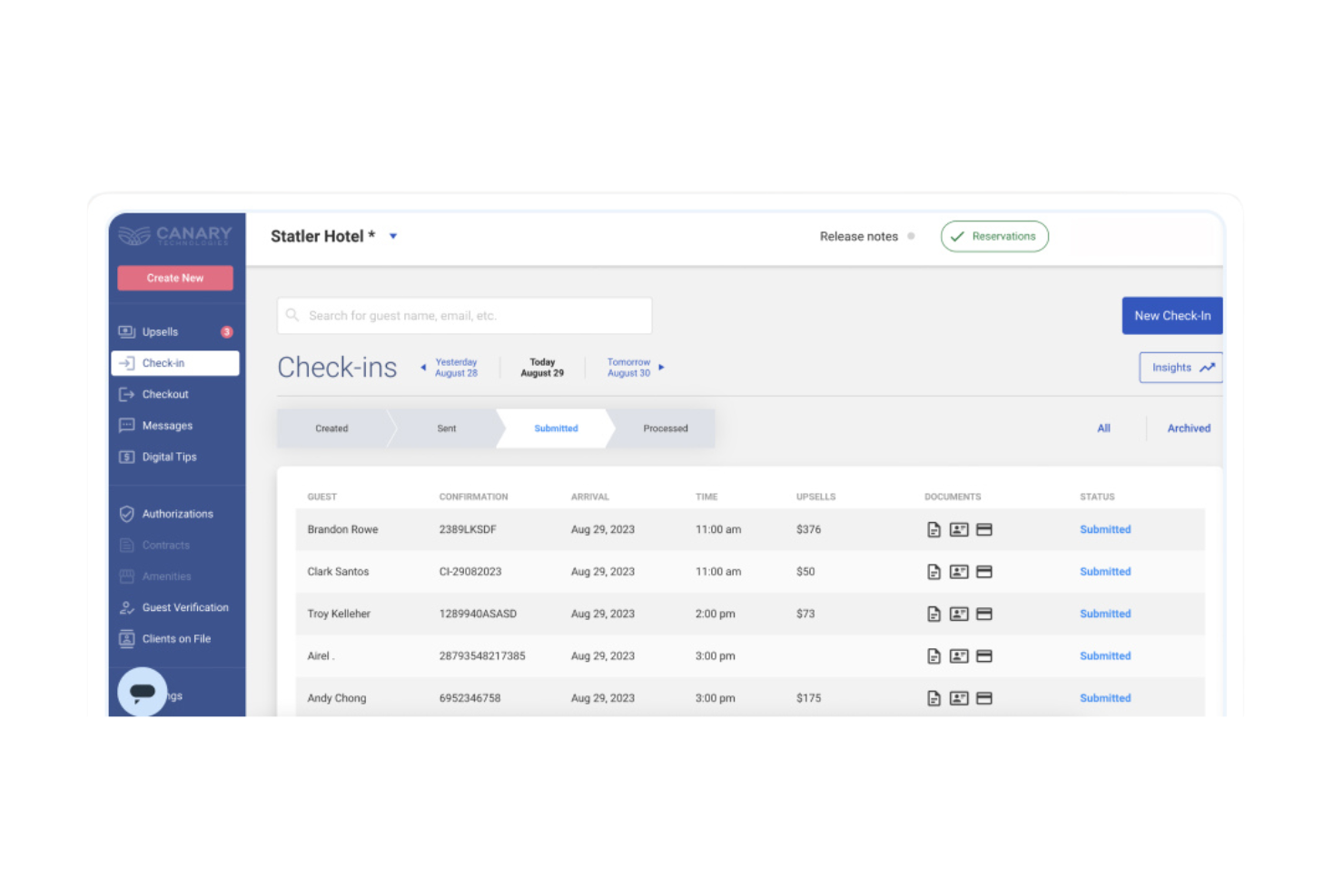
Canary Technologies ofrece una plataforma de gestión hotelera impulsada por IA, diseñada para automatizar las comunicaciones con los huéspedes y los flujos de trabajo del establecimiento. Sus soluciones de IA específicas ayudan a los equipos hoteleros a gestionar llamadas, mensajes, consultas del sitio web y tareas operativas rutinarias, al tiempo que permiten al personal disponer de más tiempo para ofrecer una atención hospitalaria presencial.
¿Para quién es Canary Technologies?
Canary Technologies es una opción muy adecuada para los equipos de recepción y experiencia del huésped de hoteles que desean automatizar las comunicaciones con los huéspedes y los flujos de trabajo rutinarios del establecimiento mediante herramientas basadas en IA.
Por qué elegí Canary Technologies
Canary Technologies destaca por sus herramientas de IA específicas para las operaciones hoteleras y la comunicación con los huéspedes. Su Estudio de agentes de IA permite a los hoteleros crear y gestionar agentes de IA personalizados que se conectan con su conjunto tecnológico existente para automatizar los flujos de trabajo del establecimiento. También me gusta que la Voz de IA pueda gestionar llamadas entrantes y consultas rutinarias las 24 horas del día, mientras que la Mensajería de huéspedes con IA y el Chat web con IA automatizan las preguntas frecuentes de los huéspedes en mensajes de texto, chats y sitios web de hoteles.
Características principales de Canary Technologies
- Estudio de agentes de IA: Cree y gestione agentes de IA personalizados que se conecten con su conjunto tecnológico hotelero existente para automatizar los flujos de trabajo del establecimiento.
- Voz de IA: Responda llamadas entrantes las 24 horas del día, los 7 días de la semana, y gestione automáticamente reservas y consultas rutinarias de los huéspedes.
- Mensajería de huéspedes con IA: Automatice consultas rutinarias por mensaje de texto y chat con traducción integrada para reducir el trabajo repetitivo del personal del hotel.
- Chat web con IA: Ayude a los visitantes del sitio web con preguntas frecuentes y consultas sobre reservas mediante un chatbot hotelero impulsado por IA.
Integraciones de Canary Technologies
Canary Technologies ofrece integraciones nativas con Stripe, Booking.com, Maestro, StayNTouch, Mews, Cloudbeds, RMS Cloud y WhatsApp.
Pros and Cons
Pros:
- Procesamiento seguro de pagos a distancia
- Acceso práctico de los huéspedes mediante llaves digitales
- Soluciones de registro sin contacto fáciles de implementar
Cons:
- Puede requerir formación del personal para utilizar las nuevas funciones
- Limitado a sistemas específicos de gestión hotelera

Ideal para herramientas automatizadas de comunicación con los huéspedes
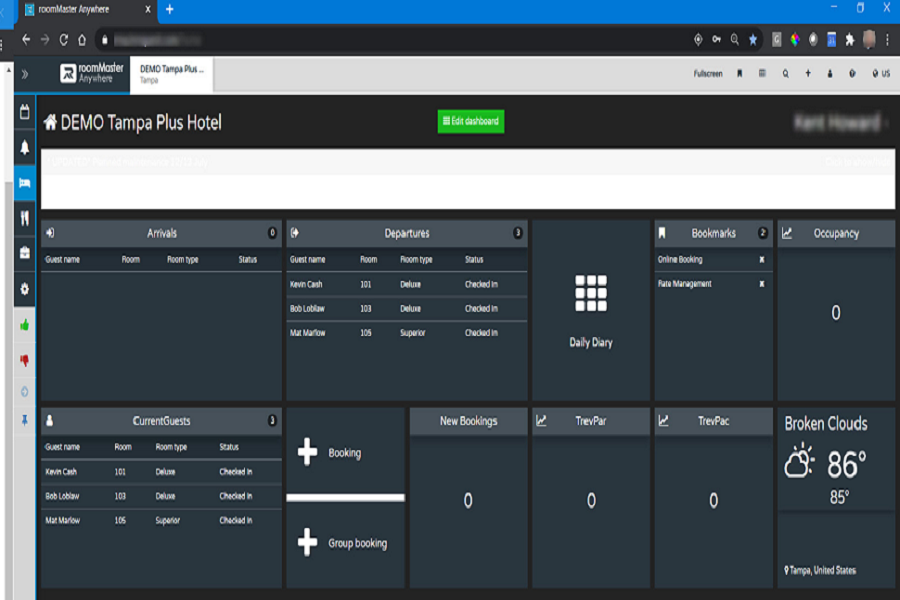
roommaster es una solución de gestión hotelera diseñada para satisfacer las diversas necesidades de la industria hotelera. Atendiendo a hoteles independientes, resorts y bed & breakfasts, proporciona herramientas para la gestión de propiedades, optimización de ingresos y compromiso con los huéspedes. Esta plataforma aborda las complejidades de las operaciones hoteleras al simplificar los procesos de reserva y mejorar la comunicación con los huéspedes, convirtiéndola en una opción atractiva para gerentes generales y de ingresos que buscan mejorar la eficiencia y elevar la experiencia del cliente.
Por qué elegí roommaster
Elegí roommaster por su capacidad para transformar la gestión hotelera a través de la optimización de precios impulsada por IA y herramientas automatizadas de comunicación con los huéspedes. Estas funciones te permiten maximizar los ingresos ajustando las tarifas según la demanda y las tendencias del mercado, y mejoran la satisfacción del cliente facilitando interacciones personalizadas. Además, el motor de reservas integrado permite realizar reservas directas, reduciendo la dependencia de plataformas de terceros e incrementando la rentabilidad. El enfoque de roommaster en estas áreas clave lo convierte en una opción atractiva para quienes buscan optimizar operaciones y aumentar los ingresos en el sector hotelero.
Características clave de roommaster
Además de sus impresionantes capacidades de IA, roommaster ofrece otras funciones valiosas para la gestión hotelera:
- Gestor de canales: Sincroniza el inventario entre múltiples canales de distribución en línea en tiempo real, asegurando disponibilidad y precios precisos.
- Gestión de reservas: Proporciona un sistema centralizado para gestionar reservas, cancelaciones y modificaciones, simplificando las operaciones de recepción.
- Informes y analítica: Ofrece información sobre el desempeño del negocio con informes y paneles personalizables, permitiendo la toma de decisiones basada en datos.
- Soporte experto 24/7: Ofrece asistencia en cualquier momento para abordar cualquier problema técnico o consulta, asegurando operaciones fluidas.
Integraciones de roommaster
Las integraciones incluyen Oracle Hospitality, Mews, Protel, StayNTouch, RoomRaccoon y Hotelogix. roommaster también ofrece una API para integraciones personalizadas, permitiendo a los usuarios adaptar su ecosistema tecnológico.
Pros and Cons
Pros:
- Precios dinámicos impulsados por IA
- Gestor de canales integrado multicanal
- Permite check-in móvil de huéspedes
Cons:
- La interfaz parece algo anticuada
- El onboarding puede llevar tiempo
New Product Updates from roommaster
roommaster Previews Reimagined PMS Platform
roommaster previews its Reimagined PMS with a redesigned interface, fewer clicks, and faster performance. This aims to make daily hotel operations more efficient for front-desk and property teams. For more information, visit roommaster’s official site.
 .
.
Chatbase
La mejor opción con soporte multilingüe para agentes de IA

Chatbase es una plataforma de chatbots con IA para hoteles que te permite crear, desplegar y gestionar agentes conversacionales personalizados en la web, mensajería y canales de servicio al huésped.
¿Para quién es mejor Chatbase?
Chatbase es adecuado para equipos de operaciones hoteleras y gerentes de atención al huésped que necesitan soluciones de chat impulsadas por IA para la comunicación con los huéspedes en varios canales.
¿Por qué elegí Chatbase?
Elegí Chatbase como uno de los mejores porque puedo desplegar chatbots de IA que gestionan conversaciones con huéspedes en decenas de idiomas sin configuración adicional. Mi equipo utiliza sus funciones de detección de idioma y traducción para atender a huéspedes internacionales directamente en nuestro sitio web y aplicaciones de mensajería. Me gusta que podamos personalizar las respuestas para cada idioma, de manera que los huéspedes siempre reciban información precisa y culturalmente relevante.
Características clave de Chatbase
- Creador de chatbots personalizado: Crea y entrena chatbots con IA utilizando tus propias preguntas frecuentes, políticas y documentos del hotel.
- Analítica de conversaciones: Realiza un seguimiento de las interacciones con los huéspedes y revisa los registros de chat para identificar preguntas frecuentes y áreas de mejora en el servicio.
- Integración de widget web: Añade chatbots directamente a la web de tu hotel para ofrecer soporte instantáneo a los huéspedes.
- Acceso API: Conecta Chatbase con tus sistemas actuales de gestión hotelera y aplicaciones para huéspedes.
Integraciones de Chatbase
Chatbase ofrece integraciones nativas con Zendesk, Notion, Slack, Stripe, Salesforce, Cal.com, Calendly, WhatsApp y Messenger. También se conecta con Make y Zapier, y proporciona una API para integraciones personalizadas.
Pros and Cons
Pros:
- Incluye características de manejo de datos conforme a GDPR
- Permite entrenar chatbots personalizados con preguntas frecuentes del hotel
- Ofrece análisis en tiempo real sobre las interacciones con los huéspedes
Cons:
- Carece de asistente de voz integrado
- No permite la derivación directa a agentes humanos

Ideal para la gestión de múltiples propiedades
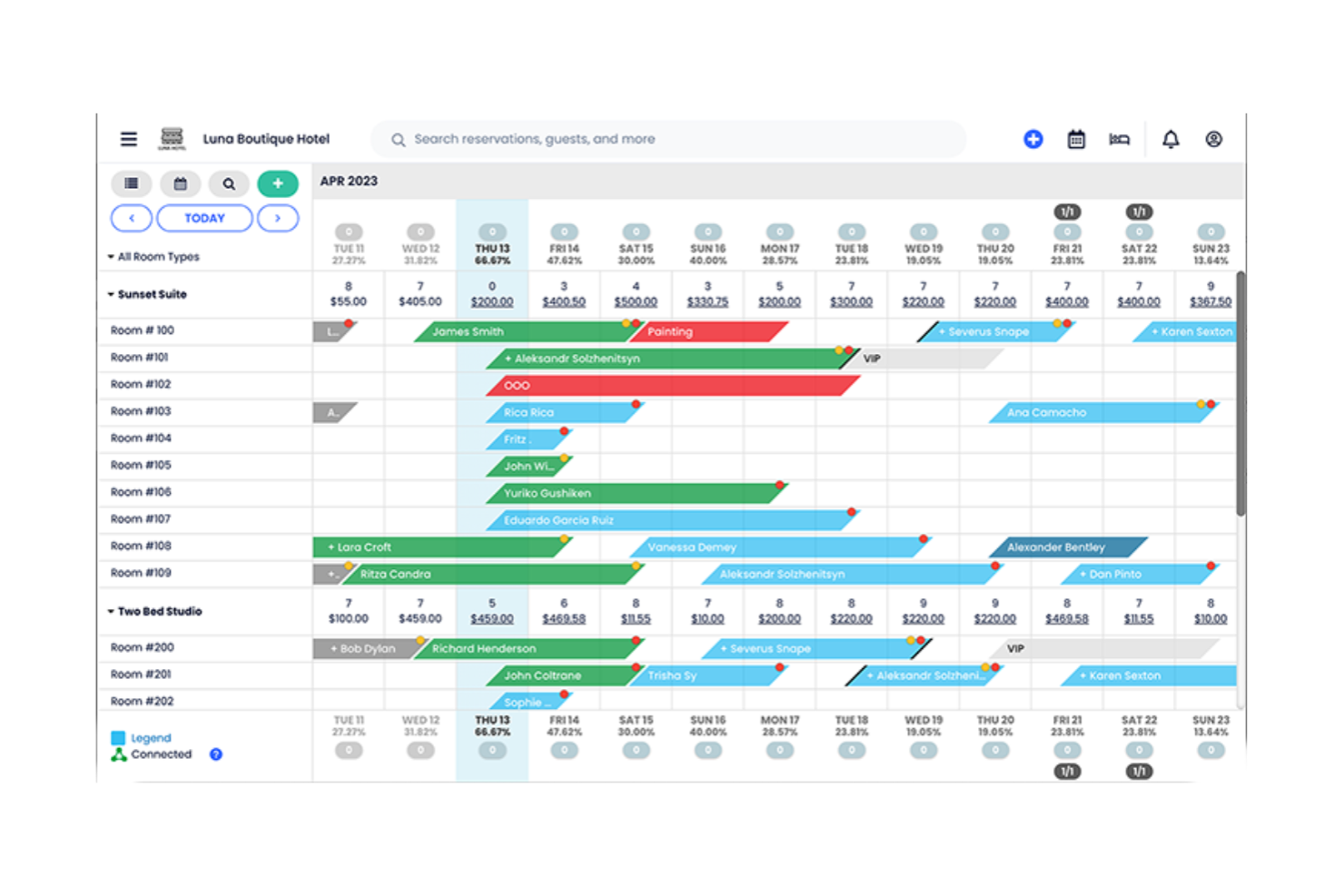
Cloudbeds es una solución de gestión hotelera diseñada para la administración de múltiples propiedades, dirigida a hoteles independientes, hostales y alojamientos vacacionales. Ayuda a los usuarios a gestionar reservas, optimizar tarifas y coordinar la comunicación con los huéspedes mediante herramientas mejoradas con IA.
Por qué elegí Cloudbeds: Cloudbeds destaca en la gestión de varias propiedades gracias a su panel centralizado que permite supervisar las operaciones desde una sola plataforma. La herramienta de optimización de precios impulsada por IA te ayuda a establecer tarifas competitivas basadas en tendencias de mercado. El motor de reservas permite gestionar reservas directas, reduciendo la dependencia de plataformas de terceros. Con Cloudbeds, puedes optimizar las operaciones de diversas propiedades mientras garantizas una calidad de servicio constante.
Características y conexiones destacadas:
Características incluyen un panel centralizado que simplifica las tareas de gestión de propiedades. La función de administrador de canales ayuda a distribuir el inventario de manera eficiente en varias plataformas. Además, la función de informes y análisis proporciona información sobre el rendimiento de tu propiedad.
Integraciones incluyen Airbnb, Booking.com, Expedia, TripAdvisor, Hostelworld, Google Hotel Ads, Agoda y Hostelbookers.
Pros and Cons
Pros:
- Gestión centralizada para múltiples propiedades
- Optimización de precios con IA
- Permite reservas directas
Cons:
- Puede resultar complejo para nuevos usuarios
- Puede requerir tiempo para configurar integraciones

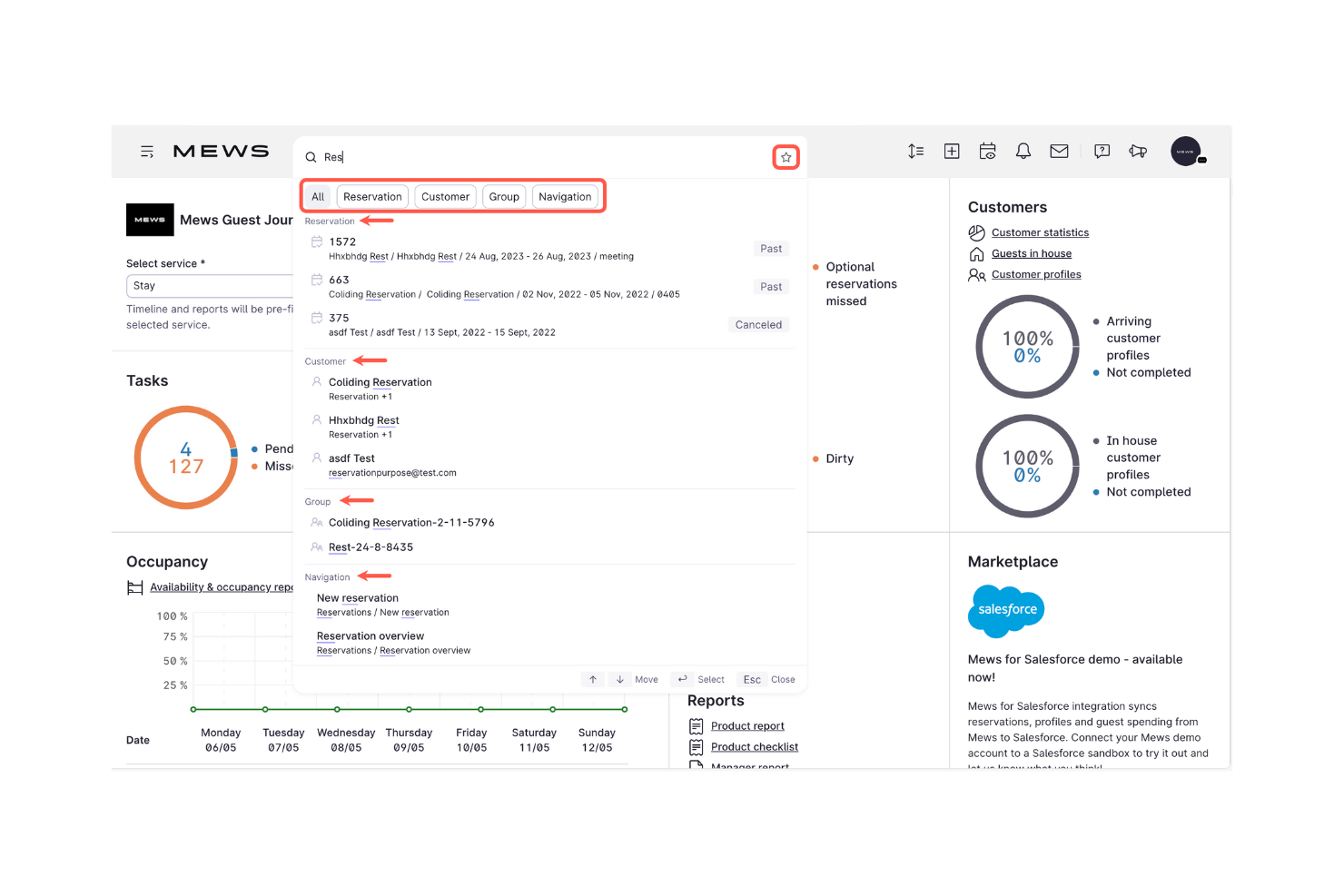
Mews es un sistema de gestión de propiedades basado en la nube diseñado para automatizar las operaciones de hoteles y hostales. Es una excelente opción de software para hoteles y hostales que buscan automatización moderna, visibilidad en tiempo real de las operaciones y experiencias de huésped más fluidas desde la reserva hasta el check-out.
Por qué elegí Mews: Mews facilita el trabajo de recepción y back office al automatizar tareas que consumen mucho tiempo. El check-in y check-out de autoservicio reducen las filas y liberan al personal durante las horas pico, mientras que la facturación y los pagos automatizados minimizan los errores y la conciliación manual. Los paneles en tiempo real ofrecen a los gerentes una visión clara de la ocupación, llegadas, salidas e ingresos, ayudando a los equipos a tomar decisiones operativas más rápidas y acertadas sin necesidad de extraer múltiples informes.
Características destacadas e integraciones:
Las características incluyen facturación y pagos automatizados, gestión flexible de reservas y habitaciones, y experiencias digitales para huéspedes que reducen la dependencia de la recepción. Mews se integra con herramientas de gestión de ingresos, mensajería para huéspedes, limpieza, contabilidad y puntos de venta, facilitando la gestión de toda la propiedad desde un ecosistema tecnológico conectado.
Las integraciones incluyen Oracle Hospitality OPERA, Protel, Mews, RMS Cloud, Maestro PMS, StayNTouch y RoomKeyPMS.
Pros and Cons
Pros:
- Automatiza check-in y check-out
- Ofrece análisis operativos en tiempo real
- Herramientas de pago integradas
Cons:
- Restringido al software y tarifas de procesamiento de pagos de Mews
- Algunas funciones de IA carecen de personalización en la interacción con los huéspedes

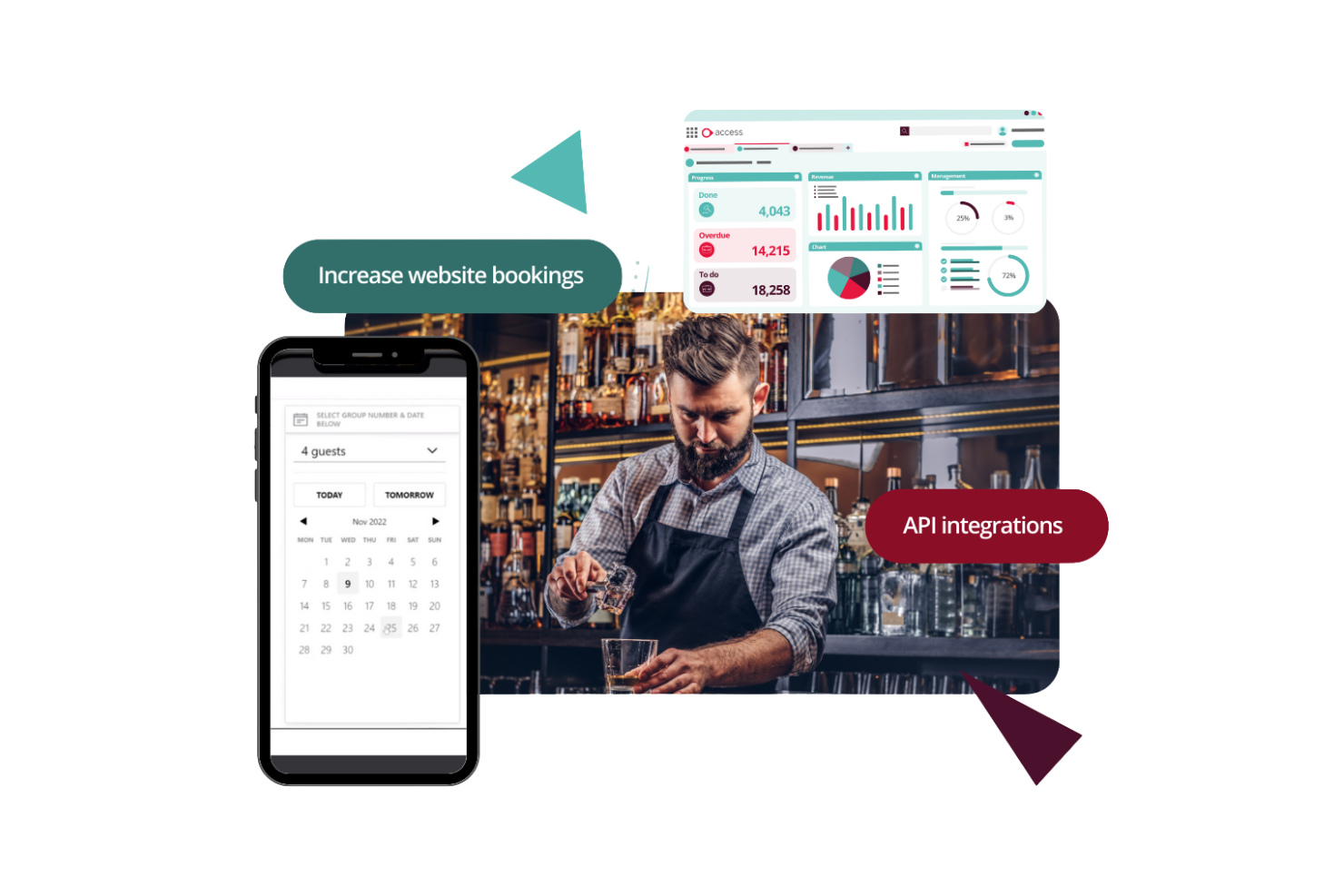
The Access Group ofrece un motor de reservas directas impulsado por IA, diseñado para que los hoteles independientes incrementen sus reservas directas y reduzcan la dependencia de las agencias de viajes en línea. Se centra en optimizar los precios, gestionar el inventario y personalizar las interacciones con los huéspedes para impulsar la eficiencia y los ingresos del hotel.
Por qué elegí The Access Group: Esta herramienta destaca en reservas directas con IA al integrar tecnología de inteligencia artificial con marketing digital y soluciones web personalizadas. Minimiza los costos de comisión de las OTAs a través de personalización en tiempo real y adaptabilidad a dispositivos móviles. El sistema es compatible con varios sistemas de gestión hotelera para una integración sin inconvenientes. Con Booking Engine+, puedes aumentar los ingresos directos y obtener un alto retorno de inversión en marketing.
Características y compatibilidades destacadas:
Características incluyen personalización en tiempo real para adaptar la experiencia del huésped, funcionalidad móvil para garantizar la accesibilidad en todos los dispositivos y compatibilidad con varios sistemas de gestión de propiedades. Estas funciones ayudan a tu equipo a gestionar reservas de manera eficiente y mejorar la satisfacción del huésped.
Compatibilidades incluyen Reslynx, RMS Cloud, Guestline, RoomMaster, Opera, Mews y SiteMinder.
Pros and Cons
Pros:
- Reduce la pérdida de ingresos por comisiones
- Disminuye la tasa de cancelaciones
- Reduce la dependencia de las OTAs
Cons:
- Puede requerir tiempo de configuración inicial
- Más adecuado para hoteles independientes

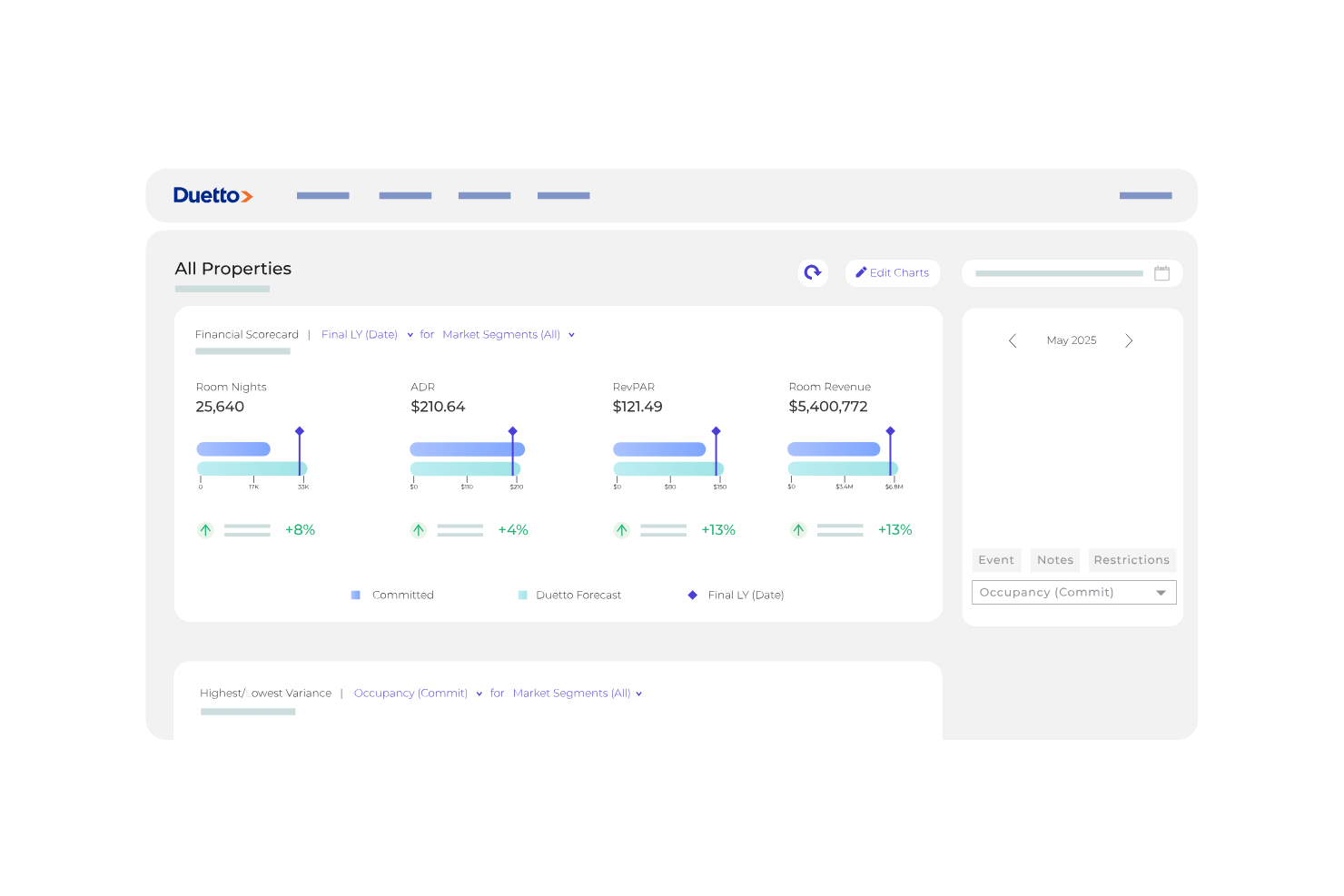
Duetto es una plataforma de gestión de ingresos diseñada para hoteles y casinos que se centra en la fijación dinámica de precios y el análisis de datos en tiempo real. Sus principales usuarios incluyen a gerentes de ingresos y operadores hoteleros que buscan optimizar sus estrategias de precios y maximizar los ingresos mediante herramientas potenciadas por IA.
Por qué elegí Duetto: Duetto ofrece capacidades de fijación dinámica de precios que te permiten ajustar las tarifas en función de la demanda del mercado y el análisis de la competencia. La función de Open Pricing permite aplicar estrategias flexibles de precios sin depender de planes de tarifas estáticas. Con sus análisis predictivos, puedes pronosticar la demanda con precisión y tomar decisiones de precios informadas. La capacidad de la plataforma para integrarse con los sistemas existentes garantiza que tu equipo pueda implementar estas estrategias de manera eficiente.
Características destacadas e integraciones:
Características incluyen open pricing, que te permite establecer tarifas flexibles según la demanda. La función de análisis predictivo te ayuda a pronosticar con precisión las tendencias del mercado. Además, la plataforma ofrece una herramienta de informes detallada para guiar tus estrategias de ingresos.
Integraciones incluyen Oracle Hospitality OPERA, Infor HMS, Protel, Maestro PMS, Agilysys, StayNTouch, RoomKeyPMS y Cloudbeds.
Pros and Cons
Pros:
- Ofrece precios abiertos y flexibles
- Pronóstico preciso de la demanda
- Se integra bien con sistemas existentes
Cons:
- Puede requerir capacitación para un uso óptimo
- Más adecuado para operaciones grandes

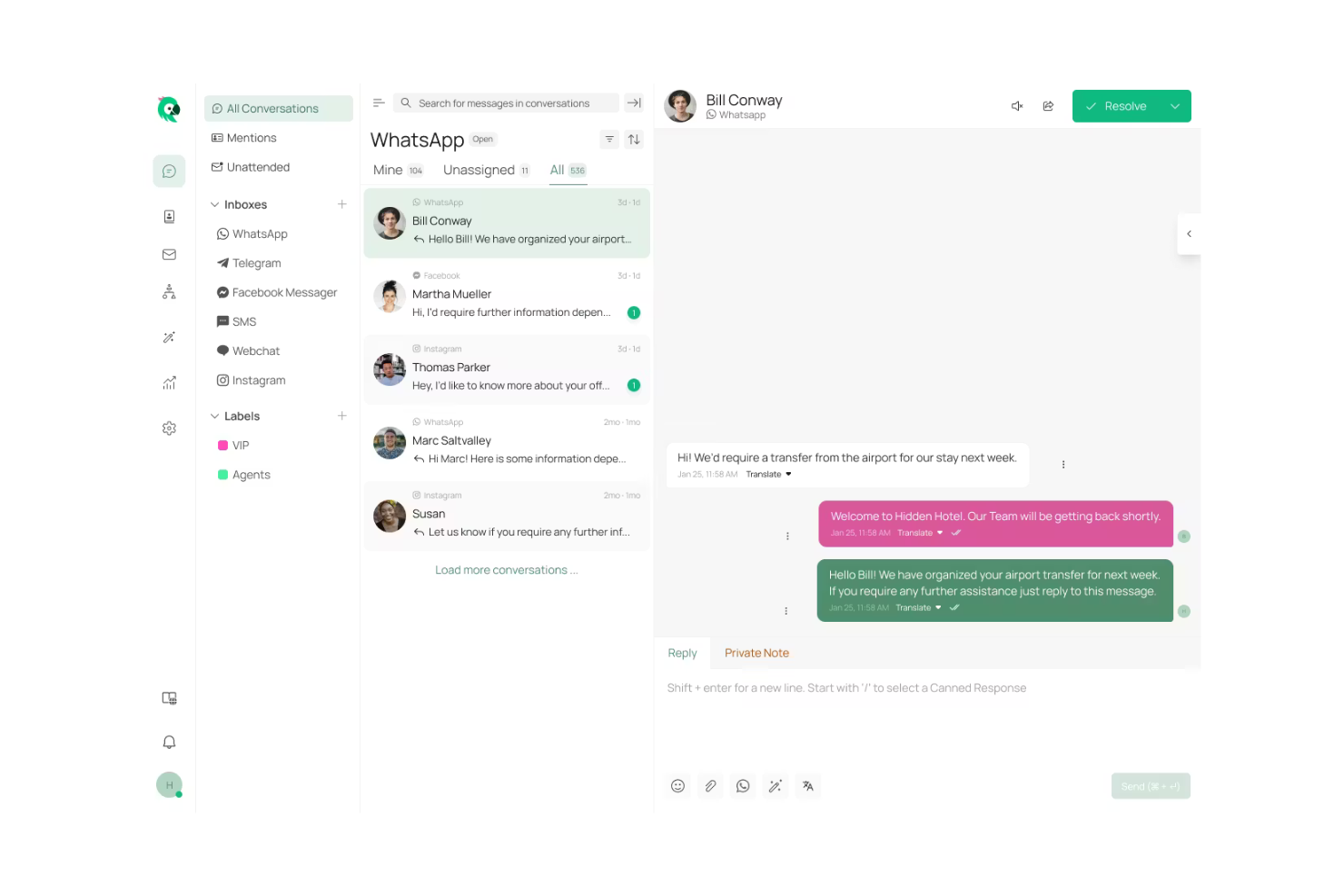
Chatlyn es una plataforma de comunicación con huéspedes impulsada por IA, diseñada para que los hoteles gestionen conversaciones en canales como WhatsApp, chat web y SMS desde un solo lugar. Ayuda a los equipos hoteleros a responder más rápido, reducir la carga en la recepción y ofrecer una comunicación coherente y alineada con la marca antes, durante y después de la estancia.
Por qué elegí Chatlyn: Chatlyn ofrece soluciones de chat con huéspedes impulsadas por IA que permiten a tu equipo interactuar con los huéspedes de forma eficiente. El procesamiento de lenguaje natural de la plataforma posibilita conversaciones fluidas, logrando interacciones personalizadas e intuitivas. También ofrece respuestas automatizadas para consultas frecuentes, liberando tiempo de tu personal para tareas más complejas. Con Chatlyn, puedes brindar soporte 24/7, asegurando que los huéspedes reciban asistencia oportuna en todo momento.
Funciones e integraciones destacadas:
Las funciones incluyen respuestas automáticas impulsadas por IA para preguntas frecuentes, mensajería con enfoque en WhatsApp y bandejas de entrada unificadas que mantienen todas las conversaciones organizadas. Las plantillas de chat personalizables ayudan a mantener la voz de la marca, mientras que el soporte multilingüe atiende a huéspedes internacionales sin complicaciones. El panel analítico brinda visibilidad sobre los tiempos de respuesta, necesidades de los huéspedes y volumen de conversaciones, ayudando a los equipos a mejorar continuamente el servicio.
Las integraciones incluyen Slack, Microsoft Teams, WhatsApp, Facebook Messenger, Salesforce, HubSpot, Zendesk y Freshdesk.
Pros and Cons
Pros:
- Brinda atención al huésped 24/7
- Ofrece opciones de chat multilingüe
- Plantillas de chat personalizables
Cons:
- Puede requerir tiempo de configuración inicial
- Limitado a canales de comunicación digital


Aiola es una solución de automatización por voz impulsada por IA que transforma el lenguaje hablado en datos estructurados, ayudando a los equipos de hostelería a capturar información precisa sin ralentizar el servicio. En hoteles, restaurantes y espacios para eventos, puede utilizarse para registrar incidencias de mantenimiento, tomar pedidos internos, anotar solicitudes de huéspedes y documentar actualizaciones operativas, todo sin usar las manos y en tiempo real.
Por qué elegí Aiola: Aiola destaca en entornos de hospitalidad donde la velocidad, la precisión y la mínima fricción son importantes. El personal puede registrar verbalmente solicitudes de huéspedes, problemas en habitaciones, necesidades de inventario o notas de turno sin perder el enfoque en los clientes. Su API de reconocimiento de voz a texto de alta precisión (más del 95%) funciona bien en entornos ruidosos y con terminología específica del sector. Los flujos de trabajo con agentes de voz automatizan la documentación y los reportes, reduciendo errores, detalles omitidos y trabajo administrativo posterior al turno. La validación del habla en tiempo real garantiza que la información se capture correctamente a la primera e integra los datos sin problemas en los sistemas existentes.
Características y conexiones destacadas:
Características como los flujos de trabajo con agentes de voz de Aiola eliminan la entrada manual de datos, permitiendo al personal de primera línea centrarse en la experiencia del cliente en vez del papeleo. La validación del habla en tiempo real mejora la precisión de solicitudes de huéspedes, registros de mantenimiento y notas operativas. La capacidad multilingüe y de alta precisión de voz a texto da soporte a equipos diversos y huéspedes internacionales, lo que es especialmente valioso para hoteles y marcas globales.
Conexiones incluyen Salesforce, SAP, Oracle, Snowflake, IBM Maximo, Power BI, Tableau, Microsoft Dynamics, ServiceNow y sistemas internos personalizados — todo mediante APIs/SDKs.
Pros and Cons
Pros:
- Alta precisión en el reconocimiento de voz
- Capacidades de procesamiento de datos en tiempo real
- Adecuado para jerga industrial compleja
Cons:
- Puede requerir capacitación inicial para la configuración
- Limitado a industrias específicas

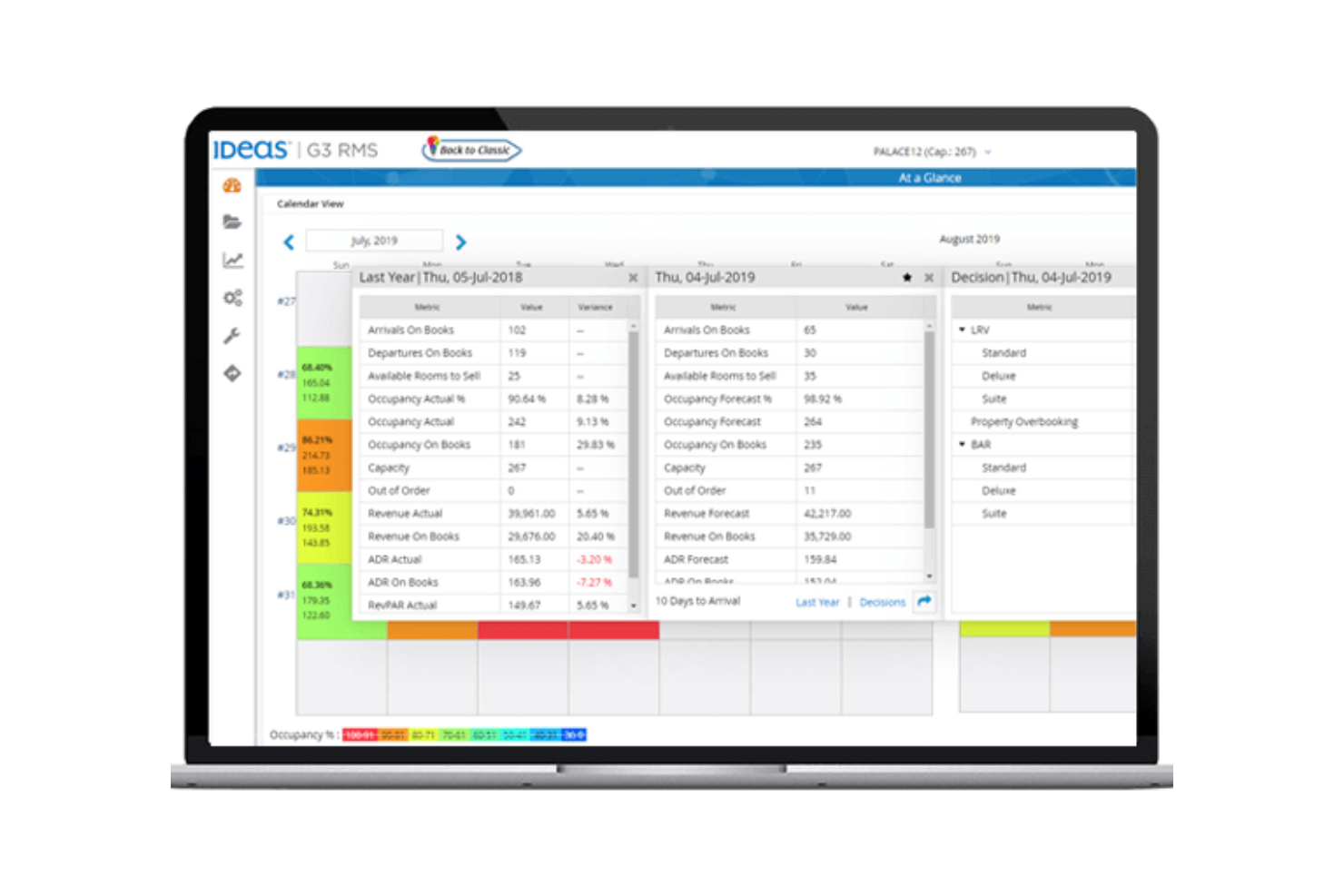
IDeaS G3 RMS es un sistema de gestión de ingresos diseñado para optimizar estrategias de precios y de inventario en hoteles y resorts. Sus usuarios principales son gerentes de ingresos y operadores hoteleros que desean aumentar la rentabilidad mediante información basada en inteligencia artificial y toma de decisiones automatizada.
Por qué elegí IDeaS G3 RMS: IDeaS G3 RMS ofrece herramientas avanzadas para la previsión y optimización de precios que ayudan a tu equipo a tomar decisiones informadas sobre ingresos. Los algoritmos de IA del sistema analizan tendencias de mercado y el comportamiento de los clientes para recomendar estrategias de precios óptimas. Puedes automatizar el control de inventario y la previsión de demanda, asegurando una gestión de ingresos precisa y oportuna. Mientras el software de IDeaS G3 RMS gestiona análisis de datos complejos, tú puedes concentrarte en el crecimiento estratégico.
Funciones y conexiones destacadas:
Funciones incluyen recomendaciones automáticas de precios que ajustan las tarifas según datos en tiempo real. La herramienta de previsión de demanda te ayuda a predecir con precisión futuras tendencias del mercado. Además, la plataforma proporciona análisis de rendimiento detallados que orientan tus estrategias de ingresos.
Conexiones incluyen Oracle Hospitality OPERA, Infor HMS, Maestro PMS, Agilysys, StayNTouch, RoomKeyPMS y Cloudbeds.
Pros and Cons
Pros:
- Capacidades avanzadas de previsión de demanda
- Recomendaciones automáticas de precios
- Análisis de rendimiento detallado
Cons:
- Capacidades de informes limitadas para segmentos y fuentes específicas
- Puede ser demasiado complejo para operaciones más pequeñas
Otro software de IA para hoteles del sector hotelero
Estas son algunas opciones adicionales de software de IA para hoteles del sector hotelero que no llegaron a mi selección, pero que aún merece la pena revisar:
- inTouch BI
Mejor para inteligencia empresarial
- Lighthouse
Ideal para obtener información de mercado generada por IA
- Like Magic
Ideal para personalización de huéspedes


Cómo evalúo el software de IA hotelera para la industria de la hostelería
Para elaborar esta lista, la IA de una herramienta debe poder gestionar tareas reales de las operaciones hoteleras, como responder a las solicitudes de los huéspedes o prever la demanda de habitaciones. A partir de ahí, evalúo tres aspectos. La funcionalidad principal tiene el mayor peso, como gestionar la comunicación con los huéspedes y sincronizar los datos del PMS. Después, analizo las funciones destacadas, como la IA de voz multilingüe, y lo que ofrece una herramienta más allá de su conjunto de funciones, como la asistencia para la incorporación.
Funcionalidad principal (requisitos básicos de esta lista)
Cuando selecciono herramientas para mi lista, puntúo cada una en una escala de 0 (no ofrece la funcionalidad) a 5 (sobresale en esta área) para cada una de las funcionalidades principales que se indican a continuación. Después convierto el total en un porcentaje para ayudar a evaluar la adecuación general de cada herramienta, con un peso adicional para las funcionalidades que he considerado esenciales.
- Comunicación con los huéspedes (esencial): Busco que la IA gestione preguntas sobre reservas, solicitudes de servicios y seguimientos a través del chat, la mensajería o la voz, con transferencias claras a personal humano.
- Previsión de ingresos (esencial): Evalúo las previsiones de demanda, las señales de ocupación y las recomendaciones de tarifas que ayudan a los gerentes a responder a los cambios en los patrones de reserva.
- Personalización para los huéspedes: Compruebo si el historial y las preferencias de los huéspedes influyen en las ofertas, recomendaciones o mensajes durante toda la estancia.
- Automatización operativa: Evalúo la asignación de tareas mediante IA para los flujos de trabajo de limpieza, mantenimiento y recepción cuando cambia el estado de una habitación o surgen necesidades de servicio.
- Análisis de comentarios: Busco análisis de sentimientos y temas en reseñas, encuestas y mensajes, con tendencias que los equipos puedan utilizar para recuperar la satisfacción del servicio.
- Integración de sistemas: Compruebo las conexiones con PMS, CRS y CRM para disponer de datos sincronizados que respalden la comunicación con los huéspedes, las operaciones y las decisiones de ingresos.
Una vez que tengo una lista de herramientas que cumplen los criterios, analizo qué diferencia a cada plataforma.
Factores diferenciadores (qué distingue a los proveedores)
Así es como comparo y contrasto a los distintos proveedores:
Funciones destacadas
Busco una IA de voz multilingüe que gestione conversaciones telefónicas reales, no solo chats de texto, para que los equipos de recepción puedan atender a huéspedes internacionales sin aumentar la plantilla. La inteligencia competitiva sobre tarifas es igual de importante. Compruebo si una herramienta recopila los precios actuales de la competencia y los incorpora a las recomendaciones de tarifas, ya que las referencias estáticas no detectan los aumentos repentinos de reservas. También evalúo los creadores de flujos de trabajo sin código, que permiten a los responsables de limpieza u operaciones ajustar las reglas de la IA por sí mismos sin tener que esperar al departamento de TI.
Más allá de las funciones
Compruebo si los proveedores ofrecen una incorporación estructurada con ayuda para migrar el PMS y formar al personal, ya que la mayoría de los hoteles no cuentan con equipos de TI dedicados para gestionar la configuración por sí solos. Los establecimientos de temporada necesitan especialmente una implementación rápida. También evalúo la escalabilidad: una plataforma debería permitir que tanto un hotel boutique como un grupo de 20 establecimientos personalicen las reglas de IA a nivel de propiedad sin aplicar precios por habitación que penalicen el crecimiento. El ROI medible también es importante, por lo que busco paneles de referencia que realicen un seguimiento del aumento del RevPAR o de los ingresos por ventas adicionales, proporcionando a los gerentes datos reales para justificar la inversión ante los propietarios.
Cómo elegir un software de IA para hoteles del sector hotelero
Es fácil perderse entre largas listas de características y estructuras de precios complejas. Para ayudarte a mantener la concentración mientras avanzas en tu proceso único de selección de software, aquí tienes una lista de factores que debes tener en cuenta:
| Factor | Qué se debe considerar |
|---|---|
| Escalabilidad | Considera si el software puede crecer junto con tu negocio. ¿Gestionará un aumento de las reservas y los datos a medida que tu hotel se expanda? Busca herramientas que ofrezcan planes flexibles que se adapten a tu crecimiento. |
| Integraciones | Comprueba si el software se integra con tus sistemas actuales. Asegúrate de que sea compatible con los sistemas de gestión de propiedades y los motores de reservas para evitar problemas operativos. |
| Personalización | Evalúa hasta qué punto el software se adapta a tus necesidades específicas. ¿Puedes personalizar los paneles o informes para que se ajusten a tus flujos de trabajo? La personalización puede mejorar la experiencia del usuario. |
| Facilidad de uso | Determina si tu equipo puede utilizar el software fácilmente. ¿La interfaz es intuitiva? Una herramienta fácil de usar reduce el tiempo de formación y aumenta la productividad. |
| Implementación e incorporación | Evalúa el tiempo y los recursos necesarios para la configuración. ¿El proveedor ofrece asistencia durante la instalación? Una incorporación fluida es fundamental para una adopción rápida y para minimizar el tiempo de inactividad. |
| Coste | Compara los modelos de precios con tu presupuesto. ¿Hay tarifas ocultas? Busca estructuras de precios transparentes y considera el valor ofrecido en relación con el precio. |
| Medidas de seguridad | Asegúrate de que el software protege los datos de los huéspedes. ¿Cuenta con medidas de cifrado y cumplimiento normativo? La seguridad es fundamental para mantener la confianza y proteger la información confidencial. |
| Disponibilidad del soporte | Comprueba el nivel de atención al cliente ofrecido. ¿Hay asistencia disponible las 24 horas del día, los 7 días de la semana? Un soporte fiable puede resolver los problemas rápidamente y garantizar unas operaciones fluidas. |
¿Qué es el software de IA para hoteles del sector hotelero?
El software de IA para hoteles del sector hotelero es un conjunto de herramientas digitales que utilizan inteligencia artificial para mejorar las operaciones hoteleras y las experiencias de los huéspedes. Estas herramientas suelen ser utilizadas por directores de hotel, personal de recepción y equipos de marketing para mejorar la eficiencia y personalizar las interacciones con los huéspedes.
Los registros de entrada automatizados, el análisis predictivo y las funciones de marketing personalizado ayudan a optimizar las operaciones, prever la demanda y adaptar las experiencias de los huéspedes. En general, estas herramientas aportan un valor significativo al mejorar la calidad del servicio y respaldar la toma de decisiones basada en datos.
Características
Al seleccionar un software de IA para hoteles del sector hotelero, presta atención a las siguientes funciones clave:
- Registro de entrada y salida automatizados: Utiliza herramientas de IA e inteligencia artificial generativa para reducir los tiempos de espera en recepción, mejorar la atención a los huéspedes y facilitar unas operaciones más fluidas para las empresas del sector hotelero.
- Análisis predictivo: Aplica el aprendizaje automático y el análisis de datos para prever la demanda, analizar el comportamiento de los huéspedes y respaldar decisiones de precios que impulsen los ingresos del hotel.
- Marketing personalizado: Aprovecha la información basada en IA para adaptar las estrategias y ofertas de marketing, creando experiencias personalizadas que mejoran la interacción y la fidelización de los huéspedes.
Precios dinámicos: Ajusta las tarifas de las habitaciones en tiempo real en función de la demanda, la competencia y los patrones de reserva, ayudando a los hoteleros a mantener su competitividad mientras maximizan los ingresos. - Automatización de la comunicación con los huéspedes: Utiliza chatbots y asistentes virtuales basados en IA para responder al instante a las consultas de los huéspedes a través de distintos canales, incluidas las redes sociales y las plataformas de mensajería.
- Previsión de la ocupación: Predice las tendencias de las reservas para ayudar a las empresas del sector hotelero a planificar de forma más eficaz el personal, la disponibilidad de habitaciones y los recursos operativos.
- Integración de datos: Conecta sistemas tecnológicos del hotel, como plataformas CRM, motores de reservas y herramientas de atención a los huéspedes, para crear una visión unificada de las operaciones.
- Análisis en tiempo real: Ofrece información actualizada sobre el rendimiento, lo que permite a los hoteleros supervisar la interacción de los huéspedes, las métricas de ingresos y la eficiencia operativa.
- Paneles personalizables: Permiten a los equipos adaptar los paneles en función de sus funciones y prioridades, mejorando el acceso al análisis de datos entre departamentos.
- Recomendaciones basadas en IA: Sugiere ventas adicionales, servicios y opciones de servicio de habitaciones en función del comportamiento y las preferencias de los huéspedes, apoyando las experiencias personalizadas y el aumento del gasto.
Beneficios
La implementación de un software de IA para hoteles del sector hotelero ofrece varios beneficios para tu equipo y tu negocio. Estos son algunos de los que puedes esperar:
- Mayor eficiencia: Automatizar tareas como los registros de entrada y la comunicación con los huéspedes reduce el trabajo manual y permite al personal centrarse en actividades más estratégicas.
- Mejora de la experiencia de los huéspedes: El marketing personalizado y las recomendaciones basadas en IA crean interacciones adaptadas a cada huésped, lo que aumenta la satisfacción y la fidelidad.
- Mayores ingresos: Los precios dinámicos y el análisis predictivo optimizan las tarifas de las habitaciones y pronostican la demanda, lo que permite una mejor gestión de los ingresos.
- Mejor toma de decisiones: Los análisis en tiempo real proporcionan información actualizada sobre las operaciones del hotel, lo que permite tomar decisiones fundamentadas y oportunas.
- Optimización de recursos: La previsión de ocupación ayuda a programar eficazmente al personal y asignar los recursos, garantizando unas operaciones fluidas.
- Calidad constante del servicio: Las respuestas automatizadas y la integración de datos garantizan una prestación uniforme del servicio en todas las interacciones con los huéspedes.
- Ventaja competitiva: Aprovechar las capacidades de la IA permite que su hotel se mantenga por delante en el mercado al adaptarse continuamente a las tendencias y preferencias de los huéspedes.
Costes y precios
Seleccionar un software de IA para hoteles destinado al sector de la hostelería requiere comprender los distintos modelos de precios y planes disponibles. Los costes varían en función de las características, el tamaño del equipo, los complementos y otros factores. La siguiente tabla resume los planes habituales, sus precios medios y las funciones típicas incluidas en las soluciones de software de IA para hoteles del sector de la hostelería:
Tabla comparativa de planes de software de IA para hoteles del sector de la hostelería
| Tipo de plan | Precio medio | Funciones habituales |
|---|---|---|
| Plan gratuito | $0 | Comunicación básica con los huéspedes, análisis limitados y gestión sencilla de reservas. |
| Plan personal | $10-$30/usuario/mes | Mayor personalización para los huéspedes, precios dinámicos básicos y asistencia por correo electrónico. |
| Plan empresarial | $30-$70/usuario/mes | Análisis avanzados, registro de entrada y salida automatizados y compatibilidad con varias propiedades. |
| Plan corporativo | $70-$150/usuario/mes | Integraciones personalizadas, integración completa de datos y gestión de cuentas exclusiva. |
Preguntas frecuentes sobre el software de IA para hoteles del sector de la hostelería
Estas son algunas respuestas a preguntas frecuentes sobre el software de IA para hoteles del sector de la hostelería:
¿Cómo integro el software de IA con los sistemas actuales de mi hotel?
Para integrar el software de IA con los sistemas actuales de tu hotel, empieza por comprobar la compatibilidad con tu sistema de gestión hotelera y tus motores de reservas actuales. La mayoría de las soluciones de IA ofrecen API y guías de integración para ayudarte. Trabaja estrechamente con tu equipo de TI para garantizar una configuración fluida. Si encuentras dificultades, muchos proveedores ofrecen servicios de asistencia para ayudarte con la integración. Asegúrate de probarla minuciosamente antes de ponerla en funcionamiento para garantizar que todos los sistemas funcionen juntos sin problemas.
¿Puede el software de IA ayudar a reducir los costes operativos?
Sí, el software de IA puede ayudar a reducir los costes operativos mediante la automatización de tareas repetitivas y la optimización de la asignación de recursos. Por ejemplo, la fijación dinámica de precios basada en IA puede ajustar las tarifas de las habitaciones en tiempo real, maximizando los ingresos. Los procesos automatizados de registro reducen la necesidad de personal adicional en recepción. Además, el análisis mediante IA puede identificar ineficiencias en las operaciones, lo que te permite abordarlas de forma proactiva. Al agilizar estos procesos, tu equipo puede centrarse en ofrecer una mejor experiencia a los huéspedes sin aumentar los costes.
¿Es la seguridad de los datos un motivo de preocupación con el software de IA?
Sí, la seguridad de los datos es un motivo de preocupación con el software de IA, pero la mayoría de los proveedores de confianza cuentan con sólidas medidas de seguridad. Asegúrate de que el software cumpla normativas de protección de datos como el RGPD o la CCPA. Busca funciones como el cifrado, el almacenamiento seguro de datos y auditorías de seguridad periódicas. Pregunta a los posibles proveedores por sus protocolos de seguridad y por cómo gestionan las filtraciones de datos. Es fundamental que tú y tu equipo comprendáis estas medidas para mantener la confianza de los huéspedes y proteger la información confidencial.
¿Cómo puede el software de IA mejorar la satisfacción de los huéspedes de mi hotel?
El software de IA mejora la satisfacción de los huéspedes al personalizar las interacciones y ofrecer respuestas oportunas. Por ejemplo, los chatbots de IA pueden gestionar las consultas de los huéspedes las 24 horas del día, los 7 días de la semana, garantizando soluciones rápidas. Las campañas de marketing personalizadas pueden ofrecer promociones adaptadas, mejorando la experiencia de los huéspedes. El análisis basado en IA proporciona información sobre las preferencias de los huéspedes, lo que te permite adaptar los servicios en consecuencia. Al aprovechar estas capacidades, tu equipo puede anticiparse a las necesidades de los huéspedes y superar sus expectativas, lo que se traduce en una mayor satisfacción y en un aumento de las reservas repetidas.
¿Cuánto tiempo debo prever dedicar a la configuración y la formación?
Los tiempos de configuración varían, pero la mayoría de los equipos hoteleros pueden empezar en unos días si los flujos de trabajo ya están definidos. La formación suele ser sencilla, especialmente si el software incluye plantillas o una incorporación guiada. Debes prever que tu equipo dedicará unas horas a aprender los conceptos básicos. Después, el sistema normalmente resulta más fácil de utilizar a medida que trabajas con él.