

Cloud-based hotel property management software is an online system for managing reservations, rooms, rates, guest profiles, billing, and hotel operations. The right platform gives your team shared access to front-desk workflows, housekeeping updates, OTA distribution, reporting, and multi-property controls from any location. I compared 12 options to help you assess features, pricing, integrations, scalability, and support for your hotel or portfolio.
Why Trust Our Software Recommendations
6,700+
Reviews
20
Industry experts
16+
Evaluation factors
14
Years
Our team has been testing and reviewing software since 2012. As hospitality leaders ourselves, we know how difficult—and important—it is to choose the right software.
For this guide, we evaluated tools using hands-on testing and independent research, scoring tools using our selection criteria.
Our reviews reflect our human editorial judgment, not a sales pitch.
Comparison Table: Cloud-Based Hotel Property Management Software
Compare pricing and specifications side by side for the cloud-based hotel property management software that made it onto my shortlist.
| Tool | Best For | Trial Info | Price | ||
|---|---|---|---|---|---|
| 1 | Best for independents needing built-in accounting | Free demo available | Pricing upon request | Website | |
| 2 | Best for multi-property portfolio oversight | Free trial + free demo available | From $3.99/month (billed annually) | Website | |
| 3 | Best for European independent hotel operations | 30-day free trial + free demo asvailable | From €89/month | Website | |
| 4 | Best for independent multi-property hotel groups | Free demo available | Pricing upon request | Website | |
| 5 | Best for multi-property OTA distribution at scale | Free demo available | From $80/month | Website | |
| 6 | Best for multi-property portfolio management | Free demo available | Pricing upon request | Website | |
| 7 | Best for enterprise-scale multi-property operations | Free demo available | Pricing upon request | Website | |
| 8 | Best for mobile-first hotel ops at scale | Free demo available | Pricing upon request | Website | |
| 9 | Best for multi-property billing and folio control | Free demo available | From $198/month | Website | |
| 10 | Best for enterprise-scale multi-property deployment | Free demo available | Pricing upon request | Website |


Cloud-Based Hotel Property Management Software Reviews
Below are my detailed summaries of the best cloud-based hotel property management software that made it onto my shortlist. My reviews offer a detailed look at the features, pricing, and integrations of each software option to help you find the best one for you.
 Best for independents needing built-in accounting
- Free demo available
- Pricing upon request
Visit WebsiteCustomer Rating:4.6/5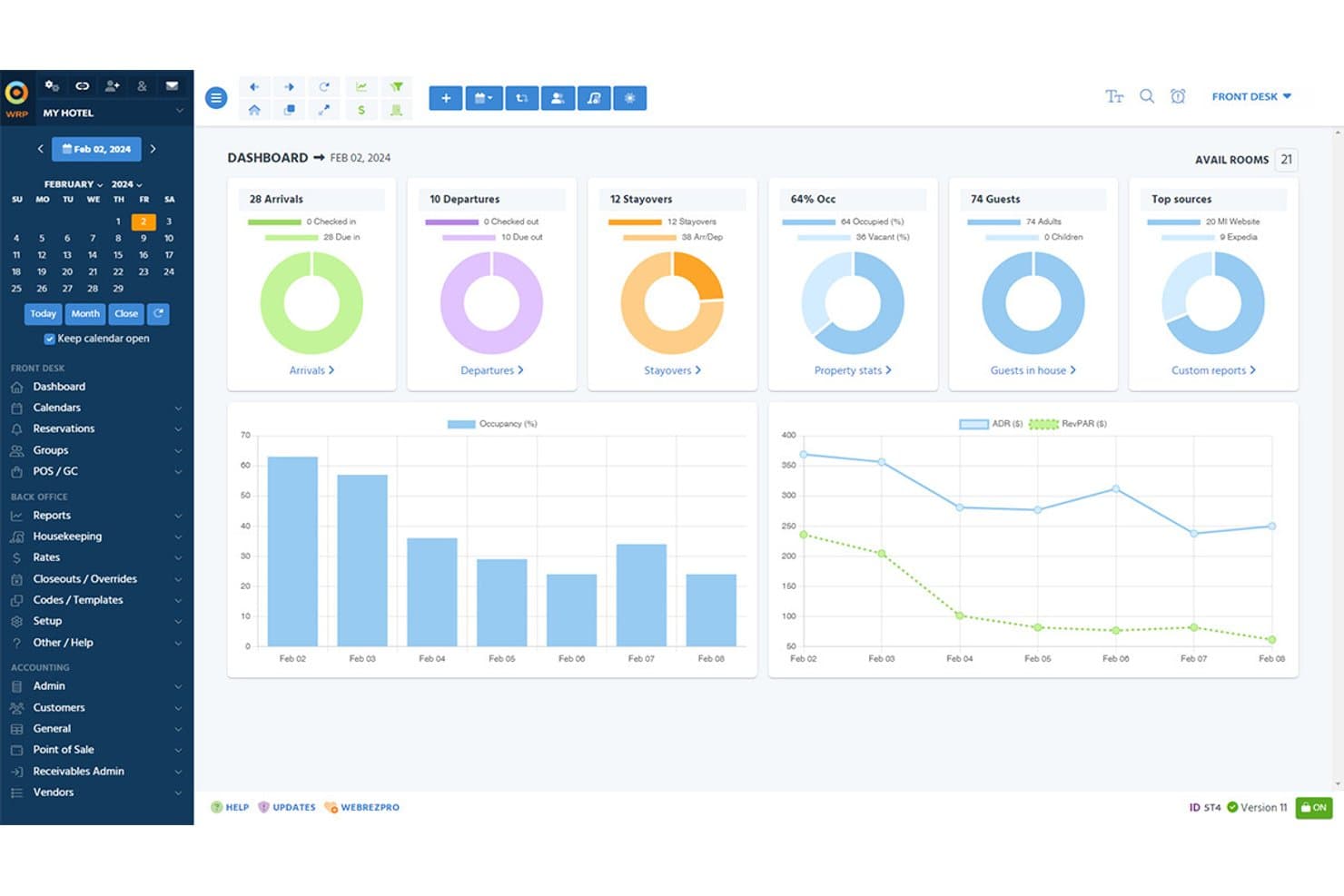
WebRezPro tracks real-time occupancy, arrivals, and revenue performance. WebRezPro is a cloud-based hotel PMS that covers reservations, front desk operations, housekeeping, channel distribution, and built-in accounting—all in one browser-accessible system.
Who Is WebRezPro Best For?
WebRezPro is a strong fit for independent hoteliers and owner-operators who want reservations, housekeeping, and accounting managed in a single system without stitching together separate tools.
Why I Picked WebRezPro
WebRezPro earns its spot on my shortlist because it's one of the few cloud hotel PMS options that ships with a true general ledger, chart of accounts, and profit-and-loss reporting built directly into the platform. I've seen independent operators rely on it to handle VAT tracking, receivables, and purchase orders without ever touching a separate accounting tool. The built-in yield management module also lets you set rules that automatically adjust rates as availability shifts, so you're not manually repricing rooms during a busy weekend.
WebRezPro Key Features
- Drag-and-drop tape chart: View and manage stayovers, room status, and availability in a visual timeline you can rearrange directly from the browser.
- Contactless self check-in: Guests upload ID, enter payment details, and sign digitally before arrival, with each submission logged by timestamp and IP address.
- Multi-property Central Administration Module: One login lets staff switch between properties, run combined performance reports, and manage a group-wide booking engine.
- Pulse AI add-on: Powered by Claude AI, Pulse answers questions about recent booking data, drafts review replies, builds guest journeys, and runs email campaigns.
WebRezPro Integrations
WebRezPro offers 150+ integrations, including Booking.com, Expedia, SiteMinder, SynXis, IDeaS, Duetto, QuickBooks Online, Toast, ASSA ABLOY, and WebRezPay. It supports API connections for custom integrations and integrates with Zapier.
Pros and Cons
Pros:
- Responsive support with dedicated onboarding
- Strong housekeeping and front-desk coordination
- Built-in general ledger and hotel accounting
Cons:
- No native mobile app or offline mode
- Dated interface requires extra navigation
Learn more about WebRezPro: Best for multi-property portfolio oversight
- Free trial + free demo available
- From $3.99/month (billed annually)
Visit WebsiteCustomer Rating:4.4/5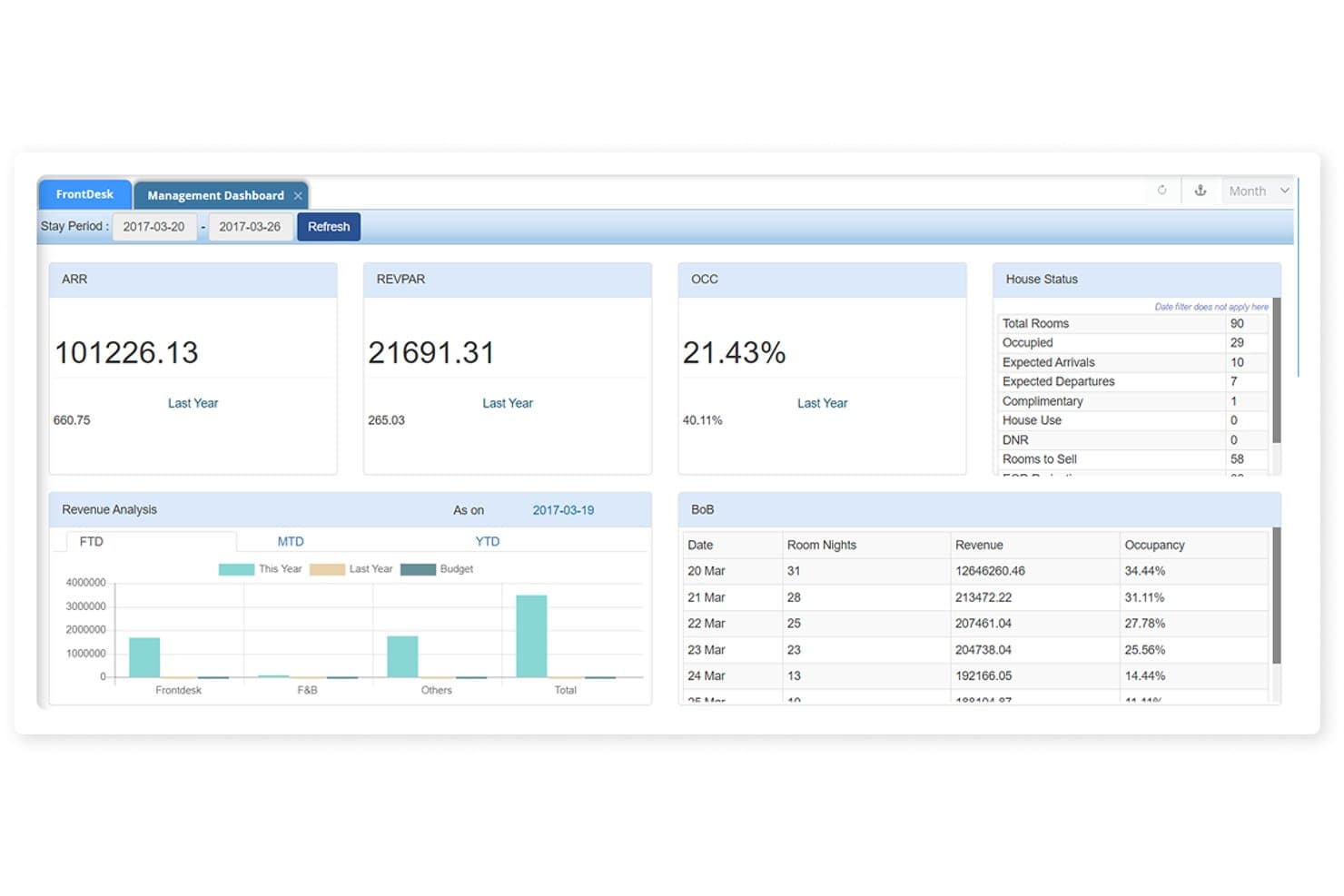
Hotelogix tracks revenue, occupancy, and room status across hotel operations. Hotelogix is a cloud-based hotel PMS that covers front desk operations, reservations, housekeeping, a built-in channel manager, POS, and multi-property management from a single browser-based platform.
Who Is Hotelogix Best For?
Hotelogix is a strong fit for hotel owners and operators managing multiple properties who need centralized control over reservations, rates, and housekeeping from a single login.
Why I Picked Hotelogix
I've included Hotelogix in my top picks because its Super Admin dashboard lets you oversee every property in your portfolio from a single login, covering rates, inventory, reservations, and user roles across locations. I particularly like the central reservation office (CRO/CRS) feature, which handles group-wide bookings without switching between systems. The multi-property guest profile view is a real differentiator, giving you cross-property stay history at a glance when a guest moves between your hotels.
Hotelogix Key Features
- Automated night audit: Closes daily accounts, generates folios for check-outs and no-shows, applies package allowances, locks the prior day, and produces end-of-day reports automatically.
- Built-in POS with folio posting: Manage unlimited outlet types—restaurant, bar, spa, gift shop—with charges posted directly to the guest folio from a touchscreen-ready interface.
- Real-time OTA sync via channel manager: Two-way rate and availability updates push to named OTAs like Booking.com, Expedia, and Agoda, with a commission-free direct booking engine running alongside.
- Mobile staff apps: Native Android and iOS apps let front desk and housekeeping staff manage room status, reservations, and task assignments from anywhere on or off property.
Hotelogix Integrations
Hotelogix offers 100+ marketplace integrations, including SiteMinder, STAAH, RateGain, QuickBooks, Xero, Stripe, PayPal, TrustYou, ReviewPro, and Onity. It also provides APIs for custom integrations.
Pros and Cons
Pros:
- Automated night audit covers daily closeout
- Cross-property guest history supports repeat stays
- Centralized oversight across multiple properties
Cons:
- Support quality varies by location
- Reporting gaps limit performance visibility
Learn more about Hotelogix: Best for European independent hotel operations
- 30-day free trial + free demo asvailable
- From €89/month
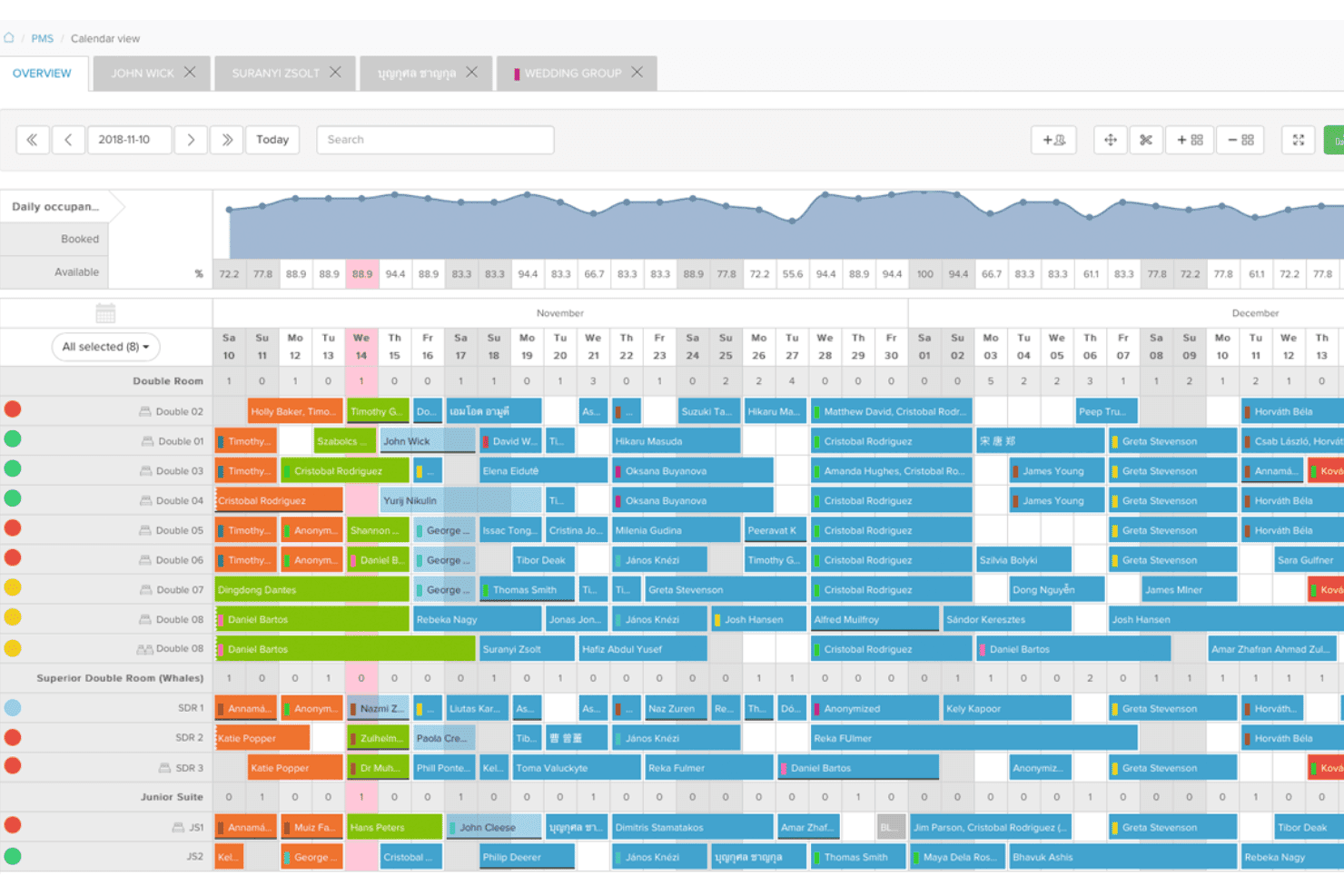
SabeeApp's calendar view lets users track room bookings at a glance. SabeeApp is a cloud-based hotel property management system that combines a PMS, built-in channel manager, booking engine, payment processing, and mobile staff apps for front desk and housekeeping operations.
Who Is SabeeApp Best For?
SabeeApp is a strong fit for independent hotels, boutique properties, and small multi-property operators based primarily in Europe or the Middle East.
Why I Picked SabeeApp
I've included SabeeApp in my top picks because it's one of the few hotel PMS platforms built specifically around the operational realities of independent European properties, including native automated tax reporting for markets like Hungary, Turkey, and Switzerland. I particularly like the built-in channel manager's direct two-way API connections to 70+ OTAs, with Booking.com Premier Plus Connectivity Partner status backing that up. The Action Center and live housekeeping status sync also give front desk teams real-time visibility without juggling separate tools.
SabeeApp Key Features
- SabeePay payment automation: Automatically detects and charges OTA virtual cards in bulk, posts payments and refunds directly to guest folios, and supports deposits, pre-authorizations, and payment links.
- GuestAdvisor contactless check-in: Lets guests complete online check-in, scan their ID, and access their room via smart lock integrations before they arrive at the property.
- Unified guest inbox: Consolidates messages from WhatsApp, Booking.com, Airbnb, Facebook, Instagram, and Viber into one inbox, with AI-suggested replies that staff can review or send directly.
- Local tax authority reporting: Automates statutory reporting to government systems in Hungary, Turkey, Switzerland, and Lithuania, with a partner integration covering Greece.
SabeeApp Integrations
SabeeApp offers 50–60+ Marketplace integrations, including Reconline, RoomPriceGenie, PriceLabs, Stripe, Xero, QuickBooks, POSCloud, Dormakaba, Salto KS, and Nuki. An API add-on supports custom integrations.
Pros and Cons
Pros:
- Automated payments post directly to folios
- Multi-property operations share one calendar
- Real-time housekeeping status updates
Cons:
- Mobile workflows require internet access
- Reporting options remain limited
Learn more about SabeeApp: Best for independent multi-property hotel groups
- Free demo available
- Pricing upon request
Visit WebsiteCustomer Rating:3.9/5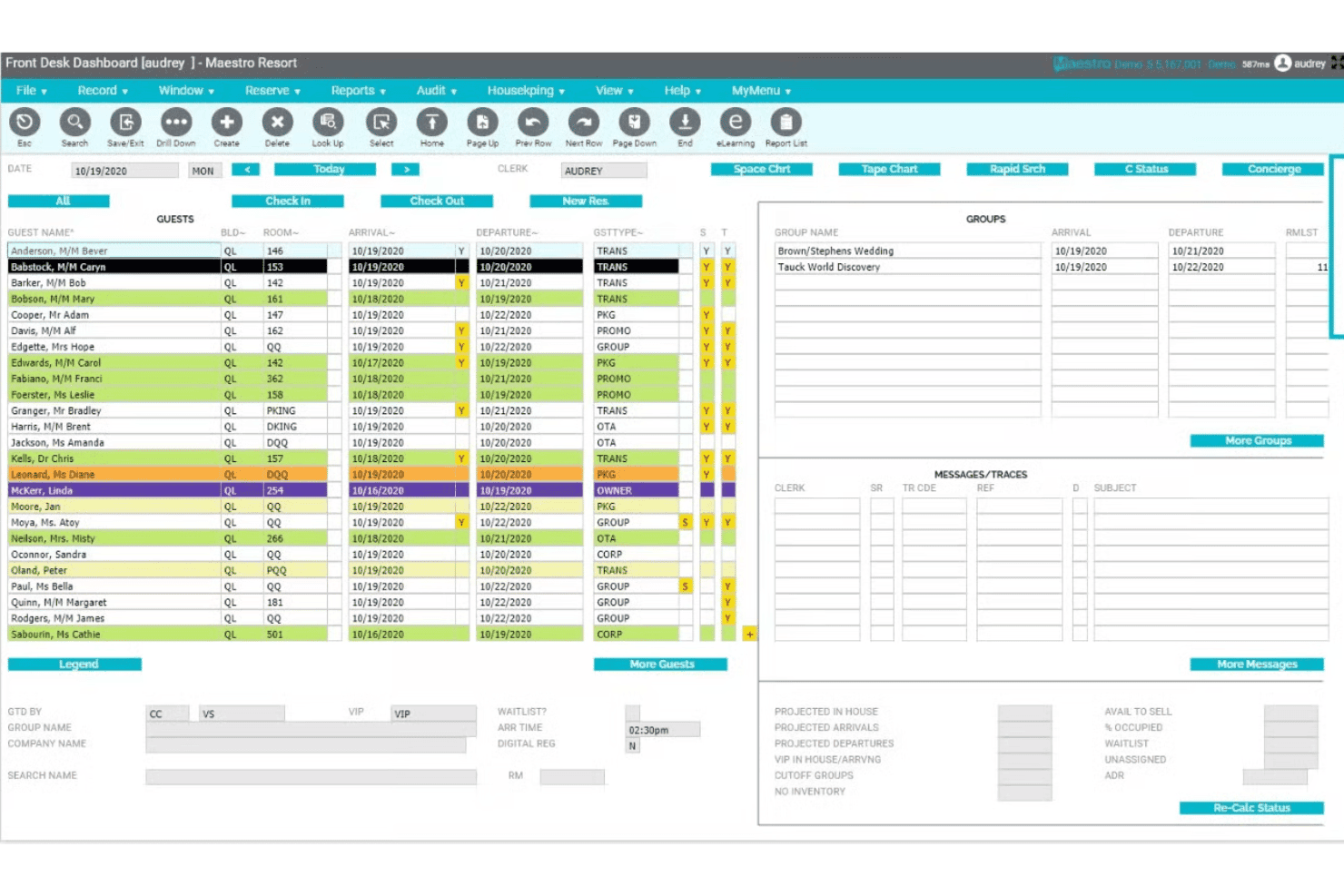
Maestro PMS includes guest arrivals, group bookings, and room assignments. Maestro PMS is a cloud-based hospitality operations platform for independent hotels and multi-property groups that brings reservations, front desk, housekeeping, guest profiles, billing, and 20+ native modules onto a single shared database.
Who Is Maestro PMS Best For?
Maestro PMS is a strong fit for independent hotel owners and operators managing multiple properties who need all departments running on a single shared database.
Why I Picked Maestro PMS
I picked Maestro PMS as one of the best because it's built from the ground up for independent operators running multiple properties on a single database. What I find genuinely useful is the centralized guest profile that carries loyalty history, preferences, and reservation data across every property in your portfolio. Pair that with the central reservations office and built-in yield management, and you have real multi-property coordination without stitching together separate systems.
Maestro PMS Key Features
- Mobile housekeeping app: Housekeeping staff can update room status from a tablet, which automatically triggers an SMS to the guest when their room is ready.
- MezzoPay embedded payments: Processes multiple payment methods and currencies with tokenization and encryption, using Ingenico terminal hardware directly within the PMS.
- Sales and catering module: Manages event bookings, group contracts, and e-signature workflows on the same database as the front office and reservations.
- GuestXMS messaging: Enables two-way SMS with guests, plus case management and feedback tracking, all accessible from a dashboard within the platform.
Maestro PMS Integrations
Maestro PMS supports 800+ established vendor integrations, including Expedia QuickConnect, IDeaS G3, LodgIQ, Right Revenue, Tripleseat, Silverware POS, PurpleCloud, Zaplox, Fetch, and Inntopia. Its APIs support custom integrations.
Pros and Cons
Pros:
- Housekeeping updates trigger guest room-ready texts
- Cross-property guest profiles preserve stay history
- Shared database supports multi-property operations
Cons:
- Package and rate setup requires extra effort
- Dated interface slows front-desk training
Learn more about Maestro PMS: Best for multi-property OTA distribution at scale
- Free demo available
- From $80/month
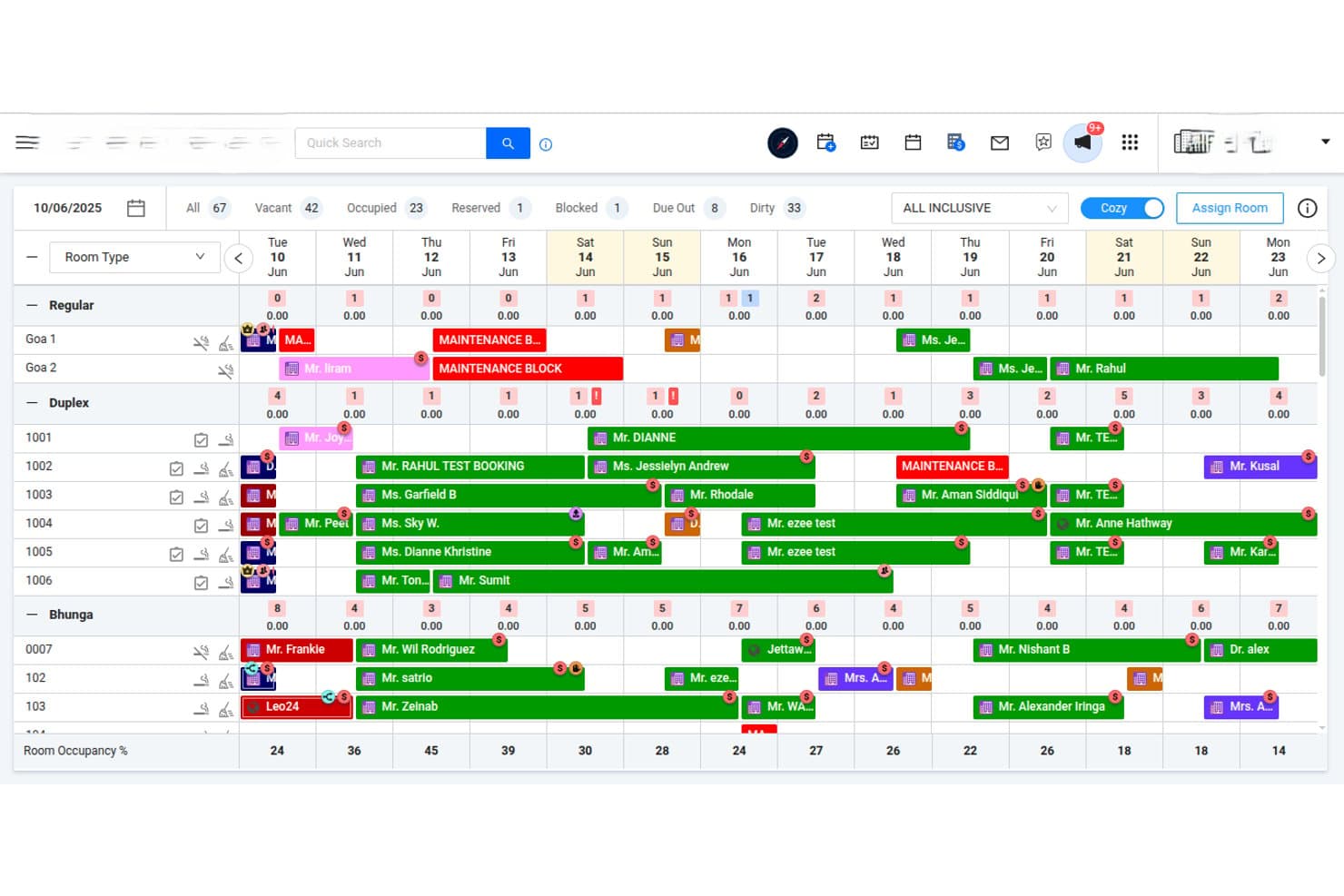
Yanolja Cloud Solution offers a visual room calendar with occupancy tracking. Yanolja Cloud Solution is a cloud-based hotel PMS that brings together reservations, front desk operations, housekeeping, channel distribution, a booking engine, and payments in one integrated platform built for independent hotels and multi-property groups.
Who Is Yanolja Cloud Solution Best For?
Yanolja Cloud Solution is a strong fit for hotel owners and operators managing a portfolio of 5–50 properties who need centralized OTA distribution and cross-property visibility in one platform.
Why I Picked Yanolja Cloud Solution
I picked Yanolja Cloud Solution as one of the best because its channel distribution reach is genuinely hard to match at this price point: 130–160+ OTA connections with two-way sync updating every channel in under 10 seconds. What I like most is how that speed plays out across a portfolio. When one property triggers a stop-sale, it pushes to all connected channels instantly, and rate parity controls keep pricing consistent without manual intervention across each property's channel mapping.
Yanolja Cloud Solution Key Features
- Automated housekeeping task generation: Arrival, departure, and guest request data automatically populate housekeeping task lists with live room status sorted by guest impact.
- Multi-property permission controls: Set access by role, property, or brand, so staff at each location only see what's relevant to their position.
- Automated night audit: The system runs overnight reports, flags anomalies, and generates arrival, departure, and revenue reports in local formats for 100+ regions.
- Unified guest profile with duplicate merging: One guest record consolidates stay history, lifetime value, and loyalty data across all properties, with automatic duplicate detection at check-in.
Yanolja Cloud Solution Integrations
Yanolja Cloud Solution supports 650+ integrations, including Booking.com, Expedia, Airbnb, Agoda, Amadeus, Sabre, Google Hotel Ads, TripAdvisor, and Trivago. It offers marketplace integrations and a paid Open API for custom connections.
Pros and Cons
Pros:
- Automated housekeeping and night audit
- Mobile access covers full PMS workflows
- Centralized controls across multiple properties
Cons:
- Group card payments cannot split folios
- Weak connections can slow PMS performance
Learn more about Yanolja Cloud Solution: 6Best for multi-property portfolio management
RMS
- Free demo available
- Pricing upon request
Visit WebsiteCustomer Rating:4.4/5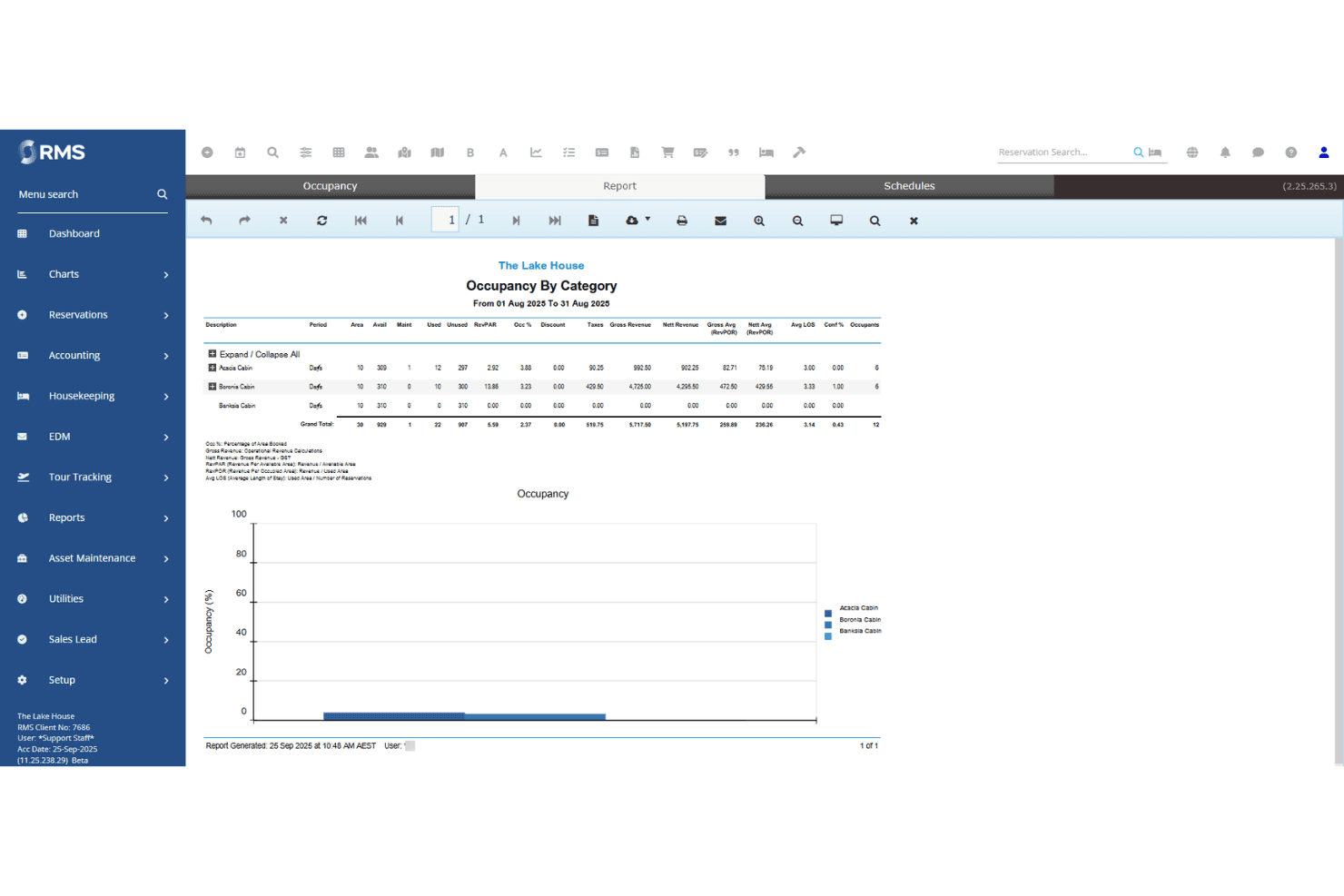
RMS generates occupancy-by-category reports with charts and revenue metrics. RMS is a cloud-based hotel PMS that brings together reservation management, a built-in channel manager, housekeeping, rate management, a direct booking engine, and multi-property portfolio oversight in one platform.
Who Is RMS Best For?
RMS is a strong fit for hotel groups and multi-property operators who need one system to manage reservations, housekeeping, and channel distribution across all their sites.
Why I Picked RMS
RMS earns its spot on my shortlist because of how well it handles multi-property operations from a single database. I love that one login gives you a portfolio-wide dashboard and property-level reporting, so switching between 25 sites doesn't mean juggling 25 logins. The shared guest profile database is what really sets it apart: stay history, preferences, and VIP tags follow a guest across every property automatically.
RMS Key Features
- Built-in channel manager: Sync availability and rates in real time across 100+ OTAs, including Booking.com, Expedia, Airbnb, and Agoda, with stop-sells, allotments, and rate restrictions all managed from one place.
- Night audit automation: Run end-of-day rate posting, bulk check-ins, charge posting, and invoicing automatically without manual intervention.
- Guest Portal: Let guests complete online check-in, check-out, payments, and booking changes without front desk involvement.
- RMS Pay: Process pre-authorizations, automated payment schedules, and 3D Secure transactions through RMS's built-in payment gateway, with chargeback dispute support included.
RMS Integrations
RMS offers marketplace integrations with Booking.com, Expedia, Airbnb, Vrbo, Agoda, Duetto, IDeaS, RoomPriceGenie, and Xero. It also provides a public REST API for custom integrations, with API access available on the Elevate plan.
Pros and Cons
Pros:
- Mobile check-in and checkout tools
- Automated housekeeping tasks and room statuses
- Portfolio-wide guest profiles and dashboards
Cons:
- Rate setup spans too many screens
- Custom reporting feels too shallow
Learn more about RMS: Best for enterprise-scale multi-property operations
- Free demo available
- Pricing upon request
Visit WebsiteCustomer Rating:4.3/5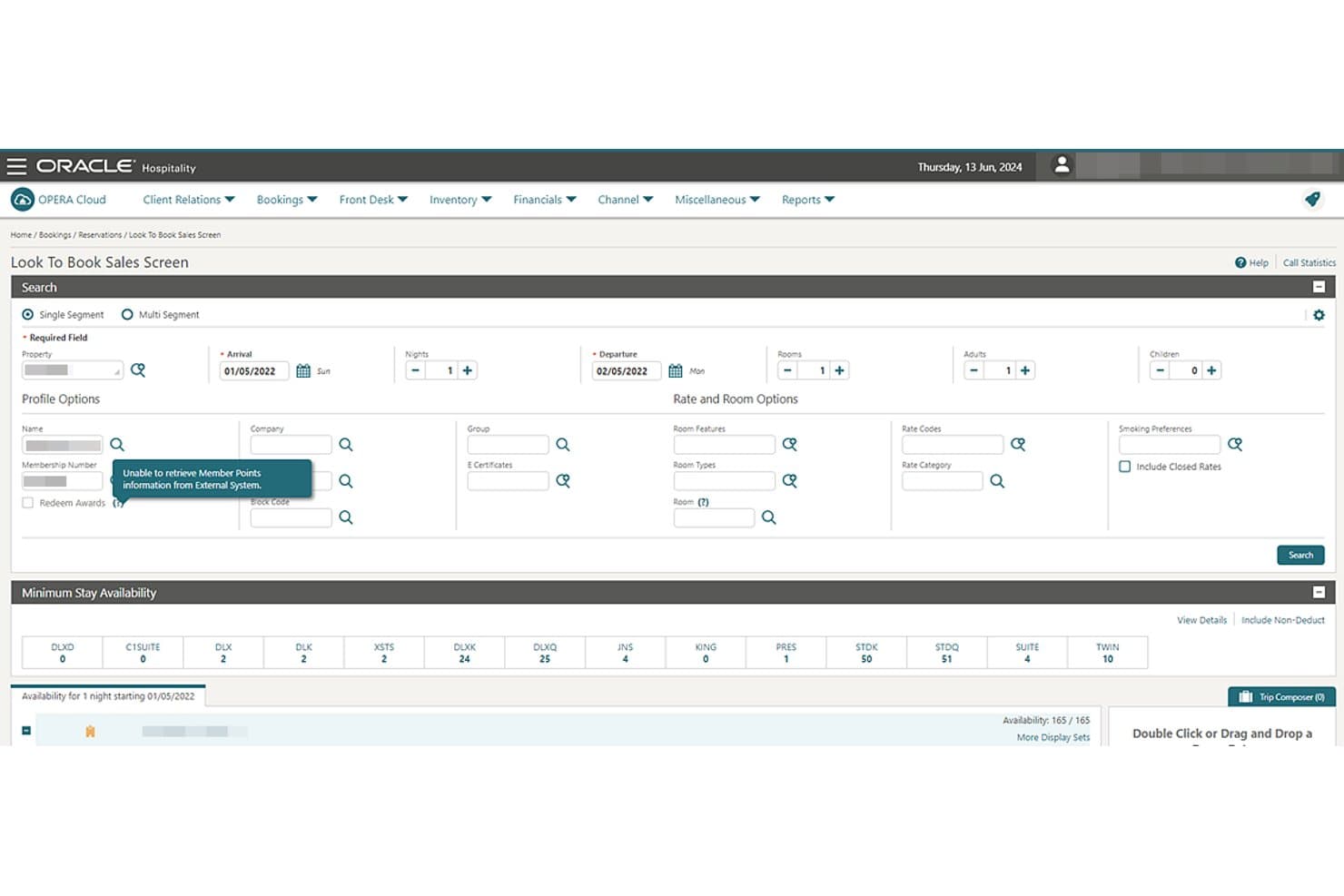
OPERA Cloud lets users search room availability by date and segment. OPERA Cloud is Oracle's cloud-based hotel PMS that covers reservation management, front desk operations, housekeeping, guest profile management, folio billing, and multi-property configuration across a single browser-based platform.
Who Is OPERA Cloud Best For?
OPERA Cloud is a natural fit for hotel groups and chains managing multiple properties, particularly those that need enterprise-level configuration, shared guest profiles, and compliance across international markets.
Why I Picked OPERA Cloud
OPERA Cloud earns its spot on my shortlist because no other hotel PMS matches its depth for multi-property operations at enterprise scale. I'm particularly impressed by OPERA Cloud Central, which puts reservations, loyalty, and distribution into one interface across thousands of properties, and by the chain-level dashboard tiles that give GMs real-time visibility without jumping between systems. Shared guest profiles that carry preferences, loyalty points, and dining history across every property in a group are genuinely difficult to replicate elsewhere.
OPERA Cloud Key Features
- Look to Book availability screen: View rates, packages, and room types in one place, with built-in upgrade suggestions, add-on prompts, and turnaway tracking.
- Rule-based housekeeping with Task Companion: Assign and manage housekeeping tasks on mobile, replacing printed task sheets with real-time interactive task tracking.
- Multiple folios with drag-and-drop charge routing: Open several folios per reservation and move charges between them without manual re-entry.
- OPERA Cloud Assistant: Ask questions in plain language to get answers about operational tasks, plus AI-driven room assignment recommendations and rate code writing.
OPERA Cloud Integrations
OHIP provides 650+ live marketplace integrations and 1,200+ partners, including Simphony, IDeaS G3 RMS, Duetto, Canary Technologies, and Vouch. OPERA Cloud Distribution connects with OTAs and GDS, while OHIP supports custom integrations.
Pros and Cons
Pros:
- Flexible folios handle complex billing
- Shared profiles span multiple properties
- Chain-level dashboards support portfolio oversight
Cons:
- Training takes time for new front-desk staff
- Browser performance can slow during peak periods
Learn more about OPERA Cloud: Best for mobile-first hotel ops at scale
- Free demo available
- Pricing upon request
Visit WebsiteCustomer Rating:4.4/5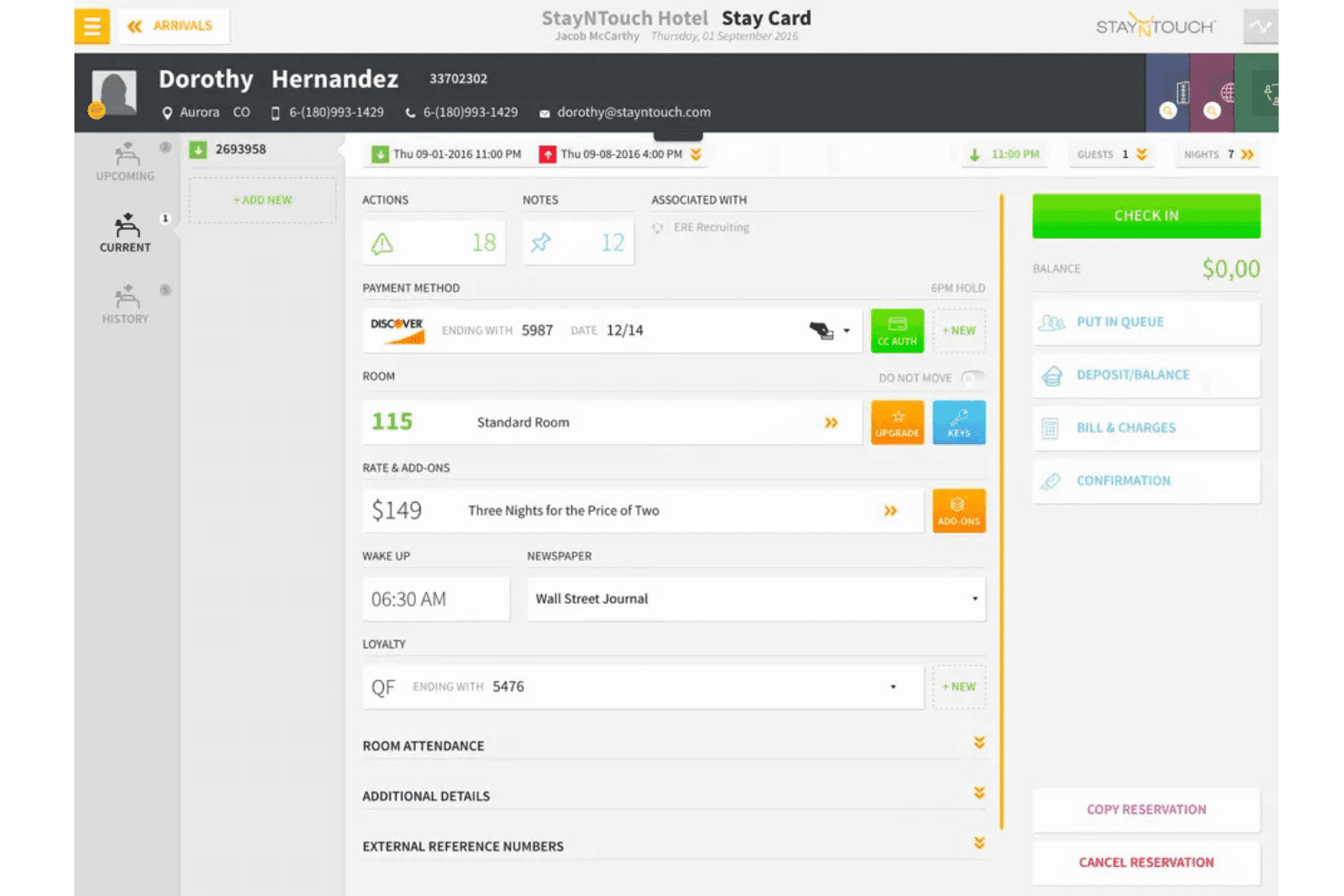
StayNTouch provides guest stay details for efficient check-in. StayNTouch is a cloud-native hotel PMS that runs fully in a browser and on mobile devices, covering reservations, front desk, housekeeping, channel and rate distribution, billing, and multi-property management.
Who Is StayNTouch Best For?
StayNTouch is a strong fit for multi-property operators and hotel management companies that need staff to work fully untethered from the front desk.
Why I Picked StayNTouch
StayNTouch earns its spot on my shortlist because it's built from the ground up to run entirely off a browser or mobile device, with no server hardware required on-site. I'm particularly impressed by the mobile housekeeping app, which lets staff update room statuses, assign tasks by floor, and post minibar charges from their phones in real time. At scale, the multi-property dashboard gives operators a live view of occupancy, available rooms, and best available rate across up to nine properties on a single screen.
StayNTouch Key Features
- Drag-and-drop tape chart: View and manage all reservations visually, with rules-based room assignment and automated room blocking built in.
- Guest messaging inbox: Consolidate SMS, WhatsApp, OTA messages, and web chat into a single inbox inside the PMS, with AI-assisted automation.
- Contactless kiosk check-in: Let guests check in independently via a kiosk with ID scanning, facial recognition, and on-site key encoding.
- Accounts receivable module: Handle direct billing to corporate accounts and agencies, multi-currency invoicing, and automatic deposit charges from within the PMS.
StayNTouch Integrations
StayNTouch supports 1,400+ integrations, including SiteMinder, Toast, Salesforce, Duetto, IDeaS, QuickBooks Online, Xero, Cendyn, Salto, and HotSOS. Its Connect APIs and webhooks support custom integrations.
Pros and Cons
Pros:
- Support resolves operational issues quickly
- Front desk staff train within hours
- Mobile housekeeping updates room status instantly
Cons:
- Group booking workflows impose room limits
- Reporting filters lack deeper customization
Learn more about StayNTouch: Best for multi-property billing and folio control
- Free demo available
- From $198/month
Visit WebsiteCustomer Rating:4.5/5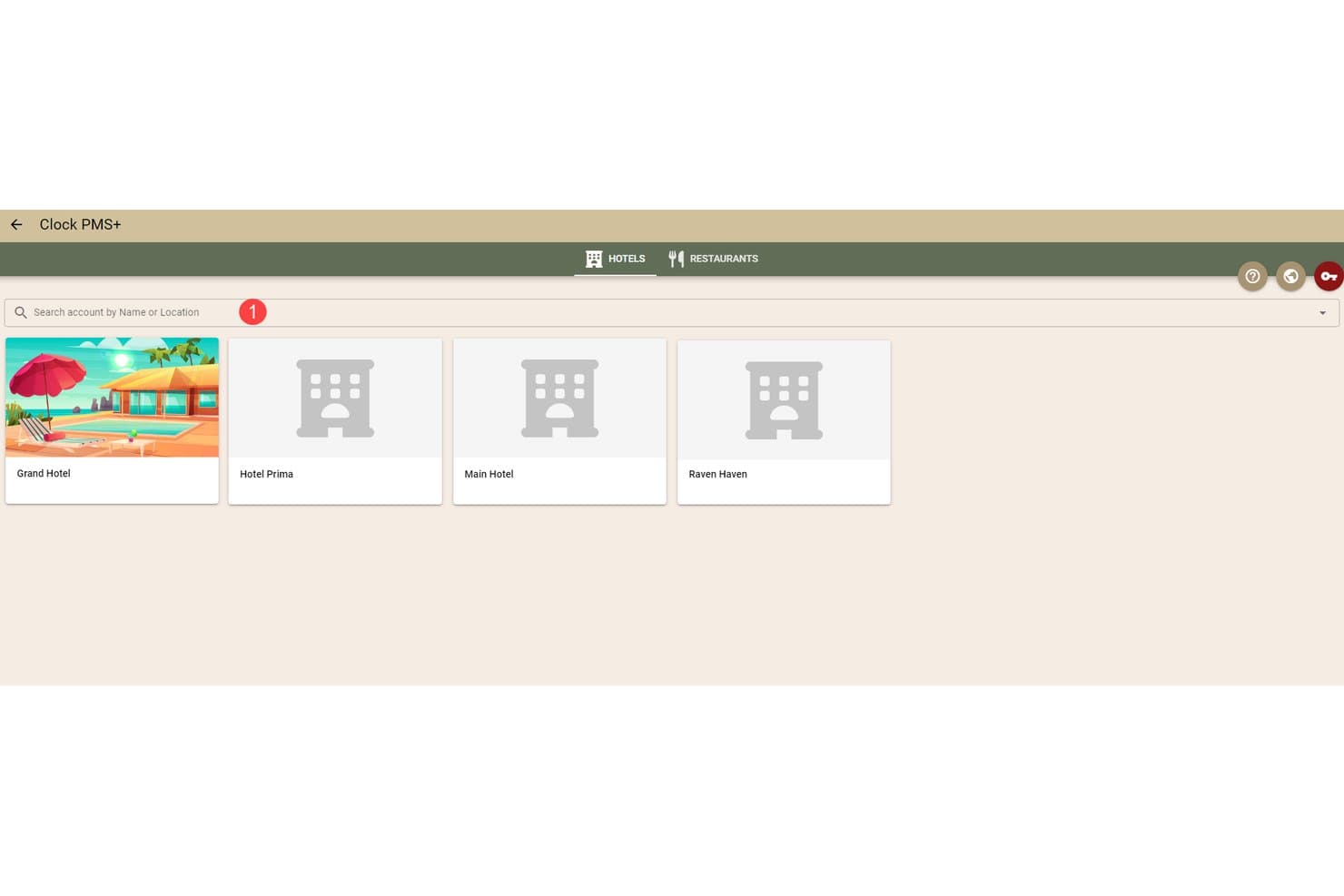
Clock PMS+ lets users manage multiple hotel properties from one dashboard. Clock PMS+ is a cloud-based hotel property management system that covers reservations, front desk operations, housekeeping, invoicing, rate management, a native booking engine, restaurant POS, and multi-property management in one platform.
Who Is Clock PMS+ Best For?
Clock PMS+ is a strong fit for hotel groups and multi-property operators who need tight folio control, chain-wide guest profiles, and a single login across all locations.
Why I Picked Clock PMS+
I picked Clock PMS+ as one of the best because of how it handles billing and folio management across multiple properties. Every booking gets unlimited folios, with charges automatically posted, split, transferred, or routed to companies across properties in real time. I also love that chain-wide guest profiles carry discount codes with property-specific rates, so a returning guest's billing setup follows them wherever they stay.
Clock PMS+ Key Features
- Multi-booking editing: Edit multiple reservations at once using a single screen, with saved custom views, Quick Fill, and keyboard navigation.
- Housekeeper mobile app: Housekeepers view assigned tasks, update room statuses, post minibar charges, and flag maintenance issues from their mobile devices in real time.
- Native booking engine: Sell rooms, extras, and experiences directly through Clock's built-in booking engine, with passwordless login and signup discount codes.
- Analytics data feed: Connect a daily-refreshed data copy to Looker Studio, Power BI, Tableau, or BigQuery, plus a custom reporting engine with 210 indicators.
Clock PMS+ Integrations
Clock lists about 230 integrations, including SiteMinder, SynXis, IDeaS, Stripe, QuickBooks, Lightspeed, Duve, and Salto. Its documented open API supports custom integrations, with no Clock integration fees.
Pros and Cons
Pros:
- Mobile housekeeping updates room status instantly
- Shared guest profiles support chain-wide service
- Multi-property folio routing across properties
Cons:
- No native revenue management system
- Reporting still needs deeper operational detail
Learn more about Clock PMS+: 10Best for enterprise-scale multi-property deployment
HotelKey
- Free demo available
- Pricing upon request
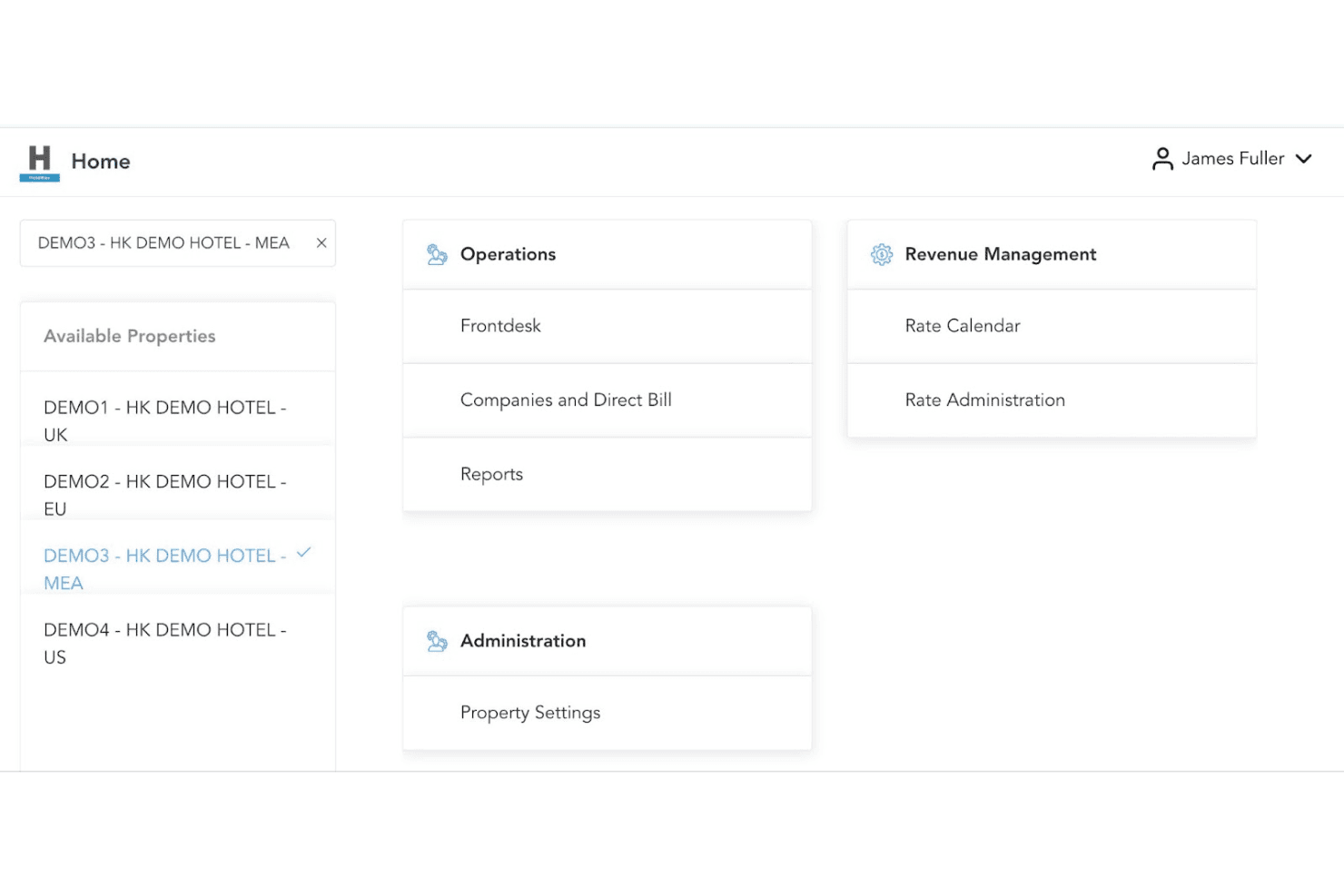
HotelKey lets users switch between multiple hotel properties from one home screen. HotelKey is a cloud-based hotel property management system that combines front desk operations, central reservations, rate management, channel distribution, housekeeping, payments, and contactless guest tools like a self-check-in kiosk and digital room keys.
Who Is HotelKey Best For?
HotelKey is a strong fit for hotel owners and operators managing large multi-property portfolios under a single brand or management company.
Why I Picked HotelKey
I've included HotelKey in my top picks because no other PMS I've seen is as purpose-built for enterprise-scale, multi-property rollouts. The multi-property CRS lets you search live availability across an entire portfolio and book multi-property itineraries in a single workflow, which is something independent properties rarely need but large operators depend on. I also rate its BI Portfolio Insights module highly: it tracks revenue, occupancy, ADR, and RevPAR by source across properties, with 28-day booking pace against prior-year comparisons baked in.
HotelKey Key Features
- GuestKey kiosk: An AI-assisted self-check-in kiosk that scans IDs, runs facial recognition, processes card or cash payments, encodes keycards, and sends digital folios.
- WalletKey digital room keys: NFC-based keys delivered via QR code to Apple and Google Wallet, requiring no app download and functioning offline.
- Multi-folio billing: Supports multiple folios per reservation, charge routing, split payments, and moving charges to house accounts or group folios.
- Open API data stream: The HK Datastream API pushes reservation, housekeeping, maintenance, and billing events to connected systems via webhooks or polling.
HotelKey Integrations
HotelKey offers documented integrations with Booking.com, Expedia, SiteMinder, IDeaS, Duetto, Shift4, NetSuite, Assa Abloy, Revinate, and CleanMeNext. HK Datastream and HK PMS Core APIs support custom integrations.
Pros and Cons
Pros:
- Automated night audit reduces manual closing work
- iPad workflows help front desks train quickly
- Multi-property controls suit enterprise hotel groups
Cons:
- Group rooming lists can create setup problems
- Lag can slow reservation searches and check-ins
Learn more about HotelKey:
Other Cloud-Based Hotel Property Management Software
Here are a few additional options that didn’t make my top list, but are still good to check out:
- 11MewsBest for multi-property AI-driven pricing
- 12roommasterBest for multi-property ops with 300+ OTA sync
- 13eZee AbsoluteBest for global hotel ops with 130+ OTA sync
- 14CloudbedsBest for award-winning all-in-one channel sync
- 15innRoadBest for independents needing live 24/7 support
- 16ThinkReservationsBest for independent inns needing all-in-one ops
- 17RoomRaccoonBest for all-in-one ops from booking to checkout
- 18ProtelBest for payments built into cloud hotel ops
- 19GuestlineBest for AI-driven multi-property revenue oversight
- 20Infor HMSBest for luxury and casino resort operations
How I Evaluate Cloud-Based Hotel Property Management Software
I split my evaluation into three parts. First, core functionality—tools must handle reservations end-to-end and deliver reliable cloud access; this carries the most weight. Second, I look for standout features like multi-property dashboards. Third, I consider onboarding support and pricing value.
Core Functionality (Table Stakes for This List)
When I'm selecting tools for my list, I score each one on a scale from 0 (does not offer the functionality) to 5 (excels in this area) for each core functionality listed below. I then convert the total into a percentage to help assess each tool's overall fit, with extra weight on any functionalities I've deemed essential.
- Cloud-Hosted Access (Essential): I check whether the full platform runs in a browser on any device, including native mobile apps for staff working the floor.
- Reservation Management (Essential): I look for the complete booking lifecycle—create, modify, cancel, check in, check out—with real-time room availability updates.
- Channel and Rate Distribution: I evaluate how the system syncs rates and inventory to OTAs and GDS partners, watching for real-time two-way updates that prevent overbooking.
- Front Desk and Housekeeping Ops: Real-time room status boards, housekeeping task assignments, and night audit workflows all factor into how I score operational tools.
- Guest Profile Management: I look for shared guest records with stay history and preferences that carry across bookings and properties for repeat recognition.
- Billing and Folio Management: I check folio generation, split billing, multi-currency support, and how charges tie back to a guest's stay and final invoice.
Once I have a list of tools that meet the criteria, I consider what sets each platform apart.
Differentiating Factors (What Sets Vendors Apart)
Here's how I compare and contrast different vendors:
Standout Features
I look for native mobile apps that let front-desk and housekeeping staff manage check-ins, room status, and guest requests from anywhere on property. A multi-property dashboard is equally important—I evaluate whether a single login gives you real-time visibility into rates, occupancy, and performance across your entire portfolio without switching between systems. I also check each platform's open API ecosystem, since pre-built connectors to POS, CRM, and upsell tools mean fewer integration headaches as your tech stack grows.
Beyond Features
I evaluate each vendor's onboarding support, since hotels with lean IT teams need dedicated migration help and 24/7 go-live assistance to avoid disruptions during peak season. Scalability matters too—I check whether per-room or per-property licensing stays cost-effective as you add locations, and whether centralized reporting extends cleanly across a growing portfolio. I also look at uptime track records and SLA guarantees, because a cloud PMS outage during check-in directly hits guest experience and revenue.
How to Choose Cloud-Based Hotel Property Management Software
Choose the platform that fits your operating controls, migration risks, and team capacity—not the longest feature list.
| If your priority is | Look for |
|---|---|
| If your priority isAccurate system migration | Look forA documented import scope, field-mapping template, and reconciliation process |
| If your priority isFaster staff adoption | Look forRole-based training, sandbox access, and task-based onboarding materials |
| If your priority isConsistent multi-property control | Look forPortfolio-level permissions, reporting definitions, and configuration governance |
| If your priority isPredictable ownership costs | Look forA complete fee schedule covering setup, interfaces, support, and future properties |
How to Vet Your Shortlist
- Test migration readiness: Request the vendor’s data-mapping template and complete a sample import using 50 reservations, guest profiles, and folios before signing.
- Run a front-desk trial: During a five-day trial, ask staff to create, modify, cancel, check in, and check out test reservations while recording each exception.
- Verify support handling: File one billing or reservation ticket outside peak office hours and retain the ticket, response time, and resolution notes.
- Confirm commercial terms: Ask for implementation milestones, renewal rules, interface charges, cancellation rights, and service commitments in the final contract.
- Choose your tradeoff: Decide whether you prefer a configurable platform that demands more internal administration or a more prescriptive system that limits local variations.
What Is Cloud-Based Hotel Property Management Software?
Cloud-based hotel property management software is an online platform for managing hotel reservations, room assignments, guest profiles, billing, and daily operations. It stores information online, so authorized staff can access current data through a browser or mobile device. These systems often include housekeeping coordination, channel management, reporting, rate controls, and multi-property oversight. They help front-desk, housekeeping, revenue, and management teams work from shared operational records.
Features
Here are the main features I look for in any great cloud-based hotel property management software:
Cloud access: The platform runs online through a browser, so authorized staff can view current hotel data from approved devices. Mobile access also supports updates from guest floors and other work areas.
Reservation management: This feature handles bookings from creation through cancellation, check-in, and checkout. It updates room availability as reservations change and helps staff prevent scheduling conflicts.
Channel management: Channel management connects your direct booking site with online travel agencies and other sales channels. It synchronizes room inventory, availability, and rates to reduce duplicate bookings and manual updates.
Front desk operations: Front desk tools support room assignment, arrivals, departures, registration, and guest requests. Staff can review reservation details and update a guest’s stay from one operational screen.
Housekeeping coordination: Housekeeping tools display room statuses, assign cleaning tasks, and record inspections or maintenance needs. Front-desk staff can then see which rooms are ready for incoming guests.
Guest profiles: Guest profiles store contact details, stay history, preferences, and notes in a shared record. Staff can use this information to recognize returning guests and prepare for specific requests.
Billing and folios: Billing features record room charges, taxes, payments, adjustments, and additional services. Staff can split charges across guests or payment methods and issue an accurate final folio.
Reporting and analytics: Reporting tools organize occupancy, revenue, booking source, room performance, and operational data. Managers can use these reports to review performance and support rate or staffing decisions.
Multi-property management: Multi-property controls let authorized users oversee reservations, rates, availability, and reports across several locations. Property-level permissions keep local teams focused on their assigned operations.
Benefits
In my experience, cloud-based hotel property management software offers several practical benefits:
Accessibility: Browser and mobile access lets authorized staff view current reservations, room statuses, and guest records from approved devices.
Fewer booking conflicts: Real-time availability updates and two-way channel synchronization keep room inventory and rates consistent across booking channels.
Coordinated daily operations: Front-desk dashboards, housekeeping assignments, room status updates, and maintenance notes keep departments working from shared information.
Personalized guest service: Centralized guest profiles retain stay history, preferences, and notes for more informed service during future bookings.
Accurate billing: Folios connect room charges, taxes, payments, adjustments, and additional services to each guest’s stay.
Better management decisions: Reports organize occupancy, revenue, booking source, room performance, and operational data for rate and staffing decisions.
Portfolio visibility: Multi-property dashboards provide centralized views of reservations, rates, availability, permissions, and performance across locations.
Costs and Pricing
Costs vary based on property size, features, integrations, support, and add-ons. Here are the pricing ranges you can typically expect from cloud-based hotel property management software:
Plan Comparison Table for Cloud-Based Hotel Property Management Software
| Plan Type | Average Price | Common Features |
|---|---|---|
| Plan TypePersonal Plan | Average Price$3-$10/room/month | Common FeaturesReservation management, front desk tools, guest profiles, billing, and email support. |
| Plan TypeBusiness Plan | Average Price$8-$20/room/month | Common FeaturesChannel management, housekeeping coordination, reporting, integrations, and priority support. |
| Plan TypeEnterprise Plan | Average Price$15-$40/room/month | Common FeaturesMulti-property management, advanced reporting, custom integrations, dedicated onboarding, and account support. |
FAQs
Some answers to common questions about cloud-based hotel property management software:
How long does it take to implement a cloud-based hotel PMS?
Implementation usually takes several weeks, depending on your property size and data requirements. Smaller hotels often complete setup faster than multi-property groups. Ask the vendor for a project timeline covering configuration, data migration, integrations, training, and launch support. Test imported reservations, guest profiles, room types, rates, and folios before going live. Schedule staff training around shifts, then run the old and new systems together briefly. This approach helps your team catch mapping errors before they affect arriving guests.
Can cloud-based hotel property management software work with other hotel systems?
Yes, many cloud hotel PMS platforms connect with booking engines, channel managers, payment tools, point-of-sale systems, and accounting software. Confirm each connection before signing a contract. Ask whether the integration is native, partner-built, or dependent on an API. Check which data moves between systems and how often updates occur. Test reservations, cancellations, payments, and guest profiles during evaluation. Also confirm interface fees, support ownership, and what happens when one connected system becomes unavailable.
Is cloud-based hotel property management software suitable for multiple properties?
Yes, a multi-property cloud PMS can suit hotel groups that need shared oversight across locations. Look for portfolio-level reporting, property-specific permissions, shared guest profiles, and centralized rate controls. Confirm that each property can keep its own room types, taxes, policies, and workflows. Ask how the system handles transfers between properties and consolidated reporting. During a trial, compare occupancy, revenue, and booking-source reports across locations. Consistent definitions matter more than simply having one login.
What should I check before moving hotel data into a cloud-based PMS?
Start by confirming which records the vendor can import and how fields map between systems. Review reservations, guest profiles, room types, rates, payments, folios, and notes separately. Request a sample migration using real but protected data. Reconcile reservation counts, arrival dates, balances, and room assignments after the import. Also confirm data retention, export options, user permissions, and security responsibilities. Keep an accessible copy of your original records until staff verify the new system.