

Software-ul pentru operațiunile hoteliere în grupuri cu mai multe proprietăți oferă grupurilor hoteliere o platformă comună pentru gestionarea rezervărilor, tarifelor, evidențelor oaspeților și operațiunilor în mai multe locații. Sistemul potrivit vă permite să coordonați procesele centralizate, ținând cont de nevoile fiecărei proprietăți, de integrările existente și de cerințele implementării. Acest ghid compară opțiuni pentru grupuri de diferite dimensiuni, astfel încât să găsiți soluția potrivită pentru portofoliul dumneavoastră.
Why Trust Our Software Recommendations
6,700+
Reviews
20
Industry experts
16+
Evaluation factors
14
Years reviewing software
Our team has been testing and reviewing software since 2012. As hospitality leaders ourselves, we know how difficult—and important—it is to choose the right software.
For this guide, we evaluated tools using hands-on testing and independent research, scoring tools using our selection criteria.
Our reviews reflect our human editorial judgment, not a sales pitch.
Tabel comparativ: software pentru operațiunile hoteliere în grupuri cu mai multe proprietăți
Comparați, unul lângă altul, prețurile și specificațiile software-urilor pentru operațiunile hoteliere în grupuri cu mai multe proprietăți incluse în lista mea scurtă.
Score legend (out of 5)
- Excellent4.5–5
- Good4–4.4
- Average3–3.9
- Below average2–2.9
- Poor1–1.9
Sorted by: Default
| Tool | Starting Price | Website | |||||||
|---|---|---|---|---|---|---|---|---|---|
Best for mobile portfolio oversight on the go | 3.2 out of 5 | 1 | 4 | 4 | 4 | 2 | 4 | Pricing upon request Free demo available | Website |
Best for scaling hotel groups on one login | 3.8 out of 5 | 4 | 3 | 4 | 4 | 4 | 4 | Pricing upon request Free demo + 14-day free trial available | Website |
Best for multi-property rate and channel sync | 3.3 out of 5 | 2 | 4 | 3 | 3 | 4 | 4 | $9/month Free demo + 14-day free trial available | Website |
Best for channel-synced multi-property rate control | 3.7 out of 5 | 4 | 3 | 4 | 3 | 4 | 4 | Pricing upon request Free demo available | Website |
Best for scaling hotel groups with a central CRO | 3.3 out of 5 | 3 | 3 | 4 | 4 | 3 | 3 | Pricing upon request Free demo + 15-day free trial available | Website |
Best for portfolio setup in days, not months | 3.5 out of 5 | 3 | 3 | 4 | 3 | 4 | 4 | Pricing upon request Free demo available | Website |
Best for chain-wide guest data and portfolio ops | 3.5 out of 5 | 4 | 4 | 4 | 3 | 3 | 3 | Pricing upon request Free demo available | Website |
Best for cross-property reservations at scale | 3.5 out of 5 | 3 | 3 | 4 | 4 | 4 | 3 | Pricing upon request Free demo available | Website |
Best for IT-led portfolio integration management | 2.7 out of 5 | 2 | 3 | 4 | 2 | 3 | 2 | Pricing upon request Not available | Website |
Best for portfolios spanning 80-plus sites | 3.0 out of 5 | 2 | 3 | 4 | 3 | 3 | 3 | Pricing upon request Free demo available | Website |


Recenzii ale software-urilor pentru operațiunile hoteliere în grupuri cu mai multe proprietăți
Mai jos sunt rezumatele mele ale celor mai bune software-uri pentru operațiunile hoteliere în grupuri cu mai multe proprietăți incluse în lista mea scurtă. Recenziile mele acoperă funcțiile, integrările și prețurile fiecărei platforme, pentru a vă ajuta să găsiți soluția potrivită.
 Best for mobile portfolio oversight on the go
- Free demo available
- Pricing upon request
Visit WebsiteCustomer Rating:4.7/5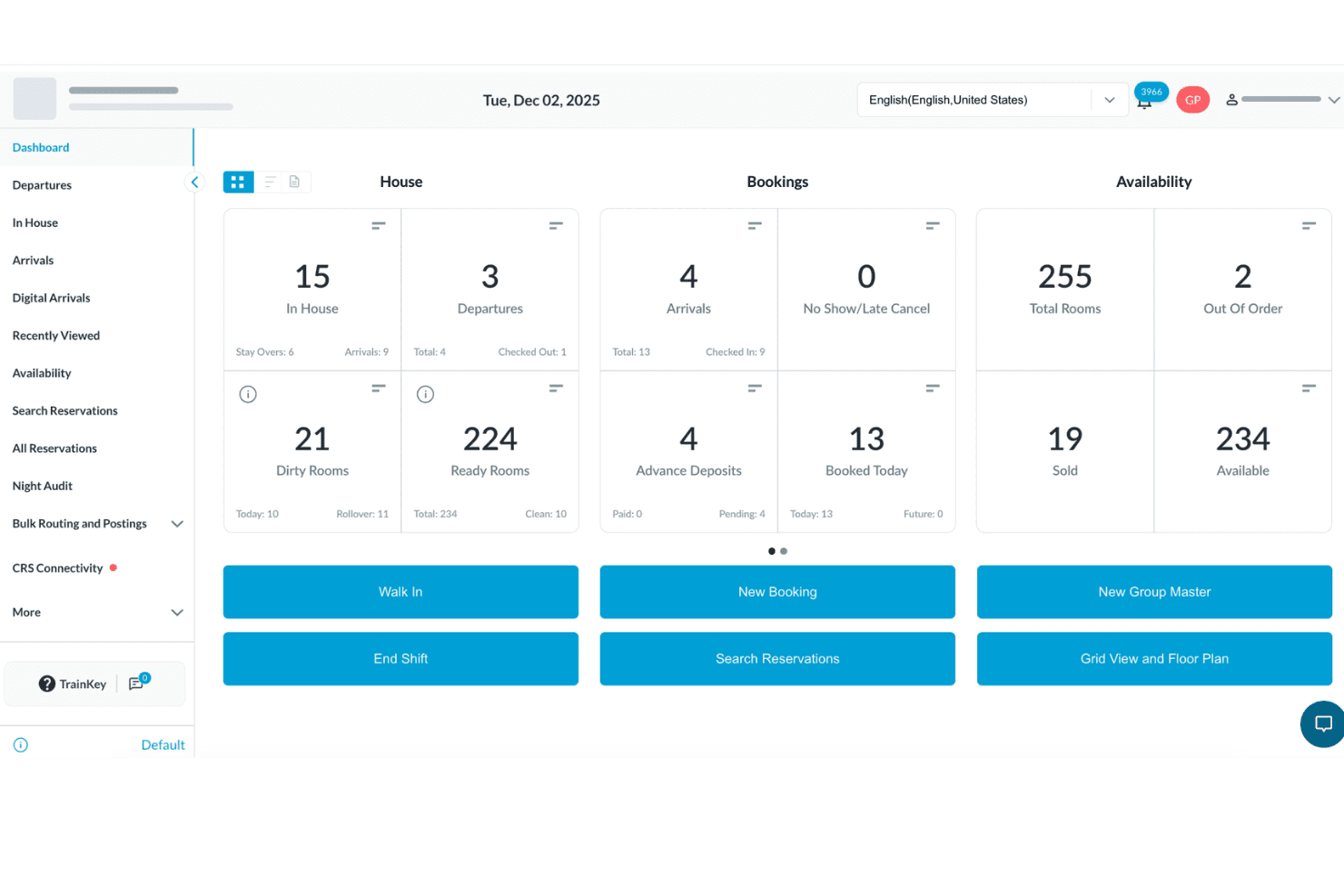
HotelKey supports front desk operations across multiple properties. HotelKey is a cloud-based property management system that centralizes reservations, front-desk operations, housekeeping, rate and inventory control, and cross-property reporting across hotel portfolios.
Who Is HotelKey Best For?
HotelKey is a strong fit for multi-property hotel operators and regional managers who need mobile access to portfolio performance, rates, and occupancy data across locations.
Why I Picked HotelKey
I picked HotelKey as one of the best because the Manager App gives you genuine portfolio oversight from your phone, showing average daily rate (ADR), revenue per available room (RevPAR), occupancy, and revenue trends across all your properties with daily, monthly, and yearly comparisons in one view. I also like that you can manage rate calendars and room availability directly from the app, with competitor pricing insights alongside your own numbers. It's the kind of mobile access that actually matters when you're moving between sites.
HotelKey Key Features
- Centralized reservation system: Search real-time availability and book multi-property itineraries across GDS, OTAs, and direct channels from one interface.
- Housekeeping task automation: Auto-assign rooms to housekeeping staff, configure schedules by rate plan, and track room status with mobile updates in real time.
- Corporate rate and billing management: Set negotiated rates, configure direct-bill accounts, and automate invoice generation and delivery for company accounts.
- Cross-property rate calendar: View inventory, occupancy, ADR, and RevPAR in one calendar with year-over-year and budget comparisons across your portfolio.
HotelKey Integrations
Marketplace integrations include Booking.com, Expedia, Amadeus, SiteMinder, IDeaS, Duetto, M3, NetSuite, Stripe, and QuickBooks. HotelKey also offers private APIs for rate updates on external platforms.
Pros and Cons
Pros:
- OTA bookings sync with availability and rates
- Rate calendar compares performance against budget
- Mobile dashboards show portfolio occupancy and ADR
Cons:
- Multi-property access and coordination can be restricted
- Group bookings can complicate rooming-list changes
Learn more about HotelKey: Best for scaling hotel groups on one login
- Free demo + 14-day free trial available
- Pricing upon request
Visit WebsiteCustomer Rating:4.6/5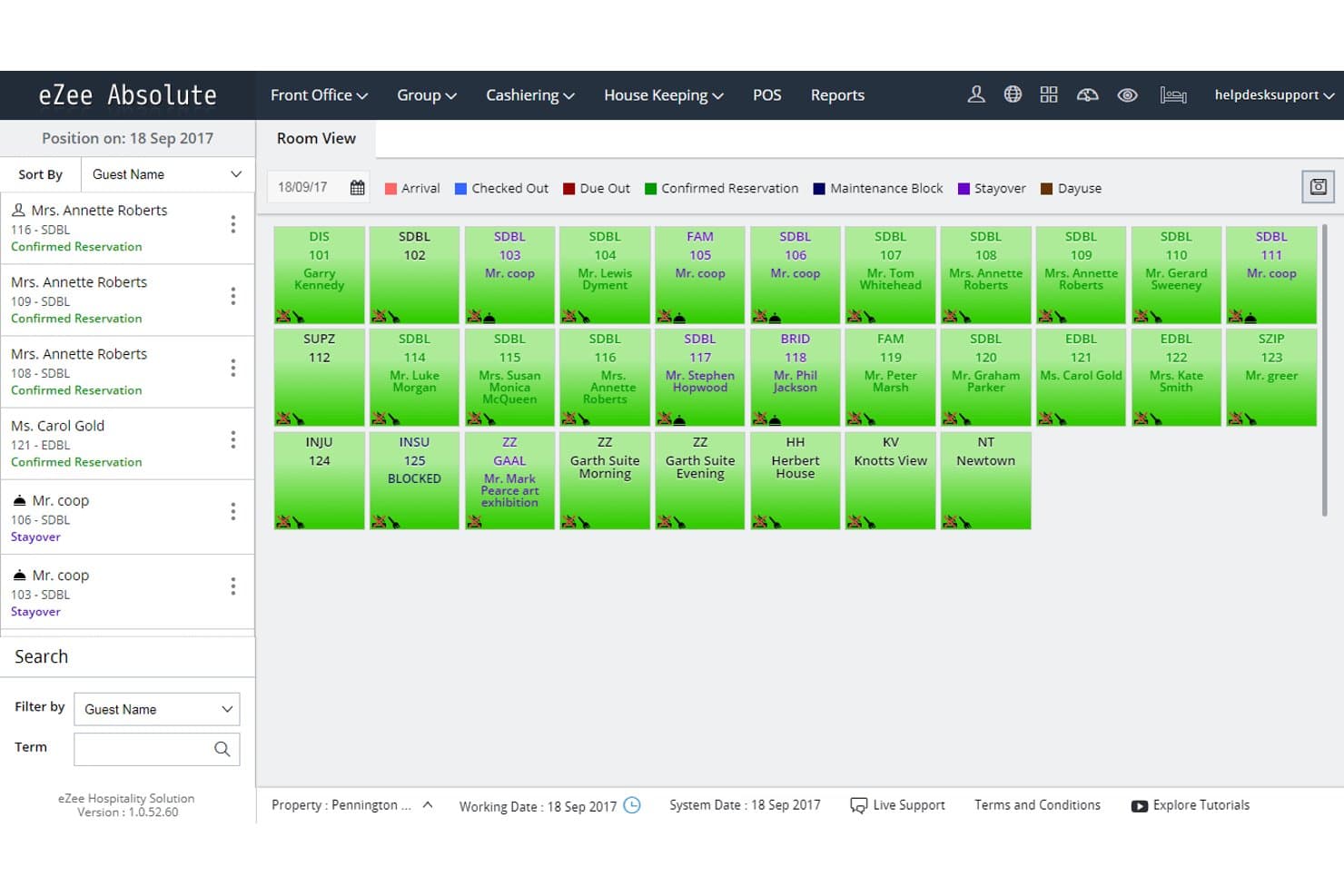
eZee Absolute displays real-time room status across all hotel rooms. eZee Absolute is a cloud-based property management platform that covers reservations, front desk, housekeeping, channel management, dynamic pricing, and multi-property reporting across a hotel group's portfolio.
Who Is eZee Absolute Best For?
Hotel groups managing between 5 and 50 properties will get the most from eZee Absolute, particularly those scaling up and needing one login to oversee reservations, rates, and operations across every location.
Why I Picked eZee Absolute
I picked eZee Absolute as one of the best because it genuinely solves the multi-property login problem that plagues growing hotel groups. One account gives you a consolidated view of revenue, occupancy, and operations across every property, and you can switch locations in the mobile app without signing back in. I also like that the centralized rate and inventory controls push updates to 130+ OTA channels in under 10 seconds, so your rates stay consistent portfolio-wide without manual property-by-property edits.
eZee Absolute Key Features
- Unified guest profiles: Guest stay history, lifetime value, and loyalty data are deduplicated across all properties in your portfolio automatically.
- Role-based access controls: Set staff permissions by property, function, and brand, with distinct roles for headquarters, general managers, and auditors.
- Night audit automation: End-of-day reconciliation runs overnight and generates regional revenue, arrival, departure, and statutory reports for review.
- Self check-in and checkout: Guests upload ID, complete digital registration, pay, and receive an e-folio directly on their phone.
eZee Absolute Integrations
eZee Absolute lists 650+ integration partners and native integrations with Booking.com, Expedia, and Agoda for two-way rate, inventory, and restriction sync. It also offers an industry-standard REST API for custom integrations.
Pros and Cons
Pros:
- Guest profiles and history sync across properties
- Centralized rates retain local property control
- One login covers portfolio operations
Cons:
- Mobile workflows feel limited during property visits
- Cross-property reports can be hard to interpret
Learn more about eZee Absolute: Best for multi-property rate and channel sync
- Free demo + 14-day free trial available
- From $9/month
Visit WebsiteCustomer Rating:4.4/5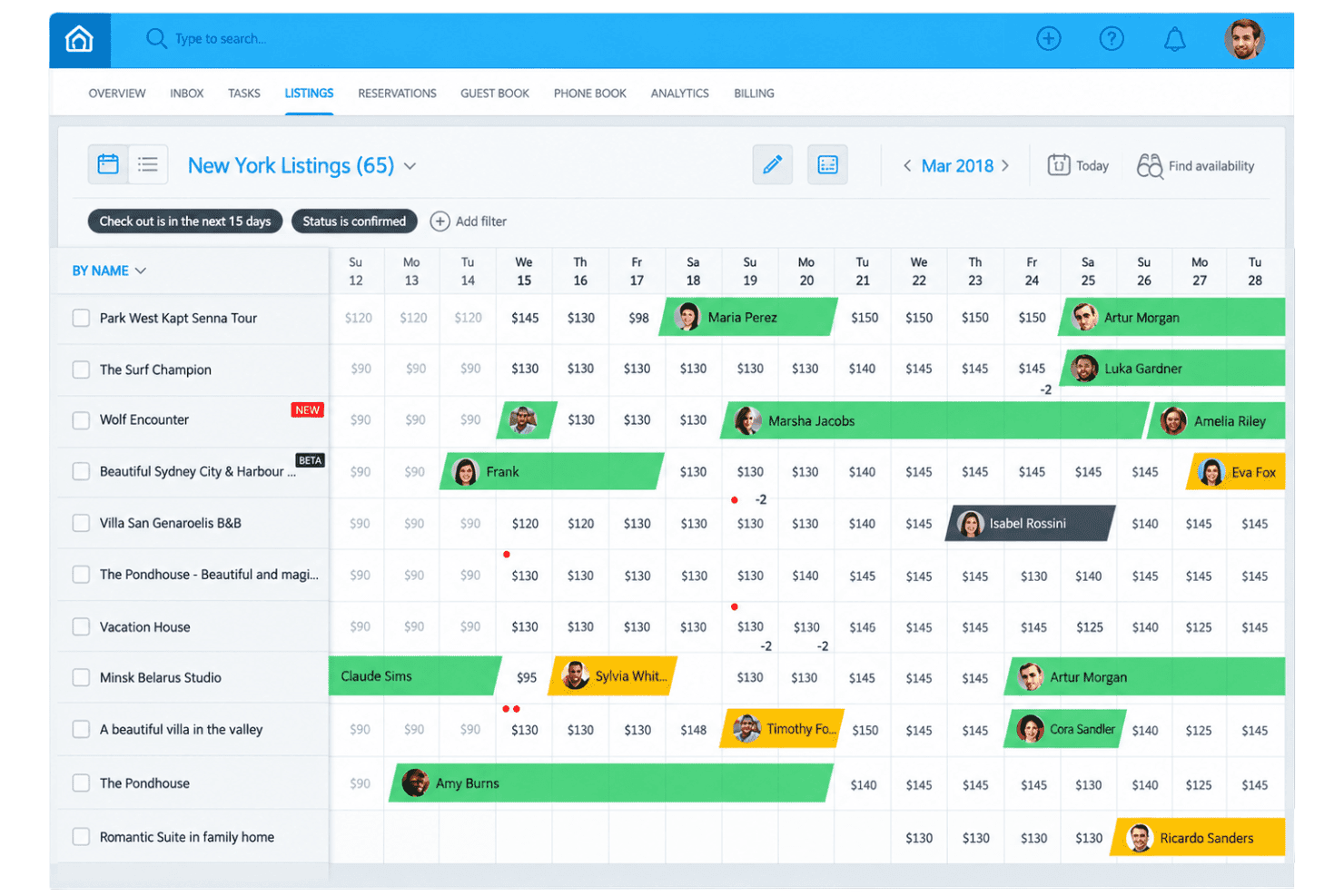
Guesty multi-calendar with property rates, availability, and reservations. Guesty is a property management platform that centralizes reservations, channel distribution, guest communications, rate management, and operational task coordination across multi-unit and multi-property portfolios.
Who Is Guesty Best For?
Guesty is a strong fit for revenue and reservations managers overseeing short-term rental portfolios who need bulk rate controls and real-time channel sync across dozens to hundreds of listings.
Why I Picked Guesty
I picked Guesty as one of the best because of how well its multi-calendar handles bulk rate and inventory updates across a large portfolio. I can apply nightly-rate overrides, minimum-night changes, and availability blocks across multiple listings in a single action, which is exactly what revenue managers need when adjusting strategy ahead of peak periods. Guesty's real-time channel sync pushes those changes to 60+ booking channels simultaneously, so rates stay consistent across Airbnb, Booking.com, Vrbo, and beyond without manual updates per channel.
Guesty Key Features
- Unified inbox: Centralizes guest messages from all connected booking channels in one view alongside reservation details.
- Automation workflows: Triggers guest messages and operational tasks—like cleaning assignments—based on reservation events such as checkout.
- Advanced analytics: Delivers portfolio-wide dashboards covering occupancy, ADR, revenue, and pace reports with year-over-year comparisons.
- Guesty PriceOptimizer™: Applies AI-driven dynamic pricing to adjust nightly rates based on market data and demand signals.
Guesty Integrations
Guesty lists 351 marketplace partners, including SiteMinder, TallOrder POS, PriceLabs, Lighthouse, and Breezeway, plus native Airbnb, Booking.com, and Vrbo connections. Its Open API supports REST, webhooks, OAuth 2.0, and custom integrations.
Pros and Cons
Pros:
- Reservation-triggered tasks coordinate cleaning and maintenance
- Portfolio dashboards track occupancy, revenue, and pace
- Bulk rate and inventory edits span properties
Cons:
- Reviewers report occasional booking-channel synchronization delays
- Hotel-style invoicing and reporting need improvement
Learn more about Guesty: Best for channel-synced multi-property rate control
- Free demo available
- Pricing upon request
Visit WebsiteCustomer Rating:4.3/5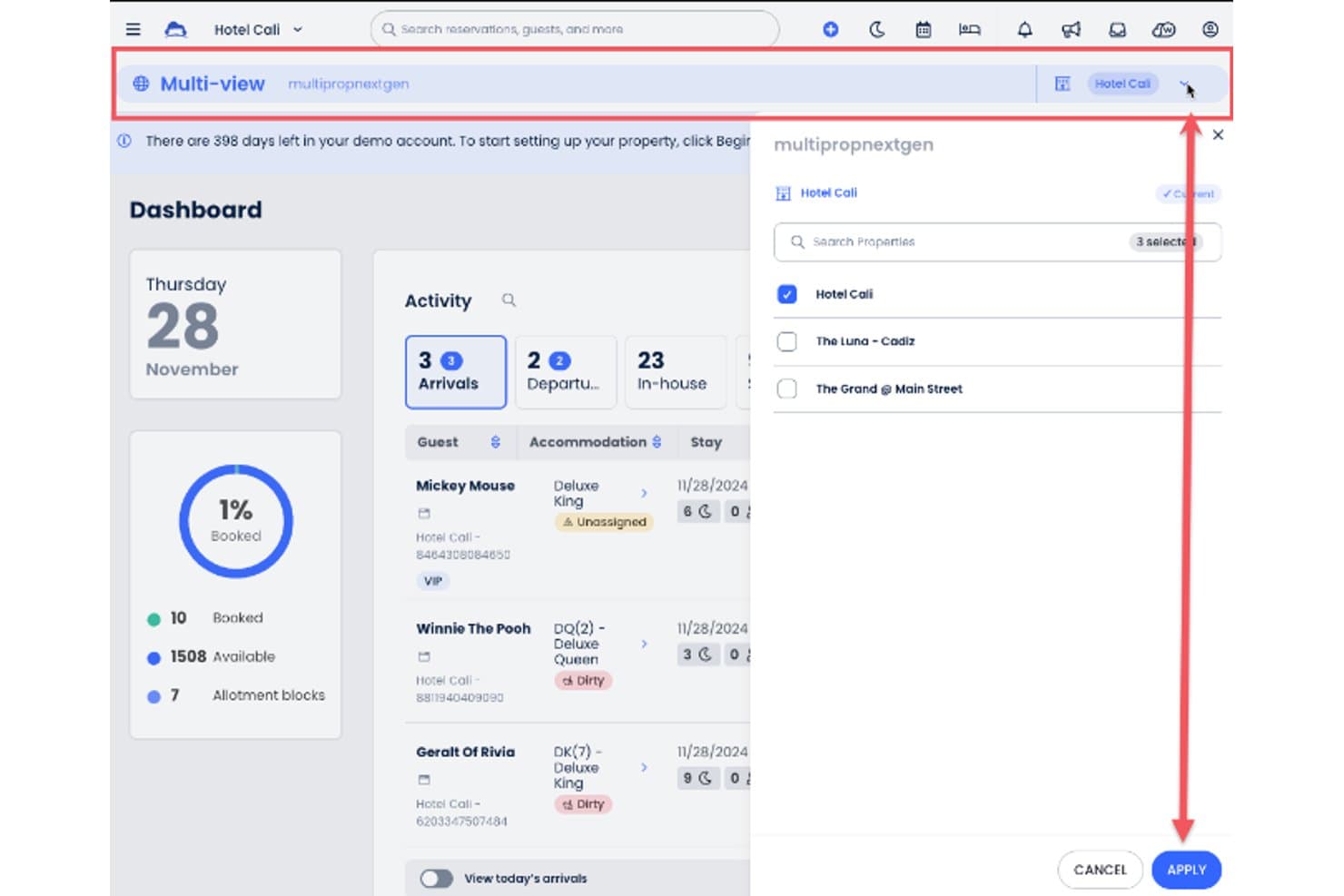
Cloudbeds multi-view lets staff switch between properties from one dashboard. Cloudbeds is a hospitality management platform that unifies property management, channel distribution, reservations, guest experience, and revenue management across multi-property portfolios from a single account.
Who Is Cloudbeds Best For?
Cloudbeds suits hotel group owners and revenue managers who need to control rates and sync inventory across multiple properties from a single platform.
Why I Picked Cloudbeds
Cloudbeds earns its spot on my shortlist because of how it handles rate control across a portfolio: the availability matrix lets you update rates, set price differentials, and manage long-term intervals across every property you have access to from a single page. I also like that the channel manager syncs rates, availability, and restrictions with OTAs in real time, so a rate change doesn't need to be replicated manually across channels. For groups running five or more properties, that combination of cross-property rate editing and live channel sync is where Cloudbeds genuinely pulls ahead.
Cloudbeds Key Features
- Unified guest profiles: Aggregates guest stay history, preferences, and lifetime value across all properties in an organization, with manual merge and deduplication tools.
- Revenue management module: Generates AI-driven rate recommendations and demand forecasts using booking pace, competitor rates, and market trends.
- Multi-property role-based access: Lets you assign users different roles across different properties within an organization, with granular permission controls.
- Cloudbeds Insights reporting: Filters performance data by one or more properties and assembles cross-property dashboards in configurable Insights Hubs.
Cloudbeds Integrations
Cloudbeds lists 450+ integration partners or integrations, including Booking.com, Expedia, Airbnb, QuickBooks, Xero, M3, Duetto, IDeaS, Toast, and Lightspeed. It offers REST, GraphQL, webhooks, OAuth 2.0, organization-wide API access, and Zapier.
Pros and Cons
Pros:
- Guest records consolidate stays across properties
- OTA sync reduces manual rate updates
- Portfolio-wide rate edits from one matrix
Cons:
- Reviewers report confusing, unreliable reporting
- Shared workflow templates aren’t documented
 Best for scaling hotel groups with a central CRO
- Free demo + 15-day free trial available
- Pricing upon request
Visit WebsiteCustomer Rating:4.4/5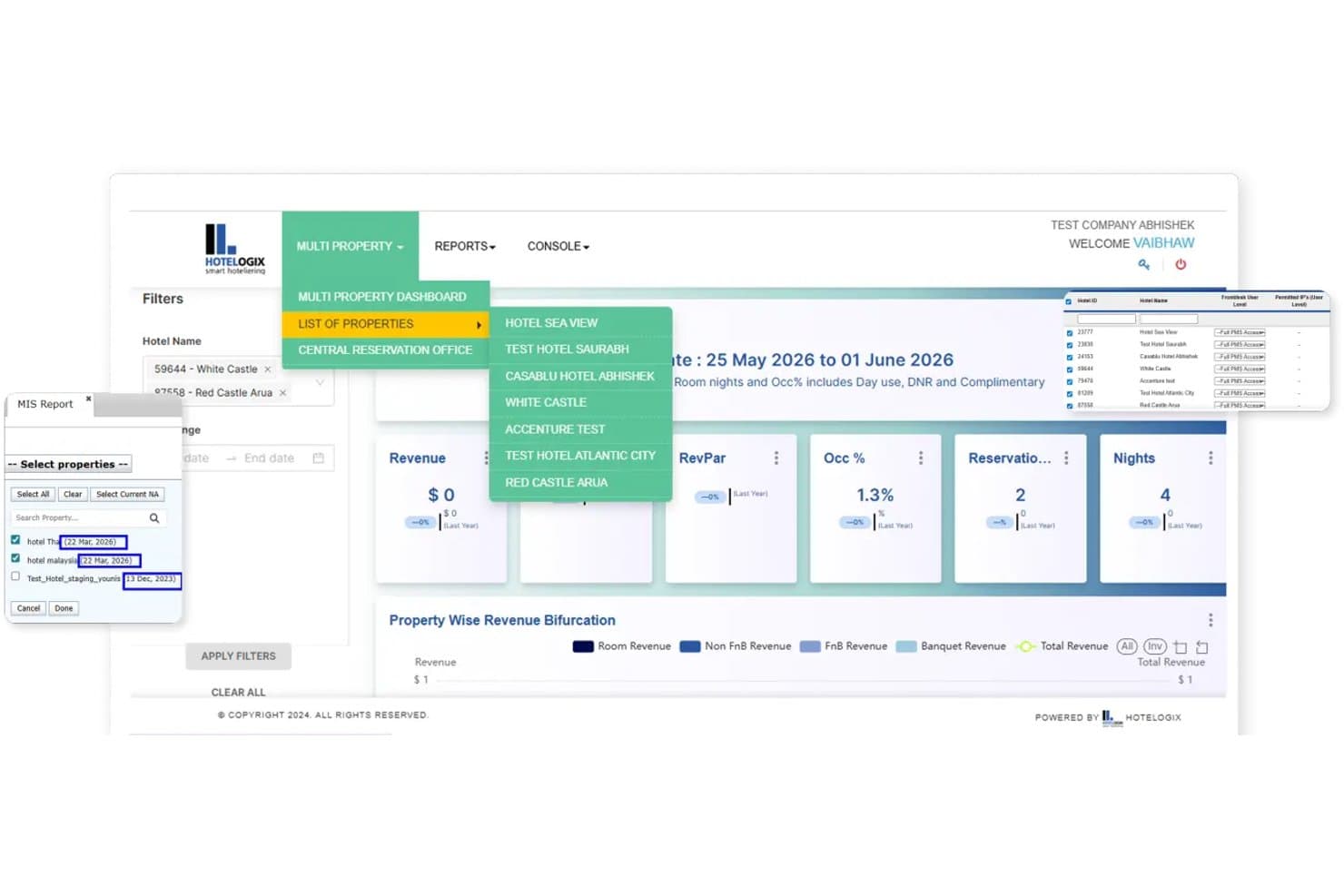
Hotelogix lets users manage and switch between multiple hotel properties seamlessly. Hotelogix HLXE is a cloud-based multi-property management system for hotel chains and groups that covers centralized reservations, front desk, housekeeping, rate and inventory control, and group-level reporting across member properties.
Who Is Hotelogix Best For?
Hotelogix HLXE is a strong fit for growing hotel groups that need a central reservations office to coordinate bookings and inventory across a dispersed portfolio of properties.
Why I Picked Hotelogix
I picked Hotelogix as one of the best because its central reservation office is the clearest expression of what a multi-property setup actually needs: agents get a live, shared view of availability across every property and can book FIT, corporate, or travel-agent itineraries spanning multiple hotels in a single reservation. Those CRO bookings sync to each property's front desk in real time, so there's no manual handoff between the group office and individual sites. The super admin console ties it together, letting you switch between properties on one login and manage rates and room inventory across the portfolio from one place.
Hotelogix Key Features
- Advanced group booking tools: Automatically assign rooms based on group and guest preferences, and route transactions to a guest or group folio with stop-posting controls.
- Revenue management solution: Receive rate recommendations across properties alongside local demand data, occupancy forecasts, and competitor rate intelligence.
- Mobile PMS access: Create and modify reservations, manage check-in and check-out, and update room statuses from the iOS or Android app while away from the property.
- Online reputation management: Monitor guest reviews from multiple platforms, assess sentiment, and send post-checkout feedback requests from within the system.
Hotelogix Integrations
Hotelogix lists 100+ marketplace integrations, including STAAH, RateGain, SiteMinder, NetSuite, SAP, POSist, and Restroworks. Its API supports custom connections for distribution, payment, POS, and other hospitality tools.
Pros and Cons
Pros:
- Reviewers praise quick reservation and check-in tasks
- Central console switches between properties
- Cross-property itineraries sync to front desks
Cons:
- Offline operations require manual workarounds
- Back-office configurations require desktop access
 Best for portfolio setup in days, not months
- Free demo available
- Pricing upon request
Visit WebsiteCustomer Rating:4.4/5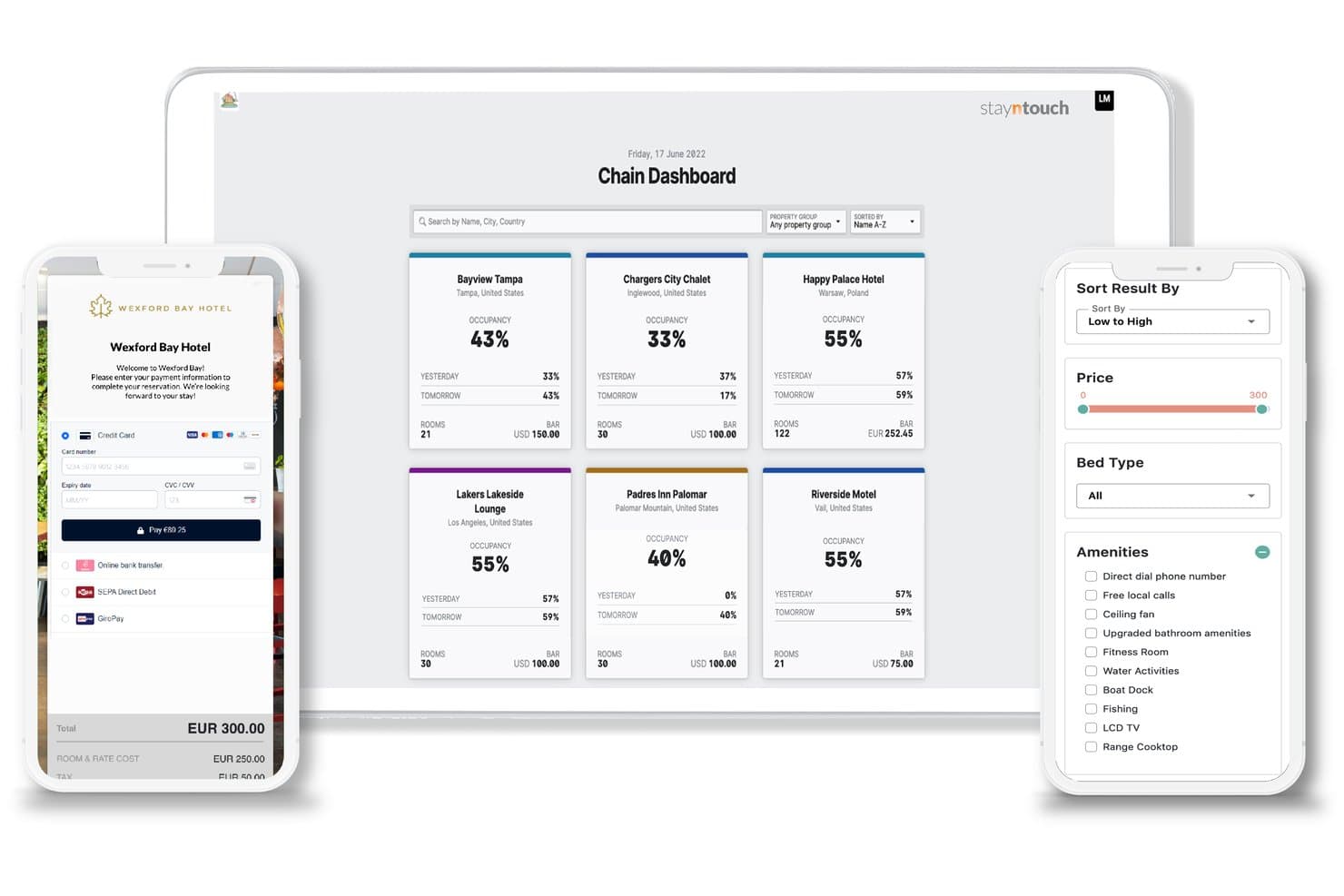
StayNTouch provides a chain overview with occupancy and room rates by hotel. StayNTouch PMS is a cloud-based property management system for hotel groups that covers front desk, housekeeping, reservations, rate management, and guest profiles across portfolios of up to 100+ properties from a single login.
Who Is StayNTouch Best For?
StayNTouch is a strong fit for independent hotel groups and boutique brands that need to bring multiple properties under one PMS without a lengthy, resource-heavy rollout.
Why I Picked StayNTouch
I picked StayNTouch as one of the best because its auto-configuration tool cuts manual property setup from roughly 30 hours down to 4–5 hours, which means adding a new property to your portfolio doesn't become a multi-week project. I also like that central templates for rates, charge codes, and housekeeping task lists can be pushed to every subscribing property at once, so a policy change doesn't require logging into each location separately. The Dataloader handles bulk migration of guest, company, and travel-agent profiles in 1–2 hours, keeping your existing data intact from day one.
StayNTouch Key Features
- Role-based multi-property access: Executives, regional managers, and property staff each get tailored permission levels, with SSO and centralized provisioning across the portfolio.
- Mobile housekeeping management: Staff receive automated task assignments and customized mobile task lists, and can update room status, flag out-of-service rooms, and post minibar charges from a mobile device.
- Rate strategy tool: A built-in occupancy-based pricing tool automatically raises or lowers rates against configurable thresholds, and can be applied to selected rate types or date ranges.
- 1,400+ integrations at no extra charge: Open APIs and webhooks connect to accounting, CRM, POS, analytics, and guest-communication platforms, with no added integration fees from StayNTouch.
StayNTouch Integrations
StayNTouch documents 1,400+ integrations, including SiteMinder, Toast POS, Lightspeed, QuickBooks Online, Cendyn, Revinate, Duetto, and IDeaS G2 & G3. Open APIs, webhooks, and sandbox environments support custom integrations.
Pros and Cons
Pros:
- Responsive support helps multi-property rollouts
- Shared templates support consistent property workflows
- Portfolio setup cuts repeat configuration
Cons:
- Portfolio reports can limit filters and exports
- Group bookings need extra setup steps
Learn more about StayNTouch: Best for chain-wide guest data and portfolio ops
- Free demo available
- Pricing upon request
Visit WebsiteCustomer Rating:3.9/5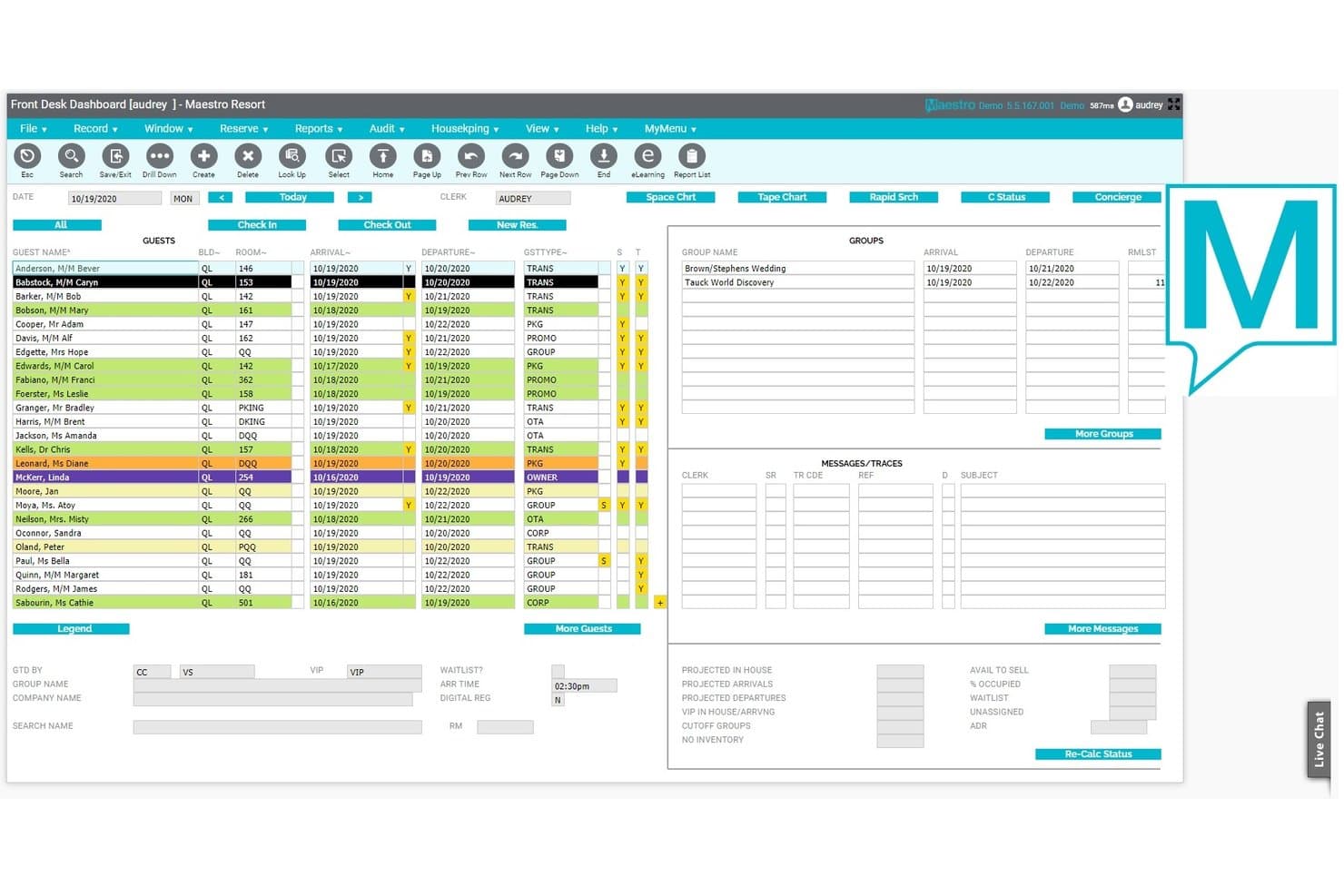
Maestro PMS front desk overview with guest arrivals, departures, room assignments, and group bookings. Maestro PMS is a browser-based property management platform for hotels, resorts, and multi-property groups that brings together front office, reservations, housekeeping, sales and catering, spa, activities, and analytics across more than 20 integrated modules on a shared database.
Who Is Maestro PMS Best For?
Maestro PMS is a strong fit for multi-property hotel groups and resorts that need a single, shared guest database and centralized reporting across their entire portfolio.
Why I Picked Maestro PMS
I've included Maestro PMS in my top picks because its chain-wide guest database is one of the most practical features I've seen for multi-property groups. Every property shares a single client profile, so a guest's stay history, preferences, and itinerary follow them across your entire portfolio without manual syncing. I also like that corporate and property-level performance reports pull from one central data repository, so you're comparing real numbers across locations in the same dashboard.
Maestro PMS Key Features
- Chain-wide guest database: A single shared client profile stores each guest's stay history, preferences, and reservation data across every property in your portfolio.
- Built-in yield and channel management: The front office module includes rate, yield, and hurdle controls with GDS/OTA interface uploads to manage availability and pricing across distribution channels.
- MezzoPay embedded payment processing: Credit card processing is built directly into the PMS, with support for multiple payment methods and currencies across single or multiple properties.
- Online eLearning portal: Module-specific self-paced courses let your team train on features, functions, and reports, while managers can assign lessons and track completion progress.
Maestro PMS Integrations
Maestro PMS reports over 800 established vendor integrations, including SiteMinder, Sabre SynXis, Duetto, IDeaS, QuickBooks, Shift4, Lightspeed, Revinate, and HotSOS/REX. It supports Genomi and open APIs, plus HTNG and OTA standards for custom connectivity.
Pros and Cons
Pros:
- Users value linked hotel operations
- Central reports show property-level performance
- Shared guest histories support portfolio recognition
Cons:
- Front-desk training and navigation take effort
- Reservation screens remain property-specific
Learn more about Maestro PMS: Best for cross-property reservations at scale
- Free demo available
- Pricing upon request
Visit WebsiteCustomer Rating:4.2/5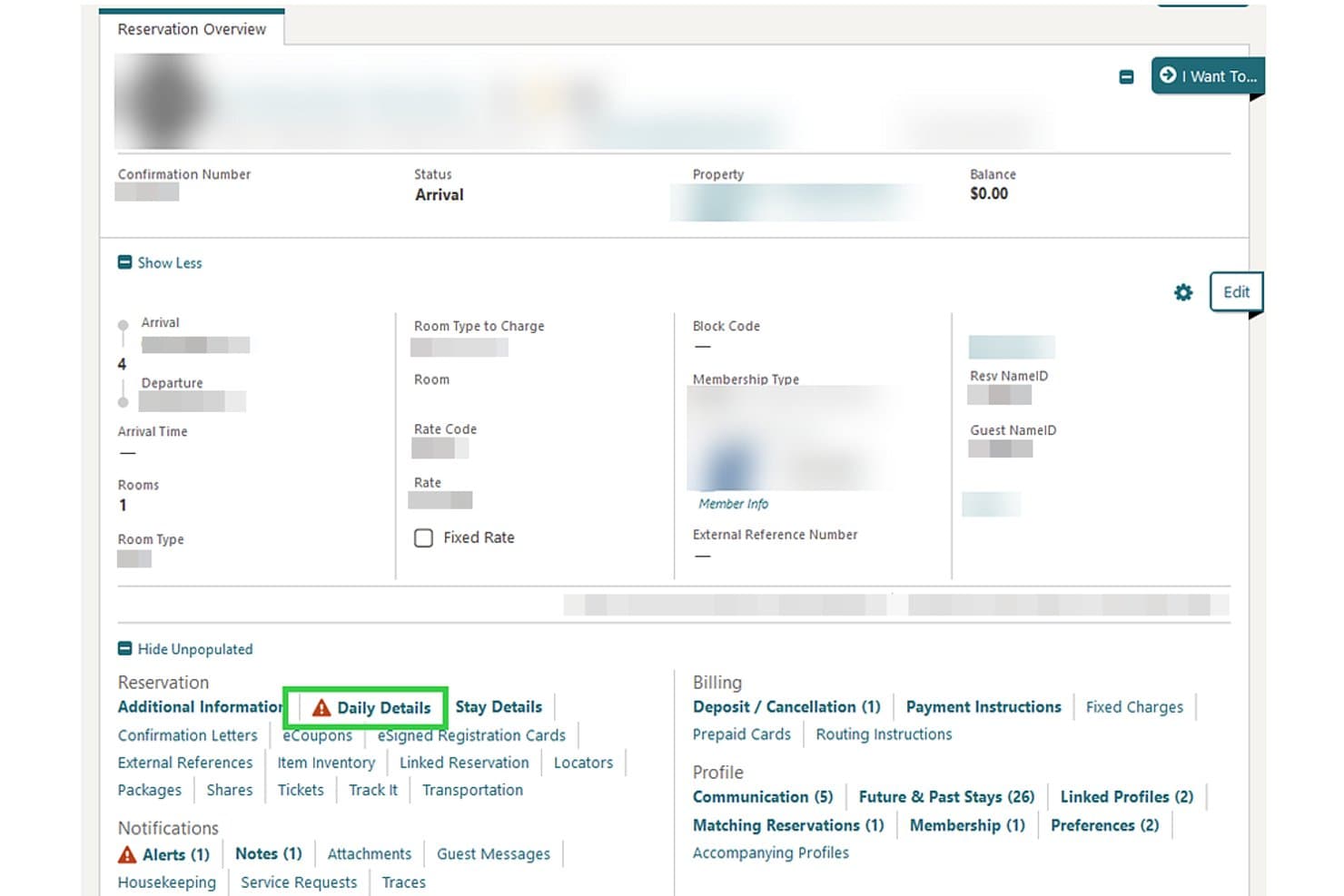
Oracle OPERA Cloud reservation overview with room, rate, and booking details. Oracle OPERA Cloud is a cloud-based hotel property management system that handles reservations, guest profiles, front desk operations, housekeeping, group bookings, billing, and multi-property configuration from a single platform.
Who Is Oracle OPERA Cloud Best For?
Oracle OPERA Cloud is a strong fit for revenue and reservations managers at hotel groups who need to handle cross-property availability searches, multi-segment bookings, and rate distribution from one platform.
Why I Picked Oracle OPERA Cloud
I picked Oracle OPERA Cloud because the reservation sales screen genuinely sets it apart for hotel groups managing bookings at scale. From a single hub, your reservations team can search availability across multiple properties simultaneously and build multi-segment itineraries spanning different locations, room types, and rate codes in one session. I also like that negotiated rates can be distributed from a hub directly to selected properties, with the negotiated rates panel filterable by one or multiple properties at once.
Oracle OPERA Cloud Key Features
- Customizable operations dashboard: Configure over 30 tiles covering front desk, revenue, inventory, and housekeeping, with control set at chain, property, or user level.
- Group room block management: Manage group blocks, dates, rates, billing requirements, and sales ownership, with rooming list uploads directly from Excel.
- Loyalty membership configuration: Set up membership tiers, points earned by stay or spend, promotional rates, and points redemption for rooms, upgrades, and packages.
- Profile sharing across properties: When enabled at the chain level, guest preferences, notes, and loyalty membership become visible to staff at all participating properties.
Oracle OPERA Cloud Integrations
Oracle OPERA Cloud has documented native integrations with Oracle MICROS Simphony POS, Oracle Hospitality Nor1, Oracle Payment Interface, and Oracle Payment Cloud Service. Its Oracle Hospitality Integration Platform and GraphQL Data API support custom integrations.
Pros and Cons
Pros:
- Copy configuration templates between properties
- Build itineraries across properties and room types
- Search availability across properties in one session
Cons:
- Reviewers report slow performance during routine work
- Daily workflows can require extra clicks
Learn more about Oracle OPERA Cloud: Best for IT-led portfolio integration management
- Not available
- Pricing upon request
Visit WebsiteCustomer Rating:3.5/5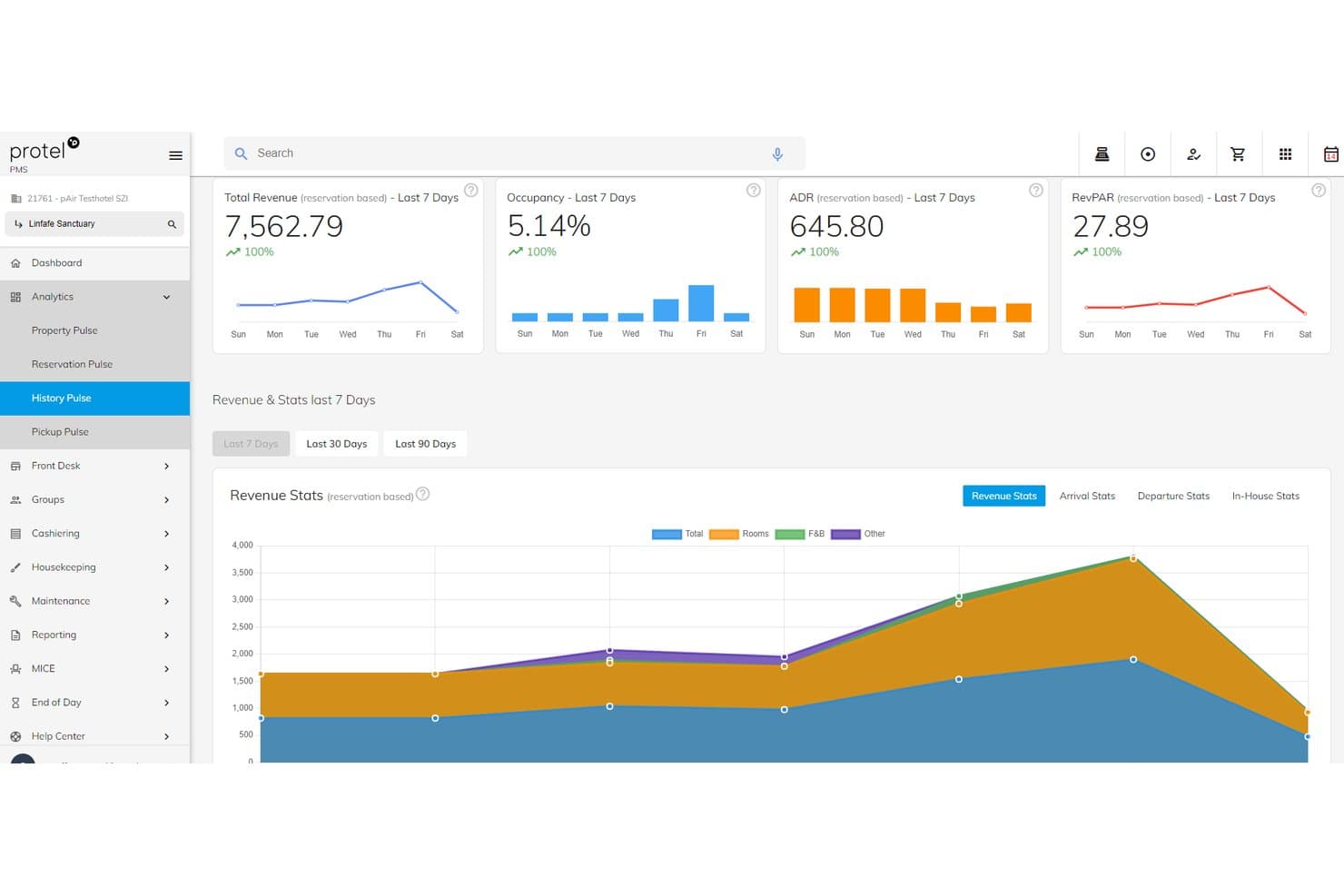
Protel PMS History Pulse includes weekly revenue, occupancy, ADR, and RevPAR. Protel Cloud PMS is a hotel property management system from Planet that covers reservations, front-desk operations, billing, housekeeping, reporting, and multi-property configuration across hotel portfolios through a centralized environment and 1,100+ marketplace integrations.
Who Is Protel Best For?
Protel Cloud PMS is a strong fit for hotel group IT directors who need a well-documented API, sandbox environments, and a vetted marketplace of 1,000+ integration partners to manage a multi-property tech stack.
Why I Picked Protel
I've included Protel in my top picks because it's built specifically around what hotel group IT directors actually need: a documented Cloud API with sandbox environments, backward compatibility, and a vetted marketplace of 1,000+ certified integration partners. In practice, that means my team can vet, test, and connect third-party tools across a portfolio without worrying about breaking existing integrations when new ones go live. The multi-property environment's central app also lets my team configure system data and manage property onboarding from one place, which cuts down on duplicated setup work across locations.
Protel Key Features
- Consolidated portfolio dashboard: View real-time revenue and occupancy metrics across all properties from a single dashboard in the multi-property environment.
- Mobile-responsive PMS interface: Check guests in, update room status, post minibar charges, and create repair orders directly from a smartphone browser.
- Role-based access controls with 2FA and SSO: Manage staff permissions across the portfolio with mandatory two-factor authentication and single sign-on support.
- Hybrid cloud and on-premise support: Run cloud and on-premise properties simultaneously under a single integration partner setup.
Protel Integrations
Protel Cloud PMS offers 1,100+ marketplace integrations and documented payment-terminal compatibility with Worldline, Ingenico, Verifone, and PAX. Its Cloud API supports custom integrations with developer documentation and sandbox environments.
Pros and Cons
Pros:
- Mobile PMS supports front-desk and room updates
- Portfolio dashboards show revenue and occupancy
- Central app simplifies portfolio setup
Cons:
- System performance can lag
- Group bookings can take extra steps
Learn more about Protel: Best for portfolios spanning 80-plus sites
- Free demo available
- Pricing upon request
Visit WebsiteCustomer Rating:4.2/5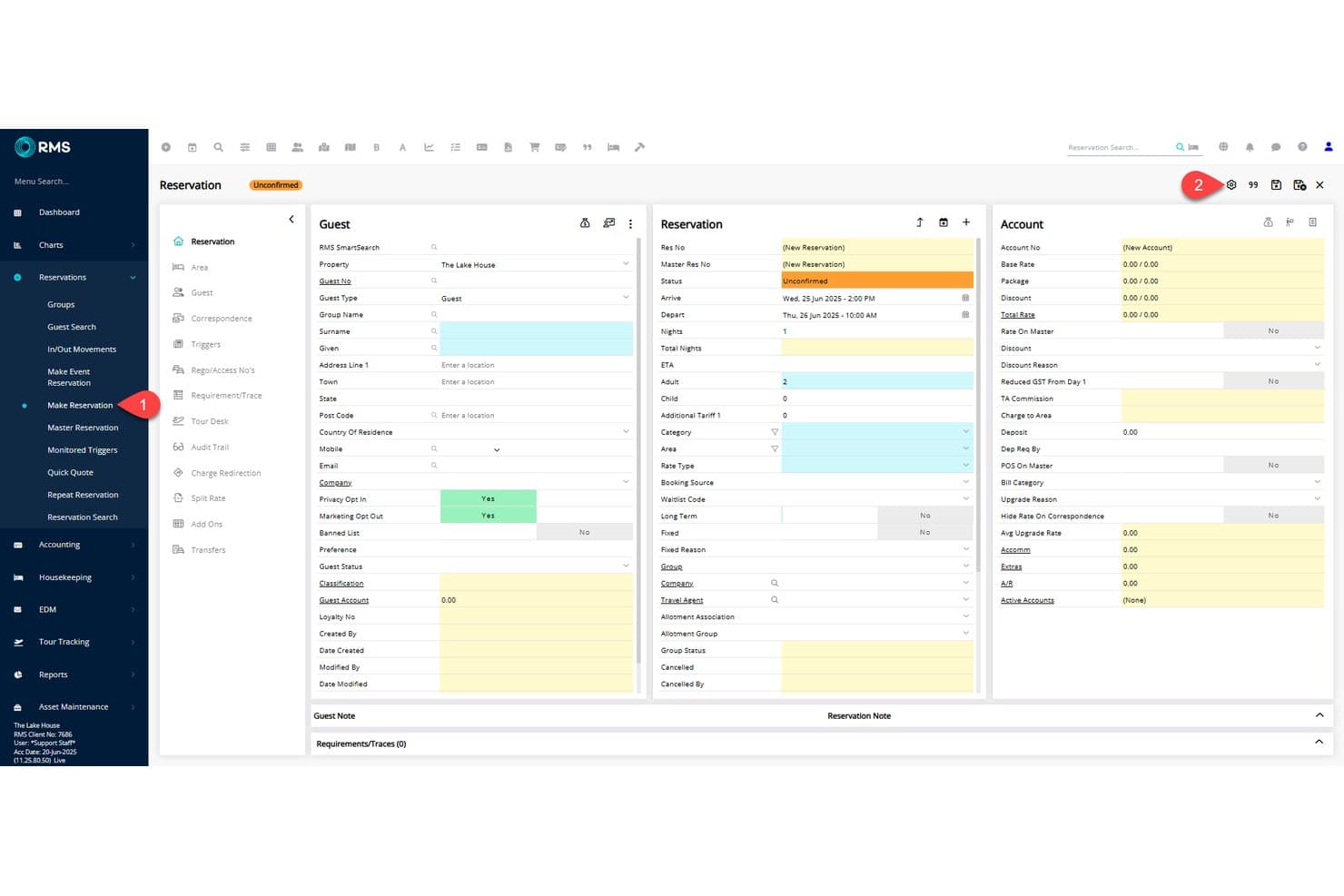
RMS Cloud provides a reservation view with guest, stay, and account details. RMS Cloud is a cloud-based property management platform that covers reservations, front desk, housekeeping, rate management, channel distribution, guest communications, and portfolio-level reporting across multiple properties.
Who Is RMS Cloud Best For?
RMS Cloud suits hotel group operators managing large, multi-property portfolios who need a single system to handle reservations, rate management, and reporting across dozens of sites.
Why I Picked RMS Cloud
I picked RMS Cloud as one of the best because it's genuinely built for scale, with documented real-world use across portfolios of 80-plus sites and hundreds of staff. I particularly like the enterprise database structure, which lets you assign each user a tailored security profile per property, controlling exactly what they can see and do across the group. The portfolio dashboards let me pull occupancy, RevPAR, and revenue data across multiple properties at once, then drill into a single site when something needs attention.
RMS Cloud Key Features
- Built-in channel manager: Manage OTA distribution and control how inventory is sold across connected channels, with connections to travel agents and GDS channels.
- Open REST API: Access 530+ endpoints with real-time, two-way data exchange, a developer sandbox, and API-specialist support for custom integrations.
- Guest communications hub: Automate pre-stay and post-stay emails, triggered confirmations, scheduled payment reminders, and post-stay feedback surveys.
- Role-based security profiles: Assign each staff member Allow, Read Only, or no-access permissions for specific functions—reservations, reporting, setup, and administration—on a per-property basis.
RMS Cloud Integrations
RMS lists hundreds of marketplace partners, including IDeaS, Airbnb, Agoda, and Avar AI. Its open API supports 530+ endpoints, webhooks, real-time two-way data exchange, and connections with 100+ technology partners.
Pros and Cons
Pros:
- Documented 80-property deployments support portfolio scale
- Per-property permissions separate staff access
- Cross-property dashboards drill into individual sites
Cons:
- Rate views stop at 60 days
- Group bookings can require manual folio handling
Learn more about RMS Cloud:
Alte software-uri pentru operațiunile hoteliere în grupuri cu mai multe proprietăți
Iată câteva opțiuni suplimentare care nu au intrat în lista mea scurtă, dar care merită totuși analizate:
- 11Shiji Enterprise PlatformBest for enterprise hotel groups scaling globally
- 12MewsBest for portfolio ops with 1,000+ integrations
- 13WebRezProBest for cross-property reporting and owner oversight
- 14innRoadBest for cross-property revenue reporting
- 15HostawayBest for OTA-first multi-listing portfolio ops
- 16Clock PMS+Best for shared guest profiles across properties
- 17Infor HMSBest for single-database multi-property operations
- 18RoomKeyPMSBest for small chains sharing guest profiles
How I Evaluate Multi-Property Hotel Operations Software
I split my evaluation into three parts: core functionality first (and it carries the most weight), where I check that a platform can run multiple properties under one login and manage reservations centrally. Then I look for standout features like a mobile multi-property dashboard. Finally, I consider onboarding and pricing scalability.
Core Functionality (Table Stakes For This List)
When I'm selecting tools for my list, I score each one on a scale from 0 (does not offer the functionality) to 5 (excels in this area) for each core functionality listed below. I then convert the total into a percentage to help assess each tool's overall fit, with extra weight on any functionalities I've deemed essential.
- Multi-Property Management (Essential): I check whether you can configure and run all your properties from one account, with shared templates or property-specific overrides as needed.
- Centralized Reservations (Essential): I look for a single reservation engine where you can create, modify, and manage bookings across every property without switching between systems.
- Cross-Property Reporting: Consolidated dashboards that let you compare occupancy, RevPAR, and performance side by side across locations are what I evaluate here.
- Unified Guest Profiles: I check whether guest records and stay histories sync across properties so returning guests are recognized at any location in the portfolio.
- Rate and Inventory Control: The ability to push rate and availability updates across properties in bulk, while still allowing property-level adjustments, is what I look for.
- Role-Based Multi-Property Access: Permissions should let you scope staff access by property, region, or corporate level so a front desk agent only sees their site while an area manager sees several.
Once I have a list of tools that meet the criteria, I consider what sets each platform apart.
Differentiating Factors (What Sets Vendors Apart)
Here's how I compare and contrast different vendors:
Standout Features
I look for a mobile multi-property dashboard that lets regional managers check occupancy and approve rate changes between site visits. A channel manager with native two-way OTA sync is equally important—without it, a rate update at one property can lag across channels and cause overbookings. I also evaluate each platform's API ecosystem, since groups running mixed property types need reliable connections to their existing revenue management, POS, and payment tools.
Beyond Features
I check whether a platform's pricing scales predictably per property or room count, since surprise costs after adding a new acquisition can stall a rollout. Implementation support matters just as much—vendors like Oracle and Maestro PMS offer phased go-live plans, which let you migrate one property at a time instead of risking portfolio-wide disruption. I also evaluate uptime SLAs and PCI-DSS compliance, because a single outage or data breach ripples across every property on the platform.
Cum să alegeți software-ul pentru operațiunile hoteliere în grupuri cu mai multe proprietăți
Alegeți un sistem stabilind unde grupul dumneavoastră are nevoie de procese consecvente și unde fiecare proprietate trebuie să aibă libertatea de a opera diferit.
| Dacă prioritatea dumneavoastră este | Căutați |
|---|---|
| Dacă prioritatea dumneavoastră estePăstrarea diferențelor operaționale locale | CăutațiUn proces scris pentru documentarea excepțiilor la nivelul proprietății |
| Dacă prioritatea dumneavoastră estePrevizionarea costurilor pe măsură ce portofoliul crește | CăutațiO ofertă care separă costurile recurente, de configurare, migrare și instruire |
| Dacă prioritatea dumneavoastră esteTransferul rezervărilor și al evidențelor oaspeților | CăutațiUn plan de migrare cu exemple de corespondență a câmpurilor și pași de reconciliere |
| Dacă prioritatea dumneavoastră esteLimitarea perturbărilor în timpul implementării | CăutațiUn plan de lansare etapizată cu criterii de aprobare pentru fiecare proprietate |
Cum să vă evaluați lista scurtă
- Analizați planul de migrare: Solicitați un exemplu de ghid de implementare care să precizeze înregistrările ce trebuie transferate, corespondența câmpurilor și modul în care echipa dumneavoastră va soluționa excepțiile.
- Testați modelul operațional: Programați un atelier de 45 de minute folosind două proprietăți cu proceduri diferite, apoi documentați ce decizii se aplică întregului portofoliu și care rămân la nivel local.
- Comparați costurile totale: Solicitați o ofertă pe 12 luni care să prezinte tarifele per proprietate sau per cameră, precum și costurile de configurare, migrare, instruire și ipotezele privind reînnoirea.
- Stabiliți condițiile proiectului-pilot: Solicitați un plan scris pentru lansarea inițială într-o singură proprietate, care să includă aprobarea datelor, criteriile de acceptare și o dată pentru revenire la configurația anterioară.
- Alegeți compromisul potrivit: Preferați consecvența centralizată dacă procesele comune sunt cele mai importante; preferați autonomia locală dacă proprietățile au nevoie de reguli operaționale distincte.
Ce este software-ul pentru operațiunile hoteliere în grupuri cu mai multe proprietăți?
Software-ul pentru operațiunile hoteliere în grupuri cu mai multe proprietăți este o platformă care permite grupurilor hoteliere să gestioneze rezervările, tarifele, evidențele oaspeților și operațiunile proprietăților din mai multe locații. Acesta poate oferi echipelor centrale controale și rapoarte comune, permițând în același timp proprietăților individuale să urmeze proceduri locale. Astfel, grupurile își pot coordona activitatea zilnică fără a impune tuturor hotelurilor să opereze în mod identic.
Funcții
Iată principalele funcții pe care le caut la un software pentru operațiunile hoteliere în grupuri cu mai multe proprietăți:
- Gestionarea mai multor proprietăți: Gestionați mai multe hoteluri dintr-un singur cont, cu setări comune pentru procesele întregului portofoliu și controale la nivel de proprietate pentru nevoile locale. Astfel, echipele centrale pot coordona operațiunile fără a obliga fiecare locație să urmeze proceduri identice.
- Rezervări centralizate: Vizualizați și gestionați rezervările din mai multe proprietăți prin intermediul unui sistem comun de rezervări. Personalul poate crea sau actualiza o rezervare și poate verifica disponibilitatea în mai multe locații fără să comute între conturi separate pentru fiecare proprietate.
- Raportare între proprietăți: Comparați indicatori precum gradul de ocupare, RevPAR și ritmul rezervărilor între locații. Rapoartele consolidate ajută echipele corporative și regionale să identifice diferențele și să evalueze performanța proprietăților.
- Profiluri unificate ale oaspeților: Păstrați disponibile detaliile oaspeților și istoricul sejururilor în întregul portofoliu. Atunci când un oaspete care revine face o rezervare la o altă proprietate, personalul poate consulta preferințele și înregistrările relevante, în conformitate cu regulile de acces și politicile privind datele.
- Controlul tarifelor și al inventarului: Actualizați tarifele camerelor și disponibilitatea pentru proprietățile selectate dintr-o interfață centrală, păstrând în același timp opțiuni pentru ajustări specifice fiecărei proprietăți. Acest lucru sprijină modificările coordonate ale prețurilor și ajută echipele să mențină actualizat inventarul camerelor.
- Acces bazat pe roluri: Atribuiți permisiuni în funcție de proprietate, regiune sau responsabilități corporative. Personalul de la recepție poate accesa informațiile necesare în locația sa, în timp ce managerii regionali pot supraveghea mai multe hoteluri.
- Gestionarea canalelor: Conectați tarifele camerelor și disponibilitatea la agențiile de turism online și la alte canale de rezervare. Actualizările bidirecționale ajută la menținerea concordanței dintre ofertele de pe canale și sistemul proprietății atunci când se modifică disponibilitatea sau prețurile.
Beneficii
Iată câteva beneficii obișnuite pe care le puteți aștepta de la software-ul pentru operațiunile hoteliere cu mai multe proprietăți:
- Supraveghere centralizată: Gestionați mai multe proprietăți dintr-un singur cont, cu setări comune și controale la nivel de proprietate pentru procedurile locale.
- Rezervări coordonate: Vizualizați și actualizați rezervările din mai multe locații într-un singur sistem, fără să comutați între conturi separate pentru fiecare proprietate.
- Vizibilitatea performanței portofoliului: Comparați gradul de ocupare, RevPAR și ritmul rezervărilor între proprietăți prin raportare consolidată.
- Recunoașterea consecventă a oaspeților: Profilurile comune ale oaspeților și istoricul sejururilor ajută personalul să recunoască oaspeții care revin la proprietăți diferite.
- Control coordonat al tarifelor și inventarului: Actualizați tarifele și disponibilitatea pentru proprietățile selectate, păstrând în același timp ajustările specifice fiecărei proprietăți.
- Acces al personalului în funcție de responsabilități: Permisiunile bazate pe roluri permit personalului de la recepție să se concentreze asupra proprietății sale, în timp ce managerii regionali supraveghează mai multe locații.
- Oferte aliniate pe canale: Actualizările bidirecționale ale canalelor ajută la menținerea consecvenței tarifelor și disponibilității între sistemul proprietății și canalele de rezervare.
Costurile și prețurile software-ului pentru operațiunile hoteliere cu mai multe proprietăți
Costurile variază în funcție de numărul de proprietăți, numărul de camere, funcționalități și module suplimentare. Iată intervalele de preț tipice pentru software-ul destinat operațiunilor hoteliere cu mai multe proprietăți.
Tabel comparativ al planurilor pentru software-ul destinat operațiunilor hoteliere cu mai multe proprietăți
| Tipul planului | Preț mediu | Funcționalități comune |
|---|---|---|
| Tipul planuluiPlan gratuit | Preț mediu$0 | Funcționalități comuneConfigurare limitată a proprietății, instrumente de bază pentru rezervări, acces de testare și documentație de asistență. |
| Tipul planuluiPlan personal | Preț mediu$50–$200 per proprietate/lună | Funcționalități comuneRezervări centralizate, controale de bază pentru tarife și inventar, raportare la nivel de proprietate și asistență prin e-mail. |
| Tipul planuluiPlan pentru companii | Preț mediu$200–$750 per proprietate/lună | Funcționalități comuneGestionarea mai multor proprietăți, rezervări centralizate, raportare între proprietăți, acces bazat pe roluri și gestionarea canalelor. |
| Tipul planuluiPlan pentru întreprinderi | Preț mediu$750–$2,000+ per proprietate/lună | Funcționalități comuneControale la nivelul întregului portofoliu, raportare avansată, integrări personalizate, asistență dedicată pentru implementare și condiții de servicii negociate. |
Planurile gratuite sunt neobișnuite, iar prețurile pentru întreprinderi sunt adesea stabilite pe baza unei oferte. Confirmați dacă oferta include configurarea, migrarea, instruirea și taxele pentru modulele suplimentare.
Întrebări frecvente
Iată răspunsurile la întrebările frecvente despre programul pentru gestionarea operațiunilor hoteliere cu mai multe proprietăți.
Poate programul hotelier pentru mai multe proprietăți să funcționeze cu hoteluri care folosesc sisteme PMS diferite?
Da, dacă platforma este compatibilă cu sistemul PMS sau cu configurația la nivel de proprietate pe care o folosește deja fiecare hotel. Unele grupuri se standardizează pe un singur sistem; altele conectează sisteme diferite prin integrări sau printr-un API. Cereți furnizorilor să demonstreze ce rămâne centralizat atunci când sistemele diferă: disponibilitatea, rezervările, fișele oaspeților, tarifele și rapoartele. Confirmați intervalul de actualizare și care sistem este responsabil pentru fiecare înregistrare. Testați o modificare și o anulare reale ale unei rezervări, deoarece o conexiune care transferă doar date de bază despre rezervare este posibil să nu accepte fluxurile de lucru comune de care echipa dumneavoastră are nevoie.
Ce ar trebui să verificăm înainte de a adăuga un hotel achiziționat recent?
Verificați dacă furnizorul poate configura noua proprietate fără a modifica regulile aplicate întregului portofoliu. Întrebați cum va importa tipurile de camere, planurile tarifare, rezervările, fișele oaspeților și permisiunile utilizatorilor și cum vor fi analizate excepțiile. Confirmați dacă proprietatea necesită configurări sau taxe de integrare separate, precum și instruirea personalului. Înainte de semnare, efectuați o migrare de probă cu înregistrări reprezentative. Acest lucru poate scoate la iveală câmpuri sau reguli operaționale necorespunzătoare înainte ca acestea să afecteze rezervările active.
Poate personalul să vadă profilurile oaspeților din toate proprietățile?
Depinde de controalele platformei privind partajarea profilurilor și de politicile grupului dumneavoastră privind datele. Întrebați dacă permisiunile pot limita accesul în funcție de proprietate sau rol și dacă personalul poate vedea doar detaliile oaspeților de care are nevoie. Verificați cum gestionează sistemul actualizările profilurilor, înregistrările duplicate și regulile de păstrare a datelor. Testați în timpul evaluării un scenariu cu un oaspete care revine, în două locații. Astfel puteți confirma că personalul poate găsi istoricul relevant fără a oferi fiecărui angajat acces nerestricționat la datele oaspeților din întregul portofoliu.
Poate un singur sistem să accepte stațiuni și hoteluri urbane în cadrul aceluiași portofoliu?
Da, dacă programul vă permite să configurați tipuri de camere, fluxuri de lucru și rapoarte specifice fiecărei proprietăți, menținând în același timp vizualizări consecvente la nivelul portofoliului. Cereți furnizorului să prezinte scenariul unui complex turistic și al unui hotel urban, inclusiv inventarul, tarifele pentru pachete și modificările rezervărilor. Verificați dacă fiecare locație poate utiliza sisteme conectate diferite, precum instrumente POS sau de gestionare a veniturilor. O autentificare comună nu dovedește de una singură că platforma poate gestiona modele operaționale diferite; testați sarcinile reale de care au nevoie echipele dumneavoastră.