

What Is Hotel PMS Software? Features & Benefits

Core Function: Centralizes reservations, front desk, housekeeping, billing, and guest data in one operational dashboard.
Measured Results: Case studies show lower administrative workloads, faster service, stronger upsell conversion, and more accurate revenue forecasting.
Essential Features: Prioritize real-time room updates, channel integrations, payment tools, reporting, guest profiles, and role-based security controls.
Best Fit: The platform supports independent hotels, multi-property operators, boutique inns, and short-term rental managers with different workflows.
Evaluation Risks: Compare pricing, integration needs, migration demands, data security, and scalability before selecting hotel property management software.
Hotel property management software is the operational backbone of any well-run property—and without the right one, you’re leaving revenue, guest satisfaction, and staff productivity on the table. I’ve seen firsthand how the wrong setup creates double bookings, slow check-ins, and disconnected departments that can’t share real-time data. This guide covers key features, core benefits and risks, real-world case studies, and how property management software compares with other tools in your hotel tech stack. Whether you’re running a boutique inn or a multi-property portfolio, you’ll walk away knowing what to look for—and what to avoid.
What Is Hotel Property Management Software?
Hotel property management software is a digital platform that helps you run your hotel’s day-to-day operations from a single dashboard. It centralizes tasks like reservations, front desk activities, housekeeping assignments, and billing so teams can share up-to-date information and work without confusion. Using this software, you handle bookings, track room status, manage guest details, and generate reports—making it easier to keep everything organized and deliver consistent guest experiences.
Examples of Hotel Property Management Software
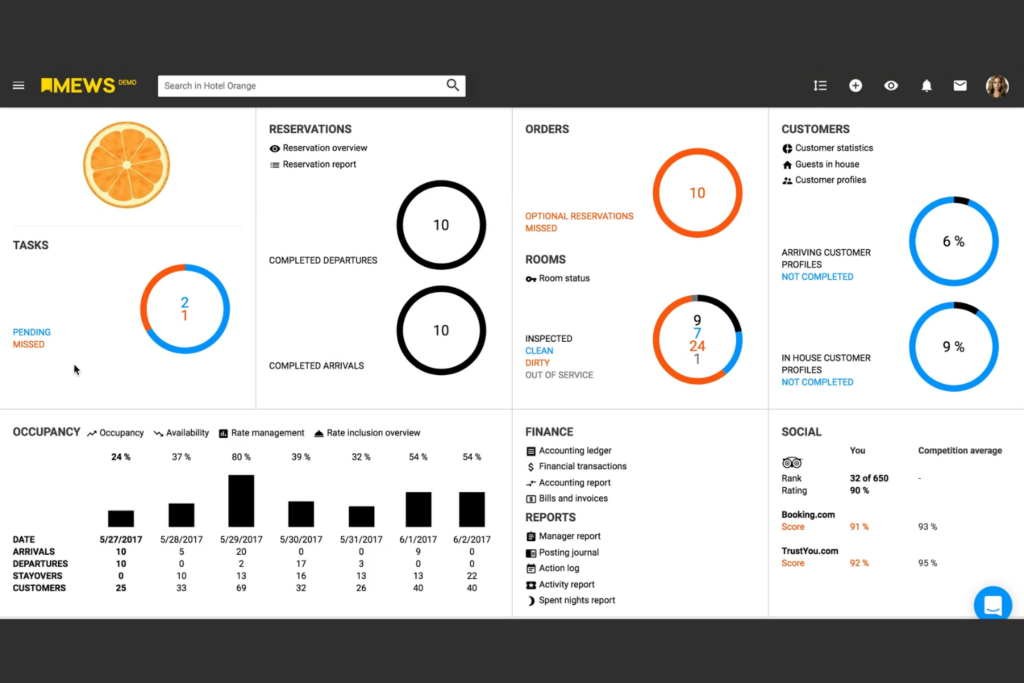
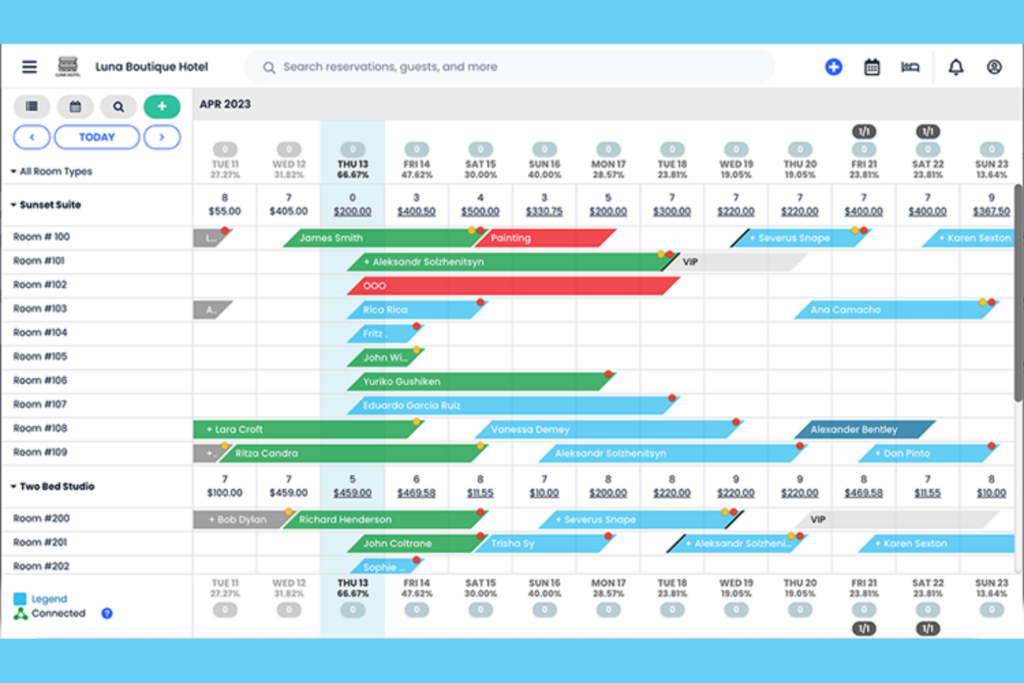
Here are some visual examples of hotel property management software interfaces you might use day-to-day:

Top Hotel Property Management Software to Consider
Here’s my shortlist of the best hotel property management software solutions:
Clicks on the links below may earn a commission, which supports our independent testing and review of software and services. Learn more about how we stay transparent.



Who Uses Hotel Property Management Software?
You’ll find hotel property management software used by a range of teams and organizations focused on delivering great stays and running smooth operations:
- Front Desk Teams: Handle guest check-ins, check-outs, room assignments, and payment processing.
- Housekeeping Departments: Track room cleaning schedules, update statuses, and respond to guest requests.
- Multi-Property Operators: Oversee reservations, reporting, and revenue across multiple hotels or locations.
- Boutique and Independent Hotels: Manage unique guest preferences, room inventory, and daily operations without large corporate infrastructure.
- Short-Term Rental Managers: Coordinate bookings and turnovers for vacation rentals, serviced apartments, or extended-stay units.
Key Hotel Property Management Software Benefits & Potential Business Impacts
Hotel property management software helps you reduce manual work, cut down on errors, track revenue, support regulatory compliance, and improve guest satisfaction by giving your team a single source of truth. While these systems require a significant investment and may involve some operational risks—such as data security concerns or migration challenges—the right solution can deliver strong returns for your business.
Use this table to weigh the main benefits against the risks of implementing hotel property management software in your business:
| Benefits | Risks |
|---|---|
| Centralizes guest, reservation, and billing information | Data migration can cause lost records or booking errors |
| Improves team collaboration with real-time room updates | System outages disrupt check-in and daily operations |
| Cuts down manual entry and reduces booking mistakes | Vendor lock-in limits flexibility and long-term options |
| Supports faster check-ins and guest service | Steep learning curve for staff leads to lost productivity |
| Offers clear reporting on occupancy and revenue | Data security or privacy breaches put guest data at risk |
| Keeps housekeeping and maintenance tasks visible | Software fees increase operating costs over time |
| Automates repetitive administrative work | Integration issues disrupt workflows and guest experience |
Hotel Property Management Software Case Studies
Here are a few real-world case studies that show how hotel property management software transforms operations—from the challenges properties faced before implementation to the results they achieved after. These examples give you a clear picture of what you can expect for your own team.
Case Study: TIME Hotels' Implementation of Daylight PMS
TIME Hotels, a hospitality management firm operating 17 properties across the Middle East, replaced fragmented legacy systems with Shiji's Daylight PMS to unify operations across diverse property owners and regional regulatory environments. The rollout included integrations with point-of-sale, payments, distribution, and guest reputation tools—all built around a single, centralized platform.
Here are the results of TIME Hotels' implementation of hotel property management software:
- 30% reduction in administrative workload: Automating reservations, billing, and reporting freed staff from manual, time-consuming tasks.
- 15% increase in guest satisfaction: Faster, more personalized service—enabled by real-time data access—directly improved the guest experience.
- Standardized operations across 17 properties: A shared tech stack made training more consistent and allowed staff to move between properties without relearning systems.
- Scalable infrastructure for growth: The unified platform made onboarding new hotels faster and less operationally disruptive.
Case Study: Hollywood Hotel's Implementation of Mews
Hollywood Hotel, a 127-room independent property in Los Angeles, moved from a legacy PMS to Mews to address manual pricing, slow check-ins, and limited financial visibility. The implementation included Mews Ledgers, Mews Business Intelligence, SMS guest messaging, and the Atomize revenue management system.
Here are the results of Hollywood Hotel's implementation of hotel property management software:
- 24% online check-in completion rate: Automated SMS reminders with direct check-in links drove a significant jump in pre-arrival completion.
- 13% upsell conversion rate: Automated pre-arrival upsell offers through SMS nearly doubled the US average conversion rate.
- Forecast accuracy within 10%: AI-driven rate automation via Atomize gave the revenue team reliable, real-time demand forecasting without manual intervention.
- Simplified OTA rate management: Consolidating to one base rate with cascading plans eliminated the complexity of managing 30+ manual rate setups and kept OTA pricing in sync with demand.
- Improved financial visibility: Mews Ledgers replaced manual night audits and patchy reporting with a clean, centralized ledger view for the accounting team.
Core Features & Capabilities of Hotel Property Management Software
Look for these core features in hotel property management software to make daily operations easier and more reliable:
- Centralized Reservations: Manage direct and third-party bookings in one dashboard so you avoid double-bookings and last-minute oversights.
- Front Desk Automation: Streamline check-in, check-out, and room assignment to reduce wait times and manual entry.
- Housekeeping & Maintenance Tracking: Assign, monitor, and update room status in real time so housekeeping and maintenance stay in sync with guest needs.
- Billing & Payment Processing: Generate and send invoices, process multiple payment types, and handle folios with fewer errors.
- Guest Profile Management: Store guest preferences, stay history, and contact details to personalize service and support repeat visits.
- Reporting & Analytics: Track occupancy, revenue, and performance trends so you know where to focus your attention each week.
- Multi-Channel Booking Integration: Connect to online travel agencies (OTAs), booking engines, and channel managers without switching systems.
- Role-Based Access Controls: Set permissions by role to keep sensitive data secure while letting each team see only what they need.
Hotel Property Management Software Use Cases: Typical Processes & Workflows
Hotel property management software brings all your core workflows—like reservations, room assignments, billing, housekeeping, and guest messaging—into one place for easier coordination. You can expect better visibility into what’s happening across your property, fewer manual errors, and faster response times for guest requests. Whether you’re running a single boutique hotel or managing multiple locations, this software helps your team stay connected and keep daily operations running smoothly.
Use this table to see how hotel property management software supports essential hotel management processes:
| Process | Description | How Software Helps |
|---|---|---|
| Guest Reservations | Manage direct bookings, third-party reservations, and group blocks. | Combines all bookings into one dashboard, reduces double-booking, and sends real-time updates to the team. |
| Front Desk Operations | Handle check-in, check-out, room assignments, and payment processing for arriving guests. | Automates key tasks like room assignment, updates room status instantly, and processes payments securely. |
| Housekeeping Coordination | Assign tasks, track cleaning schedules, and update room readiness status. | Lets housekeeping staff view room status live, update progress from mobile devices, and respond to guest requests faster. |
| Billing and Invoicing | Create guest bills, track charges, handle multiple payment types, and manage folios. | Generates accurate invoices automatically, manages folio splits, and reduces manual entry errors. |
| Reporting and Analytics | Track occupancy rates, revenue, and operational performance to inform decision-making. | Delivers up-to-date reports, visual dashboards, and exportable data for faster, more informed business reviews. |
Types of Hotel Property Management Software & Similar Tools
Hotel property management software sits at the center of a broader hospitality tech stack, and it's easy to mix it up with the specialized tools that surround it. Here's how the most common types compare:
| Type | Differentiator |
|---|---|
| Channel Manager | Distributes room inventory and rates across OTAs and booking platforms; doesn't manage on-property operations |
| Central Reservation System (CRS) | Handles reservations across multiple properties or brands at a chain level; operates above the individual property layer |
| Revenue Management System (RMS) | Focuses on dynamic pricing, demand forecasting, and yield optimization rather than day-to-day operational management |
| Hospitality CRM | Manages guest loyalty programs, marketing communications, and relationship history; guest data is separate from operational workflows |
| Booking Engine | Processes direct reservations through a hotel's own website; handles only the booking step, not the full guest lifecycle |
Keep Your Hotel Running at Its Best
Once you know what to look for in a property management system, the next step is comparing platforms that fit your hotel’s size, workflows, and operational needs. Explore our guide to the best hotel property management software to evaluate leading options and narrow down the right fit.