

10 migliori software per catering recensiti nel 2026

10 Elenco dei migliori software per catering


Gestire le attività di catering in un hotel può essere una vera sfida. Devi occuparti della pianificazione dei menu, dell'inventario e degli ordini dei clienti, garantendo al contempo un servizio di alto livello. È qui che entra in gioco il software per catering: ti aiuta a mantenere tutto organizzato ed efficiente.
In base alla mia esperienza, trovare il software giusto può fare una grande differenza. Può semplificare il tuo lavoro e migliorare la produttività del tuo team. Ho preparato un elenco accuratamente studiato dei migliori software per catering disponibili, così potrai trovare quello più adatto alle tue esigenze.
In questo articolo troverai una recensione imparziale delle mie scelte migliori. Analizzerò le loro funzionalità, i pro e i contro e ciò che rende unico ciascun prodotto, così potrai prendere una decisione informata.
Perché fidarsi dei nostri consigli sui software
Il nostro team testa e recensisce software dal 2012. In quanto leader del settore alberghiero noi stessi, sappiamo quanto sia difficile — e importante — scegliere il software giusto.
Per questa guida, abbiamo valutato gli strumenti attraverso test pratici e ricerche indipendenti, assegnando un punteggio agli strumenti in base ai nostri criteri di selezione.
Le nostre recensioni riflettono il nostro giudizio editoriale umano, non un discorso di vendita.
Riepilogo dei migliori software per catering
Questa tabella comparativa riassume i dettagli sui prezzi delle mie migliori selezioni di software per catering, per aiutarti a trovare quello più adatto al tuo budget e alle esigenze della tua attività.
| Tool | Best For | Trial Info | Price | ||
|---|---|---|---|---|---|
| 1 | Ideale per l'automazione dell'inventario | Consulenza esperta disponibile | Prezzi su richiesta | Website | |
| 2 | Ideale per la gestione delle prenotazioni di eventi | Demo gratuita disponibile | Prezzo su richiesta | Website | |
| 3 | Ideale per il calcolo dei costi di menu | Demo gratuita disponibile | Da $99/mese | Website | |
| 4 | Ideale per la gestione delle consegne | Demo gratuita disponibile | Prezzo su richiesta | Website | |
| 5 | Ideale per eventi su larga scala | Demo gratuita su richiesta. | Prezzi personalizzati su richiesta | Website | |
| 6 | Ideale per sistemi di ordinazione online | Demo gratuita disponibile | Prezzi su richiesta | Website | |
| 7 | Ideale per attività di ristorazione collettiva | Demo gratuita disponibile | Prezzo su richiesta | Website | |
| 8 | Ideale per la personalizzazione delle proposte | Demo gratuita disponibile | Prezzo su richiesta | Website | |
| 9 | Ideale per le funzionalità di pianificazione dei pasti | Demo gratuita disponibile | Da $150/mese | Website | |
| 10 | Ideale per la gestione delle relazioni con i clienti | Demo gratuita disponibile | Prezzi su richiesta | Website |
Recensioni dei migliori software per catering
Di seguito trovi i miei riepiloghi dettagliati dei migliori software per catering inclusi nel mio elenco. Le mie recensioni esaminano le funzionalità principali di ogni strumento, i pro e contro, le integrazioni e i casi d’uso ideali, per aiutarti a trovare quello più adatto a te.

Apicbase
Ideale per l'automazione dell'inventario

Apicbase Restaurant Management centralizza tutto, dalle ricette e i menu fino agli ordini e all'inventario. Semplifica i flussi di lavoro e controlla automaticamente le scorte rispetto agli ingredienti necessari, facilitando la gestione dell'inventario tramite le integrazioni con il POS.
Perché ho scelto Apicbase Restaurant Management: Automatizza i flussi di lavoro dell'inventario, distinguendosi per l'automazione della gestione delle scorte. È possibile monitorare i livelli di inventario in tempo reale e automatizzare i processi di approvvigionamento. Il database centralizzato delle ricette garantisce un calcolo accurato dei costi e il rispetto delle normative sulla sicurezza alimentare. Questo aiuta il tuo team a mantenere la coerenza tra le diverse sedi.
Funzionalità principali & integrazioni:
Funzionalità includono menu engineering, conformità HACCP e pianificazione della produzione. È inoltre possibile utilizzare gli strumenti di analisi per migliorare il processo decisionale. Il sistema interno di ordinazione semplifica la gestione delle scorte su più sedi.
Le integrazioni includono Microsoft Dynamics, Oracle, SAP, Square, Xero, QuickBooks, Lightspeed, Sapaad, MarketMan e Planday.
Pros and Cons
Pros:
- Automatizza i flussi di lavoro dell'inventario
- Database centralizzato delle ricette
- Monitoraggio dell'inventario in tempo reale
Cons:
- Modulo di produzione limitato
- Limiti sui menu stagionali
- Problemi con la scalabilità del buffet

Ideale per la gestione delle prenotazioni di eventi
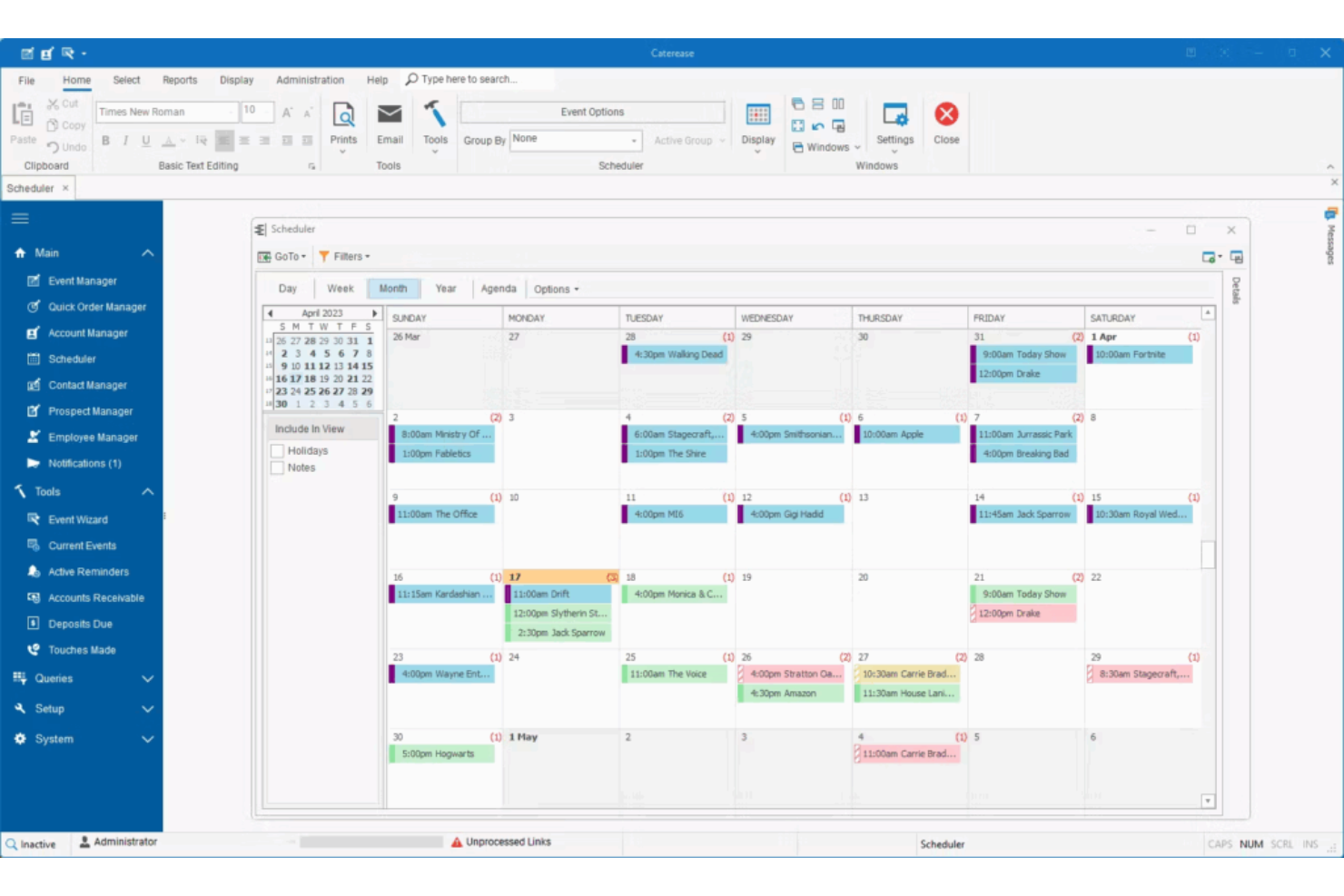
Caterease eccelle nella gestione di prenotazioni complesse grazie a procedure guidate personalizzabili e a un'interfaccia calendario intuitiva. I suoi strumenti per la programmazione del personale, la creazione di documenti evento personalizzati e la generazione di liste di imballaggio semplificano ogni fase, rendendolo una delle scelte migliori per una gestione ottimale delle prenotazioni di eventi.
Perché ho scelto Caterease: Le sue eccezionali capacità di gestione delle prenotazioni lo rendono ideale per le aziende che gestiscono numerosi eventi. È possibile gestire prenotazioni e orari in modo efficiente grazie alla funzione calendario intuitiva. Il software offre strumenti dettagliati per la gestione dei clienti, consentendo di mantenere relazioni solide con la clientela. Tutto ciò permette al team di gestire più eventi senza problemi e mantenere i clienti soddisfatti.
Caratteristiche e integrazioni principali:
Funzionalità includono reportistica personalizzabile, pianificazione dei menu e gestione delle attività. Puoi utilizzare il sistema di fatturazione automatizzata per semplificare la preparazione delle fatture. Il software offre inoltre strumenti per gestire la logistica dettagliata degli eventi.
Le integrazioni includono QuickBooks, Salesforce, Google Calendar, Outlook, Constant Contact, Mailchimp, Xero, PayPal, Stripe e Authorize.Net.
Pros and Cons
Pros:
- Procedure guidate di prenotazione dettagliate
- Menu drag-and-drop
- Costi ricetta scalabili
Cons:
- Strumenti di inventario instabili
- Limitazioni nella ricerca dei report
- Errori nel calcolatore tasse/commissioni
Ideale per il calcolo dei costi di menu
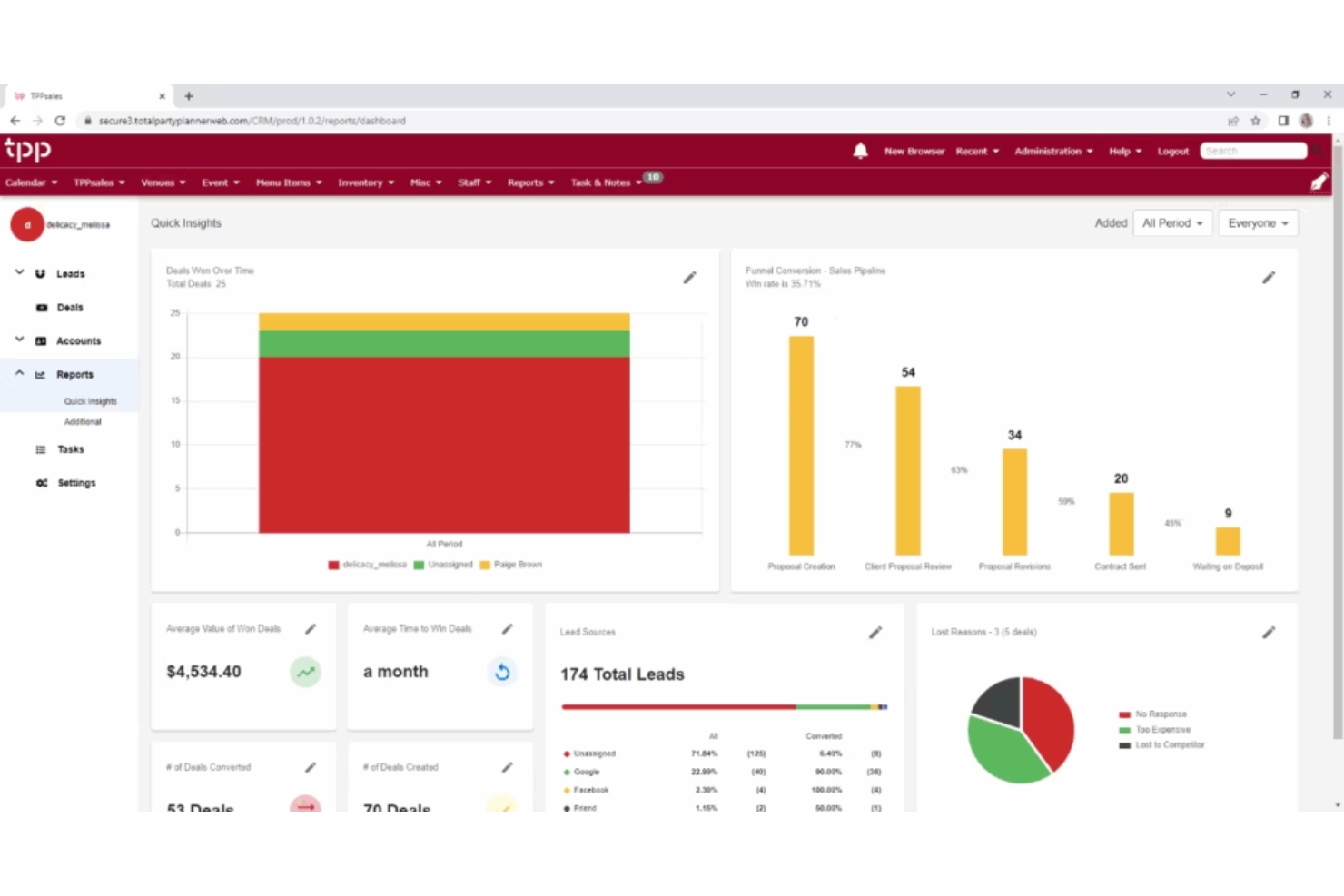
Total Party Planner è un software di catering basato sul web, creato da professionisti del settore per semplificare le operazioni e aumentare la redditività. Grazie al calcolo istantaneo dei costi, al monitoraggio delle ricette, agli aggiornamenti in blocco e all’analisi dei profitti, garantisce una valutazione accurata dei prezzi dei menu.
Perché ho scelto Total Party Planner: Le sue potenti funzionalità di calcolo dei costi del menu aiutano le aziende a determinare con precisione i costi alimentari e a massimizzare i profitti. Puoi creare menu dettagliati con precise ripartizioni dei costi. Il software consente di monitorare le spese e adeguare i prezzi in base ai dati in tempo reale. Questo assicura che il tuo team possa gestire efficacemente i costi e mantenere la redditività.
Funzionalità e integrazioni principali:
Funzionalità includono pianificazione degli eventi, gestione dei compiti e fatturazione automatica. È possibile generare report dettagliati per analizzare le prestazioni aziendali. Il software offre anche strumenti per la gestione delle comunicazioni e dei feedback dei clienti.
Integrazioni includono QuickBooks, Google Calendar, Mailchimp, Constant Contact, PayPal, Stripe, Square, Authorize.Net, Facebook e Twitter.
Pros and Cons
Pros:
- Centro operativo tutto-in-uno
- Strumenti integrati per il calcolo dei costi alimentari
- Promemoria e avvisi per gli eventi
Cons:
- Modulo inventario limitato
- Nessuna API per le integrazioni
- Personalizzazione limitata dei contratti

Spoonfed
Ideale per la gestione delle consegne
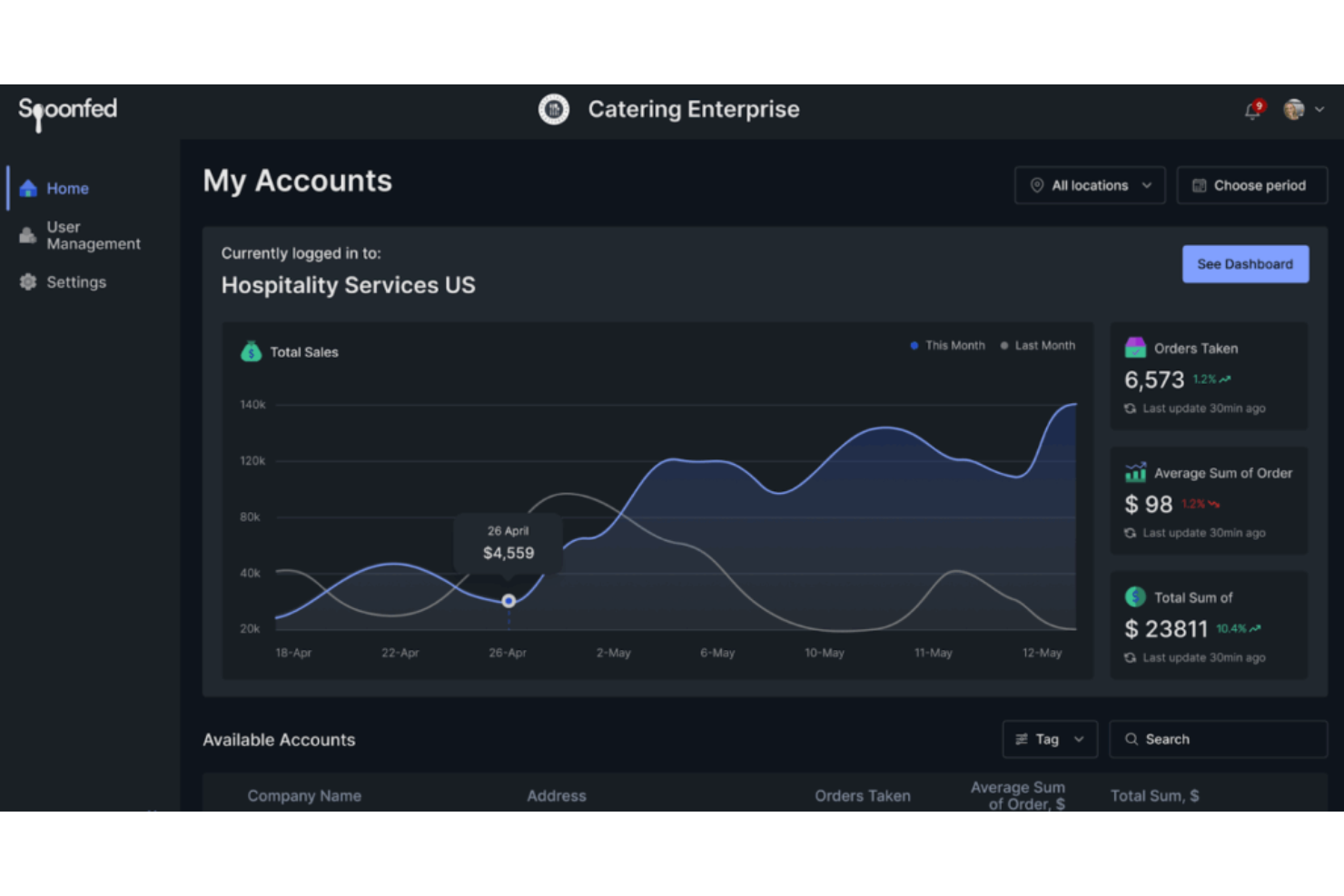
Spoonfed offre ordini online dinamici, menu personalizzabili e un modulo di consegna che assegna i driver e stampa fogli pronti per il percorso. Semplifica la gestione dalle richieste fino alla consegna in cucina e automatizza la fatturazione per garantire precisione e soddisfazione del cliente.
Perché ho scelto Spoonfed: Le sue capacità di gestione delle consegne lo rendono ideale per le aziende di catering con una forte componente di distribuzione. Puoi monitorare in tempo reale i percorsi e le tempistiche delle consegne. Il software ti consente di personalizzare le opzioni di consegna in base alle esigenze dei clienti. Questa flessibilità garantisce che il tuo team possa gestire con efficienza anche logistiche di consegna complesse.
Funzionalità principali e integrazioni:
Funzionalità includono modelli d'ordine personalizzabili, fatturazione automatizzata e tracciamento delle consegne in tempo reale. Puoi gestire il feedback dei clienti direttamente tramite la piattaforma. Il software offre anche strumenti di reportistica per aiutare ad analizzare le prestazioni delle consegne.
Integrazioni includono Xero, QuickBooks, Sage, Stripe, PayPal, Google Maps, Mailchimp, Square, HubSpot e Salesforce.
Pros and Cons
Pros:
- Raccolta feedback in tempo reale
- Ordini self-service dal cliente
- Sincronizzazione ordini multi-sito
Cons:
- Nessuna API per integrazioni
- Bug su fatture pagate con carta
- Nessuna anteprima fattura live

EventPro
Ideale per eventi su larga scala
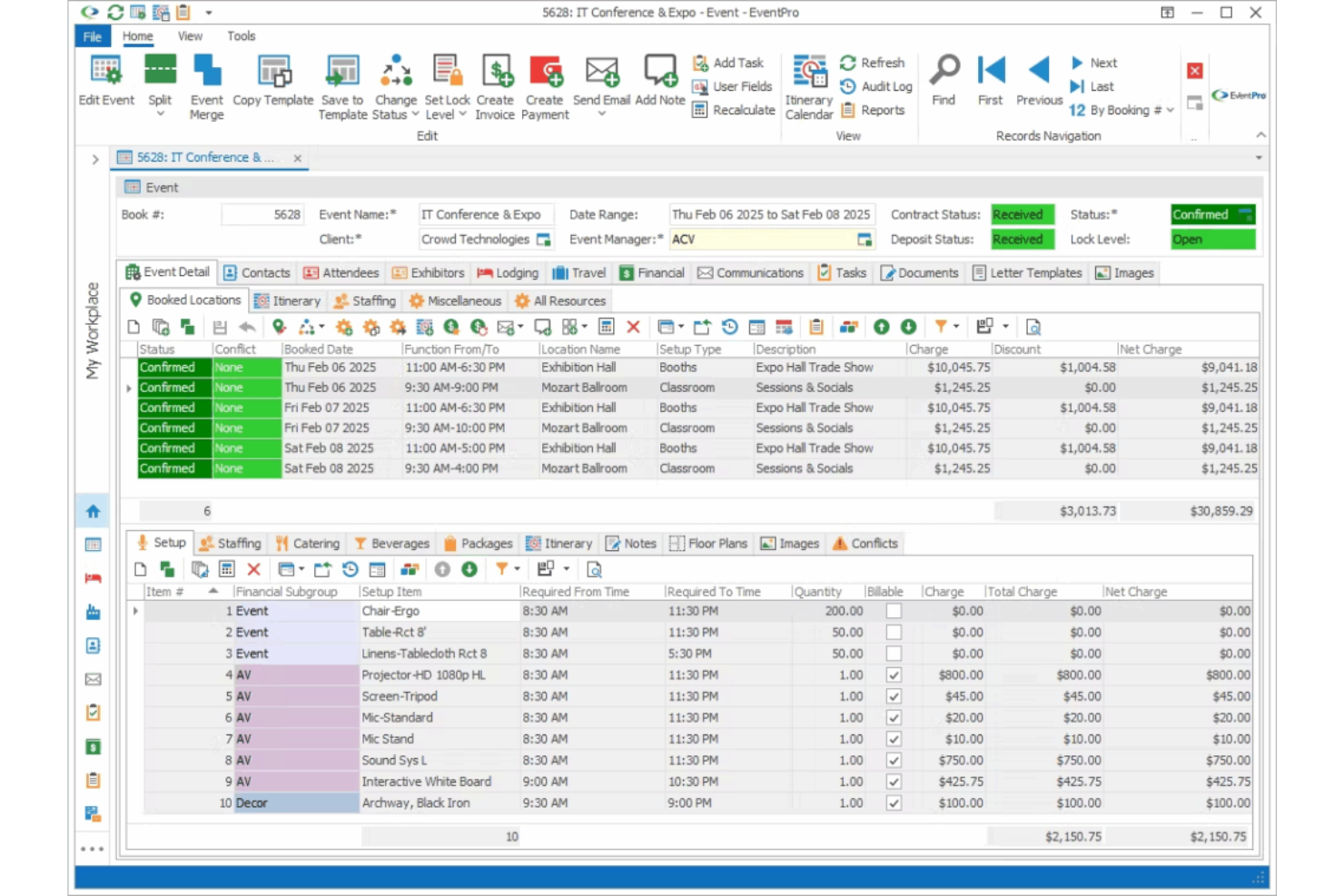
EventPro è un sistema modulare per la gestione di eventi e catering che si adatta in modo efficiente a supportare eventi complessi, multi-sede e ad alto volume. Centralizza gli articoli di catering e la configurazione dei menù, offrendo configurazioni flessibili per garantire l'esecuzione senza intoppi anche nei grandi eventi.
Perché ho scelto EventPro: La sua capacità di gestire eventi su larga scala lo rende una scelta preferita per le realtà che organizzano molti eventi. Si possono pianificare e coordinare risorse in modo efficiente su più eventi. Il software mette a disposizione strumenti dettagliati di pianificazione per mantenere tutto organizzato. Questo permette al tuo team di gestire con facilità anche la logistica di eventi complessi.
Funzionalità e integrazioni principali:
Funzionalità includono strumenti di reportistica completi, pianificazione delle risorse e gestione dei partecipanti. È anche possibile monitorare in tempo reale i budget e le spese degli eventi. Il software offre inoltre una funzione di gestione delle sedi per semplificare le prenotazioni degli spazi.
Integrazioni includono Microsoft Outlook, QuickBooks, Salesforce, Google Calendar, Mailchimp, Eventbrite, Constant Contact, Zoom, Xero e Slack.
Pros and Cons
Pros:
- Controllo delle versioni dei menù
- Flessibilità multilevel dei menù
- Database centralizzato degli articoli
Cons:
- Rigidità nella tariffazione dei menù
- Passaggi complessi per personalizzazione
- Assenza di avvisi in cucina

Ideale per sistemi di ordinazione online

Flex Catering dispone di un potente sistema di ordinazione online accessibile sia da mobile che da desktop. Offre carrelli personalizzati con il tuo marchio, ordini di gruppo e integrazioni, rendendo l'ordinazione online semplice e potente.
Perché ho scelto Flex Catering: Il suo sistema di ordinazione online è particolarmente efficace per le aziende che desiderano espandere la propria presenza digitale. Puoi allestire una vetrina online personalizzata che mette in mostra le tue proposte di menu. Il software fornisce strumenti per la gestione degli ordini dei clienti e per l'elaborazione dei pagamenti. Questo semplifica al tuo team la gestione efficiente di grandi volumi di ordini online.
Caratteristiche e integrazioni distintive:
Funzionalità includono una gestione dettagliata del menu, fatturazione automatica e gestione delle relazioni con i clienti. Puoi utilizzare gli strumenti di reportistica per ottenere approfondimenti sulle performance di vendita. Il software offre anche strumenti di marketing integrati per aiutarti a raggiungere più clienti.
Integrazioni includono Xero, QuickBooks, Stripe, PayPal, Square, Google Analytics, Mailchimp, WooCommerce, HubSpot e Salesforce.
Pros and Cons
Pros:
- Automazione adatta alla crescita
- Instradamento ordini multi-sede
- Portali B2B personalizzati
Cons:
- Possibile duplicazione dei prodotti
- La configurazione può interrompere i flussi di lavoro
- Opzioni di modifica limitate

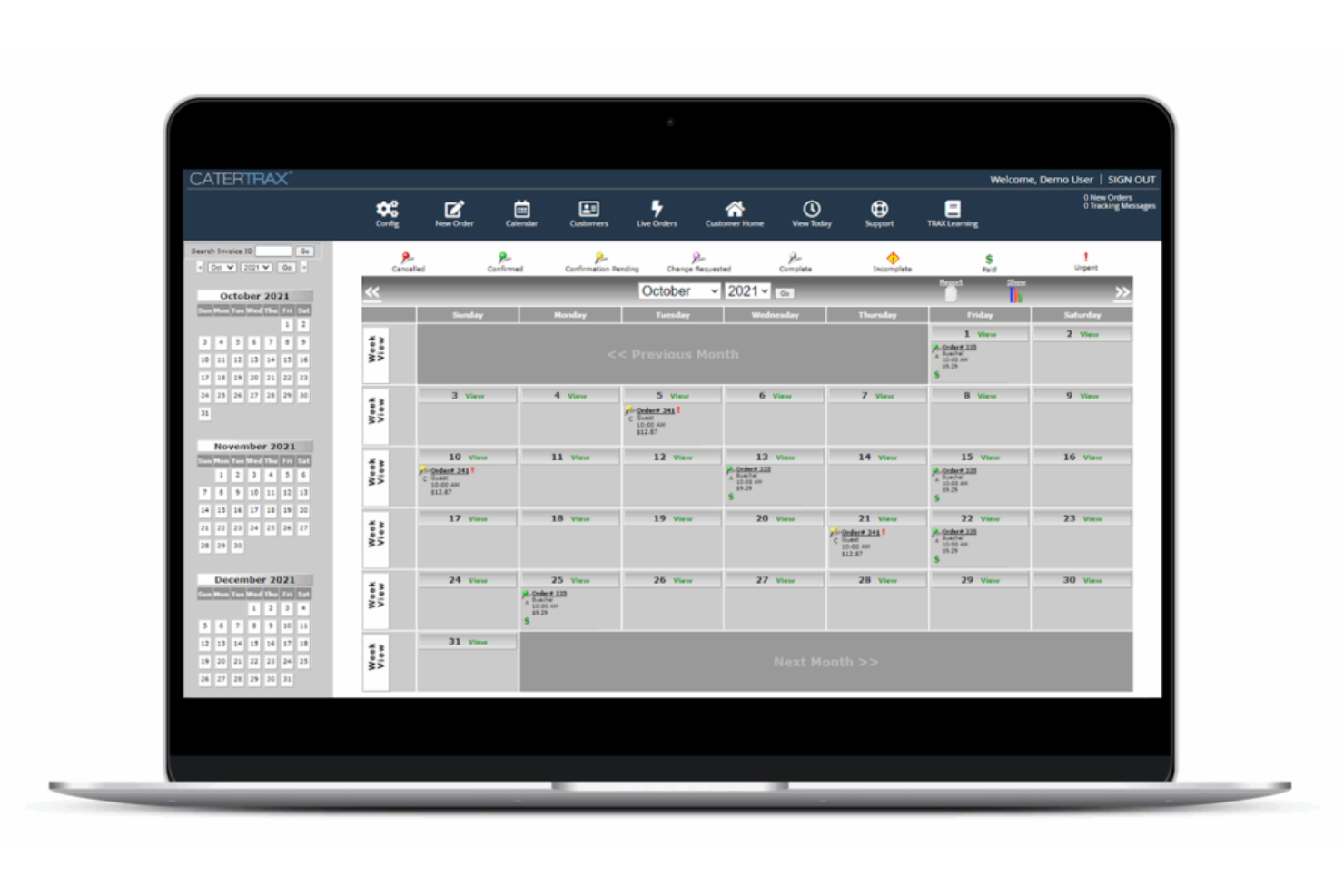
La piattaforma di gestione catering tutto-in-uno di CaterTrax, nota come TRAX Platform, centralizza strumenti fondamentali per il flusso di lavoro e la promozione al fine di incentivare le vendite aggiuntive. Aumenta la precisione e migliora la soddisfazione del cliente grazie a report dinamici e alla rendicontazione degli ordini in siti multi-sede.
Perché ho scelto CaterTrax: È progettato per gestire attività di ristorazione diversificate, rendendolo ideale per configurazioni complesse. Puoi gestire gli ordini online e monitorarli in tempo reale. Il software fornisce strumenti per la gestione dei menù e la personalizzazione delle comunicazioni con i clienti. Questo assicura che il tuo team possa gestire in modo efficiente un grande volume di ordini mantenendo standard di servizio elevati.
Caratteristiche e integrazioni principali:
Caratteristiche includono gestione dei menù personalizzabile, monitoraggio degli ordini in tempo reale e fatturazione automatizzata. Puoi generare report di vendita dettagliati per analizzare l’andamento dell’attività. Il software offre anche strumenti per gestire le comunicazioni e i feedback dei clienti.
Integrazioni includono QuickBooks, PayPal, Square, Stripe, Microsoft Dynamics, Oracle, SAP, Salesforce, Google Calendar e Mailchimp.
Pros and Cons
Pros:
- Tracciamento delle scorte a magazzino
- Sincronizzazione menù su più sedi
- Calendario stato ordini
Cons:
- Autonomia amministratore limitata
- Nessun accesso API
- Ordini archiviati bloccati

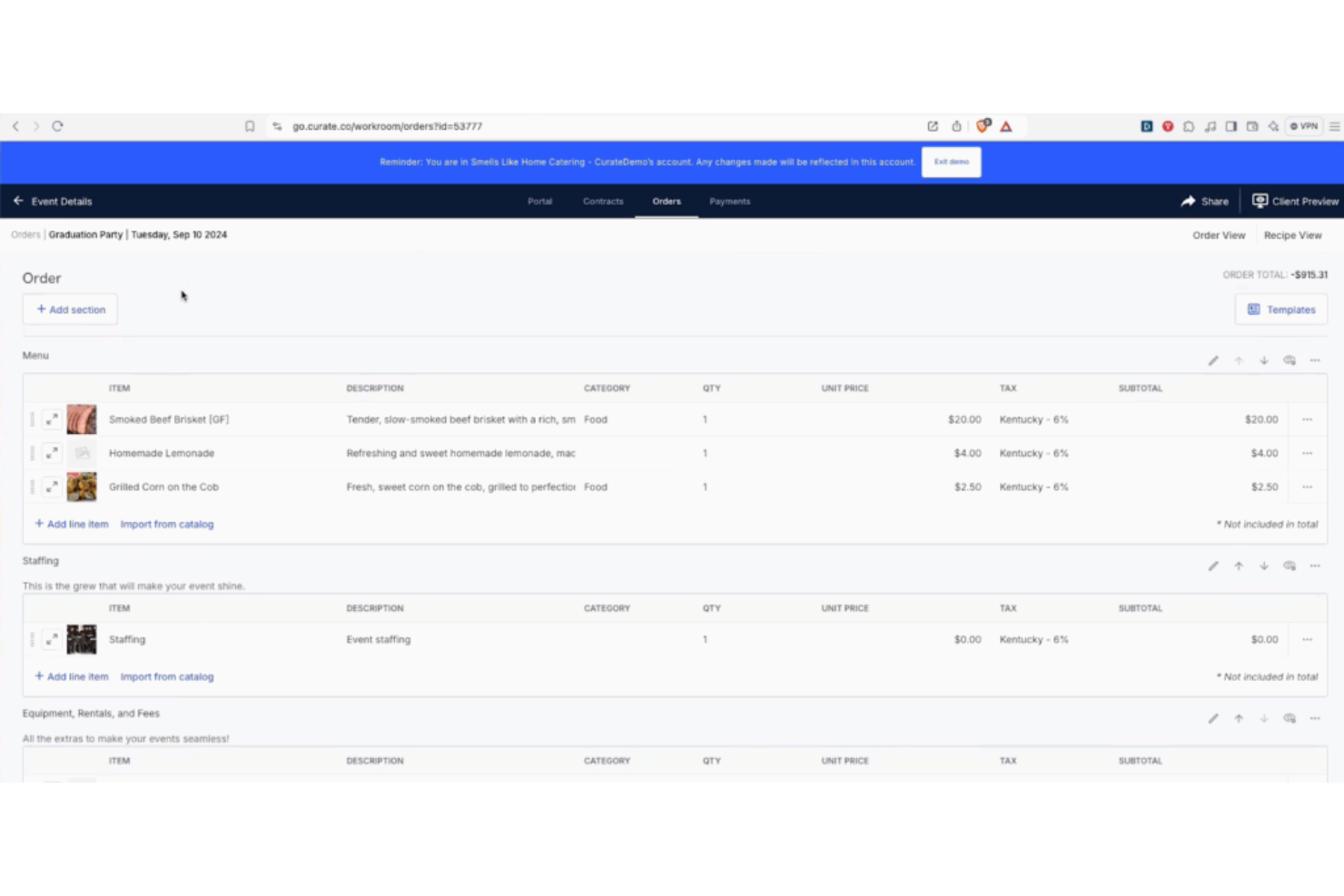
Curate semplifica il processo dalla richiesta alla prenotazione permettendo alle aziende di creare proposte straordinarie e personalizzate con elementi visivi accattivanti e menu dettagliati grazie a un pratico editor drag-and-drop. Concentra la comunicazione con il cliente e la logistica dell’evento in un flusso di lavoro snello per proposte pronte per il cliente.
Perché ho scelto Curate: Le sue capacità di personalizzazione delle proposte sono un elemento distintivo, consentendoti di creare proposte dettagliate e in linea con il brand. Il software offre funzionalità drag-and-drop per costruire facilmente la proposta. Puoi personalizzare ogni aspetto della proposta per rispecchiare il tuo marchio e le esigenze del cliente. Questa flessibilità aiuta il tuo team a offrire esperienze personalizzate ai clienti.
Funzionalità e integrazioni di rilievo:
Funzionalità includono la gestione dell’inventario, la firma digitale dei contratti e l’elaborazione dei pagamenti. Il software offre anche la gestione delle attività per tenere organizzato il tuo team. È possibile generare report dettagliati per analizzare le prestazioni dell’attività.
Integrazioni includono QuickBooks, Google Calendar, Xero, Stripe, Square, Slack, Gusto, HubSpot, Microsoft Outlook e Mailchimp.
Pros and Cons
Pros:
- Supporto per proposte multi-location
- Liste della spesa per più eventi
- Precisione dei prezzi in tempo reale
Cons:
- Modifiche batch manuali
- Personalizzazione dei report limitata
- Funzioni utilizzabili solo tramite browser

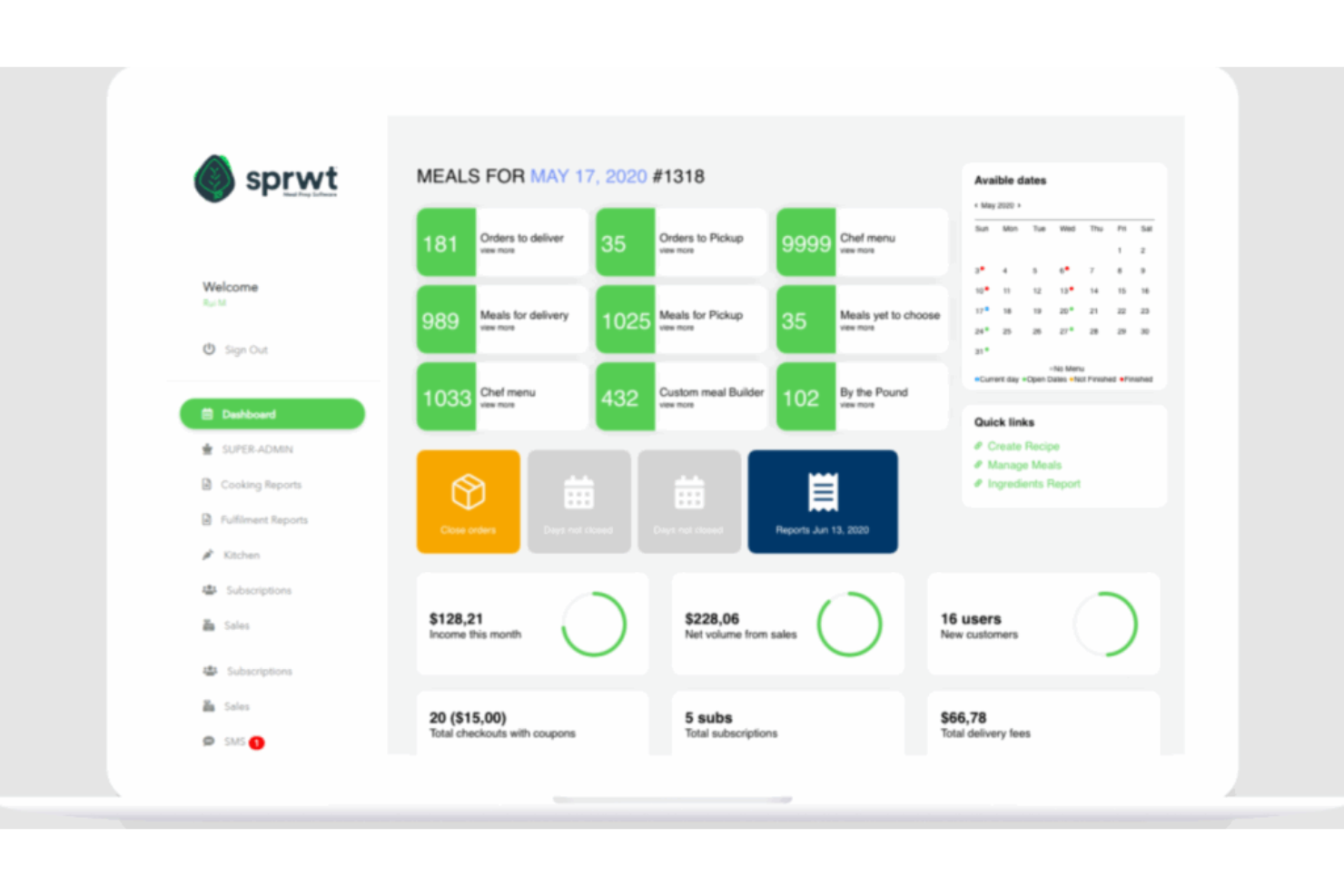
Sprwt semplifica la pianificazione dei pasti integrando un generatore di ricette, un sistema di menu dinamici e liste della spesa automatizzate per gli ingredienti con riduzioni degli sprechi. Riunisce ordini dei pasti, monitoraggio nutrizionale e promozioni in un'unica piattaforma, rendendola uno strumento potente per una pianificazione guidata dai dati.
Perché ho scelto Sprwt: Le sue funzionalità per la pianificazione dei pasti sono particolarmente vantaggiose per le aziende che offrono opzioni di pasto personalizzate. Puoi creare piani pasto su misura per le preferenze individuali dei clienti. Il software tiene traccia delle informazioni nutrizionali e automatizza gli ordini ricorrenti. Questo aiuta il tuo team a gestire in modo efficiente la preparazione dei pasti e i calendari di consegna.
Funzionalità e integrazioni principali:
Funzionalità includono gestione delle relazioni con i clienti, fatturazione automatizzata e ottimizzazione dei percorsi di consegna. Puoi gestire abbonamenti e preferenze dei clienti direttamente dalla piattaforma. Il software offre anche strumenti di reporting per aiutarti ad analizzare le prestazioni aziendali.
Le integrazioni includono Shopify, Stripe, Square, WooCommerce, Google Maps, Mailchimp, QuickBooks, Zapier, HubSpot e Twilio.
Pros and Cons
Pros:
- Monitoraggio inventario in tempo reale
- Liste ingredienti automatizzate
- Riduzione intelligente degli sprechi
Cons:
- Portale clienti poco intuitivo
- Nessuna API disponibile
- Opzioni di integrazione limitate


CaterZen consolida potenziali clienti, attività dei clienti, preventivi, ordini e comunicazioni di marketing in un'unica interfaccia intuitiva. Offre strumenti integrati come chiamate VoIP e integrazione con Gmail/Google Calendar per aiutare i servizi di catering a coltivare relazioni, semplificare la comunicazione e aumentare il business ripetuto.
Perché ho scelto CaterZen: Le sue solide capacità di gestione delle relazioni con i clienti lo rendono ideale per le aziende che vogliono costruire e mantenere rapporti con i clienti. È possibile gestire i dati dei clienti e tracciare le interazioni senza problemi. Il software offre strumenti per creare campagne di marketing personalizzate, che permettono di coinvolgere i clienti in modo efficace. Questo assicura che il tuo team possa coltivare le relazioni e incentivare il ritorno dei clienti.
Funzionalità e integrazioni principali:
Funzionalità includono strumenti per la gestione degli eventi, email marketing automatizzato e report di vendita dettagliati. È anche possibile utilizzare il sistema di fatturazione per semplificare gli addebiti. Il software offre una funzione di gestione delle attività per mantenere il team organizzato.
Integrazioni includono QuickBooks, Google Calendar, Mailchimp, Constant Contact, PayPal, Stripe, Square, Authorize.Net, Facebook e Twitter.
Pros and Cons
Pros:
- Onboarding rapido del CRM
- Menu basati su permessi
- Strumenti di email marketing
Cons:
- Nessun generatore di ricette
- Configurazione delle ricette confusa
- Personalizzazione limitata dei menu
Altri software per catering
Ecco alcune opzioni aggiuntive di software per catering che non sono state incluse nel mio elenco, ma che vale comunque la pena prendere in considerazione:
- FoodNotify
Ideale per la gestione multi-sede
- Releventful
Ideale per l'integrazione di eventi
- Perfect Venue
Ideale per la gestione di sedi
- Olo
Ideale per gli ordini di cibo online


Come Valuto i Software di Catering
Divido la mia valutazione in criteri di base—come la generazione dei BEO e l’integrazione con il PMS—e in elementi differenzianti che distinguono una buona scelta dalla scelta giusta per la tua struttura.
Funzionalità Principali (Requisiti Fondamentali per Questa Lista)
Quando seleziono gli strumenti per la mia lista, attribuisco a ciascuno un punteggio da 0 (non offre la funzionalità) a 5 (eccelle in quest’area) per ogni funzionalità chiave elencata di seguito. Poi calcolo il punteggio totale dello strumento in percentuale. Ogni strumento deve raggiungere un punteggio totale minimo del 65% per essere preso in considerazione.
- Generazione di Banquet Event Order: Verifico se i BEO sono completamente modificabili e distribuibili a cucina, team banqueting e AV—not solo PDF statici che richiedono rifacimento manuale ad ogni modifica del cliente.
- Gestione degli Spazi per Eventi: Lo strumento dovrebbe offrire calendari visuali di prenotazione con rilevamento dei conflitti in modo che il tuo team possa individuare sale doppie prenotate o allestimenti sovrapposti prima che diventino problemi il giorno dell’evento.
- Configurazione Menù & Catering: Valuto come ciascuna piattaforma gestisce la creazione dei menù, la composizione di pacchetti e l’etichettatura per diete o allergeni—specialmente per strutture che gestiscono pacchetti matrimonio e pranzi aziendali contemporaneamente.
- Workflow di Vendita Gruppi & Proposte: Dalla proposta iniziale al contratto firmato, cerco strumenti che supportano firme elettroniche, tracciamento acconti e visibilità pipeline, in modo che i coordinatori possano gestire decine di lead attivi contemporaneamente.
- Integrazione con PMS & Sistemi Alberghieri: Conta la connettività con sistemi di gestione come Opera o Mews, oltre alla sincronizzazione con strumenti POS e CRM già utilizzati dal tuo team commerciale.
- Fatturazione & Emissione Fatture per Eventi: Esamino se la piattaforma collega le spese a eventi specifici—conti master, fatturazione separata e dettagliate suddivisioni dei ricavi F&B dovrebbero essere facilmente accessibili per la riconciliazione post-evento.
Una volta scelta la lista di strumenti che soddisfano i criteri, considero cosa distingue ciascuna piattaforma.
Fattori Differenzianti (Cosa Distingue i Fornitori)
Ecco come confronto e metto a contrasto i diversi fornitori:
Funzionalità Distintive
L’accesso mobile ai BEO è un elemento chiave—i responsabili banqueting e gli chef necessitano aggiornamenti in tempo reale quando un cliente cambia da cena servita a buffet un’ora prima dell’apertura porte. Valuto anche se una piattaforma offre un portale di collaborazione per i clienti in cui i planner possono approvare i BEO, inviare richieste dietetiche e firmare contratti senza infinite catene di email. Gli strumenti di previsione dei ricavi completano la mia valutazione, soprattutto per gli alberghi che monitorano il ritmo dei banchetti rispetto agli obiettivi mensili.
Oltre le Funzionalità
Considero se una piattaforma si adatta al tipo di struttura—un boutique hotel con 50 camere ha esigenze molto diverse rispetto a un centro congressi con 40 sale in più edifici. Il supporto per l’implementazione è altrettanto importante; cerco fornitori che offrano onboarding specifico per l’ospitalità, inclusa la migrazione dei template BEO e la formazione su ruoli per banqueting, cucina e commerciale. Anche la struttura dei prezzi ha un peso significativo, poiché la licenza per struttura può essere molto più conveniente per portafogli ampi rispetto ai modelli per utente che crescono rapidamente con l'espansione del team catering.
Come scegliere un software per catering
È facile perdersi in lunghi elenchi di funzionalità e strutture tariffarie complesse. Per aiutarti a rimanere concentrato mentre affronti il tuo specifico processo di selezione del software, ecco un elenco di fattori da tenere presenti:
| Fattore | Cosa valutare |
|---|---|
| Scalabilità | Il software crescerà insieme alla tua attività? Considera i piani di espansione futuri e se lo strumento è in grado di gestire un aumento dei volumi degli ordini o sedi aggiuntive senza problemi di prestazioni. |
| Integrazioni | Il software si integra con i sistemi già in uso? Verifica la compatibilità con i sistemi POS, di contabilità e CRM per evitare silos di dati e garantire operazioni fluide. |
| Possibilità di personalizzazione | Puoi adattare il software ai tuoi flussi di lavoro specifici? Cerca strumenti che consentano di personalizzare menu, report e interfacce utente in base alle esigenze della tua attività. |
| Semplicità d'uso | Il software è intuitivo per il tuo team? Valuta l'interfaccia utente e la navigazione per assicurarti che il personale possa imparare a utilizzarlo rapidamente senza una formazione approfondita. |
| Implementazione e avvio | Quanto tempo servirà per iniziare a utilizzarlo? Considera il processo di configurazione, le risorse formative disponibili e l'assistenza durante la transizione per evitare interruzioni del servizio. |
| Costo | Il software rientra nel tuo budget? Confronta i piani tariffari, comprese le commissioni nascoste o i costi aggiuntivi per le funzionalità extra, e assicurati che il valore sia adeguato ai tuoi vincoli finanziari. |
| Misure di sicurezza | I tuoi dati e le informazioni dei clienti sono protetti? Assicurati che il software disponga di solide misure di sicurezza, come la crittografia e aggiornamenti regolari, per prevenire violazioni e perdite di dati. |
| Disponibilità dell'assistenza | Quali opzioni di assistenza sono disponibili quando hai bisogno di aiuto? Verifica la disponibilità del supporto 24 ore su 24, 7 giorni su 7, i tempi di risposta e i metodi di contatto disponibili per assicurarti di poter ricevere assistenza quando necessario. |
Che cos'è un software per catering?
Il software per catering è uno strumento che aiuta a gestire vari aspetti delle attività di catering, come prenotazioni, ordini e logistica. Organizzatori di eventi, aziende di catering e responsabili dei servizi di ristorazione utilizzano questi strumenti per migliorare l'efficienza e la qualità del servizio.
Le sue funzionalità includono gli ordini online, il monitoraggio dell'inventario e la gestione dei clienti, supportando una migliore organizzazione e la soddisfazione dei clienti. Nel complesso, questi strumenti migliorano l'efficienza operativa e la crescita aziendale.
Funzionalità dei software per il catering
Quando selezioni un software per il catering, presta attenzione alle seguenti funzionalità chiave:
- Ordini online: consente ai clienti di effettuare ordini direttamente tramite un sito web, aumentando la praticità e riducendo gli errori di inserimento manuale.
- Monitoraggio dell'inventario: controlla i livelli delle scorte in tempo reale per prevenire carenze ed eccessi di scorte, garantendo una gestione efficiente delle risorse.
- Gestione delle prenotazioni degli eventi: facilita la programmazione e la gestione degli eventi, aiutando a tenere traccia delle prenotazioni e a evitare conflitti.
- Calcolo dei costi del menu: calcola il costo delle voci del menu per garantire la redditività e supportare le strategie di determinazione dei prezzi.
- Gestione dei clienti: archivia e organizza le informazioni sui clienti e la cronologia delle comunicazioni, contribuendo a mantenere solide relazioni con i clienti.
- Fatturazione automatizzata: genera automaticamente le fatture, facendo risparmiare tempo e riducendo il rischio di errori di fatturazione.
- Gestione delle consegne: ottimizza i percorsi e gli orari di consegna, garantendo consegne puntuali ed efficienti.
- Report personalizzabili: fornisce informazioni sulle prestazioni aziendali tramite report personalizzati, aiutando nel processo decisionale.
- Gestione delle attività: organizza e assegna le attività ai membri del team, garantendo che tutte le responsabilità siano chiare e che le scadenze vengano rispettate.
- Misure di sicurezza: protegge i dati sensibili tramite la crittografia e aggiornamenti regolari, garantendo la sicurezza delle informazioni dei clienti.
Vantaggi dei software per il catering
L'implementazione di un software per il catering offre diversi vantaggi al tuo team e alla tua azienda. Ecco alcuni dei vantaggi che puoi aspettarti:
- Maggiore efficienza: automatizza attività come la fatturazione e l'elaborazione degli ordini, liberando tempo per consentire al tuo team di concentrarsi sulla qualità del servizio.
- Migliore organizzazione: tiene traccia di eventi, prenotazioni e inventario in un unico luogo, riducendo il rischio di errori e migliorando il coordinamento.
- Relazioni con i clienti migliorate: gestisce efficacemente i dati dei clienti e le comunicazioni, aiutando a creare e mantenere solide relazioni con i clienti.
- Controllo dei costi: offre strumenti per il calcolo dei costi del menu e il monitoraggio delle spese, garantendo la possibilità di gestire i budget e massimizzare la redditività.
- Migliore processo decisionale: fornisce report personalizzabili che offrono informazioni sulle prestazioni aziendali, supportando la pianificazione strategica.
- Scalabilità: supporta le aziende in crescita gestendo volumi di ordini maggiori ed espandendo le operazioni senza perdere funzionalità.
Costi e prezzi dei software per il catering
La scelta di un software per il catering richiede la comprensione dei vari modelli e piani tariffari disponibili. I costi variano in base alle funzionalità, alle dimensioni del team, ai componenti aggiuntivi e ad altri fattori. La tabella seguente riepiloga i piani più comuni, i relativi prezzi medi e le funzionalità tipicamente incluse nelle soluzioni software per il catering:
Tabella comparativa dei piani per i software di catering
| Tipo di piano | Prezzo medio | Funzionalità comuni |
|---|---|---|
| Piano gratuito | $0 | Gestione di base degli ordini, assistenza clienti limitata e report standard. |
| Piano personale | $15-$30/utente/mese | Gestione avanzata dei menu, monitoraggio di base dell'inventario e assistenza via email. |
| Piano aziendale | $50-$100/utente/mese | Monitoraggio avanzato dell'inventario, fatturazione automatizzata e funzionalità di gestione dei clienti. |
| Piano aziendale avanzato | $150-$300/utente/mese | Report personalizzabili, funzionalità complete di integrazione, assistenza dedicata per l'account e funzionalità di sicurezza avanzate. |
FAQ sul software per il catering
Ecco alcune risposte alle domande più comuni sul software per il catering:
In che modo il software per il catering migliora la precisione degli ordini?
Il software per il catering centralizza i dati degli eventi e automatizza l’elaborazione degli ordini, riducendo gli errori di inserimento manuale. Integrandosi con i sistemi esistenti, garantisce informazioni coerenti tra le diverse piattaforme. Questo aiuta il tuo team a mantenere la precisione degli ordini, ottenendo una maggiore soddisfazione dei clienti e meno errori.
Il software per il catering può gestire più sedi?
Sì, molte soluzioni software per il catering supportano le attività con più sedi. Offrono strumenti di gestione centralizzati che consentono di supervisionare diverse sedi da un’unica piattaforma. Questa funzionalità è utile per le aziende che desiderano espandersi o gestire più sedi in modo efficiente.
Quali sono i costi da considerare per il software per il catering?
Quando valuti un software per il catering, considera la struttura dei prezzi, inclusi eventuali piani a livelli o costi aggiuntivi per le funzionalità extra. Verifica se il costo è in linea con il tuo budget e con il valore offerto dal software. Cerca prezzi trasparenti per evitare spese impreviste.
In che modo il software per il catering supporta la gestione degli eventi?
Il software per il catering offre strumenti per programmare, prenotare e gestire gli eventi. Ti aiuta a organizzare i dettagli degli eventi, assegnare attività, monitorare i progressi e migliorare l’esperienza dei clienti. Semplifica la gestione degli eventi, garantendo che tutto si svolga senza intoppi e che il tuo team tenga sotto controllo tutte le responsabilità.
In che modo il software di gestione del catering è utile?
Il software di gestione del catering si integra con il software di gestione degli eventi per gestire gli ordini di catering, i servizi di catering e gli eventi di catering. Una soluzione per il catering o una soluzione gestionale centralizza le prenotazioni e semplifica le operazioni.
Come fanno i fornitori di catering a semplificare le operazioni?
Le aziende di catering semplificano le operazioni con la gestione del personale, modelli di proposte e ordini di catering organizzati. Sostituendo telefonate e fogli di calcolo, una soluzione per il catering intuitiva mantiene efficienti i servizi e gli eventi.
Prossimi passi:
Se stai cercando un software per il catering, contatta gratuitamente un consulente SoftwareSelect per ricevere consigli.
Compili un modulo e fai una breve conversazione durante la quale vengono analizzate nel dettaglio le tue esigenze. Poi riceverai una selezione ristretta di software da valutare. Ti supporteranno anche durante l'intero processo di acquisto, comprese le trattative sul prezzo.