

DJUBO Review: Pros, Cons, Features and Pricing
DJUBO stands out for its unified approach to hotel management, but I’ll show you where it truly excels—and where it might fall short compared to other solutions.

We review tools independently, and commissions help fund our testing. See our transparency policy, our methodology, or suggest a tool.
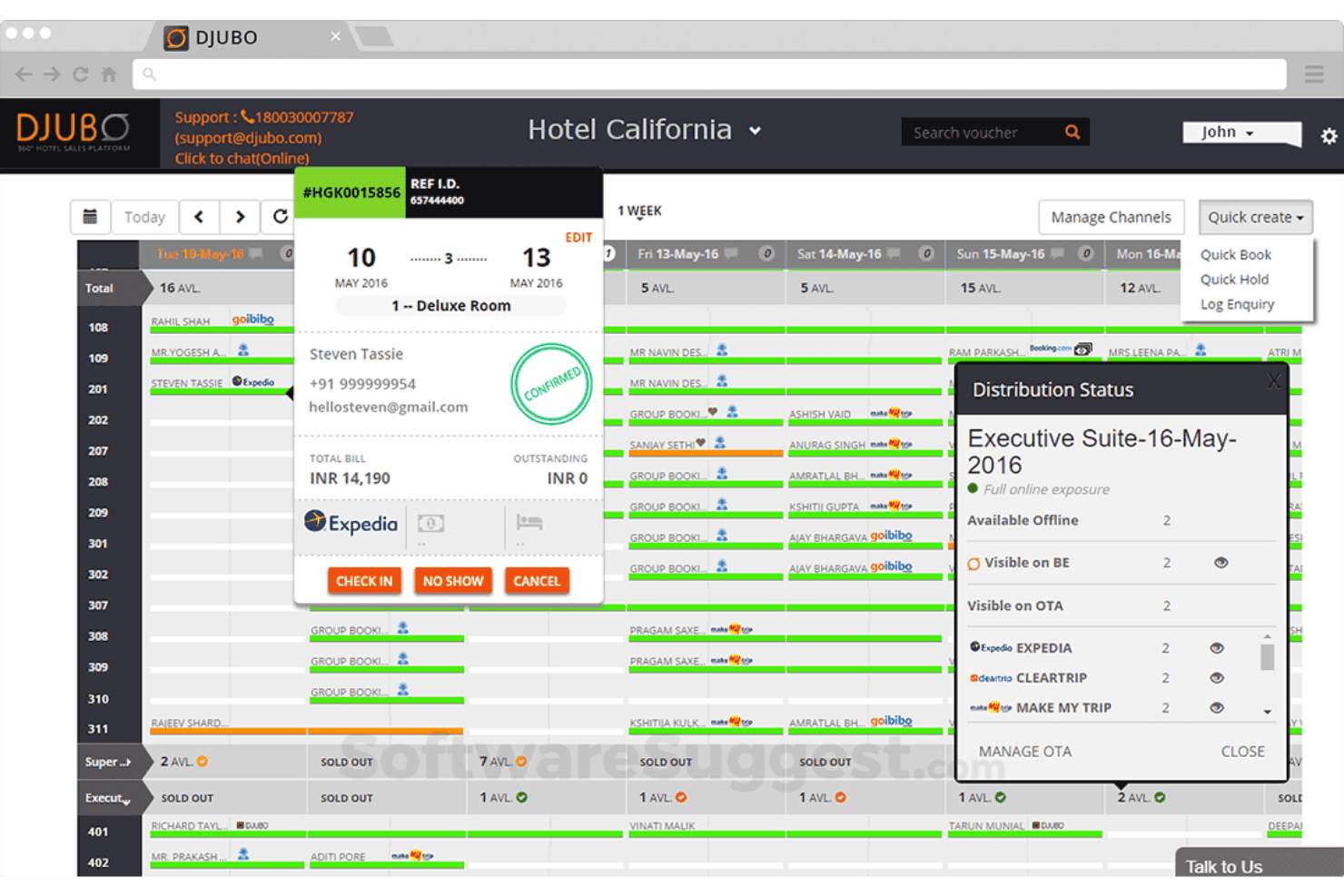
DJUBO is a hotel management software that combines a property management system, channel manager, booking engine, and revenue analytics in a single platform. I'd consider it if you're running an independent hotel or small chain that needs tight coordination between reservations, distribution, and front desk operations without juggling multiple disconnected tools. If you've looked at Cloudbeds, DJUBO is worth a closer look—it packages distribution and rate management more natively into the core PMS, which means less reliance on third-party integrations to get your channels and operations working together.
DJUBO Evaluation Summary
4.6/5
- Pricing upon request
- Free demo available
Why Trust Our Software Recommendations
6,700+
Reviews
20
Industry experts
16+
Evaluation factors
14
Years
Our team has been testing and reviewing software since 2012. As hospitality leaders ourselves, we know how difficult—and important—it is to choose the right software.
For this guide, we evaluated tools using hands-on testing and independent research, scoring tools using our selection criteria.
Our reviews reflect our human editorial judgment, not a sales pitch.
DJUBO Overview
DJUBO is a strong choice if you want a hotel management system that combines channel management, reservations, and revenue tools in one place. Its interface is modern, and onboarding is straightforward, which helps teams get up to speed quickly. Pricing is competitive for the features offered, and support is responsive. While integrations are solid, some niche tools aren’t covered.
I’d suggest DJUBO for independent hotels or small groups that want to centralize operations without a steep learning curve. If you’re judging by ease of use and unified functionality, DJUBO stands out.
Pros
- Mobile app for on-the-go property management.
- Automated revenue management with dynamic pricing tools.
- Centralized dashboard for reservations, rates, and distribution.
Cons
- Limited offline functionality during internet outages.
- Occasional delays in customer support response.
- Some advanced accounting features are still missing.
Is DJUBO Right For Your Needs?
Who Would be a Good Fit for DJUBO?
DJUBO is a strong choice for independent hotels, boutique properties, and small hotel groups that want to centralize reservations, distribution, and revenue management. Its mobile app and unified dashboard make it easy for lean teams to manage bookings and rates from anywhere.
It’s especially useful for properties that rely on multiple online travel agencies or want to automate pricing decisions. DJUBO’s focus on automation and real-time updates helps teams maximize occupancy without a large back-office staff.
- Properties With High OTAReliance Channel manager keeps rates and inventory synced across all OTAs.
- Front Desk TeamsMobile app access allows staff to manage bookings on the go.
- Revenue ManagersDynamic pricing tools support revenue optimization strategies.
- Small Hotel GroupsCentralized control over multiple properties streamlines group management.
- Boutique PropertiesAutomated rate management helps boutique hotels stay competitive online.
- Independent HotelsDJUBO’s all-in-one dashboard simplifies daily operations for smaller teams.
Who Would be a Bad Fit for DJUBO?
DJUBO may not be the best choice for large hotel chains, resorts with complex accounting needs, or properties in areas with unreliable internet. Its accounting features are basic, and some integrations for niche tools are missing.
If you need deep customization or advanced offline capabilities, you might find DJUBO limiting. Teams with highly specialized workflows or strict regulatory requirements may also want to look elsewhere.
- Highly Regulated MarketsDJUBO may not support all compliance or localization needs.
- Hotels With Complex AccountingAdvanced accounting and financial reporting tools are missing.
- Properties With Poor InternetOffline functionality is limited during connectivity issues.
- Conference HotelsEvent and group booking features are less developed than competitors.
- Resorts With SpasLimited spa and activity management tools restrict operational coverage.
- Large Hotel ChainsDJUBO lacks the advanced enterprise features large chains require.
How We Test & Score Tools
We’ve spent years building, refining, and improving our software testing and scoring system. The rubric is designed to capture the nuances of software selection and what makes a tool effective, focusing on critical aspects of the decision-making process.
Below, you can see exactly how our testing and scoring works across seven criteria. It allows us to provide an unbiased evaluation of the software based on core functionality, standout features, ease of use, onboarding, customer support, integrations, customer reviews, and value for money.
Core Functionality (25% of final scoring)
The starting point of our evaluation is always the core functionality of the tool. Does it have the basic features and functions that a user would expect to see? Are any of those core features locked to higher-tiered pricing plans? At its core, we expect a tool to stand up against the baseline capabilities of its competitors.
Standout Features (25% of final scoring)
Next, we evaluate uncommon standout features that go above and beyond the core functionality typically found in tools of its kind. A high score reflects specialized or unique features that make the product faster, more efficient, or offer additional value to the user.
We also evaluate how easy it is to integrate with other tools typically found in the tech stack to expand the functionality and utility of the software. Tools offering plentiful native integrations, 3rd party connections, and API access to build custom integrations score best.
Ease of Use (10% of final scoring)
We consider how quick and easy it is to execute the tasks defined in the core functionality using the tool. High scoring software is well designed, intuitive to use, offers mobile apps, provides templates, and makes relatively complex tasks seem simple.
Onboarding (10% of final scoring)
We know how important rapid team adoption is for a new platform, so we evaluate how easy it is to learn and use a tool with minimal training. We evaluate how quickly a team member can get set up and start using the tool with no experience. High scoring solutions indicate little or no support is required.
Customer Support (10% of final scoring)
We review how quick and easy it is to get unstuck and find help by phone, live chat, or knowledge base. Tools and companies that provide real-time support score best, while chatbots score worst.
Customer Reviews (10% of final scoring)
Beyond our own testing and evaluation, we consider the net promoter score from current and past customers. We review their likelihood, given the option, to choose the tool again for the core functionality. A high scoring software reflects a high net promoter score from current or past customers.
Value for Money (10% of final scoring)
Lastly, in consideration of all the other criteria, we review the average price of entry level plans against the core features and consider the value of the other evaluation criteria. Software that delivers more, for less, will score higher.
Core Features
Centralized Reservation System
Manage all online and offline bookings from a single dashboard. This reduces double bookings and keeps your inventory accurate in real time.
Channel Manager
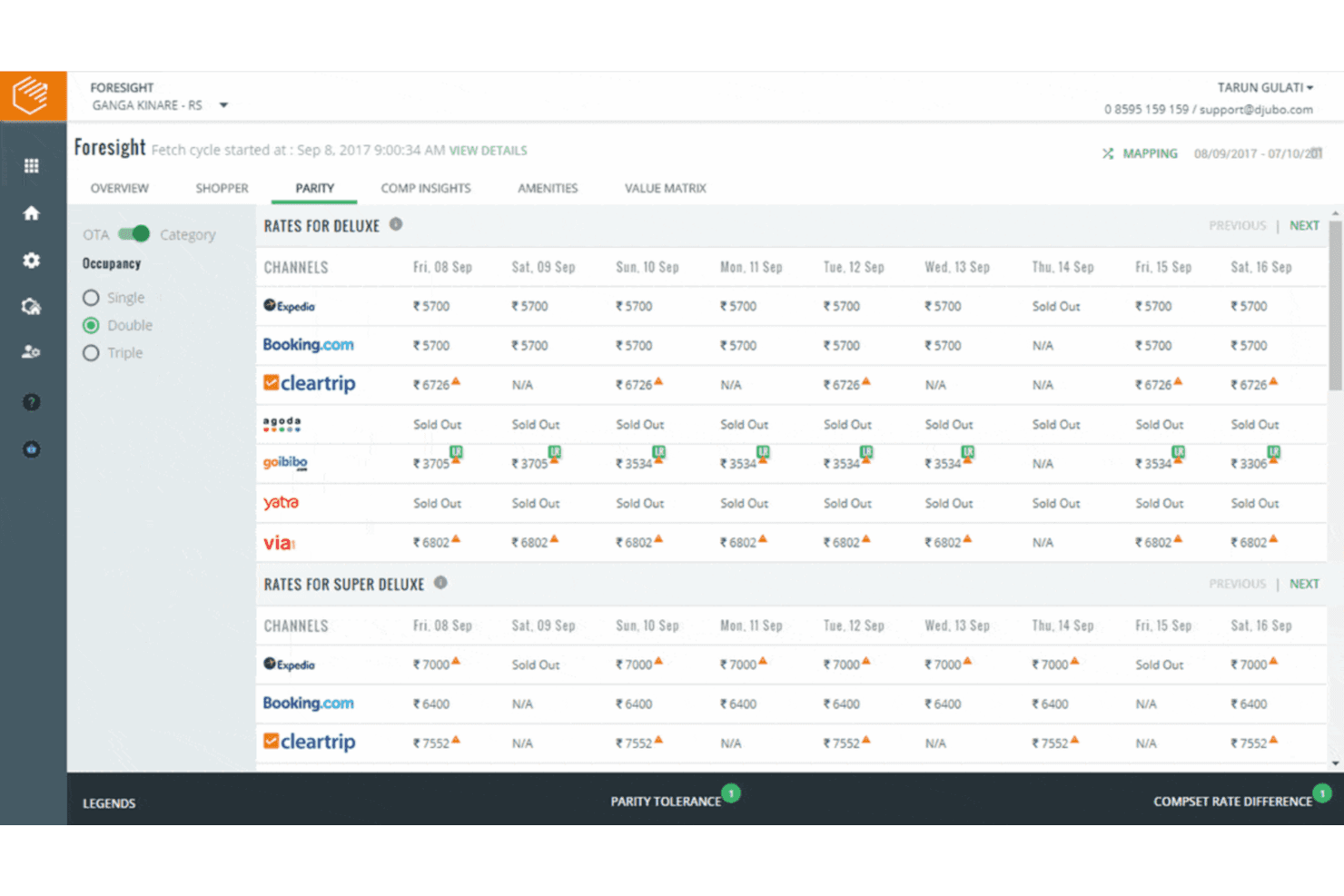
Sync rates and availability instantly across OTAs and direct channels. This helps prevent overbooking and saves time on manual updates.
Dynamic Revenue Management
Automate pricing based on occupancy, competitor rates, and demand trends. The system adjusts rates to maximize revenue without manual intervention.
Mobile Management App
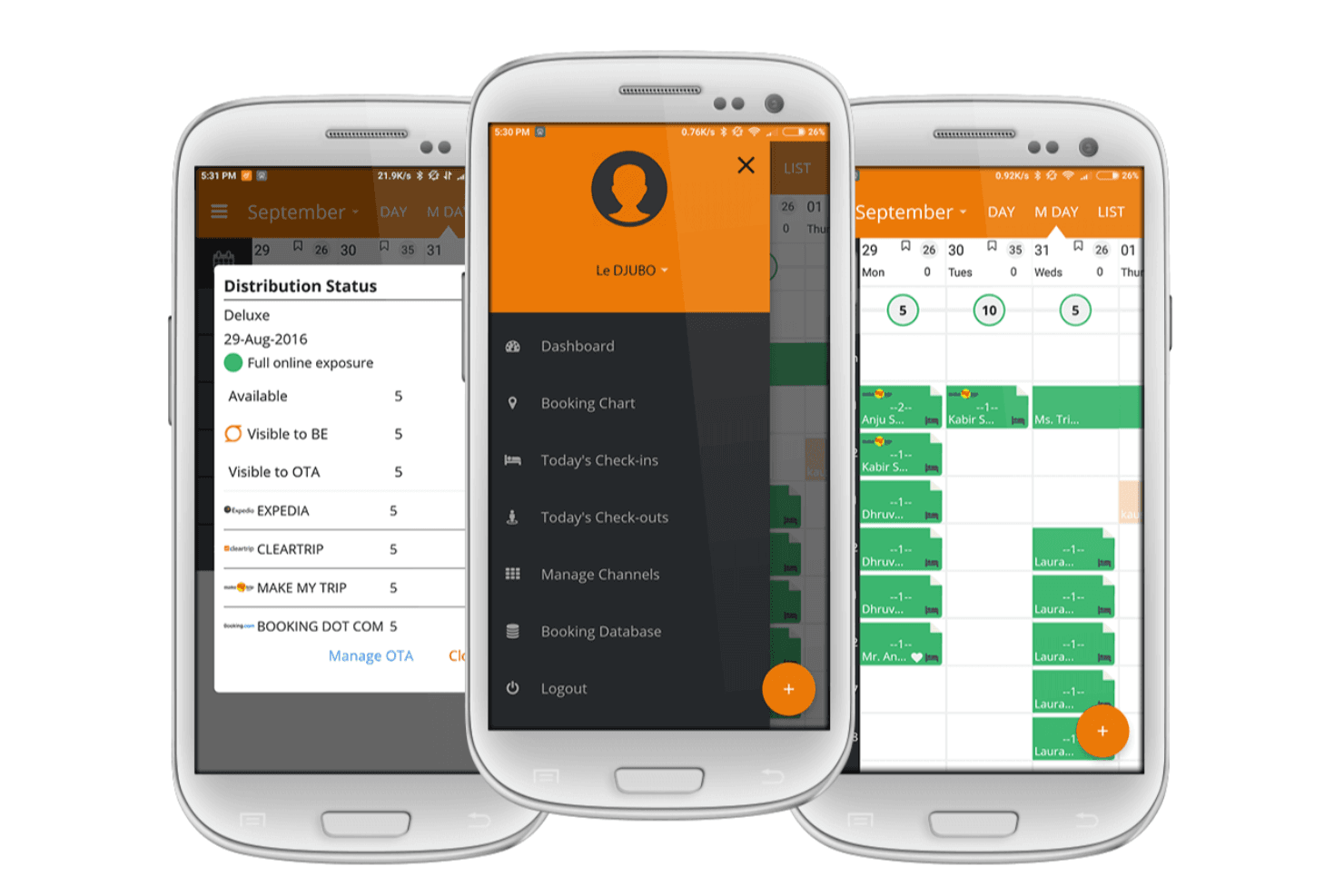
Access reservations, rates, and reports from your phone or tablet. This lets you handle key tasks even when you’re away from the front desk.
Online Reputation Management
Monitor guest reviews and respond directly from the platform. You can track feedback trends and improve your property’s online presence.
Automated Booking Engine
DJUBO’s booking engine enables direct website bookings with real-time availability and instant confirmation, helping reduce OTA reliance and increase margins.
Ease of Use
DJUBO is user-friendly, with a clean interface and intuitive navigation that helps new users get started quickly. Most tasks—like updating rates or checking reservations—take just a few clicks, and the mobile app makes it easy to manage operations remotely.
Users often mention that training staff is straightforward, thanks to clear workflows and helpful support resources.
Integrations
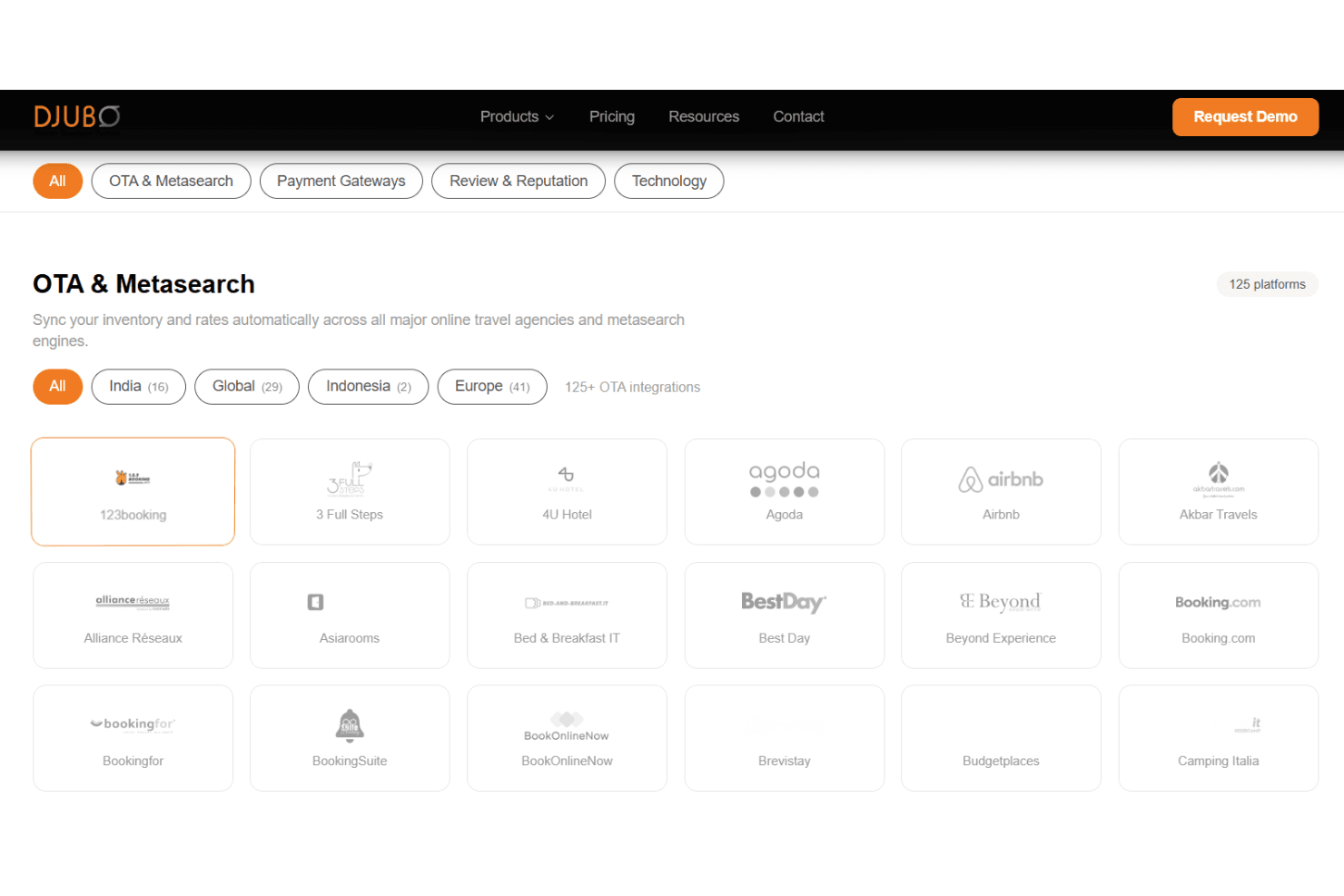
DJUBO integrates with Google Hotel Ads, TripAdvisor, Booking.com, Expedia, Agoda, MakeMyTrip, Goibibo, PayU, Razorpay, and HDFC Bank, among others.
DJUBO also offers an open API for custom integrations and connects with third-party tools through its API.
DJUBO Specs
- API: Yes
- Budgeting: No
- Calendar Management: Yes
- Compliance Tracking: No
- Contact Management: Yes
- Customer Management: Yes
- Dashboard: Yes
- Data Export: Yes
- Data Import: Yes
- Data Visualization: Yes
- Document Management: Yes
- Expense Tracking: Yes
- External Integrations: Yes
- Forecasting: Yes
- Inventory Tracking: Yes
- Multi-Currency: Yes
- Multi-User: Yes
- Notifications: Yes
- Organization Management: Yes
- Payment Processor: Yes
- Payroll: No
- Scheduling: Yes
- Supplier Management: Yes
- Tax Management: No
- Workflow Management: Yes


