


Cloudbeds vs. OPERA by Oracle: Comparison and Expert Reviews for 2026

We review tools independently, and commissions help fund our testing. See our transparency policy, our methodology, or suggest a tool.
If you’re running a hotel today, you’re likely balancing reservations, distribution, payments, housekeeping, and guest expectations across increasingly complex workflows. As your property grows, systems that once felt manageable can become difficult to scale, harder to train staff on, and more expensive to maintain. More than ever, choosing the right hospitality management software is crucial.
This article compares Cloudbeds and OPERA by Oracle across pricing, features, integrations, usability, and overall fit to help you determine which platform better supports your hospitality operation.
Cloudbeds
4.3/5
- Free demo available
- Pricing upon request
Oracle OPERA
0/5
- Free demo available
- Pricing upon request
Why Trust Our Software Recommendations
6,700+
Reviews
20
Industry experts
16+
Evaluation factors
14
Years
Our team has been testing and reviewing software since 2012. As hospitality leaders ourselves, we know how difficult—and important—it is to choose the right software.
For this guide, we evaluated tools using hands-on testing and independent research, scoring tools using our selection criteria.
Our reviews reflect our human editorial judgment, not a sales pitch.
| Cloudbeds | Oracle OPERA | |
|---|---|---|
| Free Trial | Free demo available | Free demo available |
| Pricing | Pricing upon request | Pricing upon request |
Cloudbeds vs. OPERA by Oracle Pricing & Hidden Costs
Cloudbeds uses a quote-based pricing model with tiered plans. All plans include core PMS functionality, payments, reporting, and support, while distribution tools and revenue or marketing products may be included or added depending on the plan selected. This approach allows properties to start with essential functionality and expand over time, though total cost can increase as additional tools are adopted.
OPERA typically follows a custom-quoted, modular pricing structure. Costs are often broken out by module, number of users, integrations, and deployment requirements. Implementation, training, and ongoing support are commonly priced separately, which can significantly increase the total cost of ownership—particularly for large or multi-property environments.
When comparing pricing, it’s important to look beyond base fees and account for onboarding, integrations, support tiers, contract length, and long-term scalability. What appears cost-effective initially may change as your operational needs grow.
Cloudbeds provides a unified platform that brings together property management, reservations, payments, distribution options, housekeeping coordination, and a large integration marketplace. Optional products extend functionality into areas such as revenue intelligence, marketing, websites, and reputation management, allowing properties to tailor the platform over time.
OPERA is a highly configurable enterprise PMS designed to support complex hotel operations. Its strengths include advanced group and event management, detailed rate and inventory controls, extensive reporting, and support for large-scale, multi-property environments with strict operational requirements.
| Cloudbeds | Oracle OPERA | |
|---|---|---|
| API | Yes | Yes |
| Budgeting | No | No |
| Calendar Management | Yes | Yes |
| Compliance Tracking | Yes | Yes |
| Contact Management | Yes | Yes |
| Customer Management | Yes | Yes |
| Dashboard | Yes | Yes |
| Data Export | Yes | Yes |
| Data Import | Yes | Yes |
| Data Visualization | Yes | No |
| Document Management | Yes | No |
| Expense Tracking | Yes | No |
| External Integrations | Yes | Yes |
| Forecasting | Yes | No |
| Inventory Tracking | Yes | Yes |
| Multi-Currency | Yes | Yes |
| Multi-User | Yes | Yes |
| Notifications | Yes | Yes |
| Organization Management | Yes | No |
| Payment Processor | Yes | No |
| Payroll | No | No |
| Scheduling | Yes | No |
| Supplier Management | No | No |
| Tax Management | Yes | No |
| Workflow Management | Yes | Yes |
| Integration | Cloudbeds | OPERA by Oracle |
| Booking.com | ✅ | ✅ |
| Expedia | ✅ | ✅ |
| Airbnb | ✅ | ❌ |
| SiteMinder | ✅ | ✅ |
| Duetto | ✅ | ✅ |
| QuickBooks | ✅ | ❌ |
| Salesforce | ❌ | ✅ |
| Amadeus GDS | ✅ | ✅ |
| API | ✅ | ✅ |
| Zapier | ✅ | ❌ |
While many integrations overlap between both platforms, Cloudbeds tends to focus more on integrations that support independent and mid-sized operators, including direct OTA connections and accounting tools. OPERA emphasizes enterprise integrations, including GDS connectivity and CRM platforms used by large hotel brands. Each ecosystem reflects the platform’s intended audience.
| Factor | Cloudbeds | OPERA by Oracle |
| Data Encryption | Uses end-to-end encryption for data in transit and at rest. | Employs enterprise-grade encryption protocols for all sensitive data. |
| PCI Compliance | Certified PCI DSS compliant for secure payment processing. | Maintains PCI DSS compliance across all payment modules. |
| GDPR Readiness | Offers GDPR-compliant data handling and guest privacy controls. | Provides configurable GDPR tools and audit trails for data requests. |
| Uptime & Redundancy | Cloud-based infrastructure with global monitoring. | Delivers high availability with Oracle Cloud and multi-region failover. |
| Access Controls | Role-based permissions and two-factor authentication for user accounts. | Advanced user management with granular access controls and SSO options. |
Both platforms meet modern security and compliance standards. OPERA by Oracle offers more advanced access controls and auditing suited to large organizations, while Cloudbeds provides strong security in a more accessible configuration for teams with fewer requirements.
| Factor | Cloudbeds | OPERA by Oracle |
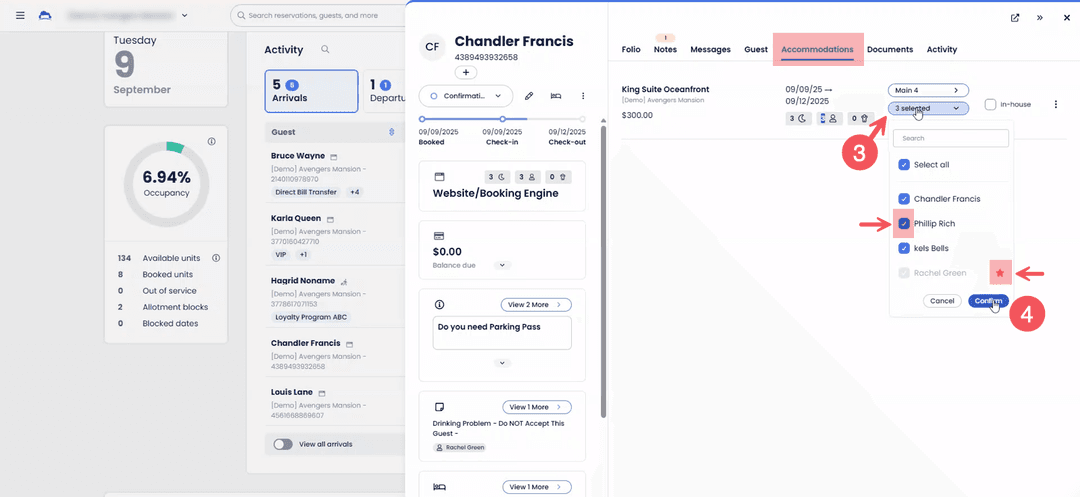
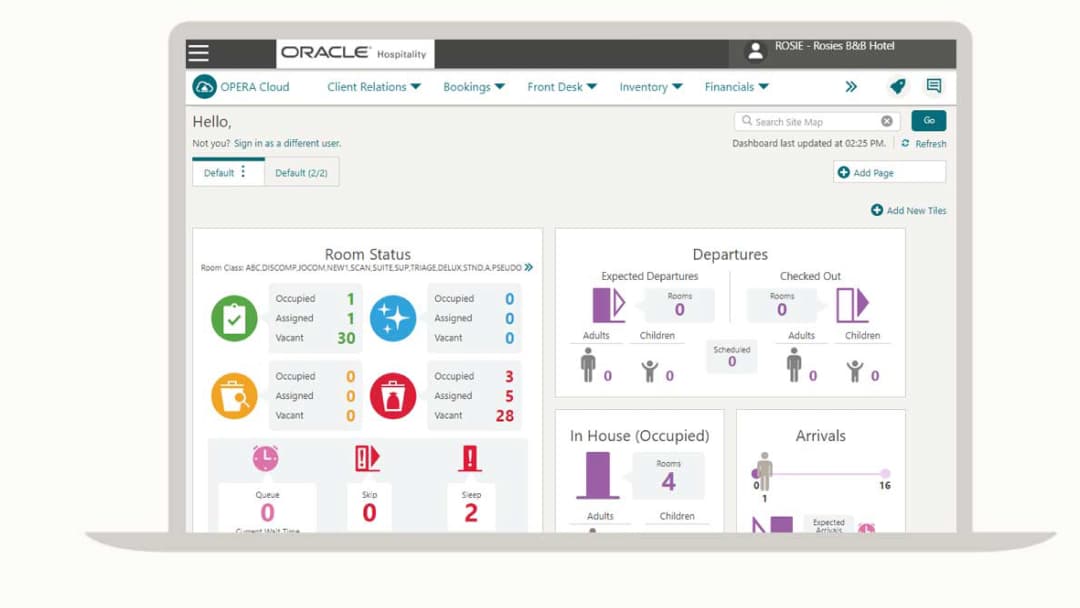
| User Interface | Modern, intuitive dashboard with drag-and-drop calendar and quick actions. | Feature-rich interface with many menus and options, best for trained users. |
| Onboarding | Guided setup, onboarding coaches, and in-app tutorials help new users get started quickly. | Structured onboarding with formal training sessions and documentation. |
| Daily Navigation | Simple navigation designed for fast check-ins, reservations, and updates. | Complex workflows optimized for large teams and multi-property tasks. |
| Support Access | 24/7 live chat and email support with a searchable help center. | 24/7 support, dedicated account managers, and tiered support with escalation paths. |
| Customization | Basic customization for workflows and branding. | Deep customization for reports, permissions, and operational processes. |
Cloudbeds is easier for new users and small teams to pick up, while OPERA by Oracle’s complexity pays off for large operations with specialized needs. Cloudbeds’s clean interface and quick onboarding make it approachable, while OPERA by Oracle’s depth and customization options reward experienced users willing to invest in training.
Cloudbeds
- Responsive customer support with live chat and onboarding help.
- Large integration marketplace and open API for extending functionality.
- Unified platform that combines PMS, payments, and optional distribution in one system.
- Advanced analytics and financial reporting may require external tools.
- Revenue marketing features must be purchased as add-ons.
- Platform depth can feel overwhelming for very small teams that need basic reservation management.
Oracle OPERA
- Handles complex group bookings and event management well.
- Supports reservations, group sales, loyalty programs, reporting, and multi-department operations in a single platform.
- The system’s modular architecture allows properties to tailor functionality to their specific needs.
- Platform's breadth of features and configurability can make it difficult for new users or smaller teams to learn.
- Modular pricing, customization, and enterprise implementation can lead to significant upfront and ongoing costs.
- Can feel clunky, outdated, and unintuitive, particularly for teams accustomed to modern, minimalist software.
Cloudbeds
- Independent HotelsCloudbeds simplifies managing reservations and guest details, which suits your independent operations well.
- HostelsHostels can use Cloudbeds to manage shared inventory, group bookings, and online distribution while keeping front desk and housekeeping workflows in one place.
- Short-Term RentalsCloudbeds’s channel manager and direct booking engine help vacation and short-term rental owners sync listings and avoid double bookings.
- Boutique HotelsCloudbeds supports boutique hotels that want a single system for reservations, distribution, payments, and guest-facing tools. Teams can manage day-to-day operations without relying on multiple disconnected systems.
- B&Bs and InnsBeneficial when you need a straightforward way to manage reservations, payments, and guest communications without maintaining multiple systems, especially when you have a smaller team.
- Multi-Property Hotel GroupsCloudbeds supports hotel groups that manage multiple properties under one organization, allowing teams to oversee availability, pricing, and performance from a centralized view.
Oracle OPERA
- Large Hotel Chains & Multi-Property GroupsOPERA’s modular and highly configurable architecture supports centralized management across multiple hotels, enabling corporate teams to standardize workflows, reporting, and controls across locations.
- Resorts and Full-Service PropertiesProperties with complex revenue streams, including room, F&B, events, and spa services, benefit from OPERA’s ability to manage group sales, loyalty programs, and multiple revenue centers within one system.
- Hotels With High Volume Group & Event BusinessOPERA’s Sales and Event Management modules help teams manage conferences, meetings, and banquets alongside room inventory, reducing redundant data entry and improving coordination.
- Hotels Requiring Deep Reporting and AnalysisEnterprise properties with strict reporting requirements can use OPERA’s advanced analytics and customizable reporting tools to extract operational insights and track performance across departments.
- Mixed-Use & Vacation Ownership PropertiesOPERA’s flexible rule-based operations and support for fractional ownership or condominium units make it a good fit for mixed-use properties that combine hospitality with real estate or timeshare models.
- International Hotels With Complex Distribution NeedsOPERA Cloud’s global integrations and support for GDS, loyalty, and channel management workflows help international properties coordinate availability, distribution, and pricing across markets.
Who Should Use Cloudbeds, and Who Should Use OPERA by Oracle?
Cloudbeds is a strong fit for independent hotels, boutique properties, hostels, short-term rental groups, and growing multi-property operators that want a unified platform without heavy technical overhead. It suits teams that value faster onboarding, centralized workflows, and the ability to add advanced tools gradually.
OPERA by Oracle is best suited for large hotels, resorts, and enterprise groups with complex operational requirements, high transaction volumes, and strict compliance or reporting needs. Organizations with dedicated IT teams and standardized processes are more likely to benefit from its depth and configurability.
| Cloudbeds | Oracle OPERA | |
|---|---|---|
| Automation | Cloudbeds Automated channel management and reservations updates. | Oracle OPERA Advanced automation for group bookings, rate management, and reporting. |
| Customization | Cloudbeds Basic workflow and branding customization. | Oracle OPERA Deep customization for reports, permissions, and operational processes. |
| Pricing Model | Cloudbeds Subscription-based with bundled features and add-ons. | Oracle OPERA Custom-quoted, modular pricing with separate fees for each module. |
| Target Audience | Cloudbeds Designed for independent hotels and small groups. Can cater to some multi-property operations. | Oracle OPERA Built for large hotels, resorts, and multi-property groups. |
| User Interface | Cloudbeds Modern, intuitive dashboard with drag-and-drop tools. | Oracle OPERA Complex, feature-rich interface suited for trained staff. Some users will find it clunky or outdated-looking. |
| Cloud-Based | Both platforms are cloud-based, enabling remote access and multi-property management. |
|---|---|
| OTA Connectivity | Each connects to major OTAs to manage availability and rates across channels. |
| Payment Security | Both support PCI-compliant payment processing. |
| Reporting | Each provides reporting tools for occupancy and revenue, though the depth varies. |
| Support | Both offer round-the-clock support options suited to their target customers. |