

Hotel rate management software helps hotels set, monitor, and adjust room prices based on demand, occupancy, competitor rates, and booking channels. The right platform can replace spreadsheet-heavy pricing work with dynamic rate recommendations, forecasting, parity monitoring, and PMS connectivity.
This guide compares the best options for independent properties, growing groups, and hotel chains. You’ll see which tools support portfolio controls, group and transient pricing, competitor intelligence, and automated repricing, so you can choose software that matches your property’s commercial goals and team capacity.
Why Trust Our Software Recommendations
6,700+
Reviews
20
Industry experts
16+
Evaluation factors
14
Years
Our team has been testing and reviewing software since 2012. As hospitality leaders ourselves, we know how difficult—and important—it is to choose the right software.
For this guide, we evaluated tools using hands-on testing and independent research, scoring tools using our selection criteria.
Our reviews reflect our human editorial judgment, not a sales pitch.
Compare the Best Hotel Rate Management Software
Compare pricing and specs side by side for the hotel rate management software that made it onto my shortlist.
| Tool | Best For | Trial Info | Price | ||
|---|---|---|---|---|---|
| 1 | Best for AI-driven rates across 450+ channels | Free demo available | Pricing upon request | Website | |
| 2 | Best for independent hotels scaling dynamic pricing | Free demo + 30-day free trial available | From $14.49/month | Website | |
| 3 | Best for self-learning rate repricing at small hotels | Free demo available | Pricing upon request | Website | |
| 4 | Best for chain-wide rate parity control | Free demo available | Pricing upon request | Website | |
| 5 | Best for AI-driven pricing across a portfolio | 30-day free trial | From $7/room/month (billed annually) | Website | |
| 6 | Best for AI-driven group and transient rate pricing | Free demo available | Pricing upon request | Website | |
| 7 | Best for portfolio-wide AI-driven rate pricing | Free demo available | Pricing upon request | Website | |
| 8 | Best for AI-driven segmented rate forecasting | Free demo available | Pricing upon request | Website | |
| 9 | Best for AI-driven forecasting at scale | Not available | Pricing upon request | Website | |
| 10 | Best for AI-driven group and transient rate decisions | Free demo available | From $6/room/month | Website |


Hotel Rate Management Software Reviews
Below are my summaries of the best hotel rate management software that made it onto my shortlist. My reviews examine the features, integrations, and pricing of each software option to help you find the best fit.
 Best for AI-driven rates across 450+ channels
- Free demo available
- Pricing upon request
Visit WebsiteCustomer Rating:4.3/5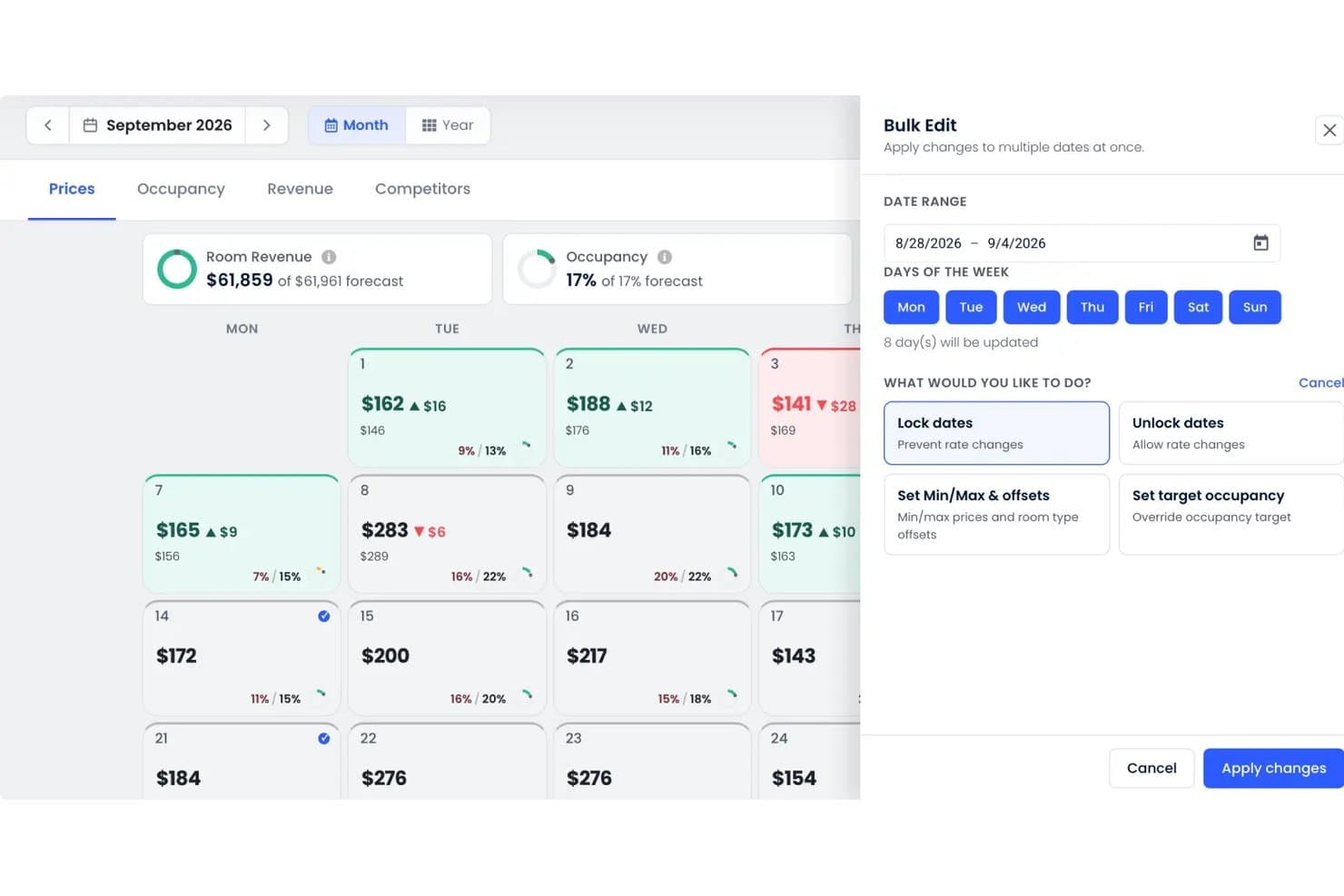
Cloudbeds unifies PMS, channel distribution, direct bookings, and AI-driven hotel pricing. Cloudbeds is a unified hotel management platform that combines a PMS, channel manager, booking engine, and AI-driven revenue management into one system, with rate distribution across 450+ OTAs and dynamic pricing powered by its Signals AI engine.
Who Is Cloudbeds Best For?
Cloudbeds suits mid-size hotels and multi-property operators who want PMS, channel management, and AI-driven rate recommendations in one platform without juggling separate systems.
Why I Picked Cloudbeds
Cloudbeds earns its spot on my shortlist because its Signals AI engine doesn't just suggest rate changes—it explains each recommendation in plain language and shows the predicted RevPAR impact before you act on it. I especially like how the Channel Manager pushes those rate updates across 450+ OTAs, GDS, and metasearch channels within about 30 minutes of a booking or availability shift, with no added commission per booking. The 90-day demand forecasts, built on time-to-arrival and length-of-stay data, give revenue managers a concrete basis for rate decisions well ahead of peak periods.
Cloudbeds Key Features
- Competitor rate tracking: Revenue Intelligence monitors live competitor rates and surfaces price gap comparisons directly in the dashboard.
- Floor and ceiling rate controls: Set minimum and maximum rate boundaries, plus percentage limits relative to the competitor median, to keep automated pricing within your defined range.
- Portfolio-wide analytics: Revenue Intelligence consolidates occupancy, ADR, RevPAR, and pace reporting across all properties in a single market view.
- Guest Marketing CRM: Trigger targeted promotions to past guests during low-demand periods based on booking history and stay data.
Cloudbeds Integrations
Cloudbeds offers marketplace integrations with 400+ partners, including Booking.com, Expedia, Airbnb, Vrbo, and Google. It also provides API access for custom integrations.
Pros and Cons
Pros:
- Portfolio analytics compare occupancy and RevPAR
- Floor and ceiling controls constrain automated rates
- AI recommendations explain predicted RevPAR impact
Cons:
- Automated rate updates take about thirty minutes
- No dedicated parity detection or alerts
 Best for independent hotels scaling dynamic pricing
- Free demo + 30-day free trial available
- From $14.49/month
Visit WebsiteCustomer Rating:4.5/5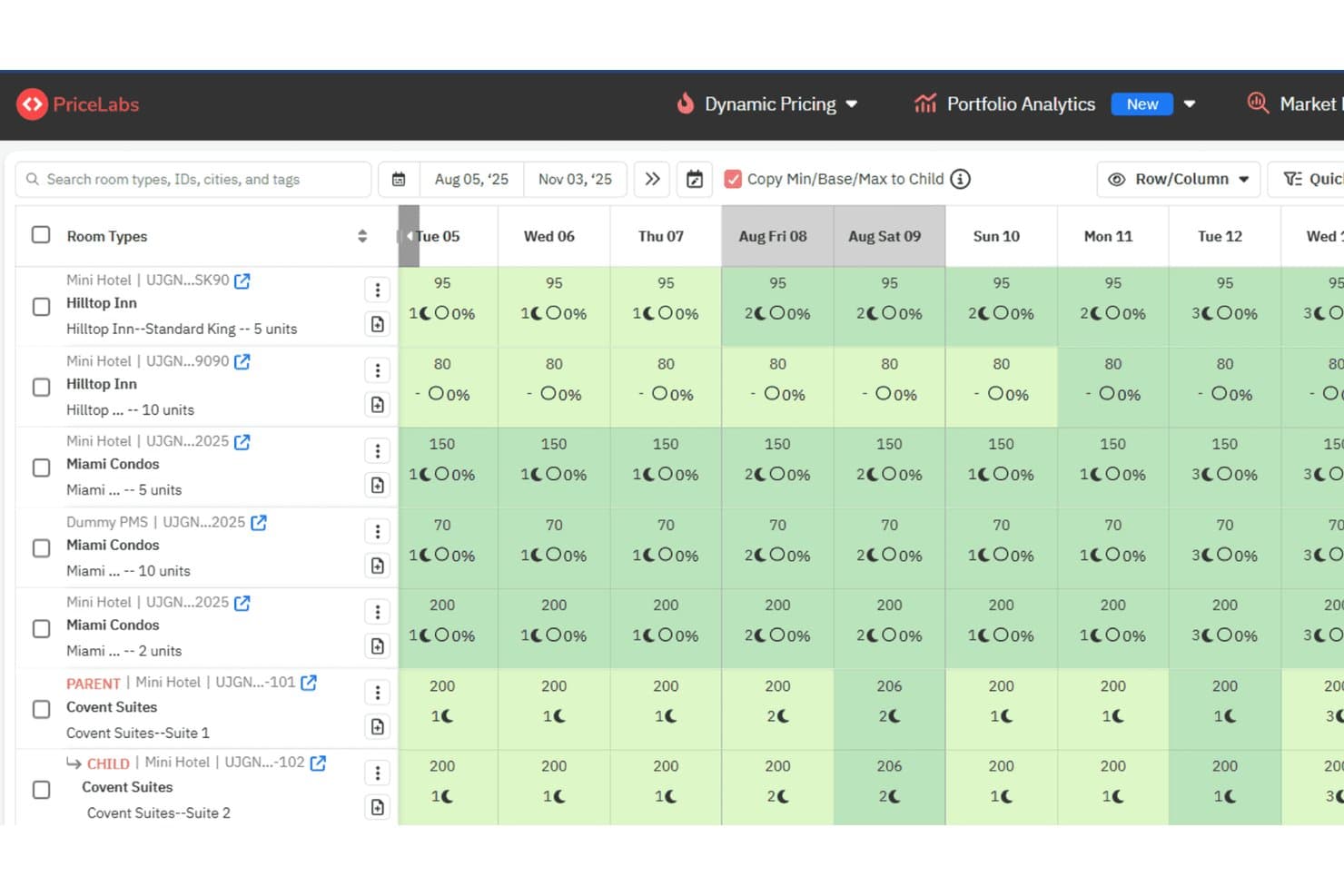
PriceLabs delivers dynamic pricing, competitor insights, demand forecasts, and portfolio rate control. PriceLabs is an AI-driven revenue management platform for independent hotels that combines dynamic pricing, competitor rate shopping, demand forecasting, and multi-property rate control.
Who Is PriceLabs Best For?
PriceLabs is a strong fit for independent hotels, B&Bs, and aparthotels that want algorithmic dynamic pricing without paying for a full revenue management suite.
Why I Picked PriceLabs
I picked PriceLabs as one of the best because its Hyper Local Pulse algorithm does something most hotel pricing tools don't: it explains every rate recommendation with a tooltip, so you're never guessing why a room is priced the way it is. I also like how the built-in Hotel Rate Shopper pulls live Booking.com data on up to 350 competitors and feeds that directly into automated pricing. For independent hotels scaling across room types, the multicalendar and bulk CSV controls let you push rate changes across your entire portfolio at once.
PriceLabs Key Features
- Hyper Local Pulse algorithm: Sets room rates using a multi-factor model that weighs your property's occupancy, local events, seasonality, and booking window, with a tooltip explaining each recommendation.
- Hotel Rate Shopper: Tracks up to 350 competitors using live Booking.com data, with filters for star rating, distance, and review score, plus CSV export covering up to 366 days.
- Portfolio Analytics: Monitors occupancy, ADR, and RevPAR against prior-year and market benchmarks, with forward-looking demand forecasting built in.
- Bulk rate controls: Push rate changes across multiple room types and properties at once using the multicalendar, CSV upload, or API.
PriceLabs Integrations
PriceLabs offers 160+ integrations with PMSs and channel managers, including Hotel Link, Mini Hotel, and Apaleo, plus direct connections to Airbnb, Booking.com, and Vrbo. It also provides an API for custom and bulk rate updates.
Pros and Cons
Pros:
- Bulk controls manage multiple room types
- Competitor pricing informs daily rate adjustments
- Explainable rate recommendations support revenue decisions
Cons:
- Rate parity alerts remain unavailable
- Hotel tools trail short-term rental focus
Learn more about PriceLabs: Best for self-learning rate repricing at small hotels
- Free demo available
- Pricing upon request
Visit WebsiteCustomer Rating:4.5/5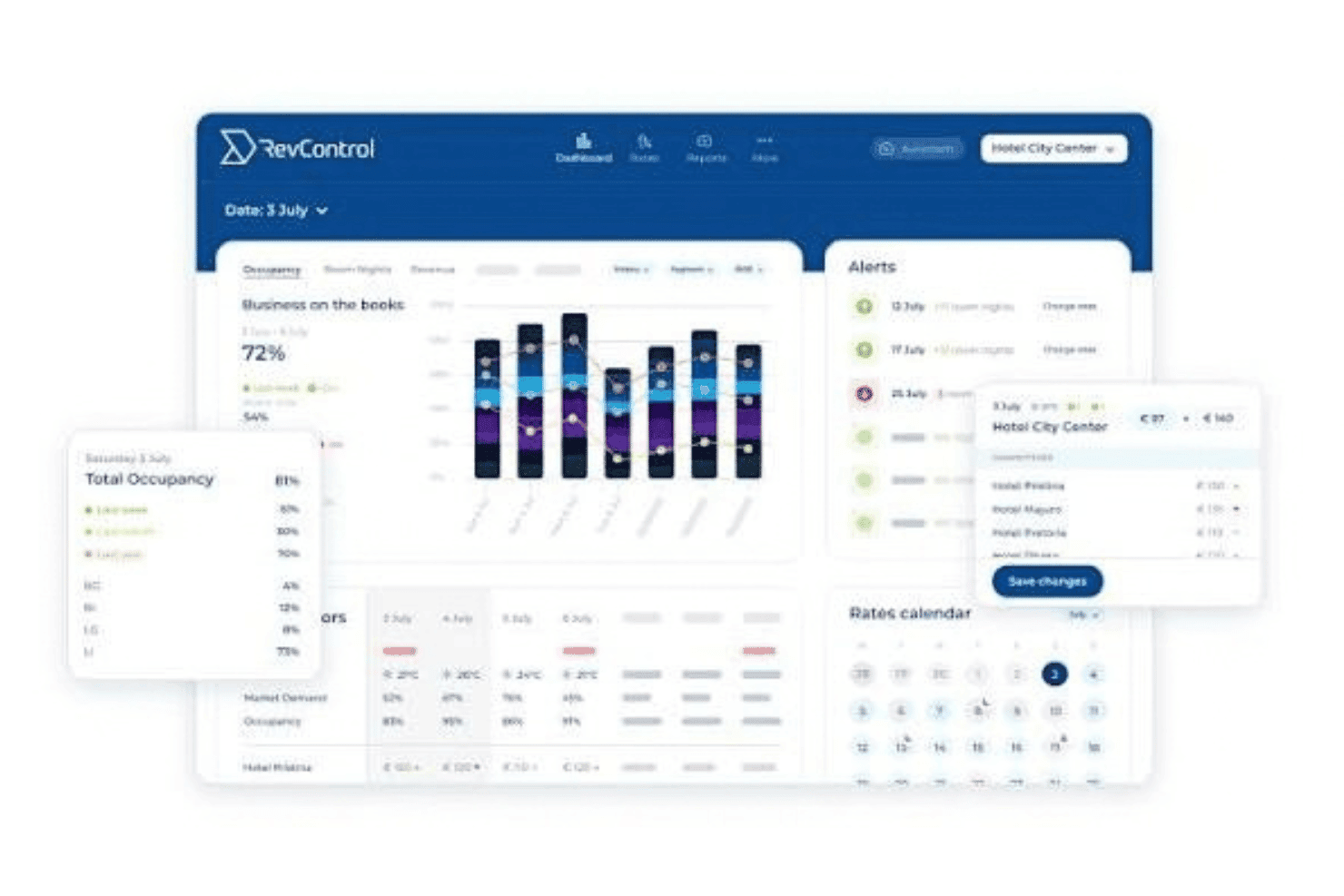
RevControl optimizes hotel rates using self-learning pricing and flexible AutoPublish controls. RevControl is a cloud-based revenue management system that uses a self-learning algorithm to generate dynamic rate recommendations, automate rate publishing to your PMS or channel manager, and track competitor pricing up to 365 days out.
Who Is RevControl Best For?
RevControl suits small and mid-size independent hotels, hostels, and holiday parks that want automated rate recommendations without managing a full enterprise RMS.
Why I Picked RevControl
I picked RevControl as one of the best because its self-learning algorithm quietly handles the rate decisions that eat up most of a small hotel's day. I love that it recalculates recommendations up to four times per hour, 365 days out, so rates adjust to booking pace and market supply without manual input. The AutoPublish feature then pushes those rates directly to your PMS or channel manager in manual, automatic, or hybrid mode, giving you control without constant oversight.
RevControl Key Features
- Competitor rate shopping: Track your competitive set's rates up to 365 days ahead to inform your pricing decisions.
- Business on the Books analytics: Compare current bookings against the same period last year to gauge pace and demand.
- Rate Buckets: Automatically open and close groups of rates based on bookings on the books or forecasted occupancy thresholds.
- Group Rate Recommendation: Calculate group rates using displacement analysis to determine whether a group booking outweighs the transient revenue it would displace.
RevControl Integrations
RevControl's integrations page lists 16 PMS and channel manager connections, including Oracle, Clock PMS, eZee, Little Hotelier, and Ulyses Cloud. It also documents connections with Booking.com, Cloudbeds, SiteMinder, Stayntouch, and Sihot; no public API is documented.
Pros and Cons
Pros:
- Supports centralized multi-property insights
- Learns from booking pace
- Reprices every fifteen minutes
Cons:
- Enterprise controls remain unclear
- Parity monitoring remains undocumented
Learn more about RevControl: Best for chain-wide rate parity control
- Free demo available
- Pricing upon request
Visit WebsiteCustomer Rating:4.3/5
RateGain manages hotel distribution, competitor rates, and rate parity across major channels. RateGain is a hotel rate management platform that combines channel distribution, competitor rate monitoring, and rate parity management across OTAs, GDS, and metasearch channels.
Who Is RateGain Best For?
RateGain suits multi-property operators and chain distribution managers who need centralized rate parity control across a large OTA and GDS footprint.
Why I Picked RateGain
RateGain earns its spot on my shortlist because its rate parity tooling goes deeper than anything else I've seen in this category. The Parity Pulse dashboard doesn't just flag violations—it runs closed-loop root-cause analysis, identifying whether a disparity stems from caching, bait-and-switch pricing, or a promotional leak, then estimates the revenue lost per channel. I also like that parity controls scale centrally across regional, country, city, and property levels from a single login, which is exactly what a multi-property distribution team needs.
RateGain Key Features
- Navigator rate shopping: Pulls live competitor rates across 800+ channels and 1,100+ data sources, with AI insights tied directly to RevPAR performance.
- Mobile rate control: Update rates for the next 14 days or trigger stop-sales across properties with a single tap in the mobile app.
- VIVA AI voice agent: Handles guest booking calls in 30+ languages, 24/7, with direct integration into the CRS.
- Multi-channel distribution sync: Pushes availability, rates, and inventory to 400–500+ OTA, GDS, and metasearch channels from a single ARI database.
RateGain Integrations
RateGain supports 400+ integrations across PMS, RMS, OTA, booking engine, and metasearch platforms, including Amadeus, Sabre, and Travelport. It also offers API connectivity and connects to 10+ payment gateways.
Pros and Cons
Pros:
- Centralized chain-wide rate controls
- Fast real-time rate updates
- Deep root-cause parity diagnostics
Cons:
- Limited independent review volume
- Pricing automation rules remain undocumented
Learn more about RateGain: Best for AI-driven pricing across a portfolio
- 30-day free trial
- From $7/room/month (billed annually)
Visit WebsiteCustomer Rating:5/5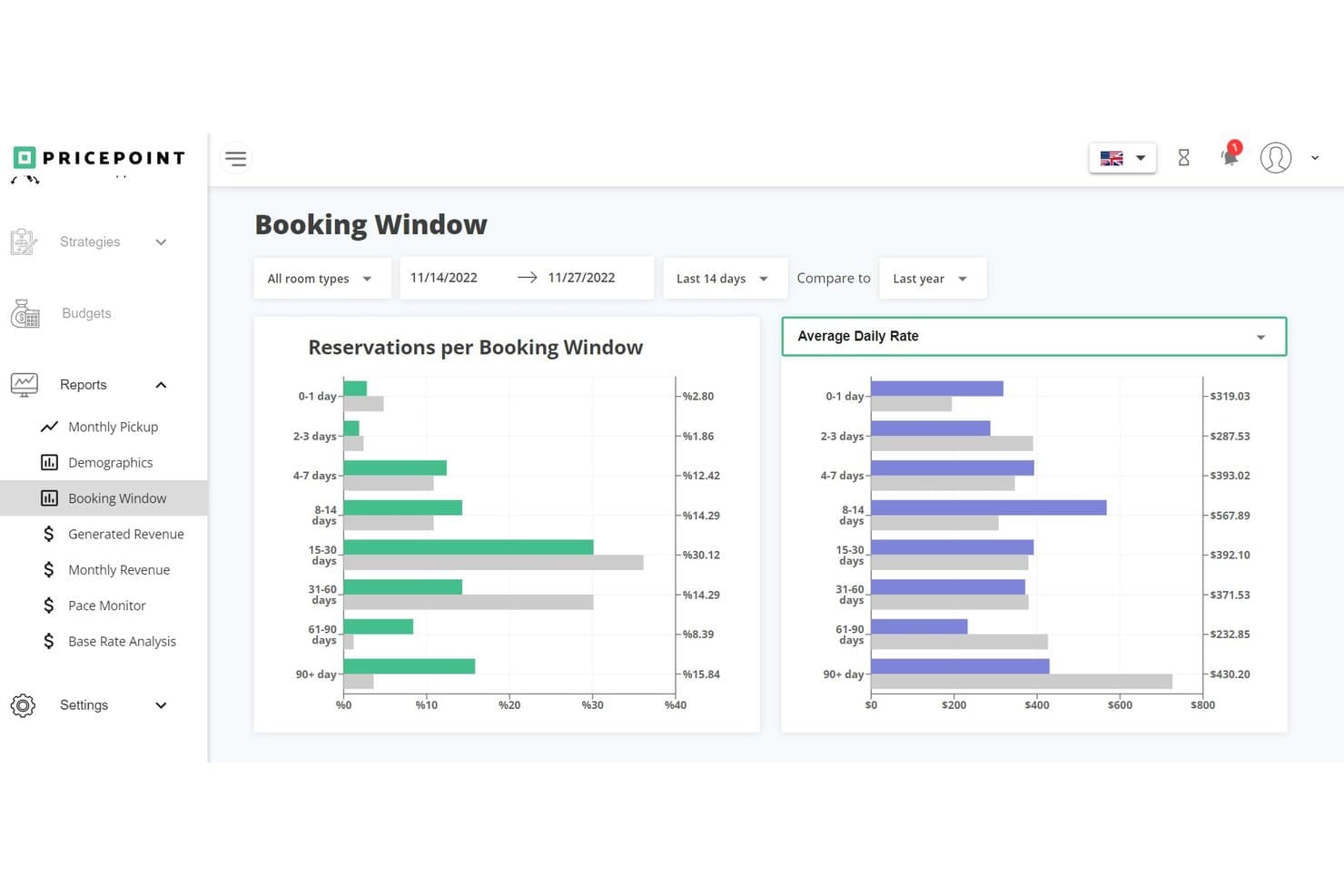
Pricepoint applies AI pricing, event detection, and 24-month forecasting across hotel portfolios. Pricepoint is an AI revenue management system for hotels that handles dynamic pricing by room type, demand forecasting, market intelligence, and multi-property rate control through connected PMS and channel manager integrations.
Who Is Pricepoint Best For?
Pricepoint is a strong fit for multi-property operators and revenue managers who want AI-driven pricing to run across their portfolio with minimal manual input.
Why I Picked Pricepoint
I picked Pricepoint as one of the best because its AI pricing engine runs across an entire portfolio from a single dashboard, applying separate revenue strategies per property and room type without manual intervention. What I find most useful is the AI Strategy Builder, which targets revenue optimization rather than competitor matching, combined with ForecastIQ's event detection and 24-month forecasting horizon. That combination means a revenue manager overseeing 10 properties can let the system reprice every room type, every night, based on booking pace and demand signals.
Pricepoint Key Features
- Smart restrictions: The AI automatically sets stay rules, including minimum stay, closed to arrival, closed to departure, and length of stay controls, by room type and date.
- DataHub: Pulls PMS, channel, and market data into a single place so you can view all your revenue inputs without switching between systems.
- ForecastIQ event detection: Flags local events, concerts, and holidays that are likely to drive demand shifts across your portfolio's upcoming dates.
- Multi-property role and permission controls: Lets you assign access by regional cluster or head office level, so each user sees only the properties and data relevant to their role.
Pricepoint Integrations
Pricepoint lists 30+ integrations, including SiteMinder, Cloudbeds, Mews, Channex, Oracle Hospitality, RMS Cloud, RoomCloud, and apaleo. An API is included for custom integrations, while connected PMS and channel managers distribute rates to booking channels.
Pros and Cons
Pros:
- Smart restrictions adjust stay controls
- Forecasting includes events and booking pace
- Portfolio-wide AI pricing
Cons:
- Competitor intelligence isn’t rate tracking
- No rate parity monitoring
Learn more about Pricepoint: Best for AI-driven group and transient rate pricing
- Free demo available
- Pricing upon request
Visit WebsiteCustomer Rating:4.8/5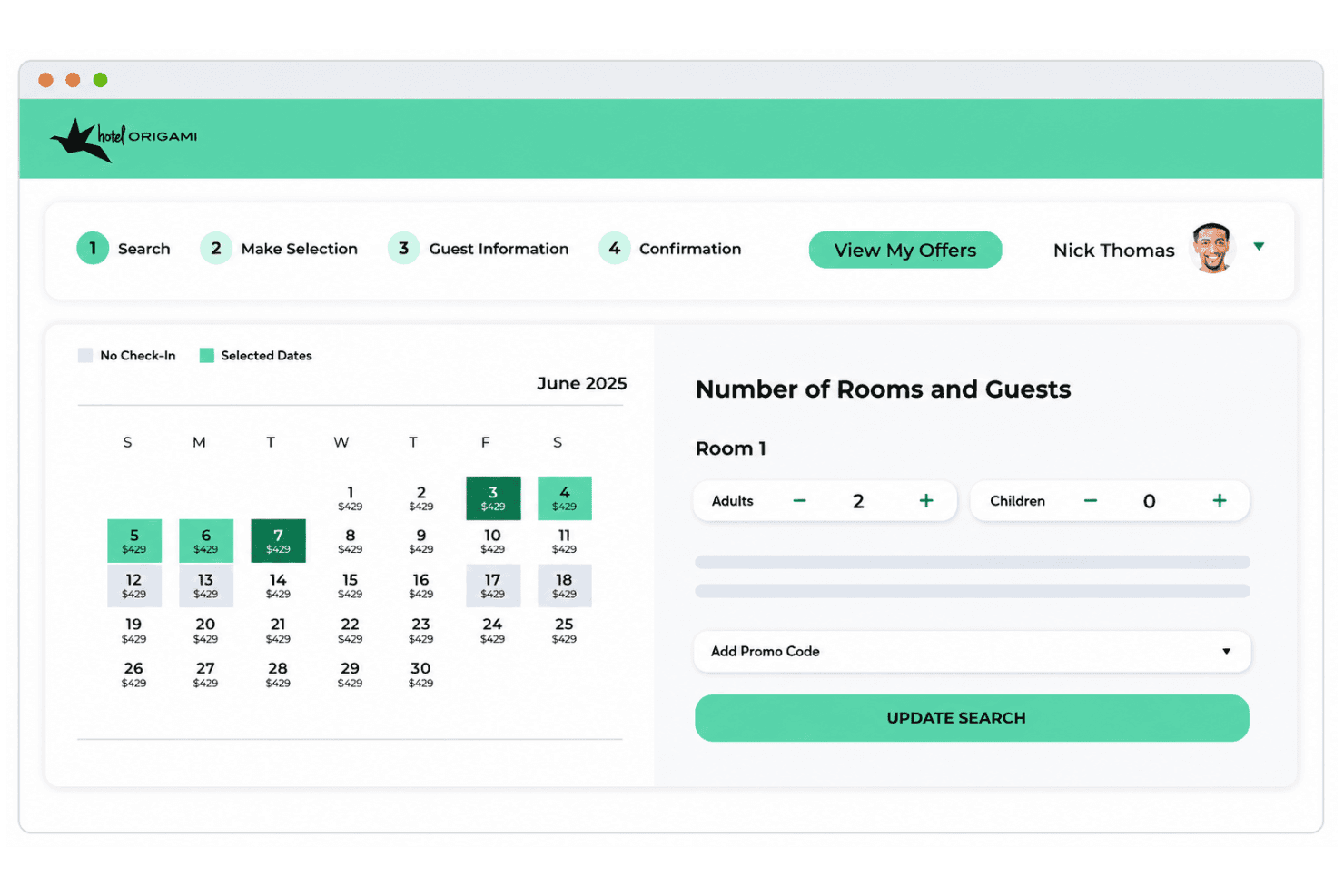
Cendyn covers transient and group pricing with real-time AI rates and displacement analysis. Cendyn is a modular hotel rate management platform that spans AI-driven revenue management, central reservations, rate parity monitoring, and group pricing across its Guestrev, CRS, Rate Match, and Grouprev modules.
Who Is Cendyn Best For?
Cendyn suits revenue managers and distribution teams at mid-size to enterprise hotels that need AI-driven pricing across both transient and group segments from a single vendor.
Why I Picked Cendyn
Cendyn earns its spot on my shortlist because it's one of the few platforms that handles both transient and group rate pricing under one roof. I particularly like how Guestrev runs AI-driven dynamic pricing by room type and market segment in real time, adjusting prices as booking patterns shift rather than waiting for a scheduled update cycle. Grouprev adds floor, optimal, and ceiling bid rates for group business, factoring in displacement and ancillary revenue.
Cendyn Key Features
- 5-year demand forecasting: Guestrev generates forward-looking forecasts up to five years out, with event-driven data and channel-level breakdowns informing each projection.
- Rate parity auto-correction: Rate Match continuously shops OTAs and can automatically adjust your direct rates to match or beat a competing channel within limits you define.
- Multi-property dashboard: Guestrev and the Cendyn CRS both surface rate, inventory, and performance data across your entire portfolio in a single view.
- CRS channel distribution: The Cendyn CRS syncs rates and availability across hundreds of OTAs, GDS connections, and metasearch engines from one centralized platform.
Cendyn Integrations
Cendyn offers integrations with Amadeus, Oracle Hospitality, SiteMinder, Stayntouch, Shiji, Booking.com, Revinate, RoomRaccoon, and Google Ads. Guestrev and CRS also provide APIs for custom connections.
Pros and Cons
Pros:
- Parity issues receive automated rate correction
- Group rates include displacement and ancillary revenue
- AI-driven pricing by room type and segment
Cons:
- Reporting and segmentation need greater flexibility
- Complex rate changes slow revenue workflows
Learn more about Cendyn: Best for portfolio-wide AI-driven rate pricing
- Free demo available
- Pricing upon request
Visit WebsiteCustomer Rating:4.7/5
Duetto delivers independent pricing by room, segment, and channel with AI-driven automation. Duetto is a hotel revenue management system built around Open Pricing, AI-driven rate recommendations, demand forecasting, and portfolio-wide rate controls across segments, channels, and room types.
Who Is Duetto Best For?
Duetto is a strong fit for multi-property operators and revenue managers at full-service hotels who need centralized, AI-driven pricing across large portfolios.
Why I Picked Duetto
I picked Duetto as one of the best because its Open Pricing model is genuinely unlike what most rate management tools offer: every room type, segment, and channel gets its own independent price rather than cascading off a single BAR. Add AutoPilot, which runs your pricing strategy around the clock within guardrails you define, and Advance, which flags unusual demand spikes with AI recommendations you can review and override, and you have centralized, portfolio-wide pricing control that scales across hundreds of properties without requiring manual intervention at every turn.
Duetto Key Features
- ScoreBoard forecasting: Generates demand and financial forecasts up to five years out, with pickup analysis, price-sensitivity modeling, and channel-level breakdowns.
- BlockBuster group pricing: Evaluates group bookings against transient demand, models expected cancellations, and suggests alternative dates or properties to optimize group revenue.
- HotStats profit benchmarking: Tracks GOPPAR against peer hotels so owners and asset managers can measure profitability beyond RevPAR.
- Enterprise Business Guidelines: Lets central revenue teams apply company-wide pricing rules across entire portfolios from a single dashboard.
Duetto Integrations
Duetto connects with 150+ technology partners, including Oracle Opera, Mews, Cloudbeds, D-EDGE, eRevMax, Lighthouse, Amadeus, and PredictHQ. It also offers an open API for custom integrations.
Pros and Cons
Pros:
- Centralized controls support portfolios exceeding 1,000 properties
- AutoPilot explains recommendations within pricing guardrails
- Open Pricing separates segment, channel, and room rates
Cons:
- Support delays reported during implementation
- Channel distribution isn’t native
Learn more about Duetto: Best for AI-driven segmented rate forecasting
- Free demo available
- Pricing upon request
Visit WebsiteCustomer Rating:4.7/5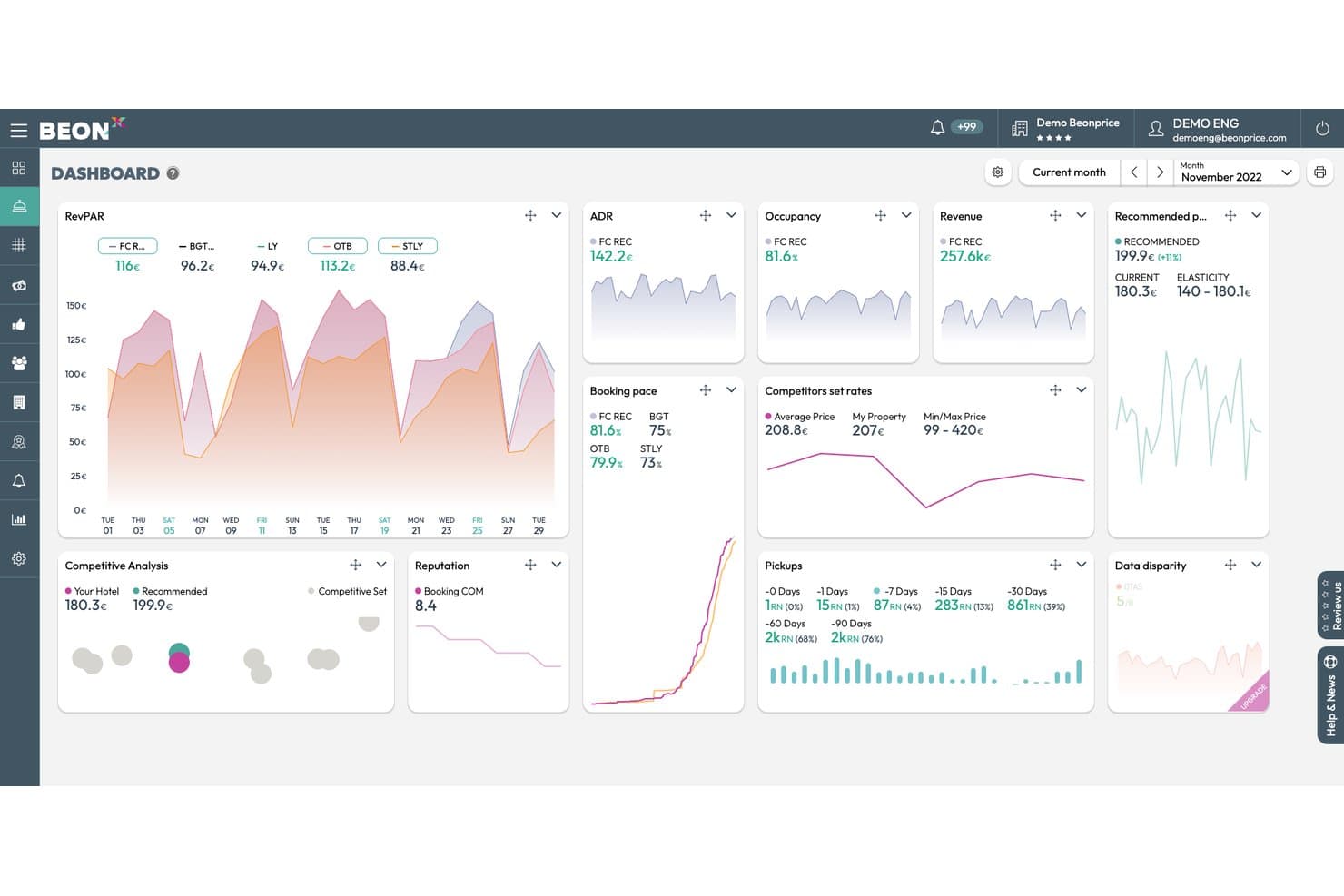
BEONx delivers segmented AI pricing using room, channel, market, and hotel quality data. BEONx is an AI-driven revenue management system that handles dynamic pricing, demand forecasting, competitor rate monitoring, and segmented rate recommendations across room types and booking channels.
Who Is BEONx Best For?
BEONx is a strong fit for revenue managers at mid-size to large hotels who need granular, segment-level pricing across room types and booking channels.
Why I Picked BEONx
BEONx earns its spot on my shortlist because of how precisely it handles segmented rate forecasting across room types, channels, and market segments simultaneously. I love that it uses "double segmentation," meaning it can generate separate AI-driven price recommendations for, say, a superior suite sold through a corporate contract versus the same room on an OTA. Its Hotel Quality Index (HQi) is another detail I find genuinely useful: it scores your property from the guest's perspective by traveler type, giving the AI a richer signal than competitor rates alone.
BEONx Key Features
- Group displacement analysis: The group module calculates the cost of displacing regular bookings to evaluate group rate quotes, including suggested alternative dates and revenue per quote.
- What-if pricing scenarios: Run hypothetical pricing scenarios to see how rate changes across segments or room types could affect overall revenue before committing to a strategy.
- Five-year demand forecasting: Generate forward-looking forecasts up to five years out, with 365-day rolling views, pickup analysis, and channel-specific breakdowns with explanations.
- Cluster reporting: View and manage pricing performance across a portfolio of properties through multi-property dashboards and grouped reports designed for enterprise revenue teams.
BEONx Integrations
BEONx integrates with PMS platforms including Mews, apaleo, Oracle Hospitality, RoomRaccoon, and SiteMinder, plus channel managers such as RateGain, ROIBACK, Vertical Booking, and Zavia ERP. An open API supports custom integrations.
Pros and Cons
Pros:
- Group displacement analysis supports quote decisions
- Forecasts extend five years ahead
- Segmented pricing spans channels, rooms, and markets
Cons:
- Batch-based updates can lag market changes
- Interface confuses non-specialist revenue teams
Learn more about BEONx: Best for AI-driven forecasting at scale
- Not available
- Pricing upon request
Visit WebsiteCustomer Rating:4.8/5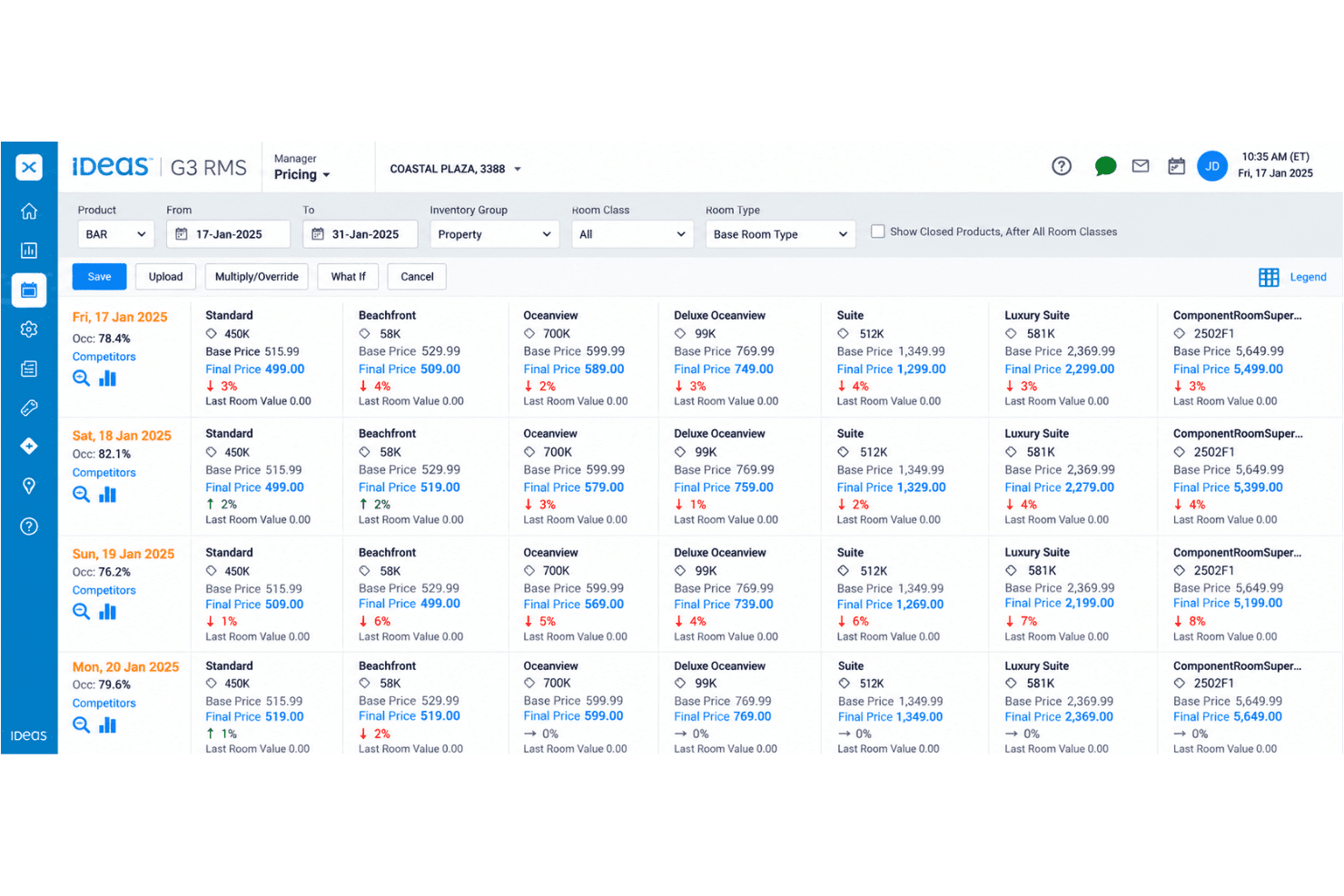
IDeaS applies AI forecasting, continuous pricing, and portfolio-wide rate controls. IDeaS is an AI-driven revenue management system for hotels that combines dynamic pricing, demand forecasting, competitor rate monitoring, and multi-property rate control.
Who Is IDeaS Best For?
IDeaS is a strong fit for multi-property hotel groups and enterprise operators that need AI-driven pricing decisions running across a large portfolio.
Why I Picked IDeaS
I picked IDeaS as one of the best because its AI and deep-learning forecasting engine does something few tools match at scale: it generates 5-year demand forecasts and prices 365 days forward, per room type, across an entire portfolio simultaneously. I find the Continuous Pricing model particularly impressive, since it sets rates for each room class independently rather than applying blanket adjustments. Portfolio Navigator then lets you enforce corporate pricing guidelines across every property from one place, which is where IDeaS really earns its spot for multi-property operators.
IDeaS Key Features
- Built-in rate shopping: Monitor competitor rates using flexible comp sets, weighted competitor influence, and the ability to exclude outlier pricing data for up to 180 days.
- Group pricing and displacement analysis: Evaluate group business with wash forecasts, what-if scenarios, and displacement analysis to assess whether group bookings serve your revenue strategy.
- Customizable performance dashboards: Access heatmaps, pickup and booking-pattern reports, lost-business analytics, and price change logs from a centralized reporting interface.
- Automated overbooking reduction alerts: Receive system-triggered alerts for overbooking risks, inactive room types, and group wash overrides directly within the platform.
IDeaS Integrations
IDeaS lists 102+ integrations, including Oracle OPERA Cloud, Shiji, Pegasus, RoomCloud, Cvent, and Oracle Nor1. An open API and developer portal support custom integrations.
Pros and Cons
Pros:
- Portfolio Navigator centralizes multi-property rate control
- Continuous Pricing adjusts rates by room type
- Five-year forecasts support long-range planning
Cons:
- New revenue managers need lengthy training
- Third-party systems handle rate distribution
Learn more about IDeaS: 10Best for AI-driven group and transient rate decisions
LodgIQ
- Free demo available
- From $6/room/month
Visit WebsiteCustomer Rating:4.8/5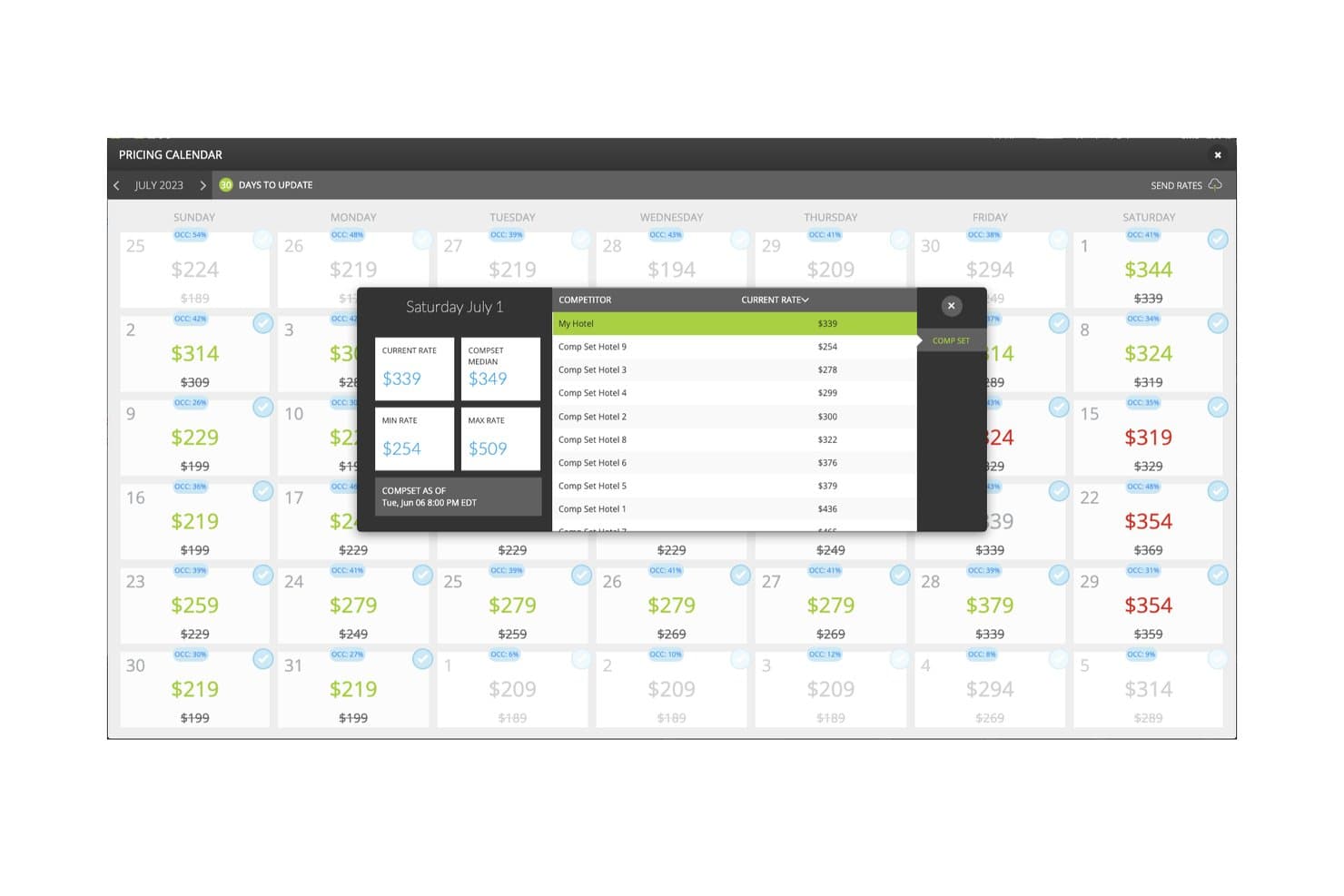
LodgIQ handles transient and group pricing with displacement analysis and AI rate controls. LodgIQ is an AI-driven hotel rate management system that combines dynamic pricing, demand forecasting, competitor rate monitoring, and group pricing tools into a single commercial strategy platform.
Who Is LodgIQ Best For?
LodgIQ fits revenue managers at independent hotels and multi-property portfolios who need AI-driven pricing across both transient and group segments.
Why I Picked LodgIQ
LodgIQ earns its spot on my shortlist because it's one of the few rate management systems that handles both transient and group pricing within a single platform. I particularly like GroupIQ's displacement analysis, which shows you the incremental and displaced revenue of a group booking alongside alternate date suggestions—something most RMS tools leave entirely to your sales team's judgment. The three-mode automation setup (manual, co-pilot, and auto-pilot) also means your revenue team can let the AI take over rate decisions or stay hands-on, depending on the date or segment.
LodgIQ Key Features
- ForecastIQ demand forecasting: Generates daily segment-level forecasts using historical data, live flight records, local events, and weather signals, with published accuracy targets at multiple booking horizons.
- Three-tier automation modes: Lets your team operate in manual, co-pilot, or auto-pilot mode, so you control how much of the rate decision process the AI handles.
- Mobile rate push: The iOS app lets revenue managers push rate and restriction updates to connected PMS, CRS, or channel manager systems directly from their phone.
- Intellimerge rate comparison: A drag-and-drop view that places LodgIQ's recommended rates alongside your current rates and competitor rates for direct side-by-side comparison.
LodgIQ Integrations
LodgIQ documents 40+ integrations, including Oracle OPERA Cloud, Cloudbeds, Mews, SiteMinder, Sabre SynXis, iHotelier, and OTA Insight. It connects with PMS, CRS, channel managers, and market data sources for rate distribution and forecasting.
Pros and Cons
Pros:
- Forecasts incorporate flights, events, and weather
- Manual, co-pilot, and auto-pilot modes
- GroupIQ includes displacement analysis
Cons:
- On-demand rate shopping remains unavailable
- No dedicated rate parity management
Learn more about LodgIQ:
Other Hotel Rate Management Software
Here are some additional hotel rate management software options that didn’t make it onto my shortlist, but are still worth checking out:
- 11FLYR HospitalityBest for AI-driven pricing across portfolios
- 12SiteMinderBest for multi-property rate distribution at scale
- 13RoomPriceGenieBest for independent hotels on autopilot pricing
- 14WheelhouseBest for vacation rental dynamic pricing rules
- 15Revolution PlusBest for performance-based AI rate management
- 16N2PricingBest for cluster pricing across hotel portfolios
- 17SmartpricingBest for non-experts managing rates in minutes
- 18Lybra Assistant RMSBest for flight-demand-driven rate recommendations
- 19HotelitixBest for flat-rate AI pricing at independent hotels
- 20LighthouseBest for competitor rate and demand intelligence
How I Evaluate Hotel Rate Management Software
I split my evaluation into baseline criteria every tool must meet—like real-time rate sync and competitor monitoring—and differentiators like AI pricing depth and PMS ecosystem fit that separate good tools from great ones.
Core Functionality (Table Stakes for This List)
When I'm selecting tools for my list, I rank each one on a scale from 0 (does not offer the functionality) to 5 (excels in this area) for each core functionality listed below. I then calculate the tool's total score into a percentage, and use that to help me assess its overall fit for the list.
- Rate distribution sync: I check whether the tool pushes rate changes across OTAs, GDS, and direct booking engines in real time without manual re-entry.
- Dynamic pricing rules: The tool should let you build layered rules that adjust rates based on occupancy, booking pace, and day-of-week triggers.
- Competitor rate monitoring: I look for live or frequently refreshed competitor rate data that's built into the pricing workflow, not siloed in a separate report.
- Demand forecasting: I evaluate how well the tool blends historical patterns, seasonality, and local events to produce forward-looking rate guidance.
- Rate parity management: The tool should flag pricing mismatches across channels quickly so your team can correct them before they erode direct booking margins.
- Multi-property rate control: I look for a single dashboard where you can apply bulk rate changes and compare performance across an entire portfolio.
Once I have a list of tools that meet the criteria, I consider what sets each platform apart.
Differentiating Factors (What Sets Vendors Apart)
Here's how I compare and contrast different vendors:
Standout Features
I evaluate how each tool handles group and contract rate structures alongside transient pricing—hotels juggling conference blocks and negotiated corporate rates need both in one workflow, not bolted on as an afterthought. Mobile rate management also matters; I check whether a GM can review and override a rate recommendation from their phone during a sold-out weekend without logging into a desktop. AI-driven rate optimization is where vendors diverge most. I look at whether the model reacts to live demand signals or just replays historical patterns.
Beyond Features
I check whether a vendor's PMS and channel manager integrations are certified two-way connections, not just API-compatible on paper. A one-way sync between your PMS and a tool like Duetto or Cloudbeds can quietly create rate mismatches across OTAs. Scalability matters just as much—multi-property operators should confirm that licensing scales with portfolio growth and includes role-based permissions for regional oversight. I also evaluate onboarding support, since most hotel teams don't have dedicated IT staff to handle data migration or rule configuration on their own.
How to Choose Hotel Rate Management Software
Choose software by testing how it handles rate accuracy, portfolio controls, and commercial workflows before signing a contract.
| If your priority is... | Look for... |
|---|---|
| If your priority is...Preventing channel rate mismatches | Look for...A documented PMS, OTA, and booking-engine sync map |
| If your priority is...Trusting competitor comparisons | Look for...Timestamped competitor-rate samples and source definitions |
| If your priority is...Managing multiple properties | Look for...Portfolio permission rules and bulk-change approval records |
| If your priority is...Handling negotiated and group business | Look for...Written examples covering contract, group, and transient rates |
How to Vet Your Shortlist
- Request the data map: Ask each vendor for a current integration document showing every rate, restriction, and inventory field exchanged with your PMS and channels.
- Test a defined scenario: During a 14-day trial, create an occupancy trigger, change one room rate, and record the timestamps across each connected channel.
- Audit competitor data: Request a seven-day sample showing property matches, collection times, occupancy assumptions, and missing-rate treatment.
- Put support terms in writing: File one implementation question and request a contract clause specifying response windows, escalation steps, and data-export format.
- Choose the operating tradeoff: Favor deeper portfolio governance over faster setup, or simpler independent-property workflows over extensive group and contract controls.
What Is Hotel Rate Management Software?
Hotel rate management software helps hotels set, monitor, and update room prices based on demand, occupancy, booking pace, competitor rates, and distribution channels. It typically combines dynamic pricing rules, demand forecasting, rate parity monitoring, and channel synchronization.
Revenue managers, general managers, and commercial teams use it to coordinate pricing decisions across rooms, dates, booking segments, and properties.
Features of Hotel Rate Management Software
When selecting hotel rate management software, keep an eye out for the following key features:
Rate synchronization: Pushes updated room rates, restrictions, and availability to connected OTAs, GDSs, booking engines, and other sales channels. This keeps displayed prices consistent and reduces manual updates across distribution systems.
Dynamic pricing rules: Adjusts rates according to occupancy, booking pace, stay dates, room type, length of stay, and day-of-week conditions. Your team can create pricing rules that respond to specific commercial situations.
Competitor rate monitoring: Collects and compares rates from selected competing hotels for comparable dates and room types. Revenue managers can use these comparisons when reviewing positioning and deciding whether to change prices.
Demand forecasting: Uses historical performance, seasonality, booking patterns, and market conditions to estimate future demand. Forecasts help your team plan rates and inventory for upcoming high- and low-demand periods.
Rate parity monitoring: Checks prices across direct and third-party channels for discrepancies. The system can flag mismatches so your team can investigate incorrect markups, promotions, or synchronization issues.
Multi-property controls: Provides a central workspace for viewing performance and managing rates across several properties. Portfolio teams can apply approved changes by hotel, room type, market, or date range.
Restriction management: Controls conditions such as minimum stays, closed-to-arrival dates, closed-to-departure dates, and advance-purchase requirements. These settings help your team match booking conditions to forecasted demand.
Performance reporting: Tracks metrics such as occupancy, average daily rate, revenue per available room, pickup, and channel production. Reports give teams a shared basis for reviewing pricing decisions and adjusting future strategies.
Common Hotel Rate Management Software AI Features
Beyond the standard hotel rate management software features listed above, many solutions are incorporating AI with features like:
Anomaly detection: AI monitors rate, booking, occupancy, and revenue data for unusual changes. It can flag unexpected rate drops, sudden booking spikes, missing updates, or unusual cancellation activity for your team to review.
Natural language assistance: An AI assistant lets revenue managers ask questions about property performance in plain language. You might ask which room types need attention or why revenue changed, then receive answers based on your connected hotel data.
Automated data mapping: AI matches room types, rate plans, and market segments across PMS, channel manager, and booking systems. This helps identify similar records and reduces manual configuration during implementation or system changes.
Cancellation prediction: AI evaluates booking patterns, guest behavior, lead time, and historical cancellation activity to estimate which reservations are likely to cancel. Revenue teams can use these predictions when reviewing availability and overbooking decisions.
Group displacement analysis: AI compares a proposed group booking with expected transient demand for the same dates. It estimates the revenue tradeoff across room nights, rates, and ancillary revenue before your team accepts or rejects the block.
Benefits of Hotel Rate Management Software
Implementing hotel rate management software provides several benefits for your team and your business. Here are a few you can look forward to:
- Consistent channel pricing: Rate synchronization and parity monitoring keep room prices, restrictions, and availability aligned across OTAs, GDSs, booking engines, and direct channels.
- More accurate pricing decisions: Demand forecasting combines historical performance, seasonality, booking pace, occupancy, and local events to guide rate changes.
- Faster market positioning: Competitor rate monitoring gives revenue managers current comparisons for reviewing room prices and adjusting market position.
- Greater portfolio control: Multi-property dashboards let regional teams compare performance and apply approved rate changes across properties, room types, and date ranges.
- Better management of booking conditions: Restriction controls support minimum stays, closed-to-arrival dates, closed-to-departure dates, and advance-purchase requirements.
- Stronger commercial coordination: Group, contract, negotiated, and transient rate structures can be reviewed alongside demand forecasts and displacement analysis.
- Earlier issue detection: AI-powered anomaly detection can flag unexpected rate drops, booking spikes, missing updates, and unusual cancellation activity for review.
Costs and Pricing of Hotel Rate Management Software
Selecting hotel rate management software requires understanding the pricing models and plans available. Costs vary based on features, property size, add-ons, integrations, and support requirements. The table below summarizes common plans, average prices, and typical features included in hotel rate management software solutions.
Plan Comparison Table for Hotel Rate Management Software
| Plan Type | Average Price | Common Features |
|---|---|---|
| Plan TypePersonal Plan | Average Price$50-$200/property/month | Common FeaturesDynamic pricing rules, rate synchronization, competitor monitoring and email support. |
| Plan TypeBusiness Plan | Average Price$200-$800/property/month | Common FeaturesDemand forecasting, rate parity monitoring, channel integrations and performance reporting. |
| Plan TypeEnterprise Plan | Average Price$800-$2,500+/property/month | Common FeaturesMulti-property controls, advanced forecasting, custom integrations and dedicated account support. |
Hotel Rate Management Software FAQs
Here are some answers to common questions about hotel rate management software:
How long does hotel rate management software take to implement?
Implementation usually takes several weeks, depending on your integrations, property count, and rate-plan complexity. Ask the vendor for a project schedule before signing. Confirm who maps room types, rate plans, restrictions, and market segments.
Your team should also test data transfers with the PMS, channel manager, OTAs, and booking engine. Schedule parallel checks before switching fully. Compare rates and restrictions across channels during that period. This process can reveal mapping errors before they affect guest bookings or front-desk operations.
Does hotel rate management software work with an existing PMS?
Yes, hotel rate management software can work with an existing PMS when the systems have compatible, two-way integrations. Confirm exactly which fields each connection sends and receives. These fields can include rates, restrictions, inventory, reservations, and room types.
Ask whether the connection is certified or simply API-compatible. Request a current integration map from the vendor. Then test a rate change from the pricing system through your PMS and sales channels. Record timestamps to verify that updates arrive correctly.
Is hotel rate management software suitable for an independent hotel?
Yes, an independent hotel can use hotel rate management software if the workflow matches its staffing and distribution needs. Smaller teams should prioritize clear rate recommendations, simple rule configuration, and direct access to support.
Avoid paying for portfolio controls or integrations your property will not use. During a trial, create pricing rules for a high-demand weekend and a slow weekday. Check how much manual review each recommendation requires. Also confirm whether the vendor supports your PMS, booking engine, and preferred OTAs.
How should you test hotel rate management software before buying?
Test hotel rate management software with your own property data and a defined pricing scenario. Create an occupancy trigger, change one room rate, and record each channel’s update time. Review how the system handles restrictions, promotions, and multiple room types.
Ask the vendor for a competitor-rate sample with collection times and source definitions. Test user permissions before inviting the wider team. Finally, request data-export terms and support response windows. These checks expose integration, reporting, and governance issues early.