

Recensione Swoogo: Pro, Contro, Caratteristiche e Prezzi
Swoogo riunisce l’intero flusso di lavoro per la gestione degli eventi in un unico posto, dalla registrazione e marketing fino al coinvolgimento dei partecipanti e alle analisi.

Recensiamo gli strumenti in modo indipendente e le commissioni ci aiutano a finanziare i nostri test. Consulta la nostra politica sulla trasparenza, la nostra metodologia oppure suggerisci uno strumento.
Swoogo is an event management software built for event teams that need full control over registration, event websites, and attendee journeys across in-person, virtual, and hybrid formats. I'd consider it if your team runs a high volume of events annually and wants a platform that's more flexible and easier to configure than Cvent, without giving up the depth of features that complex, large-scale events actually require.
Swoogo Evaluation Summary
4.8/5
- From $11,800/year (billed annually)
- Free demo available
Perché fidarsi dei nostri consigli sui software
6,700+
Reviews
20
Industry experts
16+
Evaluation factors
14
Years
Il nostro team testa e recensisce software dal 2012. In quanto leader del settore alberghiero noi stessi, sappiamo quanto sia difficile — e importante — scegliere il software giusto.
Per questa guida, abbiamo valutato gli strumenti attraverso test pratici e ricerche indipendenti, assegnando un punteggio agli strumenti in base ai nostri criteri di selezione.
Le nostre recensioni riflettono il nostro giudizio editoriale umano, non un discorso di vendita.
Swoogo Overview
When I compare Swoogo to other event management software, I think its drag-and-drop interface, customizable registration, and strong reporting make it a top pick for hotels running frequent or complex events. Pricing is transparent, support is responsive, and integrations cover most needs, though some advanced marketing features are limited. Onboarding is quick, and the platform feels intuitive even for new users.
If you’re judging options for multi-property hotels or teams needing flexible branding and attendee management, Swoogo stands out for its balance of usability and depth.
Pros
- Registration flows are highly customizable for complex events.
- Reporting and analytics offer deep attendee insights.
- Support team is responsive and knowledgeable.
Cons
- Advanced marketing features are less developed than some competitors.
- Mobile app functionality can feel limited for large events.
- Pricing may be high for smaller or infrequent events.
Is Swoogo Right For Your Needs?
Who Would be a Good Fit for Swoogo?
Swoogo is a strong choice for organizations that need flexible event registration, detailed reporting, and branding control across multiple events or locations. I think it’s especially well-suited for teams that run frequent, complex, or multi-property events and want a platform that can handle custom workflows and attendee segmentation.
If your team values responsive support and a user-friendly interface, Swoogo’s feature set and onboarding experience make it a reliable pick.
- Nonprofit OrganizationsFundraising and donor event features help nonprofits track engagement and outcomes.
- Marketing DepartmentsCustomizable forms and branding support targeted lead capture at events.
- AssociationsMembership management and recurring event tools help associations engage members.
- Higher EducationUniversities can manage conferences, alumni events, and workshops with detailed reporting.
- Corporate Event TeamsCustom registration flows and attendee tracking fit complex corporate events.
- Large Hotel ChainsSwoogo supports multi-property management and custom branding for each location.
Who Would be a Bad Fit for Swoogo?
Swoogo may not be the best fit for teams with simple event needs, limited budgets, or those who require advanced mobile or marketing automation features. If your events are infrequent, small-scale, or you need deep integration with niche tools, you might find Swoogo’s pricing or feature set more than you need.
- Government AgenciesStrict compliance or integration requirements may not be fully supported.
- Religious OrganizationsBasic event needs may not justify Swoogo’s cost or complexity.
- FestivalsLimited marketing automation may not support broad audience outreach.
- Trade Show OrganizersMobile app limitations can hinder large-scale, on-site coordination.
- Solo Event PlannersSwoogo’s robust platform can feel overwhelming for single users.
- Small BusinessesPricing and feature depth may exceed needs for occasional events.
Come testiamo e valutiamo gli strumenti
Abbiamo trascorso anni a costruire, perfezionare e migliorare il nostro sistema di test e valutazione dei software. Il nostro metodo è progettato per cogliere le sfumature della scelta di un software e ciò che rende uno strumento efficace, concentrandosi sugli aspetti critici del processo decisionale. Qui sotto puoi vedere come funziona il nostro sistema di test e valutazione su sette criteri. Questo ci permette di offrire una valutazione imparziale dei software in base a funzionalità principali, funzioni distintive, facilità d’uso, onboarding, assistenza clienti, integrazioni, recensioni clienti e rapporto qualità-prezzo.
Funzionalità principali (25% del punteggio finale)
Il punto di partenza della nostra valutazione è sempre la funzionalità principale dello strumento. Ha le funzionalità di base che un utente si aspetta? Alcune di queste sono riservate solo a piani tariffari superiori? Ci aspettiamo che uno strumento regga il confronto con le capacità minime offerte dai concorrenti.
Funzioni distintive (25% del punteggio finale)
Successivamente, valutiamo le funzioni originali non comuni che vanno oltre le funzionalità di base normalmente presenti in strumenti simili. Un punteggio elevato riflette funzionalità particolari o uniche che rendono il prodotto più veloce, efficiente, o che offrono valore aggiunto all’utente. Valutiamo inoltre quanto sia facile integrare lo strumento con altri software tipici della struttura tecnologica per ampliare funzionalità e utilità. Gli strumenti che offrono numerose integrazioni native, connessioni di terze parti e accesso API per integrazioni personalizzate ottengono il punteggio migliore.
Facilità d’uso (10% del punteggio finale)
Consideriamo quanto sia rapido e semplice eseguire tramite lo strumento le attività descritte dalle funzionalità principali. Un software con punteggio alto è ben progettato, intuitivo, offre app mobile, fornisce modelli preimpostati e rende semplici anche operazioni complesse.
Onboarding (10% del punteggio finale)
Sappiamo quanto sia importante la rapida adozione di una nuova piattaforma da parte del team, quindi valutiamo quanto sia semplice imparare e utilizzare uno strumento con una formazione minima. Consideriamo quanto velocemente un membro del team possa iniziare a usare lo strumento senza esperienza precedente. Soluzioni con punteggio elevato richiedono poco o nessun supporto.
Assistenza clienti (10% del punteggio finale)
Verifichiamo quanto sia rapido e facile sbloccarsi e ricevere aiuto tramite telefono, chat dal vivo o knowledge base. Gli strumenti e le aziende che offrono assistenza in tempo reale ottengono il punteggio migliore, mentre i chatbot ottengono il punteggio più basso.
Recensioni clienti (10% del punteggio finale)
Oltre ai nostri test e valutazioni, consideriamo il punteggio net promoter dei clienti attuali o passati. Verifichiamo la probabilità che tornino a scegliere lo strumento per le sue funzionalità principali. Un software con punteggio alto rispecchia un elevato net promoter score tra clienti attuali e passati.
Rapporto qualità-prezzo (10% del punteggio finale)
Infine, in considerazione di tutti gli altri criteri, valutiamo il prezzo medio dei piani di ingresso rispetto alle funzionalità principali e teniamo conto del valore degli altri criteri di valutazione. Il software che offre di più spendendo meno otterrà un punteggio più alto.
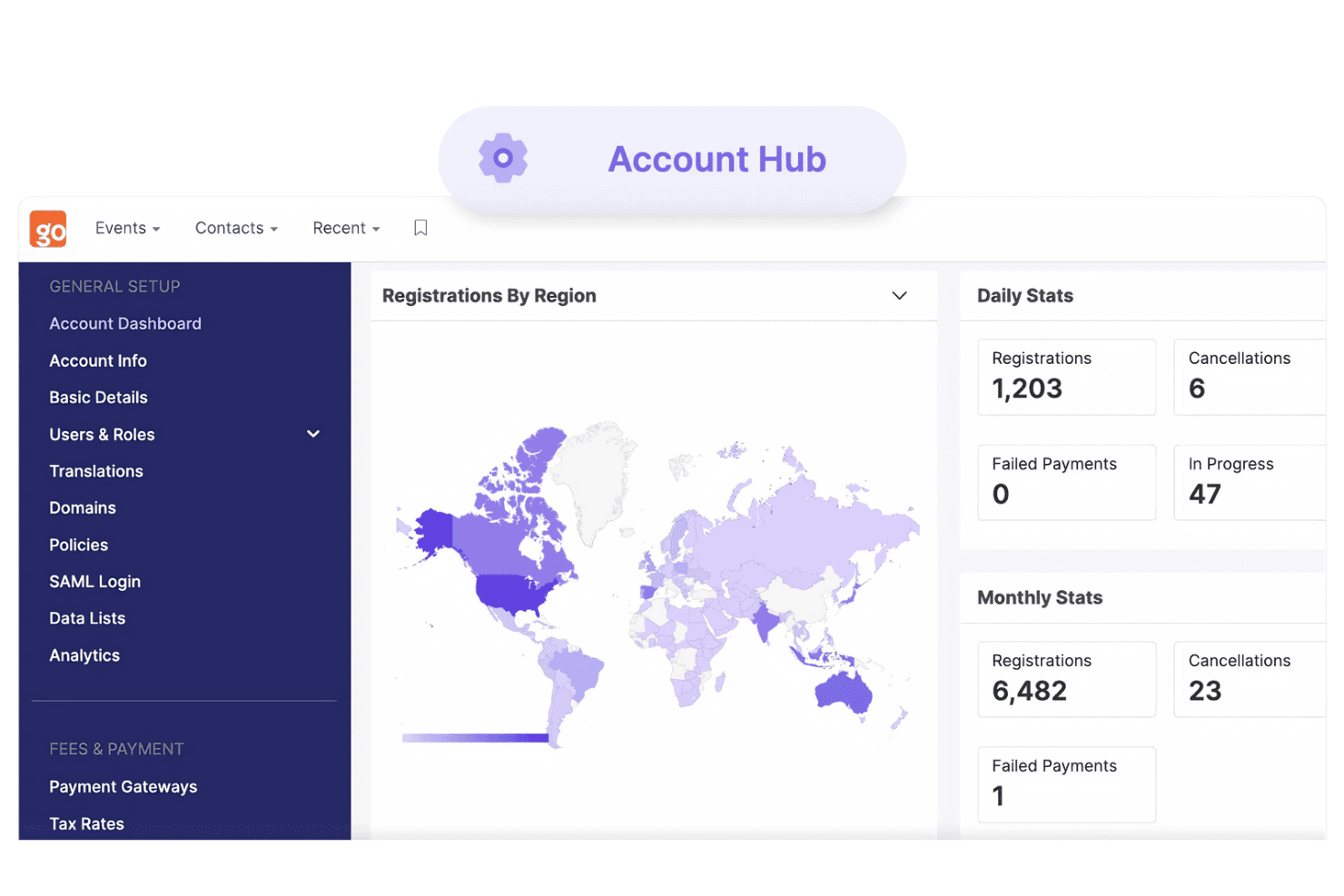
Core Features
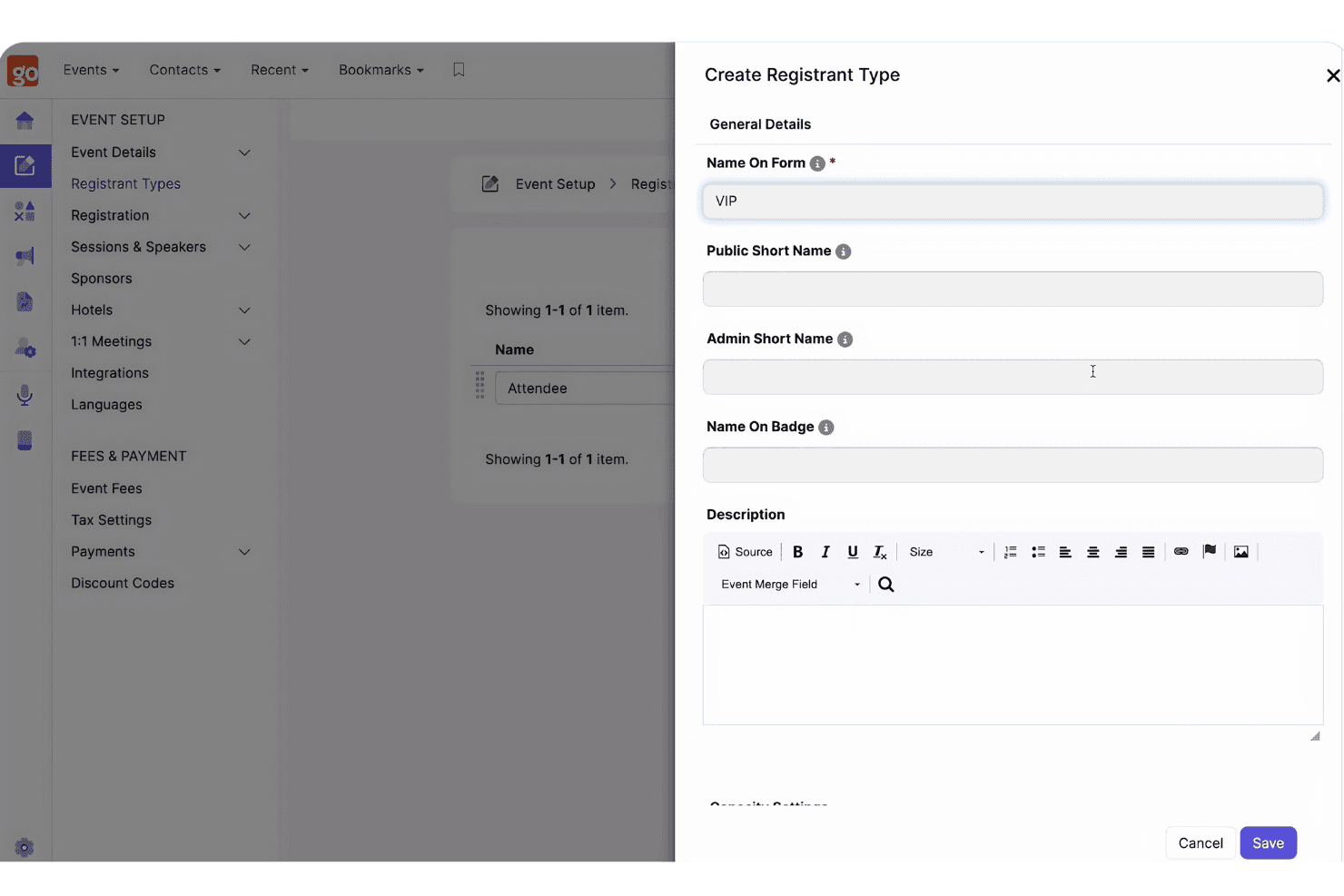
Custom Registration Flows
Build unlimited registration paths with custom rules, logic, and fields for any event type.
Event Websites
Create fully branded event websites with drag-and-drop tools and real-time updates.
Data and Insights
Access cross-event reporting and attendee analytics to track engagement and measure ROI.
Session and Speaker Management
Collect, review, and manage session proposals and speaker details in one place.
Event Marketing Tools
Send automated emails, manage event communications, and personalize attendee outreach from a central dashboard.
Mobile Event Apps
Keep guests connected with schedules, updates, and check-in features through Swoogo’s dedicated mobile apps.
Ease of Use
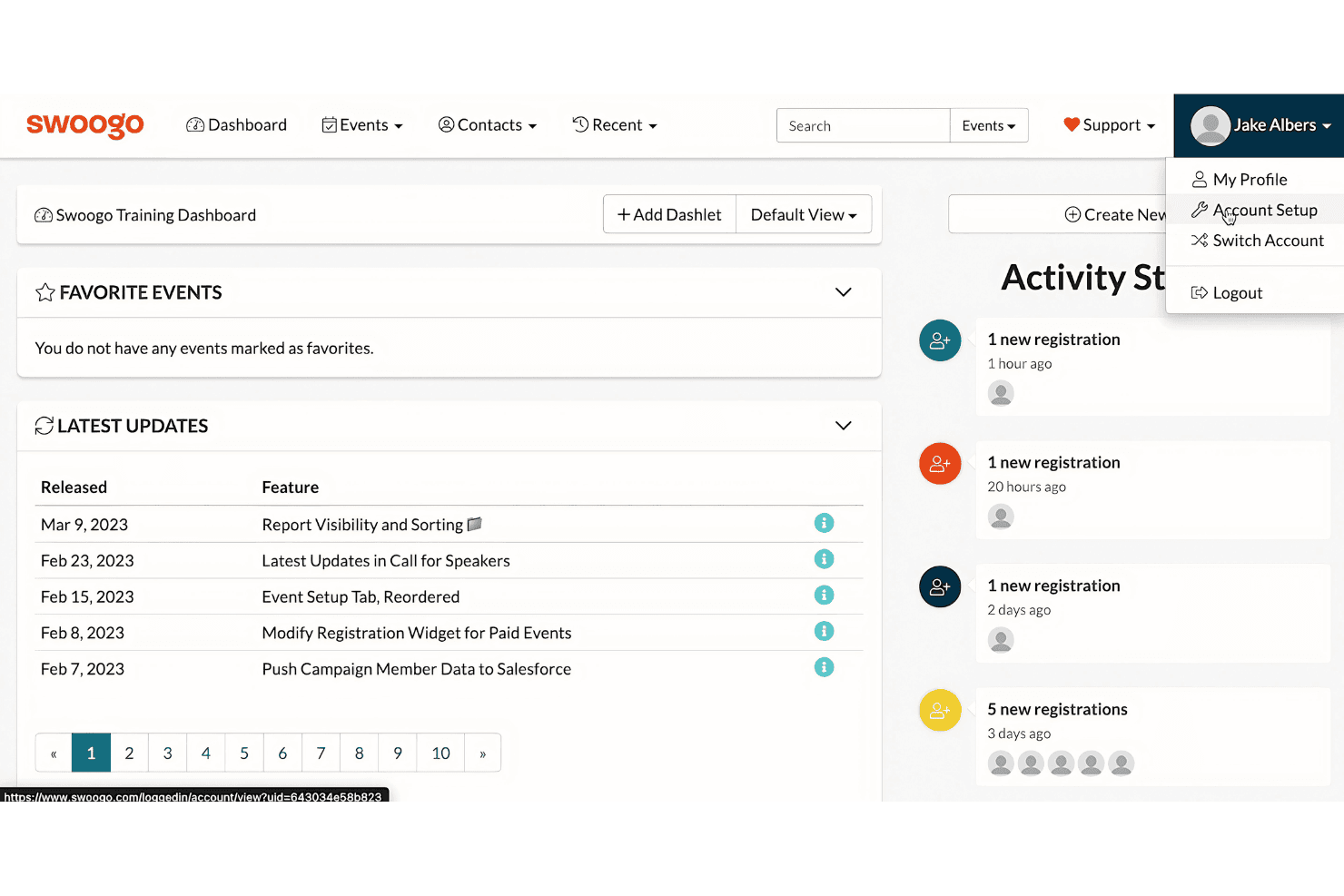
Swoogo stands out for its intuitive drag-and-drop interface and clear navigation, making setup and daily management straightforward even for first-time users. I’ve seen users praise how quickly they can launch branded event sites and customize registration without technical help. The dashboard keeps key actions visible, and built-in guides help teams onboard fast. If you want a platform that balances flexibility with simplicity, Swoogo delivers a smooth experience from start to finish.
Integrations
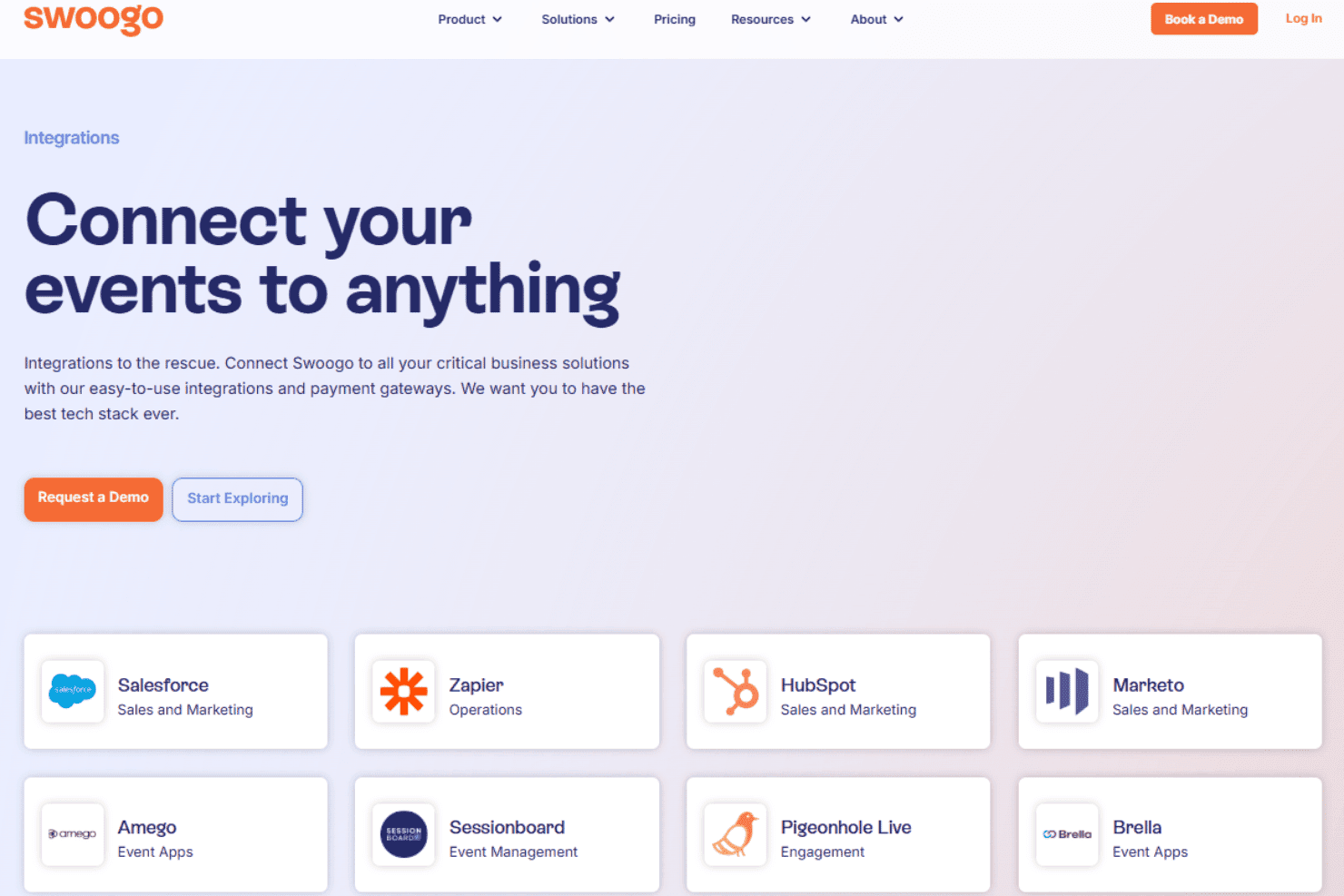
Swoogo integrates with Salesforce, HubSpot, Marketo, Zoom, ON24, GoToWebinar, Mollie, Stripe, Google Analytics, and Zapier, among others.
Swoogo also offers an open API and connects with third-party integration tools like Zapier for broader compatibility.
Swoogo Specs
- Accounts Payable: No
- Accounts Receivable: No
- API: Yes
- Audience Targeting: Yes
- Budgeting: No
- Calendar Management: Yes
- Contact Management: Yes
- Customer Management: Yes
- Dashboard: Yes
- Data Export: Yes
- Data Import: Yes
- Data Visualization: Yes
- Expense Tracking: No
- External Integrations: Yes
- Forecasting: No
- General Account Ledger: No
- Inventory Tracking: No
- Lead Management: Yes
- Lead Scoring: No
- Marketing Automation: Yes
- Multi-User: Yes
- Notifications: Yes
- Project Management: No
- Scheduling: Yes
- Social-Media Integration: Yes
- Supplier Management: No
- Third-Party Plugins/Add-Ons: Yes
- Travel Management: No


