

Reseña del Software de Gestión Hotelera Cloudbeds para 2026

Revisamos las herramientas de forma independiente, y las comisiones ayudan a financiar nuestras pruebas. Consulta nuestra política de transparencia, nuestra metodología o sugiere una herramienta.
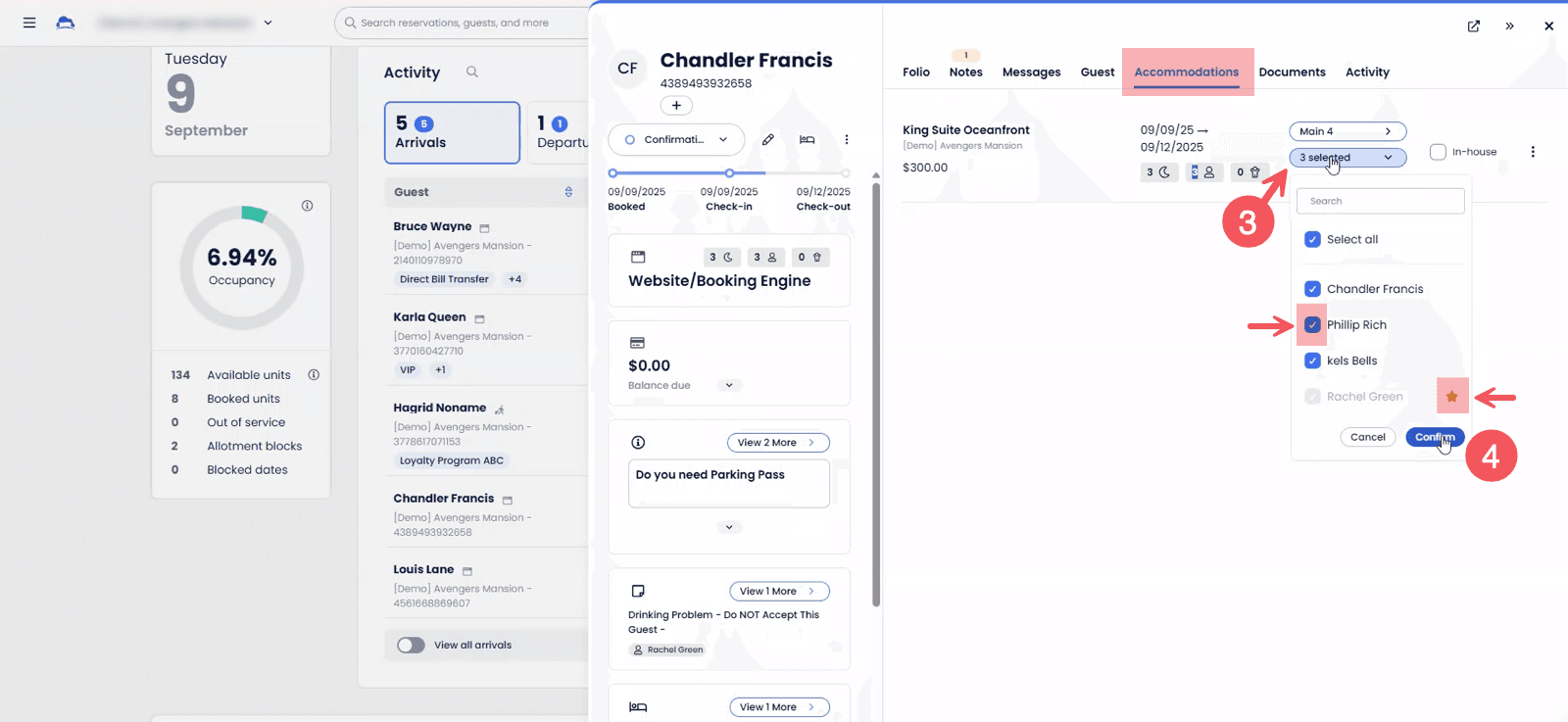
Cloudbeds is a hospitality management platform built for hotels, hostels, vacation rentals, and multi-property groups that want to manage operations, distribution, guest experience, and revenue tools in one system. When you’re dealing with front desk workflows, online distribution, payments, and guest communications across multiple tools, it’s easy for information to become fragmented. Cloudbeds aims to reduce that fragmentation by offering a core property management system with built-in payments, distribution options, and a large marketplace of integrations.
Rather than acting solely as a PMS, Cloudbeds provides a platform as a foundation that properties can expand with optional revenue, marketing, and guest experience products powered by its Signals AI model. In this review, I’ll walk through Cloudbeds’s features, pricing structure, strengths, limitations, and ideal use cases so you can decide whether it fits your property’s size, complexity, and growth plans.
Cloudbeds Evaluation Summary
4.3/5
- Pricing upon request
- Free demo available
Por qué confiar en nuestras recomendaciones de software
6,700+
Reviews
20
Industry experts
16+
Evaluation factors
14
Years
Nuestro equipo lleva probando y evaluando software desde 2012. Como líderes del sector hotelero, sabemos lo difícil —y lo importante— que es elegir el software adecuado.
Para esta guía, evaluamos las herramientas mediante pruebas prácticas e investigación independiente, puntuando las herramientas según nuestros criterios de selección.
Nuestras reseñas reflejan nuestro criterio editorial humano, no un discurso de ventas.
Cloudbeds Overview
Cloudbeds is designed as a unified, cloud-native platform rather than a collection of disconnected modules. At its core are the PMS, payments, and marketplace, with optional distribution tools like the channel manager and booking engine, as well as add-ons for revenue intelligence, marketing, websites, and reputation management.
Compared to legacy hospitality systems, Cloudbeds is generally easier to learn and deploy, with a modern interface and guided onboarding. It also supports a wide range of property types and integrates with hundreds of third-party tools through its marketplace and open API. That said, Cloudbeds does not try to replace every specialized system. Properties with highly complex financial reporting, large-scale event sales, or niche operational requirements may still rely on external tools connected through integrations.
Pros
- Responsive customer support with live chat and onboarding help.
- Large integration marketplace and open API for extending functionality.
- Unified platform that combines PMS, payments, and optional distribution in one system.
Cons
- Advanced analytics and financial reporting may require external tools.
- Revenue marketing features must be purchased as add-ons.
- Platform depth can feel overwhelming for very small teams that need basic reservation management.
Is Cloudbeds Right For Your Needs?
Who Would be a Good Fit for Cloudbeds?
Cloudbeds works best for hospitality businesses that want a single platform to manage core operations while retaining the flexibility to add distribution, guest experience, or revenue tools as needed. It’s a strong fit when ease of adoption, centralized workflows, and integration flexibility matter more than highly specialized or industry-specific functionality.
- Independent HotelsCloudbeds simplifies managing reservations and guest details, which suits your independent operations well.
- HostelsHostels can use Cloudbeds to manage shared inventory, group bookings, and online distribution while keeping front desk and housekeeping workflows in one place.
- Short-Term RentalsCloudbeds’s channel manager and direct booking engine help vacation and short-term rental owners sync listings and avoid double bookings.
- Boutique HotelsCloudbeds supports boutique hotels that want a single system for reservations, distribution, payments, and guest-facing tools. Teams can manage day-to-day operations without relying on multiple disconnected systems.
- B&Bs and InnsBeneficial when you need a straightforward way to manage reservations, payments, and guest communications without maintaining multiple systems, especially when you have a smaller team.
- Multi-Property Hotel GroupsCloudbeds supports hotel groups that manage multiple properties under one organization, allowing teams to oversee availability, pricing, and performance from a centralized view.
Who Would be a Bad Fit for Cloudbeds?
Cloudbeds may be less suitable for properties with highly complex operational requirements, deeply customized reporting needs, or niche use cases that rely on specialized systems. In these scenarios, the platform may require significant supplementation with third-party tools or may not align well with existing workflows.
- Single-Unit, Owner-Operated Vacation RentalsCloudbeds may be more software than necessary for individual owners managing a single vacation rental or a very small portfolio. In these cases, simpler listing and booking tools often meet core needs with less setup and ongoing cost.
- Casino HotelsCasino hotels require specialized integrations and guest tracking that Cloudbeds does not provide.
- Luxury HotelsIf you need advanced features for high-end services, Cloudbeds’s current offerings might fall short.
- Corporate Travel DepartmentsCloudbeds does not support negotiated corporate rates or travel policy compliance tools for business travel management.
- Conference CentersThe software does not offer robust event management or group sales features needed for conference and event-heavy venues
- Large Hotel ChainsLarge hotel chains with strict brand standards, proprietary technology stacks, or deeply customized reporting requirements may find Cloudbeds limiting as a standalone solution. While it supports multi-property management, enterprise chains often require highly specialized controls and integrations beyond Cloudbeds’ core focus.
Cómo Probamos y Puntamos Herramientas
Hemos pasado años construyendo, refinando y mejorando nuestro sistema de pruebas y puntuación de software. La rúbrica está diseñada para capturar las particularidades de la selección de software y lo que hace que una herramienta sea efectiva, enfocándose en aspectos críticos del proceso de toma de decisiones. A continuación, puedes ver exactamente cómo funcionan nuestras pruebas y puntuaciones en siete criterios. Nos permite proporcionar una evaluación imparcial del software basada en funcionalidad principal, características destacadas, facilidad de uso, incorporación, soporte al cliente, integraciones, opiniones de clientes y relación calidad-precio.
Funcionalidad Principal (25% de la puntuación final)
El punto de partida de nuestra evaluación es siempre la funcionalidad principal de la herramienta. ¿Tiene las características y funciones básicas que un usuario esperaría ver? ¿Alguna de esas funciones básicas está limitada a planes de precios superiores? En esencia, esperamos que una herramienta esté a la altura de las capacidades mínimas de sus competidores.
Características Destacadas (25% de la puntuación final)
Luego, evaluamos las características destacadas poco comunes que van más allá de la funcionalidad principal, típicamente encontrada en herramientas de su tipo. Una puntuación alta refleja funciones especializadas o únicas que hacen que el producto sea más rápido, eficiente u ofrezca valor adicional al usuario. También evaluamos lo fácil que resulta integrar con otras herramientas normalmente presentes en el paquete tecnológico para ampliar la funcionalidad y utilidad del software. Las herramientas con abundantes integraciones nativas, conexiones de terceros y acceso a API para crear integraciones personalizadas obtienen la mejor puntuación.
Facilidad de Uso (10% de la puntuación final)
Consideramos qué tan rápido y fácil es ejecutar las tareas definidas en la funcionalidad principal usando la herramienta. El software que obtiene una puntuación alta está bien diseñado, es intuitivo de usar, ofrece aplicaciones móviles, proporciona plantillas y hace que tareas relativamente complejas parezcan sencillas.
Incorporación (10% de la puntuación final)
Sabemos lo importante que es la adopción rápida del equipo para una nueva plataforma, por eso evaluamos la facilidad para aprender y usar una herramienta con mínima capacitación. Analizamos qué tan rápido un miembro del equipo puede configurarse y comenzar a usar la herramienta sin experiencia. Las soluciones que obtienen una puntuación alta requieren poco o ningún soporte.
Soporte al Cliente (10% de la puntuación final)
Revisamos qué tan rápido y fácil es obtener ayuda por teléfono, chat en vivo o base de conocimientos. Las herramientas y empresas que ofrecen soporte en tiempo real obtienen la mejor puntuación, mientras que los chatbots obtienen la peor.
Opiniones de Clientes (10% de la puntuación final)
Más allá de nuestras propias pruebas y evaluaciones, consideramos el índice neto de promotores de clientes actuales y anteriores. Analizamos la probabilidad de que elijan la herramienta de nuevo para la función principal. Un software con alta puntuación refleja un alto índice neto de promotores de clientes actuales o anteriores.
Relación Calidad-Precio (10% de la puntuación final)
Por último, considerando todos los demás criterios, revisamos el precio promedio de los planes iniciales frente a las características principales y valoramos los otros criterios de evaluación. El software que ofrece más por menos obtiene una mejor puntuación.
Core Features
Centralized Reservation Calendar
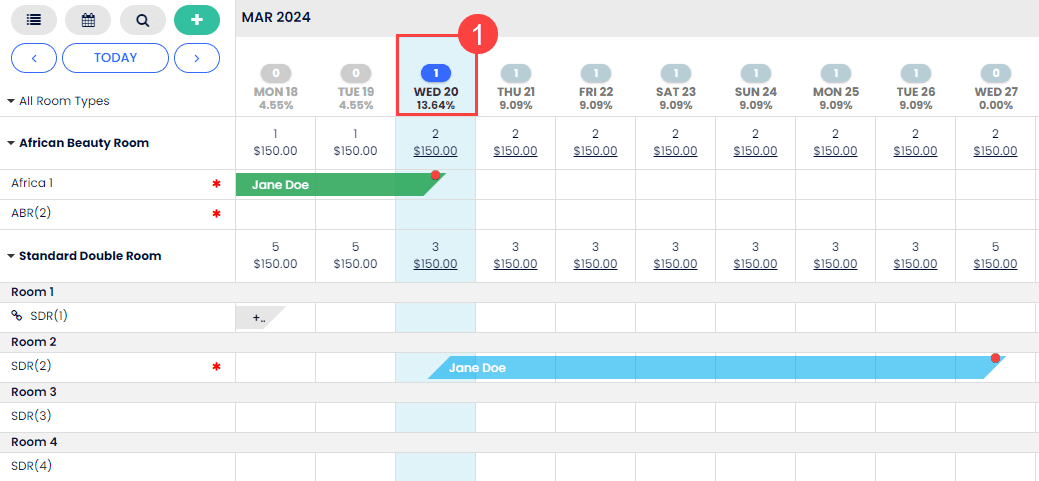
Cloudbeds provides a centralized view of reservations, availability, and rates. This helps teams manage daily operations and reduces conflicts across booking channels.
Channel Manager
The channel manager allows properties to sync rates and availability across OTAs and other distribution partners in real time, reducing manual updates.
Booking Engine
Cloudbeds includes a direct booking engine that can be embedded into a property’s website, allowing guests to book directly with real-time availability.
Guest Communication Tools
Guest communication features support messaging across email, SMS, and messaging platforms, helping teams respond to guest inquiries from a single inbox.
Housekeeping Management
Housekeeping tools allow managers to assign tasks, track room status, and coordinate staff directly from the PMS.
Payment Processing
Cloudbeds Payments integrates payment processing into reservations and folios, supporting deposits, refunds, and secure handling of card data.
Ease of Use
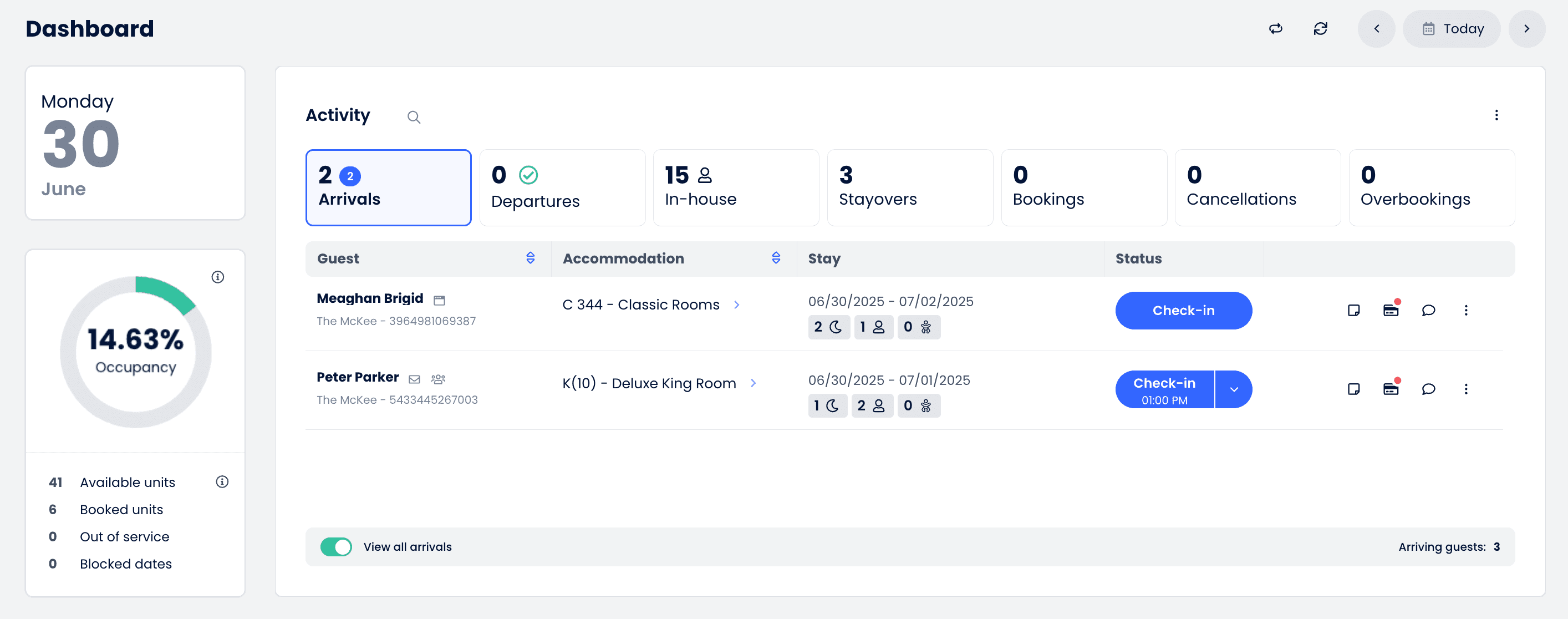
Cloudbeds is widely recognized for its clean interface and straightforward navigation, making it accessible for both new and experienced staff. Users often mention that onboarding is quick, with intuitive menus and clear workflows for reservations, housekeeping, and payments. The centralized dashboard reduces the need to switch between modules, and built-in help resources are easy to find. This focus on simplicity helps teams stay organized and reduces training time, especially in fast-paced hospitality environments.
Integrations
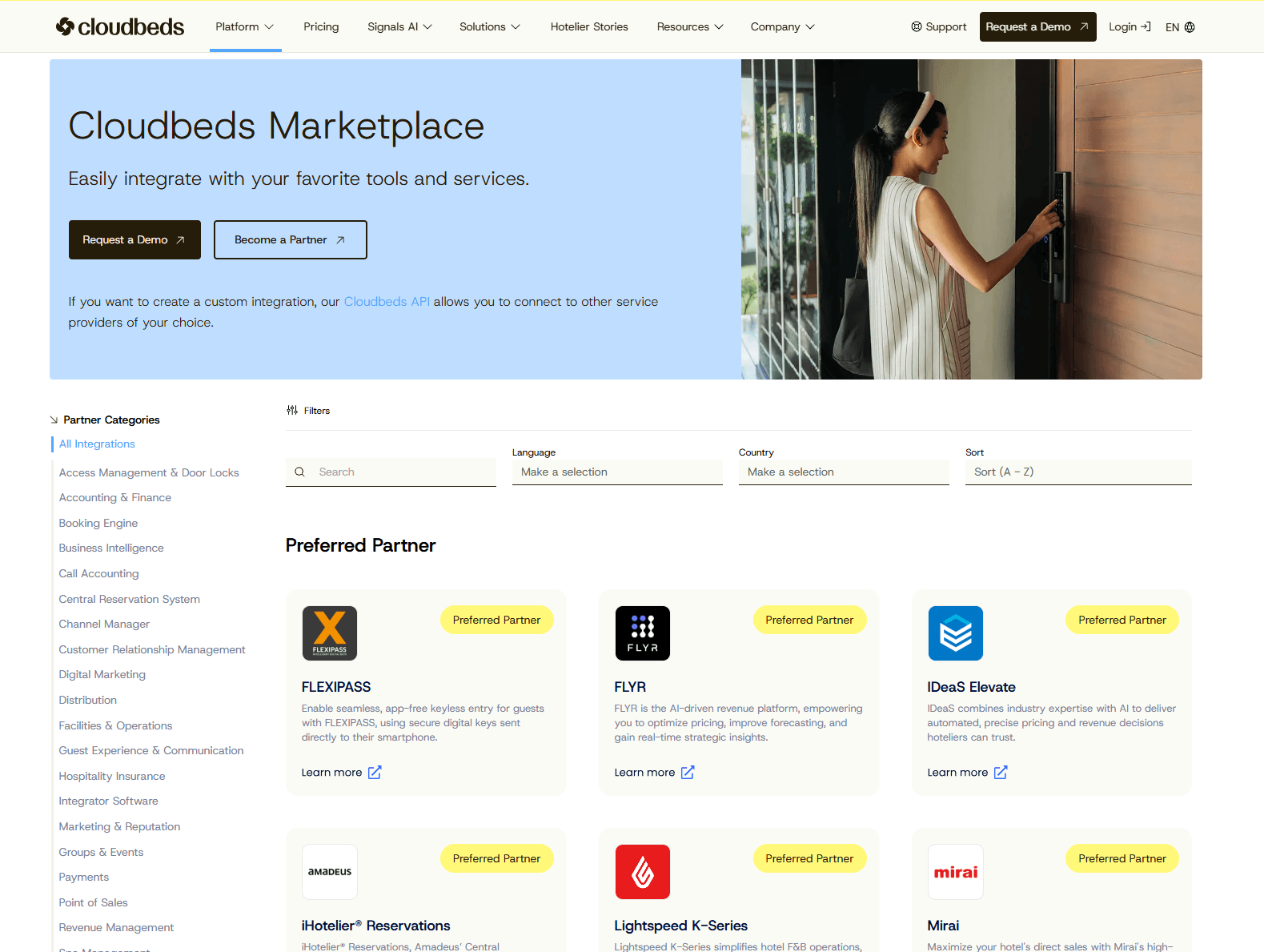
Cloudbeds integrates with Airbnb, Booking.com, Expedia, Google Hotel Search, TripAdvisor, Stripe, PayPal, Xero, QuickBooks, and Mailchimp, among others. They also offer an open API for expanded functionality.
Cloudbeds Specs
- API: Yes
- Budgeting: No
- Calendar Management: Yes
- Compliance Tracking: Yes
- Contact Management: Yes
- Customer Management: Yes
- Dashboard: Yes
- Data Export: Yes
- Data Import: Yes
- Data Visualization: Yes
- Document Management: Yes
- Expense Tracking: Yes
- External Integrations: Yes
- Forecasting: Yes
- Inventory Tracking: Yes
- Multi-Currency: Yes
- Multi-User: Yes
- Notifications: Yes
- Organization Management: Yes
- Payment Processor: Yes
- Payroll: No
- Scheduling: Yes
- Supplier Management: No
- Tax Management: Yes
- Workflow Management: Yes


