

10 Mejores Software de Gestión de Propiedades en Alquiler para 2026

10 Mejor Software para la Gestión de Propiedades en Alquiler - Lista Corta


El software de gestión de propiedades en alquiler agiliza tareas que consumen mucho tiempo como la recaudación de rentas, la comunicación con los inquilinos y el seguimiento del mantenimiento, lo que permite que tu equipo se enfoque en fortalecer las relaciones con los inquilinos. Manejar interminable papeleo y actualizaciones manuales puede ser un desafío, pero el soporte adecuado ayuda a reducir errores costosos y ahorrar tiempo valioso. En este artículo, comparo y analizo las mejores herramientas para ayudarte en tu decisión de compra.
Por qué confiar en nuestras recomendaciones de software
Nuestro equipo lleva probando y evaluando software desde 2012. Como líderes del sector hotelero, sabemos lo difícil —y lo importante— que es elegir el software adecuado.
Para esta guía, evaluamos las herramientas mediante pruebas prácticas e investigación independiente, puntuando las herramientas según nuestros criterios de selección.
Nuestras reseñas reflejan nuestro criterio editorial humano, no un discurso de ventas.
Resumen del Mejor Software para la Gestión de Propiedades en Alquiler
| Tool | Best For | Trial Info | Price | ||
|---|---|---|---|---|---|
| 1 | Mejor opción para empresas de alquiler vacacional | No | $36/mes (facturado anualmente) | Website | |
| 2 | El mejor para la gestión robusta de asociaciones comunitarias | No | $50/user/month | Website | |
| 3 | Ideal para quienes buscan una plataforma de administración de propiedades todo en uno | No | $100/mes, por unidad | Website | |
| 4 | Mejor para el seguimiento financiero sin esfuerzo | No | $20/mes hasta 10 unidades | Website | |
| 5 | Ideal para operaciones empresariales modulares | No | $6/usuario/mes (facturado anualmente) | Website | |
| 6 | Mejor opción para la gestión multicanal de propiedades | No | $19 por propiedad al mes | Website | |
| 7 | La mejor opción para la escalabilidad en la industria hotelera | No | $85/mes (mínimo 5 puestos) | Website | |
| 8 | Mejor para una captación fluida de inquilinos | Not available | $35 por propiedad por mes | Website | |
| 9 | El mejor para una excelente comunicación entre inquilinos y propietarios | Not available | $9/user/month | Website | |
| 10 | Mejor para la gestión integral de alquileres | No | $40 por mes por unidad | Website |
Reseñas del Mejor Software para la Gestión de Propiedades en Alquiler

Lodgify
Mejor opción para empresas de alquiler vacacional

Lodgify es un sistema de gestión de propiedades diseñado específicamente para alquileres vacacionales. Ofrece un conjunto completo de herramientas para gestionar reservas en línea, reservas y sitios web, lo que lo alinea estrechamente con las necesidades de los negocios de alquiler vacacional.
Por qué elegí Lodgify:
Durante el proceso de selección de herramientas adecuadas de gestión de propiedades, Lodgify destacó por su enfoque en empresas de alquiler vacacional. Su combinación única de características adaptadas al mercado de alquiler vacacional lo distingue de otros programas de gestión de propiedades más genéricos.
Características y integraciones destacadas:
Lodgify destaca por sus funciones, como la gestión directa de reservas, la gestión de canales, un sistema de reservas y un creador de sitios web especialmente diseñado para alquileres vacacionales. La plataforma se integra bien con sitios de anuncios populares como Airbnb, Booking.com y Vrbo, facilitando un mayor alcance de mercado para las empresas.
Pros and Cons
Pros:
- Funciones especializadas para alquileres vacacionales
- Se integra con plataformas populares de alquiler vacacional
- Ofrece un creador de sitios web para empresas de alquiler vacacional
Cons:
- El coste mensual es elevado para pequeñas empresas
- La interfaz de usuario puede mejorarse
- La facturación anual puede ser inconveniente para algunos usuarios

Buildium
El mejor para la gestión robusta de asociaciones comunitarias
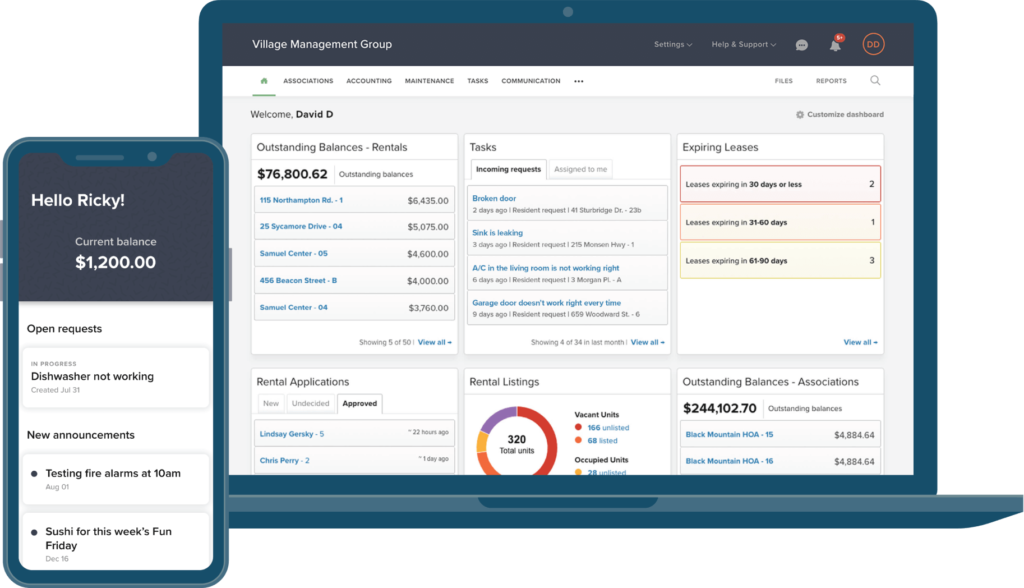
Buildium es una plataforma integral de gestión de propiedades con una fortaleza particular en la administración de asociaciones comunitarias. Su diversa gama de herramientas responde a una amplia variedad de necesidades, desde la gestión de inquilinos hasta la elaboración de informes financieros.
Por qué elegí Buildium:
Elegí Buildium por su versatilidad y solidez en la administración de asociaciones comunitarias. Es una herramienta destacada gracias a su capacidad de manejar grandes asociaciones, garantizando una gestión fluida de tareas como la recaudación de cuotas, el seguimiento de solicitudes de mantenimiento y la comunicación con los residentes. En mi juicio, Buildium es “El mejor para la gestión robusta de asociaciones comunitarias” debido a su amplia gama de funciones diseñadas específicamente para este caso de uso.
Características e integraciones destacadas:
Las funcionalidades de Buildium incluyen el seguimiento de miembros de la junta, la recaudación de cuotas directamente desde cuentas bancarias, el almacenamiento de documentos y tablones de mensajes comunitarios para facilitar la comunicación dentro de la HOA, lo que facilita el manejo de todos los aspectos de una asociación comunitaria. El software se integra con diversas plataformas de pago para una recaudación y desembolso de cuotas conveniente, y también ofrece integraciones con sistemas de solicitudes de mantenimiento para un cuidado eficiente de la propiedad.
Pros and Cons
Pros:
- Herramienta integral para la administración de asociaciones comunitarias
- Amplia gama de integraciones útiles
- Funciones adaptadas para gestionar grandes comunidades
Cons:
- Puede ser excesivo para propiedades pequeñas o alquileres de un solo inquilino
- Precio inicial más alto que algunos competidores
- Algunos usuarios pueden encontrarlo complejo debido a la amplitud de funciones
Ideal para quienes buscan una plataforma de administración de propiedades todo en uno

Yardi Breeze es una plataforma integral de gestión de propiedades que ofrece una amplia gama de funcionalidades. Esta herramienta está diseñada para optimizar todas las tareas de administración de propiedades, convirtiéndose en un recurso valioso para propietarios, administradores de propiedades y organizaciones inmobiliarias, lo cual se ajusta a la descripción de 'mejor para' como una solución todo en uno.
Por qué elegí Yardi Breeze:
Al seleccionar una herramienta para la lista, di preferencia a soluciones integrales que ofrecieran funciones extensas. Yardi Breeze destacó en este aspecto, proporcionando una plataforma completa que cubre casi todos los aspectos de la gestión de propiedades. Desde la evaluación de inquilinos hasta los informes financieros, sus capacidades me causaron una fuerte impresión. Por eso considero que Yardi Breeze es ideal para quienes buscan una plataforma completa de administración de propiedades.
¿Qué obtienes gratis?
Yardi Breeze no ofrece un nivel gratuito ni prueba sin coste. Su enfoque está en ofrecer servicios de calidad y premium a sus usuarios.
Funciones e integraciones destacadas:
Yardi Breeze cuenta con multitud de funciones que la convierten en una opción sobresaliente. Ofrece arrendamiento en línea, evaluación de inquilinos, marketing, gestión de mantenimiento e informes financieros detallados. En cuanto a las integraciones, Yardi Breeze es compatible con otros productos de Yardi, promoviendo un flujo de datos uniforme entre los módulos de gestión de propiedades. También se integra con sistemas financieros y plataformas CRM para brindar mayor comodidad a los usuarios.
Pros and Cons
Pros:
- Suite integral de funciones para la gestión de propiedades
- Compatible con otros productos de Yardi y varios sistemas financieros
- Incluye capacidades de evaluación de inquilinos y arrendamiento en línea
Cons:
- No hay prueba ni plan gratuito disponible
- El costo puede ser elevado para administradores de propiedades pequeños
- La gran variedad de funciones puede ser abrumadora para los recién llegados

Mejor para el seguimiento financiero sin esfuerzo
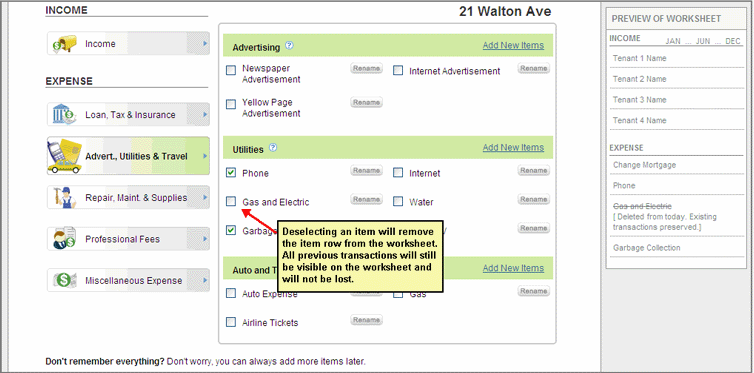
SimplifyEm hace honor a su nombre al facilitar la gestión financiera de propiedades en alquiler. Con sólidas funciones de contabilidad, destaca como una excelente herramienta para quienes desean mantener sus finanzas ordenadas y transparentes.
Por qué elegí SimplifyEm:
Elegí SimplifyEm por su enfoque en simplificar la gestión financiera en el ámbito del alquiler de propiedades. Sus sólidas funciones contables lo hacen único en esta selección. El software es el 'Mejor para el seguimiento financiero sin esfuerzo' gracias a su capacidad para centralizar tareas financieras como la recaudación de alquileres, el seguimiento de gastos y la generación de informes financieros.
Características distintivas e integraciones:
Las funciones clave de SimplifyEm incluyen cobro de alquileres en línea, seguimiento de gastos e informes financieros. La herramienta también ofrece almacenamiento de documentos, lo que facilita mantener todos los documentos relacionados con el alquiler en un solo lugar. SimplifyEm se integra con bancos y otras instituciones financieras para una gestión de dinero fluida.
Pros and Cons
Pros:
- Sólidas características de seguimiento financiero
- Se integra con bancos para transacciones sin inconvenientes
- Precios asequibles
Cons:
- Carece de algunas funciones de gestión de inquilinos
- La interfaz de usuario podría ser más moderna
- Horario de atención al cliente limitado


Odoo es un software de planificación de recursos empresariales (ERP) y gestión de relaciones con clientes (CRM) de código abierto que ofrece una variedad de aplicaciones empresariales. Su enfoque modular permite a las empresas elegir e integrar las aplicaciones que mejor se adapten a sus operaciones.
Por qué elegí Odoo:
Al seleccionar una herramienta que destaque en operaciones empresariales modulares, elegí Odoo por su naturaleza adaptable y personalizable. Los usuarios pueden escoger entre una gran cantidad de módulos, cada uno diseñado para una necesidad de negocio diferente, lo que permite flexibilidad para crear una solución a medida. Así, Odoo es una herramienta que sobresale cuando se trata de operaciones empresariales modulares.
Características destacadas e integraciones:
Las principales características de Odoo incluyen CRM, ventas, facturación, gestión de operaciones, manufactura, creación de sitios web, comercio electrónico y herramientas de marketing. Este completo conjunto lo convierte en una solución integral para diversas necesidades empresariales. En cuanto a integraciones, Odoo puede sincronizarse fácilmente a través de su API con pasarelas de pago como PayPal e Ingenico, además de transportistas como DHL, UPS y FedEx. Esto facilita el proceso de comercio electrónico desde el pago hasta la entrega.
Pros and Cons
Pros:
- Ofrece una amplia gama de aplicaciones empresariales
- Altamente personalizable y adaptable a necesidades específicas
- Integraciones fluidas con pasarelas de pago y empresas de transporte
Cons:
- El precio inicial no incluye el costo de aplicaciones adicionales
- Puede tener una curva de aprendizaje para usuarios sin experiencia tecnológica
- Algunos usuarios han reportado retrasos ocasionales en el sistema


Smoobu es un sistema de gestión de propiedades versátil que facilita la administración multicanal de inmuebles comerciales. Reúne varias plataformas en un solo panel de control, lo que lo convierte en una herramienta ideal para empresas que gestionan propiedades en múltiples canales online.
Por qué elegí Smoobu:
Al comparar varios sistemas de gestión de propiedades, determiné que Smoobu destaca en la administración de propiedades en múltiples canales. Su integración fluida con diversas plataformas de alquiler en línea lo diferencia y justifica por qué es el más adecuado para gestionar propiedades a través de varios canales.
Características sobresalientes e integraciones:
Las funciones más destacadas de Smoobu incluyen la sincronización de reservas, plantillas de comunicación y un motor de reservas. El sistema se integra con numerosas plataformas de alquiler, como Airbnb, Booking.com, Expedia y HomeAway, así como con empresas de gestión de propiedades, lo que optimiza considerablemente la administración multicanal de propiedades.
Pros and Cons
Pros:
- Se integra con una amplia gama de plataformas de alquiler
- Excelente para gestionar varios canales desde un solo panel de control
- Ofrece un módulo de comunicación unificado para facilitar la comunicación
Cons:
- El precio puede incrementarse para propiedades en múltiples plataformas
- Algunos usuarios pueden encontrar la interfaz un poco compleja al principio
- La disponibilidad del servicio al cliente puede mejorar

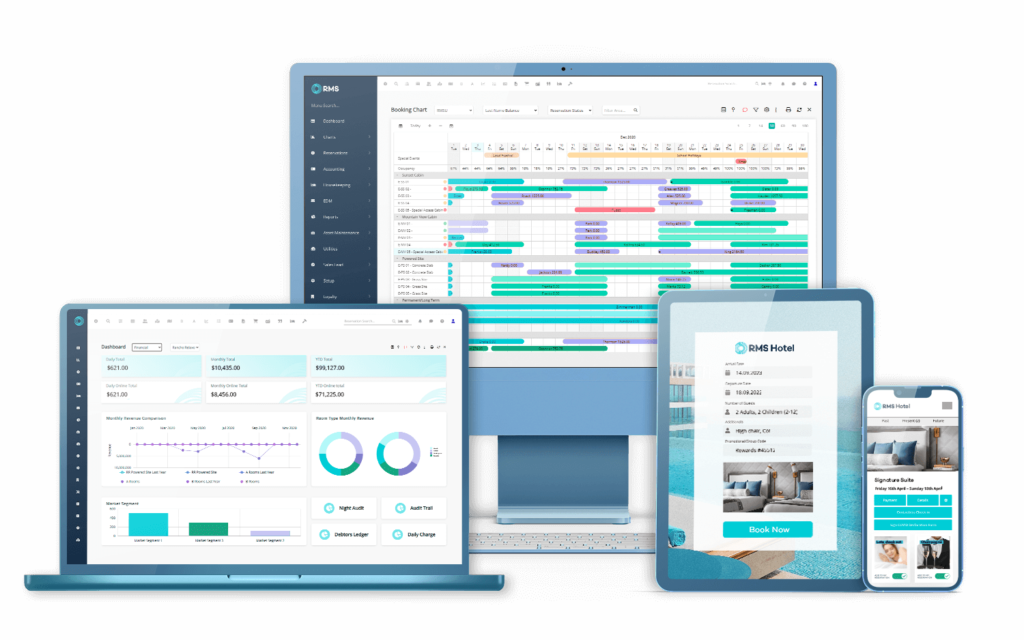
RMS Cloud es un software de gestión de propiedades basado en la nube, diseñado para asistir a la industria hotelera. Sus amplias funciones atienden a diversos tipos y tamaños de propiedades, lo que lo convierte en una excelente herramienta para la escalabilidad en el sector inmobiliario.
Por qué elegí RMS Cloud:
Durante mi proceso de selección, RMS Cloud surgió como una opción ideal gracias a sus funciones integrales y estructura flexible, adaptada a diferentes tipos de negocios de hostelería. Su capacidad para adaptarse tanto a operaciones pequeñas como a gran escala, similar a plataformas como Yardi Breeze, hizo que destacara, lo que demuestra su escalabilidad en la industria hotelera.
Características destacadas e integraciones:
Algunas de las características notables de RMS Cloud incluyen gestión de reservas en línea, precios dinámicos, limpieza y generación de informes. Estas ofrecen una solución integral para la gestión de propiedades. En cuanto a integraciones, RMS Cloud se conecta con varias plataformas de terceros, incluyendo Agentes de Viajes Online (OTAs), Sistemas Globales de Distribución (GDS) y sistemas de Punto de Venta (POS), simplificando la gestión de múltiples aspectos de los negocios de hostelería.
Pros and Cons
Pros:
- Ofrece funciones completas para la gestión de propiedades
- Se integra con una variedad de plataformas de terceros
- Escalable para diferentes tamaños de operación
Cons:
- El precio inicial podría ser alto para pequeñas empresas
- El requisito mínimo de 5 puestos podría limitar operaciones muy pequeñas
- La interfaz puede requerir un periodo de aprendizaje para nuevos usuarios

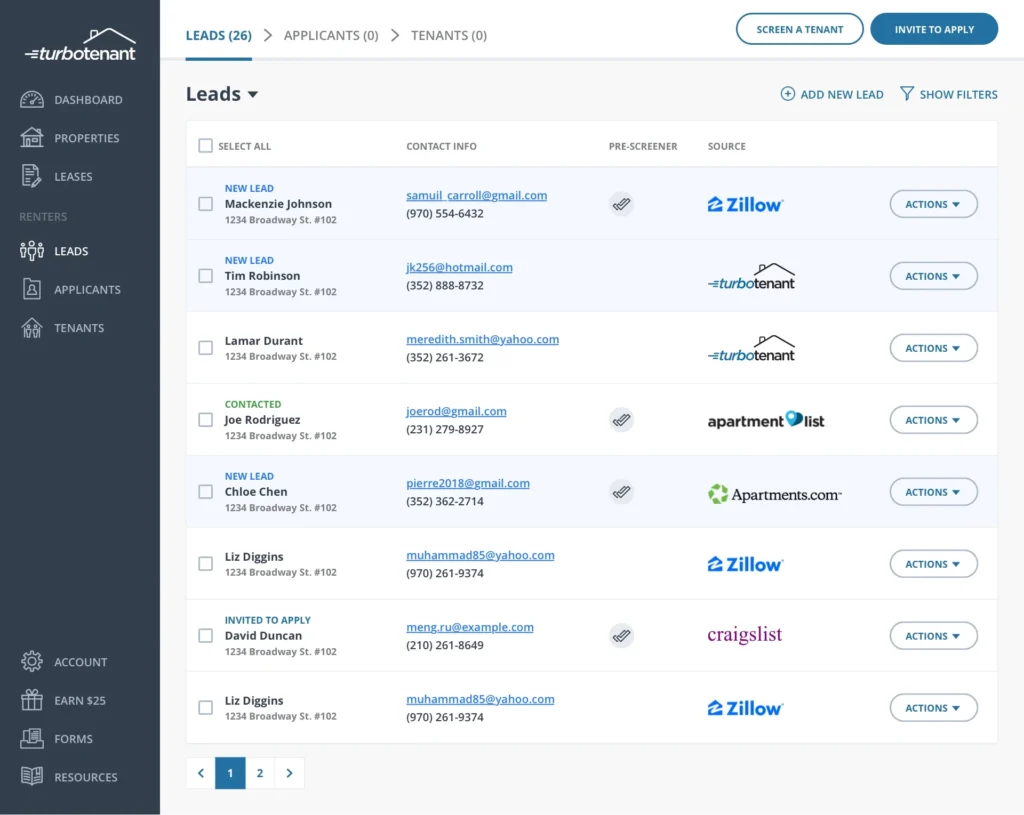
Turbo Tenant ofrece una variedad de herramientas, accesibles en dispositivos Android y a través de su API, diseñadas para hacer que el proceso de encontrar y asegurar inquilinos sea una operación fluida. Su enfoque en las capacidades de captación de inquilinos lo posiciona como una solución ideal para administradores que buscan una manera sin complicaciones de llenar vacantes.
Por qué elegí Turbo Tenant:
Elegí Turbo Tenant por sus potentes funciones de captación de inquilinos, que lo distinguen de otros software de gestión de propiedades. Su capacidad para gestionar y agilizar el proceso de adquisición de inquilinos lo convierte en una herramienta imprescindible según mi criterio. Turbo Tenant destaca como 'Mejor para una captación fluida de inquilinos' gracias a sus procesos de solicitud y evaluación de inquilinos fáciles de usar, lo que lo convierte en una opción principal para administradores que buscan minimizar el tiempo que las propiedades permanecen vacantes.
Características e integraciones destacadas:
Turbo Tenant ofrece características destacadas como solicitudes de alquiler en línea, informes de evaluación de inquilinos impulsados por TransUnion, herramientas de marketing integradas para anunciar propiedades vacantes y un sistema eficiente para rastrear solicitudes de mantenimiento. También proporciona contratos de arrendamiento específicos para cada estado, garantizando el cumplimiento legal. La plataforma se integra con los principales sitios web de anuncios de propiedades, facilitando la promoción de tus propiedades en la web.
Pros and Cons
Pros:
- Excelentes capacidades de captación de inquilinos
- Integraciones con los principales sitios de anuncios de propiedades
- Proporciona contratos de arrendamiento específicos para cada estado
Cons:
- No ofrece funciones completas de gestión de propiedades
- Opciones de personalización limitadas
- El soporte al cliente podría mejorar

El mejor para una excelente comunicación entre inquilinos y propietarios
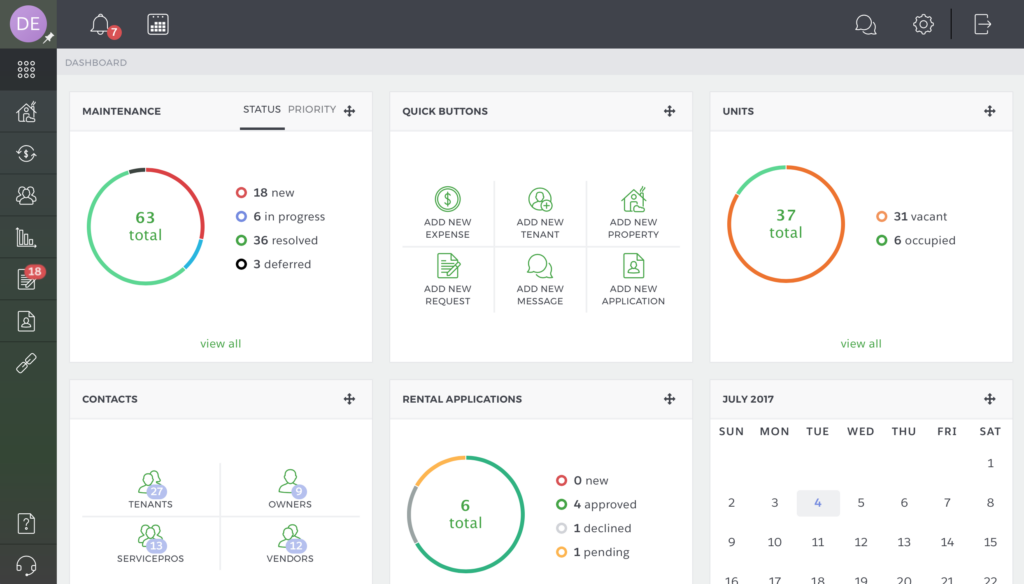
Tenant Cloud es una plataforma de gestión de propiedades basada en la nube que fomenta la comunicación entre inquilinos y propietarios. Ofrece una amplia gama de funciones, como cobro de alquileres, seguimiento de solicitudes de mantenimiento y, sobre todo, un sistema de mensajería integrado para facilitar una comunicación clara.
Por qué elegí Tenant Cloud:
Al comparar herramientas, seleccioné Tenant Cloud principalmente por su fuerte enfoque en la comunicación entre inquilinos y propietarios. Se destaca por la inclusión de un sistema de mensajería integrado que permite una comunicación en tiempo real, facilitando la resolución de problemas y el mantenimiento de una relación positiva entre propietario e inquilino. Por lo tanto, en mi opinión, Tenant Cloud es “El mejor para una excelente comunicación entre inquilinos y propietarios”.
Funciones e integraciones destacadas:
Tenant Cloud ofrece características como pagos de alquiler en línea mediante tarjeta de crédito, seguimiento de inquilinos y un sólido sistema de informes. Su función más destacada es la mensajería integrada, que permite la comunicación directa entre inquilinos y propietarios. En cuanto a integraciones, se conecta con pasarelas de pago populares como PayPal y Stripe, además de ofrecer una integración fluida con QuickBooks para la contabilidad de propiedades.
Pros and Cons
Pros:
- Sistema de mensajería integrado para mejorar la comunicación
- Integración con pasarelas de pago populares
- Precios asequibles para pequeños propietarios o administradores de propiedades
Cons:
- La versión gratuita es bastante limitada en funcionalidades
- Puede carecer de algunas funciones avanzadas que se encuentran en otras plataformas
- Algunos usuarios informan una curva de aprendizaje pronunciada en la interfaz

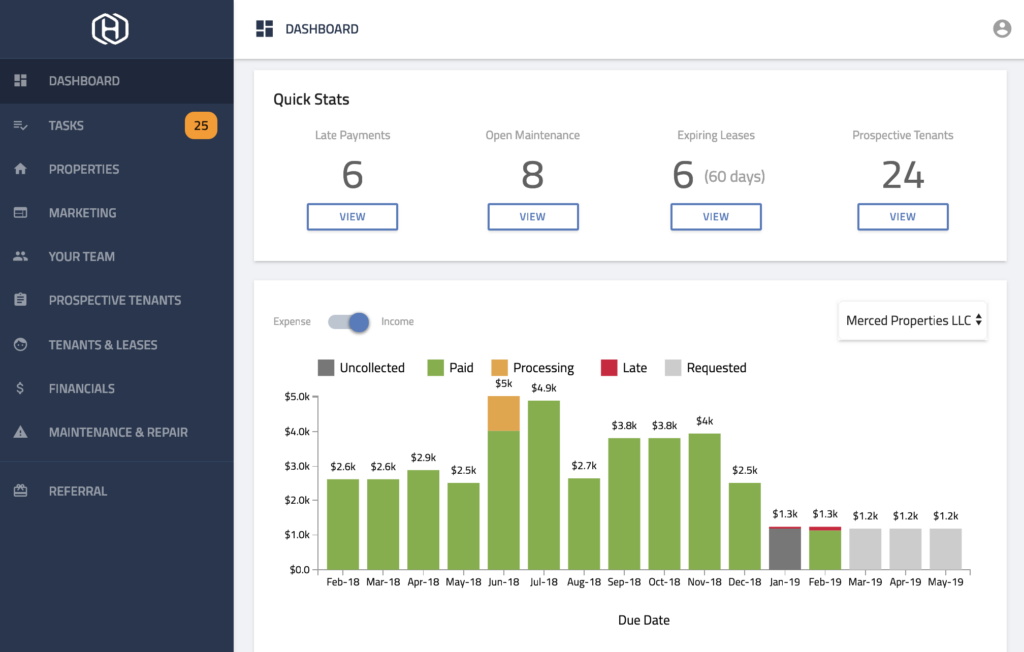
Hemlane adopta un enfoque holístico para la administración de propiedades en alquiler para diferentes tipos de inmuebles, permitiendo a propietarios, inversores inmobiliarios y administradores de propiedades controlar y automatizar cada aspecto de su negocio. Al reunir todo en una sola plataforma, responde a las necesidades de una estrategia integral de gestión de alquileres, justificando por qué es la mejor opción para ello.
Por qué elegí Hemlane:
Hemlane fue seleccionada por su conjunto de funciones equilibrado que realmente satisface las diversas necesidades de los administradores de propiedades. Va más allá de las funcionalidades básicas de administración de alquileres, brindando una plataforma todo en uno. Por eso Hemlane destaca como la mejor para la gestión integral de alquileres: no deja nada fuera, ofreciendo soluciones para todos los aspectos de tu negocio.
Funciones destacadas e integraciones:
El robusto conjunto de funciones de Hemlane incluye un portal para inquilinos fácil de usar, evaluación de inquilinos, cobro de rentas, coordinación de mantenimiento e informes financieros. Su avanzado sistema de publicidad inmobiliaria te permite anunciarte en más de 40 sitios web con un solo clic. Hemlane se integra con plataformas principales como Zillow, Apartments.com y Realtor.com, asegurando que tus anuncios de propiedades tengan la máxima visibilidad.
Pros and Cons
Pros:
- Ofrece una gama completa de funciones de gestión de propiedades
- Amplias integraciones con sitios de publicación de propiedades
- Interfaz fácil de usar
Cons:
- El precio inicial podría ser elevado para operaciones más pequeñas
- Algunas funciones pueden requerir tiempo para dominarlas debido a la amplitud de la plataforma
- Horario de atención al cliente limitado
Otras Herramientas de Software para la Gestión de Propiedades en Alquiler
A continuación se muestra una lista de software de gestión de propiedades en alquiler adicional que hemos preseleccionado pero que no llegaron al top 10. Sin duda, vale la pena echarles un vistazo.
- Property Vista
Mejor para un proceso de arrendamiento fluido
- Showdigs
La mejor opción para visitas flexibles a propiedades
- Rentpost
Bueno para plantillas personalizables de contratos de alquiler


Cómo evalúo el software de gestión de propiedades de alquiler
Evalúo estas herramientas en dos niveles: las capacidades básicas que toda plataforma debe tener—como la sincronización con OTAs, el procesamiento de pagos y la gestión multipropiedad—y los factores que realmente diferencian a una de otra.
Funcionalidad principal (Indispensables para esta lista)
Cuando selecciono herramientas para mi lista, califico cada una en una escala del 0 (no ofrece la funcionalidad) al 5 (destaca en esta área) para cada funcionalidad clave que aparece a continuación. Luego, calculo la puntuación total de la herramienta y la convierto en un porcentaje. Cada herramienta debe alcanzar una puntuación total mínima del 65% para ser considerada para su inclusión.
- Integración con Channel Manager: Compruebo si la plataforma sincroniza tarifas, disponibilidad y contenido en tiempo real con las principales OTAs como Airbnb, Booking.com y Vrbo para evitar reservas dobles.
- Gestión de Reservas y Reservaciones: Aquí es importante un calendario centralizado que gestione todo el ciclo de la reserva, desde la consulta inicial hasta la confirmación, modificación y cancelación.
- Soporte Multipropiedad: Evalúo si es posible gestionar varias unidades o ubicaciones desde una sola cuenta y con configuraciones individuales por propiedad, ya que la mayoría de los compradores supera rápidamente las herramientas para una sola unidad.
- Procesamiento de pagos y contabilidad fiduciaria: Busco herramientas integradas para la recaudación de pagos, manejo de depósitos y pagos a propietarios, especialmente para gestores que necesitan separar fondos del propietario de los ingresos operativos.
- Comunicación y mensajería con huéspedes: Las instrucciones automatizadas antes de la llegada, detalles de check-in y mensajes posestancia deben activarse según los eventos de la reserva sin necesidad de seguimiento manual para cada reservación.
- Gestión de operaciones y limpieza: Busco programación de limpiezas vinculada directamente a los horarios de check-in y check-out, de modo que los equipos de limpieza reciban tareas automáticamente tan pronto como un huésped se marche.
Una vez tengo una lista de herramientas que cumplen los criterios, considero lo que diferencia a cada plataforma.
Factores diferenciadores (Lo que distingue a los proveedores)
Así es como comparo y contrasto diferentes proveedores:
Características destacadas
Las herramientas de precios dinámicos son un gran diferenciador. Busco plataformas que ajusten automáticamente las tarifas por noche según la demanda, la estacionalidad y los eventos locales, en lugar de requerir cambios manuales de tarifa. Un creador de sitios web para reservas directas también es importante porque te permite reducir los costes de comisión de las OTAs atrayendo huéspedes repetitivos a tu propia web de marca. Para los gestores que administran unidades en nombre de propietarios, un portal para propietarios con visibilidad en tiempo real de los ingresos ahorra horas de informes manuales cada mes. Las integraciones con cerraduras inteligentes completan el panorama al permitir el acceso sin llaves para huéspedes, vinculado directamente a las ventanas de reservación.
Más allá de las características
El modelo de precios es muy importante aquí. Algunas plataformas cobran por unidad, otras cobran un porcentaje de cada reserva, y la opción adecuada depende de tu tasa de ocupación y ingreso medio por noche. También evalúo muy de cerca el ecosistema de integraciones, porque una plataforma que se conecta con QuickBooks o Xero, además de apps de limpieza y proveedores de cerraduras inteligentes, te evita soluciones manuales alternativas. La escalabilidad es otro factor que considero. Una herramienta que funcione para cinco unidades debe seguir rindiendo igual de bien con cincuenta, sin forzar una migración costosa o un cambio de plan.
Cómo Elegir un Software para la Gestión de Propiedades en Alquiler
Es fácil perderse entre largas listas de funciones y estructuras de precios complejas. Para ayudarte a mantener el enfoque durante tu proceso único de selección de software, aquí tienes una lista de verificación de factores a tener en cuenta:
| Factor | Qué Considerar |
|---|---|
| Escalabilidad | ¿El software crecerá junto a tu portafolio de propiedades? Verifica si puede manejar un aumento de propiedades sin costos significativos ni ralentizaciones del sistema. |
| Integraciones | ¿Se conecta con tus sistemas actuales como herramientas de contabilidad o CRM? La compatibilidad con otro software puede ahorrar tiempo y reducir el ingreso manual de datos. |
| Personalización | ¿Puedes adaptar el software a tus procesos específicos? Busca opciones para modificar tableros, informes y notificaciones según tu flujo de trabajo. |
| Facilidad de uso | ¿El software es intuitivo para ti y tu equipo? Una interfaz complicada puede causar errores y frustración, así que prioriza los diseños fáciles de usar. |
| Implementación y onboarding | ¿Cuánto tiempo llevará ponerlo en funcionamiento? Considera el tiempo y los recursos necesarios para la formación y migración de datos. Pregunta por el soporte durante esta fase. |
| Costo | ¿Hay tarifas ocultas? Mira más allá del precio inicial. Ten en cuenta los costes a largo plazo, incluidas actualizaciones y licencias adicionales para usuarios. |
| Medidas de seguridad | ¿Protege los datos de inquilinos y financieros? Asegúrate de que cumpla con las normas de protección de datos y ofrezca funciones como cifrado y copias de seguridad regulares. |
| Disponibilidad de soporte | ¿Recibirás ayuda cuando la necesites? Comprueba si el proveedor ofrece soporte 24/7 y varios métodos de contacto, como chat, teléfono y correo electrónico para asistencia rápida. |
¿Qué es el Software para la Gestión de Propiedades en Alquiler?
El software de gestión de propiedades en alquiler es una herramienta diseñada para ayudar a los propietarios y administradores de inmuebles a manejar tareas diarias como la recaudación de rentas, la comunicación con los inquilinos y la gestión de solicitudes de mantenimiento. Estas herramientas son comúnmente utilizadas por administradores de propiedades, arrendadores y profesionales inmobiliarios para simplificar las operaciones y mejorar la eficiencia. Las funciones de gestión de contratos de arrendamiento, seguimiento de rentas y programación de mantenimiento ayudan a organizar las tareas y a gestionar las relaciones con los inquilinos.
Características del software de gestión de propiedades en alquiler
Al seleccionar un software de gestión de propiedades en alquiler, preste atención a las siguientes características clave:
- Gestión de contratos de arrendamiento: Automatiza la creación, el seguimiento y las renovaciones de los contratos para mantener sus acuerdos bien organizados y actualizados.
- Selección de inquilinos: Ofrece herramientas para verificar la información crediticia y de antecedentes, lo que ayuda a elegir inquilinos confiables.
- Recaudación de rentas: Facilita los pagos de renta en línea, reduciendo retrasos y simplificando la contabilidad.
- Seguimiento de mantenimiento: Gestiona las solicitudes de mantenimiento y programa reparaciones, garantizando respuestas oportunas a las necesidades de los inquilinos.
- Reportes financieros: Genera informes financieros detallados que permiten llevar un control fácil de los ingresos y los gastos.
- Comunicación automatizada: Envía mensajes y recordatorios automáticos a los inquilinos, mejorando la comunicación y reduciendo el trabajo manual.
- Paneles personalizables: Le permite adaptar la interfaz a sus necesidades específicas, facilitando el acceso rápido a información importante.
- Acceso a la aplicación móvil: Ofrece acceso a la gestión de propiedades desde cualquier lugar, manteniéndole conectado dondequiera que esté.
- Seguridad de datos: Garantiza la protección de los datos de inquilinos y financieros mediante cifrado y copias de seguridad periódicas.
- Capacidad de integración: Se conecta con otras herramientas como software contable para agilizar las operaciones y reducir la carga de ingreso de datos.
Beneficios del software de gestión de propiedades en alquiler
Implementar un software de gestión de propiedades en alquiler brinda varios beneficios a su equipo y su negocio. A continuación, algunos de los que puede esperar:
- Ahorro de tiempo: Automatiza tareas rutinarias como la recaudación de rentas y la gestión de contratos, liberando su tiempo para actividades más estratégicas.
- Mejora en las relaciones con los inquilinos: Optimiza la comunicación con los inquilinos mediante mensajes y recordatorios automáticos, lo que conduce a una mayor satisfacción.
- Claridad financiera: Proporciona reportes financieros detallados que le ayudan a rastrear ingresos y gastos y tomar mejores decisiones financieras.
- Organización mejorada: Mantiene toda la información relacionada con la propiedad en un solo lugar, facilitando el acceso a contratos, datos de inquilinos y solicitudes de mantenimiento.
- Reducción de errores: Minimiza la entrada manual de datos y el riesgo de errores humanos integrándose con otros sistemas como los contables.
- Flexibilidad: Ofrece acceso a través de la aplicación móvil, permitiéndole gestionar propiedades sobre la marcha, sin estar atado a un escritorio.
- Garantía de seguridad: Protege los datos confidenciales de los inquilinos y las finanzas con funciones de seguridad avanzadas, asegurando el cumplimiento de normativas de protección de datos.
Costos y precios del software de gestión de propiedades en alquiler
Seleccionar un software de gestión de propiedades en alquiler requiere comprender los diferentes modelos y planes de precios disponibles. Los costos varían según las características, el tamaño del equipo, los complementos y más. La siguiente tabla resume los planes más comunes, sus precios promedio y las funciones típicas incluidas en las soluciones de software de gestión de propiedades en alquiler:
Tabla comparativa de planes para software de gestión de propiedades en alquiler
| Tipo de Plan | Precio Promedio | Funciones Comunes |
|---|---|---|
| Plan Gratuito | $0 | Gestión básica de contratos, comunicación con inquilinos y seguimiento de rentas. |
| Plan Personal | $10-$30/user/month | Selección de inquilinos, solicitudes de mantenimiento e informes financieros básicos. |
| Plan Empresarial | $50-$100/user/month | Reportes avanzados, comunicación automatizada y paneles personalizables. |
| Plan Corporativo | $150-$300/user/month | Capacidad de integración, acceso a aplicación móvil y mayores medidas de seguridad. |
Software de gestión de propiedades en alquiler (Preguntas frecuentes)
¿El software de gestión de propiedades en alquiler se puede integrar con herramientas de contabilidad?
Sí, muchas soluciones de software de gestión de propiedades en alquiler se integran con herramientas de contabilidad populares. Esta integración simplifica la gestión financiera al sincronizar los datos entre sistemas. Reduce la entrada manual de datos y ayuda a mantener registros financieros precisos.
¿El software de gestión de propiedades en alquiler ofrece acceso móvil?
Muchas soluciones de software de gestión de propiedades en alquiler ofrecen aplicaciones móviles. Estas aplicaciones permiten a los administradores de propiedades acceder a la información y realizar tareas mientras están en movimiento. El acceso móvil puede aumentar la flexibilidad y productividad para administradores de propiedades ocupados.
¿Qué sigue?
Si estás en proceso de buscar software de gestión de propiedades en alquiler, conéctate con un asesor de SoftwareSelect para recibir recomendaciones gratuitas.
Rellenas un formulario y tienes una breve charla en la que profundizan en tus necesidades específicas. Luego recibirás una lista corta de software para revisar. Incluso te acompañarán durante todo el proceso de compra, incluidas las negociaciones de precio.