

Hotel parking management software lets you control guest parking, valet, and billing from your property management system. If you’re searching for the best hotel parking management software, you’re likely dealing with staffing pressure, occupancy swings, or gaps between parking, billing, and the guest experience. Smooth parking—whether self-park or valet—matters just as much as a speedy check-in. The right system helps you tie parking to guest folios, gain real-time oversight, and adapt pricing to fill every space. This guide compares the top tools for 2026, so you can find solutions that fit your operations, boost revenue, and deliver consistency at every arrival and departure.
Why Trust Our Software Recommendations
6,700+
Reviews
20
Industry experts
16+
Evaluation factors
14
Years
Our team has been testing and reviewing software since 2012. As hospitality leaders ourselves, we know how difficult—and important—it is to choose the right software.
For this guide, we evaluated tools using hands-on testing and independent research, scoring tools using our selection criteria.
Our reviews reflect our human editorial judgment, not a sales pitch.
Hotel Parking Management Software Comparison Table
This comparison table summarizes pricing details for my top hotel parking management software selections:
| Tool | Best For | Trial Info | Price | ||
|---|---|---|---|---|---|
| 1 | Best for valet ops linked to hotel PMS folios | Free demo available | Pricing upon request | Website | |
| 2 | Best for folio billing via PMS integration | Free demo available | Pricing upon request | Website | |
| 3 | Best for valet key tracking and bay-level control | Free trial + free demo available | Pricing upon request | Website | |
| 4 | Best for dynamic pricing tied to occupancy shifts | Not available | Pricing upon request | Website | |
| 5 | Best for hotels running multi-property portfolios | Not available | Pricing upon request | Website | |
| 6 | Best for Oracle PMS folio-linked garage access | Not available | Pricing upon request | Website | |
| 7 | Best for unified valet and garage parking ops | Free demo available | Pricing upon request | Website | |
| 8 | Best for no-contract hotel parking revenue share | Free demo available | Pricing upon request | Website | |
| 9 | Best for valet ops with PMS folio posting | Free demo available | Pricing upon request | Website | |
| 10 | Best for PMS-linked guest plate auto-registration | Not available | Pricing upon request | Website |


Hotel Parking Management Software Reviews
Below are my detailed summaries of the best hotel parking management software that made it onto my shortlist. My reviews offer a detailed look at the features, capabilities, and integrations of each software to help you find the best one for you.
 Best for valet ops linked to hotel PMS folios
- Free demo available
- Pricing upon request
Visit WebsiteCustomer Rating:2.7/5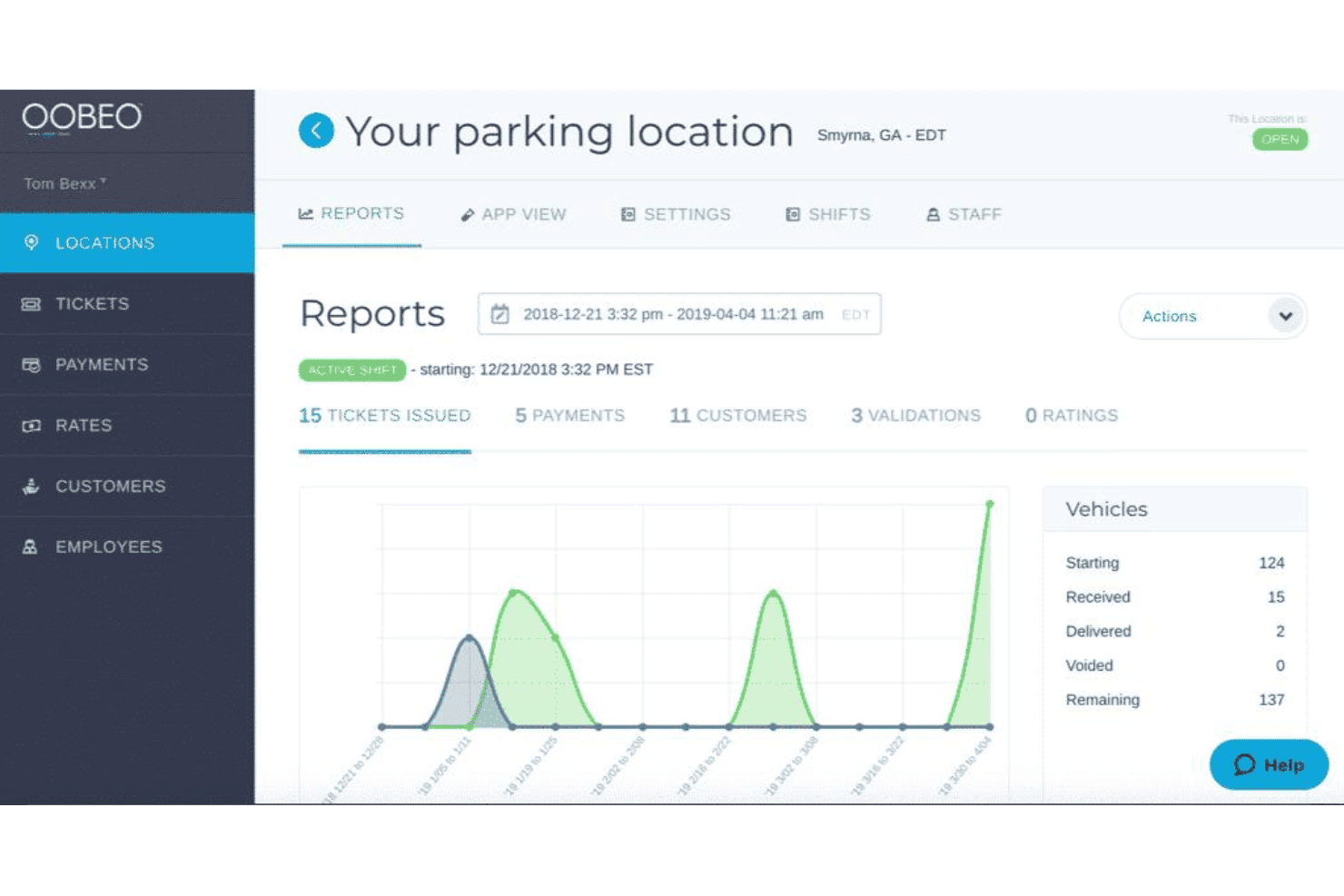
Oobeo lets users monitor parking activity and vehicle stats in real time. Oobeo is a hotel parking management platform built around digital valet ticketing, PMS-linked reservation handling, attendant mPOS payments, permit billing, and cross-location reporting.
Who Is Oobeo Best For?
Oobeo is a strong fit for valet managers at independent and mid-size hotels who need a digitized valet ticketing workflow tied directly to hotel PMS guest folios.
Why I Picked Oobeo
I've included Oobeo in my top picks because it's built specifically around how hotel valet operations actually run—where a guest's parking charge needs to land on their room folio, not get chased down separately. I love how the PMS-linked reservation list lets valet attendants pull up an arriving guest's stay on their phone and post charges directly to the folio, with automatic overstay rates triggered the moment a car exceeds its checkout window. The cash-timestamp auditing per attendant is a detail I find genuinely useful, since it ties every cash transaction to a specific person's shift.
Oobeo Key Features
- Digital valet ticketing: Guests receive an SMS-based digital ticket at drop-off, then request their vehicle and pay directly from their phone without downloading an app.
- SpotHero reservation claiming: Attendants scan and validate pre-paid SpotHero reservations from the mobile app, connecting marketplace bookings to the valet workflow.
- Attendant mPOS payments: Any iOS or Android device becomes a point-of-sale terminal, accepting NFC contactless, EMV chip, Apple Pay, Google Pay, and cash with per-attendant timestamps.
- Multi-location reporting dashboard: A remote dashboard consolidates visits, revenue, vehicle counts, shift reports, and guest ratings across all properties and attendants.
Oobeo Integrations
Oobeo integrates with more than 10 hotel PMS platforms, including Opera, Suite8, Protel, Infor, Guestline, Sihot, Mews, and Clock PMS, plus Square, Stripe Terminal, SpotHero, Tableau, and EnforcePlus. It also offers an open API for custom integrations.
Pros and Cons
Pros:
- Automated overstay rates for revenue capture
- Hardware-light setup using mobile devices
- PMS-linked valet ticketing to guest folios
Cons:
- No real-time space availability mapping
- App stability issues disrupt valet workflow
Learn more about Oobeo: Best for folio billing via PMS integration
- Free demo available
- Pricing upon request
Visit WebsiteCustomer Rating:4.9/5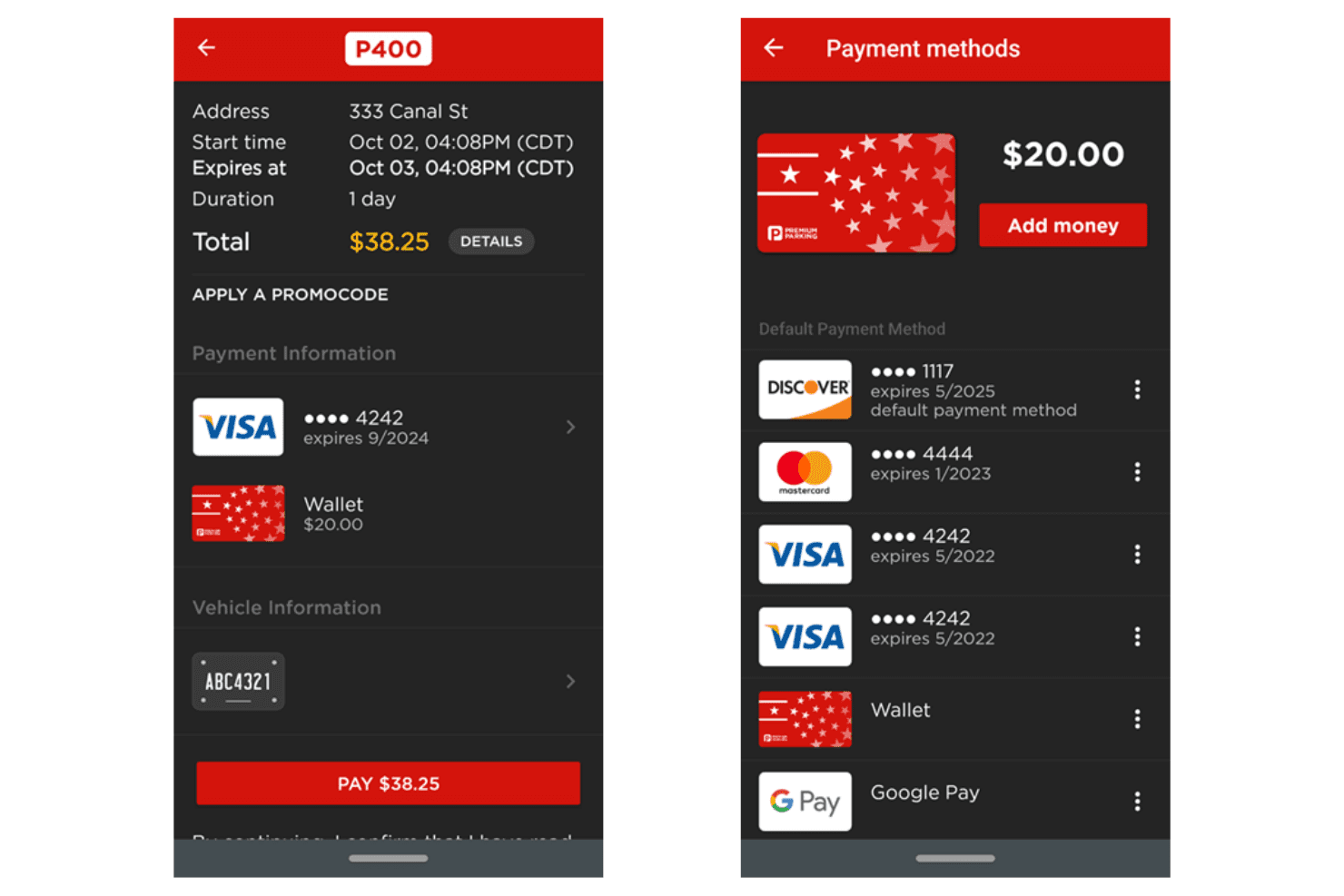
GlidePARCS supports multiple payment methods for convenient parking checkout. GLIDEPARCS is a cloud-based, gateless hotel parking management platform that combines license plate recognition, multi-channel payment processing, enforcement, validation, dynamic pricing, and PMS folio billing in one system.
Who Is GLIDEPARCS Best For?
GLIDEPARCS is a strong fit for hotel revenue and parking managers who want to charge parking directly to guest folios without adding gate hardware.
Why I Picked GLIDEPARCS
I've included GLIDEPARCS in my top picks because FolioCharge® solves the most common hotel parking billing headache: getting parking charges onto the guest folio without front desk involvement. A guest scans a QR code, enters their room number and checkout date, and the charge posts directly to the PMS in real time, with named support for Opera, Agilysys, and Infor. Pair that with gateless LPR enforcement and a 98% claimed compliance rate, and you've got a system that captures revenue guests would otherwise walk away without paying.
GLIDEPARCS Key Features
- Star Spaces® premium space management: Designate high-demand spaces near entrances as premium spots, set higher rates, and push instant payment confirmations to patrolling compliance agents.
- Multi-tier enforcement suite: Fixed, mobile, and handheld GLIDE Eye LPR® cameras work alongside a compliance app, boot immobilization, and adjudication workflows to close revenue gaps in gateless environments.
- GLIDEPARCS® Validation Suite: Issue, track, and audit parking validations across kiosk, embedded, and digital channels for guests, staff, or F&B visitors.
- Enterprise Analytics and KPI dashboards: Monitor occupancy trends, revenue, and parker behavior across multiple properties from a single client-facing and operator-facing dashboard view.
GLIDEPARCS Integrations
GLIDEPARCS lists integrations with Oracle Opera, Fidelio, Galaxy, Infor, Agilysys, Comtrol, SpotHero, ParkWhiz, Parkmobile, and Freshdesk. It supports API connections and claims compatibility with 15+ tools for custom dashboard and workflow integrations.
Pros and Cons
Pros:
- Multi-channel guest payment options are extensive
- Gateless enforcement claims 98% compliance rate
- FolioCharge posts charges directly to guest folios
Cons:
- Private event reservations are not supported
- No native valet ticketing software included
Learn more about GLIDEPARCS: Best for valet key tracking and bay-level control
- Free trial + free demo available
- Pricing upon request
Visit WebsiteCustomer Rating:5/5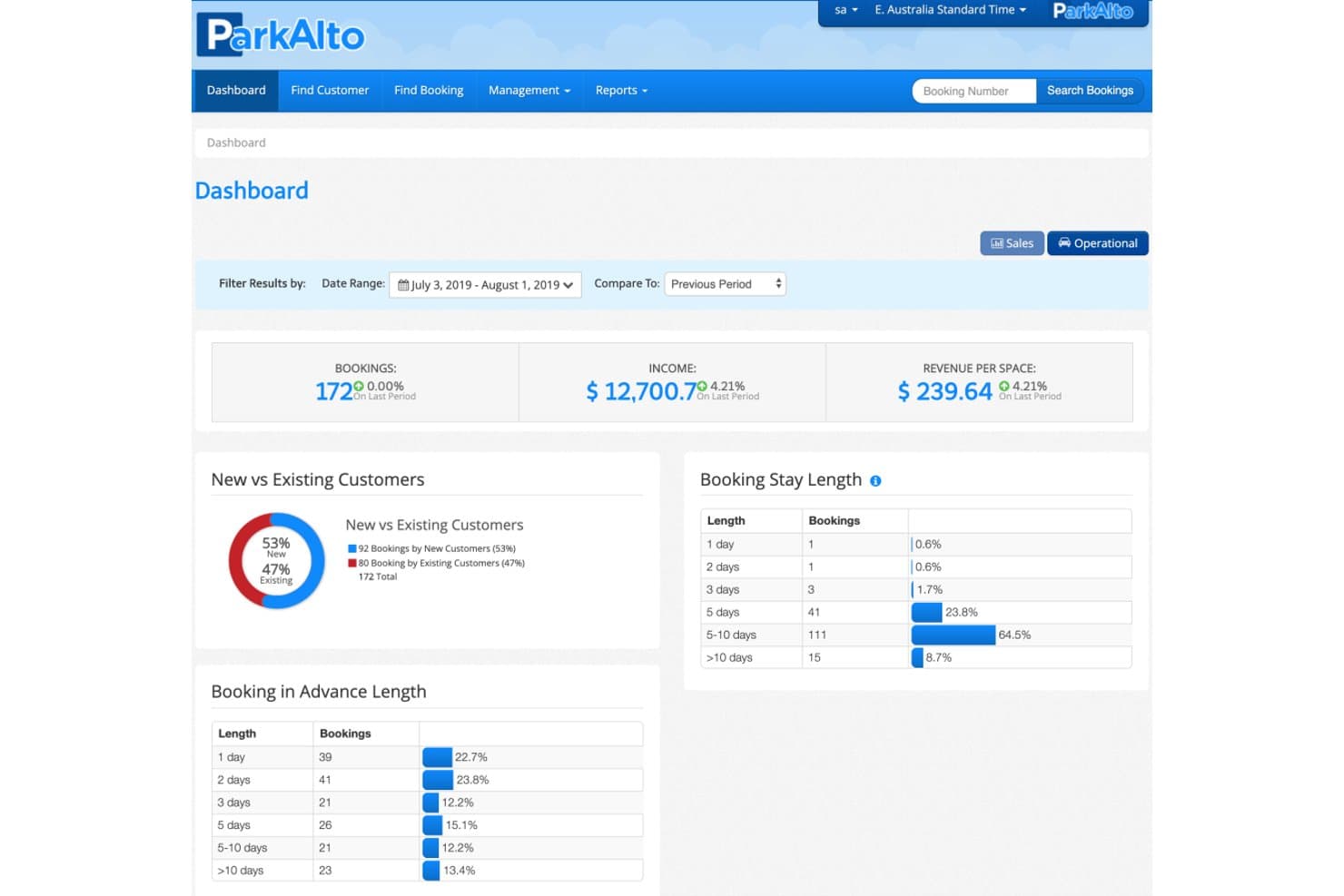
ParkAlto tracks bookings, income, and revenue per parking space. ParkAlto is a parking management platform built for valet and meet-and-greet operators, offering bay-level space tracking, barcode-based valet ticketing, dynamic pricing, reservation management, and a mobile forecourt app for attendants.
Who Is ParkAlto Best For?
ParkAlto is a strong fit for valet and meet-and-greet operators who need tight control over vehicle-bay-key workflows without relying on license plate recognition.
Why I Picked ParkAlto
I picked ParkAlto as one of the best because its bay-level vehicle tracking and key management genuinely set it apart for valet operations. Every vehicle drop-off links a physical bay, a key scan, and a booking record in one step, so your attendants always know exactly where a car is and who has the keys. The mobile forecourt app handles retrieval requests via text or IVR, removing the back-and-forth phone calls that slow down high-volume valet shifts.
ParkAlto Key Features
- Dynamic pricing engine: Set rules based on lead time, occupancy, day of week, and school holidays, with a floor price that holds across every channel.
- Self-service customer portal: Guests create, edit, and cancel their own reservations, retrieve PDF receipts, and manage their vehicle profile without desk involvement.
- Damage and condition photo capture: Attendants photograph vehicle condition at drop-off and attach it to the booking record for dispute resolution.
- Multi-channel inventory sync: Third-party reservation channels pull from the same live bay inventory as your direct booking site, with per-channel margin and commission reporting.
ParkAlto Integrations
ParkAlto documents integrations with Stripe, Authorize.net, and Xero. It also connects with barrier-gate hardware, third-party reservation channels, and live flight data, but no hotel PMS integration is documented.
Pros and Cons
Pros:
- Damage photos attached to each booking
- Self-service guest portal minimizes front desk calls
- Real-time bay-level vehicle and key tracking
Cons:
- Product and support focused on airport operations
- No PMS integration for hotel folio charges
Learn more about ParkAlto: Best for dynamic pricing tied to occupancy shifts
- Not available
- Pricing upon request
Visit WebsiteCustomer Rating:5/5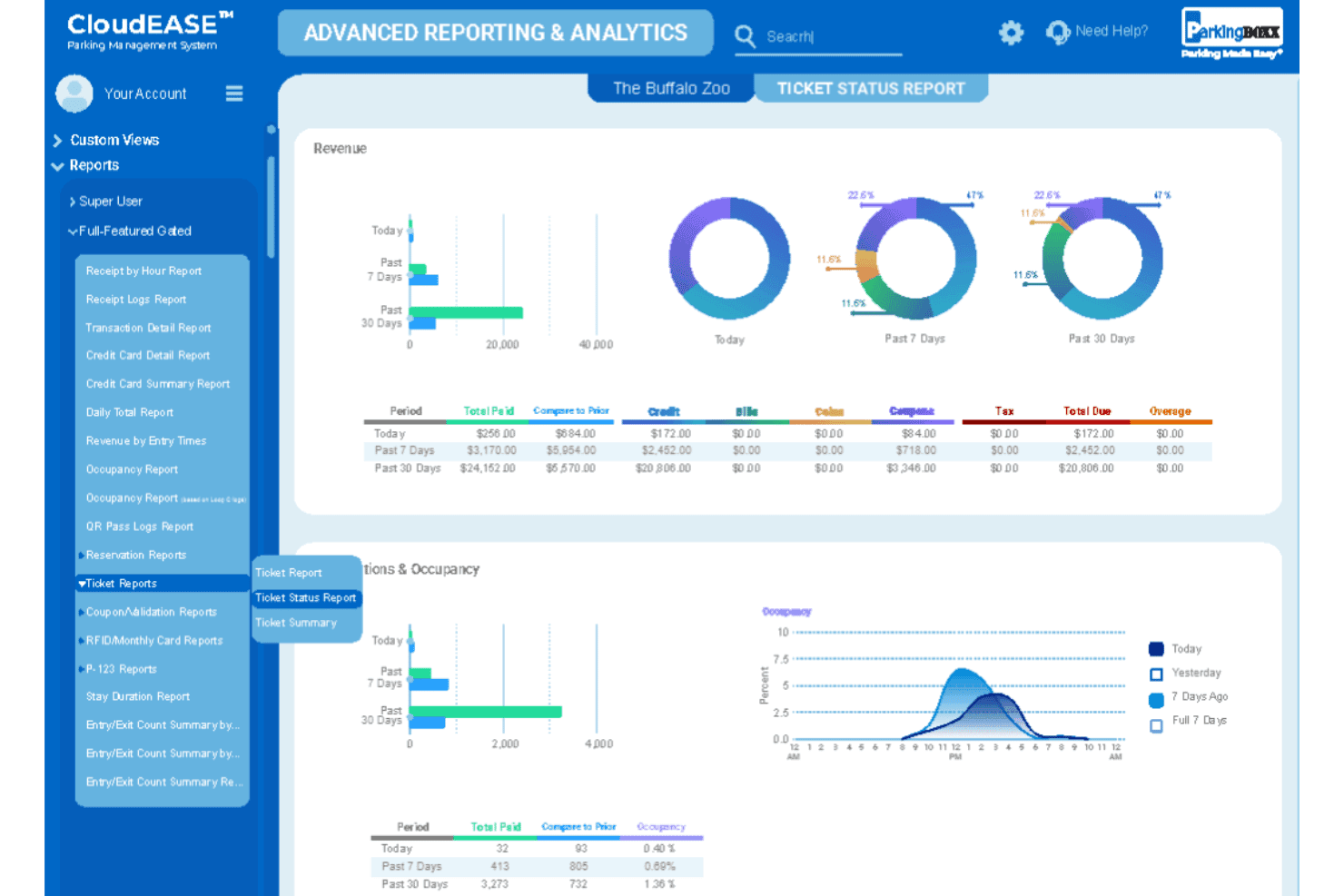
CloudEASE provides advanced revenue and occupancy analytics for parking managers. CloudEASE by Parking Boxx is a cloud-based hotel parking management platform that handles gated access, dynamic rate management, LPR-based vehicle tracking, guest validation, valet operations, and multi-property occupancy reporting.
Who Is CloudEASE by Parking Boxx Best For?
CloudEASE is a strong fit for full-service hotels and multi-property operators that need a single vendor to supply, install, and manage both parking hardware and software.
Why I Picked CloudEASE by Parking Boxx
I picked CloudEASE as one of the best because its rate engine adjusts parking prices in real time based on occupancy, time of day, and scheduled events, pushing updates instantly to all terminals and online channels. When a sold-out conference fills your garage to 90%, rates can shift automatically without any manual intervention. I also like how hotel-specific revenue reporting separates complimentary validation, room-billed parking, and transient revenue into distinct cost centers.
CloudEASE by Parking Boxx Key Features
- LPR-based gate access: AI-powered license plate recognition reads plates in under a second at entry and exit, matching against reservations, monthly permits, and validated guests to enable ticket-free access.
- Bulk validation code management: Front desk and event coordinators can issue batch validation codes by ticket number, plate, or rate category, with every validation timestamped and logged to a staff user ID.
- Offline failover mode: Terminals store encrypted transactions locally and sync automatically on reconnection, while gates run on cached rules and LPR retains authorized plates for up to 90 days.
- CloudEASE mobile operator app: Push alerts notify managers of equipment faults, revenue anomalies, and lot-full events, with remote rate changes and gate control accessible directly from the app.
CloudEASE by Parking Boxx Integrations
Integrations include ParkWhiz, SpotHero, Arrive, Ticketmaster, Parking Panda, QuickBooks, Xero, VingCard, DormaKaba, Saflok, SALTO, and HID. A RESTful API supports custom integrations.
Pros and Cons
Pros:
- Supports consolidated multi-property revenue tracking
- Dynamic pricing adjusts automatically for occupancy spikes
- Room-key gate access works with major brands
Cons:
- Valet workflow lacks guest-facing notifications
- No direct PMS software integration
Learn more about CloudEASE by Parking Boxx:
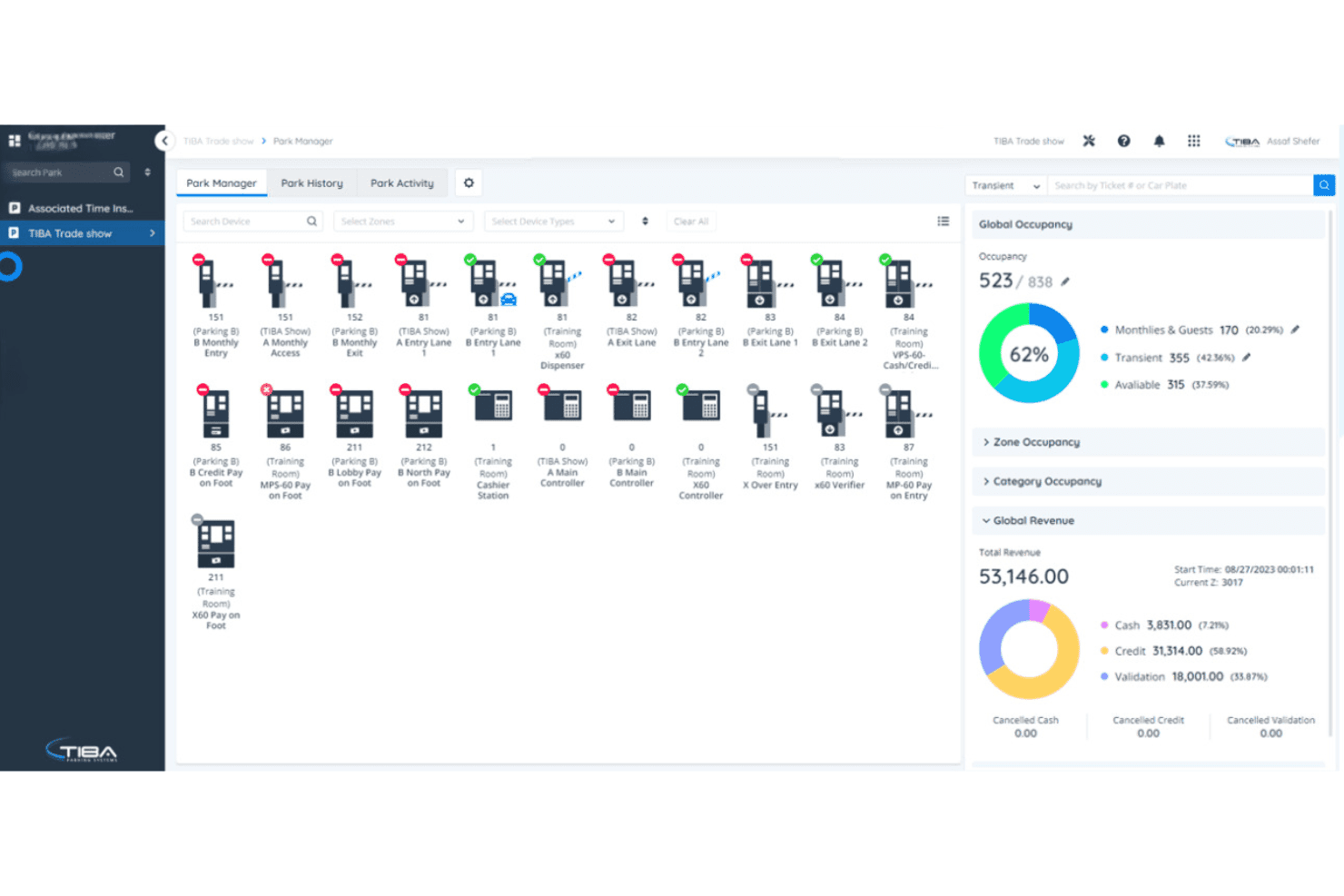
TIBA lets users monitor parking occupancy and revenue in real time. TIBA is a cloud-based hotel parking management platform built around its SPARK system, covering LPR-based access control, folio billing, dynamic pricing, validations, multi-property monitoring, and valet integration.
Who Is TIBA Best For?
TIBA works well for hotel groups that need to manage parking across multiple properties from a single dashboard.
Why I Picked TIBA
I picked TIBA as one of the best because its Command Center gives hotel groups something genuinely useful: real-time visibility and control across every property in a portfolio from a single dashboard. I really like that you can adjust rates, vend gates, and monitor vehicle sessions across locations without toggling between separate systems. The combination of LPR-based folio billing and a PMS-agnostic deployment option means even franchised properties can go live without waiting on brand IT approval.
TIBA Key Features
- Dynamic pricing controls: Adjust parking rates in real time based on demand, events, or seasonal periods, with an optional manual approval step before changes go live.
- Scan-to-Pay: Guests scan a QR code to pay before exiting, with no app download or stored account required.
- Centralized validation management: Configure validation rules, discount types, and daily limits from a web portal, with a mobile app that turns any smartphone into a validation unit.
- 150+ built-in reports: Access pre-built reports covering occupancy, revenue, and validation activity across your entire property or portfolio.
TIBA Integrations
TIBA integrates with several unnamed PMS systems, SMS Valet, Weezmo, EV charging, and AI-powered business intelligence. Its API-first architecture supports custom integrations, while specific PMS vendor names aren’t published.
Pros and Cons
Pros:
- LPR-based vehicle entry and audit trail
- Folio billing posts parking to guest stay
- Real-time control for multiple hotel properties
Cons:
- Valet ticket-matching workflow not documented
- No hotel guest parking reservation flow
Learn more about TIBA: Best for Oracle PMS folio-linked garage access
- Not available
- Pricing upon request
Visit WebsiteCustomer Rating:4.8/5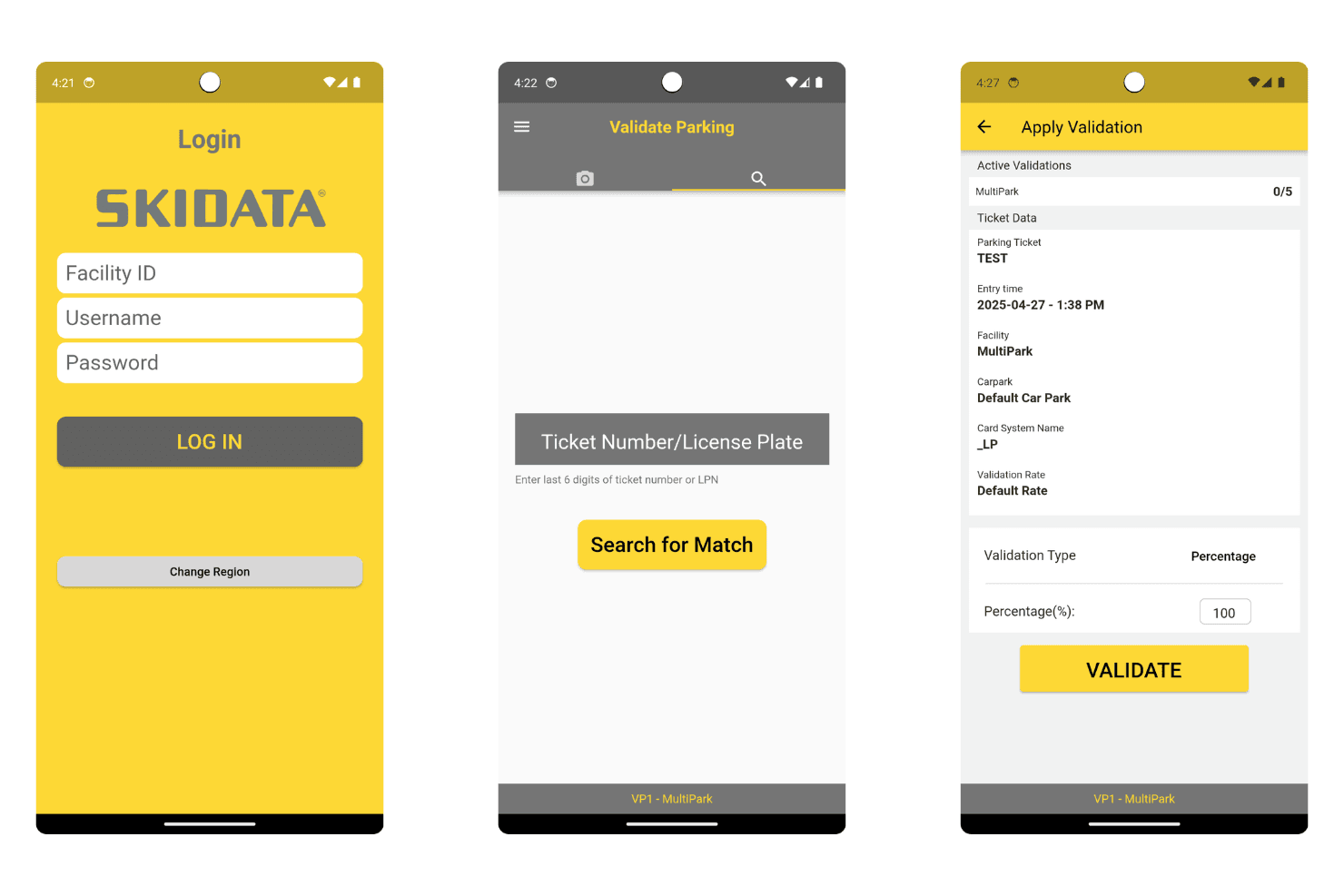
SKIDATA lets users validate parking tickets via mobile app. SKIDATA is a hardware-and-software parking access and revenue control platform that combines LPR-based entry, gated and gateless access, payment processing, dynamic tariff management, EV charging, and PMS integration for hotel parking operations.
Who Is SKIDATA Best For?
SKIDATA is a strong fit for full-service and upscale hotels with structured parking garages that need hardware-grade access control tied directly to their Oracle PMS.
Why I Picked SKIDATA
I've included SKIDATA in my top picks because its Oracle OPERA 5.6 integration does something most parking platforms don't: it links room-key entitlement directly to garage access, so a guest's parking rights activate at check-in and revoke at checkout without any front-desk intervention. When a stay is extended or cut short, the system updates access permissions automatically and posts charges to the folio in real time. I also like that LPR handles entry and exit recognition, so guests arriving by car never need to stop for a ticket or a key card swipe.
SKIDATA Key Features
- Customer Webshop: A white-label, branded booking portal where guests can self-book parking, purchase subscriptions, or pay per use, with access granted by plate, RFID, or QR code.
- Dynamic tariff engine: Configure hotel, multi-day, event, and discount ticket types with early-bird pricing, off-peak promotions, and partner validation programs.
- EV charging integration: Manages EV charging sessions alongside parking, with time, energy, or block tariffs and load management, billed as a single transaction at exit.
- Digital Validation module: Lets restaurant, spa, or banquet staff issue and manage parking validations via browser, mobile, or kiosk, redeemable by plate, QR, barcode, or RFID.
SKIDATA Integrations
SKIDATA offers a validated integration with Oracle Hospitality OPERA 5.6 via FIAS for folio posting and room-key access. It also connects with Adyen, Windcave, TeleCash, Active Directory, and SKIDATA Connect, with open APIs for custom integrations.
Pros and Cons
Pros:
- EV charging and parking billed together
- License plate recognition enables ticketless garage entry
- Oracle OPERA PMS integration with folio posting
Cons:
- Reporting usability issues cited by users
- No dedicated valet ticketing or dispatch
Learn more about SKIDATA: Best for unified valet and garage parking ops
- Free demo available
- Pricing upon request
Visit WebsiteCustomer Rating:4.8/5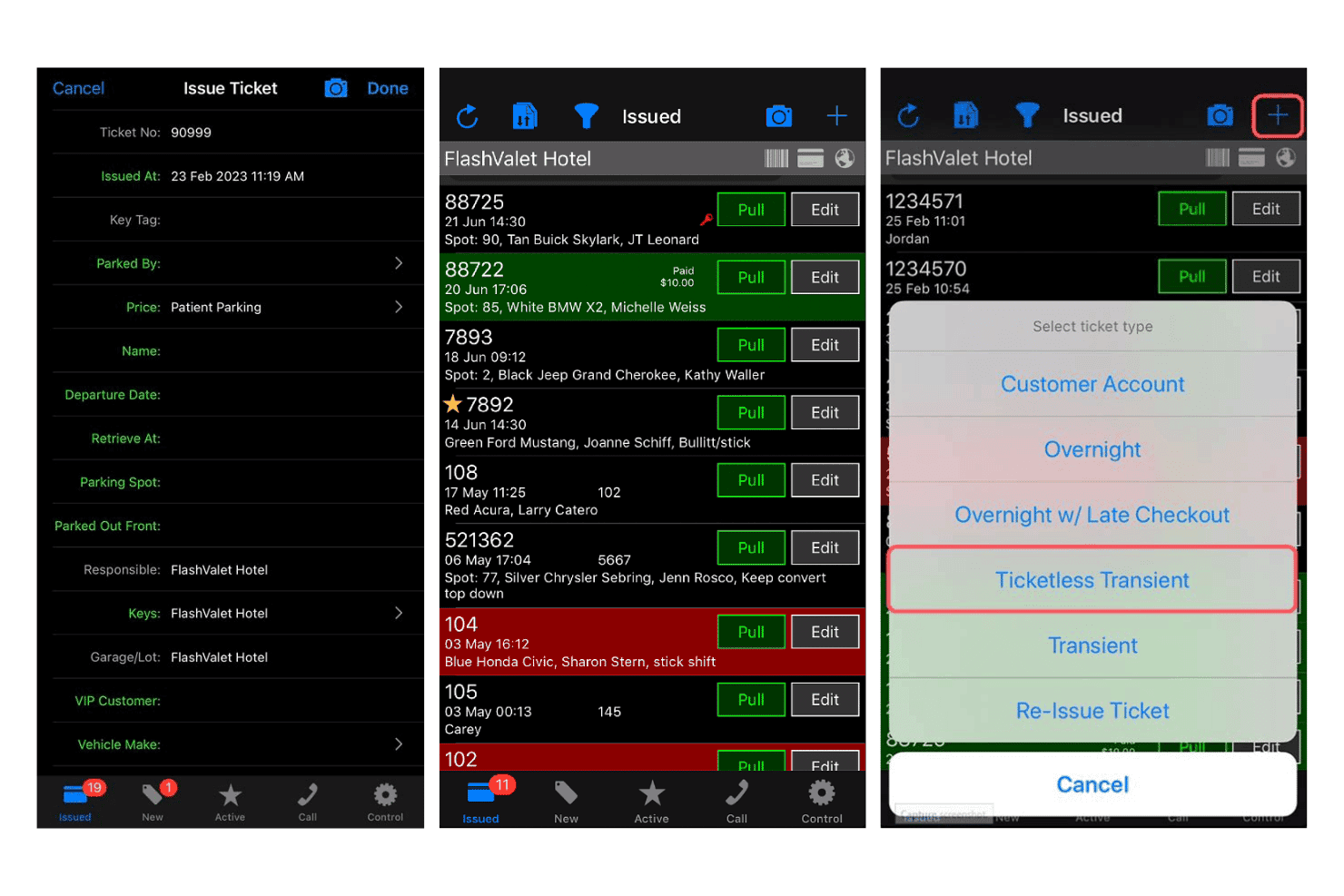
FlashParking coordinates valet tickets, parking spots, and vehicle retrieval. FlashParking is a hotel parking management platform that combines PARCS, valet ticketing, LPR camera hardware, and a multi-channel demand network into a single system for managing both garage and valet operations.
Who Is FlashParking Best For?
FlashParking is a strong fit for hotel operations directors and valet managers overseeing properties with both structured garage parking and active valet programs.
Why I Picked FlashParking
FlashParking earns its spot on my shortlist because it's the only platform I've found that runs valet ticketing and PARCS on a single, unified system, with ticket conversion between the two so a guest can move from self-park to valet without creating a duplicate record. I particularly like Flash Valet's runner assignment and SMS-based retrieval workflow, where a guest texts their ticket number, the system notifies the runner, and a payment link goes straight to the guest's phone. The Vision AI LPR cameras also do real work here, tracking vehicles by make, color, and jurisdiction when a plate isn't readable.
FlashParking Key Features
- Demand network distribution: FlashParking pushes your parking inventory to 100+ booking channels, including Google Maps, Waze, Apple Maps, and ParkMobile, without requiring a separate app download from guests.
- Vision AI LPR camera: A 48MP dual-sensor camera with edge AI processing reads plates and identifies vehicle make, color, and jurisdiction when a plate isn't readable.
- Offline mode: The system maintains access control, payment processing, and data capture during internet outages, then auto-syncs when connectivity is restored.
- Post-transaction damage documentation: Valet staff can photograph pre-existing vehicle damage at drop-off using a smartphone, creating a digital record tied to the ticket.
FlashParking Integrations
Native integrations include Opera, Galaxy, StayNTouch, FOSSE, FS-PMS, HotelKey, and Infor. FlashParking also connects with Google Maps, Waze, and ParkMobile through its Demand Network, with an open API for custom integrations.
Pros and Cons
Pros:
- Guests request car and pay by SMS
- LPR camera scans make/color when plate unreadable
- Unified platform for valet and garage ops
Cons:
- Valet mobile app reliability issues reported
- Manual folio posting creates reconciliation work
Learn more about FlashParking: Best for no-contract hotel parking revenue share
- Free demo available
- Pricing upon request
Visit WebsiteCustomer Rating:4.3/5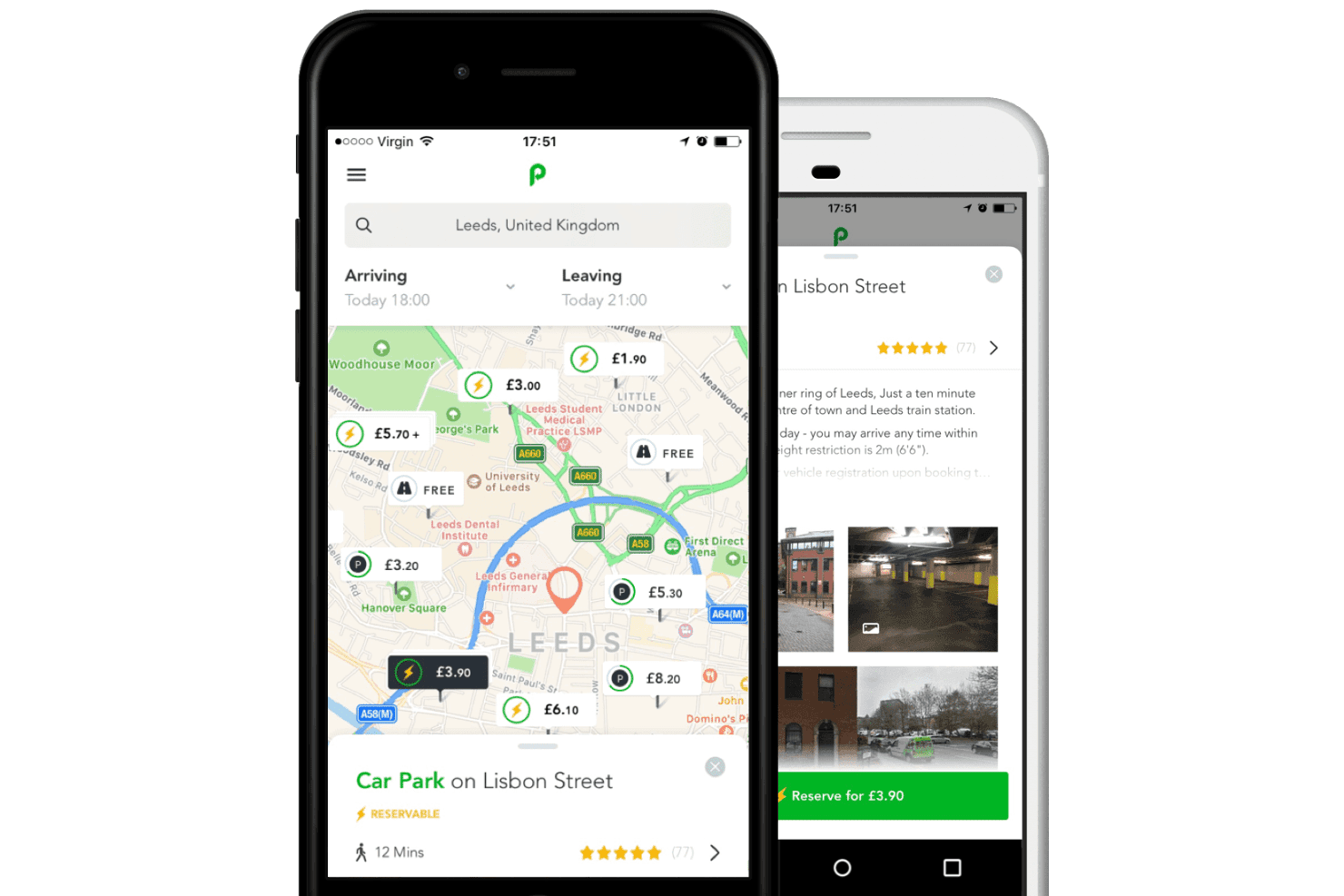
JustPark lets users find and reserve nearby parking spots by price. JustPark is a parking marketplace and management platform that lets hotels list, price, and monetize parking spaces through driver-facing reservations, contactless on-demand payments, dynamic pricing, and a business intelligence dashboard.
Who Is JustPark Best For?
JustPark is a strong fit for hotel revenue and operations managers who want to monetize underused parking inventory without upfront costs or long-term contracts.
Why I Picked JustPark
I picked JustPark as one of the best because it's the only option on my shortlist that generates parking revenue through a live driver marketplace before a single contract is signed. Hotels like Crowne Plaza and Marriott have reportedly earned over £100,000 a year by releasing unsold spaces through JustPark's reservations platform, with no setup costs and no lock-in. I also like that the Insights dashboard includes competitor pricing alerts and smart overselling based on historical redemption rates, giving revenue managers real levers to pull beyond just setting a flat rate.
JustPark Key Features
- On-Demand contactless payments: Drivers pay via app, web, or phone using Pay on Arrival, Pay on Exit, or Pay Later, with no hardware infrastructure required beyond signage.
- Reach guest messaging: Send pre-arrival parking instructions, welcome messages, and on-site promotions via SMS, email, push, and in-app channels with time- and location-based triggers.
- EventPass and SeasonPass: Pre-sell parking for specific events or extended periods with per-event inventory allocation, bundle pricing, and validation by ANPR, QR code, or manual check.
- Luna admin console: Monitor transactions, track revenue in real time, and automate reporting across your Reservations and On-Demand activity from a single back-end dashboard.
JustPark Integrations
JustPark lists 21 UK and 38 US integration entries across access control, business intelligence, enforcement, ticketing, and payments. Oobeo integrations include Oracle Opera, Mews, Guestline, and Clock PMS, with API connectivity and possible folio posting.
Pros and Cons
Pros:
- Guest messaging via SMS, email, and app
- Dynamic pricing and competitor alerts built in
- Revenue share with no upfront commitment
Cons:
- No native real-time occupancy sensor support
- PMS integration only through separate Oobeo brand
Learn more about JustPark: Best for valet ops with PMS folio posting
- Free demo available
- Pricing upon request
Visit WebsiteCustomer Rating:5/5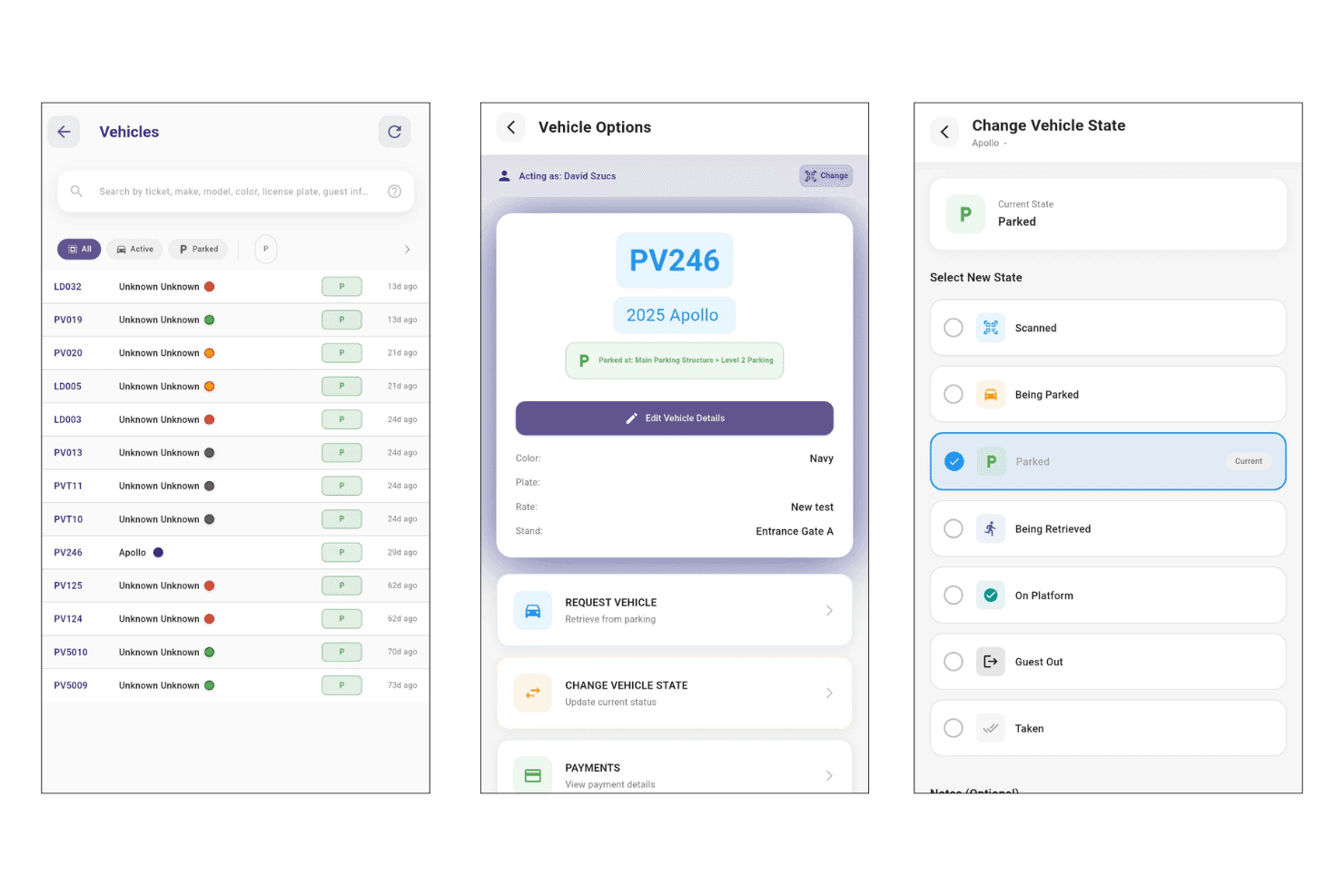
PUR Valet lets staff track and update vehicle parking states in real time. PUR Valet is a cloud-based valet parking management platform built for hospitality, combining digital ticketing, vehicle tracking, contactless payments, and PMS folio posting.
Who Is PUR Valet Best For?
PUR Valet is a strong fit for hotel operations teams running attended valet programs who need automatic parking charges posted directly to guest folios via their PMS.
Why I Picked PUR Valet
PUR Valet earns its spot on my shortlist because of how cleanly it handles PMS folio posting for valet charges. I love that when a guest requests vehicle retrieval via SMS, the parking fee posts automatically to their room folio in real time across platforms like Oracle OPERA Cloud and Mews, with no manual entry at the front desk. The photo-based check-in also captures timestamped vehicle images and AI-detected damage on arrival, which protects properties from liability disputes.
PUR Valet Key Features
- AI-powered damage detection: Automatically identifies and flags vehicle damage from check-in photos, with timestamps and location data attached to each record.
- Two-way SMS communication: Lets guests and valet staff exchange messages directly through dedicated branded SMS short codes for real-time retrieval updates.
- Intelligent retrieval dispatch: Prioritizes and assigns vehicle retrieval tasks to staff automatically, with wait-time tracking built into the operational dashboard.
- AI predictive analytics: Forecasts peak demand, staffing needs, and revenue trends using historical operational data, surfaced through customizable dashboards.
PUR Valet Integrations
PUR Valet offers documented integrations with six PMS platforms: Oracle OPERA Cloud, Agilysys Visual One, Mews, Maestro PMS, Protel, and MICROS. It also connects with Toast, Square, Stripe, SpotHero, Reservations Lab, AirportParkingReservations.com, and a custom REST API.
Pros and Cons
Pros:
- Fast BYOD deployment with no new hardware
- AI photo check-in with damage detection
- Real-time automatic folio posting to PMS
Cons:
- Reservation engine lacks advance hotel bookings
- No bay-level occupancy tracking for garages
Learn more about PUR Valet: Best for PMS-linked guest plate auto-registration
- Not available
- Pricing upon request
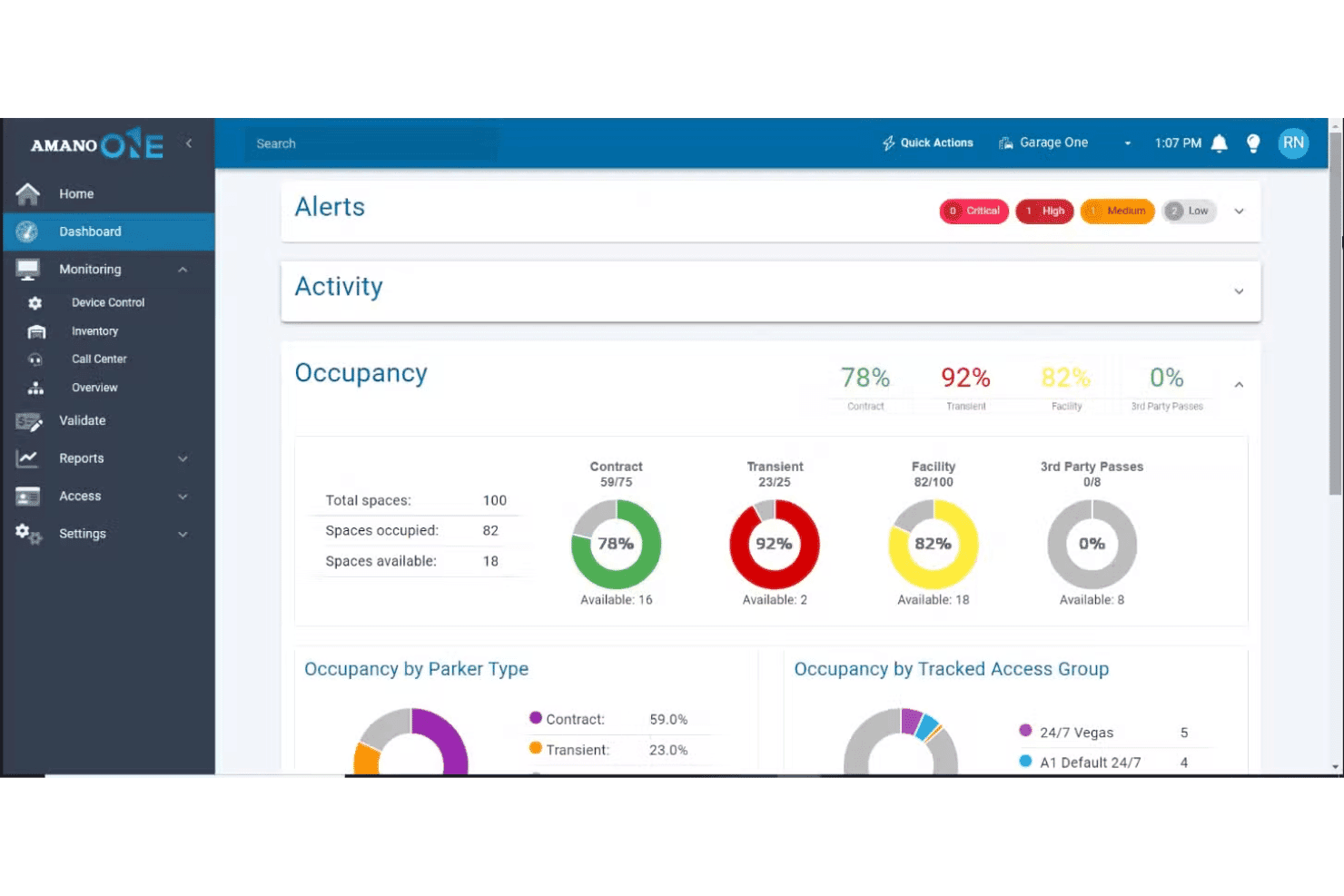
Amano ONE provides real-time parking occupancy and alert monitoring. Amano ONE is a cloud-based parking access and revenue control platform that combines real-time occupancy dashboards, multi-credential access, LPR integration, valet management via CVPS, and hotel PMS connectivity for guest plate registration.
Who Is Amano ONE Best For?
Amano ONE is a strong fit for hotel operations teams that want guest plates registered automatically at check-in through a direct PMS connection, eliminating manual validation steps for front desk staff.
Why I Picked Amano ONE
Amano ONE earns its spot on my shortlist because of Auto-Enroll, a feature that pulls guest plate data directly from the hotel PMS at check-in and registers it in the parking system automatically. That means a guest drives in and out without stopping for a ticket, a validation code, or any front desk interaction. I also like that the CVPS valet module records every step from arrival to departure, including photo-based damage inspection, which is rare to find paired this tightly with a self-park platform.
Amano ONE Key Features
- Real-time occupancy dashboard: View live occupancy, revenue, and lane activity across single or multi-site portfolios from any browser or mobile device.
- Multi-credential access control: Grant entry via prox cards, QR/barcode tickets, mobile credentials, or license plates within a single access control configuration.
- Built-in call center: Connect patrons in-lane directly to remote assistance operators without requiring third-party call center software.
- LPR-based plate alerts: Trigger notifications when a specified license plate is detected at entry or exit points.
Amano ONE Integrations
Amano ONE integrations include SpotHero, Parking Base, ParkChirp, Smarking, ParkAssist, Nortech, Parker Technology, and Umojo, plus hotel PMS and LPR connectivity. Its Cloud API supports custom reservation and coupon aggregator connections.
Pros and Cons
Pros:
- Real-time dashboards for occupancy and revenue
- Mature valet system supports ticketless valet workflows
- Registers guest plates from PMS at check-in
Cons:
- Must purchase and install proprietary hardware
- No native guest reservation engine
Learn more about Amano ONE:
Other Hotel Parking Management Software
Here are some additional hotel parking management software options that didn’t make it onto my shortlist, but are still worth checking out:
- 11O-ValetBest for valet folio posting to hotel PMS
- 12SummonBest for hotel valet with folio-linked billing
- 13TowneBest for hotel parking backed by managed valet ops
- 14AirGarageBest for outsourced lot ops on revenue share
- 15Parklio Best for contactless guest parking without front desk
- 16ParkifyBest for app-free QR and LPR guest check-in
- 17KodaCarsBest for near-airport hotel parking monetization
- 18HUB Parking TechnologyBest for LPR-based ticketless hotel guest access
- 19ValeKitBest for hardware-free hotel valet ticketing
- 20MetropolisBest for zero-CapEx, AI-vision hotel parking
How I Evaluate Hotel Parking Management Software
I split my evaluation into baseline criteria every tool must meet—vehicle tracking, payment processing—and differentiators like PMS depth and dynamic pricing that separate the best from the rest.
Core Functionality (Table Stakes For This List)
When I'm selecting tools for my list, I rank each one on a scale from 0 (does not offer the functionality) to 5 (excels in this area) for each core functionality listed below. I then calculate the tool's total score into a percentage, using 60% as a benchmark to help assess its overall fit for the list.
- Vehicle & space tracking: I check whether the tool shows real-time occupancy across lots and levels, not just a log of entries and exits.
- Payment processing: Each tool needs to handle multiple payment methods and tie charges to a guest's stay duration or rate structure.
- Reservation management: I look for the ability to let guests or front desk staff book and confirm spaces against live availability before arrival.
- Valet ticketing workflow: Digital ticket creation should track a vehicle's status from drop-off through retrieval, with staff dispatch tied to the ticket.
- PMS integration: I evaluate whether parking charges post directly to guest folios in platforms like Oracle OPERA or Mews without manual re-entry.
- Reporting & occupancy analytics: Dashboards should cover occupancy, revenue, and turnover so you can spot trends across shifts or properties.
Once I have a list of tools that meet the criteria, I consider what sets each platform apart.
Differentiating Factors (What Sets Vendors Apart)
Here's how I compare and contrast different vendors:
Standout Features
License plate recognition is a big one. I evaluate whether a tool's LPR cameras can auto-register guest vehicles at entry and link them to a reservation, removing manual ticket handling during peak check-in rushes. Dynamic pricing matters just as much. I look for rate engines that adjust fees based on real-time occupancy or local events, since a sold-out weekend and a quiet Tuesday shouldn't charge the same rate. I also check for OTA marketplace connections to platforms like SpotHero, which let you sell unused spaces to non-guests and capture revenue that would otherwise sit idle.
Beyond Features
I check whether a vendor's pricing model—per-space, per-transaction, or flat SaaS fee—fits the property size, since a 50-space boutique lot and a 500-space convention hotel hit break-even very differently. Staff turnover in hospitality is real, so I evaluate onboarding speed and whether valet and front desk teams can learn the system in a single shift. Around-the-clock support matters too, because a gate failure at 2 a.m. can't wait until morning. I also look at PCI-DSS compliance and how each vendor handles license plate data privacy, especially for properties operating across multiple regions with different regulations.
How to Choose a Hotel Parking Management Software
How can you tell which hotel parking management software is the right fit for your parking setup, guest flow, and on-property needs:
| If your priority is... | Look for... |
|---|---|
| If your priority is...Fast and accurate folio posting | Look for...PMS integration with direct parking charge mapping |
| If your priority is...Maximizing revenue from parking inventory | Look for...Dynamic pricing tied to occupancy or local events |
| If your priority is...Easy onboarding for new staff | Look for...Role-based dashboards and one-shift training guides |
| If your priority is...Reducing front desk manual work | Look for...Automated vehicle registration and digital ticketing |
| If your priority is...24/7 operations across multiple lots | Look for...Centralized real-time occupancy and incident monitoring |
How to Vet Your Shortlist
- Test folio integration: Ask for a 15-minute demo showing real-time parking charges posting to guest folios in your PMS.
- Demand dynamic pricing proof: Request a rate rules document or live walkthrough showing how rates update during events and high-occupancy periods.
- Check onboarding resources: Get at least one staff-facing training doc or video designed to be used in a single-shift rollout.
- Trial automation task: Run a two-day trial assigning staff to perform digital ticketing or LPR guest check-in without manual intervention.
- Choose your operational focus: Decide if you need PMS-centric parking (tight folio sync, automation) or broader garage/valet management (multi-lot control, flexible workflows)—because it's rare to find both at full depth in one system.
What Is Hotel Parking Management Software?
Hotel parking management software is a digital system that lets hotels oversee guest parking, valet operations, and payment processing from a central platform. These tools connect parking access and billing to the property management system, so charges post to guest folios automatically. By unifying vehicle tracking, reservations, and reporting, hotel teams can adapt parking services, maintain oversight, and respond to occupancy changes without manual tracking or paperwork.
Features of Hotel Parking Management Software
When selecting hotel parking management software, keep an eye out for the following key features:
- Vehicle and space tracking: Provides real-time visibility into which spaces are occupied, vacant, or reserved, allowing staff to optimize lot usage and stay aware of current parking availability.
- Reservation management: Lets guests or front desk staff book parking spots in advance, ties reservations to room bookings, and prevents overbooking or guest frustration on arrival.
- Payment processing: Accepts multiple payment methods (credit cards, mobile payments, etc.) and automatically links charges to guest folios or accounts, reducing manual work and errors.
- Valet ticketing workflow: Digitally issues, tracks, and manages tickets for valet-parked vehicles, ensuring vehicles are accurately logged, retrieved quickly, and staff are dispatched to the right tasks.
- PMS integration: Syncs directly with property management systems to push parking charges to guest accounts, eliminating manual reconciliation and maintaining a unified view of each guest’s stay.
- Reporting and occupancy analytics: Offers dashboards and automated reports that track occupancy rates, revenue generation, turnover, and usage trends to support better forecasting and business decisions.
- Access control integration: Connects with access gates, RFID readers, or LPR cameras to manage which vehicles can enter or exit, enhancing security and automating entry for authorized guests.
- Dynamic pricing tools: Supports flexible pricing models that adjust rates based on occupancy, events, or time-of-day, helping maximize revenue from available parking inventory.
- Staff role management: Allows administrators to set roles, permissions, and workflows for valet, front desk, and security staff, so each team member accesses only the features relevant to their job.
- Incident logging and monitoring: Records incidents (damage, lost tickets, unauthorized vehicles, etc.) and attaches them to the appropriate reservation or vehicle record, supporting transparency and faster resolution.
Common Hotel Parking Management Software AI Features
Beyond the standard hotel parking management software features listed above, many of these solutions are incorporating AI with features like:
- AI-powered demand forecasting: Uses historical occupancy data, local event calendars, and weather patterns to predict parking demand and recommend optimal staffing and pricing adjustments.
- Automated anomaly detection: Continuously monitors parking lot activity and transaction logs to flag unusual patterns, such as unauthorized vehicle access or payment discrepancies, alerting staff in real time.
- Smart license plate recognition analytics: Goes beyond basic LPR by using AI to match vehicle data with guest profiles, predict repeat visits, and suggest personalized parking offers or upgrades.
- Dynamic rate optimization: Adjusts parking rates automatically based on real-time occupancy, competitor pricing, and guest booking trends to maximize revenue without manual intervention.
- AI-driven guest communication: Automates responses to common parking-related guest inquiries via chatbots or messaging platforms, providing instant, accurate information and freeing up front desk staff.
- Predictive maintenance scheduling: Analyzes equipment usage and sensor data to forecast when gates, ticket machines, or cameras are likely to need maintenance, reducing downtime and service disruptions.
Benefits of Hotel Parking Management Software
Implementing hotel parking management software provides several benefits for your team and your business. Here are a few you can look forward to:
- Real-time occupancy tracking: Get instant visibility into your parking lots or garages thanks to live space tracking and vehicle monitoring features.
- Automated folio charge posting: Automatically sync parking charges to guest folios through PMS integration, eliminating manual reconciliation and billing errors.
- Faster guest check-in and retrieval: Use digital valet ticketing and license plate recognition to speed up vehicle registration and retrieval, reducing wait times and pressure on front desk staff.
- Flexible reservation management: Let guests and staff reserve parking spots in advance with live availability, reducing overbooking and day-of disruptions.
- Advanced reporting and analytics: Access dashboards and detailed reports on occupancy, turnover, and revenue, helping you spot trends and optimize your parking operations.
- Enhanced security and compliance: Integrate access control systems and log incidents while maintaining PCI-DSS compliance and data privacy across regions.
- Dynamic pricing capabilities: Adjust parking rates automatically based on demand, occupancy, or local events, increasing revenue from your parking inventory.
Costs and Pricing of Hotel Parking Management Software
Selecting hotel parking management software requires an understanding of the various pricing models and plans available. Costs vary based on features, team size, add-ons, and more. The table below summarizes common plans, their average prices, and typical features included in hotel parking management software solutions:
Plan Comparison Table for Hotel Parking Management Software
| Plan Type | Average Price | Common Features |
|---|---|---|
| Plan TypeFree Plan | Average Price$0 | Common FeaturesBasic vehicle and space tracking, limited payment processing, standard reporting, and basic reservation management. |
| Plan TypePersonal Plan | Average Price$40-$100/month | Common FeaturesEnhanced reservation management, integrated payment options, valet ticketing workflow, entry-level reporting, and email support. |
| Plan TypeBusiness Plan | Average Price$150-$300/month | Common FeaturesFull PMS integration, real-time occupancy tracking, dynamic pricing tools, multi-user access, and advanced analytics dashboards. |
| Plan TypeEnterprise Plan | Average Price$500-$2000/month | Common FeaturesCustom integrations, 24/7 support, centralized multi-property management, PCI-DSS compliance controls, and advanced incident logging. |
Hotel Parking Management Software FAQs
Here are some answers to common questions about hotel parking management software:
How do you integrate hotel parking management software with a property management system (PMS)?
Integration usually happens through an API or a direct connector offered by the parking software or PMS vendor. Most modern solutions let you sync guest folios, automate parking charge posting, and pull real-time occupancy data into the PMS dashboard. Always ask for a demo using your actual PMS and review the integration documentation to spot any manual steps before committing.
What are the main issues hotels face when rolling out parking management software?
Training staff quickly and ensuring that the PMS integration works as expected are top issues. Properties also run into problems with unreliable Wi-Fi in garages, payment hardware setup, and compliance with data privacy rules for license plate recognition. Running a trial during a busy shift can help you catch issues before full rollout.
Can guests reserve parking in advance through these systems?
Yes, most hotel parking management software now includes reservation management. You or your guests can book spaces before arrival, usually through an online portal tied to room or event bookings. Make sure the system enforces real-time availability to prevent overbooking and guest frustration at check-in.
How does dynamic pricing for hotel parking work?
Dynamic pricing tools let you adjust rates automatically based on occupancy, demand spikes, or local events. You set pricing rules, and the system updates the guest-facing rate in real time. This is especially useful for maximizing revenue during conferences, concerts, or sell-out nights.
What data privacy concerns come with license plate recognition features?
License plate recognition (LPR) involves collecting vehicle data that may qualify as personal information. In multi-region operations, you’ll need to confirm how the vendor stores, encrypts, and deletes this data, and whether you can configure retention policies to comply with local regulations like GDPR or CCPA. Always check the vendor’s documentation on data privacy controls.