

RoomRaccoon-beoordeling: voordelen, nadelen, functies en prijsgids
RoomRaccoon onderscheidt zich door zijn intuïtieve ontwerp en automatisering, maar ik heb gemerkt dat het echte voordeel ligt in de manier waarop het zich naadloos aanpast aan de dagelijkse behoeften van zelfstandige hotels.

We review tools independently, and commissions help fund our testing. See our transparency policy, our methodology, or suggest a tool.
RoomRaccoon is a hotel management software built for independent hotels, B&Bs, and boutique properties that need a property management system, channel manager, and booking engine in one platform. I'd consider it a strong fit if you find something like Cloudbeds more than your property actually needs—RoomRaccoon covers reservations, front desk automation, and direct booking tools with less configuration overhead, making it a more practical starting point for smaller operations that don't have a dedicated IT team to manage the setup.
RoomRaccoon Evaluation Summary
4.4/5
- From $207/month (billed annually)
- 14-day free trial + free demo available
Waarom u onze softwareaanbevelingen kunt vertrouwen
6,700+
Reviews
20
Industry experts
16+
Evaluation factors
14
Years
Ons team test en beoordeelt software sinds 2012. Als leiders in de horeca weten we zelf hoe moeilijk — en belangrijk — het is om de juiste software te kiezen.
Voor deze gids hebben we tools geëvalueerd met behulp van praktijktests en onafhankelijk onderzoek, waarbij we tools beoordeelden aan de hand van onze selectiecriteria.
Onze reviews weerspiegelen ons menselijke redactionele oordeel, geen verkooppraatje.
RoomRaccoon Overview
If you’re judging hotel management software on ease of use, RoomRaccoon’s clean interface and guided onboarding make it a top pick for small to mid-sized hotels. I think its automated invoicing, integrated channel manager, and guest communication tools outperform most options at its price point. While its integrations list isn’t the longest, and advanced reporting could be deeper, support is responsive, and setup is quick.
I’d suggest RoomRaccoon for independent hotels or boutique properties looking for a modern, all-in-one system with a low learning curve.
Pros
- Responsive customer support praised by independent hoteliers.
- Built-in channel manager reduces overbookings and manual updates.
- Automated invoicing and payment collection save staff time.
Cons
- Some users report occasional delays with system updates.
- Limited offline functionality during internet outages.
- Reporting features lack advanced customization options.
Is RoomRaccoon Right For Your Needs?
Who Would be a Good Fit for RoomRaccoon?
RoomRaccoon is a strong choice for independent hotels, boutique properties, and small chains that want to automate daily operations and centralize reservations. Its built-in channel manager, automated billing, and guest messaging tools make it ideal for teams with limited IT resources or those seeking to reduce manual work. I think it’s especially useful for properties that value responsive support and want a modern, cloud-based platform without complex setup.
- Revenue ManagersDynamic pricing and integrated reporting support revenue optimization for smaller portfolios.
- Front Desk TeamsUnified dashboard and task automation keep front desk staff organized and efficient.
- Vacation RentalsChannel management and payment automation help manage multiple listings with fewer errors.
- Bed and BreakfastsAutomated invoicing and integrated booking engine reduce manual admin for owner-operators.
- Small Hotel ChainsCentralized management and multi-property features simplify operations across several locations.
- Boutique HotelsRoomRaccoon’s automation and guest communication tools help deliver personalized service with a small team.
Who Would be a Bad Fit for RoomRaccoon?
RoomRaccoon may not suit large hotel groups, resorts with complex amenities, or properties needing deep customization. Its reporting and integrations are more limited than some enterprise systems, and it’s not built for environments with heavy offline requirements or highly specialized workflows. If you need advanced analytics, extensive integrations, or on-premise deployment, you’ll likely find RoomRaccoon restrictive.
- Remote LocationsDependence on internet connectivity makes it unreliable for properties with frequent outages.
- IT DepartmentsRoomRaccoon’s cloud-only setup offers little room for custom integrations or on-premise control.
- Corporate HotelsLimited loyalty program and corporate account management features restrict business traveler appeal.
- HostelsRoomRaccoon’s pricing and features are not tailored for high-turnover, dorm-style accommodations.
- Resorts with AmenitiesIt doesn’t support complex spa, golf, or event management modules.
- Large Hotel GroupsRoomRaccoon lacks the advanced reporting and integrations needed for enterprise-scale operations.
How We Test & Score Tools
We’ve spent years building, refining, and improving our software testing and scoring system. The rubric is designed to capture the nuances of software selection and what makes a tool effective, focusing on critical aspects of the decision-making process.
Below, you can see exactly how our testing and scoring works across seven criteria. It allows us to provide an unbiased evaluation of the software based on core functionality, standout features, ease of use, onboarding, customer support, integrations, customer reviews, and value for money.
Core Functionality (25% of final scoring)
The starting point of our evaluation is always the core functionality of the tool. Does it have the basic features and functions that a user would expect to see? Are any of those core features locked to higher-tiered pricing plans? At its core, we expect a tool to stand up against the baseline capabilities of its competitors.
Standout Features (25% of final scoring)
Next, we evaluate uncommon standout features that go above and beyond the core functionality typically found in tools of its kind. A high score reflects specialized or unique features that make the product faster, more efficient, or offer additional value to the user.
We also evaluate how easy it is to integrate with other tools typically found in the tech stack to expand the functionality and utility of the software. Tools offering plentiful native integrations, 3rd party connections, and API access to build custom integrations score best.
Ease of Use (10% of final scoring)
We consider how quick and easy it is to execute the tasks defined in the core functionality using the tool. High scoring software is well designed, intuitive to use, offers mobile apps, provides templates, and makes relatively complex tasks seem simple.
Onboarding (10% of final scoring)
We know how important rapid team adoption is for a new platform, so we evaluate how easy it is to learn and use a tool with minimal training. We evaluate how quickly a team member can get set up and start using the tool with no experience. High scoring solutions indicate little or no support is required.
Customer Support (10% of final scoring)
We review how quick and easy it is to get unstuck and find help by phone, live chat, or knowledge base. Tools and companies that provide real-time support score best, while chatbots score worst.
Customer Reviews (10% of final scoring)
Beyond our own testing and evaluation, we consider the net promoter score from current and past customers. We review their likelihood, given the option, to choose the tool again for the core functionality. A high scoring software reflects a high net promoter score from current or past customers.
Value for Money (10% of final scoring)
Lastly, in consideration of all the other criteria, we review the average price of entry level plans against the core features and consider the value of the other evaluation criteria. Software that delivers more, for less, will score higher.
Core Features
Property Management System (PMS)
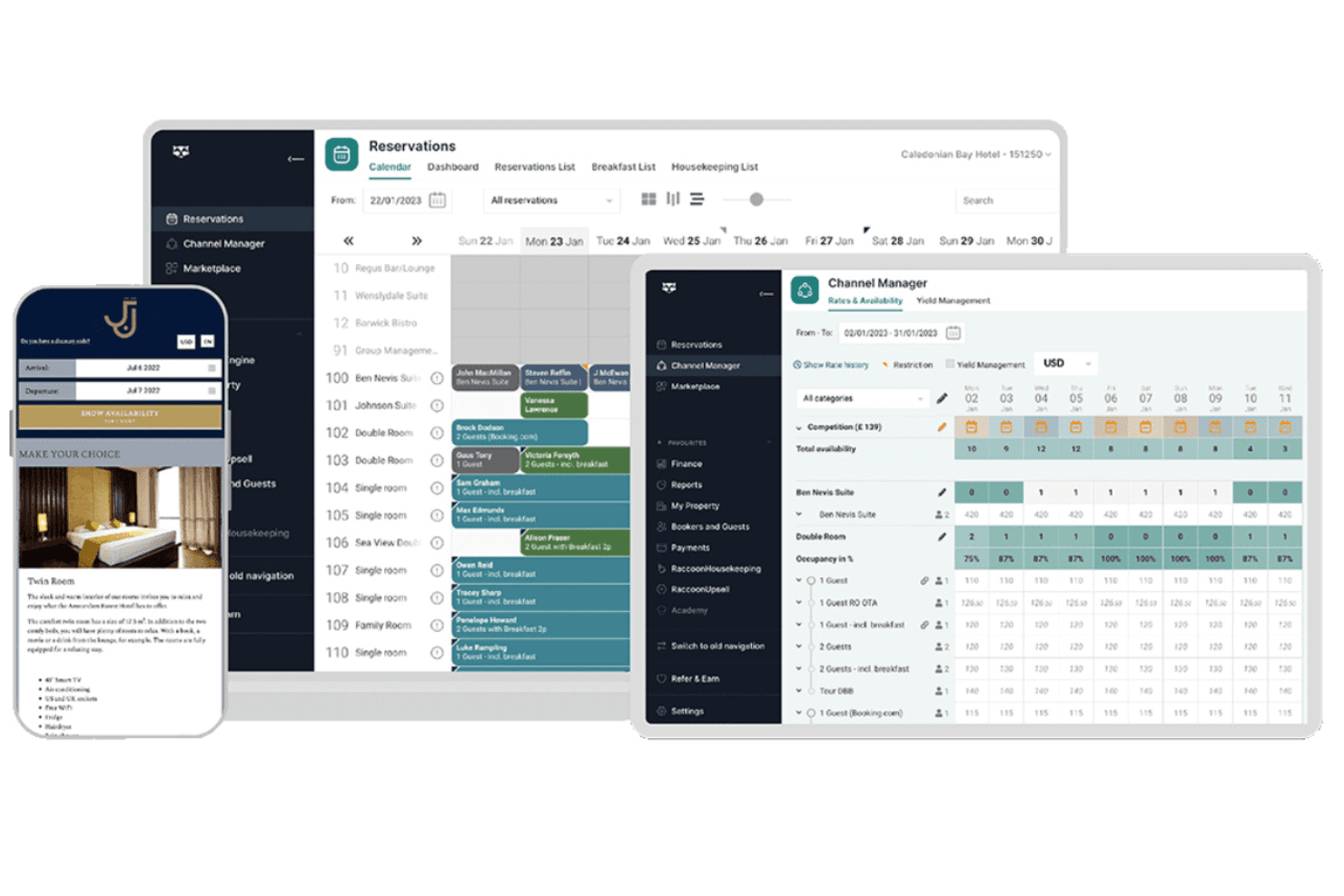
Manage reservations, guest profiles, billing, and room assignments from a single dashboard. Drag-and-drop calendar and automated guest emails make daily operations smoother.
Channel Manager
Sync rates and availability across 200+ OTAs and booking channels in real time. This reduces overbookings and manual updates for your team.
Booking Engine
Turn your website visitors into guests with a mobile-friendly, customizable booking engine. Offer add-ons, run promotions, and accept direct bookings with instant confirmation.
Automated Payments
Send payment links, automate charging, and manage all transactions in one place. Contactless check-in and check-out options improve guest convenience.
Housekeeping Management
Organize, track, and automate housekeeping and maintenance tasks with digital checklists. Real-time updates help staff prioritize room turnovers and report issues quickly.
Revenue Management Tools
Access competitor insights and set dynamic pricing rules to optimize rates. AI-driven features help you adjust prices based on demand, trends, and local events.

Ease of Use
RoomRaccoon is one of the more user-friendly hotel management platforms I’ve seen, with a clean interface and intuitive navigation that new staff can pick up quickly. Users often mention the drag-and-drop calendar and guided onboarding as highlights.
The dashboard centralizes daily tasks, so you don’t have to jump between modules. I think most teams will appreciate how little training is needed to get started and how easy it is to manage bookings and payments.

Integrations
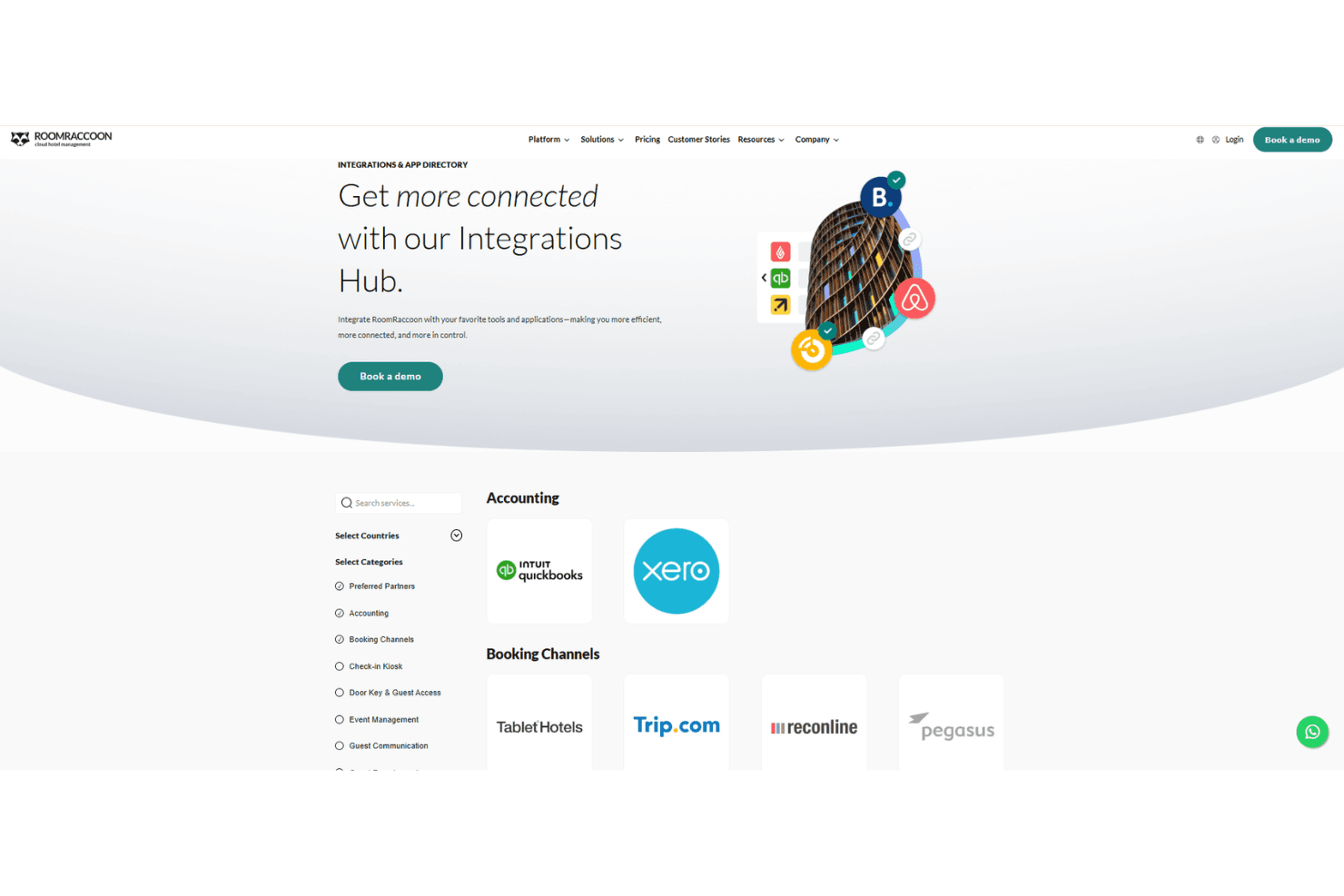
RoomRaccoon integrates with Trip.com, RecOnline, Pegasus, TabletHotels, GuestRevu, Siteminder, Stripe, Lightspeed, Mailchimp, and QuickBooks, among others.
RoomRaccoon also offers an open API for custom connections and supports integration with select third-party tools.
RoomRaccoon Specs
- API: Yes
- Budgeting: Yes
- Calendar Management: Yes
- Compliance Tracking: Yes
- Contact Management: Yes
- Customer Management: Yes
- Dashboard: Yes
- Data Export: Yes
- Data Import: Yes
- Data Visualization: Yes
- Document Management: Yes
- Expense Tracking: Yes
- External Integrations: Yes
- Forecasting: Yes
- Inventory Tracking: Yes
- Multi-Currency: Yes
- Multi-User: Yes
- Notifications: Yes
- Organization Management: Yes
- Payment Processor: Yes
- Payroll: Yes
- Scheduling: Yes
- Supplier Management: Yes
- Tax Management: Yes
- Workflow Management: Yes


