

Key Takeaways
OTA share of independent hotel bookings rose to 63.4% in 2025, approaching 80% in some markets.
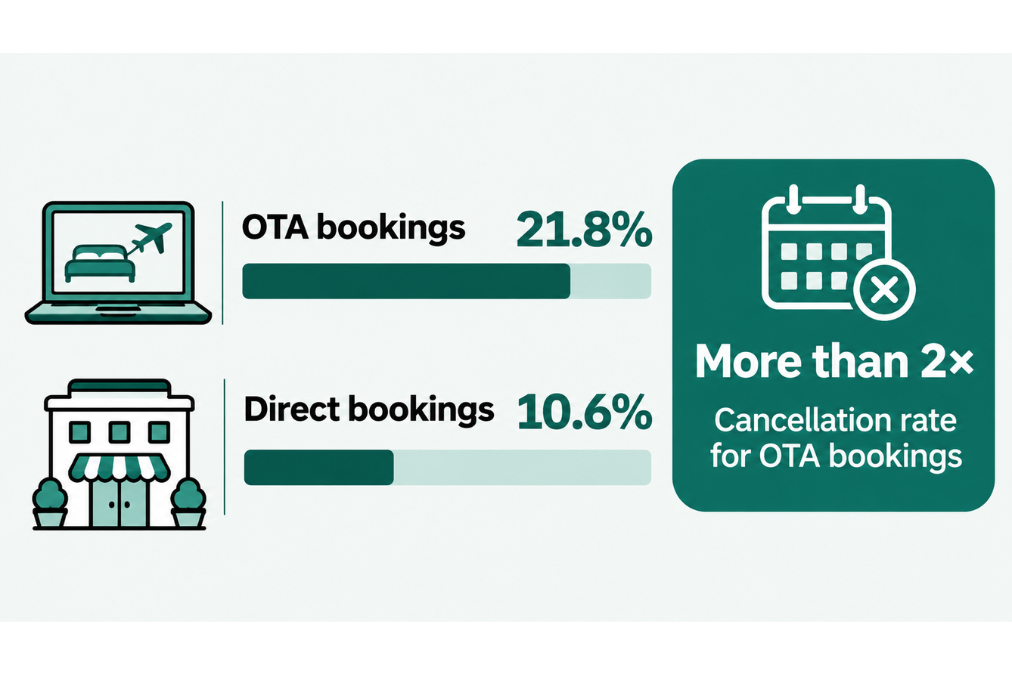
OTA bookings cancel at 21.8%, roughly double the 10.6% rate for direct bookings.
OTAs still do real work for discovery, shoulder-season fill, and reaching international guests.
The right OTA mix is a deliberate choice, not whatever share happens to accumulate by default.
What the Data Actually Shows
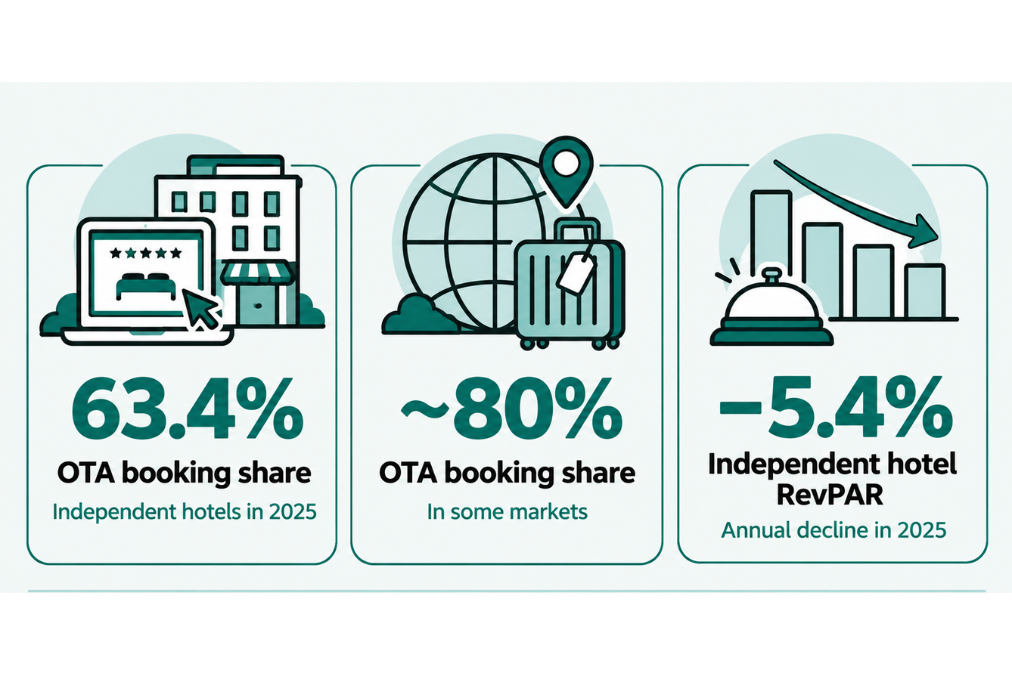
Cloudbeds' annual benchmark of independent hotel performance, drawn from 90 million bookings across 180 countries, found OTA share of independent hotel bookings rose to 63.4% in 2025, approaching 80% in some markets, while independent hotel revenue per available room (RevPAR) fell 5.4%.
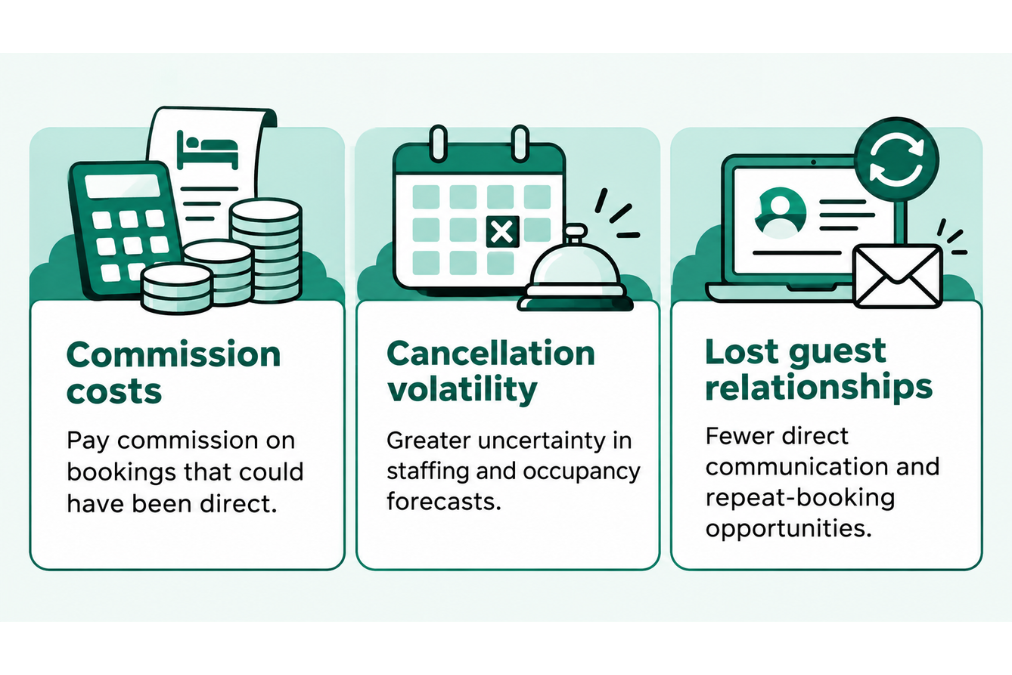
OTA bookings also cancelled at 21.8%, more than double the 10.6% rate for direct bookings, which adds forecasting and staffing volatility on top of the commission cost itself. Rising OTA share and softening RevPAR moving together isn't necessarily cause and effect, but it's exactly the combination that should prompt a property to look at its own distribution mix rather than assume it's fine.
What OTAs Still Do Well
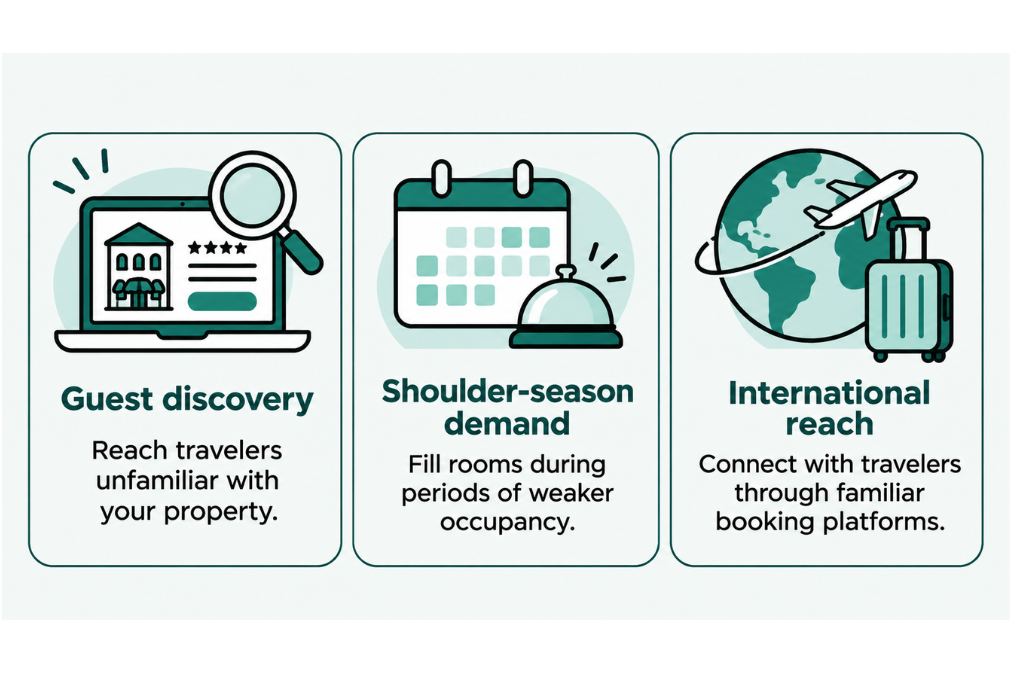
None of this is an argument to drop OTAs entirely. They remain the best tool most independent hotels have for reaching travelers who've never heard of the property, filling rooms during genuinely soft shoulder-season weeks, and capturing international guests who book through platforms they already trust in their home market.
A hotel that tried to replace all of that discovery function with its own marketing budget would likely end up with lower occupancy, not higher profit.
Where Dependence Becomes a Problem
The problem starts when nobody revisits how much of the business runs through them. A property that lets OTA share climb by default, rather than by decision, ends up paying full commission on bookings it could have captured directly, carrying more cancellation volatility than it needs to, and losing the direct guest relationship (the email address, the repeat-booking opportunity) on a growing share of its business.
That cost compounds quietly over several years rather than showing up as one bad month.
Finding Your Right Mix
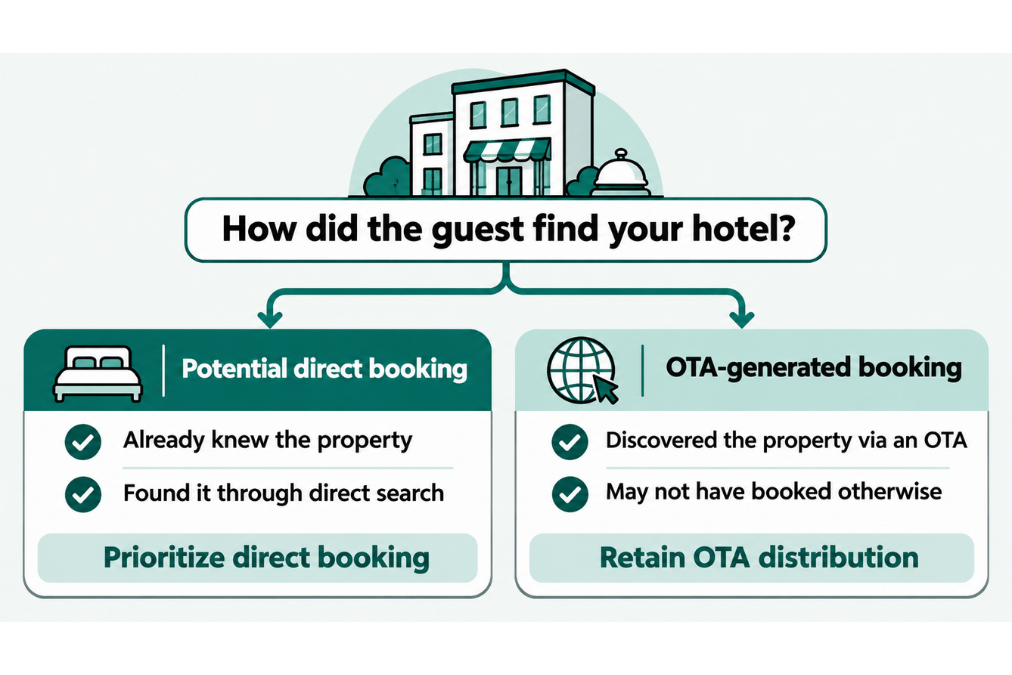
A useful exercise once or twice a year to reduce hotel OTA dependency: look at which OTA bookings you'd likely have gotten directly anyway, given that the guest already knew your property or found you through a direct search, versus which bookings came from genuine OTA-only discovery.
The first group is where a direct-booking push has real room to work; the second is where the OTA commission is a fair price for demand you wouldn't otherwise have.
The booking engine and property management system (PMS) behind your direct channel need to make the direct option genuinely competitive for that first group; see our PMS comparison if you're not confident yours is pulling its weight.
Hot Take: The question isn't whether your OTA share is too high in some absolute sense; it's whether you chose it or just let it happen. Most independent hotels have never actually run that math, which is exactly why the share keeps climbing industry-wide.
Not sure if your OTA mix is actually working for you? Get our take on finding the right distribution balance for a property your size.