
Reseña de Thynk: Ventajas, Desventajas, Funciones y Precios
Thynk es un software CRM hotelero que ayuda a gestionar las relaciones con los huéspedes, ventas y marketing, apoyando experiencias personalizadas para los clientes.

Revisamos las herramientas de forma independiente, y las comisiones ayudan a financiar nuestras pruebas. Consulta nuestra política de transparencia, nuestra metodología o sugiere una herramienta.
Thynk is a hotel CRM software built on Salesforce, designed for hotel sales teams managing group business, corporate accounts, and event pipelines. I'd consider it if you need purpose-built hospitality tools with a modern interface. Compared to legacy platforms like Amadeus Sales & Catering, Thynk gives you the same enterprise-grade pipeline depth with a more intuitive experience and tighter Salesforce ecosystem integration—without having to retrofit a generic CRM to fit hospitality workflows.
Thynk Evaluation Summary
4.8/5
- Pricing upon request
- Not available
Por qué confiar en nuestras recomendaciones de software
6,700+
Reviews
20
Industry experts
16+
Evaluation factors
14
Years
Nuestro equipo lleva probando y evaluando software desde 2012. Como líderes del sector hotelero, sabemos lo difícil —y lo importante— que es elegir el software adecuado.
Para esta guía, evaluamos las herramientas mediante pruebas prácticas e investigación independiente, puntuando las herramientas según nuestros criterios de selección.
Nuestras reseñas reflejan nuestro criterio editorial humano, no un discurso de ventas.
Thynk Overview
I think Thynk is a strong choice if you want a hotel CRM that combines intuitive automation, customizable workflows, and solid integration options. Its interface is modern and easy to navigate, and onboarding is straightforward for most teams. Pricing is on the higher side, but you get responsive support and deep hospitality-specific features.
The tool outperforms others with its flexible group sales tools and reporting, though it may underperform if you need highly advanced marketing automation. I’d suggest Thynk for multi-property operators or independent hotels ready to invest in a unified guest engagement platform.
Pros
- Thynk offers strong guest personalization features, boosting your guest satisfaction.
- Its analytics provide actionable insights that enhance your decision-making.
- You'll find its data-driven approach improves guest loyalty and retention.
Cons
- Thynk requires a tech-savvy team for full utilization.
- The learning curve can be steep for new users.
- Some users find the interface less intuitive compared to competitors.
Is Thynk Right For Your Needs?
Who Would be a Good Fit for Thynk?
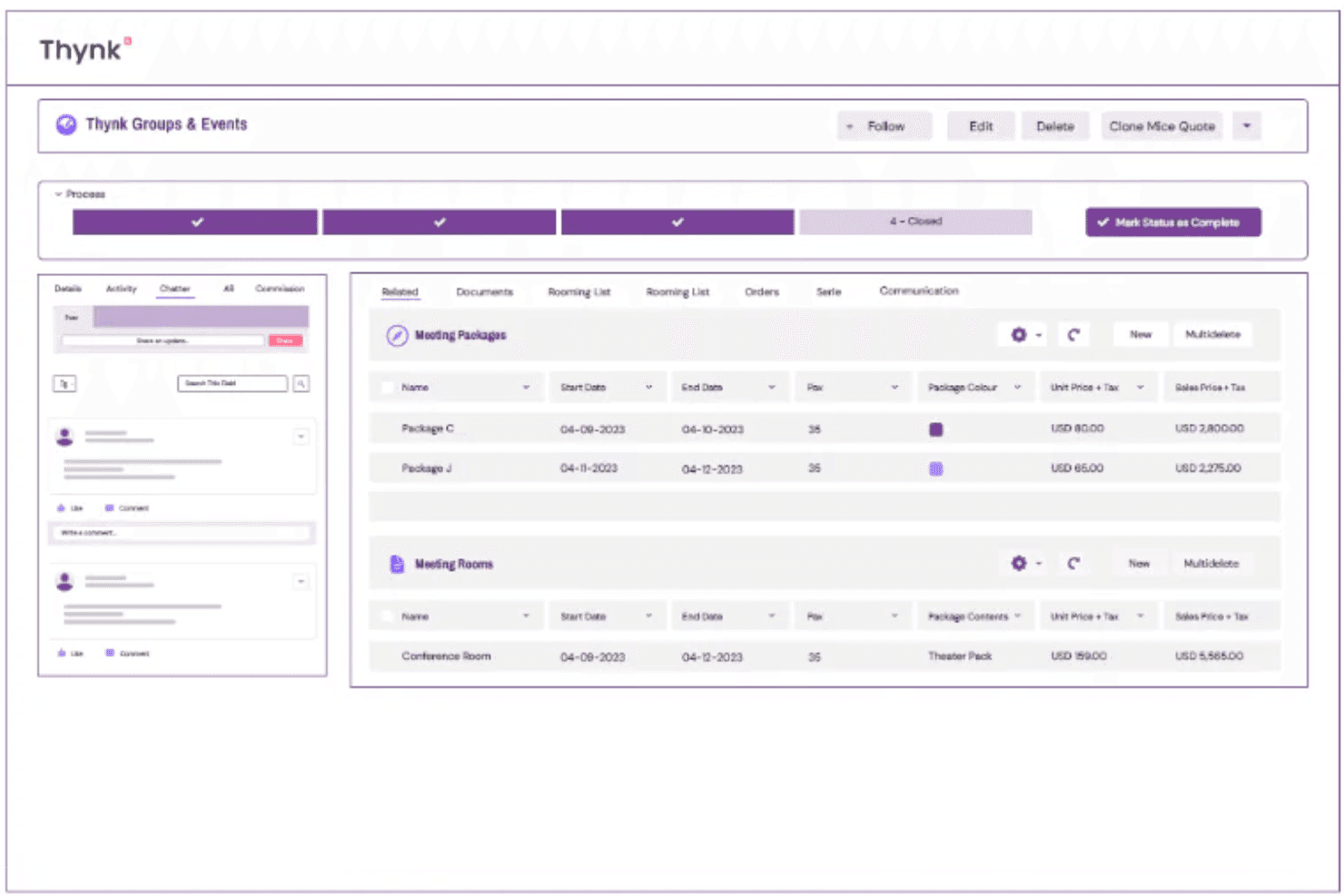
Thynk is ideal for boutique hotels and independent hotel chains focused on personalized guest experiences. If your team values data-driven insights to improve guest satisfaction and loyalty, Thynk’s advanced analytics will serve you well. Marketing departments and front desk teams can leverage its robust guest personalization features to enhance engagement and retention.
With a tech-savvy approach, your team can fully utilize Thynk’s capabilities to stand out in the competitive hospitality industry.
- Boutique HotelsThynk’s personalization features help you offer unique guest experiences.
- Independent ChainsYour chain benefits from Thynk’s data insights for consistent guest satisfaction.
- Marketing DepartmentsYou’ll enjoy using Thynk’s analytics to tailor your marketing campaigns.
- Front Desk TeamsThynk’s guest data improves your interaction and service quality.
- Guest RelationsYour team uses Thynk to build strong, lasting relationships with guests.
- Revenue ManagersThynk’s insights help you optimize pricing strategies based on guest data.
Who Would be a Bad Fit for Thynk?
Thynk isn’t suited for budget hotels or small inns that don’t have the resources to manage its advanced features. If your team lacks tech-savvy members, you’ll find the learning curve challenging. Large hotel chains with complex integration needs might find Thynk’s capabilities lacking since it focuses more on personalization and analytics rather than extensive integrations.
- Budget HotelsThynk’s advanced features can be overwhelming and unnecessary for your needs.
- Small InnsYou’ll struggle with Thynk if your team isn’t tech-savvy enough for its features.
- Large ChainsYour need for complex integrations may not be fully met by Thynk.
- Non-Tech TeamsThynk’s steep learning curve can be a barrier for your team.
- Simple OperationsIf your operations are basic, Thynk’s advanced analytics might be overkill.
- Short-Term RentalsThynk’s focus on long-term guest relationships doesn’t align with your needs.
Cómo Probamos y Puntamos Herramientas
Hemos pasado años construyendo, refinando y mejorando nuestro sistema de pruebas y puntuación de software. La rúbrica está diseñada para capturar las particularidades de la selección de software y lo que hace que una herramienta sea efectiva, enfocándose en aspectos críticos del proceso de toma de decisiones. A continuación, puedes ver exactamente cómo funcionan nuestras pruebas y puntuaciones en siete criterios. Nos permite proporcionar una evaluación imparcial del software basada en funcionalidad principal, características destacadas, facilidad de uso, incorporación, soporte al cliente, integraciones, opiniones de clientes y relación calidad-precio.
Funcionalidad Principal (25% de la puntuación final)
El punto de partida de nuestra evaluación es siempre la funcionalidad principal de la herramienta. ¿Tiene las características y funciones básicas que un usuario esperaría ver? ¿Alguna de esas funciones básicas está limitada a planes de precios superiores? En esencia, esperamos que una herramienta esté a la altura de las capacidades mínimas de sus competidores.
Características Destacadas (25% de la puntuación final)
Luego, evaluamos las características destacadas poco comunes que van más allá de la funcionalidad principal, típicamente encontrada en herramientas de su tipo. Una puntuación alta refleja funciones especializadas o únicas que hacen que el producto sea más rápido, eficiente u ofrezca valor adicional al usuario. También evaluamos lo fácil que resulta integrar con otras herramientas normalmente presentes en el paquete tecnológico para ampliar la funcionalidad y utilidad del software. Las herramientas con abundantes integraciones nativas, conexiones de terceros y acceso a API para crear integraciones personalizadas obtienen la mejor puntuación.
Facilidad de Uso (10% de la puntuación final)
Consideramos qué tan rápido y fácil es ejecutar las tareas definidas en la funcionalidad principal usando la herramienta. El software que obtiene una puntuación alta está bien diseñado, es intuitivo de usar, ofrece aplicaciones móviles, proporciona plantillas y hace que tareas relativamente complejas parezcan sencillas.
Incorporación (10% de la puntuación final)
Sabemos lo importante que es la adopción rápida del equipo para una nueva plataforma, por eso evaluamos la facilidad para aprender y usar una herramienta con mínima capacitación. Analizamos qué tan rápido un miembro del equipo puede configurarse y comenzar a usar la herramienta sin experiencia. Las soluciones que obtienen una puntuación alta requieren poco o ningún soporte.
Soporte al Cliente (10% de la puntuación final)
Revisamos qué tan rápido y fácil es obtener ayuda por teléfono, chat en vivo o base de conocimientos. Las herramientas y empresas que ofrecen soporte en tiempo real obtienen la mejor puntuación, mientras que los chatbots obtienen la peor.
Opiniones de Clientes (10% de la puntuación final)
Más allá de nuestras propias pruebas y evaluaciones, consideramos el índice neto de promotores de clientes actuales y anteriores. Analizamos la probabilidad de que elijan la herramienta de nuevo para la función principal. Un software con alta puntuación refleja un alto índice neto de promotores de clientes actuales o anteriores.
Relación Calidad-Precio (10% de la puntuación final)
Por último, considerando todos los demás criterios, revisamos el precio promedio de los planes iniciales frente a las características principales y valoramos los otros criterios de evaluación. El software que ofrece más por menos obtiene una mejor puntuación.
Core Features
Centralized Guest Profiles
Store all guest and account data in one place for easy access. This helps teams personalize service and track guest history across properties.
Group Bookings Management
Manage group room blocks, track inventory, and automate group booking workflows. This feature streamlines complex group sales and event coordination.
B2B Sales Tools
Monitor sales pipelines, manage corporate accounts, and track performance. Sales teams can nurture leads and close deals with built-in hospitality sales features.
Direct Booking Engine
Enable real-time room and space availability on your website. Guests can book directly, increasing conversion and reducing reliance on OTAs.
Sales & Catering Operations
Quote, sell, and manage meetings and events from one platform. Automate document creation and centralize all event communications.
Advanced Reporting & Analytics
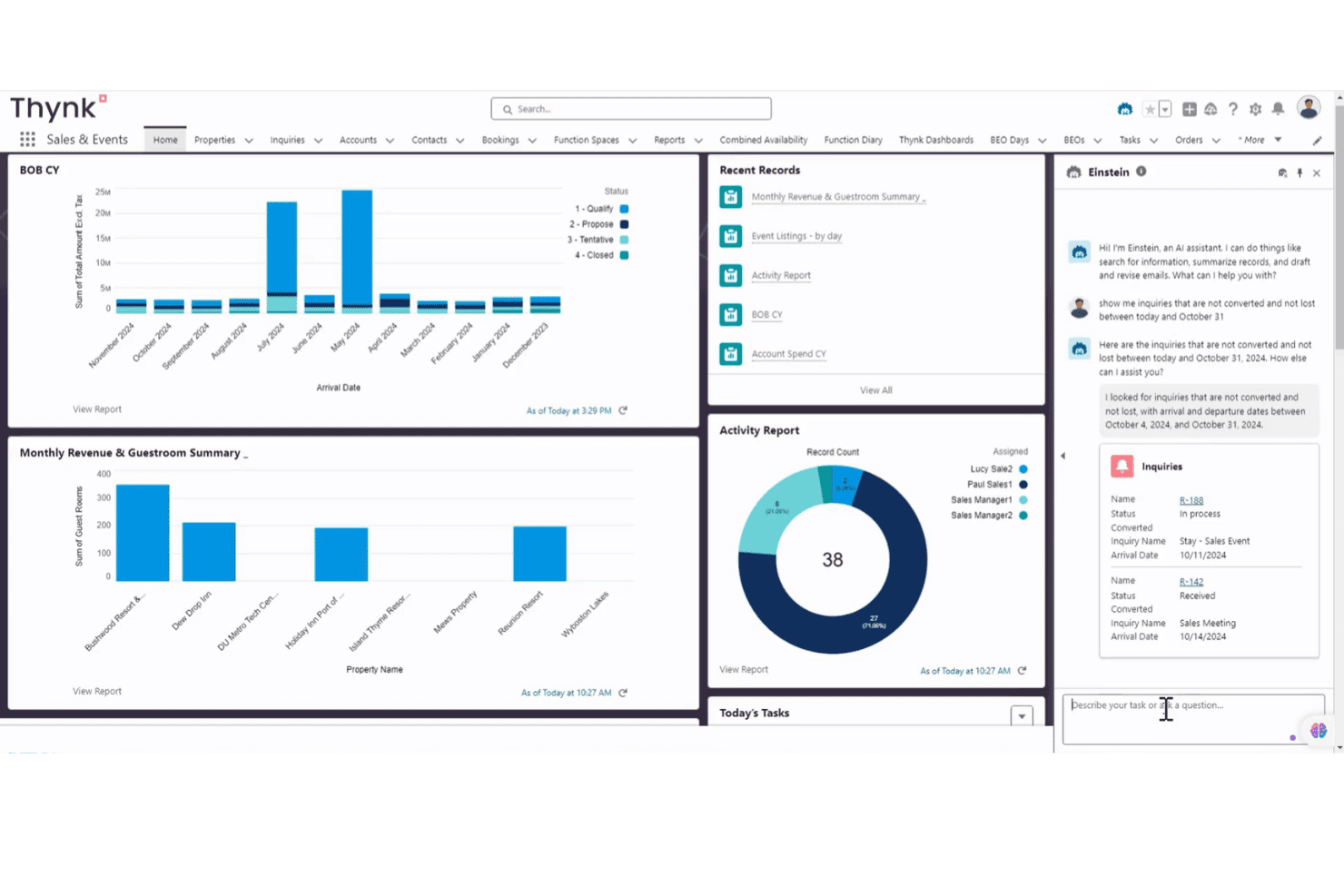
Access real-time dashboards and custom reports tailored for hospitality. Make data-driven decisions on sales, occupancy, and guest engagement.
Ease of Use
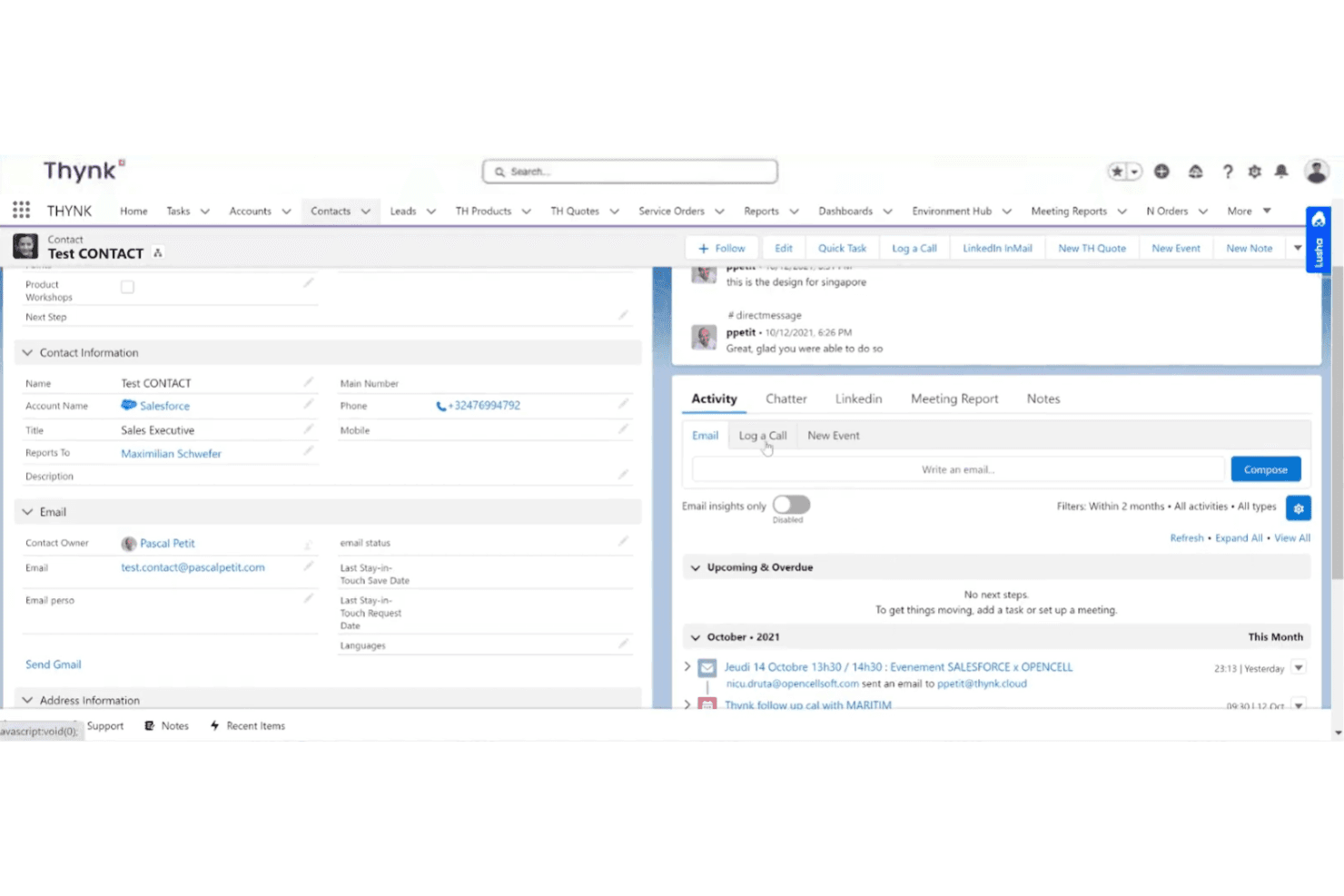
Thynk’s interface is modern and intuitive, making it easy for hotel teams to navigate daily tasks without extensive training. Users often mention that onboarding is straightforward, with clear workflows and logical menu layouts. The drag-and-drop automation tools and centralized dashboards help reduce manual work and confusion.
While some advanced features may require initial setup support, most teams can quickly adapt and start seeing value from the platform.
Integrations
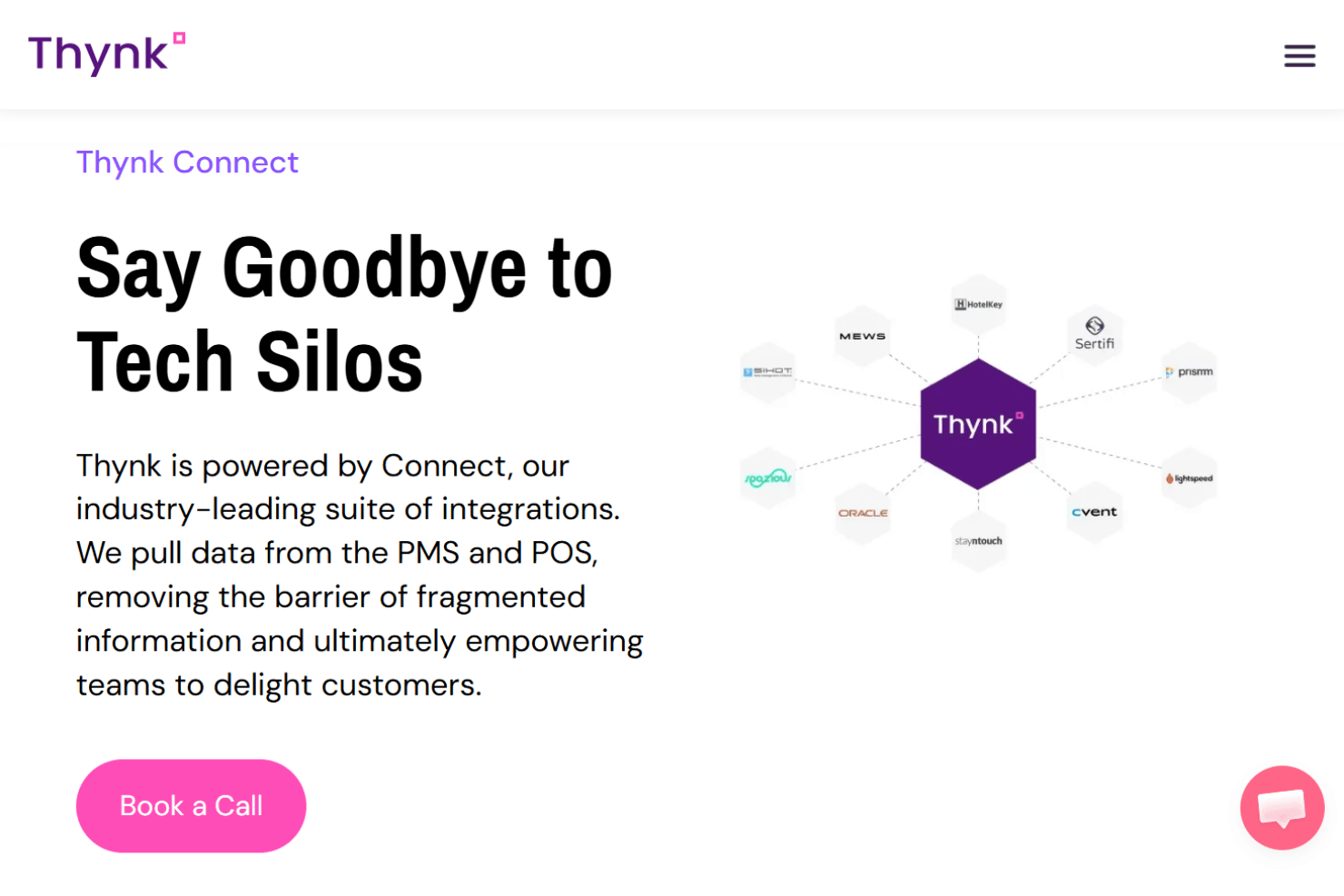
Thynk integrates with HotelKey, Sihot, Cvent, Prismm, and Salesforce, as well as a range of property management systems, point-of-sale systems, digital signage solutions, payment platforms, and event management tools, among others.
Thynk also offers an API and supports connections with third-party integration tools for custom workflows and data sync.
Thynk Specs
- API: Yes
- Budgeting: No
- Calendar Management: Yes
- Compliance Tracking: Yes
- Contact Management: Yes
- Customer Management: Yes
- Dashboard: Yes
- Data Export: Yes
- Data Import: Yes
- Data Visualization: Yes
- Document Management: Yes
- Expense Tracking: No
- External Integrations: Yes
- Forecasting: Yes
- Inventory Tracking: No
- Multi-Currency: Yes
- Multi-User: Yes
- Notifications: Yes
- Organization Management: Yes
- Payment Processor: No
- Payroll: No
- Scheduling: Yes
- Supplier Management: No
- Tax Management: No
- Workflow Management: Yes


