
Reseña de Cisco Meraki: Ventajas, Desventajas, Características y Precios
Cisco Meraki integra la gestión de redes basada en la nube en una sola plataforma, desde Wi-Fi y monitoreo de seguridad hasta gestión de dispositivos, análisis y administración centralizada de redes.

Revisamos las herramientas de forma independiente, y las comisiones ayudan a financiar nuestras pruebas. Consulta nuestra política de transparencia, nuestra metodología o sugiere una herramienta.
Cisco Meraki is a hotel WiFi management software built around a centralized, cloud-based dashboard for managing guest and staff networks across access points, floors, and properties. I'd consider it if your team needs full network visibility without relying on on-site IT expertise. Compared to Aruba Networks, Meraki is easier to configure and monitor remotely, making it a stronger fit for hotel operators who want enterprise-grade control without the technical overhead that Aruba typically demands.
Cisco Meraki Evaluation Summary
4.3/5
- Pricing upon request
- 90-day free trial
Por qué confiar en nuestras recomendaciones de software
6,700+
Reviews
20
Industry experts
16+
Evaluation factors
14
Years
Nuestro equipo lleva probando y evaluando software desde 2012. Como líderes del sector hotelero, sabemos lo difícil —y lo importante— que es elegir el software adecuado.
Para esta guía, evaluamos las herramientas mediante pruebas prácticas e investigación independiente, puntuando las herramientas según nuestros criterios de selección.
Nuestras reseñas reflejan nuestro criterio editorial humano, no un discurso de ventas.
Cisco Meraki Overview
If you’re judging network management solutions on ease of use, Cisco Meraki stands out with its intuitive dashboard and fast onboarding. I think its cloud-based controls and strong support make it a top pick for hotels with multiple locations or limited IT staff. Pricing is higher than some, but you get reliable uptime, automatic updates, and integrations with property systems.
Compared to others, Meraki’s interface is cleaner, and troubleshooting is simpler, though advanced customizations can be limited. For hotels prioritizing simplicity, security, and scalability, I’d suggest Meraki is a smart choice.
Pros
- You get a user-friendly interface that simplifies network management.
- It offers reliable performance with minimal downtime for your team.
- Your IT staff can manage multiple sites from a single dashboard.
Cons
- You might find limited customization options for specific needs.
- The hardware can sometimes be less robust compared to competitors.
- Your team may encounter occasional issues with advanced configuration settings.
Is Cisco Meraki Right For Your Needs?
Who Would be a Good Fit for Cisco Meraki?
Small to medium-sized businesses and educational institutions would thrive using Cisco Meraki. Its easy-to-use interface and centralized management make it ideal for teams that need efficient solutions without a large IT department. Retail chains can also benefit, as they can manage multiple locations from one dashboard, ensuring consistent network performance.
Cisco Meraki’s robust security features make it suitable for industries like healthcare that require strict data protection.
- Small BusinessesYour small business can enjoy simplified network management with minimal IT resources needed.
- Educational InstitutionsSchools can manage campus-wide networks easily, ensuring reliable connectivity for students and staff.
- Retail ChainsYou can oversee multiple locations from a single platform, maintaining consistent network standards.
- Healthcare ProvidersCisco Meraki’s security features protect sensitive patient data, making it a solid choice for your practice.
- Remote TeamsYour remote team can stay connected and secure with Cisco Meraki’s cloud-based solutions.
- Hospitality IndustryHotels and resorts can offer guests stable and secure Wi-Fi, enhancing their overall experience.
Who Would be a Bad Fit for Cisco Meraki?
Large enterprises with complex, highly customized network needs might not find Cisco Meraki suitable. Its limited customization options may not meet the intricate requirements of industries like finance, where detailed configurations and control are crucial. Organizations with advanced IT teams may also prefer a solution that offers deeper technical capabilities and hardware robustness, which Cisco Meraki might not fully provide.
- Large EnterprisesYour large company might need more customization than Cisco Meraki offers for complex networks.
- Financial SectorIf you require intricate security configurations, Cisco Meraki’s options may not suffice.
- Tech-Savvy TeamsAdvanced IT teams might find Cisco Meraki’s simplicity limiting for detailed technical tasks.
- Manufacturing IndustryFactories with demanding network environments may need more robust hardware than Cisco Meraki provides.
- Media CompaniesIf your work involves heavy data transfer, you might need a solution with higher data throughput.
- Government AgenciesAgencies needing stringent compliance controls might not find Cisco Meraki’s features comprehensive enough.
Cómo Probamos y Puntamos Herramientas
Hemos pasado años construyendo, refinando y mejorando nuestro sistema de pruebas y puntuación de software. La rúbrica está diseñada para capturar las particularidades de la selección de software y lo que hace que una herramienta sea efectiva, enfocándose en aspectos críticos del proceso de toma de decisiones. A continuación, puedes ver exactamente cómo funcionan nuestras pruebas y puntuaciones en siete criterios. Nos permite proporcionar una evaluación imparcial del software basada en funcionalidad principal, características destacadas, facilidad de uso, incorporación, soporte al cliente, integraciones, opiniones de clientes y relación calidad-precio.
Funcionalidad Principal (25% de la puntuación final)
El punto de partida de nuestra evaluación es siempre la funcionalidad principal de la herramienta. ¿Tiene las características y funciones básicas que un usuario esperaría ver? ¿Alguna de esas funciones básicas está limitada a planes de precios superiores? En esencia, esperamos que una herramienta esté a la altura de las capacidades mínimas de sus competidores.
Características Destacadas (25% de la puntuación final)
Luego, evaluamos las características destacadas poco comunes que van más allá de la funcionalidad principal, típicamente encontrada en herramientas de su tipo. Una puntuación alta refleja funciones especializadas o únicas que hacen que el producto sea más rápido, eficiente u ofrezca valor adicional al usuario. También evaluamos lo fácil que resulta integrar con otras herramientas normalmente presentes en el paquete tecnológico para ampliar la funcionalidad y utilidad del software. Las herramientas con abundantes integraciones nativas, conexiones de terceros y acceso a API para crear integraciones personalizadas obtienen la mejor puntuación.
Facilidad de Uso (10% de la puntuación final)
Consideramos qué tan rápido y fácil es ejecutar las tareas definidas en la funcionalidad principal usando la herramienta. El software que obtiene una puntuación alta está bien diseñado, es intuitivo de usar, ofrece aplicaciones móviles, proporciona plantillas y hace que tareas relativamente complejas parezcan sencillas.
Incorporación (10% de la puntuación final)
Sabemos lo importante que es la adopción rápida del equipo para una nueva plataforma, por eso evaluamos la facilidad para aprender y usar una herramienta con mínima capacitación. Analizamos qué tan rápido un miembro del equipo puede configurarse y comenzar a usar la herramienta sin experiencia. Las soluciones que obtienen una puntuación alta requieren poco o ningún soporte.
Soporte al Cliente (10% de la puntuación final)
Revisamos qué tan rápido y fácil es obtener ayuda por teléfono, chat en vivo o base de conocimientos. Las herramientas y empresas que ofrecen soporte en tiempo real obtienen la mejor puntuación, mientras que los chatbots obtienen la peor.
Opiniones de Clientes (10% de la puntuación final)
Más allá de nuestras propias pruebas y evaluaciones, consideramos el índice neto de promotores de clientes actuales y anteriores. Analizamos la probabilidad de que elijan la herramienta de nuevo para la función principal. Un software con alta puntuación refleja un alto índice neto de promotores de clientes actuales o anteriores.
Relación Calidad-Precio (10% de la puntuación final)
Por último, considerando todos los demás criterios, revisamos el precio promedio de los planes iniciales frente a las características principales y valoramos los otros criterios de evaluación. El software que ofrece más por menos obtiene una mejor puntuación.
Core Features
Cloud-Based Dashboard
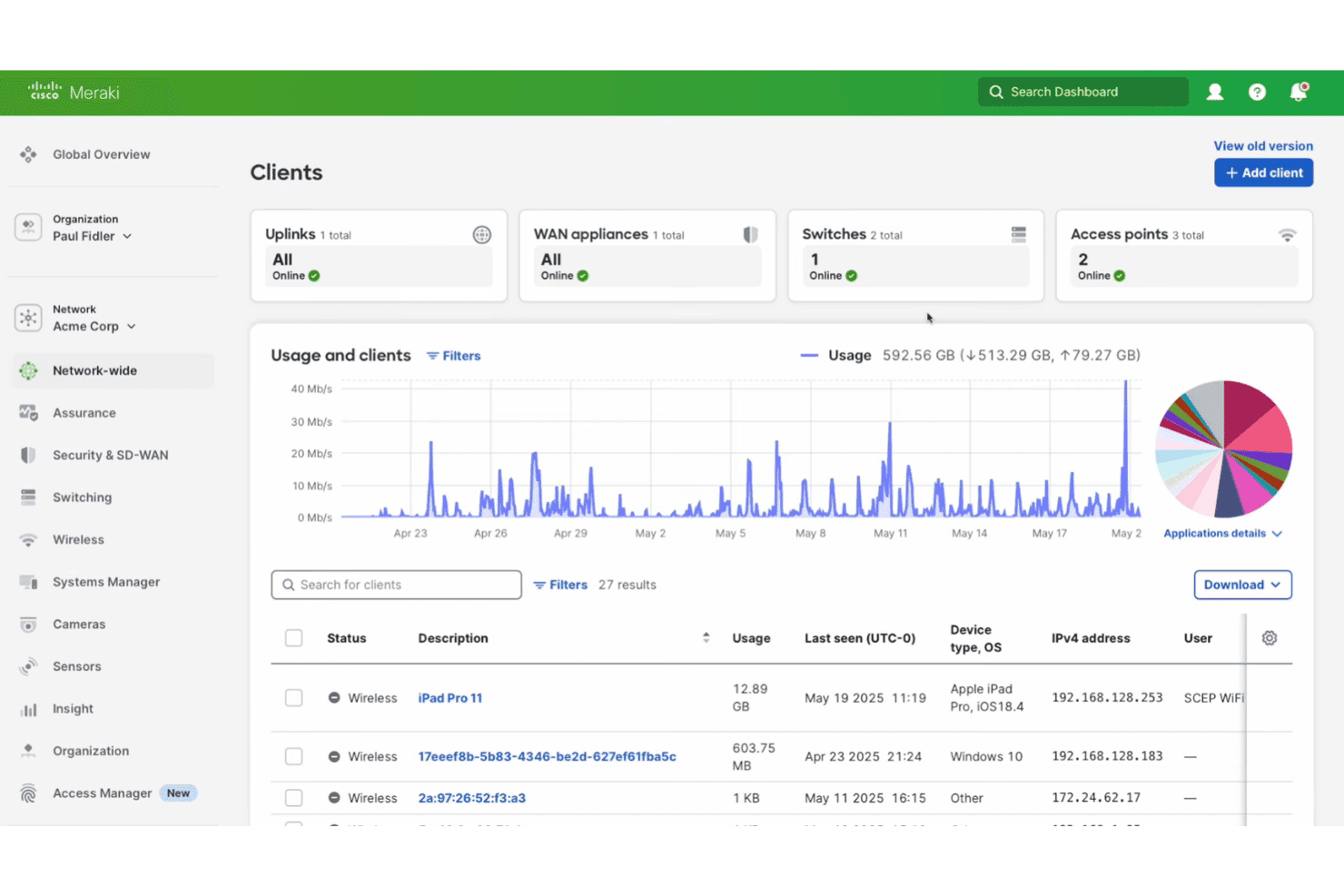
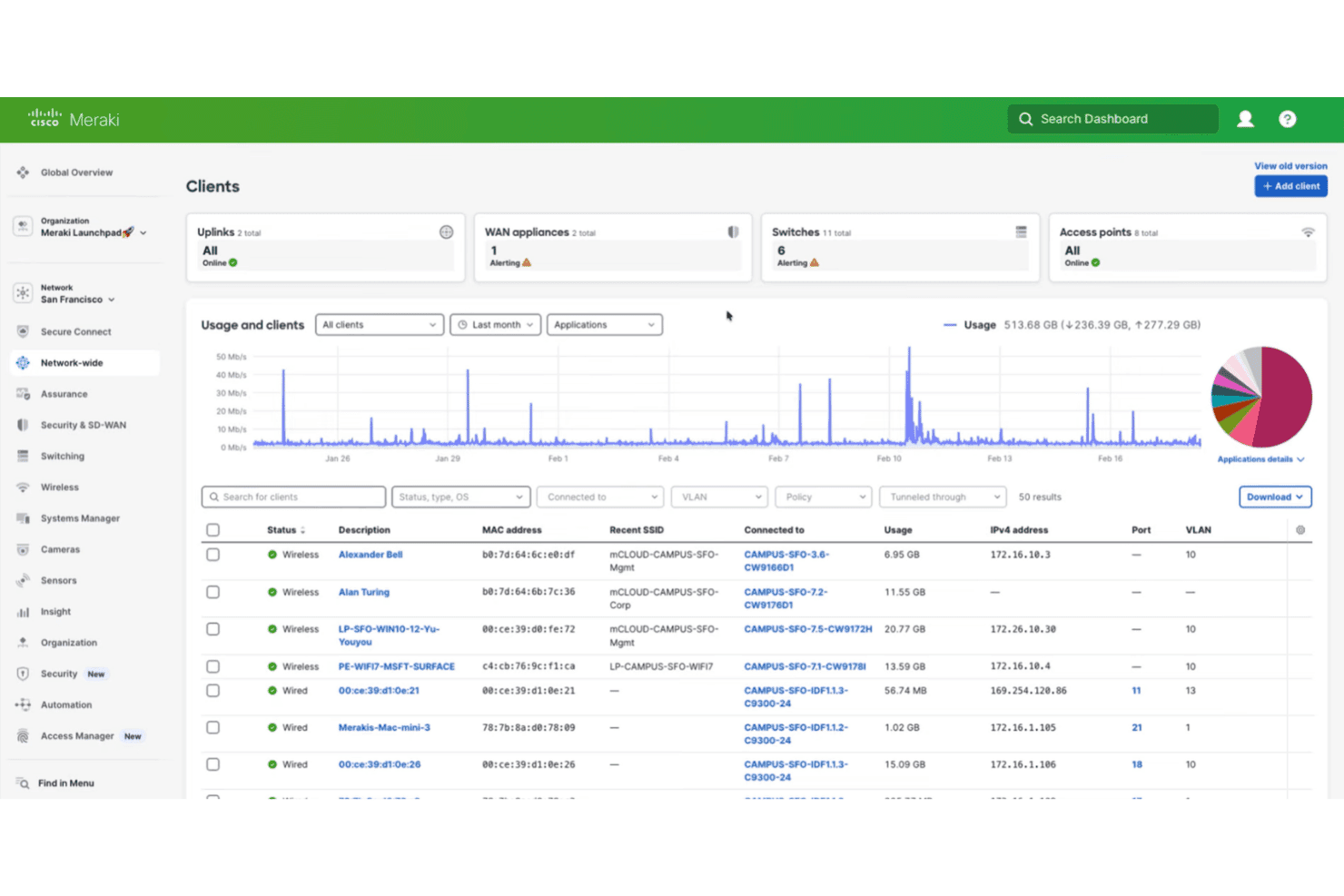
Manage all network devices, sites, and users from a single web interface. Real-time monitoring and alerts help you spot issues quickly.
Automatic Firmware Updates
Devices receive security patches and feature upgrades without manual intervention. This keeps networks secure and reduces IT workload.
Layer 7 Application Visibility
See which apps and services are using bandwidth on your network. Block or prioritize traffic to improve guest and staff experiences.
Integrated Security and SD-WAN
Built-in firewall, VPN, and threat protection safeguard guest and internal networks. SD-WAN optimizes traffic for performance and reliability.
Guest Wi-Fi Management
Create branded splash pages, set bandwidth limits, and track guest usage. Easily segment guest and staff networks for better security.
Remote Troubleshooting Tools
Diagnose and resolve issues from anywhere using live tools like packet capture and cable testing. This minimizes downtime and reduces the need for on-site visits.
Ease of Use
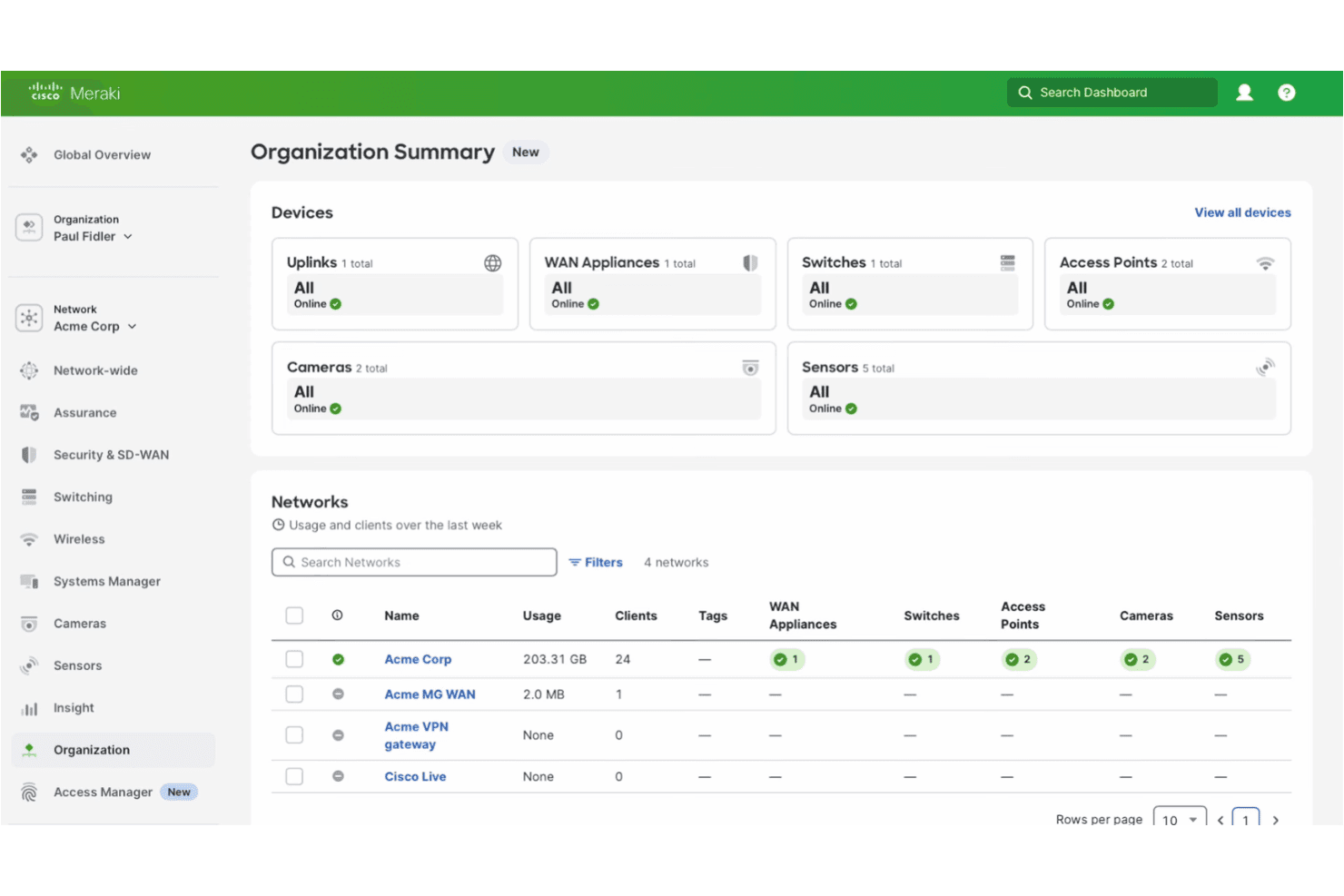
Cisco Meraki is one of the most user-friendly network management solutions I’ve used. The dashboard is clean, intuitive, and requires minimal training to navigate.
Users often mention how quickly they can deploy new devices or troubleshoot issues remotely. Features like drag-and-drop network mapping and guided setup wizards make onboarding fast, even for non-technical staff. I think hotel managers will appreciate how little time it takes to get up and running.
Integrations
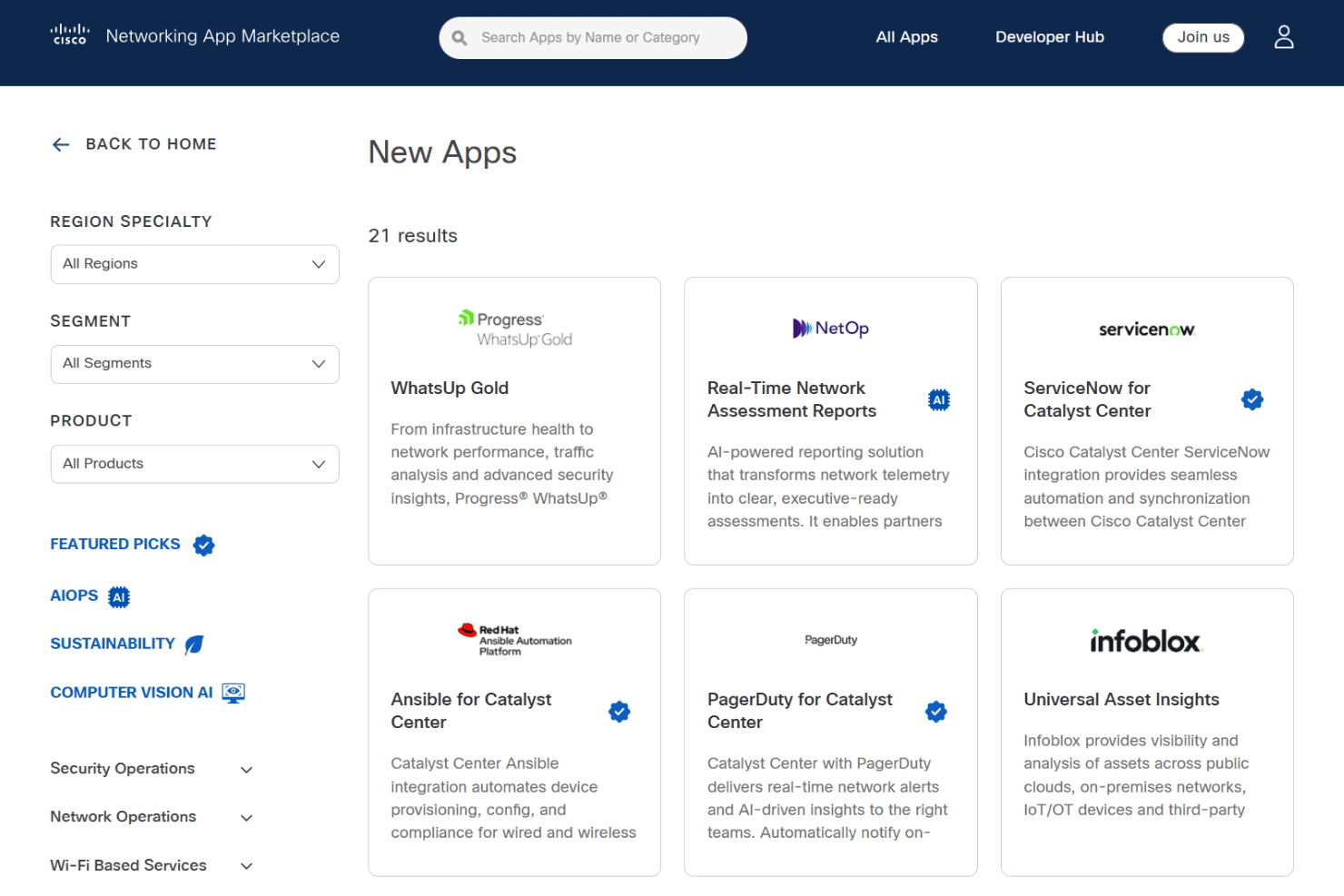
Cisco Meraki integrates with ServiceNow, Red Hat Ansible Automation Platform, Splash Access, Ekahau AI Pro, Cloud4Wi, AlgoSec, Genea Security, ORDR AI Protect, Claroty xDome, and Syslog Cloud Collector, among others.
Cisco Meraki also offers a comprehensive API and supports custom integrations through its Developer Hub.
Cisco Meraki Specs
- API: Yes
- Bug Tracking: No
- CI/CD Integration: No
- Cloud Deployment: Yes
- Code Review: No
- Code Transformation: No
- Collaboration Support: Yes
- Data Export: Yes
- Data Import: Yes
- Developer Tools: No
- External Integrations: Yes
- Git Integration: No
- History/Version Control: No
- IDE Plugins: No
- Local Deployment: No
- Multi-User: Yes
- Notifications: Yes
- Project Management: No
- Release Management: No
- Static Analysis: No
- Task Scheduling/Tracking: Yes
- Testing: No


