

Resort Data Review: Pros, Cons, Features and Pricing
Resort Data brings hotel and property operations into one platform, from reservations and front-desk management to accounting, reporting, and guest services for hospitality businesses.

We review tools independently, and commissions help fund our testing. See our transparency policy, our methodology, or suggest a tool.
Resort Data is a hotel property management software built for resort and vacation rental properties that run complex rate structures, packages, and multi-unit inventory. I'd consider it if your operation deals with package-heavy bookings or condo-hotel configurations—scenarios where a system like Cloudbeds starts to feel limiting. Resort Data gives you deeper rate and inventory control than most mid-market PMS tools are designed to handle.
Resort Data Evaluation Summary
4/5
- Pricing upon request
- Free demo available
Why Trust Our Software Recommendations
6,700+
Reviews
20
Industry experts
16+
Evaluation factors
14
Years
Our team has been testing and reviewing software since 2012. As hospitality leaders ourselves, we know how difficult—and important—it is to choose the right software.
For this guide, we evaluated tools using hands-on testing and independent research, scoring tools using our selection criteria.
Our reviews reflect our human editorial judgment, not a sales pitch.
Resort Data Overview
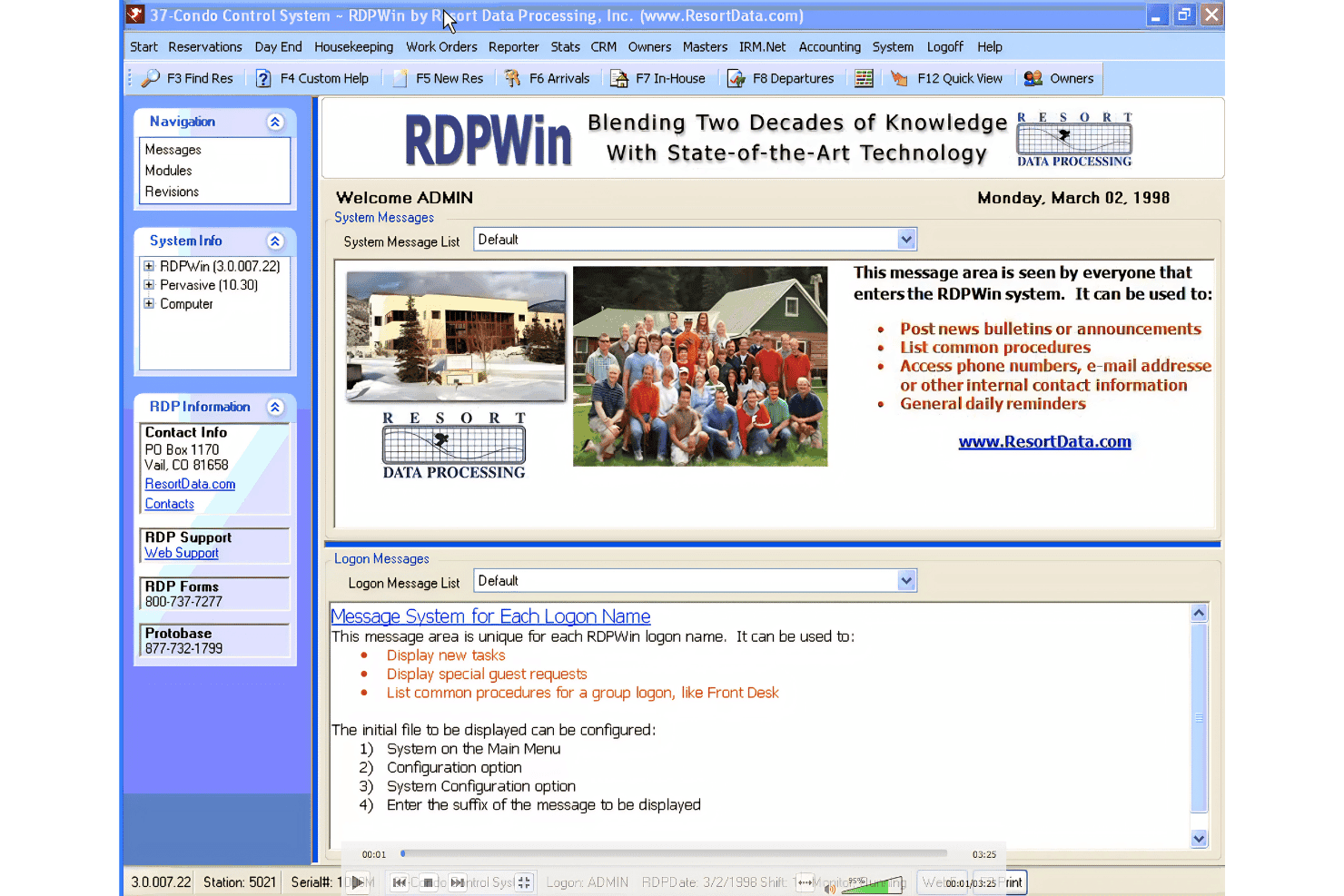
When I compare Resort Data to other property management software, I think its modular design and deep customization options stand out for properties with unique needs, like boutique resorts or multi-unit vacation rentals. The interface feels dated, and onboarding takes time, but the support team is responsive and pricing is transparent. Integrations cover most essentials, though not as broad as some competitors.
If you want to tailor workflows and reporting to your operation, Resort Data is a strong pick, especially for teams that value flexibility over plug-and-play simplicity.
Pros
- Highly customizable workflows for unique property types.
- Responsive North American-based customer support team.
- Strong reporting and automation for operations and accounting.
Cons
- Interface feels outdated compared to newer platforms.
- Onboarding and setup can be time-consuming.
- Limited integration options versus some competitors.
Is Resort Data Right For Your Needs?
Who Would be a Good Fit for Resort Data?
Resort Data is a strong choice for properties that need deep customization, advanced reporting, and flexible modules to match unique operational needs. I think it’s best for teams that want to tailor workflows, automate complex rate structures, and manage multi-unit or multi-property setups.
If your business values hands-on configuration and detailed guest management, Resort Data’s feature set is going to fit well.
- Conference CentersGroup booking and event management tools handle large-scale reservations.
- Independent Property ManagersDetailed reporting and automation help small teams manage complex operations.
- Resorts With AmenitiesIntegrated spa, golf, and activity management modules support full-service resorts.
- Vacation Rental AgenciesFlexible rate and owner accounting features suit vacation rental portfolios.
- Multi-Property GroupsCentralized management tools support oversight of multiple locations from one system.
- Boutique HotelsCustomizable modules let boutique hotels tailor guest experiences and operations.
Who Would be a Bad Fit for Resort Data?
Resort Data isn’t ideal for teams that want a modern, plug-and-play interface or need extensive third-party integrations. If you’re looking for quick onboarding, mobile-first design, or a system that’s ready out of the box, you’ll probably find Resort Data limiting compared to newer options.
- Short-Term Rental HostsFeature set is too complex for single-unit or casual rental hosts.
- Mobile-Only TeamsLimited mobile functionality restricts on-the-go property management.
- HostelsNo dedicated tools for shared room or bed management.
- Franchise ChainsLack of standardized workflows makes it tough for large franchises.
- Tech-First StartupsDated interface and limited integrations don’t match tech-driven expectations.
- Small MotelsSetup complexity and feature depth overwhelm basic motel operations.
How We Test & Score Tools
We’ve spent years building, refining, and improving our software testing and scoring system. The rubric is designed to capture the nuances of software selection and what makes a tool effective, focusing on critical aspects of the decision-making process.
Below, you can see exactly how our testing and scoring works across seven criteria. It allows us to provide an unbiased evaluation of the software based on core functionality, standout features, ease of use, onboarding, customer support, integrations, customer reviews, and value for money.
Core Functionality (25% of final scoring)
The starting point of our evaluation is always the core functionality of the tool. Does it have the basic features and functions that a user would expect to see? Are any of those core features locked to higher-tiered pricing plans? At its core, we expect a tool to stand up against the baseline capabilities of its competitors.
Standout Features (25% of final scoring)
Next, we evaluate uncommon standout features that go above and beyond the core functionality typically found in tools of its kind. A high score reflects specialized or unique features that make the product faster, more efficient, or offer additional value to the user.
We also evaluate how easy it is to integrate with other tools typically found in the tech stack to expand the functionality and utility of the software. Tools offering plentiful native integrations, 3rd party connections, and API access to build custom integrations score best.
Ease of Use (10% of final scoring)
We consider how quick and easy it is to execute the tasks defined in the core functionality using the tool. High scoring software is well designed, intuitive to use, offers mobile apps, provides templates, and makes relatively complex tasks seem simple.
Onboarding (10% of final scoring)
We know how important rapid team adoption is for a new platform, so we evaluate how easy it is to learn and use a tool with minimal training. We evaluate how quickly a team member can get set up and start using the tool with no experience. High scoring solutions indicate little or no support is required.
Customer Support (10% of final scoring)
We review how quick and easy it is to get unstuck and find help by phone, live chat, or knowledge base. Tools and companies that provide real-time support score best, while chatbots score worst.
Customer Reviews (10% of final scoring)
Beyond our own testing and evaluation, we consider the net promoter score from current and past customers. We review their likelihood, given the option, to choose the tool again for the core functionality. A high scoring software reflects a high net promoter score from current or past customers.
Value for Money (10% of final scoring)
Lastly, in consideration of all the other criteria, we review the average price of entry level plans against the core features and consider the value of the other evaluation criteria. Software that delivers more, for less, will score higher.
Core Features
Reservation Management
Handle individual, group, and online bookings with flexible rate options. Users can manage availability, assign rooms, and automate confirmations.
Guest Profiles
Store detailed guest history, preferences, and notes for personalized service. Profiles update automatically with each stay and transaction.
Housekeeping Management
Track room status, assign tasks, and monitor cleaning progress in real time. Automated alerts help teams coordinate turnovers and maintenance.
Accounting and Owner Statements
Automate billing, payments, and owner revenue splits for multi-unit properties. Built-in reporting simplifies monthly statements and financial tracking.
Activity and Amenity Scheduling
Book spa, golf, shuttle, and other amenities directly within the system. Integrated scheduling helps avoid double-booking and improves guest experience.
Custom Reporting
Generate detailed operational, financial, and occupancy reports tailored to your property’s needs. Users can export data or schedule recurring reports for management.
Ease of Use
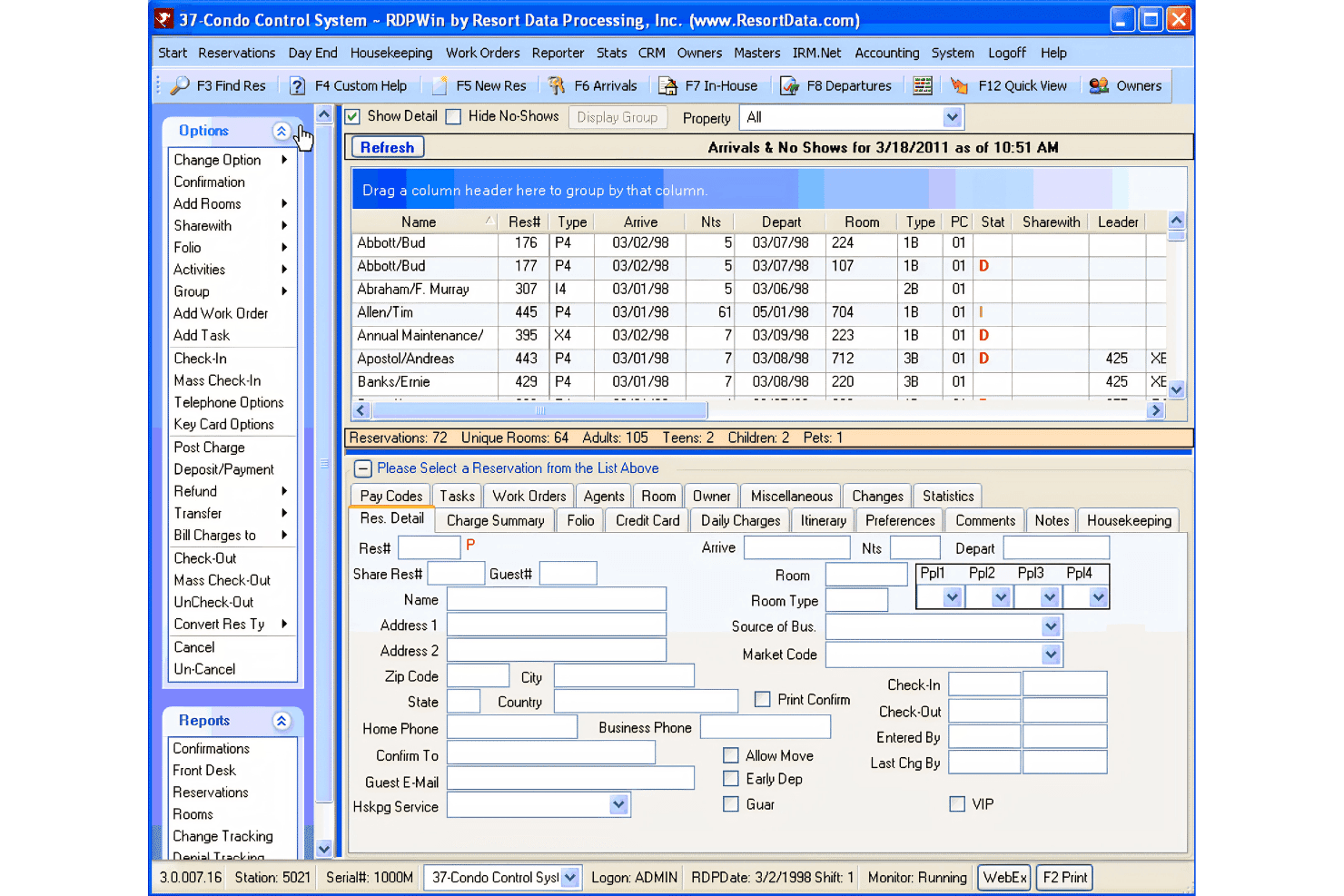
Resort Data’s interface feels dated and can be overwhelming for new users, especially during setup and training. While the system offers deep customization and powerful features, navigating menus and configuring modules takes time and patience.
Users often mention that once workflows are established, daily tasks become straightforward, but the initial learning curve is steeper than with more modern platforms. I think it’s best suited for teams willing to invest in setup for long-term flexibility.
Integrations
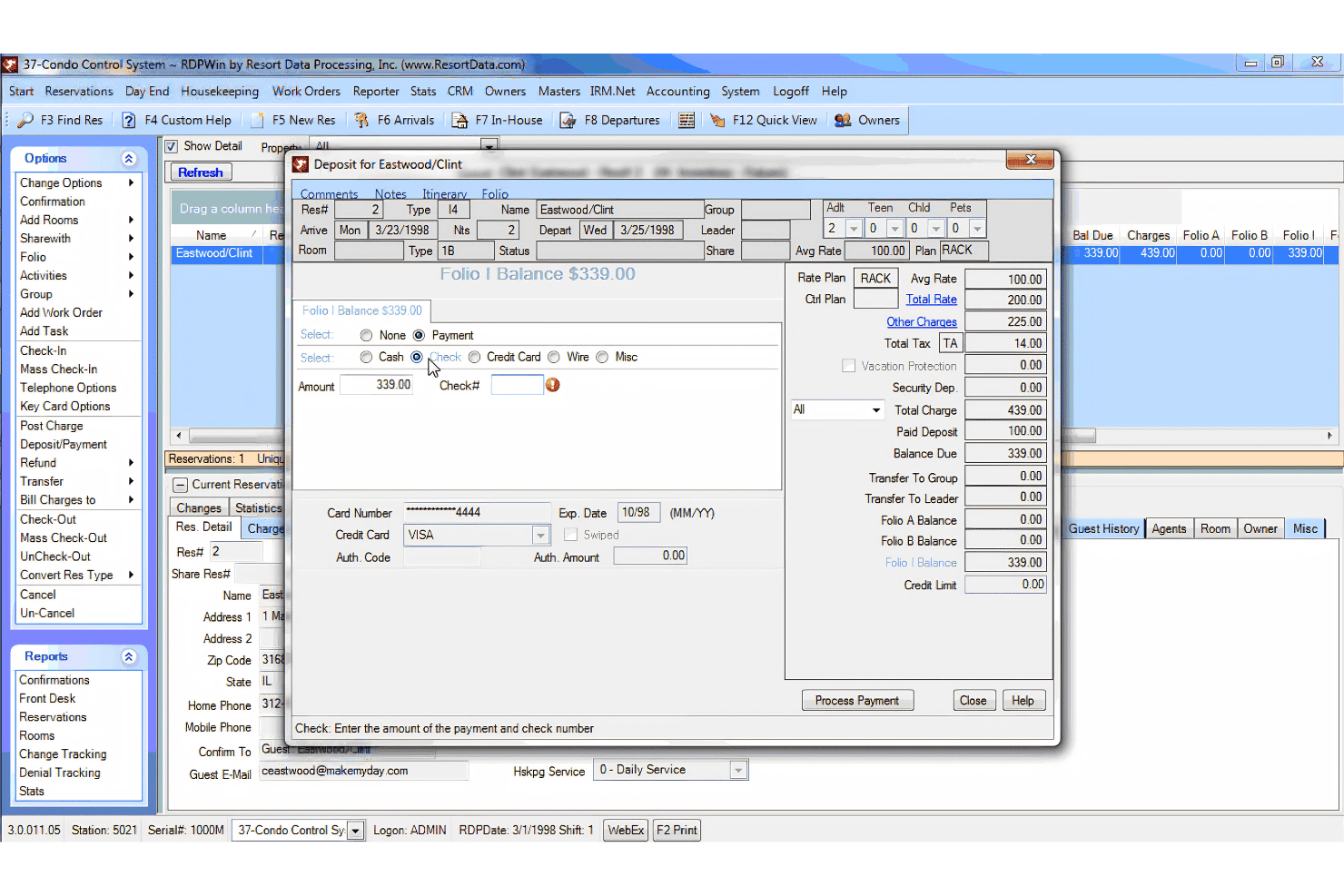
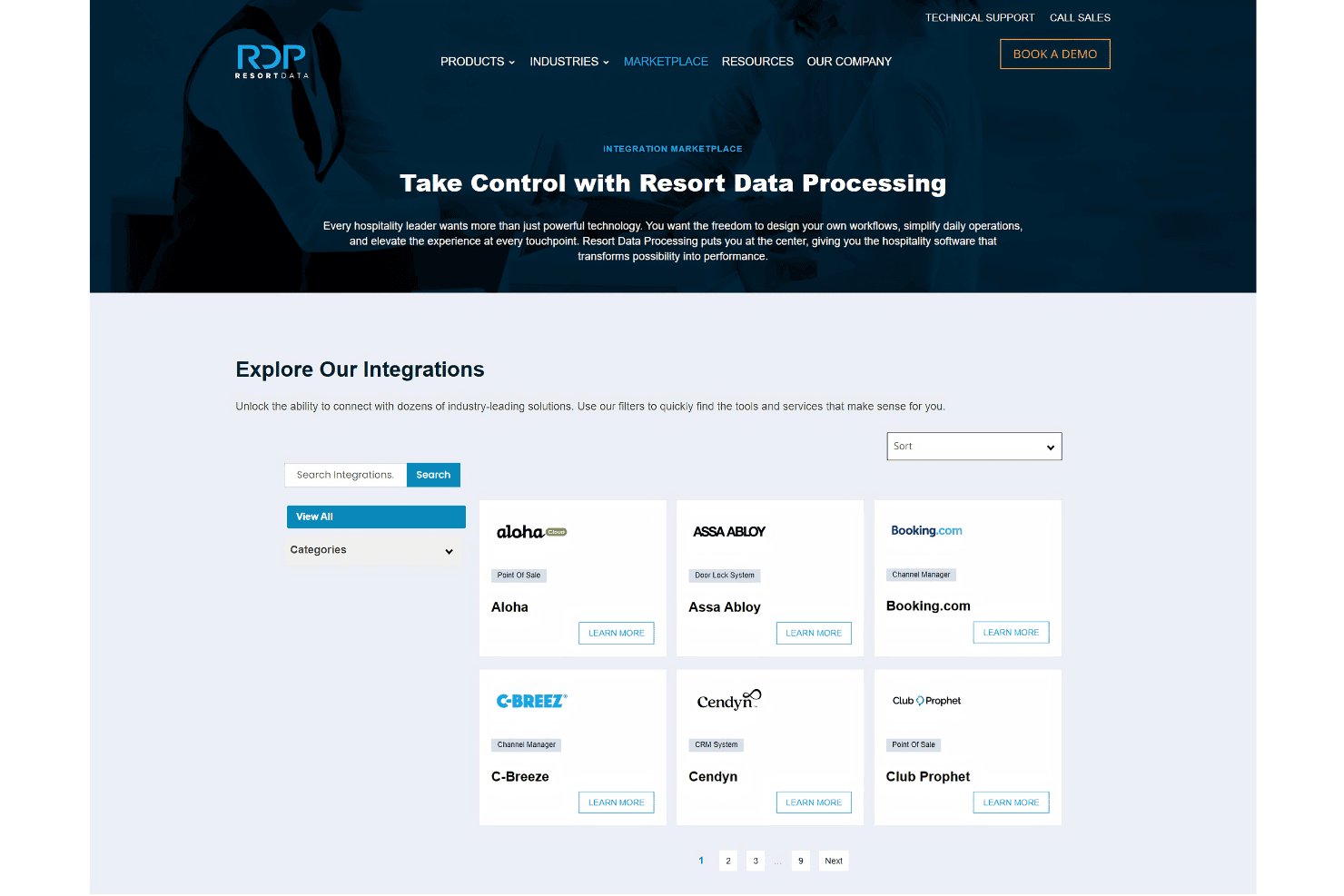
Resort Data integrates with QuickBooks, SynXis, RedAwning, Expedia, ProSolutions, SiteMinder, Booking.com, Mitel, Aloha POS, and Assa Abloy, among others.
Resort Data also offers an API for custom integrations and workflow automation.
Resort Data Specs
- API: Yes
- Budgeting: Yes
- Calendar Management: Yes
- Compliance Tracking: Yes
- Contact Management: Yes
- Customer Management: Yes
- Dashboard: Yes
- Data Export: Yes
- Data Import: Yes
- Data Visualization: Yes
- Document Management: Yes
- Expense Tracking: Yes
- External Integrations: Yes
- Forecasting: Yes
- Inventory Tracking: Yes
- Multi-Currency: Yes
- Multi-User: Yes
- Notifications: Yes
- Organization Management: No
- Payment Processor: Yes
- Payroll: Yes
- Scheduling: Yes
- Supplier Management: No
- Tax Management: Yes
- Workflow Management: Yes


