

Um sistema POS para hotéis é um sistema de ponto de venda concebido para gerir as operações de restauração, bar e outras operações de F&B dentro dos hotéis, estabelecendo ligação direta ao seu sistema de gestão da propriedade para simplificar a faturação dos hóspedes e os lançamentos nas contas.
Se está à procura do melhor sistema POS para hotéis, provavelmente procura um software que ajude a sua equipa a gerir um elevado volume de hóspedes, eliminar erros de faturação, sincronizar lançamentos com os quartos e gerir a complexidade das operações com vários pontos de venda.
Escolher o sistema certo significa menos reclamações dos hóspedes, menos reconciliações administrativas e uma melhor visibilidade de cada localização. Este guia apresenta-lhe as opções de sistemas POS para hotéis mais bem avaliadas, para que possa prestar um serviço melhor, reduzir os problemas operacionais e acompanhar as expectativas dos hóspedes, que estão em constante evolução.
Why Trust Our Software Recommendations
6,700+
Reviews
20
Industry experts
16+
Evaluation factors
14
Years
Our team has been testing and reviewing software since 2012. As hospitality leaders ourselves, we know how difficult—and important—it is to choose the right software.
For this guide, we evaluated tools using hands-on testing and independent research, scoring tools using our selection criteria.
Our reviews reflect our human editorial judgment, not a sales pitch.
Tabela de comparação: sistemas POS para hotéis
Esta tabela de comparação resume os detalhes de preços dos meus sistemas POS para hotéis.
| Tool | Best For | Trial Info | Price | ||
|---|---|---|---|---|---|
| 1 | Best for native PMS-POS chain deployments | Free demo available | Pricing upon request | Website | |
| 2 | Best for F&B-heavy hotels with multiple outlets | Free demo available | From $90/month | Website | |
| 3 | Best for F&B across multi-outlet hotel properties | Free demo available | From $69/month (billed annually) | Website | |
| 4 | Best for multi-outlet F&B across hotel properties | Free demo available | Pricing upon request | Website | |
| 5 | Best for F&B ops across all hotel outlets | Free demo available | Pricing upon request | Website | |
| 6 | Best for PMS-native room charge posting | Not available | Pricing upon request | Website | |
| 7 | Best for enterprise multi-property F&B billing | Free demo available | Pricing upon request | Website | |
| 8 | Best for multi-property F&B charge posting | Free demo available | Pricing upon request | Website | |
| 9 | Best for OPERA Cloud-native folio posting | Free demo available | Pricing upon request | Website | |
| 10 | Best for PMS-connected multi-outlet hotel F&B | Free demo available | Pricing upon request | Website |


Avaliações de sistemas POS para hotéis
Apresentamos abaixo os meus resumos detalhados dos melhores sistemas POS para hotéis que entraram na minha lista restrita. As minhas avaliações oferecem uma análise detalhada das funcionalidades, dos casos de utilização mais adequados e das integrações de cada sistema, para o ajudar a encontrar a melhor opção para si.
 Best for native PMS-POS chain deployments
- Free demo available
- Pricing upon request
Visit WebsiteCustomer Rating:4.7/5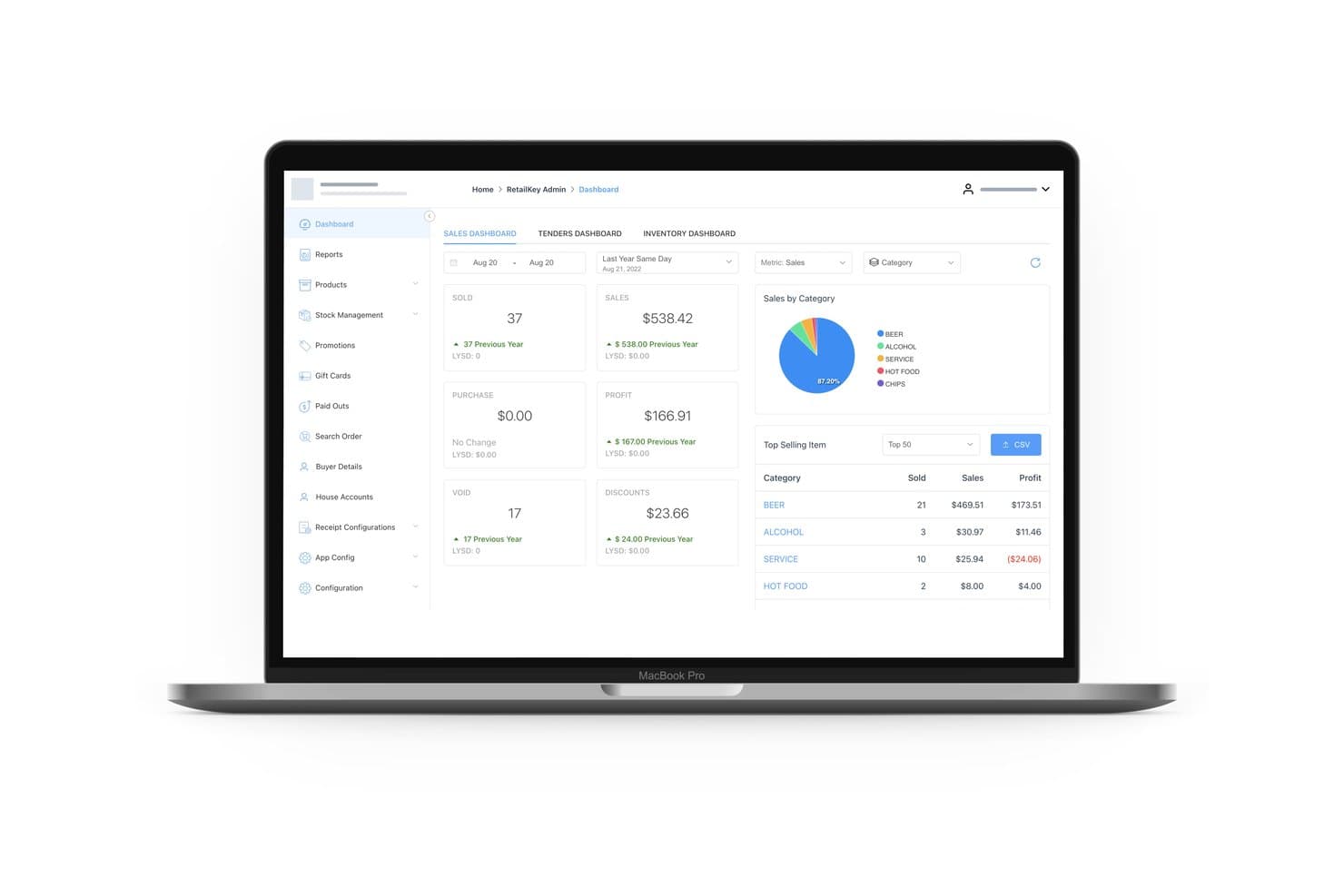
RetailKey manages hotel F&B, retail, and spa sales with multi-outlet support, direct room charging, and centralized multi-property reporting. RetailKey by HotelKey is a cloud-native hotel POS system with multi-outlet support across F&B, retail, and spa, built natively into the HotelKey property management platform with direct charge-to-room posting and centralized multi-property reporting.
Who Is HotelKey Best For?
HotelKey is a natural fit for hotel chains and multi-property operators that want PMS and POS running on one platform without third-party middleware in between.
Why I Picked HotelKey
HotelKey earns its spot on my shortlist because RetailKey is built into the same platform as HotelKey's PMS, so charge-to-room posting happens natively without a middleware layer in between. I've seen this matter most when sub-charge types are configured per outlet, so a guest's folio shows exactly what they ordered at the pantry versus the spa. For chain operators running 100-plus properties, that level of folio accuracy at scale is where HotelKey genuinely pulls ahead.
HotelKey Key Features
- Kitchen display system: Orders route from the POS directly to a KDS on any smart screen, with ticket prioritization and real-time order status tracking.
- Recipe costing and food cost reporting: Each menu item is linked to ingredient-level costs, giving you food cost percentages and margin data per outlet.
- Predictive purchase orders: The system generates automated purchase order suggestions based on inventory levels and sales trends, with built-in vendor management.
- Mobile Manager App: A dedicated mobile app gives you real-time dashboards, KPI tracking, inventory alerts, and per-outlet performance data from any device.
HotelKey Integrations
HotelKey integrates with Shift4, FreedomPay, Elavon, Adyen, Stripe, Windcave, M3, ProfitSword, and Sage. Private APIs support custom rate updates and third-party connectivity.
Pros and Cons
Pros:
- Multi-property dashboards across all outlets
- Real-time charge-to-room posting accuracy
- Native PMS and POS sharing guest data
Cons:
- Advanced restaurant workflows not fully documented
- Credit cards not supported in offline mode
Learn more about HotelKey: Best for F&B-heavy hotels with multiple outlets
- Free demo available
- From $90/month
Visit WebsiteCustomer Rating:4.2/5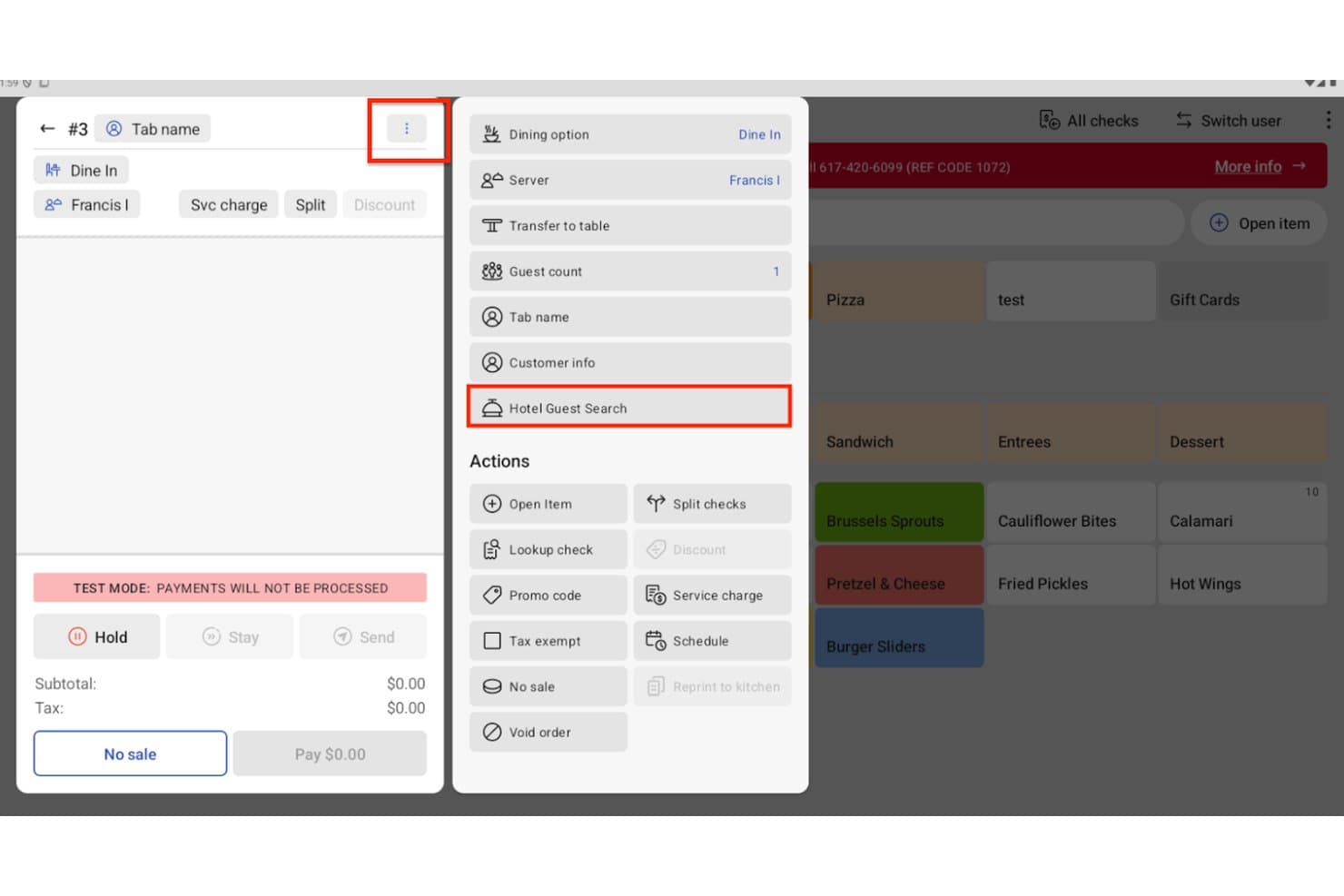
Toast lets hotel staff charge orders directly to a guest's room. Toast is a restaurant-focused POS platform adapted for hotel F&B operations, offering table management, multi-outlet order routing, PMS-integrated room charge posting, a catering and events module, and back-office inventory tools through xtraCHEF.
Who Is Toast Best For?
Toast is a strong fit for F&B directors managing multiple dining outlets across a hotel or resort, where restaurant-grade order management is the core operational priority.
Why I Picked Toast
Toast earns its spot on my shortlist because of how well it handles multi-outlet F&B operations under one roof. I especially like the Catering & Events module, which manages the full BEO lifecycle from deposit collection to kitchen prep sheets without a separate system. Pair that with Toast Go 3 LTE handhelds for poolside or patio service, and your team can run every F&B outlet on property from a single platform.
Toast Key Features
- PMS room charge posting: Search guests by name or room number directly from the POS and post F&B charges to their folio across 13+ certified PMS integrations, including Opera Cloud, Cloudbeds, and Stayntouch.
- xtraCHEF inventory suite: Automate supplier invoice processing, run actual vs. theoretical usage reports, and track COGS across all F&B outlets from one back-office tool.
- Toast Now mobile dashboard: Monitor real-time sales, labor, and outlet performance across your entire property from a mobile device.
- Offline card capture: Continue processing card payments during network outages using local caching, so dine-in service keeps running even when connectivity drops.
Toast Integrations
Toast offers 13+ certified PMS integrations, including Opera Cloud, Cloudbeds, Stayntouch, Maestro, Marriott FOSSE, and Marriott Full Service PMS. Mews and Infor HMS connect through Omniboost, while a 300+ partner ecosystem supports additional integrations.
Pros and Cons
Pros:
- Multi-outlet support for all F&B types
- PMS integration supports room charge posting
- Menu management with recipe-level costing options
Cons:
- PMS room charge posting disabled offline
- No native spa or golf POS integration
Learn more about Toast: Best for F&B across multi-outlet hotel properties
- Free demo available
- From $69/month (billed annually)
Visit WebsiteCustomer Rating:4.3/5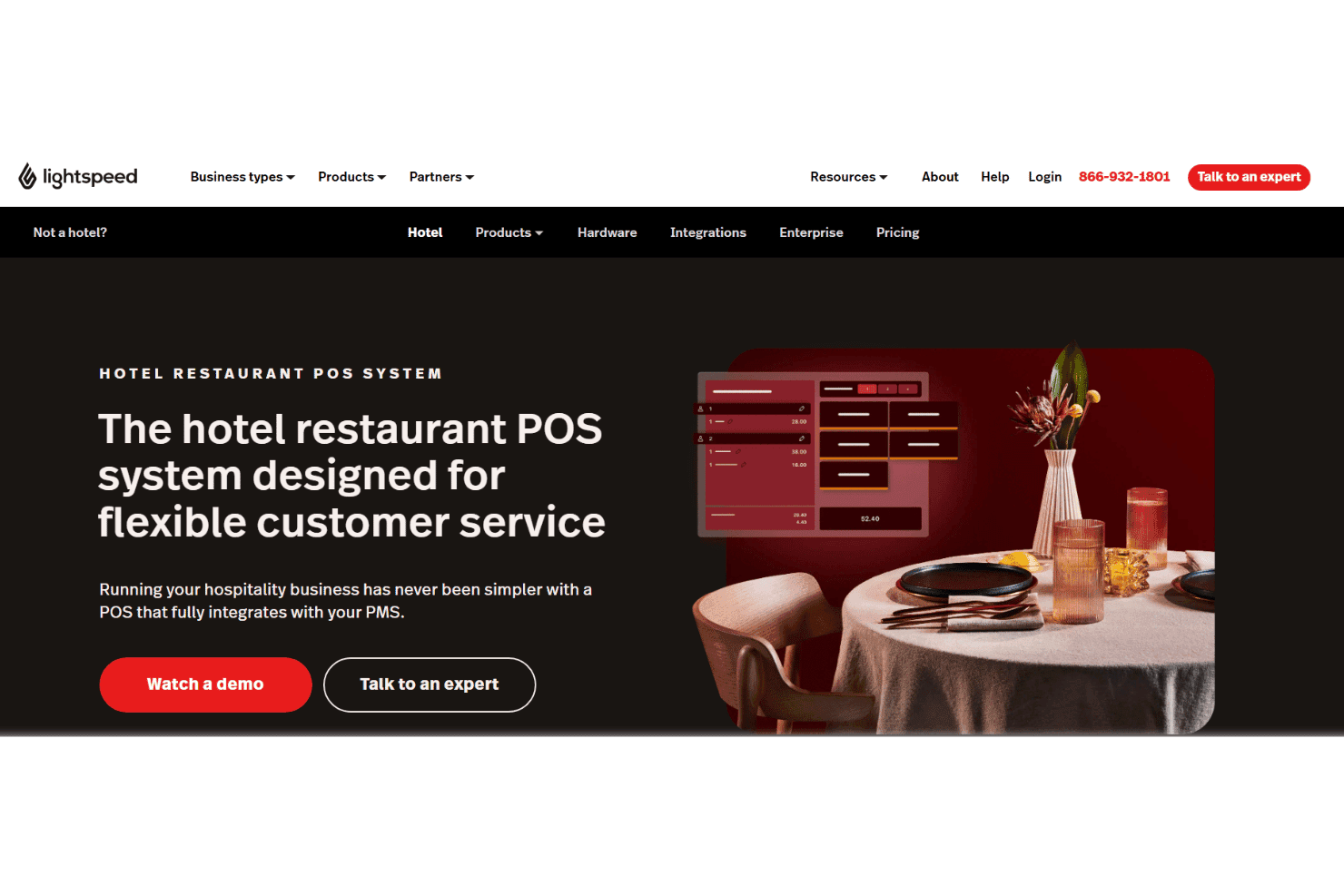
Lightspeed Restaurant handles hotel F&B with multi-outlet table management, tableside ordering, kitchen routing, ingredient tracking, and PMS room charge posting. Lightspeed Restaurant is a cloud-based restaurant POS built for hotel F&B operations, with multi-outlet table management, tableside ordering, kitchen display routing, ingredient-level inventory tracking, and real-time PMS integration for room charge posting across 20+ property management systems.
Who Is Lightspeed Restaurant Best For?
Lightspeed Restaurant is a strong fit for hotel F&B directors managing multiple dining venues, bars, or room service operations under one property roof.
Why I Picked Lightspeed Restaurant
I picked Lightspeed Restaurant as one of the best because it's purpose-built to handle F&B across multiple outlets within a single property. I particularly like how the Premium plan supports unlimited revenue centers, each with its own floor plan, menu, and KDS routing, while rolling everything into one consolidated F&B report. Its real-time room charge posting works across 20+ PMS platforms, including Oracle OPERA Cloud, so a dinner charge at your rooftop bar hits the guest folio before they're back in the elevator.
Lightspeed Restaurant Key Features
- Ingredient-level inventory tracking: Automatically depletes stock by ingredient as items are sold, with low-stock alerts and automated supplier reordering built in.
- Lightspeed Pulse mobile app: Lets managers monitor real-time sales performance across all outlets from a single mobile dashboard.
- Pre-authorization bar mode: Opens a tab with a card swipe and closes it in one tap, keeping bar service moving during high-volume periods.
- Advanced Insights with AI querying: Lets managers type plain-language questions about sales or performance data and receive data-backed answers directly within the reporting dashboard.
Lightspeed Restaurant Integrations
Lightspeed Restaurant supports 20+ PMS integrations, including Oracle OPERA, Mews, Stayntouch, WebRezPro, Shiji, RoomRaccoon, and Apaleo. It also integrates with QuickBooks, Xero, and Sage, with raw API access available on Premium for custom integrations.
Pros and Cons
Pros:
- Comprehensive multi-outlet and venue reporting
- Ingredient-level inventory tracking for F&B outlets
- Excels at real-time PMS room charge posting
Cons:
- No native banquet or event management
- PMS integrations require premium-tier subscription
Learn more about Lightspeed Restaurant: Best for multi-outlet F&B across hotel properties
- Free demo available
- Pricing upon request
Visit WebsiteCustomer Rating:4/5
Squirrel supports hotel F&B across dining, bars, poolside, and room service with table management, KDS routing, PMS integration, and digital ordering. Squirrel is a hospitality POS platform built for hotels and resorts, covering multi-outlet F&B service, table management, KDS order routing, PMS integration, and digital ordering across dining rooms, bars, poolside, and room service.
Who Is Squirrel Best For?
Squirrel is a natural fit for F&B directors and operations teams at full-service hotels and resorts managing multiple dining outlets, bars, and room service under one property.
Why I Picked Squirrel
Squirrel earns its spot on my shortlist because of how well it handles the complexity of running F&B across multiple hotel outlets from a single system. I love that KDS routing with load balancing keeps kitchen stations coordinated across a formal dining room, a poolside bar, and room service simultaneously. Multi-coursing and seat-level ordering logic mean servers aren't manually tracking course timing during a busy dinner service.
Squirrel Key Features
- PMS integration: Connects with 25+ property management systems, including Opera, Infor, Maestro, Stayntouch, and WebRezPro, enabling room charge posting directly to guest folios.
- Multi-location management: Centralize menu updates, pricing, promotions, and user permissions across multiple properties, with store grouping and location-specific configuration controls.
- Digital ordering channels: Manage QR code room service ordering, kiosk ordering, and third-party delivery integrations from a single POS hub with real-time menu synchronization.
- Offline mode: Continue capturing orders and processing payments during internet outages, with automatic data sync once connectivity is restored.
Squirrel Integrations
Squirrel lists 25+ PMS integrations, including Opera, Infor, Maestro, Stayntouch, and WebRezPro, plus Shift4, Elavon, Yellow Dog Software, Restaurant365, Paytronix, SevenRooms, and Eat App. Squirrel Cloud provides a REST API, while Squirrel 11 supports SDK, gateway API, and SQL interfaces.
Pros and Cons
Pros:
- Offline mode for uninterrupted F&B operations
- Room charge posting to folios supported
- Handles F&B across multiple hotel outlets
Cons:
- No built-in hotel loyalty program
- Advanced inventory requires third-party integration
Learn more about Squirrel: Best for F&B ops across all hotel outlets
- Free demo available
- Pricing upon request
Visit WebsiteCustomer Rating:3.8/5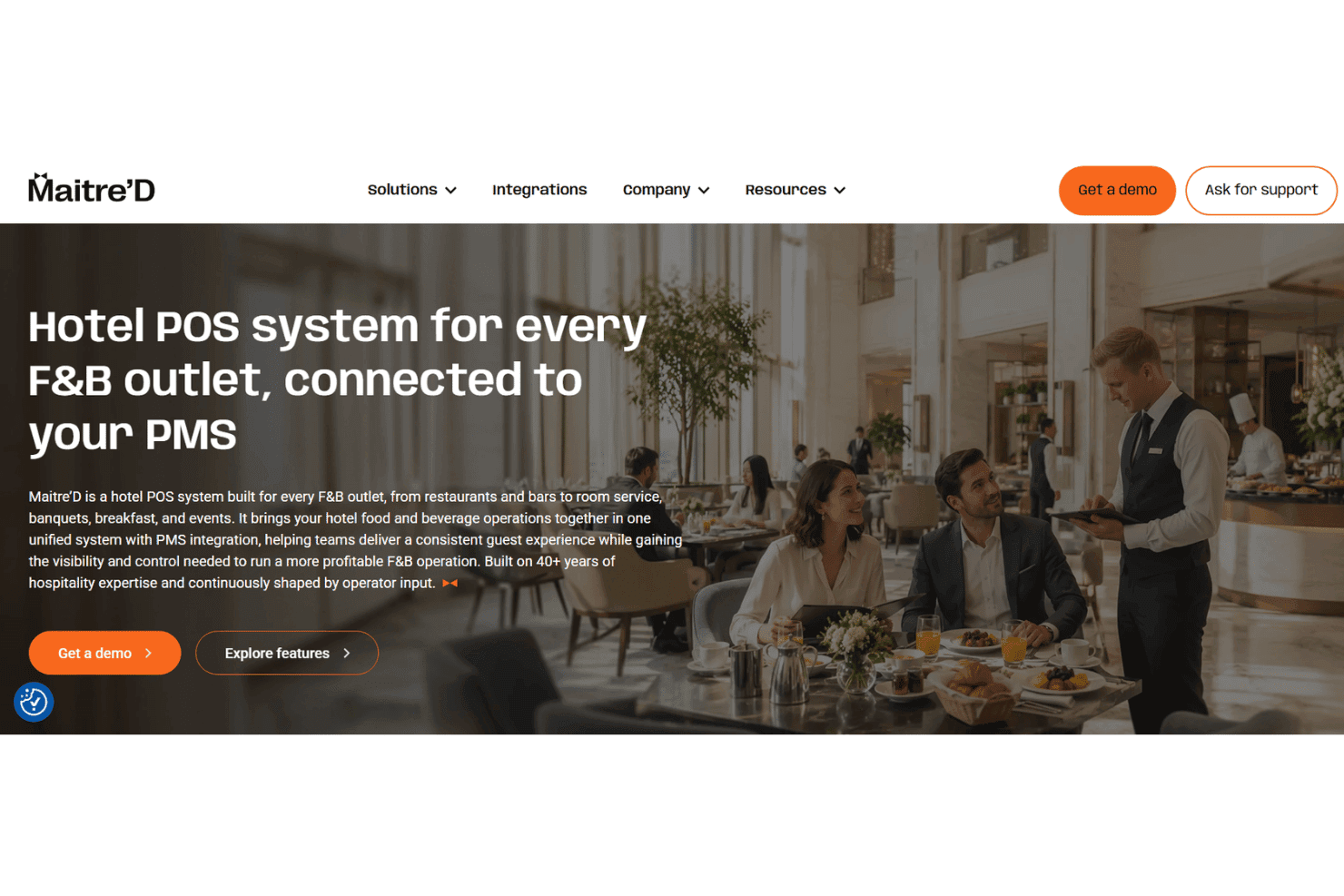
Maitre'D coordinates hotel F&B across restaurants, bars, banquets, and room service with table service, kitchen routing, mobile ordering, and room charge posting. Maitre'D is a hospitality-focused F&B POS platform that covers table service, KDS-driven kitchen routing, mobile ordering, bar management, room charge posting, and multi-outlet reporting across hotel restaurant, bar, banquet, and room service operations.
Who Is Maitre'D Best For?
Maitre'D is a strong fit for hotel F&B directors managing multiple dining outlets—restaurant, bar, banquet, and room service—who need a single platform to handle ordering, kitchen routing, and charge posting across all of them.
Why I Picked Maitre'D
Maitre'D earns its spot on my shortlist because it's purpose-built for hotel F&B operations across every outlet type, from the main restaurant and rooftop bar to banquet events and room service, all managed from one centralized back office. I like how the KDS routes orders to the right kitchen station per outlet while VelPAY handhelds let poolside and banquet staff take orders and process payments tableside. Room charge posting to named PMS platforms like Oracle OPERA and Mews means charges flow directly to guest folios without manual reconciliation.
Maitre'D Key Features
- Banquet and event billing: Route group event orders through the KDS, manage event floor plans, and post charges directly to room folios or master accounts via PMS.
- VelMIX Bar module: Track alcohol pours at the milliliter and ounce level with automated reorder alerts and ingredient-level cost reporting across bar outlets.
- Multi-property menu management: Push menu updates, pricing changes, and promotions across all outlets simultaneously or configure them individually per location from a central back office.
- Offline order processing: Continue taking orders, routing tickets to the kitchen, and capturing payments if the internet or PMS connection drops, with automatic data sync on reconnection.
Maitre'D Integrations
Maitre'D has eight named PMS integrations, including Oracle OPERA, Mews, Maestro, RoomKeyPMS, WebRezPro, Hotello, Reservit, and Amadeus Hotels. It also integrates with OpenTable, Deliverect, Givex, and offers a REST API for custom integrations.
Pros and Cons
Pros:
- Centralized menus and reporting across outlets
- Granular inventory with milliliter pour tracking
- Direct room charge posting to PMS
Cons:
- No explicit spa or retail support
- Outdated user interface for back office
Learn more about Maitre'D: Best for PMS-native room charge posting
- Not available
- Pricing upon request
Visit WebsiteCustomer Rating:4.8/5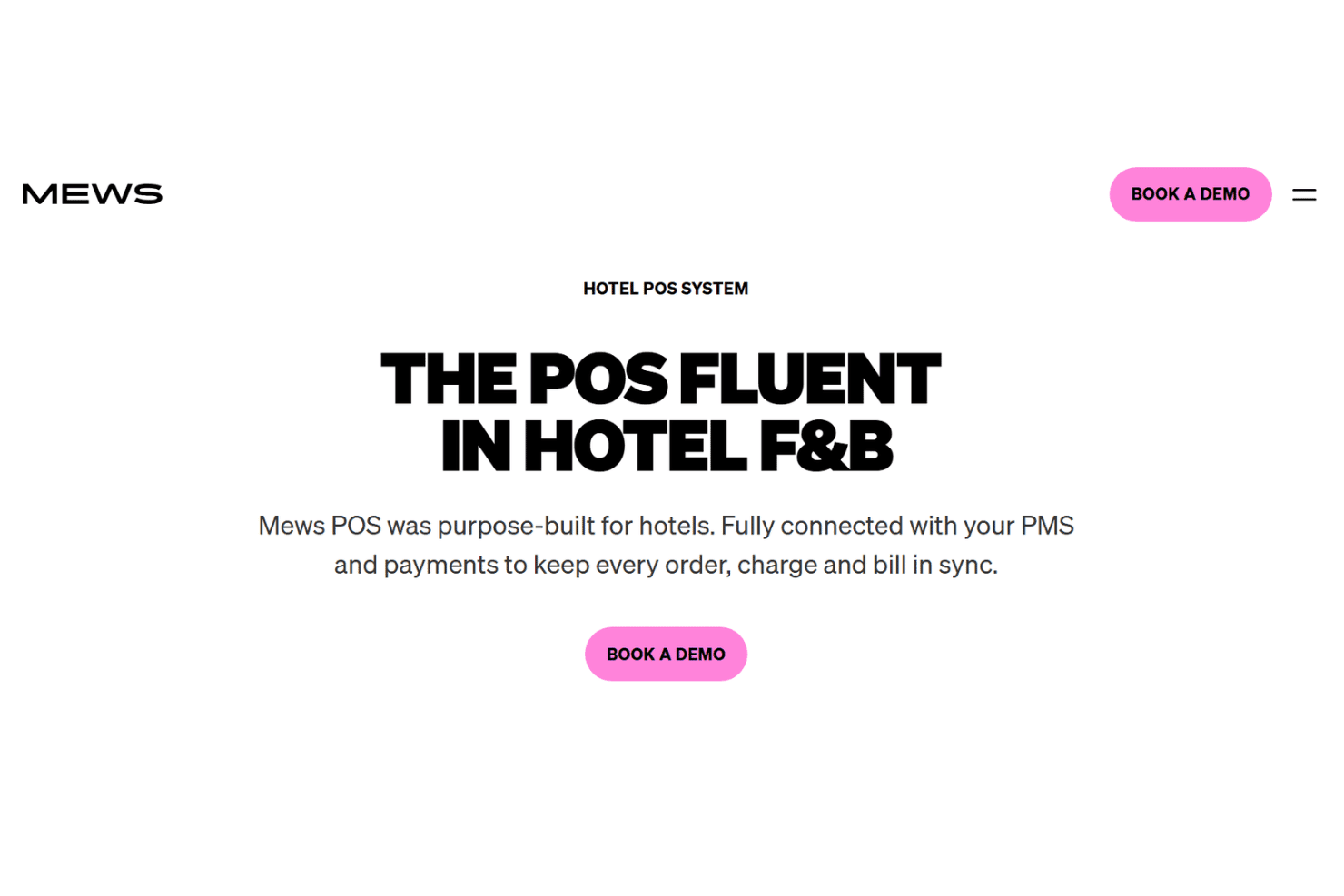
Mews POS handles hotel F&B orders, multi-outlet sales, embedded payments, and real-time room charge posting through Mews PMS. Mews POS is a hotel point-of-sale system built natively on the Mews PMS platform, covering F&B order management, multi-outlet operations, embedded payments, and real-time room charge posting across restaurants, bars, and other on-property revenue centers.
Who Is Mews POS Best For?
Mews POS is the strongest fit for hotels already running Mews PMS that want F&B charges, guest profiles, and reconciliation to work as one unified system.
Why I Picked Mews POS
I've included Mews POS in my top picks because the POS and PMS live on the same platform, which means room charge posting isn't an integration. It's automatic. When a guest orders at the bar, the charge hits their folio in real time, guest profiles surface at the point of sale, and end-of-shift reconciliation happens without any manual matching. Meiser Hotels cut two hours of daily reconciliation per property to zero after switching to the unified setup.
Mews POS Key Features
- Kitchen display system: A dedicated KDS app routes orders to the kitchen with ticket time tracking and order prioritization built in.
- Offline mode: The POS continues processing orders during connectivity outages and automatically syncs transactions once the connection is restored.
- Mobile ordering on any Android device: Staff take orders and process payments on any Android smartphone or tablet, with no proprietary hardware required.
- Inventory management add-on: Tracks stock at the ingredient level with recipe costing, low-stock alerts, and automated supplier reordering.
Mews POS Integrations
Mews POS integrates natively with Mews PMS and Mews Payments, with 1,000+ Marketplace integrations including QuickBooks, Xero, Sage, Uber Eats, and DoorDash. Enterprise plans include Open API access for custom integrations.
Pros and Cons
Pros:
- End-of-shift reconciliation is fully automated
- Mobile ordering on any Android device
- Native PMS integration with instant room charge posting
Cons:
- Banquet and event management features limited
- Inventory and digital ordering are paid add-ons
Learn more about Mews POS: Best for enterprise multi-property F&B billing
- Free demo available
- Pricing upon request
Visit WebsiteCustomer Rating:3.8/5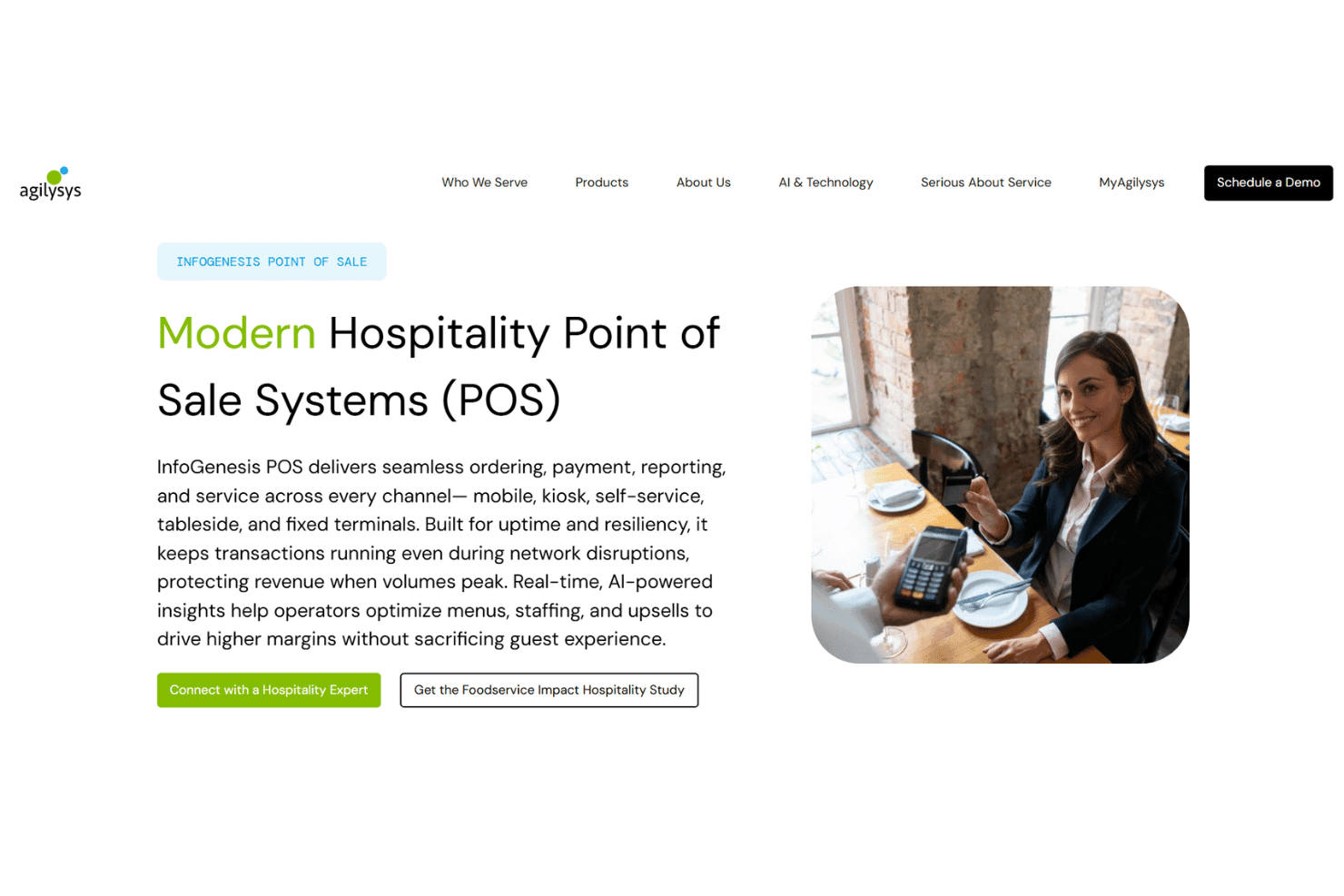
Agilysys InfoGenesis POS manages hotel F&B orders, kitchen workflows, kiosks, mobile ordering, payments, inventory costing, and cross-outlet reporting. Agilysys InfoGenesis POS is an enterprise hotel POS platform built for multi-property and resort environments, covering F&B ordering, kitchen management, self-service kiosks, mobile staff ordering, payment processing, inventory costing, and cross-outlet reporting.
Who Is Agilysys InfoGenesis POS Best For?
InfoGenesis POS is built for large hotels, resorts, and multi-property groups that need a single platform managing F&B, payments, and reporting across every outlet.
Why I Picked Agilysys InfoGenesis POS
Agilysys InfoGenesis POS earns its spot on my shortlist because it's built from the ground up for multi-property F&B billing at enterprise scale. I love how its centralized configuration portal pushes menus, pricing, and promotions across every outlet simultaneously, whether that's 5 restaurants on one property or 40+ locations across a casino resort portfolio. Native two-way PMS integration means charges post directly to guest folios in real time, with no manual reconciliation required.
Agilysys InfoGenesis POS Key Features
- Agilysys Pay: A natively integrated payment platform supporting EMV, NFC/contactless, Apple Pay, Google Pay, tokenization, and PCI-validated P2PE across all outlets.
- IG Fly mobile ordering: A dedicated handheld tool for staff to take orders and process payments at poolside, tableside, banquet, and remote service areas.
- Agilysys Analyze dashboards: Role-specific reporting dashboards that consolidate POS, PMS, spa, golf, and retail data into a single property-wide or multi-property view.
- Agilysys SWS inventory: An integrated procurement and recipe costing module with real-time stock tracking, vendor bid comparison, and mobile barcode scanning across all outlets.
Agilysys InfoGenesis POS Integrations
Native integrations include Agilysys PMS, Agilysys Analyze, Agilysys SWS, Agilysys Pay, Agilysys Loyalty & Promotions, and IG KDS. It also integrates with Oracle Opera, Infor HMS, Sabre SynXis, Amadeus, and IHG PMS platforms, with an open API for custom connections.
Pros and Cons
Pros:
- Offers strong offline mode for remote venues
- Handles room charges across all outlets instantly
- Centralizes menu and pricing updates property-wide
Cons:
- Customization requires paid vendor technician services
- Below-average ratings for customer support
Learn more about Agilysys InfoGenesis POS: Best for multi-property F&B charge posting
- Free demo available
- Pricing upon request
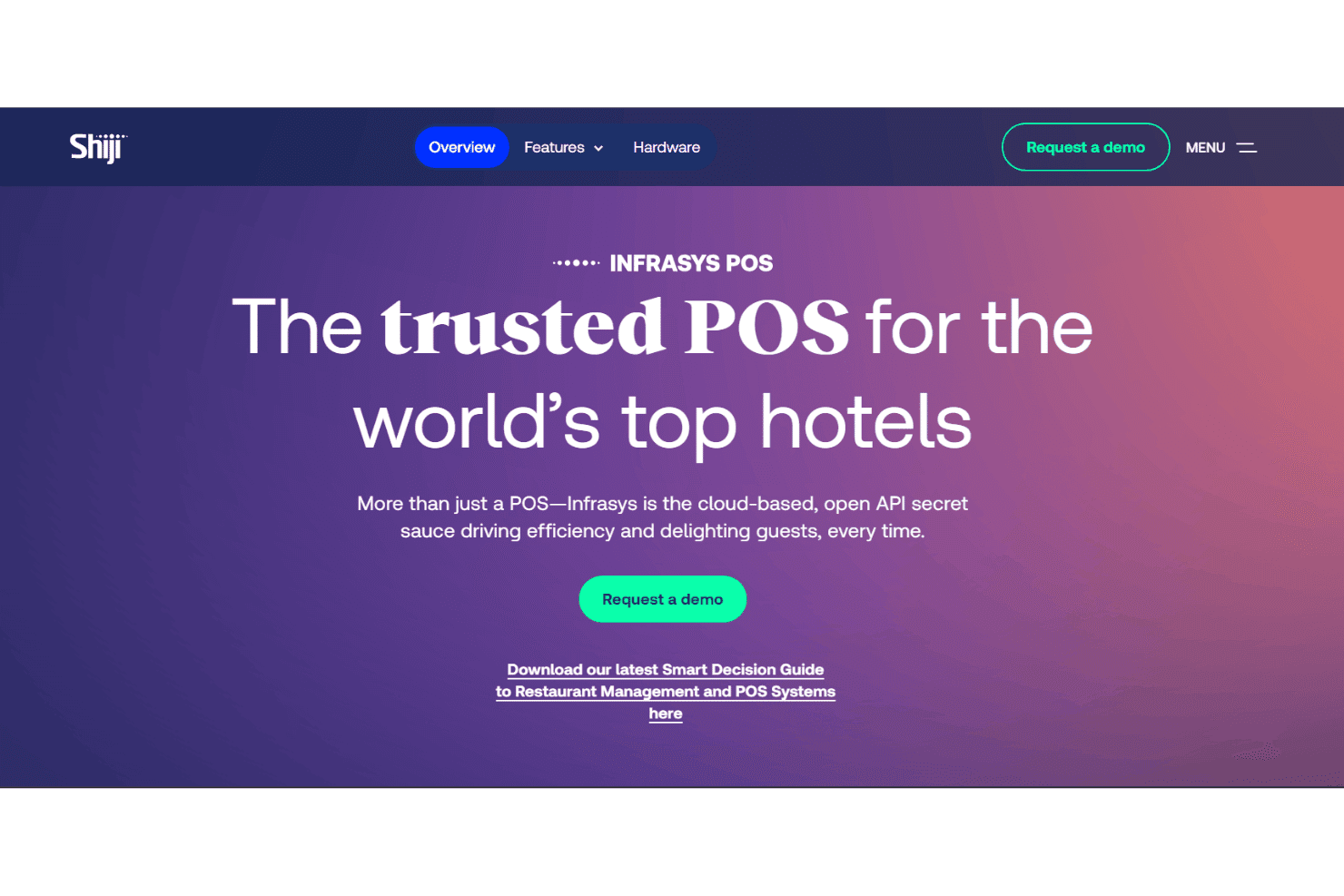
Infrasys supports hotel F&B with multi-outlet ordering, mobile service, payments, room charges, and centralized multi-property reporting. Infrasys is a cloud-native hotel POS built for enterprise F&B operations, supporting multi-outlet order management, tableside and mobile ordering, integrated payments, room charge posting, and centralized multi-property reporting.
Who Is Infrasys Best For?
Infrasys is a strong fit for multi-property hotel groups and branded chains that need centralized F&B management across multiple outlets and locations.
Why I Picked Infrasys
I picked Infrasys as one of the best because it handles multi-property F&B charge posting better than anything else I've seen at this scale. When a guest orders poolside at one property and dines at another outlet that evening, Infrasys posts both charges to the same room folio in real time, across PMS platforms like Opera Cloud, Amadeus, and Apaleo. I also like that centralized menu and pricing configurations push across all properties from a single back office, which is a genuine advantage for branded hotel groups managing F&B operations at scale.
Infrasys Key Features
- Offline resiliency: Infrasys keeps order-taking, payment capture, and kitchen printing running during internet outages, then syncs transactions automatically when connectivity is restored.
- Infrasys POS Move: A dedicated mobile ordering app with a staff-facing interface and docking station, built for poolside attendants, lobby servers, and banquet teams.
- Self-service kiosks: Through its Rivalry Tech integration, Infrasys supports guest-facing self-ordering kiosks for marketplace, counter, and table-service outlets.
- Fiscal compliance across 100+ countries: Infrasys handles local tax rules, service charges, and fiscalization requirements across Europe, LATAM, APAC, and the Middle East.
Infrasys Integrations
Infrasys integrates with 6+ PMS platforms, including Daylight, Amadeus, Agilysys ResortSuite, Apaleo, Cloudbeds, and Aspen Club Management. It also supports Adyen, FreedomPay, Apicbase, and Yellow Dog, with an open API for custom integrations.
Pros and Cons
Pros:
- Real-time guest room posting across properties
- Centralized menu and pricing for all outlets
- Resilient cloud-managed operations during outages
Cons:
- Full inventory features need third-party tools
- Backend configuration is complex for new users
Learn more about Infrasys: Best for OPERA Cloud-native folio posting
- Free demo available
- Pricing upon request
Visit WebsiteCustomer Rating:3.6/5
Oracle MICROS Simphony manages hotel F&B operations with order management, kitchen displays, mobile ordering, payments, inventory tracking, and OPERA Cloud integration. Oracle MICROS Simphony is a cloud-based hotel POS platform built for multi-outlet hospitality environments, covering F&B order management, kitchen display, mobile tableside ordering, payment processing, inventory tracking, and native integration with Oracle OPERA Cloud.
Who Is Oracle MICROS Simphony Best For?
Oracle MICROS Simphony is a strong fit for full-service and enterprise hotels running Oracle OPERA Cloud that need native, real-time folio posting across multiple F&B outlets.
Why I Picked Oracle MICROS Simphony
Oracle MICROS Simphony earns its spot on my shortlist because of how deeply it's built around OPERA Cloud. When a guest orders at the pool bar or hotel restaurant, charges post directly to their folio in real time, no manual reconciliation needed at checkout. I also like that shared guest profiles surface loyalty status and dining preferences right at the POS terminal, which is something most hotel POS platforms can't do natively.
Oracle MICROS Simphony Key Features
- Kitchen display system (KDS): Routes orders from POS terminals to heat- and spill-resistant kitchen displays, with bump boards and remote view for managing ticket flow across multiple kitchen stations.
- Simphony Frontline Manager: Web-based back office tool for pushing menu updates, pricing changes, and configuration across all outlets from a single interface.
- Oracle InMotion mobile app: Delivers real-time sales tracking, forecasts, and exception alerts for voids and discounts directly to iOS and Android devices.
- CrowdTwist loyalty integration: Connects F&B and retail spend to Oracle's loyalty platform, surfacing reward balances and personalized promotions at the point of service.
Oracle MICROS Simphony Integrations
Oracle MICROS Simphony has native integration with Oracle OPERA Cloud and supports 200+ marketplace integrations, including FreedomPay, Elavon, Adyen, Uber Eats, DoorDash, and Deliverect. OHIP provides an API for custom connections, with Oracle Analytics Cloud and CrowdTwist also supported.
Pros and Cons
Pros:
- Reliable offline mode for uninterrupted service
- Centralized menu management for all outlets
- Real-time folio posting with OPERA Cloud
Cons:
- Report customization is frequently flagged as limited
- Implementation takes several months for hotels
Learn more about Oracle MICROS Simphony: Best for PMS-connected multi-outlet hotel F&B
- Free demo available
- Pricing upon request
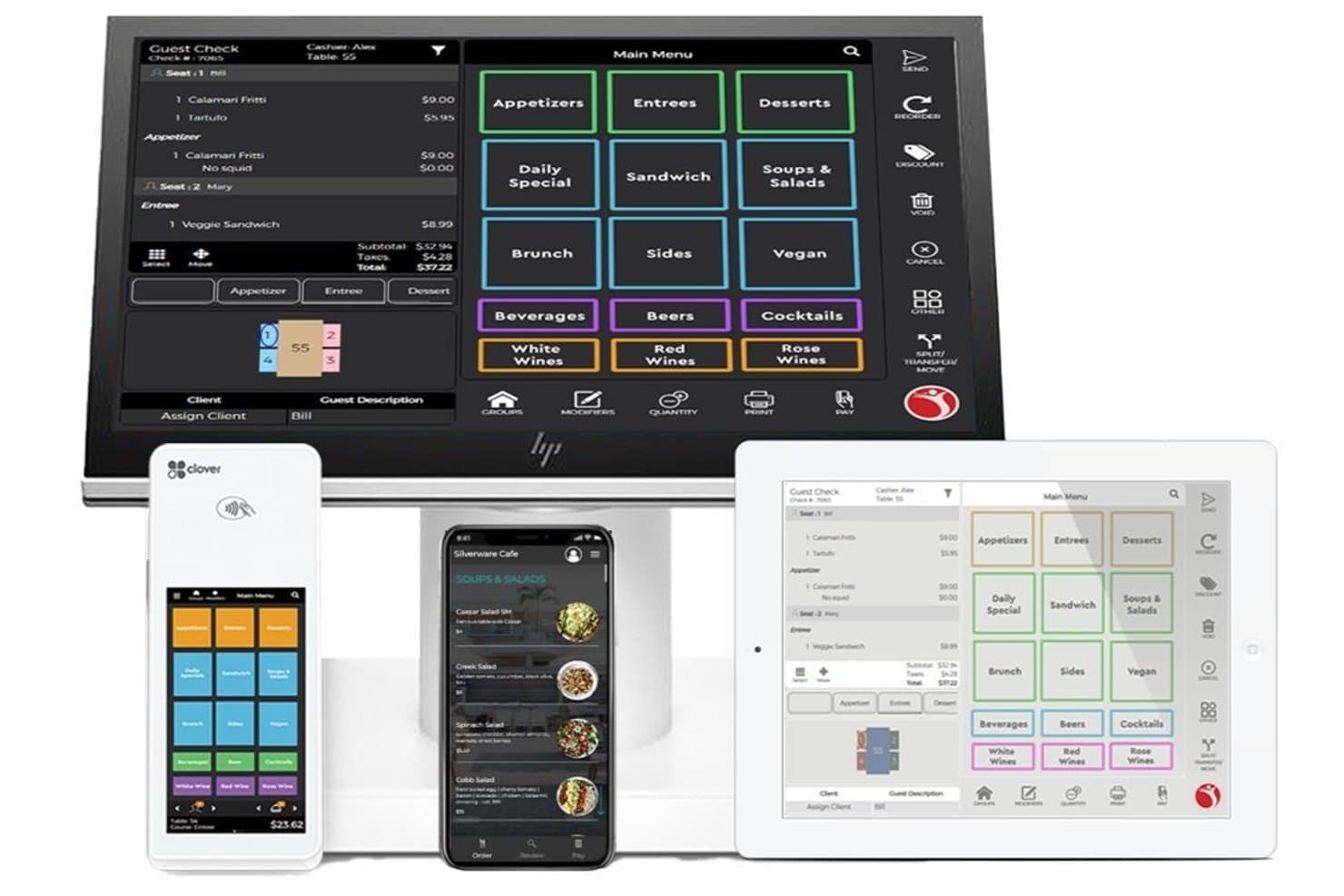
Silverware POS organizes menu categories across devices for hotel dining. Silverware POS is a hotel and resort point-of-sale platform built around multi-outlet F&B operations, PMS-connected folio posting, table management, mobile ordering, kitchen display, and centralized reporting across all on-property revenue centers.
Who Is Silverware POS Best For?
Silverware POS is a strong fit for hotel and resort operators running multiple F&B outlets who need every revenue center connected to a central PMS.
Why I Picked Silverware POS
I picked Silverware POS as one of the best because it's purpose-built for hotels running multiple F&B outlets that all need to talk to a central PMS. What I like most is the two-way PMS sync: charges posted from a poolside bar, in-room dining, or a banquet event land directly on the guest folio in systems like Oracle Opera or Maestro, in real time. The Maestro integration in particular runs on a shared database, so loyalty points earned at any outlet show up live in the PMS without any manual reconciliation.
Silverware POS Key Features
- Annoncer kitchen display system: Routes orders to kitchen screens in real time with workflow states like "Fired," "Cooking," and "Plated," and tracks per-guest dietary and allergen information.
- GuestX guest-device ordering: Lets guests order and pay from their own smartphone via a browser-based interface, with no app download required.
- Self-serve kiosks: Fully branded, outlet-specific kiosks support lobby, poolside, and quick-service ordering without staff involvement.
- Heartbeat reporting dashboard: Consolidates live sales, labor, and outlet performance data across all revenue centers into a single real-time view.
Silverware POS Integrations
Silverware POS lists 150+ integrations, including Oracle Opera, Maestro PMS, Infor HMS, RoomKey, Yellow Dog Software, OpenTable, Libro, Intelity, and Club Prophet. Its Alliance API supports custom integrations.
Pros and Cons
Pros:
- Shared-database PMS integration powers loyalty features
- Built-in offline mode supports continuous operation
- Real-time folio posting across all outlets
Cons:
- Frequent software price increases reported by users
- Core inventory features require third-party tools
Learn more about Silverware POS:
Outros sistemas POS para hotéis
Estas são algumas opções adicionais de sistemas POS para hotéis que não entraram na minha lista restrita, mas que continuam a merecer atenção:
- 11BepozBest for QR-code room charge posting
- 12ICG FrontRestBest for all-outlet F&B in a closed ICG stack
- 13eZee OptimusBest for AI-powered room service ordering
- 14HotelogixBest for all-in-one PMS billing at low cost
- 15PlanetBest for international hotel payments and Tax Free
- 16Epos NowBest for independent hotels on a tight budget
- 17prostayBest for offline-first hotel outlet billing
- 18WinX by EHORSBest for all-in-one hotel stack in APAC
- 19NovuBest for one-time licensed, all-outlet billing
- 20POSitouchBest for F&B billing backed by 24/7 live support
How I Evaluate Hotel POS
When a guest's dinner charge needs to hit their room folio before checkout, the POS either handles it or it doesn't—I split my evaluation into baseline criteria every tool must meet and the differentiators that separate good from great.
Core Functionality (Table Stakes for This List)
When I'm selecting tools for my list, I rank each one on a scale from 0 (does not offer the functionality) to 5 (excels in this area) for each core functionality listed below. I then calculate the tool's total score into a percentage, using 65% as a benchmark to help assess its overall fit for the list.
- PMS Integration: I check whether the POS connects to major property management systems for real-time room charge posting and guest profile sync.
- Multi-Outlet Support: Each tool needs to handle restaurants, bars, room service, spas, and retail from a single back office with cross-outlet visibility.
- F&B Order Management: I look for table management, menu configuration, course firing, and kitchen display or printer routing that keeps service moving during peak covers.
- Payment Processing: Split checks, room charges, contactless payments, and gratuity handling all matter—especially when a guest wants to split a bar tab across two rooms.
- Inventory & Menu Management: Recipe-level costing, ingredient tracking, and low-stock alerts help F&B directors control food cost without manual spreadsheet work.
- Consolidated Reporting: I evaluate whether the system rolls up sales, labor, and revenue data across every outlet into dashboards that a general manager can act on quickly.
Once I have a list of tools that meet the criteria, I consider what sets each platform apart.
Differentiating Factors (What Sets Vendors Apart)
Here's how I compare and contrast different vendors:
Standout Features
Offline resiliency is the first thing I check—when your internet drops mid-dinner rush, the POS needs to keep firing orders and printing checks, then sync once connectivity returns. I also evaluate banquet and event management tools, since hotels regularly handle weddings and conferences that require pre-set menus, package billing, and posting to a master group folio. Multi-property chain management matters too: I look for centralized menu and pricing control that pushes updates across an entire portfolio with roll-up reporting for ownership groups.
Beyond Features
I check whether a vendor offers true 24/7 live support with hospitality-trained agents, since a POS failure during a Saturday banquet can't wait for a Monday ticket queue. PMS ecosystem fit matters just as much—I look for certified interfaces with platforms like Opera, Mews, or Cloudbeds, plus open APIs that connect to the accounting and payroll tools your group already runs. I also evaluate total cost of ownership, comparing per-terminal subscriptions, hardware bundles, and PMS interface fees to spot hidden costs before contract signing.
Como escolher um sistema POS para hotéis
Encontrar a opção certa de sistema POS para hotéis depende de adequar a complexidade da F&B da sua propriedade, as necessidades contabilísticas e os fluxos de faturação dos hóspedes.
| Se a sua prioridade é... | Procure... |
|---|---|
| Se a sua prioridade é...Lançamentos precisos nas contas dos quartos | Procure...Integrações diretas com o seu sistema de gestão da propriedade (PMS) |
| Se a sua prioridade é...Gerir vários pontos de venda ou propriedades | Procure...Retaguarda centralizada e relatórios entre estabelecimentos |
| Se a sua prioridade é...Prestar um serviço rápido aos hóspedes nos pontos de venda e junto à piscina | Procure...Funcionalidades móveis ou através de códigos QR para lançar despesas na conta do quarto |
| Se a sua prioridade é...Gerir banquetes, casamentos ou eventos | Procure...Ferramentas integradas de faturação de banquetes/eventos e de contas de grupo |
| Se a sua prioridade é...Controlar os custos de F&B | Procure...Inventário ao nível dos ingredientes com alertas automáticos de utilização |
Como avaliar a sua lista restrita
- Verifique a integração direta com o PMS: Solicite uma demonstração que inclua o lançamento de uma conta de restaurante na conta do quarto de um hóspede no seu PMS real.
- Teste a configuração de vários pontos de venda: Crie dois pontos de venda de F&B fictícios numa demonstração ou num período experimental e gere um relatório consolidado de vendas para ambos os estabelecimentos.
- Simule o modo offline: Peça para ver o processo do POS e o comportamento da sincronização durante uma interrupção de rede planeada, com pedidos de F&B em curso.
- Audite o acompanhamento do inventário: Realize uma tarefa experimental que consista em configurar uma receita e acionar um alerta de stock baixo utilizando os seus próprios ingredientes ou menu.
- Decida entre um ecossistema e uma solução especializada: Escolha entre uma solução integrada de PMS+POS para obter suporte unificado ou combinar fornecedores para ter mais flexibilidade e funcionalidades mais abrangentes.
O que são sistemas POS hoteleiros?
Os sistemas POS hoteleiros são plataformas de ponto de venda concebidas para gerir transações de restauração, bebidas e comércio a retalho no interior dos hotéis. Estes sistemas ligam-se ao software de gestão da propriedade para lançar as despesas dos hóspedes diretamente nas contas dos quartos, acompanhar os pedidos em vários pontos de venda e processar pagamentos de diversas fontes.
A utilização de um POS hoteleiro ajuda a sua equipa a centralizar as operações de F&B, reduzir os erros de faturação e garantir uma experiência tranquila aos hóspedes, desde o restaurante até ao check-out.
Funcionalidades dos sistemas POS hoteleiros
Ao selecionar sistemas POS hoteleiros, esteja atento às seguintes funcionalidades essenciais:
- Integração com o PMS: Liga o POS ao seu sistema de gestão da propriedade, permitindo que os funcionários lancem as despesas do restaurante, bar ou spa diretamente nas contas dos quartos dos hóspedes. Isto reduz os erros manuais e mantém as contas dos hóspedes corretas até ao check-out.
- Suporte para vários pontos de venda: Gere restaurantes, bares, serviço de quartos, eventos e pontos de venda a retalho a partir de uma única área administrativa, permitindo gerir menus entre diferentes espaços e obter relatórios unificados. Isto permite-lhe consultar o desempenho de toda a sua propriedade ou carteira.
- Gestão de pedidos de F&B: Gere a disposição das mesas, a atribuição de lugares, as configurações do menu e os modificadores, enviando os pedidos diretamente para os ecrãs ou impressoras da cozinha, de modo a manter um serviço eficiente durante as horas de maior movimento.
- Processamento de pagamentos: Aceita várias opções de pagamento, incluindo cartões de crédito, despesas no quarto, carteiras digitais e contas divididas — algo importante para a comodidade dos hóspedes e para uma faturação correta.
- Gestão de inventário e menus: Acompanha a utilização dos ingredientes, permite calcular o custo das receitas e fornece alertas de stock baixo, para que possa gerir os custos alimentares e reduzir o desperdício sem recorrer a folhas de cálculo adicionais.
- Relatórios consolidados: Reúne dados sobre vendas, mão de obra e desempenho dos pontos de venda em painéis de controlo acionáveis, ajudando os gestores a tomar decisões rápidas e a identificar tendências ou problemas.
- Funcionalidade de modo offline: Mantém o POS em funcionamento e regista os pedidos em curso mesmo durante interrupções da rede, sincronizando os dados automaticamente assim que a ligação for restabelecida.
- Gestão de banquetes e eventos: Disponibiliza ferramentas de gestão de banquetes para criar menus de eventos predefinidos, gerir a faturação de grupos e lançar as despesas dos grupos nas contas principais — uma funcionalidade indispensável para propriedades que recebem casamentos ou conferências.
- Controlos de acesso dos utilizadores: Permite definir níveis de permissão para funções como gestores, empregados de mesa e funcionários da área administrativa, protegendo dados sensíveis e impondo a separação de funções.
- Integração com contabilidade e processamento salarial: Liga-se diretamente ao software de contabilidade e processamento salarial, automatizando a transferência de dados financeiros e reduzindo a introdução duplicada de dados ou os erros.
Funcionalidades comuns de IA dos sistemas POS hoteleiros
Para além das funcionalidades padrão dos sistemas POS hoteleiros acima indicadas, muitas destas soluções estão a incorporar IA com funcionalidades como:
- Recomendações de vendas adicionais baseadas em IA: Utiliza os perfis dos hóspedes, o histórico de compras e o contexto em tempo real para sugerir artigos do menu ou melhorias relevantes aos funcionários durante a introdução dos pedidos, ajudando a aumentar o valor médio da conta e a personalizar o serviço.
- Previsão da procura baseada em IA: Analisa as vendas históricas, os padrões de reservas e fatores externos, como eventos locais ou o clima, para prever a procura de F&B, permitindo às equipas otimizar a afetação de pessoal e o inventário de cada ponto de venda.
- Deteção de fraude baseada em IA: Monitoriza os padrões das transações e o comportamento dos utilizadores para sinalizar atividades invulgares ou possíveis furtos internos, alertando os gestores para os riscos antes de estes afetarem as receitas ou a confiança dos hóspedes.
- Otimização de menus com IA: Analisa continuamente os dados de vendas, o feedback dos hóspedes e os custos dos ingredientes para recomendar alterações ao menu, ajustes de preços ou posicionamentos de artigos que podem aumentar a rentabilidade e a satisfação dos hóspedes.
- Análise do sentimento dos hóspedes com IA: Analisa as avaliações dos hóspedes, as respostas a inquéritos e as menções nas redes sociais para identificar tendências na satisfação dos hóspedes, ajudando os gestores a resolver falhas no serviço e a melhorar a experiência global.
Vantagens dos sistemas POS hoteleiros
A implementação de sistemas POS hoteleiros proporciona várias vantagens para a sua equipa e para o seu negócio. Eis algumas das que pode esperar:
- Cobrança direta no quarto do hóspede: Os funcionários podem lançar consumos de restaurante, bar e spa diretamente nas contas dos hóspedes através da integração com o PMS, reduzindo os registos manuais e os erros de faturação.
- Gestão unificada dos pontos de venda: Gira vários pontos de venda — desde restaurantes a lojas de retalho — a partir de uma única retaguarda, com supervisão em tempo real e relatórios consolidados.
- Serviço mais rápido em todos os pontos de venda: A gestão de mesas, a configuração de menus e as funcionalidades de pedidos móveis ajudam a acelerar as transações e a melhorar a experiência dos hóspedes onde quer que os pedidos sejam efetuados.
- Controlo preciso do inventário: O inventário ao nível dos ingredientes e os alertas automáticos de stock baixo permitem à sua equipa acompanhar o consumo e os custos sem ter de gerir folhas de cálculo adicionais.
- Processamento de pagamentos flexível: Aceite cartões, cobranças nos quartos, carteiras digitais e contas separadas, para que os hóspedes possam pagar como preferirem, incluindo a gestão de contas associadas a vários quartos.
- Suporte para faturação de eventos e grupos: As ferramentas de gestão de banquetes e o lançamento em contas principais simplificam a faturação de eventos e o acompanhamento de cobranças de grupos para casamentos, conferências e reservas de grande dimensão.
- Resiliência operacional: O modo offline garante que o POS continua a processar pedidos e a imprimir contas mesmo que a ligação à Internet seja interrompida, sincronizando tudo quando a conectividade for restabelecida.
Custos e preços dos sistemas POS para hotéis
A seleção de sistemas POS para hotéis exige uma compreensão dos vários modelos de preços e planos disponíveis. Os custos variam consoante as funcionalidades, o tamanho da equipa, os complementos e outros fatores. A tabela abaixo resume os planos mais comuns, os respetivos preços médios e as funcionalidades normalmente incluídas nos sistemas POS para hotéis:
Tabela de comparação de planos para sistemas POS de hotéis
| Tipo de plano | Preço médio | Funcionalidades comuns |
|---|---|---|
| Tipo de planoPlano gratuito | Preço médio$0 | Funcionalidades comunsGestão básica de pedidos, integração limitada com o PMS, suporte para um único ponto de venda e relatórios simples. |
| Tipo de planoPlano pessoal | Preço médio$40–$80/mês | Funcionalidades comunsIntegração melhorada com o PMS, acompanhamento básico do inventário, pedidos móveis e processamento essencial de pagamentos. |
| Tipo de planoPlano empresarial | Preço médio$80–$150/mês | Funcionalidades comunsGestão de vários pontos de venda, controlos avançados do inventário, configuração personalizada de menus, relatórios e ferramentas para eventos. |
| Tipo de planoPlano empresarial de grande dimensão | Preço médio$150–$300/mês | Funcionalidades comunsGestão de toda a cadeia, painéis centralizados, modo offline, APIs abertas, suporte 24/7 e integrações personalizadas. |
Perguntas frequentes sobre POS hoteleiro
Eis algumas respostas a perguntas frequentes sobre POS hoteleiro:
Como é que os sistemas POS hoteleiros se integram com os sistemas de gestão de propriedades?
Os sistemas POS hoteleiros integram-se com os sistemas de gestão de propriedades (PMS), permitindo que os consumos de restaurantes, bares ou spas sejam lançados diretamente na conta corrente do quarto do hóspede, em tempo real. Esta integração reduz os erros de faturação e acelera o serviço. A maioria dos sistemas utiliza interfaces certificadas ou APIs abertas para estabelecer esta ligação. Solicite sempre aos fornecedores uma demonstração ao vivo para confirmar a integração com a plataforma PMS que utiliza.
Os sistemas POS hoteleiros conseguem gerir vários estabelecimentos dentro da propriedade?
Sim, a maioria dos sistemas POS hoteleiros modernos suporta a gestão de vários estabelecimentos. Pode gerir restaurantes, bares, serviço de quartos e lojas de retalho a partir de uma única área de gestão central. Esta configuração facilita a supervisão de todos os espaços e a criação de relatórios de desempenho por estabelecimento. É essencial para hotéis com operações de F&B complexas ou várias propriedades.
O que acontece se a Internet falhar — as encomendas e os pagamentos continuam a ser processados?
Sim, muitos sistemas POS hoteleiros disponibilizam um modo offline. Isto permite continuar a aceitar encomendas, processar pagamentos e imprimir contas mesmo que a rede fique indisponível. Os dados são sincronizados automaticamente assim que a ligação for restabelecida. Durante a avaliação dos fornecedores, solicite uma demonstração do modo offline com encomendas de hóspedes em curso, para perceber como funciona na prática.
Como é que os sistemas POS hoteleiros apoiam a faturação de banquetes e eventos?
Os sistemas POS hoteleiros com funcionalidades de gestão de banquetes e eventos permitem criar menus fixos, gerir a faturação de grupos e lançar consumos em contas correntes principais para eventos como casamentos e conferências. Isto ajuda a sua equipa a gerir eventos de grande dimensão sem perder o controlo dos pagamentos ou das preferências dos hóspedes. Procure ferramentas de eventos integradas durante o período de teste ou a demonstração.
O acompanhamento do inventário está incluído nos sistemas POS hoteleiros?
Sim, muitos sistemas POS hoteleiros incluem funcionalidades de gestão de inventário e menus. Isto permite acompanhar o consumo ao nível dos ingredientes, receber alertas de stock baixo e gerir o cálculo do custo das receitas a partir do painel de controlo do POS. Estes controlos ajudam as equipas a manter os custos dos alimentos sob controlo e a evitar o trabalho manual em folhas de cálculo.
Que tipos de pagamentos são suportados pelos sistemas POS hoteleiros?
Os sistemas POS hoteleiros suportam normalmente várias opções de pagamento — cartões de crédito, consumos lançados no quarto, carteiras digitais e contas separadas. Alguns conseguem até gerir contas associadas a vários quartos quando os hóspedes querem dividir uma despesa. Peça a cada fornecedor que lhe apresente detalhadamente os respetivos processos de pagamento, de modo a garantir que correspondem às necessidades da sua propriedade.