

Recensione di RateGain: Pro, Contro, Caratteristiche e Prezzi



RateGain is a hotel revenue management software built around competitive rate intelligence, rate parity monitoring, and channel distribution management. It's a good option for properties that need real-time visibility into competitor pricing across channels—and want to act on that data without juggling separate tools. I'd consider it over a platform like IDeaS if automated, algorithm-driven demand forecasting isn't your priority and you want more hands-on control over rate strategy and distribution performance in a single place.
RateGain Evaluation Summary
- Pricing upon request
- Free demo available
Perché fidarsi dei nostri consigli sui software
Il nostro team testa e recensisce software dal 2012. In quanto leader del settore alberghiero noi stessi, sappiamo quanto sia difficile — e importante — scegliere il software giusto.
Per questa guida, abbiamo valutato gli strumenti attraverso test pratici e ricerche indipendenti, assegnando un punteggio agli strumenti in base ai nostri criteri di selezione.
Le nostre recensioni riflettono il nostro giudizio editoriale umano, non un discorso di vendita.
RateGain Overview
When judging RateGain, its real strength is in its global data coverage and dynamic pricing tools, which help hotels react quickly to market shifts. The interface is modern and, onboarding is straightforward, but some users may find advanced analytics less customizable than others. Pricing is competitive for the feature set, and support is responsive.
I’d suggest RateGain is best for hotels or groups that want actionable insights and easy integration with existing systems, especially if you value fast implementation and broad channel connectivity. For smaller properties, the depth of features might feel like more than you need.
pros
-
Real-time rate intelligence across global markets.
-
Automated dynamic pricing recommendations for hotels.
-
Strong channel management and OTA connectivity.
cons
-
Occasional delays in customer support response.
-
Reporting dashboards can feel limited for advanced users.
-
Some features require separate modules or add-ons.
-

roommaster
Visit WebsiteThis rating combines scores from multiple user review sites to reflect overall customer sentiment about the product.4.3 -
Little Hotelier
Visit WebsiteThis rating combines scores from multiple user review sites to reflect overall customer sentiment about the product.4 -
Roomstay Hotel Booking Engine
Visit Website




Come testiamo e valutiamo gli strumenti
Abbiamo trascorso anni a costruire, perfezionare e migliorare il nostro sistema di test e valutazione dei software. Il nostro metodo è progettato per cogliere le sfumature della scelta di un software e ciò che rende uno strumento efficace, concentrandosi sugli aspetti critici del processo decisionale. Qui sotto puoi vedere come funziona il nostro sistema di test e valutazione su sette criteri. Questo ci permette di offrire una valutazione imparziale dei software in base a funzionalità principali, funzioni distintive, facilità d’uso, onboarding, assistenza clienti, integrazioni, recensioni clienti e rapporto qualità-prezzo.
Funzionalità principali (25% del punteggio finale)
Il punto di partenza della nostra valutazione è sempre la funzionalità principale dello strumento. Ha le funzionalità di base che un utente si aspetta? Alcune di queste sono riservate solo a piani tariffari superiori? Ci aspettiamo che uno strumento regga il confronto con le capacità minime offerte dai concorrenti.
Funzioni distintive (25% del punteggio finale)
Successivamente, valutiamo le funzioni originali non comuni che vanno oltre le funzionalità di base normalmente presenti in strumenti simili. Un punteggio elevato riflette funzionalità particolari o uniche che rendono il prodotto più veloce, efficiente, o che offrono valore aggiunto all’utente. Valutiamo inoltre quanto sia facile integrare lo strumento con altri software tipici della struttura tecnologica per ampliare funzionalità e utilità. Gli strumenti che offrono numerose integrazioni native, connessioni di terze parti e accesso API per integrazioni personalizzate ottengono il punteggio migliore.
Facilità d’uso (10% del punteggio finale)
Consideriamo quanto sia rapido e semplice eseguire tramite lo strumento le attività descritte dalle funzionalità principali. Un software con punteggio alto è ben progettato, intuitivo, offre app mobile, fornisce modelli preimpostati e rende semplici anche operazioni complesse.
Onboarding (10% del punteggio finale)
Sappiamo quanto sia importante la rapida adozione di una nuova piattaforma da parte del team, quindi valutiamo quanto sia semplice imparare e utilizzare uno strumento con una formazione minima. Consideriamo quanto velocemente un membro del team possa iniziare a usare lo strumento senza esperienza precedente. Soluzioni con punteggio elevato richiedono poco o nessun supporto.
Assistenza clienti (10% del punteggio finale)
Verifichiamo quanto sia rapido e facile sbloccarsi e ricevere aiuto tramite telefono, chat dal vivo o knowledge base. Gli strumenti e le aziende che offrono assistenza in tempo reale ottengono il punteggio migliore, mentre i chatbot ottengono il punteggio più basso.
Recensioni clienti (10% del punteggio finale)
Oltre ai nostri test e valutazioni, consideriamo il punteggio net promoter dei clienti attuali o passati. Verifichiamo la probabilità che tornino a scegliere lo strumento per le sue funzionalità principali. Un software con punteggio alto rispecchia un elevato net promoter score tra clienti attuali e passati.
Rapporto qualità-prezzo (10% del punteggio finale)
Infine, in considerazione di tutti gli altri criteri, valutiamo il prezzo medio dei piani di ingresso rispetto alle funzionalità principali e teniamo conto del valore degli altri criteri di valutazione. Il software che offre di più spendendo meno otterrà un punteggio più alto.
Core Features
Rate Intelligence
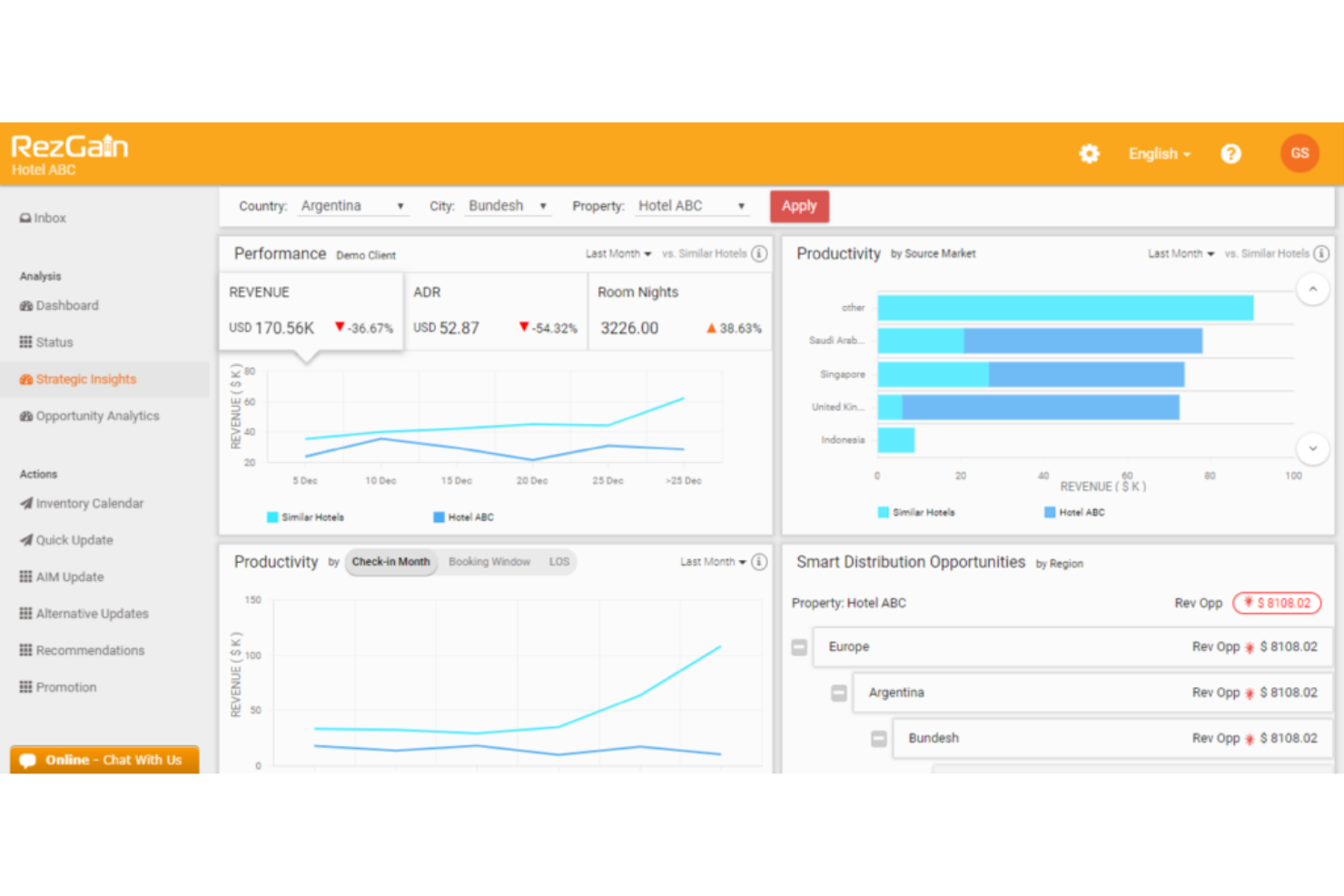
Get real-time competitor pricing and market demand data to inform your rate decisions. This helps you adjust prices quickly to stay competitive.
Dynamic Pricing Automation
Automatically update room rates based on market trends and demand signals. This feature ensures your pricing always reflects current market conditions.
Channel Management
Distribute inventory and rates across multiple OTAs and booking channels from one dashboard. This reduces manual updates and helps prevent overbookings.
Parity Management
Monitor and enforce rate parity across all channels to avoid undercutting. This protects your brand and maximizes revenue from every channel.
Demand Forecasting
Leverage predictive analytics to forecast occupancy and revenue trends. This helps you plan promotions and staffing with greater accuracy.
Centralized Reporting
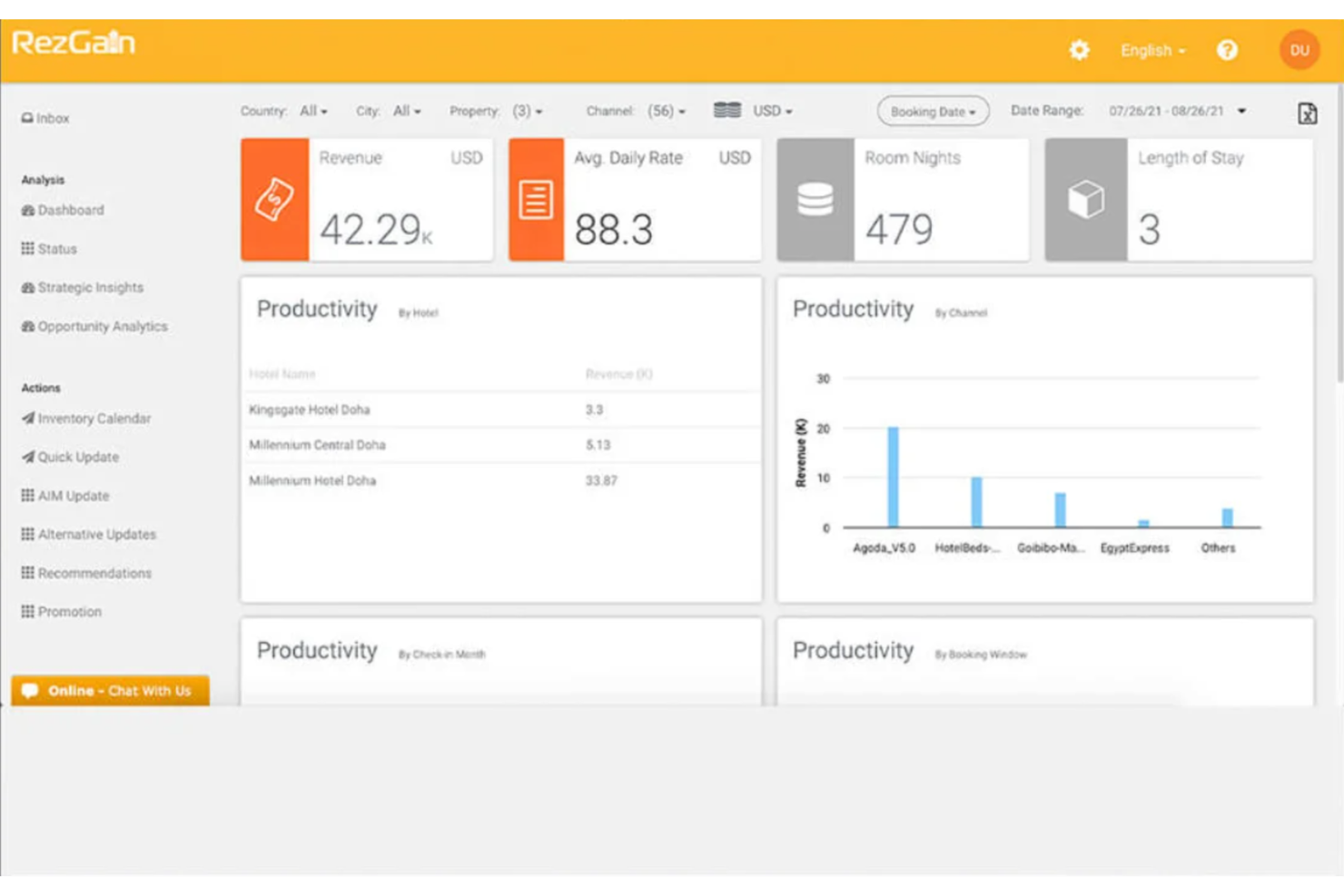
Access consolidated performance reports and analytics for all properties in one place. This makes it easy to track KPIs and share insights with your team.
Ease of Use
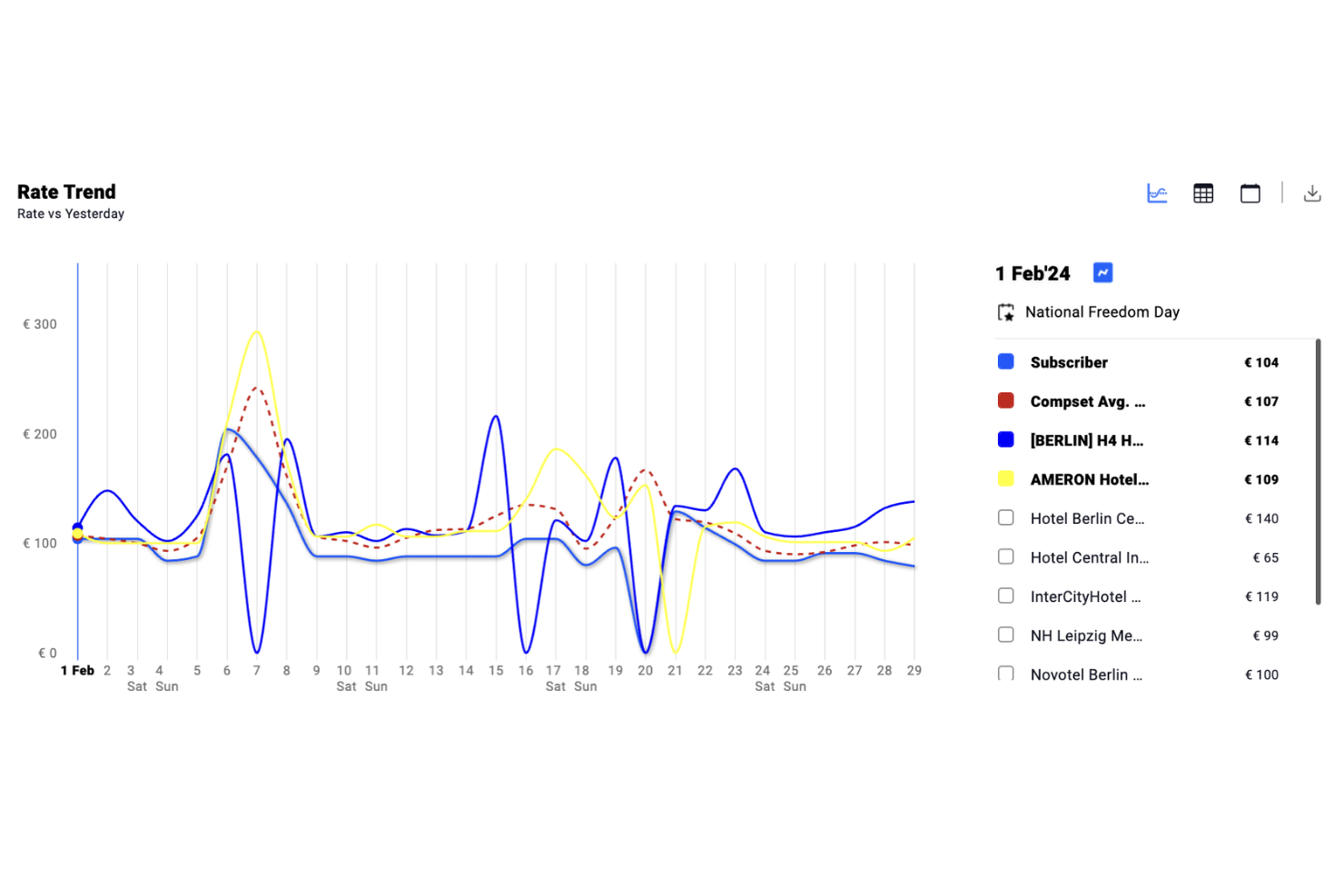
RateGain offers a clean, modern interface that most users find intuitive, especially when navigating rate intelligence and channel management tools. Onboarding is straightforward, with guided setup and helpful tutorials.
Some users mention that advanced reporting can take extra time to master, but day-to-day tasks like updating rates or monitoring parity are quick to access. The platform strikes a good balance between depth and usability for busy hotel teams.
Integrations
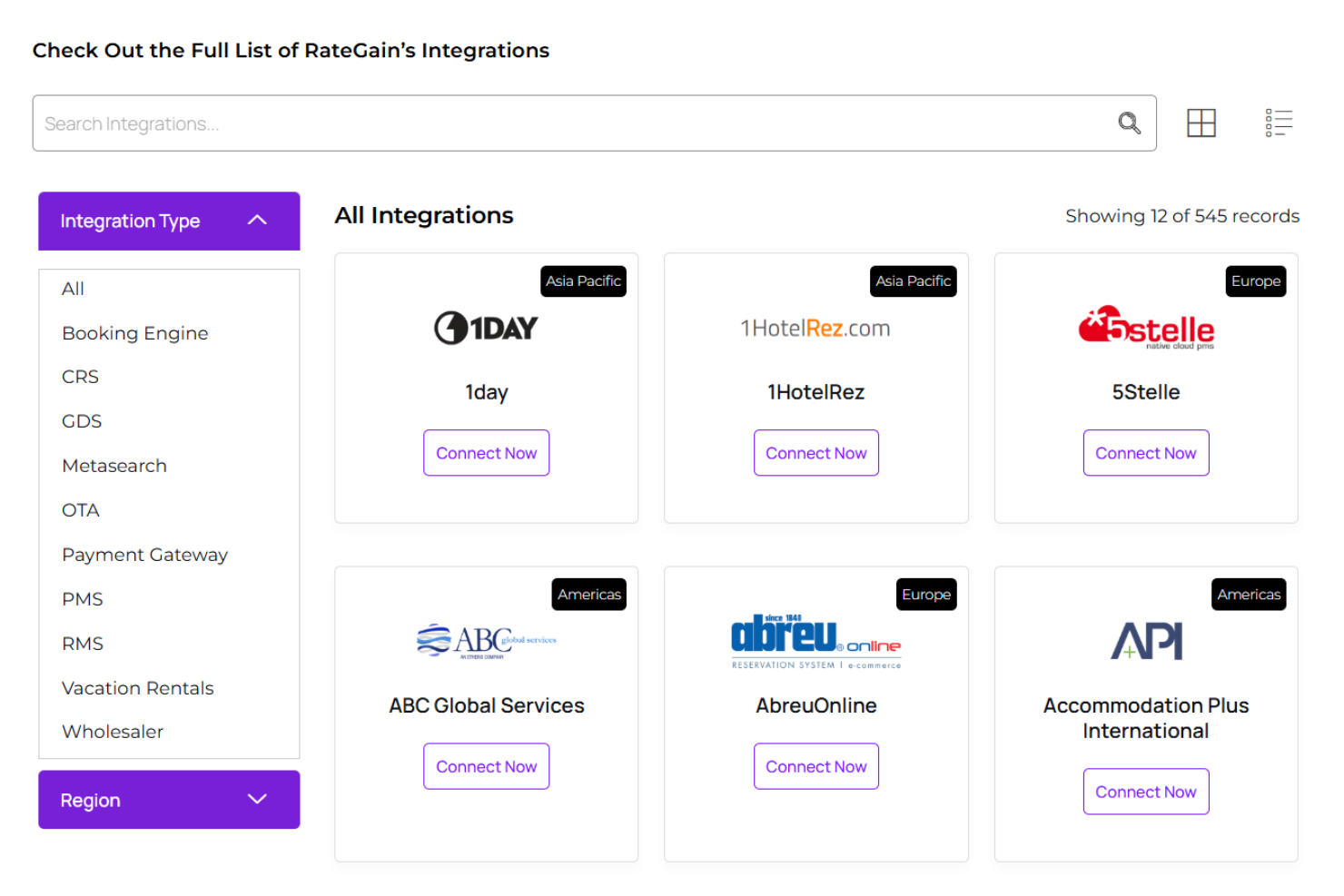
RateGain integrates with Oracle Hospitality OPERA, Amadeus, Sabre, SiteMinder, TravelClick, Hotelogix, Protel, eZee Absolute, Booking.com, and Expedia, among others.
RateGain also offers an API and supports connections with third-party integration tools.
RateGain Specs
- API
- Budgeting
- Calendar Management
- Compliance Tracking
- Contact Management
- Customer Management
- Dashboard
- Data Export
- Data Import
- Data Visualization
- Document Management
- Expense Tracking
- External Integrations
- Forecasting
- Inventory Tracking
- Multi-Currency
- Multi-User
- Notifications
- Organization Management
- Payment Processor
- Payroll
- Scheduling
- Supplier Management
- Tax Management
- Workflow Management