
Key Takeaways
Independent hotels face a persistent, structural labor shortage, not a temporary hiring gap.
Housekeeping remains one of the hardest roles to staff, per American Hotel & Lodging Association (AHLA) survey data.
Nearly 60% of hotel GMs expect automation to improve guest experience and profitability, per Deloitte.
The highest-value automation targets routine, repetitive admin work, not guest-facing judgment calls.
The Jobs One GM Is Actually Doing
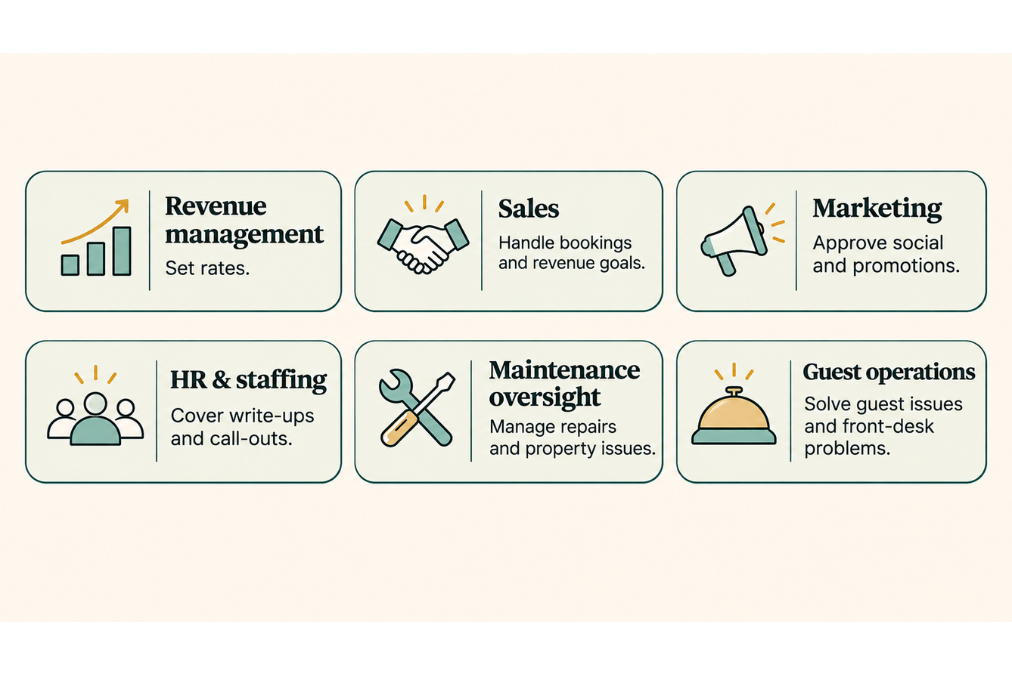
At a branded hotel, revenue management, sales, marketing, HR, and maintenance oversight are often separate roles, or at least separate people a GM can delegate to. At an independent property, that org chart frequently collapses into one person.
You set rates, approve the social post, handle the write-up when someone calls out, and get the call when a pipe bursts. None of that is a complaint about independent ownership; it's just the actual math of running a smaller property without a brand's staffing model behind it.
Why Hiring Your Way Out Isn't Realistic Right Now
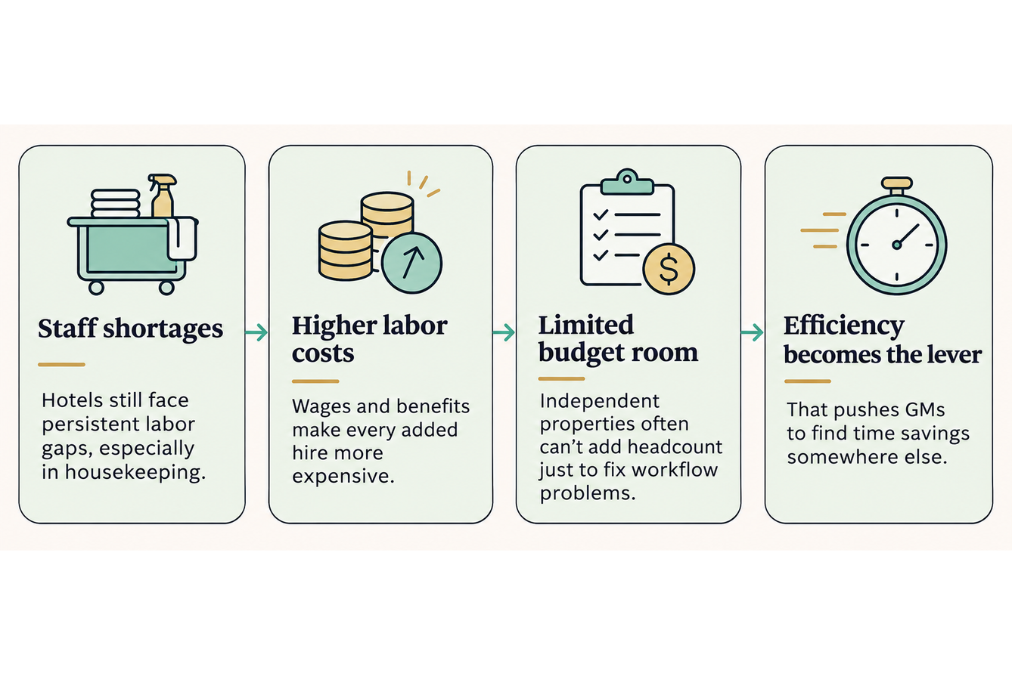
The honest starting point is that this isn't a temporary staffing gap that resolves itself. AHLA survey data shows hotels across the US still grappling with severe shortages, particularly in housekeeping, and rising wage and benefit costs make adding headcount to fix a workflow problem an expensive, often unrealistic answer for an independent property's budget.
That's the practical case for finding efficiency elsewhere: not that it's exciting, but that it's frequently the only lever left when hiring isn't an option.
Where GMs Are Actually Finding the Hours
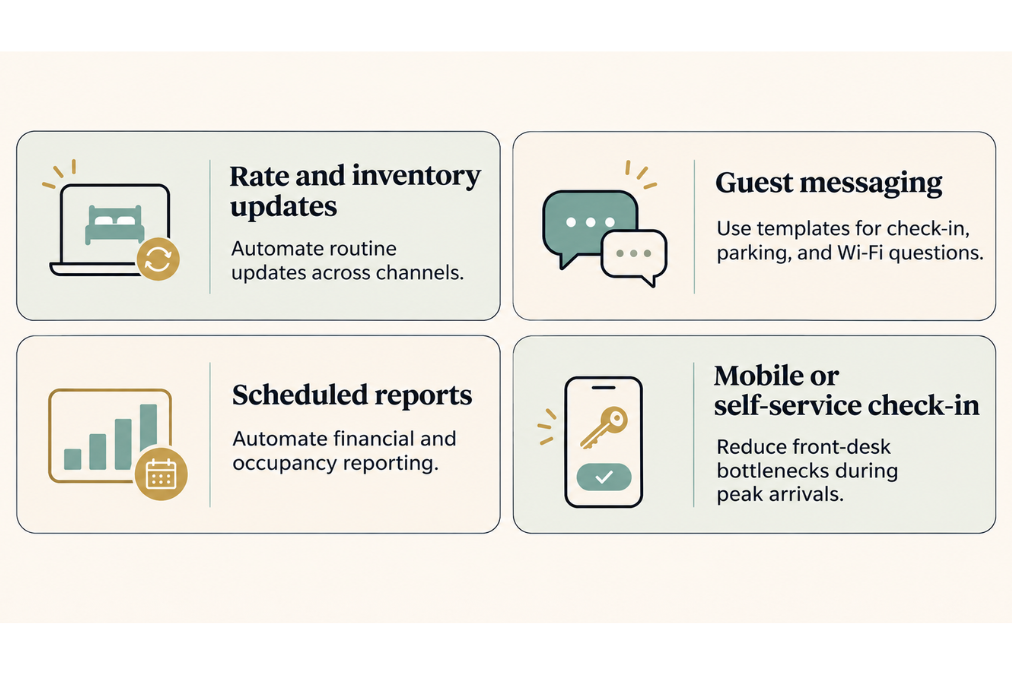
The clearest wins are in the repetitive admin work that eats a GM's day without needing a GM's judgment: automated rate and inventory updates across channels, templated guest messaging for routine questions (check-in times, parking, Wi-Fi), scheduled financial and occupancy reports that used to mean an afternoon in spreadsheets, and self-service or mobile check-in that cuts front-desk bottlenecks during peak arrival windows.
You're not alone in betting on this: nearly 60% of hotel GMs surveyed by Deloitte expect automation to improve guest experience and, in turn, their bottom lines.
| Task | Automate | Keep a Human On It |
|---|---|---|
| TaskRate & inventory updates across channels | Automate✅ | Keep a Human On It |
| TaskRoutine guest messaging (check-in times, parking, Wi-Fi) | Automate✅ | Keep a Human On It |
| TaskFinancial & occupancy reporting | Automate✅ | Keep a Human On It |
| TaskMobile/self-service check-in | Automate✅ | Keep a Human On It |
| TaskService recovery after something goes wrong | Automate | Keep a Human On It✅ |
| TaskVIP / returning guest recognition | Automate | Keep a Human On It✅ |
| TaskPricing decisions with local context | Automate | Keep a Human On It✅ |
What Still Needs a Person
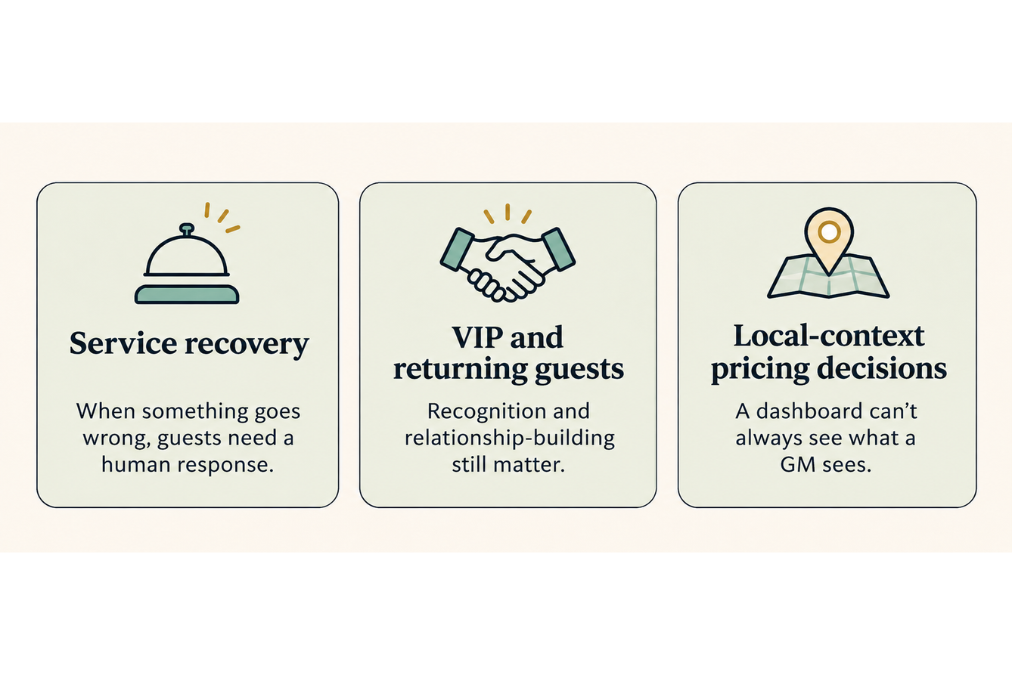
Automation works best on volume and repetition, not on judgment. Service recovery after something's gone wrong, a VIP or returning guest who expects to be recognized, and any pricing decision that depends on local context a dashboard can't see are all places where a GM's judgment still matters more than a system.
Many hotel management platforms built for smaller properties bundle useful automation with the core property management system (PMS) rather than requiring a separate tool; our comparison of hotel management software breaks down which systems include it versus which treat it as a paid add-on.
Hot Take: Most GMs don't automate too little; they automate the wrong thing first. Chasing a flashy AI concierge feature before fixing manual rate updates solves the problem that gets talked about at conferences, not the one eating your Tuesday afternoon.
Wearing too many hats at your property? Get practical ideas on running an independent hotel with the team you actually have, not the one a brand would give you.