
Reseña de RingCentral Events: Pros, Contras, Características y Precios
RingCentral Events une la gestión de eventos virtuales e híbridos en una sola plataforma, desde el registro y transmisión en vivo hasta la participación de la audiencia, networking y análisis de eventos.

Revisamos las herramientas de forma independiente, y las comisiones ayudan a financiar nuestras pruebas. Consulta nuestra política de transparencia, nuestra metodología o sugiere una herramienta.
RingCentral Events is an event management software built for hosting virtual and hybrid events, with tools for attendee registration, networking, and live session management. It's worth a close look if your team needs to run polished online events without the implementation complexity of a platform like Cvent—particularly if you're already using RingCentral for day-to-day communications.
RingCentral Events Evaluation Summary
4.5/5
- From $99/organizer/month (billed annually)
- 30-day free trial
Por qué confiar en nuestras recomendaciones de software
6,700+
Reviews
20
Industry experts
16+
Evaluation factors
14
Years
Nuestro equipo lleva probando y evaluando software desde 2012. Como líderes del sector hotelero, sabemos lo difícil —y lo importante— que es elegir el software adecuado.
Para esta guía, evaluamos las herramientas mediante pruebas prácticas e investigación independiente, puntuando las herramientas según nuestros criterios de selección.
Nuestras reseñas reflejan nuestro criterio editorial humano, no un discurso de ventas.
RingCentral Events Overview
RingCentral Events is a top pick if you want a user-friendly platform with strong hybrid event features and reliable support. Its interface is intuitive, onboarding is quick, and integrations cover most needs, though some advanced customization options are limited compared to others. Pricing is competitive for mid-sized hotels, and the analytics dashboard makes judging event success straightforward.
I’d suggest it’s best for teams who value easy setup and flexible attendee engagement tools—especially if you’re comparing options for frequent virtual or hybrid events.
Pros
- Analytics dashboard offers detailed attendee engagement insights.
- Networking and sponsor features are highly interactive.
- Hybrid event tools support both in-person and virtual formats.
Cons
- Speaker onboarding process can be confusing for new users.
- Pricing can be high for infrequent or small events.
- Occasional platform glitches during high-traffic events.
Is RingCentral Events Right For Your Needs?
Who Would be a Good Fit for RingCentral Events?
RingCentral Events is a strong choice for organizations that need to host engaging hybrid or virtual events with interactive networking and sponsor features. Teams that value real-time analytics, flexible attendee engagement, and a polished interface will find it especially useful.
It’s best for industries and roles where event experience and data-driven insights matter most, such as hospitality, education, and marketing.
- Event AgenciesAgencies can manage multiple clients’ events with customizable branding and sponsor features.
- Mid-Sized EnterprisesCompanies with recurring events get value from flexible ticketing and reporting.
- AssociationsMembership organizations benefit from networking tools and attendee matchmaking.
- Marketing DepartmentsTeams can run product launches and webinars with sponsor booths and analytics.
- Higher EducationUniversities can host virtual open days and alumni events with interactive sessions.
- Hospitality TeamsRingCentral Events supports branded experiences and guest engagement for conferences or expos.
Who Would be a Bad Fit for RingCentral Events?
RingCentral Events may not be the best option for teams with simple event needs, limited budgets, or highly specialized requirements. If you’re running small, infrequent gatherings or need deep integration with niche systems, you might find the platform’s features excessive or its pricing hard to justify.
- Medical ConferencesHighly regulated industries may require specialized compliance and accreditation features not offered.
- Government DepartmentsStrict compliance or security needs may not align with the platform’s capabilities.
- Trade Show OrganizersLarge-scale, in-person-only expos may need more complex floor planning tools.
- Micro BusinessesVery small teams may not use enough features to justify the cost.
- Local Community GroupsSimple meetings or gatherings don’t need advanced networking or analytics.
- Small NonprofitsThe pricing and feature set may be excessive for basic fundraisers.
Cómo Probamos y Puntamos Herramientas
Hemos pasado años construyendo, refinando y mejorando nuestro sistema de pruebas y puntuación de software. La rúbrica está diseñada para capturar las particularidades de la selección de software y lo que hace que una herramienta sea efectiva, enfocándose en aspectos críticos del proceso de toma de decisiones. A continuación, puedes ver exactamente cómo funcionan nuestras pruebas y puntuaciones en siete criterios. Nos permite proporcionar una evaluación imparcial del software basada en funcionalidad principal, características destacadas, facilidad de uso, incorporación, soporte al cliente, integraciones, opiniones de clientes y relación calidad-precio.
Funcionalidad Principal (25% de la puntuación final)
El punto de partida de nuestra evaluación es siempre la funcionalidad principal de la herramienta. ¿Tiene las características y funciones básicas que un usuario esperaría ver? ¿Alguna de esas funciones básicas está limitada a planes de precios superiores? En esencia, esperamos que una herramienta esté a la altura de las capacidades mínimas de sus competidores.
Características Destacadas (25% de la puntuación final)
Luego, evaluamos las características destacadas poco comunes que van más allá de la funcionalidad principal, típicamente encontrada en herramientas de su tipo. Una puntuación alta refleja funciones especializadas o únicas que hacen que el producto sea más rápido, eficiente u ofrezca valor adicional al usuario. También evaluamos lo fácil que resulta integrar con otras herramientas normalmente presentes en el paquete tecnológico para ampliar la funcionalidad y utilidad del software. Las herramientas con abundantes integraciones nativas, conexiones de terceros y acceso a API para crear integraciones personalizadas obtienen la mejor puntuación.
Facilidad de Uso (10% de la puntuación final)
Consideramos qué tan rápido y fácil es ejecutar las tareas definidas en la funcionalidad principal usando la herramienta. El software que obtiene una puntuación alta está bien diseñado, es intuitivo de usar, ofrece aplicaciones móviles, proporciona plantillas y hace que tareas relativamente complejas parezcan sencillas.
Incorporación (10% de la puntuación final)
Sabemos lo importante que es la adopción rápida del equipo para una nueva plataforma, por eso evaluamos la facilidad para aprender y usar una herramienta con mínima capacitación. Analizamos qué tan rápido un miembro del equipo puede configurarse y comenzar a usar la herramienta sin experiencia. Las soluciones que obtienen una puntuación alta requieren poco o ningún soporte.
Soporte al Cliente (10% de la puntuación final)
Revisamos qué tan rápido y fácil es obtener ayuda por teléfono, chat en vivo o base de conocimientos. Las herramientas y empresas que ofrecen soporte en tiempo real obtienen la mejor puntuación, mientras que los chatbots obtienen la peor.
Opiniones de Clientes (10% de la puntuación final)
Más allá de nuestras propias pruebas y evaluaciones, consideramos el índice neto de promotores de clientes actuales y anteriores. Analizamos la probabilidad de que elijan la herramienta de nuevo para la función principal. Un software con alta puntuación refleja un alto índice neto de promotores de clientes actuales o anteriores.
Relación Calidad-Precio (10% de la puntuación final)
Por último, considerando todos los demás criterios, revisamos el precio promedio de los planes iniciales frente a las características principales y valoramos los otros criterios de evaluación. El software que ofrece más por menos obtiene una mejor puntuación.
Core Features
Custom Branding
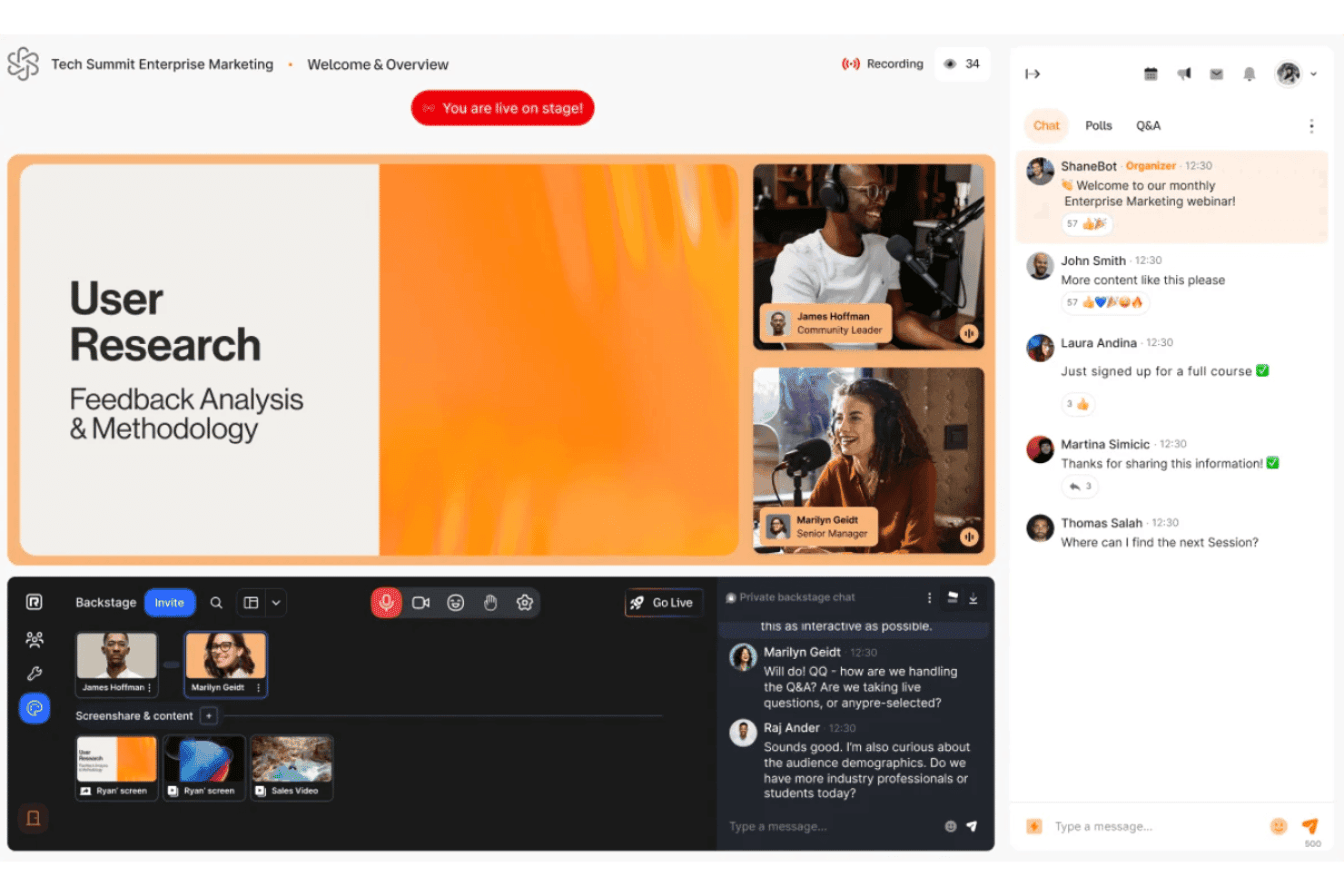
Add your own colors, logos, and messaging to every event. This helps you create a consistent, on-brand experience for attendees.
Engagement Tools
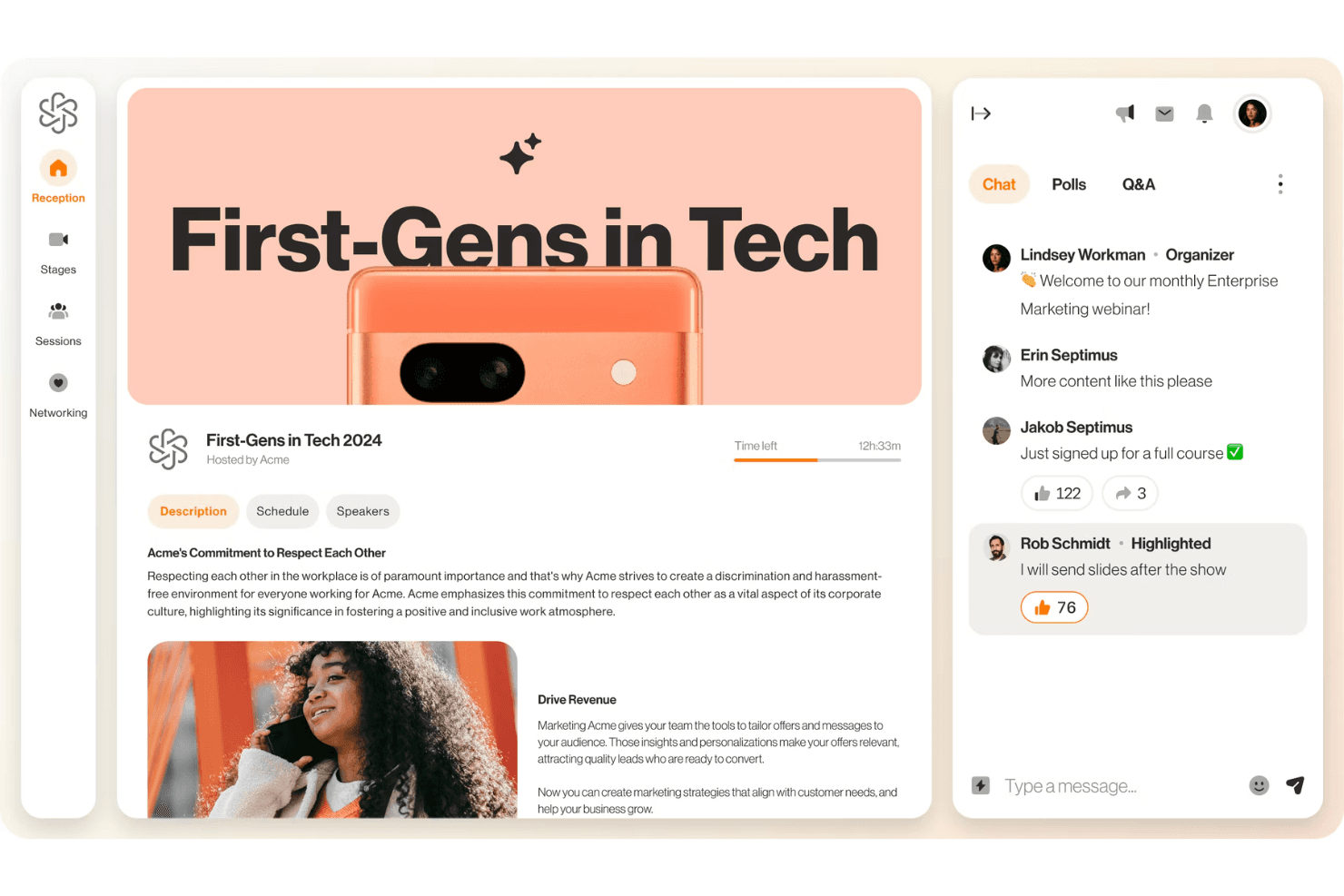
Use chat, Q&A, polls, and integrated apps to boost attendee participation. These features make it easy to keep guests involved and interacting throughout your event.
Virtual Event Venues
Set up virtual receptions, stages, and networking spaces for different event formats. This lets you recreate the feel of in-person events online.
Real-Time Analytics
Track attendee engagement, session popularity, and participation as your event happens. These insights help you judge event success and make improvements.
Networking Rooms
Offer dedicated spaces for attendees to connect and build relationships. This feature supports both structured and informal networking opportunities.
Automated Matchmaking
Uses attendee profiles and interests to suggest relevant connections and meetings. This saves time for guests and increases the value of networking at your events.
Ease of Use
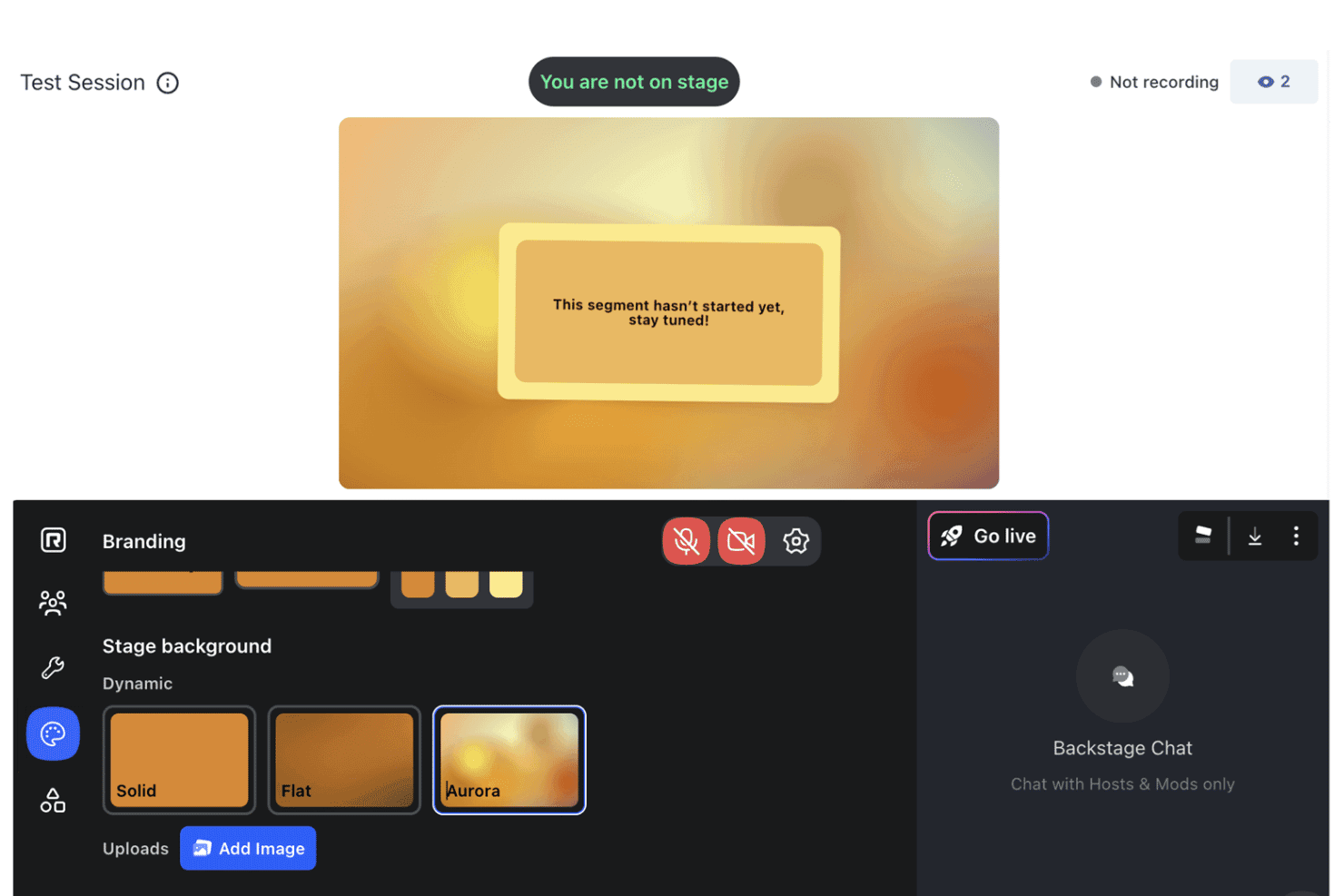
RingCentral Events is one of the more approachable event management platforms I’ve used, with a clean interface and clear navigation that makes setup fast.
Users often mention how easy it is to build branded events and manage sessions without technical help. The drag-and-drop tools, guided onboarding, and real-time support chat help teams get started quickly.
Integrations
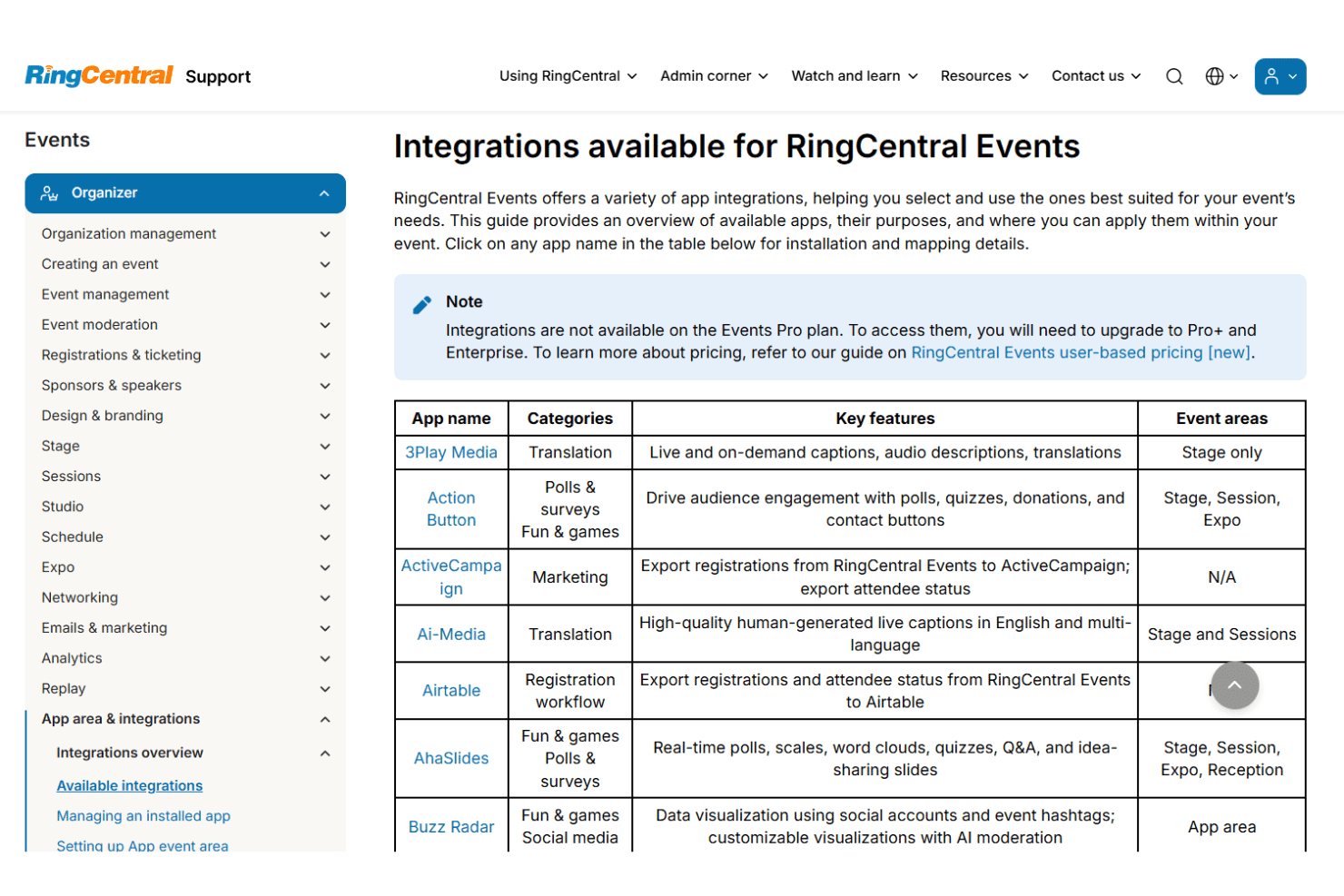
RingCentral Events integrates with HubSpot, Marketo, Salesforce, Slack, Mailchimp, Zapier, Google Analytics, LinkedIn, Eventbrite, and Microsoft Teams, among others.
RingCentral Events also offers a public API and supports connections with third-party integration tools for custom workflows.
RingCentral Events Specs
- Accounts Payable: No
- Accounts Receivable: No
- API: Yes
- Audience Targeting: Yes
- Budgeting: No
- Calendar Management: Yes
- Contact Management: Yes
- Customer Management: Yes
- Dashboard: Yes
- Data Export: Yes
- Data Import: Yes
- Data Visualization: Yes
- Expense Tracking: No
- External Integrations: Yes
- Forecasting: No
- General Account Ledger: No
- Inventory Tracking: No
- Lead Management: Yes
- Lead Scoring: Yes
- Marketing Automation: Yes
- Multi-User: Yes
- Notifications: Yes
- Project Management: Yes
- Scheduling: Yes
- Social-Media Integration: No
- Supplier Management: No
- Third-Party Plugins/Add-Ons: Yes
- Travel Management: No


