

Adyen Review: Pros, Cons, Features and Pricing
I weigh Adyen’s global payment reach against the complexity hotels may face, so you can judge whether its features and pricing fit your operation.

We review tools independently, and commissions help fund our testing. See our transparency policy, our methodology, or suggest a tool.
Adyen is a hotel payment system that connects online reservations, front-desk transactions, and on-property purchases through one platform. I’d consider it for hotel groups managing multiple properties, as its local payment methods, automated reconciliation, and integrations with property management systems such as Oracle OPERA support daily payment operations. Compared with Stripe, I’d choose Adyen when direct hospitality integrations and centralized payment reporting across properties are priorities.
Adyen Evaluation Summary
3.8/5
- From $0.13 + payment method fee
- Not available
Why Trust Our Software Recommendations
6,700+
Reviews
20
Industry experts
16+
Evaluation factors
14
Years
Our team has been testing and reviewing software since 2012. As hospitality leaders ourselves, we know how difficult—and important—it is to choose the right software.
For this guide, we evaluated tools using hands-on testing and independent research, scoring tools using our selection criteria.
Our reviews reflect our human editorial judgment, not a sales pitch.
Adyen Overview
I’d choose Adyen for hotel groups managing online and in-person payments across multiple properties. It supports 150+ currencies and 200+ local payment methods, connects with property management systems such as Oracle OPERA, and provides centralized reporting and automated reconciliation. Its flexible APIs and payment configurations offer customization, although implementation may require technical planning.
Transaction fees vary by payment method, making cost comparisons important. Adyen also provides a Customer Area, support resources, and developer documentation. I think it suits international hotel chains and multi-property operations, while smaller hotels prioritizing quick setup may prefer a simpler payment system.
Pros
- Accepts 200+ local payment methods across 150+ currencies.
- Centralized reporting and automated reconciliation cover hotel payment touchpoints.
- Reviewers praise dependable processing, reporting, and broad payment acceptance.
Cons
- API-led implementation can require developers or an integrator.
- Interchange-based fees make per-booking costs harder to forecast.
- Reviewers report mixed support and occasional terminal incompatibility.


How We Test & Score Tools
We’ve spent years building, refining, and improving our software testing and scoring system. The rubric is designed to capture the nuances of software selection and what makes a tool effective, focusing on critical aspects of the decision-making process.
Below, you can see exactly how our testing and scoring works across seven criteria. It allows us to provide an unbiased evaluation of the software based on core functionality, standout features, ease of use, onboarding, customer support, integrations, customer reviews, and value for money.
Core Functionality (25% of final scoring)
The starting point of our evaluation is always the core functionality of the tool. Does it have the basic features and functions that a user would expect to see? Are any of those core features locked to higher-tiered pricing plans? At its core, we expect a tool to stand up against the baseline capabilities of its competitors.
Standout Features (25% of final scoring)
Next, we evaluate uncommon standout features that go above and beyond the core functionality typically found in tools of its kind. A high score reflects specialized or unique features that make the product faster, more efficient, or offer additional value to the user.
We also evaluate how easy it is to integrate with other tools typically found in the tech stack to expand the functionality and utility of the software. Tools offering plentiful native integrations, 3rd party connections, and API access to build custom integrations score best.
Ease of Use (10% of final scoring)
We consider how quick and easy it is to execute the tasks defined in the core functionality using the tool. High scoring software is well designed, intuitive to use, offers mobile apps, provides templates, and makes relatively complex tasks seem simple.
Onboarding (10% of final scoring)
We know how important rapid team adoption is for a new platform, so we evaluate how easy it is to learn and use a tool with minimal training. We evaluate how quickly a team member can get set up and start using the tool with no experience. High scoring solutions indicate little or no support is required.
Customer Support (10% of final scoring)
We review how quick and easy it is to get unstuck and find help by phone, live chat, or knowledge base. Tools and companies that provide real-time support score best, while chatbots score worst.
Customer Reviews (10% of final scoring)
Beyond our own testing and evaluation, we consider the net promoter score from current and past customers. We review their likelihood, given the option, to choose the tool again for the core functionality. A high scoring software reflects a high net promoter score from current or past customers.
Value for Money (10% of final scoring)
Lastly, in consideration of all the other criteria, we review the average price of entry level plans against the core features and consider the value of the other evaluation criteria. Software that delivers more, for less, will score higher.
Core Features
Mobile Check-Out
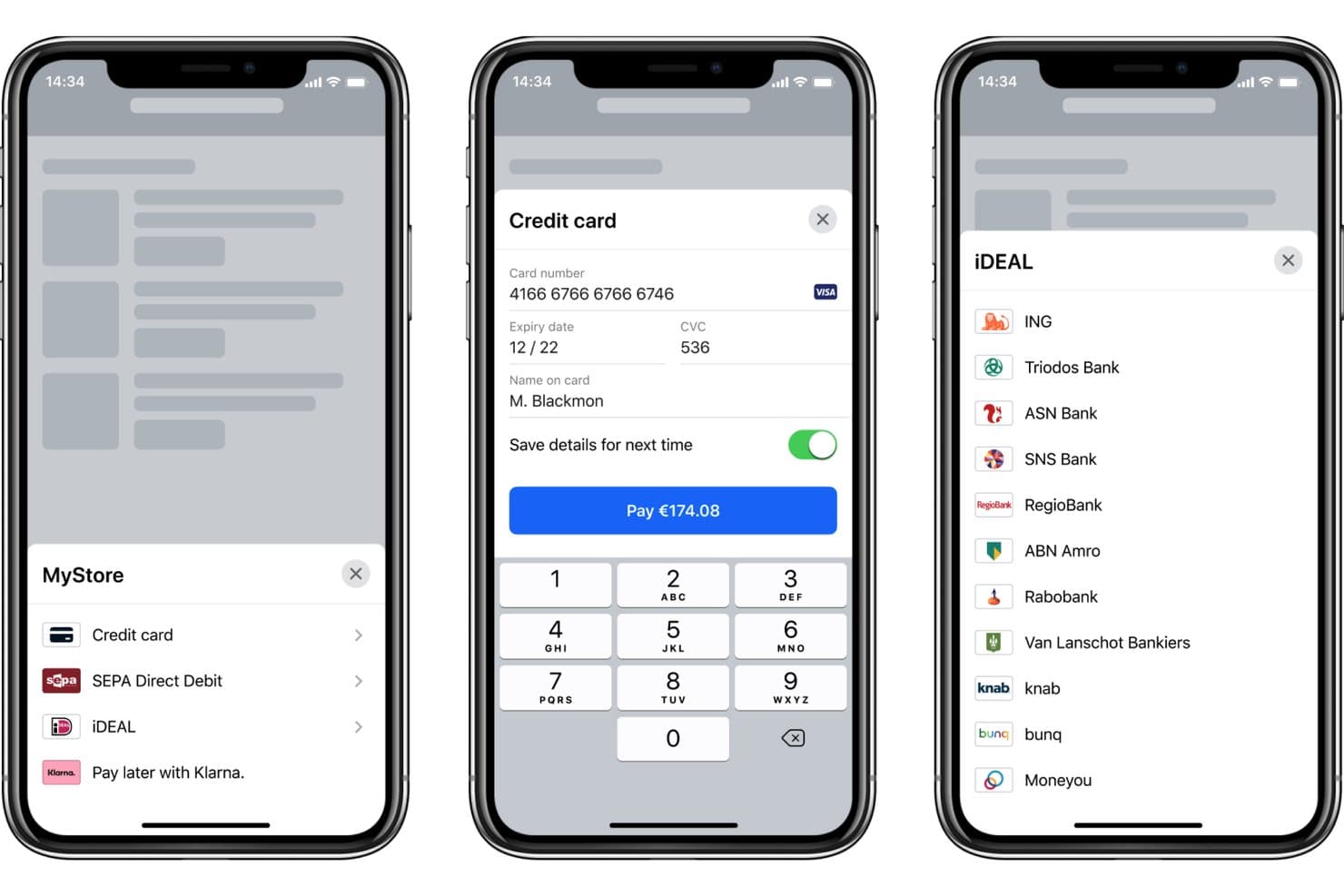
Adyen enables guests to complete hotel payments through mobile devices using credit cards, bank transfers, and local payment methods such as iDEAL. This gives international guests more payment options when booking rooms and completing reservations on their smartphones.
Payment Terminal Order Management
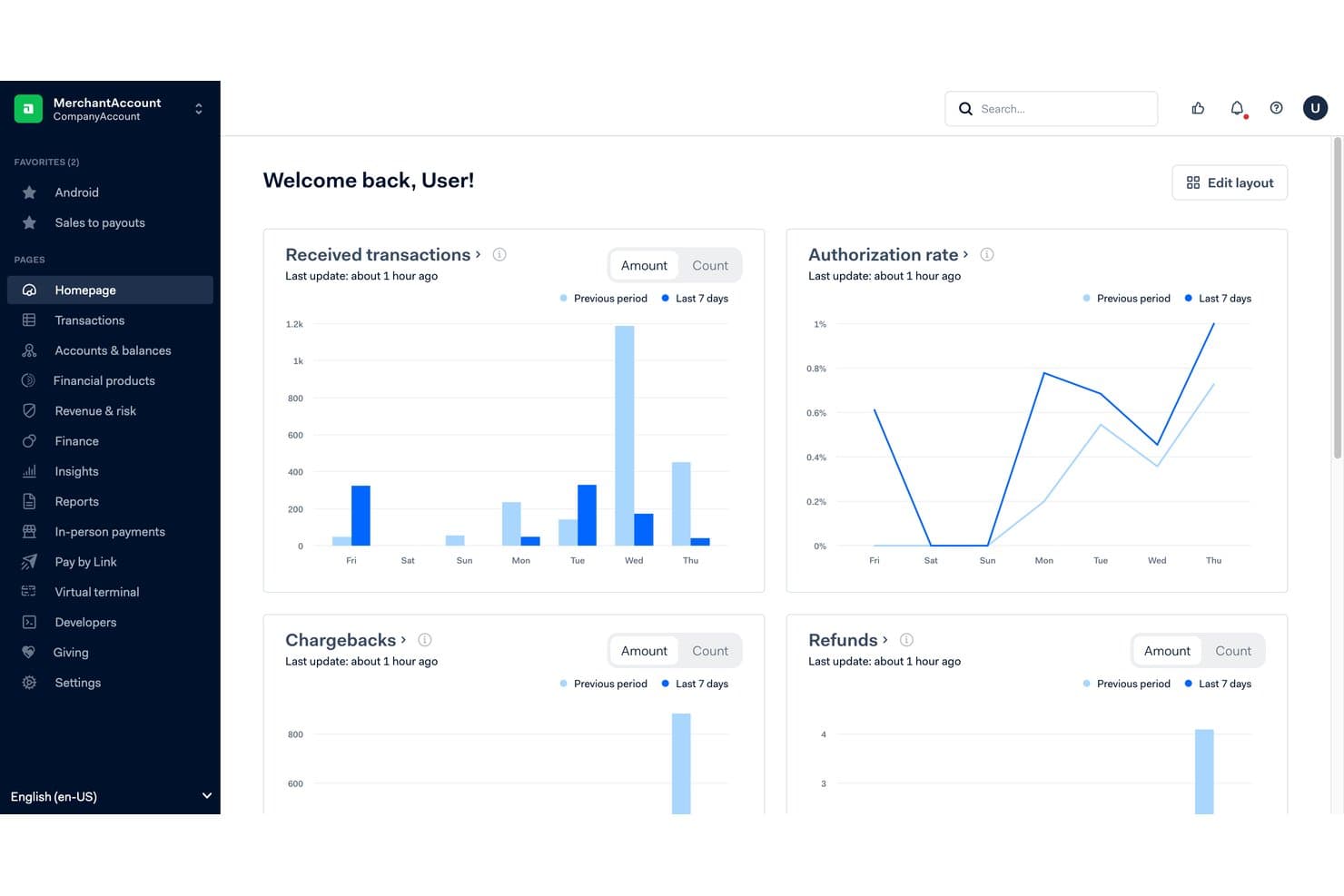
Adyen provides an order management dashboard for tracking payment terminal purchases, shipments, and returns. Hotel teams can search orders, check delivery statuses, and monitor terminal quantities across properties, supporting the deployment and replacement of payment devices at front desks, restaurants, and other service areas.
Payment Lifecycle Analytics
Adyen tracks payment authorization rates, refused transactions, refunds, disputes, and settlements throughout the payment lifecycle. Hotels can review payment success rates and transaction patterns to identify failed booking payments, monitor refunds, and investigate payment-processing issues.
Payment Performance Reporting
Adyen provides customizable reporting dashboards displaying gross sales, transaction volumes, payment balances, and performance trends. Hotel managers can compare payment activity across reporting periods and monitor financial performance to support revenue analysis and operational planning.
Sales and Payout Tracking
Adyen tracks gross sales, payouts, refunds, and pending settlement amounts through a financial reporting dashboard. Hotel finance teams can review daily, weekly, or monthly payment activity and compare collected revenue with payouts to support reconciliation and cash flow monitoring.
Account Holder Management
Adyen provides an account management dashboard for viewing account holders, verification statuses, balance accounts, and transfer records. Hotel groups using Adyen's platform account capabilities can monitor financial accounts across different entities and review payout permissions and account details from one interface.
Ease of Use
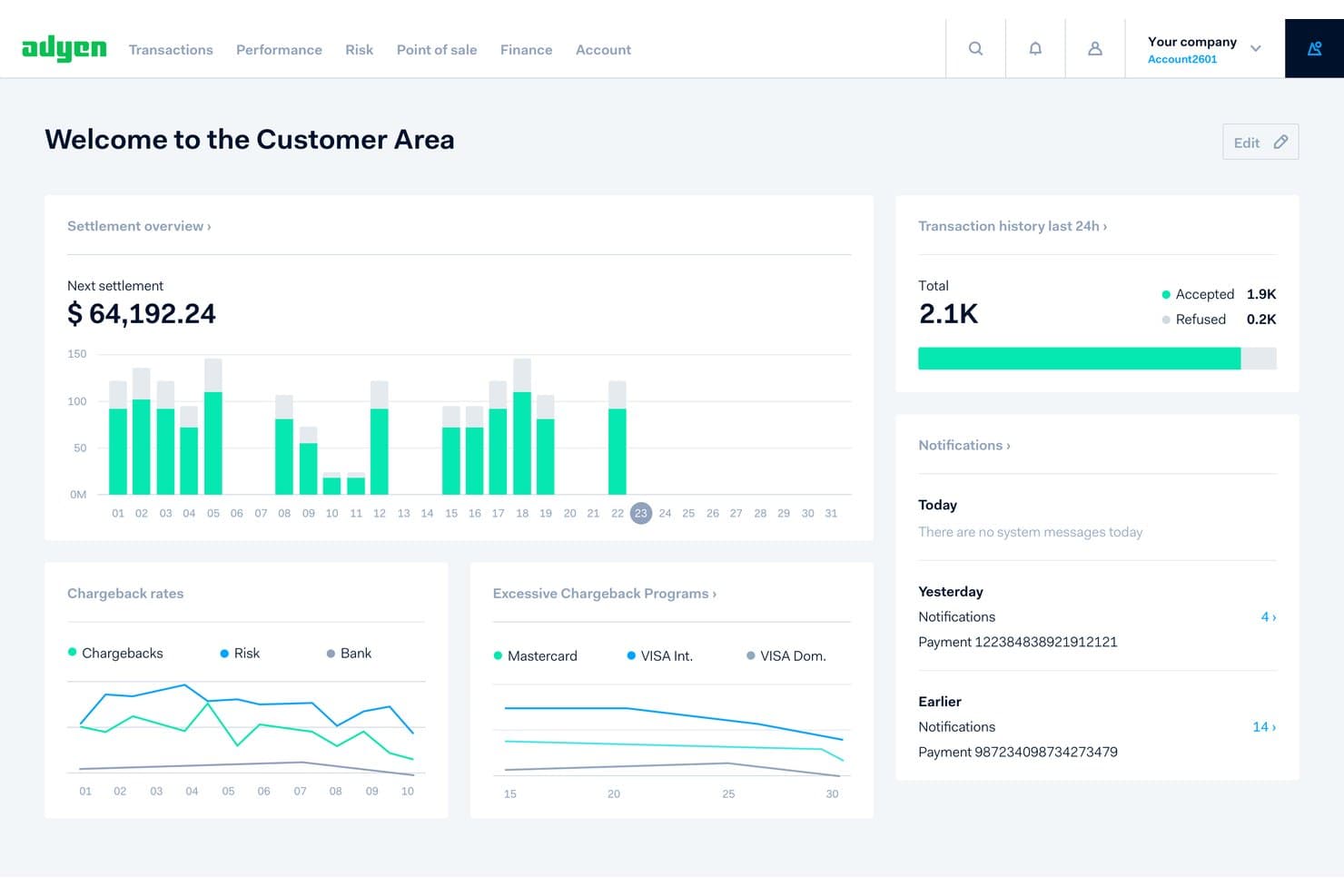
Adyen is relatively easy to use once configured, although its API-based implementation may require technical expertise or support from an integration partner. Its Customer Area centralizes online and in-person payment management, transaction reporting, and reconciliation, giving hotel teams visibility into payment activity across properties. It also provides tools for managing payment terminals and monitoring transactions.
However, configuring payment methods, connecting property management systems, and setting up terminals may add complexity during implementation. I'd recommend checking hardware compatibility and integration requirements before deployment.
Integrations
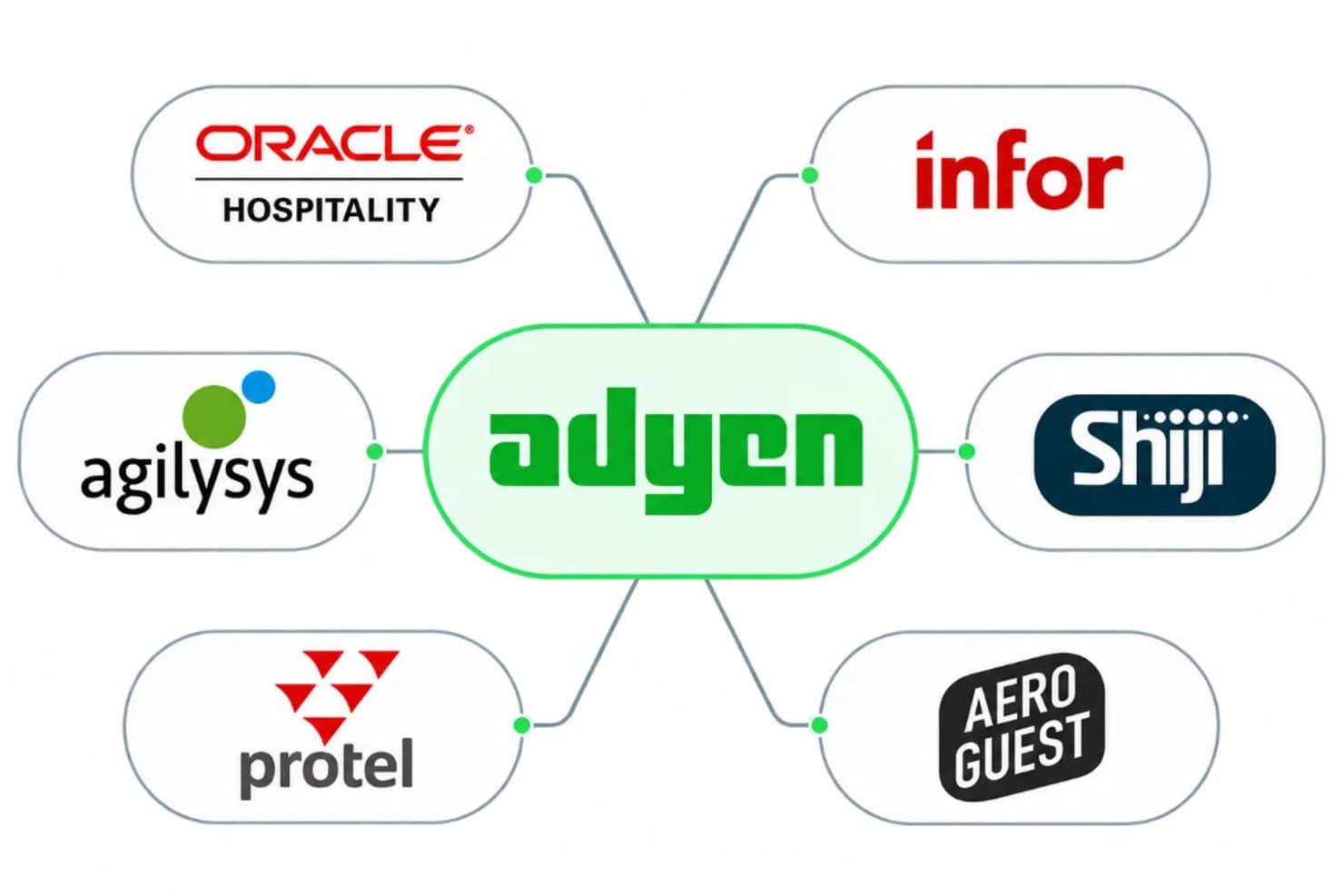
Adyen integrates with hospitality platforms such as Oracle Hospitality, Infor, Agilysys, Shiji, Protel, and AeroGuest for property management, point-of-sale transactions, guest payments, and checkout operations. It also provides APIs for custom payment integrations and connects with additional hospitality software through its partner network.
Adyen Specs
- 2-Factor Authentication: Yes
- A/B Testing: No
- Analytics: Yes
- API: Yes
- BitCoin: No
- Conversion Tracking: No
- Dashboard: Yes
- Data Export: Yes
- Data Import: Yes
- Data Visualization: Yes
- Design Templates: No
- External Integrations: Yes
- Inventory Tracking: No
- Keyword Tracking: No
- Marketing Automation: No
- Multi-User: Yes
- Notifications: Yes
- Order Management: No
- Payment Gateway Integration: Yes
- Payment Processor: Yes
- PayPal: Yes
- Product Catalog: No
- Review Monitoring: No
- SAP Integration: Yes
- Scheduling: No
- Stripe: No
- Third-Party Plugins/Add-Ons: Yes


