

Un sistem de gestionare hotelieră cu sursă deschisă este un software pentru gestionarea rezervărilor, a evidențelor oaspeților și a operațiunilor zilnice, al cărui cod sursă poate fi modificat pentru a se potrivi nevoilor proprietății dumneavoastră. Dacă sunteți în căutarea unor modalități flexibile și rentabile de a gestiona rezervările, sarcinile de la recepție și serviciile de curățenie, opțiunile cu sursă deschisă vă permit să adaptați funcțiile și fluxurile de lucru pe măsură ce afacerea dumneavoastră se dezvoltă.
Această listă vă va ajuta să comparați principalele sisteme de gestionare hotelieră cu sursă deschisă, astfel încât să găsiți o soluție care corespunde cerințelor operaționale, resurselor tehnice și obiectivelor privind experiența oaspeților.
Why Trust Our Software Recommendations
6,700+
Reviews
20
Industry experts
16+
Evaluation factors
14
Years
Our team has been testing and reviewing software since 2012. As hospitality leaders ourselves, we know how difficult—and important—it is to choose the right software.
For this guide, we evaluated tools using hands-on testing and independent research, scoring tools using our selection criteria.
Our reviews reflect our human editorial judgment, not a sales pitch.
Tabel comparativ al sistemelor de gestionare hotelieră cu sursă deschisă
Score legend (out of 5)
- Excellent4.5–5
- Good4–4.4
- Average3–3.9
- Below average2–2.9
- Poor1–1.9
Sorted by: Default
| Tool | Starting Price | Website | |||||||
|---|---|---|---|---|---|---|---|---|---|
Best for multilingual property listings | 4.2 out of 5 | 4 | 4 | 3 | 5 | 5 | 4 | $41.67/month Free plan available | Website |
Best with flexible room allocation tools | 3.8 out of 5 | 3 | 4 | 3 | 4 | 5 | 4 | Pricing upon request Free plan available | Website |
Best for calendar-based reservation tracking | 3.7 out of 5 | 5 | 1 | 4 | 5 | 2 | 5 | Pricing upon request Free demo available | Website |
Best for direct bookings on Joomla sites | 4.0 out of 5 | 4 | 4 | 4 | 4 | 4 | 4 | $99 one-time payment Free plan available | Website |
Best with Laravel-based customization options | 3.0 out of 5 | 3 | 4 | 2 | 3 | 4 | 2 | Pricing upon request Not available | Website |
Best with cloud-based guest communication | Not rated | 4 | Not rated | 4 | 5 | Not rated | 5 | $118/month 14-day free trial | Website |
Best for commission-free WordPress bookings | Not rated | 2 | Not rated | 1 | 4 | 4 | 5 | $139/year 7-day free trial available | Website |


Recenzii ale sistemelor de gestionare hotelieră cu sursă deschisă
Mai jos sunt prezentate rezumatele mele detaliate ale sistemelor de gestionare hotelieră cu sursă deschisă care au intrat pe lista mea scurtă. Recenziile mele oferă o analiză detaliată a funcțiilor, a celor mai potrivite cazuri de utilizare și a capacităților fiecărui sistem, pentru a vă ajuta să îl găsiți pe cel mai potrivit pentru dumneavoastră.
 Best for multilingual property listings
- Free plan available (self-hosted)
- From $$41.67/month (billed annually)
Visit WebsiteCustomer Rating:4.6/5
QloApps provides an intuitive open-source hotel management dashboard that lets you easily manage room inventory, pricing, and reservations in one centralized platform, helping hotels streamline operations and maximize bookings. QloApps is an open-source hotel management system designed for properties that need multilingual support and flexible online booking features. It’s a strong fit for independent hotels and guesthouses looking to attract international guests and manage reservations from a single dashboard. The platform helps you handle multilingual property listings, automate bookings, and streamline guest communications.
Who Is QloApps Best For?
QloApps suits independent hotels and guesthouses that need to manage property listings and bookings in multiple languages to serve international guests.
Why I Picked QloApps
I chose QloApps because its multilingual property listing capabilities address a real need for hotels serving guests from different countries. The platform lets you create and manage listings in multiple languages, making it easier to reach a global audience and reduce booking friction for international travelers. I also like that QloApps supports localized booking engines and automated guest messaging in various languages. These features help hotels deliver a more personalized experience and improve communication with guests who speak different languages.
QloApps Key Features
Some other features in QloApps that stand out for hotel operators include:
- Room inventory management: Track available rooms, manage room types, and update inventory in real time from a central dashboard.
- Booking engine integration: Add a customizable booking engine to your website to accept direct reservations without third-party commissions.
- Payment gateway support: Connect with multiple payment gateways to process guest payments securely online.
- Seasonal pricing tools: Set different rates for rooms based on seasons, holidays, or special events to optimize revenue.
QloApps Integrations
Integrations include PayPal, various OTA channels through the Channel Manager, and an open API for custom integrations.
Pros and Cons
Pros:
- Seasonal and event-based pricing controls
- Direct booking engine to reduce OTA dependence
- Multilingual listings and booking flow for international guests
Cons:
- Limited native integrations without custom work
- Channel manager requires a separate paid module
Learn more about QloApps: Best with flexible room allocation tools
- Free plan available
- Pricing upon request
Visit WebsiteCustomer Rating:4.5/5
HotelDruid handles dynamic booking with automations based on availability, guest preferences, and group requirements. HotelDruid is an open source hotel management system built for properties that need advanced room allocation and scheduling flexibility. It appeals to independent hotels, hostels, and vacation rentals looking to optimize occupancy and manage complex booking scenarios. The platform helps you automate room assignments and adapt quickly to last-minute changes or group reservations.
Who Is HotelDruid Best For?
HotelDruid suits independent hotels and hostels that need flexible, automated room allocation to handle dynamic booking patterns.
Why I Picked HotelDruid
I picked HotelDruid because its flexible room allocation tools address a real challenge for properties with complex booking needs. The platform lets you automate room assignments based on availability, guest preferences, and group requirements, which is especially useful for hotels and hostels with frequent changes or overlapping reservations.
I also appreciate that HotelDruid supports manual overrides and bulk updates, so you can quickly adapt to last-minute changes or special requests. These features make it a strong fit for open source hotel management system buyers who need more control over room scheduling than most alternatives provide.
HotelDruid Key Features
Some other features in HotelDruid that stand out for open source hotel management include:
- Multi-language support: The system interface and booking engine are available in multiple languages for international guests and staff.
- Customizable booking engine: You can embed a booking engine on your website and tailor it to your property’s branding and requirements.
- Automated email notifications: The platform sends reservation confirmations, reminders, and other communications directly to guests.
- Detailed reporting tools: Generate occupancy, revenue, and guest reports to support operational and financial decisions.
HotelDruid Integrations
Integrations include Booking.com, Expedia.com, SES Hospedajes, and a channel manager module for additional OTA connections; an API is available for custom integrations.
Pros and Cons
Pros:
- Manual overrides for last-minute changes and group stays
- Detailed reporting for occupancy and revenue tracking
- Flexible room allocation for complex booking patterns
Cons:
- Dated and cluttered interface
- Channel manager requires a separate paid module
Learn more about HotelDruid: Best for calendar-based reservation tracking
- Free demo available
- Pricing upon request

MiniCal provides a clean, color-coded booking calendar that lets hotel managers easily view reservations, check-ins, and room availability at a glance. If you’re looking for a hotel management system with a strong visual focus on reservations, MiniCal offers a calendar-based approach that’s easy to navigate. It’s a good fit for boutique hotels, guesthouses, or property managers who want a clear, at-a-glance view of bookings and availability. The platform helps teams avoid double bookings and manage room assignments with a simple, interactive calendar interface.
Who Is MiniCal Best For?
MiniCal suits boutique hotels and property managers who need a clear, calendar-driven way to track reservations and room availability.
Why I Picked MiniCal
I picked MiniCal because its calendar-based reservation tracking stands out for teams that need a visual, interactive way to manage bookings. The drag-and-drop calendar lets you quickly adjust reservations, spot gaps in occupancy, and prevent double bookings at a glance. I also like that you can filter the calendar by room type or status, which helps the front desk and operations staff stay organized during busy periods. This focus on visual scheduling makes MiniCal a strong fit for properties that prioritize clear, real-time booking management.
MiniCal Key Features
Some other features in MiniCal that may interest hotel teams include:
- Multi-property management: Manage reservations and operations for multiple properties from a single dashboard.
- Automated guest messaging: Send booking confirmations, reminders, and follow-ups to guests automatically.
- Customizable rate plans: Set up and manage different pricing structures for rooms, packages, or seasons.
- Housekeeping task assignment: Assign and track housekeeping tasks directly within the platform.
MiniCal Integrations
Integrations include Stripe, Cardknox, PCI Booking, Nexio, Kovena, Channex, Rate Manager Pro, and Automated Night Audit.
Pros and Cons
Pros:
- Multi-property dashboard for growing portfolios
- Built-in housekeeping task assignment
- Visual calendar view for fast reservation management
Cons:
- Limited reporting and analytics depth
- Not fully open source
Learn more about MiniCal: Best for direct bookings on Joomla sites
- Free plan available
- From $99 one-time payment
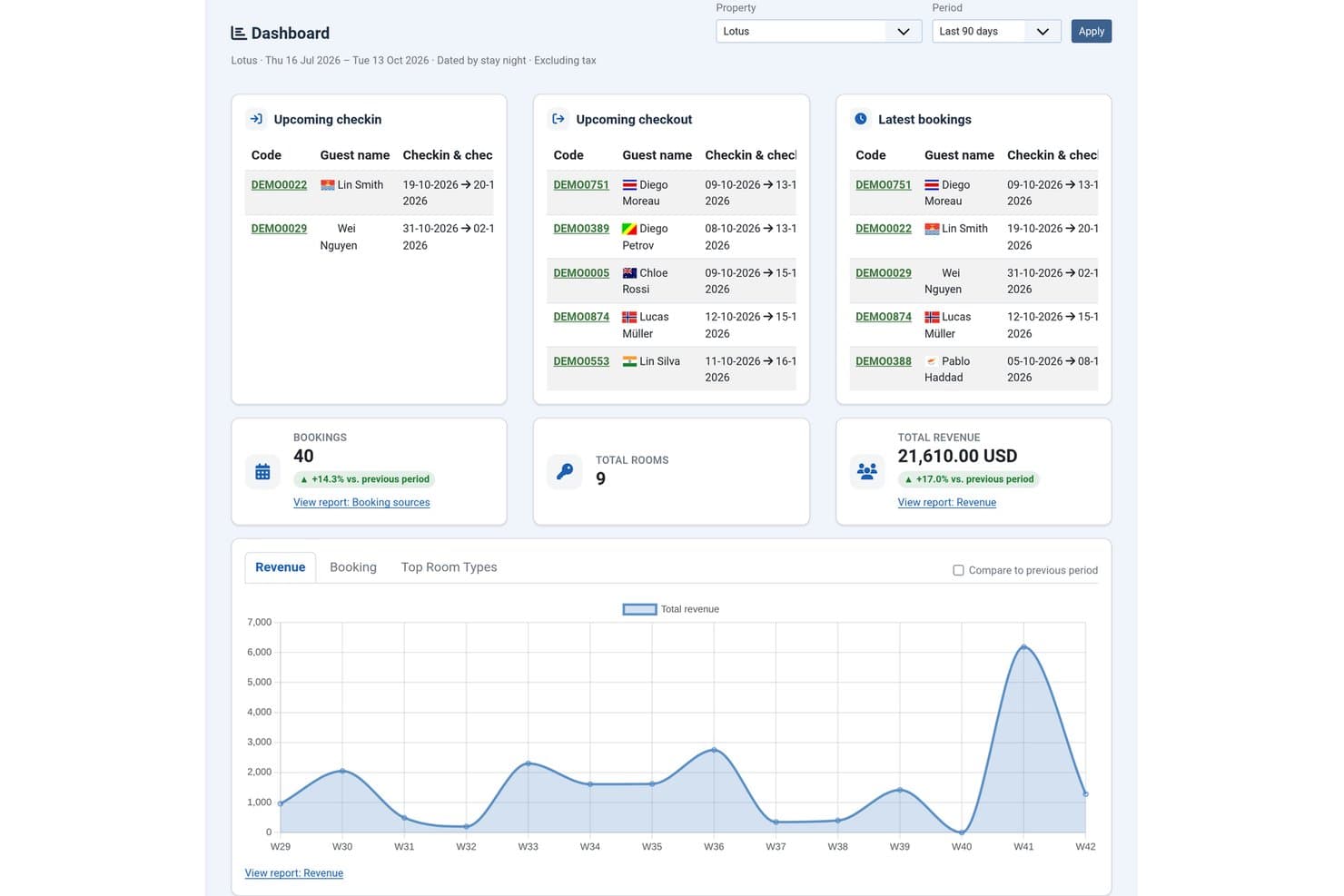
Solidres dashboard showing upcoming check-ins, checkouts, latest bookings and weekly revenue for a property. Solidres is a GPLv2-licensed, open-source booking and reservation extension for Joomla that covers room and rate management, front desk operations, invoicing, and multi-property portals.
Who Is Solidres Best For?
Solidres is a strong fit for independent hotel and B&B owners who already run a Joomla site and want to add direct booking without paying ongoing subscription fees.
Why I Picked Solidres
I've included Solidres in my top picks because it's the only booking extension built natively for Joomla, meaning you can add a full direct-booking engine to an existing Joomla site without migrating to a new platform. I particularly like the Front Desk tape chart, which lets you drag and resize reservations, track arrivals and departures, and update housekeeping status all in one view. The iCal sync also lets you block dates imported from Airbnb feeds, so your availability stays accurate across channels without a separate channel manager.
Solidres Key Features
- Rate plans: Properties can configure multiple rate plans with pricing by room, person, package, date, week, or month, plus stay limits, check-in rules, and child prices.
- Inventory grid: A day-by-day grid displays room availability, rates, and stay limits across your property and supports bulk updates.
- Hub booking portal: A single Joomla site can host multiple properties and partners, collect commissions or subscriptions, and approve partner listings.
- REST API: Solidres exposes Joomla Web Services endpoints for properties, room types, reservations, coupons, extras, and payments for custom integrations.
Solidres Integrations
Solidres offers native integrations with Stripe, PayPal, Authorize.net, Braintree, Mollie, Square, and Airbnb via iCal. Its REST API supports custom integrations with properties, room types, reservations, coupons, extras, and payments.
Pros and Cons
Pros:
- GPL code and REST API support extensions
- Tape chart tracks bookings, arrivals, housekeeping
- Joomla-native direct booking for existing sites
Cons:
- Older review cited bugs and poor support
- Requires Joomla 6 and PHP 8.3+
Learn more about Solidres: Best with Laravel-based customization options
- Not available
- Pricing upon request
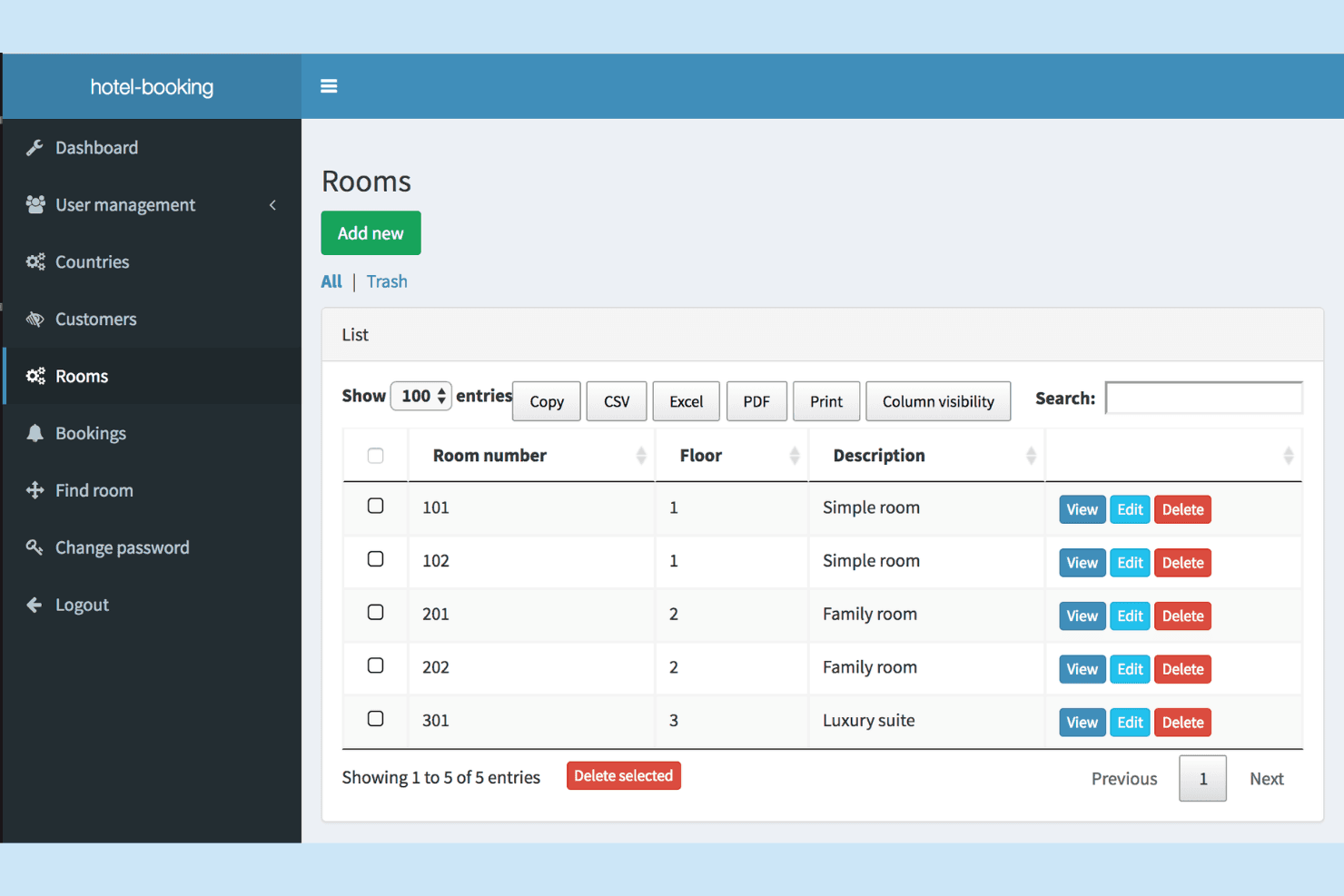
Laravel Hotel supports users to track bookings and manage customer details through a simple, centralized admin interface. Laravel Hotel is a Laravel-based open-source hotel management system that covers reservations, room and customer management, payment tracking, invoice generation, and real-time staff notifications.
Who Is Laravel Hotel Best For?
Laravel Hotel is a strong fit for developers and IT managers who want full control over a self-hosted hotel management system they can customize and extend.
Why I Picked Laravel Hotel
I've included Laravel Hotel in my top picks because it's built entirely on Laravel, which means your development team can dig into a clean, well-structured codebase and customize it without fighting an opaque system. I particularly like the real-time reservation notifications powered by Laravel Reverb, which push live alerts to staff the moment a booking comes in. The role-based access controls for Super, Admin, and Customer user types also make it easy to scope permissions without writing custom logic from scratch.
Laravel Hotel Key Features
- Step-by-step reservation workflow: Guides staff through the full reservation process, including down payment collection with a minimum 15% threshold and payment balance tracking.
- Customer profile management: Stores individual customer records with activity history, transaction links, and search and pagination for quick lookup.
- Room availability and capacity recommendations: Checks room availability in real time and suggests rooms based on guest capacity requirements.
- User activity logging: Records all user actions across Super, Admin, and Customer roles using Spatie ActivityLog for a full audit trail.
Laravel Hotel Integrations
Laravel Hotel includes native Laravel Reverb support for real-time notifications and dashboard updates, plus Chart.js for monthly dashboard charts. No API or additional third-party integrations are documented.
Pros and Cons
Pros:
- Role-based access includes user activity logging
- Reservation workflow tracks payments and invoices
- MIT-licensed source supports self-hosted customization
Cons:
- No documented check-in or check-out workflow
- No documented date-based rate controls
Learn more about Laravel Hotel:

Hotel Sync simplifies offer creation with an AI-powered sales generator. HOTEL Sync offers a cloud-based hotel management system designed for properties that prioritize guest communication and digital workflows. It appeals to hoteliers who want to centralize messaging, automate guest interactions, and manage operations from anywhere. The platform helps teams coordinate bookings, housekeeping, and guest requests while keeping all communication in one place.
Who Is HOTEL Sync Best For?
HOTEL Sync suits independent hotels and boutique properties that want to manage guest communication and operations through a cloud-based platform.
Why I Picked HOTEL Sync
I picked HOTEL Sync because it puts cloud-based guest communication at the center of its hotel management system. The platform offers a unified inbox for handling guest messages from multiple channels, which helps teams respond quickly and keep conversations organized. I also like that HOTEL Sync automates routine guest communications, such as confirmations and pre-arrival messages, so staff can focus on service rather than manual follow-ups. These features make it a strong fit for properties that want to modernize guest engagement and streamline daily operations.
HOTEL Sync Key Features
Some other HOTEL Sync features that may interest hotel teams include:
- Multi-property management: Manage reservations, rates, and availability across several properties from a single dashboard.
- Housekeeping task assignment: Assign, track, and update housekeeping tasks in real time for better coordination.
- Customizable booking engine: Add a branded booking engine to your website to capture direct reservations.
- Role-based user permissions: Set different access levels for staff based on their job function or department.
HOTEL Sync Integrations
Integrations include Booking.com, Expedia, Airbnb, VRBO, Agoda, Trip.com, Google, HRS, Hotelbeds, and Stripe.
Pros and Cons
Pros:
- Real-time housekeeping task updates
- Cloud access for remote operations and coordination
- Centralized guest messaging across channels
Cons:
- Limited workflow customization options
- Not open source or self-hosted
Learn more about HOTEL Sync: Best for commission-free WordPress bookings
- 7-day free trial available
- From $139/year
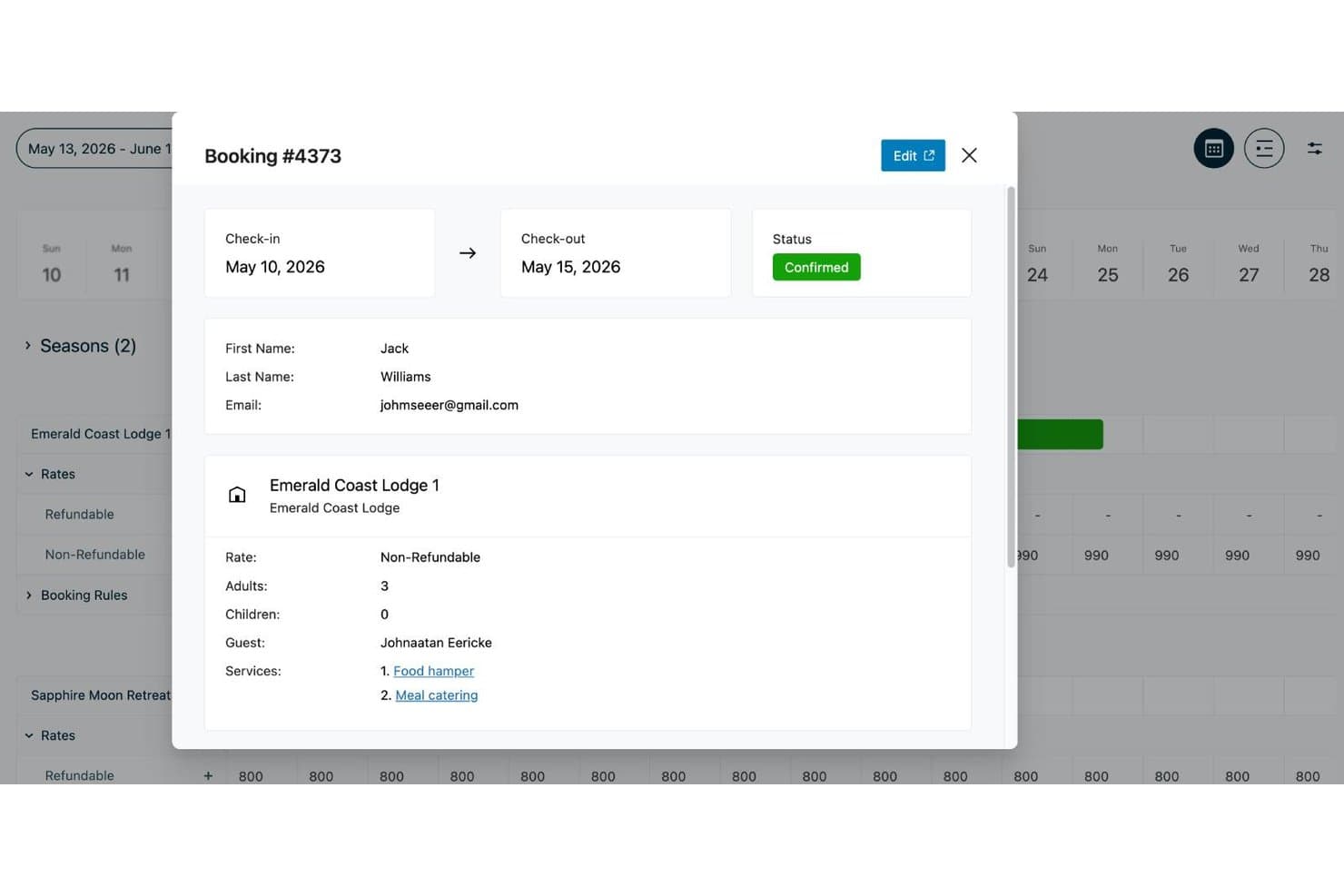
MotoPress Hotel Booking's booking details panel, with guest, stay dates, rate and services in one view. MotoPress Hotel Booking is a WordPress plugin for managing property listings, direct reservations, channel synchronization, and flexible rate and inventory control across rental accommodations.
Who Is MotoPress Hotel Booking Best For?
MotoPress Hotel Booking suits independent property owners who already run a WordPress site and want to take direct bookings without paying per-reservation commissions.
Why I Picked MotoPress Hotel Booking
I've included MotoPress Hotel Booking in my top picks because it's one of the few WordPress-native booking tools that eliminates per-reservation commissions entirely. I like that you can set accommodation-specific rates, seasonal pricing, and length-of-stay discounts all from one dashboard, so a property owner running direct bookings never pays a cut on each reservation. The iCal-based channel sync with Airbnb and Booking.com keeps availability accurate across platforms without manual updates.
MotoPress Hotel Booking Key Features
- iCal channel sync: Syncs availability and bookings with Airbnb, Booking.com, Expedia, and other OTAs using iCal, with updates as frequent as every 15 minutes.
- Guest account portal: Lets guests create accounts to view current reservations and reuse their details for future bookings.
- Linked accommodation management: Automatically blocks linked units when one accommodation in a group is reserved, preventing double bookings.
- CSV booking reports: Exports booking data for any selected period, with filters for check-in, check-out, reservation date, or stay period.
MotoPress Hotel Booking Integrations
MotoPress Hotel Booking has native integrations with Airbnb, Booking.com, Expedia, TripAdvisor, HomeAway, PriceLabs, Stripe, PayPal, WooCommerce, and WPML. Its WordPress REST API supports custom integrations.
Pros and Cons
Pros:
- Self-hosting keeps WordPress data under your control
- Seasonal and stay-length rates support rental operations
- Reviewers report dependable booking calendar management
Cons:
- No housekeeping or room-status workflows
- Proprietary codebase fails open-source requirements
Learn more about MotoPress Hotel Booking:
How I Evaluate Open-Source Hotel Management Systems
I split my evaluation into three parts, with core functionality carrying the most weight: manage reservations, room availability, and guest check-ins. Next, I look for features such as OTA channel syncing. Then I consider factors beyond features, including setup help, ongoing support, and the true cost of self-hosting.
Core Functionality (Table Stakes For This List)
When I'm selecting tools for my list, I score each one on a scale from 0 (does not offer the functionality) to 5 (excels in this area) for each core functionality listed below. I then convert the total into a percentage to help assess each tool's overall fit, with extra weight on any functionalities I’ve deemed essential.
- Open-Source Codebase (Essential): I look for a clear open-source license, accessible code, and enough documentation for a property or developer to install and adapt the system.
- Reservation Management (Essential): I check whether staff can create, change, and track bookings in a calendar, including direct reservations and channel bookings where supported.
- Room And Rate Control: I assess whether you can set room types, date-based availability, and rates, such as adjusting inventory for a busy season.
- Front Desk Operations: I look for check-in and check-out workflows, room assignments, and status updates that help staff coordinate arrivals and housekeeping.
- Self-Hosting: I review installation guidance and configuration options to see whether a team can deploy the system on its own infrastructure.
- Billing And Invoicing: I check whether reservations can include itemized folios, charges, and payments, so staff can prepare a guest’s bill at departure.
Once I have a list of tools that meet the criteria, I consider what sets each platform apart.
Differentiating Factors (What Sets Vendors Apart)
Here's how I compare and contrast different vendors:
Standout Features
I check whether a system includes a channel manager that syncs availability with OTAs like Booking.com and Expedia—without it, staff end up manually updating each platform, which invites overbookings. A built-in booking engine matters just as much, since an embeddable website widget lets you capture direct reservations and reduce commission costs. I also evaluate multi-property support, which is essential if you manage even two locations from one dashboard. Beyond that, I look at API and plugin extensibility to confirm developers can add custom integrations as your operations grow.
Beyond Features
I check the project's license type because AGPL-licensed systems may require you to share any hosted modifications publicly—a real concern if your developer customizes the booking flow. Total cost of ownership matters just as much: hosting fees, security patching, and backup management shift to your team, so I evaluate whether the project offers paid support tiers or a network of third-party agencies. I also look at GitHub commit history and contributor activity to gauge whether the project will still receive updates a year from now.
Cum să alegeți un sistem de gestionare hotelieră cu sursă deschisă
Este ușor să vă pierdeți în liste lungi de funcții și structuri complexe de prețuri. Pentru a vă ajuta să rămâneți concentrați în timp ce parcurgeți procesul unic de selectare a software-ului, iată o listă de verificare a factorilor de care trebuie să țineți cont:
| Factor | Ce trebuie luat în considerare |
| Scalabilitate | Va putea sistemul să susțină proprietatea dumneavoastră pe măsură ce vă dezvoltați, adăugați camere sau gestionați mai multe locații? |
| Integrări | Se conectează nativ la canalele dumneavoastră de rezervare, la gateway-urile de plată și la instrumentele de contabilitate? |
| Posibilitate de personalizare | Puteți modifica fluxurile de lucru, rapoartele sau interfața de utilizator pentru a răspunde nevoilor operaționale unice ale dumneavoastră? |
| Ușurință în utilizare | Va putea echipa dumneavoastră să învețe și să utilizeze rapid sistemul sau va fi necesară o instruire extinsă? |
| Implementare și integrare inițială | Cât timp și ce nivel de competențe tehnice vor fi necesare pentru instalarea, configurarea și migrarea datelor? |
| Cost | Există taxe pentru licențiere, găzduire sau asistență? Care sunt costurile totale în raport cu bugetul dumneavoastră? |
| Măsuri de securitate | Oferă sistemul criptarea datelor, permisiuni pentru utilizatori și actualizări regulate de securitate? |
| Disponibilitatea asistenței | Ce canale de asistență sunt disponibile și răspund prompt atunci când aveți nevoie de ajutor urgent? |
Ce este un sistem de gestionare hotelieră cu sursă deschisă?
Un sistem de gestionare hotelieră cu sursă deschisă este un tip de software de gestionare hotelieră sau PMS (sistem de gestionare a proprietății) care vă permite să accesați și să modificați codul sursă. Acesta ajută la gestionarea operațiunilor esențiale ale unei afaceri hoteliere, precum rezervările hoteliere, efectuarea formalităților de check-in și check-out pentru oaspeți, serviciile de curățenie, facturarea și raportarea. Deoarece codul este deschis, hotelurile pot adapta sistemul pentru a corespunde fluxurilor lor de lucru, îl pot integra cu alte software-uri de gestionare a proprietății sau îl pot personaliza pentru a răspunde unor nevoi operaționale specifice, fără a depinde de un singur furnizor.
Funcțiile sistemelor de gestionare hotelieră cu sursă deschisă
Atunci când evaluați un sistem de gestionare a proprietății cu sursă deschisă, concentrați-vă asupra funcțiilor care sprijină direct operațiunile zilnice și dezvoltarea pe termen lung:
- Gestionarea rezervărilor: Sprijină rezervările și rezervarea camerelor de hotel pe mai multe canale, oferind personalului un sistem centralizat de rezervări pentru a crea, actualiza și monitoriza sejururile în timp real.
- Operațiunile recepției: Gestionează cazarea și plecarea oaspeților, alocarea camerelor și actualizările în timp real ale stării camerelor dintr-un singur tablou de bord PMS.
- Gestionarea serviciilor de curățenie: Atribuie sarcini de curățenie, urmărește starea camerelor și informează personalul cu privire la pregătirea camerelor pentru oaspeții care sosesc.
- Facturarea și emiterea facturilor: Generează facturi, procesează plăți și gestionează fișele de cont pentru oaspeți și grupuri, oferind suport pentru mai multe metode de plată.
- Raportarea și analiza datelor: Oferă rapoarte personalizabile privind gradul de ocupare, veniturile și performanța operațională pentru a sprijini deciziile bazate pe date.
- Suport pentru mai multe proprietăți: Permite gestionarea mai multor proprietăți sau locații dintr-un singur sistem, cu rapoarte consolidate sau separate.
- Controale de acces pentru utilizatori: Permite administratorilor să stabilească permisiuni și roluri, asigurându-se că personalul accesează doar informațiile și instrumentele relevante pentru activitatea sa.
- Gestionarea canalelor: Se integrează cu agențiile de turism online și motoarele de rezervări pentru a actualiza automat tarifele și disponibilitatea pe toate platformele.
- Gestionarea profilurilor oaspeților: Stochează preferințele, istoricul și datele de contact ale oaspeților pentru a personaliza serviciile și a sprijini activitățile de promovare.
Soluțiile cu sursă deschisă pentru gestionarea hotelieră nu includ, de obicei, inteligența artificială în oferta lor de funcționalități.
Beneficiile unui sistem cu sursă deschisă pentru gestionarea hotelieră
Implementarea unui sistem cu sursă deschisă pentru gestionarea hotelieră oferă mai multe beneficii pentru echipa și afacerea dumneavoastră. Iată câteva dintre acestea:
- Control complet asupra personalizării: Ajustați fluxurile de lucru, regulile sistemului de rezervări și rapoartele din PMS fără a fi limitați de restricțiile furnizorului.
- Cost total de proprietate mai redus: Evitați taxele costisitoare de licențiere cu un program (în mare parte) gratuit de gestionare hotelieră și plătiți doar pentru găzduire, asistență sau dezvoltare personalizată, după cum este necesar.
- Confidențialitate îmbunătățită a datelor: Păstrați controlul asupra datelor oaspeților și ale afacerii găzduind sistemul pe propriile servere sau la furnizorul de cloud preferat.
- Îmbunătățiri susținute de comunitate: Beneficiați de actualizări regulate, remedieri ale erorilor și funcționalități noi oferite de o comunitate globală de dezvoltatori.
- Scalabilitate pentru dezvoltare: Adăugați proprietăți, camere sau funcționalități noi pe măsură ce afacerea dumneavoastră se extinde, fără a schimba platforma.
- Flexibilitate în integrare: Conectați-vă la instrumente terțe, motoare de rezervări și porți de plată pentru a crea o infrastructură tehnologică adaptată.
- Transparență și posibilitate de audit: Examinați și verificați codul sursă pentru a asigura conformitatea cu politicile interne și standardele industriei.
Costurile și prețurile sistemelor cu sursă deschisă pentru gestionarea hotelieră
Selectarea unei soluții cu sursă deschisă pentru gestionarea hotelieră necesită înțelegerea diferitelor modele de tarifare și planuri disponibile. Costurile variază în funcție de funcționalități, dimensiunea echipei, suplimente și alți factori. Tabelul de mai jos rezumă planurile obișnuite, prețurile medii și funcționalitățile incluse de obicei în soluțiile cu sursă deschisă pentru gestionarea hotelieră:
Tabel comparativ al planurilor pentru sistemele cu sursă deschisă de gestionare hotelieră
| Tipul planului | Preț mediu | Funcționalități obișnuite |
| Plan gratuit | $0 | Acces la modulele de bază, gestionarea de bază a rezervărilor, conturi de utilizator limitate și asistență din partea comunității. |
| Plan personal | $10–$30/lună | Toate funcționalitățile gratuite, suport pentru o singură proprietate, raportare de bază și asistență prin e-mail. |
| Plan pentru companii | $40–$100/lună | Gestionarea mai multor proprietăți, raportare avansată, integrări, permisiuni pentru utilizatori și asistență prioritară. |
| Plan pentru întreprinderi | $150–$500/lună | Fluxuri de lucru personalizate, manager de cont dedicat, acces API, securitate avansată și asistență susținută de un SLA. |
Întrebări frecvente despre sistemele de management hotelier cu sursă deschisă
Iată câteva răspunsuri la întrebările frecvente despre sistemele de management hotelier cu sursă deschisă:
Pot personaliza un sistem de management hotelier cu sursă deschisă pentru a răspunde nevoilor unice ale proprietății mele?
Da, puteți personaliza un sistem de management hotelier cu sursă deschisă. Accesul la codul sursă vă permite să modificați fluxurile de lucru, să adăugați integrări sau să ajustați rapoartele pentru a corespunde cerințelor specifice ale proprietății dumneavoastră.
Ce competențe tehnice sunt necesare pentru implementarea și întreținerea unui sistem de management hotelier cu sursă deschisă?
Veți avea nevoie de competențe IT de bază pentru instalare și actualizări, precum și de cunoștințe mai avansate dacă intenționați să personalizați funcționalități sau să integrați sistemul cu alte instrumente. Multe hoteluri colaborează cu consultanți IT sau dezvoltatori pentru configurare și asistență continuă.
Este sigur un sistem software de management hotelier cu sursă deschisă?
Da, sistemele de management hotelier cu sursă deschisă pot fi sigure dacă respectați cele mai bune practici. Actualizați periodic software-ul, utilizați permisiuni de acces stricte pentru utilizatori și găzduiți-l pe o infrastructură securizată pentru a proteja datele oaspeților și ale companiei.
Cum funcționează asistența pentru sistemele de management hotelier cu sursă deschisă?
Asistența provine adesea de pe forumuri ale comunității, din documentație și de la grupuri de utilizatori. Unele soluții oferă planuri de asistență plătite sau rețele de parteneri pentru ajutor direct, depanare și dezvoltare personalizată.
Se pot integra sistemele de management hotelier cu sursă deschisă cu agențiile de turism online și gateway-urile de plată?
Da, multe sisteme de management hotelier cu sursă deschisă oferă opțiuni de integrare pentru canalele de rezervare și gateway-urile de plată. Este posibil să fie necesar să configurați sau să dezvoltați conectori, în funcție de sistem și de partenerii preferați.